
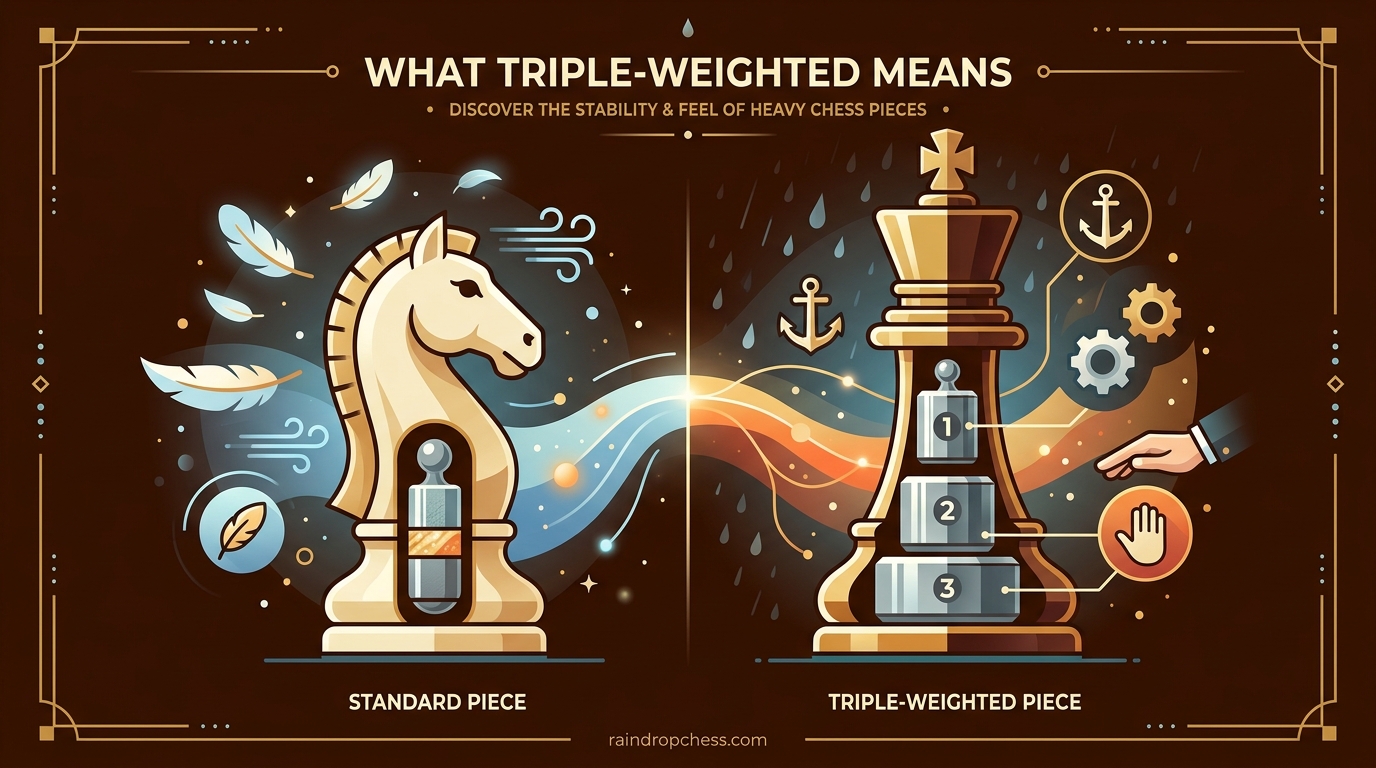
When I first started playing competitive chess, I kept hearing players rave about their “triple-weighted” sets. I had no idea what that meant. Was it marketing hype? Did it actually matter? After testing dozens of sets over the past five years and speaking with tournament directors, I can tell you that understanding weighted chess pieces makes a real difference in your playing experience.
Triple-weighted chess pieces contain three iron studs or lead weights embedded in their base, resulting in a king that typically weighs between 3 and 4 ounces (85-113 grams). This construction method creates the heaviest and most stable pieces available in standard weight categories.
In this guide, I will explain exactly what triple-weighted means, how these pieces compare to other weight classes, and whether they are worth the investment for your specific needs.
Table of Contents
What Is Triple-Weighted in Chess Pieces?
Triple-weighted refers to a specific construction method where three metal weights are placed inside the base of each chess piece. These weights are typically iron studs or lead pellets that add substantial heft and lower the center of gravity.
The term originates from the number of weights used: one weight for single-weighted, two for double-weighted, and three for triple-weighted pieces. Some manufacturers also use a single larger lead weight that achieves similar density.
The king in a triple-weighted set usually weighs between 3 and 4 ounces, though some tournament-grade sets push closer to 4.5 ounces. The pawns weigh significantly less, typically around 1 to 1.5 ounces each, while the queen and rooks fall somewhere in between.
Weight Category Comparison: Single vs Double vs Triple vs Quad
Understanding the differences between weight categories helps you make an informed decision. Here is a comprehensive comparison of all standard weight classes:
| Weight Category | King Weight (oz) | King Weight (g) | Total Set Weight | Best For |
|---|---|---|---|---|
| Unweighted | Under 1 oz | Under 28g | Under 1000g | Travel, beginners |
| Single-Weighted | 1-2 oz | 28-57g | 1000-1500g | Casual play |
| Double-Weighted | 2-3 oz | 57-85g | 1500-2000g | Club players |
| Triple-Weighted | 3-4 oz | 85-113g | 2000-2500g | Tournament players |
| Quad-Weighted | 4-5 oz | 113-142g | 2500g+ | Premium collectors |
The jump from double to triple-weighted represents the most significant upgrade in stability and feel. Many club players who start with double-weighted pieces eventually upgrade to triple-weighted once they begin competing regularly.
How Triple-Weighted Pieces Are Constructed
The construction of triple-weighted pieces involves careful placement of metal weights to achieve optimal balance and stability. Here is how manufacturers create these premium pieces:
The Weight Placement Process
Manufacturers drill cavities into the base of each wooden piece during production. These cavities are positioned strategically to lower the center of gravity. Three iron studs or lead pellets are then inserted and secured with adhesive or wood filler.
The base is then finished with felt or leather to protect the board surface and conceal the weight placement. Some high-end manufacturers use a single solid lead cylinder instead of three separate weights, which can provide more consistent weight distribution.
Materials Used for Weighting
Iron studs are the most common weighting material due to their availability and cost-effectiveness. Lead offers higher density in a smaller volume but raises environmental concerns. Some modern manufacturers use tungsten or steel composites as alternatives.
The choice of weight material affects the final feel of the piece. Lead-weighted pieces tend to feel denser and more substantial, while iron-weighted pieces may have a slightly different balance characteristic.
Wood Type Impact on Final Weight
The type of wood used for the pieces also affects the total weight. Here is how different woods compare:
- Boxwood: Standard material, consistent weight, ideal for weighting
- Sheesham: Slightly denser than boxwood, adds natural heft
- Ebony: Densest common wood, creates heavier pieces naturally
- Rosewood: Medium density, popular for aesthetic appeal
- Bud Rosewood: Similar to rosewood with distinctive grain
A triple-weighted ebony set will feel noticeably heavier than a triple-weighted boxwood set due to the wood density difference.
Benefits of Triple-Weighted Chess Pieces
After using triple-weighted sets for tournament play, I have identified several clear advantages that justify their popularity among serious players:
Superior Stability
The primary benefit of triple-weighted pieces is stability. The low center of gravity prevents pieces from tipping over during aggressive play or when the board is bumped. This is especially important in time pressure situations where quick moves are necessary.
Premium Feel and Sound
Triple-weighted pieces produce a satisfying thud when placed on the board. This tactile feedback enhances the playing experience and gives a sense of quality that lighter pieces cannot match. Many players describe the feeling as “substantial” or “commanding.”
Tournament Standard
While FIDE and USCF do not mandate specific weights, triple-weighted pieces have become the unofficial standard for tournament play. Most serious competitors expect this weight class, and many tournament organizers specifically seek triple-weighted sets for their events.
Consistency Across the Set
Quality triple-weighted sets maintain consistent weight ratios between pieces. The king, queen, rooks, bishops, knights, and pawns all feel proportionally appropriate to their size and importance. This consistency aids in piece recognition and board vision during play.
Who Should Choose Triple-Weighted Pieces
Not every player needs triple-weighted pieces. Here is who benefits most from this weight category:
Tournament Players
If you compete in rated tournaments, triple-weighted pieces are practically essential. The stability prevents accidental knockovers during time pressure, and the premium feel helps maintain focus during long games.
Club Players
Chess club members who play weekly or more should consider triple-weighted sets. The durability and stability make them ideal for frequent use, and the professional feel enhances the club atmosphere.
Serious Students
Players studying chess seriously, whether working with a coach or doing independent study, benefit from the tactile feedback of weighted pieces. The physical experience of moving substantial pieces reinforces the mental weight of each decision.
Who Might Not Need Triple-Weighted
Casual players who play occasionally may find double-weighted or even single-weighted pieces sufficient. Beginners should focus on learning piece movement and tactics before investing in premium weighted sets. Travel players might prefer lighter sets for portability.
Buying Considerations for Triple-Weighted Sets
When shopping for triple-weighted chess pieces, consider these factors to ensure you get the right set:
Verify Actual Weight Specifications
Not all sets labeled “triple-weighted” meet the standard 3-4 ounce king weight. Check the specifications or ask the seller for the exact king weight in ounces or grams. Some budget sets use lighter weights while claiming the triple-weighted designation.
Consider the Complete Set Weight
A true triple-weighted Staunton set should weigh between 2000-2500 grams total (approximately 4.5-5.5 pounds). Sets significantly lighter than this may not have adequate weighting across all pieces.
Check Weight Distribution Balance
Pick up individual pieces and feel the weight distribution. The weight should feel centered in the base, not loose or shifting. Each piece should stand firmly without wobbling.
Price Expectations
Triple-weighted sets range from $50 for basic models to $300+ for premium wood sets. Tournament-grade sets with FIDE-approved dimensions typically fall in the $100-200 range. Sets under $40 claiming to be triple-weighted should be scrutinized carefully.
Weight vs Material Tradeoffs
Some players prefer lighter pieces made from dense woods like ebony over heavily weighted boxwood pieces. Consider whether you value natural wood density or artificial weighting more for your playing style.
How to Tell If Pieces Are Actually Triple-Weighted
If you already own a set and want to verify its weight classification, here are practical methods:
Weigh the King
Use a kitchen scale to weigh the king. A genuine triple-weighted king should register between 3-4 ounces (85-113 grams). Kings under 2.5 ounces are likely double-weighted or less.
The Balance Test
Place the piece on a slight incline or tap the board edge. Triple-weighted pieces should resist tipping and return to upright position easily. Lighter pieces will topple more readily.
The Sound Test
Drop the piece onto a hard surface from a few inches. Triple-weighted pieces produce a dull, solid thud. Unweighted or lightly weighted pieces sound hollow or plasticky.
Check the Base
Remove the felt bottom if possible. You should see evidence of weight placement: either three distinct circular marks from iron studs or a single larger cavity filled with lead.
FAQ: Triple-Weighted Chess Pieces
What do triple weighted chess pieces mean?
Triple-weighted chess pieces contain three iron studs or lead weights in their base, with the king typically weighing between 3-4 ounces. This construction provides maximum stability and a premium feel during gameplay.
How much does a triple weighted chess set weigh?
A complete triple-weighted chess set typically weighs between 2000-2500 grams (4.5-5.5 pounds). The king alone weighs 3-4 ounces, with other pieces proportionally weighted. The exact weight depends on the wood type and specific manufacturer.
Are triple weighted chess pieces worth it?
Triple-weighted pieces are worth the investment for tournament players, club members, and serious students. The superior stability prevents tipping during time pressure, and the premium feel enhances the playing experience. Casual players may find double-weighted pieces sufficient.
What are quadruple weighted chess pieces?
Quadruple or quad-weighted chess pieces contain four weights or extra-large lead inserts, with kings weighing 4-5 ounces. These are heavier than standard tournament weight and are primarily used by collectors or players who prefer maximum heft.
What is the difference between double and triple weighted chess pieces?
Double-weighted pieces have two weights or a single larger weight, with kings weighing 2-3 ounces. Triple-weighted pieces have three weights, with kings weighing 3-4 ounces. The extra weight in triple-weighted pieces provides noticeably better stability and a more substantial feel.
Conclusion: Making Your Choice
Triple-weighted chess pieces represent the sweet spot between stability and practicality for serious players. With a king weighing 3-4 ounces and three weights anchoring each piece, they provide the premium feel and tournament-ready stability that competitive chess demands.
If you are buying your first quality set, I recommend starting with triple-weighted pieces. The investment pays off in durability, playing experience, and the ability to use your set in any tournament or club setting. For casual play at home, double-weighted pieces offer a good balance of quality and affordability.
Understanding what triple-weighted means helps you shop confidently and find the perfect set for your chess journey in 2026 and beyond.