

The best gifts for science lovers do more than put an atom, planet, or equation on a box. They give the recipient something to observe, build, discuss, display, or return to when curiosity strikes.
I approached this guide as a gift matcher rather than a list of novelty objects. A future engineer may want a mechanical build, an astronomy fan may value a night-sky reference, and a biology teacher may keep a well-made DNA display on a desk for years.
These 12 picks span hands-on STEM gifts, astronomy tools, books, group games, and science-themed desk pieces. I used the supplied product specifications, stated age guidance, customer-rating data, and review summaries; I have not presented unverified hands-on testing as fact.
Start with the recipient’s favorite question: how does it work, what is out there, or why does it happen? For more experiment-led options for younger recipients, our guides to STEM kits for kids and STEM subscription boxes are useful next stops.
The strongest science presents leave room for participation. That matters because forum discussions repeatedly warn that a gift can feel too childish for an adult or too generic for someone who already owns basic equipment.
Table of Contents
The Top 3 Picks Are Hands-On, Observable, and Display-Worthy
My broadest recommendation is the Thames & Kosmos Mega Cyborg Hand because it makes hydraulics visible through a build a recipient can wear and operate. The Stargazing Cards are the smart pick for someone who already has binoculars or a telescope, while the real-element periodic table is a lasting chemistry-focused object for a desk, classroom, or lab space.
These three serve different kinds of curiosity instead of competing for the same person. Choose the hand for active building, the cards for outdoor observing, and the periodic table for a collector or chemistry-minded learner.


UkkRoa Periodic Table with Real Elements
- 83 element samples
- Acrylic display
- Classroom ready
The Best Gifts for Science Lovers in 2026 Are Varied by Interest
This quick comparison groups the full list by what the recipient actually gets to do. It is more useful than choosing by appearance alone, especially when the person already has science equipment or has a clear favorite branch of STEM.
| Product | Specifications | Action |
|---|---|---|
| Mega Cyborg Hand |
|
View on Amazon |
| Stargazing Cards |
|
View on Amazon |
| Real Element Periodic Table |
|
View on Amazon |
 LEGO Evolution of STEM LEGO Evolution of STEM |
|
View on Amazon |
 ROKR Space Shuttle Puzzle ROKR Space Shuttle Puzzle |
|
View on Amazon |
 Galaxy Projector Pro Galaxy Projector Pro |
|
View on Amazon |
 Crystal DNA Model Crystal DNA Model |
|
View on Amazon |
 Crystal Solar System Set Crystal Solar System Set |
|
View on Amazon |
 QUOKKA Science Trivia QUOKKA Science Trivia |
|
View on Amazon |
 Reality Is Weirder Book Reality Is Weirder Book |
|
View on Amazon |
 Rare and Unusual Knowledge Rare and Unusual Knowledge |
|
View on Amazon |
 WHLBHG Science Notebook WHLBHG Science Notebook |
|
View on Amazon |
1. The Mega Cyborg Hand Is the Best Pick for Hands-On Physics
Thames & Kosmos Mega Cyborg Hand STEM Experiment Kit | Build Your Own GIANT Hydraulic Amazing Gripping Capabilities Adjustable for Different Sizes Learn Pneumatic Systems
Wearable hydraulic hand
Three configurations
No batteries
Pros
- Builds into a working hand
- Shows hydraulic principles
- Adjustable configurations
- Large review base
Cons
- Assembly is required
- Manual operation only
The Thames & Kosmos Mega Cyborg Hand makes a fine gift for the person who learns by taking a mechanism from parts to motion. Its fingers are driven by air pressure, water, and the wearer’s own hand rather than a motor, so the cause and effect remain easy to see.
I like that it has three stated configurations: right hand, left hand, and a claw-like form. That gives the build more replay value than a one-position model and makes it feel closer to an experiment than a decoration.
The listing places it in educational science kits and identifies an age range beginning at seven. Its 4.4 rating comes from more than 4.1k reviews, which is a much larger feedback sample than most items in this roundup.
The working mechanism is the reason to choose this kit
Hydraulic pistons open and close the mechanical fingers and provide gripping force. A recipient can connect that movement to the pneumatic and hydraulic systems used in industrial robots.
This is one of the best gifts for science lovers who prefer a result they can operate after building. It is particularly well suited to a curious child, teen, or adult who enjoys engineering demonstrations.
The assembly commitment is the main decision point
The kit includes building pieces, springs, flexible tubing, screws, and a manual, so setup is part of the activity. Give it when the recipient enjoys following a process rather than needing instant play.
It uses no batteries, but it also does not use motors. That limitation is a strength for teaching mechanical force, though it will not satisfy someone seeking electronic robotics.
2. Stargazing Cards Are the Best Gift for Telescope Owners
Cosmic Shards: Stargazing Cards – Messier Catalog, 110 Astronomy Flashcards
110 Messier object cards
Readable under red light
Portable star maps
Pros
- Detailed observing aid
- Durable laminated cards
- Useful for many skill levels
- Night-vision friendly
Cons
- Not for children under 8
- Works best with sky-viewing gear
The COSMIC SHARDS Stargazing Cards are a thoughtful alternative to buying another piece of astronomy hardware. The set has 110 cards focused on Messier Catalog objects, pairing object details and discovery history with maps and telescope-view imagery.
That format has a practical advantage outdoors: a stargazer can pull one card from the sturdy storage box rather than scroll through a bright phone screen. The cards are also described as readable under red light, which is friendly to night vision.
With a 4.9 rating from 91 reviews, this set has strong early feedback. I would treat it as an observing companion, not a replacement for binoculars or a telescope.
The cards make observing sessions more purposeful
The front design includes constellations, a Telrad ring, star maps, and eyepiece-view simulation. The back adds characteristics, descriptions, discovery information, and facts for the selected object.
That pairing gives a beginner an approachable next target while still giving experienced observers a compact field reference. Astronomy club members and teachers can also use individual cards to prompt a session.
The age and equipment context should guide the gift
The stated minimum age is eight, and the cards have the most value when the recipient can look at the sky. They are a strong add-on for someone with binoculars, a telescope, or a regular dark-sky outing.
For a person who only likes space imagery indoors, choose a projector or a display model from this list instead. The laminated cardstock and rounded corners support repeated handling, but this is still a reference tool first.
3. The Real-Element Periodic Table Is the Best Chemistry Desk Display
Periodic Table with Real Elements Inside – 83 Kinds of Real Elements & Acrylic Display Stand, for Science Lovers, Students Chemistry Chart Tools, Gifts and Crafts Decoration (5.9″ x 4.5″)
83 real element samples
Acrylic display stand
Compact chemistry reference
Pros
- Contains real samples
- Durable acrylic material
- Classroom suitable
- No assembly needed
Cons
- Small 5.9 inch format
- Not an experiment kit
The UkkRoa Periodic Table with Real Elements is the gift I would choose for someone who likes science objects with a clear physical point. Its 83 real element samples turn the abstract chart into a compact display that invites closer inspection.
The piece measures 5.9 by 4.5 by 1 inches and includes an acrylic display stand. That footprint suits a teacher’s desk, a student’s study area, or a laboratory shelf without taking over the room.
It holds a 4.7 rating from 256 reviews. Customer feedback in the supplied analysis points to its chemistry appeal, while the manufacturer information emphasizes handmade sample preparation and classroom use.
The real samples make chemistry feel more tangible
Many chemistry charts are purely visual, but this model is made with samples that have been cut, processed, or otherwise prepared and arranged by hand. That makes it a conversation object as well as a reference.
I would give it to a chemistry student, teacher, or collector who appreciates material objects. It is also a smart answer for an adult who already owns common lab-style equipment and does not need another gadget.
The compact size defines its best role
This is a 5.9-inch display, not a wall chart or a full laboratory resource. Its strength is close-up curiosity and permanent desk placement.
It arrives without assembly, so it works when the recipient wants an immediate science-themed object. Those seeking hands-on reactions or repeated projects should look at dedicated chemistry sets instead.
4. LEGO Evolution of STEM Is the Best Collectible Build for Adults
LEGO Ideas Evolution of STEM 21355 Toy Men Women
882-piece science display
Moving DNA and atom details
STEM pioneer minifigures
Pros
- Rich scientific references
- Interactive mechanisms
- Display-ready result
- Information-packed manual
Cons
- 882-piece assembly
- Small review sample
LEGO Ideas Evolution of STEM gives a science fan both a substantial build and a finished display packed with references. The set includes Marie Curie, Isaac Newton, and George Washington Carver minifigures, plus models that point to discoveries and inventions.
The finished scene includes Newton’s apple tree, Carver’s nursery, a space shuttle, and a robotic arm. It also has moving details: a dial can rotate DNA strands and support the floating-carbon-atom effect.
The supplied listing identifies 879 pieces in the specifications and 882 pieces in feature copy, so I would simply treat this as a large, detailed build rather than rely on a single exact count. Its 4.3 rating is based on only 16 reviews, a smaller sample worth keeping in mind.
The scientific references reward slow inspection
Beyond the visible figures, the set includes Morse code and a Voyager probe with Golden Record detail. The assembly manual adds designer interviews and information about the science references.
That combination makes it a good science present for an adult builder, a teen with patience, or a teacher who wants display material that starts conversations. The completed model is meant to be seen, not packed away.
The building time is part of the gift
This is a gift for someone who enjoys a many-step construction project. The model is assembly-required and the amount of detail rewards a dedicated session rather than a quick afternoon.
Its stated age guidance begins at 18, which fits its collector focus. The LEGO Builder app compatibility may also appeal to builders who prefer digital assistance alongside the printed instructions.
5. The ROKR Space Shuttle Is the Best Long-Form Space Build
ROKR Space Shuttle 3D Wooden Puzzles for Adults Moving Building Model
446-piece wooden shuttle
Touch launch sequence
LED engine glow
Pros
- Detailed wooden build
- Interactive launch action
- Includes tools and instructions
- Replacement-parts support
Cons
- About eight hours to build
- Recommended for ages 14 plus
The ROKR Space Shuttle 3D Puzzle is for the science lover who sees the making process as the gift. It uses 446 laser-cut wooden pieces and is described as an approximately eight-hour build, giving it a satisfying amount of focused work.
When complete, it is more than a static shuttle. A touch-activated sequence moves the service structure, tilts the shuttle, runs countdown lights, and creates an LED engine glow.
The product holds a 4.6 rating from 242 reviews. I would pick it for a space enthusiast, wood-model builder, or collector who will appreciate the engineering theater of the finished object.
The interactive launch sequence sets it apart
The lighting and movement give the model a reason to stay on display after construction. A recipient can revisit the launch action rather than only admire the external shape.
The kit draws on a historic space-shuttle launch theme and presents it as a desk-scale scene. That makes it a more engaging choice than a plain aircraft puzzle for someone interested in space history.
The time requirement should be welcomed, not hidden
ROKR describes the assembly as an eight-hour activity, so this is not a casual stocking stuffer. It is better for a holiday break, a birthday weekend, or a person who likes to work through detailed instructions.
The listing gives a minimum age of 14 and includes assembly tools and step-by-step instructions. It also states that replacement pieces are available for missing or damaged parts, which is helpful on a complicated build.
6. The Galaxy Projector Pro Is the Best Indoor Astronomy Gift
Galaxy Projector Pro for Bedroom, 13 in 1 Planetarium Star Projector with Solar System & Constellation, Night Light for Ceiling – 360° Rotating with Timer, Adjustable Knob, Kids Adults Room Decor
13 galaxy discs
360 degree rotation
One, two, or four-hour timer
Pros
- Wide disc selection
- Adjustable projection area
- Quiet operation
- USB-C powered
Cons
- Needs a dark room
- Not smart-home compatible
The MuliVid Galaxy Projector Pro is an easy way to give an astronomy fan a space-focused room experience. It includes 13 HD galaxy discs, with subjects such as the Solar System, Earth, Moon, and various galaxies.
The unit rotates 360 degrees, and its stated projection distance runs from 1.5 to 16 feet. The manufacturer also lists coverage between 135 and 754 square feet, so it can suit a small bedroom or a larger clear wall depending on placement.
It has a 4.4 rating from 818 reviews. I see it as an atmosphere and curiosity gift rather than an observing instrument, which prevents the common disappointment of expecting projector imagery to behave like a telescope.
The discs give the projector more than one use
A set of different discs lets the recipient change the subject rather than live with one fixed star pattern. The built-in disc means 12 discs are replaceable, a small detail that is useful when sorting expectations.
Solar System and Moon imagery can support bedtime conversation, classroom themes, or quiet reading time. A science fan who likes visual surroundings may return to it more often than to a one-time novelty.
The room conditions determine the result
The listing says a dark indoor environment gives the best results. The projector is corded, USB-C powered, and not compatible with smart-home systems.
A one-, two-, or four-hour automatic shutoff timer makes it suitable for evening use. Its noiseless operation is another practical advantage for a bedroom, though it should be placed where a cable can reach.
7. The Crystal DNA Model Is the Best Biology Gift for a Desk
Movdyka 3D Crystal DNA Model Helix Desk Decor Night Light Gift for Teachers
Laser-etched K9 crystal DNA
Color-changing LED base
Gift-ready box
Pros
- Vivid double-helix detail
- Long-lasting internal engraving
- USB or battery power
- Gift-ready presentation
Cons
- Decorative rather than interactive
- Small desktop scale
The Movdyka 3D Crystal DNA Model is a direct, elegant gift for the person whose science interest centers on biology, medicine, or genetics. Its double helix is laser-engraved inside K9 crystal, protecting the detail from surface wear.
The sculpture measures 2.63 by 2.63 by 4.2 inches, so it occupies little desk space. Its LED base can cycle colors or stay on a fixed color, which gives the object some presence without asking the recipient to build anything.
This model has a 4.7 rating from 298 reviews. The supplied feedback describes it as suitable for teachers, professors, lab technicians, nurses, and medical-school graduates, matching its professional desk-decor role.
The DNA motif is specific enough to feel personal
A double helix is instantly recognizable without being a generic science graphic. It works for a biology classroom, a hospital office, a lab, or a home study area.
I would choose it for a graduation, retirement, or teacher thank-you when the recipient is more likely to appreciate a lasting symbol than an activity kit. The white gift box also makes the presentation straightforward.
The power options make placement flexible
The LED base can run on three AAA batteries or USB power from a computer, car charger, or power bank. That is useful when the desk is far from a wall outlet.
It is still desk decor, not a manipulable molecular model for a lesson. Give it to someone who values visual science art; choose an experiment kit for a recipient who wants to test and build.
8. The Crystal Solar System Set Is the Best Space-Themed Decor Gift
3D Crystal Ball Solar System Crystal Ball Modle Science Astronomy Gift Lamp
Seven engraved crystal spheres
Wooden LED base
USB-powered display
Pros
- Clear laser engraving
- Seven-piece solar theme
- Ready-to-gift box
- Multiple LED modes
Cons
- USB power only
- Adapter is not included
The Qianwei Crystal Solar System set gives an astronomy admirer an ornamental take on familiar planets and celestial objects. It includes seven 1.57-inch K9 crystal balls, each with internal laser engraving, along with a wooden LED base and USB cable.
Its appeal is visual: the clear spheres catch attention in a bedroom, study, or office, while the base adds several light modes. The product information says the internal engraving does not fade, an important detail for a display gift meant to last.
The set has a 4.8 rating from 177 reviews. I would choose it for a person who wants space around them but does not necessarily want a complex build or a field-use astronomy tool.
The seven pieces make it feel like a complete gift
Receiving a set of seven spheres creates a fuller display than one isolated crystal ball. The solar-system theme has broad appeal for a teacher, parent, partner, or young space fan.
The included gift box means it is ready to wrap without extra assembly. That makes it one of the easier science lover gifts to give when an occasion is close.
The USB setup matters before gifting
The light base uses USB power, and the supplied information says an adapter is not included. Plan on placing it near a USB source or giving a compatible power option separately if needed.
This is indoor tabletop decor rather than an outdoor astronomy device. Recipients seeking practical sky guidance will get more use from the Stargazing Cards, while decor lovers may prefer this gentler option.
9. QUOKKA Trivia Cards Are the Best Science Gift for Group Play
QUOKKA Trivia Card Games for Adults with 500 Questions – Science Board Games for Adults, Teens and Families – Trivia Cards with Answers – Fun Party Game for Family Game Night
500 science questions
Five questions per card
Two or more players
Pros
- Many questions
- Easy answer checking
- Several play modes
- Compact travel format
Cons
- Best with a group
- Question depth will vary
QUOKKA Science Trivia Cards turn scientific facts into a shared activity. The deck has 500 questions, with five questions and answers per card, and supports one-on-one duels, team challenges, or timed rounds.
I like this as a party, family, or classroom gift because it moves discussion beyond a single person’s hobby. The compact card format also makes it easy to take on a trip or bring to a game night.
The deck has a 4.6 rating from 530 reviews. Forum discussions in the research called science-themed board and card games frequent hits, especially when the recipient enjoys learning socially rather than collecting objects alone.
The format makes answers easy to check
Each card includes questions and answers, which keeps the game moving without a separate answer book. That design is helpful for mixed-age groups, where a host may not know every answer.
The stated educational objective is better science knowledge and understanding. It can be playful without pretending that it replaces a full course or a detailed science book.
The audience should enjoy friendly competition
The listing calls this an adult game and gives a minimum age of 12. It is best for teens, adults, and families with at least two willing players.
A quiet reader or solo hobbyist may get more from one of the books in this guide. For a science teacher, however, the portable cards could offer a convenient warm-up or group activity.
10. Reality Is Weirder Than You Think Is the Best Bite-Sized Science Book
Reality Is Weirder Than You Think: 101 Fascinating Science Facts About Life, Nature & the Universe | Bite-Sized Chapters for Curious Teens & Adults—Extraordinary & Bizarre Science Facts and Knowledge
101 science facts
Life, nature, and universe
278-page paperback
Pros
- Short approachable chapters
- Broad topic range
- Suited to teens and adults
- Strong customer rating
Cons
- Independent publication
- Fact format is not a deep textbook
Reality Is Weirder Than You Think gives a curious reader 101 science facts about life, nature, and the universe in bite-sized chapters. At 278 pages, it is long enough to feel substantial but built for picking up between other activities.
This is a good choice when you know the recipient enjoys being surprised by a fact but you do not know one narrow specialty. The broad subjects let it work as a gift for a teen, an adult, or a family member who routinely shares interesting discoveries.
The book holds a 4.8 rating from 116 reviews in the supplied data. I would frame it as a curiosity starter and conversation spark, not as a comprehensive science reference.
The short chapters make it easy to return to
Bite-sized organization can suit busy readers who may not commit to a textbook-like sequence. A chapter can become a quick prompt for a dinner-table discussion or a short break from screens.
The subjects cover life, nature, and the universe, so the gift is not locked into chemistry or space alone. That makes it useful for someone whose interest is wide rather than specialized.
The reading style should match the recipient
This book is for a reader who enjoys unusual facts and concise explanations. A serious student pursuing one field may want a deeper subject-specific work instead.
It pairs nicely with a physical display, a puzzle, or a trivia deck when you want the gift to have both quiet and social possibilities. The book’s teen-and-adult focus also avoids the overly childish feel buyers often want to avoid.
11. Rare and Unusual Knowledge Is the Best Gift for Everyday Curiosity
Rare and Unusual Knowledge: Extraordinary Facts About Everyday Things (Facts and Knowledge)
Everyday extraordinary facts
194 pages
Recommended reading age 11 plus
Pros
- Accessible everyday subject
- 194-page format
- Part of a fact series
- Large review sample
Cons
- Not focused on one science field
- Independent publication
Rare and Unusual Knowledge is another strong reading gift, but its angle is extraordinary facts about everyday things. That focus can hook a reader who is curious about the science sitting in plain sight rather than only about distant planets or advanced theory.
The book is 194 pages and part of the Facts and Knowledge series. Its stated reading age is 11 and up, which gives it a wider family range than a dense adult science title.
It has a 4.6 rating from 597 reviews, one of the larger review groups among the books here. I would choose it as a reliable, low-pressure gift for a student, teacher, or teen who likes to ask how familiar things work.
The everyday angle makes the book approachable
Science often begins with noticing ordinary objects, materials, and behavior. A fact collection about everyday things gives a reader a way to practice that habit without needing a lab setup.
It is a fitting gift for someone who has everything in the equipment sense but still enjoys learning. Books also avoid the problem of buying a duplicate tool for a hobbyist with established gear.
The broad focus is not a specialist resource
The book does not promise a deep study of one discipline. Give it to a generalist reader or an eleven-plus learner who prefers varied topics.
If the recipient is already fixated on astronomy, biology, or engineering, a themed object from this list may feel more personal. For a classroom reading corner, though, its accessible premise is easy to share.
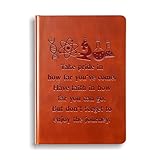
12. The WHLBHG Science Notebook Is the Best Practical Gift for Students
WHLBHG Science A5 Leather Lined Journal Inspirational Gift(Pride-Science)
A5 lined science notebook
Faux-leather cover
Lies flat for writing
Pros
- Portable A5 size
- Durable cover
- Thick acid-free paper
- Lies flat
Cons
- Lined pages only
- No grid-paper option stated
The WHLBHG Science Notebook is proof that science gifts can be useful without becoming impersonal. Its embossed science-symbol cover, ruled pages, faux-leather cover, and A5 size make it a natural fit for lab notes, class notes, research ideas, or daily journaling.
I would give this to a science student, teacher, engineer, or medical learner who writes by hand. The notebook lies flat when open, which is a modest feature that makes a real difference when someone is taking notes beside a textbook or a lab setup.
It holds a 5.0 rating from 30 reviews in the product data. That is a very positive but small review sample, so the listed materials and page format should carry more weight than the rating alone.
The notebook is most useful for regular writers
The A5 format is compact enough for a backpack or tote. Its thick, acid-free paper is described as suitable for study sessions, lab reports, research notes, and personal science journaling.
It is one of the better science teacher gifts when the recipient appreciates a practical tool with a themed presentation. The soft cover and lined format point toward portable everyday use.
The ruling limits the kinds of notes it suits
The product is lined, so it is not the best match for a person who requires graph paper for diagrams, data plots, or detailed formulas. No grid-paper option is stated in the supplied information.
For prose notes, observations, and ideas, that limitation is minor. Pair it with a favorite pen or a science book if you want to make the present feel more complete without guessing at specialized equipment.
The Right Science Gift Matches Curiosity, Time, and Setting
A good science gift starts with an interest, but it should not stop there. The amount of time a recipient likes to spend, the space they have, and whether they want to learn alone or with others are equally important.
The recipient’s favorite subject should lead the choice
For engineering or physics, choose the Mega Cyborg Hand because the mechanism is visible and repeatable. For astronomy, match active sky-watchers with the Stargazing Cards and indoor space fans with the Galaxy Projector Pro or Crystal Solar System set.
For biology and medicine, the DNA Model is a clear personal signal. Chemistry lovers may prefer the real-element periodic table, while readers with wide interests are better served by one of the fact books.
The amount of time available should match the activity
Some science presents are immediate: a display can be placed on a desk, a notebook can be opened, and a trivia deck can start a game night. Others ask for focus, including the ROKR build’s stated eight-hour assembly time and the large LEGO project.
I recommend treating the time demand as part of the gift’s meaning, not a drawback. A careful builder may value an all-weekend project more than something that is over in minutes.
The recipient’s age should guide complexity, not limit curiosity
Use stated manufacturer age guidance as a safety and difficulty baseline. The Stargazing Cards specify age eight and up, QUOKKA specifies age 12 and up, the ROKR model specifies age 14 and up, and the LEGO set begins at 18.
For a younger science fan, adult help and the child’s habits still matter more than a label alone. Our guide to educational toys for 10 year olds gives more age-focused ideas, and our roundup of homeschool science kits is useful for repeatable projects.
The setting should determine whether to choose tools or decor
Outdoor observing gear only works when the recipient can get outside and see the sky. A projector requires a dark indoor room and power access, while a crystal model needs a stable surface and a nearby USB source or batteries, depending on the model.
Desk displays work well for teachers, graduates, and adults who already own tools. They offer a daily reminder of an interest without duplicating a microscope, telescope, or lab supply the recipient may already have.
The social preference should shape the final decision
Choose QUOKKA Trivia for families, classrooms, and friends who like friendly competition. Choose the books or notebook for independent thinkers, and choose a build for someone who enjoys concentrating alone before sharing the result.
This simple distinction answers a recurring forum concern: thoughtful gifts feel less gimmicky when they fit the recipient’s actual routine. The goal is not to make every science lover play the same way.
The build quality and stated limitations deserve a final check
Review counts and ratings are useful context, but they are not a substitute for reading what the product can and cannot do. The supplied research specifically flags that low-quality optics can disappoint, which is why this list does not treat a decorative projector as a telescope.
Check power requirements, assembly needs, and display dimensions before ordering. That brief pause will help you choose an item the recipient can use right away rather than one that becomes a well-meant burden.
These Answers Solve Common Science Gift Questions
What are the best science gifts for adults?
The best science gifts for adults match an established interest and fit their routine. For a hands-on adult, the Mega Cyborg Hand or ROKR Space Shuttle offers a build; for a desk or office, the real-element periodic table or Crystal DNA Model offers lasting display value. Books and science trivia work well when their interests are broad or social.
What to get someone who loves science?
Give them something connected to how they enjoy science: a kit for building, Stargazing Cards for observing, a real-element periodic table for collecting, a projector or crystal model for display, or a book for reading. Avoid guessing at specialized equipment they may already own. A gift that supports their existing curiosity is usually more thoughtful than a generic novelty.
Are there unique science gift ideas?
Yes. A 3D crystal DNA sculpture, a periodic table holding 83 real element samples, and Messier Catalog observing cards are more distinctive than generic science decor. The most unusual choice depends on the recipient: a biology lover may value the DNA model, while an active astronomer is more likely to use the cards outside.
What science gifts work for all ages?
Broad-age science gifts include fact books, astronomy displays, science notebooks, and simple desk objects, provided the stated age guidance fits the recipient. Group trivia can work across generations when adults join in. For builds, card sets, and experiment kits, check the manufacturer age recommendation and consider whether the recipient will enjoy the required assembly or supervision.
The Best Choice Is the Gift They Will Return To
For an active learner, I would start with the Mega Cyborg Hand. For an established stargazer, the Messier cards make a personal companion; for an adult teacher or graduate, the real-element periodic table or DNA model offers a lasting daily reminder of the subject they care about.
The best gifts for science lovers in 2026 are the ones that respect how a person is already curious. Pick the category that matches their habits, confirm the practical details, and give them something that invites the next question.