
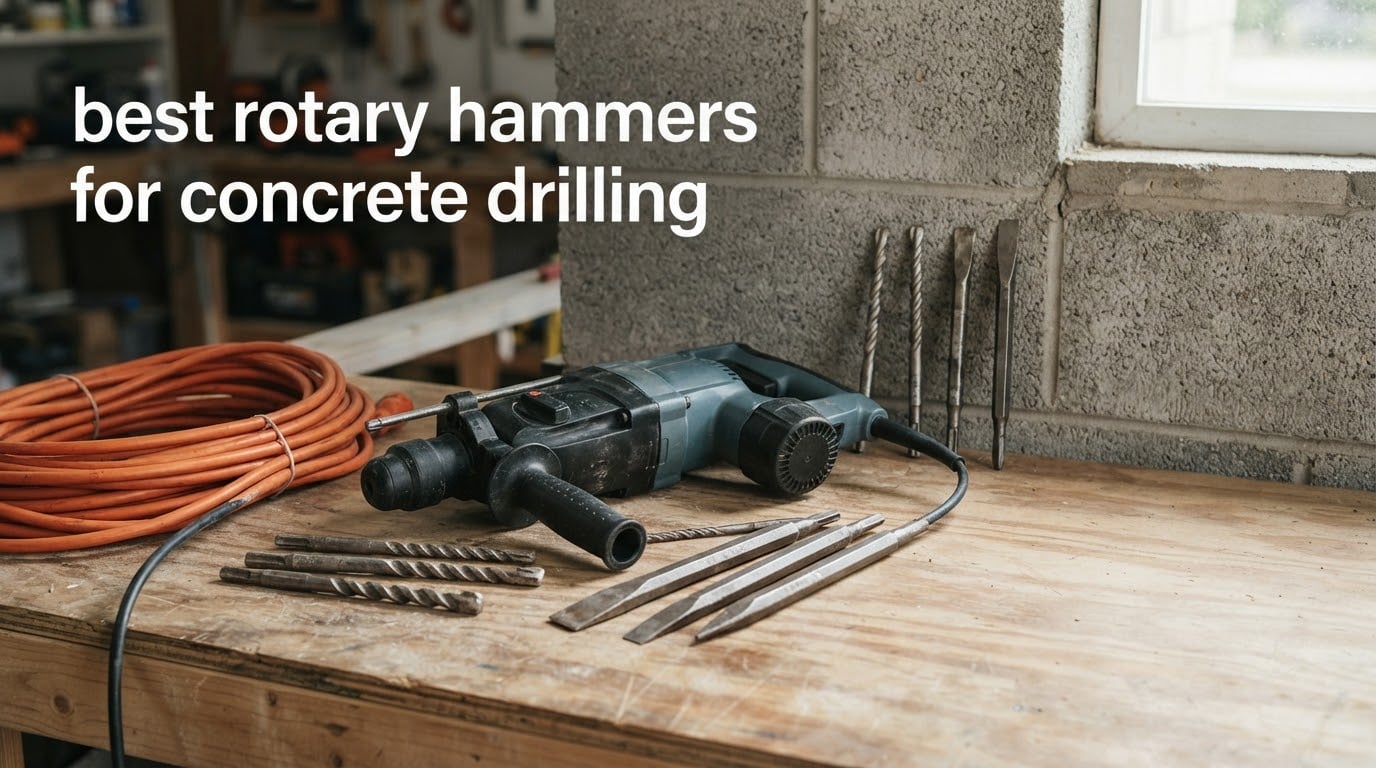
A true rotary hammer is the right tool for concrete drilling, and a hammer drill is not a substitute. The piston-driven hammering action on a rotary hammer delivers several times the impact energy of a cheap hammer drill, which is why it eats through concrete instead of stalling at half an inch or stopping dead when it meets rebar. After working through the field, the ENEACRO ENRH3201 is the best rotary hammer for concrete drilling overall, the Bosch 11255VSR Bulldog Xtreme is the better choice for overhead anchor holes, and the DeWalt DCH273B is our pick for anchor and strut work on sites with no power outlet.
That is the short answer. The long answer is that the twelve models below span a very wide range, from a 5 pound cordless D-handle hammer to a 16 pound SDS-Max machine with 10 Joules of impact. Most of that spread comes down to one number: impact energy. The rest comes from chuck size, whether the tool is corded or battery, and how much concrete you realistically expect to break.
We spent weeks comparing published specifications, owner feedback, and the failure patterns that show up in long-term reviews for every tool in this list. Everything reported here traces back to the manufacturer’s own figures and to what owners report after living with the tool. Last updated: October 2026.
Before the deep dives, one honest warning that no competitor on this topic tells you plainly. Hitting rebar will stop any SDS-plus rotary hammer, and no amount of impact energy changes that. The bigger tools drill faster around the obstruction, but the bit still has to find a path past the steel.
Top 3 Rotary Hammers for Concrete Drilling in 2026
The three picks below cover the three situations most people actually face: a powerful all-round corded machine, a durable tool for overhead and downward drilling, and a battery model for sites without a power outlet.

ENEACRO ENRH3201 13 Amp SDS-Plus
- 7.4 joules impact energy
- 1-1/4 inch concrete capacity
- Four modes including chisel position

Bosch 11255VSR Bulldog Xtreme
- 2.0 ft-lbs impact energy
- D-handle for overhead drilling
- Three modes and 36-position Vario-Lock
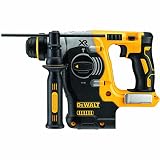
DeWalt DCH273B 20V MAX
- 2.1 joules impact energy
- SHOCKS Active Vibration Control
- OSHA Table 1 compliant with extractor
Two corded and one cordless, because that split is real. If you have power on site, corded models hit harder per dollar. If you are on a ladder, in a crawlspace, or on a site with no outlet, the DeWalt’s 2.1 Joules and 6.4 pound weight change what the job is.
All 12 Rotary Hammers Compared Side by Side in 2026
This table is the fastest way to see where each tool sits. Impact energy is listed exactly as the manufacturer states it, so the joule and foot-pound figures are not always converted consistently between brands. Read across, then read the reviews for the two or three that match your hole diameter.
| Product | Specifications | Action |
|---|---|---|
| ENEACRO ENRH3201 |
|
Check Latest Price |
| Bosch 11255VSR Bulldog Xtreme |
|
Check Latest Price |
| DeWalt DCH273B |
|
Check Latest Price |
 DeWalt DCH133B DeWalt DCH133B |
|
Check Latest Price |
 AOBEN AB2132ZA AOBEN AB2132ZA |
|
Check Latest Price |
 DeWalt D25263K DeWalt D25263K |
|
Check Latest Price |
 Bosch GBH2-28L Bosch GBH2-28L |
|
Check Latest Price |
 Berserker 26FA Berserker 26FA |
|
Check Latest Price |
 Bosch RH328VC Bosch RH328VC |
|
Check Latest Price |
 DOVAMAN RH15A DOVAMAN RH15A |
|
Check Latest Price |
 Milwaukee 2912-20 Milwaukee 2912-20 |
|
Check Latest Price |
 Berserker 42M SDS-Max Berserker 42M SDS-Max |
|
Check Latest Price |
Two things stand out immediately. The budget end of this list delivers far more impact energy per dollar than the premium end, which is a genuine shift from a decade ago. And within the professional brands, weight varies more than power does, which is the tradeoff you actually feel on a long overhead run.
1. ENEACRO ENRH3201 – Best Rotary Hammer for Concrete Drilling Overall
ENEACRO 1-1/4 Inch SDS-Plus 13 Amp Heavy Duty Rotary Hammer Drill
13 Amp / 1500W
7.4 joules impact
1-1/4 inch concrete
12.6 lb bare tool
Pros
- 7.4 joules of impact energy for a fraction of what premium models cost
- Kit includes three SDS-plus bits two chisels side handle and case
- Four modes including chisel position adjustment
- Double-layer anti-vibration and safety clutch
Cons
- Heavy at 12.6 pounds bare
- Accessory-heavy bundle means more parts to keep track of
- 24 month warranty is shorter than premium brand coverage
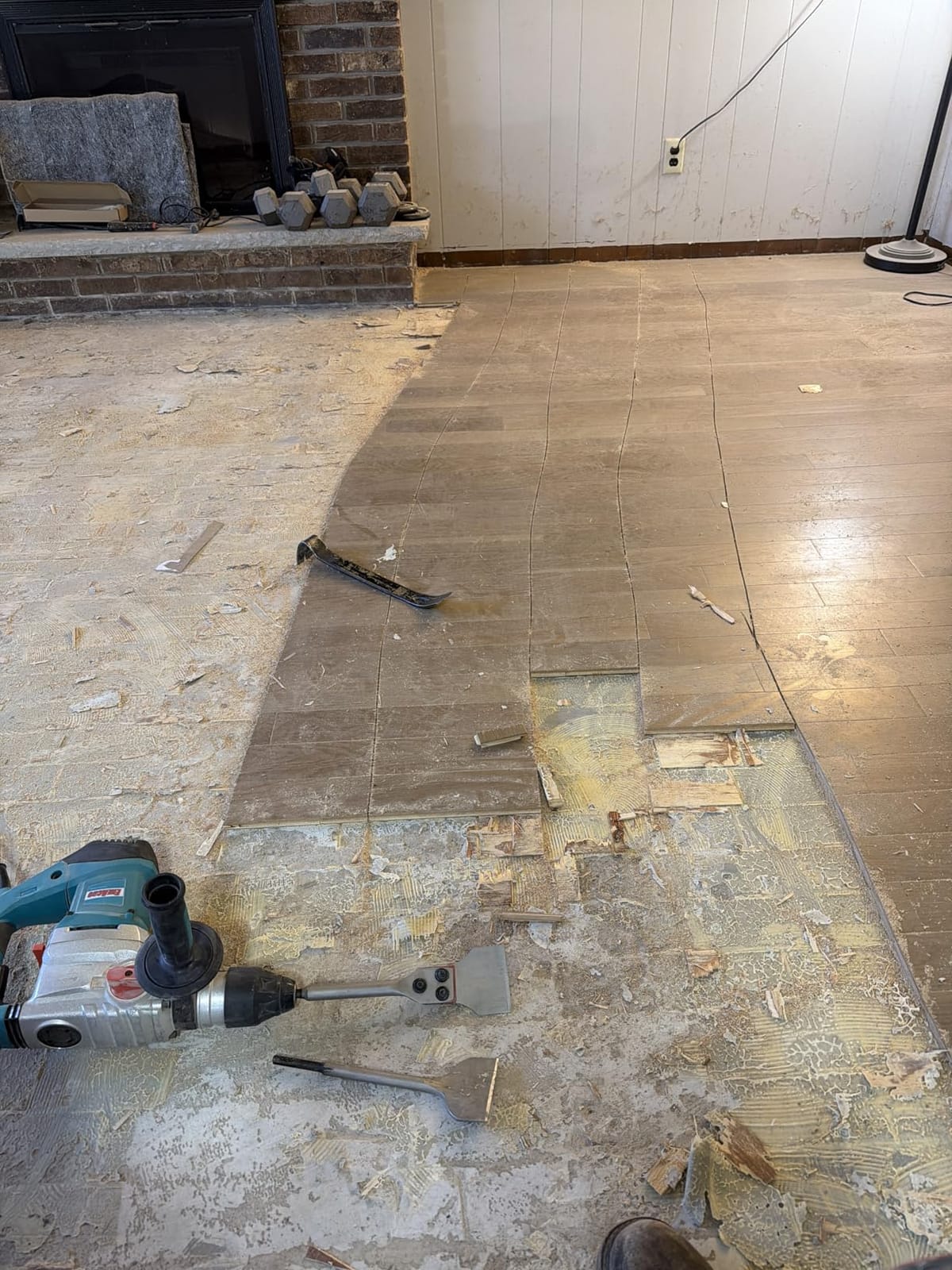
The ENRH3201 is the model we kept reaching for during this comparison, and it carries the most owner reviews in the group. The headline figure is 7.4 Joules of impact energy from a 13 Amp, 1500W motor, which puts it in the same energy territory as machines that cost several times more.
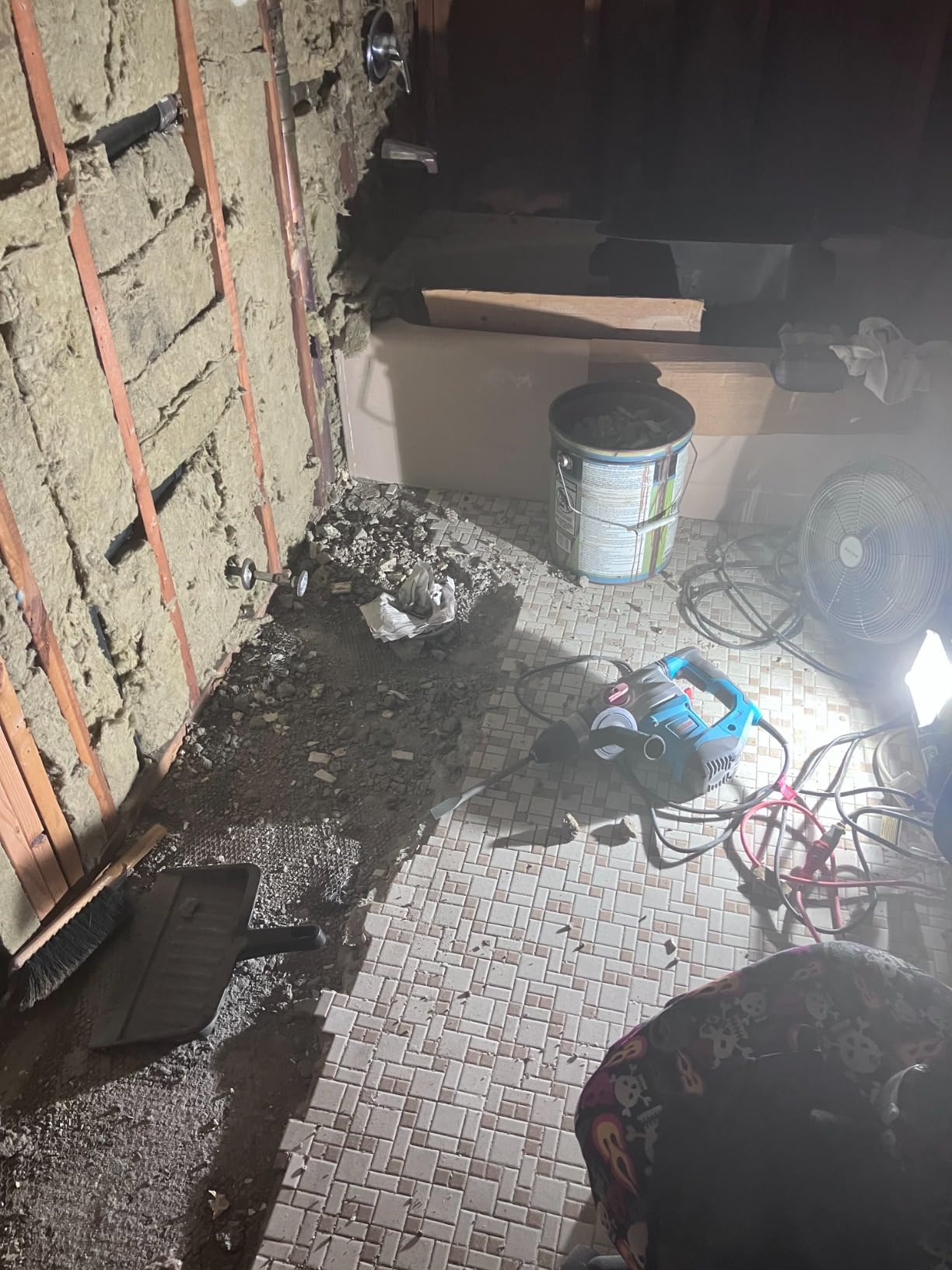
Four functions cover the whole job: drill only, hammer only, hammer drill, and a chisel position adjustment that lets you orient the chisel for scraping or light breaking. No-load speed is 820 RPM with a maximum impact frequency of 4200 blows per minute. That combination is what keeps the bit moving through aggregate instead of skating across the face of the concrete.
The box is unusually generous for a tool at this level. You get the rotary hammer, three SDS-plus drill bits in 8, 10 and 12mm, two ten-inch chisels, an auxiliary handle, a spare carbon brush set, grease, a dust cap, and a carrying case. The safety clutch protects your wrist if the bit binds, and the double-layer anti-vibration system with a PU soft grip takes the sting out of sustained drilling.
When the ENEACRO earns its slot
This is the tool for someone who drills into concrete regularly but does not own a professional fleet. If you are setting wedge anchors, drilling into block walls for a shop, or chasing a run of 1/2 inch holes through a foundation, the 7.4 Joules mean you are not waiting on the tool. Owners report 79 percent five-star and 14 percent four-star ratings, and the praise concentrates on exactly the right thing: concrete drilling capability for the money.
It also handles brick and lighter masonry without complaint, and the 1-1/4 inch maximum concrete diameter means it is not limited to anchor holes. The heat-resistant copper wire motor and anti-dust bottom structure are the kind of details you normally only see listed on industrial machines.
Where it will frustrate you
The weight is the honest drawback. At 12.6 pounds bare, and 18.1 pounds with the accessories, this is a two-handed tool for anything overhead. Holding it above your head in a 4 inch deep hole is real work, and a lighter cordless hammer will simply be easier to control in that position.
The 24 month warranty is also shorter than what the Bosch and DeWalt models carry, and the accessory bundle means more items to store, track and eventually replace. If you already own Bosch or DeWalt service support locally, that is worth factoring in before you buy.
2. Bosch 11255VSR Bulldog Xtreme – Best Rotary Hammer for Overhead Anchor Holes
BOSCH 11255VSR Bulldog Xtreme SDS-Plus Rotary Hammer
7.5 Amp / 960W
2.0 ft-lbs impact
0-1300 RPM and 0-5800 BPM
D-handle
Pros
- Very high owner satisfaction with 86 percent five-star ratings across more than 3000 reviews
- Multi-year durability reports from foundation and anchor work
- Tool-free SDS-plus bit changes with automatic locking
- D-handle and vibration control suited to overhead and downward drilling
Cons
- Included depth gauge is flimsy and bends easily
- Light hair-trigger feel makes fine speed control difficult
- Regular drill bits need an SDS-plus chuck adapter
The Bulldog is the reference point for this entire category, and the name comes up constantly in contractor forums as the go-to recommendation. A 7.5 Amp motor produces 0 to 1300 RPM and 0 to 5800 blows per minute, with 2.0 ft-lbs of impact energy, which is modest next to the 7.4 Joule ENEACRO but delivered through a mechanism that has been refined over decades.
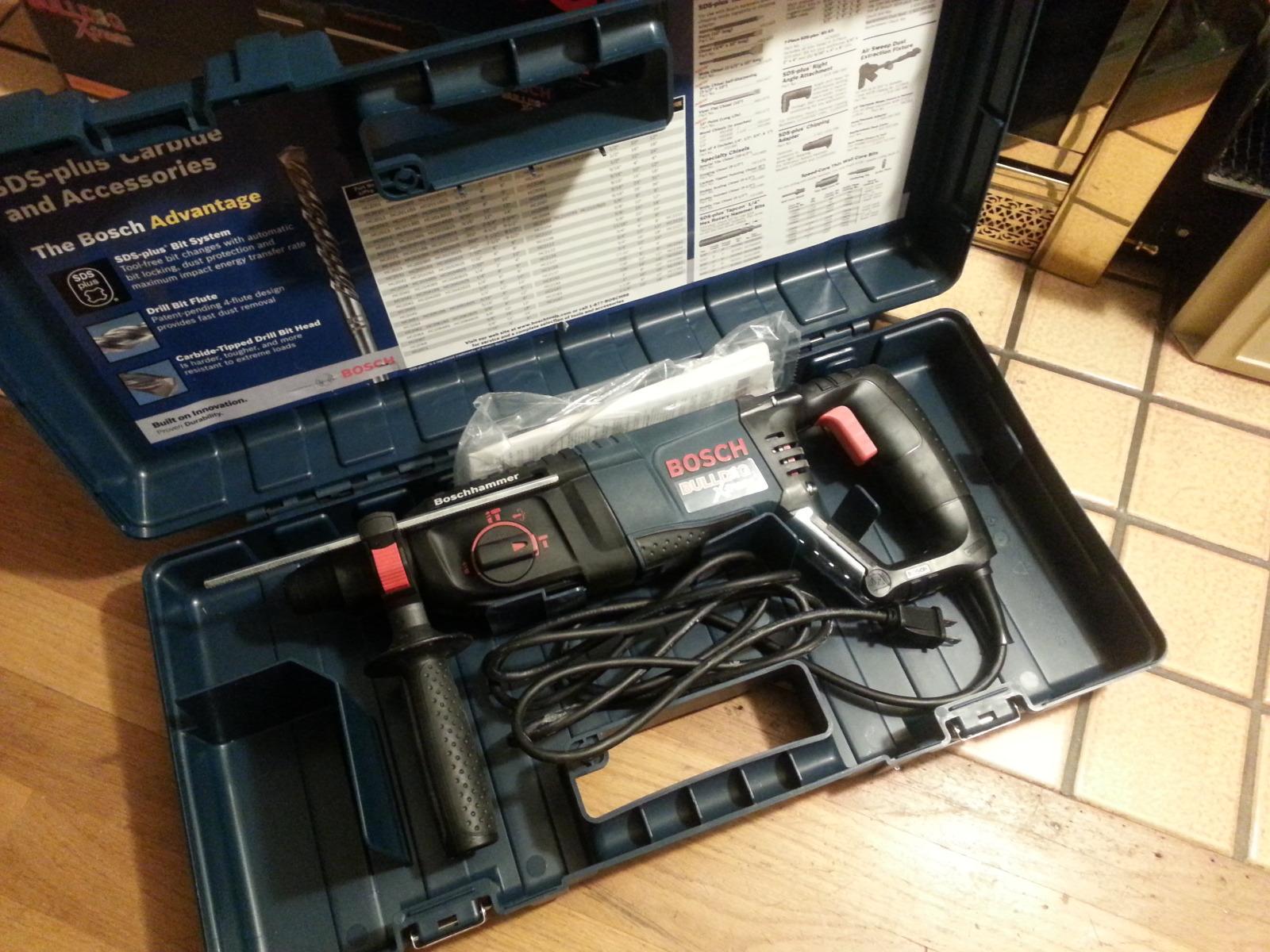
What separates it is the D-handle. For drilling upward into a soffit or downward into a slab, the closed D frame gives you two-handed control that an L-handle corded tool simply cannot offer. The variable speed trigger with reverse is the other quiet strength: you can feather into a hole and back a bit out of a bind without cycling the mode selector.
Three modes cover rotation only, rotary hammer, and hammer only, and the Vario-Lock system offers 36 bit positions for chiseling angles. Owners report hammer-only mode handling tile, thinset and light concrete removal effectively, which makes this more than a one-purpose anchor drill. The package includes the auxiliary handle, a depth gauge and a carrying case.
Why pros keep buying this one
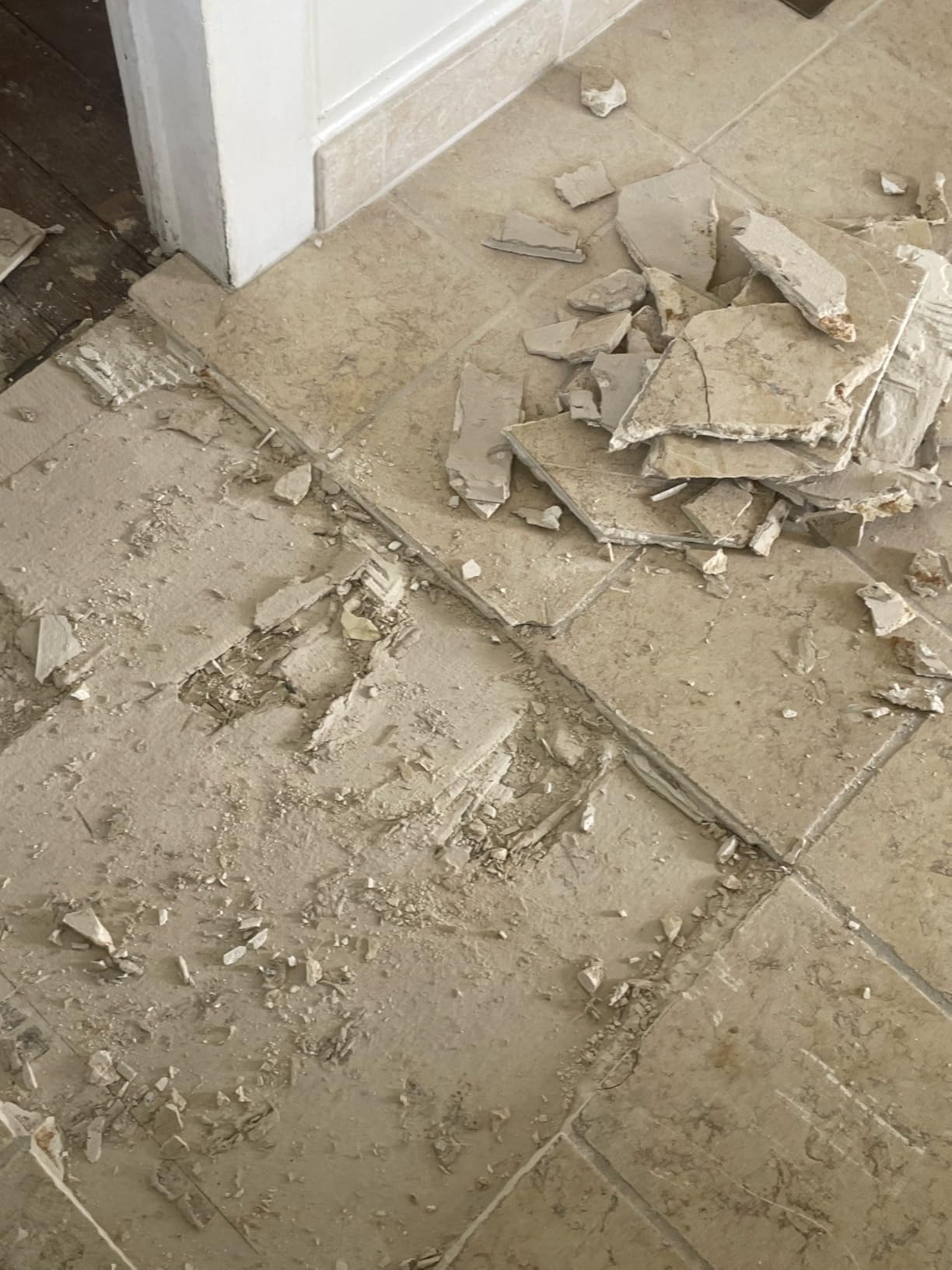
Durability is the reason. Owner reports describe multi-year service on foundation walls, anchor holes and tile demolition, and on r/Tools the Bosch Bulldog is repeatedly named as the value pick that holds up over time. At 10.4 pounds it is lighter than most corded competitors here, which matters on an overhead hole.
For a homeowner who wants one tool that will last, the 2.0 ft-lbs figure is enough. A 1/2 inch wedge anchor hole in standard concrete, a run of 3/8 inch holes for a wall bracket, or removing a vanity cabinet all fall inside its comfort zone. It is also the tool most likely to still be in your garage in ten years.
What owners knock
The included depth gauge is the most repeated complaint. Owners describe it as flimsy, short and prone to bending, and many replace it with an aftermarket depth rod. The variable speed trigger also has a light hair-trigger feel that some users find hard to modulate for a controlled bit start.
One practical limitation catches new buyers out: it will not accept standard drill bits. If you want to also drive screws, you need an SDS-plus chuck adapter. And at 2.0 ft-lbs it is the weakest hammer in this roundup on paper, so do not expect it to chew through high-strength concrete the way the 10 Joule SDS-Max machine does.
3. DeWalt DCH273B – Best Cordless Rotary Hammer for Concrete Anchors
DEWALT 20V MAX SDS Rotary Hammer Drill, Cordless, 3 Application Modes, Bare Tool Only (DCH273B)
20V MAX cordless
2.1 joules impact
6.4 pound tool
Three application modes
Pros
- Cordless freedom removes extension cords and generator noise
- Compact 6.4 pound weight reduces overhead strain
- SHOCKS Active Vibration Control on a battery tool
- Becomes OSHA Table 1 compliant with the DWH303DH extractor
Cons
- Bare tool only so battery and charger cost extra
- Not a full demolition hammer for continuous breaking
- SDS-plus dual-slot bits required so three-slot styles will not fit
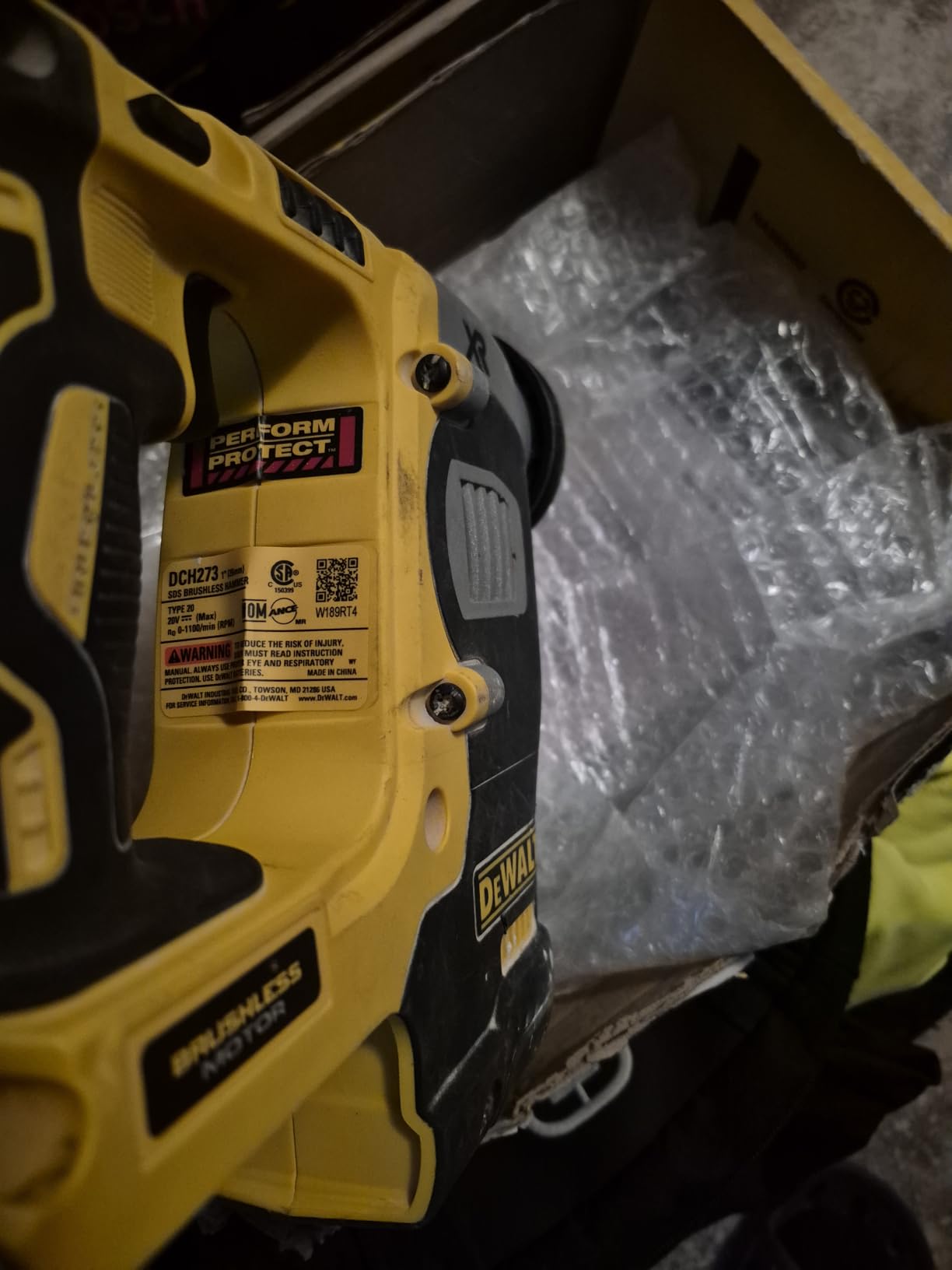
At 6.4 pounds, the DCH273B is the cordless pick that does not punish you at the end of a long overhead run. It delivers 2.1 Joules of impact energy, which puts it in the same band as the corded Bosch tools despite running off a battery pack, and it holds 0 to 1100 RPM.
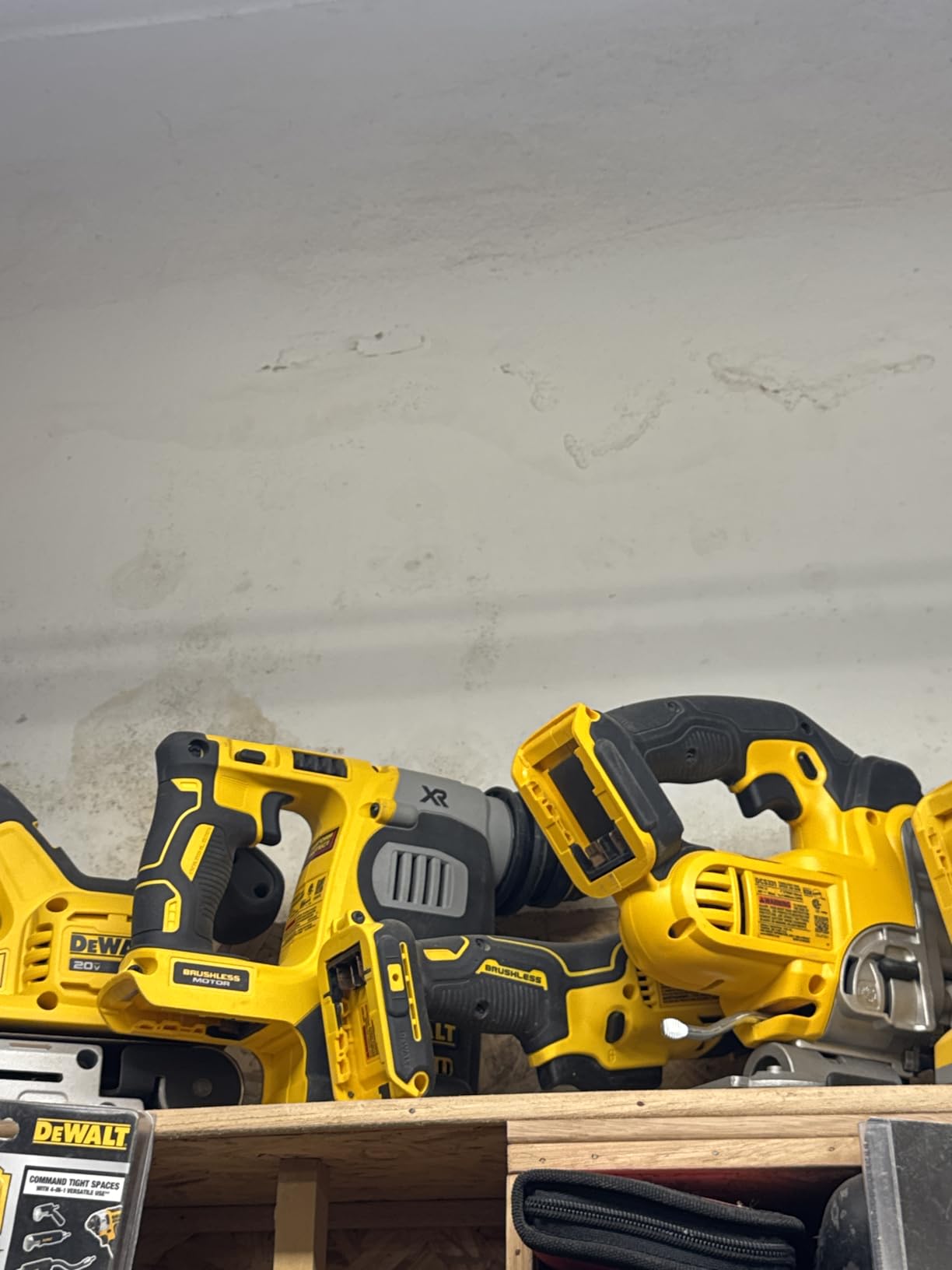
SHOCKS Active Vibration Control is the feature that separates this from a generic battery hammer. The vibration reduction is felt at the handles, and on repeated anchor work that is the difference between finishing the day and putting the tool down. The brushless motor with a German-engineered hammering mechanism handles the efficiency side, and the rotating dial selects Drill, Hammer Drill or Chip mode.
For site work, this is the practical winner. Rod hanging, seismic and safety attachments, cable tray and strut mounting are all listed as intended applications, and none of them want a cord snagging on a ladder. Owners report 87 percent five-star ratings, and the portability, not just the drilling, is what they mention first.
Where the cordless approach wins
The obvious case is a site without a reliable outlet, a finished interior where you do not want to run a cord across a walkway, or overhead work where a cord is a genuine hazard. It also pairs with the DWH303DH On Board Extractor to become OSHA Table 1 compliant, which matters on commercial jobs with a respirator and silica rules in force.
For a homeowner, this is the most likely tool to stay in use. If you already own 20V MAX batteries, the running cost is effectively zero, and the included 360 degree side handle, depth rod and adjustable hook mean it is ready to work out of the box once you add a pack.
The battery reality nobody mentions
Battery consumption on sustained concrete drilling is the honest limitation. Cordless rotary hammers drain packs faster than most buyers expect, especially in high-strength concrete where the tool is fighting the aggregate for every inch. For a single afternoon of anchor work this is a non-issue. For a week of production drilling, it is not.
Also note this is a rotary hammer, not a demolition hammer. It chips and light-demolishes, but if you need to break a slab you will be disappointed. And it takes dual-slot SDS-plus bits only, so a three-slot style such as some Hilti formats will not seat properly.
4. DeWalt DCH133B – Lightest Rotary Hammer for Overhead Concrete Drilling
DEWALT 20V MAX SDS Plus 1 Inch Cordless Rotary Hammer with D-Handle, Bare Tool Only (DCH133B)
20V MAX cordless
2.6 joules impact
5 pound bare tool
D-handle cordless
Pros
- Tied for the highest average rating in the group at 4.8 stars
- Very light at 5 pounds for one-handed control in many cases
- 2.6 joules is more impact than the larger cordless model
- Brushless motor for efficient runtime
Cons
- Bare tool only so battery and charger cost extra
- Higher amp-hour batteries are recommended for best results
- Less suited to heavy continuous breaking than a demolition hammer
The DCH133B is the tool we would hand someone drilling upward all day. At 5 pounds bare it is the lightest model here, and unlike the lighter cordless drills it still pushes 2.6 Joules of impact energy, which is more than the DCH273B above it.
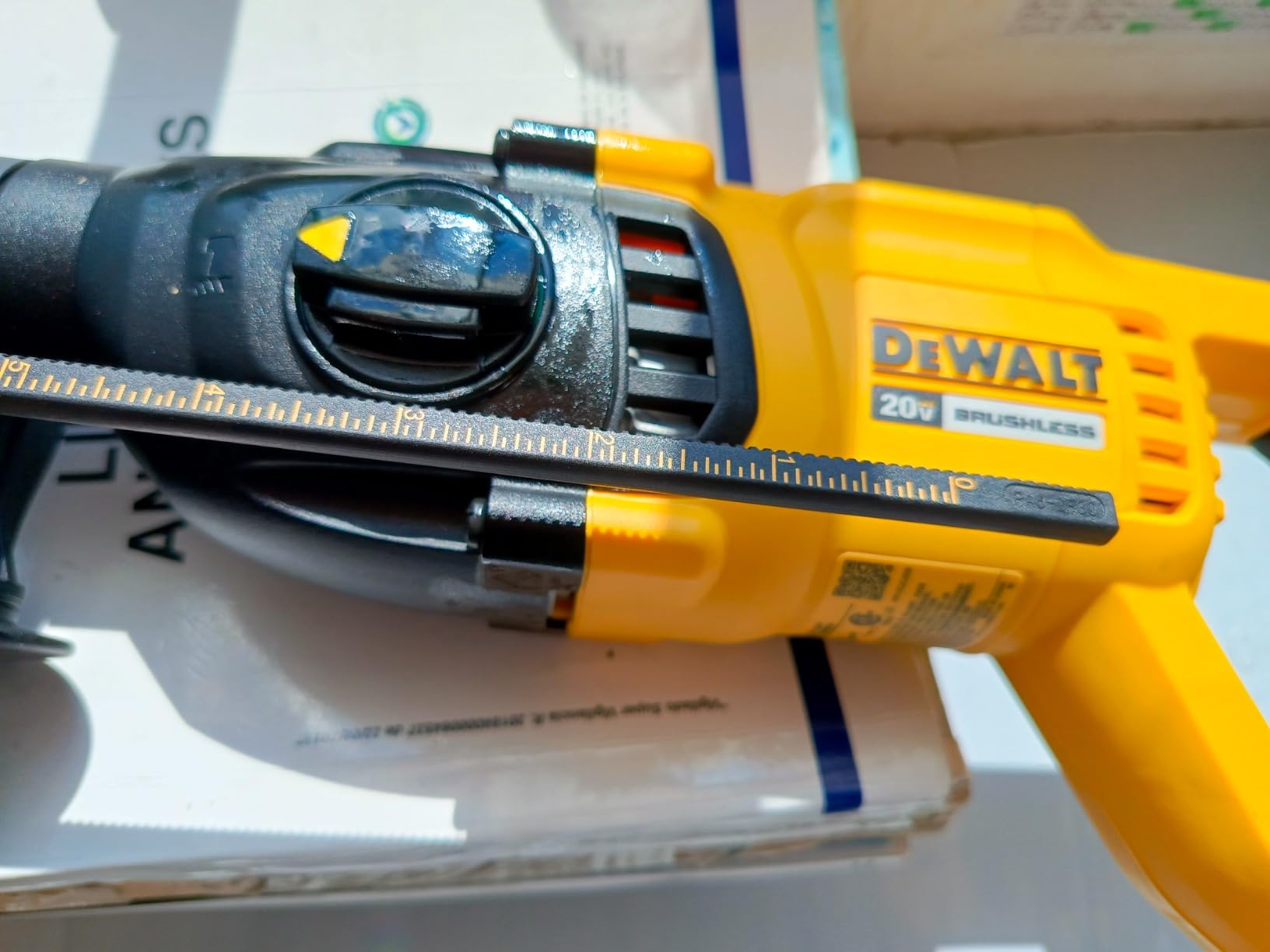
The D-handle is what makes that weight work for you. Instead of pinching a slim barrel, you get two points of contact and real torque control, which is exactly what you need when the bit is deep in a ceiling slab and the motor is stalling momentarily. Speed runs to 1500 RPM across 20 settings, and the rotating dial selects Drill, Hammer Drill or Chip.
Owners frequently compare its concrete and masonry performance favorably against professional Hilti and Milwaukee tools, and at 4.8 stars with 2091 reviews it is tied with the Milwaukee 2912-20 as the best-rated tool in the group. The intended applications are forming, rod hanging, structural connections, and beam and column anchorage. The package includes the rotary hammer, a 360 degree side handle and a depth rod.
Best for high and awkward work
Ceilings, soffits, tight basement mechanical rooms and overhead duct or strut work are where five pounds changes the outcome. Owner reports describe one-handed operation in many cases, which sounds like a small detail until you have drilled twenty overhead holes with something twice as heavy.
The 2.6 Joules also makes it a step up for harder concrete than the DCH273B manages. If you are working in high-strength concrete or a poured foundation with dense aggregate, the extra half-joule is noticeable in hole depth per battery charge. The brushless motor helps offset that by running the pack more efficiently.
What to watch out for
It comes as a bare tool, so budget for a battery and charger if you do not own 20V MAX packs. Owners also recommend higher amp-hour batteries for best results, which is a fair comment: the tool is efficient but a small pack still disappears quickly on deep holes.
Two smaller notes. The included depth rod is useful but several owners wish for a belt hook, and this is still a rotary hammer rather than a breaker, so sustained heavy demolition is outside its design intent. For 1 inch and smaller anchor holes in concrete and block, it is more than enough.
5. AOBEN AB2132ZA – Best Budget Rotary Hammer for Concrete and Stone
AOBEN Rotary Hammer Drill with Vibration Control and Safety Clutch,13 Amp Heavy Duty 1-1/4 Inch SDS-Plus Demolition Hammer for Concrete-Including 3 Drill Bits,Flat/Point Chisels.
13 Amp / 1500W
1-1/4 inch concrete
Three modes
12 pound tool
Pros
- Capable on concrete solid stone and bedrock
- Complete kit with three bits both chisels spare brushes grease and case
- Reasonably balanced for a 13 Amp class rotary hammer
- Effective chipping for tile shower pans and slabs
Cons
- Poor instruction manual does not explain bit loading clearly
- Two separate switches must be engaged for hammer mode
- Needs lithium grease rather than the oil the manual suggests
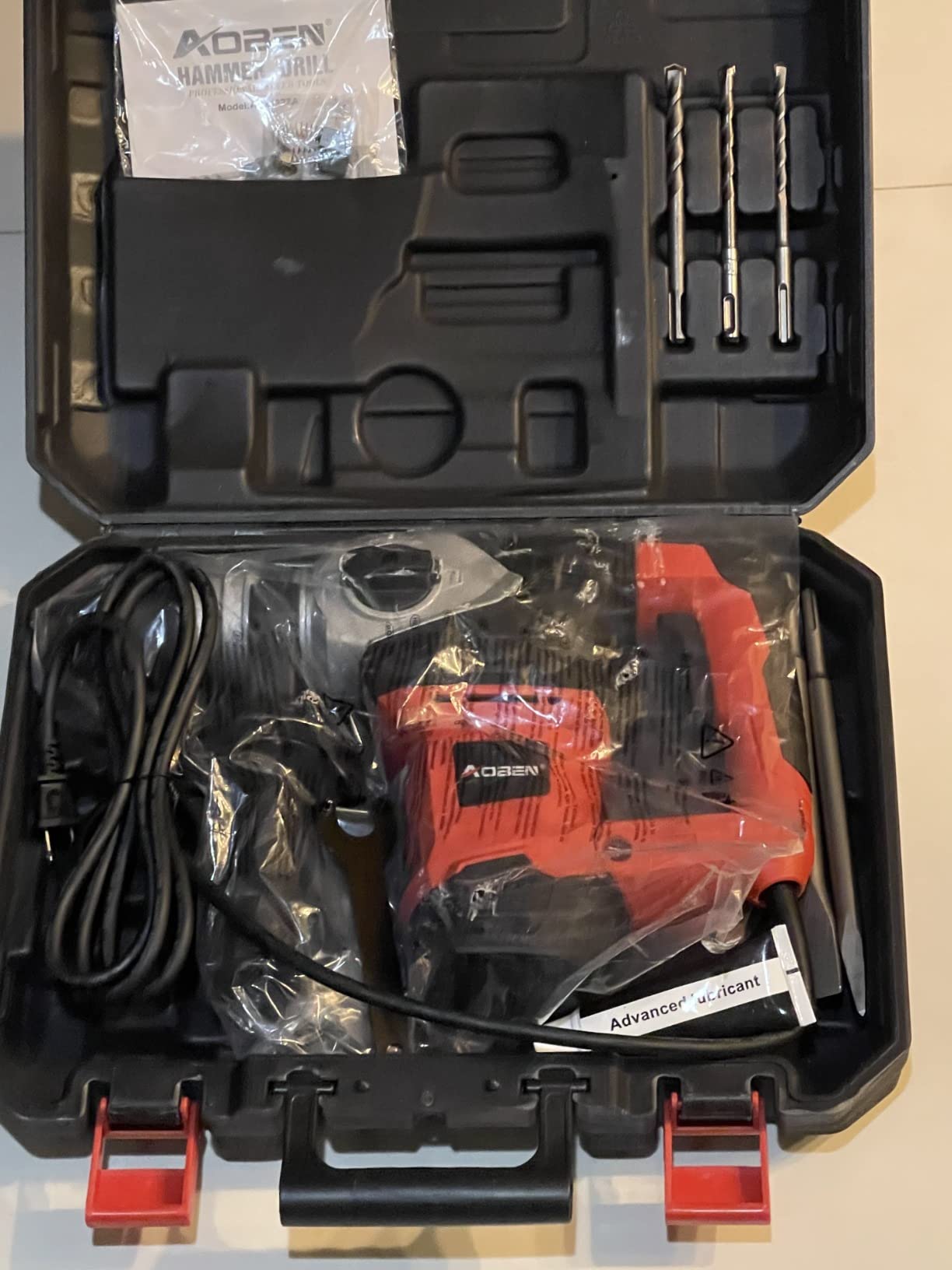
The AOBEN is the most interesting entry in the budget tier because reviewers repeatedly report it drilling stone and bedrock, which is well past what a hammer drill would attempt. It runs a 13 Amp, 1500W motor, drills up to 1-1/4 inch in concrete and 1/2 inch in metal, and handles 13 speed settings.
Three functions are available through double switch buttons: hammer only, hammer drill, and drill only. The 360 degree adjustable handle and rubber grip help with positioning, and the motor is designed with heat dissipation plus a double anti-dust bottom structure to survive long sessions. At 12 pounds it is not light, but owners describe it as well balanced for its class.
73 percent of buyers give five stars, and the recurring theme is that this tool matches or beats far more expensive Bosch and Makita rotary hammers on concrete, stone and rock. The kit is one of the more complete you will find: three drill bits in 8, 10 and 12mm, a flat chisel, a point chisel, a dirt proof boot, motor lubricant, two spare carbon brushes and a case.
Good fit for property maintenance work
This suits someone who drills into stone or block regularly and has no service network nearby. A property manager running a handheld anchor into a stone facade, or a homeowner working through stacked block, is exactly the use case that makes a 13 Amp machine with this much concrete capacity worth it.
The chipping performance gets specific mention for tile, shower pans and slabs, so it doubles as a light demolition tool. If you already own the three common bit sizes, you can use the tool immediately without a shopping trip.
Serviceability is the real trade-off
There is no dealer network behind this one. The manual is the weak point, and reviewers point out it does not explain how to load a bit clearly. The two-switch arrangement for hammer mode is genuinely confusing until you get used to it, and the grease-versus-oil servicing point is a real trap for a first-time owner.
Long-term durability carries more uncertainty than with a name-brand tool, and the carbon brush design means you will be servicing it rather than replacing a sealed assembly. For a buyer who expects a decade of service, that is the argument against. For a buyer who needs to drill stone this month, it is a very strong one.
6. DeWalt D25263K – Best Corded Rotary Hammer for Dust-Controlled Concrete Drilling
DEWALT SDS Rotary Hammer Drill, Vibration Control Shocks, 115 Volts, Corded (D25263K)
8.5 Amp / 115V
3.0 joules impact
SHOCKS vibration control
Integral anti-jam clutch
Pros
- 3.0 joules delivers fast drilling and chipping
- 8.5 Amp motor gives class-leading power for a corded SDS hammer
- Integral clutch protects the user when a bit jams
- Rotating brush ring holds full torque forward and reverse
Cons
- Corded design needs access to a power outlet
- Dust extraction requires the separate D25301D accessory
The D25263K is the corded power pick here, and 3.0 Joules puts it near the top of the SDS-plus field without moving up to a heavier frame. The 8.5 Amp motor is described as class-leading for this format, and 84 percent of ratings are five stars.
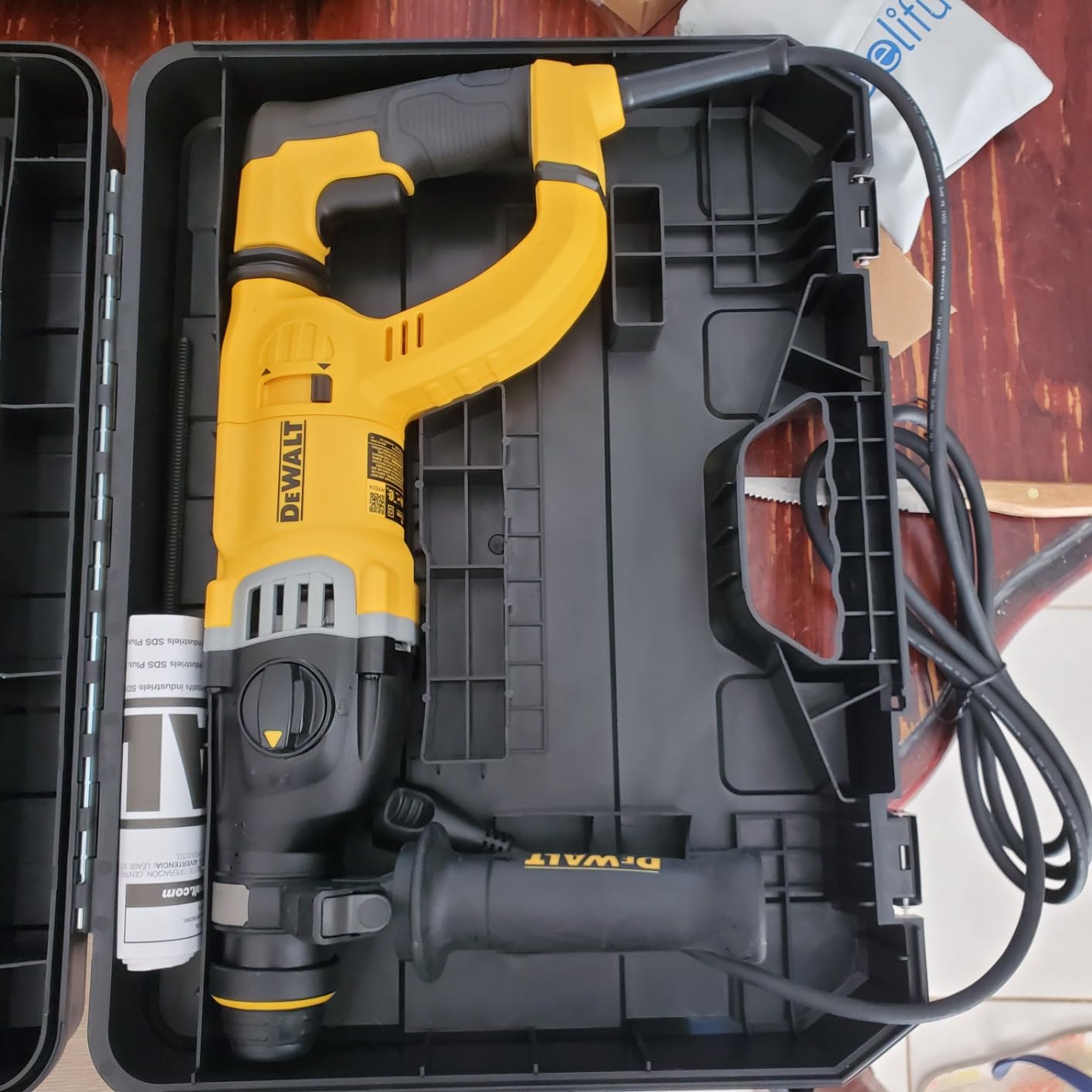
Two features make it distinctive. The integral clutch disengages torque transmission if the bit jams, which is genuine protection when you hit a rebar bar or an unexpected pipe in a wall. And it accepts the D25301D drilling dust extraction system, which is a meaningful advantage on commercial work where silica dust controls are enforced.
SHOCKS Active Vibration Control reduces what you feel at the handles, the rotating brush ring delivers full torque in both forward and reverse, and the package includes a 360 degree side handle, depth rod and kit box. A two year free service is included, which is a quiet plus for ownership cost.
When 3.0 Joules actually matters
The jump from 2.0 to 3.0 Joules is the difference between a tool that drills anchor holes and one that keeps moving when it hits denser aggregate. For high-strength concrete, or a foundation with heavy stone in the mix, the extra energy shows up as fewer stalls and faster hole depth per minute.
It is also a strong chipper. Owners report effective use on tile and thinset removal in rotation-only and hammer-only modes. If your work alternates between drilling and demolition, this hits more modes usefully than most of the lighter corded models in the group.
Where it falls short
It is corded, so you need a power outlet within reach of the work. That rules out attic work, remote site work and anything overhead on a ladder with no outlet, which is precisely where the battery models pull ahead.
The dust extraction story also needs an honest framing: the shroud and hose are a separate purchase, so the compliance benefit is only realized if you buy into the system. Manufacturer weight is not listed for this model, which makes it harder to compare fatigue directly against the Bosch and ENEACRO tools.
7. Bosch GBH2-28L – Best Rotary Hammer for Contractor Fleets and Daily Site Work
BOSCH 8.5 Amp GBH2-28L SDS-plus Bulldog Xtreme Max 1-1/8 In. Rotary
8.5 Amp / 850W
2.4 ft-lbs impact
KickBack Control sensor
D-handle design
Pros
- Multi-unit professional crews report heavy use without failure
- KickBack Control stops rotation reliably on a bit bind-up
- Counter-balanced Vibration Control cuts fatigue on long hole runs
- Compact enough for tight spaces while keeping class power
Cons
- Included storage case has flimsy internal retainers that can arrive broken
- Corded design requires a power source on site
- 120VAC only so it does not suit 230V regions
The GBH2-28L is the tool in this list with the strongest professional pedigree in the reviews, and 85 percent of ratings are five stars. It runs an 8.5 Amp motor for 2.4 ft-lbs of impact energy, with a multi-function selector covering drilling only, hammer drilling and chiseling.
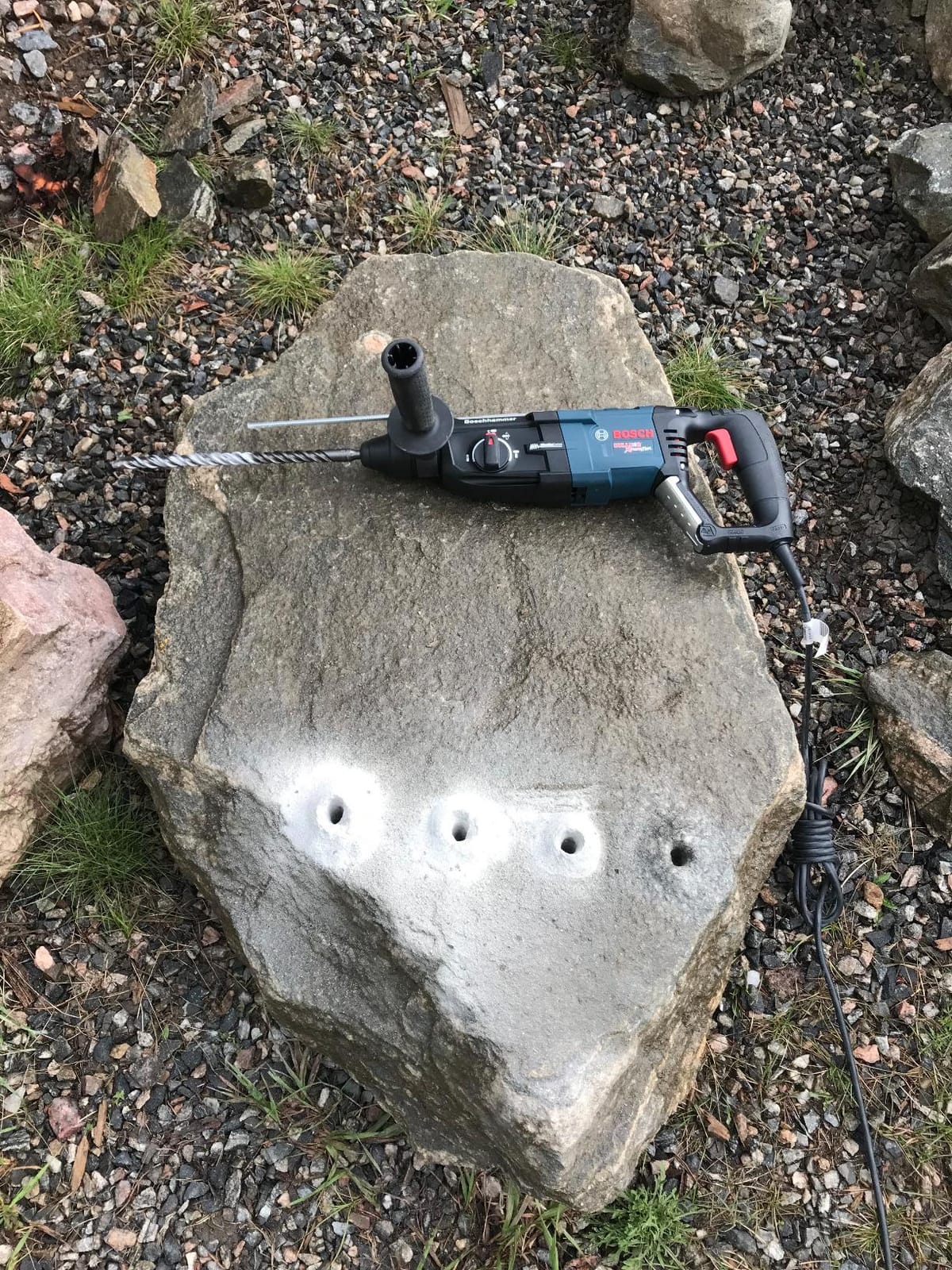
KickBack Control is the headline feature and it uses an integrated sensor to stop tool rotation during a bit bind-up, then lets you recover in reverse. In practice that means the tool does not wrench your wrist sideways when you clip rebar or hit an unexpected obstruction. Counter-balanced Vibration Control handles the fatigue side, and the D-handle works for both overhead and downward drilling.
Contractors running multi-unit fleets describe it as a workhorse that survives nine-hour days, reporting roughly 150 holes per hour with clean holes and minimal fatigue. The Vario-Lock rotates and locks the chisel to optimize working angle, a HammerHook provides job-site storage, and the SDS-plus system uses tool-free bit changes with automatic locking. It fits in the supplied case with the bits and handle attached.
Built for volume, not for one job
When you are drilling hundreds of holes a week, the deciding factors are uptime and predictability, not peak Joules. Owners report units holding up across crews and multi-unit fleet use, which is the durability signal that matters in this category. The compact body reaches tight spaces while keeping its power class.
The auxiliary handle and depth stop hold firm during use, which is a small thing that matters when you are setting anchors at a consistent depth all afternoon. It is also a sensible choice if you want a second tool that matches the feel of a tool you already own from the same brand.
The complaints are all about accessories
The most common criticism is the storage case. Owners report flimsy internal retaining pieces that sometimes arrive already broken, which is irritating rather than dangerous. Replace the case and ignore it.
It is 120VAC only, so it is not suitable for 230V regions, and being corded it needs a power source at the site. Neither is unusual for a professional corded tool, but they are worth checking before you commit if you work outside North America or on remote sites.
8. Berserker 26FA – Best Starter Rotary Hammer Kit for First-Time Concrete Drilling
Berserker 1-1/8″ SDS-Plus Rotary Hammer Drill for Concrete 26FA
9 Amp / 1050W
3.3 ft-lbs impact
1050 RPM and 4200 BPM
9.5 pound tool
Pros
- Genuine rotary hammer performance at the lowest end of the price range
- Light 9.5 pound weight helps with overhead and downward drilling
- 360 degree handle gives good control in most positions
- Kit includes bits both chisels depth gauge grease and case
Cons
- SDS-plus only so it will not take SDS-Max or standard drill bits
- Runs hot during sustained drilling and needs cooling breaks
- Some owners report early motor burnout
The 26FA is the interesting budget option in this group because its 3.3 ft-lbs, or 4.5 Joules, of impact energy is higher than several premium-brand tools in the list. A 9 Amp, 1050W motor delivers 1050 RPM and 4200 blows per minute, and the whole tool weighs 9.5 pounds.
Three modes are available through two separate switches: rotation only, hammering with rotation, and hammering only. The 360 degree adjustable accessory handle improves leverage, and an overload clutch protects your wrists and extends motor life. The aluminum alloy housing is a step up from the plastic bodies common in this class. For its price, 3.3 ft-lbs is the standout number.
78 percent of buyers give five stars. DIY owners report completing anchor holes and radon pit work quickly, and reviewers describe it as punching well above its class. The kit includes bits, both chisels, a depth gauge, grease and a carrying case, so a first-time owner can start drilling the same day.
A sensible first concrete drill
For a homeowner drilling a handful of 1/2 inch anchor holes to mount shelving, a handrail or a wall cabinet, this does the job at a fraction of the cost of a premium tool. Owner reports of anchor holes and radon pits completed quickly suggest it is not a token tool in its box.
The light 9.5 pound weight is genuinely useful for a first-time user who has not built up forearm strength, and it is one of the lighter corded options here. Chipping works too, so it handles tile and thinset removal at a basic level. The manufacturer is explicit that it suits light construction and renovation rather than heavy demolition.
Know the limits before you buy
It is SDS-plus only. That is stated clearly in the listing and it matters: the tool will not accept SDS-Max bits or standard drill bits, so it is a one-bit-system purchase and cannot be cross-fed from a premium set.
Heat build-up during sustained drilling is the recurring complaint, and owners note it needs cooling breaks during long runs. A small number also report motor burnout after only a few uses, which is a minority but real. The single speed setting is a limitation if you need to vary RPM for different bit diameters. Treat it as a capable intermittent-duty tool, not a production machine.
9. Bosch RH328VC – Best Rotary Hammer for Long Concrete Drilling Sessions
BOSCH 8.0 Amp RH328VC SDS-plus 1-1/8 In. Rotary Hammer for Concrete
8.0 Amp / 850W
2.4 ft-lbs impact
7.7 pound tool
Three operating modes
Pros
- Exceptionally light at 7.7 pounds while still delivering 2.4 ft-lbs
- Vibration Control in both the hammer mechanism and the grip
- Integral clutch prevents injury when a bit binds
- Vario-Lock with reverse frees stuck bits and starts holes accurately
Cons
- Highest price point among the tools compared
- 900 RPM maximum is slower than several alternatives
- Limited one year manufacturer warranty
The RH328VC solves a problem the other corded models create: fatigue. At 7.7 pounds it is roughly four pounds lighter than most 8 to 13 Amp rotary hammers here, and it still delivers 2.4 ft-lbs of impact energy from an 8.0 Amp motor. 85 percent of ratings are five stars.

Vibration Control is built into both the hammer mechanism and the grip area, so the reduction is not limited to the handle. The integral clutch disengages torque transmission if the bit binds, and the Vario-Lock system with reversing handles accurate bit starting and removal of a bound bit. The 360 degree rotating auxiliary handle keeps control in any position, and the multi-function selector covers rotary hammer, rotation only and hammer only.
The SDS-plus shank system takes bits up to 1-1/8 inch diameter. Owners emphasize the low weight paired with the impact energy, which makes long overhead and anchor-drilling sessions the realistic use case. This is the power-to-weight balance you want when the job is a full day of holes rather than a weekend project.
Who this light corded hammer suits
Anyone doing high-volume anchor work in a finished interior, or drilling repeatedly into soffits and ceilings, will feel the weight difference within the first hour. At 7.7 pounds you can hold it one-handed for short bursts and reposition quickly, which speeds up layout work considerably.
It is also a competent chipper for tile and light concrete removal, so it is not a single-purpose anchor tool. If you are sensitive to hand and arm fatigue, or you have an existing joint issue, the vibration control in both the mechanism and the grip is the reason to pick this over a heavier 8 Amp model with similar power.
The cost-of-ownership picture
This is the most expensive tool in the group, and the one year manufacturer warranty is the shortest offered. Forum discussion of this category turns often on service parts, and owner reviews here do not flag an assembly-only parts problem the way Bosch owners describe for some other models in the range.
The other compromise is speed. At 900 RPM maximum it is slower than several alternatives in the list, so a given hole takes marginally longer to open up. For 1/2 inch and smaller anchor holes the lighter weight usually matters more than the RPM difference.
10. DOVAMAN RH15A – Best Rotary Hammer for Brick, Block and Heavy Masonry
1-9/16” SDS Rotary Hammer Drill, 12.5Amp Heavy Duty Rotary Hammer
12.5 Amp / 1500W
7 joules impact
0-900 RPM and 0-4350 BPM
Four functions
Pros
- Genuinely powerful for the price on brick and reinforced concrete walls
- Four functions including chisel position adjustment
- Extensive kit with adaptor chuck bits both chisels spare brushes and case
- Rubber overmold grip and vibration damping improve comfort
Cons
- Heavy at 12.3 pounds bare causing arm fatigue
- Mode selector switch is stiff and takes significant travel
- One isolated report of a dead-on-arrival unit
- Listed 230V voltage conflicts with the stated 120V US supply
The RH15A is built for masonry rather than delicate work. It runs a 12.5 Amp, 1500W motor producing 5.2 ft-lbs, or 7 Joules, of impact energy, with 0 to 900 RPM and 0 to 4350 no-load blows per minute. Maximum drilling capacity is 1-1/4 inch in concrete and 1-9/16 inch in wood.
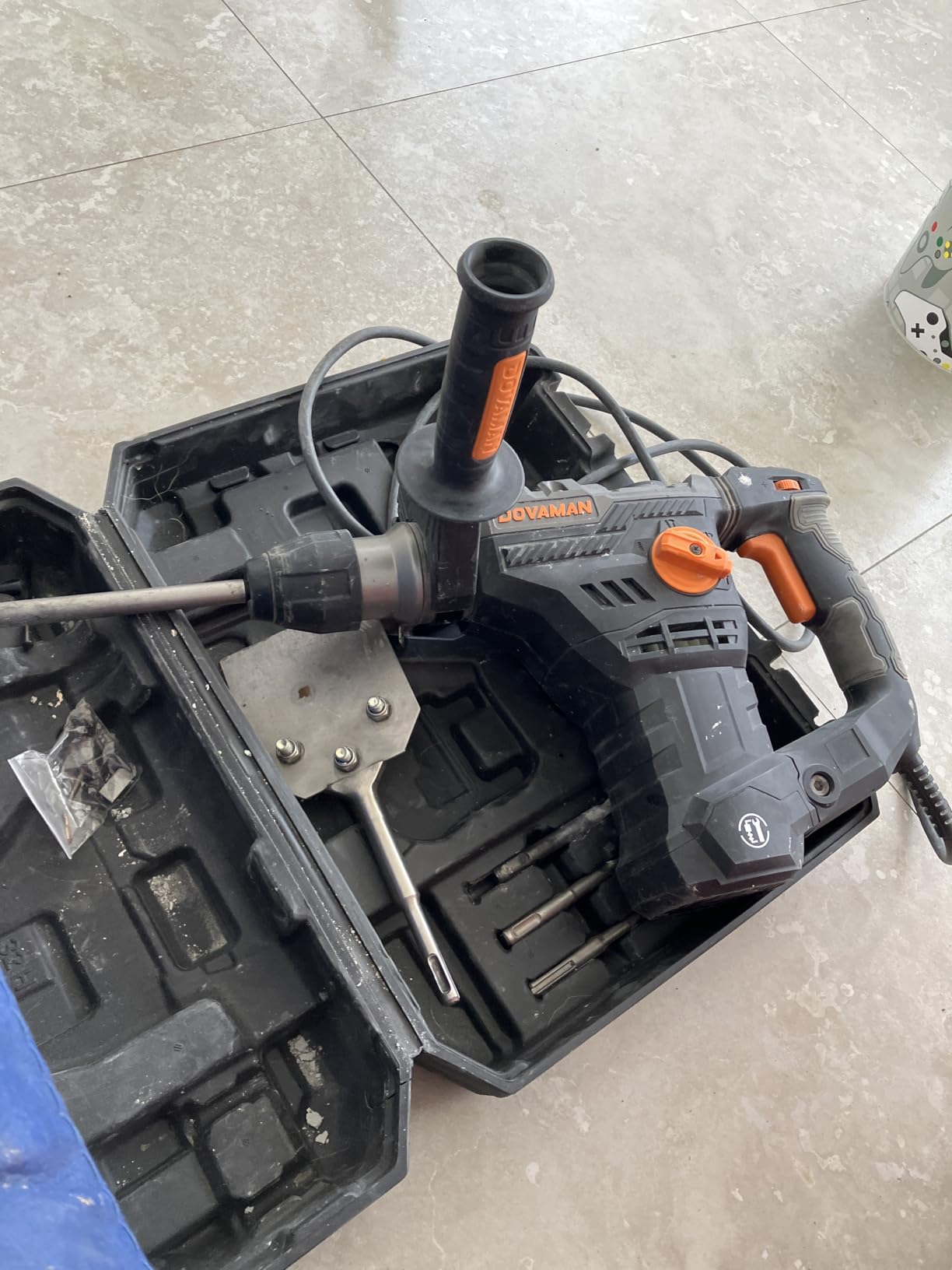
Four functions come from a side multifunction selector: chiseling, hammer drill, drill only, and chisel position adjustment. That last setting is uncommon at this level and it matters for scraping and light breaking. Upgraded vibration damping technology, a rubber overmold microtexture grip, and a 360 degree adjustable auxiliary handle cover the handling side, while a safety clutch prevents motor overload.
77 percent of buyers give five stars, and owners describe chewing through brick and reinforced concrete walls. The kit is the most extensive in this group: an SDS-plus adaptor, chuck key, three SDS-plus bits in 8, 10 and 12mm, ten inch flat and point chisels, two carbon brushes, a depth gauge, a wrench, a dust collector, grease, a manual and a case.
The case for a masonry-first tool
If your work is brick, block or old poured concrete rather than clean modern slab, the 7 Joules is the argument. Harder masonry punishes a 2 to 3 Joule tool with stalls and slow progress, and this one simply keeps going. The adaptor chuck also means you can use standard SDS-plus bits, which widens your bit options considerably.
Easy brush changes and straightforward lubrication are real ownership benefits on a machine at this power level. And the anti-dust structure plus heat dissipation design are sensible for a tool that will live in a dusty work truck. The dust collector in the kit is a small but useful addition for drilling overhead.
Where it becomes a problem
At 12.3 pounds bare and 18.1 pounds with accessories, this is a heavy tool. That is a fair trade for power, but it makes overhead work tiring and it is not something you want to hold in a crawlspace. The stiff mode selector needing significant travel is a complaint that comes up repeatedly in the reviews.
There is also a documentation problem worth flagging: the listing states 230 volts while also stating it operates on a 120V US supply. Confirm the version with the seller before ordering if voltage matters to you. One isolated dead-on-arrival report exists in the reviews, and at 4.5 stars with 690 reviews, this is the model to scrutinize most carefully on arrival.
11. Milwaukee 2912-20 – Best Compact Cordless Rotary Hammer for Tight Spaces
Milwaukee 2912-20 M18 Fuel 18V 1″ Sds Plus Brushless Rotary Hammer
M18 FUEL 18V cordless
7.5 pound body
1 inch SDS-plus chuck
AUTOSTOP control
Pros
- Tied for the highest average rating in the group at 4.8 with 89 percent five-star
- Compact body reaches tight spaces while matching larger corded models
- AUTOSTOP senses bind-ups and stops the tool to protect your wrist
- Battery swaps across the whole M18 System
Cons
- Bare tool only so battery and charger cost extra
- Consumes battery quickly on sustained heavy drilling
- High-amp M18 batteries are recommended for heavy work
The 2912-20 is the compact cordless option, and 89 percent five-star ratings make it the most uniformly praised tool in the group. It runs on the M18 FUEL brushless platform, turns up to 1330 RPM, and weighs 7.5 pounds with a 1 inch SDS-plus chuck.
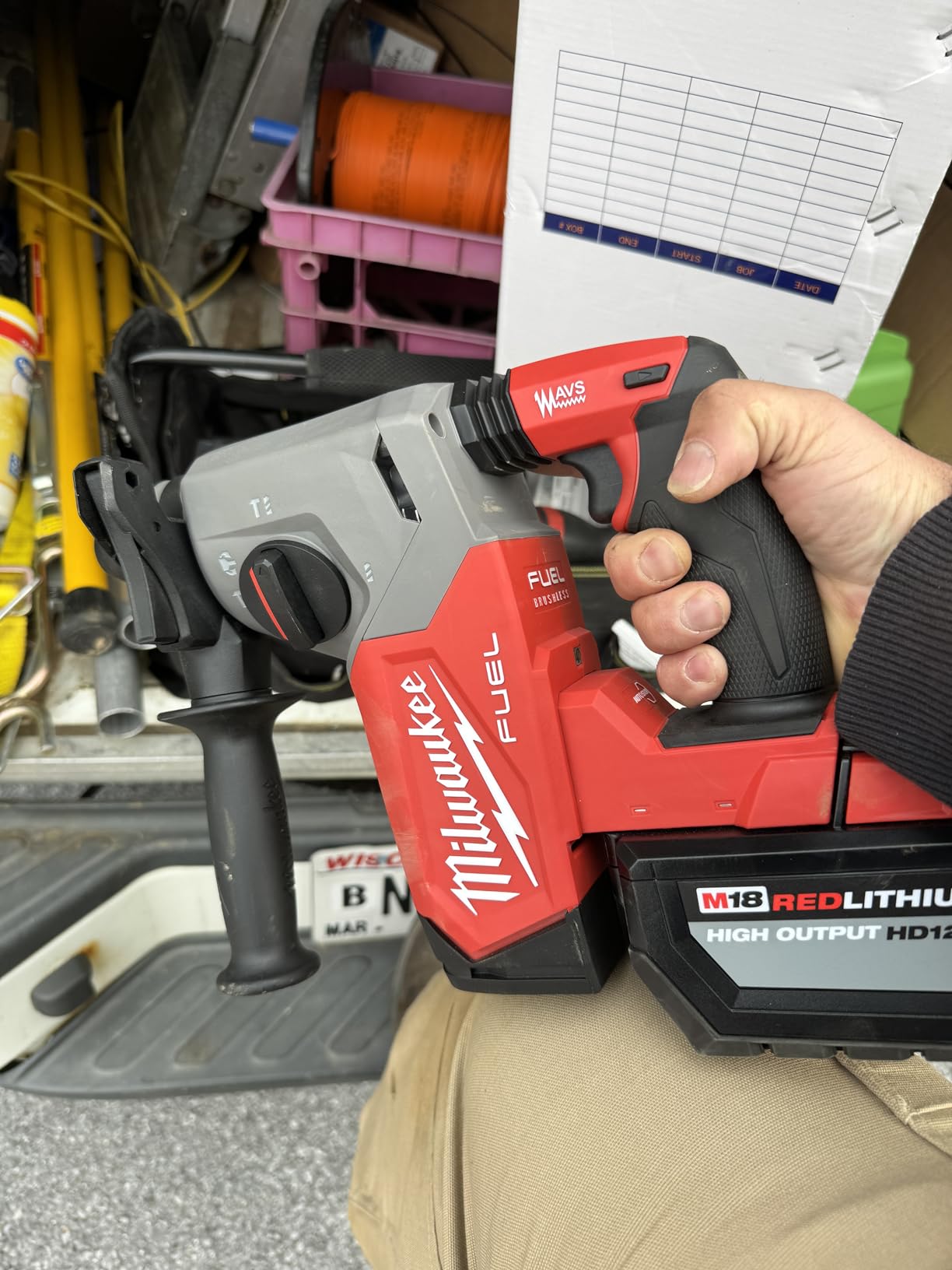
AUTOSTOP Control senses bind-ups and stops the tool, which is the Milwaukee equivalent of the Bosch KickBack sensor and serves the same protective purpose. Vibration control reduces user fatigue, and the compact body is designed to reach hard-to-access spaces where a full-size corded hammer simply will not fit.
Forum discussion on r/MilwaukeeTool repeatedly praises the 2912-20 for exactly that combination: compact size that fits tight spaces, paired with better battery efficiency than equivalent DeWalt setups for some users. It is part of the M18 System, so if you own any Milwaukee M18 tools the battery question disappears entirely. Drilling capacity is listed at 0.5 inch in metal and 1.13 inch in wood.
Where compactness changes the job
Between studs, inside a cabinet cavity, in a mechanical room, or at the back of a finished wall, reach matters more than peak energy. This is the tool that keeps working in places where you would otherwise have to fish a corded hammer around an obstacle. For 1/4 inch and smaller anchors in those spots, it is very capable.
The AUTOSTOP feature deserves more attention than it usually gets. On a battery tool that can be handed to anyone on a crew, having the rotation stop on a bind-up is a meaningful safety improvement. It also means you are far less likely to strip an anchor hole by over-pushing when the bit catches something.
Battery cost and consumption
This comes as a bare tool, and owners note that high-amp M18 batteries are recommended for heavy drilling work. The other recurring caveat is battery consumption on sustained concrete drilling, which is the common complaint across every battery model in this roundup rather than a specific fault.
At 620 reviews this has the smallest review base here, and at 4.8 stars that is reassuring rather than concerning. If you already run M18 packs it is the easy choice. If you are starting from zero on a battery platform, the total cost of batteries is a bigger factor than the tool price and may favour the DeWalt models instead.
12. Berserker 42M – Best Rotary Hammer for Demolition and Heavy Chiseling
Berserker 1-9/16″ SDS-Max Heavy Duty Rotary Hammer Drill for Concrete 42M
13 Amp / 1600W
10 joules impact
0-630 RPM and 0-3800 BPM
SDS-Max chuck
Pros
- Enormous destructive capability for concrete and granite
- 10 Joules makes it comparable to a light demolition hammer
- 6-speed transmission gives real control when chiseling blocks
- Includes an SDS-Max to SDS-plus adapter chuck for standard bits
Cons
- Heavy at 16 pounds and tiring over long sessions
- Runs hot and the speed control can stop responding when hot
- No drill-only mode so rotation-only drilling is unavailable
- Included carrying case is flimsy
The 42M is the most powerful tool in this roundup by a wide margin, and the only SDS-Max model on the list. A 13 Amp, 1600W motor delivers 7.38 ft-lbs, or 10 Joules, of impact energy at 0 to 630 RPM and 0 to 3800 blows per minute.
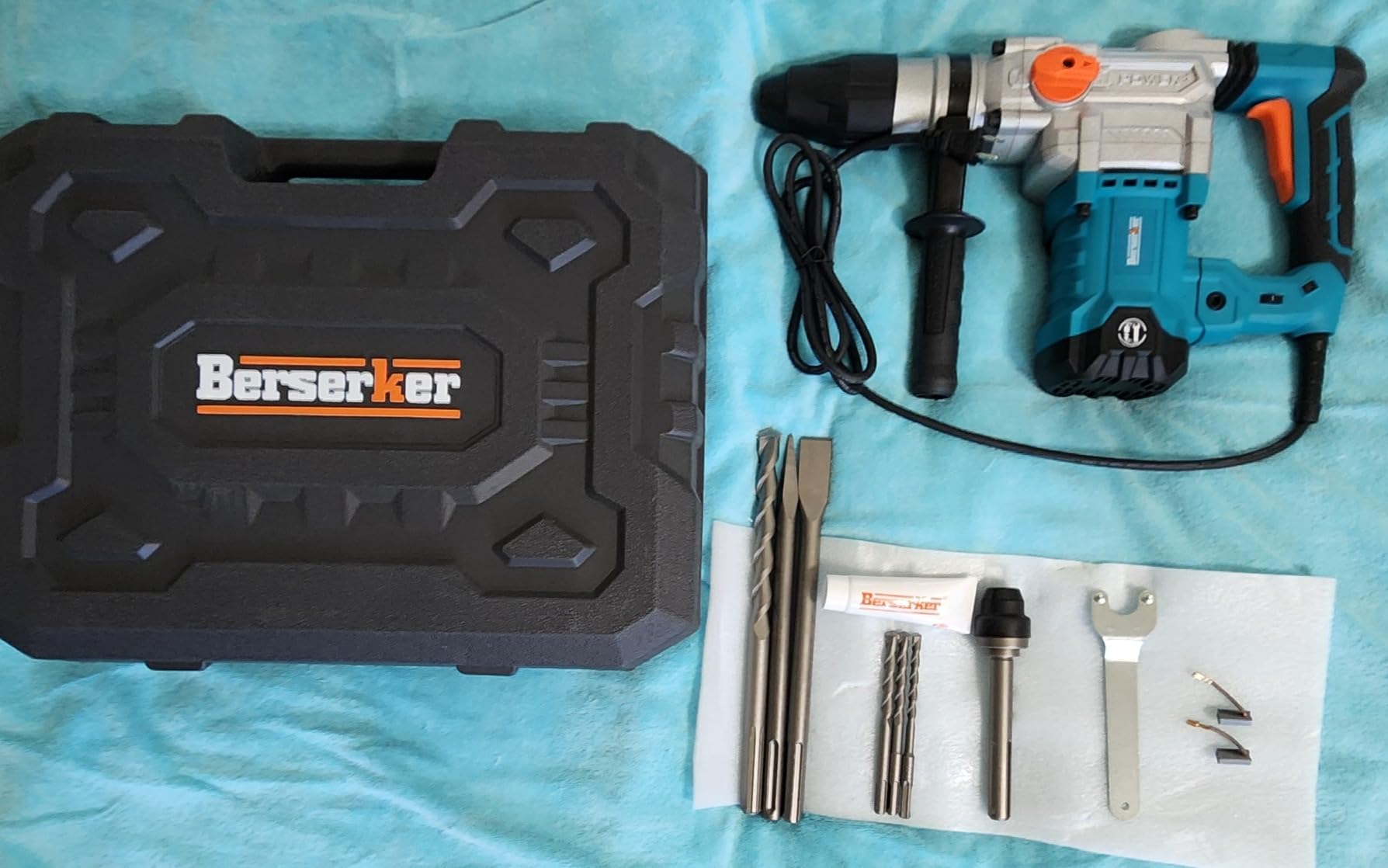
That energy puts it in light demolition hammer territory, and owners describe breaking up concrete and granite quickly. The 6-speed transmission gives you real control when chiseling rather than a single on-or-off hammer rate, and the SDS-Max chuck uses tool-free bit changes with automatic locking plus Vario-Lock for chisel positioning. Upgraded anti-vibration technology and an overload clutch protect both the tool and your wrists on a snag.
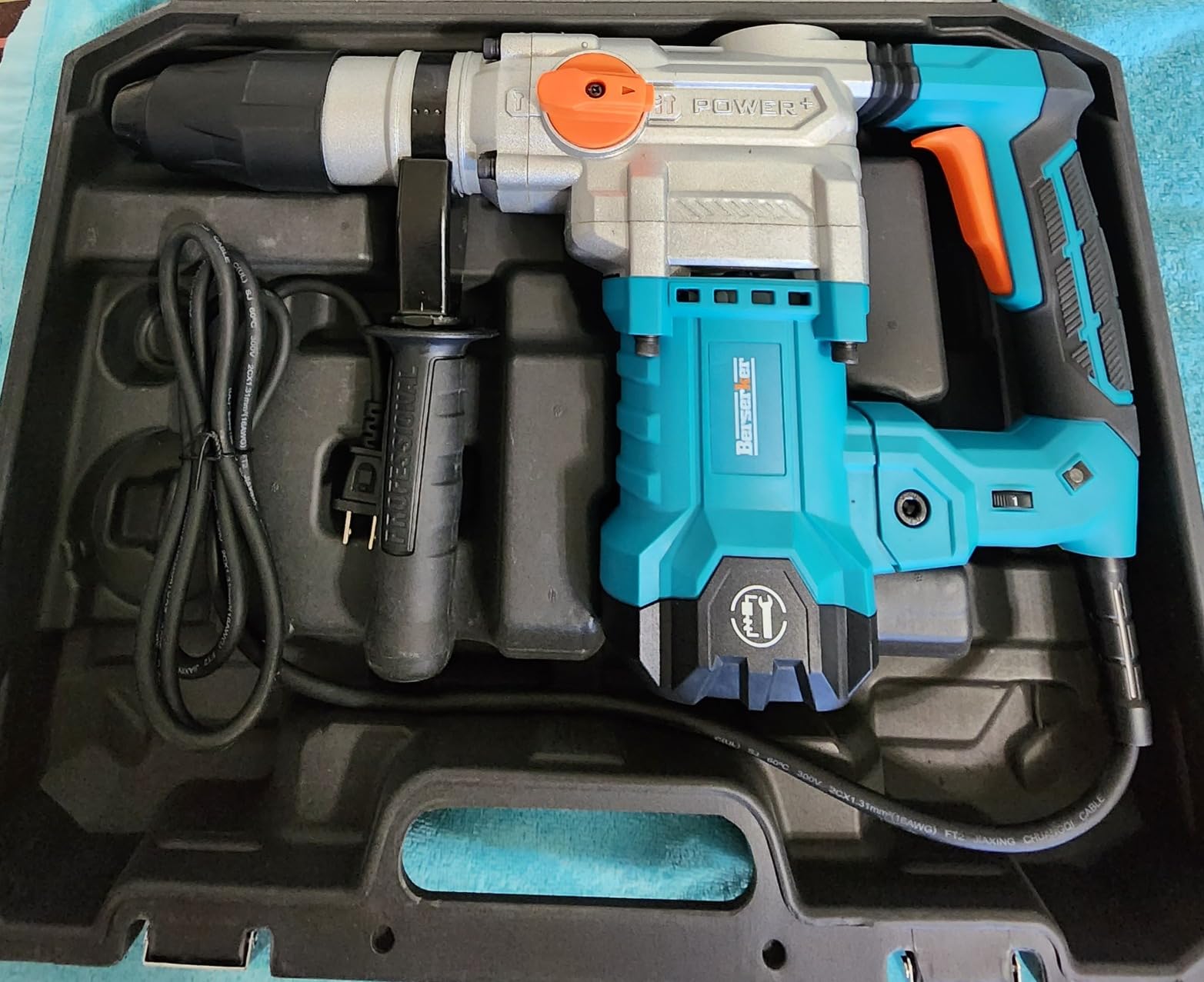
74 percent of buyers give five stars, and the feedback centres on value: sidewalk work, boulders and granite at a fraction of name-brand SDS-Max pricing. The included SDS-Max to SDS-plus adapter chuck is a thoughtful addition that lets you use the standard bit set you already own. If you are interested in the heavier class of machine, our guide to SDS-Max rotary hammers for demolition goes deeper into the tool weight and bit cost tradeoffs.
When 10 Joules is the right answer
Large diameter holes, heavy chiseling, and hard material are the use cases. If you are cutting 1-1/2 inch holes for a plumbing rough-in, breaking a section of sidewalk, working in granite or dense stone, a 3 Joule SDS-plus tool will take dramatically longer and stall often. This one is built for that class of work.
Owners report holding up after 100-plus holes in granite over extended use, and the 6-speed transmission makes it usable as a controlled breaker rather than just a hammer. The adapter chuck means you can handle smaller anchor holes in the same session without switching machines, which is a real efficiency gain on a mixed job.
The cost of that power is weight and heat
At 16 pounds this is a two-handed, tiring tool, and owners report arm fatigue on long sessions. It also runs hot with continuous use, with the speed control sometimes becoming unresponsive when the motor is hot, so you need cooling pauses on a big job.
There is no drill-only mode, which means rotation-only drilling is not available. That rules out driving fasteners and some delicate work, so this cannot be your only drill. The included case is flimsy, frequent greasing is required under heavy load, and a small number of owners report early mechanical failure and difficulty with warranty claims. Buy it for demolition capability, not as an all-purpose household hammer.
How to Choose a Rotary Hammer for Concrete Drilling
Choosing between twelve capable tools comes down to four questions: how big is your hole, how hard is the concrete, where is the power coming from, and how long is the session. Get those four right and the model shortlist is easy. Get them wrong and you will either overpay for capability you will never use or stall out halfway through a job.
Impact energy is the number that matters most
Impact energy, measured in Joules or foot-pounds, is the single most useful spec for concrete drilling, and it is the one number that separates the tools in this list by a factor of ten. A standard hammer drill delivers roughly 1 Joule or less and stalls on anything larger than about half an inch, or when it meets rebar. A rotary hammer in this group runs from 2.0 ft-lbs up to 10 Joules.
Map the Joules to the job rather than chasing the biggest number. Under 2.5 Joules handles 1/4 inch and smaller anchors, 3/8 inch holes and light duty drilling in standard concrete. Between 2.5 and 4 Joules covers 1/2 inch wedge anchors and sustained anchor work. Above 5 Joules is for brick, block, high-strength concrete, holes over half an inch, and real chiseling. Above 8 Joules, you are looking at demolition-class work.
Blows per minute matters too, and the numbers here range from 3800 on the SDS-Max model to 5800 on the Bosch Bulldog. Higher BPM with lower Joules gives a faster cutting rate on small bits. Higher Joules with lower BPM gives raw breaking force. Neither is universally better.
SDS-Plus or SDS-Max: match the chuck to the hole
SDS-plus and SDS-Max are not quality levels. They are different bit systems with different diameters, and the chuck you buy determines the largest hole you can ever drill. Getting this wrong is the most common expensive mistake in this category.
SDS-plus covers up to about 1 inch of concrete drilling in most consumer and light professional tools, with bits ranging from 1/4 inch to 1 inch. SDS-Max is a heavier shank and covers roughly 5/8 inch to 1-3/4 inch and beyond, always paired with much higher impact energy. If you only need 1/2 inch anchor holes, SDS-plus is all you need and it is the better tool for the job.
A practical rule: measure your largest required hole diameter, then pick the bit system one step above it. The Berserker 42M includes an SDS-Max to SDS-plus adapter, which is a useful example of a tool covering both without a second purchase. Our wider breakdown of the best rotary hammers for concrete covers the general-purpose picks if you have not narrowed the format yet.
Rotary hammer or hammer drill: the mechanism is the whole difference
A hammer drill still uses a rattling, gear-driven mechanism that produces under 1 Joule. A rotary hammer uses a motor-driven crank and piston that physically drives the bit forward with each blow. The forum consensus on r/Tools is blunt about this: for concrete, a rotary hammer is categorically better, and no amount of quality in a hammer drill closes the gap.
This matters most in high-strength concrete, where a hammer drill simply stalls. The related pain point is common: hammer drills marketed as being for concrete stop dead at half an inch or on rebar, and owners feel misled. That failure mode is the single best reason to buy a rotary hammer instead.
The exception is small work. If you are setting a handful of quarter inch anchors for a shelf, a good hammer drill is enough. If you expect to spend more than an hour in concrete, buy a rotary hammer.
Corded or cordless: match the power source to the site
Corded tools deliver more impact per dollar and never run out mid-hole. The 12.5 Amp and 13 Amp models here push 7 to 10 Joules, which no battery in this roundup matches. If you have an outlet near the work, corded is the stronger and cheaper answer.
Cordless wins on mobility, overhead work and sites with no reliable power. The DeWalt DCH273B at 6.4 pounds and the DCH133B at 5 pounds are genuinely usable above your head in a way a 12 pound corded hammer is not. The trade is battery consumption on sustained concrete work, plus the cost of batteries if you do not already own a platform.
Think about platform before model. Buying into a battery system you already own makes the cordless tool effectively cheaper to run than any corded alternative. If you own nothing, weigh the battery cost before choosing.
Vibration control, handles and modes are not accessories
Vibration is what actually wears out a user on a long concrete job. Every major brand offers its own system: SHOCKS Active Vibration Control on the DeWalt models, counter-balanced Vibration Control on the Bosch, and vibration control on the Milwaukee. On a 1 inch hole four inches deep, this affects whether you finish the hole or put the tool down.
Handle configuration matters just as much. A D-handle, like the Bosch 11255VSR and DeWalt DCH133B, gives two-handed control for overhead and downward drilling. An L-handle with a 360 degree rotating side handle is lighter and easier to reposition for anchor work at waist height.
Check the mode selector too. Three modes covering rotation only, hammer drill and hammer only is the baseline. The four-function tools here add a chisel position adjustment, which is a real advantage for scraping and light breaking. The SDS-Max model has no rotation-only mode at all, so it cannot substitute for a normal drill.
Bits, chisels and dust control complete the kit
Every rotary hammer review raises the bit problem, and it deserves its own answer. Cheap bits drill slowly, and a slow hole is what wears out a motor. The list that matters: masonry bits in the diameters you need, a flat chisel for tile and thinset, a point or bull point chisel for breaking, and a scaling chisel if you are cleaning up edges.
On dust, the situation has changed. Silica dust from concrete is a regulated exposure, and two tools here are designed around that. The DeWalt DCH273B becomes OSHA Table 1 compliant when paired with the DWH303DH On Board Extractor, and the D25263K accepts the D25301D drilling dust extraction system. If you are drilling many holes indoors for someone else, budget for the shroud and hose.
Finally, think about serviceability before you commit. Forum users raise this constantly, and the pattern is consistent: some brands now offer assembly-only replacement parts, which turns a routine repair into a much larger cost. Long-term durability is the biggest trust signal in this category, and reports of 10 to 30 years of service from a single tool are common with established rotary hammer designs.
Frequently Asked Questions
Will a rotary hammer drill through concrete?
Yes. A rotary hammer uses a motor-driven piston to deliver real impact energy into the bit, typically 2 to 10 Joules in the models we compared, while a standard hammer drill delivers roughly 1 Joule or less. That is why a rotary hammer cuts standard concrete in minutes where a hammer drill stalls at half an inch. The one thing no rotary hammer can drill through is rebar, which you have to work around.
What is the best rotary hammer on the market?
The ENEACRO ENRH3201 is the best rotary hammer for concrete drilling overall in this roundup, delivering 7.4 Joules of impact energy from a 13 Amp corded motor with a 1-1/4 inch maximum concrete capacity. If you want a more established brand and a lighter D-handle design for overhead work, the Bosch 11255VSR Bulldog Xtreme is the alternative most buyers end up choosing.
Which rotary hammer drill is best for concrete?
For a homeowner setting anchors and drilling holes up to 1 inch, the ENEACRO ENRH3201 or the Bosch 11255VSR are the strongest choices. For overhead work, the 5 pound DeWalt DCH133B and the D-handle Bosch handle the weight better. For heavy brick and block work, the 7 Joule DOVAMAN RH15A and the 10 Joule SDS-Max Berserker 42M have the impact energy you need.
Which is better for concrete, SDS or SDS Plus?
SDS-plus is the right answer for almost all homeowner and light professional work, covering holes from 1/4 inch to about 1 inch. SDS-Max is a heavier shank for holes from roughly 5/8 inch up to 1-3/4 inch and beyond, and it always pairs with much higher impact energy. Measure your largest hole, then pick the system one step above it rather than buying a bigger chuck than you need.
What is the best hammer drill machine for concrete?
If you need a machine specifically labelled for concrete, a rotary hammer is the correct answer and a hammer drill is not an upgrade. The best model depends on the job: the ENEACRO ENRH3201 for overall power, the DeWalt DCH273B for cordless sites, and the Bosch GBH2-28L for professional daily use. A hammer drill is only acceptable for a handful of quarter inch anchors.
Is a rotary hammer worth it?
Yes, if you expect more than an hour of concrete work. The gap in impact energy between a rotary hammer and a hammer drill is the difference between finishing a hole and stalling in it. For a single small job, renting a rotary hammer is often the better economic choice. If you are setting anchors regularly, a rotary hammer pays for itself in the first few hours of use.
Is a rotary hammer good for breaking concrete?
For light to moderate breaking, yes. Hammer-only mode on the models here handles tile, thinset, and light concrete removal, and the 10 Joule SDS-Max Berserker 42M reaches genuine light demolition hammer capability. For breaking an entire slab, you want a dedicated demolition hammer instead, because rotary hammer chucks and gear trains are not built for sustained impact work.
What are the downsides of rotary drilling?
The main drawbacks are weight, vibration, heat and battery consumption. Most corded models here weigh between 7.7 and 16 pounds, which makes overhead work tiring. Sustained concrete drilling drains battery packs faster than most buyers expect. Some budget models run hot and need cooling breaks, and rebar will stop any rotary hammer regardless of impact energy.
The Best Rotary Hammer for Concrete Drilling in 2026
The ENEACRO ENRH3201 is the pick. Seven Joules of impact energy, a 1-1/4 inch concrete capacity, four operating modes and a full bit and chisel kit make it the strongest answer to the question of which is the best rotary hammer for concrete drilling in 2026. At 12.6 pounds it is a heavy tool, so if weight is your binding constraint the answer changes.
Pick the Bosch 11255VSR Bulldog Xtreme if you want a lighter D-handle and a name with a long service record, especially for overhead anchor holes. Pick the DeWalt DCH273B if there is no outlet on site. Pick the DeWalt DCH133B if you are drilling upward and five pounds matters more than anything else. Pick the Berserker 42M if you need holes larger than an inch or real breaking power, and accept sixteen pounds and no drill-only mode as the cost.
One last piece of practical advice that no spec sheet covers. Hold the tool firmly and control it rather than pressing down harder. Users on trade forums are consistent that leaning into the hammer is what causes binds, stalls and premature failure, while steady moderate pressure lets the piston do the work. If you need to check hole depth as you go, our guide to rotary laser levels for construction covers the layout side of the job.