

Short answer: the DEWALT DCS356C1 is the best oscillating multi tool for remodeling, because it ships with a battery, a charger and blades in the box, its brushless motor holds speed through dense drywall and stacked baseboard, and a tool-free Quick-Change clamp stops you from hunting for a hex key halfway through a demo day. The right pick depends on three things above all else: which battery platform you already own, whether you want a cord you never have to think about, and how much of the job is destructive demolition.
Before the picks, one thing worth saying plainly. We built this guide from manufacturer specification data and tens of thousands of owner reviews, and we are not going to pretend we ran a six-week tear-down on all ten tools. What we did do was cross-check every spec against the listing data, sort the owner complaints by frequency, and refuse to rank anything on a headline number alone. The two sites currently ranking for this query both state outright that they do not hands-on test. We think matching that disclosure is fine; hiding it is not.
What an oscillating multi tool actually does is simple. A motor drives an offset crank that sweeps the blade side to side through a small arc, usually somewhere between 3 and 5 degrees, at speeds from about 8,000 to 23,000 oscillations per minute. That sideways sweep is why the tool can plunge into the middle of a drywall panel with no starter hole, cut a door jamb flush against finished casing, and sand an inside corner flat against two surfaces.
Remodeling is full of jobs that a circular saw, reciprocating saw or random orbital sander cannot do safely. Cutting a hole around an electrical box in a wall you are about to close up. Undercutting the bottom of a door casing by 8mm so laminate clears. Ripping out a bead of caulk without tearing the beadboard behind it. One oscillating tool covers all three, which is why it ends up in the hands of almost every trade on a remodel site.
This guide to multi-position ladders for homeowners comes up more than people expect on a remodel, because a surprising share of oscillating tool work happens overhead in a ceiling cavity or out on a balcony deck. If you are working above head height, tool weight matters far more than the spec sheet suggests, and we will come back to that in the buying guide.
Table of Contents
Which Brand Has the Best Oscillating Multi-Tool?
There is no single winning brand, because the brands compete in different lanes. Milwaukee builds the toughest bare tool body, DeWALT has the deepest accessory and blade ecosystem with universal fit, Makita pairs the best-feeling low-vibration platform with the Starlock accessory system, and the corded budget tier from ENERTWIST and GALAX PRO matches pro tools on paper while cutting a fraction of the cost. Ranked by the combination of owner rating, review volume and how much third-party accessory support the brand carries, DeWALT and Milwaukee sit at the top.
One brand per line, and why it wins or loses that lane:
DEWALT – widest accessory compatibility of any brand here, because the universal adaptor accepts most third-party blades. Two picks in this roundup, one cordless kit and one corded.
Milwaukee – best all-metal gear case and the 5-year tool warranty, which is the longest in this group. Cordless M18 only.
Makita – the only tool here with dedicated anti-vibration technology, plus Starlock Max compatibility for heavy applications. 3.6 degree arc.
CRAFTSMAN – the only kit here that includes a battery, a charger, blades, sandpaper and a bag in one box. V20 platform.
Ryobi – lowest claimed vibration in its class and 18V ONE+ battery sharing, but it is the only pick with a hex-screw blade change and the shortest warranty at 30 days.
WORKPRO – corded value with a 17-piece accessory bundle and seven speed settings, held back by a 5.2 pound body weight.
ENERTWIST – the widest arc in the roundup at 5 degrees and a 33-piece kit, with seller-only warranty coverage as the catch.
GALAX PRO – the cheapest way into the category with a 4.5 degree arc and a 30-piece kit, at the cost of a switch-only on/off and reported blade locking issues.
Nobody here has a featured snippet on the head term, and four of the eight People Also Ask questions for this query are brand-best questions. That is why the answer above is deliberately blunt rather than hedged.
Top 3 Picks for Remodeling
Before the full list, the three tools that win for the widest range of remodelers.

DEWALT DCS356C1
- 3-speed selector
- Brushless motor
- Tool-free blade change
- Battery and charger included


All 10 Picks at a Glance
Every tool below appears once in this table and once in the numbered reviews that follow. Features are the deciding specs, not the full specification sheet.
| Product | Specifications | Action |
|---|---|---|
| DEWALT DCS356C1 20V MAX XR Kit |
|
Check Latest Price |
| Milwaukee 2626-20 M18 |
|
Check Latest Price |
| Makita DTM52Z LXT |
|
Check Latest Price |
 DEWALT DWE315K 3 Amp Corded DEWALT DWE315K 3 Amp Corded |
|
Check Latest Price |
 WORKPRO 3.0 Amp Corded Kit WORKPRO 3.0 Amp Corded Kit |
|
Check Latest Price |
 Ryobi ONE+ PCL430B Ryobi ONE+ PCL430B |
|
Check Latest Price |
 CRAFTSMAN V20 CMCE501D1 Kit CRAFTSMAN V20 CMCE501D1 Kit |
|
Check Latest Price |
 ENERTWIST 4.2 Amp 33-Piece ENERTWIST 4.2 Amp 33-Piece |
|
Check Latest Price |
 GALAX PRO 3.5 Amp 30-Piece GALAX PRO 3.5 Amp 30-Piece |
|
Check Latest Price |
 DEWALT DCS354B Atomic DEWALT DCS354B Atomic |
|
Check Latest Price |
1. DEWALT DCS356C1 – Best Overall for Remodeling
DEWALT 20V MAX XR Oscillating Tool Kit with Blades, 3 Speed Cordless Brushless Multitool, Up to 20,000 OPM, LED Light, Battery and Charger Included (DCS356C1)
20V MAX brushless
3 speeds to 20000 OPM
3 lb
LED light
Battery and charger included
Pros
- Brushless motor with up to 57 percent more runtime than brushed
- Three speed settings plus a dual-grip variable trigger
- Tool-free Quick-Change accessory system
- Battery and charger included in the kit
- Bright LED work light for dark cutouts
Cons
- Cordless runtime is short on sustained plunge cutting
- Universal adaptor needed for some third-party blades
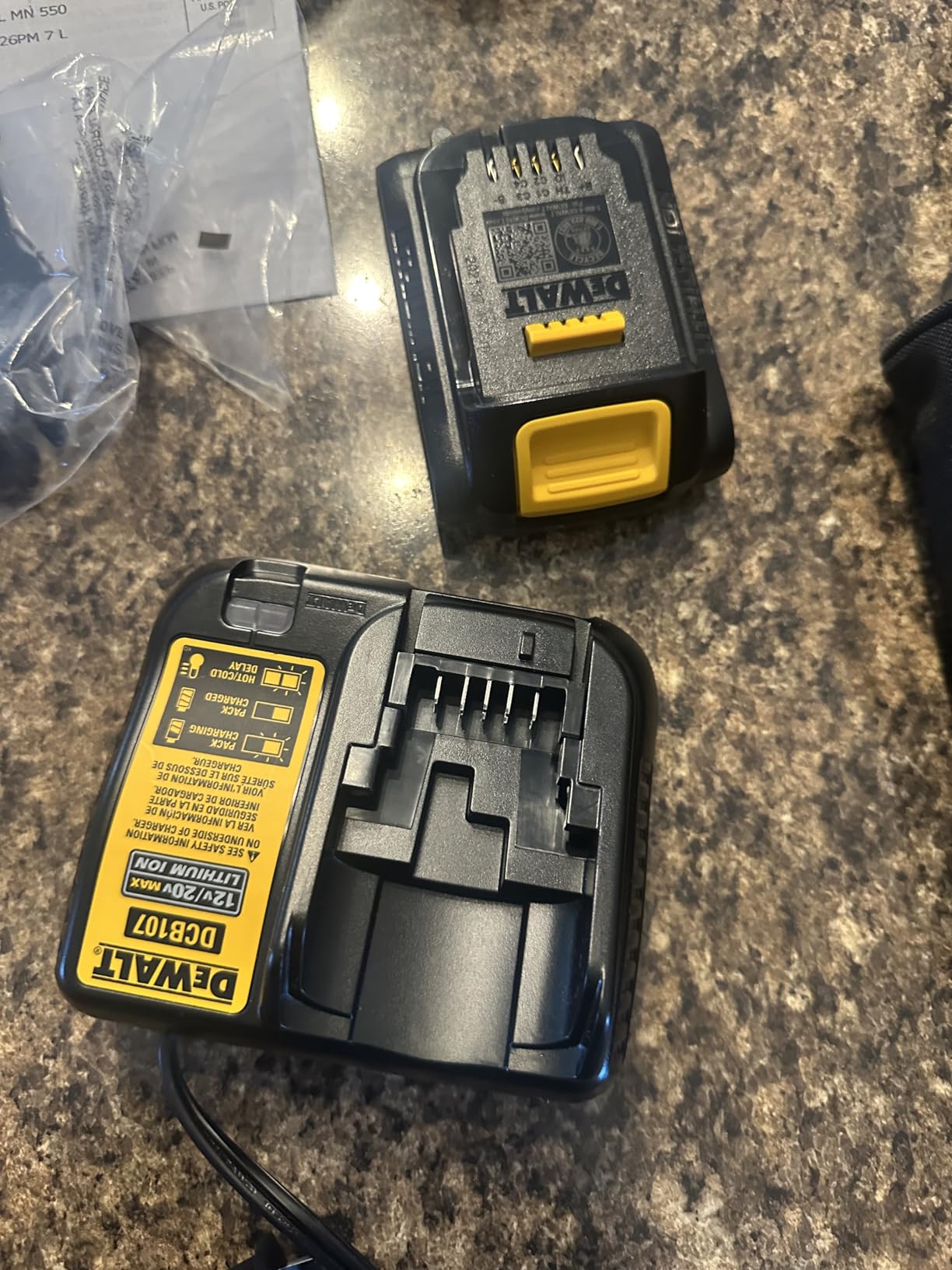
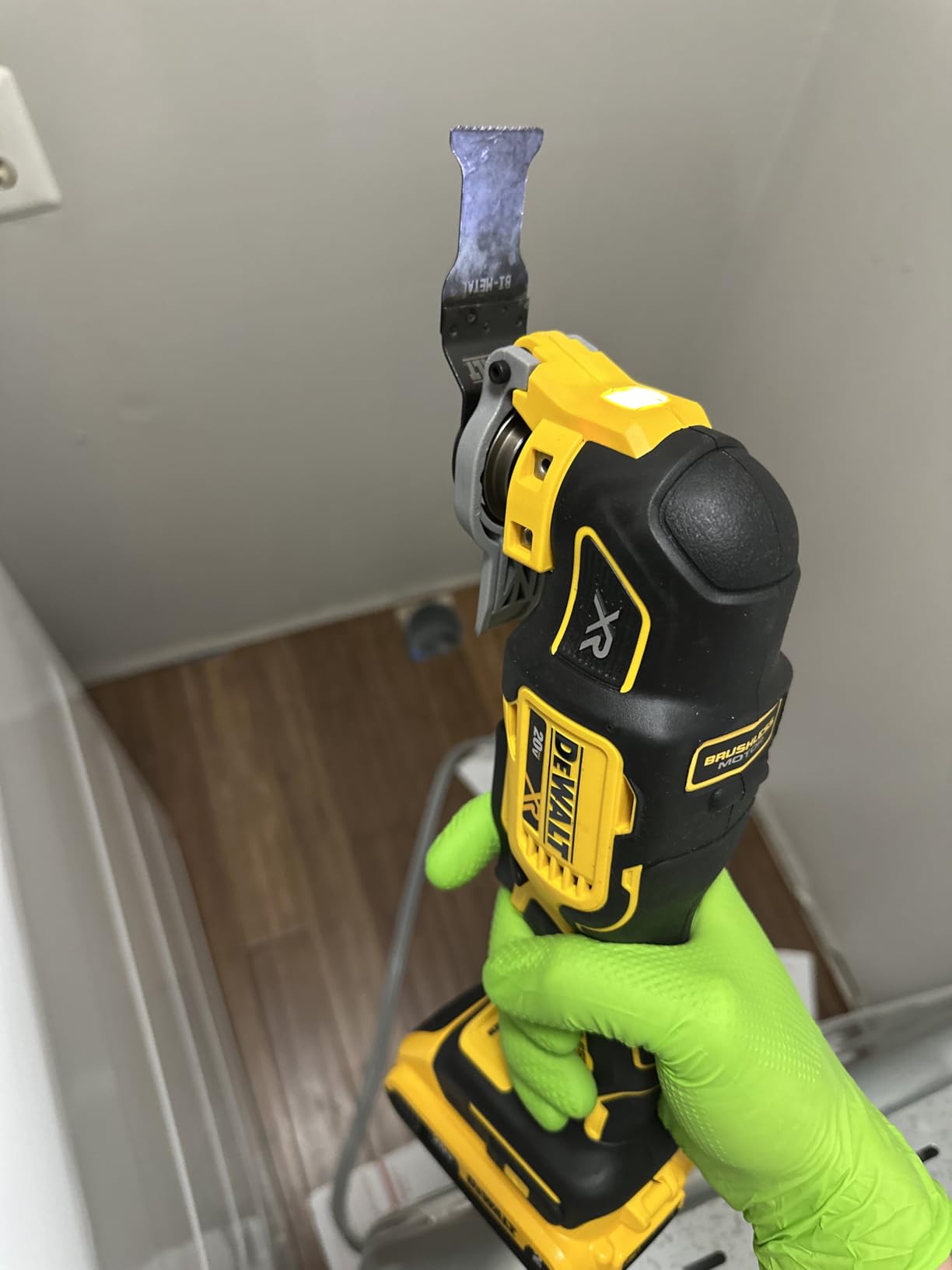
This is the kit you hand someone on their first day of a two-week kitchen remodel. The DCS356C1 is the C1 version, which means the box contains the tool, one 20V MAX lithium ion battery, the DCB107 charger, a wood cutting blade, a wood and metal blade, and a universal accessory adaptor. Nothing else to buy before you can make your first cut, which removes the single most common complaint in the category.
The motor is brushless, and DEWALT claims up to 57 percent more runtime than brushed designs of the same class. In practice the important part is not the runtime number but the behaviour under load: the three-speed selector lets you drop into a lower setting for sanding a fragile edge and climb for a plunge cut through stacked baseboard without stopping to change tools.
The Quick-Change accessory system is a lever-operated clamp rather than a hex screw, and that difference shows up on a demo day. When you are swapping between a carbide grout blade, a bi-metal wood blade and a scraper forty times an hour, the seconds you do not spend finding a hex key add up. The universal accessory adaptor in the box is what lets the tool take Starlock and most other major blade brands, which is the quiet reason this kit is so easy to keep in blades rather than tools.
It is 3 pounds, has a bright LED that throws light forward onto the cut line, and carries a 3 year limited warranty. The dual-grip variable speed trigger gives you finger control of ramp-up, so the blade does not walk out of a plunge cut while the motor spools.
How it holds up on the jobs that eat blades
On drywall cutouts for outlets and HVAC registers, this is the tool we would put in a novice’s hands. Plunge straight into the panel at low speed, arc the cut, and the LED shows the line in an unlit basement run. The 3 pound body means it does not drag the cut off line as you fatigue.
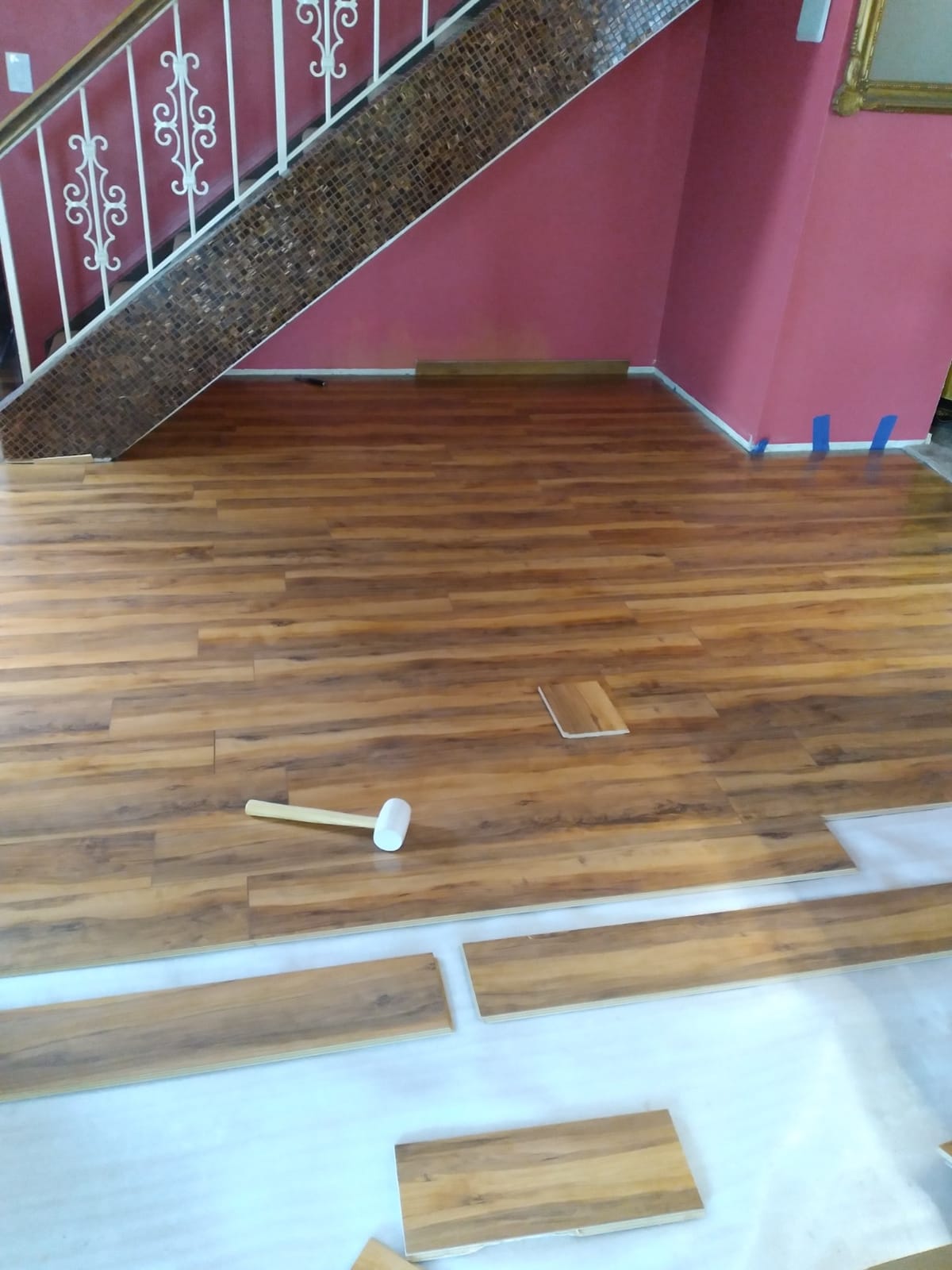
On flooring undercut, set the speed to the middle of the three presets and run the tool along the door jamb with the blade flat. Universal blade fit means you are not hunting for a DEWALT-only timber blade at the merchant when the good one is already on site.
Where it will disappoint you
The battery specification on this listing is listed at 40 amp hours, which is an unusually large figure for a single pack and should be confirmed against the physical pack. Regardless of that number, sustained plunge cutting on stacked lumber will empty a pack well before a corded tool would notice a cable. Plan on a fresh pack for every long cutting stretch rather than assuming one pack covers a full day.
The second limitation is boring but real. Without the universal adaptor, the tool only takes native-fit blades, and the adaptor is small enough to lose in a tool bag. Know where it is, because without it you are stuck with the two blades in the box.
2. Milwaukee 2626-20 – Best Bare Tool for M18 Owners
Milwaukee 2626-20 M18 18V Lithium Ion Cordless 18,000 OPM Orbiting Multi Tool with Woodcutting Blades and Sanding Pad with Sheets Included (Battery Not Included, Power Tool Only)
M18 cordless
12 speeds 11000-18000 OPM
2.9 lb
5 year tool warranty
Pros
- 12 speed settings from 11000 to 18000 OPM
- All-metal gear case resists job-site impacts
- Rubberized overmold grip holds with gloves
- Compact 11-7/8 inch body fits tight access
- Blades and sanding pad included
Cons
- Battery and charger not included
- M18 system adds cost outside the Milwaukee platform
Buy this one only if you already own M18 batteries. That single condition matters more than any spec, and if you do not own them, the total cost of tool plus batteries plus charger is the number that should decide it, not the tool price. The bare tool listing is explicit that the battery and charger are not included.
Where Milwaukee separates itself is the gear case. This is the only all-metal gear case in the roundup, and on an older-home demo where the material is unknown, that matters more than the oscillation angle. The housing takes the hit when you catch a hidden nail or a cast iron pipe, and a plastic case in that situation is a cracked housing rather than a dented one.
Speed control is where this tool is genuinely different from everything else here: 12 settings from 11,000 to 18,000 OPM. That is a much finer resolution than a three-position selector gives you, and it makes the difference between a clean plunge through a sheet of drywall and one that tears the face paper on the exit side.
REDLINK battery communication is worth understanding as a feature rather than a marketing line. The battery talks to the tool and pulls power back when things get close to overheating, which protects both the pack and the motor on a long cut. The onboard LED panel is mounted at the head of the tool so it illuminates from more than one angle, which is more useful than it sounds when you are working inside a cabinet box.
Blades, a sanding pad and assorted sanding sheets come in the box, so even as a bare tool you are not starting with nothing. The 2.9 pound body and 11-7/8 inch length are genuinely compact for a cordless multi tool, which matters for under-sink and cabinet interior work.
Why trades pick this one first
The 5-year tool warranty is the longest in this group and it is a real differentiator on a tool that gets dropped, thrown in a truck bed and used in the rain. For a contractor running two or more of these, that is worth more than a slightly lighter housing.
The rubberized overmold grip is the other quiet quality marker. On a wet bathroom demo or in winter conditions, a grip that stays put means fewer skipped cuts and fewer blade stalls.
When you should skip it
If you own no Milwaukee batteries, this is the wrong door. Reviewers repeatedly flag platform cost as the drawback, and the forum consensus is blunt that a second battery ecosystem plus a second charger is pure overhead for most renovators.
At 18,000 OPM ceiling it is not the highest-speed tool here, so it is not the right choice for aggressive carbide work on cured grout where you want maximum OPM. The Milwaukee answer to that is a different model, not this one.
3. Makita DTM52Z – Smoothest Long Cuts on LXT
Makita DTM52Z Li-ion LXT Brushless Multi-Tool – Batteries and Charger Not Included, Blue, 18 V
18V LXT brushless
3.6 degree arc
1.3 kg
Anti-Vibration Technology
Pros
- Anti-Vibration Technology smooths long cuts and eases hand fatigue
- 3.6 degree oscillation angle for fast cutting and sanding
- Tool-less clamp with 12 accessory angle settings
- Compact 1.3 kg body that still feels pro grade
- Battery and charger not included
Cons
- Battery and charger not included
- Not compatible with Makita G-Series batteries
- Some users report Makita does not warranty this unit in the US
The DTM52Z is the pick if hand fatigue across a full day is your binding constraint, because it is the only tool in this roundup with a named anti-vibration system. Makita fits a counterweight that decouples the oscillation, so the buzz in your wrist and forearm drops noticeably during a sustained cut. Owners describe it as noticeably smoother on long cuts, and the review data backs that up as a recurring theme rather than a one-off.
It weighs 1.3 kg and the 12.5 inch length keeps it compact for cabinet and under-sink work. That combination of controlled vibration and a compact body makes it the tool we would choose for overhead work, where buzz and arm fatigue compound each other and you are holding the tool above your head for a long cut.
The accessory system is Starlock, and the tool is compatible with Starlock Max accessories for heavier applications. That is worth understanding properly: standard Starlock gives you the enormous third-party blade selection, and Starlock Max is the heavier-duty tier for carbide and diamond work. Twelve angle settings in 30 degree increments let you set the accessory angle without guessing.
Speed control is a variable speed dial with soft start, so it ramps rather than jumps, plus a slide switch for continuous use. There is an anti-restart function, which means if you put the tool down mid-cut and pick it up again it will not spring back to life unexpectedly.
Where the anti-vibration actually earns its place
Grout removal in a shower pan and long flush cuts through a full sheet of drywall are the two cases that separate this from the pack. When you are cutting for ninety seconds rather than ten, the vibration that is merely noticeable on a short cut becomes the reason you put the tool down.
The brushless motor is also reported to run cool and not bog down in hardwood, drywall or metal trim, which is what you want when the motor is the thing keeping the OPM up under load.
Two caveats you should read before buying
First, it will not run on Makita G-Series batteries. If your existing Makita tools are the older G-Series line, the LXT batteries this tool needs are a separate purchase, so check what is actually in your bag.
Second, and this one is unusual enough to say plainly, some users report that Makita does not warranty this unit in the US. That is not a universal report, but on a bare tool with a long expected life, an unclear warranty position is a legitimate reason to think twice.
4. DEWALT DWE315K – Best Corded Pick for Long Demo Days
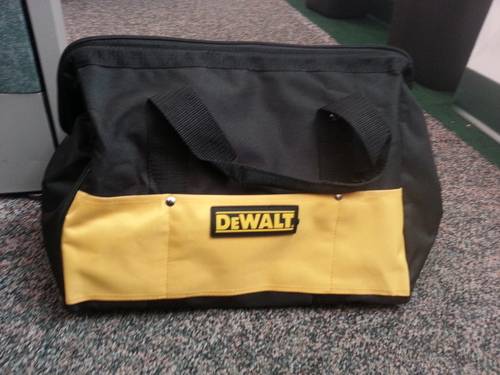
DEWALT Oscillating Tool, 3-Amp, Corded, Includes Wood Blades, Sandpaper and Tool Bag (DWE315K)
3 amp corded motor
22000 OPM max
Tool Guide System
29-piece kit
Pros
- Corded 3 amp motor gives constant power with no platform commitment
- Quick-Change tool-free clamp plus universal adaptor
- 29-piece accessory kit with storage box and case
- Tool Guide System for repeatable depth or height
- LED light and dual-grip variable speed trigger
Cons
- Blades wear quickly on abrasive material such as grout
- Tool-less clamp needs a firm grip to open
- Included bag is light duty
This is the pick for anyone who does not want a battery ecosystem, and it is the answer to the single most common question in renovation forums. If you already own corded tools and one cordless drill on a platform you do not want to expand, adding a second battery family and a second charger buys you nothing. A corded oscillating tool sidesteps the entire problem.
The 3 amp motor delivers 22,000 OPM maximum and, more importantly, does not fade. There is no pack to empty and no thermal throttle after twenty minutes, so a full day of grout, drywall and trim work runs at the same speed as the first hour. Owners consistently describe it as solidly built and professional grade, with 87 percent five-star ratings across 2697 reviews.
The Tool Guide System is the feature most people miss. It lets you set a depth or height stop and repeat the same cut every time, which turns a freehand plunge into a repeatable operation. For undercutting a row of door jambs to a consistent depth, that is the difference between a good result and a professional one.
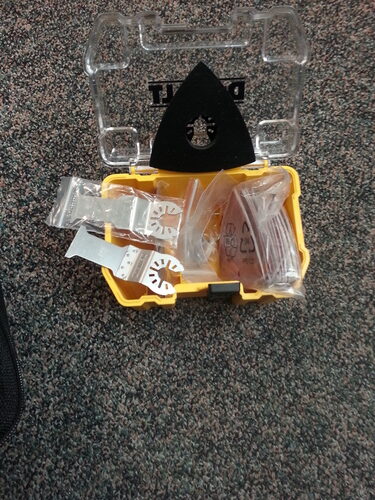
Accessory changes use the same Quick-Change lever system as the cordless DCS356, and the universal adaptor again opens up third-party blades. Owner feedback also highlights a 29-piece accessory kit with a storage box and a carrying case, so confirm what ships with your box before planning blade purchases around it.
Why corded wins for volume demo work
Constant power is the whole argument. On a gut renovation you are cutting a lot of drywall, a lot of lath-adjacent trim and a fair amount of adhesive, and stopping to swap a pack every twenty minutes breaks your rhythm and your setup.
It is also the most sensible choice for work under a house or in a basement where a lithium pack is cold and degraded, and where a cord reaches the work area without a battery light in the rafters.
Where it will let you down
Blade wear on abrasive material is the most common complaint, and it is a blade problem more than a tool problem. Carbide and diamond blades eat themselves on cured grout, and a second battery does not fix that. Budget for consumables as an ongoing cost, not a one-off.
The tool-less clamp needs a firm grip to open, which is awkward with a gloved hand holding the tool. And the soft bag is lighter duty than a hard case, so do not treat it as a job box.
5. WORKPRO 3.0 Amp Corded Kit – Best All-in-One Corded Starter Set
WORKPRO 3.0 Amp Corded Oscillating Multi-Tool Kit
3.0 amp corded
7 speeds 15000-23000 RPM
3 degree arc
17-piece kit
Pros
- 7 speed settings from 15000 to 23000 RPM
- Seven settings give finer control than a two or three position selector
- Three-step tool-less accessory change with universal interface
- 17-piece accessory bundle plus a carrying bag
- Top-mounted on/off switch is easy to reach while working
Cons
- Heavier at 5.2 pounds than most corded competitors
- Included blades are basic rather than premium plunge-cut blades
The WORKPRO sits in the middle of the corded pack: a 3.0 amp motor, a 3 degree oscillation angle and seven speed settings. The top end of 23,000 RPM is the highest maximum speed in this roundup, and while maximum OPM is not the same as usable cutting speed, a wider speed range gives you more room to match the tool to the material without changing accessories.
The accessory bundle is the argument for this kit. You get two wood and metal blades, three wood and plastic saw blades, a scraper, a sanding pad, ten sanding sheets and a carrying bag. For someone buying a first multi tool to handle general renovation cutting, sanding and scraping, that is a genuinely complete box.
The accessory change is a three-step tool-less sequence using a flip button and a universal interface, so third-party blades fit directly. The top-mounted on-off switch is a simple design choice that pays off: while the tool is in your hand at an awkward angle, you can still reach the switch without regripping.
Owners rate it as strong value for general renovation work, with 81 percent five-star ratings. The speed range and quick accessory changes are the two things reviewers mention most often.
The clear weakness is weight. At 5.2 pounds it is the heaviest tool in the roundup, corded or not, and that is a real cost for overhead ceiling work or for a full day of one-handed detail work. It is a wall or bench tool, not a ladder tool.
The jobs it suits without hesitation
Baseboard and shoe moulding removal, taking up adhesive residue, trimming door casings and general drywall work all sit comfortably in this tool’s envelope. The 3 degree arc is narrower than the ENERTWIST or GALAX PRO, which means slightly less material removed per stroke, but the high OPM ceiling compensates on lighter work.
It is a good first corded tool for a homeowner who is not chasing the highest possible cut rate but wants a complete kit that works the day it arrives.
What you are trading away
The included blades are basic, not premium plunge-cut blades, and a basic wood blade dulls quickly and can tear rather than cut. If your work is heavy ripping or repeated grout, expect to replace blades sooner than you would with a good bi-metal or carbide blade.
At 5.2 pounds, the balance point in overhead use will pull your wrist. If the majority of your work happens above head height, the lighter Ryobi or Makita bodies make more sense even though they are cordless.
6. Ryobi ONE+ PCL430B – Best for 18V ONE+ Owners
Ryobi ONE+ 18V Cordless Oscillating Multi-Tool (Tool Only)
18V ONE+ cordless
20,000 OPM dial
1.9 lb
Low-vibration design
Pros
- Lowest vibration in its class per the manufacturer
- Variable speed dial up to 20000 OPM
- Shares batteries with the widely owned 18V ONE+ platform
- Lock-on button and on-board accessory storage
Cons
- Blade change needs a hex screw rather than a tool-free clamp
- Some owners report the blade retention assembly wearing out early
- 30 day limited warranty only
- Battery and charger sold separately
ONE+ is the most widely owned cordless platform in North America for a lot of homeowner tool bags, and if that is your ecosystem, this is the multi tool that costs you nothing extra to power. The battery and charger are sold separately because almost everyone buying this already has both, which is exactly the logic the listing is built around.
Ryobi markets this as the lowest-vibration tool in its class, and at 1.9 pounds it is the lightest cordless body in the roundup. That combination makes it the practical choice for detail work and overhead finish sanding, where a heavier tool gets tiring faster.
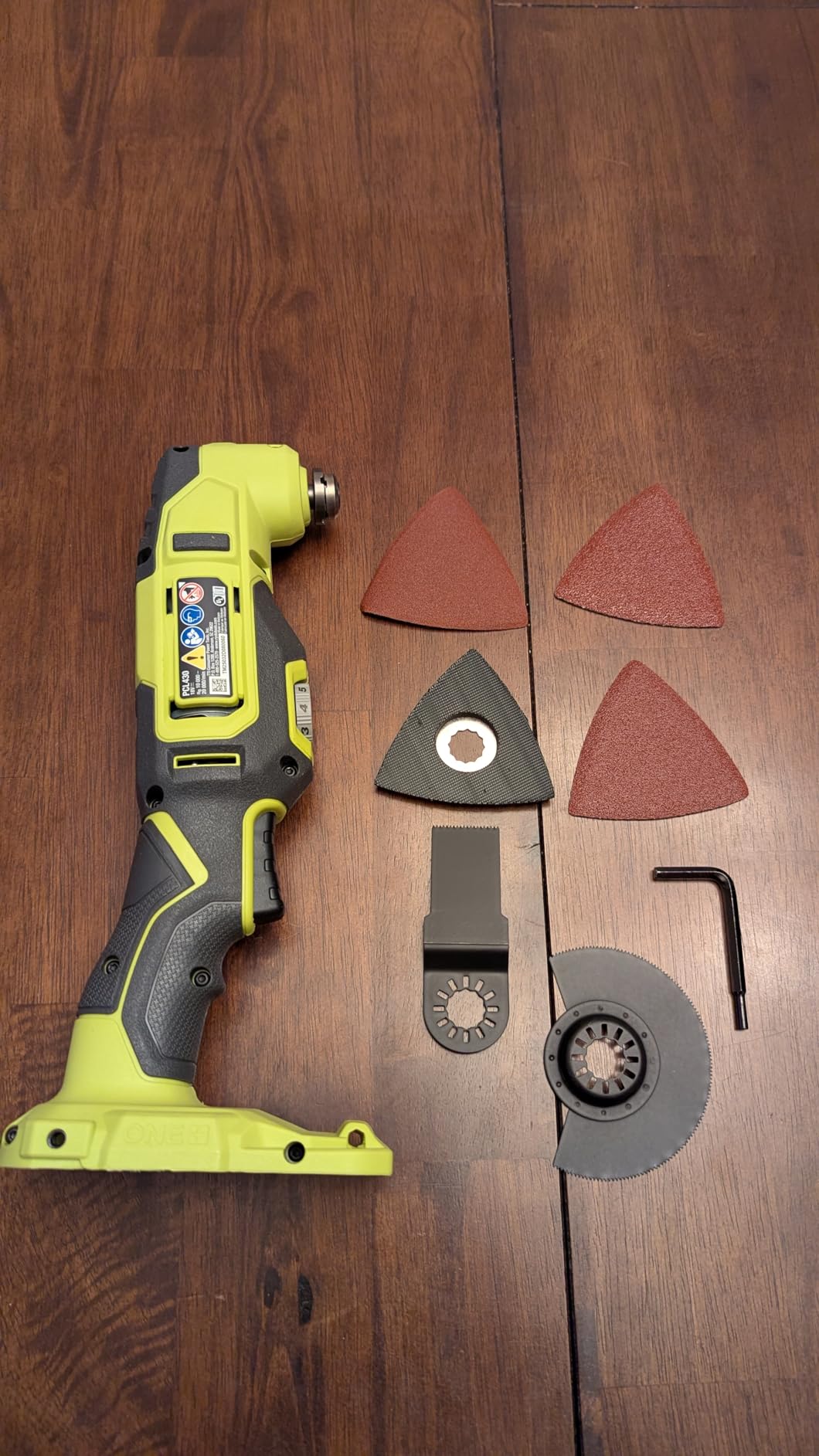
The variable speed dial runs up to 20,000 OPM, which is high for the price bracket, and the lock-on button means you can set a fixed speed and let the dial handle the fine control. On-board accessory storage keeps spare blades in the tool rather than in a bag, which reduces the number of trips to the truck.
Owners describe it as a capable, affordable DIY multi tool, with 75 percent five-star ratings. The 4.4 average across 1750 reviews is the lowest of the ten, and the gap between the average and the 75 percent five-star share is informative: a meaningful slice of buyers are not happy.
Where the low vibration pays off
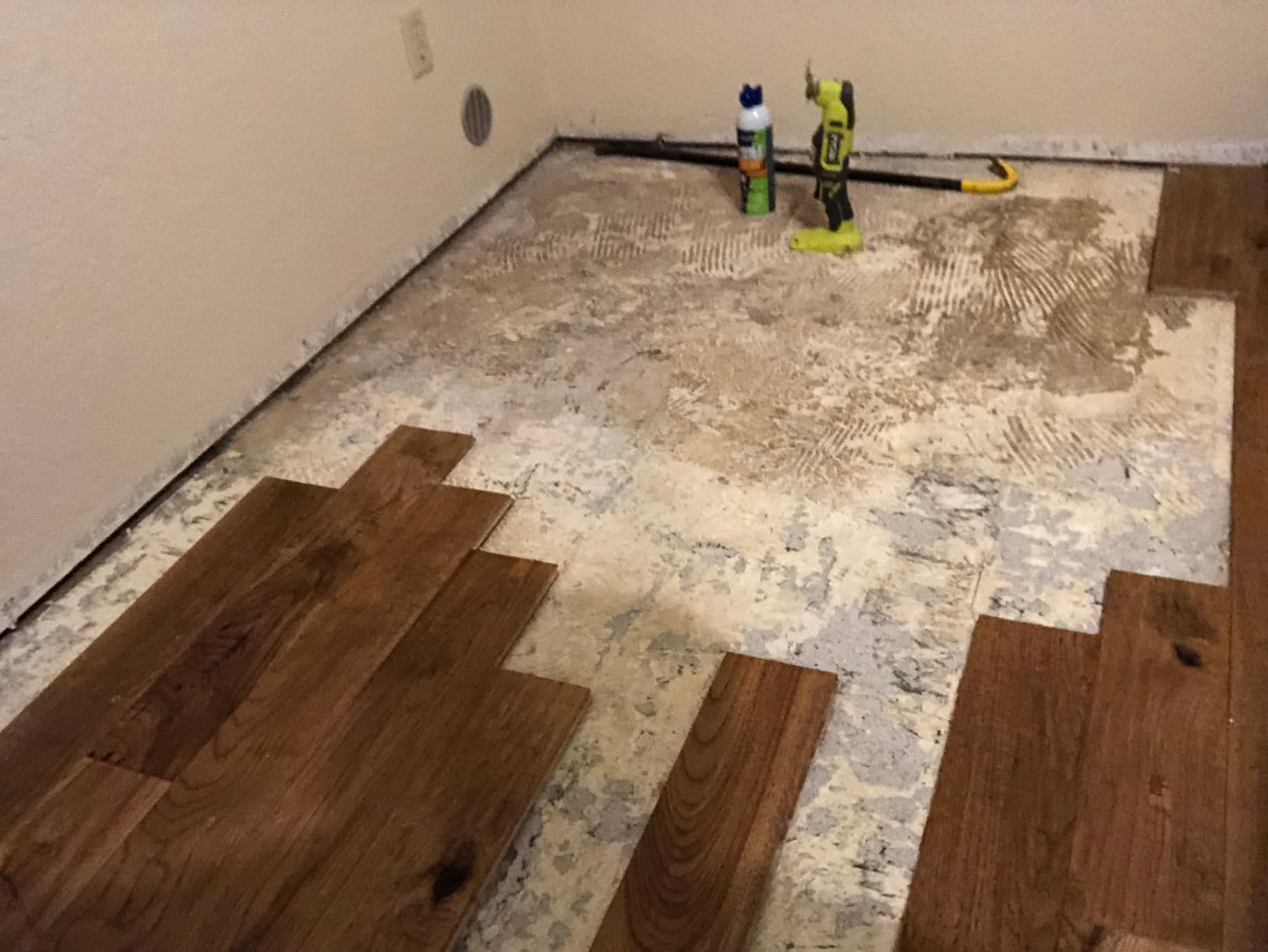
Detail sanding in a cabinet corner, flush trimming against finished paint without scoring it, and cutting the same shape four times until it fits are all tasks where a steady, low-buzz tool produces a better result than a more powerful one. The dial gives you a low-speed sanding range rather than an all-or-nothing switch.
It also handles the classic punch-list job well: a short cut for a fitting, a bit of scrape for old caulk, a sanding pass to blend a repair. That kind of scatter-grip utility is where a lighter tool earns its place.
The two complaints you cannot design around
The blade change requires removing a hex screw rather than opening a lever. This is the most common complaint in the reviews and it is a genuine friction point on a tool you are otherwise buying for convenience, particularly for anyone with reduced hand grip.
Some owners also report the blade retention assembly wearing out within about a month, and isolated reports mention the vibration isolator failing early. The 30 day limited warranty is the shortest here by a wide margin, so if the retention assembly does fail you have a short window to deal with it. Buy the spare hex key with the tool, not after.
7. CRAFTSMAN V20 CMCE501D1 – Best Battery-Included Cordless Kit
CRAFTSMAN V20 Cordless Oscillating Tool Kit Multi-Tool with Blades, Sand Paper, Battery and Charger Included (CMCE501D1)
20V cordless
V20 system
Variable speed dial
Tool-free universal mount
Pros
- Complete kit with battery charger blades sandpaper and bag
- Tool-free universal attachment for quick blade changes
- Variable speed dial and LED work light
- Shares batteries with the rest of the V20 system
Cons
- Included 2.0 Ah battery is smaller than higher-end kits
- 2.0 Ah packs need more frequent swaps on heavy grinding work
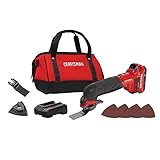
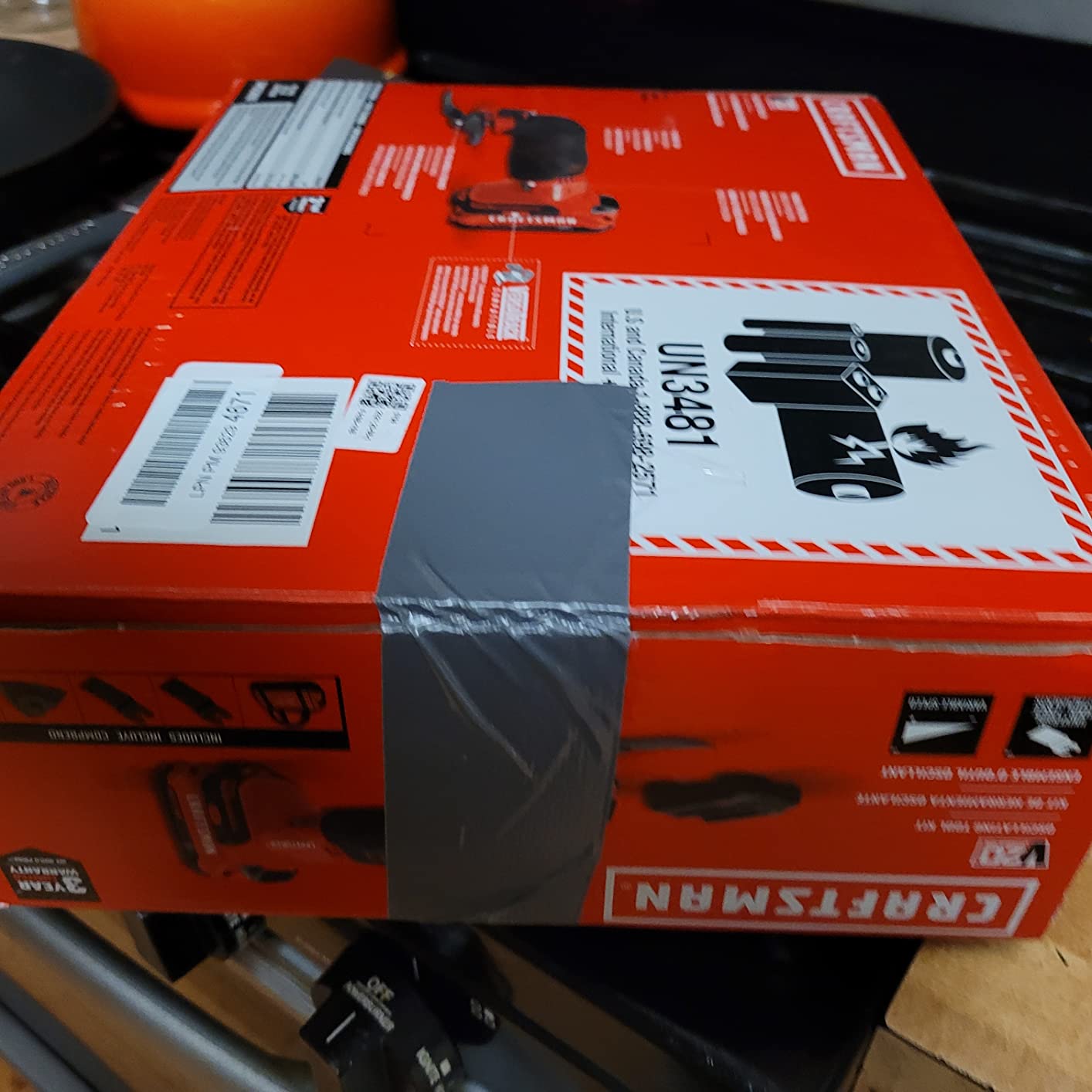
The CRAFTSMAN is the answer for the same reason the DEWALT C1 kit is, but for a different platform. Everything you need arrives in the box: the tool, one 20V MAX 2.0 Ah lithium ion battery, the charger, a wood blade, a wood and metal blade, a sanding platen, four sheets of sandpaper and a storage bag. If you are not already on a cordless platform and you do not want to start one, this box removes the entire cost conversation.
You get a variable speed dial for control during the application, an LED work light for visibility in cavities, and a tool-free universal attachment for blade changes. The universal mount is the piece that matters most long-term, because it means the tool is not limited to proprietary blades.
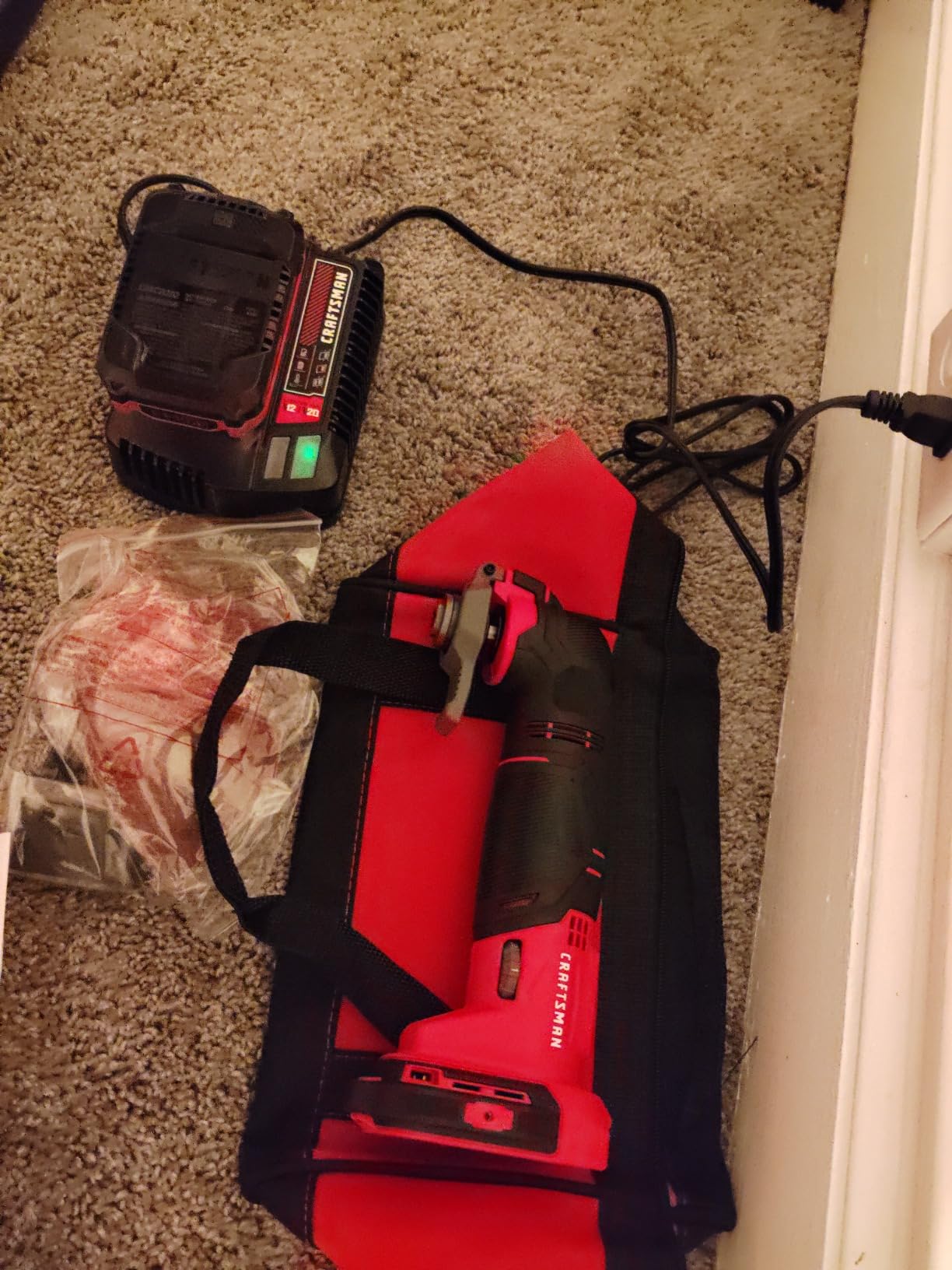
The V20 system is a shared platform across CRAFTSMAN cordless tools and outdoor equipment, so if you buy a second V20 tool later the battery is reusable. It is also VERSATRACK clip compatible, so the tool can mount to a wall rail system with separately sold hardware.
Owners rate it as a solid all-in-one value with 83 percent five-star ratings. The included battery, charger and quick tool-free changes are cited most often as the reasons buyers are happy, and the pattern matches what you would expect from a kit that removes up-front cost.
Best fit for a specific kind of buyer
This is the pick for a homeowner renovating a single room who does not own any cordless tools and does not want to research battery platforms before starting. The box is self-sufficient, the tool-free mount keeps accessory costs low, and the storage bag means it does not live loose in a kitchen drawer.
It is equally sensible for a light-trade outfit that needs one capable cordless tool for punch lists and small repairs rather than a fleet of platform batteries.
The battery is the weak link
The included pack is 2.0 Ah, which is smaller than what you get in higher-end kits, and that translates directly into pack swaps on heavy work. Two smaller packs beat one large pack in total capacity over a day, so if you own none, buying a second 2.0 Ah pack is often a better spend than anything else after the kit.
On light cutting, sanding and scraping it genuinely does not matter. On continuous plunge cutting through dense material, you will feel the difference every time you reach for the charger.
8. ENERTWIST 4.2 Amp 33-Piece Kit – Best Wide-Arc Value
ENERTWIST 4.2 Amp Oscillating Multitool Kit with 33 PCS Accessories
4.2 amp corded 500W
5 degree arc
6 speeds 8000-16000 OPM
33-piece kit
Pros
- 4.2 amp pure copper motor with a wide 5 degree oscillation arc
- 6 speed settings from 8000 to 16000 OPM
- Tool-less universal fit with a safety latch
- 33-piece accessory set plus auxiliary handle and bag
- Owners report performance close to better known brands
Cons
- Sanding pad hook-and-loop surface lets sandpaper drift
- Only seller warranty coverage
- A washer is needed to fit some third-party blades
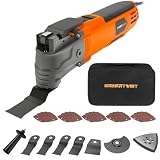
The headline number here is the 5 degree oscillation angle, the widest in this roundup, on a 4.2 amp 500 watt corded motor. A wider arc means more material removed per stroke for the same feed rate, and on work like scraping adhesive residue or shaving down a substrate, that shows up as fewer passes.
Buyers call it the best value in the category more often than any other phrase in its reviews, and the distribution backs that up: 70 percent five-star and 18 percent four-star across 2001 reviews. The remaining ratings concentrate in the sanding pad and the warranty, which we will get to.
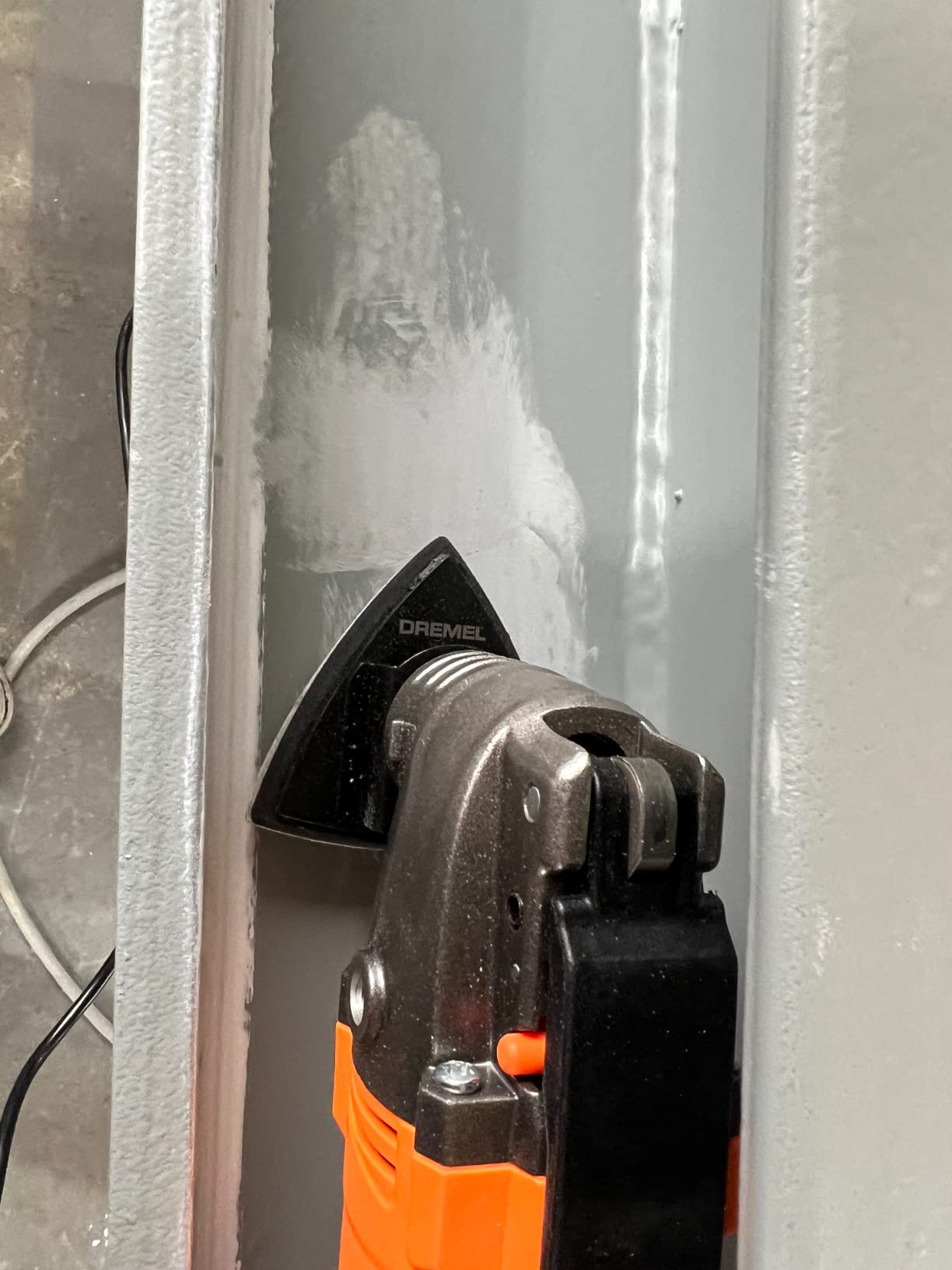
Speed control runs across 6 settings from 8,000 to 16,000 OPM. That is a low ceiling compared to some of the tools here, and it is the trade-off for the wider arc: this tool is built to push material rather than to spin fast, and the low OPM end is genuinely useful for controlled sanding without loading the pad.
The accessory list is the biggest in the roundup at 33 pieces: three fast-cut wood blades, a wood-with-nails blade, a semi-circle blade, a sanding pad, 25 sheets of detail sandpaper, a rigid scraper, a multi-brand accessory adaptor, an auxiliary handle and a nylon bag. The safety latch on the tool-less clamp is a nice touch, because it stops the clamp pinching fingers on release.
Manufacturer specifications for this tool list metal, tile, nails, bolts, concrete, wood, plumbing pipe, drywall, old paint and grout, door casing trimming and floor stripping among its intended jobs. We could not verify every one of those in owner feedback, so treat the list as a claim to test on your own material rather than a settled capability.
Owners describe the motor as strong for its cost and report it performing on par with better known brands on general cutting, tile, nail, bolt, drywall, paint, grout, door casing and flooring work.
Where a wide arc genuinely helps
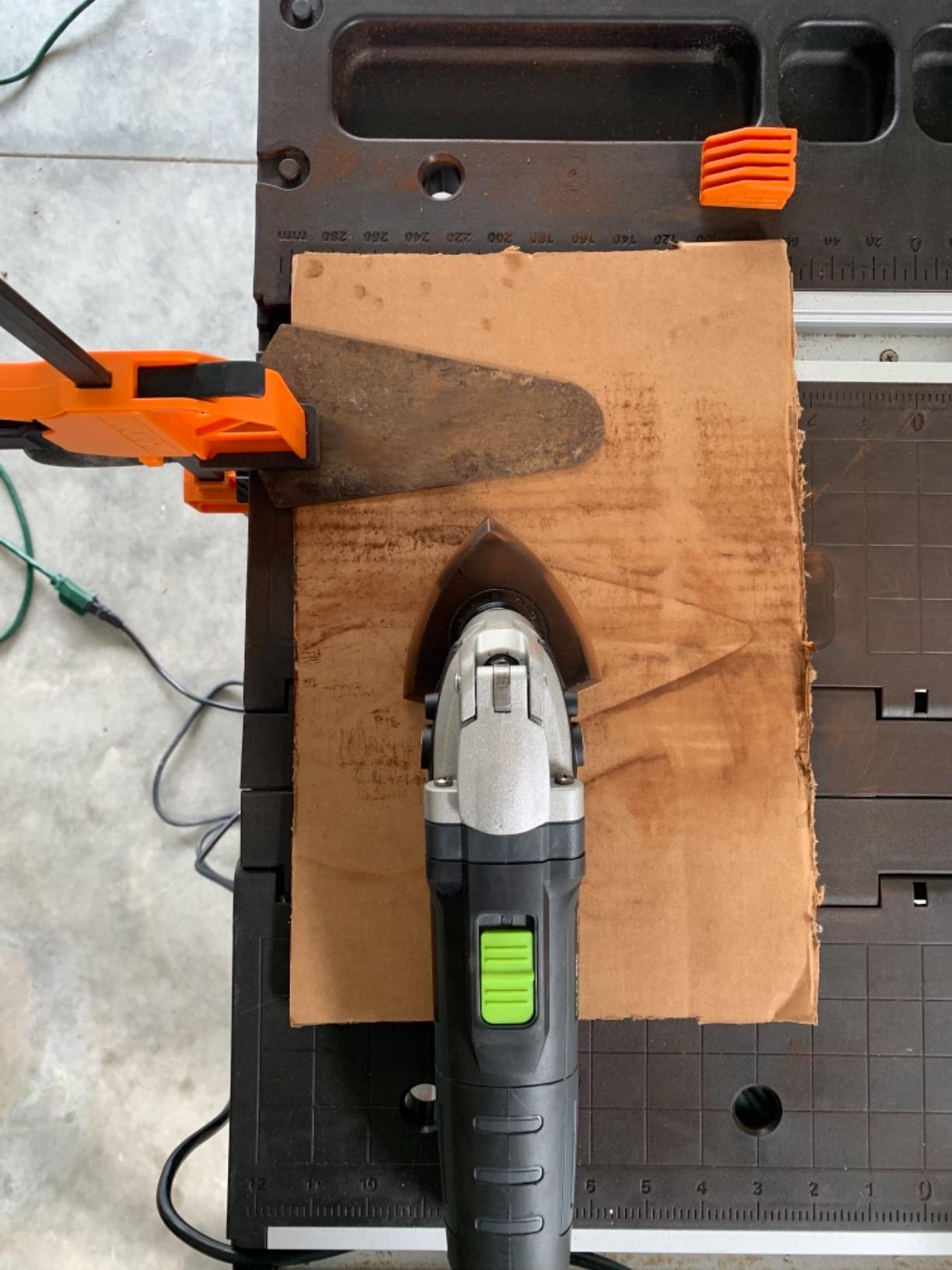
Scraping is the clearest win. A rigid scraper across a wide arc takes more off per pass, so old adhesive and paint come up faster than with a 3 degree tool. The same applies to light grout and tile adhesive removal in tight spots, where you cannot get an angle grinder in.
The auxiliary handle is a genuine addition rather than filler. On a 2 kg tool doing two-handed plunge work, a second grip point reduces wrist torque noticeably.
The honest catch
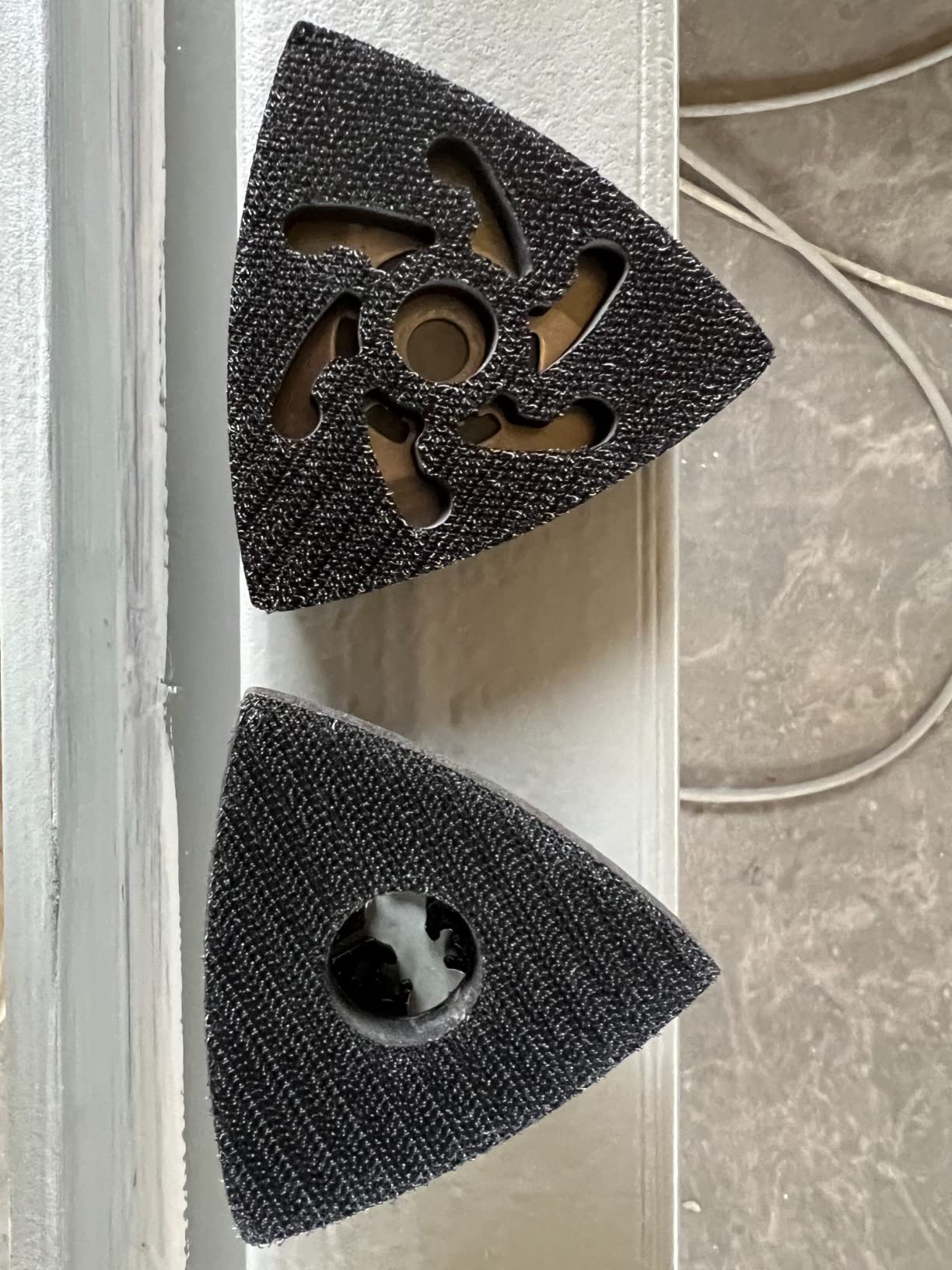
The sanding pad is the weak point and it is the most common complaint: the hook-and-loop surface lets sandpaper drift off during use. Treat the pad as a secondary accessory and buy a better pad separately if fine sanding is a regular part of your work.
Warranty coverage is seller-only, which is meaningfully weaker than a manufacturer warranty and a real reason to factor it in on a tool you expect to keep for years. You will also need a washer to fit some universal third-party blades, and spares are not easy to source.
9. GALAX PRO 3.5 Amp Kit – Budget Pick for First-Time Owners
GALAX PRO Corded Oscillating Multi Tool Kit 3.5A with 30Pcs Accessories
3.5 amp corded
4.5 degree arc
15000-22000 OPM
30-piece kit
Pros
- 3.5 amp motor with a wide 4.5 degree arc
- Variable speed dial from 15000 to 22000 OPM limits splintering
- Quick clamp accessory changes with no tools
- Compact 4.1 pound body fits narrow cabinets
- 30-piece kit is usable out of the box
Cons
- On-off switch has no trigger so the tool runs until switched off
- Reportedly loud during operation
- Some units report finicky blade locking and worn accessories
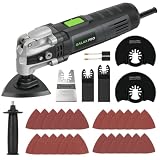
This is the cheapest way to get a competent oscillating tool in the roundup, and for a first-time buyer the box is hard to argue with. Thirty pieces: a scraper for glue removal, a wood and plastic and soft metal plunge blade, two semi-circle plastic and wood saw blades, a triangular sanding pad and 24 sheets of assorted sandpaper.
The motor is a 3.5 amp unit and the arc is a wide 4.5 degrees, second only to the ENERTWIST here. Buyers treat it as an inexpensive first multi tool, with 71 percent five-star ratings and 6 percent one-star ratings, which is a spread you can read honestly: most people like it, a few have real problems.
Speed control runs from 15,000 to 22,000 OPM on a variable dial, and having a usable low end matters more than it sounds. A low setting limits splintering when you are trimming a thin decorative edge or a veneer, which is a real trick from finish carpenters and it is not available on tools with only two or three presets.
At 4.1 pounds it is lighter than the WORKPRO and only slightly heavier than the Ryobi, and the compact body is explicitly designed to work in narrow cabinets and other tight areas. The quick clamp handles accessory changes with no tools.
Where it earns its place
Door jambs, window trim, baseboards, nails and screws are the listed jobs, and for interior trim work on a first project the 4.5 degree arc cuts fast. The triangular sanding pad is awkward for flat surfaces but genuinely useful in inside corners, which is exactly the detail-sanding case the category is bought for.
It is a good weekend tool for a homeowner who wants to cut a doorway, remove a run of baseboard and sand a few corners without researching platforms.
Two design points to think about
The on-off switch has no trigger. The tool runs until you flip the switch, which means you cannot feather the speed with your finger the way you can on every other tool here. For long cuts that is a meaningful loss of control, and for fine detail work it is the difference between confidence and caution.
It is also reported as loud during operation, which adds up on an indoor job. And a minority of owners report finicky blade locking, worn-out blades or a failing sanding pad holder, so treat the consumables as short-life rather than assuming the included blades are a long-term supply.
10. DEWALT DCS354B – Best Compact Cordless Bare Tool
DEWALT atomic 20V MAX* Oscillating Tool, Cordless, Oscillating, Tool only (DCS354B), 1 item package quantity, Color Multi
20V MAX brushless
2.3 lb
Quick-Change system
Universal accessory adapter
Pros
- Brushless motor delivering up to 57 percent more runtime
- 2.3 lb body is compact and precise in hand
- Dual-Grip variable speed trigger for instant control
- Tool-free Quick-Change blade system
- Universal adapter accepts open and closed shank blades
Cons
- Battery and charger not included
- 20V MAX platform requires a separate battery investment
The DCS354B is the bare tool from the same family as the top pick, and it exists for a specific situation: you already run 20V MAX batteries and just want the tool. It comes with a wood-with-nails blade, a fast-cut wood blade and a universal accessory adapter, so even without a battery you have usable blades and full accessory compatibility.
At 2.3 pounds it is the lightest cordless body here, and only the Ryobi at 1.9 pounds is lighter overall, with the narrow grip giving good precision in hand. Reviewers highlight exactly this, along with quieter and lower-vibration operation than many cordless competitors, and 86 percent five-star ratings across 6100 reviews is one of the strongest owner-satisfaction profiles in the roundup. None of this changed shape in the decade since these tools went mainstream, and it is why a 2026 purchase is not a leap of faith on the fundamentals.
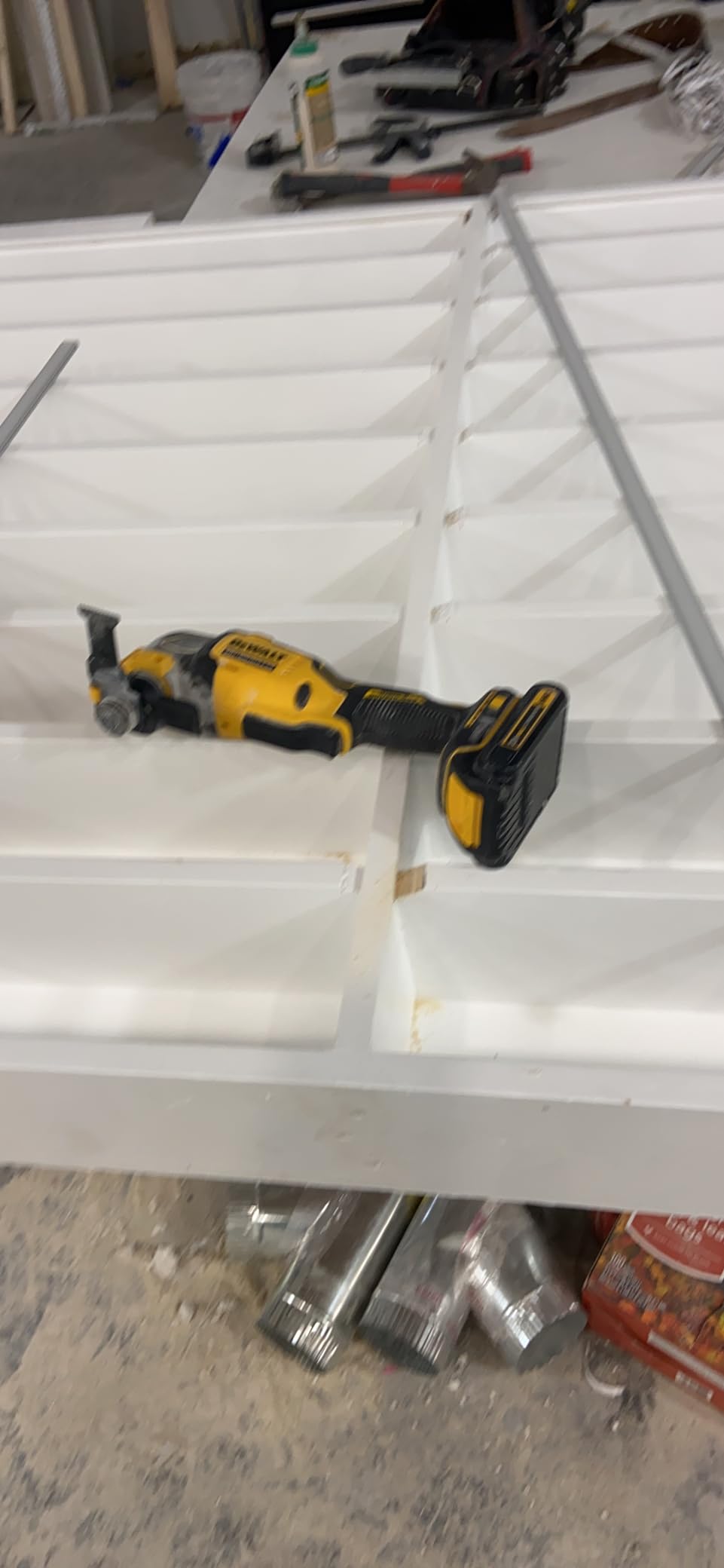
The Dual-Grip variable speed trigger lets you start and stop cuts instantly with finger control, which is the difference between a controlled plunge and a walk-out on the entry stroke. The brushless motor claims up to 57 percent more runtime than brushed designs, and the LED light illuminates dark work surfaces for accurate cutting.
Owners frequently call it a daily-driver in the shop, and the compatibility of the batteries is cited as a primary reason to buy by people who already own them. That is the correct reason to buy it.
There is a battery average life figure of five hours listed, though in practice that is a ceiling rather than a typical work day, and the tool-only listing means the cost of a full setup still has to be added if you have nothing.
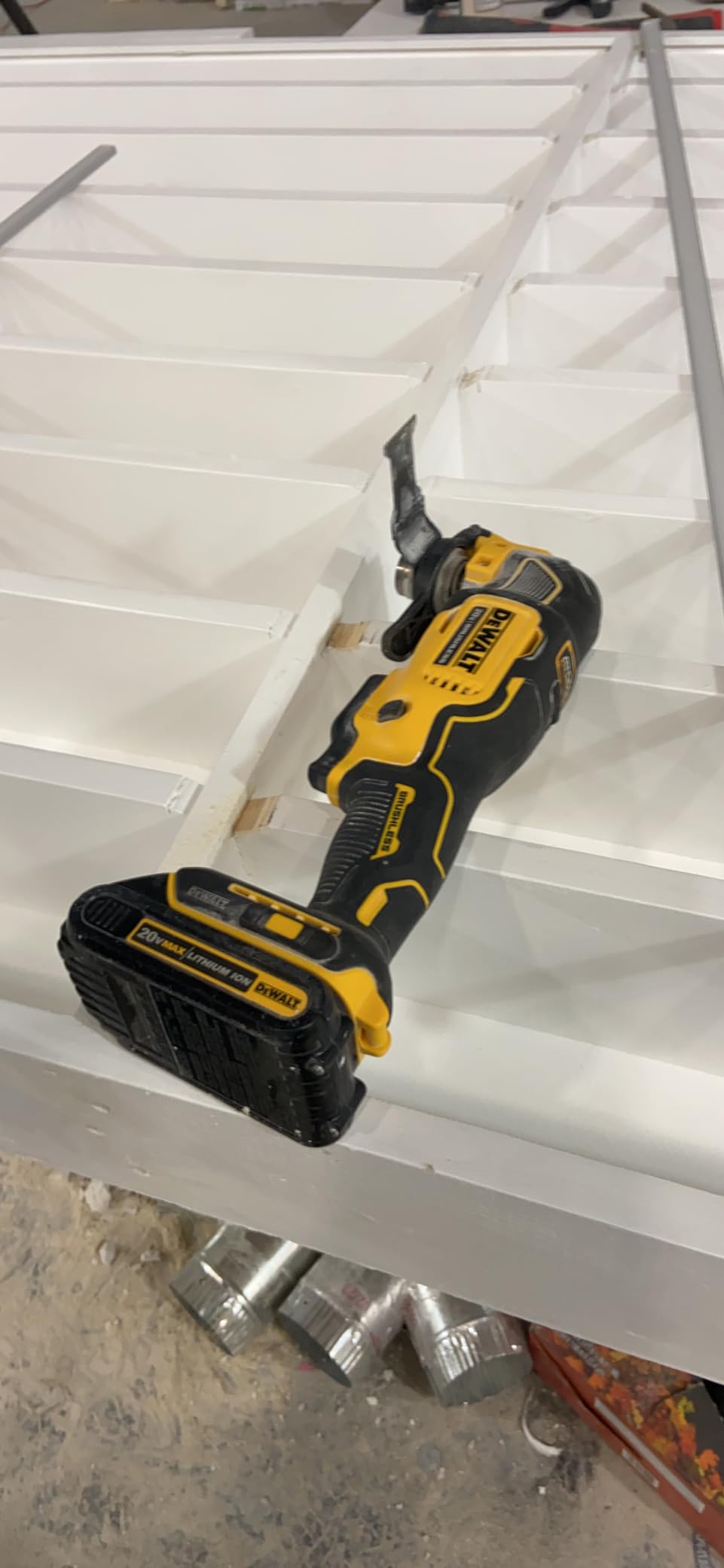
Where the low weight changes the result
Precision is the answer. A 2.3 pound tool does not drift at the end of a long drywall cut the way a 4 pound tool does, and the narrow grip gives you a fighting hold in a corner where you are cutting around a pipe or a stud. For cutout work around outlets, switches and HVAC registers, that is the whole job.
The low weight also makes it the better of the two DEWALT cordless options for overhead work or for anyone who spends a full day in one-handed detail cuts.
When the kit version is the better buy
If you do not own 20V MAX batteries, the DCS356C1 at pick number one is strictly the smarter purchase for exactly the money you would have spent here plus a battery and charger. Buying this bare tool without a platform is paying twice for power.
It also lacks the three-position preset selector of the DCS356, giving you variable trigger control only. For someone who switches between sanding and cutting constantly, the presets are a genuine convenience you give up.
Which Oscillating Multi-Tool Wins at Each Remodel Stage
Neither of the two competing guides frames their picks by remodel work, and that is the gap worth filling. A remodel is not one job; it is a sequence, and the right tool changes as the sequence progresses. What follows is the mapping we use.
Demolition. Demolition is volume work: grout, tile adhesive, baseboard, drywall, flooring. Here constant power and a wide arc matter more than weight. The DEWALT DWE315K corded pick runs at 3 amps without fading through a long afternoon, and the ENERTWIST with its 5 degree arc and 4.2 amp motor pushes more material per stroke for scraping and adhesive removal. If the demolition is grout specifically, read the limits section below before committing to either.
Rough-in and drywall cutouts. This is where precision beats power. Cutting around an electrical box, a return-air duct or a bathroom vent in a wall you are about to close means a plunge cut, an arc, and a clean exit. Lightweight cordless tools with a narrow grip win: the Makita DTM52Z at 1.3 kg and the DEWALT DCS354B at 2.3 pounds both hold a line much better than a 5.2 pound corded tool. The DCS356C1 is a good compromise because it is still only 3 pounds.
Install and trim. Undercutting door jambs, fitting laminate, trimming casing flush against a wall and removing shoe moulding. Here the Tool Guide System on the DEWALT corded tool is worth real money because it makes every cut the same depth. Where there is no guide system, the wide variable speed ranges on the GALAX PRO and WORKPRO let you pick a low setting that will not splinter a finished edge.
Finish and detail. Tight-corner sanding, blending a repair, scraping a fine bead of caulk. Low weight and low vibration dominate: the Makita with its anti-vibration system, and the Ryobi at 1.9 pounds. The triangular pad on the GALAX PRO and the detail sanding sheets in the ENERTWIST kit are both genuinely useful here, even though the ENERTWIST pad itself is the tool’s weakest accessory.
Anything above head height, and the tool that weighs least wins regardless of power. This is where the multi-position ladders guide becomes relevant again, because a stable platform does not help if your arm is shaking at the end of a two-minute cut. The Makita and the Ryobi are the two to carry up a ladder.
A single tool can cover more than one stage. The DEWALT DCS356C1 is the reason it is the top pick: it is light enough for detail, strong enough for trim, and shipped with a battery and blades so it is the first thing out of the truck on day one.
How to Choose an Oscillating Multi-Tool for Remodeling
Start with the question that decides more purchases than any spec: which battery platform do you already own? If you own 20V MAX, the DEWALT picks are cheaper in total. If you own M18, the Milwaukee is the only sensible cordless here. If you own 18V LXT, the Makita. If you own 18V ONE+, the Ryobi. Forum discussion on this question is unanimous, and the reason is simple arithmetic: a battery and a charger costs more than most of these tools do.
There is a second-order problem worth naming. If the platform you own is old or discontinued, buying into it is a trap, and reviewers of the Makita hit this directly when they note the tool will not run on G-Series batteries. Check that the batteries you already have are still the current production line before you choose a platform-locked tool.
Now, corded or cordless. The honest answer is that for a whole-day demolition, corded wins on power consistency. A corded tool does not fade, does not heat a pack, and works in cold conditions and dark spaces without a light. If you do not own any batteries and do not want a second ecosystem, the DEWALT DWE315K is the correct answer and the forum consensus agrees.
Cordless wins on mobility and on one-handed overhead work. A contractor working a scattered punch list, moving between rooms and up ladders, will not be thrilled by a cable. Cordless also wins on convenience in a bathroom where a trip hazard cable is genuinely unwelcome. Our own framing: corded for volume, cordless for versatility.
Oscillation angle is the most over-marketed spec. The range here is 3 to 5 degrees. A wider arc removes more material per stroke, which helps on scraping and soft material, and it does not turn a good tool into a bad one or the reverse. Owners are divided on whether it is a real differentiator or a spec-sheet non-issue, and the honest position is that it is a real but second-order effect. Where it genuinely shows up is scraping and light adhesive removal.
Speed range matters more than peak OPM. Look at the floor as closely as the ceiling. A tool whose lowest setting is 8,000 OPM can sand delicately; one whose lowest setting is 15,000 OPM cannot. The ENERTWIST and the Makita have the lowest floors here, and both are the better choice if you do a lot of finish-detail sanding. Maximum OPM matters for aggressive cutting, and the DEWALT corded tool, WORKPRO and GALAX PRO have the highest ceilings.
Motor type is a straightforward call. DEWALT, Makita and the DEWALT Atomic all specify brushless motors here, with DEWALT claiming up to 57 percent more runtime over brushed designs. Is a brushless oscillating tool worth the upgrade? On a cordless, yes, clearly, because the runtime and the heat management both improve. On a corded tool the question is closer to academic, because the motor is already running off mains power, which is a good reason to stop paying a premium for a brushless claim on a corded body.
Blade interface systems are the compatibility question, and the answer is not simply yes or no:
Starlock – the Makita’s system, with an enormous third-party accessory market behind it. Starlock Max is the heavier-duty tier for carbide and diamond work.
Universal or OIS-style interface – accepted by the DEWALT picks via the supplied universal adaptor, the CRAFTSMAN via its tool-free universal attachment, and the corded kits from WORKPRO and ENERTWIST. This is the widest compatibility in practice.
Proprietary or hex-screw clamps – the Ryobi uses a hex screw. It is the least convenient system in the roundup and the most common source of owner complaints.
Do oscillating multi tool blades fit other brands? Usually yes, with an adaptor. The two DEWALT kits, the CRAFTSMAN and the ENERTWIST all accept most major blade brands. Two cautions from the reviews: a washer is needed to fit some universal third-party blades, and using a blade in an adaptor rather than its native mount adds a little play, which shows up as vibration. Use native-mount blades for fit and vibration if you have them, and reach for the adaptor when the right blade is not otherwise available.
Weight and vibration are the criteria no competitor in this space covers properly, and they matter. Weight ranges from 1.3 kg on the Makita to 5.2 pounds on the WORKPRO. For overhead work and long sessions, that spread is not a rounding error. Vibration is the other half: a low-vibration tool lets you work longer before your hands tell you to stop, which over a two-week remodel is the difference between finishing the ceiling and doing it the following weekend. If you are especially vibration-sensitive, the Makita and the Ryobi are the two picks built around that.
Dust extraction is barely discussed anywhere in this category and it matters more indoors than people expect. An oscillating tool produces a surprising amount of fine dust, particularly on drywall and sanding, and on an occupied renovation it settles on finished surfaces you have already signed off. Look for a model with a dust port or use a shroud adapter, work in sequence with the room sealed, and run a HEPA vacuum in the adjacent space rather than the one you are cutting. If you care about control, this is an area where the tool matters less than your site setup.
Finally, bare tool versus kit. Kits with a battery, charger and blades are worth it for anyone without a platform. For anyone already on a battery platform, a bare tool plus three good blades is the better-value route, because the kit money goes into batteries you already own. The exception is if you want the accessory bundle itself: the ENERTWIST 33-piece and GALAX PRO 30-piece kits include far more blades than anyone actually needs, and a deliberate five-blade starter selection is better than thirty undifferentiated ones. The argument for spending on blade quality over blade quantity is well made in the forums, and our carbide tool guide covers the same principle in a different craft.
The Blade Kit a Remodel Actually Needs
Forum buyers fixate on tool brand and then discover the real performance variable is the blade. That is the single most consistent finding in renovation forums, and it is why the tool’s accessory mount matters as much as its motor. Blades also drive your ongoing cost, because you will replace them far more often than you replace tools.
A five-blade starter set covers almost all residential remodel work:
Bi-metal plunge blade – the default wood-cutting blade, for cutting nail-embedded timber, baseboard, trim and drywall framing.
Extra-thin bi-metal blade – for flush cutting door jambs and casing without taking a bite out of the finished edge, and for thin materials where a standard blade would tear.
Carbide grout blade – for removing grout and tile adhesive in small areas and tight corners where a grinder cannot reach.
Rigid scraper – for old adhesive, paint, caulk and carpet residue. This is the blade that gets overlooked and then used constantly.
Diamond or carbide-rasp segment – for removing glazed grout, thin set and stubborn build-up.
Can you sand with an oscillating multi tool? Yes, and it is genuinely good at it in one specific place: corners, edges and tight interior angles where a random orbital sander cannot reach without gouging the adjacent surface. Fit a sanding pad, start at the lowest speed setting, and work the edge in light passes. Keep the pad flat against the surface, because letting the edge dig in will score rather than sand. The random orbital is still faster and flatter for open sheet surfaces, so this is a detail tool rather than a volume one.
On cost, the economics are straightforward and worth planning for. You will go through carbide and diamond consumables far faster than the tool body ever gets replaced, because a carbide blade dulls on cured grout and a bi-metal blade dulls on nail-embedded wood whether or not the tool is new. Buyers who track this end up with the right mental model: the tool is a one-time decision, and blades are a running line item. Buy a spare carbide blade and a spare scraper before you start a big demo rather than after the blade snaps.
One more forum consensus worth repeating: the blade brand often becomes the loyalty brand rather than the tool brand. A corded tool bought years ago is described as excellent when paired with the right blades, and quality Fein sanding pads and diamond blades are used on bodies from other manufacturers. Judge the accessory, not just the tool.
When Not to Use an Oscillating Multi-Tool
An oscillating tool is not the right answer for a whole class of remodeling work, and any guide claiming otherwise is selling you something. Here is where it loses.
Large-format grout and tile demolition. This is the clearest limit. On a bathroom floor, a backsplash or a whole-home tile job, an oscillating tool loses to an angle grinder with a diamond blade. The oscillation angle is the wrong geometry for a large removal volume, the blade burns out fast on cured grout, and you end up changing consumables more often than you change cutting positions. Use the oscillating tool for the edges, corners and the last 25mm against the fixtures, and use a grinder for the field. Forum consensus on grout removal is consistent on this point, and the paired People Also Ask questions for this query get the same answer: for small areas and tight spaces, an oscillating tool with a carbide blade is right; for any significant amount of grout, a grinder with a diamond blade wins.
Applying leverage. Never use an oscillating blade as a pry bar under tile, under a countertop or against a substrate. Forum advice here is firm, and it is correct on a mechanical level: the blade is designed to shear, not to take a bending load, and forcing one can snap it and send a fragment into the material. If you need to lift tile, use a proper pry bar or a tile lifter, and consult a tiler or mason if the substrate is uncertain.
Unknown substrate in an older home. Cast iron pipe, glued tile, hidden wiring, and the general unknown of a 1920s wall cavity are all cases where a fast-cutting power tool can do expensive damage. Probe first, locate services, and expect to find something unexpected. In those conditions a slower, more controllable tool with a fine-tooth blade is the safer choice even if it is slower.
Large sheet material. Cutting a full sheet of plywood or a run of hardwood flooring is circular saw territory. The oscillating tool earns its keep on precision cuts and tight access, not on production ripping, and forcing it there wastes blades and time.
Frequently Asked Questions
Which brand has the best oscillating multi-tool?
DeWALT and Milwaukee lead this category, for different reasons. DeWALT offers the widest accessory compatibility through its universal adaptor and has two well-reviewed picks here, including the DCS356C1 kit that ships with a battery, charger and blades. Milwaukee builds the most durable body with an all-metal gear case and a 5-year tool warranty. If you already own one of those battery platforms, choose from that brand. Makita leads on low vibration and the Starlock accessory system.
What is the best oscillating multi-tool for removing grout?
For edges, corners and small areas of grout, an oscillating tool with a carbide grout blade is the right answer, because nothing else fits the space cleanly. For any significant amount of grout, an angle grinder with a diamond blade is faster and will not burn through as many consumables. The most sensible approach on a tile job is a grinder for the field and an oscillating tool for the perimeter, the corners and the last stretch against the fixtures. Expect to replace carbide blades often on cured grout.
Can you sand with an oscillating multi-tool?
Yes, and it is the better tool for corners, edges and tight interior angles where a random orbital sander cannot reach without gouging the adjacent surface. Fit a sanding pad, start on the lowest speed setting and keep the pad flat against the surface. For open sheet surfaces a random orbital is still faster and produces a flatter finish, so treat oscillating sanding as detail work rather than volume sanding. Note that some budget kits include a weak pad that lets sandpaper drift during use.
Do oscillating multi tool blades fit other brands?
Usually yes, through an adaptor. The DEWALT kits, the CRAFTSMAN and the ENERTWIST corded kit all accept most major third-party blade brands using the adaptor or universal interface included in the box. The Makita uses the Starlock system, which has its own very large third-party market. A few picks use proprietary or hex-screw clamps that are less flexible. Two cautions: a washer is needed to fit some universal third-party blades, and an adaptor adds a little play that shows up as vibration, so use native-mount blades for cutting and save adaptors for odd jobs.
Should I buy a corded or cordless oscillating multi tool for remodeling?
Start with what you already own. If you already have batteries for 20V MAX, M18, 18V LXT or 18V ONE+, a cordless tool in that platform costs far less in total than buying a new platform. If you own no batteries and do not want a second ecosystem, a corded tool is the honest answer, since a corded model delivers constant power with no platform commitment. Corded wins for long demolition days; cordless wins for scattered punch lists, overhead work and jobs where a cable is a trip hazard.
Is a brushless oscillating tool worth the upgrade?
On a cordless tool, yes. Every cordless pick in this roundup except one uses a brushless motor, and DEWALT claims up to 57 percent more runtime over brushed designs, plus better behaviour under load and less heat in the pack. On a corded tool the case is weaker, because the motor already runs off mains power and has no battery to protect, so paying a premium for a brushless claim on a corded body buys you very little. Brushless matters most for the tool you will use all day.
Final Verdict: The Best Oscillating Multi Tools for Remodeling
The DEWALT DCS356C1 is the best oscillating multi tool for remodeling because it is the only pick that works on day one with nothing else to buy: tool, battery, charger, blades and a universal adaptor in one box, on a brushless 20V MAX platform that is already in most contractor bags. Three speed presets, a tool-free clamp, a 3 pound body and a 4.8 rating across 12563 reviews add up to the broadest all-round answer in the category.
Buy the Milwaukee 2626-20 if you are on M18 and want the toughest gear case and longest warranty. Buy the Makita DTM52Z if you are on 18V LXT and your hands tell you to stop before the job does. Buy the DEWALT DWE315K if you want zero battery commitment and you have long demolition days ahead. Buy the CRAFTSMAN V20 kit if you own no cordless tools at all and want a complete box on day one.
And when the job is a whole tiled bathroom floor, reach for the angle grinder. Knowing when the oscillating tool is the wrong tool is the difference between a good purchase and a wasted afternoon.