
A smoke alarm only helps you if you hear it. That is the whole argument for the best smart smoke detectors: they add a second path to the alert, running through your phone or your home network, so a problem in the basement reaches you while you are upstairs, at work, or asleep with a pillow over your head. The alarm still sounds locally at full volume, exactly as code requires. The smart part is redundancy, not replacement.
That distinction matters more in 2026 than it did a few years ago. Connectivity options have multiplied, notification paths have diverged, and the gap between a genuinely useful connected alarm and a box with an app logo on it is wider than the marketing suggests. Some of the best-sounding devices never send a phone alert at all. Others send alerts only if you keep paying.
We compared eight units across every segment that matters for a home: sealed-battery packs with wireless interconnection, hardwired retrofits for existing installations, a hub-based compact model, an air quality monitor that doubles as an alarm, and one legacy ecosystem device that people still ask about. Each one got the same scrutiny on certification, real notification path, battery claims, and the share of reviews that complain. Where the honest answer is that a pick is not connected at all, we say so plainly.
Table of Contents
Top 3 Picks for Smart Smoke Detectors
The short version: the X-Sense XP0H-WN 3-pack covers a whole home in one order with no wiring and no subscription, the eufy Security E10 is the most discreet unit we tested, and the Kidde with Ring is the easiest way to add phone alerts to a house that already runs Ring.

X-Sense XP0H-WN 3-Pack
- 10-year sealed lithium battery
- 2-in-1 photoelectric smoke plus CO
- RF interconnection across all three
- ETL Listed to UL 217 and UL 2034

eufy Security Smoke Alarm E10
- 70 mm ultra-compact body
- UL 217 10th edition compliant
- Up to 656 ft range to HomeBase
- 5-year sealed lithium battery

Kidde Smart Smoke and CO with Ring
- Ring app alerts with no subscription
- 2 AA batteries no wiring
- Wire-free interconnect across the home
- Alexa compatible
Best Smart Smoke Detectors at a Glance in 2026
Every alarm below is ETL or UL listed for smoke, and all but one also sense carbon monoxide. The column that separates them most is notification: whether a phone or hub gets the alert, or whether the only connection between alarms is that they sound together.
| Product | Specifications | Action |
|---|---|---|
| X-Sense XP0H-WN Wireless Smoke and CO 3-Pack |
|
Check Latest Price |
| eufy Security Smoke Alarm E10 |
|
Check Latest Price |
| Kidde Smart Smoke and CO Detector with Ring |
|
Check Latest Price |
 Kidde Hardwired App-Enabled Smart Smoke Detector Kidde Hardwired App-Enabled Smart Smoke Detector |
|
Check Latest Price |
 Kidde Smart Smoke and Indoor Air Quality 2-Pack Kidde Smart Smoke and Indoor Air Quality 2-Pack |
|
Check Latest Price |
 HEIMAN S1-R Interconnected Smoke Alarm 3-Pack HEIMAN S1-R Interconnected Smoke Alarm 3-Pack |
|
Check Latest Price |
 X-Sense SC01-W Smoke and CO 6-Pack X-Sense SC01-W Smoke and CO 6-Pack |
|
Check Latest Price |
 Nest Protect Smoke and CO Alarm 2nd Gen Nest Protect Smoke and CO Alarm 2nd Gen |
|
Check Latest Price |
How We Picked and Tested
Every unit in this roundup had to clear a certification bar before we looked at features. All eight are listed to UL 217, the standard covering residential smoke alarms, and the CO models also carry UL 2034. That matters because UL 217 has been rewritten in recent editions, and the newest edition sets stricter nuisance-alarm limits than the ones most existing alarms in your house were built to.
From there we judged four things. First, the notification path: does an alert actually reach a phone, a hub, or a voice assistant, and does that work without a paid plan. Second, power and installation: sealed battery, replaceable cells, or hardwired with backup. Third, interconnect: whether one alarm can bring the rest of the house into the event. Fourth, the review signal itself, weighting the share of one-star feedback as heavily as the average rating.
That last measure changed the ranking. The Kidde hardwired retrofit has genuinely useful software, and it still draws the highest share of one-star reviews in this set because of a Wi-Fi-loss chirp and a cluster of early false alarms. The Nest Protect has the best voice alerts in the category and the worst rating here, almost entirely because units on the market now are old. We did not test lab sensitivity ourselves, so we are not ranking detection speed; where a maker publishes a claim such as Kidde’s faster detection figure, we label it as a manufacturer claim rather than our measurement.
1. X-Sense XP0H-WN 3-Pack – Best Overall for Whole-Home Coverage
X-Sense Wireless Combination Smoke and CO Detector, XP0H-WN, 3-Pack
10-year sealed lithium battery
Photoelectric plus electrochemical CO
RF interconnected 3-pack
ETL Listed UL 217 and UL 2034
Pros
- Covers smoke and CO in one unit with a 10-year sealed lithium battery
- Every alarm sounds when one triggers
- Oversized bracket hides old screw holes and ceiling marks
- CO ppm readout available from the test button
- 4.6 rating across 4087 reviews with 80% five-star
Cons
- No Wi-Fi or app so no phone alerts and no remote hush
- CO readout only holds for about a minute and shows nothing below 30 ppm
- Some reviewers report end-of-life chirping before the 10-year span
- A bulky body that stands off the ceiling more than most
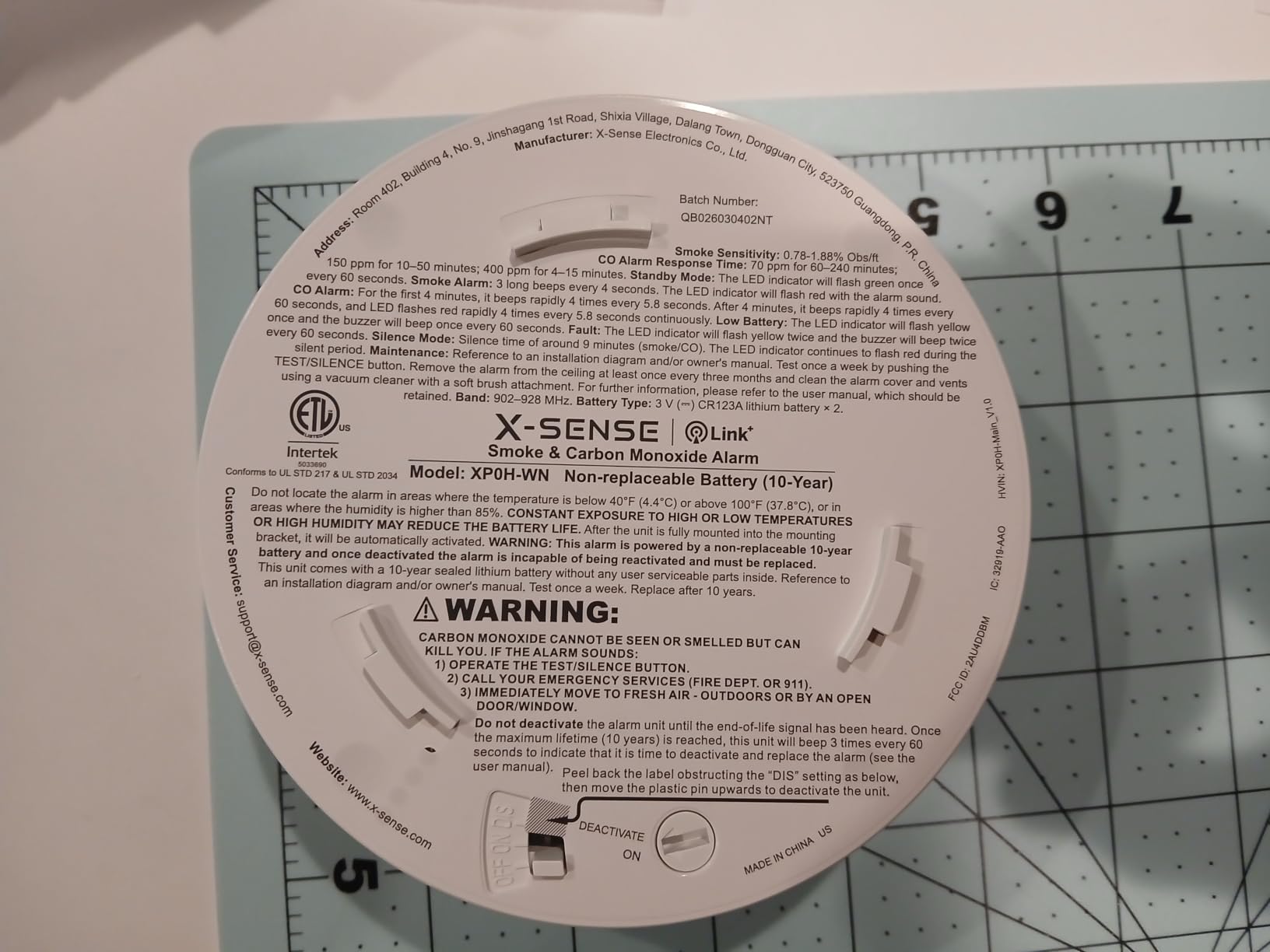
This is the pick we would put in a home with no existing wiring and no strong ecosystem loyalty. Three alarms, each with a 10-year sealed lithium battery, each carrying a photoelectric smoke sensor and an electrochemical CO sensor. When one detects a problem, the RF interconnection makes all three sound. That is the part that matters most in a real house, because the alarm that wakes you is rarely the one closest to the fire.
What you give up is everything digital. The XP0H-WN has no Wi-Fi, will not pair with a base station, and cannot be paired into an automation hub. If you want a push notification when you are out, this is the wrong unit, and no firmware update will change that.
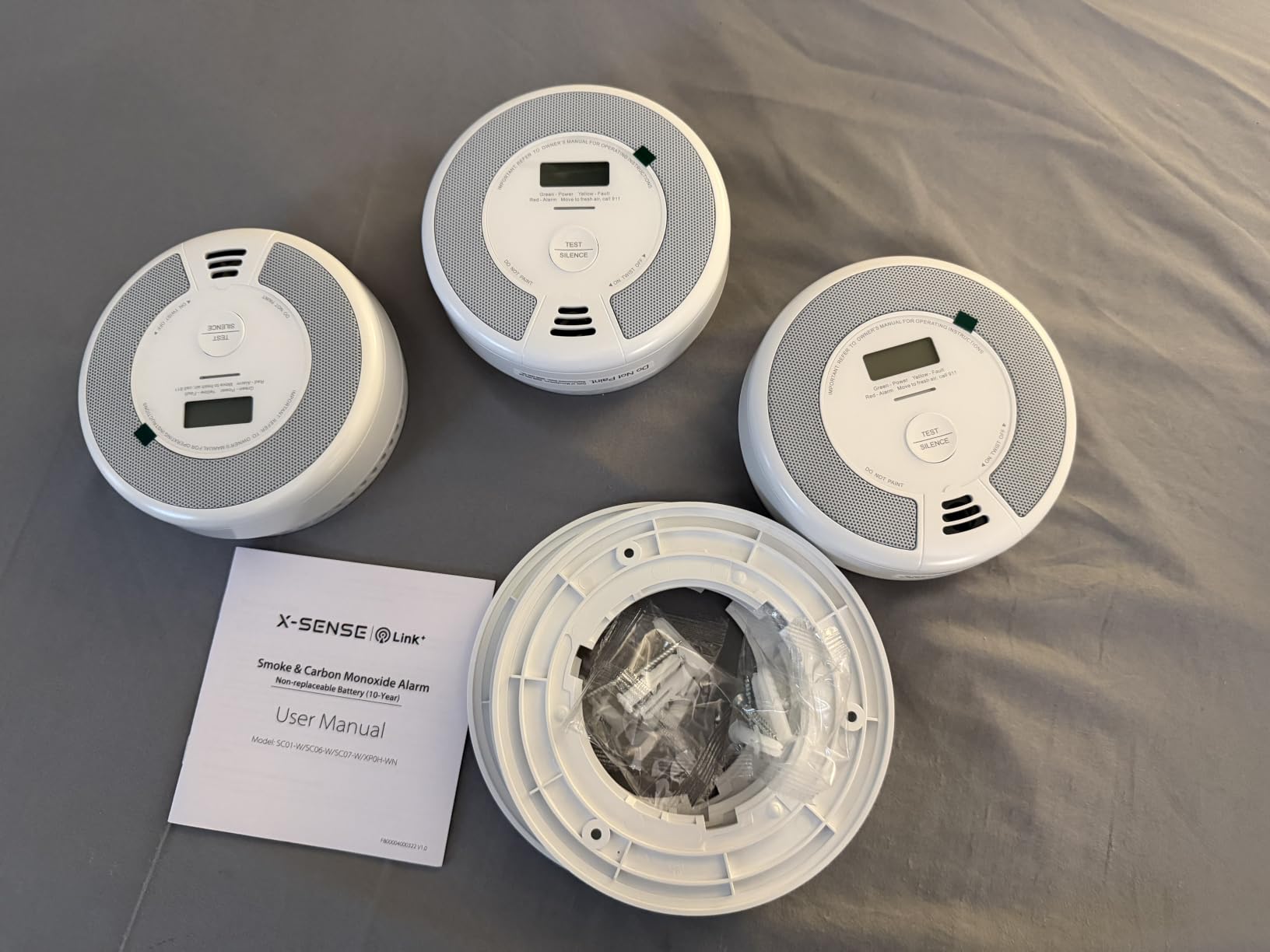
The mechanical side is well considered. The 5.7-inch mounting bracket is oversized on purpose, so it covers the screw holes and ceiling stain left by the alarm you are replacing. Owners consistently report the swap taking minutes with no wiring and no electrician, which is exactly the retrofits people mean when they say they want smart smoke detectors without hiring anyone.
The CO sensor is the quiet differentiator. Pressing the test button wakes a digital readout of carbon monoxide parts per million, and reviewers describe using it as a sanity check after running a generator or a gas appliance. The battery is sealed lithium rated for ten years, so there is no annual ladder climb and no low-battery chirp to train you to ignore.
What you should check before buying
Decide honestly whether wireless interconnection alone satisfies your definition of smart. For a two-bedroom bungalow with three alarms, it very often does. For a house where you travel regularly, or where someone sleeps with hearing loss, the phone alert is the reason you are reading this roundup, and this unit cannot deliver it.
Check placement room by room. You need one inside each bedroom, one outside sleeping areas, and one on every level including the basement. Three alarms covers a modest single-floor home well; larger homes need the six-pack version later in this list.
Where it falls short
The CO display is a diagnostic aid, not a monitoring screen. It shows for roughly a minute after you press the button, it has no backlight, it does not retain the highest reading from an event, and it will not show anything below 30 ppm. Reviewers also report sporadic end-of-life beeping on some units before the full ten years have run, which is exactly the kind of fault you do not want to hear at three in the morning.
The body is also chunkier than the compact units we tested later. On a textured or popcorn ceiling it will show, and on a vaulted ceiling the extra depth is visible from below. Cosmetic, but it is why the eufy exists.
2. eufy Security Smoke Alarm E10 – Best Compact Design
eufy Security Smoke Alarm E10, Smoke Detector, Ultra-Compact 70 mm Design
70 mm diameter body
UL 217 10th edition compliant
Up to 656 ft range to HomeBase
5-year sealed lithium battery
Pros
- Roughly one-third the size of a traditional alarm
- 70 mm disc disappears into a modern ceiling
- UL 217 10th edition compliant detection
- Long 656 ft open-air range to the hub
- 5-year sealed lithium battery
Cons
- Requires a eufy HomeBase hub so it is not a standalone alarm
- HomeBase needs recent firmware to pair correctly
- Review volume is far lower than the X-Sense units
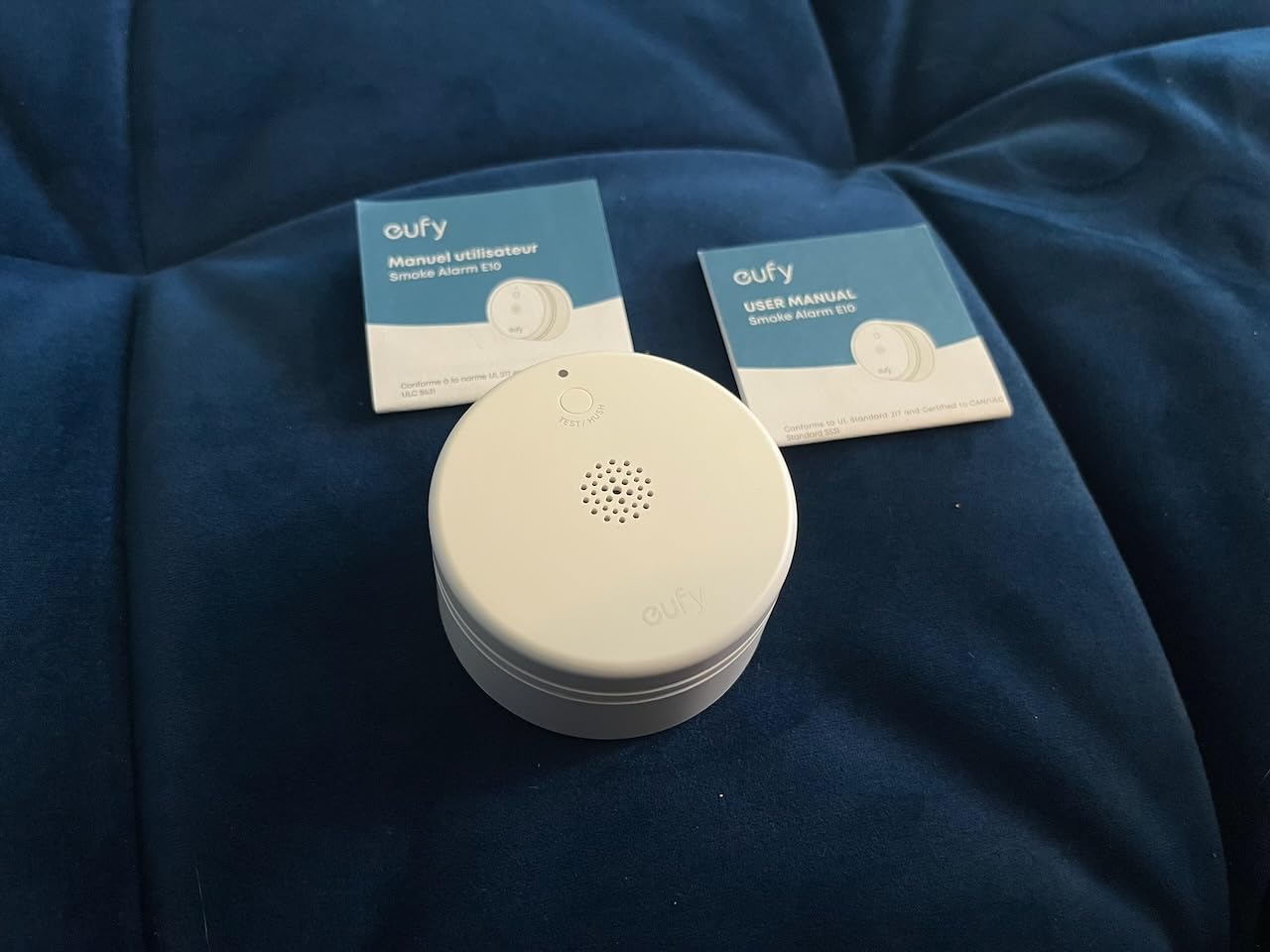
The E10 solves a problem nobody else in this roundup addresses: alarms look terrible. At 70 mm across and 1.08 inches deep, this is a small white disc rather than the chunky cone or square that has dominated ceilings for forty years. In a renovated room where the ceiling is the design feature, that difference is worth something.
Detection is listed to UL 217 10th edition, the current and strictest edition of the standard, which sets tighter limits on nuisance alarms than older alarms had to meet. Buyers cite that compliance as the main reason for their confidence alongside the sealed battery.
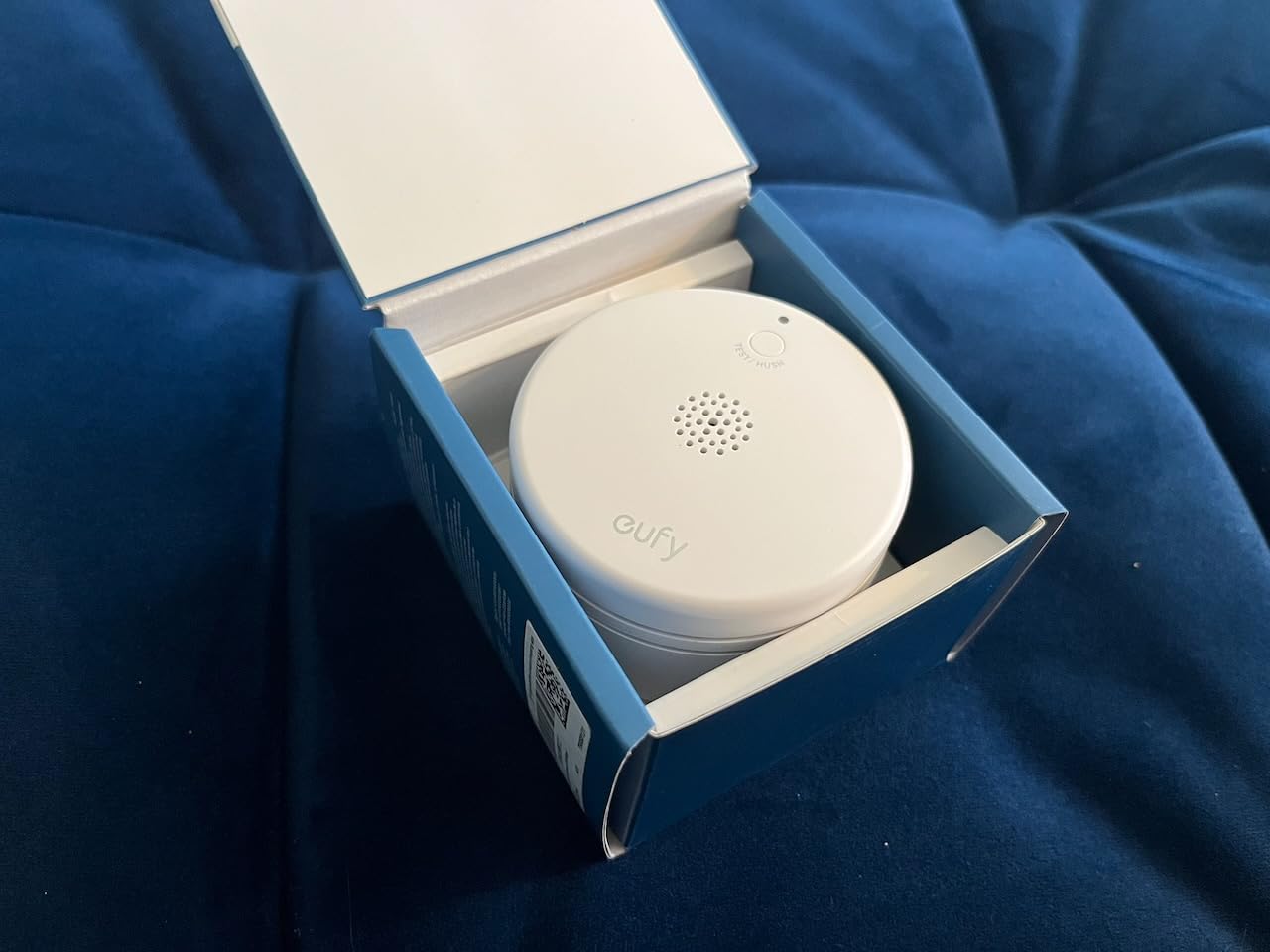
The catch arrives at setup. The E10 is not a standalone alarm. It needs a eufy HomeBase, and the manufacturer specifies minimum firmware versions for each hub model: HomeBase Mini v4.0.5.2, HomeBase 2 v3.4.1.2, HomeBase 3 v3.7.2.6, or HomeBase Pro v4.1.4.3. If your hub is running older firmware, pairing fails in ways that are not always obvious from the error message.
Once paired, the range is genuinely long. The stated maximum is 656 feet in open air to the HomeBase, which means a normal two- or three-story house is not a problem. Communication with the hub is how alerts travel, so the hub is also the single point of failure worth thinking about before you commit.
What you should check before buying
Confirm you own a compatible HomeBase, or count one into your plan. Owners who already run eufy cameras and security gear get the most out of this. If you do not, you are adding a hub to the cost and to the shelf space just to run a smoke alarm, and one of the phone-alert units later in this list will serve you better for less complexity.
Also check firmware before you mount anything. Updating a hub can require being on the same network as the app, and doing that after the alarms are on the ceiling is an avoidable afternoon.
Where it falls short
Five years of sealed battery is shorter than the ten-year claims on the X-Sense units. The CO story is also thin here, because the E10 is presented as a smoke alarm and the listing does not pair it with CO detection. If carbon monoxide is part of your requirement, this is not the device.
The smaller the sample, the softer the evidence. Two hundred twenty-one reviews is enough to show owners like the form factor and the hub range, and not enough to tell you much about five-year reliability in a real home.
3. Kidde Smart Smoke and CO Detector with Ring – Best for Ring Users
Kidde Smart Smoke & CO Detector with Ring, AA Battery, RGCUDR-RW
2 AA batteries, wire-free install
Ring app alerts with no subscription
Smoke plus CO detection
Alexa compatible
Pros
- Phone notifications for smoke CO and low battery with no subscription
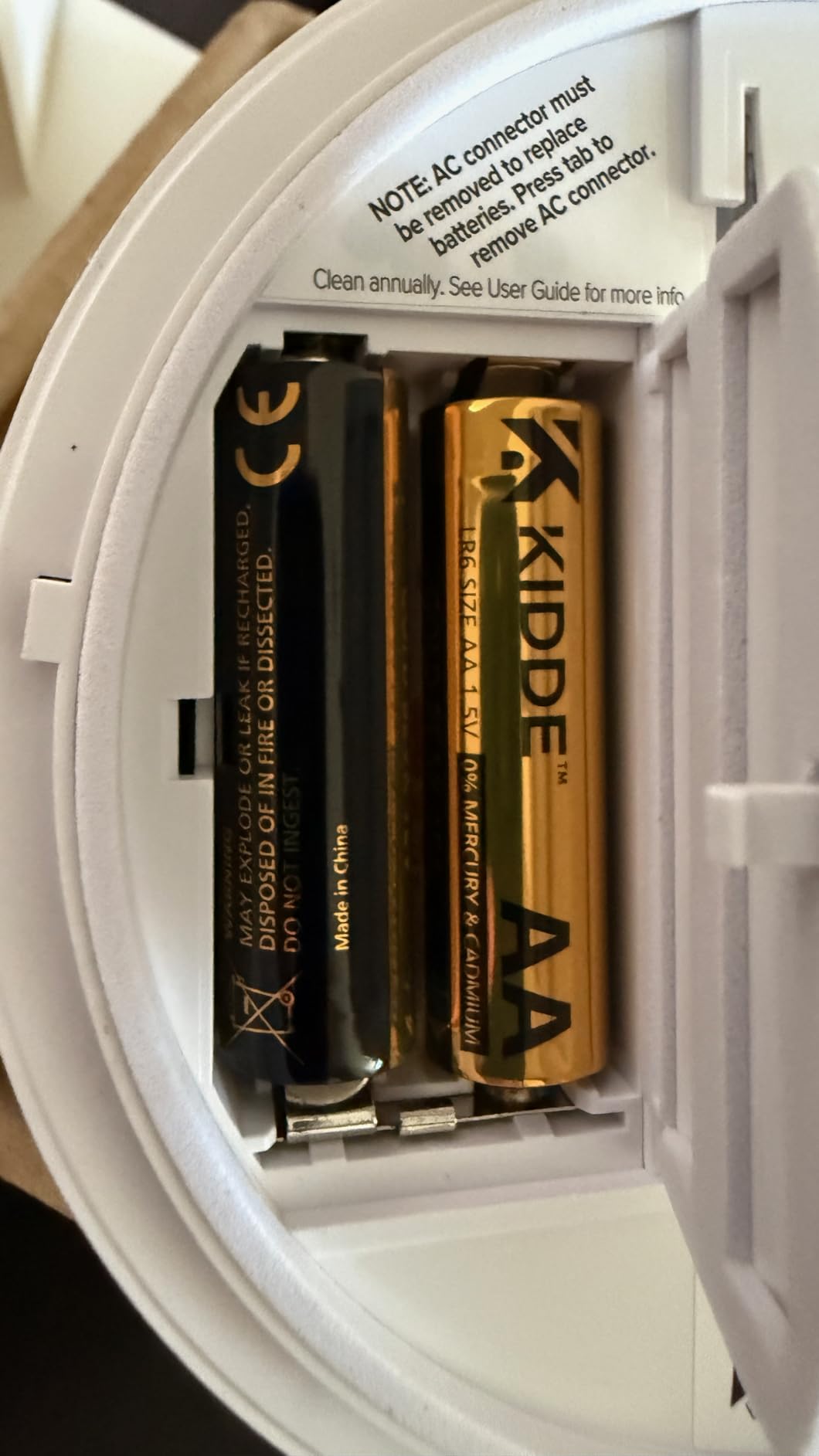
- Installs on two AA batteries with no wiring
- Interconnectivity across all Kidde alarms in the home
- Works with the Ring app and Alexa
- Improved sensing aimed at cooking nuisance alarms
Cons
- 10% of reviews are one-star the highest negative share among connected units
- Deeper monitoring features sit behind an optional Ring plan
- Replaceable AA batteries rather than a sealed 10-year cell
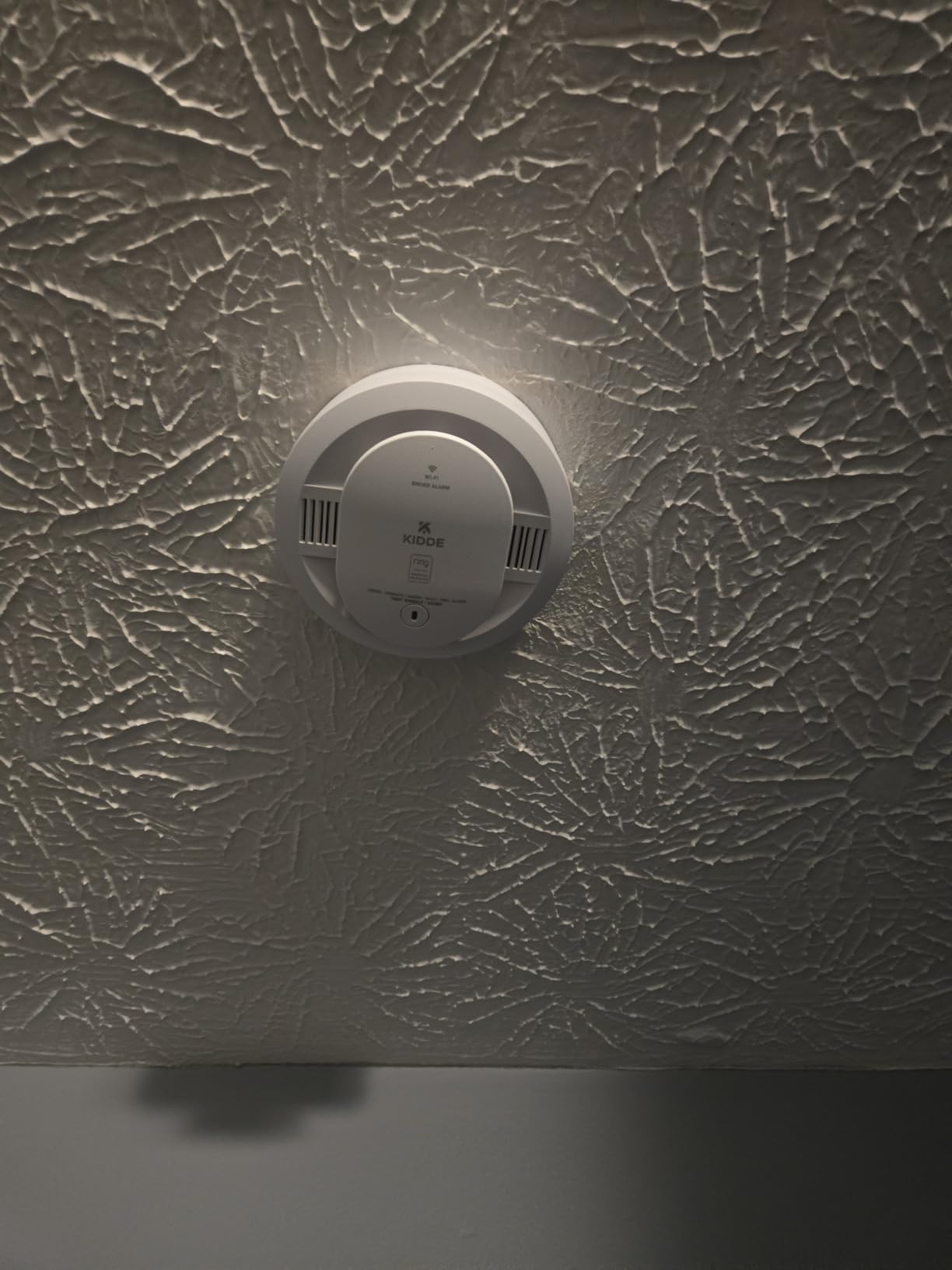
Kidde is one of the two names fire departments and code authorities name first, and this is the model that puts a Ring app on that pedigree. Alerts for smoke, carbon monoxide, and low battery arrive on your phone with no subscription attached. That distinction is the whole reason we rank it third instead of lower: plenty of connected alarms hide the useful part behind a monthly plan, and this one does not.
Installation is two AA batteries and a bracket. Owners like being able to add one smart alarm to a house full of hardwired Kidde units and gain phone visibility without touching the wiring in the walls.
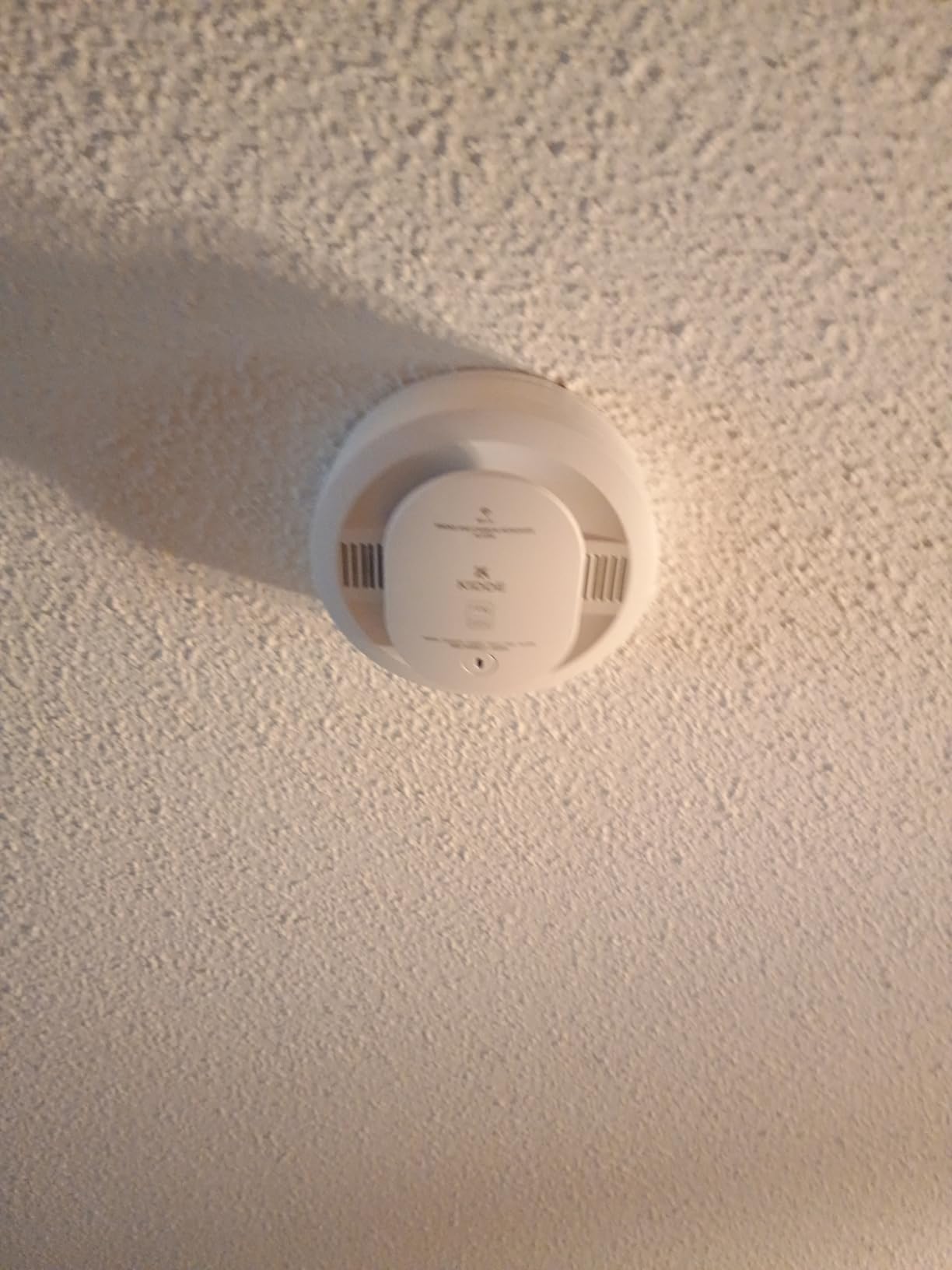
Kidde claims detection more than 25 percent faster than a leading competitor in internal testing, and says enhanced sensing cuts cooking-related nuisance alarms compared with earlier Kidde generations. Those are manufacturer figures, not independent lab results, so treat them as directionally useful rather than decisive.
Interconnectivity is wire-free across the home, and Alexa is supported alongside the Ring app. The practical routine people report is simple: test from the phone, get a push when something fires, silence it from the phone if it turns out to be toast.
What you should check before buying
Look at your Ring plan honestly. Basic alerts arrive without one. If you want 24/7 professional smoke and CO monitoring, that is a separate Ring subscription sold on top, and the cost belongs in your ten-year math rather than being discovered in year three.
Check that your other alarms can join the network. Wire-free interconnectivity is described across Kidde alarms in the home, which is broader than it sounds, but if your existing alarms are a different brand entirely, this unit may end up being an island that only alerts phones.
Where it falls short
Ten percent of its reviews are one-star, the highest negative share among the connected detectors here. Owners on r/smarthome point to reliability and pairing complaints that pull the rating below the non-connected X-Sense units, and AA power means you are replacing cells rather than waiting out a decade.
It is also the least flexible of the phone-alert options. There is no local-control path here, so if your internet drops, the smart features are the features you lose. The local alarm still works, which is the part that matters most, but plan for the notifications to be unavailable.
4. Kidde Hardwired App-Enabled Smart Smoke Detector – Best Hardwired Retrofit
Kidde Hardwired Kidde App Enabled Smart Smoke Detector with AA Backup Battery, Interconnected Alarm
Hardwired with AA backup battery
One smart alarm covers the home
Remote test and hush from the phone
2.4 GHz Wi-Fi setup
Pros
- A single smart alarm brings a whole hardwired Kidde home into the app
- App shows which specific alarm is low or triggering
- Remote hush and remote test avoid ladder climbing at night
- Quietable options for low-battery and Wi-Fi chirps
Cons
- Chirps whenever Wi-Fi drops with no in-app way to disable it
- Multiple reports of early random false alarms on recent production units
- Only Wi-Fi-equipped alarms appear in the app
- 19% of reviews are one-star the highest negative share in this set
This is the most direct path to phone alerts for a house that is already hardwired, and the idea behind it is genuinely clever. Add one Wi-Fi-equipped alarm to an existing interconnected Kidde system, and every alarm on that hardwired bus becomes visible in the app without rewiring the house or replacing every head. Owners with existing Kidde systems describe it as the only upgrade that made sense for them.
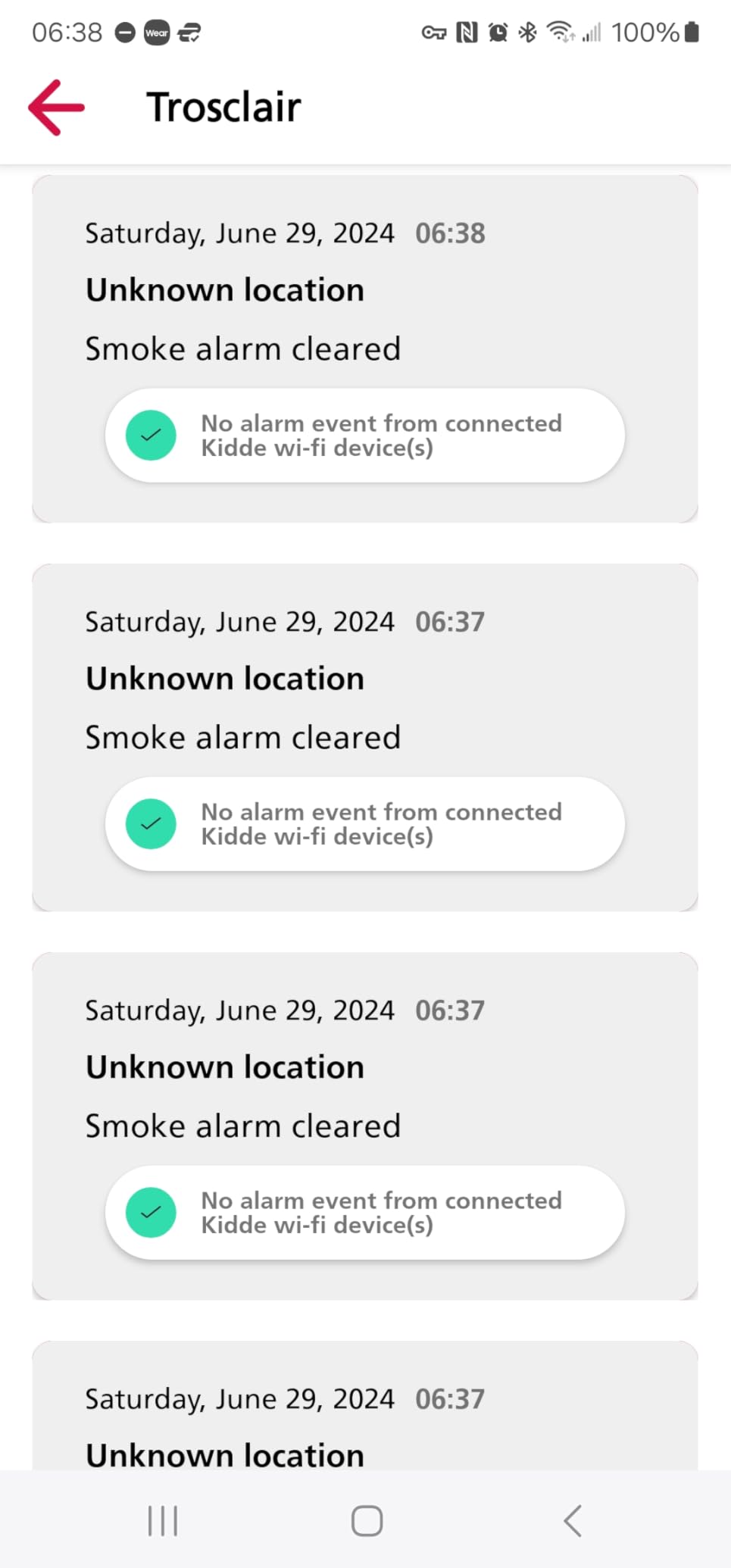
The app features are the best in this roundup for a hardwired install. It identifies which specific alarm is low on batteries or triggering, and it offers remote hush plus remote test. That last one removes a genuinely irritating problem: testing alarms at 2 a.m. with a broomstick.
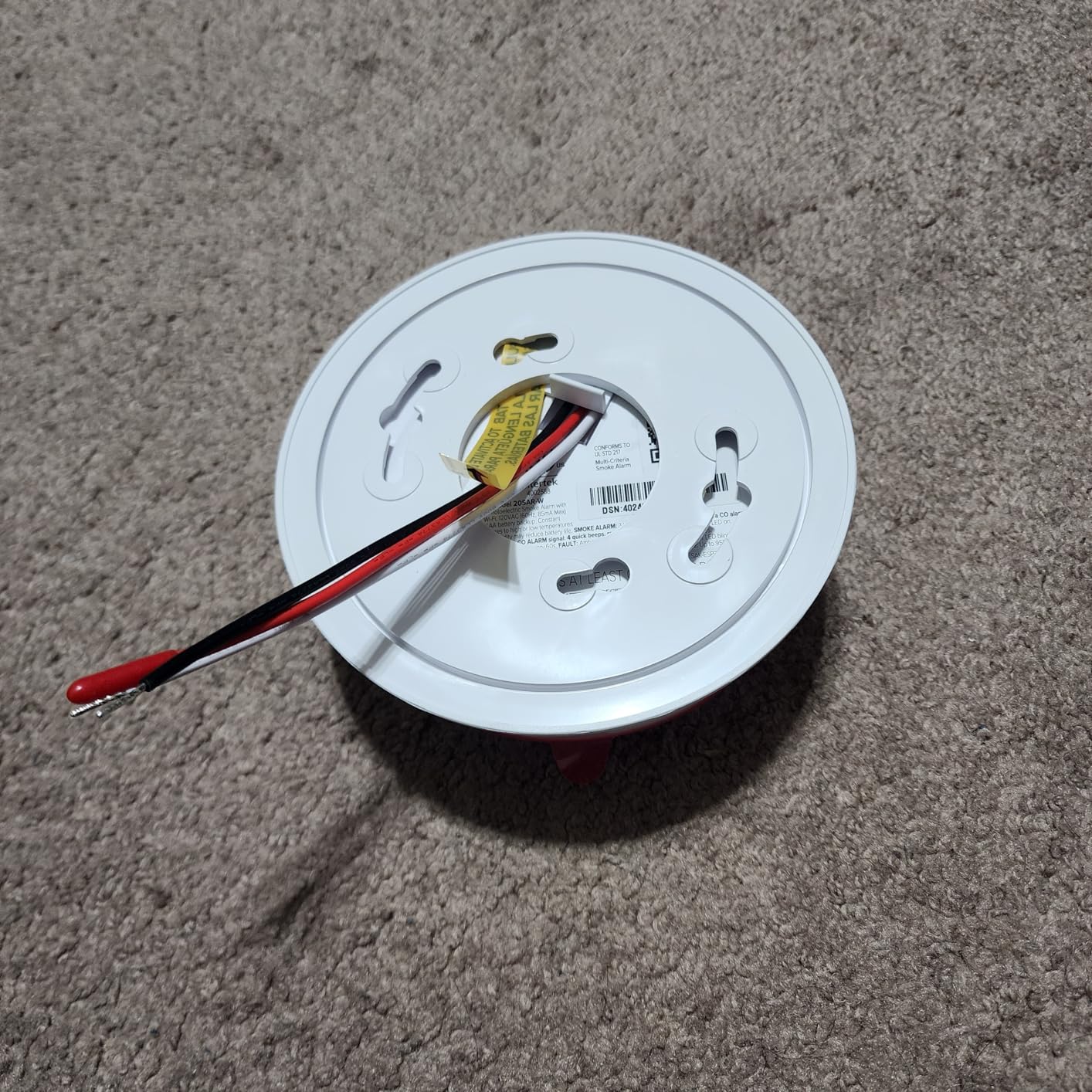
It is photoelectric, corded electric with an AA backup battery, and rated for up to 95 percent relative humidity non-condensing, up to a 100 degree F upper temperature rating. Certification here is UL 217 8th and 9th edition with FCC, which is a step behind the 10th edition the newer units carry.
Setup needs 2.4 GHz Wi-Fi. If your router has moved everything to 5 GHz, this is where the install stalls, and it is worth checking before you cut power to anything.
What you should check before buying
Confirm your existing alarms are Kidde and interconnected. The value of this device collapses if your current detectors are a different brand, because then it is just one connected alarm with a slightly disappointing rating behind it.
Know what a Wi-Fi outage sounds like. This unit chirps when it loses the network, and reviewers report no in-app way to disable that behavior. In a house with flaky Wi-Fi that is a nightly irritation, so stabilize your network first.
Where it falls short
Nineteen percent of reviews are one-star, the highest negative share of any product in this set. Two complaints drive it: the Wi-Fi-loss chirp, and a cluster of random false alarms reported on recent production runs. A device whose failure mode is sounding when there is no fire trains you to ignore it, which is the worst possible outcome for a life-safety product.
There is also a visibility limit worth understanding. Only the Wi-Fi-equipped alarms show up in the app. The rest of your hardwired system participates in the audible event but stays invisible as a named device, so a fault on a non-connected head will not generate an alert.
5. Kidde Smart Smoke and Indoor Air Quality 2-Pack – Best Air Quality Tracking
Kidde Smart Smoke Detector & Indoor Air, Quality Monitor, WiFi, Alexa Compatible Device, Hardwired w/Battery Backup, Voice & App Alerts, 2 Pack
Smoke plus TVOC and humidity tracking
Voice hazard announcements
Wired with battery backup
85 dB alarm with status LEDs
Pros
- The only unit here that also tracks TVOCs and humidity
- Voice alarm announces the hazard type clearly
- Remote test and hush from the app
- Works with Alexa Google Home iOS and Android
- 10-year limited manufacturer warranty
Cons
- Frequent nuisance alarms with some owners reporting two to four per month
- TVOC and humidity readings described as erratic and unrealistic
- New units can need up to four days of calibration
- Sensitive to smoke and steam
- 18% one-star reviews
Nothing else in this roundup does what this does. It is a photoelectric smoke alarm that also watches total volatile organic compounds and humidity, reporting both to the app. VOCs are what cleaning sprays, paint, and solvents emit, so this is a unit that tells you when the new carpet is still off-gassing. It is the first UL listed smoke and indoor air quality monitoring device, and the two-pack covers two rooms at once.
Voice alerts announce the hazard type: fire for smoke, replace alarm at end of life. The alarm itself is 85 decibels with a three-color LED scheme, green for normal, amber for error, red for a smoke, fire, or CO event. It works with Alexa and Google Home as well as iOS and Android, and the app stores address information for first-responder notification.
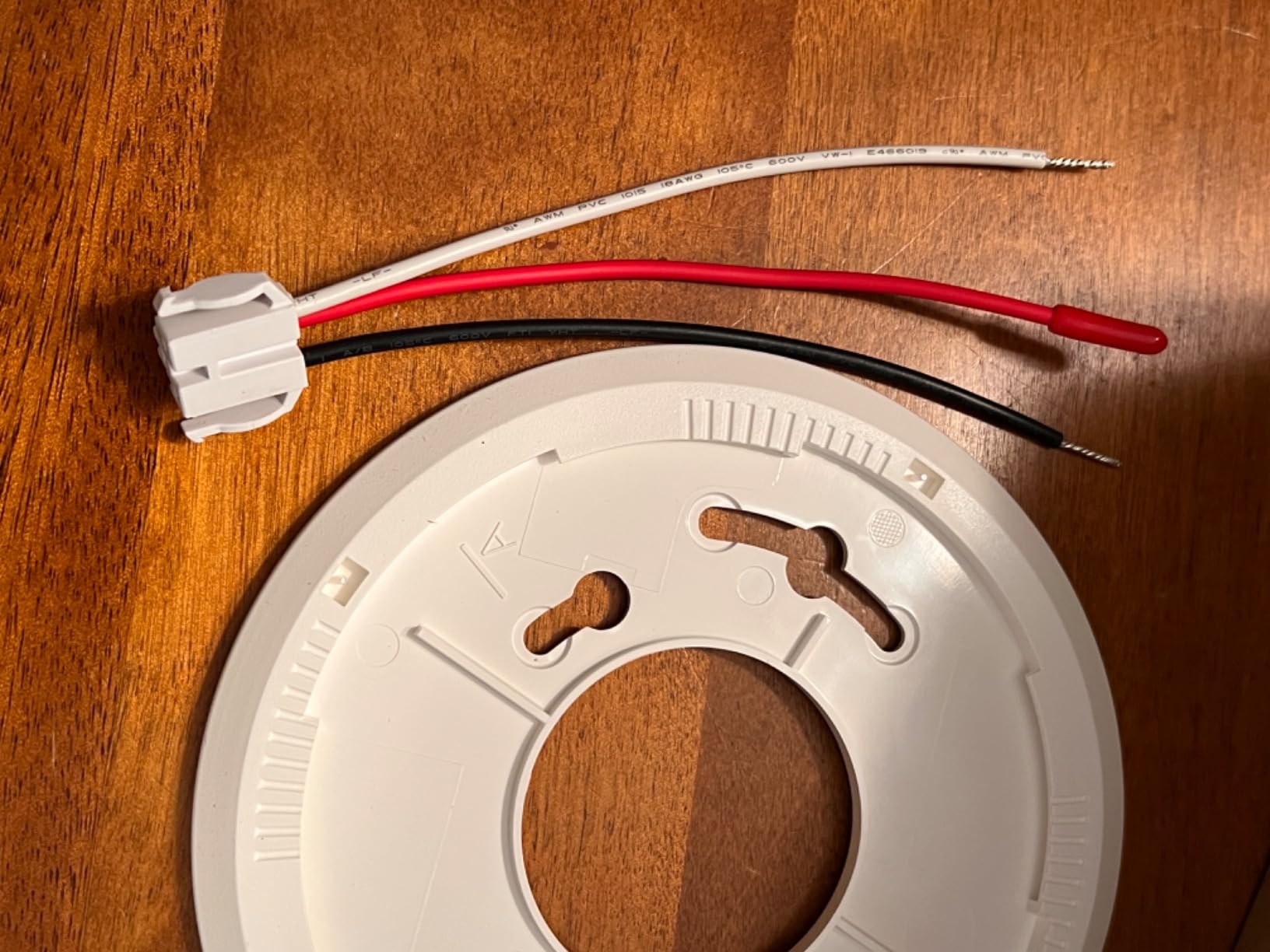
It is hardwired with battery backup, which makes it a natural fit for a new build or a renovation where wiring is already open. The manufacturer warranty is ten years limited on the alarm itself.
We want to be direct about the caveats, because the feature set oversells the reliability. Owners report two to four nuisance alarms per month, frequently overnight, and describe the air quality readings as erratic, jumping between poor and good with no visible cause. New units can require up to four days of calibration before readings mean anything.
What you should check before buying
Ask yourself whether you want an air quality monitor or a smoke alarm. If you want the VOC and humidity data, this is the only device here that provides it and the trade-offs are worth weighing. If you simply want reliable fire detection with phone alerts, a plainer connected alarm will serve you better, because a device that cries wolf repeatedly trains the household to stop moving.
Placement also matters more than usual. Steam sensitivity is a listed weakness, so put these away from bathrooms and cooking areas rather than relying on the alarm to filter it out.
Where it falls short
Eighteen percent of reviews are one-star, and the recurring theme is not detection quality but steadiness. Erratic air readings that flip for no reason make the feature noise rather than information, and several owners describe disabling the air quality alerts entirely after the first week of false data.
The four-day calibration period also creates a window early on where the readings should not be trusted, and nothing in the app, as far as we can tell, tells you that period is underway. Work around it by ignoring the air quality data for the first week and only judging smoke performance after that.
6. HEIMAN S1-R 3-Pack – Best for Renters and Small Spaces
Heiman Smoke Detector, Wireless Interconnected Smoke Alarm for Home, 3 Pack
Dual-beam photoelectric sensing
UL 217 10th edition certified
Interconnection up to 656 ft
Lithium battery with magnetic mounting
Pros
- Very small footprint that suits bedrooms and apartments
- Quick 30-second setup with pairing in about 30 seconds
- Magnetic mount makes ceiling installs and battery swaps fast
- Dual-beam sensors are praised for resisting bathroom steam
- Red Dot Design Award winner
Cons
- No app and no Wi-Fi interconnection is the only smart feature
- Some buyers report the long-life battery dying well before the claim
- One reviewer distrusted responsiveness enough to decline recommending it as a safety device
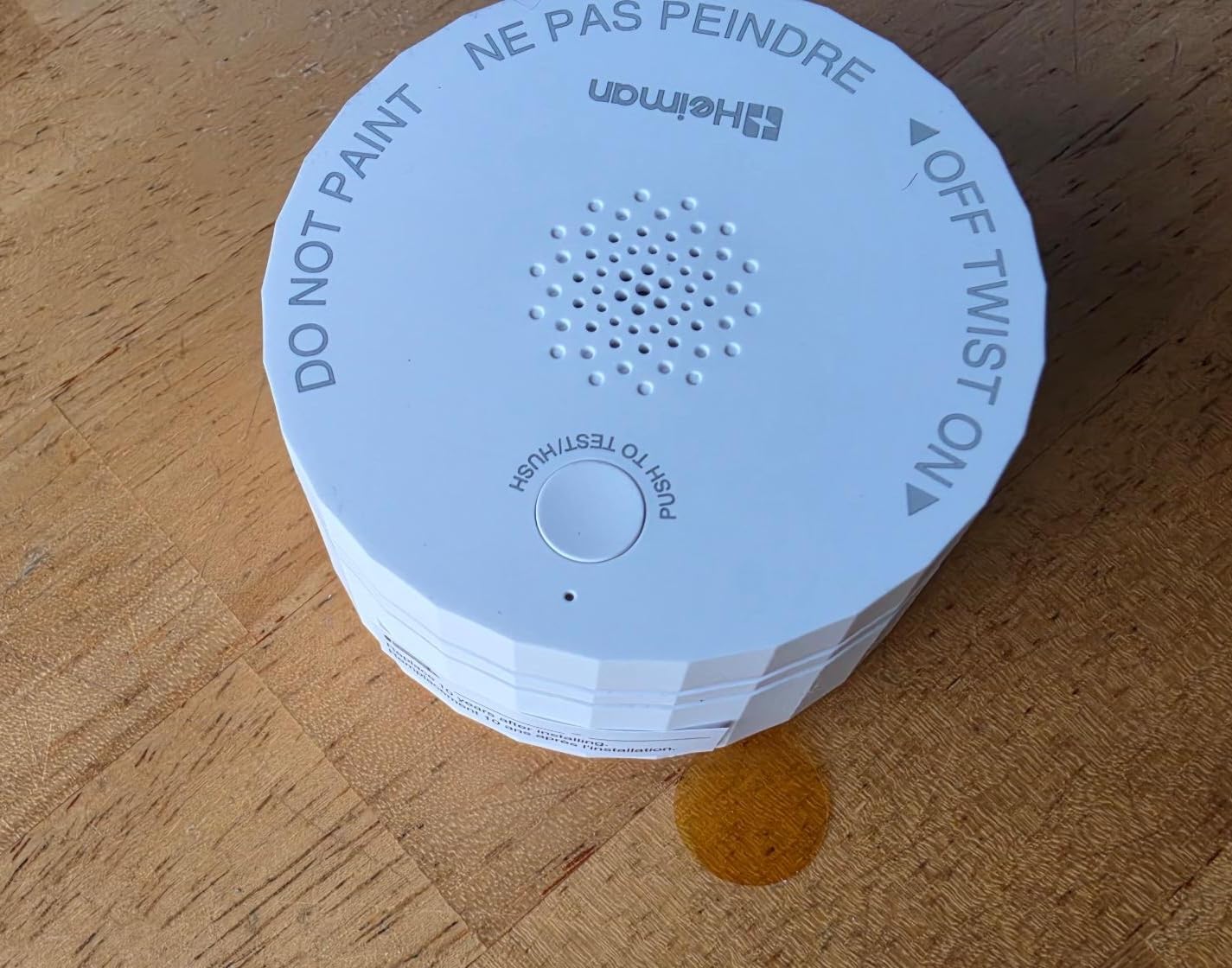
At 2.75 inches across and 1.45 inches deep, this is one of the smallest alarms here, and for a rental apartment or a child’s bedroom that footprint matters. Three units cover a small flat, and the box includes magnetic adhesive pads as well as screws, which means a landlord-friendly install with no holes and no electrician.
The sensing is the part reviewers care about most. These are dual-beam photoelectric sensors, which discriminate on both particle size and density rather than a single measurement. That shows up in a specific and repeatedly praised way: not tripping on bathroom steam.
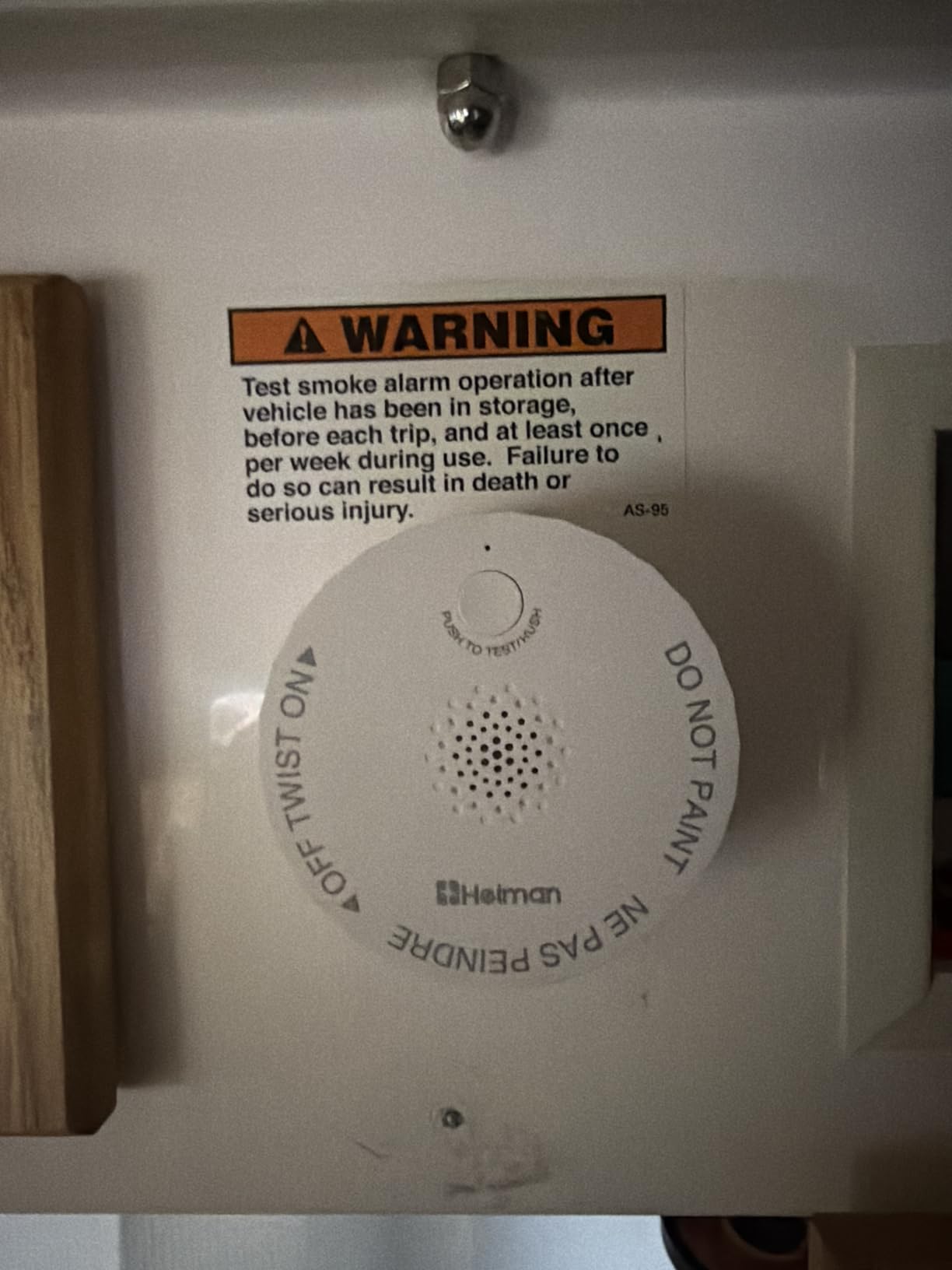
Certification is UL 217 10th edition, and the housing is flame-retardant ABS and PC rated UL94 V-0. The alarm is an 85 decibel buzzer at ten feet with LED indicators, and the test and silence button gives a ten-minute hush for nuisance events, which is longer than most.
Interconnection range is stated at up to 656 feet in open areas, and owners report all three units alarming within roughly thirty seconds of the first. Note clearly that these alarms do not connect to an app or Wi-Fi at all. Interconnection is the entire smart feature list.
What you should check before buying
Confirm that linked alarms with no phone alerts meet your needs. In a rental where you cannot touch wiring and do not want to modify the landlord’s smoke system, a sealed battery pack that sounds together is often the most honest upgrade available. Just do not expect to check your home from a hotel room.
Also think about removal. Magnetic pads are fast, but if your tenancy ends you will want them back in one piece, so check the adhesive does not leave marks on a painted ceiling.
Where it falls short
The battery claim is the weak point. Some buyers report the included long-life lithium dying well short of the advertised span, and the manufacturer does not publish a replacement cycle you can hold them to. For a safety device, that gap between claim and experience matters more than it would for a gadget.
One reviewer went so far as to distrust the alarm’s responsiveness and decline to recommend it as a safety device, which is an isolated report rather than a pattern, but it is the kind of comment worth reading before committing. Owners also report unclear expectations about the interconnection feature itself, finding it hard to confirm the units were actually linked.
7. X-Sense SC01-W 6-Pack – Best for Large Multi-Floor Homes
X-Sense Interconnected Smoke and CO Detector Combo, SC01-W, 6-Pack
Six smoke and CO alarms in one order
10-year sealed lithium battery each
RF interconnection across floors
85 dB audible alarm
Pros
- Six alarms cover a large multi-floor home in one purchase
- RF interconnection links alarms across floors
- 10-year sealed battery per alarm removes annual battery work
- No rewiring needed for a retrofit install
- ETL Listed to UL 217 and UL 2034
Cons
- No Wi-Fi or app
- so no remote hush or phone alerts
- A bulkier body at 5.7 inches across and 2 inches deep
- RF interconnection is a closed ecosystem that cannot pair with a base station
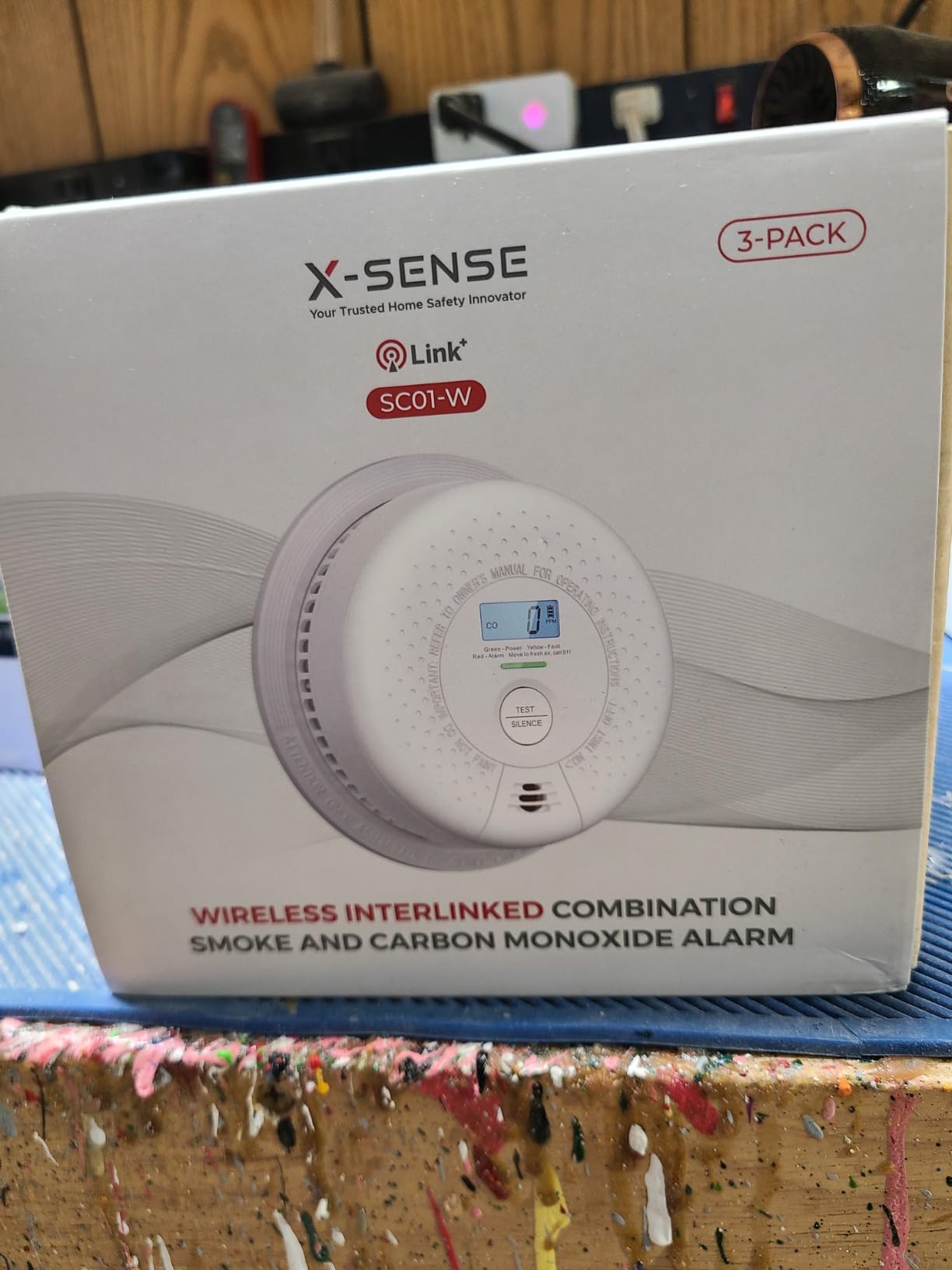
If your home needs more than three alarms, this is the same design as our top pick in a quantity that makes sense. Six photoelectric and electrochemical units, each with a 10-year sealed lithium battery, each able to trigger every other one in the house across multiple floors. Owners covering a whole home in a single order describe fast, wiring-free installation and dependable interconnection.
The warranty package is worth noting for a large deployment: a 60-day money-back guarantee, a five-year quality warranty, and lifetime technical support. That kind of support arrangement is more meaningful when you have six devices to service.

The audible alarm is 85 decibels, and each unit carries both a photoelectric smoke sensor and an electrochemical CO sensor. Mounting hardware, screws, and anchor plugs are included, so nothing else needs buying.
The trade-off is identical to the 3-pack: no Wi-Fi and no app. You get the audible event across the house, and nothing else. If you want remote monitoring as well, budget for one connected alarm somewhere in the mix rather than expecting these to provide it.
What you should check before buying
Count your locations before you order. The minimum sensible layout is one alarm inside each bedroom, one outside each sleeping area, one on every level including the basement, and one near any sleeping area with a fireplace or other ignition source. Six is comfortable for a two- or three-storey house with a basement.
Check the size. At 5.7 inches across and 2 inches deep, these are visibly chunkier than the compact units, and on a vaulted or textured ceiling the extra depth shows from below.
Where it falls short
The closed ecosystem point is the real limitation. The RF interconnection will not pair with a base station, and there is no path to an automation hub, so this is not a device you can fold into a broader smart home even if you wanted to.
Its rating is slightly below the 3-pack version, and the reason is straightforward: buyers who want remote silencing and phone alerts have to look elsewhere. Six connected alarms are also a much larger financial commitment than six sealed-battery ones, so the value comparison only works if you genuinely do not need the connectivity.
8. Nest Protect 2nd Gen – Best Spoken Alerts, With Age Caveats
Nest Protect smoke & carbon monoxide alarm- Wired (2nd gen)
Split-Spectrum sensor with 10-year CO sensor
Spoken room-specific alerts
Steam Check for showers
Pathlight night light
Pros
- Spoken alerts tell you what and where the hazard is
- Phone hush removes the need to reach the unit
- Split-Spectrum sensing plus a 10-year CO sensor
- Self-testing flags outages
- low battery and malfunctions
- Pathlight night light and a clean modern look
Cons
- Units sold now are often several years old with as little as 30-40% life remaining
- Many reviewers report a power-out error despite confirmed power
- Connectivity is picky and some units stay offline in the Nest app
- Highest one-star share in this roundup at 32%
The Nest Protect still does something no other alarm in this roundup does as well: it tells you what is wrong and where, out loud, in a calm voice. Its smart detection escalates from a verbal heads-up in the kitchen to a full alarm with a red flashing light, which is a genuinely better design for a household with sleeping children than a full-volume horn at the first sign of toast.
Steam Check prevents shower-related false alarms, which is the single most common complaint about connected alarms generally. Hush from the phone in the Nest app means you never have to reach the unit. The Split-Spectrum sensor is paired with a 10-year CO sensor, and self-testing flags power outages, low batteries, and sensor malfunctions on its own.
It is wired with battery backup, connected over Wi-Fi with Bluetooth 4.0 through the free Nest app, and it has a Pathlight night light that shines on the floor at night. Owners on r/googlehome pair it with a Nest thermostat and, in some cases, a UPS for the router so the app keeps talking during an outage.
The problem is not the product, it is the buying conditions. Units on sale now are frequently several years old, so remaining life on the ten-year replacement cycle can be as little as 30 to 40 percent. Owners on r/smarthome describe the Nest Protect as great when it works, with trust damaged by both false alarms and by changes to how the old Works with Nest integrations behave.
What you should check before buying
Ask for the date of manufacture and work out the remaining life before you commit. A unit with two years left is a poor purchase in a life-safety category regardless of how good the voice alerts are. Verify the manufacture date on the box rather than trusting the listing.
If you already run Google Home, the ecosystem fit is good. If you run Home Assistant or a local-only setup, the honest answer is that the Nest ecosystem does not offer the local control path those users want, and this device will not change that.
Where it falls short
Thirty-two percent of its reviews are one-star, the highest share in this roundup, and the causes are almost entirely about aging hardware and long-term support rather than detection. Power-out errors reported despite confirmed power and units that stay perpetually offline in the app even after router changes are both recurring.
The ceiling bracket also snaps if forced during installation, which is a small thing until you are on a ladder. We rank this eighth for reliability in 2026, not because the alerts are poor, but because a detector with two years of life left cannot be the one protecting your family.
What to Look for in the Best Smart Smoke Detectors
Photoelectric, ionization or dual-sensor
For most residential homes, photoelectric is the right default. It responds to smoldering fires, which is the type that starts in a couch or a wall and produces the smoke that kills people, and it is far less likely to sound off on cooking fumes. Ionization sensors are faster on fast-burning flaming fires but are more nuisance-prone around kitchens, and the current UL 217 standard heavily restricts them for residential sale in many configurations.
Both kinds still do their job, and a mixed fleet in one house is perfectly acceptable. What matters more is the certification edition: an alarm listed to UL 217 10th edition, like the eufy E10 and the HEIMAN S1-R here, has to clear stricter nuisance-alarm limits than older models. When replacing expired alarms, that is a free upgrade in tolerance for everyday cooking smoke.
Power: sealed battery, replaceable cells or hardwired
Sealed ten-year lithium batteries, found on both X-Sense models, remove battery replacement from your life entirely. That is the strongest long-term argument for them, and it is a real one: low-battery chirps are the reason people end up ignoring alarms.
Replaceable cells, as on the Kidde with Ring, are cheaper per unit and easier to service yourself, at the cost of a battery visit every year or so. Hardwired units with AA backup, like the two Kidde hardwired models, are the right choice when wiring is already present, and are effectively required in most new construction.
How alerts actually reach you
This is the decision that matters most, and it is the one product pages blur. There are three genuinely different models. An app path, as on the Kidde with Ring, sends push notifications to a phone, usually with no subscription for basic alerts. A hub path, as on the eufy E10, routes through a HomeBase, which means your hub firmware and your network both sit in the alert chain.
The third model is interconnection only, as on both X-Sense packs and the HEIMAN S1-R. Every alarm sounds together, which is excellent for waking a household and useless for telling you about a fire while you are away. Some buyers find that entirely sufficient. Others, who travel or care for someone alone, find it misses the point. Decide which camp you are in before shopping.
If the hub camp wins, size that hub for the rest of the house as well as the alarms. It has to carry lighting, locks, and shading alongside fire alerts, and our guide to motorized blinds for smart homes shows how quickly a single hub becomes the bottleneck for everything else you automate.
Carbon monoxide and ten-year cost
CO detection is worth having on every level near sleeping areas, and six of the eight units here combine smoke and CO in a single body. Doing both in one device halves the number of units on the ceiling, which matters for a home with a lot of rooms.
On cost, work out your ten-year total rather than the unit price. Add the batteries if the batteries are replaceable, and add any subscription required for the features you actually want. Professional monitoring through a Ring plan is the main recurring item in this roundup, and it is optional rather than required for the core alerts on the Kidde with Ring. Devices that carry their alarm function locally, like the X-Sense units, have no recurring cost at all. If you are still deciding what to run locally versus in the cloud, our guide to home automation hubs for smart homes covers the trade-offs in more detail.
Placement, standards and replacement timing
NFPA guidance is the floor here: inside every bedroom, outside each sleeping area, on every level including the basement, and near any sleeping area with a fireplace or ignition source. Inside a bedroom, the alarm needs to sound where your head is. Smoke rises, and a hallway unit alone misses the first minutes.
Replacement timing is where most homes fail quietly. Smoke alarms are rated around ten years, and the end-of-life signal is a chirp many people ignore or cannot hear. Note the purchase date of every unit you own, and put a recurring reminder in your calendar for eight years after installation. Interconnected systems make this easier because one reminder covers the whole house, and if your network has a hub that reports device health, that report can prompt the reminder for you. On the network side, our guide to VLAN network switches for smart homes is worth reading if you plan to segment IoT traffic from your main network.
Frequently Asked Questions
Is it worth getting a smart smoke detector?
In most homes, yes, because it adds a second alert path rather than replacing the first. A smart alarm still sounds locally at full volume, and it also pushes a notification to your phone when smoke or carbon monoxide is detected. That extra path matters most when you are away from home, asleep in another room, or caring for someone who may not hear the horn. The smart features are worth paying for on the connected models; the sealed-battery interconnected models are worth buying for the coverage and the ten-year battery, not for the apps.
What smoke detectors do firemen recommend?
Fire service guidance generally favors alarms listed to the current UL 217 standard, installed inside every bedroom, outside each sleeping area, on every level of the home including the basement, and near any sleeping area with a fireplace or other ignition source. Interconnected units are recommended so that one alarm triggers all of them. Replacing all of them at once matters because mixed ages and standards in the same house defeat the point of interconnection.
Which type of smoke detector is best for residential homes?
A photoelectric alarm is the best general choice for a home because it responds quickly to smoldering fires and is far less prone to nuisance alarms from cooking than ionization. A dual-sensor unit gives you fast response to flaming fires alongside that smoldering sensitivity. Whichever you choose, look for UL 217 10th edition listing, which sets stricter nuisance-alarm limits than earlier editions.
Which brand of smoke detector is the most reliable?
Reliability depends on the model and its age more than the brand. In this roundup, the X-Sense XP0H-WN leads on rating at 4.6 across 4087 reviews, while the Kidde hardwired retrofit and the Kidde air quality unit sit at 3.8 because of nuisance alarms and Wi-Fi-loss chirping. The Nest Protect has the strongest voice alerts but the highest share of one-star reviews, driven by old units with limited remaining life. Judge the model, the certification edition, and the manufacture date.
Why is my smoke detector giving false alarms?
The most common causes are cooking aerosol, steam from a shower or humidifier, dust from construction or renovation, and a unit sitting near a supply vent or air conditioner. Dual-beam photoelectric sensing, which both the HEIMAN S1-R and the current eufy E10 use, resists steam better than older single-beam designs. If a specific unit repeats the problem, move it away from the source rather than muting it. Repeated false alarms are the fastest route to a household that stops responding to alarms.
Final Verdict
The best smart smoke detectors for homes in 2026 fall into two honest camps, and pretending otherwise helps nobody. If you want phone alerts and remote silencing, the Kidde with Ring gives you both with no subscription, and the eufy E10 gives you a cleaner-looking ceiling if you already run a HomeBase. If you want dependable whole-home coverage without wiring and without recurring cost, the X-Sense XP0H-WN 3-pack is our pick, and its six-pack sibling covers larger homes on the same design.
Whichever you choose, buy all of them at once, mount them where NFPA guidance says they belong, and note the purchase date on the back of each unit. A smart alarm shortens the time between a fire starting and someone knowing. The rest is just hardware selection, and that part you can decide this afternoon.