
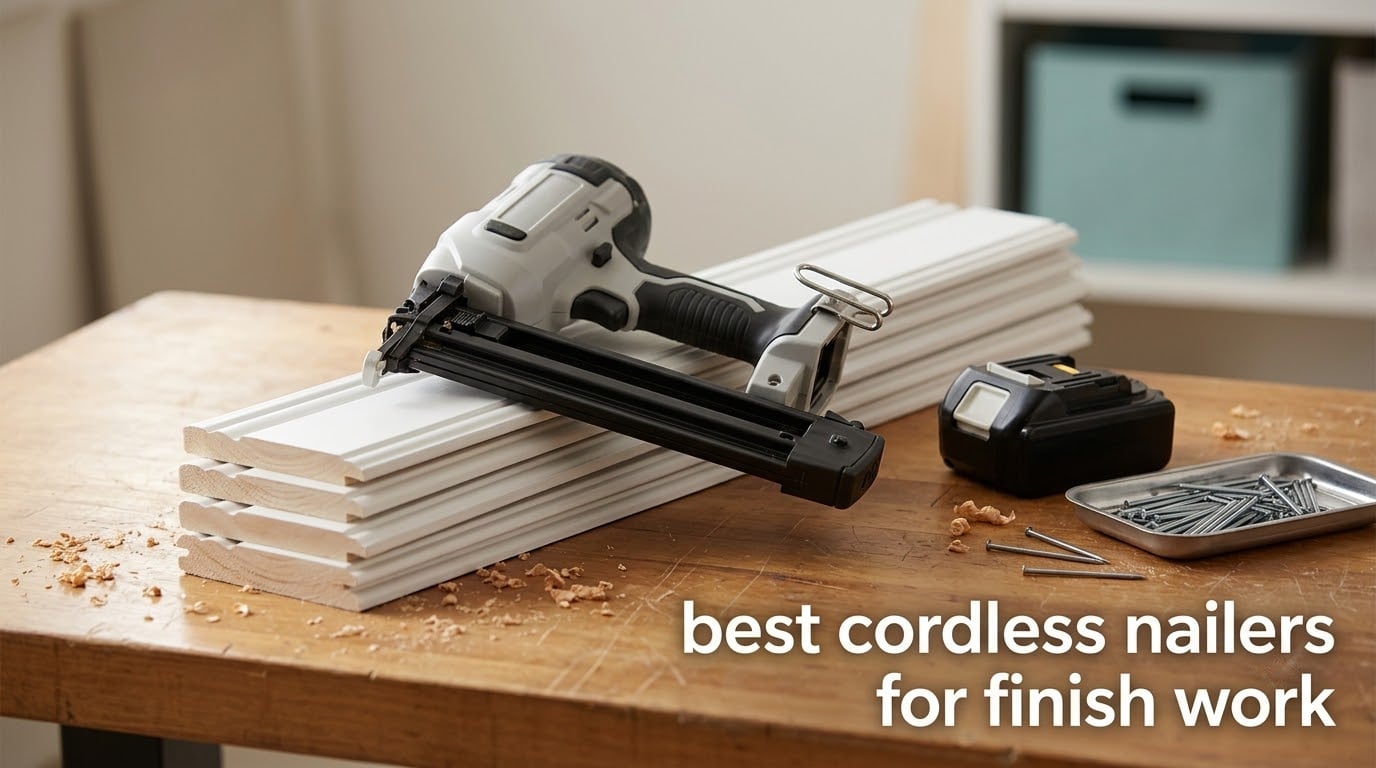
The fastest way to pick the wrong nailer is to start with the brand instead of the nail. Trim carpenters argue about battery platforms constantly, but the decision that actually matters is simpler: an 18-gauge brad nailer and a 16-gauge finish nailer are different tools, and neither one substitutes for the other.
That is the frame for this guide to the best cordless nailers for finish work in 2026. We went through ten battery nailers, weighed the driving systems, checked nail capacity and depth controls, and matched each one to the trim work it is actually built for. Most of the picks here are 18-gauge brad nailers because that is what the category has flooded in recent years, but two genuine 16-gauge finish nailers made the list, and the difference matters when you are nailing casing into a wall.
We also weighed this against the tool next door on the bench. If you are still building out a cordless platform rather than adding to one, our cordless drill set comparisons cover the same lock-in question from the drill side, and it is worth reading before you commit to a battery family.
Top 3 Cordless Nailers for Finish Work in 2026
The DEWALT DCN680B leads on the combination of owner rating and volume of feedback, the Metabo HPT is the lightest tool here for overhead trim, and the DEWALT DCN660B is the pick if 16-gauge finish work is not optional for you.

DEWALT DCN680B 18 GA Brad Nailer
- Brushless motor
- Tool-free depth and jam release
- Low nail lockout

Metabo HPT NT1850DG 18 GA Brad Nailer
- 5.5 lb body
- 700 nails per charge
- Tool-less depth adjust

DEWALT DCN660B 16 GA Angled Finish Nailer
- 16 GA angled magazine
- Tool-free depth control
- Works with 20V MAX batteries
Cordless Nailer Comparison Table for 2026
Every pick below appears with the two or three specifications that separate it from the rest. Gauge drives the first cut, and everything else follows from that choice.
| Product | Specifications | Action |
|---|---|---|
| DEWALT DCN680B 18 GA Brad Nailer |
|
Check Latest Price |
 CRAFTSMAN V20 CMCN618C1 18 GA Brad Nailer CRAFTSMAN V20 CMCN618C1 18 GA Brad Nailer |
|
Check Latest Price |
| DEWALT DCN660B 16 GA Angled Finish Nailer |
|
Check Latest Price |
 Makita XNB02Z 18V LXT Straight Finish Nailer Makita XNB02Z 18V LXT Straight Finish Nailer |
|
Check Latest Price |
| Metabo HPT NT1850DG 18 GA Brad Nailer |
|
Check Latest Price |
 Ryobi 18V ONE+ P321 18 GA Brad Nailer Ryobi 18V ONE+ P321 18 GA Brad Nailer |
|
Check Latest Price |
 Milwaukee M18 FUEL 18 GA Brad Nailer Milwaukee M18 FUEL 18 GA Brad Nailer |
|
Check Latest Price |
 WORX WX842L 20V 18 GA Brad Nailer WORX WX842L 20V 18 GA Brad Nailer |
|
Check Latest Price |
 WEN 20512 20V 18 GA Brad Nailer WEN 20512 20V 18 GA Brad Nailer |
|
Check Latest Price |
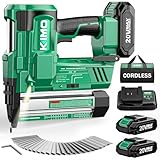 KIMO 9418 2-in-1 Brad Nailer and Stapler KIMO 9418 2-in-1 Brad Nailer and Stapler |
|
Check Latest Price |
1. DEWALT DCN680B 18-Gauge Brad Nailer – Best Overall Cordless Nailer for Finish Work
DEWALT DCN680B 20V MAX* XR® 18 GA Cordless Brad Nailer (Tool Only)
6.2 lb
20V MAX XR
18-gauge brads
Tool-free depth and jam release
Pros
- Brushless motor for runtime and durability
- Tool-free depth adjustment and jam release
- Micro nose improves line of sight
- Multi-functional LED light and diagnostics
- Low nail lockout prevents dry firing
Cons
- Tool only so battery and charger sold separately
- On the heavy side for extended overhead work
This is the tool we kept reaching for. The DCN680B is a 6.2 lb 18-gauge brad nailer built around a brushless motor, and 3736 owners have scored it 4.8 stars, with 88 percent of those ratings at five stars. That is the largest review base of any nailer in this group, and the rating is not propped up by a small sample.
The reason it earns the top slot is the tool-free design. Depth adjustment, jam release, and a stall release lever for resetting the driver blade all work without a hex key, which is the difference between a ten-second fix and a five-minute one on a punch list. The micro nose is the other quiet win: you can see the nail head instead of guessing at it.
Owners consistently report dependable driving power and no compressor setup, and the low nail lockout stops the tool from dry-firing and marking the material. The multi-functional LED does double duty, lighting the workspace and flashing tool diagnostics when something needs attention.
The one thing that catches new buyers is the packaging. This is the bare tool, so a 20V MAX battery and charger have to be sourced separately, and that is the single most common complaint in the reviews. If you already own any 20V MAX pack, that complaint disappears.
When the DCN680B is the right finish nailer
Reach for this one on picture frame trim, thin casing accents, cabinet backs, and anywhere you are pinning small brads into softwood or plywood. The micro nose and adjustable belt hook, which mounts on either side of the handle, make it comfortable for overhead and ladder work.
It is also the safest first cordless nailer for someone who is unsure whether they need 15, 16, or 18 gauge. The low nail lockout and the visible nose make the learning curve short.
Where the DCN680B falls short
It is an 18-gauge brad nailer, and that is a real limit. Reviewers note it sits on the heavy side for extended overhead work, and it is not the tool to reach for when you need structural holding power in hardwood casing or thick baseboard returns.
Buyers who need 16-gauge finish capability should look at the DCN660B further down, or accept that thin trim is the scope of this one.
2. CRAFTSMAN V20 CMCN618C1 18-Gauge Brad Nailer – Best Complete Kit
CRAFTSMAN V20 Cordless Brad Nailer, 18 Gauge Nail Gun, with Battery and Charger (CMCN618C1)
7.6 lb
18-gauge finish nails
Battery and charger included
Tool-free depth and jam settings
Pros
- Battery and charger included in the kit
- Tool-free depth jam and stall settings
- Brushless motor rated at 2800 rpm
- Balanced body with contoured over-molded handle
- Belt hook for storage and access
Cons
- At 7.6 lb it sits at the heavy end of this group
- Sales rank trails similarly capable DEWALT and Milwaukee options
The strongest argument for this nailer is simple arithmetic: the box contains a lithium-ion battery and a charger, so there is nothing else to buy before the first nail goes in. For a first cordless nailer, that removes the most common stumbling block entirely.
CRAFTSMAN rates it 4.6 stars across 3142 reviews, with 81 percent at five stars. Owners point to consistent driving power across different materials and climate conditions, plus a brushless motor running a high-speed steel 2-inch round blade at 2800 rpm.
Depth settings, jam clearing, and stall recovery are all tool-free, which puts it in the same workflow class as the DEWALT. The contoured over-molded handle and the stated center-of-gravity design are what owners notice most in the hand, particularly on longer trim runs.
It drives adhesive collated 18-gauge finish nails, and the body measures 12.5 inches long by 4.2 inches wide by 11.56 inches tall. A belt hook handles storage and quick access on a ladder or scaffold.
Who should buy the CRAFTSMAN V20
This suits a homeowner or a remodeler who wants one tool that works out of the box, and a trade shop that just needs a dependable second nailer for punch-list days. The included battery means you can put a crew member on baseboard repair without waiting on a charging rotation.
It is also a good match for anyone who does not yet own a cordless platform and does not want to start with a battery and charger on the shopping list.
Where the CRAFTSMAN V20 is not ideal
At 7.6 lb it is one of the heavier bodies here, and reviewers call out weight as the recurring grip along with the value question against similarly capable DEWALT and Milwaukee tools. Overhead crown work will show that weight by the end of the day.
The brand and platform have a smaller reach than the big three, so if you later add drills or drivers, the battery will not move between ecosystems. Buyers who expect a growing platform should weigh the WORX or Ryobi options instead.
3. DEWALT DCN660B 16-Gauge Angled Finish Nailer – Best for Real Finish Work
DEWALT 20V MAX* Finish Nailer, Angled, 16GA, Tool Only (DCN660B)
16 GA angled finish nails
Inline magazine
Brushless motor
Tool-free selectable trigger
Pros
- Inline angled magazine works in multiple orientations
- Tool-free depth jam and stall controls
- Selectable sequential or contact trigger
- Multi-functional LED light and diagnostics
- Works with every DEWALT 20V MAX battery
Cons
- Tool only so battery and charger sold separately
- Angled nose limits access in the tightest obstructed spots
Of the ten tools here, only two drive 16-gauge nails, and this is the one built specifically for finish. The angled inline magazine lets you work into inside corners and against a wall where a straight magazine body simply will not fit, which is the whole argument for this geometry.
It holds a 4.6 rating from 1912 reviews with 84 percent at five stars. Owners focus on the tool-free depth adjustment for precise countersinking, the jam release lever, and the trigger that switches between sequential and contact actuation without tools.
One note on the spec sheet, because it is worth knowing before you buy: the listed item weight for this model reads 16 ounces, which does not match what the tool feels like in the hand. Judge it on the 20V MAX platform and the nose geometry instead.
Like the DCN680B, this is the bare tool. It runs on any DEWALT 20V MAX battery, so owners already deep into that platform get an immediate advantage. The multi-functional LED doubles as a diagnostic indicator, and the belt hook mounts on either side.
When the angled 16-gauge is the correct pick
This is the tool for door and window casing, baseboard returns, crown, and anywhere a fastener has to be driven close to a corner with a 15- or 16-gauge nail. It also handles picture frame and decorative trim where the head needs to sit flush or slightly below the surface.
If you install cabinetry or pre-finished trim, the countersinking control matters as much as the gauge, and the tool-free depth wheel lets you set it once and move through a whole run.
Where the DCN660B costs you
It sits at the top of the range here, and the angled nose is bulkier than a straight magazine in the very tightest obstructed spots. If your trim is always flat against a face and never in a corner, a straight magazine handles it with less bulk.
It is also bare-tool packaging, so the platform cost applies if you do not already own 20V MAX batteries. Owners also cite the step up from 18-gauge brad options as the main reason to hesitate.
4. Makita XNB02Z 18V LXT Straight Finish Nailer – Best Straight-Magazine 16-Gauge Option
Makita XNB02Z 18V LXT Straight Finish Nailer, 16 Gauge, 2-1/2″
16 GA straight nails 1 inch to 2-1/2 inch
Up to 1000 nails per charge
8.12 lb
3-year limited warranty
Pros
- Up to 1000 nails from a 5.0Ah 18V LXT battery
- Anti-dry fire protects the work surface
- Compact center height improves nose visibility
- No-mar tip and reversible belt clip included
- 3-year limited warranty
Cons
- Depth adjustment dial is stiff by hand
- Loud enough to need hearing protection indoors
- At 8.12 lb it is the heavy end of the group
The XNB02Z is the other real finish nailer here, and it takes a different approach from the DEWALT. Where the DCN660B uses an angled inline magazine, this one runs a straight magazine and covers nail lengths from 1 inch to 2-1/2 inch, which is a longer reach than most brad nailers offer.
It is rated 4.3 stars from 978 reviews. That is the second-lowest average here, and the distribution explains why: 72 percent sit at five stars but 11 percent are one-star, a much wider spread than the leaders. Owners who like it praise balance and nail depth, and the ones who do not point at the depth dial, noise, and weight.
The endurance figure is the headline spec. On a 5.0Ah 18V LXT battery, this drives up to 1000 finish nails, which is the kind of number that decides whether a full day of casing work happens in one shift. The anti-dry fire mechanism stops the tool from driving blanks and damaging the work surface.
Compact center height lets you see around the nose tip in tight spots, and the box includes a no-mar tip, a reversible belt clip, and safety glasses. Warranty coverage is a 3-year limited warranty.
When the Makita straight nailer fits the job
Choose it when you already own Makita 18V LXT batteries, when your trim is flat rather than in corners, and when you need to reach past 2 inches for thicker casing or blocking. The included no-mar tip matters on pre-finished cabinet parts, where a split or a mark is not acceptable.
As Makitaville regulars put it, the straight magazine is the right call if you want straight, but the angled version reaches into corners better. That is the honest trade-off.
Where the XNB02Z frustrates owners
The depth adjustment dial is reported as difficult to turn by hand, and that is annoying on a tool whose selling point is countersinking control. The operation is also loud enough that owners indoors use hearing protection.
At 8.12 lb it is a heavy body, and reviewers note it becomes tiring on long jobs with a battery and nails loaded. Some buyers also report misfires and unit-to-unit quality inconsistency, which is worth factoring in if you are buying as a shop fleet rather than a single tool.
5. Metabo HPT NT1850DG 18-Gauge Brad Nailer – Best for Overhead and Ladder Work
Metabo HPT Brad Nailer, 18 Gauge Cordless, 18V Kit, NT1850DG
5.5 lb
18-gauge brads 5/8 inch to 2 inch
700 nails per charge
Tool-less depth of drive
Pros
- Lightest body here at 5.5 lb with low center height
- 700 nails per charge from the included 2.0Ah battery
- No ramp-up time between nails
- Tool-less depth of drive adjustment
- Bright LED light and battery fuel gauge
Cons
- Included 2.0Ah battery limits per-charge nail count
- Also sold as a tool-only configuration
Weight is the quiet decider on ladder and overhead work, and the NT1850DG is the lightest nailer in this group at 5.5 lb. The low center height is called out in the specifications too, which is the second half of what makes a tool manageable above your head for an entire afternoon.
It holds a 4.7 rating across 931 reviews with 86 percent at five stars. Owners single out the 5.5 lb weight, the lack of ramp-up time between nails, and the tool-less depth of drive adjustment as the reasons it stays in their hands.
The drive system is a mechanical spring, not a gas cartridge or a compressor, and it accepts 18-gauge brad nails from 5/8 inch to 2 inch. A 2.0Ah 18V battery with a fuel gauge delivers up to 700 nails per charge, and a bright LED illuminates the work area.
The kit is unusually complete for its class: nailer, battery, charger, no-mar nose caps, hook, and safety glasses. Body dimensions are 11 inches by 3.5 inches by 10 inches, which is compact enough for a confined return or a small cabinet carcase.
Who benefits most from the Metabo HPT
Anyone doing soffit, fascia, overhead crown runs, or punch-list repair off a ladder. Dropping roughly a pound off the tool you hold above your head compounds across a full day of work, and the low center height keeps the nose where you can see it.
It is also a good first nailer for a homeowner who wants a real kit in the box, and the no-mar nose caps help on pre-finished surfaces.
What the Metabo HPT gives up
The included battery is 2.0Ah, the smaller pack size, so you get 700 nails per charge rather than the 1000 a larger pack delivers. On a long day of baseboards that means planning a mid-shift swap or carrying a second pack.
The model is also offered as a tool-only version, so check which configuration you are actually buying before you count the kit contents. And at 18 gauge, this is a brad nailer, not a substitute for 16-gauge finish work on thick casing.
6. Ryobi 18V ONE+ P321 18-Gauge Brad Nailer – Most Versatile on an Established Platform
Ryobi 18V ONE+ 18-Gauge Cordless Airstrike Brad Nailer (Tool Only) P321
6 lb
18-gauge Airstrike design
Runs on 18V ONE+
Tool only
Pros
- Part of the widely used 18V ONE+ platform
- Well-balanced 6 lb body with textured grip
- Smooth nail delivery with few jam reports
- Good endurance on the ONE+ 4.0Ah pack
- Simple depth adjustment between wood types
Cons
- Tool only so battery and charger sold separately
- Some units freeze mid-magazine and need lubrication
- Trigger must be held until the nail is fully driven
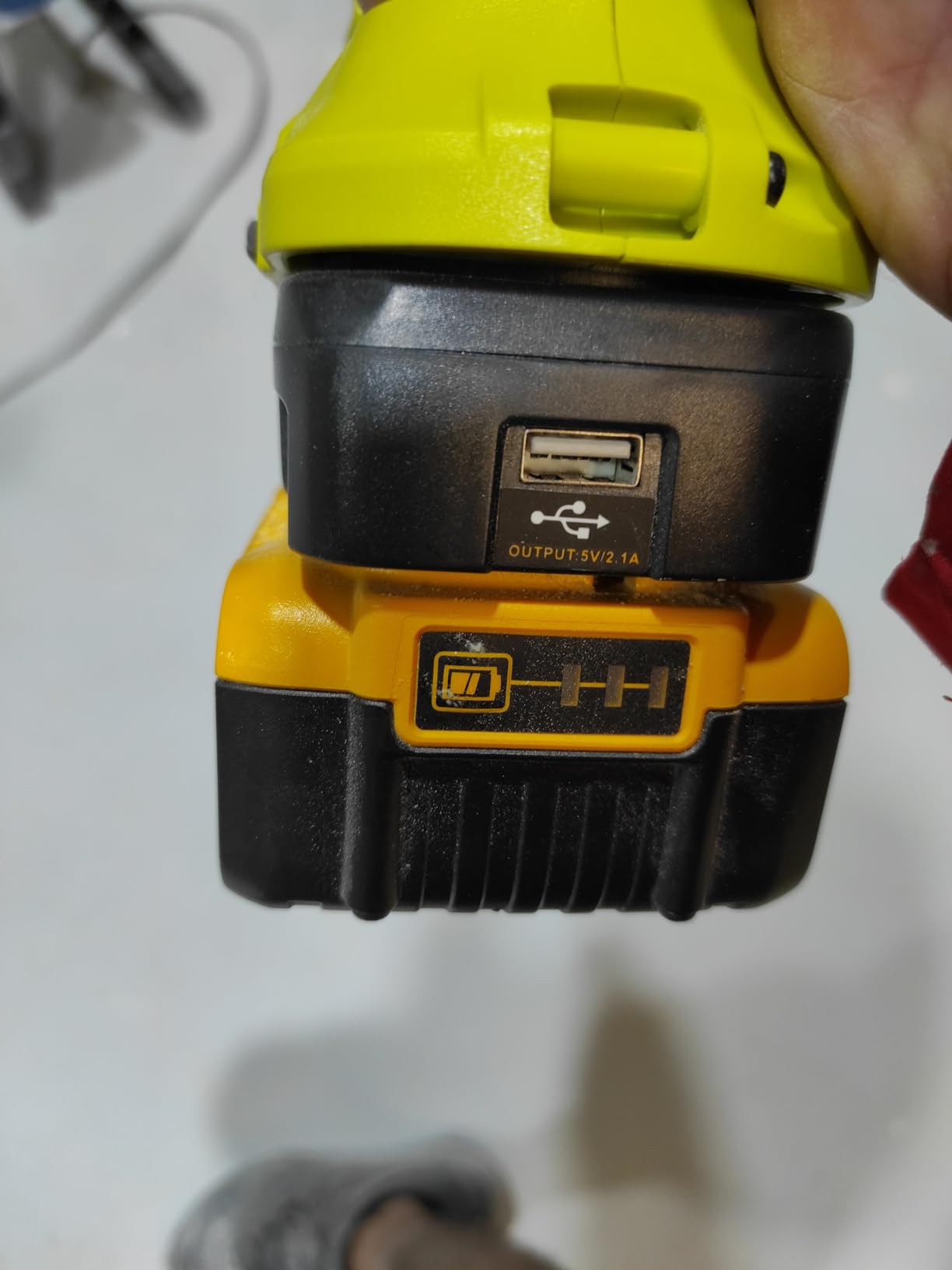
The Ryobi case rests on the platform. The 18V ONE+ battery system is one of the most widely owned cordless ecosystems in the hobby and trades world, and if you own a ONE+ pack, this nailer costs you a tool rather than a starter set.
It sits at 4.4 stars from 838 reviews with 76 percent at five stars. Most owners report smooth firing, straightforward depth adjustment between wood types, and good battery life on a 4.0Ah pack. It ranks in the top ten for Power Brad Nailers, which tells you how much of it is actually moving.
The 6 lb body is well balanced with a textured non-slip grip, and there is no hose, compressor, or gas cartridge involved. For baseboards, panel work, and general site trim on a homeowner timeline, that is a straightforward package.
One specification deserves attention: the manufacturer warranty description reads 30 days limited warranty. That is a much shorter commitment than the 3-year terms attached to several tools in this roundup, and it is worth factoring into any buying decision.
Where the Ryobi P321 fits
It makes sense for occasional DIY use and for tradespeople already committed to the ONE+ platform who need a nailer without starting a second battery system. The textured grip and balanced weight suit extended use, and depth adjustment is simple enough to set once per material.
Reviewers are direct about the ceiling on it. It performs well for the occasional baseboard job, and daily production users tend to move up a tier.
What to watch out for
The recurring complaint in the reviews is the driver freezing mid-magazine, and several owners resolved it by lubricating the feed tab. Related to that, some users report needing to hold the trigger until the nail is fully driven to avoid the freeze, which changes how the tool feels in fast work.
Battery and charger are sold separately, and the 30-day warranty term is the shortest we saw across this group.
7. Milwaukee M18 FUEL 18-Gauge Brad Nailer – Best for Milwaukee M18 Owners
Milwaukee Electric – M18 Fuel 18 Gauge Brad Nailer
6.5 lb
18-gauge brads
Nitrogen air spring drive
Sequential and contact modes
Pros
- Nitrogen air spring sinks nails flush in hard and soft woods
- Zero ramp-up time with a high fire rate
- Tool-free drive depth adjustment
- Sequential and contact actuation modes
- Built-in LED for visibility
Cons
- Tool only so battery and charger sold separately
- Bulkier body tires you on overhead crown runs
- Some owners want a more compact M12-class nailer
The Milwaukee uses a nitrogen air spring rather than a flywheel, and owners consistently report the practical result: nails sit flush with clean holes in both hard and soft wood. It is a 6.5 lb body driving 18-gauge brads, and it rates 4.6 stars from 811 reviews with 85 percent at five stars.
The POWERSTATE brushless motor with REDLINK PLUS intelligence delivers zero ramp-up time, which means no waiting for the mechanism to spin back up between nails during a long run. The built-in LED covers the visibility gap on trim work in dim rooms.
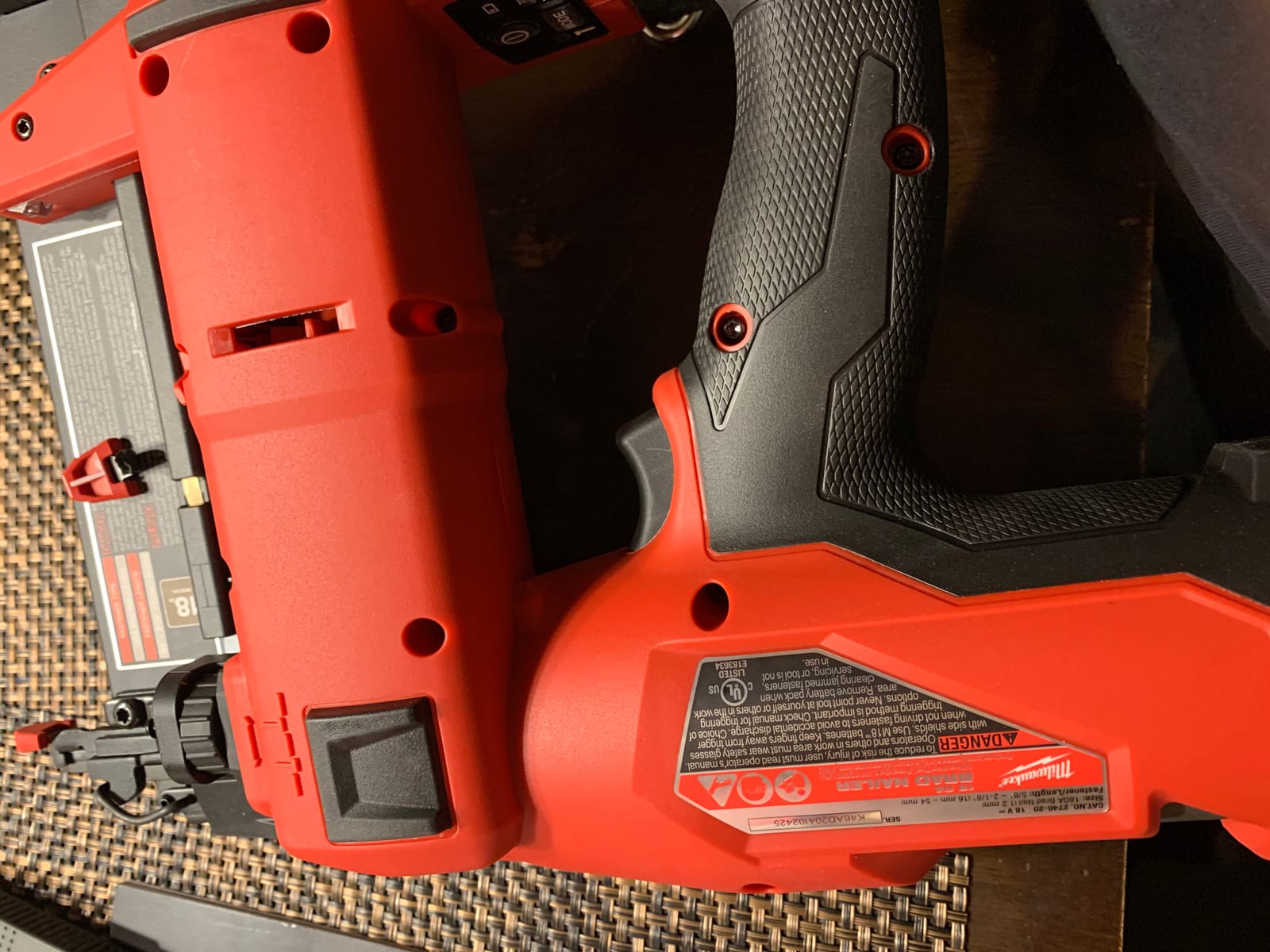
Drive depth adjustment is tool-free, and the firing modes cover both sequential and contact actuation, so the same tool handles careful cabinet work and faster bulk work. No gas cartridge is required, which removes the fuel cell cost and storage problem entirely.
Trim carpenters report flawless flush driving, quiet operation, and long battery life on M18 REDLITHIUM packs, with several saying they have replaced a pneumatic gun with it for finish work.
Why M18 owners should look here first
If you already run Milwaukee tools, this nailer slots into an existing pack collection and the decision becomes whether the platform suits your work, not whether to start one. Long M18 runtime and quiet operation make it a good companion for interior finish where noise travels.
The zero ramp-up time is the underrated feature for production days, because the wait between nails is exactly what you feel when you are fitting a full room of casing.
Where the Milwaukee is not the answer
It is the tool-only configuration, so the platform cost applies if you are new to M18. The body is bulkier than the lighter picks here, and owners report fatigue when fastening crown molding overhead for long stretches.
One reviewer put it plainly: they wished for a more compact M12-class nailer. If your finish work happens in tight spaces or at height all day, a smaller frame would serve better. It is also an 18-gauge brad nailer, so 16-gauge casing work still needs another tool.
8. WORX WX842L 20V 18-Gauge Brad Nailer – Best for Shared Batteries Across Many Tools
WORX Cordless Brad Nailer, 20V 18GA Nail Gun, WX842L
7.06 lb
18-gauge brads up to 2 inch
Up to 80 nails per minute
Power Share platform
Pros
- NailForce Air Impact drives brads up to 2 inch into hardwood
- Fires up to 80 nails per minute
- Tool-free jam release and anti-ejection design
- Power Share batteries cross-compatible with 140+ WORX tools
- Lithium-ion battery included
Cons
- Firing rate is slower than premium brushless rivals
- Longer and heavier body feels bulky in tight trim work
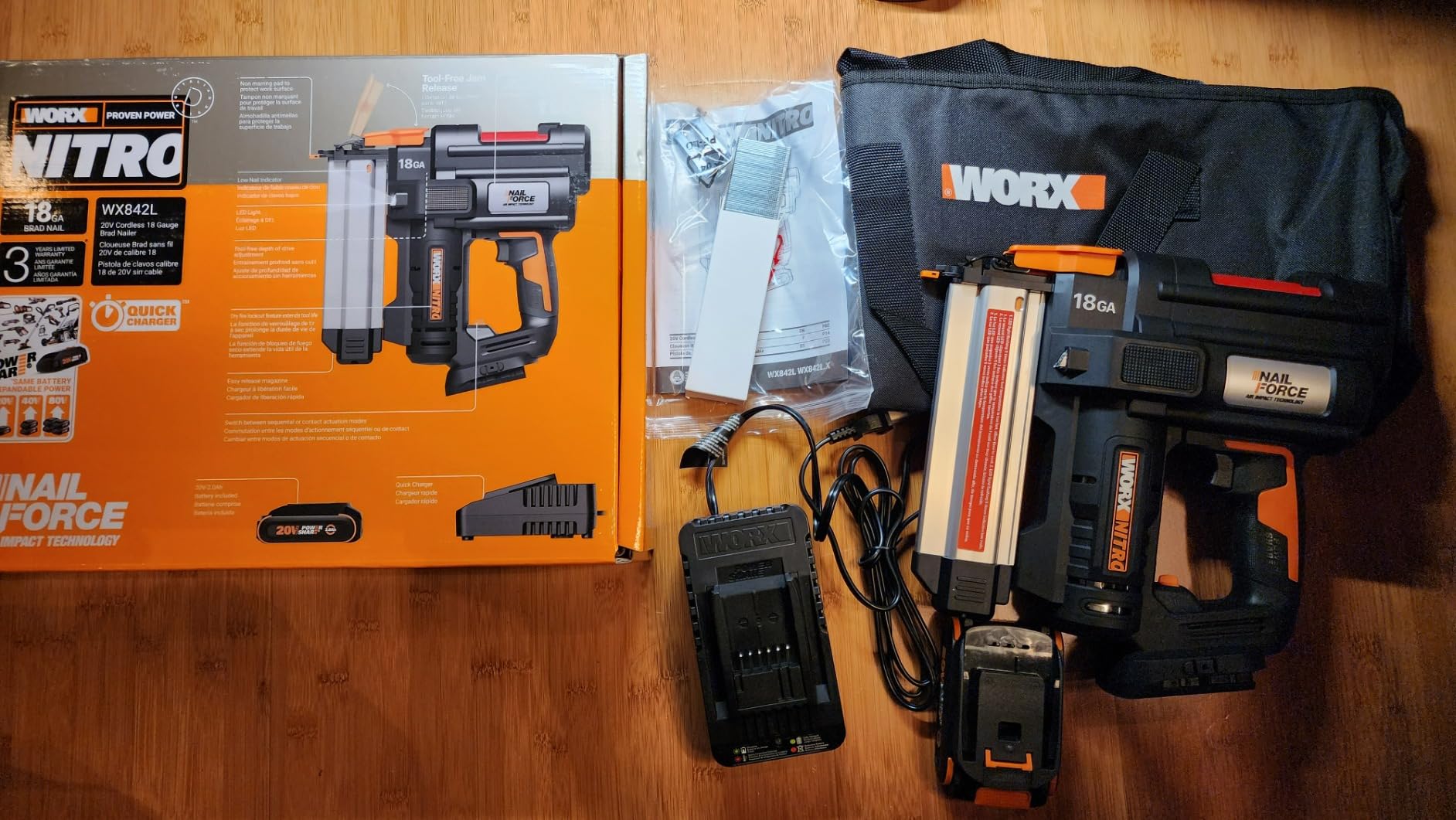
WORX is the odd one out in a good way here. This is the only tool in the roundup on a platform shared with more than 140 other tools, which means one battery family covers a very wide slice of a hobby or light-trade inventory. The included lithium-ion battery gets you started immediately.
It rates 4.5 stars from 733 reviews with 78 percent at five stars, and it sits in the top five for Power Brad Nailers. Owners like the driving power and the battery cross-compatibility more than almost anything else.
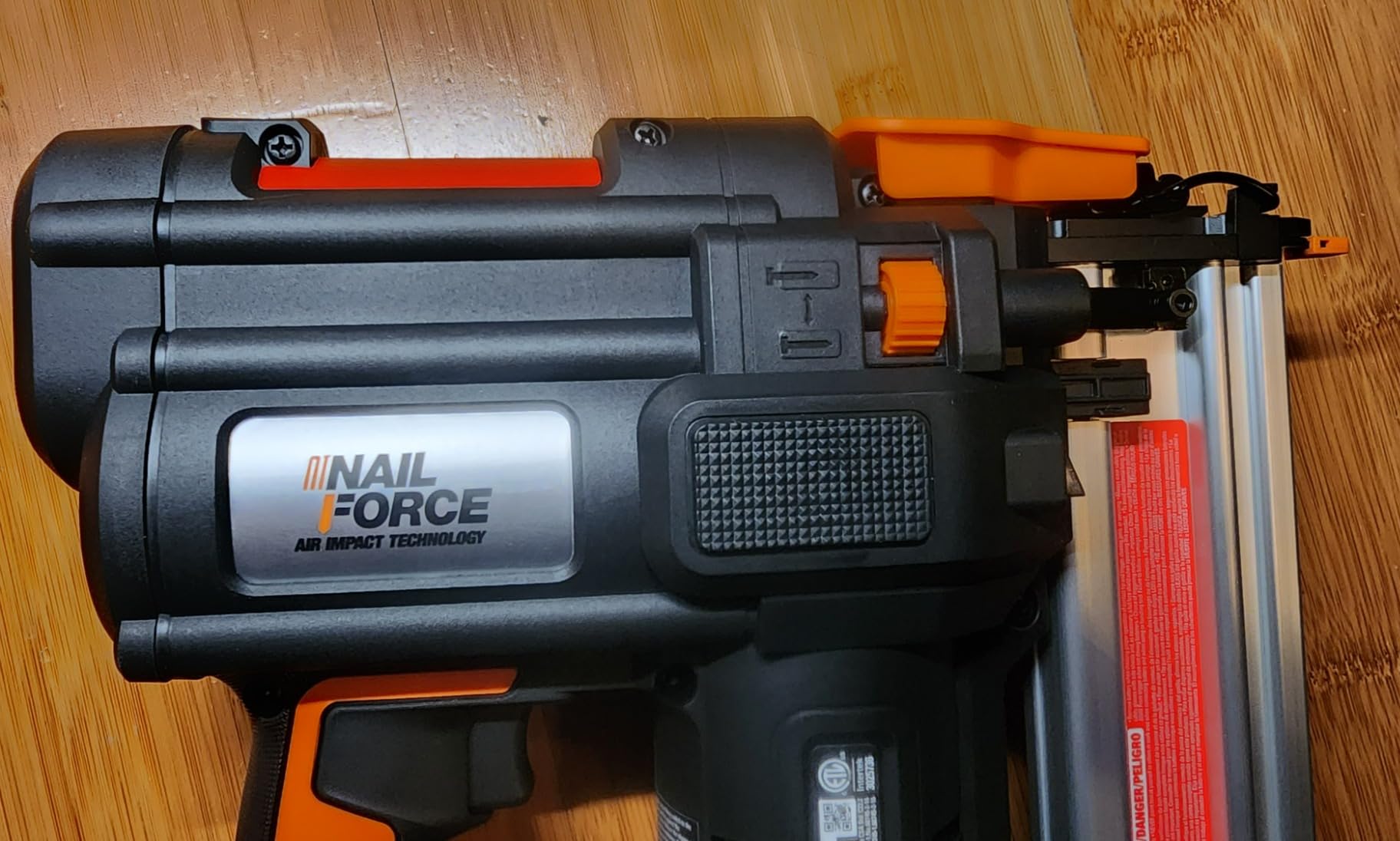
NailForce Air Impact Technology is what separates it from the entry brad nailers, and the specification is driving brad nails up to 2 inch into hardwood. Firing rate runs up to 80 nails per minute, and the tool-free jam release keeps a stuck nail from ending the run.
The anti-ejection design stops nails from flying when you open the magazine or clear a jam, which is a genuine safety improvement rather than a marketing line. The stated uses are panel molding, window trim, and small baseboards.
Who should choose the WORX
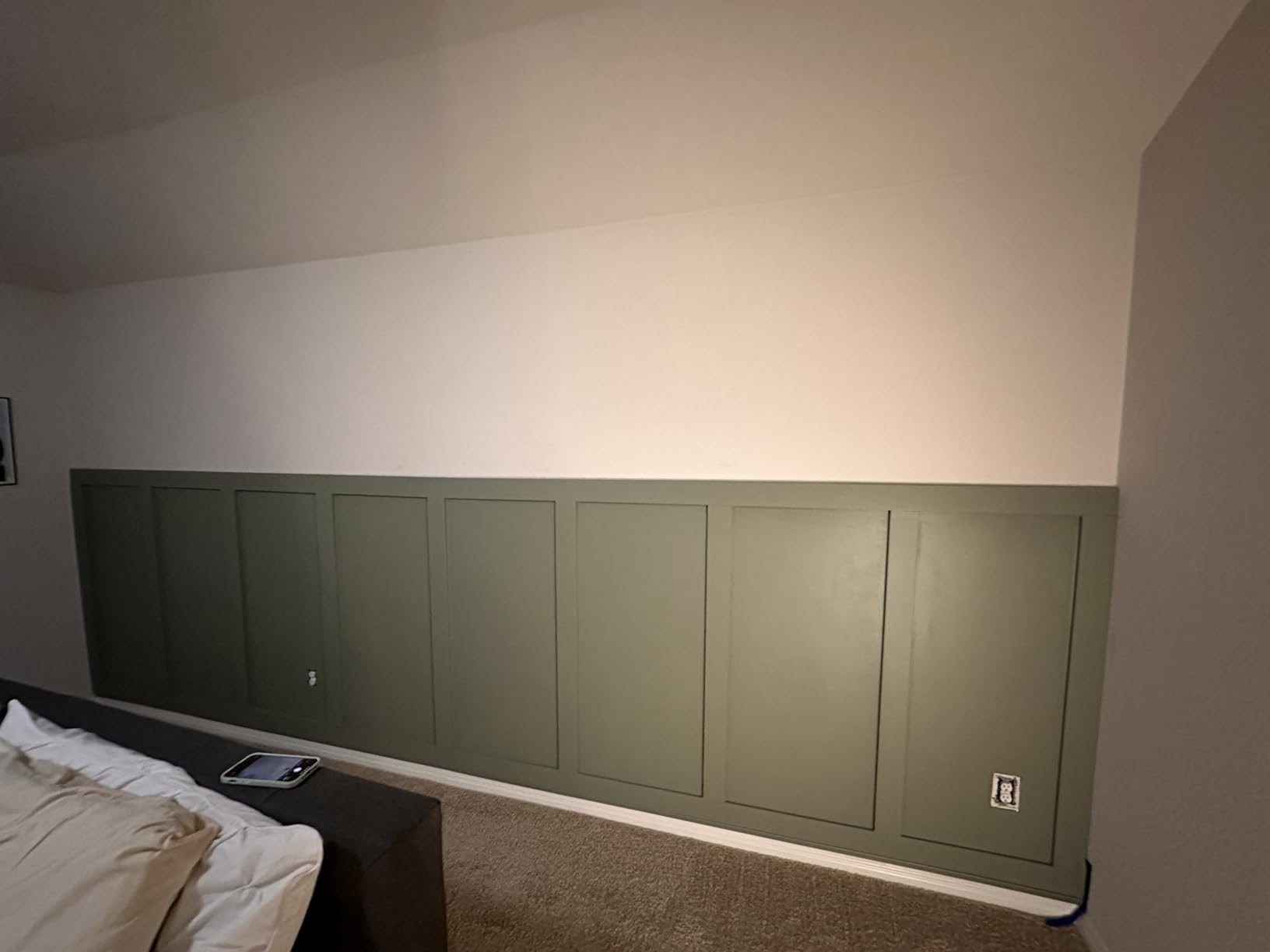
It fits a household or small shop that has already spread across Power Share batteries, or one that wants to consolidate rather than collect. Window trim, panel molding, and small baseboards are the named strengths, so it is a natural fit for interior DIY projects.
The anti-ejection design also makes it a reasonable choice around other people, since the most common injury with any nailer is a stray nail during a jam.
What holds it back
At 80 nails per minute the firing rate is slower than the brushless competitors here, and at 7.06 lb across a 16.54 inch long body it can feel bulky in tight trim work. Some reviewers find it slower-cycling than premium options.
It is also 18 gauge, so it does not substitute for a 16-gauge finish nailer on casing or thick baseboard, and the platform is a smaller island than the big three ecosystems.
9. WEN 20512 20V 18-Gauge Brad Nailer – Best Ready-to-Use First Nailer
WEN 20V Max Cordless 18-Gauge Brad Nailer with 2.0Ah Battery and Charger (20512)
7.84 lb
18-gauge brads 3/4 inch to 2 inch
100-nail magazine
Battery and charger included
Pros
- Battery charger and 400 brad nails included in the kit
- 100-nail easy-load magazine
- Smart LED indicator for battery magazine and tool temperature
- Shoots 18-gauge brads from 3/4 inch to 2 inch
- Ready to use with no extra purchases needed
Cons
- Brushed motor has less power and durability than brushless rivals
- At 7.84 lb it is a heavy body
- 2.0Ah batteries are the smallest capacity here
- Lowest average rating in the roundup
Nothing else in this roundup arrives as complete. The WEN 20512 kit includes a 2.0Ah battery, a charger, and 400 18-gauge brad nails, so the first project can start the afternoon you open the box. For a first cordless nailer, that is a genuine advantage over every bare-tool option here.
The rating is 4.2 stars from 701 reviews, the lowest average in the group, with 66 percent at five stars and 10 percent at one star. That split tells the story: buyers are happy with the package, and less happy with the machine inside it.
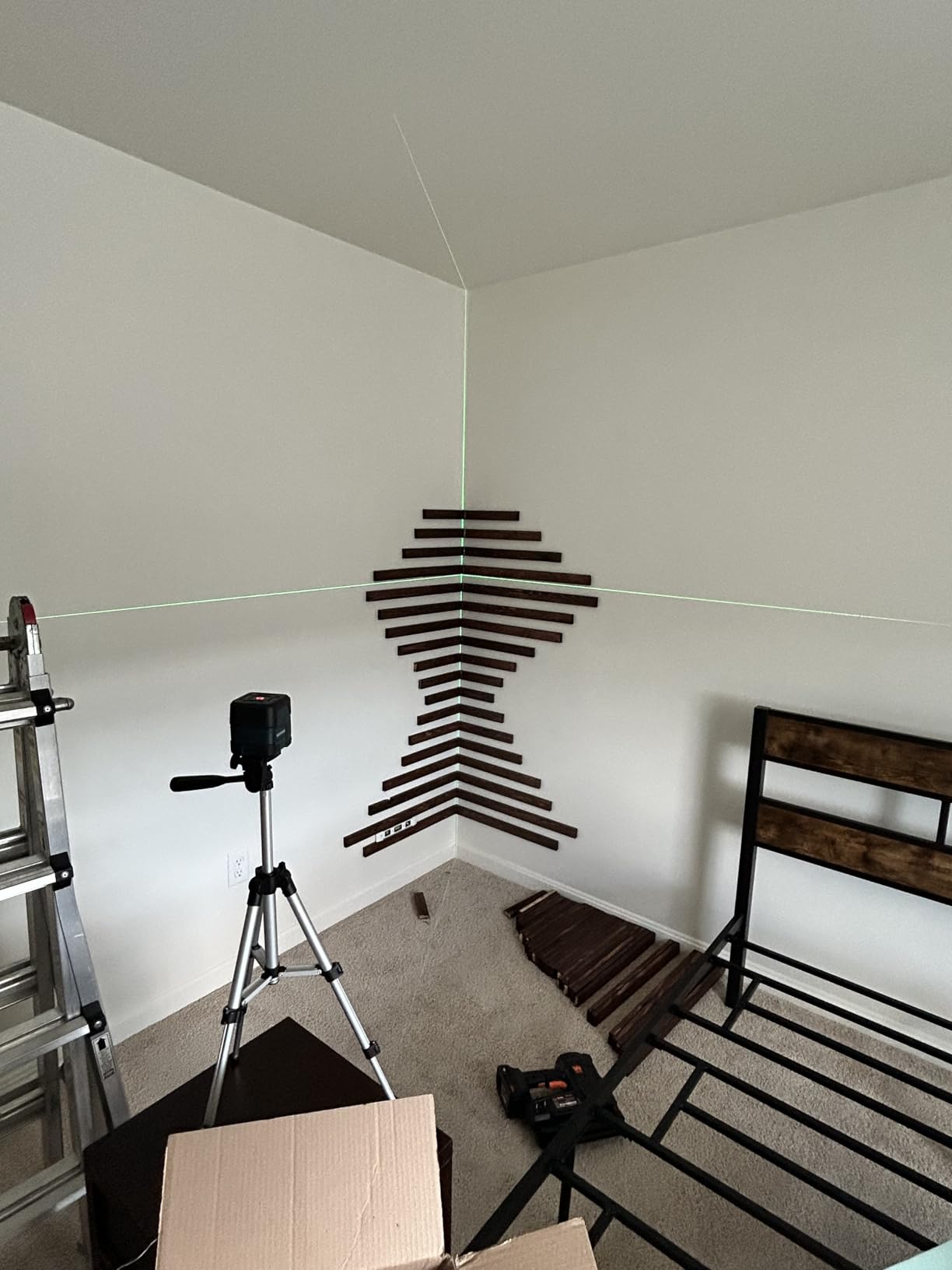
The practical specs are sound for light work. It shoots 18-gauge brads from 3/4 inch to 2 inch, and the easy-load magazine holds 100 nails. The smart LED indicator tracks battery status, magazine fill, and tool temperature, which is more diagnostic feedback than most nailers in this roundup give you.
The drive is brushed rather than brushless, and that single word explains most of the criticism about power and long-term durability. At 7.84 lb it is also the heaviest body we looked at, which is the opposite of what you want on a ladder.
Is the WEN 20512 right for a beginner
For a homeowner doing baseboards, small trim boards, and shop projects, it does the job and it does it immediately. Nothing else on this list matches the completeness of the box, and the diagnostic LED is a useful teaching tool while you learn depth and drive technique.
It is also a reasonable second nailer for someone who wants a separate tool for light duty and does not want to drain the batteries from a brushless fleet tool.
Where the WEN falls down
Brushed motors generate more heat, hold less power, and wear faster than the brushless units here, and the reviews point directly at power and durability. It is also the heaviest body in the group, which is a real problem for overhead or ladder trim.
The 2.0Ah batteries are the smallest capacity in this lineup, so expect shorter working stretches between charges, and the 4.2 rating is the signal to think twice if you intend to use it daily.
10. KIMO 9418 2-in-1 Brad Nailer and Stapler – Best Nailer and Stapler Combo
KIMO Brushless Brad Nailer Cordless 2-in-1 18 Gauge Stapler and Nail Gun
6 lb
18-gauge brads plus 1/4 inch stapler
Up to 180 nails per minute
4-stage depth dial
Pros
- 2-in-1 nailer and stapler body covers both fastening types
- Fires up to 180 nails per minute
- Two 2.0Ah batteries with a 60-minute fast charger
- 4-stage depth dial for incremental control
- Tool-free jam clearance and 100-nail magazine
Cons
- Newer brand with a smaller review base
- Proprietary 20V platform blocks cross-brand battery sharing
- 20V packs deliver less runtime per charge than high-capacity 18V
This is the most interesting tool in the group on paper. The KIMO 9418 is a 2-in-1 body that drives 18-gauge brad nails from 3/4 inch to 2 inch and also fires a 1/4 inch stapler from 3/4 inch to 1-5/8 inch, so upholstery, picture frame backs, and light assembly are covered without a second tool.
It holds 4.6 stars from 529 reviews with 77 percent at five stars, and the feature density is unusual. Reviewers respond to the brushless motor, the 180 nails per minute firing rate, and the two-battery kit more than anything else.

The 4-stage depth dial gives finer incremental control than a single-slot adjustment, and the tool-free jam clearance through the nose cover means no hex key on the most common problem. Smart color-coded indicators flag a jam, a low battery, an empty magazine, and a full charge at a glance.
Included are two 2.0Ah batteries rated at up to 2100 nails each, a 60-minute fast charger, 700 brads, 300 staples, an Allen wrench, and a tool bag. The body is 6 lb with a narrow nose and an integrated belt hook, and a dual-action safety lock guards against accidental discharge.

Who should look at the KIMO 9418
Upholstery and furniture work, hobby woodworking, and anyone who wants a stapler in the same case as a nailer. The single firing mode suits precision finish work and the contact firing mode covers volume tasks, so both ends of the task list are covered.
Two batteries in the box means a full day without charging breaks, and the color-coded status indicators are genuinely useful when you are working alone.
What to weigh before buying
The brand is newer with a smaller review base than the established makers, and the battery platform is proprietary 20V, so those packs will not move to another brand of tool. Reviewers also note that 20V packs of this size deliver less runtime per charge than higher-capacity 18V platforms.
It remains an 18-gauge brad nailer at heart, so 16-gauge finish work is out of scope, and the 180 nails per minute figure is a maximum rather than what you will see on hardwood.
Which Nail Gauge Do You Need for Finish Work?
Gauge is the first decision, and it decides the tool. The higher the gauge number, the thinner the nail, and thinner nails make smaller holes but hold less. Pick 16 gauge for structural trim in hardwood, 18 gauge for thin decorative trim and soft material, and 23 gauge pin nails for detail work on moulding profiles.
The mistake that shows up constantly is buying an 18-gauge brad nailer and expecting it to do 16-gauge finish work. Sawmill Creek forum members put it plainly: a brad nailer head can pull through where a finish nail would hold. If you are nailing casing, baseboard returns, or anything that carries load, you want 15 or 16 gauge.
Wood species changes the calculation as well. Lumberjocks tradespeople point out that a heavier 15-gauge angled nailer splits less in oak than a 16-gauge, while 18-gauge is the safe answer for MDF, pine, and cedar because the small shank is less likely to open a split in softwood. Map your material before you map your platform.
Angled or straight magazine
An angled magazine holds more nails and keeps the body slim, which is why finish carpentry favours it for crown and casing. A straight magazine gives you a narrower profile and better access in genuinely tight corners, at the cost of capacity. Makitaville members capture the trade-off exactly: straight is fine if you want straight, but angled reaches into corners better.
Choose angled for crown molding and interior casing runs. Choose straight for inside corners, small closets, and anywhere the tool body is the thing blocking your view.
Firing mode
Sequential mode fires one nail per trigger pull and is the safe setting for finish work. Contact or bump firing lets you drive a nail by touching the nose to the work, which speeds up long runs of baseboard but needs practice. Single-actuation modes, found on some models, fire one nail and lock out until the trigger is released.
For finish work, sequential is the default. Switch to contact once you are nailing straight runs you do not need to watch closely.
Battery platform lock-in
This matters more than any spec on the sheet. Five of the ten tools here are bare-tool versions that need a battery and charger you may not own, and the platform you choose decides whether the next nailer, drill, or driver costs you a tool or a whole starter set. Owners consistently report that ecosystem ownership drives the purchase more than any isolated tool review.
Buy the platform before the nailer when you are starting fresh. If you already have a pack collection, the DEWALT 20V MAX, Makita 18V LXT, Milwaukee M18, Ryobi 18V ONE+, and WORX Power Share options here all make the nailer a single-tool decision.
Cordless vs Pneumatic Finish Nailers
A pneumatic nailer still wins on raw consistency and nail capacity, and pros with a compressor on site will keep it in the truck. A cordless nailer wins everywhere else: no hose, no setup time, no trip hazard on a ladder, and no compressor to move between rooms.
The breakeven question is the compressor. Once you own one, the marginal cost of a pneumatic gun is small. If you would have to buy or rent a compressor and carry it around, a cordless nailer pays for itself in mobility alone, and the nitrogen spring and flywheel designs in this roundup now sink nails flush in hardwood.
Pick pneumatic for framing-adjacent volume, very long fastener lengths, and continuous daily production in one shop. Pick cordless for interior finish, punch-list work, ladders, remodeling, and sites without power.
What to Avoid When Buying a Cordless Nailer
Do not buy an 18-gauge brad nailer expecting it to replace a finish nailer. This is the single most common purchase error in the category, and the gauge cannot be upgraded after the fact.
Do not buy a bare tool on a platform you do not own without counting the battery and charger first. Five of the ten tools here ship that way, including two of the three models most newcomers reach for.
Do not ignore a short warranty term. The Ryobi P321 carries a 30-day limited warranty description, which is a fraction of the 3-year coverage on several tools in this roundup.
Do not dismiss weight and balance. Nose-heavy tools cause wrist fatigue on a ladder over a long day, and the lightest 5.5 lb option here is a full pound lighter than the heaviest. On suspended work, that difference is felt before lunch.
Do not buy a brushed motor for daily production work, and do not buy a nailer from a brand with a very small review base and a proprietary battery platform if you plan to grow into more tools later.
Frequently Asked Questions
What is the best nail gun for finish work?
A 16-gauge angled finish nailer is the right answer for most interior finish work, and the DEWALT DCN660B in this roundup is the strongest version of it. If your trim is thin moulding, picture frame, or soft material, an 18-gauge brad nailer is the correct and much lighter choice. Choose by the material and the joint, not by the brand.
What’s better, a 15-gauge or 16 gauge finish nailer?
A 15-gauge nail has a thicker shank, so it holds better in hardwood and resists splitting, which makes it the safer choice for oak and for structural casing. A 16-gauge nail is lighter and leaves a smaller hole, and it is the standard for painted softwood trim and interior casing. If you work mostly in hardwood, choose 15 gauge.
What gauge is best for a finish nailer?
For painted interior trim and baseboards, 16 gauge is the common answer. For hardwood, dense hardwood, or anything that must hold under load, step up to 15 gauge to reduce splitting. For thin decorative moulding and softwood, 18 gauge is enough. The higher the number, the thinner the nail and the smaller the hole.
Which one is better, a brad nailer or a finish nailer?
They serve different purposes and you should not treat one as a substitute for the other. A brad nailer drives 18-gauge nails for thin, light fastening, while a finish nailer drives 15 or 16-gauge nails with real holding power for casing and baseboards. Buying a brad nailer for casing is a common and expensive mistake.
What is the best cordless nail gun for home use?
For a homeowner who wants to start working immediately, the WEN 20512 arrives with a battery, a charger, and 400 nails, and the CRAFTSMAN V20 also ships with a battery and charger. For a lighter tool that is easier on the arm during a weekend project, the Metabo HPT NT1850DG at 5.5 lb is the most comfortable option here.
Which is better, Paslode or DeWalt?
DeWalt wins on platform breadth and resale, and the DCN660B 16-gauge angled has been called the job-site standard for cordless finish work on ContractorTalk. Paslode has a long record in the category, and tradespeople report its older cordless units still running after a decade. The deciding factor is usually which battery system you already own.
What is the best cordless framing nailer?
This guide covers 18-gauge brad nailers and 16-gauge finish nailers, which are light trim tools. A framing nailer drives much larger fasteners for structural work and is a different category of machine entirely. Choose a framing nailer only for wall and floor assembly, never for finish trim.
The Best Cordless Nailers for Finish Work in 2026
After working through all ten, the DEWALT DCN680B is the pick. A 4.8 rating across 3736 reviews, a brushless motor, tool-free depth and jam release, a micro nose, and a low nail lockout add up to a tool that is easy to hand to anyone and hard to fault. If your trim is 18-gauge work, start there.
If 16-gauge finish work is in scope, the DEWALT DCN660B is the correct answer for angled casing and corner access, and the Makita XNB02Z covers the straight-magazine, longer-nail case. For overhead and ladder days, the Metabo HPT at 5.5 lb is the lightest thing on this list, and for M18 owners the Milwaukee M18 FUEL 18-gauge brad nailer is a no-brainer.
One piece of advice outranks everything else here. Pick the battery platform first, then the nailer, because the nailer is the cheaper decision. Use the buttons below each review to check where your pick sits right now, and read our cordless string trimmer picks and borescope guide if you are building out a wider cordless kit.