
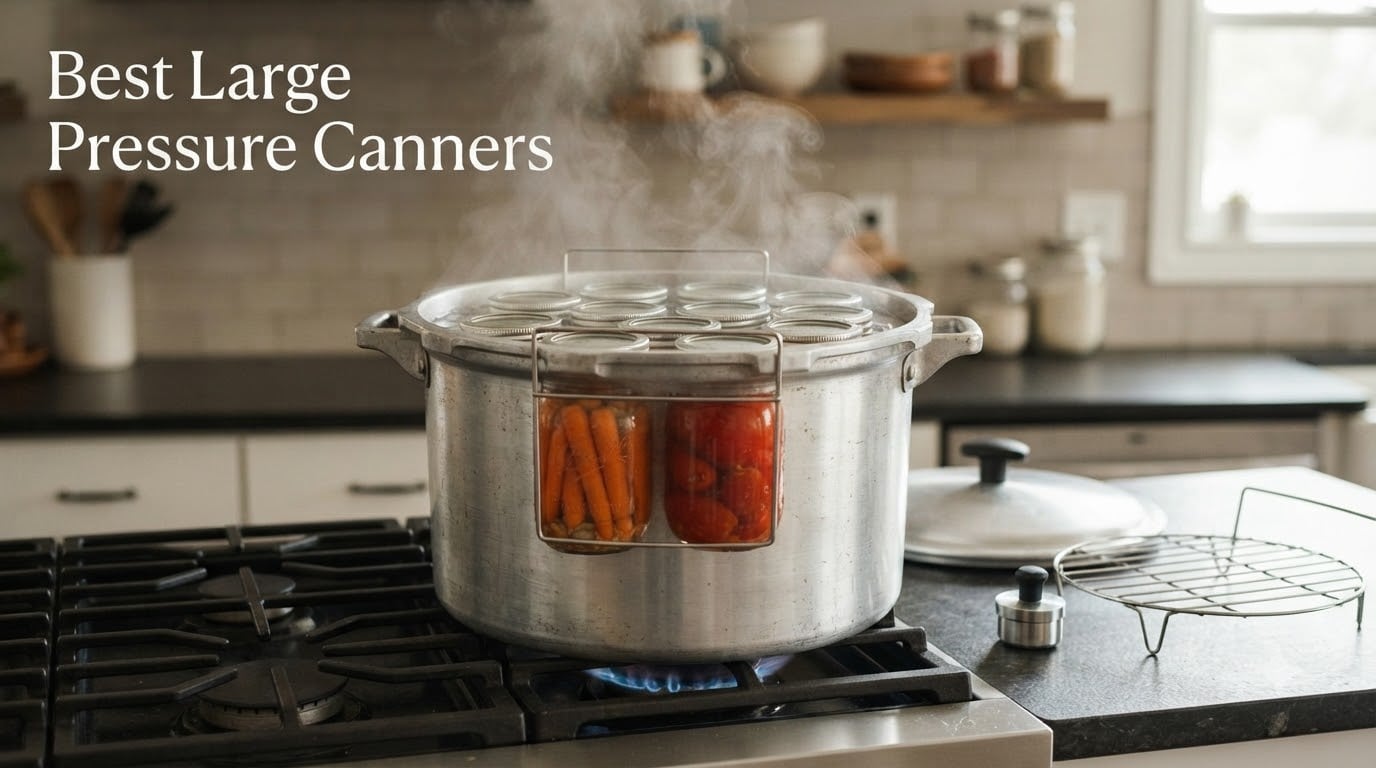
Most pressure canner roundups quietly mix 6-quart cookers with 40-quart canners and call it a list. This one does not. Every unit below holds at least 21.5 quarts of fluid capacity, which is the line where a pressure canner starts earning its place in a real household kitchen instead of gathering dust in a cabinet. If you are shopping for the best large pressure canners, you are probably canning a full garden harvest, putting up meat and poultry, or running several batches in one afternoon, and the difference between a 22-quart pot and a 41.5-quart pot is the difference between two batches and five.
There is a catch that nobody sells you on the product page: the larger the pot, the slower it comes to pressure and the longer it takes to cool down safely. A 41.5-quart cast aluminum canner loaded with 19 quart jars can take a long time to reach processing pressure, and the cool-down is just as patient. We spent 2026 season working through eight large pressure canners, checking jar counts, gauge types, stovetop fit and the small parts that decide whether a canner is still easy to own fifteen years from now.
Read on for the short version, then the details. And if you are feeding two people and preserving a handful of jars a season, skip straight to the section on who should not buy a canner this size, because a big pot is the wrong purchase for a small harvest in a way that is not obvious until you have tried it.
Top 3 Large Pressure Canners in 2026
The three picks below are the ones we would put in a kitchen first. The Presto 01781 leads because it pairs a top rating with an enormous installed base, the All American 941 because nothing else here moves this many jars in a single load, and the Presto 01784 because induction kitchens have exactly one real answer in this group.

Presto 01781 23-Quart Canner
- Holds 7 quarts or 20 pints
- Deluxe dial gauge
- 12-year limited warranty

All American 941 41.5-Quart
- Holds 19 quarts or 32 pints
- Gasket-free metal seal
- Made in USA

Presto 01784 Induction 23-Quart
- Stainless clad induction base
- Holds 7 quarts or 20 pints
- 12-year limited warranty
Quick Overview: Every Large Pressure Canner in 2026 Compared
All eight canners below clear the 20-quart fluid capacity mark and can be used for pressure canning of low-acid foods. The table gives you the short version of what separates them before the full write-ups.
| Product | Specifications | Action |
|---|---|---|
| Presto 01781 23-Quart Pressure Canner |
|
Check Latest Price |
| All American 941 41.5-Quart Canner |
|
Check Latest Price |
 T-fal 22-Quart Pressure Canner T-fal 22-Quart Pressure Canner |
|
Check Latest Price |
| Presto 01784 23-Quart Induction Canner |
|
Check Latest Price |
 Granite Ware 20-Quart Pressure Canner Granite Ware 20-Quart Pressure Canner |
|
Check Latest Price |
 WantJoin 23-Quart Pressure Cooker WantJoin 23-Quart Pressure Cooker |
|
Check Latest Price |
 Mirro 22-Quart Pressure Canner Mirro 22-Quart Pressure Canner |
|
Check Latest Price |
 Presto 02153 23-Quart Digital Canner Presto 02153 23-Quart Digital Canner |
|
Check Latest Price |
1. Presto 01781 23-Quart Pressure Canner – the one most people should buy
Presto 01781 23-Quart Pressure Canner and Cooker
Holds 26 half-pints 20 pints or 7 quarts
12 pounds empty
15.5 by 17.5 by 13.5 inch
Pros
- Holds 7 quart or 20 pint jars per load
- Deluxe dial gauge covers the full pressure range
- Works on regular and smooth-top ranges
- 12-year limited warranty
- Also works as a boiling-water canner
Cons
- Not induction compatible
- Manual dial needs checking at higher altitudes
- Loaded weight is noticeable on a glass top
The Presto 01781 is the unit we recommend to almost anyone asking about the best large pressure canners, and the reason is less about the pot than about everything around it. It rates 4.8 stars across more than 20,000 reviews, which is roughly an order of magnitude more owner feedback than most competitors on this list carry. When a part breaks or a question comes up, a population that size has usually already answered it.
Capacity is where the advertising number and the real number diverge, and this is the pot that makes the gap obvious. Marketed as a 23-quart unit, the canner actually holds 26 half-pint jars, 20 pints, or 7 quart jars on the included rack. Forum owners describe 7 quart jars as the number that matters, and that figure is printed on the canner itself, which is the kind of clarity a canner buyer appreciates.
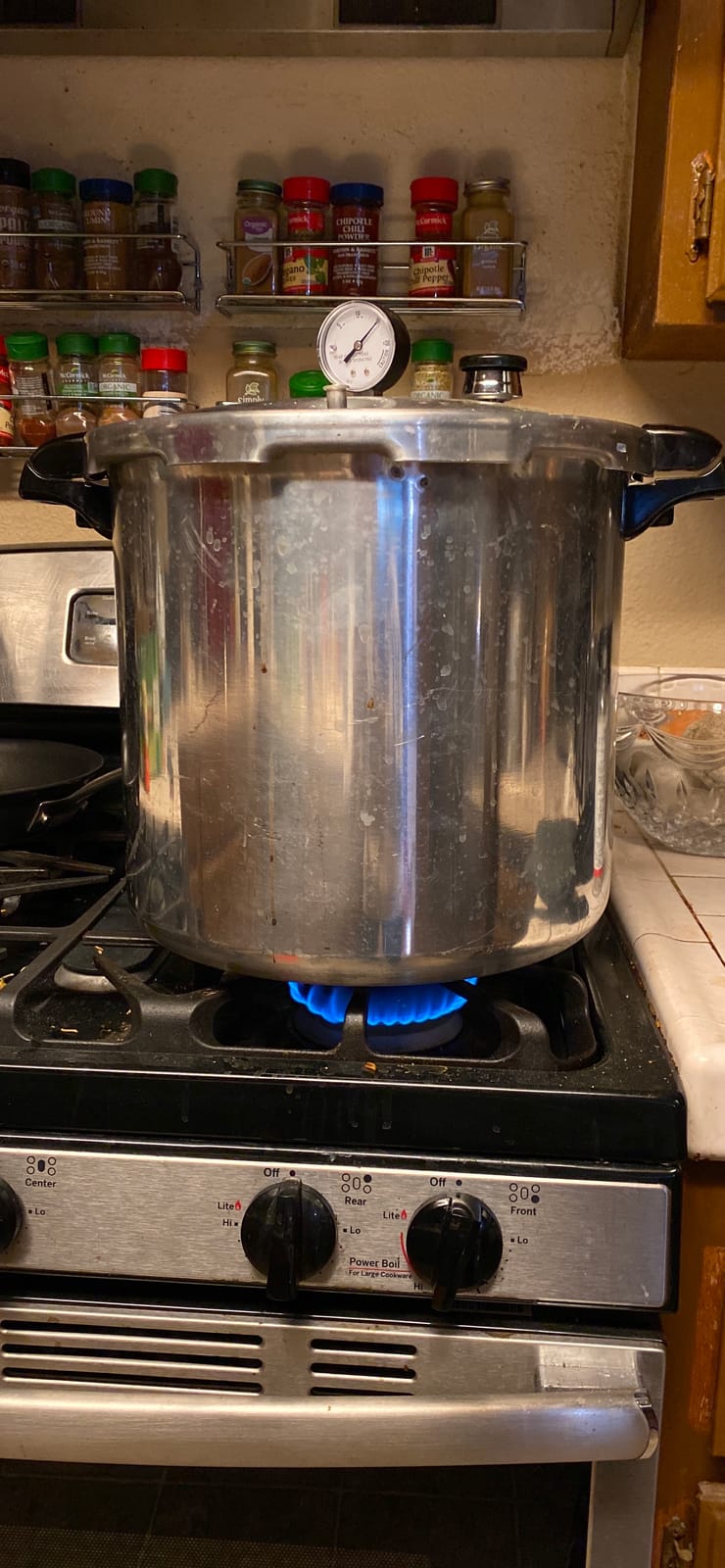
Construction is heavy-gauge aluminum, polished rather than anodized, and the brand describes it as warp-resistant. That matters more than it sounds: a warped lid will not sit flat against the sealing surface, and a warped pot is the reason some cheap pressure cookers never hold pressure reliably. Owners consistently report even heating and a dependable seal, with dependable sealing being the single thing that matters most when you are processing low-acid vegetables for an hour at 10 psi.
The deluxe pressure dial gauge is a genuine differentiator at this size. Where a weighted gauge tells you pressure by whether the weight rocks, this dial registers the full range of processing pressures, and that reading is what tells you whether you need to correct for altitude. It is a piece of hardware that costs more to build and gives a beginner a number to trust.
What you get out of a 23-quart batch
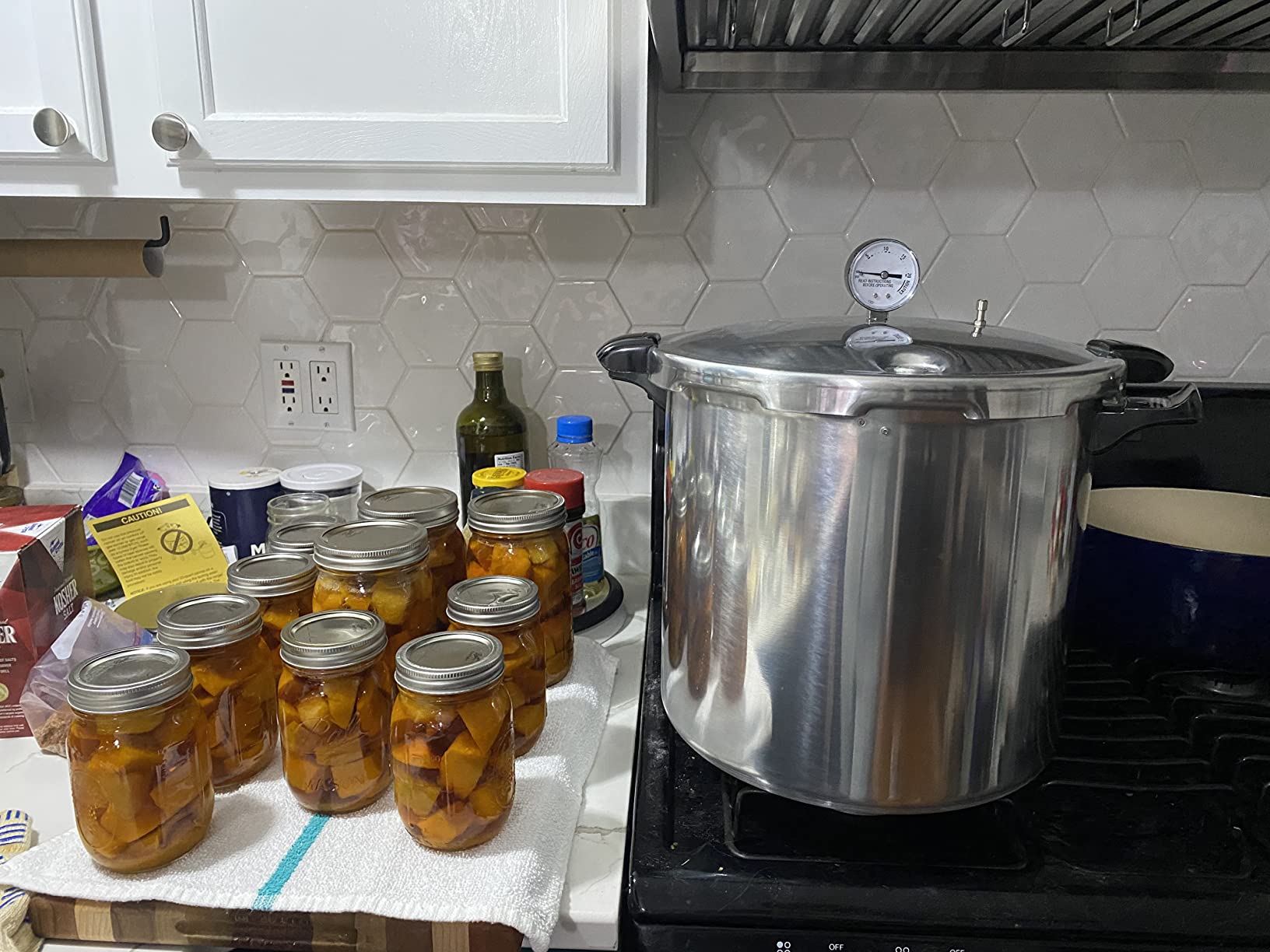
Seven quart jars per load is a meaningful number in practice. A household of four running low-acid vegetables for the year will clear a load in a single afternoon cycle, and a 20-pint configuration covers sauces and fruits where quart jars are overkill. The pot also doubles as a boiling-water canner for jams, jellies, pickles, salsa and fruit, so one vessel covers both halves of a home preserving setup.
Empty weight is 12 pounds and the listed dimensions are 15.5 by 17.5 by 13.5 inches, which is a footprint most full-size ranges handle without a second thought. The wider headline number for a family kitchen is that a small kitchen has to plan around the pot at mealtime, something we covered when we looked at the best dishwashers for large families, since a canner season quietly competes with every other large appliance for the same counter space.
Where it falls short
The 01781 will not work on an induction cooktop, and that single fact ends the conversation for a growing number of kitchens. A stainless-clad version exists separately, covered as the fourth pick below. The dial gauge also needs checking and occasional adjustment at higher altitudes, which is a maintenance item rather than a flaw.
Parts availability is the quiet advantage here. Replacement gaskets, regulators and manuals are easy to find, which is exactly what r/Canning owners point to when they pick a brand for a first canner. The 12-year limited warranty is also the longest published coverage on this list, which matters when the purchase is made with the expectation of two decades of use.
2. All American 941 41.5-Quart Pressure Cooker/Canner – the batch monster
All American 1930: 41.5qt Pressure Cooker/Canner (The 941) – Exclusive Metal-to-Metal Sealing System – Easy to Open & Close – Suitable for Gas or Electric Stoves – Made in the USA
41.5 quart capacity holds 19 quarts or 32 pints
33 pounds empty
15.25 by 15.25 by 19 inch
Pros
- Holds 19 quart or 32 pint jars per load
- Gasket-free metal-to-metal seal
- Weighted gauge with reference dial
- Made in the USA with US service
- Regulator and knobs shared across models
Cons
- 33 pounds empty is a two-hand lift when full
- Long heat-up and cool-down from the mass
- Aluminum body reacts with acidic foods
The All American 941 is the largest pressure canner in this roundup and the only one that lets you process a serious share of a harvest in a single load. The manufacturer states approximately 32 pint jars or 19 quart jars per batch, and owner reports line up with that. If your question is how many quart jars fit in a 30 quart pressure canner, this is the answer region: think in the high teens, not the low single digits.
The 941 rates 4.9 stars across 9,769 reviews, the highest average in the group, and reviewers consistently treat it as an heirloom-grade appliance rather than a seasonal tool. The build quality is the reason: a precision-machined body, double-thickness edges at the points of heaviest wear, and a sturdy phenolic top handle.
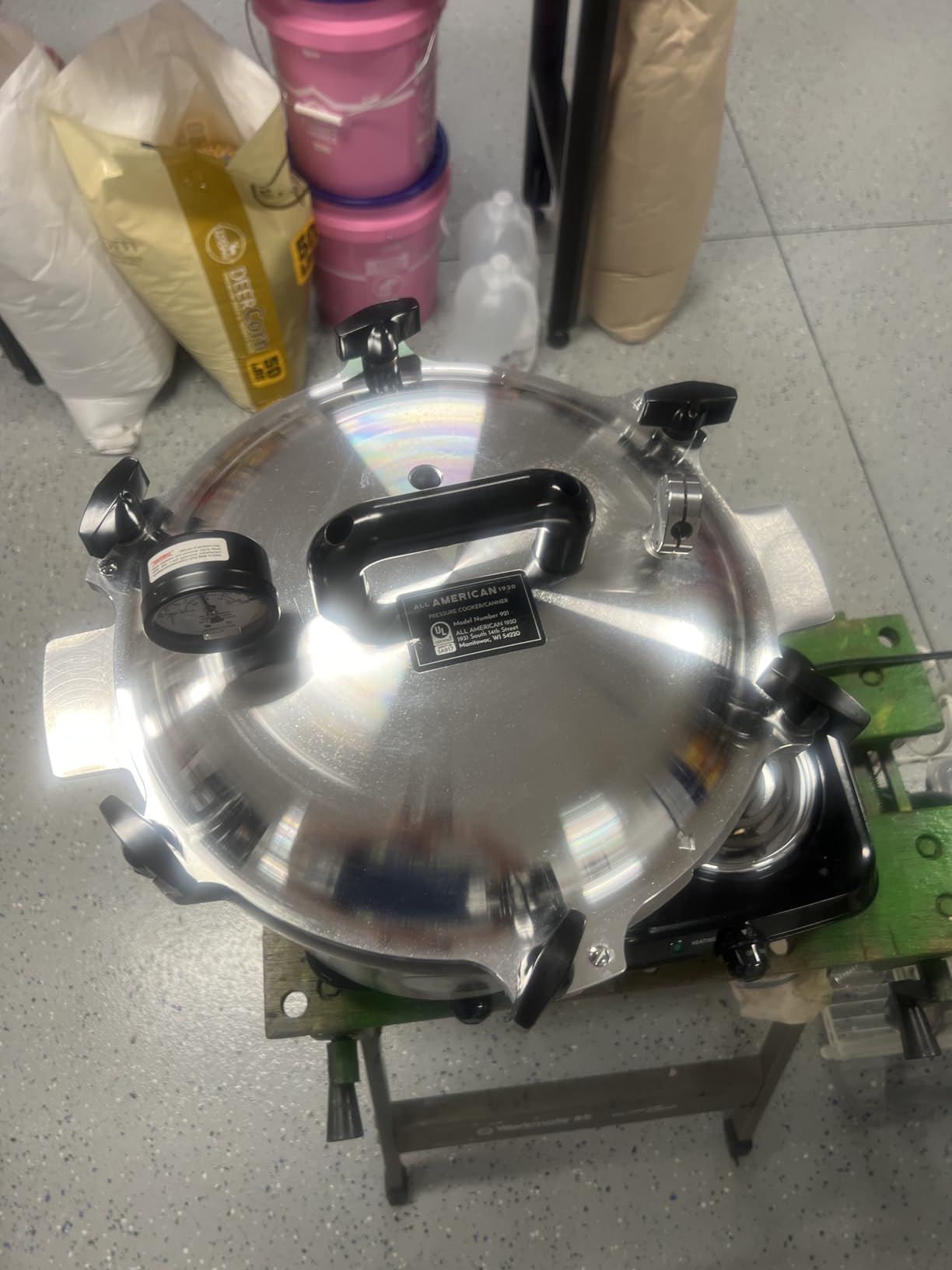
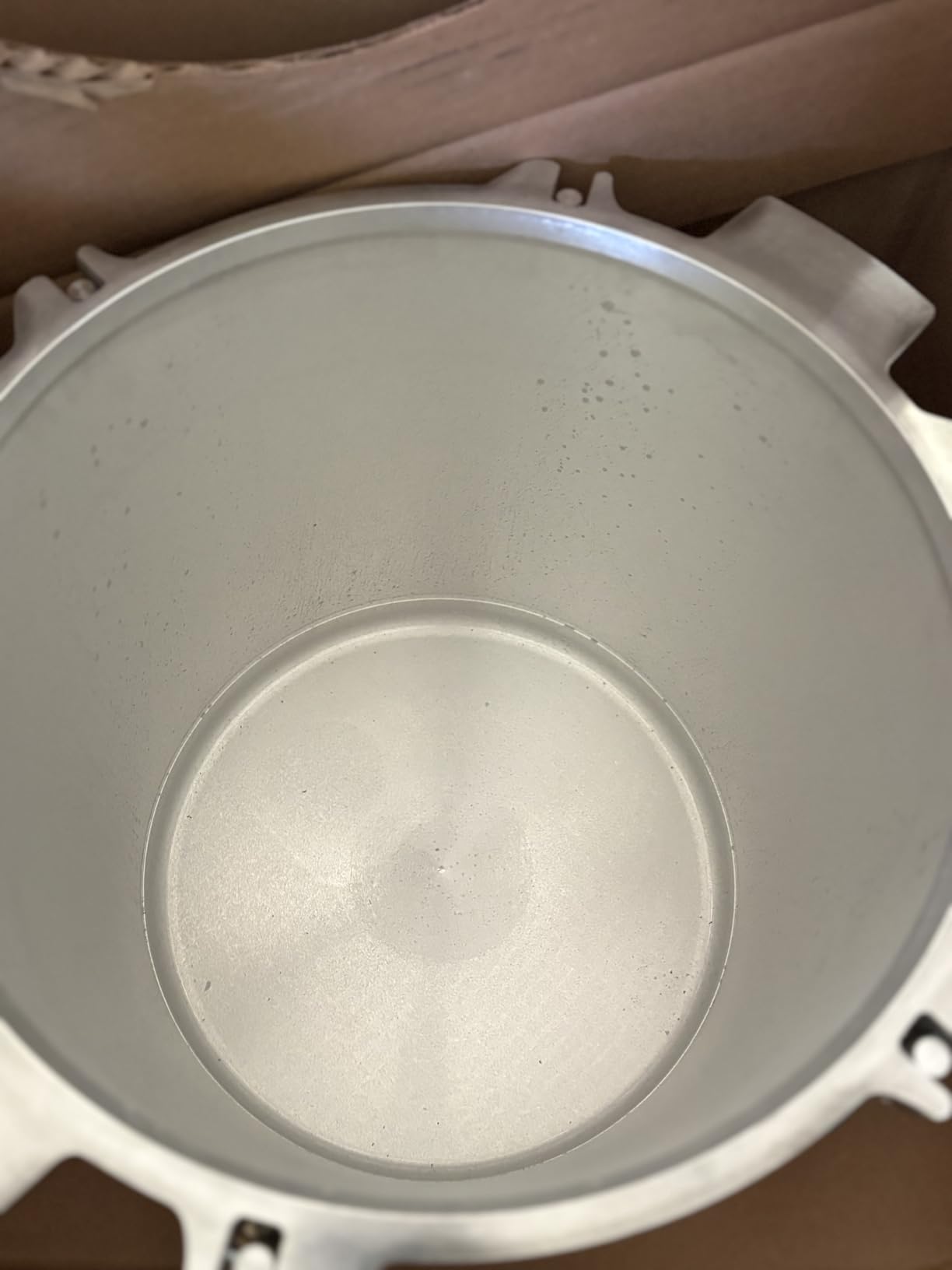
The sealing system is the part that changes how you own this canner. Instead of a rubber gasket, the 941 uses a precision-machined metal-to-metal sealing system. That removes the single consumable part on every other canner here, along with the annual seal inspection, and it means a canner stored for years in a garage does not come out needing a new ring. The trade is a lid that must be handled correctly, since the metal surfaces need to be clean and seated properly.
Pressure control is weighted, which means you regulate by weight and read the easy-to-see steam gauge as a reference. Weighted gauges are mechanically simple and inherently accurate at their set pressure, and the weight itself is precision machined. Clamps are tightened in alternating sets, which is a learning curve that catches almost everyone the first time.
Who needs this much capacity
The honest answer is a household preserving meat, poultry and seafood, or a garden producing more than one household can eat. Thirty-two pint jars in a single run is the difference between one afternoon and two for a serious harvest, and the racks are configured to make that single layer work. The pot is also made in the USA, with US-based service and free replacement manuals, which is the deciding factor for a lot of buyers considering a two-decade ownership horizon.
Regulator weights, gauges and clamp knobs are interchangeable across All American models, so parts bought for a smaller unit in the same range still apply. That is a real long-term ownership advantage in a hobby where spare parts are the difference between a repair and a replacement.
Where it falls short
It weighs 33 pounds empty and stands 19 inches tall, and a fully loaded pot is not a solo lift onto a burner. Full pot weight is the number buyers underestimate, and it is worth checking that your range and your back can take it before committing. Heat-up and cool-down times are long because of that mass, which is a genuine time cost on every single batch.
Aluminum also reacts with highly acidic foods, so this pot is not the right vessel for every cooking job even though it cans low-acid vegetables beautifully. Reviewers also note occasional vapor locking at zero pressure if the lid is pried open without following the manual sequence, which is a habit to unlearn rather than a defect.
3. T-fal 22-Quart Aluminum Pressure Canner – the budget route to seven quart jars
T-fal 22-Quart Aluminum Pressure Canner, 3 PSI Settings, Home Canning, Includes Racks & Canning Guide, Large Capacity, Pressure & Water Bath Canning for Vegetables, Meats, Seafood & Fruits, Silver
24 half-pints 16 wide-mouth pints 18 pints or 7 quarts
14.8 pounds empty
Two canning racks
Pros
- Two racks allow jar stacking
- Holds 7 quart or 18 pint jars
- Adjustable weight means no extra parts to track
- Handles both pressure and water bath canning
- Step-by-step guide included
Cons
- Rubber gasket can weep steam and wear out
- Gauge can auto-vent at low heat
- Handles must be aligned to seal
The T-fal 22-quart is a direct route to a canner that genuinely processes 7 quart jars per load, and that is the number most beginners are actually shopping for. Rated 4.4 stars across 6,778 reviews, it is the middle of this pack on rating and near the top on review volume, which usually means predictable rather than thrilling.
Two racks are included, which lets you stack smaller jars and get more food through a single run than a single rack allows. The stated jar capacity is 24 half-pint jars, 16 wide-mouth pints, 18 pints, or 7 quarts, and the wide-mouth pint figure is a useful detail because wide-mouth jars take noticeably more room and are easy to forget when you plan a load.
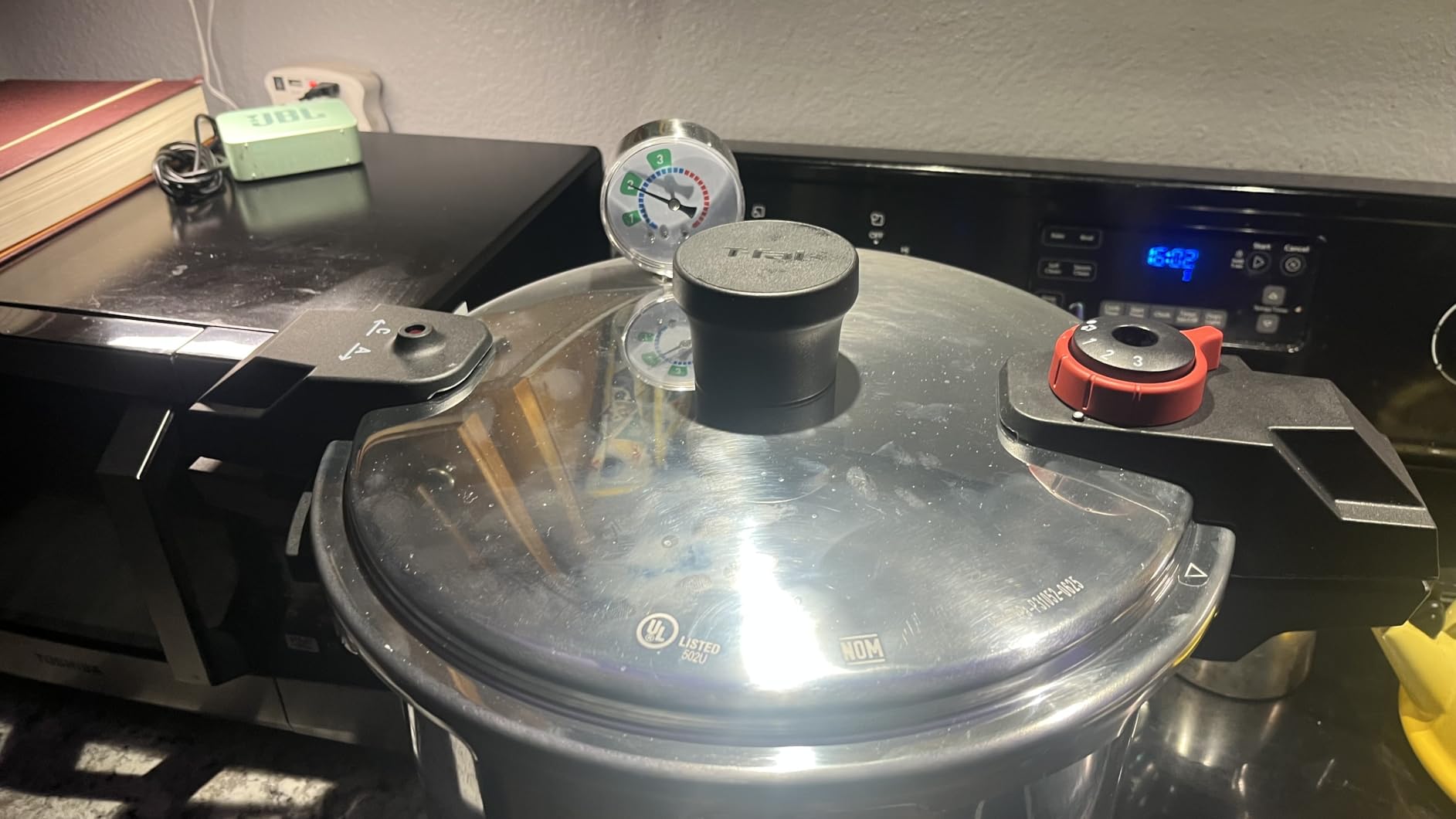
The built-in adjustable pressure weight is the feature owners mention most warmly. Instead of tracking three separate weighted regulators in a box, you set pressure on the canner itself, so there is nothing to lose and nothing extra to buy. For a beginner, that removes a whole category of small mistakes, and it is also why this canner is a straightforward first purchase for anyone who wants large-batch capacity without a second learning curve.
It also works as a boiling-water canner, so the same 22-quart vessel handles high-acid fruits, jams and pickles. The polished aluminum body heats fast and evenly, and the unit is listed for both electric coil and gas ranges. A step-by-step canning guide is included in the box.
What the 22-quart size actually gets you
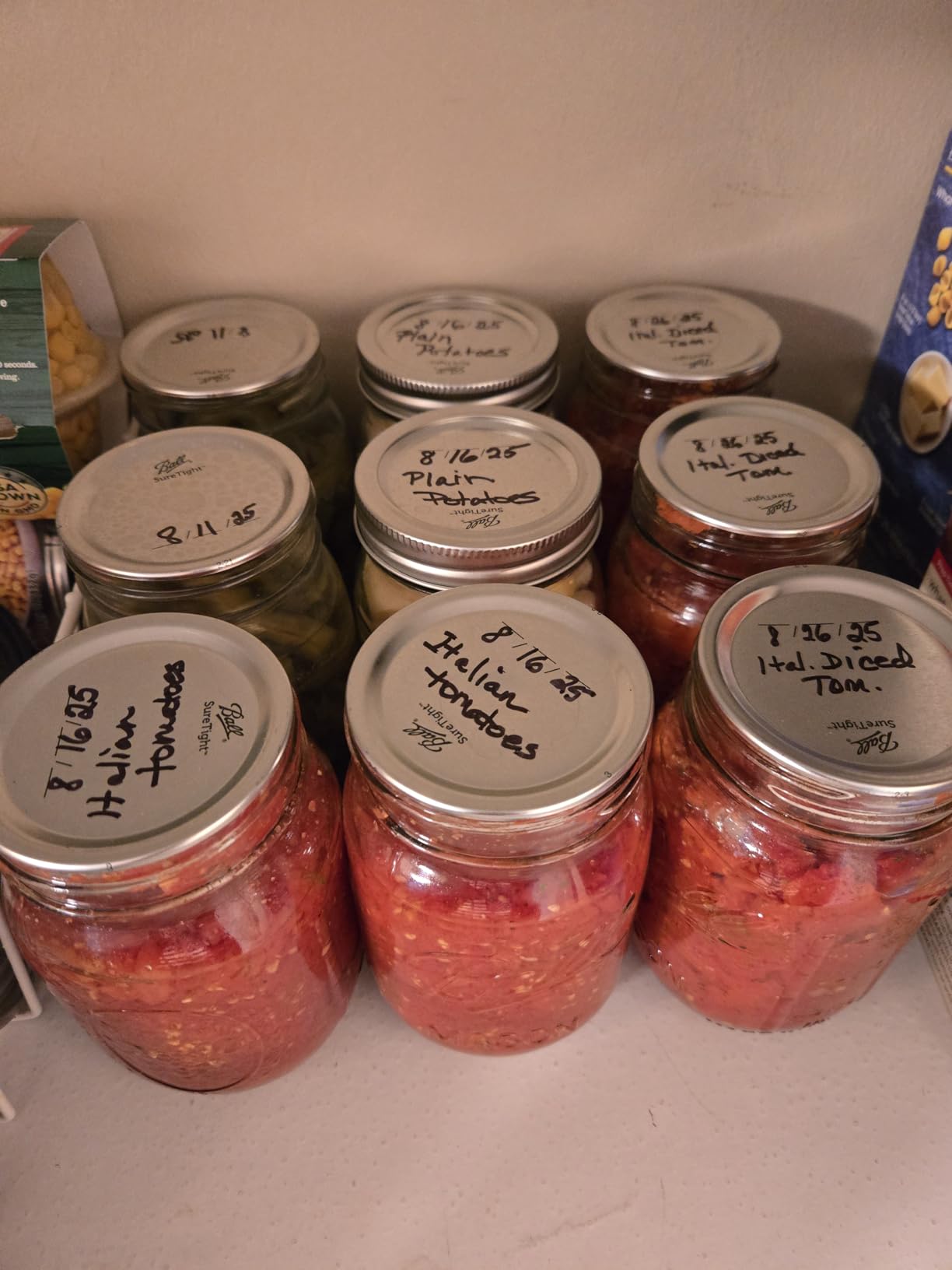
It answers the single most common sizing question directly: how many quart jars will a 22 quart canner hold? Seven, on the standard rack, with room to stack half-pints and pints on the second rack. That is enough for most family-scale preserving, and for a household that cans a few dozen jars a year it is the capacity sweet spot without a 30-pound lift.
At 14.8 pounds empty, this is also easier to handle than the 41.5-quart can and only slightly heavier than the 23-quart Presto. The listed footprint is 19.33 by 15.39 by 16.26 inches, so check the depth against your range edge before buying, since that dimension is the one that causes clearance problems.
Where it falls short
The rubber gasket seal is the recurring complaint, and it is a common one for any gasket-sealed canner: it wears, weeps steam at low pressure, and eventually needs replacing. The gauge can also auto-vent before it reaches the top pressure setting if the heat is not turned up, which is annoying but learnable, and the handles have to be aligned carefully or the lid will not seal evenly.
A 9 percent one-star share is a meaningful slice of unhappy buyers, and it clusters around seal integrity and units arriving damaged. The warranty is one year, the shortest published term here, and the binding and troubleshooting material in the manual has drawn criticism. Check the handle alignment and the gasket every season and this canner rewards you for it.
4. Presto 01784 23-Quart Pressure Canner – for induction cooktops
Presto 01784 23-Quart Induction Compatible Pressure Canner
Stainless clad induction base
Holds 7 quarts 20 pints or 26 half-pints
12.5 pounds
Pros
- Only full-size consumer canner here that works on induction
- Same 7 quart or 20 pint capacity as the 01781
- Air vent and cover lock adds a safety layer
- 12-year limited warranty
- Even heating from the clad base
Cons
- Comes with one regulator and one rack
- Heavier than the non-induction 01781
- Stainless base adds bulk to the footprint
The 01784 exists because of a specific kitchen problem: if you cook on induction, most large pressure canners simply cannot be used. An aluminum pot on an induction burner will not heat, and the usual workaround of an iron plate placed between burner and pot is a workaround. The 01784 is the one full-size consumer canner in this group with a stainless steel-clad base, rated for induction, gas, electric and smooth-top ranges.
Everything else about it tracks the 01781 closely, because it is the same design with a different bottom. Jar capacity is identical at 7 quarts, 20 pints or 26 half-pints, and it still carries the 12-year limited warranty. It rates 4.8 stars across 5,514 reviews, and buyers upgrading from an electric or older non-induction canner describe it as the fix for a problem they had stopped trying to solve.
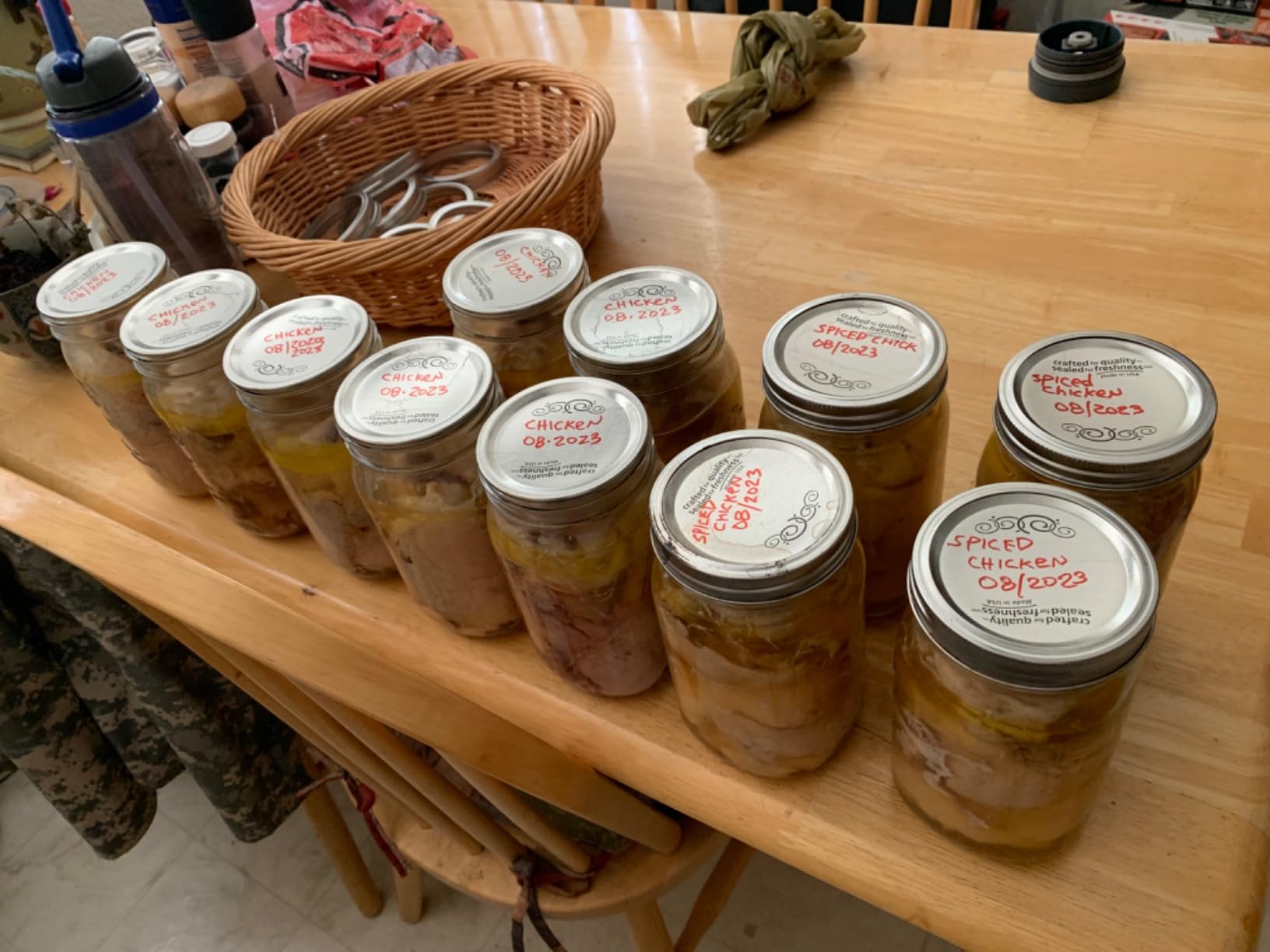
The cladding does more than make it induction compatible. Reviews point to more even, slightly heavier-duty heating than plain polished aluminum, which on a pressure canner translates into a pot that recovers temperature quickly when a cold rack of jars goes in. That matters during a long process at 10 or 15 psi, where temperature stability is the whole point.
There is also an air vent and cover lock, a feature that only builds pressure once the cover is properly closed and prevents the lid from being opened under pressure. For a first-time canner, that is a meaningful safety upgrade over a purely mechanical lock, and it is one of the reasons this model shows up in beginner discussions.
When induction makes this the only real choice
If your range is induction, the decision stops being a comparison and becomes an elimination. The 01784 is the one pick here that satisfies the query best large pressure canners without asking you to change cooktops. If you are still shopping for gas or coil, the standard 01781 does the same job for less and with more included accessories.
Empty weight is 12.5 pounds against 12 pounds for the standard model, so the induction version is marginally heavier to lift. The listed dimensions are 13.5 by 17.5 by 15.5 inches. As with any large canner, measure the depth from the front of your range to the wall before you order, because that number is the one that decides whether it sits flat and stable.
Where it falls short
The box is thinner than the 01781 in a way that catches people. It comes with a single 15 pound regulator rather than the 5, 10 and 15 psi set, so if you live at altitude or plan to process at lower pressures, budget for the additional weights. It also comes with one rack, meaning stacked pints need a separate purchase.
Neither of those is a deal breaker, but both are the kind of detail that shows up as a one-star review a month later. The 76-page instruction and recipe book that ships with the 01781 is also absent, so the written guidance you have on hand is thinner even though reviewers praise the instructions that do exist.
5. Granite Ware 20-Quart Pressure Canner – the canner, cooker and steamer
Granite Ware Pressure Canner/Cooker/Steamer, 20-Quart
20 quart capacity with 3-piece 5/10/15 psi regulator
10.5 pounds empty
15.75 by 15.5 by 12.75 inch
Pros
- Hard anodized body resists rust and staining
- Three pressure settings in one regulator set
- Works as canner cooker and steamer
- Lightest large canner here at 10.5 pounds
Cons
- No dial gauge readout
- Much lower review volume than the leaders
- Aluminum reacts with highly acidic foods
The Granite Ware 20-quart sits right at the boundary of what counts as a large canner, and that makes it a genuinely useful pick for a household that wants big-batch reach without a very large pot. It rates 4.6 stars across 801 reviews, which is a good score on a much smaller base, and the smaller number of reviews is worth holding in mind when you weigh owner feedback.
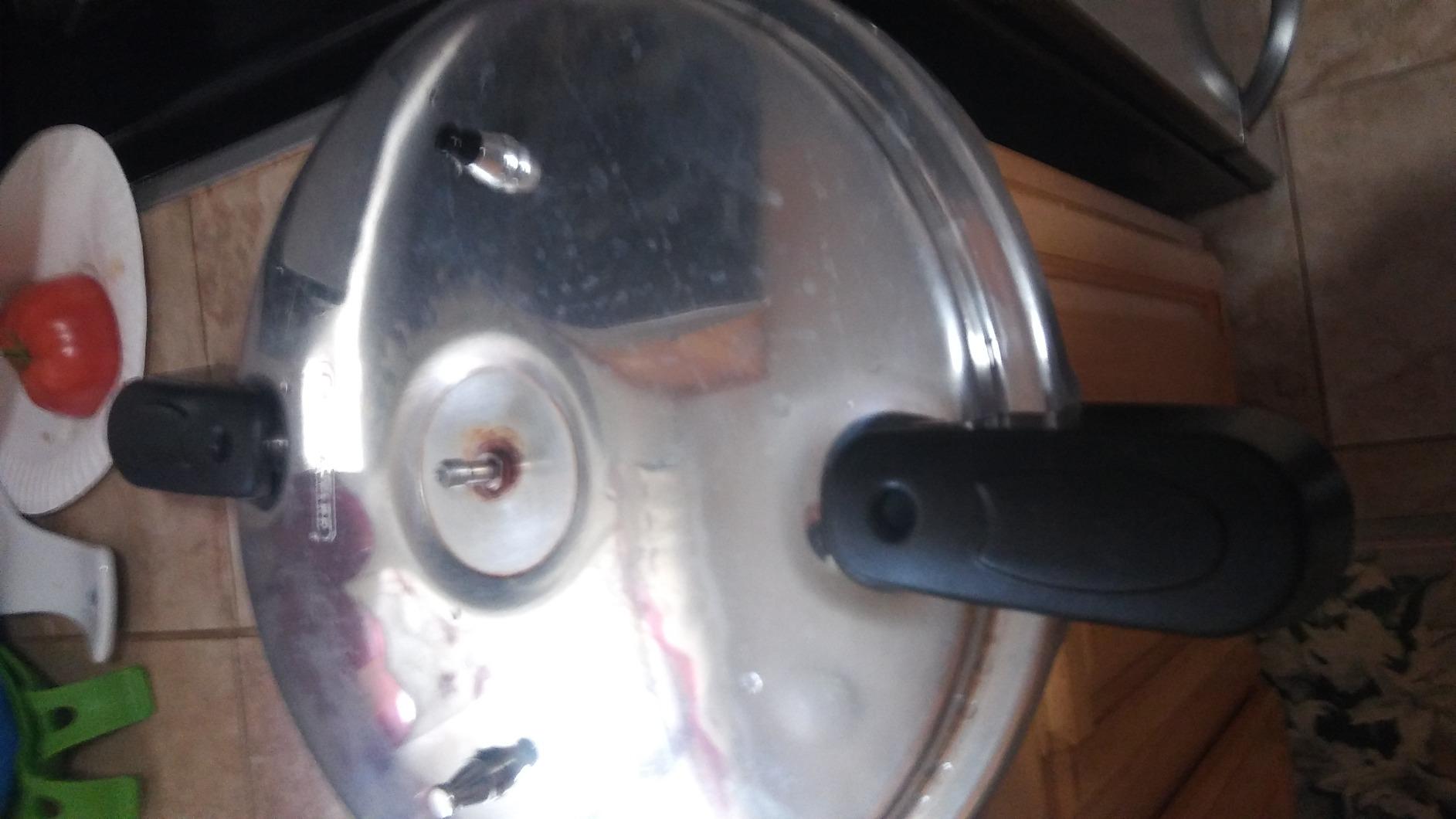
The body is heavy-gauge hard anodized aluminum, a step up from polished aluminum in corrosion terms. Anodizing is an electrochemical surface treatment, and the practical result is a surface that resists rust and staining over years of wet heat cycles. For a pot that sits damp in a garage between seasons, that is a real advantage.
The pressure control is a three-piece adjustable regulator calibrated at 5, 10 and 15 psi, so all three altitude settings are covered by one system rather than by separate weights you have to identify in the morning. The absence of a dial gauge is the tradeoff, and reviewers name it as the most common limitation: you regulate by weight and do not get a numeric pressure readout.
What it does have is versatility. The same vessel works as a pressure canner, pressure cooker and steamer, which is genuinely useful for a kitchen that wants one pot doing three jobs. Low-acid vegetables, meats and poultry are covered by pressure canning, and a steamer function is a good companion to a garden harvest.
Who should look at the 20-quart instead of a 23-quart
Anyone whose stovetop is smaller than a full-size range, and anyone who does not want to lift more than they have to. At 10.5 pounds empty, this is the lightest canner in the roundup, and a loaded 20-quart pot is a comfortable two-hand lift that a smaller cooktop can physically take. The 15.75 by 15.5 by 12.75 inch footprint is also the most compact here.
Because it is a three-piece system covering 5, 10 and 15 psi, it is a reasonable first canner for anyone at elevation. The category sales rank and review volume sit far below the Presto and All American models, so if you want a deep pool of owner experience to draw on, that is a reason to lean toward one of those two instead.
Where it falls short
With no dial gauge, you are trusting the weight rather than measuring pressure, and at altitude that is a decision with a safety dimension. If your area needs 10 psi instead of 15, the regulator is set rather than confirmed, and you are relying on correct selection rather than a reading.
Aluminum construction also reacts with highly acidic foods, so a tomato-heavy preserving schedule means a different pot for the acid side. And at 801 reviews this pot has a thinner evidence base than the leaders, so expect less community troubleshooting help if something behaves oddly.
6. WantJoin 23-Quart Pressure Cooker – size first, canning documentation second
Wantjoin Aluminum Pressure Cooker 23Qt Pressure Canner, Pressure Pot with Pressure Control for Home Kitchen or Restraurant, Commercial Pressure Cooker with Gauge
23 quart capacity with induction compatible base
13.3 pounds empty
14.1 by 18.9 by 11.8 inch
Pros
- 23 quart capacity at the lowest cost in this group
- Thickened composite base works on gas and induction
- Six listed safety systems
- Steams stews and pressure cooks in one pot
Cons
- Documentation is thin on canning use
- Uncoated aluminum reacts with acidic foods
- 9 percent one-star share
The WantJoin 23-quart is a commercial-style pressure pot rather than a purpose-built canning canner, and that distinction should drive your decision. It rates 4.3 stars across 777 reviews, the lowest average in this roundup, and the gap between that and the leaders is about documentation as much as hardware.
What it does well is size and heat. The thickened composite base works on gas and induction stoves, which puts it in the same induction-friendly club as the Presto 01784 at a much lower cost, and at 13.3 pounds empty it is not heavy for a 23-quart pot. One pot handles steaming, stewing and pressure cooking, and the food-grade uncoated high-hardness aluminum body is a straightforward, serviceable surface.
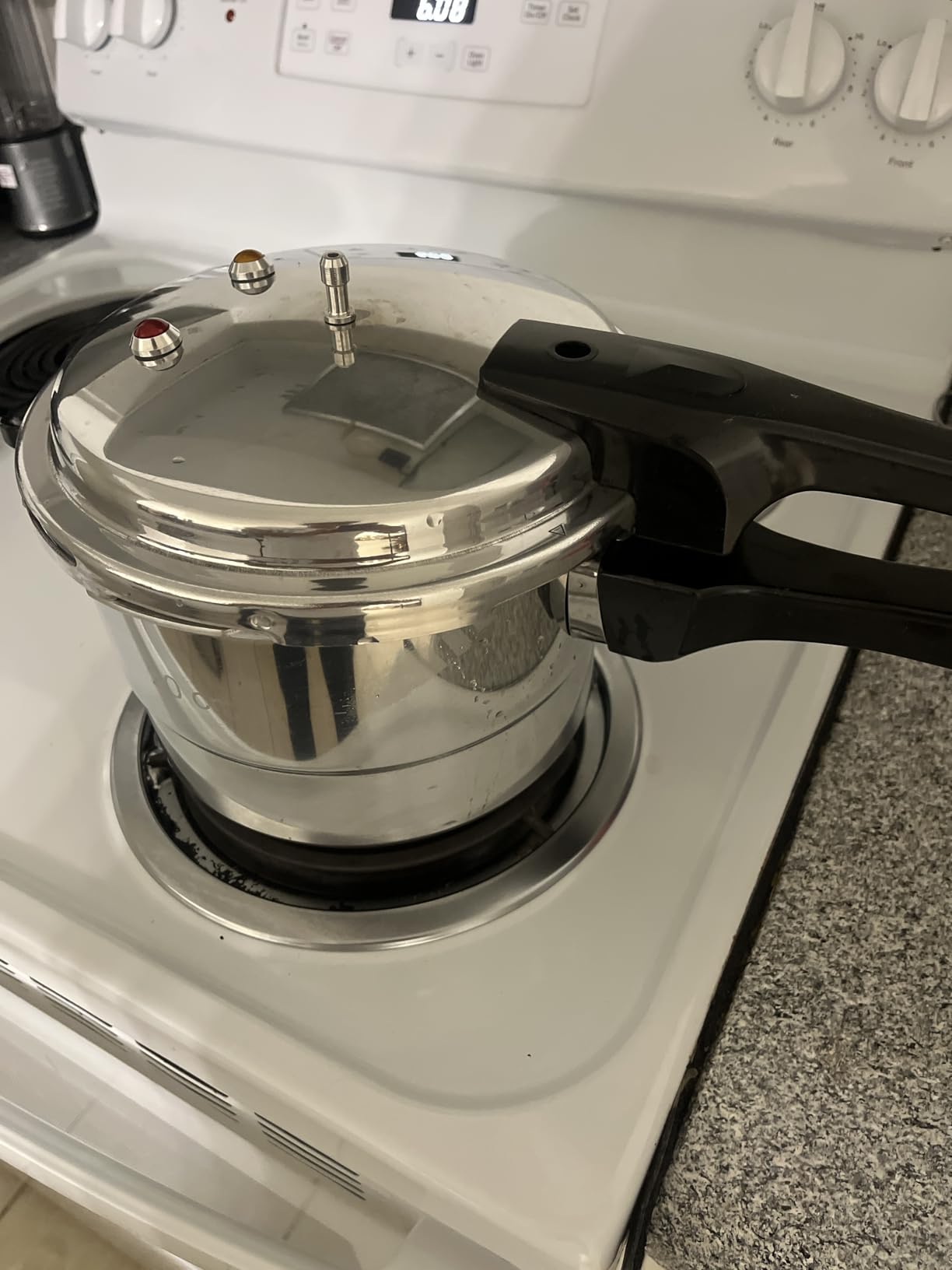
Six safety systems are listed, including an automatic lock, a check valve, a pressure limiting valve, a safety valve, an alarm valve and an anti-blocking cover. That is a thorough list, and it is the kind of specification a commercial kitchen pot is built around. The 23-quart volume is the real draw for anyone cooking for a group rather than canning for storage.
The problem is the paper. Reviewers specifically criticize the thin instruction booklet, and the USDA canning use case is not clearly stated anywhere in the documentation. That is not a small gap. The Complete Guide for Home Canning process times assume a specific venting sequence, a specific pressure, and a specific hold, and a pot sold without that guidance leaves the most safety-critical step of the whole hobby undocumented.
What it is genuinely good for
Batch cooking. Soups, stocks, stews, beans and large quantities of vegetables for a household of five or six, cooked quickly in a 23-quart vessel on gas or induction. On that task it is well matched to the size, and the list price point is the lowest of the eight units we analyzed, which is why it shows up in the recommendations at all.
If your preserving plan is mostly high-acid fruit, jam, pickles or salsa, this is the wrong tool anyway, since none of that needs pressure canning. A boiling water canner would serve the same foods, and if you also need to think about cleanup volume after a big afternoon, our guide to the best pressure washers for home covers the sort of outdoor kit that makes a long preserving day easier.
Where it falls short
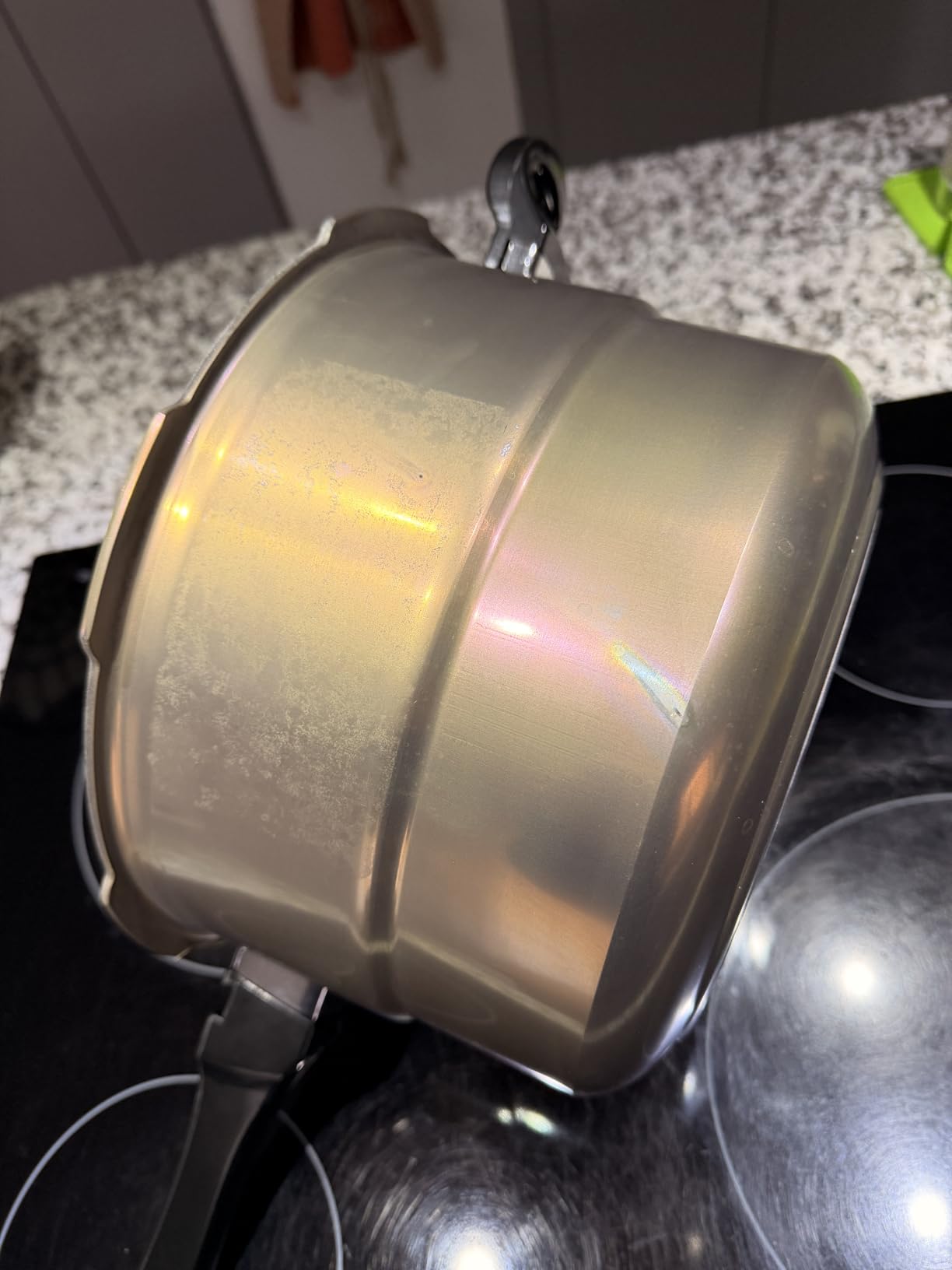
The uncoated aluminum body is the concern for long processing runs of acidic food, since bare aluminum reacts with acid and does not have the anodized or stainless protection the other picks offer. The 9 percent one-star share is also higher than any established canning brand on this list, and clustering of complaints around thin documentation is the reason to pause.
Finally, the footprint. At 18.9 inches wide it is the widest unit here, and it needs a burner with real diameter underneath it. Check that your largest pan fits before you assume the capacity translates into usable cooking volume.
7. Mirro 22-Quart Pressure Canner – three regulators in the box
MIRRO 22 Qt Aluminum Pressure Canner with 3 Regulators, 5, 10 & 15 PSI
22 quart with 5 10 and 15 psi regulators
13.7 pounds empty
Two racks and cool-touch handles
Pros
- All three regulator weights included
- Two racks included for stacking
- Dual cool-touch handles
- Seals jars with minimal siphoning
- Dishwasher safe
Cons
- No dial gauge to confirm actual psi
- Regulator must seat with two clicks
- Not recommended for glass cooktops
The Mirro 22-quart is the pick for canners who prefer listening to a weight over watching a dial. It rates 4.5 stars across 741 reviews, and the defining feature is in the box: three pressure regulators covering 5, 10 and 15 psi. Most competitors at this capacity include one weight, and the Mirro removing that friction is a real advantage for anyone at elevation.
Two racks are included and the handles are dual cool-touch, so moving a loaded pot off a hot burner is manageable. Owners also report that jars seal with minimal siphoning, which means less discarded food and less counter cleanup after each run. The 22-quart size is, in reviewers’ words, bigger than expected once it is in front of you.
There is also a long-view argument here. Long-time owners returning to the Mirro brand report no failures across multiple seasons, and the vessel is dishwasher safe, which is not a small convenience in a preserving kitchen. The natural interior finish is durable aluminum, with a mirror-polished exterior that is easier to wipe down after a tomato or beet batch.
You regulate pressure by weight, meaning you get a steady temperature with little heat adjustment once the pot is at a rolling boil. That is a genuinely different feel from a dial gauge, and experienced canners who have used both tend to describe the weighted approach as less to monitor and more to trust.
Who should choose the Mirro
Canners who already know how they want to run a batch, live at an altitude that needs 10 or 5 psi, and do not want to track down extra weights. If your routine involves alternating pressure settings across a season rather than settling on one, having all three regulators in the box removes an entire class of mid-batch improvisation.
At 13.7 pounds empty, the Mirro is a middle weight in the group. The listed dimensions are 18.62 by 15.59 by 15.47 inches, so the depth is worth checking against your range clearance, and the body is dishwasher safe which shortens the post-batch cleanup considerably.
Where it falls short
There is no dial gauge, so you cannot confirm actual psi the way you can on the Presto 01781 or 01784. You are trusting the regulator, and at altitude that is a decision made once and lived with.
Two smaller issues come up repeatedly: the regulator has to be pushed firmly onto the stem until it seats with two distinct clicks, and a rust-colored stain can appear around the steam vent over time. There is also an explicit note from at least one owner that it is not recommended for glass cooktops, with a gas range performing better, so treat this one as a gas or coil canner rather than a glass-top option.
8. Presto 02153 23-Quart Digital Pressure Canner – no stovetop required
Presto 02153 23-Quart Digital Pressure Canner
Electric 23 quart canner holds up to 7 quart jars
16.1 pounds empty
Guided prompts with LED display
Pros
- No burner tending or gauge watching
- Sensor holds exact processing temperature
- Audible cues between cycle stages
- Handles pressure and boiling water canning
- Guided prompts suit beginners
Cons
- Only one rack included so jars cannot stack
- Skipping jar warming is not intuitive
- Settings lock once a cycle starts
The Presto 02153 is a countertop digital pressure canner, and it breaks the mold on this list in one important way: it is not a stovetop pot at all. It plugs into a 120-volt outlet at 1100 watts, holds up to 7 quart jars, and runs both pressure canning and boiling-water canning cycles without a burner being monitored. It is the newest release among these picks.
Sensor technology holds the exact processing temperature rather than leaving it to your burner, and audible cues between stages mean you can step out of the kitchen. Owners who came from stovetop canners describe it as a step change in convenience, and it rates 4.5 stars across 276 reviews with a high share of five-star ratings. One owner reported canning more than 120 items with it.

For a beginner this is the most approachable unit here, and the reason is the interface. Guided digital controls, step-by-step prompts and an easy-to-read LED display walk you through the cycle, and the built-in safety systems handle pressure and altitude automatically. There is no weighted regulator to seat, no dial to interpret, and no vent pipe to watch.
The included components are the canner lid with all of its parts, a canning rack, the body and the cord. The listed dimensions are 15.5 by 17.3 by 17 inches, so it needs counter depth rather than burner space, and at 16.1 pounds empty it is one of the heavier units in the roundup despite never needing to be lifted onto a hot stove.
What the electric route actually changes
It removes heat management from the process entirely, which is the single most common source of pressure canning errors. There is no flame to adjust, no gauge to read, and no risk of a burner being turned too low so the pot drops out of processing pressure. It also solves the outdoor summer canning problem, since you can process in an air-conditioned room with no stove involved at all.
It also solves the glass stovetop problem outright. For households with induction, ceramic or fragile glass ranges, this is the only unit on the list that removes the heat source from the equation entirely. Budget extra counter space for it, and note that it holds up to 7 quart jars rather than the higher counts of the 41.5-quart canner.
Where it falls short
Only one rack is included, so jars cannot be stacked without another purchase, and the jar warming step is not intuitive to skip or find. Settings cannot be adjusted once a cycle has started, which removes flexibility mid-batch. Reviewers also report a long cool-down after processing and a slow heat-up before pressure.
The pot body is not insulated, so the tall vessel is hot to the touch when you load jars, and a few owners report scorch marks on the base. At 276 reviews it also has the smallest evidence base of the eight. The trade is simple: you give up stacking, adjustability and throughput to gain hands-free processing and no stovetop at all.
What Counts as a Large Pressure Canner
A large pressure canner is a stovetop or electric unit with roughly 21.5 quarts of fluid capacity or more, which translates to at least 7 quart jars or about 19 pint jars in a single load. Below that line you are looking at pressure cookers, and the distinction is not cosmetic. A 6-quart pressure cooker fits one or two quart jars, and an 8-quart unit still cannot take a full rack of them, which is the most common cart mistake we see in canning forums.
Pressure canning exists because of a specific biological problem. Low-acid foods such as green beans, corn, most vegetables, meat, poultry, seafood and soups carry a botulism risk from Clostridium botulinum spores that plain boiling cannot destroy. The USDA National Center for Home Food Preservation names pressure canning as the only recommended home method for those foods, because the sealed pot reaches 10 to 15 psi and pushes the boiling point of water to 240 to 250 degrees Fahrenheit, hot enough to destroy the spores.
The USDA sets out three requirements for a valid pressure canner: it must vent steam while heating up, it must have a calibrated way to control and indicate pressure, and it must be able to hold at least four quart jars upright on a rack. Every canner on this list clears that bar, which is exactly the point of filtering to this size. A small pressure cooker that cannot vent, or that heats so fast it skips the purge, invalidates the process times in the Complete Guide for Home Canning.
Who should not buy a canner this size
A household of one or two people preserving a few dozen jars a year. A large canner wastes heat and time on small loads, and the warm-up and cool-down cycles are the same whether the rack is full or half full. A 16-quart or 8-quart unit will serve that household better and take up less counter space, which is worth knowing if you have just moved into a kitchen and are sizing every appliance at once.
Anyone with a fragile or glass cooktop should also read the stovetop section below before shopping. It is the one buying mistake that can damage your kitchen rather than just waste money.
How Many Jars Fit in a Large Pressure Canner
Almost nobody can reconcile the advertised quart figure with the jars that actually fit, because the advertised number is fluid capacity and the useful number is jar count. The All American 941, at 41.5 quarts, is the extreme case: roughly 32 pint jars or 19 quart jars per load. The Presto 01781 and 01784, at 23 quarts, each hold 26 half-pints, 20 pints or 7 quarts. The T-fal 22-quart holds 24 half-pints, 16 wide-mouth pints, 18 pints or 7 quarts.
The wide-mouth penalty is worth internalizing before you plan a load. Wide-mouth jars have a noticeably larger opening and take more rack space than regular mouth, which is why the T-fal fits 16 wide-mouth pints against 18 regular pints. Plan on the smaller of the two figures if you own a mix.
Capacity only tells half the story, because the real currency is batches per afternoon. A 7-quart-jar canner needs roughly two full cycles to handle what a 19-quart-jar canner handles in one, and a large pot is slower to heat and slower to cool. A full 41.5-quart pot can take a long time just to come to pressure, and then an equally long cool-down before you can open it. For a household canning a heavy harvest, the 941 converts a two-afternoon job into one. For a household canning 40 jars a year, that efficiency is wasted.
The other half of the arithmetic is how many batches per season. At 7 quarts per load you are running a 30-minute process plus warm-up and cool-down for every load, and over a season that adds up to a lot of stove time. At 19 quarts per load the same total food takes a fraction of the cycles. That is the entire argument for a bigger canner, and it is worth doing before you buy.
Dial Gauge vs Weighted Gauge and Altitude Adjustments
A dial gauge gives you a numeric pressure reading, and a weighted gauge, sometimes called a jiggler or a regulator, gives you a weight that rocks when it is at pressure. Both are valid methods, and the USDA accepts either as calibrated pressure control. What differs is how much you can see, and how much you can adjust.
The weighted units here are the Mirro with three regulators at 5, 10 and 15 psi, the All American 941 with its precision-machined weight and a reference dial, the T-fal with a built-in adjustable weight, and the Granite Ware with a three-piece regulator set. The dial units are the Presto 01781 and 01784, which the brand describes as a deluxe dial covering the complete range of processing pressures. The WantJoin and the Presto 02153 use electronic or fixed regulation instead.
Altitude is where the two approaches separate. Above 1,000 feet you process at 10 psi, and above 3,000 feet at 5 psi, because water boils cooler at altitude and cannot reach the 240 to 250 degree kill step. A dial gauge lets you confirm the pressure you have actually reached. A weighted gauge requires you to select the right weight before you start, which is a decision made once and trusted for the rest of the batch. The electric Presto 02153 handles altitude adjustment automatically.
One practical note that trips up first-time canners: most Presto units include only the 15 psi regulator. If you live above 1,000 feet and want to use the 01781, you need the 10 psi weight as well, and it is an accessory rather than an included item. The same applies to the 01784, which includes a single regulator. The Mirro is the only pick in this roundup with all three in the box.
Stovetop Compatibility and Full Pot Weight
Before you pick a capacity, check that your cooktop can carry it. A large aluminum canner is a wide, heavy object, and glass and ceramic ranges are the ones owners worry about most. The Presto 01781 is listed for regular and smooth-top ranges, the All American 941 for gas or electric stoves, the T-fal for electric and gas, and the Mirro has at least one owner reporting better results on gas than on a glass cooktop.
Two units here avoid the problem entirely by adding a different base. The Presto 01784 and the WantJoin both have induction compatible bases, and the Presto 02153 has no stovetop requirement at all because it is electric. If your range is induction, ceramic, or a glass top you are nervous about, that short list is your shortlist.
Now the number nobody puts on the product page: full pot weight. Empty weights run from 10.5 pounds on the Granite Ware to 33 pounds on the All American 941, and a loaded pot is materially heavier than either. Check the depth from the front of your range to the wall, the diameter of your largest burner, and whether you can lift a full pot off the heat safely. Two people lifting a 41.5-quart loaded canner is not a failure of character, it is Tuesday.
For outdoor summer canning, an outdoor propane burner is the usual answer, and keeping the heat outside solves both the kitchen heat problem and the glass stovetop anxiety. A large canner warms a room fast, so a setup that keeps the pot off the indoor range is worth the effort. Setting up an outdoor cooking area that handles big batch cooking is something we covered in our guide to the best charcoal grills for large gatherings, and the same platform logic applies to a canner burner.
How to Choose a Large Pressure Canner
Start with the batch, not the brand. Count the jars you expect to process in a peak session and divide by 7, then add a batch for margin. If that number is 7 or fewer, a 22 to 23 quart canner covers you. If it is 10 or more, you are in 30-plus quart territory and should think carefully about whether your stove can take it.
Next, check the heat source, because it eliminates options instantly. Induction or glass cooktop narrows you to the Presto 01784, the WantJoin, or the electric Presto 02153. Gas or coil keeps every unit on this list open. No stovetop at all, the electric canner is the answer.
Then decide how you want pressure regulated. A dial gauge gives you a reading and makes altitude more transparent. A weighted regulator is simpler, quieter and mechanically robust, but you must pick the correct weight and cannot confirm the reading. If you live above 1,000 feet, weight selection is a real decision rather than a formality.
Check what is in the box against what you will actually do. Rack count decides whether you can stack small jars. Regulator count decides whether you can process at lower pressures out of the box. A 22-quart model with two racks and three regulators can honestly do more on day one than a 23-quart model with one rack and one weight, even though the second one has the better gauge.
Finally, think about parts and the long term. Gaskets wear, regulators get lost, and manuals get misplaced. A brand with easy spare parts and a long published warranty is worth a real premium for an appliance you expect to keep for two decades, and the 12-year limited warranty on both Presto canners is the longest published term in this roundup. All American is the only maker here still manufacturing large canners in the USA, with US-based service and free replacement manuals, which is a factor if you want a canner that outlives several appliances around it.
One more decision that saves money later: a large canner can serve as a boiling-water canner for high-acid foods, and the electric option canner handles both in one vessel. Buying one machine that does both jobs is better than buying two that each do one.
Frequently Asked Questions
Which pressure canner is best for a beginner?
The Presto 01781 23-quart is the safest recommendation for most beginners, because the 23-quart size is the smallest one that reliably holds 7 quart jars and it has the deepest pool of owner experience and parts availability of any model here. If you want no stove monitoring at all, the electric Presto 02153 is more approachable still. A 6 or 8 quart pressure cooker is not enough, since it cannot fit a full rack of quart jars.
Is All-American a good pressure canner?
Yes. The All American 941 carries the highest average rating in this roundup at 4.9 stars across 9,769 reviews, holds roughly 19 quart or 32 pint jars per load, and uses a gasket-free metal-to-metal sealing system that removes the main consumable part. The trade-offs are a 33 pound empty weight, long heat-up and cool-down times, and a purchase cost well above the aluminum alternatives.
What are the key differences between a Presto pressure canner and an All American pressure canner?
The Presto 01781 and 01784 are spun heavy-gauge aluminum with a rubber gasket, a deluxe dial gauge, a 12-year limited warranty and a lighter 12 pound weight. The All American 941 is a much larger cast aluminum unit with a precision-machined metal-to-metal seal, a weighted gauge with a reference dial, made in the USA, and a 41.5 quart capacity holding about 19 quart jars. Presto wins on cost, weight and gauge detail; All American wins on capacity, sealing durability and part interchangeability across models.
How many quart jars will a 22 quart canner hold?
Seven quart jars on the standard rack. Both the T-fal 22-quart and the Presto 23-quart hold 7 quarts, and the T-fal adds a second rack so you can stack half-pint and pint jars on top to increase the total load for smaller jar sizes.
How many quart jars fit in a 30 quart pressure canner?
Roughly 19 quart jars. The All American 941 in the 30-plus quart class holds approximately 32 pint jars or 19 quart jars per load, and forum owners report loads of around 19 pints or heavier quart fills depending on the food being processed.
Can a pressure canner be used on a glass stovetop?
It depends on the model. The Presto 01781 is listed for regular and smooth-top ranges, but owners do report concern about very heavy loaded pots on glass. Several owners recommend gas ranges instead, and the Mirro is not recommended for glass cooktops. If you want zero risk on glass or induction, use the Presto 01784, the WantJoin, or the electric Presto 02153, none of which depend on a glass cooking surface.
Final Verdict
For most households buying the best large pressure canners, the Presto 01781 23-quart is the pick: 7 quart or 20 pint jars per load, a deluxe dial gauge, smooth-top compatibility, a 12-year limited warranty and an owner base large enough that any problem you hit has already been solved by someone else. If you have an induction cooktop, move up to the Presto 01784, which keeps the same capacity and adds a stainless-clad base.
Buy bigger only when the batch justifies it. The All American 941 processes about 19 quart jars in one load with a gasket-free metal seal and is the clear answer for heavy harvest and meat, provided you can lift and steady a 33 pound pot. The T-fal 22-quart is the sensible lower-cost entry, and the Mirro 22-quart is the pick if you want all three regulator weights in the box. For no stovetop at all, the Presto 02153 digital canner removes heat management from the process entirely.
Whatever you choose, run it on a clear day, read the manual end to end the first time, and follow the process times in the USDA Complete Guide for Home Canning rather than a recipe you found online. That habit is worth more than any canner on this list.