
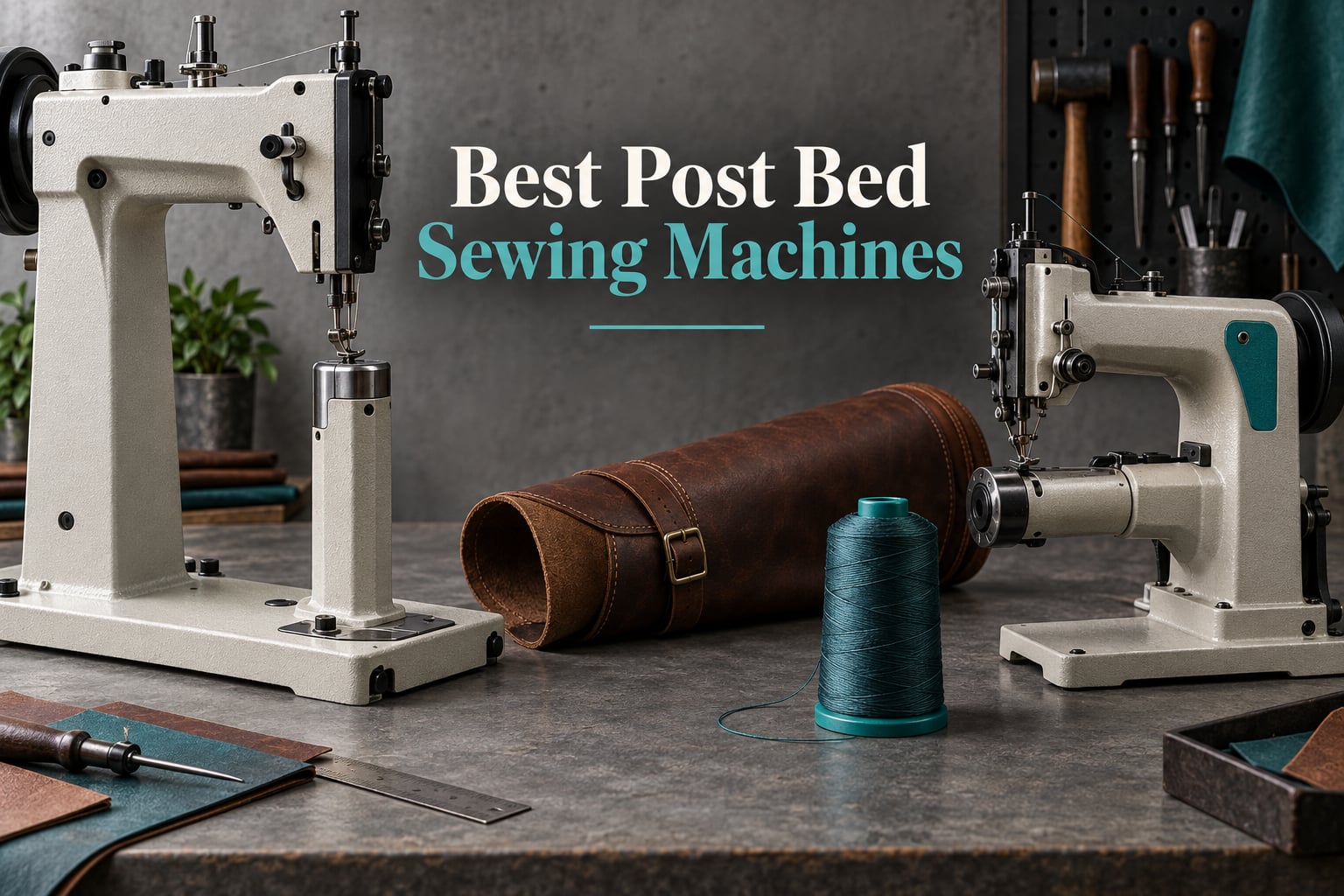
Shopping for the best post bed sewing machines is confusing for a reason that has nothing to do with sewing. Post bed machines are the narrow-column industrial class sold for boot shafts, hat bands, wig caps, bag gussets and any other curved or tubular job, and the listings for them are thin on reviews, thinner on honest descriptions, and full of near-identical model numbers.
I spent weeks reading spec sheets, owner feedback and the forum threads where shoemakers and leatherworkers actually argue about these machines. My honest finding: only one machine in this lineup of ten is a true post bed, with a vertical column and a 7 inch post height. The rest are cylinder bed patchers, cylinder arm machines and light-duty leather lockstitch machines that fill the same niche in the workshop and often cost far less.
That is the useful part of this roundup. I am not going to pretend a 30 cm hand crank patcher is a post bed machine, and I am not going to dress up a listing with a single five-star review as if it were a proven workhorse. Instead, I ranked all ten by what they can physically sew, how they feed material, what they arrive with, and what owners say after living with them.
Every machine below is rated on the data available: speed, feed type, arm length, presser foot lift, drive method and what the review record actually shows. Where owner feedback is thin, I say so plainly. If you are new to industrial sewing, our beginner sewing machine guide covers the flat bed class that handles most home projects before you commit to an industrial setup.
Top 3 Post Bed Sewing Machine Picks in 2026
The three machines below cover the widest spread of real workshop needs: a proper post bed, a long arm boot patcher, and a hand crank bench machine that needs no power at all.

Yamata FY810 Post Bed
- True post bed
- 7 in post height
- Drop feed with roller presser foot
- 3000 SPM
- servo motor and table included
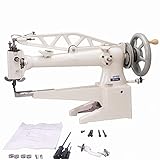
YEQIN 2973 Long Arm Patcher
- 460mm (18 in) long arm
- Rotating presser foot
- 500 SPM
- table and motor not included
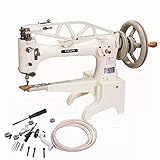
YEQIN 2972B Hand Crank Patcher
- Hand crank drive
- no power required
- 360-degree rotating presser foot
- Two shuttle sizes
What Is a Post Bed Sewing Machine?
A post bed sewing machine is an industrial machine built around a raised vertical column that holds the needle and feed mechanism above a narrow bed. That geometry lets you slide tubular, round or deeply curved work around the column and sew it without turning the piece inside out, which a flat bed physically cannot do.
Four specs decide whether a post bed is right for you:
Post height — the vertical clearance of the column. The Yamata FY810 measures 7 in (178mm), which clears most boot shafts and bag gussets.
Throat depth — how far the material can wrap around the column before it hits the body.
Presser foot lift — how thick a stack of material can enter under the foot. The machines here range from 10.5mm to 15/64 in (6mm) clearances, and the patchers generally win on lift.
Feed type — drop feed pulls from the bottom only, while walking foot, compound and roller feed grip the material from both sides so thick leather does not slip.
A post bed sewing machine is a specialist tool, not a generalist. Flat bed machines still handle the large majority of sewing projects, so buy one only if your work genuinely wraps around a cylinder.
Every Machine in the Lineup at a Glance
Here is every machine in the roundup with the three specs that separate them fastest. Read the feed and drive columns together, because a fast machine with drop feed and a slow machine with walking foot solve very different problems.
| Product | Specifications | Action |
|---|---|---|
| Yamata FY810 Post Bed |
|
Check Latest Price |
 Yamata FY335A Cylinder Arm Walking Foot Yamata FY335A Cylinder Arm Walking Foot |
|
Check Latest Price |
 Weaver Leathercraft 303 Weaver Leathercraft 303 |
|
Check Latest Price |
 Consew 29B Shoe Repair Machine Consew 29B Shoe Repair Machine |
|
Check Latest Price |
 Manual Cobbler Tabletop Patcher Manual Cobbler Tabletop Patcher |
|
Check Latest Price |
| YEQIN 2973 Long Arm Patcher |
|
Check Latest Price |
| YEQIN 2972B Hand Crank Patcher |
|
Check Latest Price |
 INTSUPERMAI 11.8 Inch Patcher INTSUPERMAI 11.8 Inch Patcher |
|
Check Latest Price |
 JARYANNIX FT-188073 Dual Drive JARYANNIX FT-188073 Dual Drive |
|
Check Latest Price |
 Vdniduir Cast Iron Hand Crank Patcher Vdniduir Cast Iron Hand Crank Patcher |
|
Check Latest Price |
Post Bed vs Cylinder Bed: Which One Do You Need?
A post bed has a tall vertical column with a small bed at its base, which gives deep access for tall narrow work. A cylinder bed has a short horizontal arm ending in a small round platform, which is better for shoes, bags and lampshades but limits how tall the work can be.
In practice the difference is the height of the material relative to the needle. A boot shaft standing upright on a cylinder bed is awkward, because the shaft rises past the arm. The same shaft slipped around a post bed column can be sewn from top to bottom without repositioning.
Cylinder bed patchers win on one other axis: the small round work platform suits small tubular goods directly, and the rotating presser foot design used on most of them lets you sew in any direction without turning the material.
Choose a post bed when the work is tall, round and long. Choose a cylinder bed when the work is small, round and wide, or when you are repairing shoes and bags rather than building them.
Feed type is a completely separate decision from bed type. A machine can have a post bed with drop feed, or a cylinder bed with walking foot. Forum buyers regularly confuse the two, so treat them as independent specs.
One more practical point from the community: post beds need a heavy industrial table and stand, a dedicated floor area, and often a 220V circuit. Cylinder patchers in hand crank form need nothing but a bench. That setup difference matters more to your decision than most spec sheets admit.
1. Yamata FY810 Drop Feed Post Bed – The Only True Post Bed Here
Yamata FY810 Drop Feed Heavy Duty Single Needle Lockstitch Post Bed Industrial Sewing Machine Comes With Table, Legs, and Servo Motor – Leather & Shoe Sewing Machine
Drop feed with roller presser foot
Post height 7 in
3000 SPM max speed
Table and servo motor included
Pros
- Only true post bed in the lineup with 7 in (178mm) post height
- Drop feed plus roller presser foot handles sharp corners and tight curves
- Arrives as a full kit with table top plastic legs servo motor and LED light
- Single needle lockstitch 301 with vertical axis hook and reverse feed
Cons
- Only one owner rating is recorded so long term reliability is unproven
- Single needle only no double needle or decorative stitch capability
This is the machine most people searching for the best post bed sewing machines are actually looking for, and it is the only one in the group with a real post column. The head is built for light to heavy materials including leather, vinyl, upholstery, synthetics, canvas and coated or laminated goods.
The specification is a proper industrial one: single needle, drop feed, roller presser foot, 3000 stitches per minute, reverse feed, vertical axis hook, type 301 lockstitch. Post height is 7 in (178mm) and the work surface measures 1 7/8 x 2 in. Needle is DP-F22/134S with a pre-wound G bobbin.
What matters most here is the package. You get the FY810 head, table top, plastic legs, servo motor, LED sewing light, drawer, belt and hardware in one box. For a first post bed that removes the single most frustrating part of buying industrial equipment, which is sourcing a compatible table, stand and drive together.
Be honest about the evidence though. One rating, and it is a five. Reviewers have not yet characterised this machine over time, so you are buying on the spec sheet and the brand’s design rather than on owner consensus.
When the FY810 earns its bench space
This machine suits vamping, space stitching and tipping work on shoes, plus any leather or upholstery job that needs a tall narrow passage. The roller presser foot is the detail that gets missed on paper: it grips while the needle turns corners, which is exactly what a boot vamp or bag gusset asks for.
If your work is tall and round, this is the pick. The 7 inch post height is what separates it from everything else on this list.
Where the FY810 will frustrate you
Single needle only, so double needle topstitching and decorative work are off the table. Max stitch length is 5mm and clearance under the presser foot is 15/64 in, which is workable for most leather but not generous for stacked thick sections.
Also know what you are buying. With essentially no owner history, budget time for the first oil change, belt check and feed timing before you trust it with production work.
2. Yamata FY335A Cylinder Arm Walking Foot Machine – Full Table Kit
FY335A Cylinder Arm Walking Foot Industrial Sewing Machine – Complete Table Kit with Servo Motor – Leather & Bag Sewing Machine
Cylinder arm for tubular work
Walking foot feed for thick material
Table kit with servo motor
Knockdown kit assembly required
Pros
- Walking foot feed grips thick leather and canvas from both sides
- Cylinder arm geometry passes bag and tubular work straight under the needle
- Package includes head table top plastic legs servo motor LED light drawer belt and hardware
- Listed for bags leather goods upholstery and canvas
Cons
- No owner ratings are recorded so quality is unverified by users
- Arrives as a knockdown kit and needs assembly before use
If your leather is thick enough that drop feed lets the layers walk out of alignment, a walking foot feed is the fix. The FY335A pairs that feed with a cylinder arm, so the material passes under the needle and around the arm for bag bodies, gussets and heavy panels.
You get a full table kit: the FY335A head, table top, plastic legs, servo motor, LED sewing light, drawer, belt and hardware. The listing calls for bags, leather goods, upholstery and canvas, and the servo motor is described as quiet and energy efficient.
Two things to plan for. It comes as a knockdown kit, so budget an afternoon for assembly and alignment before the first seam. And it has no owner ratings at all, so treat the walk through of the feed mechanism carefully on day one.
Why the walking foot feed matters
Drop feed grips only from below. On thick leather, canvas and laminated material, the top layer advances ahead of the bottom and the seam wanders off the edge. A walking foot feeds the material from the top and bottom at the same rate, so the layers stay registered.
If you sew bag bodies, motorcycle gear or multi-layer panels rather than delicate leathercraft, this feed type is the single change that most reduces layer shift on your seams.
What to check on delivery
Because there is no owner record for this listing, the first session matters. Run it at low speed on scrap material, confirm the foot pressure and feed timing, and oil before the first real job rather than after.
Cylinder arm geometry also means this is not a substitute for a post bed on tall upright work. For boot shafts standing vertically, the FY810 column still wins.
3. Weaver Leathercraft 303 – Light-Duty Lockstitch for Craft Leatherwork
Weaver Leathercraft 303 Leather Sewing Machine, Complete with Stand & Servo Motor, Great for sewing bags, personal accessories, and a variety of other leather working projects
Light-duty lockstitch
Sews up to 1/4 in thick
Speed reducer and knee lift
Stand and servo motor included
Pros
- Ships complete with stand and servo motor for a bench-ready setup
- Speed reducer makes slow precise stitching available for beginners and detail work
- Oil bath with min and max lines replaces dozens of individual oiling points
- Includes thread nippers needles oil
- spare bobbins and a work light
Cons
- Light-duty build aimed at leather craft rather than heavy production
- Restricted to 110-115V power
- which limits use in 220V regions
This one is not a post bed, and it does not pretend to be. It is a light-duty lockstitch machine aimed at bags, wallets, personal accessories and craft leatherwork, and it is the friendliest entry point in the group for someone moving up from a domestic machine.
It sews up to 1/4 in of material, reverse stitches, and uses a knee lift to raise and lower the presser foot hands free. The speed reducer is the feature craft users notice most, since it lets you drop the speed right down for stitching around a small radius.
Maintenance is unusually friendly. Instead of 40 plus separate oiling points, the oil bath has a minimum and maximum line, so you check one sight glass rather than working through a service chart. Model number 63501-02, running on 110-115V only.
Why a light-duty machine can be the smarter first buy
Most people who buy a post bed machine end up owning a machine they use occasionally. The Weaver setup is smaller, quicker to set up and ready to plug in, and it handles the small goods that fill most craft orders.
If you make wallets, card holders, small pouches and watch straps, this covers the work without an industrial table and stand in your way.
The honest limit on thickness
At 1/4 in maximum material thickness, this stops well short of thick leather bag panels and anything resembling boot shaft work. It is a craft machine, and buyers expecting production output will find it underpowered.
The 110-115V restriction also matters outside North America. In 220V regions this is not a usable machine without a step-down transformer and a check with an electrician.
4. Consew 29B – 12 Inch Cylinder Arm for the Repair Bench
Consew 29B Shoe Repair Industrial Sewing Machine, 12″ Cylinder Arm, Large Bobbin
12 in cylinder arm
Large bobbin capacity
Shoe repair configuration
Consew brand
Pros
- Established Consew brand with a long running 29B shoe repair platform
- 12 in cylinder arm gives room for larger shoes and boot shafts
- Large bobbin cuts thread changes on long seams
Cons
- No user ratings are listed on this page
- The listing provides no feature bullets or dimensions
The Consew 29B is the name most repair shops already know, and the reason is the 12 inch cylinder arm. That is a genuinely long arm compared with the 11.8 in and 30 cm patchers in this roundup, and the extra length is what lets a whole shoe upper or a tall boot shaft sit on the platform.
Large bobbin capacity is the second thing repair work cares about. Long welt seams and full uppers run far longer than typical craft seams, and fewer bobbin changes means fewer thread breaks and fewer restart points.
This listing is thin, with no feature bullets, no dimensions and no user ratings. The 29B is a long established shop machine though, so the practical buying question is dealer support and parts in your region rather than marketplace reviews.
When a 12 inch arm is the deciding feature
Arm length shows up in one specific place: shoes and boots. If you are restitching a full work boot upper or a tall boot shaft, the 12 inch arm reduces the amount of repositioning between passes compared with a 30 cm patcher.
That makes the 29B a better fit for a repair bench than for a production line, where a dedicated shoe upper machine would normally take over.
What the thin listing leaves you guessing
No feed type, no presser foot lift, no speed figure and no motor type are given on the page. Those four numbers decide whether the machine suits your material, so get them from a dealer before you commit.
Also budget for the industrial table, stand, motor and possibly a 220V circuit. None of that is part of this machine, and it changes the real cost of putting it in a home workshop.
5. Manual Cobbler Tabletop Patcher – Hand Crank, No Power Needed
XQZMZSCP Cobbler Sewing Machine Heavy Duty Tabletop Shoe Repair Machine Leather Patcher Manual Shoe Stiching Sewing Boot Patch Single Needle
Manual hand crank drive
500 SPM max speed
10.5mm presser foot lift
30cm (11.8 in) arm
Pros
- Hand crank means no motor
- no electrical work and no noise
- 360-degree rotating presser foot allows stitching in any direction
- 27 kg body is easier to move than a full industrial table
- Handles leather rubber plastic and canvas including shoes boots bags and cylindrical objects
Cons
- No ratings are recorded so build quality is unverified
- Tabletop head only so a stand and drive source must be arranged separately
This is the machine for a repair kit that has to work anywhere. Hand crank drive means no power supply, no belt, no motor and no electrical work, and the 360-degree rotating presser foot lets you change direction without repositioning the material.
The numbers are honest bench numbers: 500 stitches per minute, 5mm stitch length, 30 cm (11.8 in) arm, 10.5mm presser foot lift, and a 27 kg net body that one person can lift onto a workbench. Large or small shuttle options let you match the work platform to the job.
Listing says it handles leather, rubber, plastic and canvas, with listed uses covering shoes, boots, slippers, bags, dolls and cylindrical objects. Customer support is stated to reply within 24 hours.
Why hand crank is underrated for repair work
On a machine you start and stop constantly, full motor speed is wasted motion. A hand crank gives you exactly the control you want on a short patch seam, and it removes the electrical question entirely from a rental shop, a van or a garage bench.
For anyone without a 220V circuit, this solves the most common reason people abandon an industrial purchase.
What you give up
500 SPM is slow for production seams, and hand cranking a long boot shaft is tiring. This is a patch and repair tool, not a production machine.
It is also a head only unit, so you need a stand and a way to clamp it. Confirm that the plate and any clamp hardware are included before you plan the bench.
6. YEQIN 2973 Long Arm Patcher – 18 Inch Arm for Boots and Cylinders
YEQIN 2973 Cylinder Long Arm Patcher Sewing Machine Shoe Leather Boots Repair Machine-Long Arm-460mm (Table Stand Motor Not Included)
460mm (18 in) long arm
500 SPM max speed
10.5mm presser foot lift
Single needle lockstitch
Pros
- 460mm (18 in) long arm is the longest in this group handling boots lampshades and large cylinders
- Rotating presser foot permits stitching in multiple directions
- 10.5mm presser foot lift clears thick boot uppers and canvas
- Reproduction of the classic Singer 29K 73 shoe patching machine
Cons
- Owners report bent drive components and a broken thread take-up lever nut on arrival
- One owner reported a tight spot in the rotation that produced a loud squeal even after oiling
- Table stand and motor are not included and buyers report sourcing a motor with enough torque takes trial and error
The YEQIN 2973 is the longest arm machine in this roundup at 460mm, or 18 inches, with a sealing table diameter under 30mm. That geometry is aimed squarely at boots, lampshades, large cylinders and tubular leather goods, and it is a reproduction of the classic Singer 29K 73 patching machine.
Specs are 500 SPM maximum, 10.5mm presser foot lift, single needle lockstitch, and compatibility with nylon, cotton and polyester threads. The rotating presser foot works in any direction. The listing also carries the Prime flag, so delivery is straightforward.
Now the part you need to read twice. The owner feedback is the worst in this group: 2.3 stars across 5 reviews, with a distribution running heavily toward one and two star reports. The recurring theme is damage on arrival, specifically a bent drive wheel, pulley, tensioner and presser foot, plus a broken thread take-up lever nut, alongside one report of a tight, squealing handwheel after oiling.
Several owners still describe the underlying machine as a good reproduction of the Singer 29K 73 once repaired. So the design is sound and the delivery is the problem, and you should plan on inspecting and correcting it on day one.
When the 18 inch arm is worth the hassle
There is no other machine here that handles large cylindrical work this comfortably. For a full boot upper, a tall shaft or a lampshade, the reach matters more than any other spec.
Ten and a half millimetres of presser foot lift clears thick boot uppers and heavy canvas, which most of the shorter-arm machines in this group cannot comfortably do.
What to inspect the day it arrives
Check the drive wheel, pulley, tensioner and presser foot for bends before anything else, then confirm the thread take-up lever nut is intact. Turn the handwheel slowly and listen for a tight spot or squeal before you oil anything.
Remember the head is sold without table, stand or motor. Owners report that finding a motor with enough torque takes trial and error, so add that to your parts list early rather than at the end of the project.
7. YEQIN 2972B Hand Crank Leather Patcher – Head Only
YEQIN Leather Patcher Industrial Sewing Machine Shoe Repair Boot Patch Single Needle Hand Crank DIY Head Only #2972B
Hand crank drive, no power needed
500 SPM max speed
30cm arm length
Two shuttle sizes
Pros
- Largest review base of the hand crank patchers in this group at 11 reviews
- Hand crank operation needs no electricity
- which suits bench-only and mobile repair work
- Rotating presser foot allows sewing in any direction
- Two shuttle types let you match the work platform to the job
Cons
- Average rating sits below 4 stars with roughly half of reviews at 3 stars or lower
- Sold as head only so a stand and drive setup must be sourced separately
This is the same basic hand crank patcher idea as the 30 cm tabletop unit, sold as a bare head, and it carries the largest review base of any hand crank machine in this roundup with 11 ratings. That is still a thin sample for a big purchase, but it is a signal.
Specs are single needle lockstitch, 500 SPM maximum, 30 cm arm length, and 360-degree rotating presser foot. The small handle moves the needle back and forth and side to side, and the listing states it suits leather, rubber, plastic and canvas for shoes, boots, slippers, bags and dolls.
Two shuttle types are offered, large or small, and the small work platform is meant for small tubular goods. The rating spread tells the story: 42 percent five star, 12 percent four star, 29 percent three star, 17 percent two star. Owners broadly accept the stitching capability, and the middling scores point at finish consistency and setup friction rather than one specific defect.
Why this is the pick for a mobile repair kit
It weighs 60 pounds and needs no power. Put it on a bench, a van shelf or a shop counter and it works, which makes it the most practical option here for a person who repairs shoes away from a fixed workstation.
For a first hand crank machine the review record is the most reassuring in the group, simply because there is more of it.
What to plan before you buy
It is a head only unit at 19.5 x 22.5 x 11.5 inches, so you need a stand, a clamp and a surface. If a hand crank is the plan, a power head and belt drive later would need a motor and pulley you size yourself.
Also keep expectations realistic on speed. 500 SPM suits patch seams, not long production runs.
8. INTSUPERMAI 11.8 Inch Patcher – Convert From Hand to Motor
INTSUPERMAI Leather Patcher 11.8 Inch Industrial Hand Crank Patcher Patching Sewing Machine for Shoes/Bags/Clothes/Quilts/Coats/Trousers,etc
Hand crank or electric motor operation
11.8 in (30cm) arm
500 rpm max
Stitch length 1-5mm
Pros
- Runs either by hand crank or by electric motor
- so it can be converted later
- Turntable design plus rotating presser foot eases sewing around curved and tubular work
- Broad material range including canvas rubber and leather
- Entry point for anyone testing whether a patcher fits their work
Cons
- Mixed owner ratings with a notable share of one-star feedback
- Table and motor are sold separately
- so usable kit cost is higher than the head alone
- Slower 500 rpm cycle than powered industrial machines
This is the flexible one. It runs by hand crank or by electric motor, so you can start working immediately with no motor and convert later if the volume justifies it. The turntable design with a 360-degree rotating presser foot is aimed at curved and tubular material.
Specs are 500 rpm maximum, stitch length 1-5mm, an 11.8 in (30cm) arm, a 7mm counting length and a DP*17 needle system in sizes 16 to 18. Nylon, cotton and polyester threads are supported, and the listed uses cover leather, rubber and canvas for shoes, riding boots, luggage and cylindrical articles.
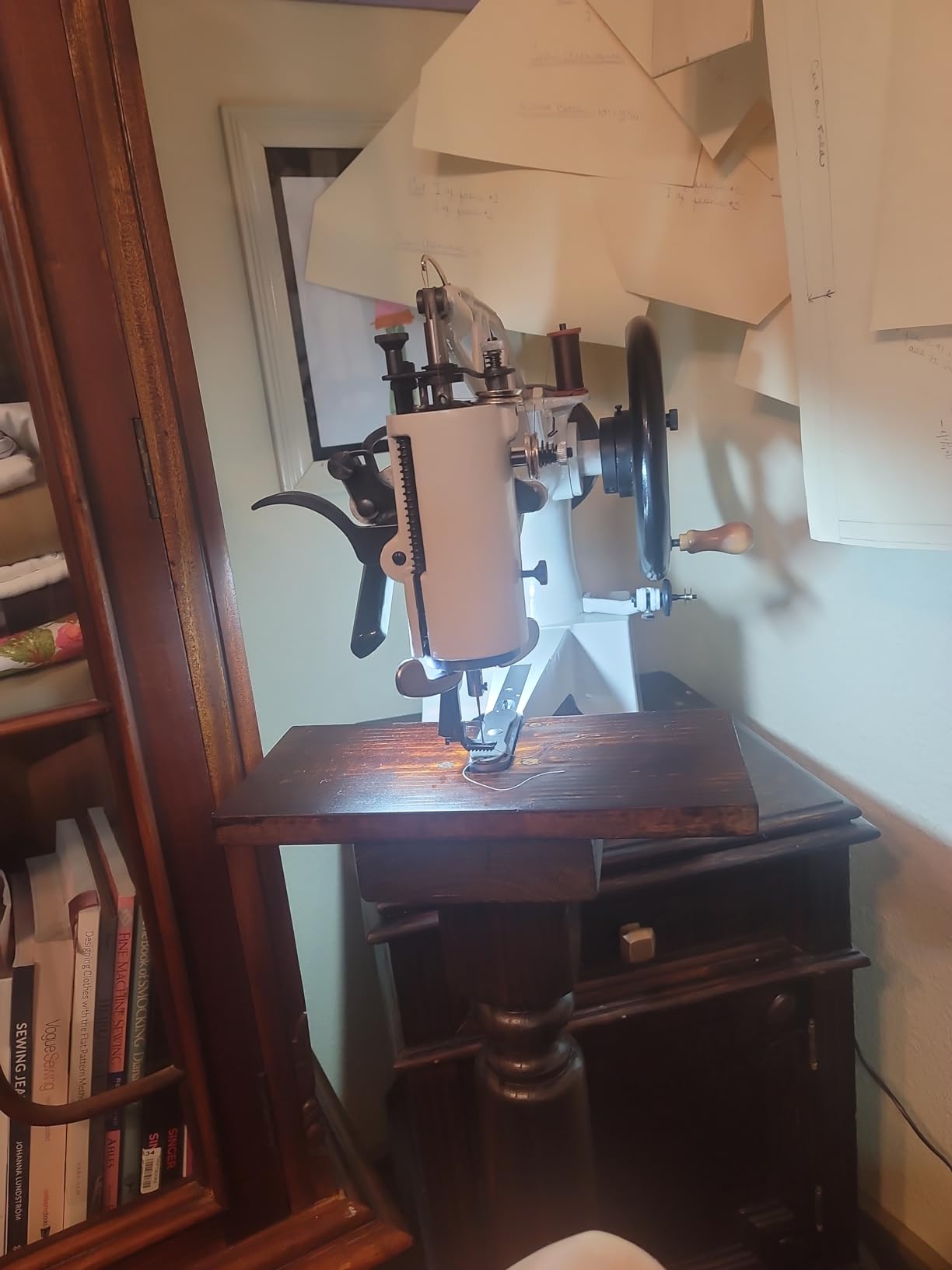
The four owner ratings split 53 percent five star and 47 percent one star with nothing in between, so the sample is too small to draw a stable conclusion. The listing itself advises checking material and thickness suitability before you buy, which is sensible advice for a patcher at this price level.
Why the dual drive option matters
Starting hand crank and adding a motor later spreads the cost across two decisions. That suits a hobbyist testing whether a patcher earns a place in the shop before committing to a drive setup.
The 11.8 in arm and turntable base also make it more flexible than a fixed-cylinder machine when the work changes shape between jobs.
Where the mixed feedback shows
A near all-or-nothing rating spread usually points to delivery and setup variance rather than a design fault. Inspect the drive and presser foot mechanism on arrival and oil it before first use.
Remember the table and motor are separate purchases, so the working kit costs more than the head. Budget the stand and drive into your plan from the start.
9. JARYANNIX FT-188073 Dual Drive Patcher – 32 kg Metal Frame
JARYANNIX Leather Sewing Machine for Heavy Materials Hand/Electric Operated Sewing Patch Machine Industrial Stitching Tool for Shoes, Boots, Luggage
Manual or electric dual drive
32 kg metal frame
Stitch length 1-5mm
DP x 17 needles
Pros
- Dual manual and electric drive lets you start by hand and add a motor later
- 32 kg body is lighter than most industrial patchers while keeping a metal frame
- Stitch length adjustable 1-5mm covers a range of material thickness
- Designed specifically for flat stitching on tubular and boot shaft work
Cons
- No owner ratings are recorded
- so quality is unverified
- Motor and workbench are sold separately
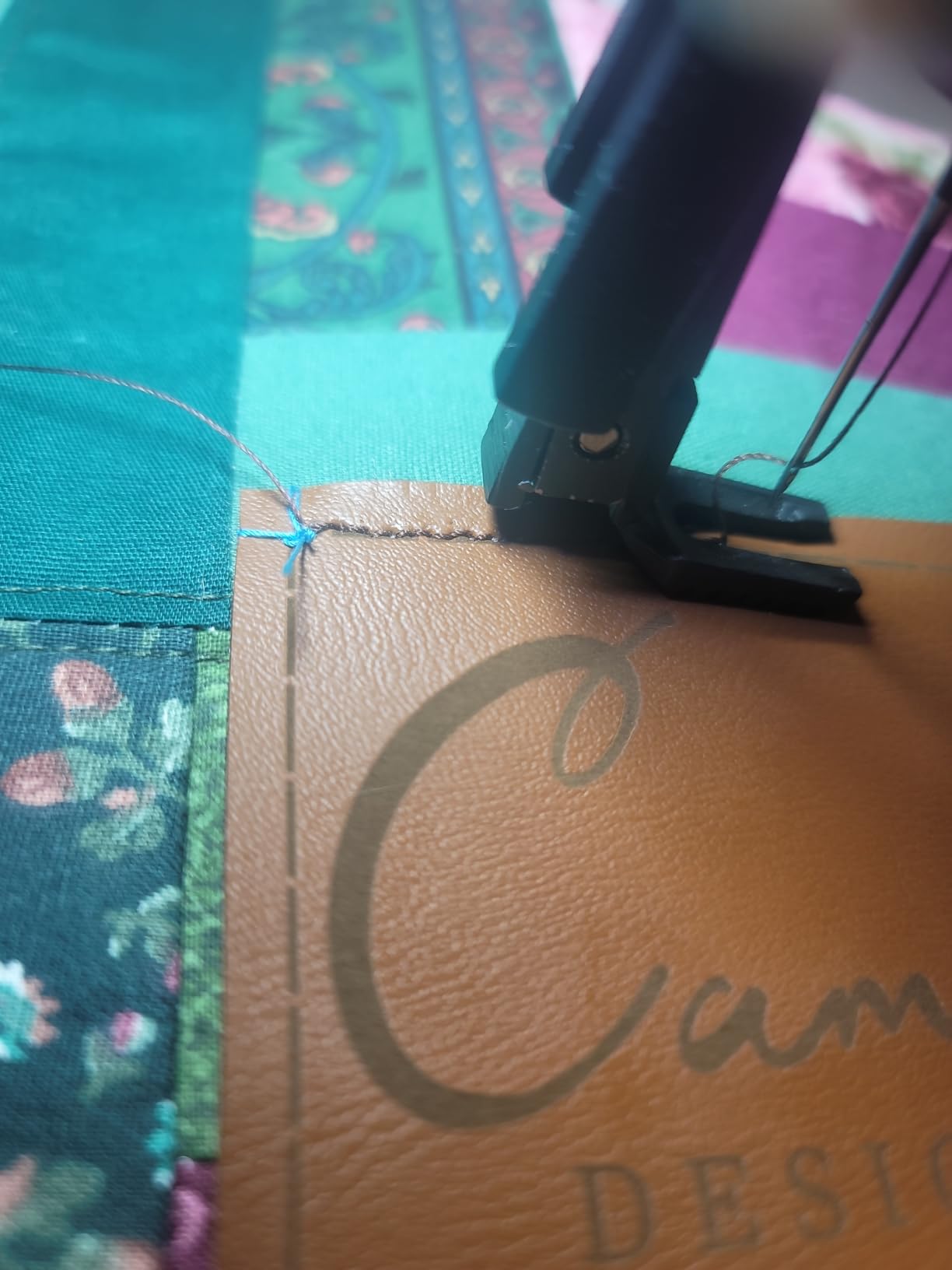
The JARYANNIX FT-188073 is the middle ground on weight. At 32 kg it is noticeably lighter than the 59 lb and 60 lb patchers in this group, but it keeps a metal frame rather than a pressed shell, and it runs either by hand or by motor.
Specs are 500 RPM maximum, stitch length adjustable from 1 to 5mm, DP x 17 needles, and a listed build of metal. The stated application is specifically flat stitching on curved components such as canvas tubes and boot shafts, plus footwear, riding boots and luggage.
There are no owner ratings on this listing, so nothing here is based on user experience. Judge it on the frame weight and dual drive design, and on your own material testing.
Why a lighter body matters in a small shop
Sixty pound machines are a two-person lift. A 32 kg body means one person can move it to a different bench, take it to a customer, or clear the floor when a post bed machine goes in the same corner.
For anyone fitting a workshop into a spare room, that flexibility is a real practical advantage.
The gaps to be aware of
Motor and workbench are both sold separately, so plan the full bench before ordering. And with no ratings, treat the first hours as a test: run scrap material at low speed and check stitch formation on your thickest leather.
Stitch length tops out at 5mm, which suits patch work but not the long decorative topstitching some bag work wants.
10. Vdniduir Cast Iron Hand Crank Patcher – Upward Feed Design
Hand Crank Leather Sewing Machine, Heavy Duty Manual Industrial Sewing, with Double Headed,for Shoe Repair and Leather Craft
Cast iron body with sprayed shell
Up to 500 stitches per minute
Stitch length 5-15 SPI
Hand crank operation
Pros
- Cast iron construction offers greater durability than pressed steel bodies
- Upward feeding mechanism allows direction changes without repositioning the material
- Wide 5-15 SPI stitch length range with adjustable thread tension
- Hand crank drive means it works without an electrical hookup
Cons
- No ratings on this listing
- Listing gives no dimensions
- weight or model number
The engineering story on this one is materials. The body is cast iron under a plastic-sprayed shell, which is the construction most traditional shoe machines use and the most durable option in this roundup. Most of the cheaper patchers here use lighter pressed bodies.
It runs up to 500 stitches per minute with a stitch length range of 5 to 15 SPI, adjustable from about 5.1mm down to 1.7mm, and thread tension is set with a thread clamp nut. The feeding mechanism feeds upward, which is what lets you sew in any direction without shifting the material.
That upward feed is a genuinely different design decision from the rotating presser foot used on the other patchers here. It removes the fabric adjustment step entirely when you change direction, which is where most patching goes wrong.
Why cast iron changes the longevity picture
Cast iron does not flex under load the way a thin pressed shell does. On a machine whose job is stitching through leather and rubber, that rigidity shows up as consistent stitch formation over years rather than months.
For a repair tool you expect to keep for a long time, that is the argument for spending here rather than on more features.
What the listing does not tell you
There is no rating, no weight, no dimensions and no model number on the page. That is an unusually bare listing, and you will need to ask for those numbers before you commit.
You will also need a stand, and a clamp or mounting solution if the head is not sold with one. Hand crank drive keeps the electrical side simple at least.
How to Choose a Post Bed Sewing Machine: 7 Criteria That Matter
Seven specs decide whether a post bed sewing machine suits your work: bed geometry, throat and post height, presser foot lift, feed type, motor, needle and bobbin compatibility, and the physical setup you need to install it. Get these right and the machine is a pleasure. Skip one and you will regret the table you bolted it to.
1. Bed geometry: post bed or cylinder bed
A post bed puts a vertical column under the needle, so tall round work wraps around it. A cylinder bed uses a short horizontal arm with a small round platform, which is better for shoes, bags and lampshades and limits how tall the work can stand.
Measure your tallest job before you buy. A boot shaft that stands upright will not work on a cylinder bed the way it works on a post bed column.
2. Post height and throat depth
Post height is the vertical clearance under the column, and throat depth is how far material can wrap before it meets the machine body. The Yamata FY810 gives 7 in (178mm) of post height, which is the number to check against the diameter of your largest tube.
For boot shafts, add up the shaft diameter and the material wrapped around it. Buy the machine with clearance, not the machine that just barely passes your current job.
3. Presser foot lift
Presser foot lift is how thick a stack of material can get under the foot. The patchers in this group run 10.5mm, while the FY810 lists 15/64 in, or 6mm, clearance under the foot. More lift means thicker material without fighting the feed.
Under 8mm and you will struggle with stacked layers. Over 10mm and you have room for boot uppers and heavy canvas.
4. Feed type: drop feed, compound feed or walking foot
Drop feed grips from below only, which works on light to medium leather and is the most common feed on post beds. Compound and roller feeds add a grip above the material, and walking foot feeds both sides mechanically. The more you grip, the less the layers shift on thick work.
Forum buyers ask this constantly and it is worth getting right. Thick leather, canvas and multi-layer panels need top grip. Thin craft leather and repair seams do not, and drop feed is more precise there.
5. Motor type: servo versus clutch
A servo motor gives you variable speed control, runs quietly, uses less power and starts and stops without a belt slip. A clutch motor is louder, spins at a fixed speed and is cheaper, but the friction clutch wears over time.
For a workshop machine running all day on leather, the servo in the FY810 and FY335A packages is the right call, and over years the running cost difference favours it. Several machines here include a servo in the package, which saves a sourcing step.
6. Needle and bobbin compatibility
Check the needle system before anything else. The FY810 uses DP-F22/134S, the patchers here use DP*17 or DP x 17 systems, and sizes matter. Leather needles come in the same systems as fabric needles but with a different point shape for piercing hide.
Bobbins are less universal than people expect. The FY810 takes a pre-wound G bobbin, and the patchers use shuttle types in large or small sizes. Know your bobbin standard before you order spares.
7. Table, stand, power and parts
Post beds need a heavy industrial table on a cast-iron stand, a dedicated floor area, and often a 220V circuit. Several machines here are 110-115V only, and the Weaver 303 states that restriction plainly, so check before you plan the outlet.
Parts availability is the hidden cost of choosing a lesser known brand. Research forums have long warned that bobbins, feed parts and timing components for non major brands take hunting down. That is a real argument for buying from a brand with dealer service in your region, even at a higher figure, and our quilt machine comparison is a useful reminder that machine classes suit different jobs.
One community topic worth reading before you buy: on the Leatherworker.net 810 thread, owners point out that Yamata, Techsew, AtlasLevy, Cowboy and FoxSew all sell a post bed with some variation of 810 in the model number. If a listing uses the 810 family name, the real question is which dealer will still supply parts for it in five years.
Who should skip a post bed machine entirely
Skip it if your work is flat panels, quilting, garments or general repairs. Flat bed machines handle the large majority of projects, and a post bed sitting idle is a poor investment. It also means skipping the industrial table, the stand and possibly the electrical work.
Also skip the upgrade if you are undecided about the craft. A hand crank patcher at the entry end of this roundup will teach you whether you actually enjoy this kind of sewing before you commit to a full industrial setup.
Maintenance: what a real schedule looks like
Daily, brush leather dust and thread lint off the feed path and the hook area, and check oil level. Weekly, oil the needle bar and feed mechanism at the marked points, and check belt tension. Monthly, run a timing check on stitch formation across a scrap of your thickest material.
The Weaver 303 makes this unusually easy with an oil bath that has a minimum and maximum line instead of dozens of individual points. On older industrial heads, the manual’s oiling chart is not optional, and skipping it shortens machine life faster than any amount of sewing does.
Frequently Asked Questions
What is the difference between a post bed and a cylinder bed sewing machine?
A post bed sewing machine has a tall vertical column that holds the needle above a narrow bed, so tall round or tubular work wraps around it. A cylinder bed has a short horizontal arm ending in a small round platform, which suits shoes, bags and lampshades but limits how tall the work can stand. Choose a post bed for tall upright work such as boot shafts, and a cylinder bed for small wide work such as shoe repair.
What is a post bed sewing machine used for?
A post bed sewing machine is built for curved, round and tubular work that a flat bed cannot reach, including boot shafts, hat bands, wig caps, bag gussets, belt loops and medical tubing covers. The vertical column lets the material wrap around the needle rather than being turned inside out or held in an awkward position.
Can post bed sewing machines sew thick leather and boots?
Yes, provided the feed and presser foot lift match the material. A post bed with drop feed handles light to heavy leather, while compound, roller or walking foot feeds grip from both sides so thick layers do not shift. For heavy boot uppers, look for at least 10.5mm of presser foot lift so stacked material can get under the foot.
Are the Yamata, Techsew, AtlasLevy and FoxSew 810 post bed machines the same?
They share a design family, and buyers on Leatherworker.net have long noted that Yamata, Techsew, AtlasLevy, Cowboy and FoxSew all sell a post bed with some variation of 810 in the model number. Differences between them are usually in the table, motor, feed options and dealer support rather than the core head, so compare those four things rather than the model number.
What power and table setup does a post bed sewing machine need?
A post bed sewing machine needs a heavy industrial table on a cast-iron stand, a dedicated floor area and often a 220V circuit, which surprises home users. Some lighter models run on 110-115V only, so check the stated input voltage before you plan the outlet. Cylinder patchers in hand crank form need nothing but a bench and a clamp.
Which Post Bed Sewing Machine Should You Buy in 2026?
Start with the Yamata FY810 if your work is tall, round and round again. It is the only true post bed here, the 7 inch post height clears most boot shafts and bag gussets, and it arrives as a complete kit with table, legs, servo motor and LED light.
If your leather is thick enough that layers walk out of alignment, the Yamata FY335A adds walking foot grip to a full table package. The Weaver Leathercraft 303 is the sensible craft-leather entry point, sewing up to 1/4 in on a 110-115V outlet with almost no maintenance overhead.
For repair work, the YEQIN 2973 gives you the longest arm in the group at 18 inches, but inspect it carefully on arrival given what owners report. The YEQIN 2972B hand crank head is the sturdier no-power option with the most owner feedback, and the Vdniduir cast iron patcher is the build to choose if you want a tool that lasts.
Whichever you pick, buy for the work you actually have, not the work you might start. If you are still deciding, our first sewing machine guide covers the flat bed class that handles most projects while you work out whether an industrial post bed belongs in your shop.