
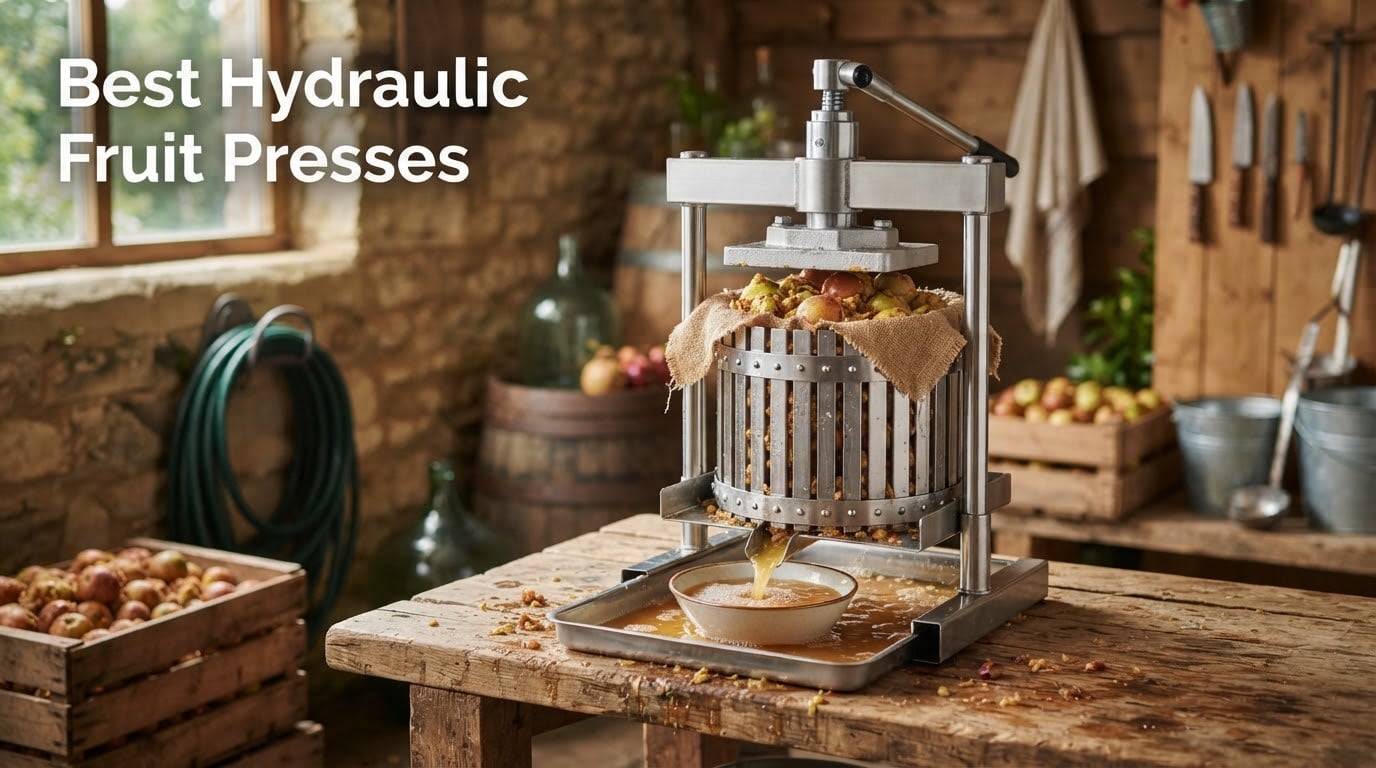
Hydraulic fruit presses are having a moment, and the reason is simple: they put out more force per pump stroke than any screw press you can twist by hand. The EJWOX 5.3 gallon water-powered bladder press is the one we would buy first, because it runs off an ordinary garden hose, needs no electricity and has the deepest review history of anything in this roundup. Below it sit nine more presses, from a 12 litre starter barrel up to a 40 litre orchard workhorse.
We spent weeks reading spec sheets, review histories and pressing-day forum threads to build this list, and the pattern was consistent. Buyers who regret a press almost never regret the capacity. They regret the bladder that split in the third season, the threading that did not match their tap, or a frame that felt flimsy once a full basket went on it. Our fruit wine making kit guide covers the rest of the setup, so this roundup stays focused on the press itself.
Every press below was chosen on three things: stainless steel on the parts that touch juice, enough hydraulic force to actually squeeze, and a manufacturer that will answer when something breaks. We have also flagged where the data is thin, because several of these listings have only a handful of reviews.
Table of Contents
What Is a Hydraulic Fruit Press?
A hydraulic fruit press is a batch juice extractor that uses a jack or pump to drive a pressing plate down onto crushed fruit. The fruit sits in cloth or mesh pressing bags inside a stainless steel basket, and the force sends juice through the fabric into a collection tray while the dry pomace stays behind.
There are three architectures you will run into. A ram press sits the basket on the floor and lowers a cylinder into it, usually driven by a bottle jack or a hand pump. A bladder press is really a ram press with a sealed rubber bladder between the plate and the basket, which is how the water-powered EJWOX and SQUEEZE master units work. A rack press stacks bagged fruit on a tray and pushes a plate over the stack, which is the format the big commercial brands use.
Bladder and ram presses are the two formats you will realistically buy for a home orchard. Both deliver their force through a small pump handle instead of a long screw, so your arms stay fresh through a full pressing day.
Top 3 Hydraulic Fruit Press Picks for 2026

EJWOX 5.3 Gal Water Press
- 5.3 gal bladder press
- Runs off a standard mains tap
- AISI 304 juice contact parts

SQUEEZE Master 20L Press
- 5.3 gal / 20L capacity
- 3 bar maximum pressure
- Filter bag and splash guard

Mosakar 7.9 Gal 3-Ton Press
- 7.93 gal / 30L capacity
- 3-ton hydraulic jack
- 304 stainless contact parts
The EJWOX takes the top slot on evidence rather than specification. One hundred and twenty-two reviews at 4.4 stars is a real install base, and the hose-fed bladder format is the one that gets described most warmly in hobby forums.
The SQUEEZE master is the same 20 litre format done slightly more carefully, with an explicit pressure ceiling and a filter bag in the box. The Mosakar 30 litre is the pick if you want more force per press rather than less fuss around a tap.
Quick Overview: All 10 Hydraulic Fruit Presses in 2026
| Product | Specifications | Action |
|---|---|---|
| EJWOX 5.3 Gal Water-Powered Bladder Press |
|
Check Latest Price |
| SQUEEZE Master 5.3 Gal 20L Press |
|
Check Latest Price |
| Mosakar 7.93 Gal 30L 3-Ton Press |
|
Check Latest Price |
 BANLICALI 36L Press with Crusher BANLICALI 36L Press with Crusher |
|
Check Latest Price |
 BANLICALI 20L H-Frame Press BANLICALI 20L H-Frame Press |
|
Check Latest Price |
 BANLICALI 22L Press and Crusher BANLICALI 22L Press and Crusher |
|
Check Latest Price |
 Dfmyhked 22L Compact Press Dfmyhked 22L Compact Press |
|
Check Latest Price |
 NKLOKSD 12L Two-Barrel Press NKLOKSD 12L Two-Barrel Press |
|
Check Latest Price |
 Gagalayong 22L Cider Press Gagalayong 22L Cider Press |
|
Check Latest Price |
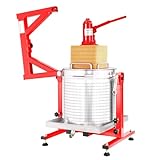 Mosakar 10.6 Gal 40L 5-Ton Press Mosakar 10.6 Gal 40L 5-Ton Press |
|
Check Latest Price |
Two formats dominate this list: hose-fed bladder presses and jack-driven barrel presses. Only the Mosakar 40 litre reaches 5 tons, which is more force than most home presses need.
1. EJWOX 5.3 Gallon Water-Powered Bladder Press – Best Overall
EJWOX 5.3 Gal Hydraulic Fruit Press Cider Wine Bladder Grape Juice Presser
5.3 gal capacity
Water-powered bladder press
AISI 304 juice contact parts
34.9 lbs
Pros
- Runs off a standard mains tap with no electricity
- High juice yield over a short flow distance
- Handles grapes berries and pre-shredded apples
- Easy to disassemble and wash
Cons
- Bladder can burst after a couple of seasons
- Manufacturer can be slow on replacement parts
- Uses a noticeable amount of water
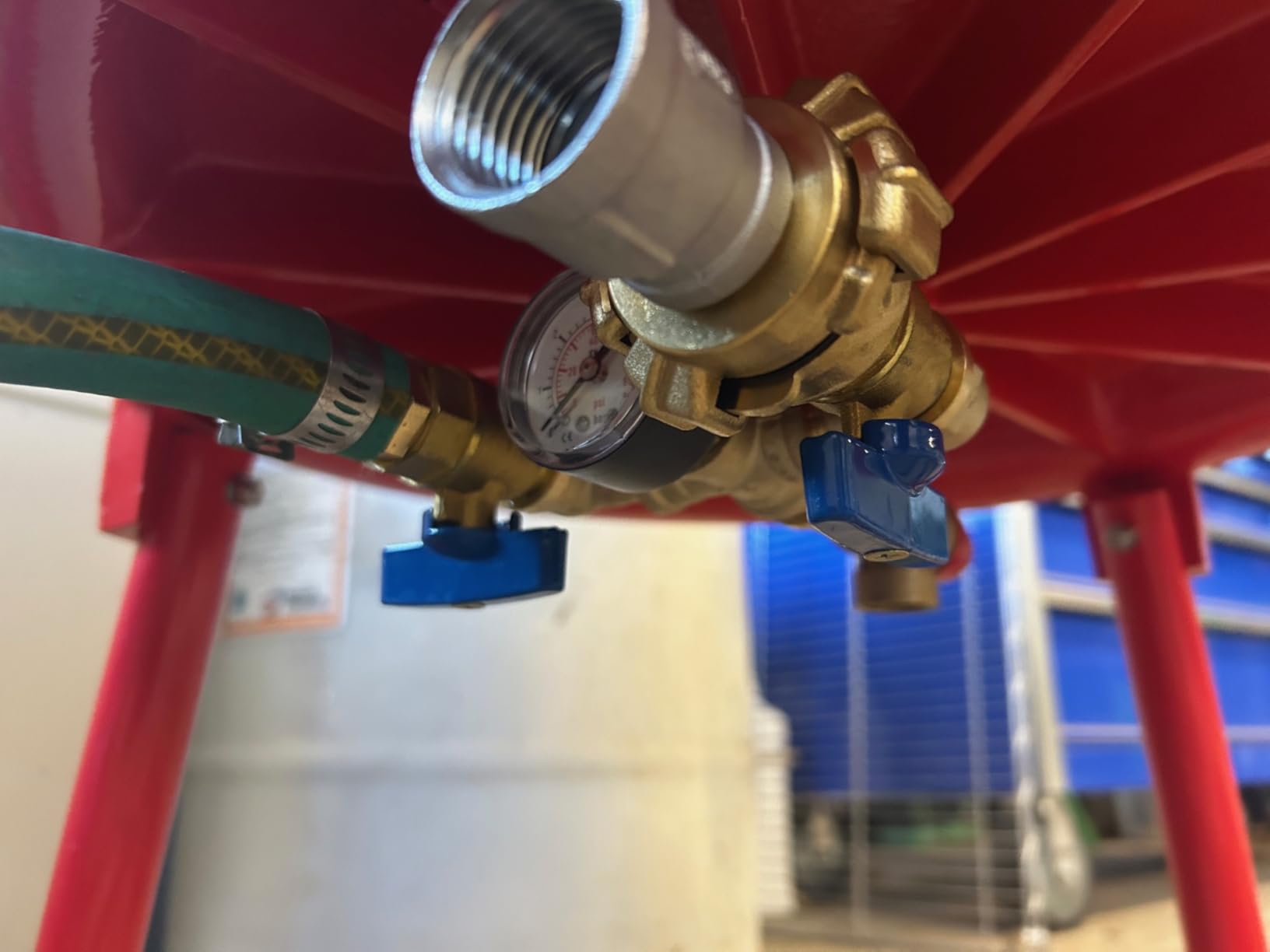
This is the press we keep coming back to. The drive mechanism is a garden hose and a mains tap, so there is no pump to service and no power cord to run across a barn floor.
Owners describe this hose-fed format as simple to run once it is set up. Keep a spare filter bag on hand, because a burst bladder is the most common failure on this design.
The juice-contact parts are AISI 304 stainless across the collection pan, basket and pressing plate, and the short flow path from bag to tray limits aeration in the juice.
The manufacturer lists pre-shredded apples, grapes, red currants and other soft fruit, and at 5.3 gallons a household can lift and empty the basket unaided.
What you get for the effort
A slow tap gives a slow, even squeeze, which is exactly what you want. Total effort per batch is close to zero once the hose is connected.
The trade-off is throughput. A 5.3 gallon basket is a real batch, but it is one basket at a time.
Where it falls short
The bladder is the weak link. Reviewers report it bursting after a couple of seasons, and the manufacturer being slow on replacements. If you press every autumn for a decade, order a spare bladder early.
It also uses a fair amount of water, which matters on a metered supply. Plan the run so you are not topping the tank up ten times.
2. SQUEEZE Master 5.3 Gallon 20L Press – Premium Pick
SQUEEZE master Hydraulic Fruit Wine Apple Press -5.3Gallon/20L -Stainless Steel for Wine Cider Making with Filter Bag&Splash Guard
5.3 gal / 20L capacity
Water-powered bladder
3 bar max pressure
33.7 lbs
Pros
- High yield even on partially filled baskets
- Food-grade materials with a 3 bar ceiling
- Water-powered so no electricity is needed
- Filter bag and splash guard included
Cons
- Bladder can burst after a couple of seasons
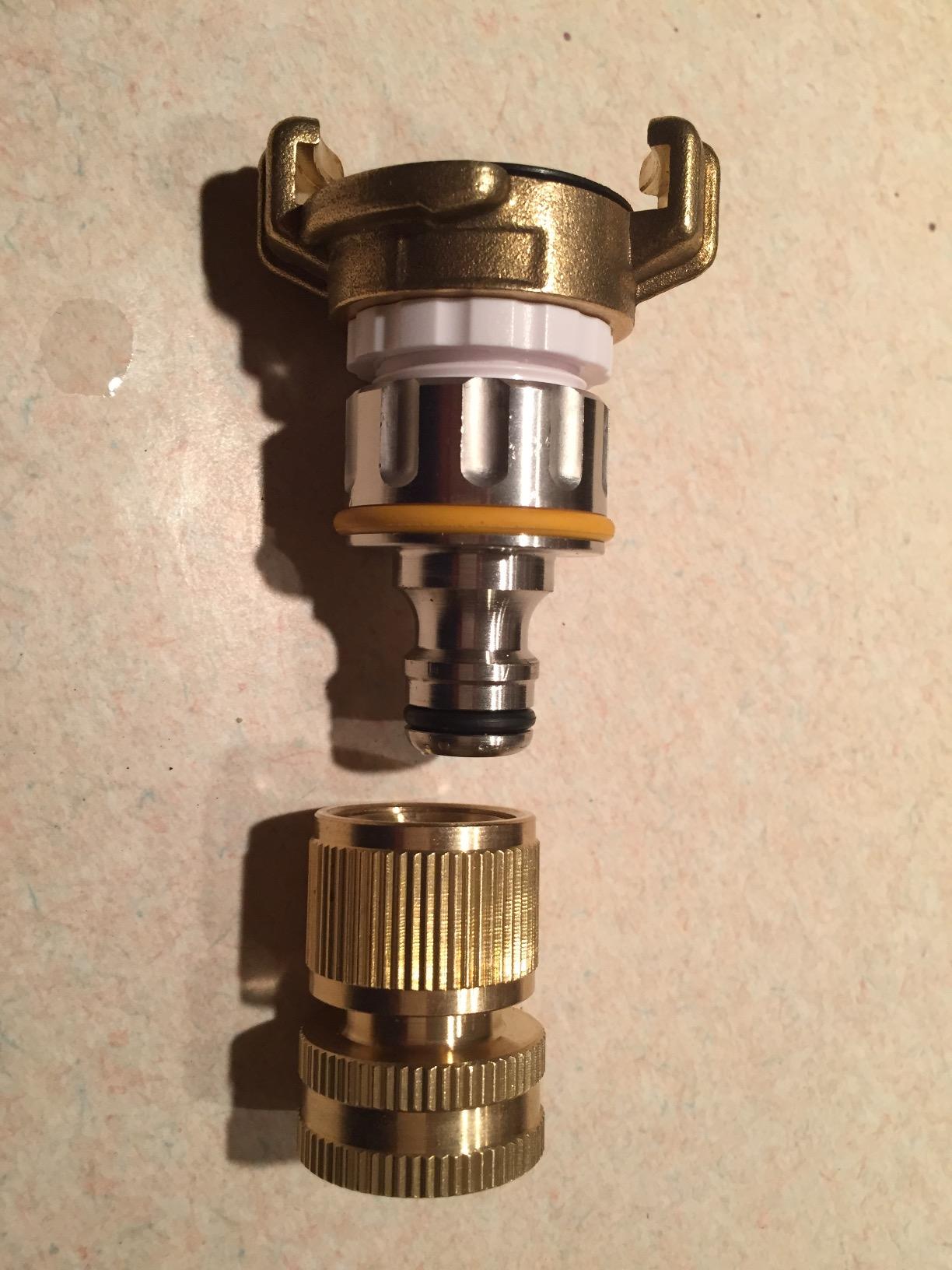
- Uses a 3/4 inch BSP thread not an NPT fitting
- Uses a lot of water per pressing
This is the EJWOX format with a slightly higher 4.5 star average and one detail that matters: a stated maximum pressure of 3 bar, roughly a domestic mains supply. A published ceiling means you will not over-force the frame by cranking the tap too far open.
The manufacturer makes a specific yield claim that holds up in practice, namely that a partially filled basket still gives strong results because the pressure is high. That matters when you only have half a basket of apples.
Everything the fruit touches is food-grade material, and the box includes a filter bag and a splash guard, so you are not buying your first consumable on day one. At 33.7 pounds it is one of the lighter presses here, which makes it easy to move when the kitchen gets busy.
It is marketed for family parties, fresh juice and small wine production as well as home use. Cleaning is a matter of pulling the bladder assembly and rinsing it under a tap.
What you get for the effort
No electricity, no pump strokes, and a slow controlled squeeze that protects the juice. The splash guard keeps the top of the basket clean during a full-pressure press.
If you press grapes or berries as well as apples, the same basket handles both. Grape clusters and small currants are light enough that a bladder press moves them well.
Where it falls short
The threading is the practical snag. The unit comes with a 3/4 inch BSP fitting, and North American taps are NPT, so you will likely need an adapter before it connects to your sink.
The bladder durability complaint is shared with the EJWOX, and reviewers also note the manufacturer was initially unresponsive about replacement bladders before improving. Buy the spare with the press, not after.
3. Mosakar 7.9 Gallon 30L 3-Ton Press – Best for High Yield
7.93 Gallon / 30L Mosakar Hydraulic Fruit Press. 3 Ton Pressure. Parts contact with Juice are AISI 304 Stainless Steel. Hydraulic Apple Grape Wine Cider Juice Press
7.93 gal / 30L capacity
3-ton hydraulic jack
AISI 304 juice parts
66 lbs
Pros
- 3-ton jack for a hard even squeeze
- AISI 304 on tray basket and pressing plate
- Powder-coated frame for protection
- Easy to set up and easy to clean
Cons
- Jack O-rings can leak before full 3 tons
- Short 6 inch lever handle can bend
- Drum spreads pressure thin on small batches
This is the first press in the list where you feel the force rather than just the result. A 3-ton jack driving down into a 30 litre drum is a different sensation from a hose-fed bladder, and it is the setup for fruit you intend to squeeze dry.
All parts touching juice are AISI 304 stainless, including the drain pan, basket and pressing plate. The frame carries a powder coat for protection in a damp shed.
It is a two-person lift, and at 15.6 by 19.3 by 30 inches it is a permanent fixture rather than a seasonal one. Reviewers report it works well alongside the Mosakar grinder, which makes sense if you already buy that brand’s accessories.
The pressing plate is a flat steel disc rather than a cone, so the force goes straight down through the whole depth of the basket. That is why the yield figures hold up even when the drum is not completely full.
What you get for the effort
Because the plate is flat and driven from above, the bag does not have to flex sideways the way it does in a bladder press, which generally means a clearer run of juice and fewer blowouts.
Where it falls short
Three things come up repeatedly. The jack O-rings have been reported to leak before the press ever reaches its full 3-ton rating, the included 6 inch lever is short enough that reviewers say it bends under load, and a 30 litre drum spreads pressure thinly when you are pressing only a few kilos of plums.
Some owners also report needing modifications to reach the performance they wanted. That is normal for imported jack presses, but it is a weekend you should plan for rather than discover.
4. BANLICALI 36L Press with Crusher – Best for Large Batches
BANLICALI 36L Fruit Press Stainless Steel Cider Press with 3T Hydraulic Jack and 330.69Lbs Load Capacity Grape Apple Press and Crusher for Cider, for Home Wineries Restaurants Silver, Easy to Assembly
36L / 9.51 gal outer bucket
3T telescopic jack
304 stainless
330.69 lbs load
Pros
- 9.51 gallon outer bucket with filter bucket
- 3T jack gives 6613.87 lbs of force
- Food-grade 304 stainless polished and welded
- Triangular supports rated to 330.69 lbs
- Compact 17.13 by 14.3 inch footprint
Cons
- Only four reviews so far
- Brand is new with thin long-term data
- Not a Prime listing
This is one of the two largest baskets in the roundup, at 36 litres with a 9.51 gallon outer bucket and a separate filter bucket inside it. For a small farm that has already learned how to run a pressing day, that means fewer basket cycles and more juice per hour of actual pressing.
The jack is a 3T telescopic rod, which is the design that makes the compact footprint possible. Rather than a tall fixed cylinder, the ram extends into position and the whole thing folds down when you are done.
What you get for the effort
A 6613.87 lb jack is more than enough for apple, pear and plum, and the 36 litre drum means a full basket weighs a lot. Plan to press in pairs, because loading and unloading a full basket on a tall frame is where injuries happen.
Parts are removable for cleaning, and 304 stainless throughout means a hot soapy wash and a rinse is enough for most batches.
Where it falls short
The honest answer is the review count. Four reviews, all five stars, tells you the first presses that arrived worked. It tells you very little about what a five-year-old jack or a bent triangular support looks like.
The brand is also new and the listing is not a Prime listing, so replacement parts depend on the seller rather than a stocked warehouse. We would buy this one with a clear plan for where a spare jack comes from.
5. BANLICALI 20L H-Frame Press – Best for Stability
BANLICALI 20L Fruit Press Large Fruit Wine Press Stainless Steel Cider Press with 3 T Hydraulic Jack & Strainer, Manual Grape Apple Crusher for Cider Silver, 18.9″L x 11.81″W x 29.53″H, Easy to Clean
20L / 5.28 gal capacity
3-ton hydraulic jack
H-frame with triangular legs
58 lbs
Pros
- H-frame with triangular support legs
- 3mm thickened base and reinforced plate
- 304 stainless basket plate and tray
- Adjustable riser valve for changing loads
- No electricity required
Cons
- Only four reviews on a newer listing
- Limited long-term durability record
- Thin assembly documentation
Where the Mosakar uses a single central column, this one uses a full H-frame with triangular support legs and a reinforced central shaft. That geometry is what stops the frame from racking sideways when you lean on the pump handle with a full basket.
The 3mm thickened base and reinforced pressure plate are the other quality signals. A 3-ton jack pushing on a thin plate will dish it, and a dished plate gives uneven pressure across the bag.
The adjustable riser valve is a genuinely useful feature that gets overlooked. It lets you change the height of the load rather than padding the basket with an empty bucket, which is what most owners end up doing on presses that do not have it.
What you get for the effort
A 20 litre basket is the sweet spot for a family with a small orchard. It is big enough to be worth the setup time and small enough that one person can lift the collection vessel and swap the basket without help.
At 58 pounds it still moves between rooms, and it runs entirely by hand, so it works in a barn, a garage or a kitchen with no power.
Where it falls short
Same caveat as the rest of the BANLICALI range: four reviews and a newer brand. We rate it highly on geometry because the H-frame design is right, but the warranty response is unproven.
Assembly documentation for this class of imported press tends to be thin, and owners report real assembly times running well past the stated estimate. Budget a calm afternoon.
6. BANLICALI 22L Press and Crusher – Best for Multi-Purpose Use
22L Cider Press Grape Apple Fruit Press and Crusher with 3T Hydraulic Jack
22L / 5.8 gal capacity
3-ton hydraulic jack
304 inner barrel
Removable parts
Pros
- Well-distributed internal filter holes
- 304 food-grade inner barrel
- Every part removes for cleaning
- Also handles honey chilli oil and herbs
- 24-hour customer service response
Cons
- Outer barrel is 201 stainless not 304
- Galvanized iron supports rather than stainless
- Only four reviews on a new listing
This one gets the multi-use badge because the manufacturer lists applications well beyond juice, including honey, chilli oil, boiled herbs and rice wine. Presses that come apart completely are the ones people end up repurposing.
Internal filter holes are described as well distributed across the 5.8 gallon barrel, which is the detail that decides whether juice runs fast or whether it just sits there. Even perforation means less clogging with pulp fibres after the third batch.
What you get for the effort
As a cider press it behaves like the other 3-ton barrel presses in this list, with the same straightforward load, pump, wait, unload cycle. The removable-parts design makes a back-to-back pressing day much less tiring.
It is a reasonable grape press too, since the perforated barrel handles whole clusters without crushing them to a paste first.
Where it falls short
The materials are mixed. The inner barrel is 304 food-grade stainless, which is the part that touches juice, but the outer barrel is 201 stainless and the supports are galvanized iron. Fine for a home press, not fine if you are selling juice.
Four reviews is not a track record. If you plan to make this a business, look for a maker who publishes a food-contact declaration for every component.
7. Dfmyhked 22L Compact Press – Best for a First Press
Dfmyhked 5.8Gal Fruit Cider Wine Press, 22L Manual Stainless Steel Juice Maker with 6613LBS Max Pressure, Stainless Steel Hydraulic Cider Press for Honey, Vegetables, Wine, Cheese, Puree
22L / 5.81 gal outer bucket
6613.87 lbs pressure
304 stainless
15.16 by 12.4 in
Pros
- 22L outer bucket with a 2.91 gal filter bucket
- 6613.87 lbs of hydraulic pressure
- 304 stainless polished and welded
- Footprint of just 15.16 by 12.4 inches
- Filter bucket accepts filter cloth
Cons
- Only three reviews so far
- Smallest filter bucket in the lineup
- Newer brand with a low category rank
If your pressing happens in a corner of a kitchen rather than a shed, footprint is the spec that decides your purchase. This one measures 15.16 by 12.4 inches on the ground, which is among the tightest bases in the roundup, and it still gives you a 5.81 gallon outer bucket.
Pressure is 6613.87 lbs from the hydraulic jack, matching the 3-ton class. Triangular bracket reinforcement carries a stated 330.69 lbs load capacity, and the construction is food-safe 304 stainless that has been polished and welded.
What you get for the effort
A single pump handle delivers the full 3-ton load, and the hose and outlet design means you can drain straight into a vessel rather than lifting a full tray. It also stores against a wall when the season ends.
Where it falls short
Three reviews is essentially no data, and the filter bucket at 2.91 gallons is small relative to the outer bucket, so you will be running more, smaller loads for really clear juice.
The brand is new and its category rank sits far below the established names, which usually tracks lower sales volume and thinner replacement-part supply. Buy it as a learning press rather than a pressing-day machine.
8. NKLOKSD 12L Two-Barrel Press – Best for Small Batches
NKLOKSD 2.64 Gal/12L Hydraulic Fruit Wine Press, Stainless Steel Manual Juice Maker with 2 Barrels, Grape Crusher Apple Orange Cheese Tincture Herbal Juice Making
12L / 2.64 gal capacity
6613.87 lbs pressure
201 and 304 stainless
Filter barrel
Pros
- 12L capacity suits small batch work
- 6613.87 lbs from the hydraulic jack
- Extended jack handle for leverage
- Built-in filter barrel and carry handle
- Runs manually with no electricity
Cons
- Smallest capacity in the lineup
- Only two reviews so far
- Mixes 201 and 304 stainless grades
This is the smallest press here at 12 litres or 2.64 gallons, and for some people that is exactly right. If you have four apple trees and press a few dozen fruit at a time, a 30 litre drum is just a heavier thing to wash afterwards.
It still runs a 6613.87 lb hydraulic jack, so the force is in the same class as presses twice its size. The extended jack handle gives you the mechanical advantage to move that ram, and the built-in filter barrel lets you run a second, clearer pass.
Two barrels, a thickened tubing frame and reinforced triangular supports make this a genuinely portable design, and a carry handle on the barrel means you can move the whole thing to a different table when you are done in the garden.
What you get for the effort
For plums, pears and kitchen fruit, a 12 litre basket is a manageable load. Fill it, press it, and you are done before the juice has stopped running. Manual control means no power and no pump, so it works anywhere you can carry it.
Where it falls short
Two reviews is the thinnest data in this roundup, and the stainless is a mix of 201 and 304 rather than 304 throughout. The 201 grade is adequate but will show staining sooner on acidic juice like cider. If your harvest is measured in bushels rather than buckets, the 12 litre basket will simply take too long. Go up a size.
9. Gagalayong 22L Cider Press – Best for Portable Setup
Gagalayong 22L Fruit Wine Press, Stainless Steel Cider Press with Hydraulic for Cider, Hydraulic Press Grape Wine Making Supplies and Equipment (22L)
22L / 5.8 gal capacity
Hydraulic jack press
Triangular solid frame
14.9 by 12.5 by 30 in
Pros
- Triangular solid frame with thickened base
- 22L capacity with a 5.8 gallon drum
- All parts remove for thorough cleaning
- Manual lever control with no electricity
- Portable design for small spaces
Cons
- Only two reviews so far
- Iron and stainless rather than all 304
- Non-stick finish is unusual on food contact
The 4.6 star average here comes from a small sample, but the specific praise is useful. The review that details the experience highlights the stability of the triangular solid frame under heavy pressing, which is exactly the failure we warned about in cheaper frames.
Intuitive manual jack lever controls and well-distributed internal filter holes round out a sensible design. The thickened base plate is what stops a full push from walking the frame across a shed floor.
Like the other 22 litre presses here, the manufacturer lists uses covering fruit wines, honey, chilli oil, boiled herbs and rice wine. All parts are removable, which makes thorough cleaning genuinely possible rather than merely advertised.
What you get for the effort
It stands 30 inches tall on a 14.9 by 12.5 inch base, so you can set it up on a patio table or a garage bench. Portability is the real selling point if you are not dedicating a shed to it, and the manual lever gives one person real pressure on a small batch.
Where it falls short
The materials are a mix of iron and stainless rather than stainless throughout, and the non-stick finish on a juice-contact surface is an unusual choice that we would want to see tested over a few seasons before trusting with cider.
Two reviews is a very thin basis, and this is the only press in the roundup without an identified stainless grade for its contact surfaces. If you are making cider rather than juice, weigh it against a 304-only option.
10. Mosakar 10.6 Gallon 40L 5-Ton Press – Best for Orchard Volume
10.6 Gallon / 40L Mosakar Hydraulic Fruit Press. 5 Ton Pressure. Juice Contact Parts are AISI 304 Stainless Steel. Hydraulic Grape Wine Apple Cider Press
40L / 10.6 gal capacity
5-ton hydraulic jack
AISI 304 juice parts
85 lbs
Pros
- 10.6 gallon capacity
- 5-ton jack for the hardest squeeze
- 304 stainless on plate basket and tray
- Beam rotates 90 degrees for bare loading
- Adjustable tray height for any container
Cons
- Heaviest listed weight at 85 lbs
- Arrival damage and chipped paint reported
- Handle can be loose with sharp edges
This is the top of the range: 40 litres, 10.6 gallons, and a 5-ton jack that delivers more force than anything else here. If you have a real orchard, this is the one that stops a pressing day from becoming three.
The design detail we like most is the beam that turns 90 degrees so the basket sits completely bare for loading. On a press this size, filling without working around a fixed cross member saves real time.
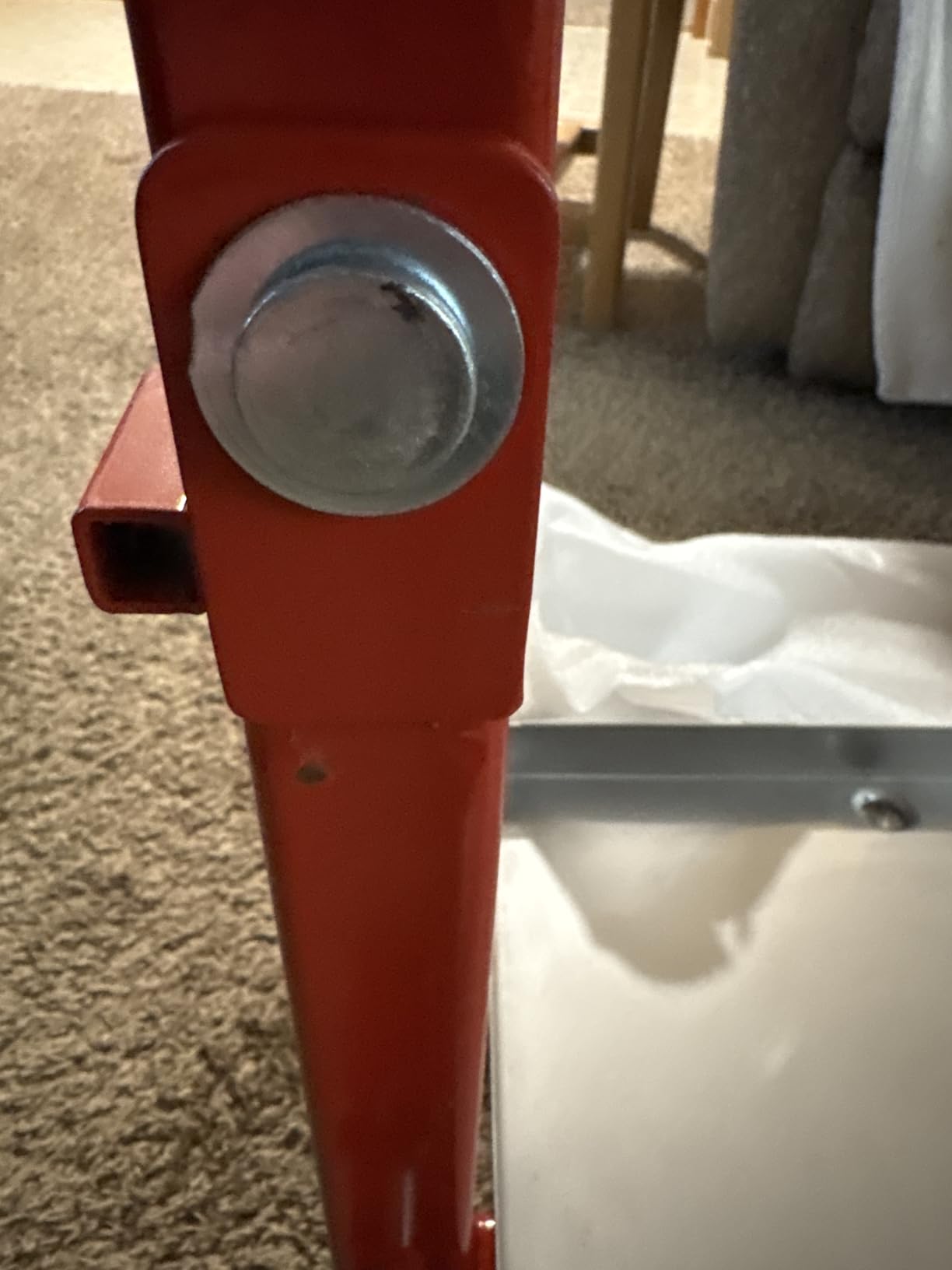
All the juice-contact parts, meaning the pressing plate, basket and tray, are AISI 304 stainless, and the adjustable leg height lets you fit containers of different heights underneath.
Owners report it pairs well with the Mosakar electric grinder, and its category ranking is the strongest in the roundup, which usually means steady sales and a better chance of parts existing.
What you get for the effort
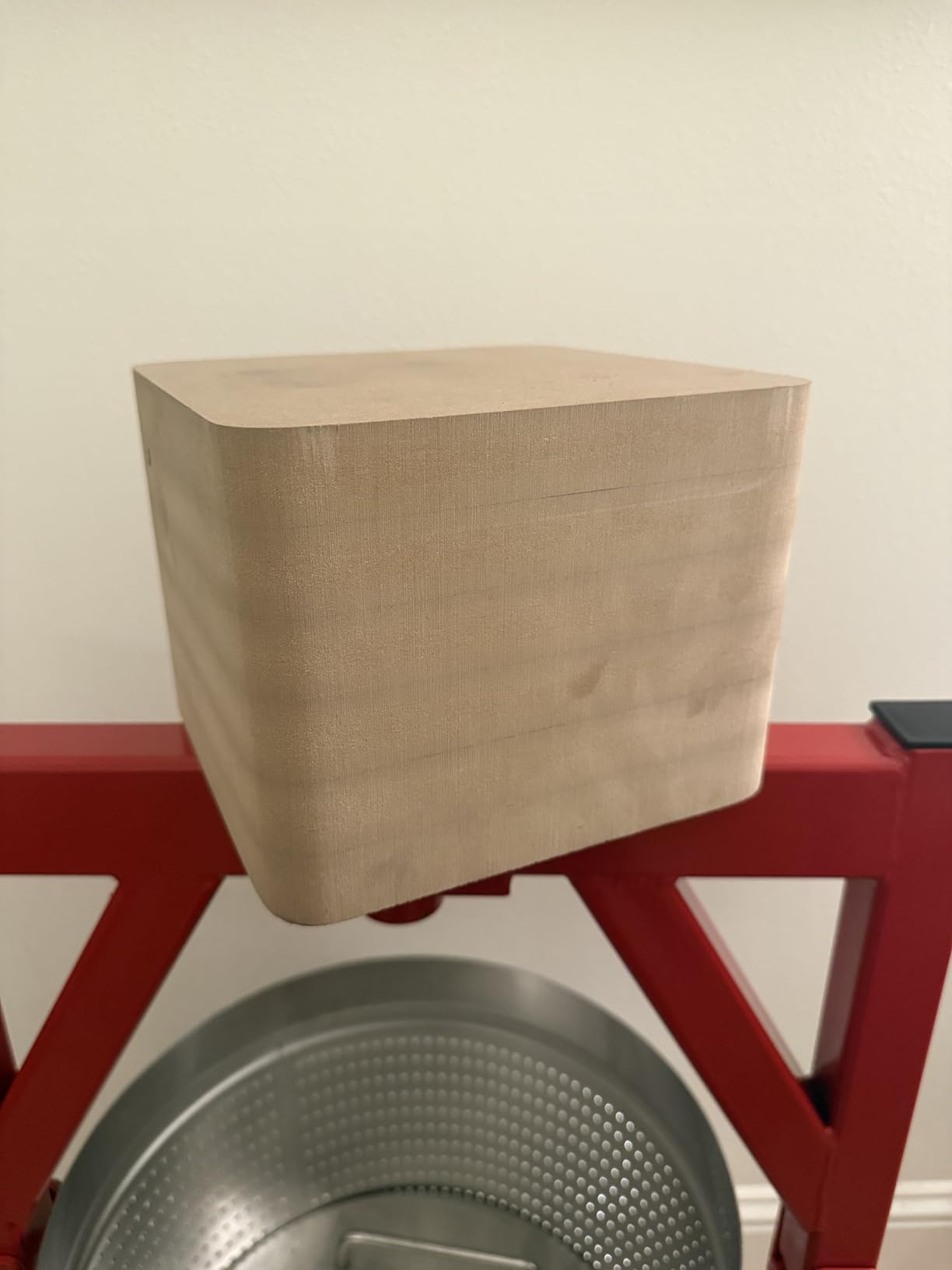
Five tons of force on a flat pressing plate gets you a genuinely dry cake of pomace, which is the point at which you stop because there is nothing left to give. For a homesteader with a hundred trees, the 40 litre basket is what makes pressing a single afternoon instead of a working weekend.
Where it falls short
It is 85 pounds and it is big. Reviewers report it can be excessive for small operations, and if you press a few kilos of plums a year you will be washing an enormous basket for very little juice.
Arrival damage is the other repeated complaint: a damaged basket, chipped paint, and a loose handle with sharp edges. Inspect the whole unit before the first press, especially the basket walls.
How to Choose a Hydraulic Fruit Press Without Overbuying
Match the barrel to your fruit, not your ambition
The single biggest mistake we see is sizing for the harvest you imagine rather than the one you will have. A 12 litre press handles a few dozen fruit comfortably. A 20 to 22 litre press covers a small family orchard. A 30 to 36 litre press suits a farm that has already done this before. The 40 litre press is for real volume, and it is the point at which you should be pressing on a trailer with a second person helping.
One rule of thumb that holds across all ten of these: if you can fill the basket in one go and still have fruit remaining, go up one size. If you cannot fill it, go down. A half-empty 36 litre drum gives worse results than a full 12 litre one, because the pressure spreads across an empty basket. Buying the largest press on the market is the second most common mistake, right after not crushing the fruit first.
Hydraulic, screw or electric
Screw presses are cheap and quiet but they aerate the juice and they make your arms tired, which is the complaint that shows up over and over in winemaking forums when people describe pressing large volumes by hand. Electric presses juice instead of pressing it, so they waste the pomace and lose the apple flavour that makes cider worth making. Hydraulic presses sit in the middle, giving a closed squeeze with almost no physical effort.
Yield is the other difference worth understanding. Because a hydraulic press applies force slowly, evenly and from above, more of the liquid in the cell walls actually leaves the bag before you call it done. A screw press that is wound to the end of its thread can leave noticeably more sugar in the pomace, and that retained sugar is lost to you unless you plan a second pressing.
If you press fewer than about 50 pounds of fruit a year, a screw press is a perfectly sensible purchase and you will not get your money’s worth out of a hydraulic frame. If you press more than that, the hydraulic route pays for itself in saved effort and better yield. The same jack-and-frame logic shows up in other hydraulic rigs we cover, from hydraulic grooming tables to reloading presses, so the same tonnage logic applies.
The specs that actually matter
Look for food-grade stainless on the basket, pressing plate and juice tray, and 304 rather than 201 where you can. Check that the jack has a stated pressure rating and that a replacement jack or seal is sold separately. A basket that lifts out for cleaning will save more time than any extra feature. Finally, confirm the hose thread standard matches your tap, because that mismatch delays a first press by a week.
Pressing bags are a real running cost
Filter bags and pressing cloths are consumables, and the most common complaint across every press format is that bags tear. Wash bags between batches rather than pressing two loads in one bag, which is what usually causes blowouts. Treat bag replacement as annual maintenance budget, not an unexpected expense in year three.
Red flags to avoid
Skip any press with no stated stainless grade, no published pressure rating, and no way to order a replacement jack. Be cautious of frames described only as heavy duty with no load figure, since a 330.69 lb rating tells you something and a vague adjective does not. And treat a five-star average from a handful of reviews as a new product, not a proven one.
Cleaning, storage and lifespan
Rinse the basket, plate and tray with hot soapy water after every batch and dry them fully, because standing moisture in stainless leads to staining and eventually to pitting. Store the bladder presses assembled but empty, off the ground, and keep the jack vertical. A well-made 304 stainless press with a replaceable jack should last decades if the consumables are rotated; the jack and the bladder are the parts that expire, not the frame.
Frequently Asked Questions
What is the best hydraulic fruit press for home use?
For most home orchards the EJWOX 5.3 gallon water-powered bladder press is the best starting point, because it runs off a standard mains tap, needs no electricity and holds a 4.4 star average across 122 reviews. Choose the SQUEEZE master if you want a published 3 bar pressure ceiling in the same 20 litre format, or step up to the Mosakar 30 litre if you press more than a basket or two a day and want 3 tons of force.
What size hydraulic fruit press do I need?
Match the barrel to how much fruit you press at once. A 12 litre press suits a few dozen fruit, a 20 to 22 litre press covers a small family orchard, a 30 to 36 litre press suits a farm pressing most days of a harvest, and a 40 litre press is for real orchard volume with a second person helping. Buy the smallest basket you can fill in one go, because a half-empty large drum spreads pressure thinly and wastes fruit.
What can you use a fruit press for besides apples?
Most presses in this roundup handle grapes, pears, plums, red currants and other soft fruit, and several manufacturers also list honey, chilli oil, boiled herbs and rice wine. Fruit has to be crushed or pulped first for best extraction, and soft fruit such as berries and grapes can often go in whole clusters without crushing.
What are the disadvantages of a hydraulic fruit press?
The main drawbacks are the purchase outlay, the floor space a full frame occupies year round, and consumable costs for pressing bags and bladders. Bladder presses also need a mains water supply and can use a noticeable amount of water, and jack-driven models can be heavy enough to need two people to move. A screw press remains cheaper and smaller if you only press occasionally.
How do I clean and maintain a hydraulic fruit press?
Pull the basket, pressing plate and juice tray apart after every batch and wash them in hot soapy water, then dry them fully to avoid staining and pitting. Rinse filter bags separately and replace any that have torn, since a burst bag is the most common cause of a lost batch. Keep the jack vertical and lubricated, store the press empty and off the ground, and expect the bladder or jack seals rather than the stainless frame to be the parts that need replacing over time.
The Best Hydraulic Fruit Press in 2026
The EJWOX 5.3 gallon water-powered bladder press is the best hydraulic fruit press for most people in 2026. It needs no electricity, it connects to a normal tap, and it carries more real-world reviews than any other press on this list, which in this category is the closest thing to a guarantee.
If you press grapes and want a published pressure ceiling, take the SQUEEZE master 20 litre. If you press by the basketful and want more force, the Mosakar 30 litre or 40 litre will keep up with a full harvest weekend. Whatever you pick, order spare pressing bags and a replacement jack seal on the same day, because those are the parts that actually run out.