
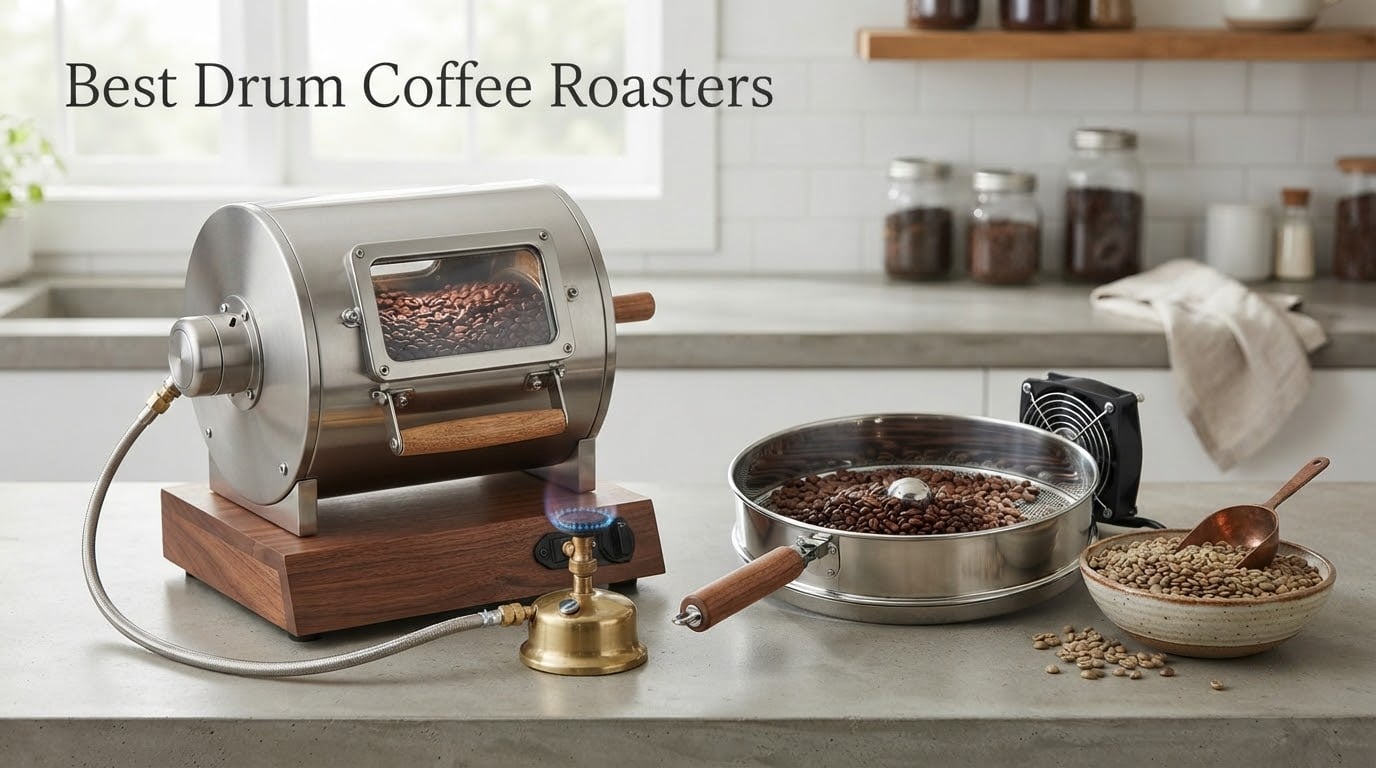
A drum coffee roaster is a machine that uses a rotating metal cylinder, heated by gas or electricity, to tumble and roast green coffee beans. It combines conductive heat from the hot drum walls with convective heat from the hot air circulating inside, and a single batch usually takes 14 to 20 minutes.
That longer, gentler roast is why drum machines dominate commercial specialty coffee. Fast air roasters can push a batch through in under 10 minutes, but they trade control for speed, and the control is exactly what serious home roasters are chasing. If you have ever wanted to dial in a light filter profile, an espresso blend, or a dark Italian-style batch on repeat, the best drum coffee roasters give you the levers to do it.
We spent weeks reading specification sheets, owner reports, and roasting community threads to put together these picks. Every machine below is a genuine drum roaster with a rotating cylinder, not an air roaster with a drum-shaped hopper. The lineup covers countertop electric units, gas machines, a stove-heated large drum, and a couple of starter platforms for learning the craft. We are not claiming to have roasted 50 pounds of beans through each one; we are claiming the decisions here are based on what owners actually report and what the hardware actually does.
Two honest notes before you start. First, home roasting is not a money-saving hobby, and the beans alone will tell you that quickly. Second, smoke is the reason most people quit, so if you live in an apartment with no way to vent, read the venting section below before you buy anything. If you want a wider look at the category first, our general guide to coffee roasters for home use covers air machines too.
Top 3 Drum Coffee Roasters in 2026

NIASIA 500g Electric Drum Roaster
- 500g drum
- 350-400g per batch
- 9 roast profiles
- smoke purifier plus pipes
DYVEE 400g Quartz Glass Gas Roaster
- Quartz glass drum
- 400g max capacity
- 12V stirring motor
- visible roast

KALDI WIDE 300g Gas Roaster
- Perforated 2mm steel drum
- Flame arrestor mesh
- Chaff collector drawer
- Thermometer kit
All 8 Drum Roasters Compared in 2026
| Product | Specifications | Action |
|---|---|---|
| NIASIA 500g Electric Drum Roaster |
|
Check Latest Price |
| DYVEE 400g Quartz Glass Gas Roaster |
|
Check Latest Price |
| KALDI WIDE 300g Gas Roaster |
|
Check Latest Price |
 Kaldi Fortis 600g Semi-Convective Roaster Kaldi Fortis 600g Semi-Convective Roaster |
|
Check Latest Price |
 FLYHERO KAKA-G400 400g Glass Gas Roaster FLYHERO KAKA-G400 400g Glass Gas Roaster |
|
Check Latest Price |
 Kaldi Motorized 200g Gas Roaster Kaldi Motorized 200g Gas Roaster |
|
Check Latest Price |
 TREMENPOW 3.8L Stove-Heated Roaster TREMENPOW 3.8L Stove-Heated Roaster |
|
Check Latest Price |
 Precision Coffee Roaster 200g Electric Precision Coffee Roaster 200g Electric |
|
Check Latest Price |
What a Drum Coffee Roaster Is and How It Works
Every drum roaster on this list shares the same three mechanics, and once you understand them the machines make far more sense. Here is how the process breaks down.
Tumbling motion. The drum rotates and internal vanes, fins, or baffles lift the beans and drop them back down. That constant lift-and-fall keeps beans from sitting against hot metal long enough to scorch, and it is the single biggest quality difference between a well-designed drum and a poorly designed one. A drum whose vanes sit too close to the wall or too far apart will leave dark spots on every batch.
Heat transfer. Drum roasting blends two heat paths. Conductive heat moves directly from the hot steel cylinder into the bean, and convective heat moves through the air inside the drum. The perforated drum design used by the KALDI WIDE relies on both, letting flame and hot air pass through the metal. The solid drum used by older designs leans more on conduction, which is slower and harder to control. Radiative heat from the burner is the third player, and on gas machines it matters a lot for flavor development in the back half of the roast.
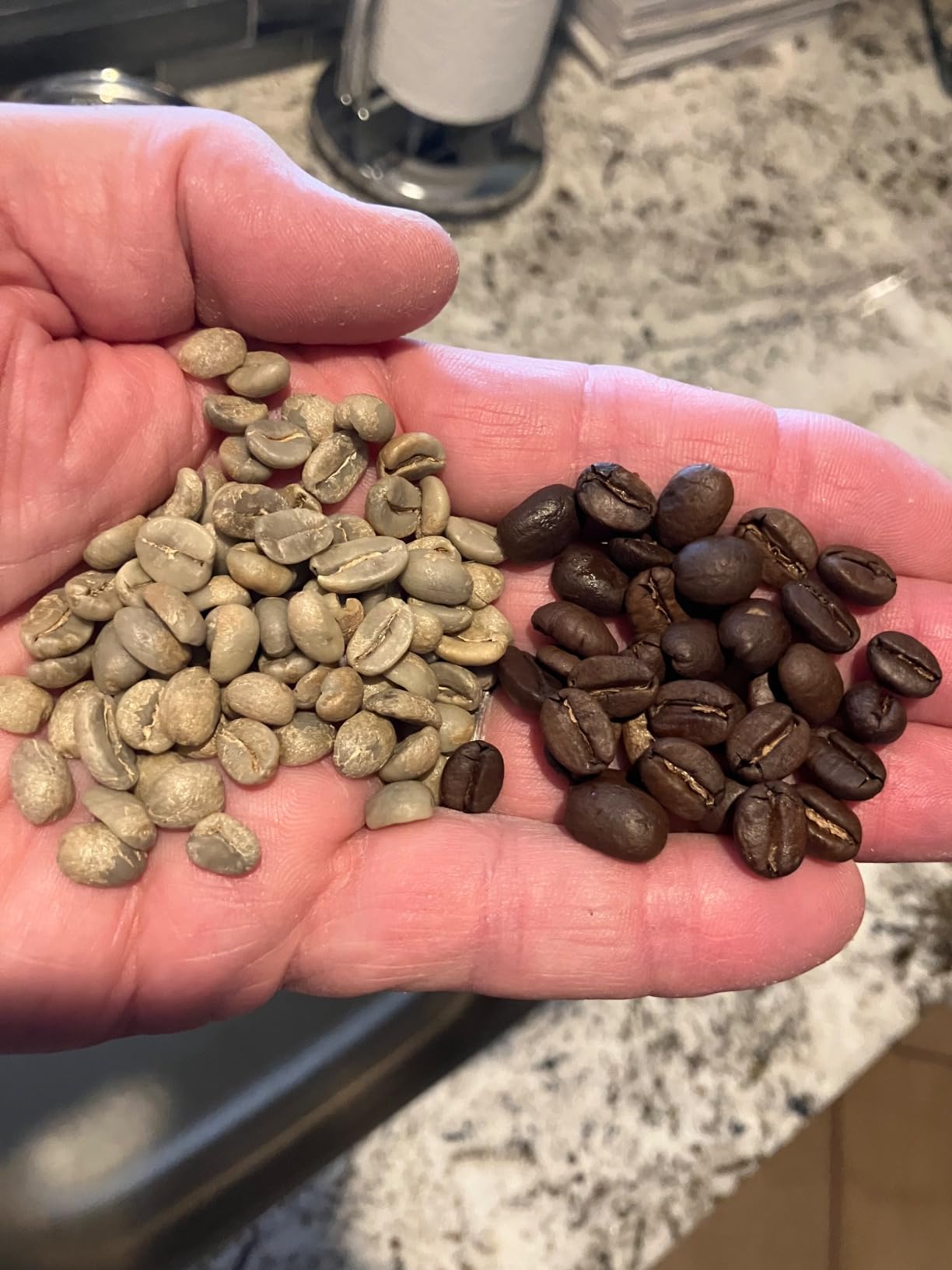
Roast profile and flavour. A batch typically runs 14 to 20 minutes. You watch bean temperature and rate of rise, listen for first crack around the middle to late portion, then drop the beans into a cooling tray within about 30 to 45 seconds of the transition you wanted. Because the drum gives you conduction plus convection, the roast is gentler per minute than an air roast, and the cup tends toward more body and more even development.
Emptying works one of two ways. Small drums typically tilt forward to dump into the cooling tray, and larger machines either tilt or use a rear discharge door. In every case the vanes are what push the beans toward the exit, which is why a small clearance between the vanes and the drum wall is the thing to check on any machine you consider.
How We Picked These 8 Roasters
We applied the same six criteria to every machine, and we scored each one on the hardware rather than the marketing copy.
Real drum mechanics. Rotating cylinder, lifting vanes, a discharge path. Anything that is essentially a fluid bed or a popcorn popper with a fan was excluded from the main list.
Control quality. Precision temperature probe with real PID behaviour beats a click-type thermostat that swings wildly. Roasting community members consistently blame cheap thermostats for uneven batches, and they are right.
Chaff and cooling. Every machine needs a chaff collector and a cooling system that pulls the beans down fast. Beans that sit in a hot drum after the drop keep cooking.
Honest capacity. We report the manufacturer maximum and the recommended working batch separately, because they are rarely the same number.
Owner evidence. We weighted long-term owner reports about durability heavily and flagged the small review bases. Three picks here have fewer than 10 reviews, and we say so rather than dressing it up.
Parts and support. A machine that takes a thermocouple, a fan, or a cooling tray add-on is far more useful over five years than one that does not.
1. NIASIA 500g Electric Drum Roaster – Best Overall Drum Roaster
500g Automatic Coffee Roaster Machine for Home Use Wth Smoke Filter(Suitable for Light Roasting), The Smoke Pipes (Suitable for Medium and Dark Roasting) and Chaff Collector
500g stainless drum
Electric 1000W
9 roast profiles
350-400g per batch
Pros
- Largest review base in this group at 119 ratings
- Automatic profiles for light medium and dark roasts
- Separate cooling tray and cooling fan
- Dual exhaust with smoke purifier for light roasts
Cons
- Best results need carefully sorted low-defect green beans
- Manual mode demands close airflow attention
- Not built for high-frequency commercial batches
This is the machine I keep coming back to for anyone who wants a genuine drum roast without leaving their kitchen. The 500g stainless steel drum runs on 1000 watts at 110V, and the manufacturer recommends 350 to 400g per batch rather than filling it to the top. That gap between rated capacity and sensible working capacity shows up on almost every good drum machine, and this one is honest about it.
What sets it apart is the combination of nine built-in profiles covering light, medium, dark, sun-dried, washed, and honey process beans, plus a fully manual mode. The automatic profiles are the reason most first-time owners get a drinkable cup on the first batch instead of giving up. The manual mode is there when you outgrow them.
The exhaust design is the part that makes indoor use realistic. You get an integrated smoke purifier for light roasts and twin aluminum alloy smoke pipes for medium and dark roasts, so you are not stuck choosing between good flavor development and a smoky kitchen. A precision temperature probe and intelligent temperature control device sit behind it, and the cooling fan plus separate cooling tray halt the roast quickly.
Owners are broadly positive about the profiles and the cooling system, and the rating distribution carries a meaningful one-star tail. The recurring complaints are about bean quality sensitivity, the attention manual mode needs on airflow, and durability under very frequent use. One manual-mode airflow number comes up repeatedly: minimum 60, rising to 90 to 100 at first crack.
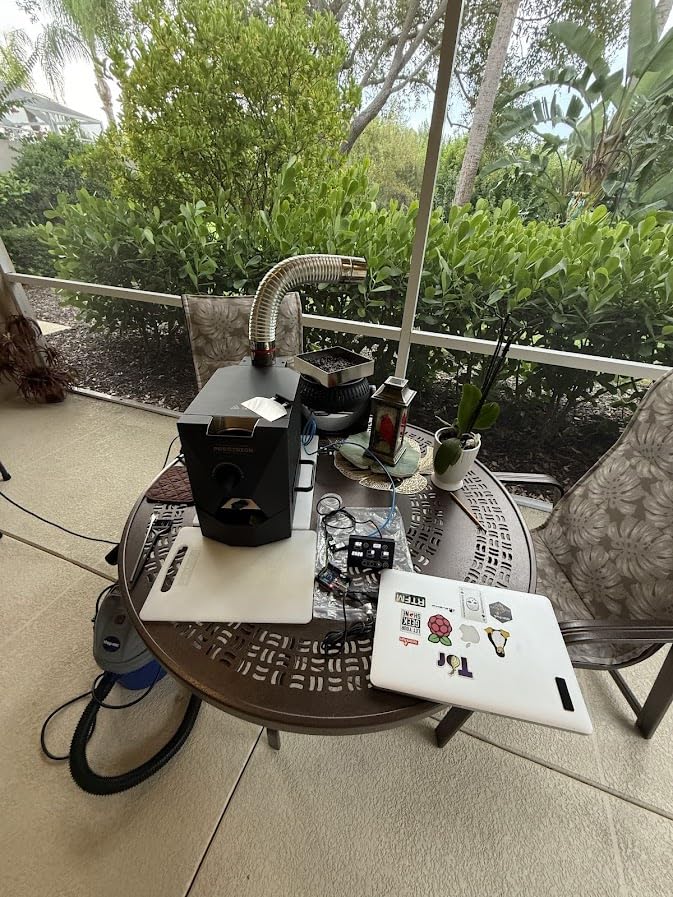
Who the NIASIA 500g suits best
This suits a household that drinks filter coffee daily and wants fresh beans without a garage project. At 350 to 400g roasted per batch you have roughly a week of coffee for two people, and the auto profiles mean you can be productive on a morning when you do not feel like watching a roast curve.
It also suits anyone upgrading from a popcorn popper who was disappointed by the flavor. The conduction plus convection drum is a real step up in body and evenness, and the smoke handling means you can do it in a kitchen with a window open and a fan running.
Where the NIASIA 500g falls short
Buy low-defect, well-sorted green beans. The manufacturer is direct about this: inconsistent beans with stones or debris can jam the drum, and that is the main cause of the negative reviews in this group. If you are buying cheap supermarket green coffee, this machine will frustrate you.
It is also not a commercial machine, despite the 500g number. High-frequency batch roasting is not what it was designed for, and a 1kg-per-hour operation needs something in the Kaldi Fortis or large-drum class instead.
2. DYVEE 400g Quartz Glass Gas Roaster – Best Value Drum Roaster
DYVEE Coffee Roaster Gas Burner Coffee Roasting Machine for Home Use, 400g Capacity, Quartz Glass Drum, Stainless Steel Frame, Peanut and Nut Roaster
Quartz glass drum
Gas heated
12V stirring motor
200-300g per batch
Pros
- Glass drum lets you watch bean color the whole roast
- 12V motor is safer than higher-voltage rivals
- 304 stainless frame and base handle heat well
- Also roasts peanuts and nuts
Cons
- No built-in temperature profile at all
- Needs an external burner and hands-on monitoring
The DYVEE wins on one specific thing that almost nothing else in this category offers: a quartz glass drum, so you watch the entire roast through the wall of the cylinder. Bean color change is the oldest roasting cue there is, and having it visible end to end is genuinely useful while you are still learning what first crack looks like coming up.
Heat comes from a gas burner applied directly to the glass, with a 304 stainless steel frame, stainless base, and wooden handle. The stirring motor runs on 12V DC with a power adapter included, which is a meaningful safety win compared with higher-voltage alternatives. Capacity is rated at 400g maximum with 200 to 300g recommended per batch.
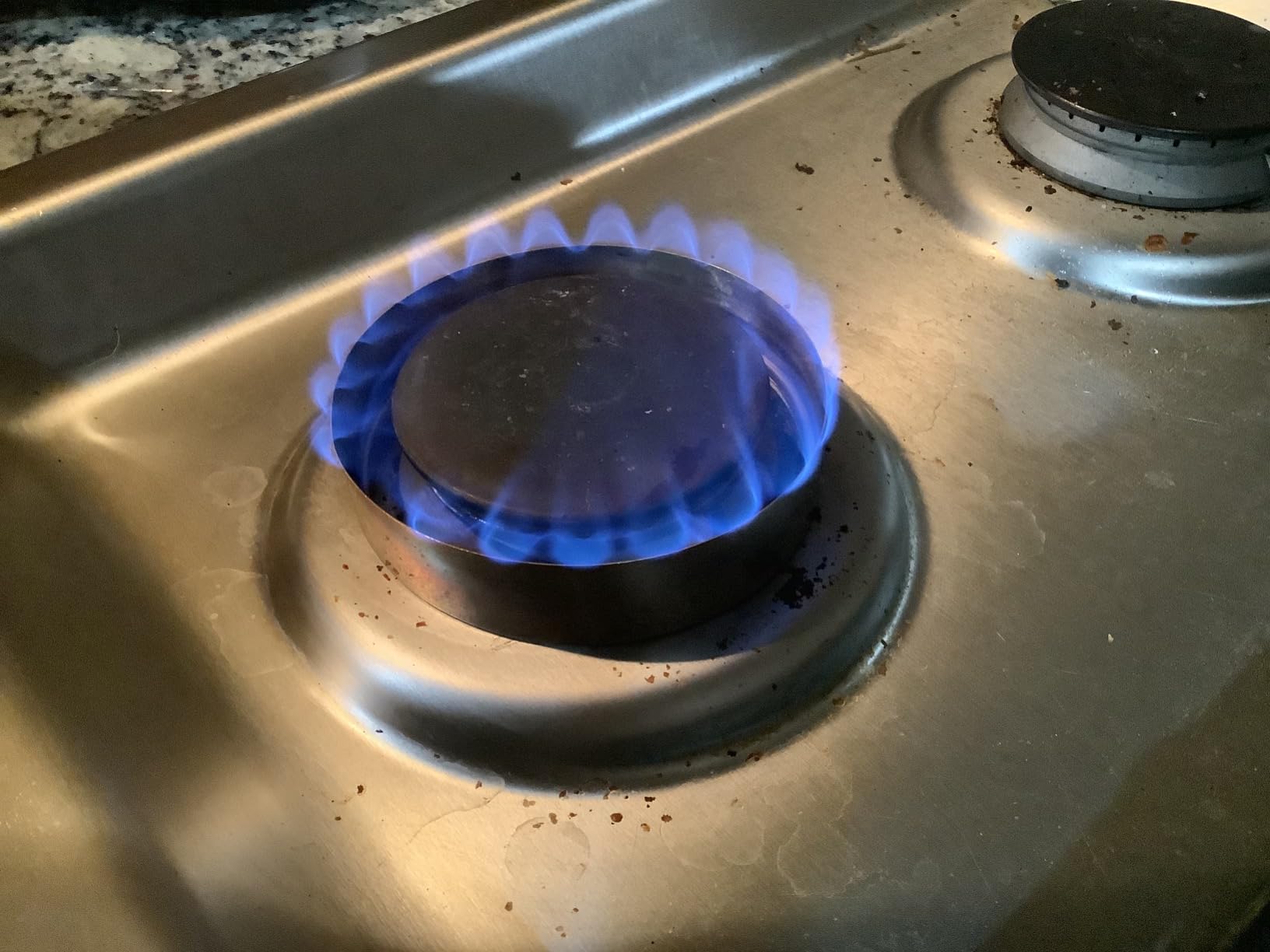
The roasting process is described as four simple steps, and you stop at either first or second crack depending on the profile you want. There is also a sample trier in the package along with the funnel, power adapter, and manual. At 17 pounds it is portable enough to move outside when the weather is good, and roasting outdoors solves the smoke problem before it starts.
Owner sentiment is unusually clean for a budget machine. Around two thirds of the 64 ratings are five star and the one-star share is about 3 percent, with the praise concentrated on the transparent drum, the low-voltage motor, and the simplicity of manual gas control.
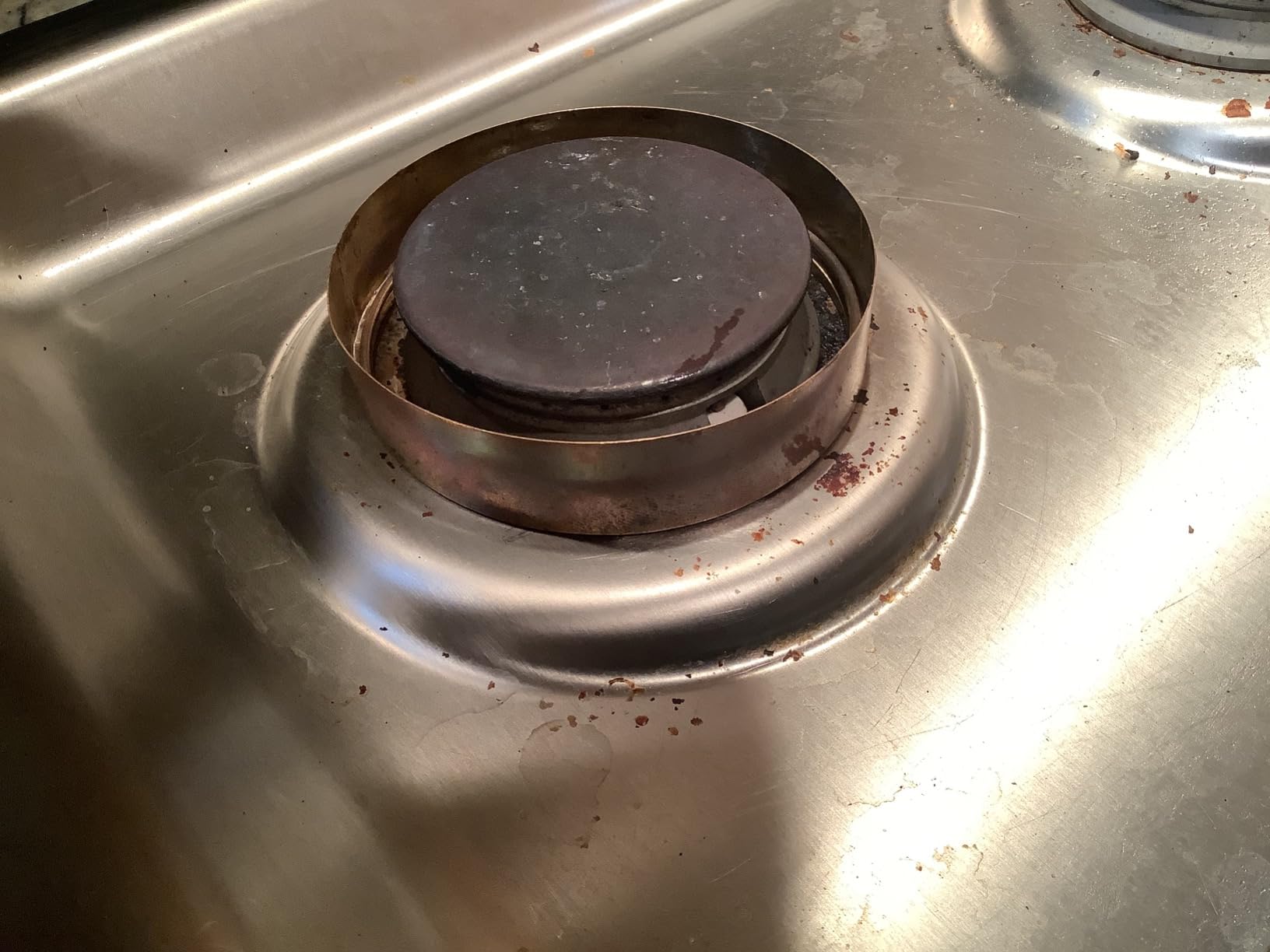
Who the DYVEE 400g suits best
This is the right first drum roaster for most people. Gas heat gives you fast, powerful recovery when you change the burner, and the glass window removes the guesswork from judging color. If you roast outdoors, on a patio, or in a garage, that is the ideal setup.
It is also a genuinely useful second machine rather than a toy. The same drum handles peanuts and nuts, which makes it a reasonable multi-use kitchen tool if you already own a burner.
Where the DYVEE 400g falls short
There is no temperature profile. You are driving everything by flame and by ear, and if you have never roasted before, the learning curve is real. Pair it with a cheap external probe thermometer if you want any data at all.
Glass is also more fragile than stainless. Drop it or thermal-shock it and the drum is finished, so treat it as a garage tool rather than a countertop centerpiece.
3. KALDI WIDE 300g Motorized Gas Roaster – Top Rated Pick
KALDI WIDE Home Coffee Gas Roaster – 300g Capacity with Full Package Accessories. Gas burner required, No thermocouples supported.
300g per batch
Perforated 2mm steel drum
12V motorized
Gas burner needed
Pros
- Flame arrestor mesh plate improves heat transfer
- Perforated drum with three stirring blades agitates consistently
- Thermometer sampler and chaff tray included
- No ratings below four stars
Cons
- No thermocouple support so logging needs an add-on
- Requires a separate gas burner
- 300g is a small working batch
At 4.9 stars with no rating below four, this is a strong owner record, and the hardware explains why. The flame arrestor mesh plate sits between the burner and the drum, converting a round flame into a square one for even conductive and convective heat across the whole face of the drum. That is a small engineering detail that makes a large difference in how consistently a drum roaster performs.
Inside is a perforated 2mm stainless steel drum with 3mm holes and three internal stirring blades. The perforation is what separates this from a solid drum design: hot air and flame pass through the metal rather than around it, so you get convection as well as conduction on every bean. The chaff collector pulls out like a drawer, which is a minor thing you will appreciate every batch.
The full package includes a hopper kit with an analog thermometer, a chaff tray, and a sampler, with the sensor positioned one-third of the way into the drum. That placement matters for readings that reflect the bean mass rather than the drum wall. The drum is motorized on 12V DC, and you supply the gas burner.
Who the KALDI WIDE suits best
It suits a roaster who has outgrown a purely manual drum and wants a properly agitated perforated design without moving up a size class. Three internal blades give more consistent tumbling than most budget machines, and the drawer-out chaff collector keeps cleanup to a few seconds.
It is also a good second-stage step between a hand machine and a full semi-convective setup, particularly if you roast outdoors where the burner and vent are already in place.
Where the KALDI WIDE falls short
It does not support thermocouples, so temperature logging means buying an add-on probe. That is the most-cited caveat across the reviews, and it matters if you intend to move into roast profiling.
Be clear-eyed about the 12-review base. It is a perfect-ish record with no rating below four, but that is not the same as a long-term reliability record. Also note the 300g ceiling, which is small if you are roasting for a household of four or more.
4. Kaldi Fortis 600g Semi-Convective Roaster – Best for Profiling
Kaldi Fortis Coffee Roaster with Accessories, 600g Batch, Gas burner is required. (Semi-Convective Type, Dual Data Logger Thermometer)
600g per batch
Semi-convective drum
Dual data logger
Artisan compatible
Pros
- Heavy gauge stainless with welds owners praise after 50 pounds of beans
- Semi-convective layout gives stage-by-stage control
- Bundled data logger pairs with Artisan software
- Disassembles for cleaning and drum spacing
Cons
- Manual gas control means no automation and a learning curve
- Airflow control is entirely on the operator
- Heavy enough to wobble on small butane burners
The Fortis is the most serious machine here and the one closest to a scaled-down commercial roaster. The semi-convective layout gives you direct control of every stage of the roast, and the included dual data logger thermometer connects to Artisan software, so you can plot bean temperature and rate of rise and then replay a profile that worked.
Construction is heavy gauge stainless steel with heavy welds. Owners running between roughly 30 and 50 pounds of beans describe it as built like a tank, and one long-term owner reports no problems at all across about 50 pounds of green coffee. Rated capacity is 600g per batch, with owners working anywhere from 250g to 500g depending on the bean.
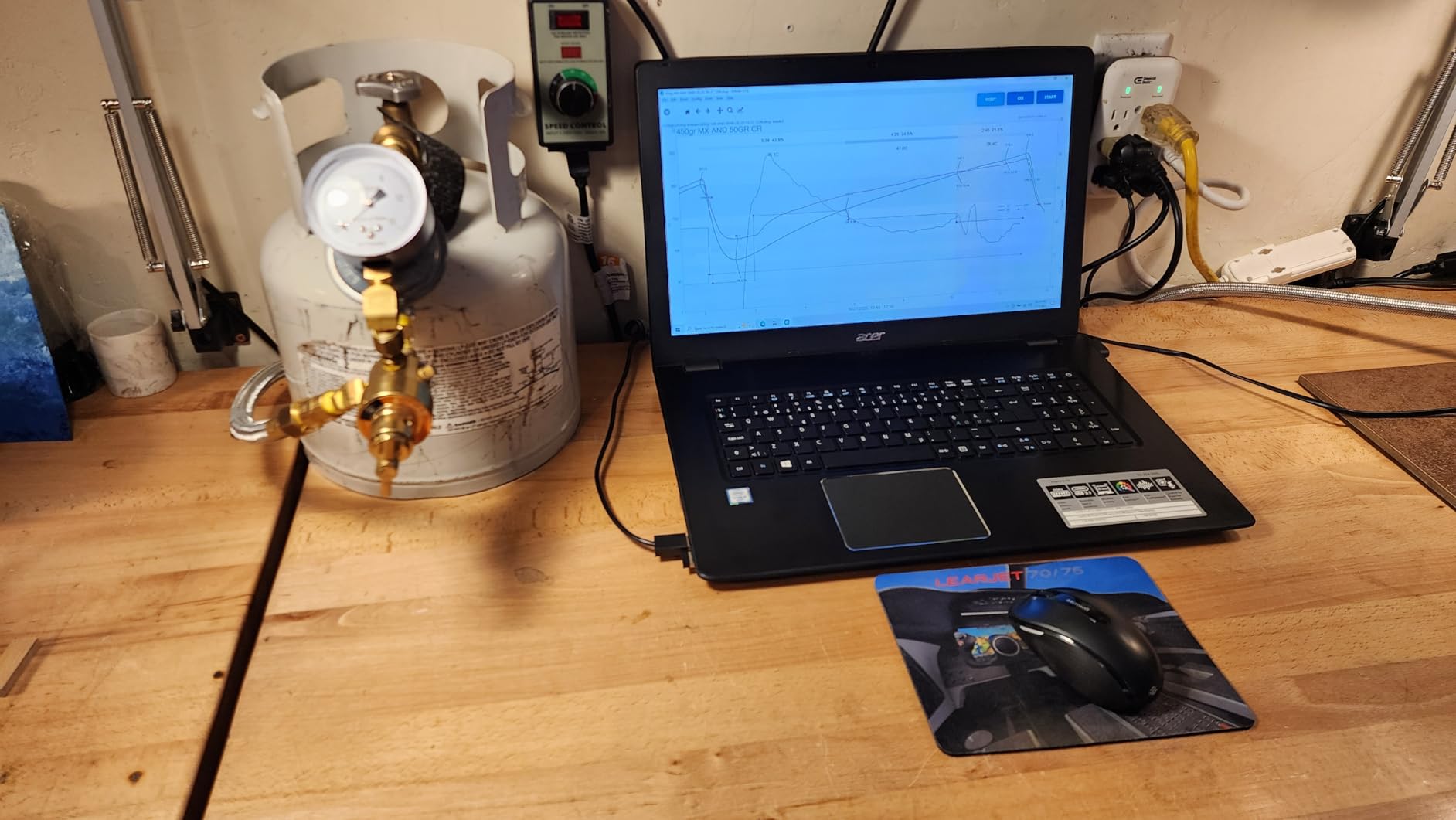
It also disassembles for maintenance and for drum spacing adjustment, which is a maintenance capability most consumer machines simply do not offer. Airflow is managed through heat setting and air flow rate, and a dedicated external vent system is designed to pair with it. You supply the gas burner, and at 20.87 by 12.6 by 17.32 inches it takes up real counter space.
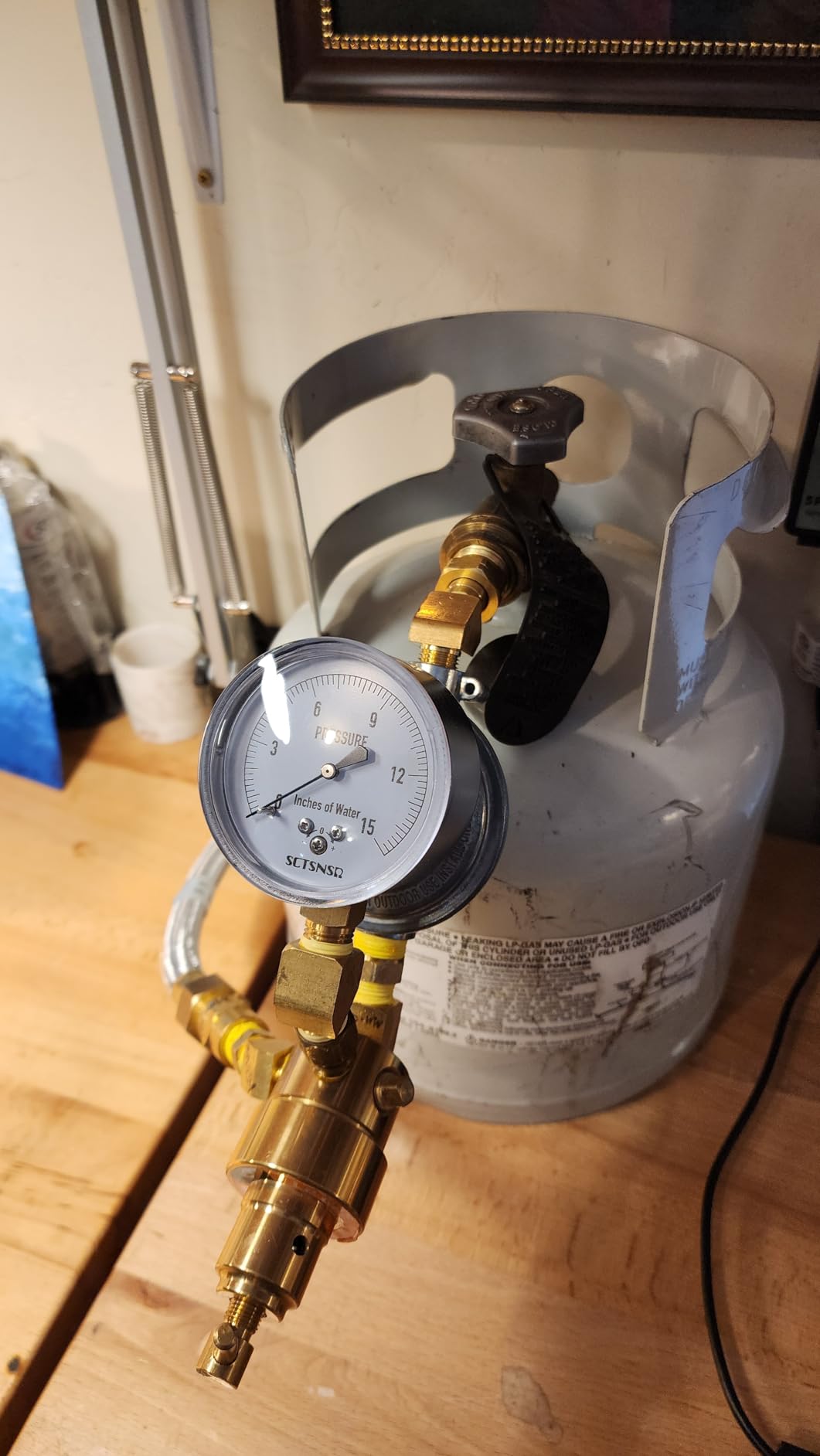
The recurring theme in reviews is that this is a machine you operate, not one you program. Owners coming from fully automatic machines hit a learning curve, and several had to move off small butane burners because the machine is heavy enough to wobble.
Who the Kaldi Fortis suits best
It suits the roaster who has decided to profile seriously. With the data logger and Artisan compatibility, you can save a roast, change one variable, and roast it again to see what moved. Repeatability is the entire point, and this is the machine here that genuinely delivers it.
It also suits a small cafe or a micro-roastery moving from store-bought roasted coffee, provided you are willing to design a proper burner and vent setup rather than roasting on a kitchen stove.
Where the Kaldi Fortis falls short
Airflow is on you. Roast without managing it and chaff scatters and heat moves unpredictably, which is the single most common complaint in the reviews. Budget for an external vent.
There is no automation at all. If you want a machine that runs a profile while you make breakfast, this is the wrong tool. And with 7 reviews, expect a thin long-term record compared with the bigger machines here.
5. FLYHERO KAKA-G400 400g Glass Gas Roaster – Best Multi-Use Roaster
FLYHERO Coffee Roasting Machine KAKA-G400 Gas Coffee Bean Roaster Set 400 grams US STOCK
400g quartz glass drum
Gas heat method
12V 3A adapter
Button operation
Pros
- Quartz glass drum at an entry-level price
- Simple button operation for new roasters
- Handles a variety of flavor profiles
- Universal 12V 3A adapter included
Cons
- Only 5 reviews so durability is not documented
- Listing details vary between units in this family
The KAKA-G400 is the simplest thing in this roundup that still counts as a real drum roaster. The 400g quartz glass drum is heated by a gas burner, and the drum turns on a DC 12V 3A universal power adapter included in the set. Operation is by button, with no menus, no profiles, and no setup.
That simplicity is the appeal. Owners note it can handle a variety of coffee flavor profiles and is straightforward enough that a first-time roaster can get a batch going on day one. The package includes the roaster set, a funnel, the power adapter, and a manual, and the footprint is a compact 8.27 by 14.96 by 8.46 inches.
Who the FLYHERO KAKA-G400 suits best
It suits someone who wants to try drum roasting without spending real money or counter space. If you are undecided about whether home roasting is for you, this is a low-commitment way to find out, and it is also a useful second roaster for a batch of nuts alongside coffee.
It also suits a renter or a small kitchen where a compact glass drum on a table burner is easier to deal with than a 1000-watt electric machine.
Where the FLYHERO KAKA-G400 falls short
Five reviews is a very thin base. The ratings are good, with about 71 percent five star and nothing below four, but that is not enough to draw firm conclusions about durability or batch-to-batch consistency, and we would not build a roasting habit around it yet.
Listing details also vary across units in this product family, with reported weight and capacity differing between listings. Verify the capacity on the unit you actually receive before you plan a batch schedule around it.
6. Kaldi Motorized 200g Gas Roaster – Best for Learning to Roast
kaldi motorized gas coffee roaster – 200g capacity, gas burner required (Full Package)
200g per batch
Motorized gas drum
Full package
Gas burner needed
Pros
- Even roasts for batches under 225g
- Well built and easy to maintain
- Affordable entry into serious drum roasting
- Upgradable with thermocouple fan and 24V adapter
Cons
- Analog gauge responds too slowly for accurate readings
- Power cord runs close to the flame
- 200g means frequent back-to-back batches
This 200g motorized gas roaster earns perfect scores from the people who own it, and the reason is that it is a well-proportioned small machine. Owners describe even, consistent roasts for batches under 225g, and several note it is easier to maintain than the larger Kaldi models.
The full package configuration is a genuinely useful starting point. Owners upgrade it over time with a digital thermocouple for apps like Roastmaster, an added fan and exhaust tube, and a 24V variable power adapter to run the motor at full speed. That upgrade path is unusual at this level and changes what the machine can become.
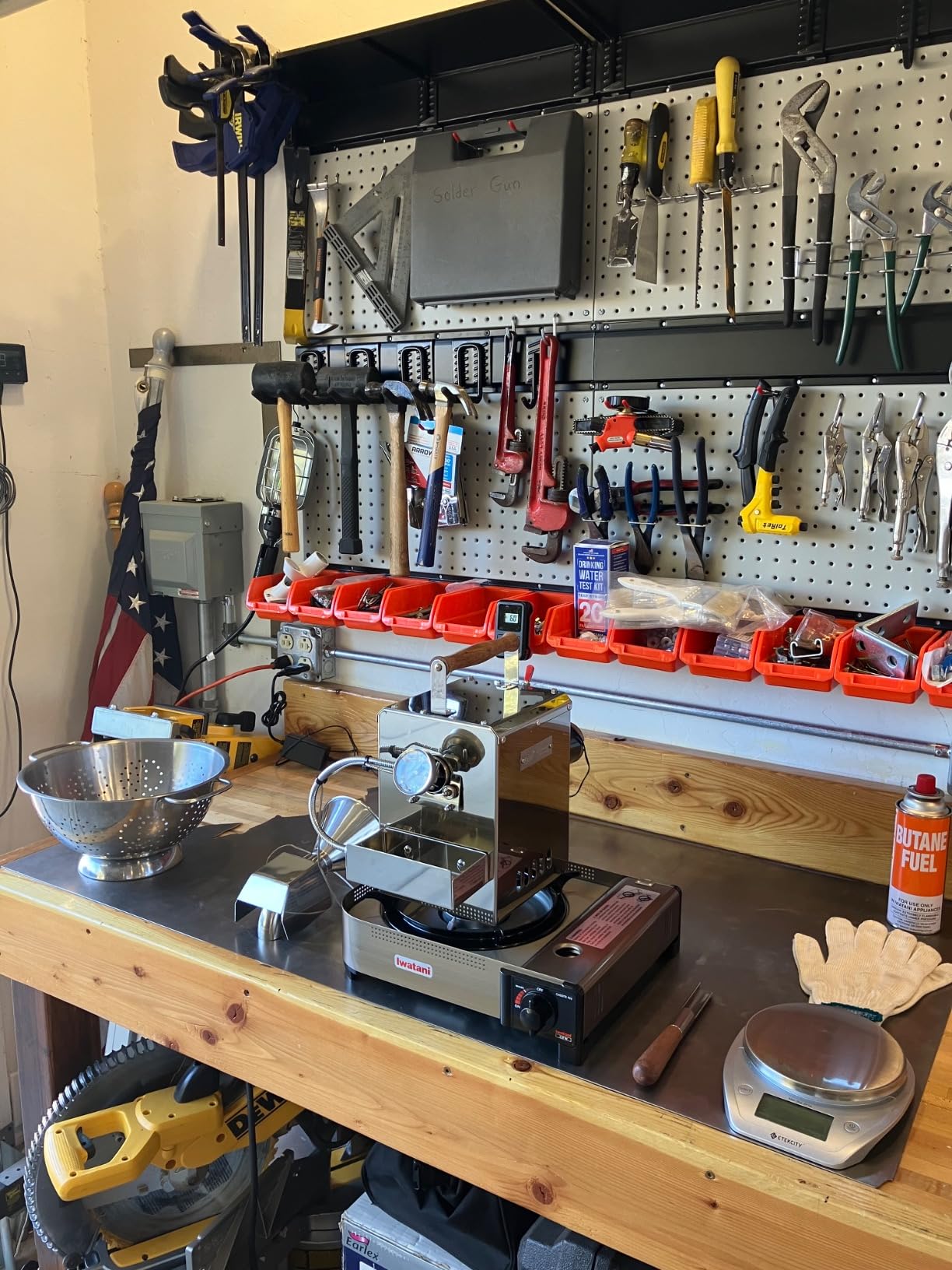
Two practical complaints come up repeatedly. The analog temperature gauge is slow to respond, so owners add a faster barbecue smoker probe for accurate readings. And the power cord sits close to the flame, which can melt if you are careless with it. Plan the burner layout so the cord stays well clear.
At 9.04 pounds and 17.32 by 6.3 by 14.57 inches, it is the most portable serious drum machine here, and a sample trier and hopper can be added as accessories.
Who the Kaldi Motorized 200g suits best
It suits a beginner who wants to learn gas drum roasting with a motorized drum rather than a hand crank. 200g roasted is roughly a few days of coffee for one or two people, which is a manageable batch size to keep tasting and adjusting on.
It also suits a tinkerer. The documented upgrade path to a thermocouple, fan, and 24V adapter means a patient owner can turn a simple machine into something that logs and vents properly.
Where the Kaldi Motorized 200g falls short
The gauge is the weak point. It lags behind reality, and if you are learning to read a roast you are learning from a slow instrument. Add a probe before you start drawing conclusions about your profiles.
Then there is the batch size. If you drink more than about 200g of roasted coffee every few days, you will be roasting back to back constantly, and the flavor benefit of fresh beans gets old fast.
7. TREMENPOW 3.8L Stove-Heated Roaster – Best for Large Batches
Gas Coffee Roaster 3.8L Coffee Bean Roaster with A Bean Cooler and 2 Sieves(6/40Mesh) Drum Type Electric Coffee Roasting Machine for Home and Commercial, 0.66-1.1lbs/time, 110-120V, Stainless Steel
3.8L drum
0.66-1.1 lbs per batch
5-60 rpm
Stove heated
Pros
- Largest batch per machine in this roundout
- Drum speed adjustable from 5 to 60 rpm
- Double guide baffles inside the drum
- Bean cooler plus two sieves included
Cons
- No built-in heat source so it needs a gas or ceramic stove
- Rotational control is manual
- Only 3 reviews
This is the capacity outlier. The 3.8 litre drum, roughly 3.45 quarts, handles about 0.66 to 1.1 pounds of beans per batch, which is more roasted coffee in one go than every other machine on this list combined. If you roast for a large household, a shared office, or a small cafe, the math changes completely.
The mechanical specification is the most interesting part. Drum rotation is adjustable from 5 to 60 rpm, and there are double guide baffles inside the drum for uniform material rotation. Variable speed is something most home drum roasters do not offer at all, and it lets you slow the tumble for lighter profiles and speed it up for darker ones.
There is a built-in thermometer for real-time readings and a clear viewing window, plus a latching drum door, an anti-scald handle, and an S-shaped hook for fast discharge. The included bean cooler and two sieves, 6 mesh and 40 mesh, separate chaff and fines after the roast. It roasts coffee, peanuts, soybeans, seeds, and any nut over 0.08 inch diameter.
Who the TREMENPOW 3.8L suits best
It suits a household that goes through a serious amount of coffee, or anyone who wants beans for a small cafe without buying a commercial machine. One batch of roughly 1 pound covers a long stretch of drinking.
It also suits roasters who want to roast other things. The 5 to 60 rpm control and the included sieves make it a legitimate multi-use roaster for nuts and seeds, not just a coffee novelty.
Where the TREMENPOW 3.8L falls short
There is no built-in heat source. You need a household gas stove or a small ceramic electric stove, which means your roasting location is dictated by where your stove is. That is a real limitation in a small apartment.
Rotation is manual, so results depend heavily on operator attention across a much longer batch than the other machines here. And with 3 reviews, the record on long-term durability is effectively empty. Approach it as a high-capacity tool you will keep an eye on.
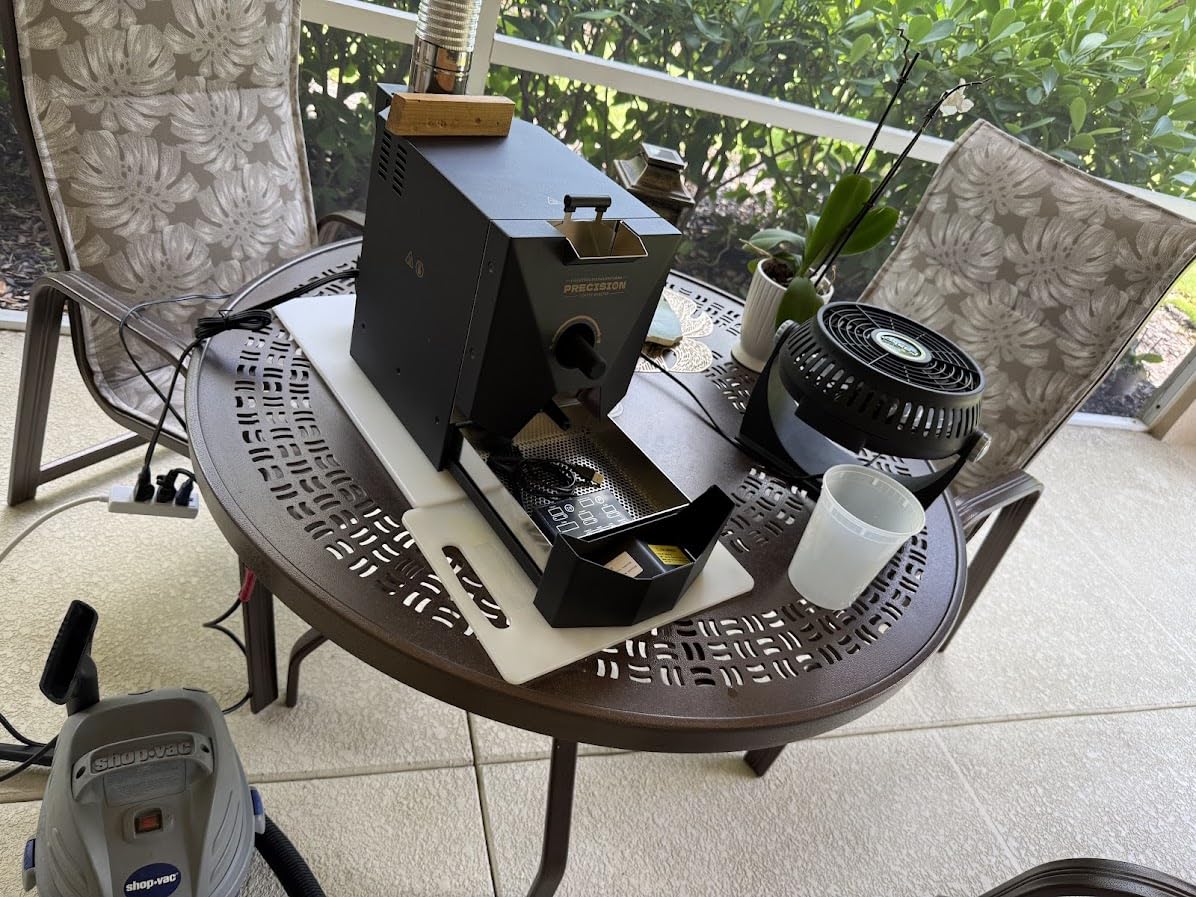
8. Precision Coffee Roaster 200g Electric – Best for Small Spaces
200g Electric Home Coffee Roaster, 9 Preset Automatic & Manual Modes, Turbo Rotating Stirring for Even Roasting, Smoke Filter & Pipe for Dual Exhaust, Independent Cooling Tray
200g electric drum
700W
9 auto profiles
Independent cooling tray
Pros
- Auto profiles give good medium roasts with almost no experience
- Smoke filter works well for indoor roasting
- Independent cooling tray with roughly 5-minute cool-down
- Sample trier capability like professional roasters
Cons
- Beans keep roasting after the cycle unless removed immediately
- Display too bright to read and cannot be dimmed
- Some owners report drum motor shutdowns after a few months
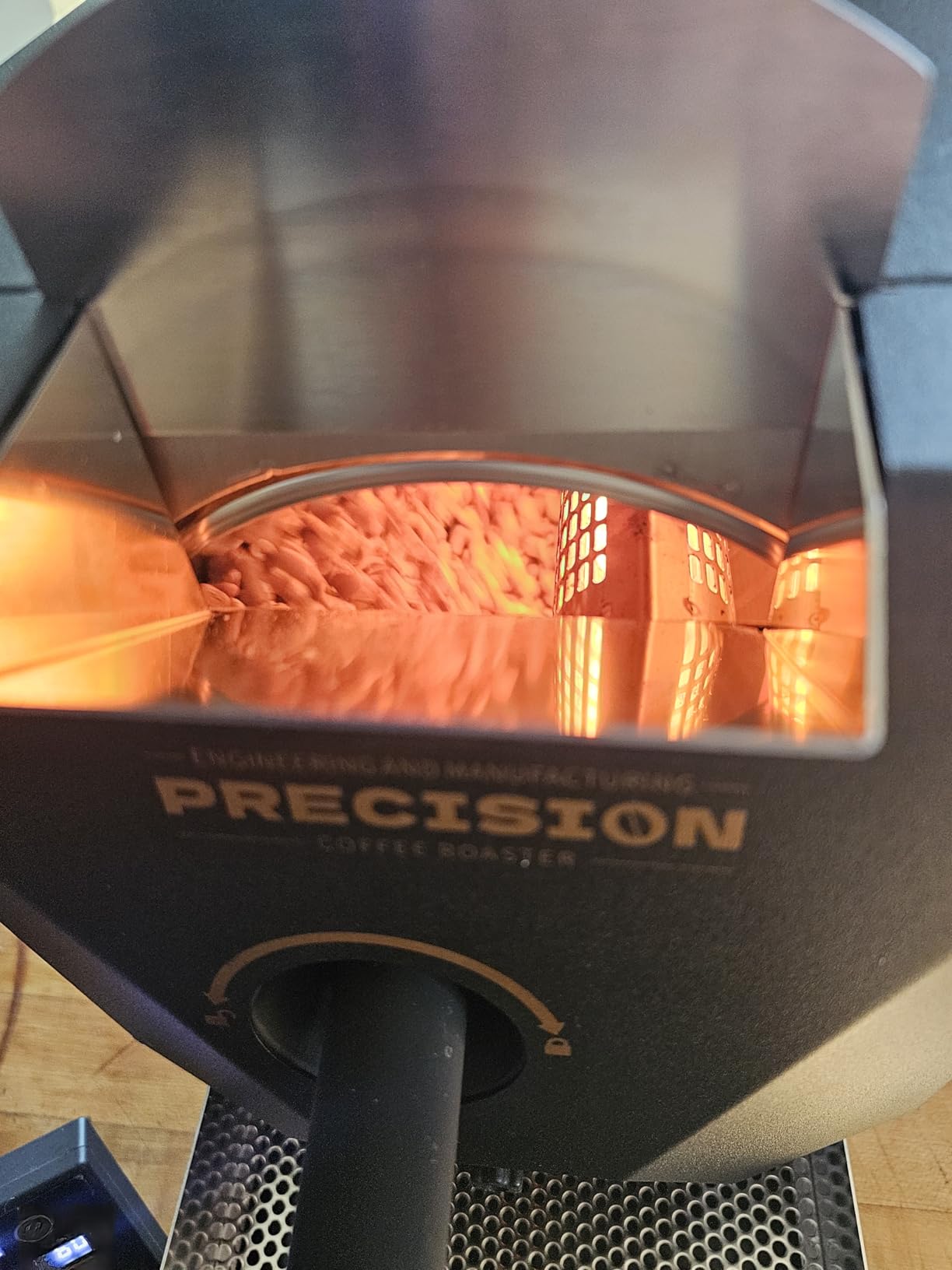
This compact 200g electric drum roaster is the best fit for a small kitchen in this roundup. It is 10 by 8 by 12 inches, runs on 700 watts at 110 to 120V, and ships with a filter and an auto clean function. Nine preset profiles plus a fully manual mode cover the range from beginner to intermediate.
The turbo rotating stirring keeps beans moving for even heat distribution, and the integrated smoke filter with exhaust pipe gives you two exhaust methods. That is the feature that separates it from the popcorn-popper category, and owners consistently praise the smoke filter for indoor roasting. The independent cooling tray halts the roast and locks in flavor in roughly a five-minute cycle.
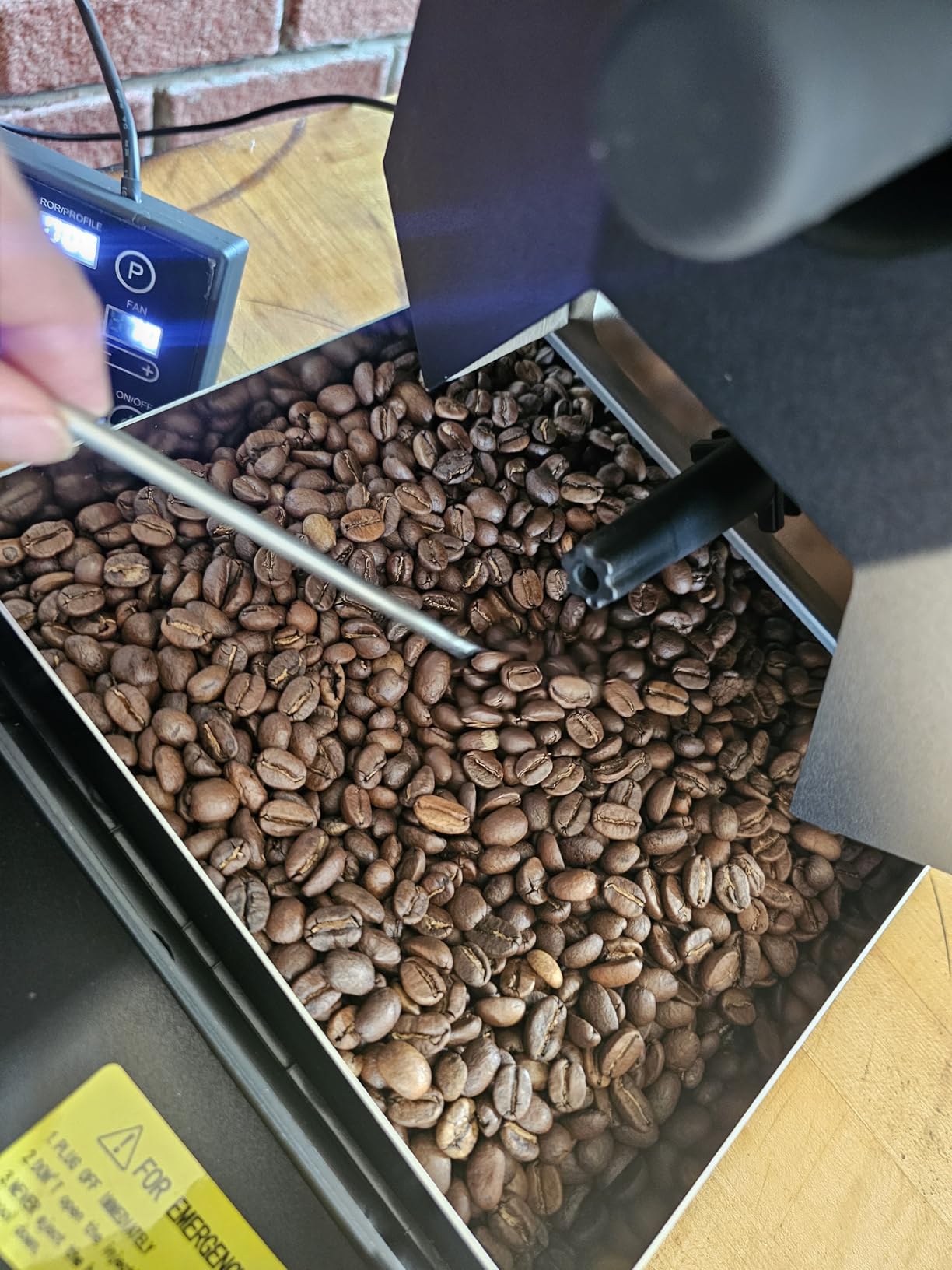
The review set splits cleanly. Some owners report 100 plus pounds roasted trouble free over nine months, and one notes the machine is roughly a third the price of other half-pound class home roasters. The other group reports a durability problem where the drum motor or the whole unit shuts down mid-roast after a few months, with heat build-up cited as the cause.
Two smaller issues are worth knowing. Beans continue to roast after the cycle if you do not remove them immediately, so many owners add an external bean cooler. And the display is bright enough that the field labels are hard to read, with no way to dim it.
Who the Precision Coffee Roaster 200g suits best
It suits a small apartment or a tight kitchen where a gas burner setup is impossible and smoke is the dealbreaker. The integrated smoke filter plus exhaust pipe is the most indoor-friendly arrangement among the electric machines here.
It also suits a coffee drinker who wants espresso-adjacent medium-dark profiles without learning gas control. The auto profiles produce good medium roasts with almost no experience, and the sample trier behaves like a professional machine’s.
Where the Precision Coffee Roaster 200g falls short
It is not a beginner-proof machine despite the auto modes. Owners are advised to practice on a cheaper air popper first, which tells you something about how much attention the profiles really need.
The mid-roast shutdown reports are the reason this is not our top pick. Several owners have lost a batch to a drum motor or unit shutdown, and one unit arrived with no manual power fallback at all. If you are buying it, keep an eye on motor temperature during long sessions.
Drum vs Air Roasters: Which Should You Buy?
The drum versus air question comes up constantly, and the honest answer is that they optimize for different goals. Air roasters suspend beans in a hot air column and roast them in 8 to 10 minutes. Drum roasters tumble beans through conductive and convective heat over 14 to 20 minutes.
Flavour. The longer drum roast gives more even heat contact per bean, which typically produces a fuller body and more consistent development. Air roasting is faster and lighter, and it can produce very clean, bright cups when it is well controlled.
Control. A drum roaster gives you more levers: rotation speed, bean probe placement, airflow, and a longer window to make decisions. Air roasters are simpler to run, which is an advantage for a complete beginner.
Smoke and mess. Air roasters produce less chaff because the beans are not scraping against metal, but they still produce smoke on dark profiles. Drum roasters produce more chaff, which is why every good drum machine on this list has a real chaff collector.
Downsides of drum roasting specifically. Drum machines are heavier, take more counter space, need cleaning after every batch, and cost more at the entry level. They also reward sorted green beans and punish cheap, defective ones. If you want the fastest path to a decent cup with minimal fuss, an air roaster is the better tool.
Our advice is to start where the friction is lowest. If your problem is beginner friction, read a broader home coffee roaster comparison. If your problem is flavor control, start shopping drums.
How to Choose a Drum Coffee Roaster
Six criteria decide whether you will be happy. Spend time here before you spend money on a specific machine.
1. Size your batch honestly. Use about 80 percent of the rated maximum, not the full number. Green coffee also loses roughly 15 percent of its weight as moisture during the roast, a figure the roasting community at r/roasting consistently cites, so an 850g charge can yield 400g batches of roasted coffee. A real enthusiast roast log from that community shows a 30-minute preheat to 220C, an 850g charge, and 400g roasted batches with the drum held at 80 percent fill. Buy for your roasted target, then divide by 0.85 to find the green charge you need.
2. Check the heat source against your space. Gas machines give faster recovery and more power, and they need a burner, a fuel supply, and somewhere safe to put it. Electric machines plug into a wall and are far easier to vent indoors, but they are slower to respond. Think about where the roaster will actually live, not where you wish it would live.
3. Treat smoke as a buying criterion. Chaff and smoke are the number one reason people quit home roasting. Electric machines with an integrated smoke filter and exhaust pipe, or any gas machine you can run outdoors, are the practical answers. Plan a vent before your first roast, not after the smoke alarm goes off.
4. Decide how much control you want. If you want to profile and repeat, you need a real probe and preferably Artisan or Cropster compatibility. If you want a good cup on a weekday morning, automatic profiles are worth more to you than a roast log.
5. Look at chaff and cooling. A removable chaff collector that slides out beats one you have to shake into a bin, and an independent cooling tray with its own fan beats beans cooling in a stopped drum. Beans left sitting hot after the drop keep roasting and go flat and harsh.
6. Budget for the total cost, not the sticker price. Add green coffee, a scale accurate to a gram, a data logger if your machine lacks one, chaff filters, a burner if it is gas, and a proper vent. For most people the extras cost more than the roaster discount you were chasing. See our guide to home roaster picks for a wider view of what each tier includes.
Two safety notes worth repeating. Keep the power cord and any cables well away from an open flame, which is a documented problem on at least one gas machine in this roundup. And check whether your insurer or landlord has an opinion before you install anything that burns fuel indoors.
What Not to Buy
The shopping results for drum coffee roasters are crowded with unbranded machines from general marketplaces, and they are the most common regret in this category. Here is what to watch for.
Skip machines with almost no review history. A listing with two or three ratings tells you nothing about whether the drum motor survives a year of roasting. In this roundup even the thinnest bases are 3 to 7 reviews, and we flag each one.
Be suspicious of inconsistent specifications. When weight and capacity differ between listings for the same model, you are looking at a product whose factory is not standardized. That is a hint about build quality.
Avoid anything with no parts path. A purpose-built machine from KALDI Coffee Lab or a similar manufacturer will take add-on thermocouples, fans, and adapters. Generic machines generally will not, and a failed motor ends the machine.
Do not buy a big drum you cannot heat. Large marketplace drums are often sold as commercial roasters with no burner, no probe, and no vent design. A 6kg machine you cannot control produces uneven batches and a smoky room, which is a bad trade at any size.
Frequently Asked Questions
How long does a drum coffee roaster take per batch?
Most drum coffee roasters take between 14 and 20 minutes per batch. That longer window is what allows the beans to absorb conductive and convective heat evenly instead of cooking on the outside first.
What are the downsides of using the drum roasting method?
Drum roasters are heavier, take more counter space, and cost more at the entry level than air roasters. They also produce more chaff that needs cleaning after every batch, and they reward well-sorted green beans while punishing cheap defective ones.
What batch size should I roast on a home drum roaster?
Use about 80 percent of the machine’s rated maximum rather than filling it completely. Remember that green coffee loses roughly 15 percent of its weight during roasting, so an 850g charge can yield 400g of roasted beans.
Do home drum roasters produce smoke?
Yes, especially on medium and dark profiles. Electric machines with an integrated smoke filter and exhaust pipe handle indoor roasting best, and gas machines are easier to control when you roast outdoors or in a garage. Chaff also needs regular collection.
Is a drum roaster hard to use for beginners?
Electric models with automatic roast profiles are the easiest starting point and can produce a good cup on a first attempt. Manual gas machines have a steeper learning curve because you control the flame and airflow yourself, so practice on a cheap air popper first if you plan to start there.
How much does a commercial drum roaster hold?
An 18 quart commercial roaster holds far more than a home drum machine. The home drum roasters covered here range from 200g to 600g per batch, with a 3.8 litre stove-heated model roasting up to about 1.1 pounds at once. Commercial machines of 18 quarts or more serve a cafe rather than a kitchen.
Which Drum Roaster Should You Buy?
The best drum coffee roasters fall into a few clear groups, and the right pick depends on where you are starting from. If you want a genuine drum roast with the least amount of technical involvement, the NIASIA 500g is our editor’s choice, with nine profiles, dual exhaust, and by far the largest review base in the group.
Buy the DYVEE 400g if you are roasting outdoors or in a garage and want to see the whole roast through a glass drum without spending much. Buy the KALDI WIDE if you want a properly perforated, three-blade drum and already know your way around a burner. Buy the Kaldi Fortis if you have decided you want to profile roasts in Artisan software and repeat them.
Start with the Kaldi Motorized 200g if you are learning gas roasting and want a small machine with a real upgrade path. Choose the TREMENPOW 3.8L if a pound of beans at a time is the amount you actually need. Pick the Precision Coffee Roaster 200g if your kitchen is small and an integrated smoke filter matters more than anything else.
Whichever one you choose in 2026, buy sorted green beans, run the first three batches without changing anything, and write down what you see. That log is the whole reason to own a drum machine.