
If you have ever placed a wooden meeple on a board and felt that quiet thrill of claiming a spot before anyone else, you already understand the appeal of worker placement. It is one of the most satisfying mechanics in tabletop gaming, and our team has spent months playing through dozens of titles to find the absolute best worker placement board games worth your time in 2026.
Worker placement games give each player a limited number of workers, and you take turns assigning them to action spaces on the board. Once a space is taken, nobody else can use it that round. That simple rule creates a layer of tension, planning, and interaction that keeps us coming back to the table week after week.
We tested 12 standout worker placement games, from entry-level gateways to deep strategic heavyweights, across multiple game nights with different group sizes. Whether you are looking for your first worker placement game or your fifteenth, this guide covers every style, theme, and complexity level. Every game on this list earned its spot through real play sessions, not just hype.
Table of Contents
Top 3 Picks for Best Worker Placement Board Games

Best Worker Placement Board Games in 2026
| Product | Specifications | Action |
|---|---|---|
| Viticulture Essential Edition |
|
Check Latest Price |
 Everdell Everdell |
|
Check Latest Price |
 Stone Age Stone Age |
|
Check Latest Price |
 Architects of the West Kingdom Architects of the West Kingdom |
|
Check Latest Price |
 Lost Ruins of Arnak Lost Ruins of Arnak |
|
Check Latest Price |
 Five Tribes Five Tribes |
|
Check Latest Price |
 The White Castle The White Castle |
|
Check Latest Price |
 Tzolk’in: The Mayan Calendar Tzolk’in: The Mayan Calendar |
|
Check Latest Price |
 Champions of Midgard Champions of Midgard |
|
Check Latest Price |
 Paladins of the West Kingdom Paladins of the West Kingdom |
|
Check Latest Price |
 Scythe Scythe |
|
Check Latest Price |
 Flamecraft Flamecraft |
|
Check Latest Price |
1. Viticulture Essential Edition – The Purest Worker Placement Experience
Stonemaier Games: Viticulture Essential Edition by Jamey Stegmaier
1-6 Players
90 Minutes
Solo Automa Mode
Wine-Making Theme
Pros
- Beautiful components with glass grape tokens
- Excellent worker placement mechanics with season-based actions
- Great replayability with visitor cards
- Scales well from 2 to 6 players
Cons
- Some setup time required
- Learning curve for new players
- Components can be fiddly
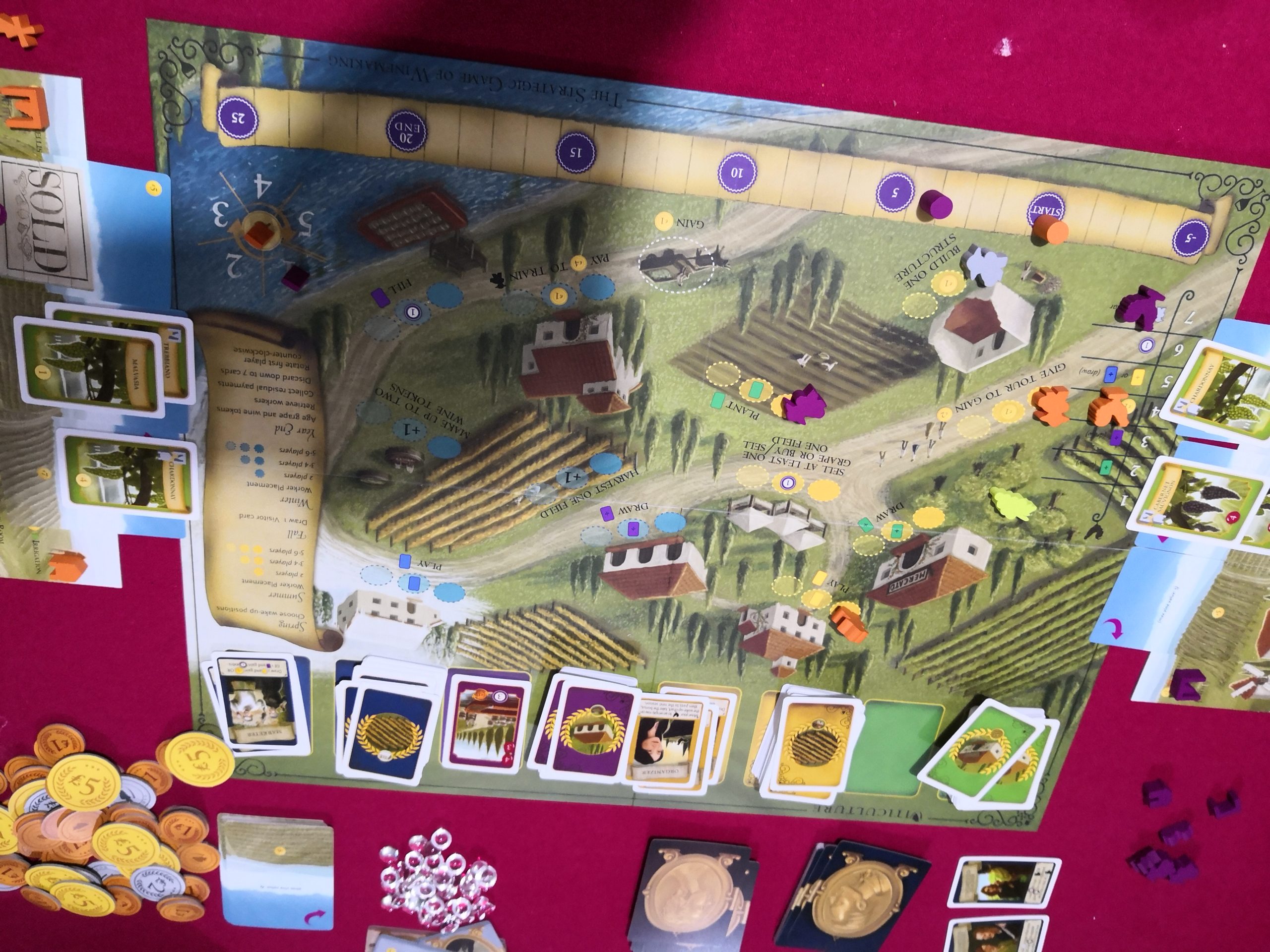
Viticulture is the game I reach for when someone asks me what worker placement actually feels like. You are building a Tuscan vineyard from the ground up, planting vines, harvesting grapes, and fulfilling wine orders. Every decision matters because the action spaces are tight and your opponents are eyeing the same spots you need.
What sets Viticulture apart is how clean the mechanic feels. You have a summer phase and a winter phase each round, and your workers take actions in each. The visitor cards add enough variety that no two games play the same way. I have run this game over 30 times and I still discover new card combos.
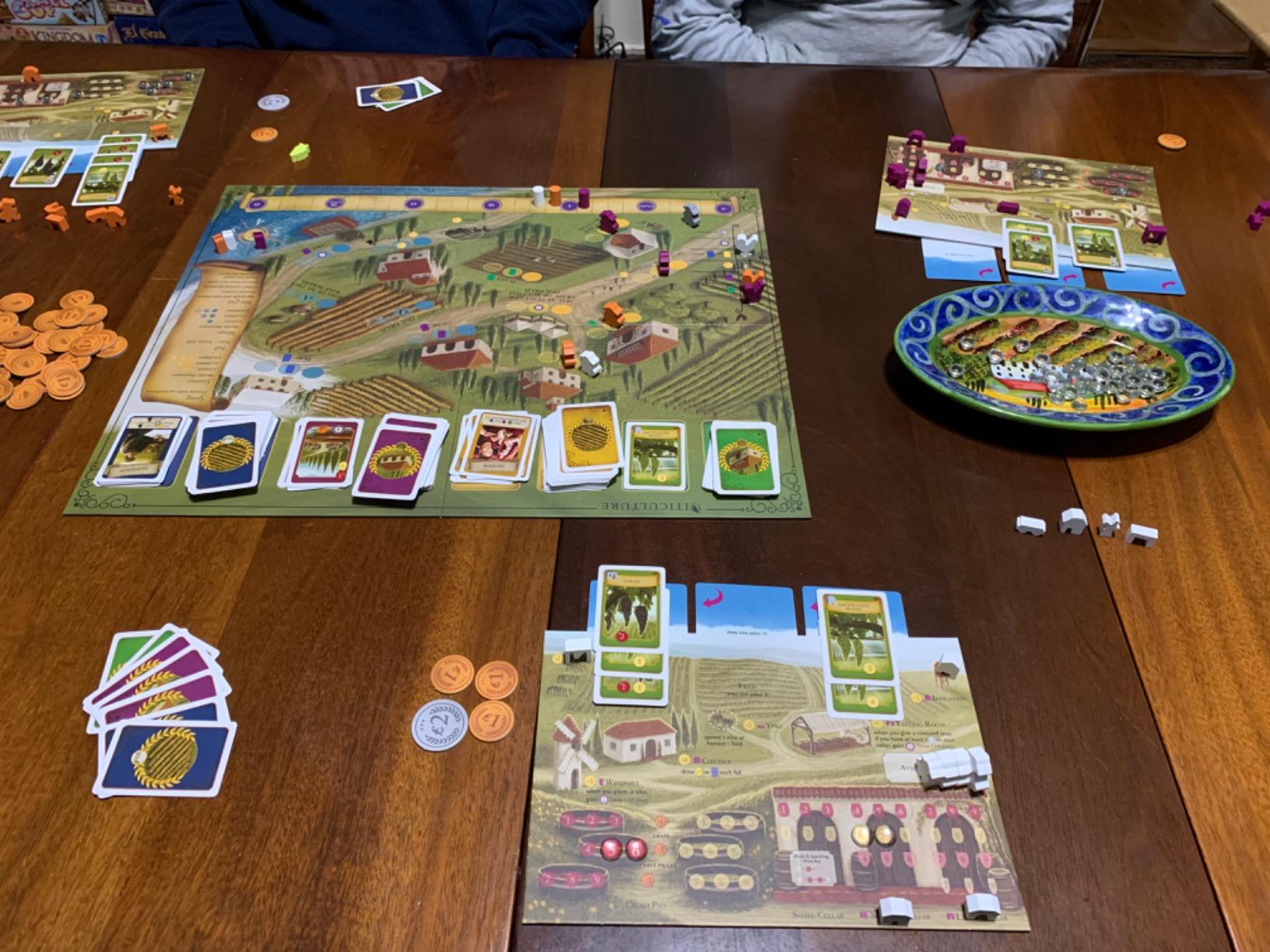
The Essential Edition bundles several mini expansions right in the box, which adds tremendous value. You get the Tuscany essential bits that improve the base game without overwhelming new players. The glass grape tokens and wooden worker meeples are a tactile joy.
One thing I appreciate is how well it handles different player counts. At two players it feels like a tight duel. At five or six it becomes a bustling race. The solo Automa mode is genuinely fun too, which is rare for this genre. Our group rates this as the best pure worker placement game you can buy.
Who Should Play Viticulture
If you want a worker placement game that teaches the mechanic in its purest form while staying engaging for experienced gamers, Viticulture is your answer. It is ideal for groups of 2 to 5 who enjoy medium-weight strategy with a relaxed theme. Wine enthusiasts especially love the atmosphere.
It also works beautifully as a gateway game for friends who have only played lighter fare. The wine-making theme is intuitive, so new players grasp what they are doing and why within the first round or two.
Expansion and Replayability
The Essential Edition includes enough content for dozens of plays. If you want more, the full Tuscany expansion adds an extended board with new regions, structures, and special workers. The Visit from the Rhine Valley expansion adds new visitor cards that change strategies. Even without expansions, the card variety keeps sessions fresh.
2. Everdell – Stunning Artwork Meets Strategic Depth
Everdell Old Edition
1-4 Players
40 Minutes
Tableau Building
Critter Fantasy Theme
Pros
- Beautiful artwork and production quality
- Easy to learn with strategic depth
- Great worker placement and tableau building blend
- High replayability with card variety
Cons
- Rulebook could be clearer
- Ever Tree component can be flimsy
- Requires significant table space
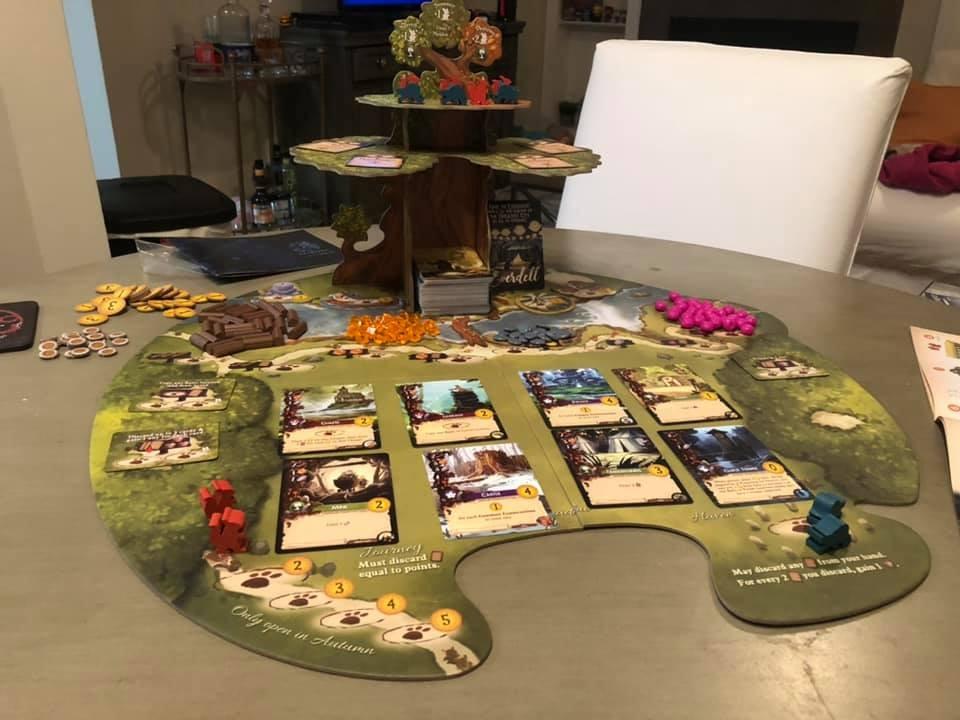
Everdell hits a sweet spot that few games manage: it looks beautiful on the table and plays with genuine strategic weight. You are building a city of woodland critters, placing workers to gather resources, then spending those resources to play cards into your tableau. The 3D cardboard tree in the center of the board is a conversation starter every time.
I brought Everdell to a game night with friends who usually avoid heavier strategy games, and they were hooked within ten minutes. The worker placement is intuitive, and the tableau building gives you a personal puzzle to solve while still competing for shared action spaces.
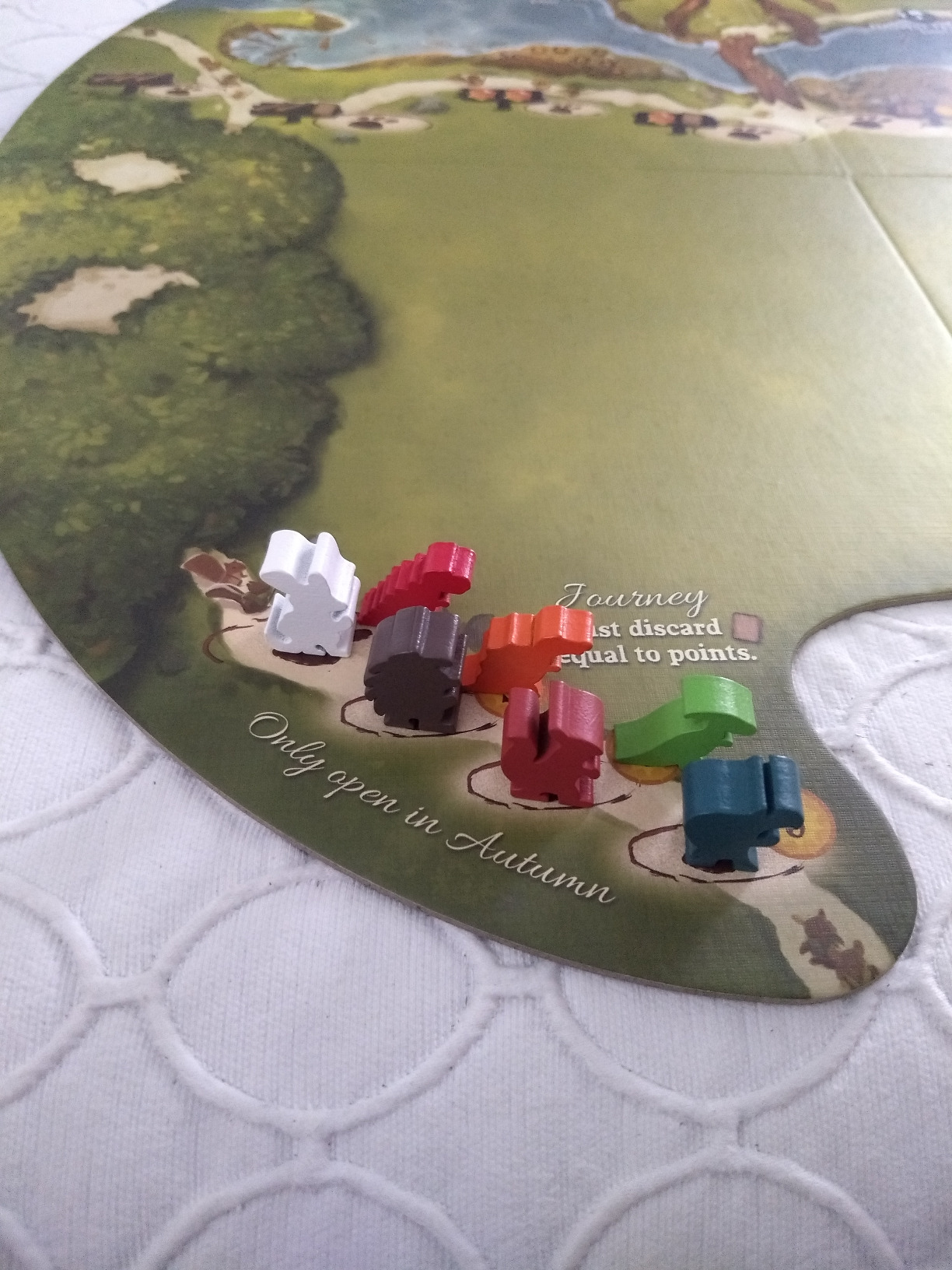
The game unfolds across three seasons, and your worker count grows as you play more critters into your city. This creates a satisfying ramp where early turns feel tight and later turns feel powerful. The card synergies between different critters and constructions are where the real strategy lives.
With nearly 2,600 reviews and an overwhelming 89 percent five-star rating, the community clearly agrees this is something special. Our team has played it at every player count and it delivers consistently. Just make sure you have a decent-sized table.
Who Should Play Everdell
Everdell is perfect for players who want strategy without intimidation. If you enjoy engine building, set collection, or games with gorgeous art, this belongs on your shelf. It plays great at two players and scales well up to four, making it versatile for different group sizes.
Families with teens will find this hits the right complexity level. The critter theme is charming enough to draw people in, and the gameplay depth keeps them engaged game after game.
Tableau Building Strategy Tips
Focus on cards that synergize with each other early. A well-built tableau can generate resources passively, freeing up your workers for high-value action spaces. Do not ignore the discovery cards, as they can provide big point swings in the final season. Planning your worker recall timing across seasons is the key to competitive play.
3. Stone Age – The Perfect Gateway Worker Placement Game
Stone Age Board Game – Engaging Worker Placement Strategy for Civilization Building! Fun Family Game for Kids and Adults, Ages 10+, 2-4 Players, 60-90 Minute Playtime, Made by Z-Man Games
2-4 Players
60-90 Minutes
Dice Rolling Resource Gathering
Prehistoric Civilization Theme
Pros
- Simple to learn with great strategic depth
- Nice balance of luck and strategy
- High quality wooden components
- Excellent gateway into worker placement
Cons
- Dice rolling adds randomness
- Best experience requires 4 players
- Can run long with new players
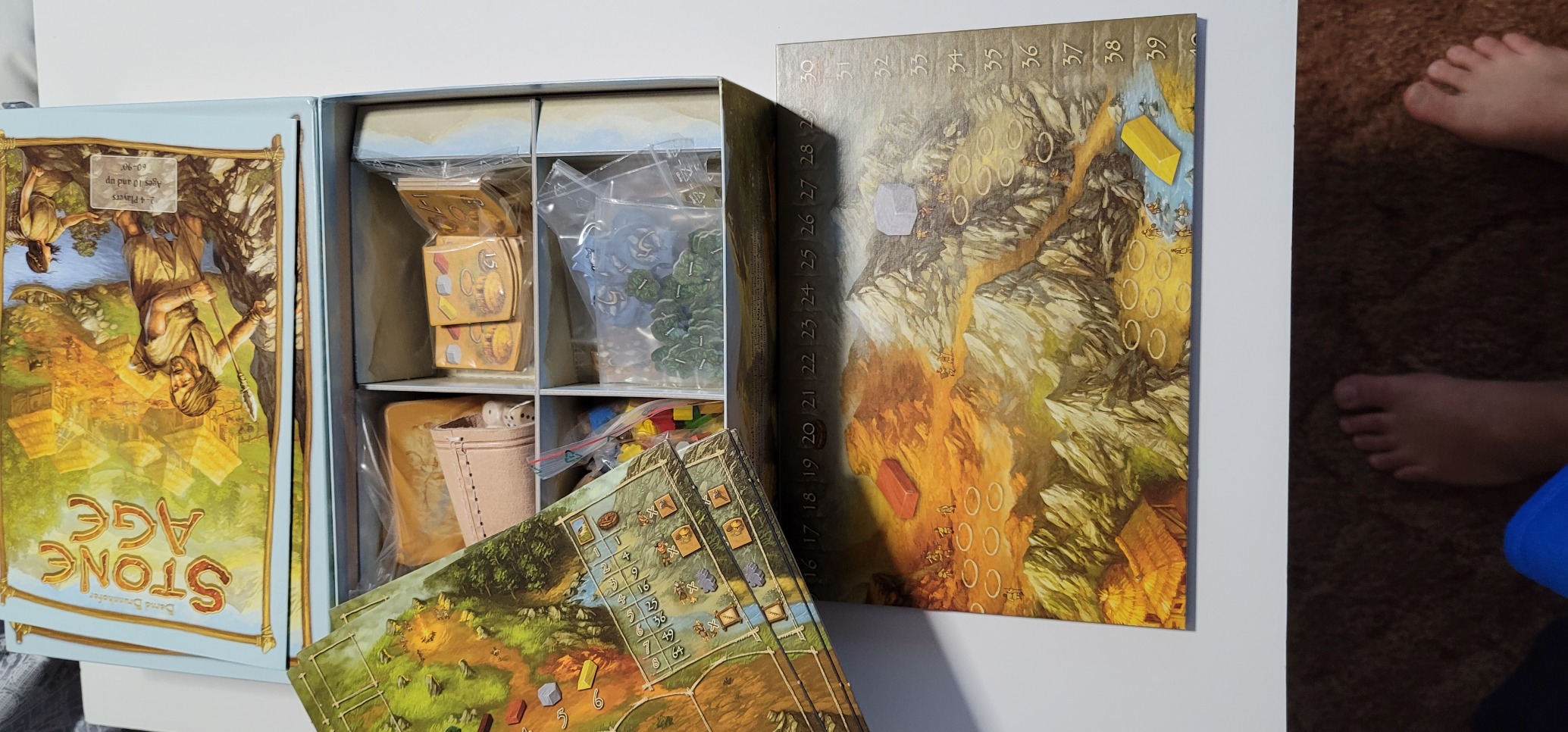
Stone Age is the game I hand to someone who has never played a worker placement game before. The prehistoric theme is immediately approachable. You send your tribe members to hunt, gather wood, dig for gold, and build structures. Everyone understands what gathering food means, so the rules click fast.
What keeps Stone Age interesting after dozens of plays is the dice rolling for resource gathering. You commit workers to a space, roll dice, and divide the result. Some gamers dislike the luck factor, but I find it adds tension and keeps the game accessible. A bad roll can be mitigated by sending more workers next time.
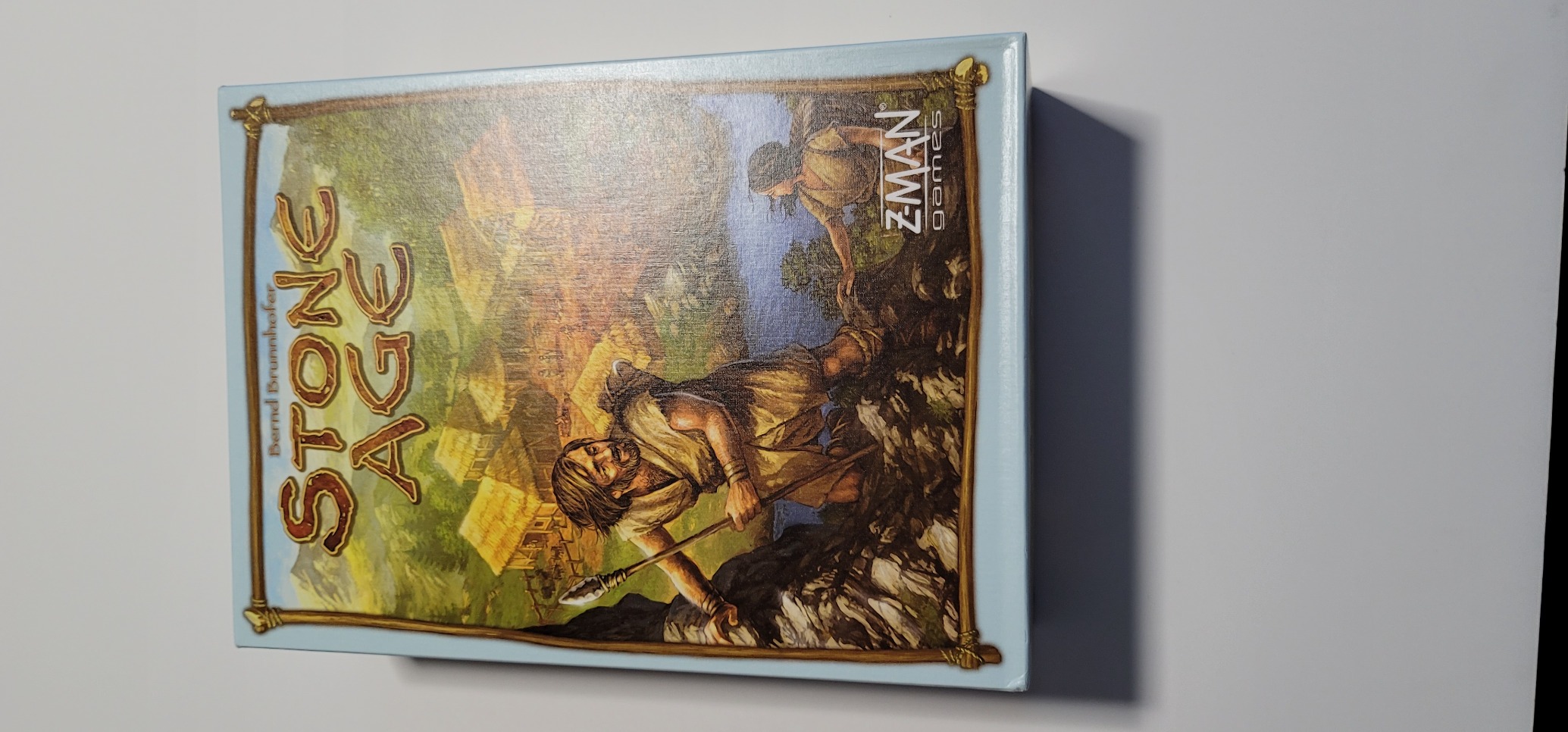
The civilization building aspect gives you meaningful decisions about technology, buildings, and population growth. Growing your tribe means more workers but more mouths to feed. That tension between expansion and sustenance drives every decision.
With 88 percent five-star ratings across over 700 reviews, Stone Age has earned its reputation as a staple. The wooden components feel solid, and the board layout makes action spaces clear at a glance. It is a game that respects your time while still delivering satisfying strategy.
Who Should Play Stone Age
If you are brand new to worker placement or introducing friends to the mechanic, Stone Age is the ideal starting point. It works best with 3 to 4 players. Families with kids aged 10 and up will find it accessible and engaging. It is also great for game nights where you want something strategic but not mentally exhausting.
Teaching New Players
Start by explaining the food requirement each round, then walk through the resource gathering spaces. Most new players grasp the core loop within one round. Emphasize that buying civilization cards and buildings is how you score big points. Avoid over-explaining strategy and let people discover it naturally through play.
4. Architects of the West Kingdom – Bold Worker Capture Mechanics
Renegade Game Studios Architects of the West Kingdom – Strategy Board Game
1-5 Players
70 Minutes
Worker Capture Mechanic
Carolingian Empire Theme
Pros
- Unique worker accumulation and capture mechanic
- Scales well across all player counts
- Excellent solo Automa mode
- Beautiful artwork and multiple paths to victory
Cons
- Box insert could be better
- Limited combo building
- Can feel tactical rather than strategic
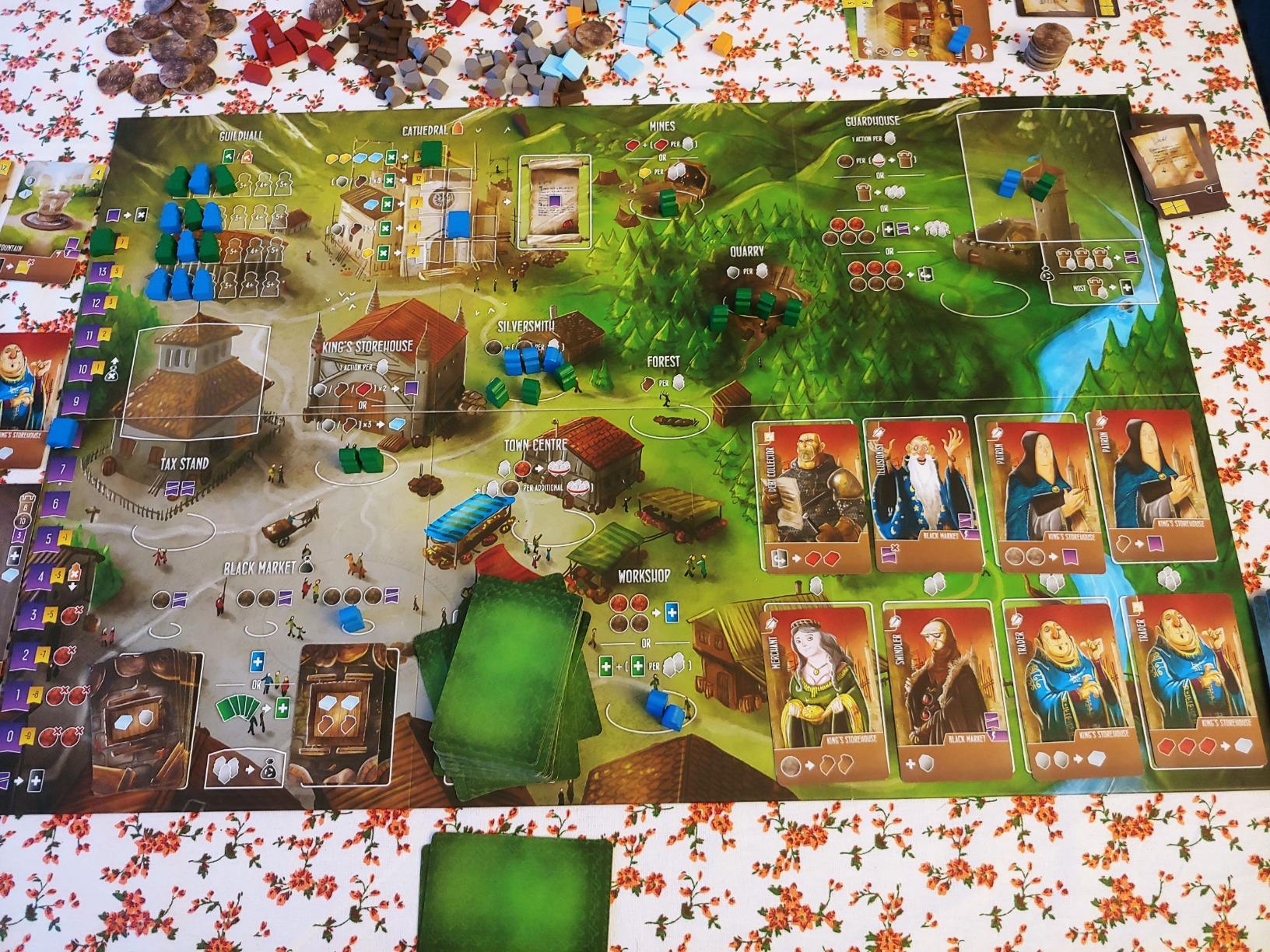
Architects of the West Kingdom does something most worker placement games avoid: it lets opponents capture your workers. You can stack multiple workers on the same action space for better rewards, but the more you commit, the more vulnerable you become. That push-your-luck tension makes every placement feel consequential.
I played a four-player session where one player got greedy and stacked five workers on the marble quarry. Two turns later, someone captured three of them. The table erupted. That kind of player interaction is rare in worker placement games, and it makes Architects feel fresh even if you own ten others in the genre.
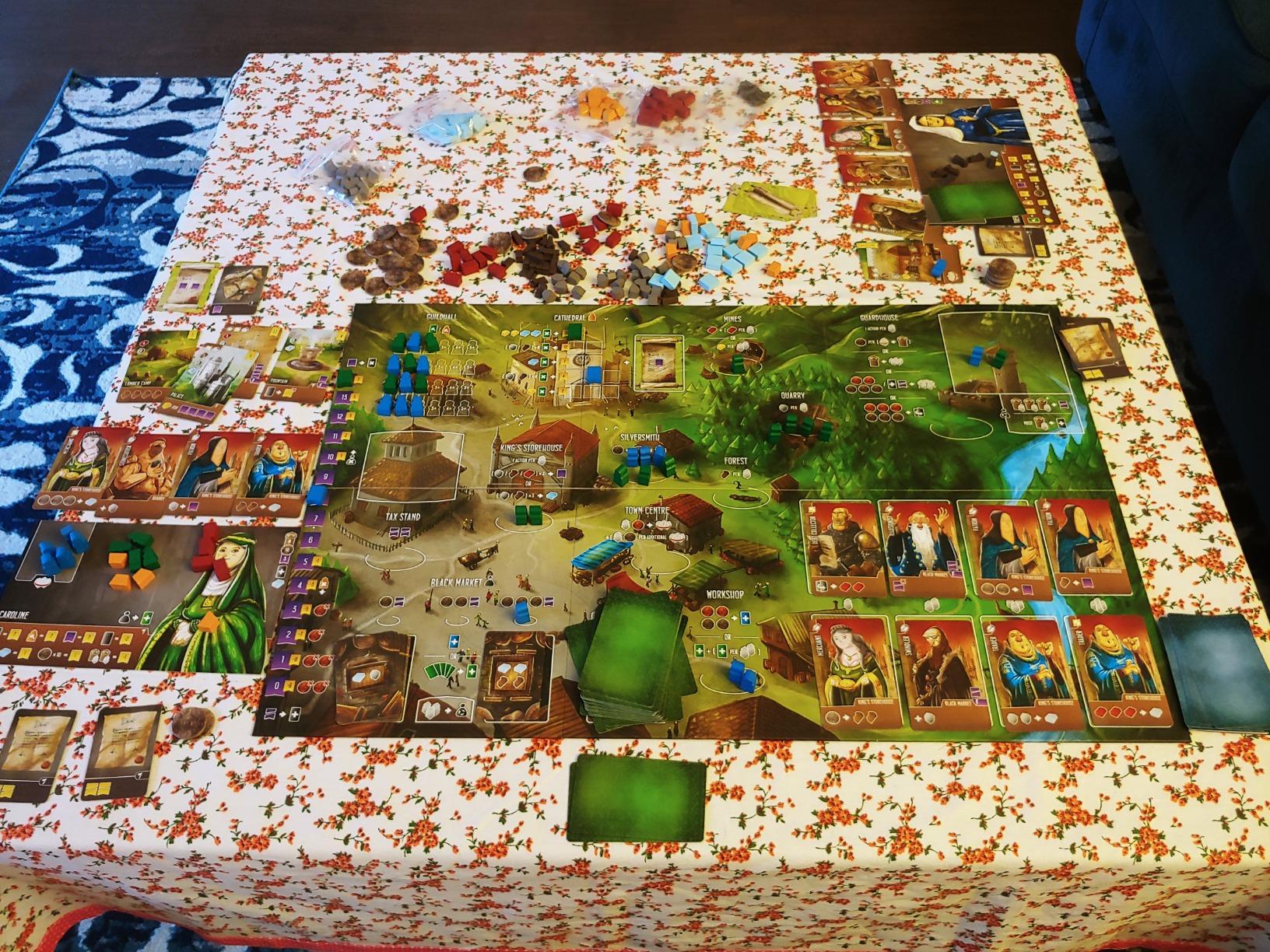
The virtue track adds another layer of decision-making. You can play as an upstanding architect or a corrupt one, and both paths can win. The black market and cathedral building create different strategic approaches. Our group found that the first few games felt tight and competitive, with victories decided by narrow margins.
As the first game in the West Kingdom trilogy, Architects stands on its own but also introduces you to a connected world. The artwork from Mihajlo Dimitrievski gives the game a distinctive look that stands out on any table.
Who Should Play Architects
Architects is ideal for groups who enjoy player interaction without direct conflict. If you like the idea of worker placement but find most games too passive, the capture mechanic here changes everything. It plays well from 1 to 5 players, making it one of the most flexible options on this list.
Strategy gamers who enjoy multiple paths to victory will appreciate the virtue track system. You can win by building the cathedral, collecting scrolls, or playing the black market.
Solo Mode Experience
The Automa solo mode is well-designed and genuinely challenging. The AI opponent makes smart captures and forces you to adapt your strategy. If you enjoy solo board gaming, Architects delivers a tight 45-minute puzzle that feels completely different from the multiplayer experience.
5. Lost Ruins of Arnak – Deck Building Meets Worker Placement
CGE Lost Ruins of Arnak Board Game
1-4 Players
30 Minutes
Deck Building Hybrid
Archaeological Exploration Theme
Pros
- Excellent blend of deck building and worker placement
- Beautiful artwork and production
- High replayability with variable setup
- Genuine solo mode included
Cons
- Can lead to analysis paralysis
- Research track can feel like buying points
- Some card variety issues
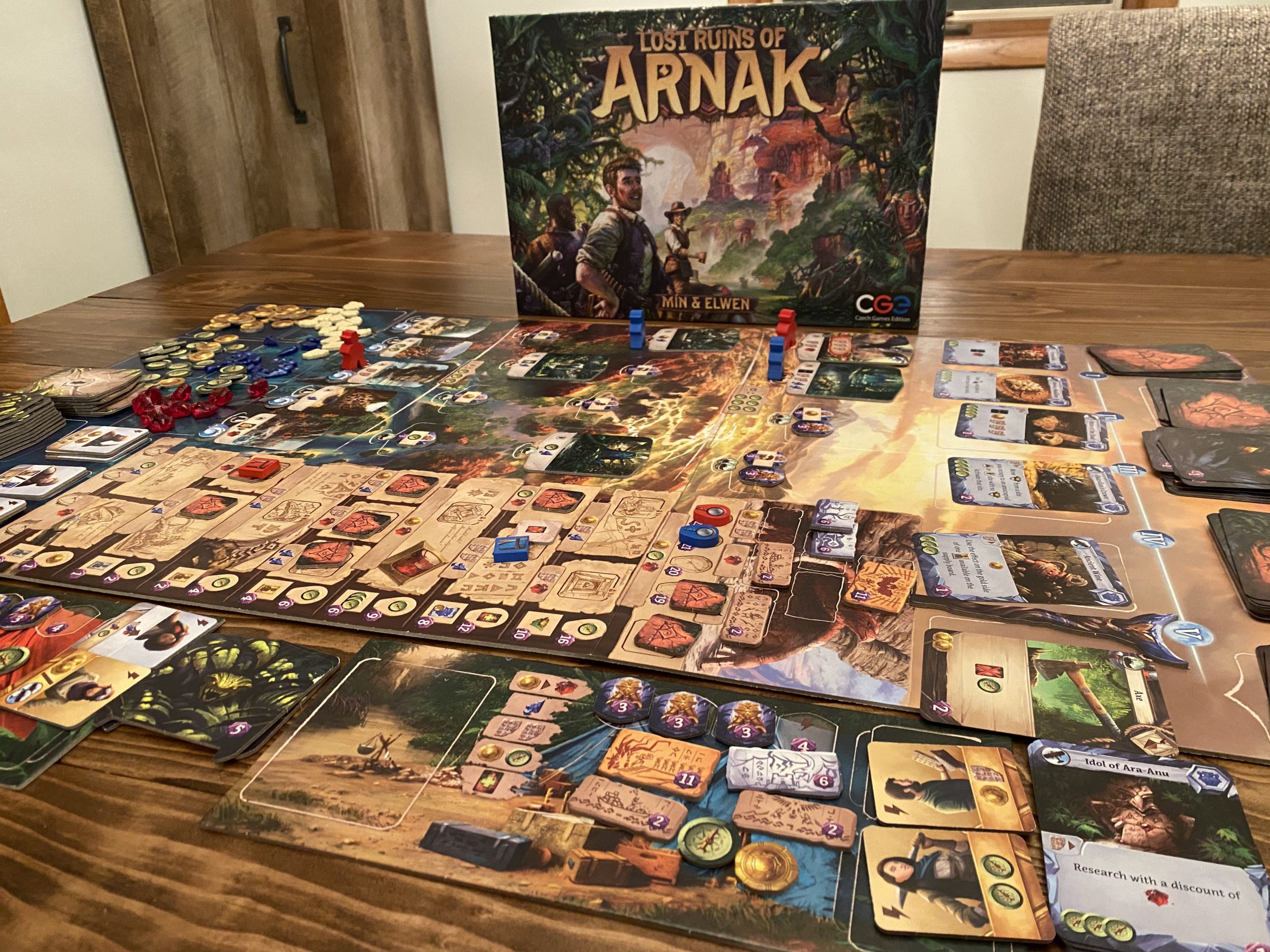
Lost Ruins of Arnak combines two of my favorite mechanics, worker placement and deck building, into one seamless experience. You explore an uncharted island, excavate ruins, fight guardians, and research ancient knowledge. Every turn feels like you are uncovering something new.
The hybrid design works because the two mechanics feed into each other naturally. Your deck of cards gives you resources and abilities, which you spend by placing workers on the board. The board actions give you more cards and artifacts. It is a satisfying loop that keeps you engaged from start to finish.
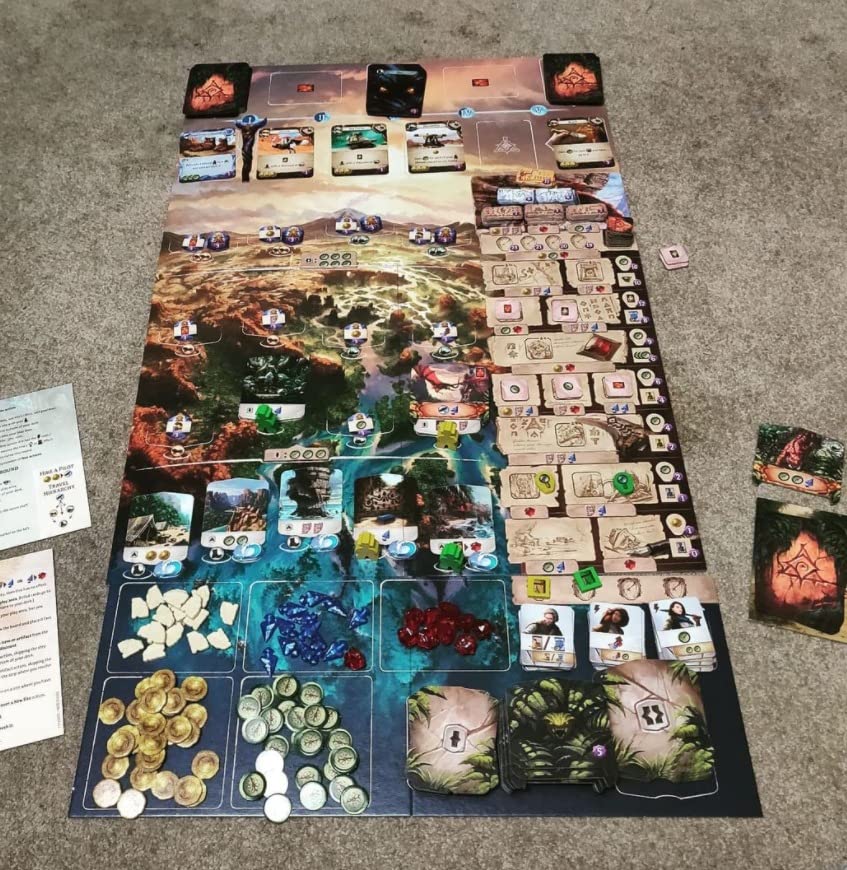
The production quality is outstanding. The dual-sided board offers two different island maps, and the variable tile and card setup ensures no two games play alike. With 88 percent five-star reviews and over 1,200 ratings, players clearly connect with this one.
I will say that analysis paralysis is real here. On some turns, the number of possible card combinations and worker placements can stall slower players. Our group introduced a gentle timer for turns, which solved the problem without hurting the experience.
Who Should Play Lost Ruins of Arnak
If you enjoy both deck building and worker placement and want a game that blends them elegantly, Arnak is your answer. It works best for 1 to 4 players who appreciate thematic games with genuine strategic weight. Fans of exploration and adventure themes will find the atmosphere irresistible.
It is also one of the best options on this list for solo play. The solo mode is fully developed, not an afterthought, and provides a genuinely satisfying puzzle.
Research Track Strategy
Advancing on the research track is one of the most efficient ways to score points and unlock powerful abilities. Focus on one or two tracks rather than spreading thin. Guardians block your progress, so time your combat carefully. The artifact cards you gain from the track can generate massive end-game scoring when combined with the right item cards.
6. Five Tribes – Mancala-Style Worker Manipulation
Five Tribes Board Game – Conquer the Sultanate of Naqala! Worker Placement Strategy Game for Kids & Adults, Ages 13+, 2-4 Players, 40-80 Minute Playtime, Made by Days of Wonder
2-4 Players
60 Minutes
Mancala-Style Movement
Arabian Nights Theme
Pros
- Multiple paths to victory with flexible strategies
- High-quality components and beautiful artwork
- High replayability with random tile setup
- Works well at 2 players
Cons
- Analysis paralysis due to many options
- Not suitable for younger children
- Some imagery may be intense for kids
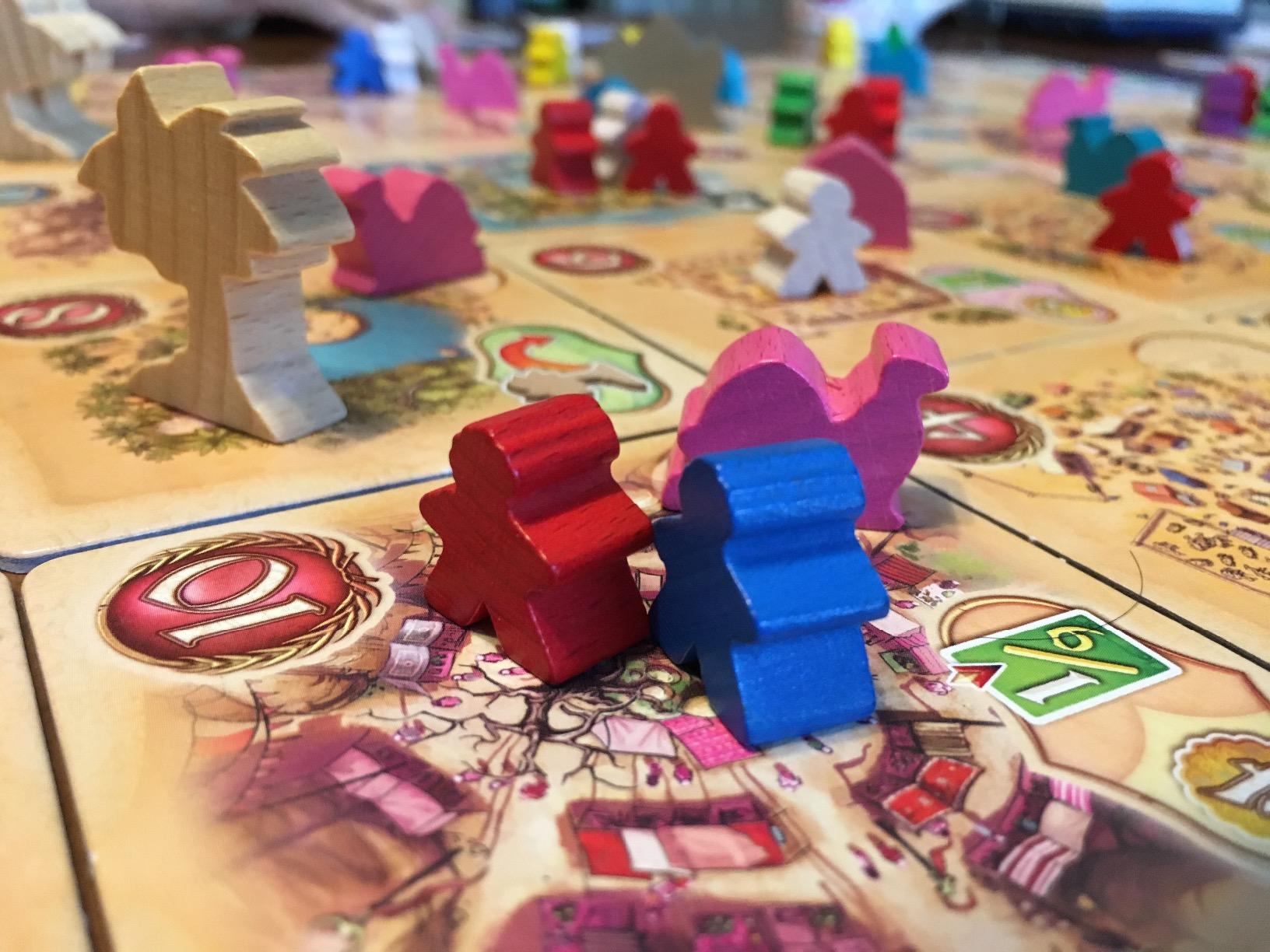
Five Tribes flips the worker placement formula on its head. Instead of placing workers from your supply, you pick up workers already on the board and drop them one at a time in a Mancala-style movement. Where you land determines which action you take and which tribe you activate. It is a brilliant twist that makes this one of the most tactical games in the genre.
Each of the five tribes does something different. Assassins remove opposing meeples, Builders score points, Merchants give you resources, Elders let you summon powerful Djinns, and Viziers stay in your court for end-game scoring. Balancing which tribes to activate each turn is the heart of the strategy.
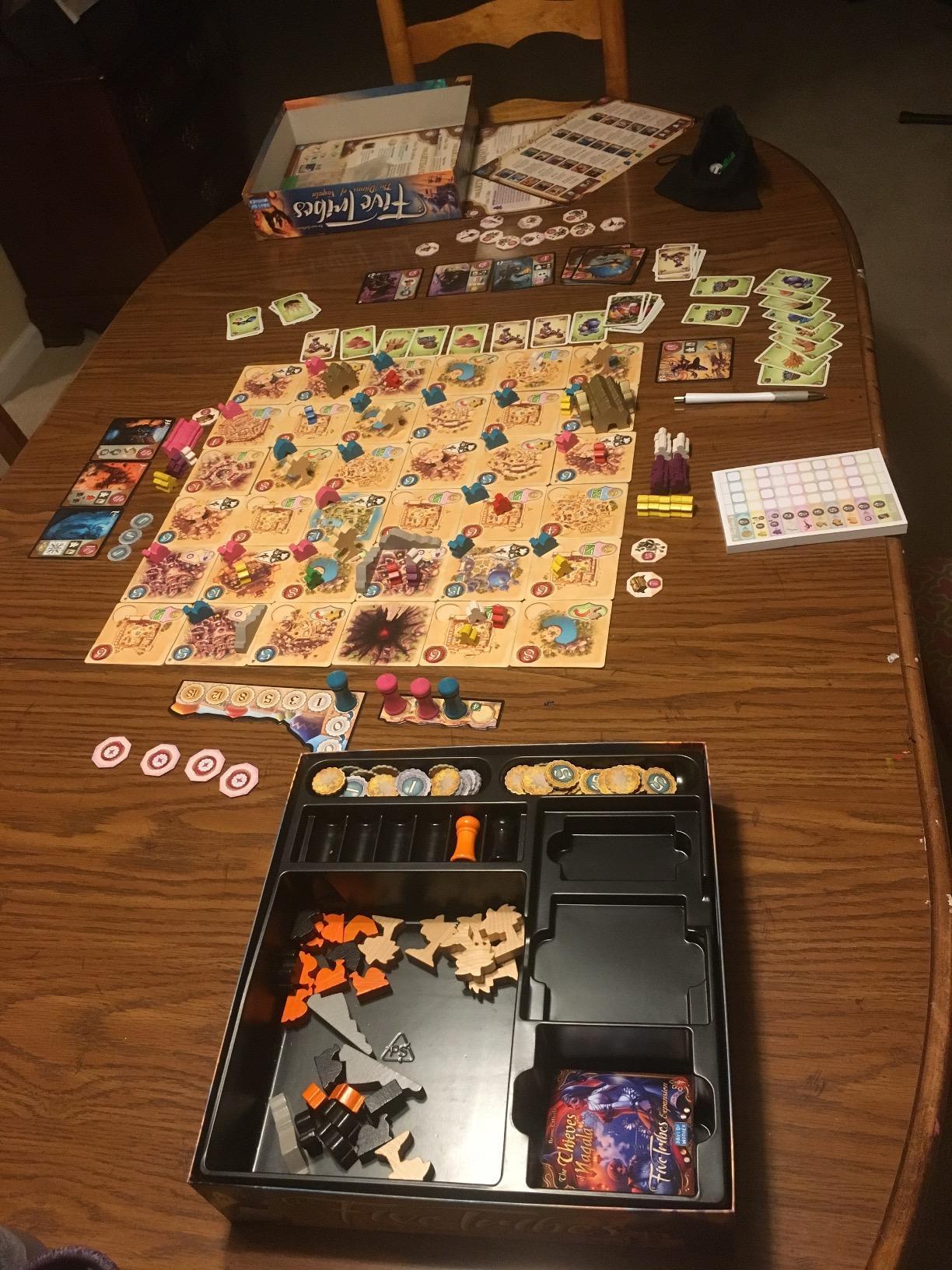
The random tile setup at the start of each game means the board layout changes every session. This keeps the puzzle fresh and prevents any single dominant strategy from emerging. I have played over 20 games and still find new tactical opportunities.
Days of Wonder included excellent player aids and premium wooden components. With 86 percent five-star ratings across 900+ reviews, Five Tribes has proven its staying power. The Fakir edition also adds a fun option for an additional meeple movement style.
Who Should Play Five Tribes
Five Tribes is ideal for gamers who love tactical puzzles and are comfortable with analysis. If you enjoy games where every turn presents a board full of options, this delivers in spades. It plays best with 2 to 3 players, as 4-player games can have significant downtime between turns.
Experienced strategy gamers who want something different from standard worker placement will appreciate the unique Mancala mechanic. It feels fresh even if you own a large collection.
Turn Planning and Strategy
Scan the entire board before each turn to find the highest-value moves. The best plays often involve landing on a tile that activates a tribe while also controlling a valuable market tile. Djinn cards can swing games, so prioritize collecting Elders when powerful Djinns are available. Do not ignore the end-game Vizier scoring, as it rewards consistent play.
7. The White Castle – Tight Decisions in Feudal Japan
Devir – The White Castle, Strategy Board Game, Eurogame Set in Feudal Japan, Worker Placement & Dice Placement, Ages 12+, 1-4 Players, Multi-Language
1-4 Players
85 Minutes
Dice and Worker Placement
Feudal Japan Theme
Pros
- Excellent solo mode with dedicated cards
- Compact box with satisfying combo mechanics
- Quick yet action-packed gameplay
- High quality production
Cons
- Box can be tight for all components
- Rulebook requires multiple reads for new players
The White Castle packs an impressive amount of strategy into a compact box. Set in feudal Japan at Himeji Castle, you place warriors, courtiers, and gardeners to gain influence through gardens, castle guard positions, and noble ranks. The game combines worker placement with dice placement and resource management in a way that feels tight and rewarding.
What grabbed me immediately was how interconnected the systems are. Placing a warrior on the bridge might give you coins, which you spend to place a courtier in the castle, which earns you clan points and unlocks a garden action. The combos chain together beautifully, and planning your sequence of moves is deeply satisfying.
The dice placement adds another dimension. You assign dice to your personal domain to trigger actions, and the dice values matter. Lower dice can be more efficient if you plan around them. This creates a puzzle where you are constantly weighing opportunity costs.
With 87 percent five-star reviews, The White Castle has earned strong praise despite being a newer release. At around 45 to 85 minutes per session, it respects your time while delivering a full strategic experience. It is one of the best values in worker placement gaming.
Who Should Play The White Castle
Eurogame enthusiasts who enjoy tight, interactive puzzles will love The White Castle. It plays best at 2 to 3 players, where the competition for key positions is fiercest. If you enjoy games where every single action matters and wasted moves are punished, this is for you.
It is also a strong option for solo gamers. The dedicated solitaire cards create a genuine opponent that adapts to your moves, making solo sessions feel just as engaging as multiplayer games.
Solo Play and Replayability
The solo mode uses a deck of 9 solitaire cards that simulate an opponent placing warriors and scoring points. It is challenging and requires you to optimize every turn. For multiplayer replayability, the variable garden cards and bridge tile arrangements ensure no two setups are identical. The game rewards repeated play as you discover new combo paths.
8. Tzolk’in: The Mayan Calendar – Gears That Change Everything
CGE Tzolk’in: The Mayan Calendar Board Game
2-4 Players
90 Minutes
Rotating Gear Mechanism
Mayan Calendar Theme
Pros
- Innovative gear mechanism that rotates the board
- Excellent depth and replayability
- Multiple paths to victory
- Balanced gameplay with minimal luck
Cons
- Can run long with 4 players
- Many symbols to learn initially
- Some analysis paralysis possible
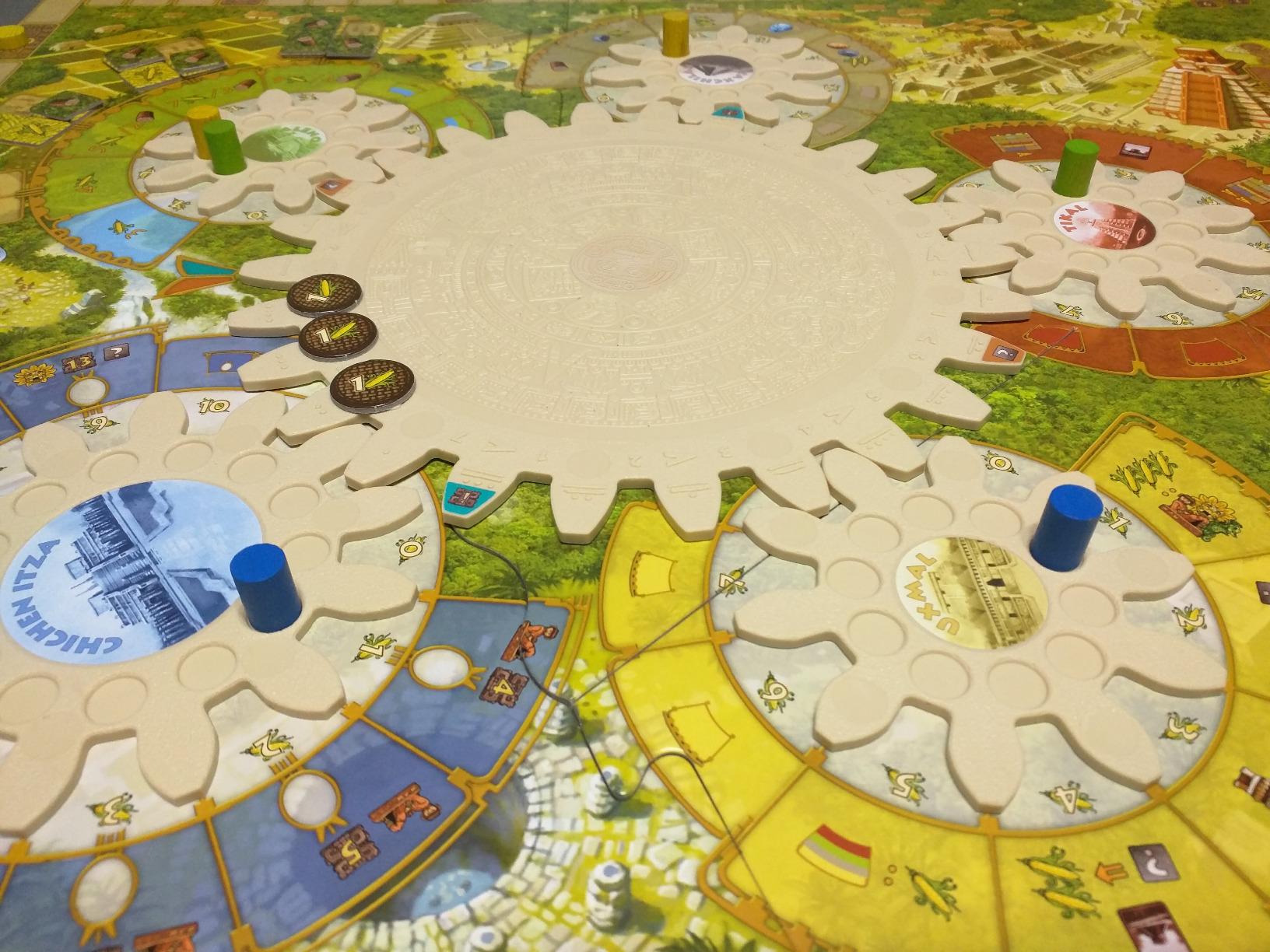
Tzolk’in features one of the most inventive boards in all of board gaming: six interlocking gears that physically rotate each turn. Your workers sit on the gears, and as the gears turn, your workers advance along tracks that increase their power. The longer you leave a worker in place, the more powerful its action becomes, but you risk losing the opportunity to someone else.
This timing puzzle is what makes Tzolk’in special. Every turn you decide whether to place new workers or pull existing ones off the gears to collect their rewards. Placing workers costs corn, your primary currency, so you are constantly balancing income generation against advancement on the gear tracks.
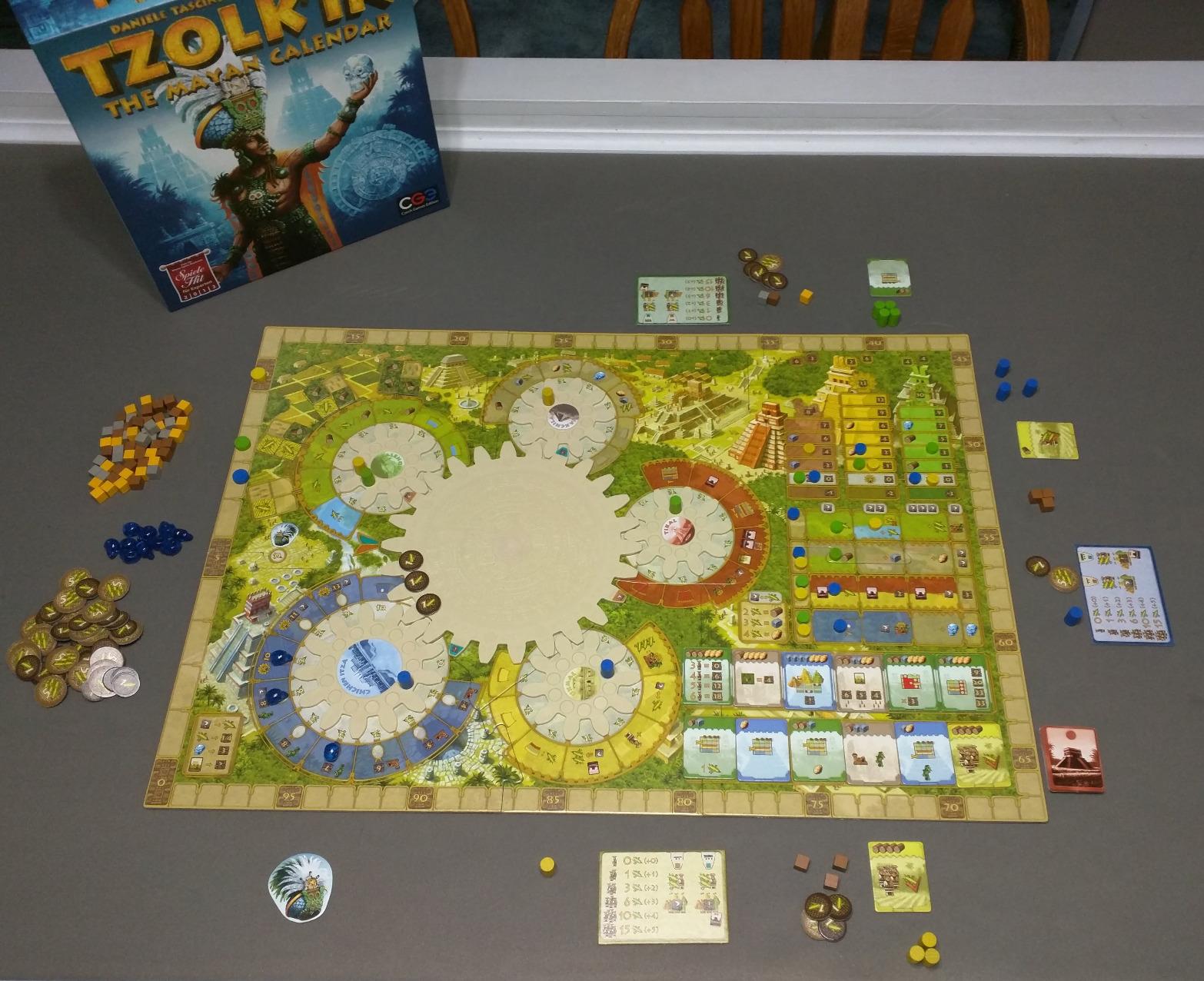
The Mayan theme is woven into the mechanics in a way that feels natural rather than pasted on. Building temples, developing technology, and collecting crystal skulls all tie back to the calendar and gear system. With 90 minutes per session and minimal luck, this is a game for people who enjoy pure strategic competition.
At 4.6 stars with over 300 reviews, Tzolk’in has a slightly lower rating than others on this list, but that reflects its complexity, not its quality. Experienced gamers consistently rank it among the best worker placement games ever made. The learning curve is real, but the reward is a game unlike anything else in your collection.
Who Should Play Tzolk’in
Tzolk’in is best for experienced strategy gamers who enjoy planning several turns ahead. If you love games with minimal luck and deep decision trees, this is one of the finest examples of the genre. It plays well at 2 to 3 players, though 4-player games can stretch past two hours.
Anyone who appreciates innovative mechanical design in board games will find the gear system fascinating. It is not an exaggeration to say no other game does what Tzolk’in does with its physical board.
Gear Timing Strategy
Patience is the key to Tzolk’in. Leaving workers on gears longer yields better rewards, but you must plan around when you will remove them. Focus on two or three gear tracks rather than spreading across all six. The center gear is critical because it provides resources that fuel everything else. Watch what your opponents are building toward, especially on the temple tracks.
9. Champions of Midgard – Viking Combat Worker Placement
Grey Fox Games Champions of Midgard | Viking Themed Strategy Game | 2-4 Players | 90 Minutes
2-4 Players
90 Minutes
Dice Combat System
Viking Norse Mythology Theme
Pros
- Excellent Viking theme fully integrated with mechanics
- Beautiful components and artwork
- Great worker placement with dice combat
- High replayability with different strategies
Cons
- Some luck involved in dice combat
- Can feel long at higher player counts
- No solo mode in base game
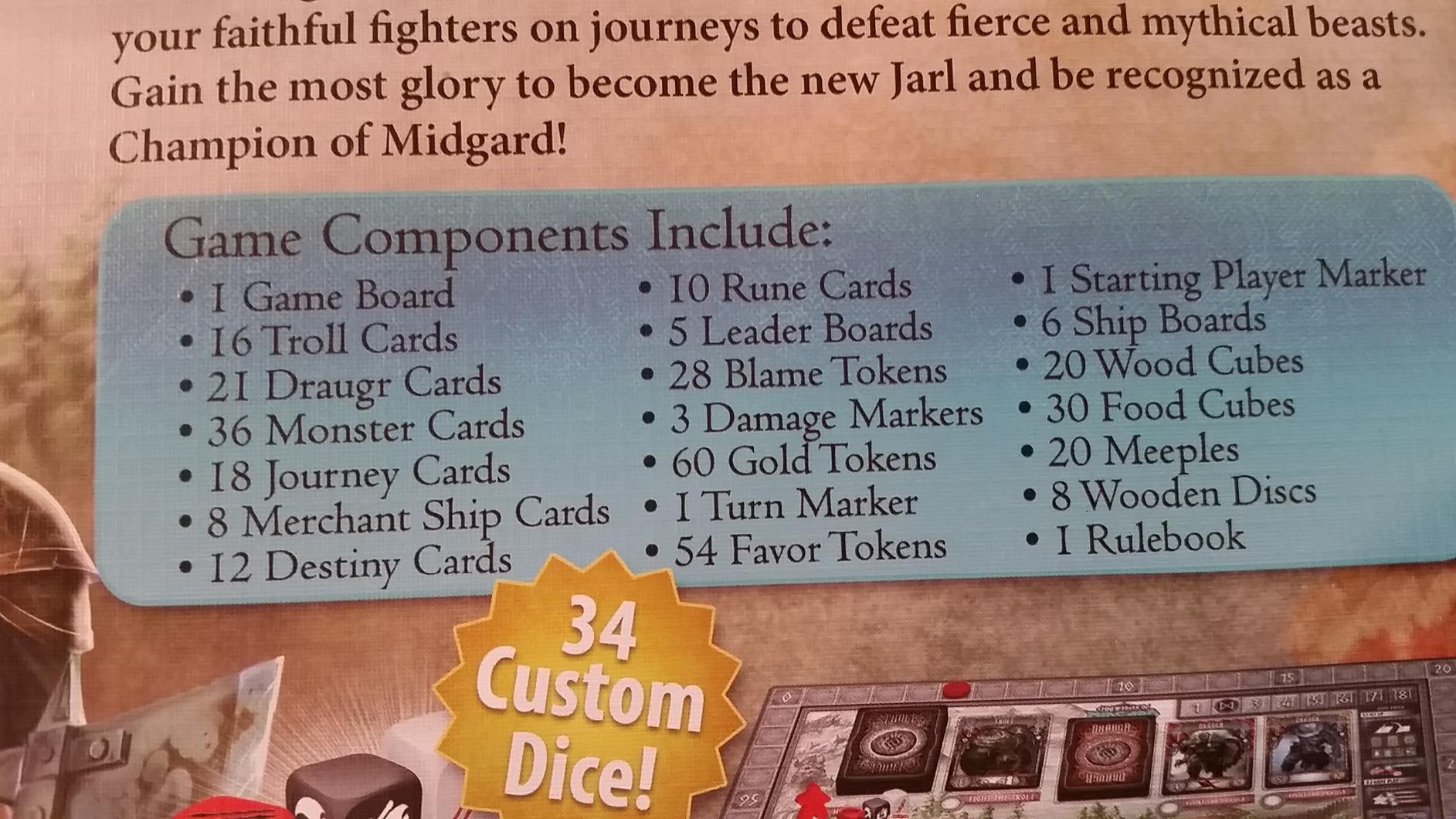
Champions of Midgard combines worker placement with dice-driven combat, and the result is a game that feels genuinely exciting in a way that pure euros rarely achieve. You are a Viking leader defending your city from trolls, draugr, and mythic beasts while recruiting warriors and gathering resources to mount expeditions.
The worker placement layer handles your preparation. You send workers to gather wood, food, gold, and weapons. Then you assign warriors to boats heading toward monster encounters. The combat is resolved with dice, so there is real tension when you roll to fight a troll that has been harassing your coastline.
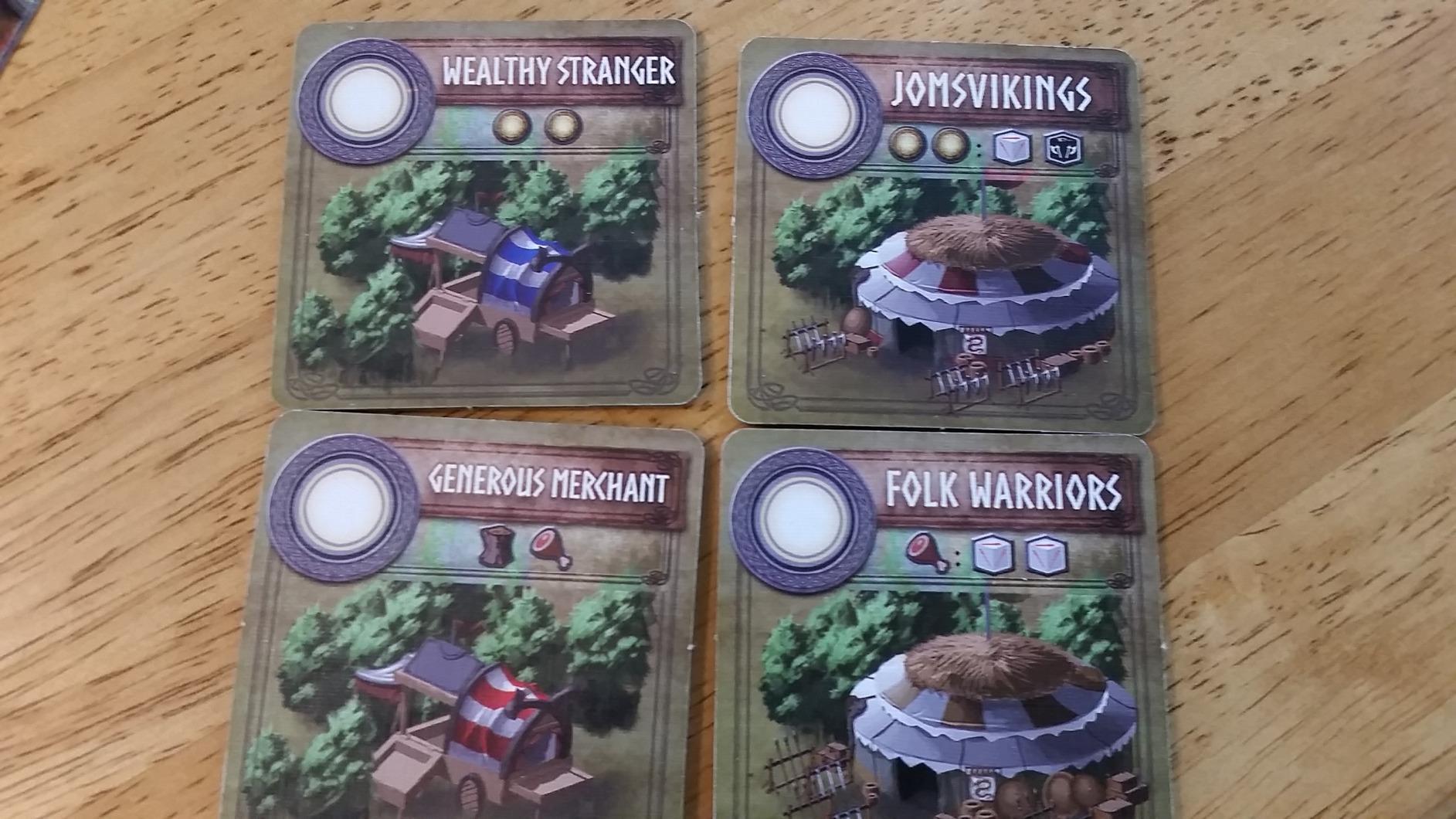
What I love about Champions of Midgard is how the theme drives every mechanic. You are not placing workers on abstract action spaces. You are literally choosing which harbor to sail from and which monster to hunt. The artwork depicts Norse mythology with real reverence, and the components feel thematic.
With 87 percent five-star reviews across over 1,000 ratings, this game has a dedicated following. The Valhalla expansion adds meaningful content if you want more depth, but the base game stands strong on its own. It is one of the best thematic worker placement games available.
Who Should Play Champions of Midgard
If you want a worker placement game with direct confrontation and thematic flair, Champions of Midgard delivers. It suits groups who enjoy a balance of strategy and luck, as the dice combat adds unpredictability without undermining planning. Best with 2 to 4 players, ages 10 and up.
Fans of Norse mythology will appreciate the authentic theme integration. It is also a great stepping stone for gamers who typically avoid euros but enjoy thematic games.
Combat and Expansion Tips
Always bring more warriors than you think you need to a fight. Failing a monster encounter costs you prestige, which is hard to recover. The Valhalla expansion adds fallen warrior mechanics that mitigate bad combat luck and add strategic depth. Focus on completing journey quests early for consistent point income throughout the game.
10. Paladins of the West Kingdom – Deep Medieval Strategy
Renegade Game Studios Paladins of the West Kingdom Strategy Board Game
1-4 Players
120 Minutes
Card Drafting and Worker Placement
Medieval Kingdom Theme
Pros
- Deep strategic gameplay with interdependent systems
- Excellent solo mode with AI opponent
- Paladin deck adds long-term planning layer
- Tight action selection puzzle
Cons
- Box is too small for sleeved components
- Setup time can be lengthy
- May be too complex for beginners
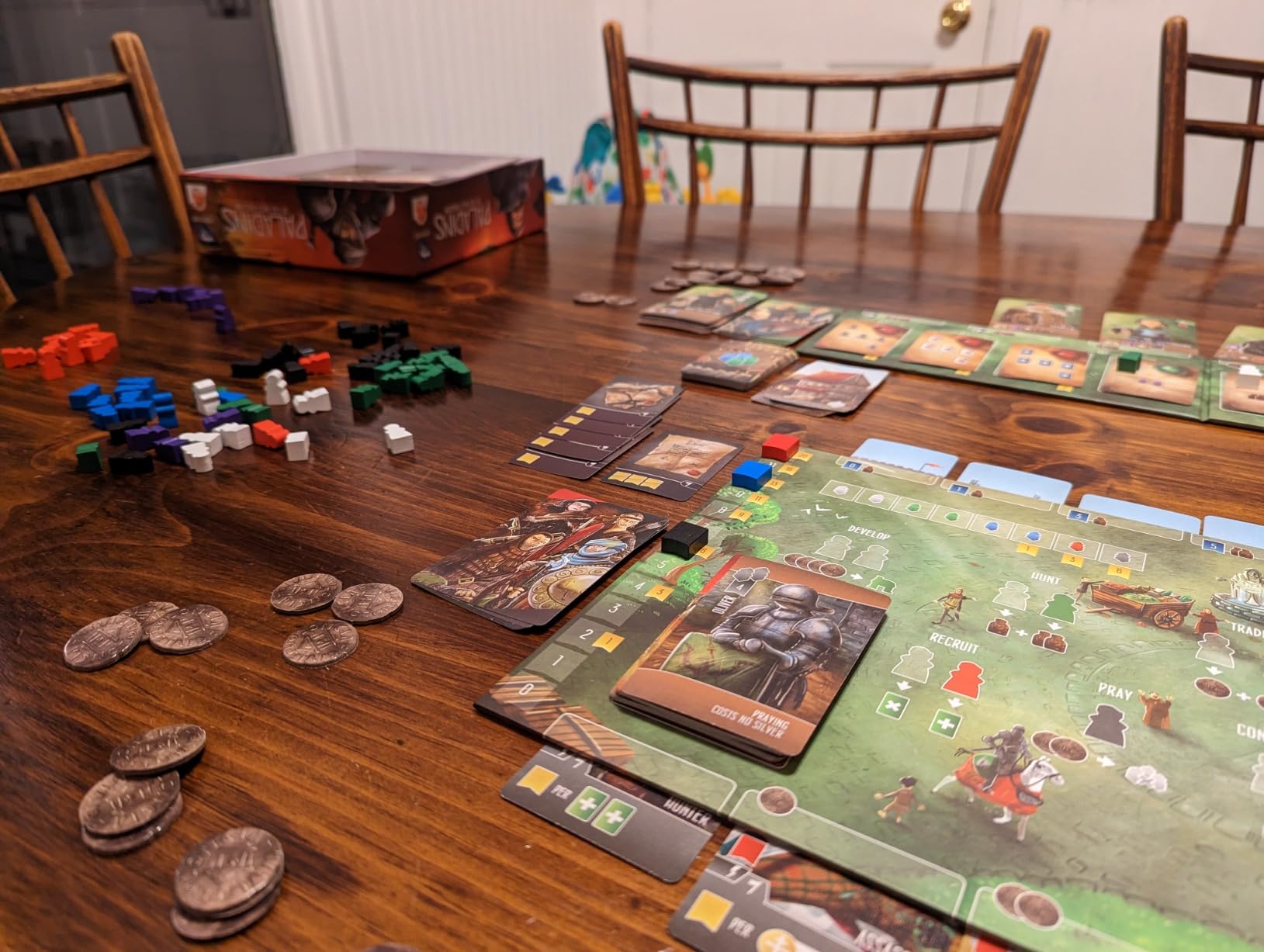
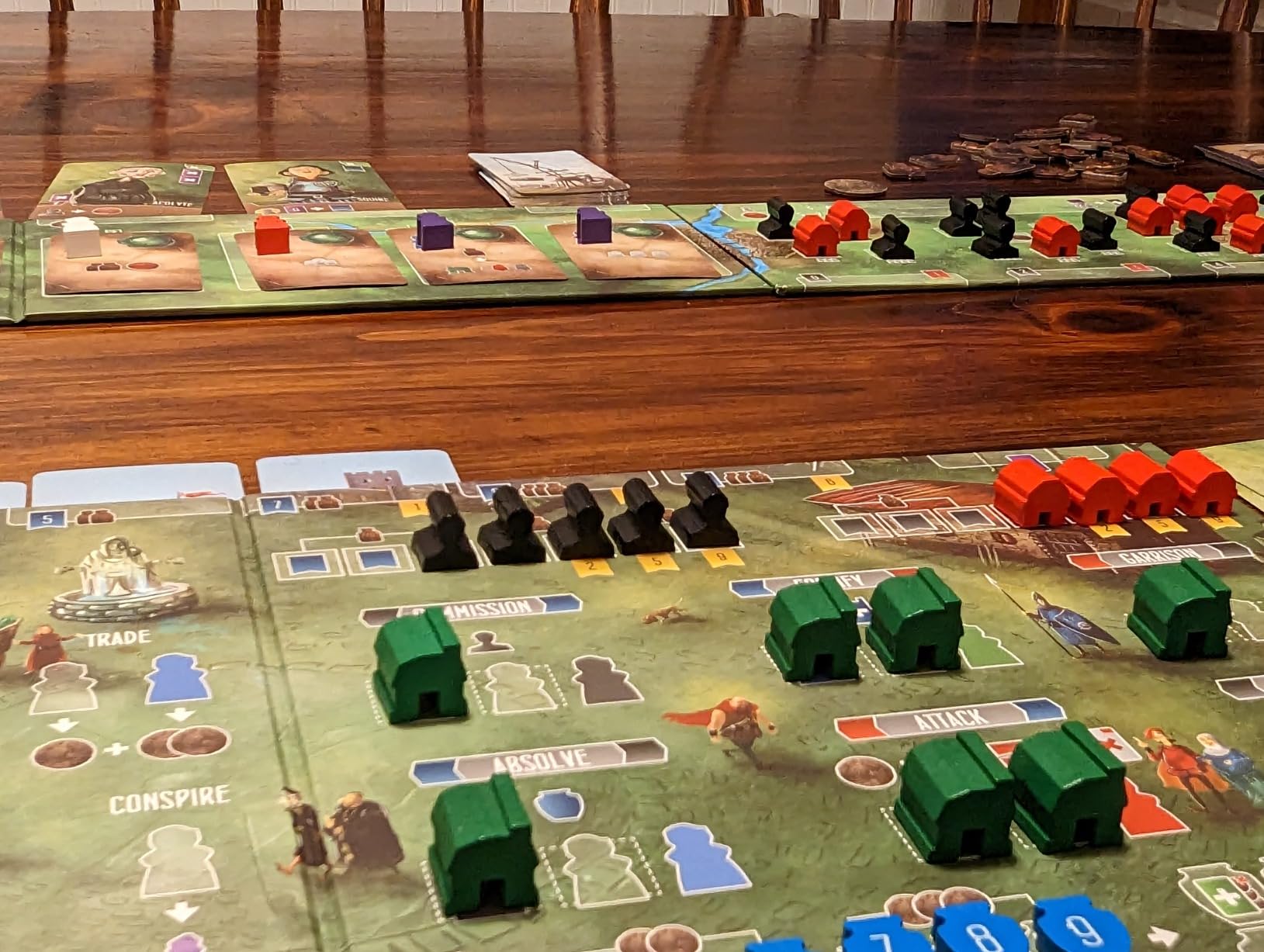
Paladins of the West Kingdom is the heaviest game on this list, and it earns that weight. Set in medieval 900 AD West Francia, you enlist paladins, build outposts, and manage suspicion while competing against outside threats. Every system connects to every other system, creating a deeply satisfying strategic puzzle.
Each round you draw paladin cards with unique abilities that shape your approach for that round. The action selection is tight. You have limited actions and more things you want to do than actions available. That constraint forces meaningful prioritization every single turn.
The suspicion and influence tracks add a layer of moral decision-making. High suspicion can penalize you, but some of the most powerful actions require flirting with danger. This creates delicious tension throughout each game. Our group found that games are often decided by narrow margins, usually 5 to 10 points.
With 85 percent five-star reviews, experienced gamers rate Paladins as one of the best heavy worker placement games. The artwork from Mihajlo Dimitrievski is gorgeous, and the component quality matches the gameplay depth. This is a game for people who want to think hard and feel rewarded for it.
Who Should Play Paladins
Paladins is for experienced strategy gamers who enjoy heavy, interconnected systems. If you like games where every decision ripples through multiple scoring opportunities, this is one of the finest examples. It plays particularly well at 2 players, where the competition for key spaces is intense.
Avoid this as your first worker placement game. Start with Stone Age or Viticulture and work your way up. Paladins rewards experienced players who can appreciate its depth.
Complexity and Learning Curve
Expect your first game to take closer to two hours as you reference the rulebook frequently. The iconography takes a few rounds to internalize. By your second or third play, turns move much faster. The paladin deck is the key to mastery. Learning which paladins synergize with which strategies transforms the game from overwhelming to elegant.
11. Scythe – Dieselpunk Engine Building Epic
Stonemaier Games: Scythe – A Strategy Board Game by Jamey Stegmaier
1-5 Players
115 Minutes
Engine Building and Area Control
Dieselpunk 1920s Alternate History
Pros
- High replayability with asymmetric factions
- Streamlined action selection keeps pace
- Minimal luck with card-based combat
- Beautiful 1920s artwork by Jakub Rozalski
Cons
- Steep learning curve for casual gamers
- Complex 30-plus page rulebook
- Expensive expansions
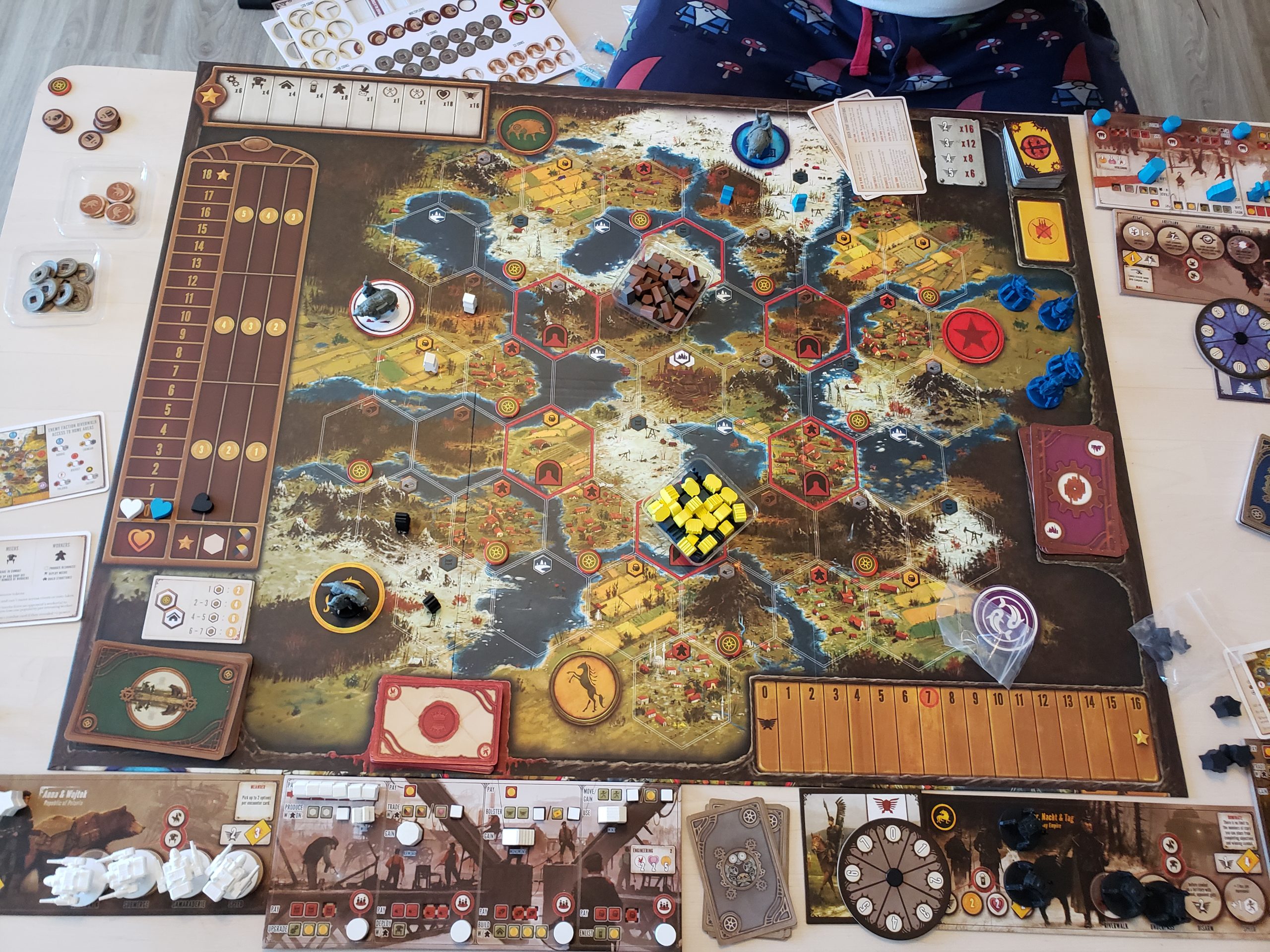
Scythe is a giant in the board gaming world, and for good reason. Set in an alternate-history 1920s Eastern Europe with towering mechs and beautiful retro-futuristic artwork, it combines worker placement with engine building and area control. Each player controls a unique faction with asymmetric abilities, and every game tells a different story.
The action selection system is elegant. You have a player mat with four columns of paired actions. Choosing one column lets you perform the top action, the bottom action, or both. This means you never wait for your turn to become interesting. You always have meaningful choices.
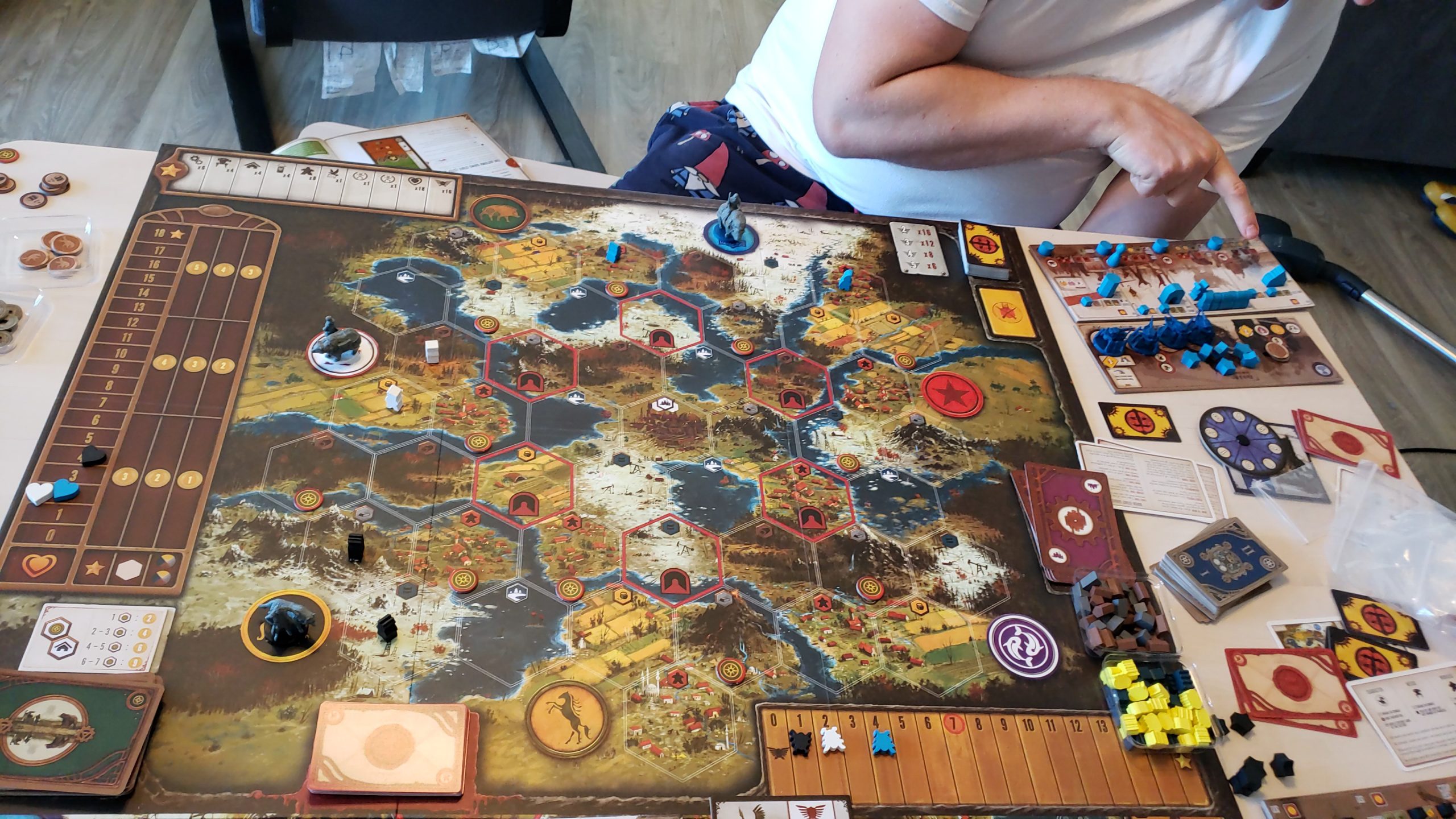
Combat is resolved with cards and power dials rather than dice, which means planning trumps luck. Encounters scattered across the board give you narrative choices that affect your strategy. The Automa solo mode is widely considered one of the best in all of board gaming.
With over 5,300 reviews and 90 percent five-star ratings, Scythe has earned its place as a modern classic. Our team has played it at every player count from 1 to 5, and it delivers a satisfying experience every time. The 115-minute playtime is well-spent.
Who Should Play Scythe
Scythe is ideal for gamers who want a rich, immersive experience with deep strategy and minimal randomness. If you enjoy games where you build an engine over 2 hours and watch it pay off, this is peak design. It works for 1 to 5 players and rewards repeated plays as you learn each faction.
Fans of alternate history and dieselpunk aesthetics will love the setting. The artwork by Jakub Rozalski is genuinely gallery-worthy and makes Scythe one of the most visually striking games on any table.
Faction Strategy and Asymmetry
Each faction pairs with a different player mat, creating 25 possible combinations. Some factions excel at military expansion while others focus on economic engine building. Learn your faction’s strengths before the game starts. Early encounters can set your strategy for the entire session. Do not neglect popularity, as it multiplies your final score based on your star count and territory controlled.
12. Flamecraft – Dragon-Fueled Family Fun
Flamecraft Board Game – Ignite the Ultimate Fantasy Adventure Board Game! Strategy Game, Fun Family Game for Kids and Adults, Ages 10+, 1-5 Players, 60 Minute Playtime, Made by Lucky Duck Games
1-5 Players
60 Minutes
Resource Gathering and Spell Crafting
Dragon Fantasy Theme
Pros
- Beautiful artwork and stunning visuals
- Easy to teach to new players
- Great replayability with multiple strategies
- Works well for family and adult gaming groups
Cons
- Many rules to learn initially
- Game can run long with more players
- Requires large table space
Flamecraft is the most family-friendly game on this list, and it earns that distinction without sacrificing strategic depth. You play as flamekeepers working with artisan dragons to enchant shops in a fantasy town. The dragon artwork is genuinely beautiful, and the game includes a neoprene town mat that elevates the table presence.
The worker placement here is approachable. You place your dragon token at a shop to gather resources or enchant the shop for bonus effects. Fancy dragons provide special abilities that create satisfying combos. It plays quickly at around 60 minutes, making it a great weeknight option.
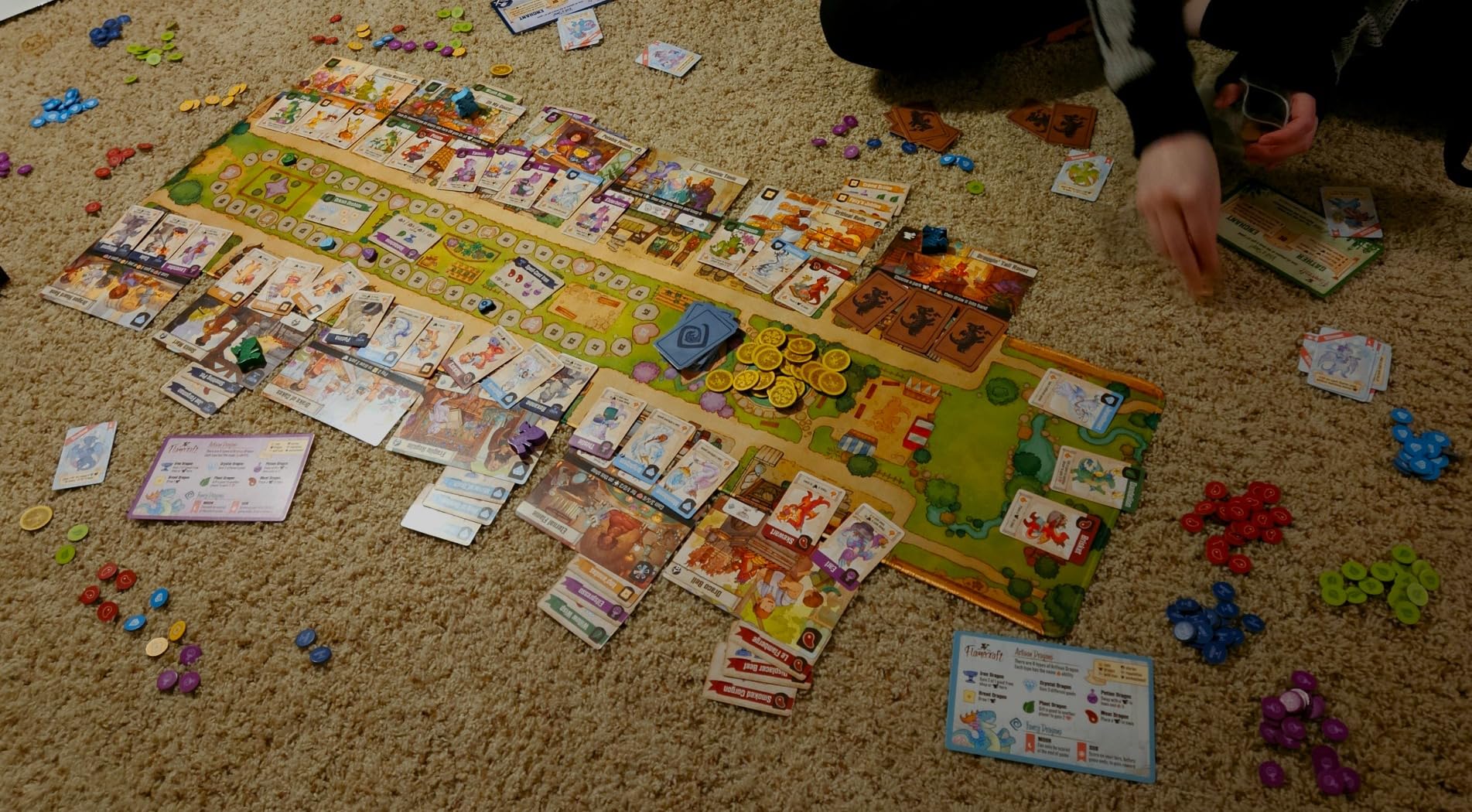
What surprised me is how much replayability is packed into the box. The combination of different shop cards, dragon abilities, and enchantment effects means every game feels distinct. With 90 percent five-star ratings and over 680 reviews, the community agrees this is something special.
Flamecraft also includes a solo mode and adjustable game length, so you can play a shorter or longer session depending on your group’s preference. For families with kids aged 10 and up, this is one of the best worker placement games to introduce the mechanic.
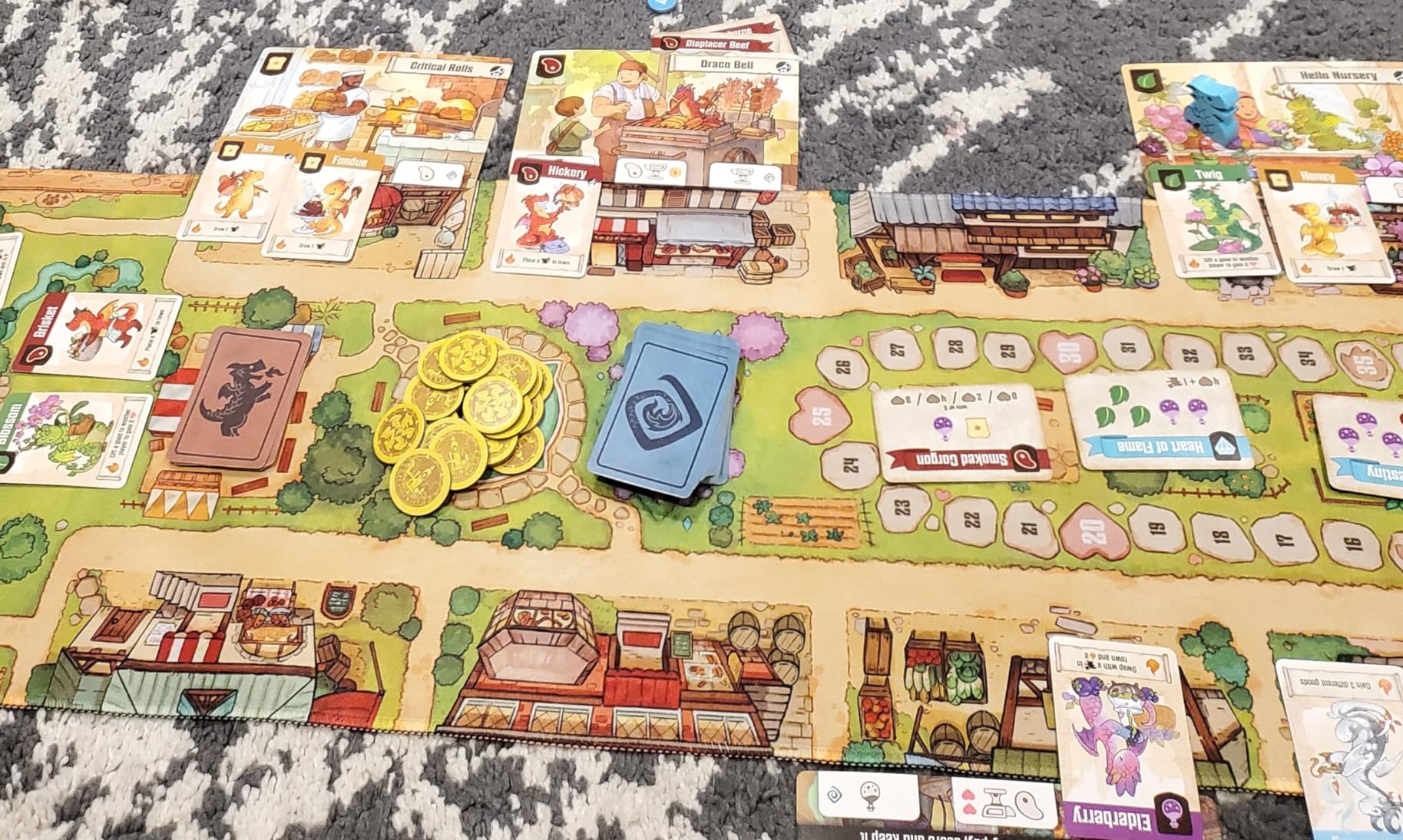
Who Should Play Flamecraft
Families looking for a gateway into worker placement should start here. Flamecraft is accessible enough for kids aged 10 and up, yet strategic enough to keep adults engaged. It also works great for couples and casual gaming groups who want something beautiful and satisfying without a heavy time commitment.
If you love dragons and fantasy aesthetics, Flamecraft delivers charm in spades. The artwork on every card is detailed and colorful, making it a visual treat.
Family Gaming Sessions
Flamecraft works best when you keep the pace moving. Each turn should take under a minute once everyone knows the rules. Focus on enchanting shops early to build passive income. The companion dragons are powerful, so prioritize recruiting them when they appear. For family play, use the shorter game variant for the first few sessions until everyone is comfortable.
How to Choose the Best Worker Placement Board Game
Picking the right worker placement game depends on who you are playing with and what experience you want. Here is what our team recommends considering before you buy.
Player Count Matters More Than You Think
Some worker placement games shine at specific player counts. Viticulture and Scythe handle a wide range well, from 1 to 6 and 1 to 5 respectively. Others, like Stone Age, truly need 3 or 4 players to feel competitive. Five Tribes can suffer from downtime at 4 players. If you mostly play with 2, prioritize Everdell, Paladins of the West Kingdom, or The White Castle, which play exceptionally well as duels.
Complexity and Learning Curve
If your group is new to worker placement, start with Stone Age or Flamecraft. Both teach the core mechanic without overwhelming players with rules. From there, step up to Viticulture or Everdell for medium weight. Save Paladins of the West Kingdom and Tzolk’in for groups that enjoy heavier strategy. The jump from Stone Age to Paladins is significant, so build up gradually.
Theme Drives Engagement
Worker placement games cover every theme imaginable. Vikings, medieval castles, prehistoric tribes, fantasy dragons, wine-making, alternate history, and ancient ruins. Our experience shows that groups engage more when the theme resonates. Pick a theme your group already enjoys and the rules will click faster.
Solo Play Options
Several games on this list include genuine solo modes. Lost Ruins of Arnak, Architects of the West Kingdom, The White Castle, Viticulture, Scythe, and Flamecraft all include solo variants. If you game alone frequently, these offer the best solo worker placement experiences.
Replayability and Value
Games with variable setups, like Lost Ruins of Arnak and Five Tribes, offer more replayability out of the box. Games with expansions, like Viticulture and Champions of Midgard, can grow with your interest. Consider how many plays you expect to get before investing. Most of the games on this list offer dozens of unique sessions.
FAQ
What is the quintessential worker placement game?
Viticulture Essential Edition is widely considered the quintessential worker placement game. It presents the mechanic in its purest form: you place workers on action spaces to build a vineyard, harvest grapes, and fulfill wine orders. The season-based structure, visitor card variety, and clean design make it the standard by which other worker placement games are judged.
Is Catan a worker placement game?
No, Catan is not a worker placement game. Catan uses a settlement and road-building mechanic with resource production based on dice rolls. Worker placement involves assigning tokens to specific action spaces on a board, where each space can typically only be used by one player per round. Games like Stone Age, Viticulture, and Everdell are true worker placement games.
What are the best worker placement games for beginners?
Stone Age and Flamecraft are the best worker placement games for beginners. Stone Age uses intuitive prehistoric resource gathering with dice rolling that adds excitement without overwhelming new players. Flamecraft offers beautiful dragon-themed gameplay that is easy to teach. From there, step up to Viticulture or Everdell for more strategic depth.
Which worker placement games work well for 2 players?
Paladins of the West Kingdom, The White Castle, Everdell, Viticulture, and Tzolk’in all play excellently with 2 players. Paladins and The White Castle are particularly tight and competitive at two. Games like Five Tribes and Stone Age are better with 3 or more players for the most engaging experience.
What makes worker placement games different from other strategy games?
Worker placement games create strategic tension through scarcity. When one player claims an action space, others cannot use it that round. This forces players to prioritize, adapt when key spaces are taken, and plan multiple turns ahead. Unlike area control or deck building, worker placement focuses on timing, blocking, and resource optimization within a shared action framework.
Final Thoughts on the Best Worker Placement Board Games
Worker placement remains one of the most rewarding mechanics in tabletop gaming, and 2026 has given us an incredible selection to choose from. Viticulture Essential Edition stands as our top pick for pure worker placement excellence. Everdell delivers the best blend of art and strategy. Flamecraft and Stone Age offer the most accessible entry points for new players.
Whether you want deep strategic weight from Paladins of the West Kingdom, innovative mechanics from Tzolk’in, or thematic combat from Champions of Midgard, there is a worker placement game on this list that fits your group perfectly. Every game here earned its spot through real play sessions and genuine enthusiasm from our team.
Pick one that matches your group’s experience level and theme preference, clear off the table, and start placing those workers. The best worker placement board games are the ones that get played, not the ones that sit on a shelf.