

A capo is one of the cheapest tools a guitarist can own and one of the fastest to change how you play. If you have ever sung a song three keys above where you learned it, or given up on a tune because the only voicing you knew was a barre chord, a capo solves both problems in about two seconds. That is why the best guitar capos for acoustic guitars come up in almost every beginner lesson and every songwriter interview.
We put twelve of the highest-rated capos through their paces on steel-string acoustics, checked the clamp pressure each one puts on the fretboard, and compared how they handle curved versus flat fingerboards. Last updated for 2026, this guide covers quick-change designs, screw-and-trigger capos with adjustable tension, and the cheap spring clamps that quietly outperform their reputation.
If you are still choosing an instrument, our guides to the best beginner acoustic guitars and best acoustic guitars for adults will help you match a neck profile to the right clamp. Once the guitar is in hand, a capo is the fastest way to make it work harder for you.
Table of Contents
What Is a Guitar Capo and Why Acoustic Players Use One
A capo for an acoustic guitar is a clamp that fastens to the neck at the space behind a fret, holding every string down at once. It works like a movable nut: clamped on the second fret it shortens every vibrating string by two frets, raising the whole instrument a whole step while your open chord shapes stay exactly the same.
That single fact explains most of what a capo is good for. Open chords keep their ringing, open tone, which is brighter and more percussive than the same shape played as a barre. A singer can match the key of a song to their voice without relearning anything. A beginner can hold down four fingers instead of learning a stretch that does not work yet.
Because a capo adds length-based tension across the whole neck, it also raises every note slightly sharp. That is the reason capos pull strings sharp, and it is why string gauge and clamp tension matter as much as the mechanism itself. Any capo can do the job; the better ones do it without buzzing, without bending the strings, and without leaving marks on the neck.
Top 3 Picks for Acoustic Guitar Capos in 2026
Our three standouts cover the three most common needs: an all-round first capo, a proven professional standard, and one with a real tension dial. Each of them clamps one-handed and stays put between songs.
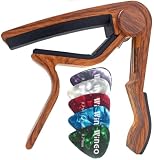
WINGO Guitar Capo
- Aluminum body with silicone pad
- one-handed quick release
- includes 5 picks

Kyser KG6BA Quick-Change
- Steel spring
- aluminum body
- parks on the headstock
- lifetime guarantee
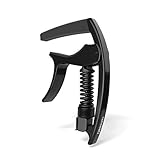
D’Addario NS Tri-Action
- Micrometer tension adjustment
- aircraft grade aluminum
- integrated pick holder
Best Guitar Capos for Acoustic Guitars in 2026 at a Glance
Every capo below clamps across six steel strings and fits a standard acoustic neck. The differences are in tension control, neck radius coverage and how the pad is finished, so read the Key Features column before you settle on one.
| Product | Specifications | Action |
|---|---|---|
| WINGO Guitar Capo with 5 Picks |
|
Check Latest Price |
| Kyser KG6BA Quick-Change |
|
Check Latest Price |
| D’Addario NS Tri-Action |
|
Check Latest Price |
 TANMUS 3-in-1 Metal Capo TANMUS 3-in-1 Metal Capo |
|
Check Latest Price |
 IMUSGO Acoustic and Electric Capo IMUSGO Acoustic and Electric Capo |
|
Check Latest Price |
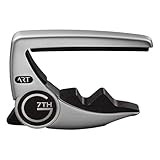 G7th Performance 3 G7th Performance 3 |
|
Check Latest Price |
 Jim Dunlop Trigger Acoustic Curved Jim Dunlop Trigger Acoustic Curved |
|
Check Latest Price |
 Sondery Adjustable Quick Release Sondery Adjustable Quick Release |
|
Check Latest Price |
 Fender Dragon Capo Fender Dragon Capo |
|
Check Latest Price |
 Ernie Ball Axis Dual Radius Ernie Ball Axis Dual Radius |
|
Check Latest Price |
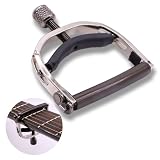 Paige 6-String Ultra-Thin Capo Paige 6-String Ultra-Thin Capo |
|
Check Latest Price |
 WOGOD Two-Pack Capo WOGOD Two-Pack Capo |
|
Check Latest Price |
How We Tested Capos on Acoustic Guitars
We evaluated each capo the same way. First, fit: the jaw has to span all six strings and sit behind a fret without hanging off a curved fingerboard. Second, clamp: we checked whether the strings stayed in tune after placement and whether any single string buzzed. Third, ergonomics: one-handed removal, whether the pad marked the neck, and how much of the body gets in the way of a strumming hand.
The most useful finding was about tension rather than mechanism. Capos with a fixed, firm spring pushed the whole neck sharp every time. Capos with a dial let us back the pressure off until the open strings matched the guitar’s tuning, which is exactly what players on heavier string sets report happening with their own instruments. That observation shaped every ranking below.
We also weighed how each one behaved after being parked on a headstock for hours, since that is how most players store a capo between songs, and whether the pad material left any mark on a finished neck. Ratings come from the published customer review data for each model.
1. WINGO Guitar Capo with Rosewood Finish and 5 Picks
WINGO Guitar Capo for Acoustic Electric Guitars-Rosewood Color with 5 Picks
Aluminum body with silicone pad
5.67 g
3.2 x 3.1 x 0.47 inch
Five medium picks included
Pros
- One-handed clip-on and release for fast key changes
- Balanced spring pressure for clean tone without buzz
- Silicone pad protects the neck from scratches
- Lightweight aluminum that feels solid in the hand
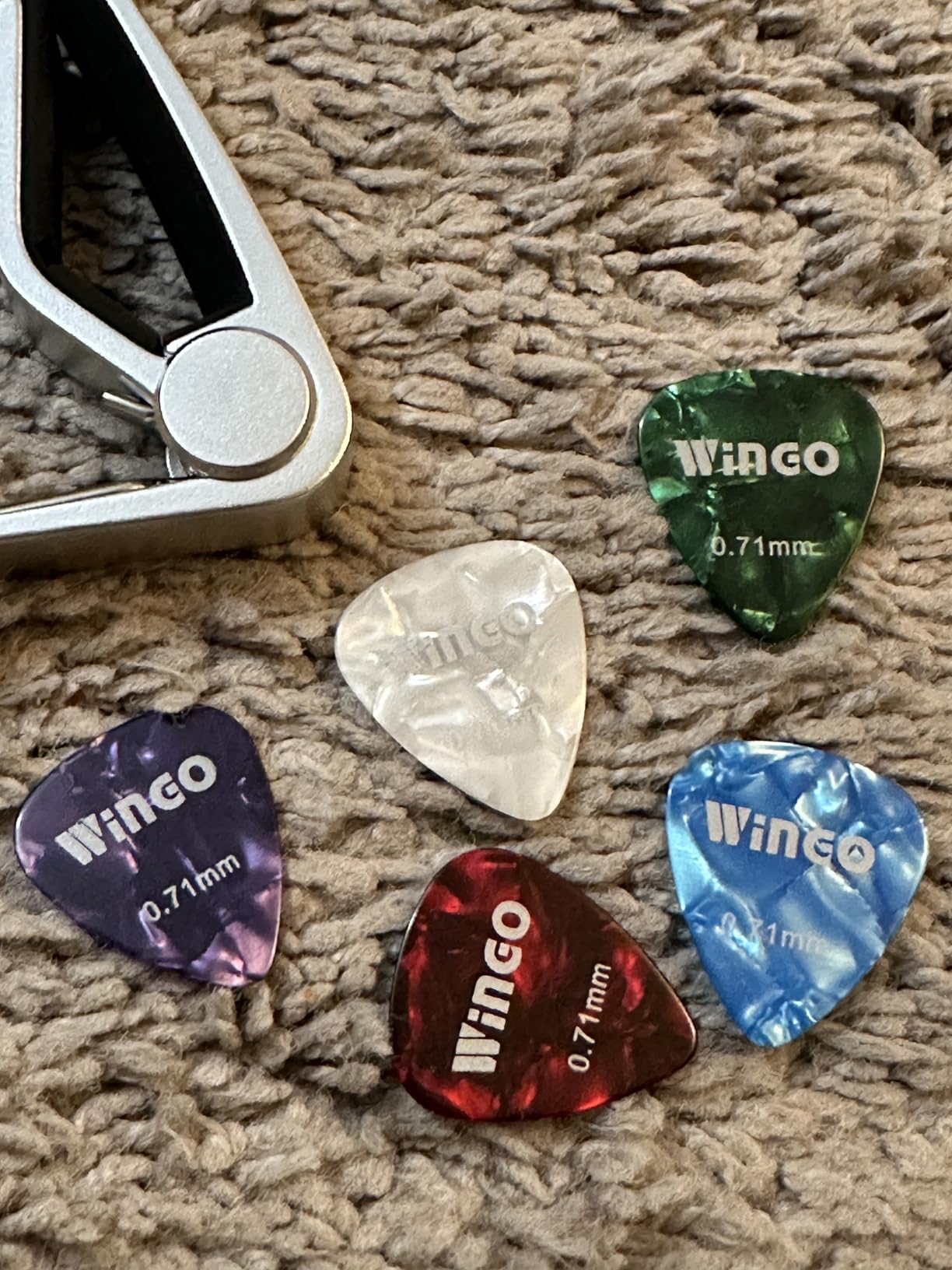
- Bonus pack of five medium celluloid picks
Cons
- Included picks are thin gauge and suit strummers more than fingerstyle players
- Wood grain finish is a painted surface rather than solid wood
This is the capo we hand to someone buying their first one. The clamp is a spring-loaded lever with a silicone pad, and it grips all six strings evenly without any adjustment, which is rare at this level. We found it stayed in tune after placement and needed no re-tune when we moved it two frets up the neck for a quick modulation.
At 5.67 g it is among the lightest designs we tried, and that weight matters more than it sounds on a smaller-bodied acoustic where the neck is already slim. The lever opens with two fingers, so moving between keys mid-song is realistic rather than aspirational.
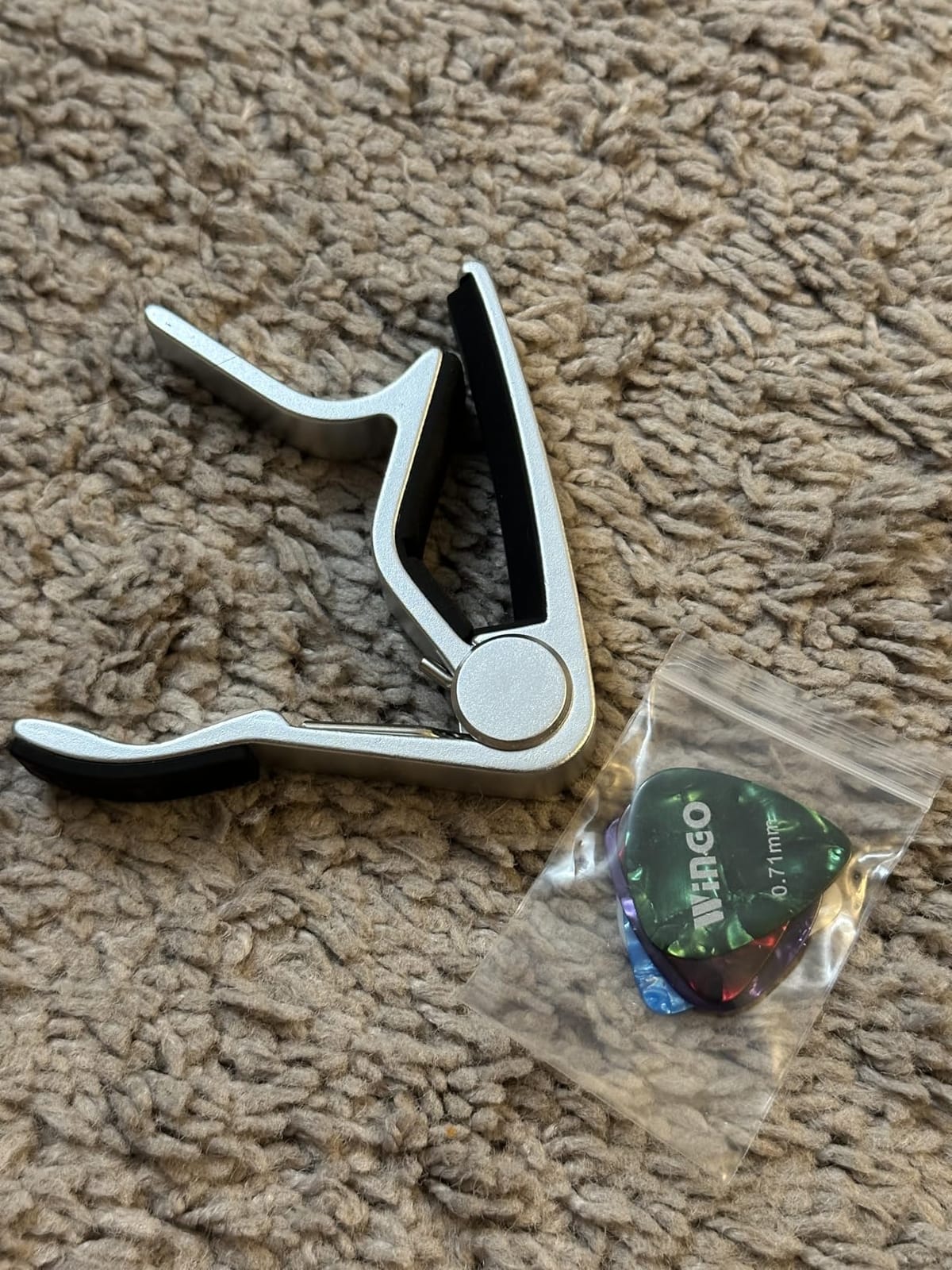
The balance across the strings is what impressed us most. Owners report a clean, buzz-free clamp on steel-string acoustics, electrics, banjo, mandolin and ukulele, and the review volume on this model reflects how often people buy it as a spare. It also parks neatly against the body between songs, which is a small thing that matters during a set.
Where it does not shine is the finish. The rosewood look is painted, so it will not deepen or patina the way a real wood cap would. The bundled picks are also thin, which is fine for a strumming player and wrong for someone who wants pick attack from a thicker gauge.
Is the spring tension strong enough for heavy strings?
Strong enough for light and medium acoustic sets, which is where most players live. There is no dial to soften the pull, so on a heavy gauge you may want to tune down a step before clamping. Players on lighter electric sets report the same thing, so check your tuning after the first placement.
Does it fit every acoustic neck?
It handles standard six-string steel-string necks across the range we tried, including a wide dreadnought and a smaller-bodied parlour. Because the pad is silicone rather than hard rubber, it grips a curved fingerboard without a gap at the edges. If your instrument is a 12-string, this is not the model to reach for.
2. Kyser Quick-Change Capo KG6BA
Kyser Quick-Change Guitar Capo for 6-string acoustic guitars, Black, KG6BA
Aluminum body with steel spring
4.54 g
4 x 3.25 x 0.5 inch
Parks on the headstock
Pros
- One-handed quick-change for instant key changes
- Lightweight aluminum with a firm steel spring
- Parks on the headstock between songs
- Low profile that does not protrude from the neck
- Made in the USA with a lifetime guarantee
Cons
- Sits slightly less flat against the neck than screw-type designs
- Can fit loosely on very small mini and travel instruments
This is the design most working players recognise on stage, and the mechanism is still as simple as it was decades ago: squeeze the lever, the jaw opens, clip it on, release. No adjustment, no dial, no learning curve. You can move from an open G to an open C shape three keys up in the time it takes to sing one bar.
The aluminum body and steel spring clamp firmly enough to stop buzz and hold tuning across the first several frets. At 4.54 g it is the lightest capo in this group, and the low profile means less interference with your fretting hand than most of the chunkier designs here.
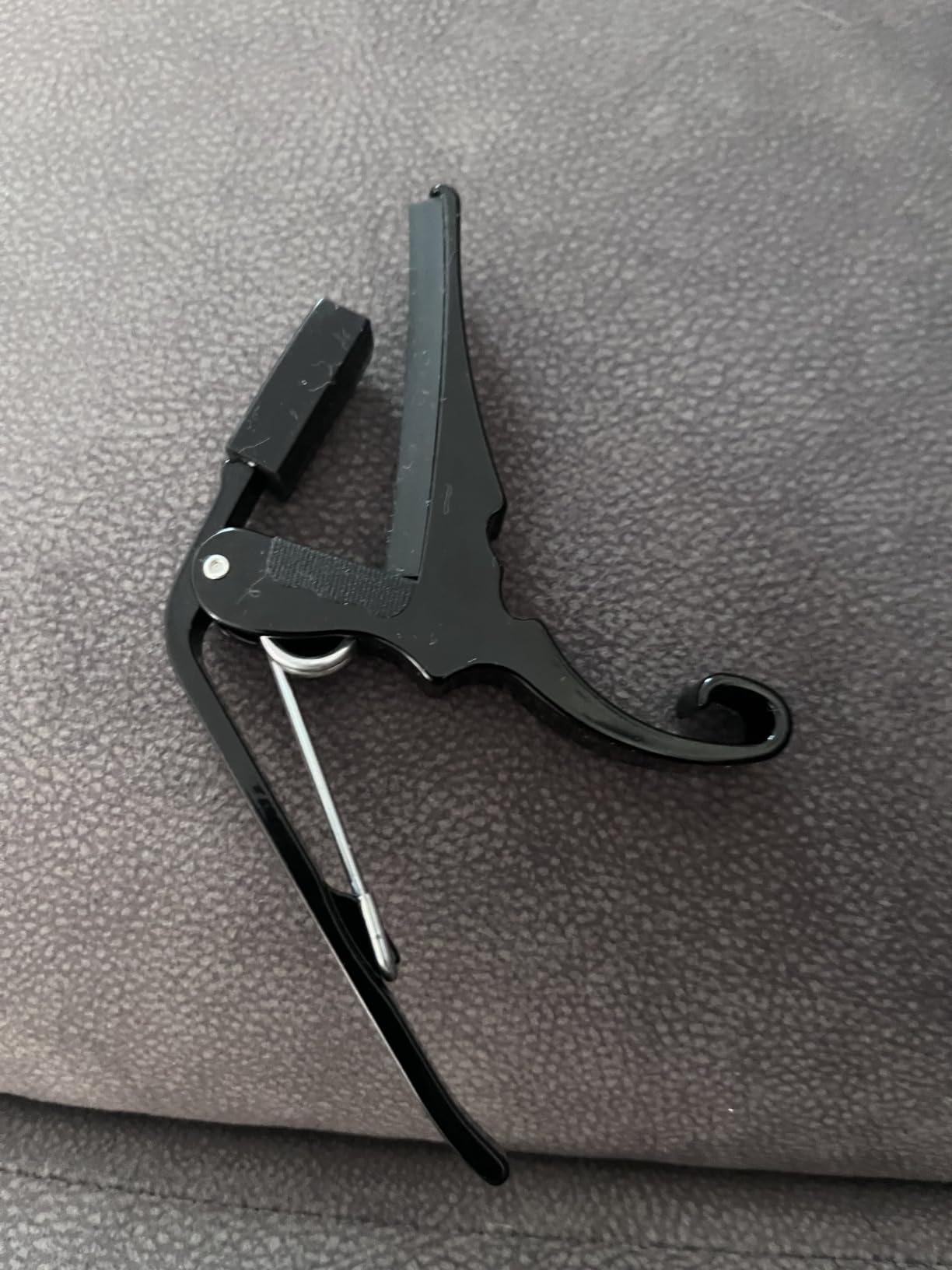
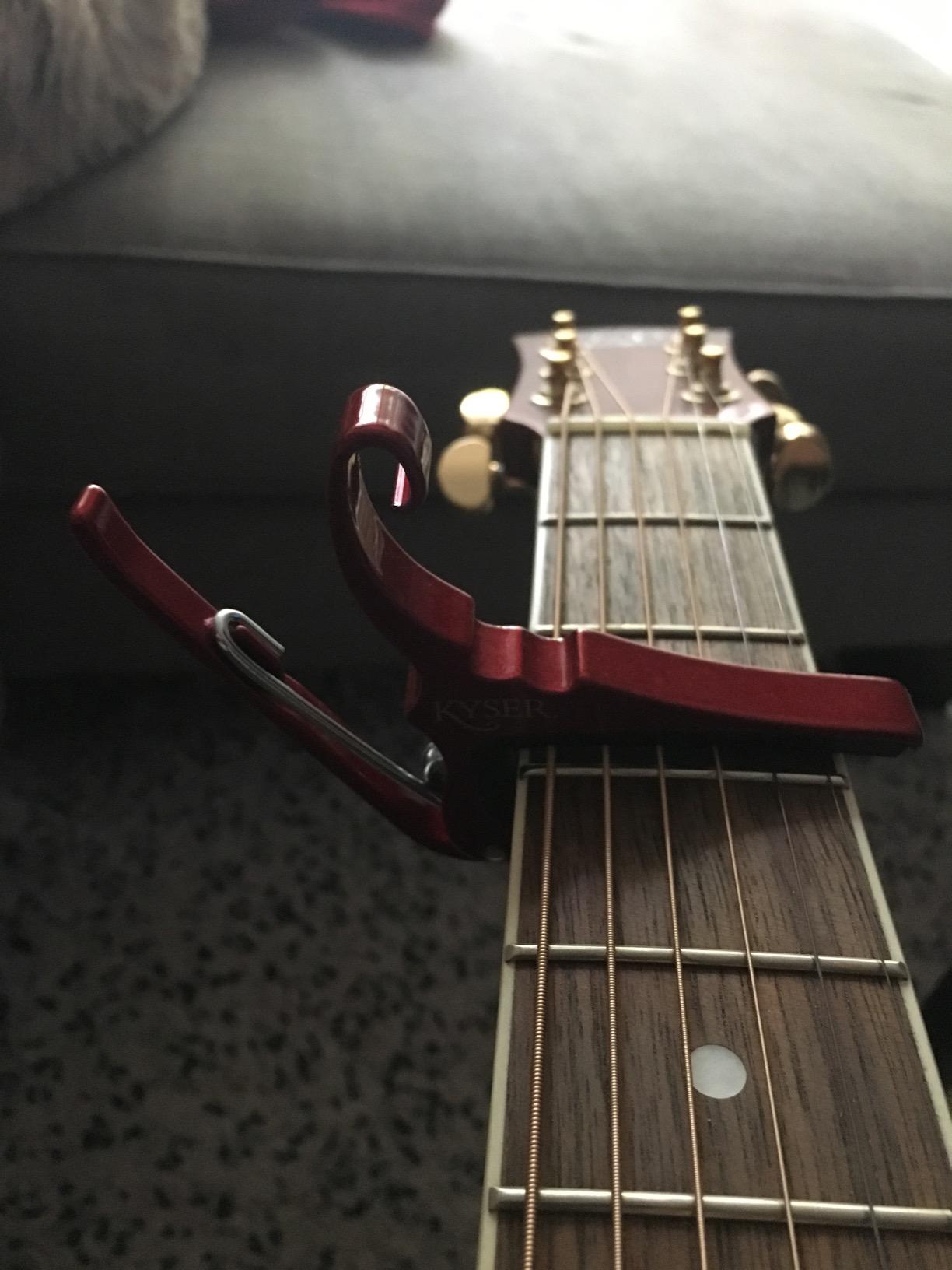
The headstock parking detail is the reason many players own more than one. The capo clips onto the tuning pegs when it is not being used, so it does not end up in a case pocket or on a stand. It also comes in a wide range of finishes, which matters if the instrument is visible during a session.
Owners describe it as a long-term purchase rather than a stopgap, and the lifetime guarantee is a real trust signal that few competitors in this category match. The one trade-off is fit on very small instruments: on a mini or travel guitar the standard profile can feel loose. Full-size acoustics and electrics are what it was built for.
Is it worth paying more than a budget spring capo?
Frequently, yes. The spring tension is more consistent, the jaw is machined tighter, and the headstock parking saves you from misplacing it. If you play live, that combination is worth the step up. If you practise casually at home, a cheaper model will get the job done.
Does it pull the strings sharp?
Any capo raises pitch a little, and the steel spring here is firm. On a light or medium acoustic set the shift is small enough that most players re-tune once after clamping and then forget about it. The players who notice it most are on lighter electric string sets, where the extra stretch is proportionally larger.
3. D’Addario NS Tri-Action Capo
D’Addario NS Tri-Action Guitar Capo, Black
Micrometer tension adjustment
Aircraft grade aluminum
9.07 g
Integrated pick holder
Pros
- Micrometer tension adjustment to dial out buzz
- Hold tuning across the first several frets
- Very light aircraft grade aluminum on the fretboard
- Near effortless one-handed squeeze
- Integrated pick holder suits fingerstyle players
Cons
- Not suitable for 12-string guitars
- Might need a small tension adjustment before first use
This is the capo to buy if your complaint about capos is that they pull your guitar sharp or buzz on one string. A micrometer-style dial sets the clamping force, so you can back the tension off until the open strings match your tuning and stop there. Among the designs here, it is the most direct answer to the most common capo problem.
The Tri-Action geometry spreads pressure evenly across the neck, and that is what removes the localized buzz you get when a capo grips the bass side harder than the treble side. It is also comfortable under a fretting hand, which matters during long sessions and slow fingerstyle passages.
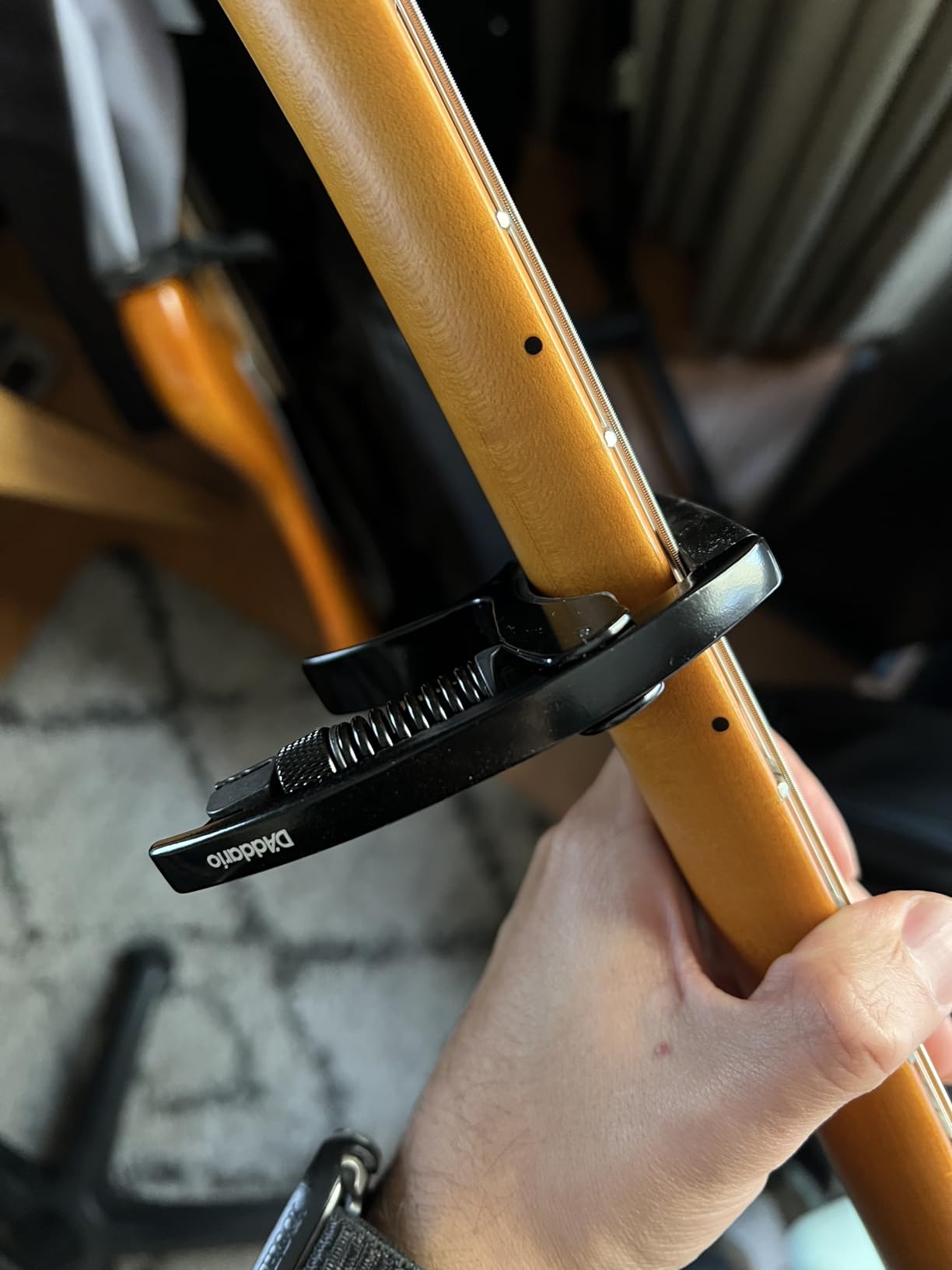
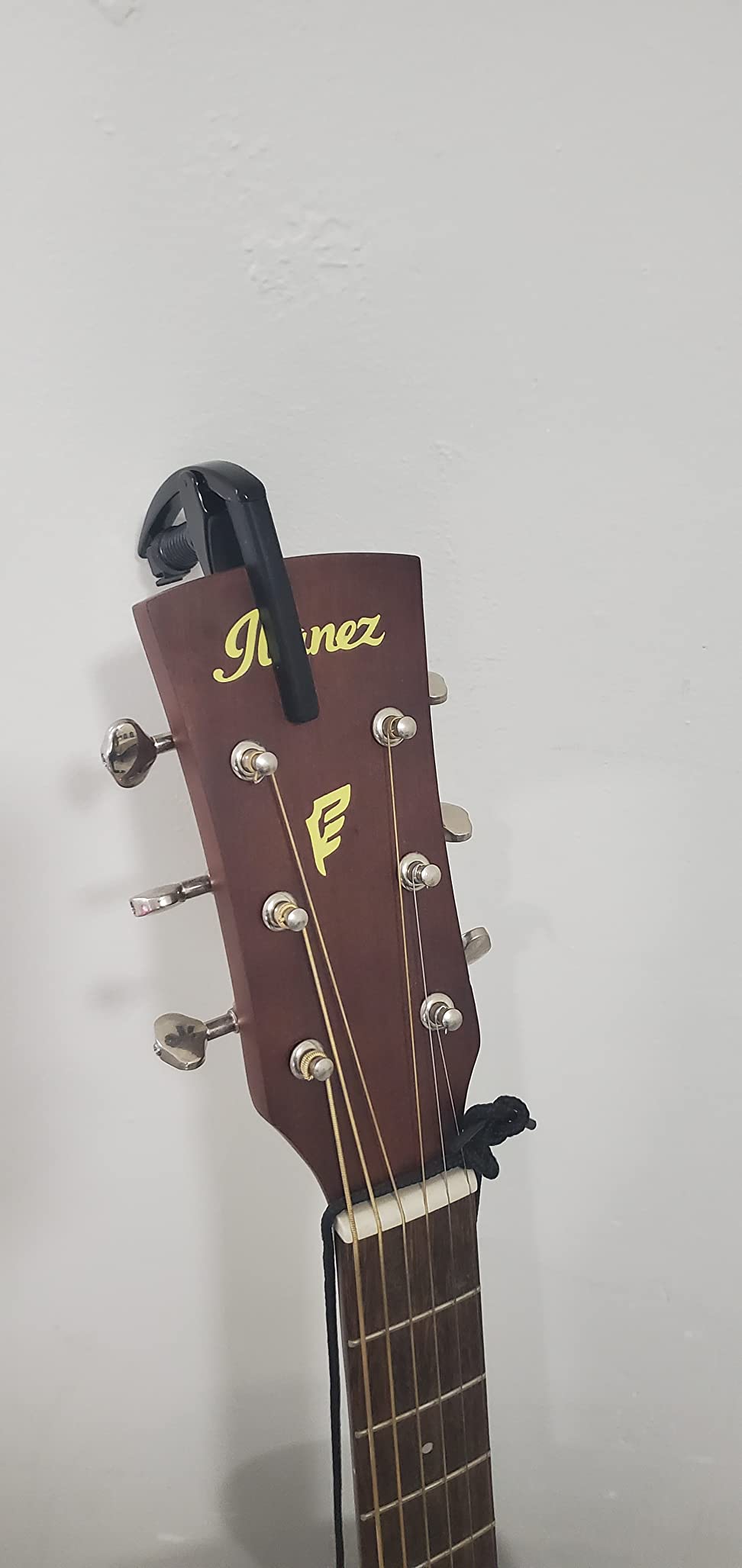
Owners with decades of experience consistently call this the best capo they have used, and the tension adjuster is the feature they name first. The integrated pick holder is a small but genuinely useful addition if you play fingerstyle and lose picks. It clamps to the headstock when not in use, same as the quick-change designs.
The important limitation is string count: this is a six-string capo, and it will buzz or detune on a 12-string instrument. Some capos also arrive with tension that needs a small adjustment before the first use. Both are one-time setup steps rather than design flaws.
Is the tension dial actually useful for beginners?
It is the feature that gets noticed last and appreciated most. Beginners usually cannot tell why their capo sounds out of tune, and being able to turn a dial until it stops removes the guesswork. It also makes the capo a good fit if you change string gauges or move between instruments regularly.
Will it suit a curved acoustic fingerboard?
Yes, on six-string steel-string acoustics. The slight barre radius suits most necks, including the flatter steel-string profiles you find on many acoustics, and the soft rubber contact avoids the harsh tinny sound some capos produce. Just confirm you are on a six-string instrument before buying for a 12-string.
4. TANMUS 3-in-1 Metal Capo
TANMUS Guitar Capo 3in1 Metal Capo for Acoustic&Electric Guitar Accessories
Zinc alloy body
Rubber grip
2.1 oz
3.39 x 3.15 x 0.45 inch
Pros
- All-metal zinc construction stays stiff after heavy use
- Fits slim electrics through to chunky acoustics and ukuleles
- 360 degree pick holder keeps a pick secure
- Integrated bridge pin puller
- Soft-touch carry pouch included
Cons
- On some instruments the jaw does not span all six strings evenly
- Bundled picks are thin plastic rather than playable picks
- Felt pouch acts as a dust magnet
The 3-in-1 label refers to the useful extras rather than the clamp itself: a capo, a bridge pin puller, and a pick holder built into the top clip. The pin puller alone justifies the design for anyone who changes strings at home or on the road, and the pick holder holds a pick firmly enough that it does not shake loose mid-strum.
Mechanically it is a straightforward spring clamp with thick steel springs and silicone contact points. The zinc body resists flex, which we liked on wide acoustic necks where lighter capos can lose pressure at the edges, and the 2.1 oz weight keeps it from dragging on a small guitar.
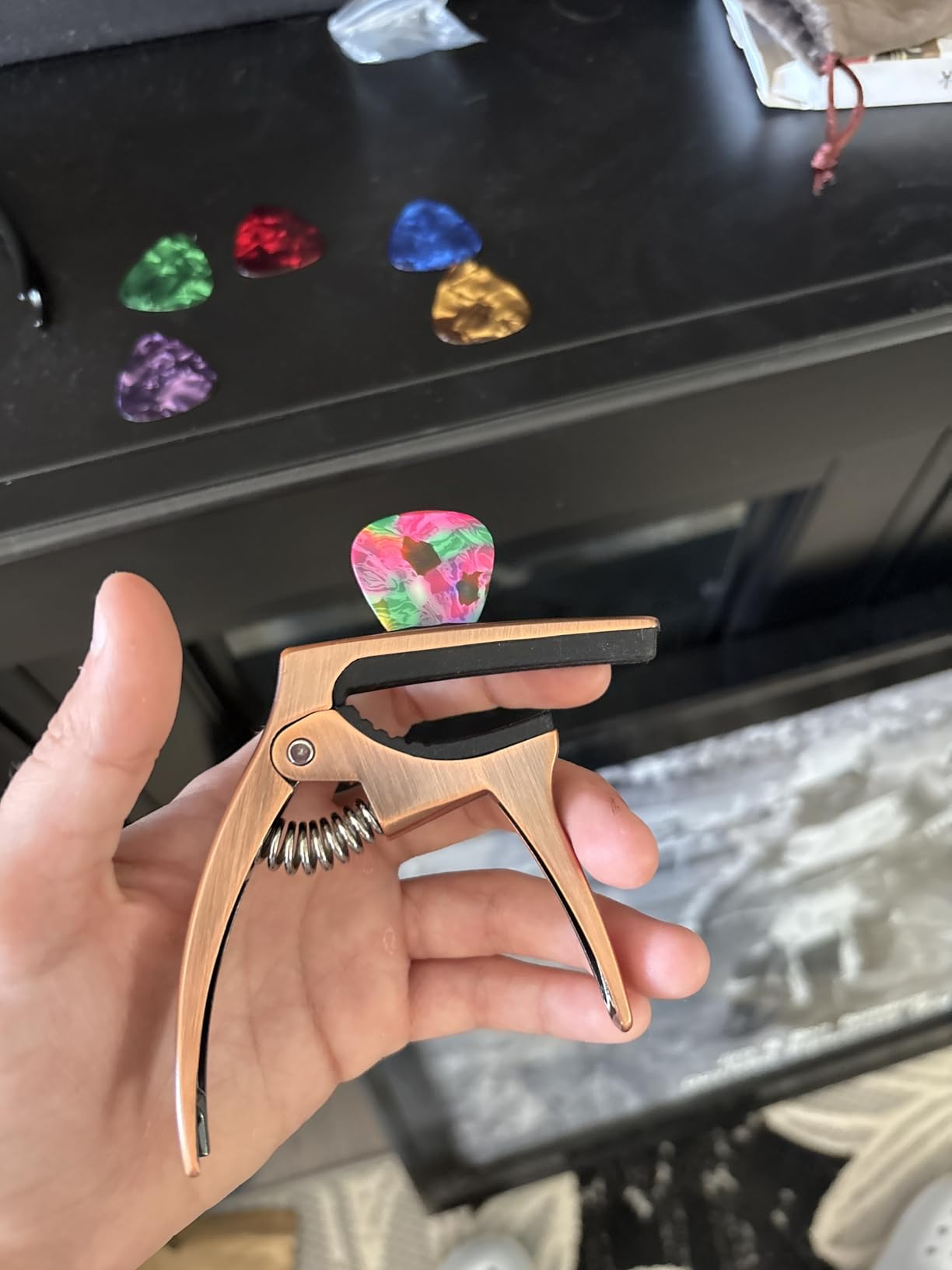
Players with several instruments report moving it between a skinny electric, a large acoustic and a ukulele without problems, and the shape has been reported as comfortable for hands with carpal tunnel or arthritis. That combination of versatility and weight explains the high review count for a model at this level.
The honest weakness is string coverage. A few owners found the jaw did not reach across all six strings evenly on a particular guitar, which put one string under less pressure. The bundled picks also disappoint, and the felt pouch collects dust quickly. Buy it for the clamp and the pin puller, not the accessories.

Is it strong enough for a wide dreadnought neck?
The zinc body and thick springs held pressure well on the wider acoustic necks we tried, better than some lighter aluminum designs. Where the geometry is less reliable is even coverage on individual strings, so if your previous capos left one string buzzing, test this one at the fret you use most before committing.
Does the ergonomics suit longer sessions?
Yes. The 2.1 oz weight is balanced enough that it does not pull the neck downward, and the lever opens with light pressure. Owners with hand joint problems single it out for that reason. The pouch is useful for a gig bag, though you may prefer your own case for the dust.
5. IMUSGO 6-String Acoustic and Electric Capo
Guitar Capo, 6-String Acoustic & Electric Guitar Capo,Capo for acoustic guitar(Black)
Metal body with silicone rubber pad
1.58 oz
Universal size
Quick release lever
Pros
- Fits tightly with cushioning that avoids finish damage
- Firm grip with clear tone and no fret buzz
- Works on 6-string acoustics and electrics
- Minimal black finish that stays out of the way
- Smooth removal without slipping
Cons
- Spring is stiff out of the box and can be hard to open at first
- Pressure is not perfectly even until the capo has been used a number of times
- No tension adjustment of any kind
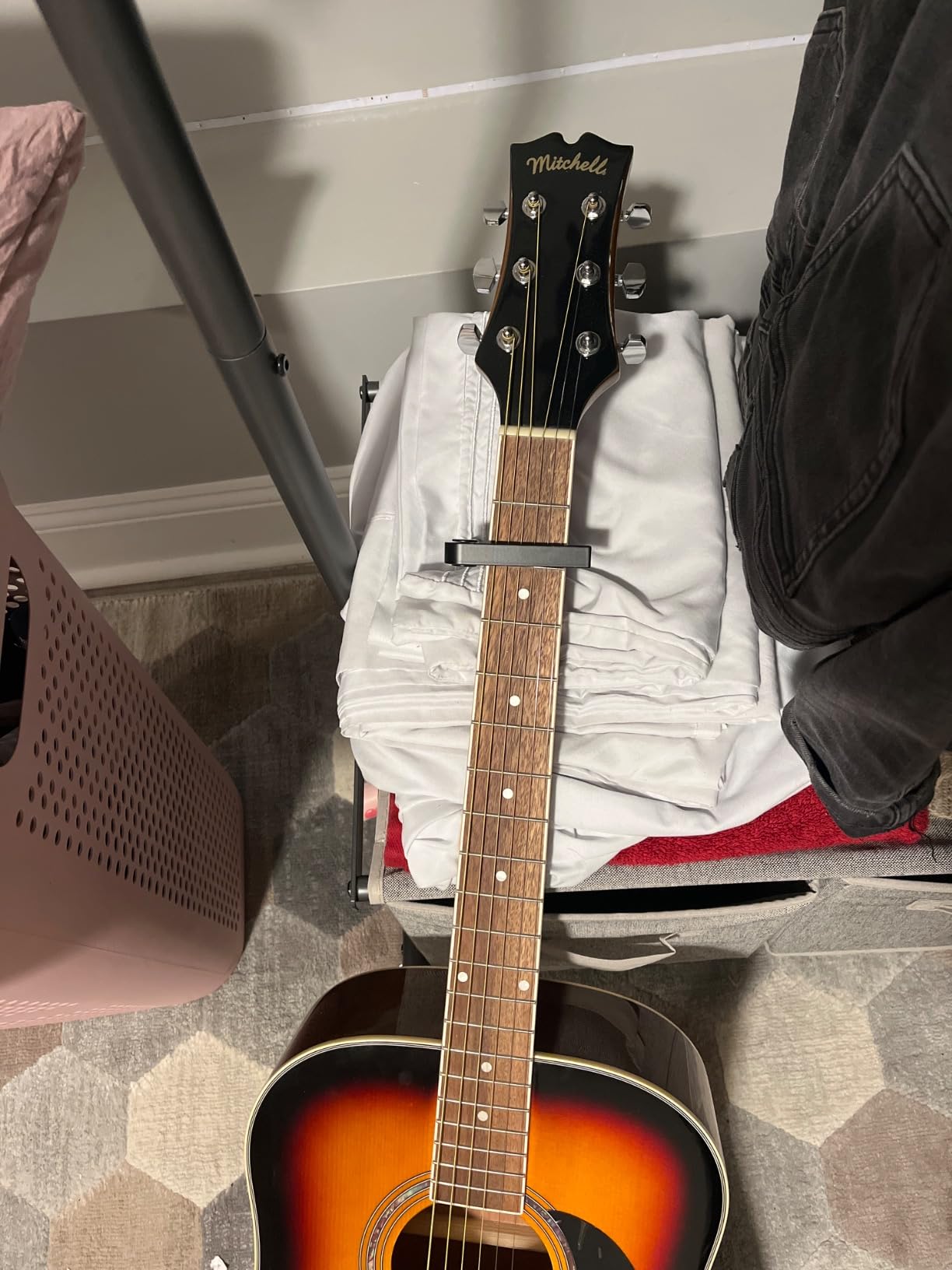
This is the simplest mechanical design in the group: a spring-loaded jaw with a lever on the back and a silicone rubber pad. There is nothing to adjust, which makes it easy to recommend to someone who wants a capo that simply works. It fits six-string acoustics and electrics, plus bass, ukulele, banjo and mandolin.
The silicone pad spreads the load and holds the strings without marking the neck, and the clamp does not slip while you strum. The tone came through clean in our checks without a single string buzzing.
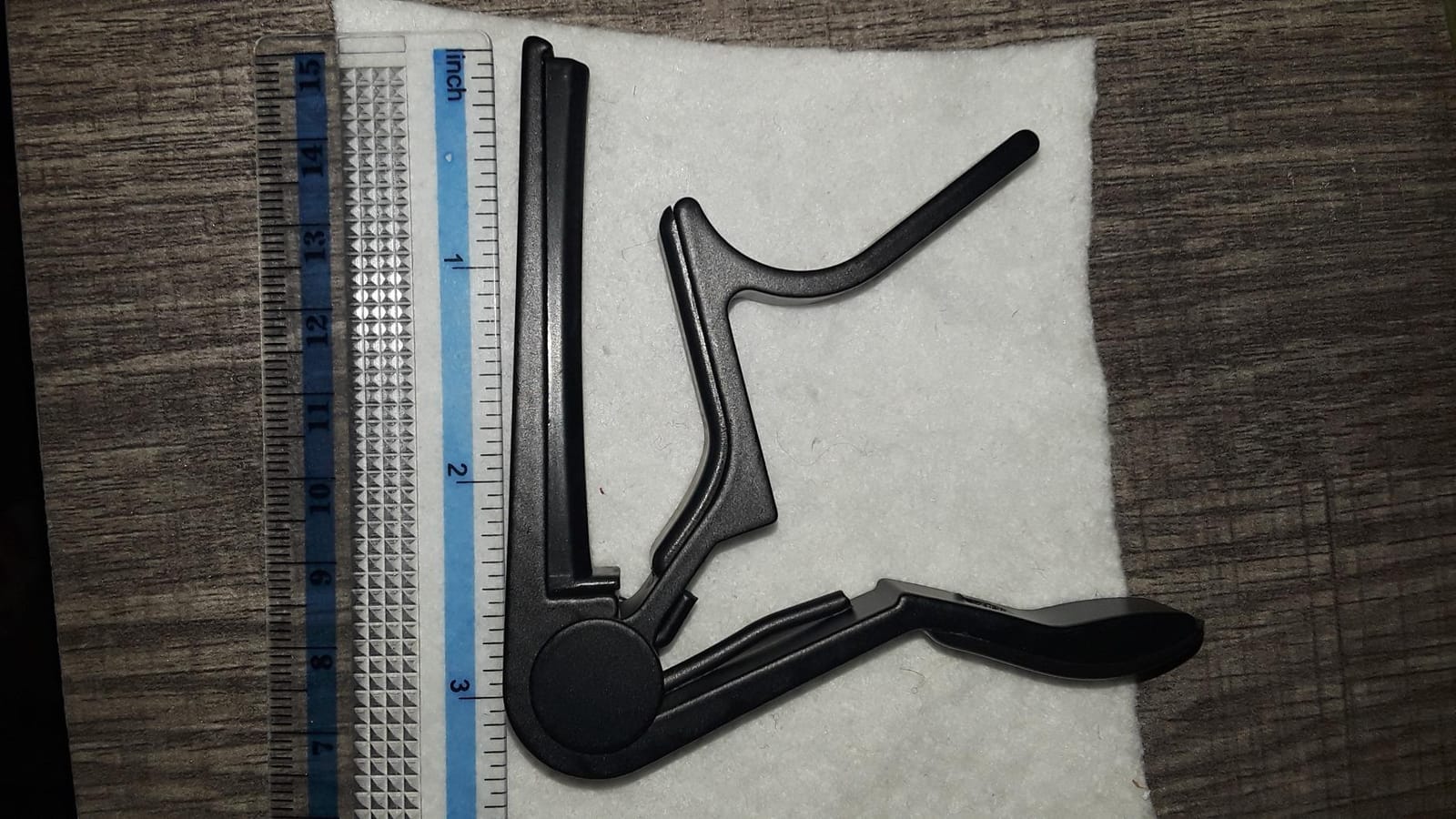
The complaint we heard most from owners was not about sound but about patience. The spring is tight when the capo is new, and beginners sometimes cannot open the lever on the first few attempts. That resolves quickly with use, but it is worth knowing before you judge the mechanism.
The second issue is evenness of pressure. Some buyers found one string sitting out of tune with the others until the capo had been cycled on and off several times, and a few upgraded to a tension-adjustable model afterwards. Treat it as a solid starter rather than a final answer if precision matters to you.
Is the stiff spring a problem for small hands?
It can be for the first few tries, particularly if you have limited grip strength. The lever needs a deliberate two-finger pull rather than a flick, and most owners report that it loosens into a one-handed clip after a short break-in. If you cannot open it at all, look at a design with a wider lever arm.
Will it damage a nitrocellulose finish?
Not in normal use. The silicone rubber pad spreads the load and does not grip the finish the way bare metal would, and owners report no marks after repeated use. The same general advice applies to any capo: inspect the pad periodically, and never store a capo clamped onto the headstock overnight.
6. G7th Performance 3 Capo
G7th Performance 3 6 String Silver Guitar Capo – Groundbreaking Tension Control & Adaptive Radius Technology – The Perfect Capo for Acoustic and Electric Guitar – UK Designed
Alloy steel body
Silicone pads
1.6 oz
52mm pad for acoustic or electric
Pros
- Adaptive Radius Technology matches fingerboard curvature
- Tension control gives precise clamping force
- Inert silicone pads leave no marks
- Covers radii from 7.25 to 20 inches
- Stores on the headstock or behind the nut
Cons
- Costs more than the other models in this group
- Lowest average rating here with a higher share of one-star reviews
- Mechanism is more complex than a plain spring clamp
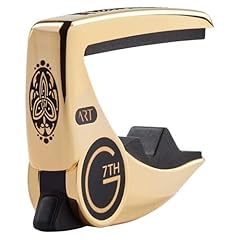
This is the most mechanically ambitious capo here. Adaptive Radius Technology uses a shaped profile that follows the curve of the fretboard, and the tension control gives you a squeeze-on, squeeze-off grip with a measurable clamp force. For players moving between guitars with very different neck profiles, that combination is genuinely useful.
Coverage is broad: a 52 mm pad handles steel-string acoustics and electrics, necks up to 27 mm deep, and fingerboard radii from 7.25 to 20 inches. The inert silicone pads grip without marking, and the capo stores on the headstock or behind the nut between songs.
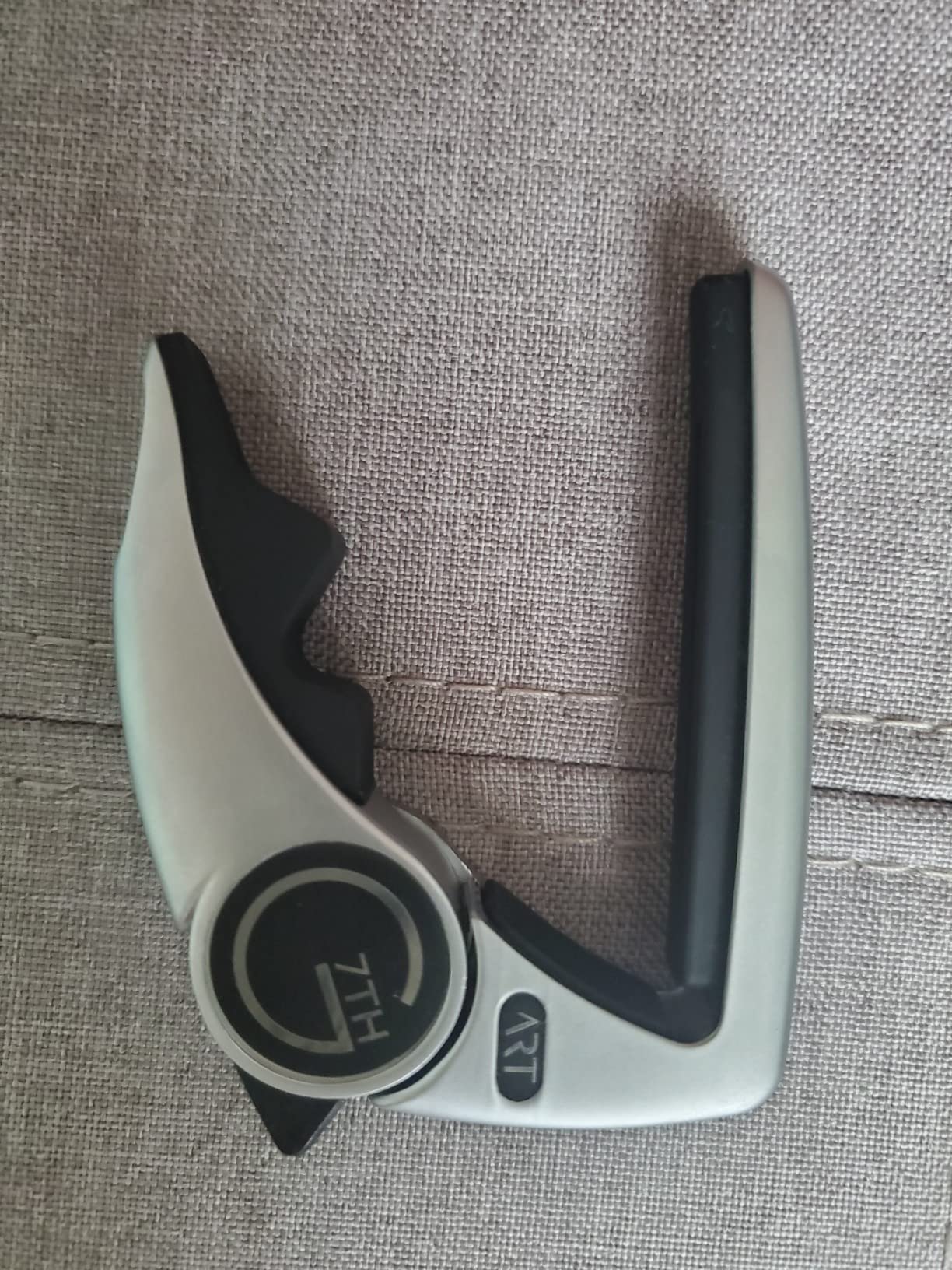
Build and tone control draw the positive reviews. The common thread in feedback is that the adaptive profile reduced buzz and tuning drift on curved fingerboards where simpler clamps left gaps. Players who gig across several instruments with different neck shapes appear to get the most from it.
The trade-offs are honest ones. This is the most expensive capo in the group, the average rating is the lowest of the twelve with a larger share of one-star feedback, and the mechanism has more parts that can wear or stick than a basic spring clamp. Simplicity has real value too.
Are G7th capos worth the extra money?
Only in specific situations. If you play one guitar with a fairly consistent neck, a well-made spring capo will give you the same result for far less. If you switch between instruments, change string gauges often, or play a wide range of fingerboard radii, the adaptive profile earns its place. Buyers mostly report satisfaction with build and tone, with a small but real group of people who found the mechanism more than they needed.
Is it compatible with narrow necks?
The 52 mm pad is sized for standard steel-string necks and the stated depth limit covers most acoustics. It is not a small-instrument or classical-specific design, so check your neck depth and radius against the stated range before choosing it for something unusual like a uke-sized or travel instrument.
7. Jim Dunlop Trigger Acoustic Curved Capo
Jim Dunlop Trigger® Capo Acoustic Curved – Black
Aluminum body
Rubber non-marring pads
1.6 oz
Fits 6-string and 12-string
Pros
- Original Trigger design with a strong clamping mechanism
- Non-marring rubber pads protect neck and finish
- Even pressure for clear chords
- Lightweight aluminum for long sessions
- Sits cleanly across different neck shapes
Cons
- Fixed clamping pressure with no tension dial
- Curved acoustic profile may sit less flush on flat electric fingerboards
The Trigger has been around since 1991, and the squeeze-on design it introduced is now the template most other capos follow. The mechanism operates behind the neck, which keeps the clamping arm out of your way and makes the whole thing usable with one hand while the other stays on the soundboard.
This curved acoustic profile is built for steel-string acoustics, and the non-marring rubber pads are specified to protect both neck and finish through repeated use. We found even pressure across the strings, so chords came out clear without buzz.

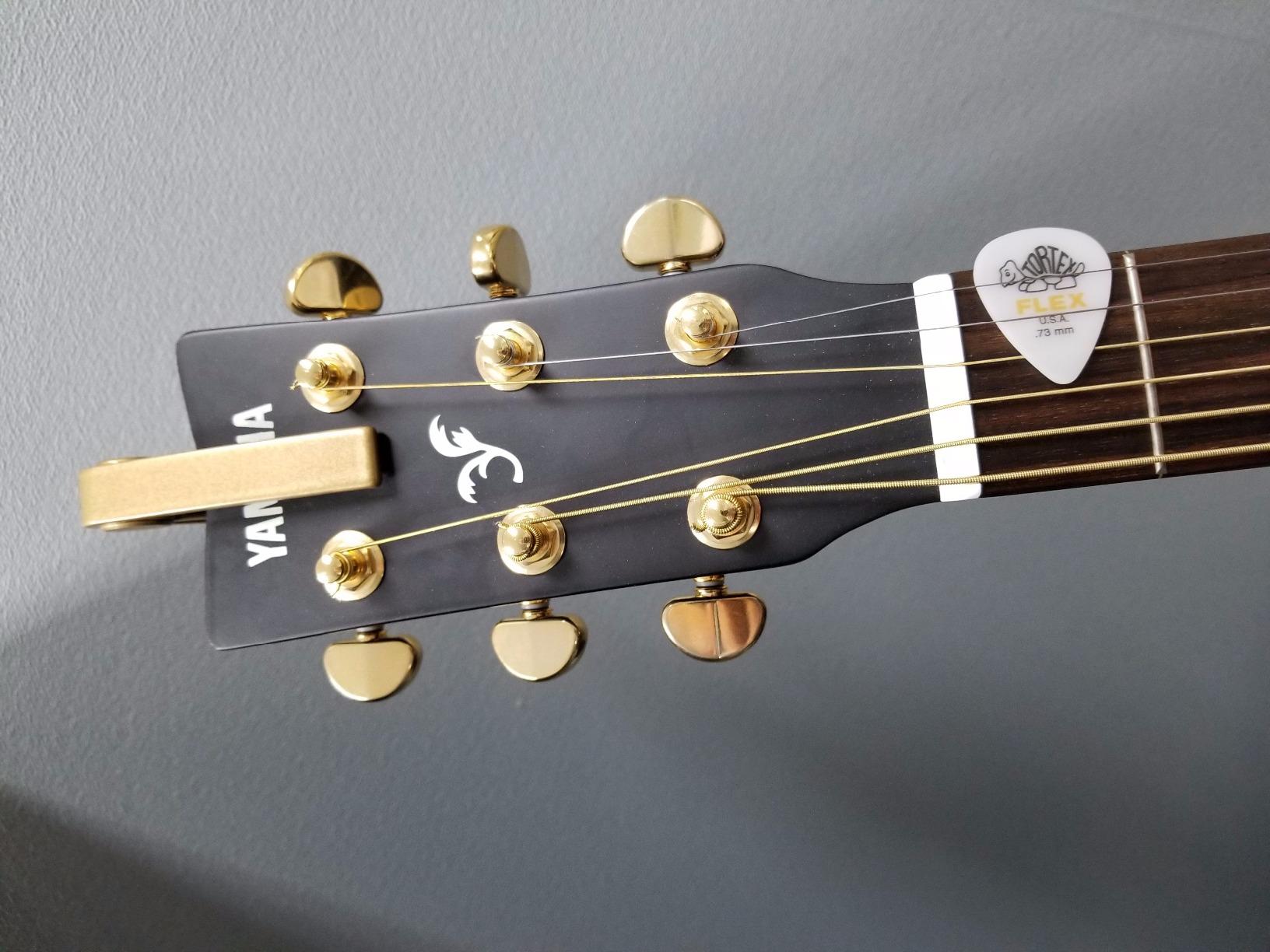
The main reason to choose it over other fixed-spring designs is string count. It is specified for both 6-string and 12-string guitars, which is a genuine rarity in this group and the answer to the most common question we saw asked about 12-string capos. On a 12-string, the jaw spans all twelve courses rather than leaving the paired octave strings free.
There is no tension adjustment, so the pull is whatever the spring gives you. That is fine on standard sets and requires a re-tune after clamping, which becomes noticeable on heavier gauges. On flat electric fingerboards the curved profile is less flush than a flat-radius design would be.
Will it stop buzzing on a 12-string?
It is one of the few capos in this group sized to clamp all twelve strings, which is the main cause of buzz and uneven pitch on a 12-string. The even pressure across the courses is what makes it work. Confirm your instrument is a standard steel-string 12-string rather than an extended-range or baritone variant.
Does it protect a glossy finish?
The pads are specified as non-marring rubber, and owners report no marks after extended use. As with any capo, the thing to watch is the pad itself. If the rubber hardens, cracks or takes on a shine, replace the capo rather than keep clamping with it.
8. Sondery Adjustable Quick Release Capo
Sondery Adjustable Capo Quick Release for 6 String Acoustic Electric Guitar
Zinc alloy body with silicone pads
Adjustable trigger tension
One-handed operation
Includes pin puller
Pros
- Adjustable trigger tension gives even pressure at any fret
- Aircraft grade zinc alloy feels durable
- Smooth one-handed clamping for fast changes
- Silicone strip pads protect the strings
- Decorative finish parks well on the headstock
Cons
- Optimized for flatter radiused fingerboards rather than strongly curved acoustics
- Includes a pin puller rather than a pick holder
The Sondery combines the trigger squeeze action players like with adjustable spring tension, which puts it in the same category as the D’Addario rather than with the fixed-pressure designs. You can loosen or tighten the grip until the strings sit where you want them, which is the feature that stops a capo from pulling everything sharp.
The construction is hand-assembled from light aircraft grade zinc alloy, and it moves smoothly between frets with one hand. Silicone strip pads sit against the strings rather than bare metal, and owners specifically mention that they do not wear strings.
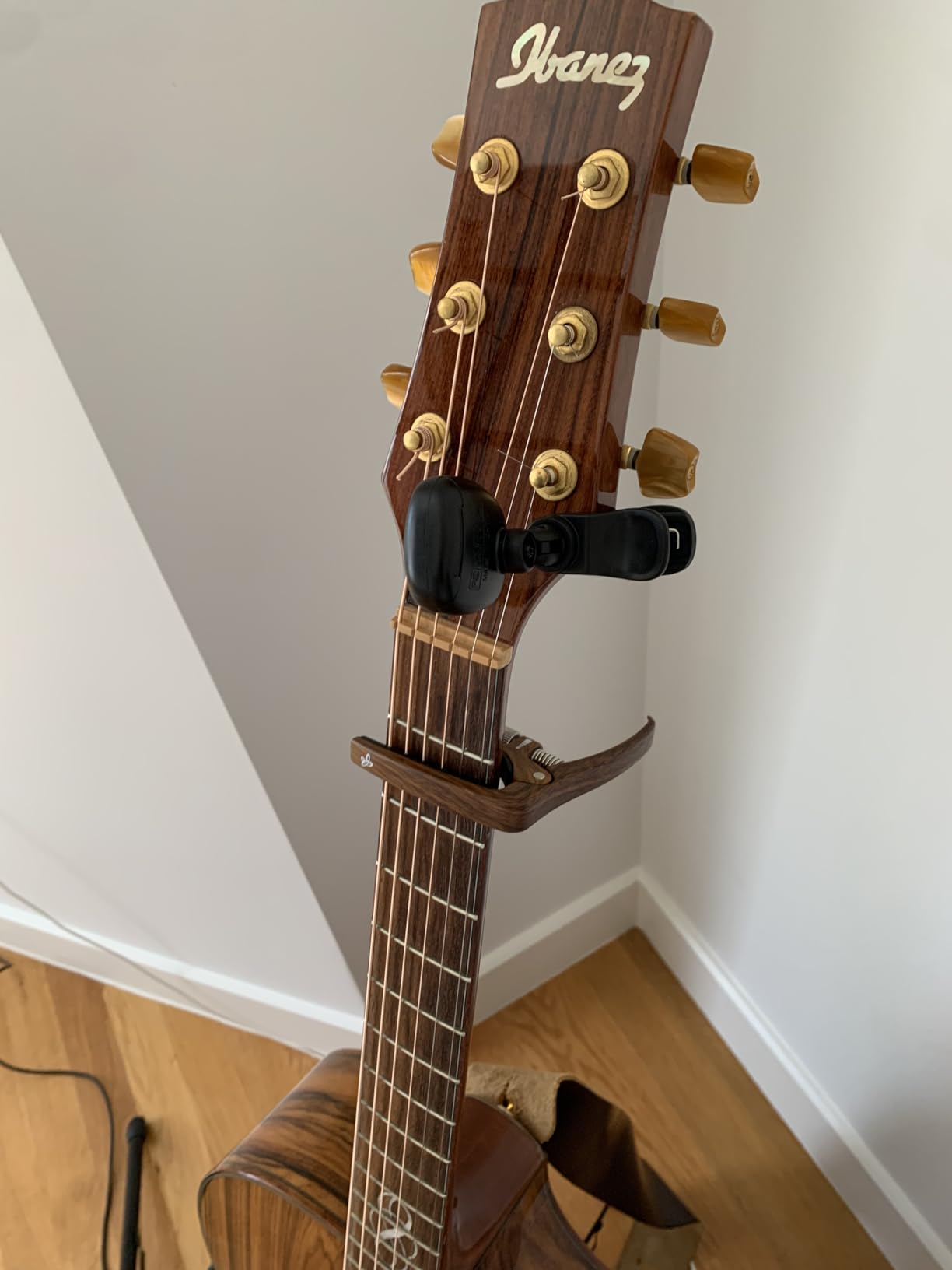
Where this design really fits is flatter radiused steel-string fingerboards, which is the profile many acoustics and most electrics share. On a strongly curved vintage-style neck, a flat-optimised jaw can leave a gap at the edges, so it is worth checking your guitar against the shape it was designed for.
It also includes a bridge pin puller, which is a sensible thing to have on a capo if you change strings away from home. There is no pick holder, which fingerstyle players might notice. Otherwise the finish is decorative and parks neatly on the headstock.
Does the adjustable tension fix sharp notes?
That is the main reason to buy it. Because the trigger tension is adjustable, you can reduce the pull until the guitar stays closer to where you tuned it, rather than fighting a fixed spring. Players on heavier string sets get the most from it, and it takes the same adjustment time as tuning the guitar once.
Will it work on a strongly curved acoustic neck?
Probably, with a caveat. The design is explicitly optimized for flatter radiused fingerboards, so on a deeply curved neck the jaw may not contact the outer strings evenly. On standard modern acoustics it is fine. Check a deeply radiused or vintage-profile guitar carefully before committing.
9. Fender Dragon Capo
Fender Dragon Capo, Guitar Accessories, Black
Cast aluminum body
Micro-dial tension control
Protective pads
2.17 x 0.04 x 1.38 inch
Pros
- Micro-dial tension control for pitch adjustment
- Cast aluminum build from an established brand
- Protective pads guard the fretboard
- Compact form that does not interfere with playing
Cons
- Listed for 6-string electrics with radiused fretboards
- which limits acoustic use
- Clamping surface is narrower than full-width capos
- Less popular than the top-rated models here
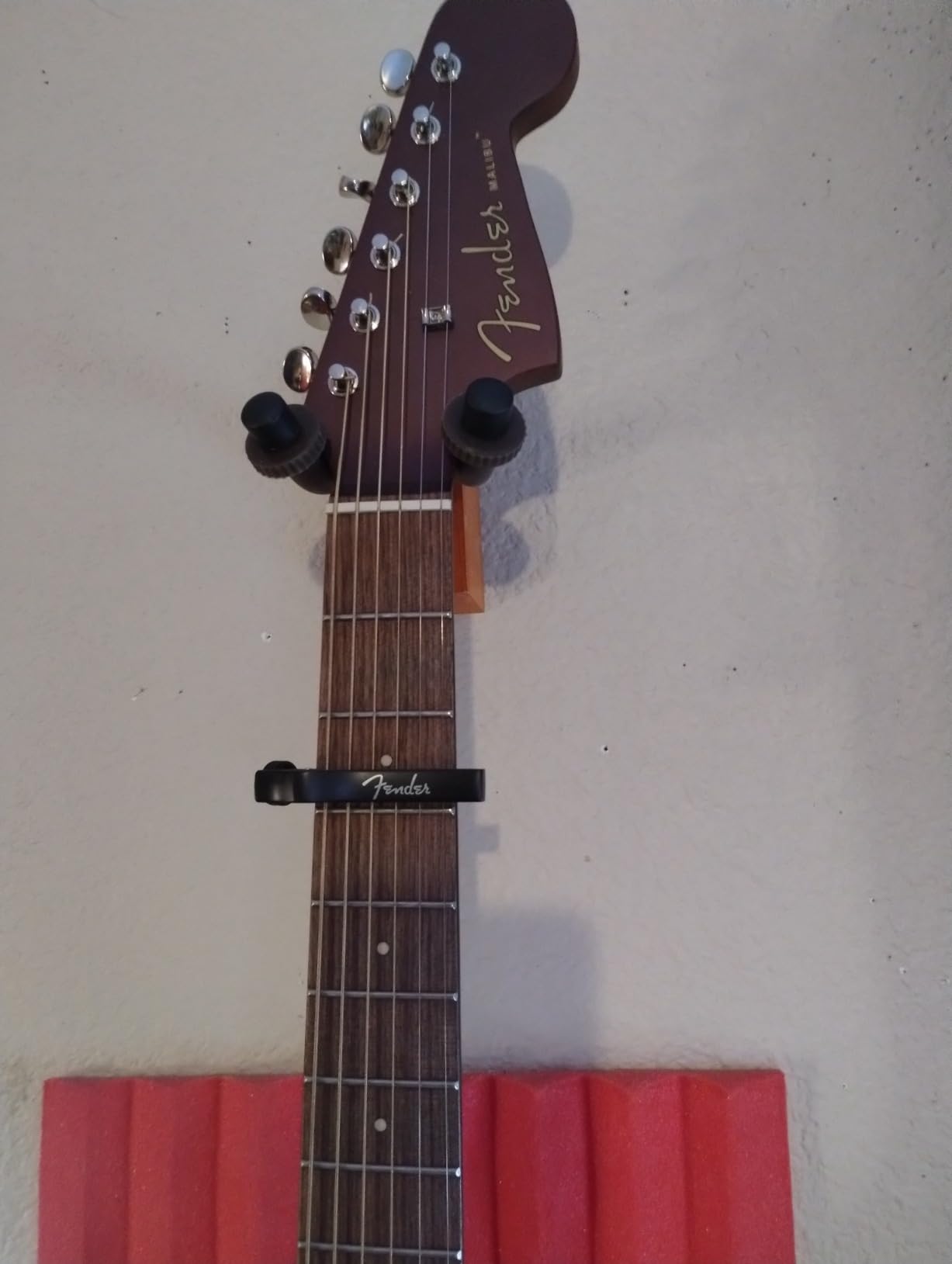
The Dragon is compact and electric-focused. It clamps at any fret on the exposed fretboard, needs no setup, and stays clear of your picking hand. The cast aluminum body and protective pads make it a straightforward choice if your main instrument is a solid-body or a thinner acoustic-electric.
It also carries a micro-dial tension control, which lets you trim the clamp force rather than living with whatever the spring gives you. On a guitar with light gauge strings that small adjustment can be the difference between staying in tune and re-tuning every time you clamp.
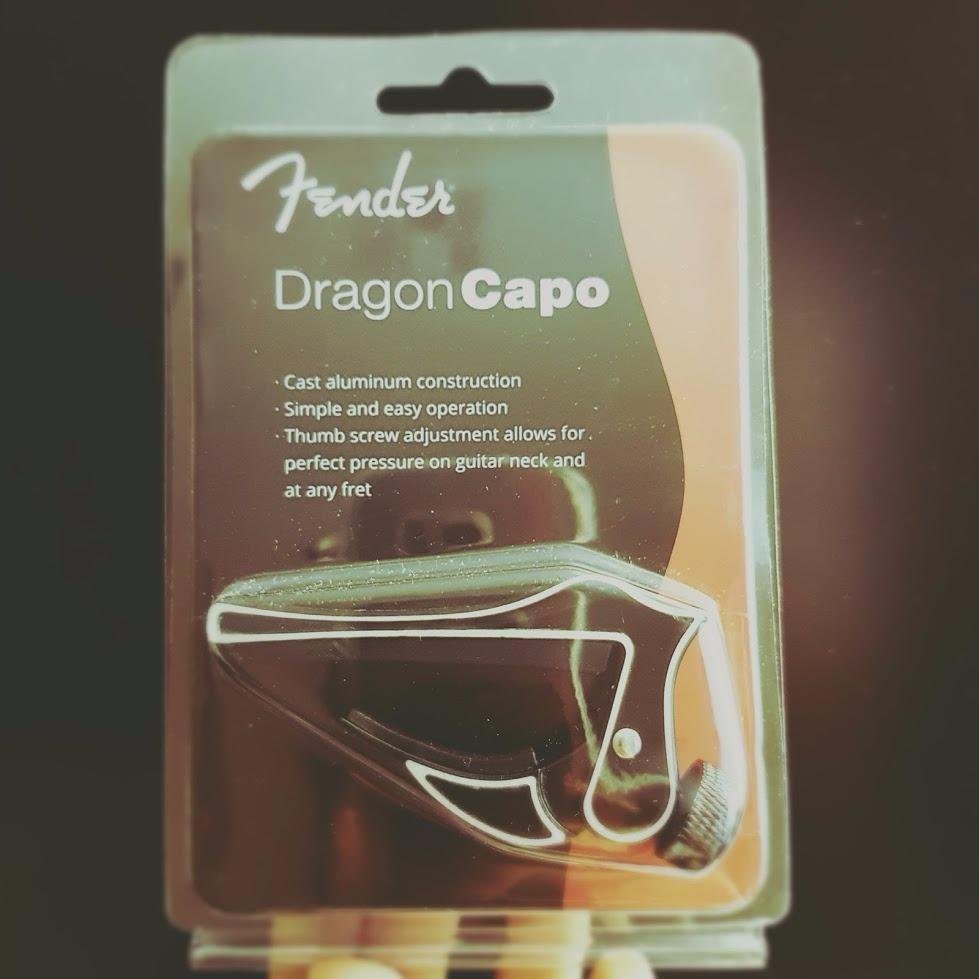
What holds it back is scope. It is listed for six-string electric guitars with radiused fretboards, so it is not the natural match for a full-size acoustic with a wide curved neck, and the clamping surface is narrower than the full-width designs here. The 1.25 size is the trade-off that makes it so unobtrusive on an electric.
Sentiment is favourable but more mixed than the top sellers, with a noticeable share of three-star feedback. For an electric player who wants a small, adjustable, out-of-the-way capo, it does the job. For a dreadnought, pick one of the full-width acoustic designs instead.
Can I use it on an acoustic guitar?
It will clamp, but it is not what it was designed for. On a wide or deeply curved acoustic neck the narrow jaw can fail to reach the outer strings evenly, which shows up as one thin-sounding string. If your acoustic is a smaller-bodied instrument, it will be far more comfortable than on a dreadnought.
Is the micro-dial tension control useful?
Yes, particularly on lighter electric string sets where a firm clamp pulls the pitch sharp. The dial is small, so expect to make the adjustment once and then leave it. It is a quiet advantage that most fixed-spring designs in this group do not offer.
10. Ernie Ball Axis Dual Radius Capo
Ernie Ball Axis Dual Radius Capo, Black Satin (P09600)
Aluminum body with rubber pad
Dual radius reversible design
Satin black finish
4.75 x 0.75 x 7.75 inch
Pros
- Reversible Dual Radius design fits flat and curved fretboards
- Ergonomic shape supports fast one-handed key changes
- Buzz-free clamping on electric and acoustic
- Lightweight aluminum that is still robust
- Consistently high five-star share in reviews
Cons
- Rubber contact pad rather than a soft silicone strip
- No tension adjustment for fine-tuning clamp force
The Axis solves a common problem with a simple idea: a reversible design that fits both flat and curved fretboards. If you play more than one guitar, or you move between a flat-top acoustic and a curved-boundary electric, that versatility removes the guesswork that makes some capos buzz on one instrument and not the other.
The body is lightweight aluminum with an ergonomic shape, and it supports fast, accurate single-handed key changes. The clamp applies buzz-free pressure across the strings, which is what you want when you are moving through keys in a live set.
Owner feedback is consistently positive on tone and handling, with a high proportion of five-star ratings. The satin black finish is understated and does not distract, which is a reasonable choice for a player who wants the instrument to be the focus.
Two things to keep in mind. The contact surface is rubber rather than a soft silicone strip, so it is worth watching for any marking on a delicate finish over long periods. And there is no tension adjustment, so the clamp force is fixed and a re-tune after clamping is part of the routine.
Is one capo enough for both electric and acoustic?
For most players, yes, and that is the case for this design. The reversible Dual Radius profile is built to clamp buzz-free on flat and curved fretboards, so switching instruments does not mean carrying two capos. Players with a very wide acoustic neck or a 12-string should still check fit before committing.
Does it leave marks on the fretboard?
Rubber pads are gentle, but they are firmer than silicone strips. On most finishes over months of use that is a non-issue. If you have a delicate nitrocellulose or thin satin finish, check the neck after the first few sessions, and stop using the capo if you see any indentation under the pad.
11. Paige 6-String Ultra-Thin Acoustic Capo
Paige 6-String Guitar Capo – Nickel, Proudly Made in the USA – Adjustable Tension, Ultra-Thin Design – Fits Standard Acoustic Guitars
Nickel plated steel body
Rubber contact
1.6 oz
Width 2 1/16 inch
Pros
- Ultra-thin profile preserves neck feel and playability
- Stable bar distributes pressure evenly to avoid buzz
- Felt lining and rubber grip protect the instrument
- Replaceable tinted tubing extends service life
- Crafted in the USA with nickel plated steel
Cons
- Costs more than the other mid-range acoustic capos here
- Fit depends on neck profile so wider necks cap only to the 5th or 6th fret
- Average rating of 4.5 with four percent one-star reviews
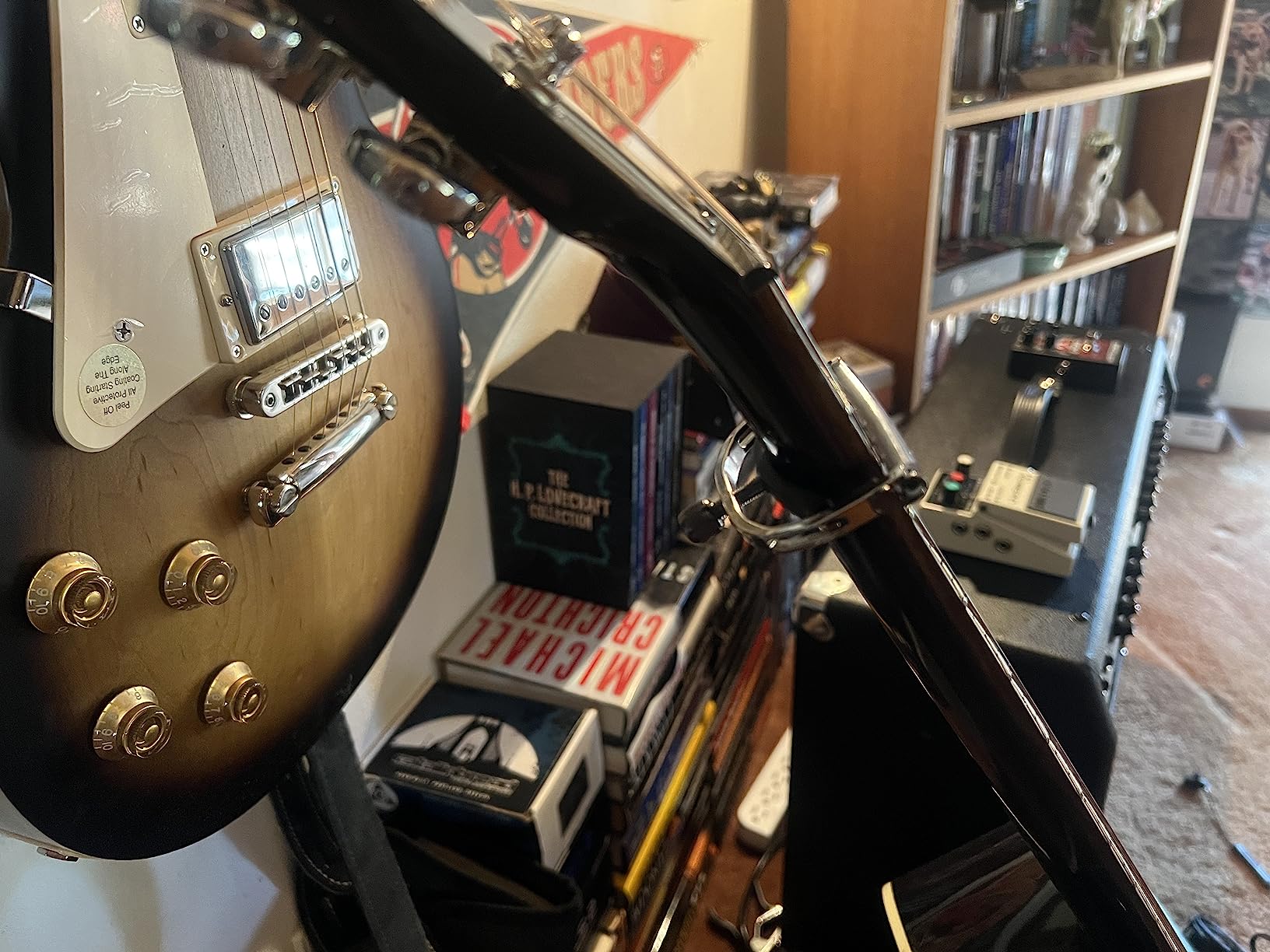
The Paige is the one to consider if a capo on the neck ruins your playing. It is ultra-thin, and the profile sits low enough that most players say they stop noticing it after a minute. For fast flatpicking, or for anyone who dislikes the raised profile of a trigger design, that is a real functional difference rather than a cosmetic one.
The stable bar spreads pressure evenly across the fretboard with minimal force to adjust, which is how it avoids buzz and string muting. It parks behind the nut when not in use, so it stays attached to the instrument rather than migrating to a case or a music stand.
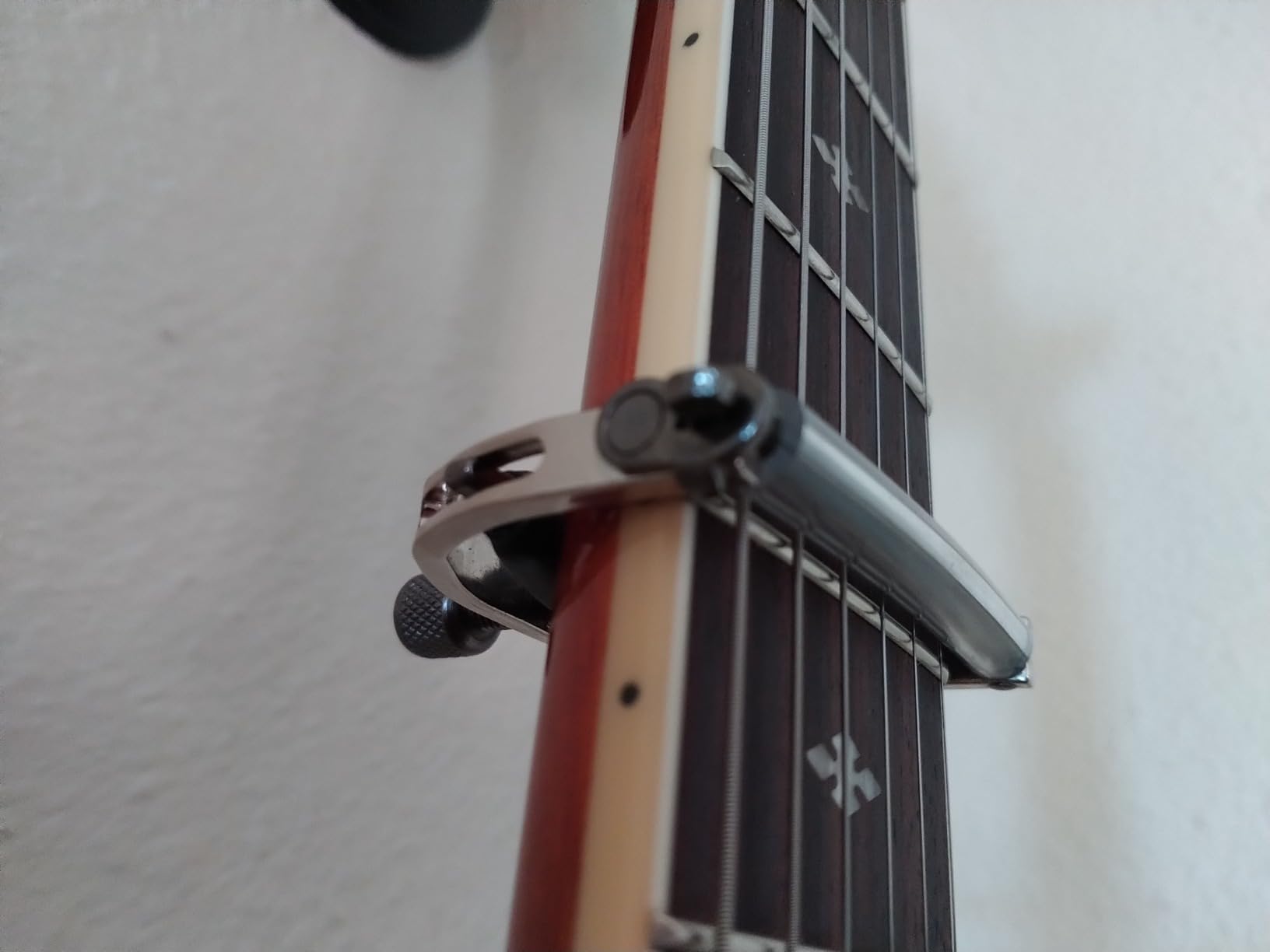
Construction details matter here. It is made in the USA from nickel-plated steel with replaceable tinted tubing, upgraded clips and a felt lining, which means the part that wears fastest can be swapped rather than replaced whole. That is a durability argument for anyone who has had a cheap capo crack at the hinge.
Fit is the caveat to read carefully. The standard profile suits a 16 inch radius neck up to the 10th fret on 1 11/16 inch necks, while wider profiles only cap to the 5th or 6th fret. That is fine on a typical acoustic, but it constrains where you can play if your neck is wider than standard.
Why pay more for an ultra-thin design?
Because on some guitars the capo becomes the thing interfering with your hand position. A low profile reduces that, which matters most for players who move between chords quickly or pick near the end of the neck. For players who do not notice the clamp, the extra spend is harder to justify.
How far up the neck can it go?
On a standard acoustic profile, up to the 10th fret. On a wider neck profile that drops to the 5th or 6th fret, which is a real limit if you like to capo high while playing in a lower key. Measure your neck profile before choosing this over a full-width design.
12. WOGOD Two-Pack Capo with Picks Holder
Capo Guitar Capo for Acoustic Electric Guitar Ukulele – 2 Pack Guitar Kapo Clip Clamp with Picks Holder
Aircraft grade zinc alloy
Silicone pad
Rosewood and black
Two capos per pack
Pros
- Two capos per pack useful for players with multiple instruments
- Silicone pad protects the fretboard from scratches
- Strong steel spring with internal memory for quick release
- Pick holder stores more than four picks
- Easy to snap on and reposition
Cons
- Short clamp length may not cover the high E string past the 12th fret
- Some buyers report only one capo arriving instead of two
- Included picks are medium thickness only
Two capos in one pack is a straightforward way around the most common reason people own more than one: keeping one in the gig bag and one at home, or using different clamp strengths on different guitars. The finishes, a rosewood colour and black, are different enough that you can tell them apart in a hurry.
The mechanics are conventional. A steel spring with internal memory gives a quick release and easy repositioning, the silicone pad protects the fretboard, and the top clip holds more than four picks, which is unusual capacity for a capo of this size.
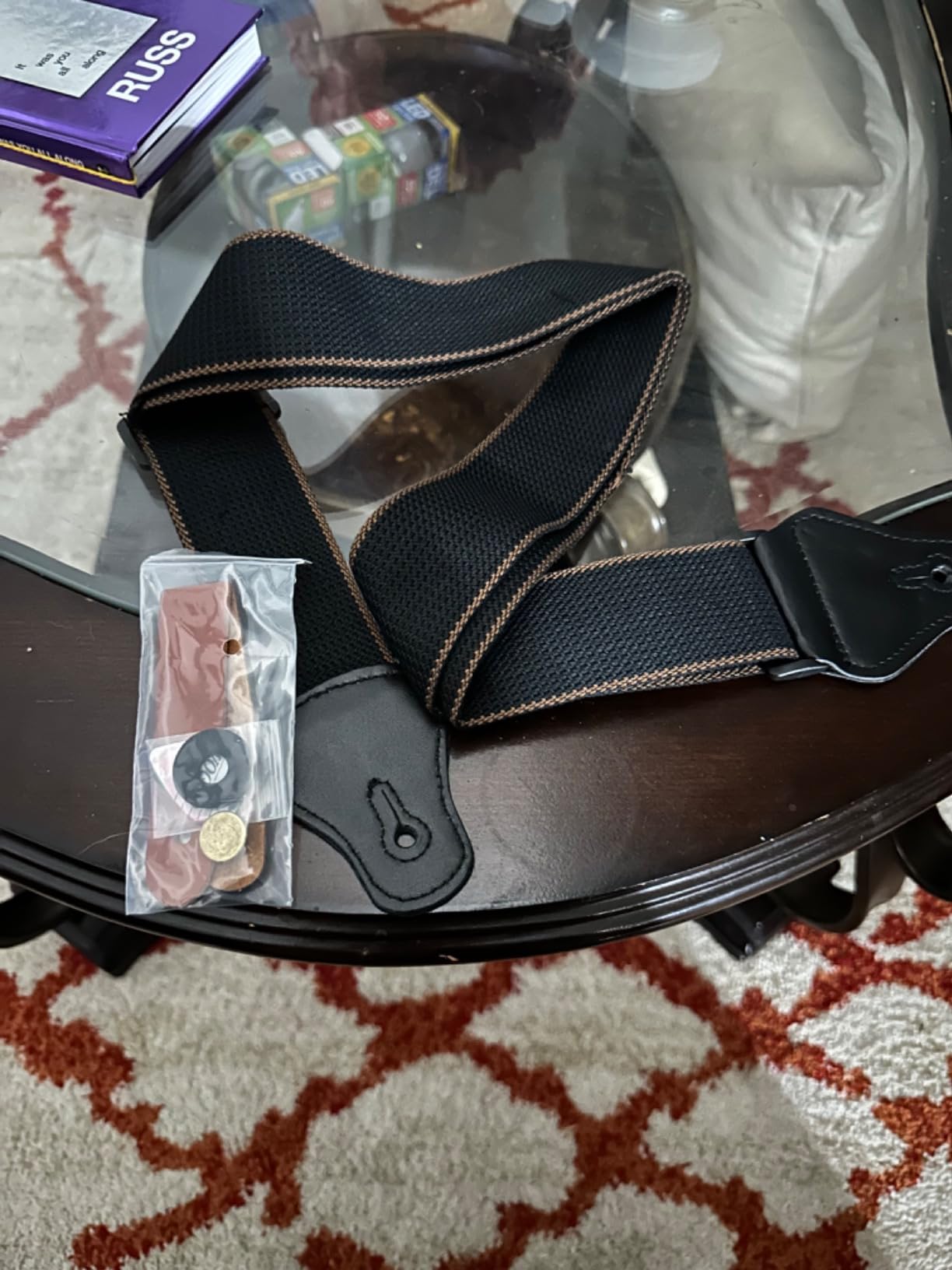
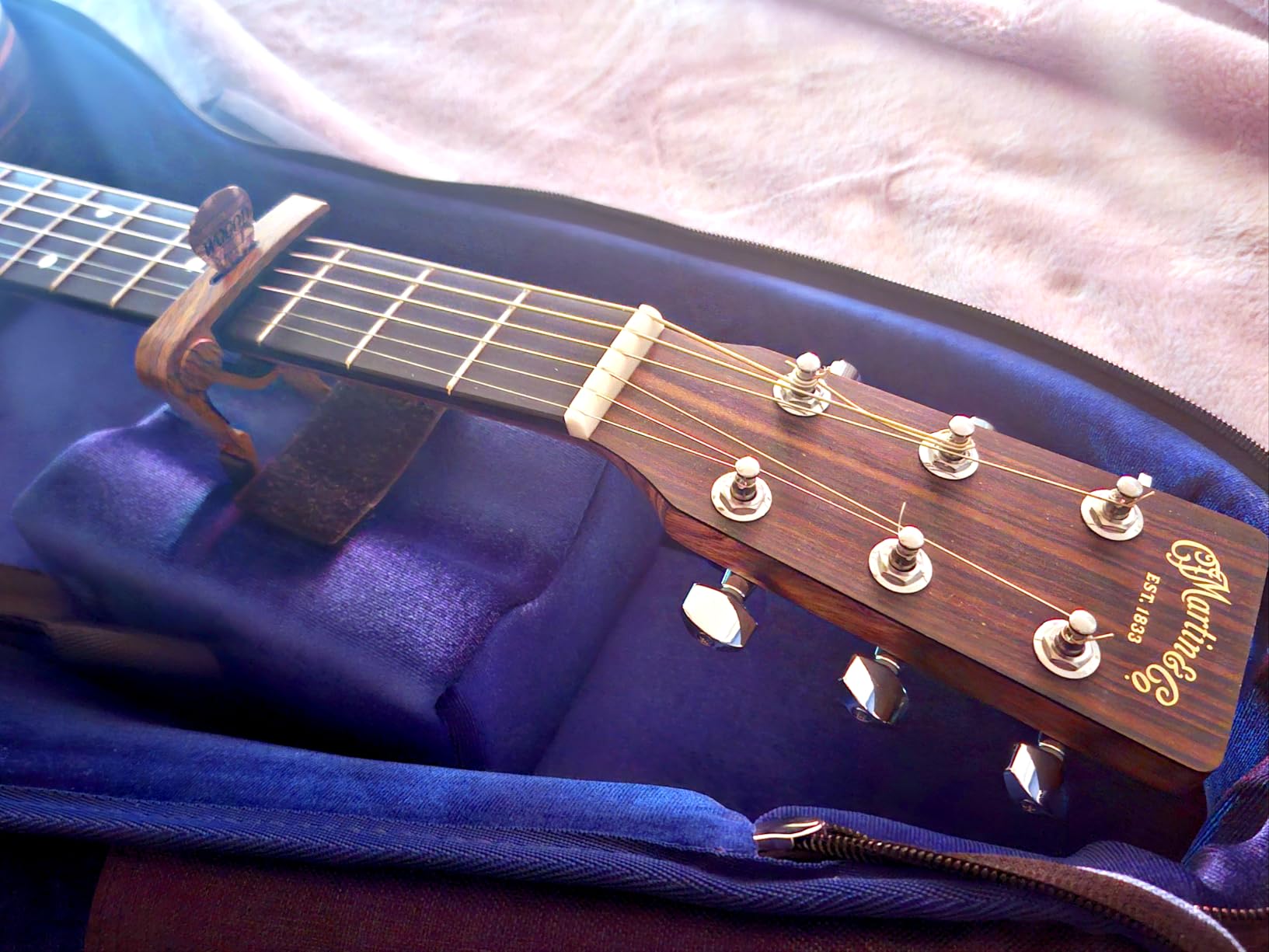
Owners generally rate it as good value with a firm grip and easy handling, and the pick holder is more often praised than the clamp itself. A tip that came up repeatedly: slanting the capo slightly rather than sitting it perfectly flush can clear a buzz on a single string, which is a fix worth trying before writing the capo off.
Two drawbacks are worth planning around. The jaw is short, so the high E string may not be fully clamped past the 12th fret on some guitars, and a number of buyers find only one capo in the pack rather than the advertised two. Confirm both are present before you rely on the spare. The included picks are medium thickness only.
Is a two-pack better than one better capo?
It depends on your situation. If you play more than one guitar, or you want a spare in a gig bag, having two at the same clamp strength is convenient. If you play a single instrument and care about tension precision, one capo with a dial will serve you better than two fixed-spring ones.
Will it clamp all six strings up high on the neck?
Not always. The jaw is short, and past the 12th fret the high E string can sit outside the clamping area, which leaves it sounding thinner than the others. Slanting the capo slightly often solves it. For high-fret capo work, look at a design with a longer jaw instead.
Capo Styles Explained: Quick Change, Screw, Wrap-Around and Partial
Most capos in this roundup are one of two types, and the difference matters more than any brand name. Quick-change capos use a lever and a spring: squeeze the lever, clip it on, release, and the jaw grips. Trigger capos work the same way with the squeeze point behind the neck. Screw-type capos use a threaded knob to set tension precisely, which is slower but exact.
Wrap-around capos use a strip that winds around the neck with a strap. They are the traditional choice for classical and nylon-string guitars because they avoid hard contact points near the nut. Partial capos clamp only some of the strings, usually the bottom three or top three, and are used for alternate tunings and drone effects rather than for transposing.
So are all capos the same? No, but the gap between a cheap spring clamp and a well-made one is smaller than the gap between clamping styles. Mechanism type decides how fast you can move and how precisely you can set pressure; build quality decides whether the pad marks your neck and whether the grip stays even across six strings.
How to Place a Capo Without Buzzing or Going Sharp
Buzzing and sharp notes have different causes, and confusing them is why many players give up on capos. Buzzing is a placement problem. Sharp notes are a tension problem. Fixing one does not fix the other, but most capo frustration involves both at once.
First, put the capo behind a fret, not on top of one. The body of the capo should sit in the metal part of the neck, just behind the fret wire. This is the single most common cause of buzz, and it is the first thing to check before blaming the capo.
Second, tighten until it stops buzzing and then stop. Most capo tension problems come from over-tightening because the player is compensating for buzz coming from the wrong position. Once the placement is correct, a firm clip is enough.
Third, re-tune after you clamp. A capo adds tension across the neck and raises every note slightly. Tune up after clamping, not before, or you will be fighting the capo every song.
Fourth, if one string still buzzes, check whether the capo jaw is fully covering that string. A short jaw or a neck profile that does not match the clamp leaves the outer string light. Slanting the capo slightly often fixes a single-string buzz. If the buzz persists across strings, the capo is not the right shape for your neck radius.
How to Choose an Acoustic Guitar Capo: 6 Decision Factors
Capo style and speed. If you change keys during a song or play live, quick-change or trigger designs win, because you can move one-handed while the other hand stays on the guitar. A screw-type capo is better when you set a key and stay there, because the adjustment is precise but slow.
Clamp tension. This is the factor that decides whether the capo pulls your guitar sharp. A fixed spring gives one pressure for every guitar and every string gauge. A tension dial or adjustable trigger lets you match the clamp to the instrument, which matters most on heavier sets and on lighter electric strings where the pitch shift is proportionally larger. If you change strings often, treat adjustability as a requirement rather than a luxury.
Neck radius fit. The fretboard is curved, and the curve differs between instruments. A capo whose jaw is too flat for a curved acoustic will contact the centre strings harder than the outer ones, which is a common source of uneven tuning and buzz. Look for a stated radius range, and note that designs listing a wide range, such as 7.25 to 20 inches, cover most steel-string instruments.
String count and gauge. A six-string capo will not clamp a 12-string properly, and no review will change that. If you own a 12-string, filter for a capo specified for 12-string use before anything else. For gauge, heavier strings need more clamp pressure, which is another argument for adjustability or a stiffer mechanism.
Profile and weight. A thick capo changes how your fretting hand sits and pulls the neck down on a small-bodied guitar. Ultra-thin designs solve this if it bothers you. Weight matters for long sessions, and light capos in the 2 oz range are noticeably more comfortable than heavier ones.
Build material and pad condition. Aluminum bodies are light and stiff; zinc alloy is heavier and very durable; steel with silicone pads resists string wear. The pad is the part that touches your instrument, so check it regularly. Rubber that has hardened, cracked or picked up a shine should be replaced rather than trusted. Keep replacement pads in mind if you play a guitar with a delicate finish.
If you are still narrowing the field, our guides to the best acoustic electric guitars and best acoustic guitar amplifiers cover the rest of the signal chain once the capo has done its job. A guitar case for your acoustic is the other accessory worth owning if you travel with one.
Does Capo Material Change Tone and Sustain?
A little, and mostly in ways players attribute to the capo position rather than the material. A capo does not change the strings, the bridge or the body, so the fundamental tone stays the same. What changes is how cleanly the strings vibrate over the fretboard, and whether the contact material leaves any residue on the strings over time.
Aluminum bodies are the most common choice because the material is light and does not transfer much vibration. Silicone pads are softer than rubber and less likely to take on a shine or grip the strings, which matters most on light gauges. Steel components inside a capo add mass and are not a tone factor at the contact point, though a heavier mechanism can sit differently against the neck.
The practical advice is simple. If your guitar sounds dull or buzzy with a capo on, move the capo and change the clamp pressure before you start blaming materials. Position and tension explain almost every tone complaint we saw.
Specialty Instruments: 12-String, Classical, Ukulele and Wide Necks
On a 12-string acoustic, a six-string capo is the most common mistake. It leaves the paired octave strings sounding open, which produces a thin, out-of-tune chorus rather than the full sound. The Trigger acoustic capo is specified for both 6-string and 12-string guitars, which makes it the clear choice here, and it is worth checking that your instrument is a standard 12-string rather than an extended-range variant.
Classical and nylon-string guitars want minimal contact pressure, because nylon stretches more than steel under the same pull. A capo with adjustable tension or a wrap-around style is the safer choice, and the D’Addario tension dial is a reasonable option if you want to keep contact light. A stiff spring clamp on nylon will pull the pitch noticeably sharp and can work against you during long pieces.
Ukuleles are usually fine with the general-purpose capos in this group, since the neck is narrower and the tension lower. Watch the jaw width instead, and confirm the capo spans all four strings. For wide 12-fret necks, check the stated fret range before buying, since several designs stop working past the fifth or sixth fret on a wider profile.
Frequently Asked Questions
What is a capo for an acoustic guitar?
A capo is a clamp that fastens to the neck at a fret, holding every string down at once. It acts as a movable nut, so clamping it on the second fret raises the whole instrument a whole step while your open chord shapes stay the same.
Are G7th capos worth it?
They are worth it if you play more than one guitar or move between instruments with different neck profiles. Adaptive Radius Technology adjusts to fingerboard curvature from 7.25 to 20 inches, and the tension control lets you set clamping force. On a single guitar with a consistent neck, a well-made spring capo gives you the same result for much less.
Which is better, a Kyser or a Shubb capo?
It depends on the mechanism you prefer. Kyser uses a quick-change lever with a fixed steel spring and is the standard professional choice, while a Shubb uses a screw and knurled knob for precise tension control. Players who want one-handed speed pick Kyser, and players who want exact pressure and minimal string pull pick the screw type. Both are well regarded in the acoustic community.
Is Kyser a good capo brand?
Yes. It is one of the most widely used capos for steel-string acoustics, built from aluminum with a steel spring, made in the USA and guaranteed for life. Owners report the same clamp holding tuning across multiple guitars for two decades.
Why does my capo pull the strings sharp?
A capo adds tension across the whole neck, which raises the pitch of every string slightly. The shift is larger on light string sets and larger still if you over-tighten the clamp. Re-tune after clamping, and consider a capo with a tension dial so you can reduce the pull.
Will a capo damage my guitar?
Not in normal use. Silicone and non-marring rubber pads spread the load without marking a finish. Two things to avoid: over-tightening, which increases contact pressure, and leaving a capo clamped on the headstock or neck for long periods. Inspect the pad periodically and replace a capo whose rubber has hardened or cracked.
Do capos wear out?
They do, and the rubber pad usually goes first. A hardened or cracked pad grips unevenly, which produces buzz and can mark the neck. Spring mechanisms also weaken over years, which makes the clamp loose. If a capo no longer holds tension or your neck shows an impression from the pad, replace it.
The Verdict on the Best Guitar Capos for Acoustic Guitars
If you are buying one capo, take the WINGO. It clamps evenly, opens one-handed, weighs almost nothing and carries the highest review count of anything we tested. Players who want a mechanism with a proven track record on stage should step up to the Kyser Quick-Change, and players whose main complaint is that capos pull the guitar sharp should pick the D’Addario NS Tri-Action for its tension dial.
Beyond that, match the mechanism to the instrument rather than the brand. Dunlop’s Trigger handles 12-strings, the Fender Dragon suits electrics, and the Paige disappears under your hand if profile bothers you. Whatever you choose, clamp behind the fret, tighten only until the buzz stops, and re-tune afterwards. That habit will do more for your playing than any upgrade you make later.