
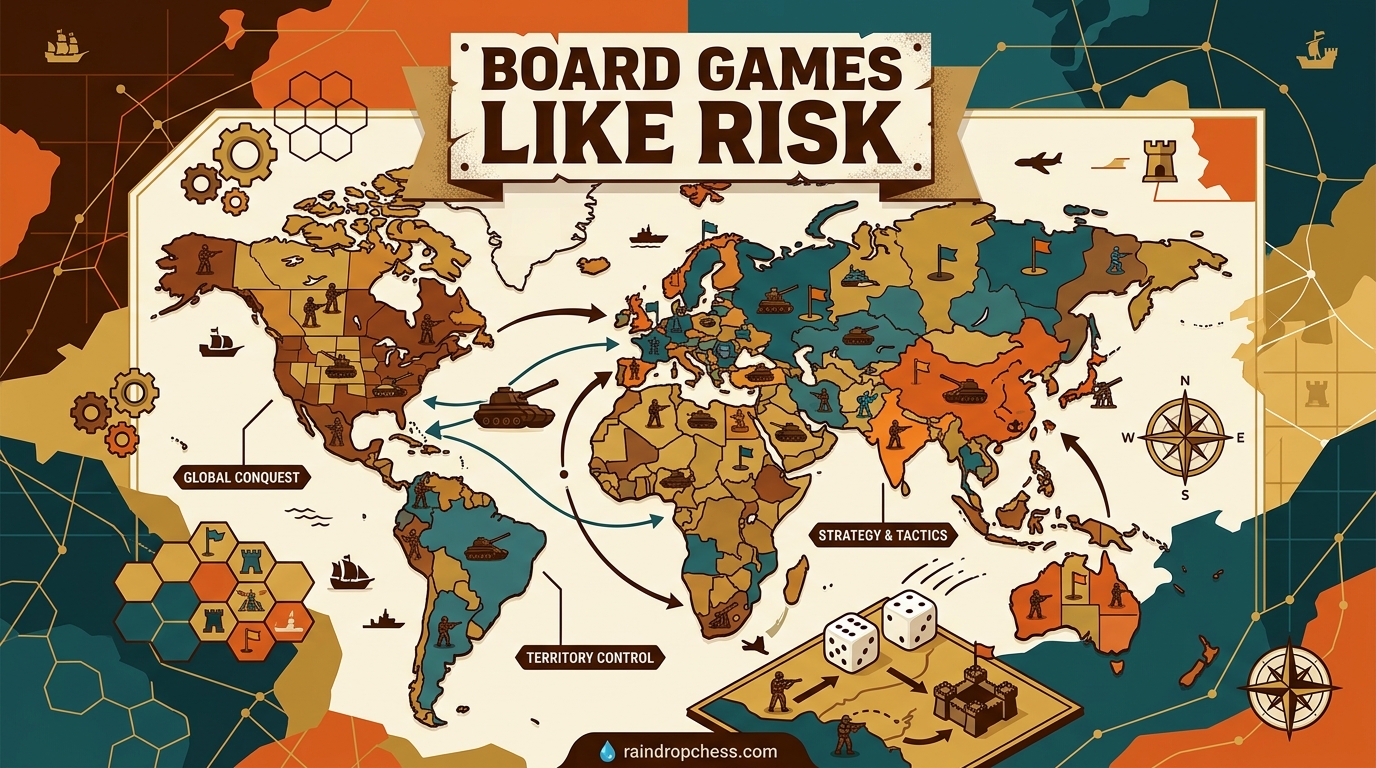
I have spent more evenings than I can count huddled around a table rolling dice, pushing plastic armies across a world map, and arguing over whether someone cheated on their reinforcements. Risk was my gateway into strategy board gaming, and I still love it for that. But after a few too many six-hour sessions that came down to whoever rolled better on the final turn, I started hunting for alternatives.
The truth is, the world of board games like Risk has exploded since the days when Risk was the only conquest game on the shelf. Today you can find territory control games that take 45 minutes instead of 6 hours. You can find war strategy board games where your decisions matter more than your dice rolls. You can find area control games with themes ranging from Vikings to pirates to Greek gods.
Our team tested, researched, and compared the top 10 strategy board games similar to Risk for 2026. Whether you want something lighter for family board games for teens or a deep war game for adults, this guide has you covered. We looked at player count, complexity, playtime, luck factor, and replayability for every game on this list. If you also want to explore the legacy format, check out our guides on Risk Legacy editions and Pandemic Legacy editions.
Table of Contents
Top 3 Picks for Best Board Games Like Risk

Best Board Games Like Risk in 2026
| Product | Specifications | Action |
|---|---|---|
| Small World |
|
Check Latest Price |
 Axis & Allies 1942 2nd Ed Axis & Allies 1942 2nd Ed |
|
Check Latest Price |
 A Game of Thrones 2nd Ed A Game of Thrones 2nd Ed |
|
Check Latest Price |
 Scythe Scythe |
|
Check Latest Price |
 Blood Rage Blood Rage |
|
Check Latest Price |
 Risk Europe Risk Europe |
|
Check Latest Price |
 Plunder: A Pirate’s Life Plunder: A Pirate’s Life |
|
Check Latest Price |
 1775: Rebellion 1775: Rebellion |
|
Check Latest Price |
 Cyclades Legendary Edition Cyclades Legendary Edition |
|
Check Latest Price |
 Root Root |
|
Check Latest Price |
1. Small World – Fantasy Area Control Done Right
Asmodee Small World Board Game – Fantasy Area Control & Strategy Game with Magical Creatures, Special Powers, Family Game for Kids & Adults, Ages 8+, 2-5 Players, 40-80 Min Playtime
2-5 Players
40-80 Min
Ages 8+
14 Fantasy Races
Area Control
Pros
- High replayability with 14 races and 20 powers
- Easy to learn for newcomers
- Beautiful artwork and components
- Race decline mechanic adds strategic depth
Cons
- Token storage box poorly designed
- Rules take effort to explain to new players
Small World was the first game that made me realize you could capture everything great about Risk without committing an entire Saturday to it. You pick a fantasy race like Amazons, Dwarves, or Flying Goblins, pair them with a random special power, and go to war on a map that is just barely big enough for everyone. The board fills up fast, and that is the point.
Here is what makes Small World one of the best board games like Risk: the decline mechanic. When your race overextends, you send it into decline and pick a new one next turn. Your old race stays on the board scoring points but is vulnerable. This solves the biggest problem Risk has, which is that one player runs away with the game and everyone else suffers for two more hours.
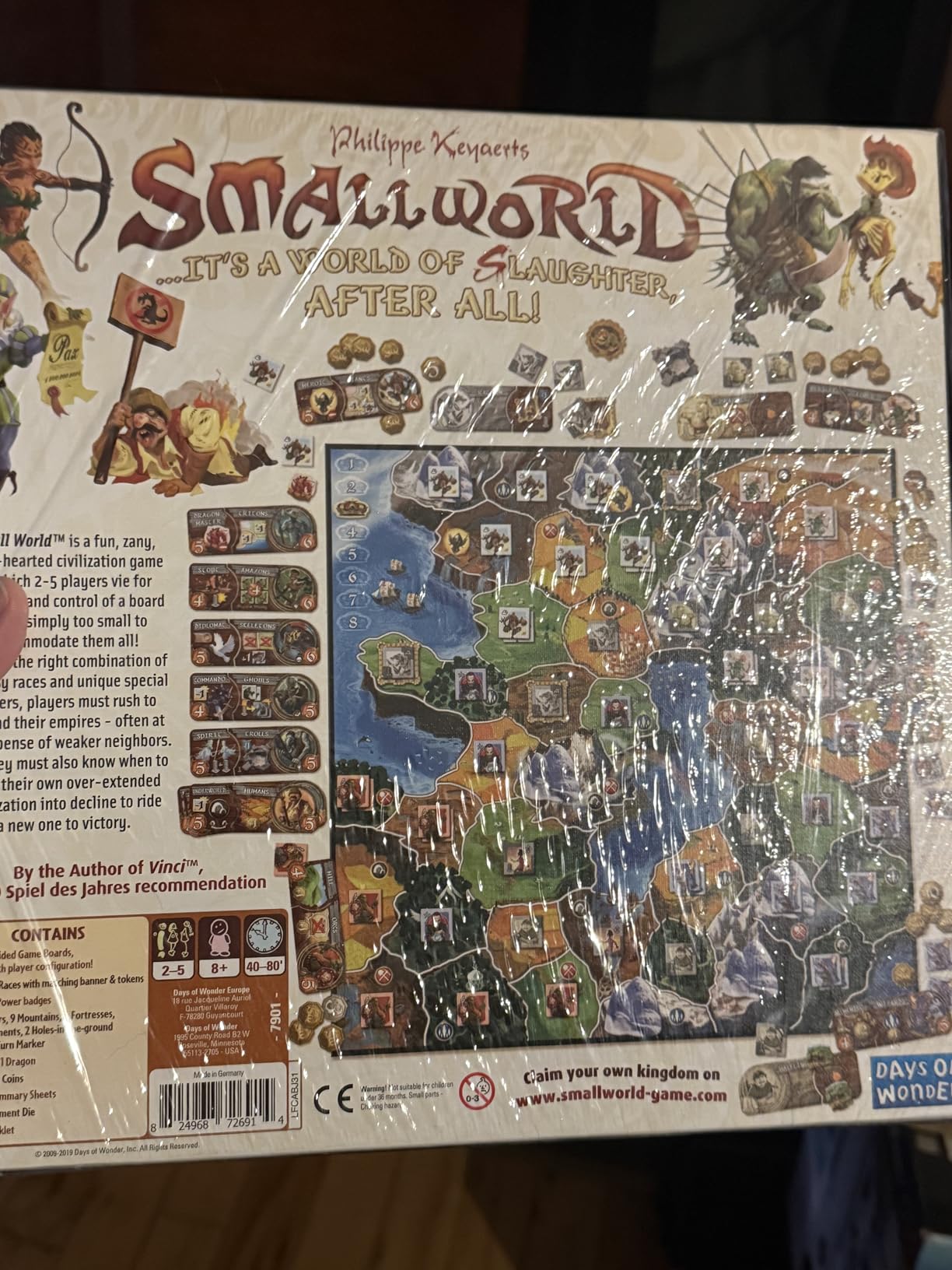
With 14 races and 20 special powers, no two games feel the same. I have played Small World over 30 times and still discover new race and power combinations that completely change my approach. The combinations are absurdly fun. Flying Ratmen? Pillaging Halflings? Each combo creates a new puzzle to solve.
The artwork by Miguel Coimbra is gorgeous, and the components feel premium. Tokens are chunky and satisfying to slap down on the board. Games run 40 to 80 minutes depending on player count, which means you can easily play two rounds in an evening. For anyone moving from Risk to modern board games, this is the game I recommend first.
What Makes the Decline Mechanic So Good
The decline system keeps every player engaged through the entire game. Instead of getting eliminated early and watching everyone else play, you always have a fresh race coming up. It also adds a layer of timing strategy. Do you decline now for a better position, or squeeze one more turn out of your current race?
How Does Small World Compare to Risk on Luck
Small World uses a simple combat system where you throw a special die only when the result is close. Most conquests are deterministic, meaning if you bring enough tokens, you win the territory. This dramatically reduces the luck factor compared to Risk, where a single bad dice roll can wipe out your largest army.
2. Axis & Allies 1942 Second Edition – The WWII War Game Classic
Renegade Game Studios Axis & Allies 1942 Second Edition Board Game
2-5 Players
3 Hours
Ages 12+
WWII Strategy
Oversized Board
Pros
- Classic WWII gameplay with updated rules
- Oversized 40x26 inch board
- Command 5 major powers
- Deep strategic economy management
Cons
- Germany and USSR piece colors hard to distinguish
- Learning curve required before first game
Axis & Allies is the game I break out when my group wants the full Risk experience but with actual economics, production, and historical flavor. You command one of five major powers from spring 1942: Germany, Japan, the United Kingdom, the Soviet Union, or the United States. Each turn you build units, move armies, fight battles, and collect income from territories you control.
The 40 by 26 inch game board is massive and covers the entire globe. It demands its own table. Our group sets up a dedicated folding table just for this game because the board alone takes up most of a standard dining surface. The scale of it makes every decision feel weighty.
What sets Axis & Allies apart from Risk is the economic layer. You are not just conquering territory for points. You are managing an industrial production chain, deciding whether to build infantry, tanks, fighters, bombers, submarines, or aircraft carriers. Each unit type has distinct combat stats and strategic uses. This depth makes every game feel like a genuine military campaign.
Battles still use dice, so there is luck involved, but the economic engine means a single bad roll rarely loses you the game. Smart production decisions and strategic positioning matter far more over the course of a three-hour session. History buffs on BoardGameGeek consistently rank Axis & Allies as one of the best war strategy board games ever made.
Is the Second Edition Worth It Over the Original
The Second Edition refines rules based on years of community feedback. It includes updated unit setups, clarified national advantages, and resealable storage bags that actually keep your 410 plastic pieces organized. If you are buying new, always get the Second Edition over older prints.
How Long Does a Full Game Actually Take
The box says three hours, and that is accurate for experienced players. Your first game will take longer as you learn the unit stats and movement rules. Plan for four hours the first time. With four or five players, add another hour as each person manages a full economy and military.
3. A Game of Thrones The Board Game (2nd Edition) – Political Intrigue and War
Asmodee A Game of Thrones The Board Game (2nd Edition) – Epic Strategy in The World of Westeros, Tactical Wargame for Adults, Ages 14+, 3-8 Players, 2-4 Hour Playtime
3-6 Players
2-4 Hours
Ages 14+
Westeros Theme
Alliance & Betrayal
Pros
- Immersive Westeros theme with political intrigue
- Deep alliance and betrayal mechanics
- High replayability with multiple houses
- Inspired by Diplomacy
Cons
- Complex rules require learning time
- Setup and cleanup are time-consuming
- Not for casual or quick sessions
A Game of Thrones The Board Game is what happens when you take Risk and inject it with backstabbing, negotiation, and genuine political tension. You command one of the great houses of Westeros and fight for control of the Iron Throne through military might, political influence, and strategic alliances that last exactly as long as they benefit both parties.
I have never had a game night produce as many heated arguments and memorable betrayals as this one. The game mechanics actively encourage negotiation between turns, and the combat system uses hidden cards that reward bluffing and psychological reads. When someone breaks an alliance at the perfect moment, the table erupts.
The game supports 3 to 6 players, and each house has unique starting positions and strategic challenges. House Stark starts in the north with defensive positioning. House Lannister has economic advantages. House Baratheon controls the sea. No two houses play the same way, which gives this game massive replayability.
Be warned that this is a long game. Sessions typically run 2 to 4 hours, and the rules are complex enough that your first play will involve a lot of rulebook checking. But for groups that love negotiation-heavy war strategy board games, nothing beats the drama of a Game of Thrones session.
What Makes the Combat Card System Unique
Instead of rolling dice, battles are resolved through simultaneous card reveals. Each house has a deck of character cards with different combat values and special abilities. You choose which card to play based on your opponent, your board position, and whether you can afford to use your best commander now or save them for later. This adds a psychological layer that pure dice combat cannot match.
Do You Need to Know the Books or Show
No. The theme enhances the experience if you are a fan, but the gameplay stands on its own. The mechanics are inspired by the classic game Diplomacy, and the strategic depth comes from the rules, not the lore. Non-fans in our group enjoyed it just as much as the Game of Thrones enthusiasts.
4. Scythe – Engine-Building Mechs in Dieselpunk Europe
Stonemaier Games: Scythe – A Strategy Board Game by Jamey Stegmaier
1-5 Players
115 Min
Ages 14+
Dieselpunk Theme
Low Luck
Solo Play
Pros
- Stunning artwork by Jakub Rozalski
- Engine-building with asymmetric factions
- Almost zero luck factor
- Excellent solo Automa system
Cons
- Steep learning curve for new players
- Some rulebook production mechanics are unclear
- Complex faction mats with unclear icons
Scythe is the board game I recommend more than any other to former Risk players who want something deeper. Set in an alternate-history 1920s Europe where dieselpunk mechs roam the countryside, it blends area control with engine-building, resource management, and asymmetric faction powers. Every piece of it feels premium.
The artwork by Jakub Rozalski is genuinely the most beautiful art I have seen in any board game. The giant mech miniatures, the landscape boards, the character miniatures, everything is stunning. Even non-gamers stop to admire it when they walk past the table. With over 5,300 reviews and a 4.8 rating, the community clearly agrees.
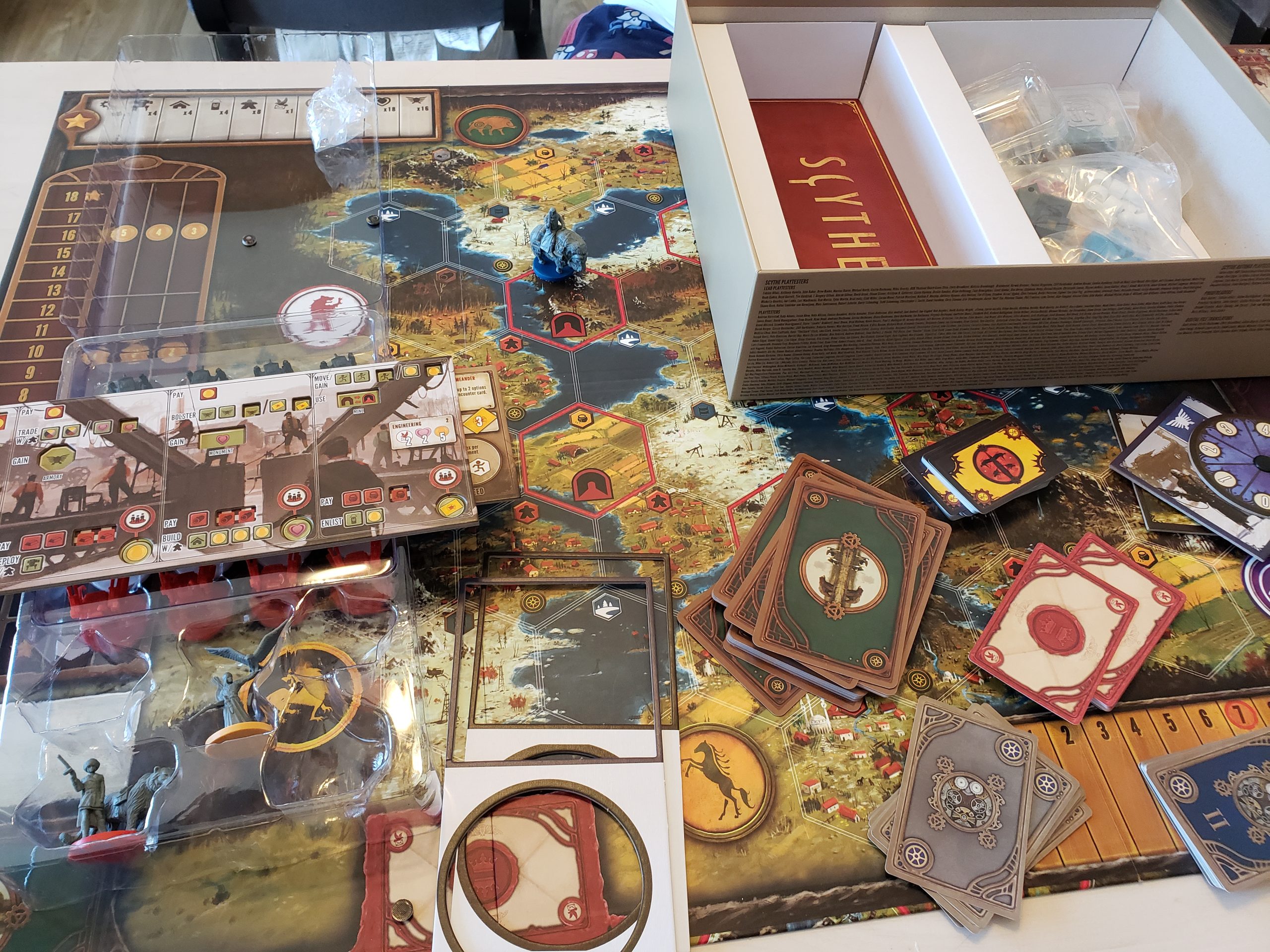
What makes Scythe one of the best board games like Risk is its combat system. Battles are resolved using combat cards and power dials, not dice. You spend resources to fight, which means every conflict is a calculated tradeoff. Do you commit your best cards here, or save them for a defensive war later? The low luck factor means your decisions, not random rolls, determine who wins.
Scythe also includes a solo play mode called the Automa system, and it is excellent. I have played probably 15 solo games using the Automa deck, and the AI opponent feels genuinely competitive. For players who cannot always get a group together, this alone makes Scythe worth the investment.
How the Action Selection System Works
Each player has a personal player board with four action sections. You move your action token top to bottom on each column, performing the top action, the bottom action, or both. You can never go back up, so every turn is a commitment. This creates a satisfying rhythm where you plan several moves ahead, and it eliminates the downtime that plagues larger strategy games.
Is Scythe Good for Players New to Strategy Games
Scythe has a learning curve, no question. But the quick-start guide and included quick reference cards help a lot. I recommend watching a 15-minute teach video before your first game. Once the action selection mechanic clicks, everything else follows naturally. Players who push through the first game usually want to play again immediately.
5. Blood Rage – Viking Combat and Ragnarok
Blood Rage (Core Box) | Strategy Game | Viking Fantasy Board Game | Tabletop Miniatures Battle Game for Adults and Teens | Ages 14+ | 2-4 Players | Avg. Playtime 60-90 Mins | Made by CMON
2-4 Players
60-90 Min
Ages 14+
Viking Theme
No Dice
Card Drafting
Pros
- Gorgeous highly detailed 46 miniatures
- Quick gameplay at 60-90 minutes
- Multiple paths to victory including quests and pillaging
- Card drafting eliminates randomness
Cons
- Setup time can be lengthy
- Some miniatures may arrive bent
- Small card size
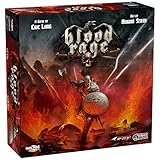
Blood Rage is my go-to recommendation for groups that want Risk-style combat without dice. You play Viking clans fighting for glory across three ages before Ragnarok destroys the world. Each age involves card drafting, territory battles, and strategic quests. The clan with the most glory at the end wins.
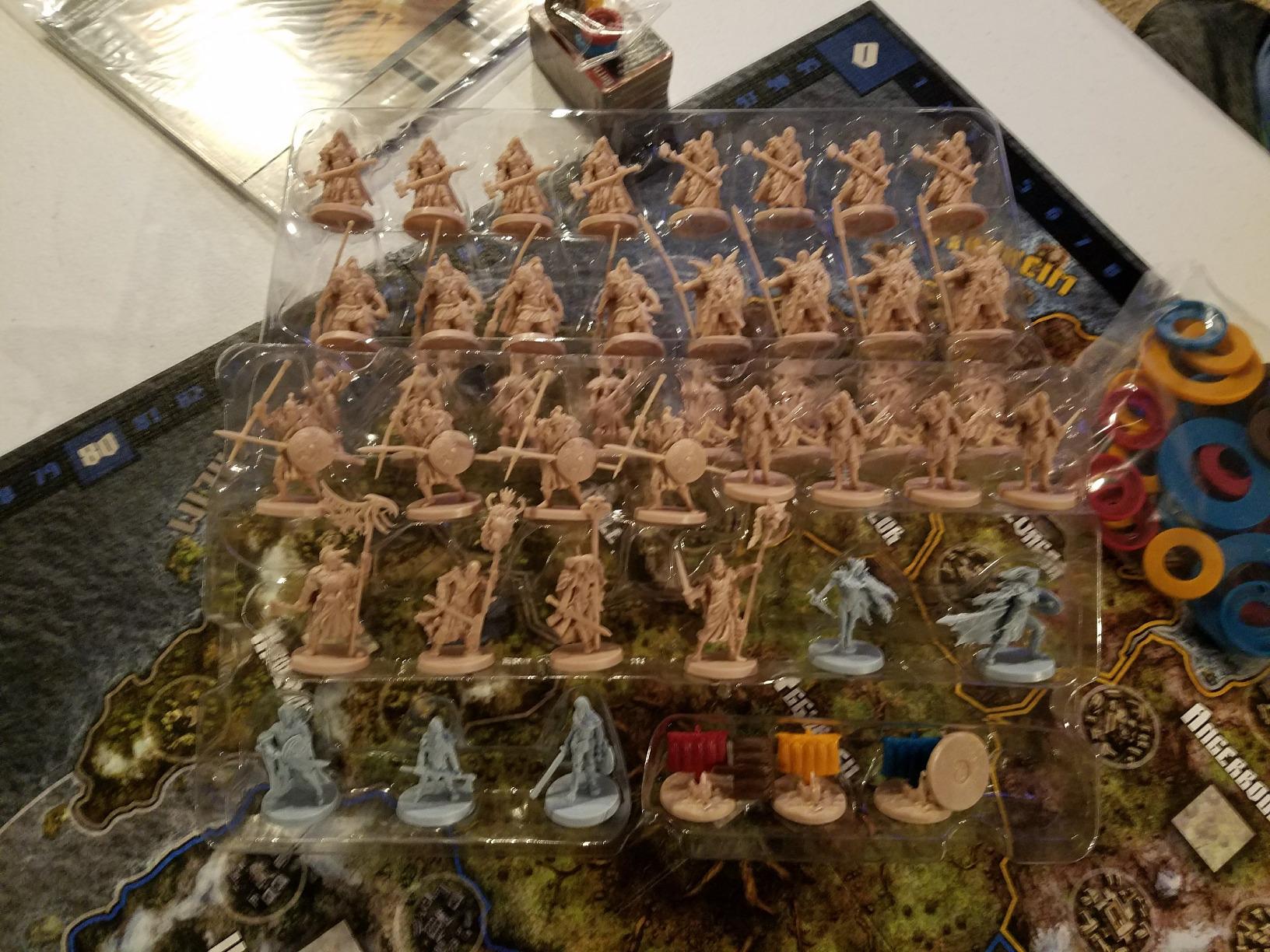
The miniatures in this game are stunning. You get 46 highly detailed figures across four clans, each with unique sculpts for warriors, leaders, and monsters. Painting them is half the fun. Even unpainted, they look impressive on the table and add enormous visual weight to every battle.
What sets Blood Rage apart is the card drafting system. At the start of each age, players draft cards from a shared deck. These cards give you combat bonuses, quest objectives, upgrades, and clan stats. Because everyone drafts from the same pool, you can see what your opponents might be planning and counter accordingly. No dice means your strategy determines the outcome, not luck.
Games run a tight 60 to 90 minutes, which is remarkably fast for a game with this much depth. The multiple victory paths keep things interesting too. You can win through combat, through completing quests, or even through dying gloriously in battle. That last mechanic is genuinely brilliant and rewards creative thinking.
Can You Win Without Fighting
Yes, and that is one of Blood Rage’s best features. While combat is central to the theme, the quests system lets you score massive glory points by completing objectives that have nothing to do with battles. Some players focus entirely on quests and ship battles while avoiding land combat entirely. This flexibility means every game feels different depending on your draft strategy.
How Does Blood Rage Compare to Risk on Strategy
Blood Rage eliminates dice entirely, replacing randomness with card drafting and resource management. Every battle outcome depends on the cards you drafted and when you choose to play them. This makes Blood Rage significantly more strategic than Risk while keeping the territory combat feel that Risk fans love.
6. Risk Europe – A Deeper, Medieval Risk Experience
Risk Europe, Medieval Conquest Board Game, by Winning Moves Games USA
2-4 Players
120 Min
Ages 14+
Medieval Europe
4 Unit Types
Advanced Combat
Pros
- Deep strategic gameplay with 4 unit types
- Tier-based combat system with archers cavalry and siege weapons
- Card-based order system for reactive play
- Multiple win conditions
Cons
- Complex rules require learning time
- Game length can be lengthy with full player count
If you love Risk itself but wish it had more strategic depth, Risk Europe is the answer. This is not a replacement for Risk, it is an evolution of it. The game covers all of medieval Europe with a board full of crowned cities, supply lines, and strategic chokepoints that make positioning genuinely matter.
The biggest upgrade over classic Risk is the unit variety. Instead of identical armies, each player commands footmen, archers, cavalry, and siege weapons. Each unit type has different combat capabilities. Archers fire before regular combat. Cavalry can reposition. Siege weapons bombard from range. This tier-based combat system makes every battle a tactical decision, not a dice-off.

The card-based order system is another major improvement. Instead of everyone taking turns sequentially, players reveal order cards simultaneously. This creates a layer of unpredictability and reaction that classic Risk lacks. You have to anticipate what your opponents will do and plan around it.
With over 1,000 reviews and a 4.7 rating, the community loves this game. Multiple win conditions mean you can pursue crown cards for a diplomatic victory or simply conquer everything militarily. The team gameplay variant adds even more replayability. For Risk fans who want more depth without abandoning the core formula, Risk Europe is perfect.
How Is Risk Europe Different From Regular Risk
Risk Europe adds four distinct unit types, a card-based simultaneous order system, tax collection mechanics, crown city objectives, and siege bombardment rules. These additions create layers of tactical decision-making that classic Risk does not have. The board is also more geographically interesting with mountains, rivers, and cities that affect movement and combat.
Is Risk Europe Good for New Board Gamers
Risk Europe works best for players who already know and enjoy Risk. If you have never played a strategy board game before, the additional rules will feel overwhelming. But if you are a Risk veteran looking to level up, the learning curve is manageable and the payoff is worth it. Start with a two-player game to learn the unit interactions before adding more players.
7. Plunder: A Pirate’s Life – Family-Friendly Territory Control
Plunder A Pirate’s Life – Family Board Game for Adults and Kids
2-6 Players
20 Min Per Player
Ages 10+
Pirate Theme
Modular Board
No Elimination
Pros
- Randomized modular board for high replayability
- Easy to learn with intuitive gameplay
- No player elimination everyone plays to the end
- Excellent storage design with designated slots
Cons
- First setup can take 45 minutes
- Dice rolls introduce some luck factor
Plunder: A Pirate’s Life is the game I pull out when I want Risk-style territory control but need something the whole family can enjoy. You command pirate fleets, conquer islands, trade resources, and battle for dominance on a modular ocean board. With nearly 3,000 reviews and a 4.8 rating, it has clearly struck a chord with the board game community.
The modular board is the star of the show. Six double-sided ocean tiles combine to create a different map every single game. This gives Plunder enormous replayability compared to games with fixed boards. You never know what the ocean layout will look like until you set it up, and island positions dramatically affect your strategy.
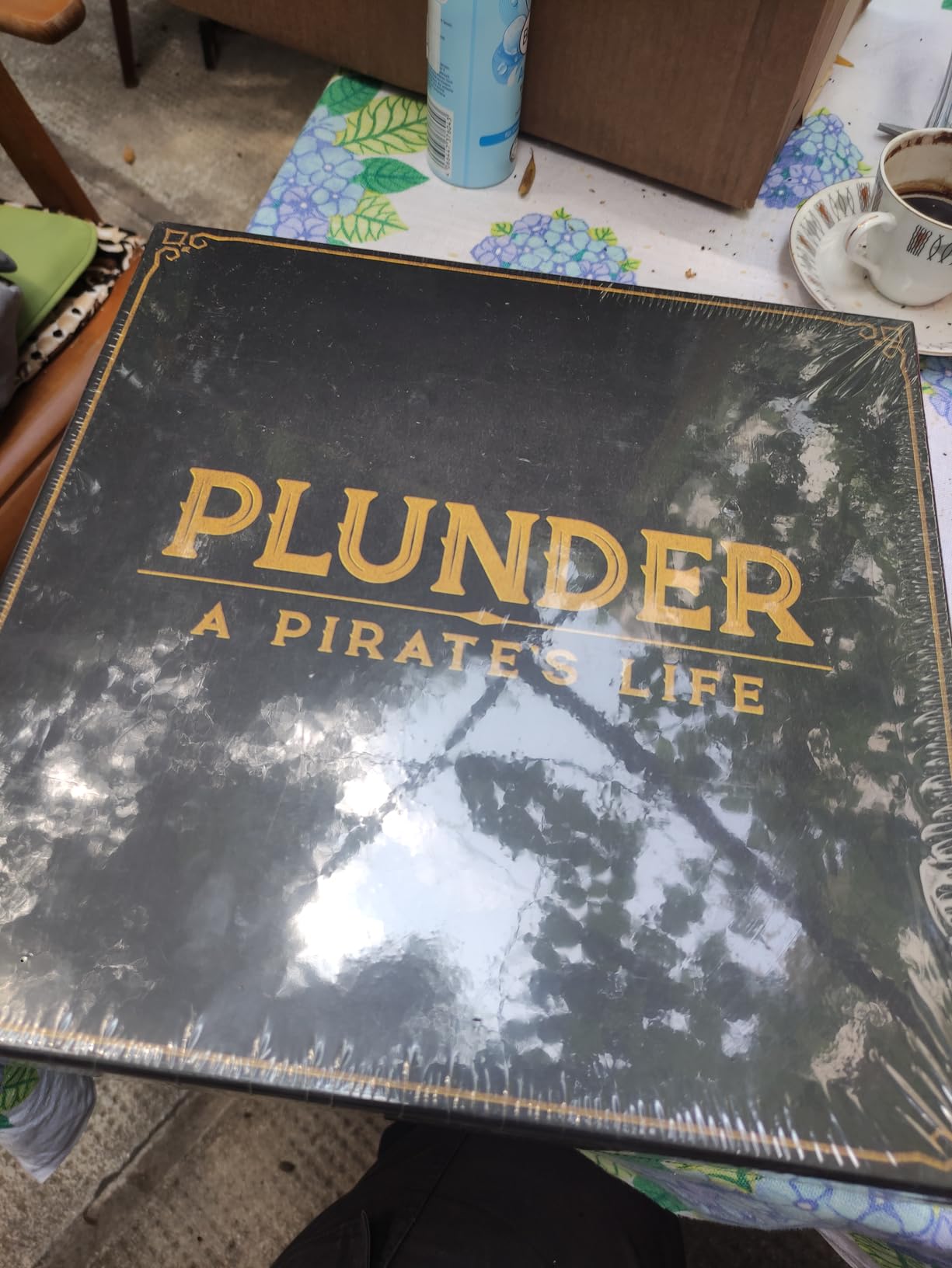
One feature that makes Plunder great for family game night is the no elimination rule. Everyone plays from start to finish, which means no one is sitting out bored while others finish the game. This alone makes it a better pick than classic Risk for groups with kids or casual players.
The components are excellent. Chunky ship miniatures, treasure tokens, compass spinners, and cannon pieces all feel premium. The storage design is thoughtful too, with designated slots for everything. Setup is quick once you know the game, though your first time will take longer as you sort components.
How Does Plunder Compare to Risk for Families
Plunder is significantly more family-friendly than Risk. The pirate theme appeals to kids, the rules are simpler to teach, the playtime is shorter at roughly 20 minutes per player, and no one gets eliminated. It still has territory control and combat, so Risk fans will feel at home, but without the frustration of early elimination.
What Player Count Works Best for Plunder
Plunder scales well from 2 to 6 players, but it shines at 4. With two players it feels more strategic and chess-like. With 5 or 6 players, the board gets crowded and combat becomes more frequent and chaotic. For the best experience, aim for 3 to 4 players. Team play variants are available for larger groups.
8. 1775: Rebellion – The American Revolution as a Board Game
Academy Games | 1775 Rebellion The American Revolution | Board Game | 2 to 4 Players | 60 to 120 Minutes
2-4 Players
60-120 Min
Ages 10+
American Revolution
Team Play
Custom Dice
Pros
- Excellent educational tool for American Revolution history
- Unique faction system with custom dice
- Quick gameplay for a wargame
- Card-driven historical events
Cons
- Higher price point
- Limited to 2-4 players and not ideal for 3 players
1775: Rebellion is the game I recommend when someone wants a historical war game that plays faster than Axis & Allies. It covers the American Revolution with British Regulars, American Continentals, Colonial Militia, and Loyalist forces, plus French and Hessian allies that enter as the game progresses. It won the 2014 Origins Wargame of the Year award for good reason.
The faction system is what makes this game special. Each faction has its own custom dice representing different battlefield capabilities. British Regulars are disciplined and reliable. American Militia are unpredictable but numerous. French allies hit hard when they arrive. The asymmetry between factions creates a genuinely historical feel without overwhelming complexity.
Combat uses custom dice instead of standard numbered dice. Each face on the die represents a different outcome: hit, flee, or blank. Different factions have different die compositions, so British dice are more likely to hit while Militia dice are more likely to flee. This captures the historical differences between armies without requiring complex rules.
Games run 60 to 120 minutes, which is fast for a historical war game. The map covers the 13 American Colonies and Eastern Canada with bright, clear artwork. Event cards add historical flavor and can swing the momentum of the game. Teachers and parents consistently praise this game as an educational tool that is actually fun to play.
Is 1775 Rebellion Good as a First War Game
Absolutely. The rules are streamlined, the custom dice system is intuitive, and the playtime is short enough to finish in an evening. It is specifically designed as an introduction to historical and strategy board games. If you have never played a war game before, this is one of the best starting points available.
Can You Play 1775 Rebellion Solo
Unfortunately, 1775: Rebellion does not include a solo mode. It is designed for 2 to 4 players, with 2-player games being head-to-head and 4-player games being team-based. The 3-player count is awkward because one side has two players and the other has one. For solo gaming, look at Scythe with its Automa system instead.
9. Cyclades Legendary Edition – Greek Gods and Monster Auctions
Cyclades | Epic Mythological Greek Strategy Game for Teens & Adults | Classic Auctioning & Area Control Board Game | 1v1, Competitive, or Team Modes | Ages 14+ | 2-6 Players | 60-90 Minutes
2-6 Players
60-90 Min
Ages 14+
Greek Mythology
Auction Mechanic
Modular Board
Pros
- Legendary Edition with refined gameplay and premium components
- Multiple play modes including teamplay and 2-player
- Dynamic modular board for high replayability
- Excellent bidding mechanic
Cons
- Not beginner friendly for those new to board games
- Some packaging concerns reported
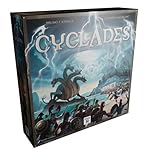
Cyclades Legendary Edition is the newest game on this list, and it brings something completely different to the table: an auction mechanic. Instead of simply taking turns, players bid on the favor of Greek gods each round. Zeus lets you recruit mythological creatures. Ares gives you military units. Poseidon moves your fleets. Athena provides philosophers for victory points. The auction determines everything.
This bidding system creates incredible tension. You might desperately need Ares to launch an attack, but if another player outbids you, your entire strategy shifts. You have to adapt on the fly, which keeps the game fresh and unpredictable every single round. No two games of Cyclades play the same way.
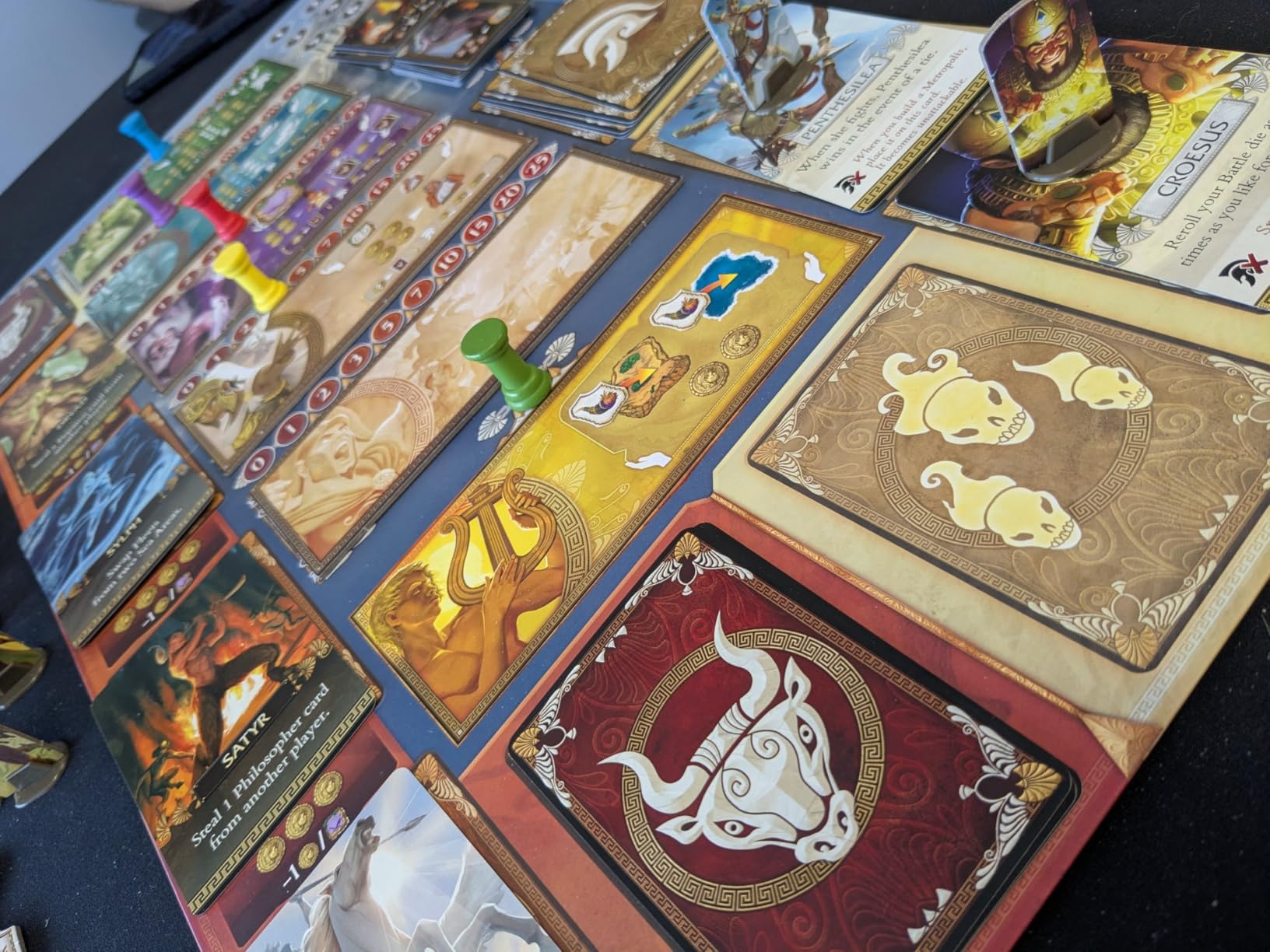
The Legendary Edition is a significant upgrade from the original Cyclades release. It includes refined gameplay, premium components, and multiple play modes including Classic, Teamplay, and an improved 2-player mode. The modular board means the map changes every game, adding strategic variety and replayability.
Mythological creatures and heroes from Greek legend add another layer of strategy. You can summon the Minotaur, Medusa, the Hydra, Pegasus, and more. Each creature has a unique power that can dramatically shift the board state. The art and component quality are excellent throughout.
How Does the Auction System Change the Game
The auction system means turn order and available actions are determined dynamically each round rather than being fixed. This eliminates the first-player advantage that plagues many strategy games. It also means you must manage your gold carefully, because overspending on one god leaves you vulnerable to being outmaneuvered on the next.
Is Cyclades Good for Experienced Gamers Only
Cyclades sits in a middle ground. It is not as complex as Scythe or Root, but it is more involved than Small World or Plunder. The rules are straightforward once you understand the auction phase, but the strategic depth comes from reading your opponents and managing your economy. Experienced gamers will love it, while newer players can enjoy it with some patience on their first game.
10. Root – Asymmetric Strategy in the Woodland
Root: A Game of Woodland Might and Right | Asymmetric Strategy Board Game by Leder Games | 2–4 Players | Ages 14+ | Adventure, Conflict & Area Control
2-4 Players
90 Min
Ages 14+
Asymmetric Factions
Woodland Theme
Area Control
Pros
- Truly asymmetric gameplay with 4 completely different factions
- Stunning artwork and production quality
- High replayability with different faction strategies
- Rich narrative-driven gameplay
Cons
- Steep learning curve and videos recommended before first play
- Can be mean and ruthless gameplay
- Difficult to teach due to asymmetric nature
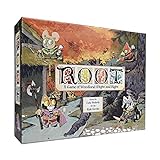
Root is the most creative area control game I have ever played. It looks adorable with its cute woodland animal factions, but underneath the beautiful art lies one of the most strategically demanding games on this list. Four factions compete for control of the forest, and each faction plays by completely different rules.
The Marquise de Cat builds buildings and manages an industrial economy. The Eyrie Dynasties must follow a rigid command structure that grows more complex over time. The Woodland Alliance spreads sympathy and launches revolts. The Vagabond quests alone, completing objectives and interacting with other factions. Every faction is essentially a different game.
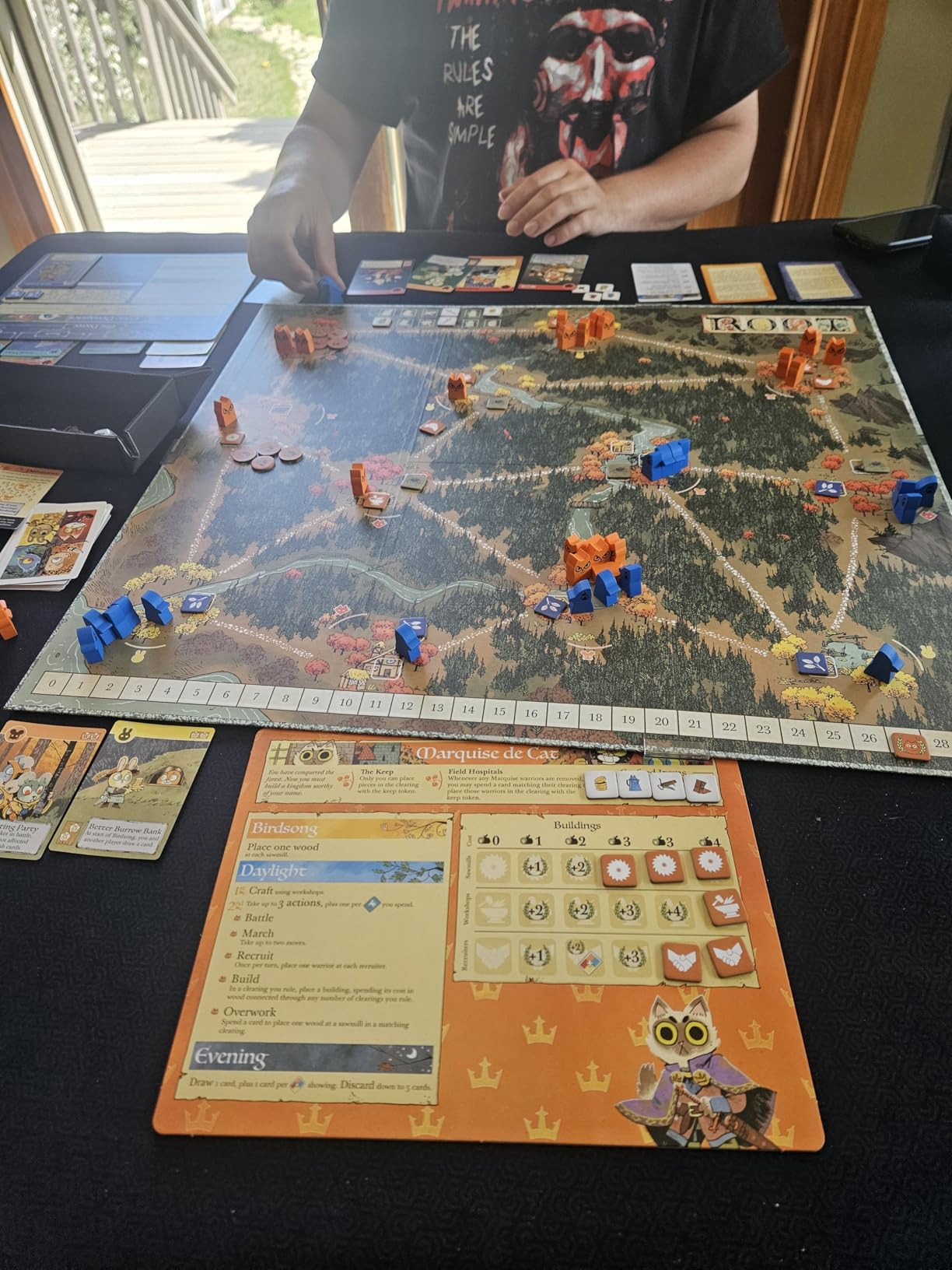
This asymmetry is what makes Root one of the best board games like Risk for experienced gamers. Instead of everyone playing the same way, you have to understand not just your own faction but all four. The strategy that wins as the Marquise will fail completely as the Alliance. Learning each faction takes time, but the payoff is enormous replayability.
With over 4,100 reviews and a 4.8 rating, the board game community has embraced Root enthusiastically. The artwork by Kyle Ferrin is genuinely stunning. Every card, every board, every faction mat is a visual treat. The production quality is among the best in the industry.
Which Faction Should Beginners Start With
The Marquise de Cat is the most straightforward faction and the best starting point for new players. Their engine-building gameplay is intuitive: build sawmills, gather wood, build more buildings, score points. The Eyrie Dynasties are also approachable. Avoid the Woodland Alliance and Vagabond until you understand how all the factions interact.
How Difficult Is Root to Learn
Root has a reputation for being hard to teach, and it is earned. Because each faction plays differently, you effectively need to learn four rule sets. Watching a faction teach video before your first game is strongly recommended. The rulebook is excellent once you know the basics, but expect your first game to take 2 to 3 hours as players reference rules and figure out their faction mechanics.
How to Choose the Right Game Like Risk
Picking the right territory control board game depends on your group, your experience level, and what you want from the experience. After testing all 10 games on this list, here is how our team breaks down the decision-making process.
Luck vs Strategy: How Much Dice Should Matter
This is the number one question we see on Reddit and BoardGameGeek forums. Risk players are often frustrated by how much luck determines the outcome. If that sounds like you, prioritize games with low luck factors.
Scythe and Blood Rage are the best picks for players who hate dice randomness. Scythe uses combat cards and power dials. Blood Rage uses card drafting with no dice at all. Small World uses a special die only in close battles, making most conquests deterministic.
If you actually enjoy the dice-rolling tension of Risk, then Axis & Allies and Risk Europe keep dice at the center of combat while adding strategic layers. Plunder and 1775: Rebellion also use dice, but with faction-specific custom dice that add variety rather than pure randomness.
Player Count: Who Is Playing
Your group size matters enormously. Most board games for four players work well at that count, but some games shine at specific player numbers.
For 2 players: Scythe, 1775: Rebellion, and Cyclades all have dedicated 2-player modes. Small World also works surprisingly well as a duel.
For 4 players: Blood Rage, Root, Risk Europe, and 1775: Rebellion are at their best with four players. The dynamic interactions between four players create the most balanced and exciting games.
For 5 to 6 players: A Game of Thrones, Axis & Allies, Plunder, and Cyclades scale well to larger groups. Be prepared for longer sessions at higher player counts.
Playtime: How Long Do You Have
One of the biggest complaints about Risk on forums is that games drag on for 6 or more hours. Modern alternatives have solved this problem, but playtimes still vary significantly.
Under 90 minutes: Small World, Blood Rage, Plunder, Cyclades, and Root all finish in roughly 60 to 90 minutes. These are perfect for a weeknight game night.
2 to 4 hours: Scythe, Risk Europe, and 1775: Rebellion occupy the medium range. Plan for a dedicated evening.
3 plus hours: Axis & Allies and A Game of Thrones are the longest games on this list. Block out a full afternoon or evening.
Theme: What World Do You Want to Explore
The theme matters more than most people expect. A game you find visually and thematically appealing will hit the table more often. Our picks span a wide range of themes to suit different tastes.
Fantasy fans should look at Small World, Blood Rage, and Root. History buffs will gravitate toward Axis & Allies, 1775: Rebellion, and Risk Europe. Players who enjoy political intrigue should try A Game of Thrones. For something lighter and family-friendly, Plunder’s pirate theme is a crowd-pleaser.
Complexity: Gateway vs Deep Strategy
If you are moving from Risk to modern board games for the first time, start with gateway games. Small World and Plunder are the most accessible options on this list. They teach area control mechanics without overwhelming new players.
For intermediate players ready for more depth, Scythe, Blood Rage, and Cyclades offer satisfying complexity without being punishing. 7 Wonders is another excellent step-up game that introduces card drafting in a lighter package.
Experienced strategy gamers should look at Root and A Game of Thrones. These are the most complex games on this list, with steep learning curves but enormous strategic payoff. They reward repeated plays and deep engagement.
FAQ
What board game is similar to Risk?
Small World is the most commonly recommended board game similar to Risk. It uses fantasy races with special powers to conquer territory on a map that is too small for everyone, creating constant conflict. Games run 40 to 80 minutes compared to Risk’s multi-hour sessions. Scythe, Blood Rage, and Risk Europe are also excellent alternatives.
What is the #1 board game in the world?
Based on BoardGameGeek rankings and community consensus, the #1 board game in the world is Gloomhaven, a massive campaign-driven dungeon crawl. Among territory control games like Risk, Scythe consistently ranks as the highest-rated alternative with a 4.8 average rating across over 5,000 Amazon reviews.
What are the top 5 best board games like Risk?
The top 5 best board games like Risk are Small World for accessibility, Scythe for low-luck strategy, Blood Rage for diceless Viking combat, Root for asymmetric faction design, and Plunder for family-friendly pirate territory control. Each captures the conquest feel of Risk while solving its biggest problems with playtime and luck dependency.
What’s better, Catan or Risk?
Catan and Risk serve different purposes. Catan is a resource management and trading game with no player elimination and shorter 60 to 90 minute sessions. Risk is a pure territory conquest game with dice combat and longer playtimes. For most modern game groups, Catan is considered the better gateway game, but players who specifically want war and conquest gameplay should choose Risk or one of its alternatives like Small World or Scythe.
Conclusion
Finding the best board games like Risk in 2026 comes down to what you want to change about the Risk experience. If you want shorter playtime and less luck, Small World is the clear winner. If you want deep strategic depth with almost no randomness, Scythe is unmatched. If you want family-friendly territory control that everyone can enjoy, Plunder delivers beautifully.
Our team tested each of these games across multiple sessions to make sure the recommendations hold up. Every game on this list solves at least one major problem that Risk players complain about, whether that is excessive playtime, too much luck dependency, or lack of strategic depth. Pick the one that matches your group’s experience level, player count, and preferred theme, and you will not be disappointed.
Ready to upgrade your game night? Pick your favorite from the list above and start conquering.