
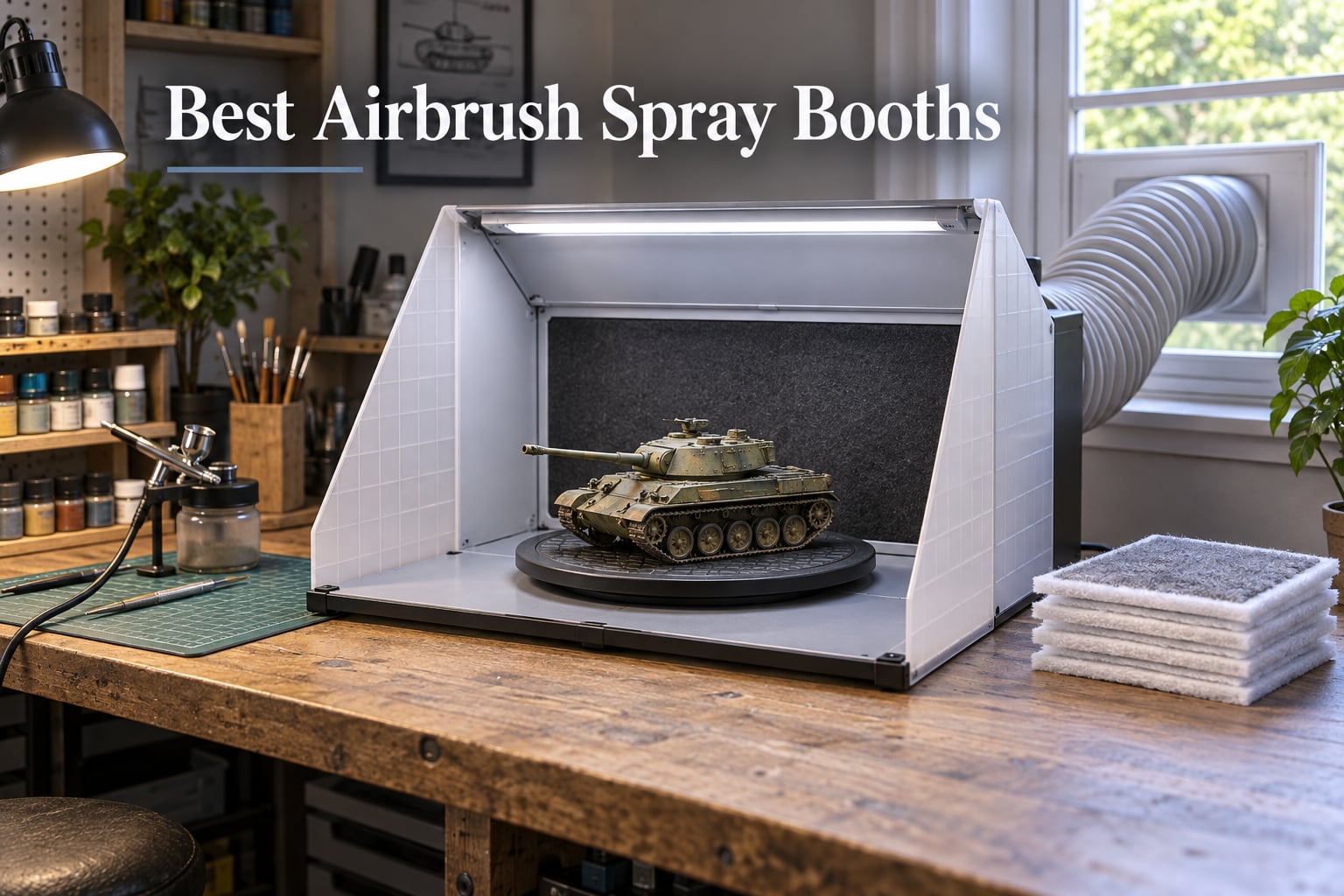
Airbrushing indoors is one of those hobbies that looks effortless in a video and turns your room upside down in practice. Overspray lands on the desk, the cat, the curtains, and the fine dust of paint settles everywhere you wipe. Worse, the atomised particles and solvent vapour go straight into your lungs and then into the rest of the house, which is exactly why the best airbrush spray booths became a winter essential for anyone who paints models, figures, cakes, nails or props when the weather turns. We compared ten of them on extraction rate, booth volume, lighting quality, filter supply, noise and how they behave once you have actually set one up on a real desk.
A spray booth is a sealed, foldable workspace with an exhaust fan, a replaceable filter, built-in lighting and usually a rotating turntable. The fan pulls contaminated air through the filter, and the exhaust hose pushes it out of a window, a garage door or a basement vent. That is the whole idea: keep the overspray in one box and the fumes out of your house. It is not a respirator substitute, and it is not a permit to spray solvent-heavy paint indoors, but it does turn a messy, smoky room into a controlled workstation.
We leaned on the details that rarely make it into product blurbs: how much air each fan actually moves, whether the exhaust connection leaks, how many spare filters ship in the box, and what the booth sounds like at full speed. If your main project is vehicle touch-up rather than a hobby airbrush, our spray liner guide for pickups covers a different class of equipment entirely. For the short version, the Master Airbrush dual-fan kit took our top slot, the VEVOR booth moved the most air of anything we tested, and the Paasche metal booth is the one to buy if you expect to keep it for a decade.
Table of Contents
Top 3 Picks for Airbrushing Indoors

Master Airbrush Dual Fan Booth Kit
- Dual fans at 5.2 m3/min
- Four built-in LED lights
- 7.5 inch turntable
- Hose extends to 6 feet

VEVOR Dual Fan Booth with 3 LEDs
- 9.2 m3/min dual-fan airflow
- Replaceable filter cotton
- Detachable turntable
- 21.5 inch workspace

Master Airbrush Large Portable Station
- 22.25 x 19 x 14 inch work area
- 4 m3/min extraction
- 2-layer fiberglass filter
- 7.5 inch turntable
These three cover the three realistic buying positions. The Master Airbrush kit is the safest all-round answer for a small room. The VEVOR moves more air than anything else we tested and folds into a case, which makes it the strongest capability-per-pound option. The larger Master Airbrush station is the pick when your models are too big for a desktop box.
All 10 Airbrush Spray Booths Side by Side in 2026
| Product | Specifications | Action |
|---|---|---|
| Master Airbrush Portable Booth Kit with Dual Exhaust Fans |
|
Check Latest Price |
| VEVOR Airbrush Spray Booth, Dual Fans, 21.5 x 18.7 x 14.6 in |
|
Check Latest Price |
 VIVOHOME Portable Airbrush Paint Spray Booth Kit VIVOHOME Portable Airbrush Paint Spray Booth Kit |
|
Check Latest Price |
| Master Airbrush Large Portable Airbrush Spray Booth Station |
|
Check Latest Price |
 T TOGUSH Airbrush Spray Booth with Turntable for Model Painting T TOGUSH Airbrush Spray Booth with Turntable for Model Painting |
|
Check Latest Price |
 JFLLAJNF Airbrush Spray Booth with Dual Exhaust Fans and Ring LED JFLLAJNF Airbrush Spray Booth with Dual Exhaust Fans and Ring LED |
|
Check Latest Price |
 Anesty Airbrush Spray Booth with Two Modes Anesty Airbrush Spray Booth with Two Modes |
|
Check Latest Price |
 Anesty Airbrush Spray Booth with Dual Fans and Stepless LED Control Anesty Airbrush Spray Booth with Dual Fans and Stepless LED Control |
|
Check Latest Price |
 T TOGUSH Airbrush Spray Booth, Large Space Portable Paint Booth T TOGUSH Airbrush Spray Booth, Large Space Portable Paint Booth |
|
Check Latest Price |
 Paasche HSSB-22-16 All-Metal Hobby Spray Booth Paasche HSSB-22-16 All-Metal Hobby Spray Booth |
|
Check Latest Price |
1. Master Airbrush Portable Booth Kit with Dual Exhaust Fans
Master Airbrush Portable Airbrush Spray Booth Kit with Dual Exhaust Fans
Dual fans at 5.2 m3/min
Four LED lights
7.5 inch turntable
Hose 16 to 72 inches
Pros
- Dual fans pull overspray out effectively
- Bright integrated LED lighting
- Folds down and packs compactly
- Quick tool-free assembly
- Hose reaches a nearby window
Cons
- LEDs are very bright and can wash out detail
- Fan is single-speed and relatively loud
- Weak rear exhaust fitting may need taping
This is the booth most people should buy first, and the reason is simple: It has the largest review base of anything we looked at. Two fans move 5.2 cubic meters per minute through a high-density fiberglass filter, which is enough pull to keep a desk-sized workspace clear of visible mist during normal airbrushing sessions.
Owners report airbrushing indoors in small apartments without nuisance for the family, which is the result you are really buying. The four built-in LEDs illuminate the whole back wall of the booth so you can see fine lines and check colour before you commit a coat, and the 7.5 inch turntable handles a figure, a helmet or a small airframe without constant repositioning.
Two things separate this from the more basic foldable booths. First, the exhaust hose extends from 16 inches to a full 6 feet with a narrow end piece for a window or door gap, so you are not forced to place the booth directly under the opening. Second, the frame comes apart quickly without tools, so an 11.33 pound package can live in a cupboard between sessions rather than occupying the desk permanently.
The filter is the consumable to plan for. It is a high-density fiberglass pad and it is the part doing the actual work, so expect to swap it rather than clean it. The booth draws on mains power through an included 12V DC adapter, which means no battery anxiety during a long paint session.
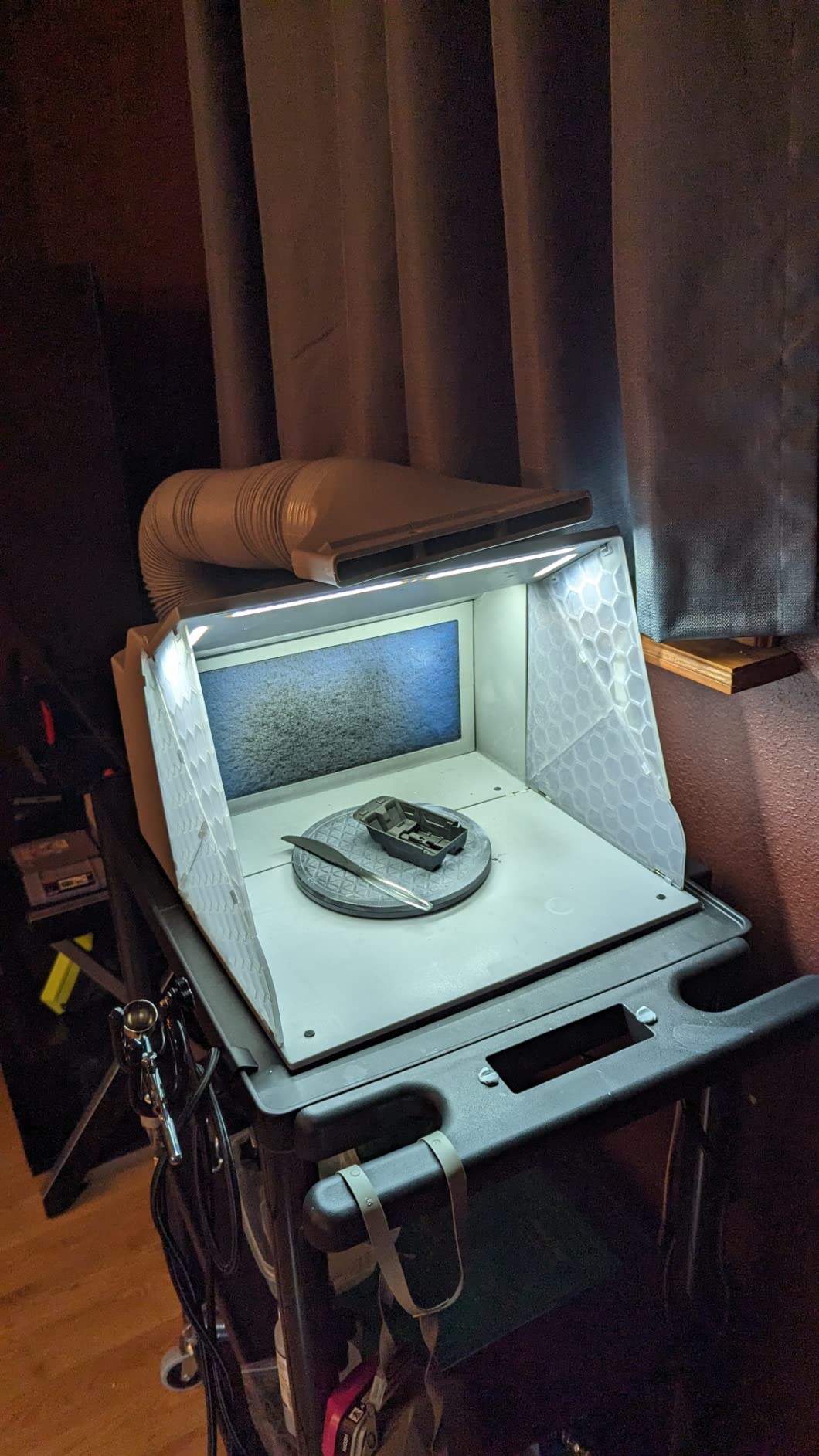
What to check before you buy this booth
Decide where the exhaust will go before the booth arrives, because the hose is only useful if the window or vent is within six feet of your work surface. In a bedroom or a shared flat that often means the booth sits on the floor beside the radiator, and the hose route has to be planned around furniture.
Then think about lighting colour. The four LEDs here are bright but not a neutral 6500K, so if you mix colours from different brands, expect a slight shift in how they read under the booth lights compared with daylight. Judge final colour under a window before you commit to a finish.
Who should look elsewhere
If you spray large props, helmets or dioramas, the interior is tight and you will be fighting the walls. The larger Master Airbrush station in this list gives you a 22.25 inch work area for exactly that reason.
If noise in a quiet flat is the deciding factor, the single-speed fan here runs constantly with no low setting. Two-speed booths let you drop to a lower airflow for detail work and full extraction for spraying, which is a meaningful difference in a shared space at night.
2. VEVOR Dual Fan Booth with 3 LED Lights
VEVOR Airbrush Spray Booth, Dual Fans, 21.5 x 18.7 x 14.6 in, Portable Hobby Airbrush Paint Spray Booth Kit with 3 LED Lights and Exhaust Extension Hose, for Painting Models, Arts, Crafts, Cakes
9.2 m3/min dual-fan airflow
21.5 x 18.7 x 14.6 inch
Foldable case
3 LED lights
Pros
- Highest airflow figure in this group at 9.2 m3/min
- Soft even lighting from three LEDs
- Detachable turntable is easy to clean
- Folds into a lightweight case
- Roomy 21.5 inch workspace
Cons
- Filter cotton is a consumable you must buy regularly
- Not the lightest option at nearly 14 pounds
On paper this is the strongest extractor in the group, and the owner reviews back that up. The dual fans are rated at 9.2 cubic meters per minute, the highest stated figure among the ten booths, and that headroom is what stops fine overspray hanging in the booth when you are spraying a bright colour at close range.
Three LEDs give soft, even illumination rather than a harsh hotspot, which matters if you are blending or checking metallic finishes. The turntable detaches completely, and that is a small detail that pays off every single session because you can take it out and wipe overspray off it at the sink.
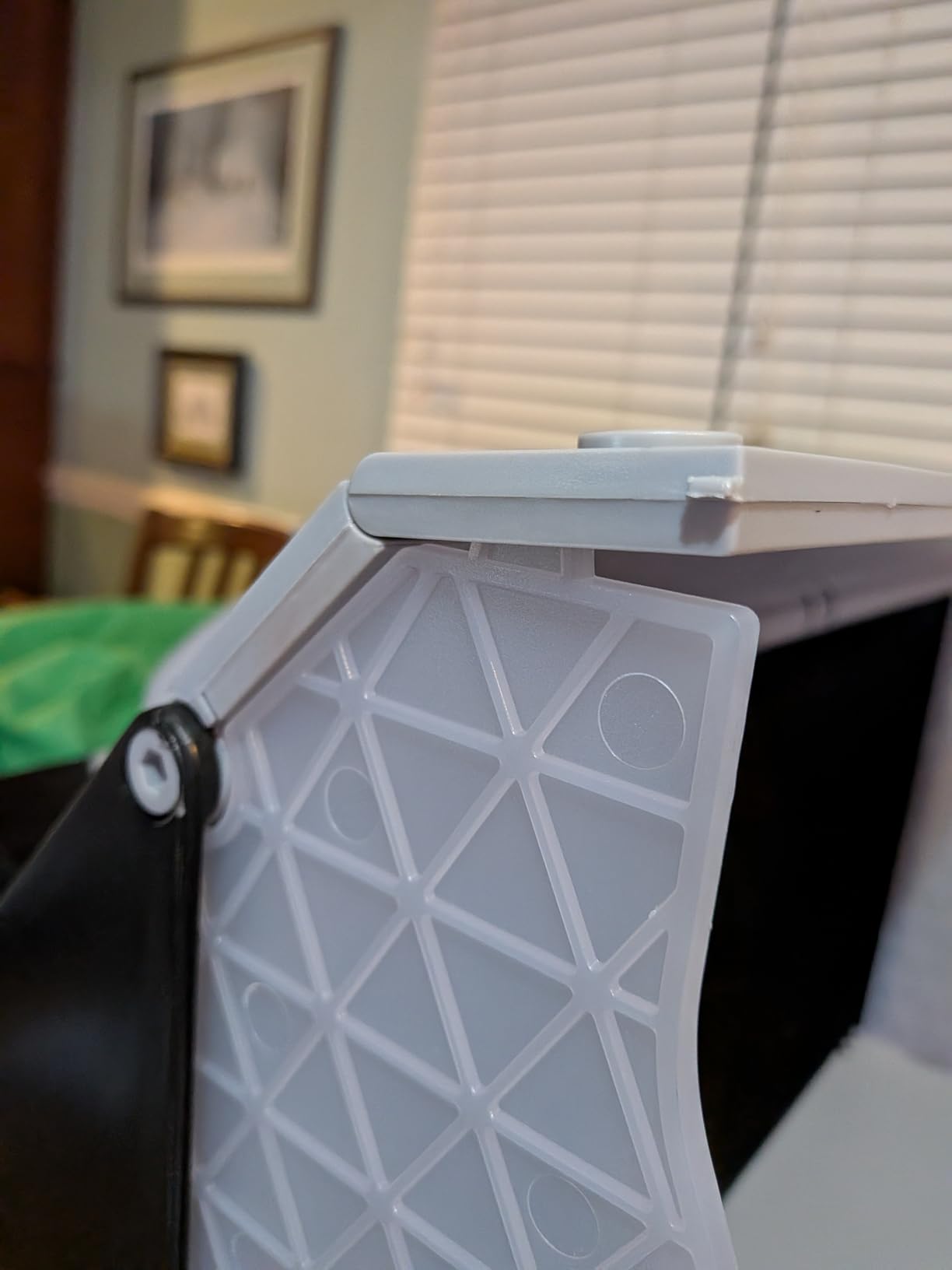
The workspace is the other reason this stands out. At 21.5 by 18.7 by 14.6 inches it handles a 1/24 scale vehicle, a helmet, or a small diorama base without you constantly rotating the model by hand. Buyers use it well beyond scale models, including cakes, toys, ceramics and fabric work, where the combination of airflow and a bigger floor is exactly what you need.
It folds into a carrying case, which matters if the booth lives in a spare room rather than on your main desk. At 13.78 pounds it is one of the heavier items in the roundup, so this is portable in the sense of movable between rooms, not something you carry up stairs every session.
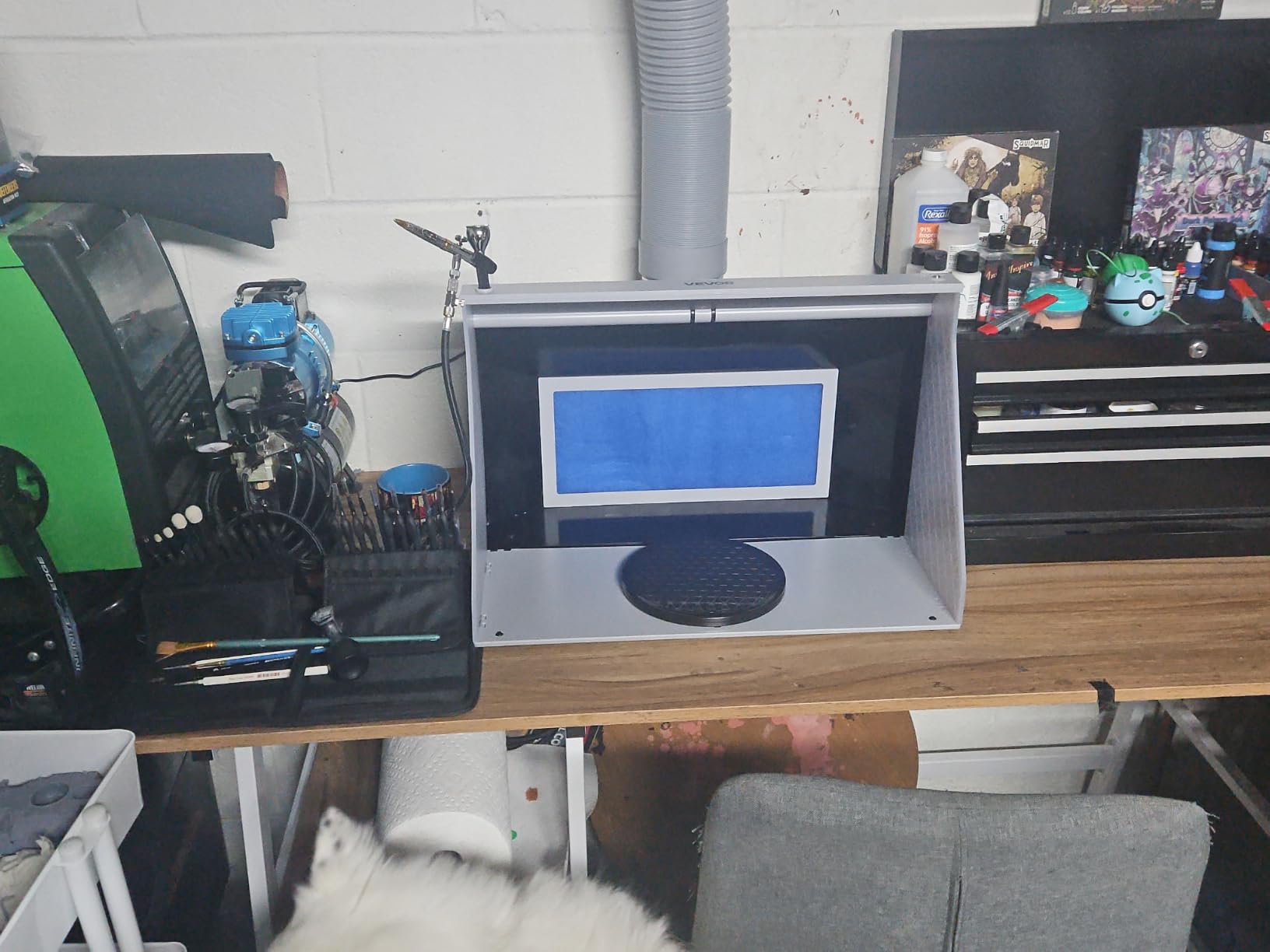
What to check before you buy this booth
The included 5 foot exhaust hose and the thick replaceable filter cotton are the two consumables to think about. Check that replacement filter cotton for this model is easy to find before you commit, because a booth that cannot be filtered is a booth you stop using.
Also confirm the booth fits your window. The hose is shorter than the Master Airbrush kit, so if your only outlet is more than five feet from the work surface you will need an extension or a repositioned desk.
Who should look elsewhere
If you paint on a very small desk, this booth is generous rather than minimal, so it will take more table space than the compact units in this list. Measure your available footprint before ordering, since a booth that has to live on the floor is less convenient to use.
If you need a booth that is genuinely light to carry to a club night or a shared studio, the folding fabric design later in this guide weighs less and packs smaller.
3. VIVOHOME Compact Folding Booth
VIVOHOME Portable Airbrush Paint Spray Booth Kit with LED Lights Turn Table and Filter Hose for Model Cake Craft Nail Toy Part
Built-in fan and rigid ABS shell
3 LEDs at 1200 lm
360 degree turntable
Hose 2.3 to 5.6 ft
Pros
- Compact folding case with carry handle
- Three LEDs keep colours close to true
- Sturdy ABS housing resists deformation
- Integrated paint and gun racks
- Suits nails cakes and small models
Cons
- 16.5 inch footprint limits larger projects
- Short exhaust hose may not reach a distant window
- 3-star reviews make up 7 percent of the ratings
This is the booth to buy if your work is small and your space is smaller. The rigid ABS shell holds its shape better than soft fabric designs, and the whole unit folds into a case with a handle, so it disappears into a closet when you are not painting.
The three LEDs total 1200 lumens, and owners consistently comment that the colour rendering stays close to how paint looks in natural light. For nail art, cake decorating and 1/72 scale figures that is genuinely enough light to work by without a second lamp.
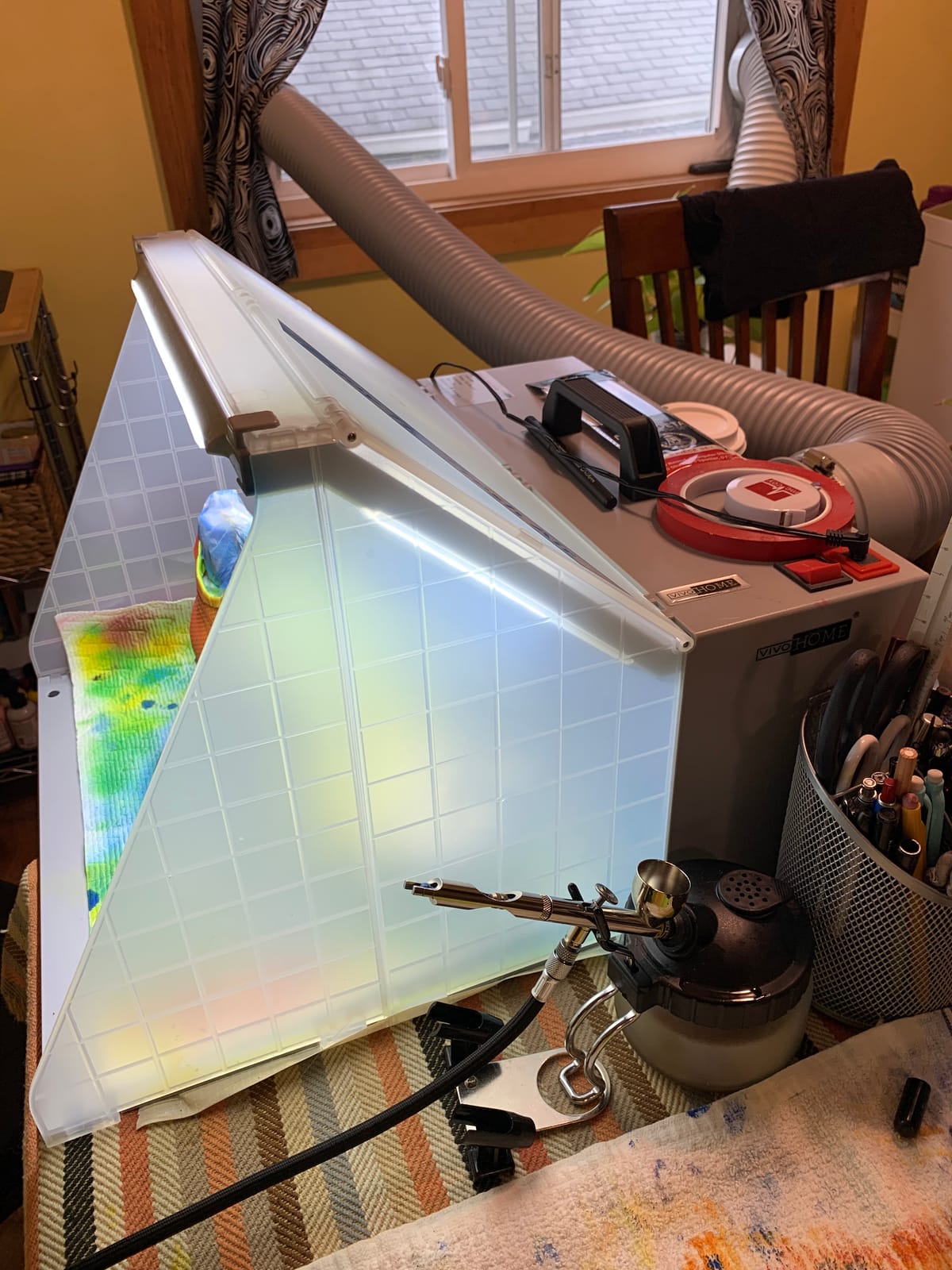
A built-in fan, a 360 degree turntable and integrated racks for paints and an airbrush mean the small volume is used well. Nothing is wasted on a bulky frame, which is why this fits on a desk that could not hold a rigid case of similar size. The exhaust hose extends between 2.3 and 5.6 feet and fits a 1 inch window or door gap.
Be clear-eyed about the trade: the 16.5 inch footprint is tight and the hose is short. If your window is far away, plan the layout before you buy or the booth becomes a desktop ornament.
What to check before you buy this booth
Measure your project against the 16.5 inch opening, not the folded case dimensions. A 1/35 scale tank or a bust will fit comfortably. A 1/24 aircraft fuselage or a motorcycle helmet will not, and no amount of clever turntable use changes that.
Confirm the hose length against your window gap, because a short hose is a frequent reason owners report odour still reaching the room.
Who should look elsewhere
If you move between large models, the compact volume will frustrate you within a week. Go for the roomier dual-fan units instead and accept a larger footprint.
If you want to adjust light or fan output, this is a fixed-speed design with simple on and off control. The adjustable booths later in this guide suit people who work at night and need to dial the brightness down.
4. Master Airbrush Large Portable Spray Station
Master Airbrush Large Portable Airbrush Spray Booth Station with LED Lights
22.25 x 19 x 14 inch work area
25W fan at 4 m3/min
2-layer fiberglass filter
Weighs 8.5 lb
Pros
- Spacious work area suits large models and dioramas
- Captures most overspray and redirects fumes
- Bright even LED work lighting
- Weighs only 8.5 pounds
- Folds flat with an integrated handle
Cons
- Fan is louder than expected and masks a compressor
- LEDs could be brighter for fine detail
- Thin plastic needs prompt cleaning to avoid staining
If your projects are bigger than a soda can, this is the booth that stops you fighting the walls. The 22.25 by 19 by 14 inch work area is among the most generous in the roundup, and owners regularly paint 1/24 and 1/25 scale vehicles inside it with room to spare.
The 25 watt exhaust fan moves 4 cubic meters per minute through a two-layer high-density fiberglass filter. That figure is lower than several rivals here, but in a booth this volume the air changes quickly enough to keep the workspace visibly clear, and the double-layer filter has more holding capacity for particulate.
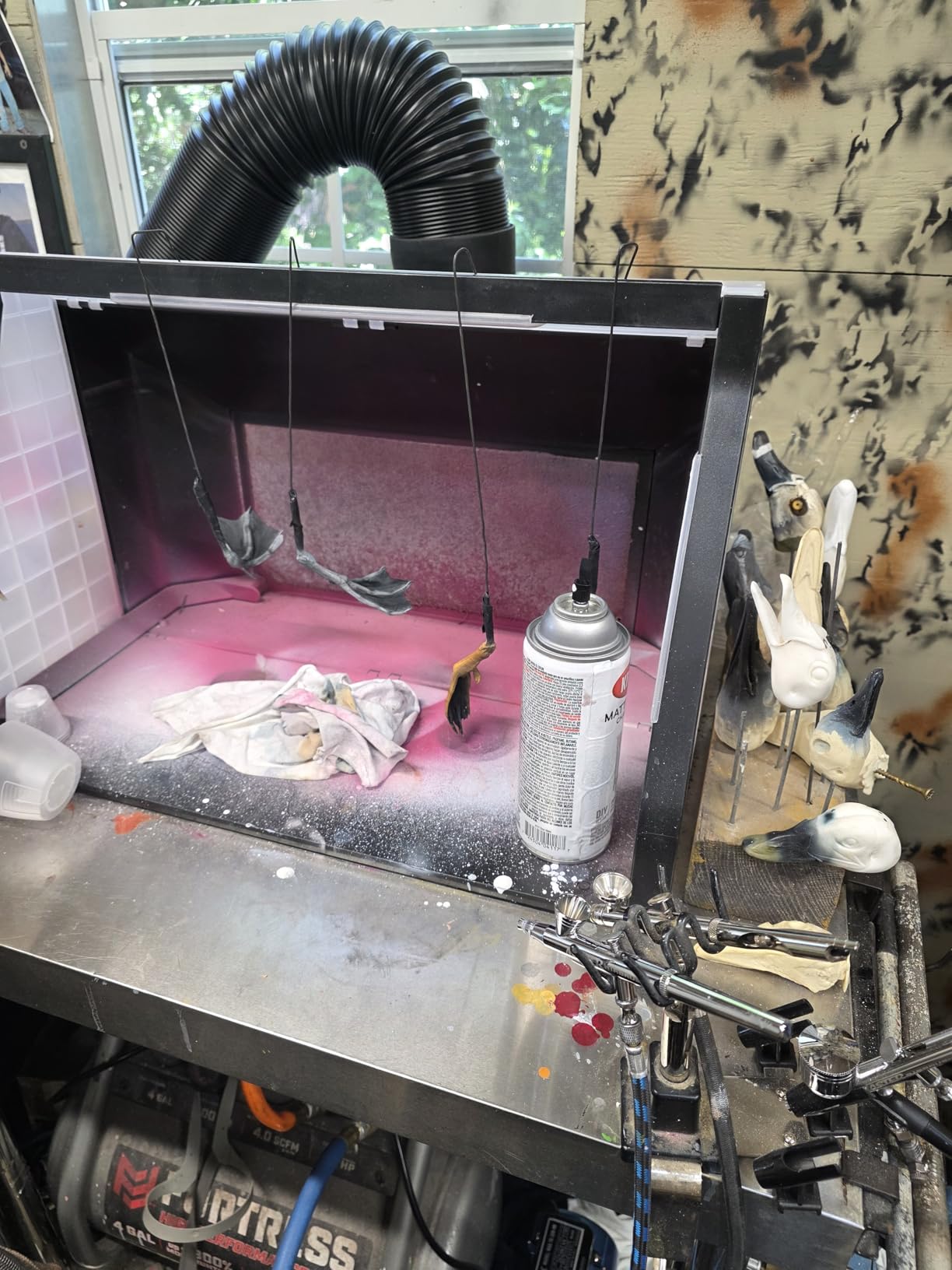
Two booths of this type can be combined for one larger work area, which is a genuinely useful option for anyone building a diorama or a multi-vehicle scene. The 7.5 inch revolving turntable sits in the base and rotates a full model rather than a part.
Power comes from a 12V DC motor fed by an included 110V AC adapter, and the whole thing folds flat into a suitcase shape with a handle at 8.5 pounds. That keeps the weight down for a booth with this much interior volume.
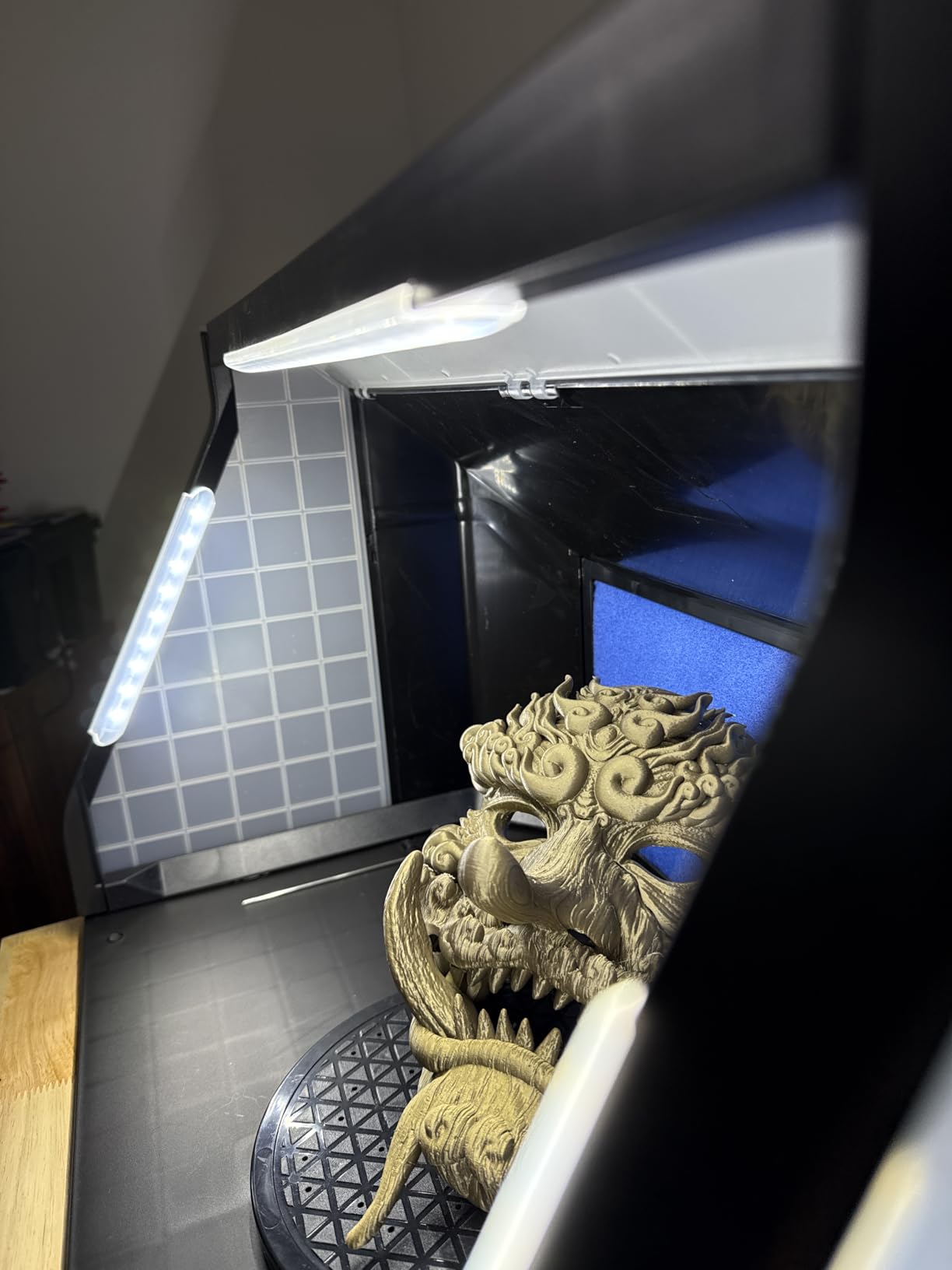
What to check before you buy this booth
Noise is the deciding factor here. The single fan is loud enough that owners report it drowns out a nearby air compressor, so if you paint in a shared room or a flat with thin walls, run the compressor outside or wear the fan noise rather than the compressor noise.
Also plan for cleaning. The plastic shell shows colour quickly, and overspray that sits on the surface for a week will stain it permanently. Wipe the interior after each session and the booth stays presentable.
Who should look elsewhere
If you only paint small figures and bottles, this is a lot of booth for the job and the lighting is dimmer than several rivals. The compact units do the same work on half the table space.
If you need a genuinely quiet room, a metal booth with a slower, larger fan will sound noticeably calmer than a small plastic fan running flat out.
5. T TOGUSH Two-Speed Booth with 3-Sided LED
T TOGUSH Airbrush Spray Booth with LED Lights, Turntable for Model Painting
Two 34W fans at two speeds
Claimed 53 dB
3-sided LED surround
67 inch semi-rigid hose
Pros
- Strong extraction for its size
- Two speed settings balance airflow against noise
- Large 21.7 inch workspace
- Semi-rigid hose holds its bent shape
- Separate fan and light switches
Cons
- Hose can pop out of the connection and need taping
- Turntable bearings feel tight
- Replacement filters are hard to source
The two-speed fan is what separates this booth from most of its direct rivals. Low speed is for detail work and quiet evening sessions, high speed is for spraying when you want maximum pull. Combined with separate switches for fans and lights, you can run the extraction low while you are doing detail work and then wind it up for spraying.
Two 34 watt fans push roughly 9 cubic meters per minute, and the upper exhaust design with a transparent baffle keeps the extraction above your work rather than behind it, which leaves more usable back-table space inside the booth.
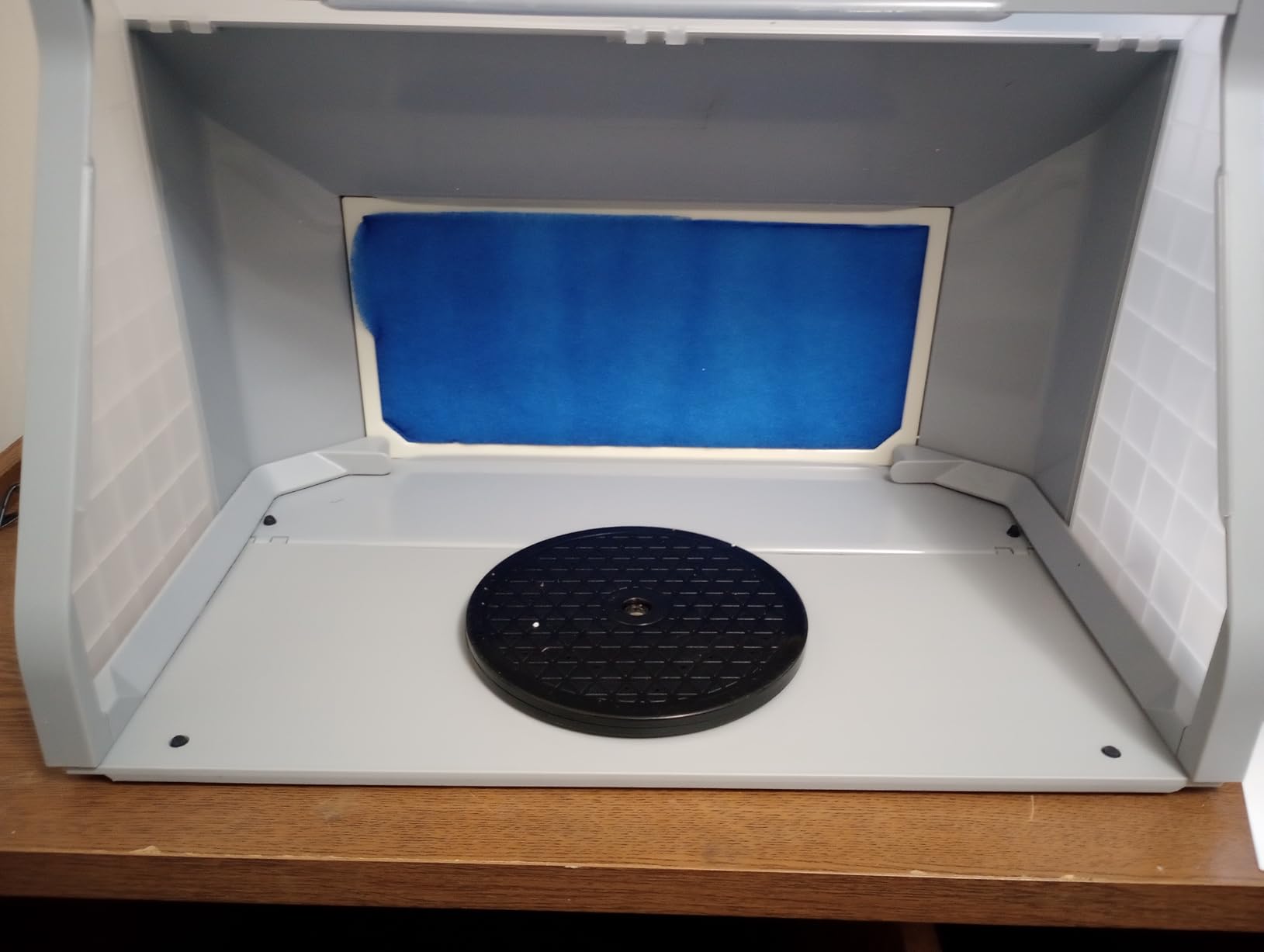
The 3-sided LED surround spreads light across the whole work area instead of pointing it at one spot, which reduces the shadows under your hands. The 21.7 by 18.8 by 14.1 inch painting space fits model kits, crafts, shoes and larger hobby pieces, and the 360 degree turntable rotates a full build.
The semi-rigid hose extends to 67 inches and is stiff enough to hold a bent route to a window without springing back. It folds flat with a carry handle when you are done, which is the real meaning of portable in this category.
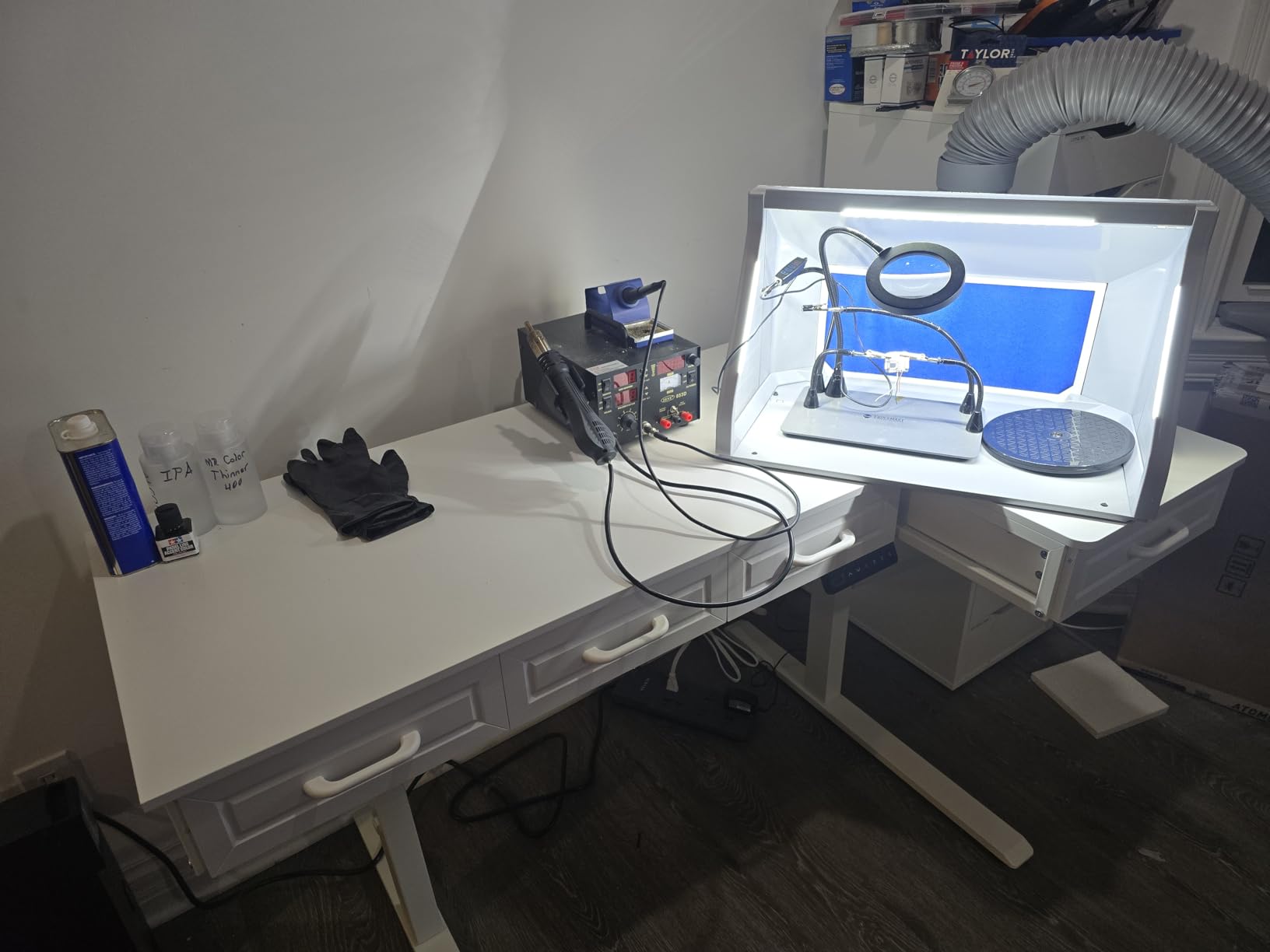
What to check before you buy this booth
Replacement filters are the weak point. Some buyers report difficulty finding filters for this specific model, so confirm the supply is available before you buy or you may end up filtering through the original pad far longer than you should.
Plan to tape the hose connection. The semi-rigid hose can pull free of the booth port when flexed, and a taped joint is a cheap fix that stops fumes leaking at the most likely escape point.
Who should look elsewhere
If you spray large areas with a full-size spray gun, owners report this is not fast enough. These are airbrush booths, and pushing a big gun through them wastes time and over-filters.
If you want true stepless control rather than two fixed speeds, the adjustable-knob booths later in this list give finer management of airflow and brightness at the cost of a larger review base.
6. JFLLAJNF Fabric Booth with Adjustable Ring LED
Airbrush Spray Booth with Dual Exhaust Fans,Portable Airbrush Paint Booth for Airbrushing,2 Round Led Lights with 360° Coverage,Turntable and Extension Hose,Hobby Spray Booth Kit for Painting Model
Stepless fans 0 to 2800 RPM
3 colour and 10 brightness levels
6 filter pads
Weighs 6.3 lb
Pros
- Adjustable LED colour and brightness aid colour accuracy
- Stepless dual-fan control from 0 to 2800 RPM
- Very light at 6.3 pounds
- Wipe-clean foil lining
- Six filter pads with storage pockets
Cons
- Soft fabric walls are less rigid than hard shells
- 5-star reviews make up 64 percent of the ratings
- Unbranded manufacturer with thin support
This booth makes lighting the headline feature, and for good reason. The dual ring LED offers three colour temperatures and ten brightness levels, so you can dial the light down at night or match it more closely to daylight when you are checking a colour match. No other booth here offers that many lighting settings on one control.
The dual fans have independent control and stepless adjustment from 0 to 2800 RPM. In practice that means you can run a slow fan for cleanup and detail work and wind it up only for the coats that generate real mist, it is the most useful thing a variable-speed fan does for a hobbyist.
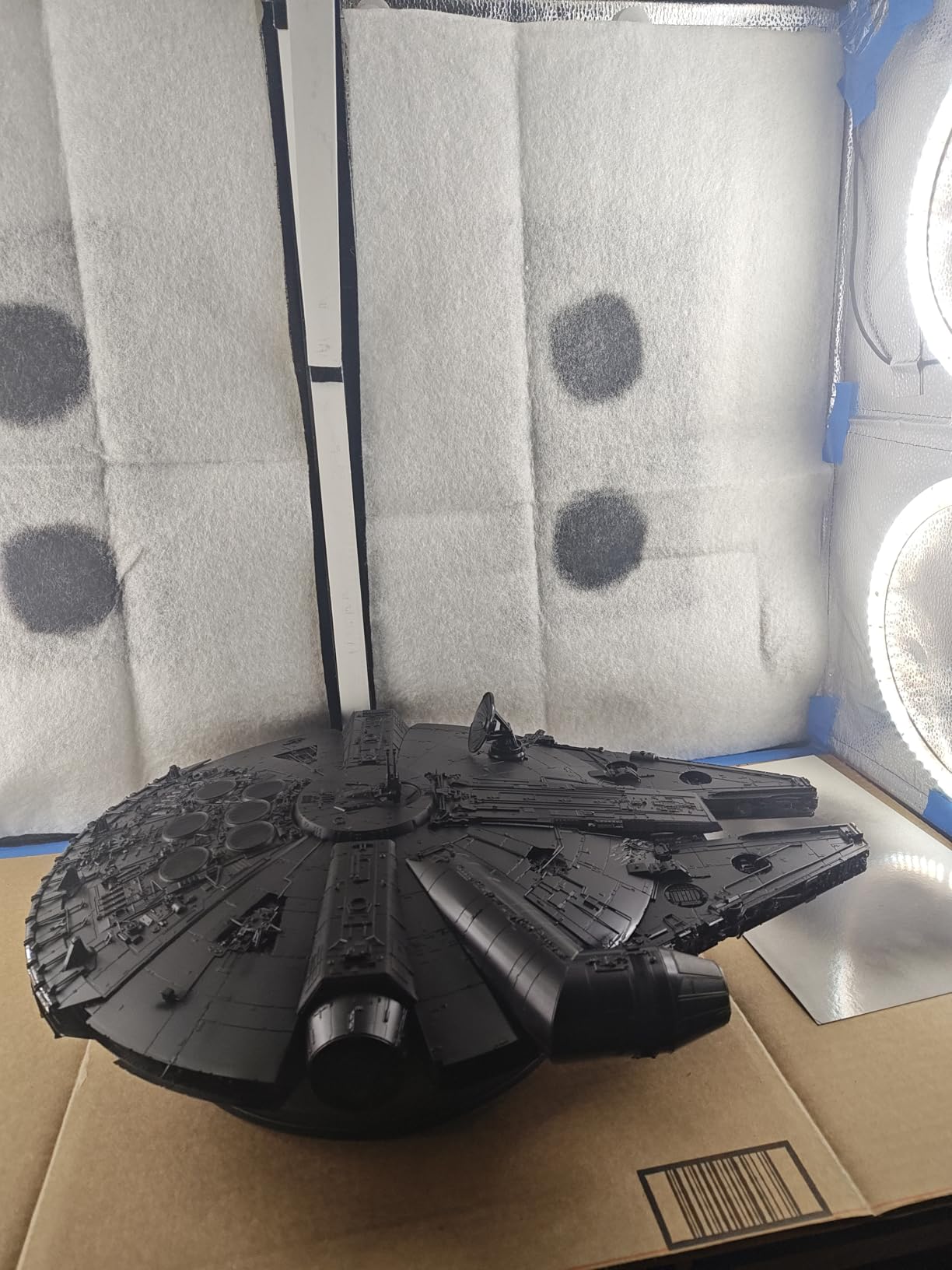
The advertised footprint of 16.5 by 16.5 by 24.4 inches is a tall, deep box rather than a shallow one, and the manufacturer positions it as more than twice the capacity of a typical small booth. The exterior is Oxford fabric with an aluminium foil lining that is waterproof and wipes clean, so overspray comes off the walls with a damp cloth.
Six filter pads come in the package, with dedicated storage pockets on the frame, and there is a foldable design with a woven handle at 6.3 pounds. That is the lightest booth in the roundup, which makes it the easiest to move between a shared hobby space and home.
What to check before you buy this booth
The soft construction is the thing to accept or reject. A fabric booth is quieter and lighter than plastic, but it does not hold a perfectly rigid shape, so a long reach into the back corner can flex the wall slightly. For careful detail painting on small items this is not a problem.
Check the exhaust routing too. The flexible hose fits a window, but a fabric enclosure needs a tight fit at the port for negative pressure to hold, so seal any gap before you spray.
Who should look elsewhere
If you want a booth that will still look good and wipe clean after ten years of use, a metal booth is the better bet than fabric or plastic. If you plan to move your setup frequently, this is the lightest option here.
If you want the highest owner rating rather than the best controls, the adjustable-knob booth later in this list also scores 4.7 stars but has a much smaller review base.
7. Anesty Two-Mode Booth with LED-Only Setting
Anesty Airbrush Spray Booth with Two Modes: LED Light Only or LED Light with Fan | Portable Paint Booth with Turntable, Hose and Replacement Filter for Model Painting ASPB01
LED-only or LED plus fan mode
30 LEDs on three sides
16.5 x 19 x 13.5 inch interior
Spare filter included
Pros
- LED-only mode for decaling without fan noise
- Bright white LEDs on three sides
- Strong suction for airbrushes and spray cans
- Folds into a small suitcase in under a minute
- Spare filter included in the box
Cons
- Gap at the exhaust tube connection can leak fumes
- Fan noise comparable to a hair dryer
- Folded unit does not latch reliably
The two-mode switch is the idea worth stealing. Run the LED tube alone for decaling, scribing and dry fitting, and you get full bench lighting with the fan silent. Only add the fan when you are actually spraying, which keeps your setup quiet for most of a modelling session.
Thirty LEDs across three sides give bright, crisp light that owners single out as a strength for fine detail. The interior is 16.5 inches wide by 19 inches deep by 13.5 inches high with a rotating plate, and a spare replacement filter is included so you are not filtering through the original pad straight away.
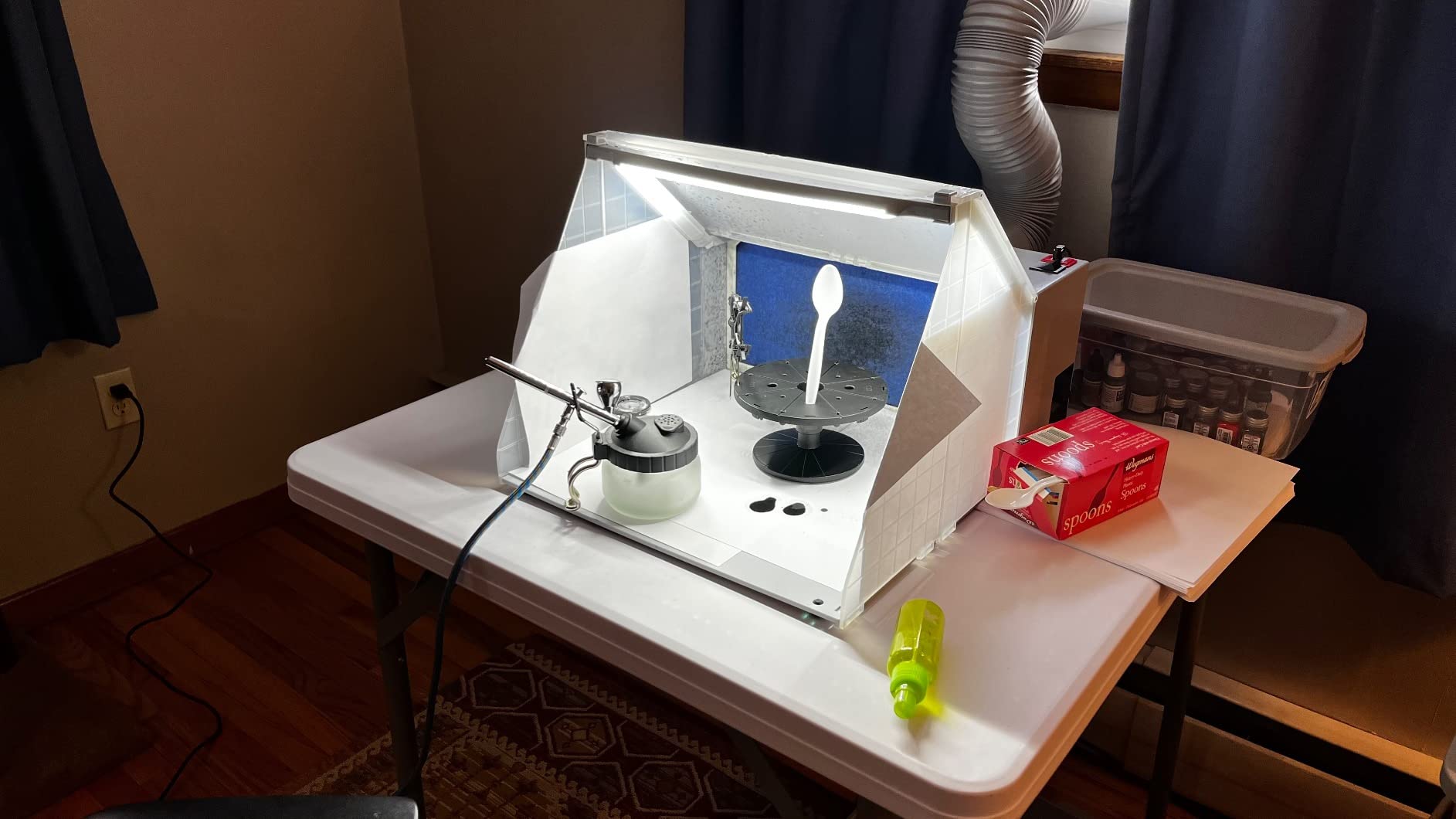
It folds into a 16.5 by 6 by 7.9 inch case with a handle and sets up in under a minute, and it uses a standard power supply rather than USB, so there is no phone-charger dependency. Owners frequently recommend it as an entry-level unit for apartment airbrushing.
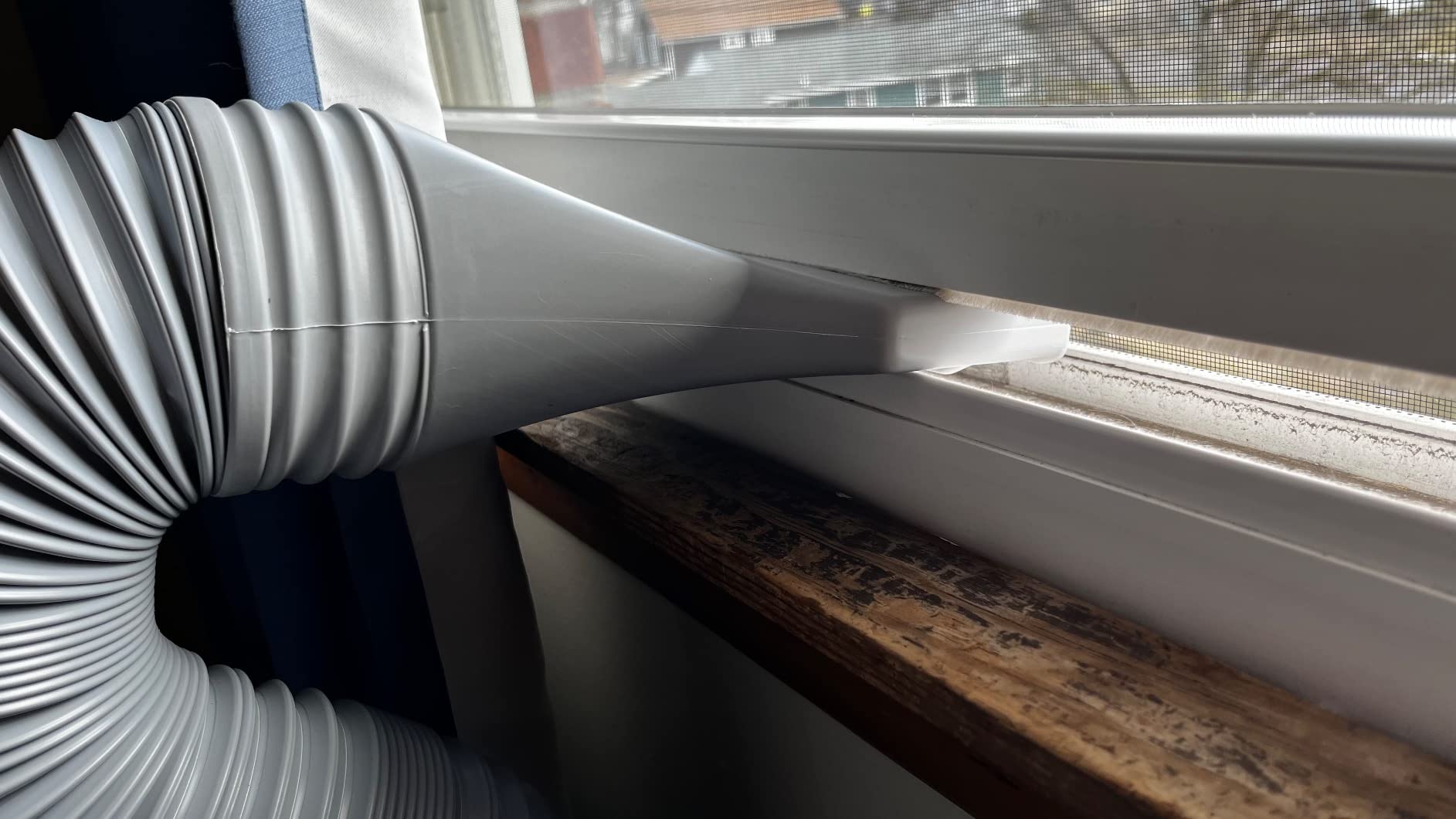
The most-reported issue is the gap where the exhaust tube meets the fan housing, which can let odour out unless it is sealed. Owners also mention that the collapsed package does not reliably stay closed, so keep it in a drawer or a bag rather than on a shelf.
What to check before you buy this booth
Plan to seal the exhaust joint. A strip of tape around the tube-to-fan connection is a two-minute job that removes the single most common complaint about this booth and stops fumes entering the room.
Also consider noise. The fan is comparable to a hair dryer or a small vacuum, which is acceptable in a garage or hobby room but noticeable in a quiet flat at night. The LED-only mode is your friend here.
Who should look elsewhere
If your work involves a lot of masking, decaling and dry fitting, this two-mode design is a better fit than most because you can light the bench without running the fan. If you mainly spray, that advantage matters less.
If you need a rigid enclosure that stays square and does not flex when you reach in, choose a hard-shell booth instead of this folding case design.
8. Anesty Stepless Fan and LED Control Booth
Anesty Airbrush Spray Booth with Dual Exhaust Fans & Stepless LED Control | Portable Foldable Paint Booth with Turntable, Filter and Hose for Model Painting, Miniatures & Crafts
Independent fan and brightness knobs
21.6 x 13 x 14 inch workspace
360 degree turntable
Stated 64 dB
Pros
- Top owner rating of the booths tested
- Stepless independent knobs for fan and light
- Spacious workspace with a built-in 360 degree turntable
- Spare filter and airbrush holder tray included
- Folds to a compact handled case
Cons
- One of the heavier listed weights at 6.44 kg
- Costs more than most plastic folding booths
- Smaller review base means less long-term feedback
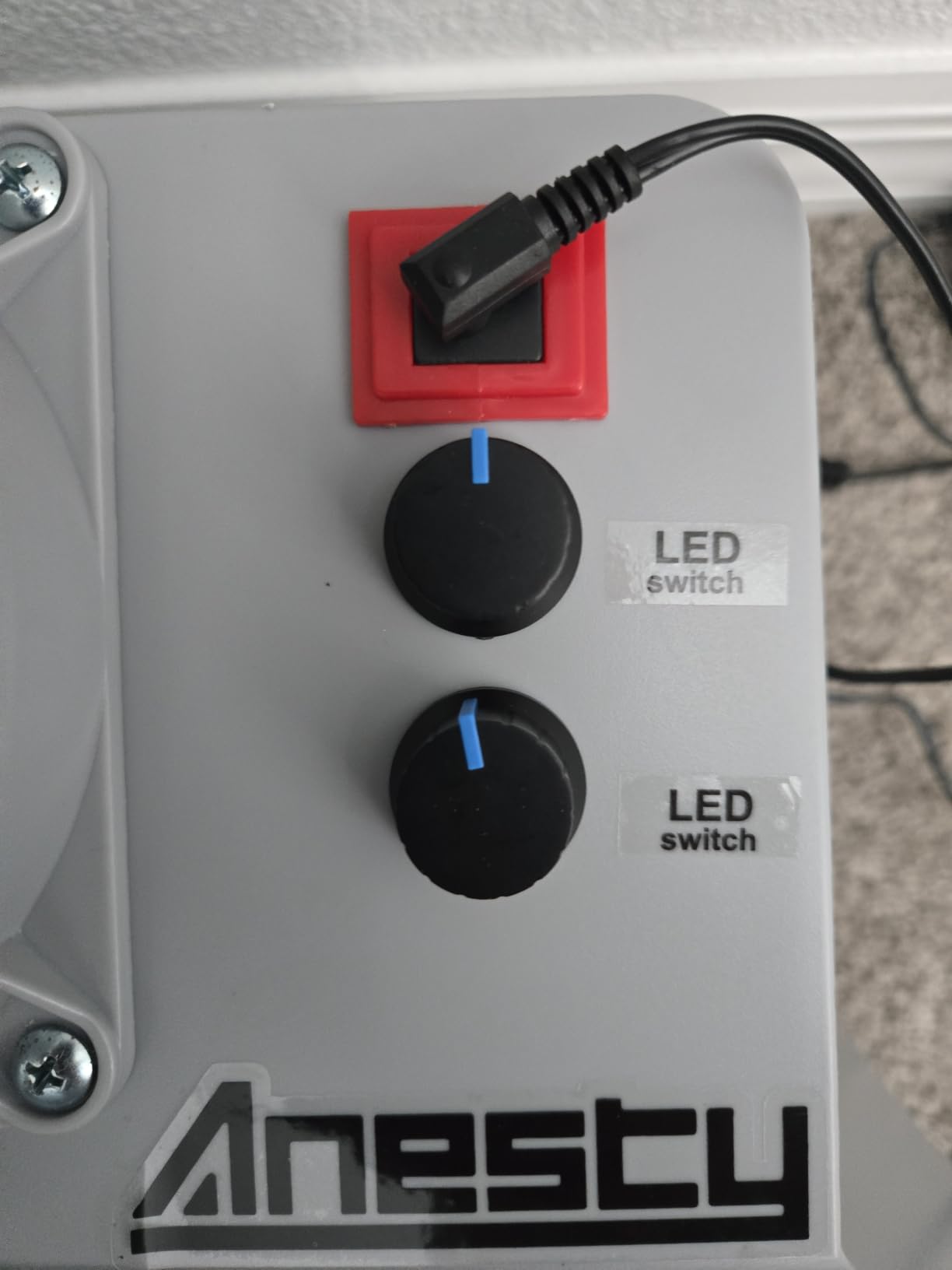
This carries a joint-highest owner rating in the roundup, with 87 percent of reviews at five stars, and the reason is control. Two independent stepless knobs set fan speed and LED brightness separately, which is a step beyond the on and off or two-speed arrangements most portable booths settle for.
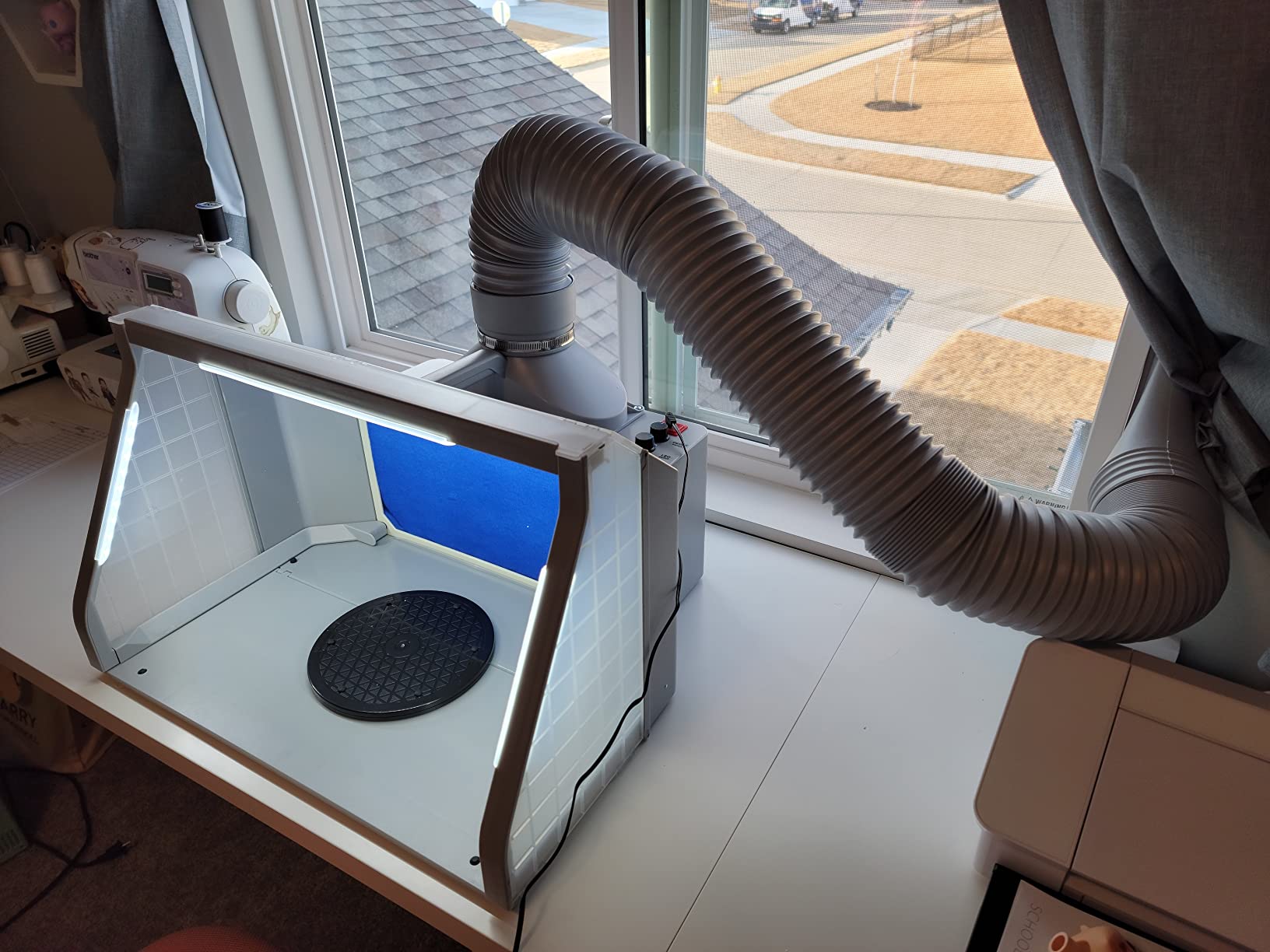
The 21.6 by 13 by 14 inch workspace is genuinely useful for scale models, resin prints and small dioramas, and the built-in 360 degree turntable rotates a full piece so you can reach the underside without picking it up and blowing overspray everywhere.
Inside the box you get twin exhaust fans, a high-density filter plus a spare, three-side LED lighting, the exhaust hose, an airbrush holder tray and an extra filter. That spare filter and the holder tray are small things that most competitors leave out, and they matter on a long paint session.
It folds to the same compact 16.5 by 6 by 7.9 inch carry case with an integrated handle, works with most standard airbrush compressors, and lists a 64 dB noise rating. Treat that number as a manufacturer figure rather than a promise, because a real room never sounds like a test lab.
What to check before you buy this booth
At 6.44 kg it is one of the heavier listed weights, so if you plan to move the booth between rooms often, verify you can still lift it comfortably. It is portable in the sense of folding away, not in the sense of being light.
The review base is small at 141 ratings. Long-term owners on the bigger brands in this list have a decade of feedback behind them, and that matters more than a slightly higher average when you are buying equipment you expect to keep.
Who should look elsewhere
If you want proven long-term reliability rather than the best controls, the two Master Airbrush booths in this guide have far more owners reporting years of use. If your budget is tight, the VEVOR booth delivers similar adjustability for less.
If you spray in a shared space late at night, note that the fan is the noise source regardless of how finely you adjust it. A metal booth with a larger, slower fan is the quieter route.
9. T TOGUSH Large-Space Upper-Exhaust Booth
T TOGUSH Airbrush Spray Booth, Large Space Portable Paint Booth for Crafts
Two 34W fans at 9 m3/min
Upper exhaust layout
3 LEDs up to 2590 lm
67 inch hose
Pros
- Very high owner rating at 4.7 stars
- Two adjustable knobs for fan and light
- Twin 34W fans move 9 m3/min
- Upper venting frees back-table space
- Bright 2590 lm LEDs that are easy on the eyes
Cons
- Real noise far exceeds the stated 53 dB
- Needs periodic filter changes and fan cleaning
- Generic OEM design with limited support
The upper exhaust layout is the feature that makes this one different from most of its competitors. Air is drawn out through the top of the booth rather than out of a rear port, which frees up back-table space and means you can push the booth right up against a wall without losing usable depth.
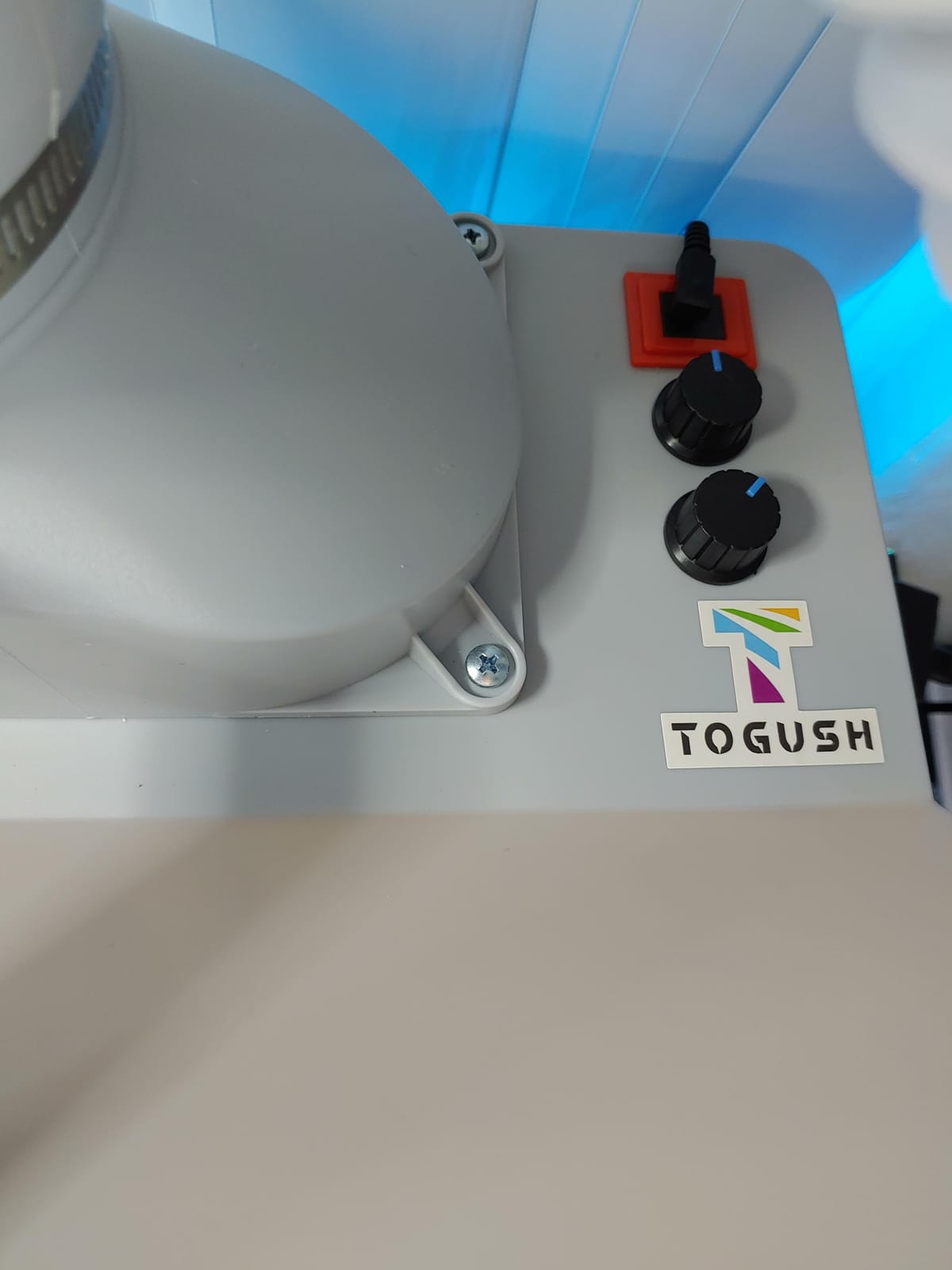
Two 34 watt fans provide 9 cubic meters per minute of ventilation, and two adjustable knobs let you tune fan power and LED brightness separately. The three LEDs reach 2590 lumens, which is the highest stated lighting output here, and the reason owners using it for tumblers, models and crafts report such even coverage.
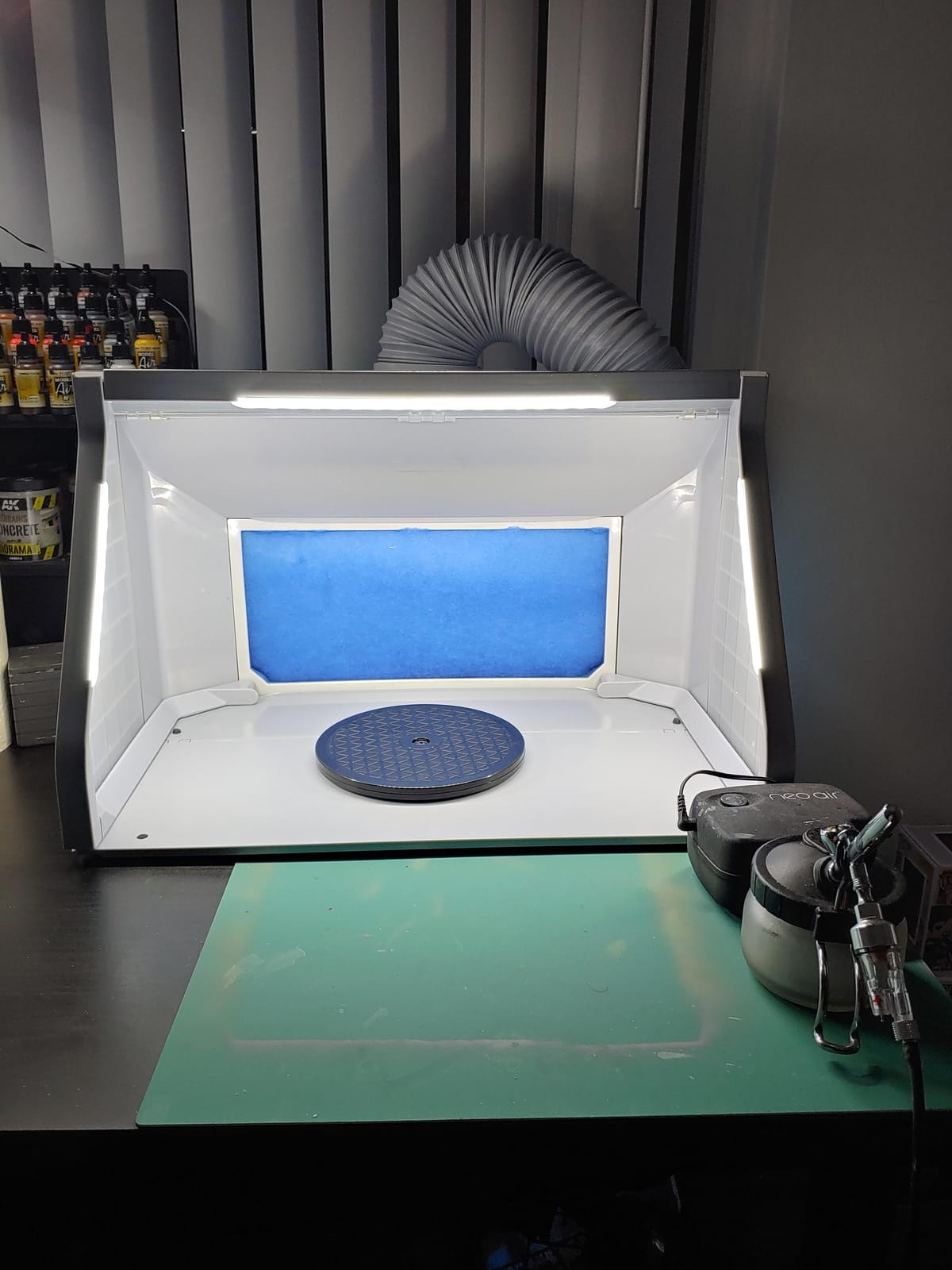
The 20 by 13 by 11.5 inch painting space is larger than most compact booths, the double-layer filter cotton has reasonable holding capacity, and the 67 inch hose reaches a standard window or a door gap without much fuss.
Now the honest limitation. The advertised noise figure of 53 dB is a manufacturer claim, and owners measuring the real thing report that at full fan speed it is dramatically louder than that. Judge the noise yourself before buying for a small apartment.
What to check before you buy this booth
Noise is the deciding question. If you can run the fan at a middle setting and still clear fumes, this booth is excellent. If you need full speed in a quiet building, the gap between the advertised and real sound will bother you every session.
Budget for maintenance. Airflow depends on a clean fan and a fresh filter, and this booth needs both on a regular schedule to keep moving 9 cubic meters per minute.
Who should look elsewhere
If you need a low table profile and every centimetre of back space counts, the rear-exit booths in this guide suit you better. If you want the quietest possible operation, look for a larger fan moving a similar volume of air rather than two small ones.
If you want a distinctive metal build and a clear warranty, the Paasche booth at the end of this list is the more traditional answer.
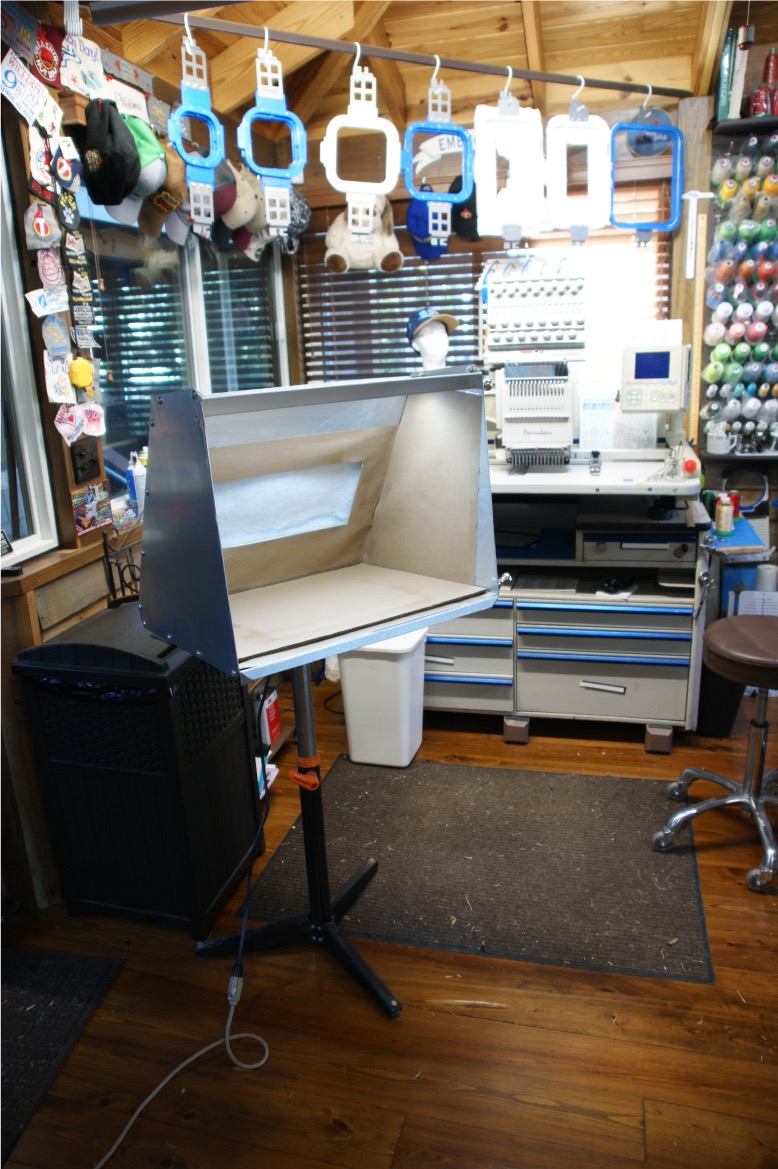
10. Paasche HSSB-22-16 All-Metal Hobby Spray Booth
Paasche Airbrush HSSB-22-16 Hobby Spray Booth (Made in the USA)
All-metal galvanized panels
270 CFM fan at 47 dB
22 inch work width
4 inch duct adapter
Pros
- Metal construction wipes clean and outlasts plastic
- Quiet 47 dB fan with a large 270 CFM rating
- 22 inch work width suits trains and ceramics
- Includes a 4 inch duct adapter for dryer duct
- Made in the USA with a one year warranty
Cons
- Comes with no lighting at all
- No pre-drilled holes for wiring a light
- Factory fan is underpowered once 4 inch duct is added
This is the booth for people who intend to keep painting for twenty years. Every panel is galvanised steel, so it wipes clean, resists solvent attack and does not go brittle or yellow the way plastic shells do. Long-term owners on modelling forums consistently single out steel construction as the reason they kept the same booth for years.
The 115 volt fan is rated at 47 decibels, and that is a stated specification rather than a measured one. A fan at that level is quieter than most airbrush compressors, which makes this the booth to consider if the noise of a plastic fan running flat out is what has been holding you back from painting indoors.
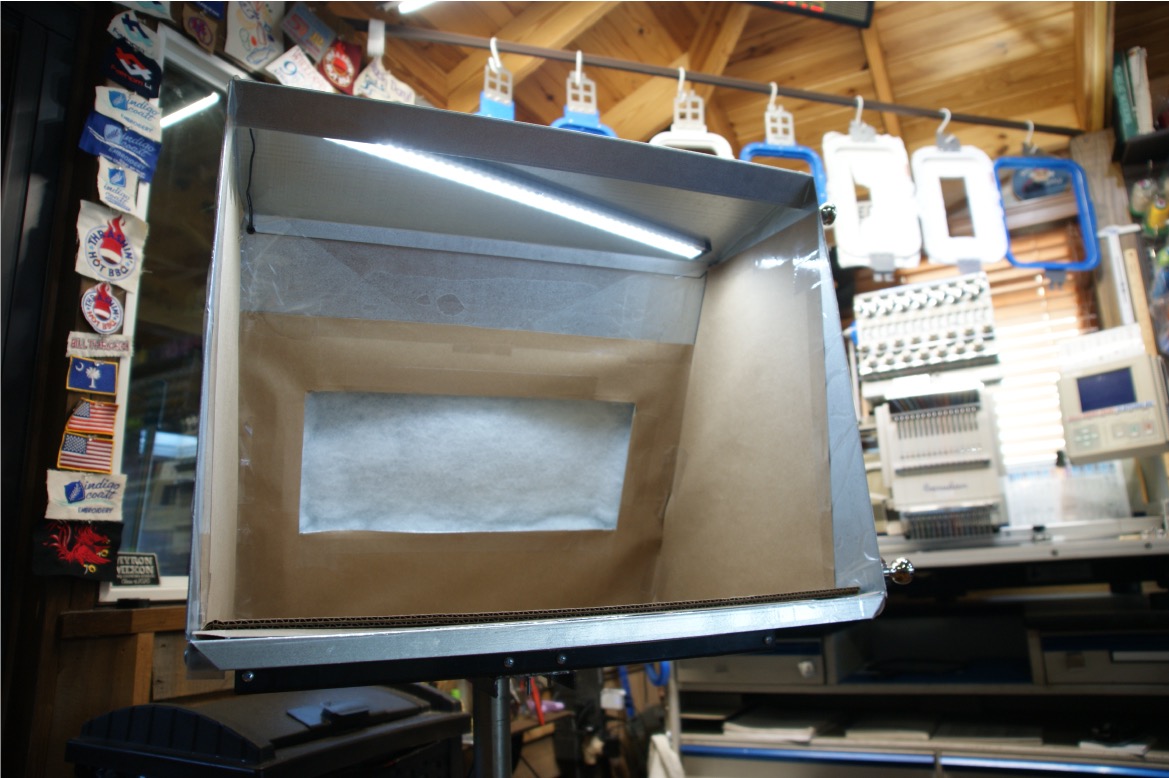
It moves 270 CFM, a figure expressed in American air-volume terms rather than the cubic metres per minute used by the folding booths, and the 22 inch usable work width takes model trains, ceramics and larger assemblies without the cramped feeling of a desktop box. A 4 inch duct adapter is included so standard dryer duct fits straight on.
Two things need planning. There is no lighting and no pre-drilled holes or side openings for wiring a light bar, so budget for an under-cabinet lamp or a DIY light bar. And several owners report the factory fan becomes underpowered once 4 inch duct is added, with fumes and overspray escaping, and fixed it by replacing the fan and venting through 6 inch duct.
What to check before you buy this booth
Budget two extras before the first session: a light source, and possibly a fan replacement. Both are small jobs, but discovering them after the booth arrives in a 28 pound package is an unwelcome afternoon.
Check the exhaust route carefully. Because the fan is a single-speed unit rated for short duct runs, keep the 4 inch duct as straight and as short as you can, and avoid long spiral runs that choke airflow.
Who should look elsewhere
If you paint occasionally and mostly want something to unfold on a weekend, this is permanent equipment. A folding plastic booth is cheaper to replace and easier to store between sessions.
If you need lighting out of the box, every plastic booth in this guide includes lights and this one does not. The trade is metal durability against convenience, and it depends entirely on how long you plan to keep it.
Portable vs Permanent Spray Booths
Every booth in this roundup except one is a folding unit, and the reason is that most painters do not airbrush eight hours a day. A collapsible booth that folds to the size of a suitcase and lives in a cupboard is worth more than a larger permanent installation you never want to set up.
Permanent makes more sense in three situations: you are producing commissions on a schedule, you are working on models large enough that a desktop box is useless, or you have a dedicated garage bay. In those cases a metal booth with a proper exhaust fan and a hardwired light is the correct answer, and the running cost of a permanent setup is lower because you can run a proper extraction fan rather than a small hobby fan.
There is a middle path worth knowing about, too. A large folding booth on a sturdy table in a garage gives you most of the permanence without a fixed installation, and the exhaust can go out through a garage door opening with a short duct run. Our guide to isolation booths covers the acoustic side of managing sound in a room, which is a related problem in a shared space.
How to Vent a Spray Booth Indoors
Venting is the single factor that decides whether a booth solves your problem or merely moves the mess somewhere slightly less visible. Get this right and odour never reaches the room; get it wrong and you will have complaints from family or neighbours.
1. Identify the exit first. Pick the window, garage door or wall vent before you unbox the booth, and measure the distance from your painting position to that exit. Most portable hoses reach 5 to 6 feet, so anything further needs an extension duct or a repositioned table.
2. Fit the end piece properly. The narrow end piece on the supplied hose is designed to sit in a window gap or a door gap. Push it into the gap and close the window on the hose, which stops air coming back into the room through the opening.
3. Keep the run short and straight. Every bend and every metre of extra semi-rigid duct reduces airflow. A spiral dryer duct run of several metres can drop extraction enough that fumes leak out of the booth seal, which is a common reason owners report odour despite having a booth.
4. Add a solenoid or shutter valve if your exhaust is intermittent. A spring-loaded damper or a solenoid valve fitted to the duct prevents air flowing back through the booth when the fan is off, which stops the booth drawing dusty room air in and pushing it out again when idle.
5. Vent outdoors, always. A basement window, a garage door and a covered wall vent are all acceptable exits. A laundry dryer duct terminating inside a wall cavity, a ceiling void or a room where people sleep is not, and no filter on earth makes that safe.
Test before you spray. Run the fan with a tissue held at the exhaust port, and confirm the tissue is pulled firmly toward the opening and held there. Weak suction at the port means the fan or the duct run needs attention before you start painting.
What Size Booth Do You Actually Need?
Booth size is the easiest spec to misjudge, because manufacturers list external dimensions while the useful number is the interior painting volume. Two booths with identical outside measurements can differ wildly inside, so check the interior width, depth and height rather than the package size.
For 1/72 and 1/35 scale figures, bottles, gems and nail art, anything from about 16 inches wide is workable. A 16.5 inch opening gives you room to move an airbrush comfortably without the tip hitting the walls.
For 1/24 and 1/25 scale vehicles, helmets, busts and diorama bases, look for 21 inches of width or more. Below that you will be rotating the model constantly, and overspray builds up on the walls faster than the fan clears it.
For cosplay props, armour shells, ceramics and anything you physically sit inside to paint, a 22 inch work width such as the Paasche booth is the minimum sensible size, and a permanent booth makes more sense than a folding one.
One more dimension matters as much as the others: height. Under-cabinet or low-shelf workspaces cannot host a 24 inch tall booth, and a 13.5 inch interior height is workable for models but restrictive for a helmet on a stand.
Filter Types and Running Costs
Filters are where the true running cost of a booth lives, and it is the item almost no roundup mentions. The booth is a one-off purchase; the filter is a repeating expense that scales directly with how much you spray and how much overspray reaches the pad.
Fiberglass and filter cotton pads are the cheapest and most common option. They catch particulate efficiently and cost little per sheet, but they clog visibly and once a pad is grey and saturated it stops airflow, which is when a booth starts to smell. Replace on sight rather than on a calendar, because a loaded pad will fool you until airflow drops.
Charcoal and activated carbon layers handle odour rather than particle. They are worth adding as a second stage for solvent-adjacent work, but they saturate faster than fiber media and rarely come cheap. A carbon stage on top of a fiber pad is a common and effective arrangement.
Two of the booths here help you directly. One includes six filter pads and dedicated storage pockets on the frame, and another includes a spare replacement filter in the box, so neither leaves you dry at the worst moment. Where a manufacturer does not sell replacement filters directly, the practical fix is to source a compatible high-density pad and cut it to fit.
As a rough working rule, a hobby airbrusher painting a few hours a week will go through filter media steadily through the year, and someone painting daily will replace it far more often. Budget for a small box of pads before you buy the booth, not after the first smell of solvent reaches the room.
Noise, Apartments and DIY Booths
Almost nobody publishes a reliable noise measurement for portable booths. The figure on the box is measured on a bench in a laboratory, not in a flat with a fridge compressor running. Two booths here state figures of 53 dB and 64 dB, and a metal booth is quoted at 47 dB, but owners of a booth in this roundup report that the real sound at full speed far exceeds the advertised 53 dB figure.
The pattern is consistent: a large, slow fan moving a lot of air is quiet, and a small fan moving the same volume fast is loud. If noise is your main constraint, favour fewer and larger extraction paths, a variable or two-speed fan so you can run it low for detail work, and a booth you can place in a garage or hallway rather than a bedroom.
On the DIY question, which comes up constantly on airbrushing forums, a homemade booth from a plastic footlocker, an IKEA cabinet or a cardboard box with a filter works for a few small sessions. The break-even point arrives quickly, though, because a DIY enclosure has no negative pressure seal, leaks around every seam, and leaves overspray on surfaces that will not wipe clean.
A bought booth adds three things a DIY build cannot easily replicate: a sealed work volume, a proper exhaust port, and a filter you can change without rebuilding anything. If you paint regularly or share a room with anyone, that is worth paying for. If you airbrush a bottle of primer twice a year, the DIY route is perfectly sensible.
If your real goal is a controlled spraying environment for a completely different craft, our spray tan machine guide covers the equipment class where professional ventilation and filtration are non-negotiable, which is a useful contrast to hobby booths.
Setting Up Safely: PPE, Respirators and Paint Type
A booth reduces what escapes into the room. It does not make solvent vapour safe to breathe, and no booth on this list is rated for hazardous, flammable or explosive materials. The metal booth states this explicitly in its own documentation, and it applies to every unit here.
Wear a respirator. If you spray solvent-based paint, enamel lacquers or anything with a strong odour, a booth plus a proper particulate and organic vapour respirator is the sensible combination. If you only use watercolour, acrylic and hobby enamels, ventilation and gloves are usually sufficient for a well-ventilated setup.
Keep the booth running while you clean. Overspray on the interior walls and floor is wet paint that will otherwise become a permanent stain and a source of loose particles. Wipe the shell after each session with a damp cloth, and clean the fan blades periodically so airflow does not drop.
Check your filter before you start, not after you smell something. A quick look at the pad tells you in two seconds whether you need a fresh one, and it is the difference between a booth that works and a booth that has quietly stopped working.
Finally, keep the exhaust discharge outside. This is not a formality. Air pushed through a booth and released into an attic void or an interior wall cavity puts the overspray exactly where you were trying to move it from.
Frequently Asked Questions
What is a good portable spray booth for airbrushing?
For most people, the Master Airbrush dual-fan kit is the safest starting point: it moves 5.2 cubic meters per minute, has four built-in LEDs and a 7.5 inch turntable, and its hose extends to 6 feet. If you want more airflow and a larger workspace in a foldable unit, the VEVOR dual-fan booth moves 9.2 cubic meters per minute in a 21.5 inch space.
Do I need a spray booth for airbrushing?
If you airbrush indoors, yes. Airbrushing throws fine paint particles and solvent vapour into the air, and they settle on every surface in the room and into your lungs. A booth contains the overspray and pushes the fumes outside. If you only ever airbrush outdoors with plenty of wind, a booth is unnecessary.
Are portable spray booths loud?
They can be. A small plastic fan moving air fast is noticeably loud, and owners of one booth here report that the real sound at full speed far exceeds the advertised 53 dB figure. Quieter options are a large slow fan such as the 47 dB metal booth, or a two-speed or variable fan that you run low for detail work.
How do I vent a spray booth indoors?
Fit the supplied end piece into a window or door gap and close the window on the hose, keep the duct run short and straight, and add a spring-loaded damper or solenoid valve if the exhaust is intermittent so air cannot flow back in. Always discharge outdoors, whether that is a window, a garage door or a wall vent.
How often do I need to change spray booth filters?
Change filter media when the pad looks visibly loaded rather than on a fixed schedule, because a saturated pad reduces airflow before you notice it. A hobby airbrusher painting a few hours a week will replace media steadily through the year, and someone painting daily will replace it far more often.
How long does a spray booth hose need to be?
Long enough to reach an outdoor exit with the shortest possible straight run. Most portable booths include a hose that extends between about 5 and 6 feet. If your window is further away than that, reposition the table rather than adding spiral duct, because every extra bend and metre reduces airflow enough for fumes to leak.
Can I use a spray booth in an apartment?
Yes, provided the exhaust discharges directly outdoors through a window and the booth runs at a sensible fan speed. Place it in a room with an opening to the outside rather than a sealed bedroom, and expect some fan noise. For quiet hours, use a variable or two-speed fan or a booth with a larger, slower extraction fan.
Who makes the best paint booths?
For metal construction and long-term durability, Paasche is the established choice, and forum consensus has long favoured Paasche and Pace as units you keep for years. For portable folding booths, Master Airbrush has the largest volume of long-term owner feedback, while VEVOR and ViggoStar are the names most often recommended for desk-sized indoor use.
What are people saying about the VEVOR inflatable paint booth?
The VEVOR booth in this roundup is a folding fabric and case design rather than an inflatable one. Owners rate it highly for airflow, with the dual fans quoted at 9.2 cubic meters per minute, and for even lighting from three LEDs. The main criticisms are the consumable filter cotton and the weight of the assembled unit.
Is a spray booth necessary for airbrushing?
It is necessary the moment you move from a garage or balcony to a room where people live. A booth does not make solvent paint safe to spray indoors, and no hobby booth is rated for hazardous, flammable or explosive materials, so keep using a respirator and stay outside when you spray solvent-heavy coatings.
Final Verdict: Which Booth Should You Buy in 2026?
Start with the Master Airbrush dual-fan kit if you want the safest all-round answer in a normal room. Take the VEVOR booth if airflow and workspace matter more than weight. Pick the large Master Airbrush station for 1/24 scale work and dioramas, the fabric booth if you need the lightest unit and the best lighting control, the Anesty two-mode booth if you decal as much as you spray, and the Paasche metal booth if you want the last one you will ever buy. Whatever you choose, sort out the exhaust route before it arrives, keep a spare filter in the drawer, and you will be painting all winter instead of waiting for good weather.