

Most trivia games fail families in the same predictable way. An eight-year-old reads a clue about a Supreme Court ruling, a teenager rolls their eyes, and a grandparent quietly excuses themselves to the kitchen. Twenty minutes later, two people are still playing and everyone else has found a screen.
That is the problem this roundup exists to solve. After going through fifteen of the best trivia games for families available now and weighing every deck on the same axes – question count, player range, age guidance, reading load, setup time and whether a child and a grandparent can both score in the same round – these are the picks that actually hold a mixed-age table together in 2026.
A quick note on how to read the list. Two of these games need knowledge and reward it. Six need no knowledge at all, which matters more than most roundups admit. The broader trivia board game roundup on our site covers general-knowledge formats if your household leans that way, while this list is filtered specifically for families playing together.
Top 3 Trivia Games for Families in 2026
Three games carry most families through. One has the deepest question bank and the sharpest scoring twist, one keeps every generation talking instead of competing, and one turns the table into a shouting match that works with four players or twelve.
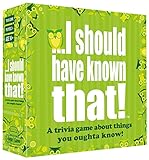
I Should Have Known That!
- 400+ questions on everyday knowledge
- Points subtracted for wrong answers
- Compact 5.7 inch box
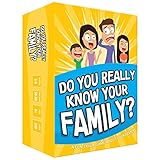
Do You Really Know Your Family?
- Questions about each other
- Silly challenge cards
- 3 to 8 players
- Tin box travels well

Best Trivia Games for Families in 2026: Quick Comparison
Every game below is scored on the same five questions: how many players it holds, what ages it suits, how many questions are in the box, and which family situation it solves best.
| Product | Specifications | Action |
|---|---|---|
| I Should Have Known That! |
|
Check Latest Price |
| Do You Really Know Your Family? |
|
Check Latest Price |
| Smart Ass Trivia |
|
Check Latest Price |
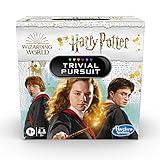 Trivial Pursuit Wizarding World Trivial Pursuit Wizarding World |
|
Check Latest Price |
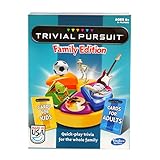 Trivial Pursuit Family Edition Trivial Pursuit Family Edition |
|
Check Latest Price |
 Lyrically Correct 90s and 2000s Lyrically Correct 90s and 2000s |
|
Check Latest Price |
 Chronology Chronology |
|
Check Latest Price |
 Urban Trivia Urban Trivia |
|
Check Latest Price |
 What Do You Meme? All of Us What Do You Meme? All of Us |
|
Check Latest Price |
 Jumbo Hitster Jumbo Hitster |
|
Check Latest Price |
 Mount Cleverest Mount Cleverest |
|
Check Latest Price |
 Sounds Fishy Sounds Fishy |
|
Check Latest Price |
 Outset Media American Trivia Outset Media American Trivia |
|
Check Latest Price |
 HISTORY Channel Trivia HISTORY Channel Trivia |
|
Check Latest Price |
 Super Trivia 1200 Questions Super Trivia 1200 Questions |
|
Check Latest Price |
Best Trivia Game for Every Family Scenario
Rank order is only useful once you know your household. Here is the same fifteen games re-cut by the situation people actually describe at the table.
Toddlers and preschoolers, ages 4 to 6. Mount Cleverest is the only game on this list with a 50:50 true-or-false format, which means a five-year-old has the same chance of scoring as a grandparent. Nothing else here does that.
Ages 6 to 8 with adults. Do You Really Know Your Family? works because the questions are about the people at the table rather than the world. Hitster is the second option here, since a QR code scan plays a song and the youngest players contribute the most recognisable ones.
Tweens and teenagers. Sounds Fishy, because bluffing beats memorising for players who find quiz formats patronising. Lyrically Correct works if anyone in the house listens to 90s hip-hop.
Three generations in one room. What Do You Meme? All of Us splits its questions four ways across Boomer, Gen X, Millennial and Gen Z decks. Chronology is the alternative when you want something calmer and educational.
Ten players or more. Urban Trivia holds 4 to 20 players. Mount Cleverest scales to 12 listed players and reviewers report larger groups working fine.
Road trips, aeroports and small bags. I Should Have Known That! is 5.7 inches square. Super Trivia 1200 has a flat travel box. Hitster needs a phone but not a table.
Quiet homes or sensory-sensitive players. Sounds Fishy and Do You Really Know Your Family? are the calm options. Smart Ass is the opposite of calm and works best when the room is already loud.
Families of three, five or seven. Every game here supports an odd count. The ones with team mechanics, Sounds Fishy and Smart Ass, absorb the spare player far more gracefully than the board-based Trivial Pursuit editions.
1. I Should Have Known That! – The Sharpest Scoring Twist for Adults and Teens
I should have known that! – A Trivia Game About Things You Oughta Know, Green
110 cards and 400+ questions
Points subtracted for wrong answers
5.7 x 5.7 x 1.8 inch box
Ages 14 and up
Pros
- Unusual subtract-for-wrong-answer scoring that changes every round
- 400+ questions about everyday things rather than obscure trivia
- Compact box that fits a coat pocket
- Humor keeps tense moments light
Cons
- Recommended age of 14 and up excludes younger kids
- Subtract-a-point scoring frustrates casual players
- Question bank thins after many sessions
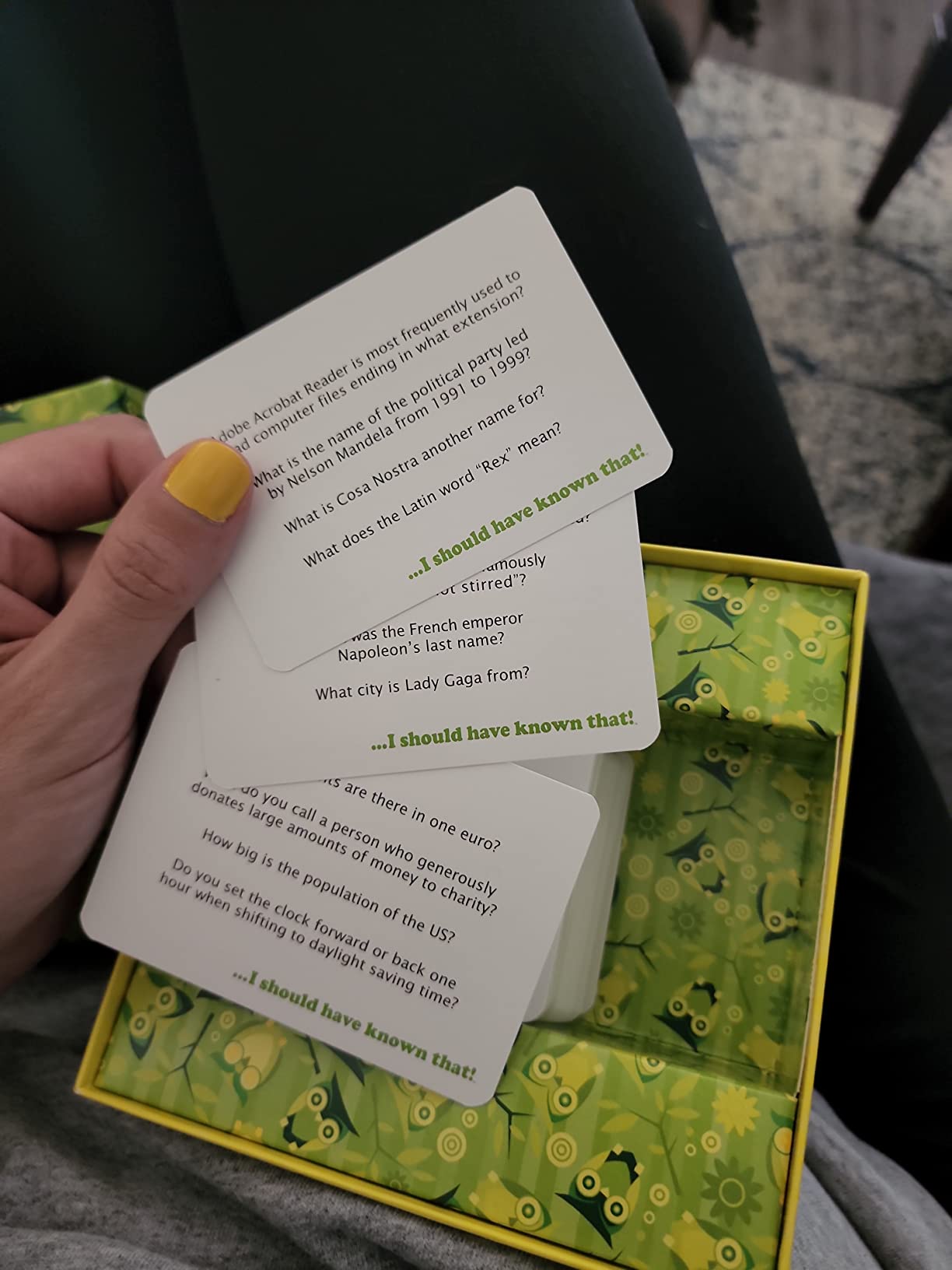
Most family trivia scores a correct answer and moves on. This one subtracts a point every time you answer wrong, which turns a casual question into a genuine decision. Reviewers describe the effect the same way: the table gets quiet for a second, someone calculates the odds, and then guesses anyway.
The questions are also unusual. Instead of dates and capitals, the deck covers things like common sense and everyday expectations, which is why it works with people who would never call themselves trivia players. The box is 5.7 inches square and weighs 8.8 ounces, so it moves from table to table without ceremony.
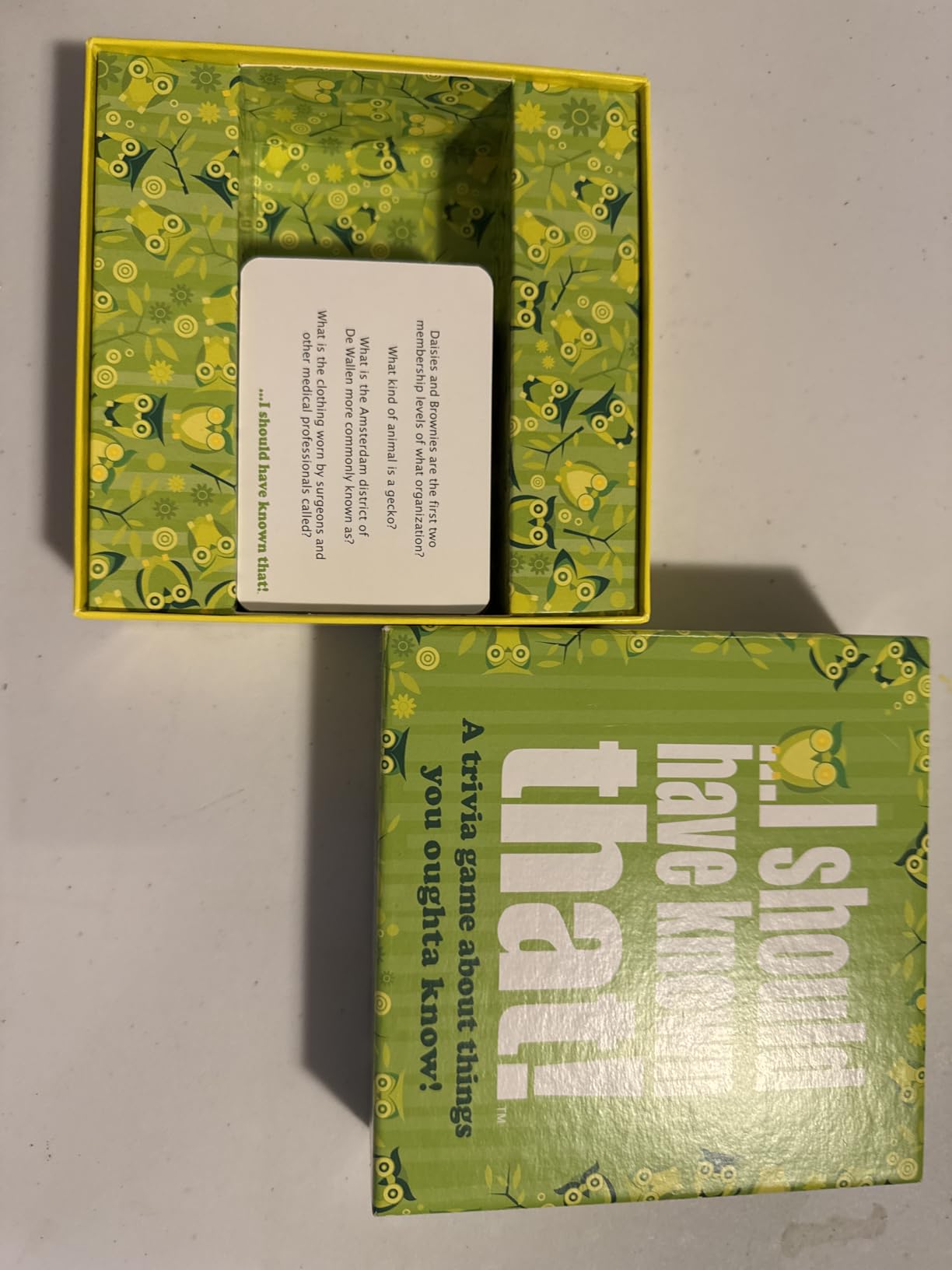
With 110 cards and more than 400 questions, replay value is moderate rather than generous. Families who play weekly will start noticing repeats, which is the most common complaint in the reviews. Monthly game nights will not notice for a long while.
The catch is the age guidance. The manufacturer recommends 14 and up, and several buyers with younger children report that the wording defeats them. Adults and teens get a genuinely tense game; a nine-year-old usually does not.
How it handles a mixed-age table
It does not, natively. With children under about 12 at the table, you will spend the first round explaining why a wrong answer costs a point. Once they understand the risk, the younger players usually start gambling wildly, which is exactly the intended chaos.
Pair it with a second game. Do You Really Know Your Family? for the first half and this for the second gives you a warm-up that needs no knowledge followed by a game with real stakes.
What to check before you buy
Count how often your household plays. At monthly intervals the 400-question bank holds up. At weekly intervals you will want the 1000-question Outset Media deck or the HISTORY Channel edition instead. Also check that no one at the table is under 14, because there is no workaround for that in the design.
2. Do You Really Know Your Family? – The Phone-Down Game for Ages 8 and Up
Do You Really Know Your Family? Fun Family Game for Kids, Teens and Adults
3 to 8 players
Cardstock cards in a 2 x 4.7 x 6.7 inch tin
Questions about the players plus challenges
Ages 8 to 10 guidance
Pros
- Questions are about the people at the table so nobody is excluded
- Almost no setup required
- Works across a wide age span
- Cardstock cards and a tin that survives storage
Cons
- Hard challenge cards get skipped often
- Little competitive depth
- Takes fewer than three players to feel thin
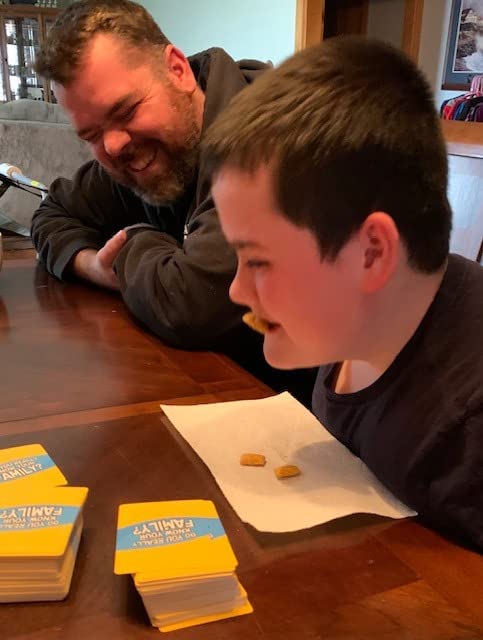
This is the game to reach for when the group includes a seven-year-old and someone over seventy. Every card asks something about the players themselves, so the youngest person at the table has an equal shot at knowing how many pets Grandma has or which uncle cannot boil an egg.
Setup takes about thirty seconds. The tin holds the cards, and there is no board, no dice and no batteries. That simplicity is the whole design, and it is why this one works so well at the end of a long day.
Reviewers consistently describe the real effect as conversation rather than competition. Families report learning things about relatives they had no idea, which is a pleasant side effect on a night that was supposed to be a quiz.
The recurring complaint is the challenge cards. Some are genuinely difficult, and families end up skipping them, which makes the box a little less replayable than it looks on paper. The game also offers little competitive depth, so it works better as a warm-up than as a final.
Why it beats ordinary trivia for mixed ages
Knowledge gaps stop mattering when the subject matter is the players. A child who cannot name a state capital can absolutely know which parent always burns toast. On r/boardgames, this title comes up repeatedly as the phone-down option for family nights, and that framing matches what buyers describe.
It also fills a real gap in a night built around a heavier game. Play it first for twenty minutes, then move to something with actual scoring tension.
Where it falls short
Two players is not enough. The manufacturer lists 3 to 8 players, and reviewers echo that a couple finds it thin because there is nowhere for the questions to go. The age guidance of 8 to 10 also means a five-year-old needs an adult reading cards aloud, which changes the pace considerably.
3. Smart Ass Trivia – The Loudest, Fastest Party Filler on the List
Smart Ass Fast-Paced Trivia Board Game for Families, Ages 12+
411 question cards
2 to 6 players
Ages 12 and up
Game board with two jumbo dice
Pros
- Shout-out format keeps everyone active rather than waiting
- 411 cards give plenty of variety
- Quick to teach and quick to play
- Works in teams across wide ages
Cons
- Questions run harder than casual general knowledge
- Too loud for laid-back evenings
- Weak with only two or three players
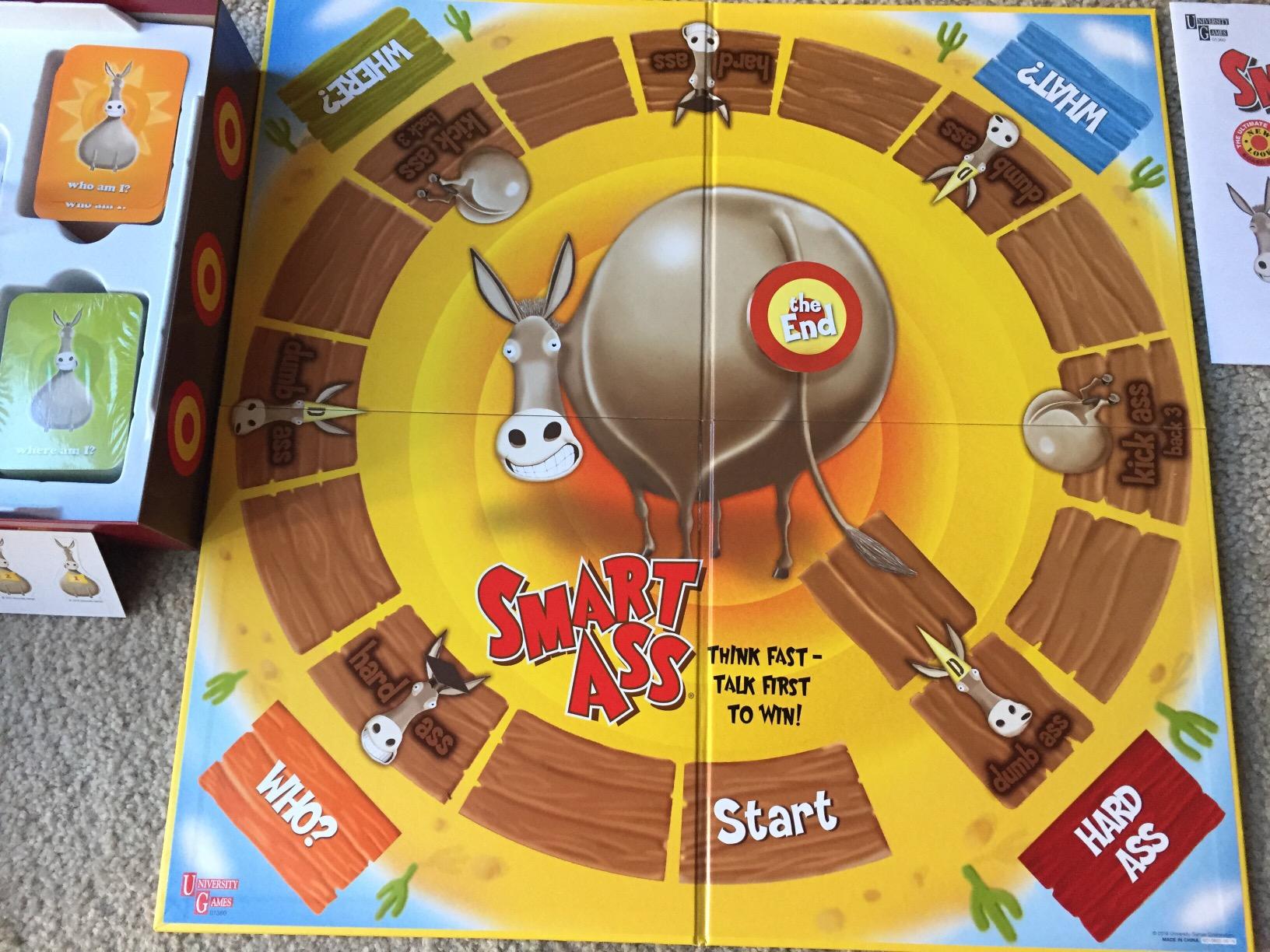
The defining rule is that you can answer out of turn. If you know it, you yell it, and the box includes two jumbo dice so the whole table knows a new category has been drawn. Families report laughing through entire sessions because of it.
With 411 question cards and all-new content, the bank is deep enough for several evenings. It is a board game with real pieces and stands, so it needs a table and about two minutes of setup before the first question.

Two problems come up repeatedly in reviews. The first is difficulty. Reviewers consistently describe the questions as running harder than casual general knowledge, with obscure history, geography and science causing younger or less specialised players to disengage by round three.
The second is volume. This is the loudest game in the roundup by a wide margin, and reviewers with quieter households or sensory-sensitive family members tend to skip it. Save it for a room that tolerates noise.
When the shouting format actually helps
Turn-based trivia is where family game nights go quiet. One player answers, everyone else mentally checks out, and the youngest person stops participating after a few rounds. Letting everyone shout at once removes the dead time entirely, which is the single biggest structural advantage this design has.
It also tolerates odd player counts better than most. With five people, teams work without anyone sitting out.
How it fits a mixed-age evening
Best with four or more players and with ages 12 and up, which means it suits teens and adults far better than families with young children. If your household includes a child who cannot read fluently, an adult will end up reading most cards and the pace will suffer.
A fair house rule is to allow every question from the category dice to be re-asked at an easier level if the original stumps the table. Families report this adjustment working well.
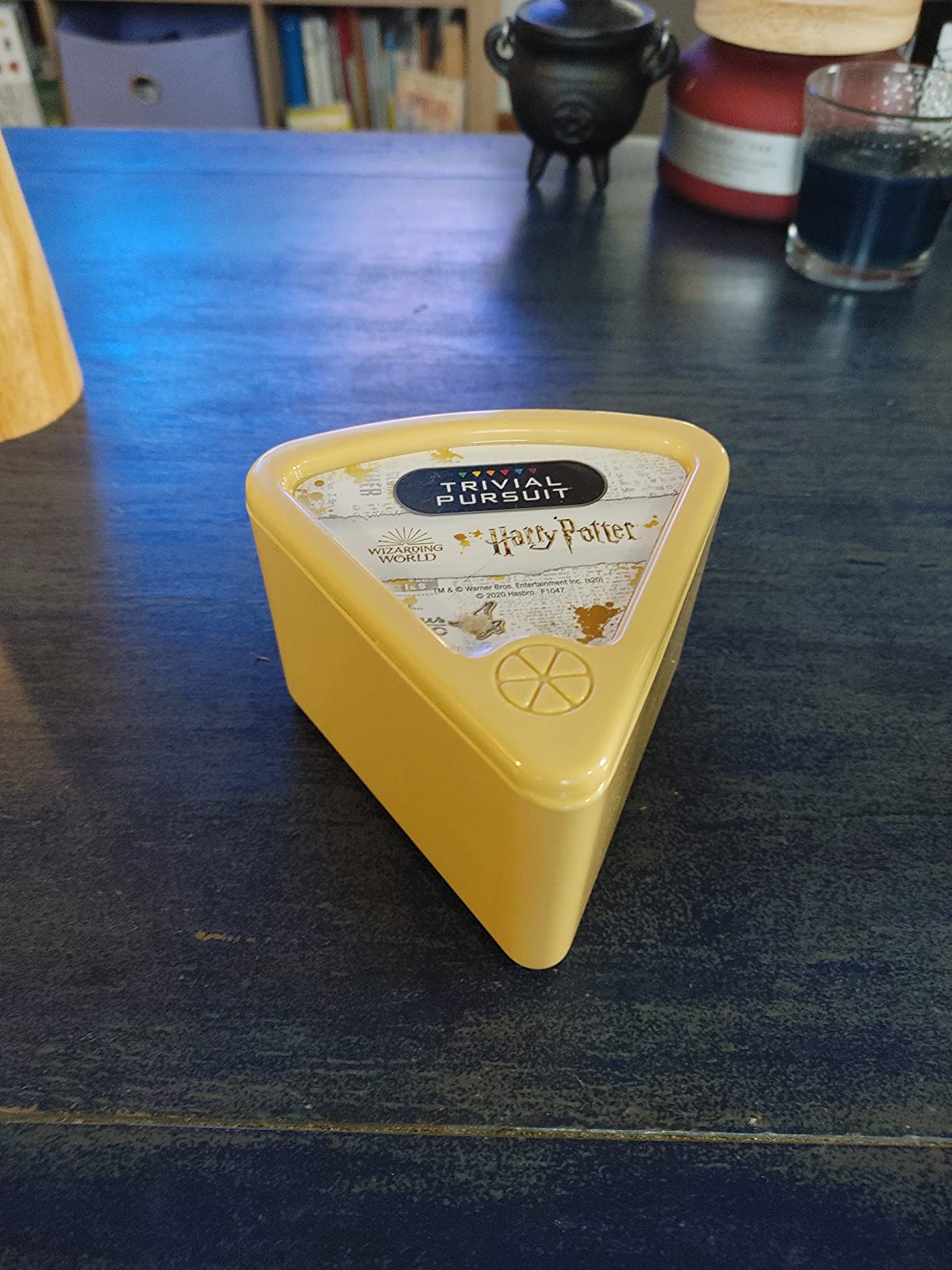
4. Trivial Pursuit Wizarding World – The Best Gift for a Household That Loves the Films
Hasbro Gaming Trivial Pursuit: Wizarding World Harry Potter Edition Compact Trivia Game, 2+ Players, 600 Trivia Questions, 8+ (Amazon Exclusive)
600 questions across six Wizarding World categories
Compact wedge case with no gameboard
2 or more players
Ages 8 and up
Pros
- Portable wedge case fits in a bag with no board to lose
- Theme pulls kids teens and adults to the same table
- Six categories keep the 600 questions varied
- Collect six cards to win plays fast
Cons
- Unplayable for anyone outside the franchise
- Small wedge case has no room for loose storage
- Replay value drops once films have been rewatched often
This is the travel answer in this category. There is no gameboard. Cards go into a compact wedge-shaped case measuring roughly 3.19 by 5.24 by 5.24 inches, and the whole thing weighs about a quarter of a kilogram.
The 600 questions are split across six themed categories: the Dark Arts, Hogwarts, spells and potions, magical objects, magical people, and animals and magical creatures. You win by collecting six cards, which takes twelve correct answers.
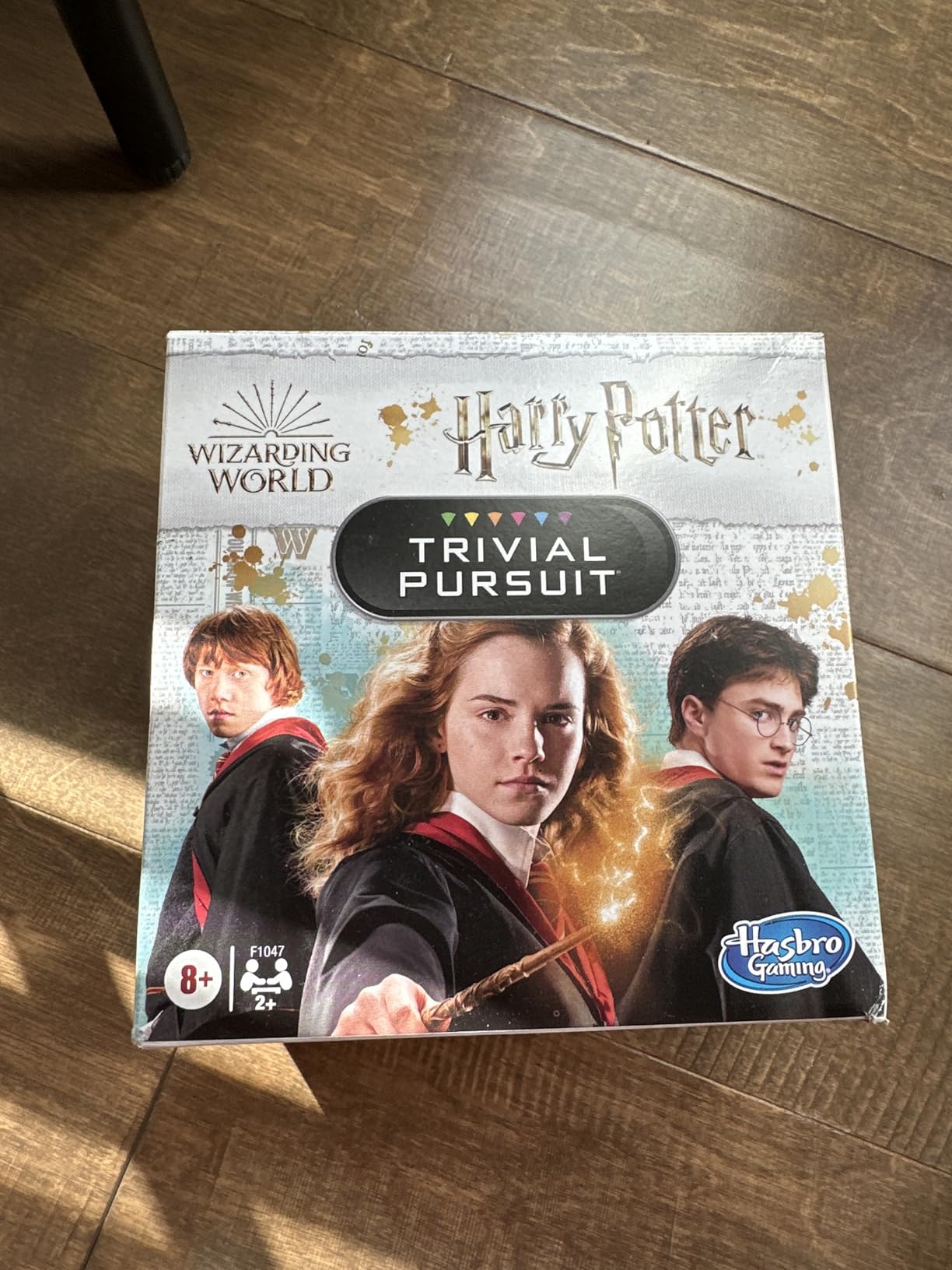
What makes it work as a family game is the theme rather than the design. A household that has watched the films repeatedly has a shared knowledge base that spans parents, teenagers and children in a way general trivia never does.
That same strength is the limitation. If one person at the table is not a fan, the game simply does not function for them. Reviewers note the other drawback too: the questions feel thinner once everyone has seen the films many times.
Deciding if your household qualifies
Be honest about how many people actually know the source material. One or two people who do not know it is manageable, since they can pass. A table where half the players have never watched the films will finish in twenty minutes and remember nothing.
The age guidance of 8 and up is lower than most licensed trivia, which makes it one of the few picks here that comfortably covers primary school children who already know the films.
What to check before you buy
Look at the storage. The wedge case is designed for a travel format, and reviewers note it holds no loose storage, so cards left out during a session need to go straight back in. If you plan to play weekly, 600 questions will feel thin within a few months.
5. Trivial Pursuit Family Edition – Best Split-Deck Design for Mixed Ages
Hasbro Gaming Trivial Pursuit Game: Family Edition Board Game, Family Trivia Games for Adults and Kids, 2+ Players, Ages 8+ (Amazon Exclusive)
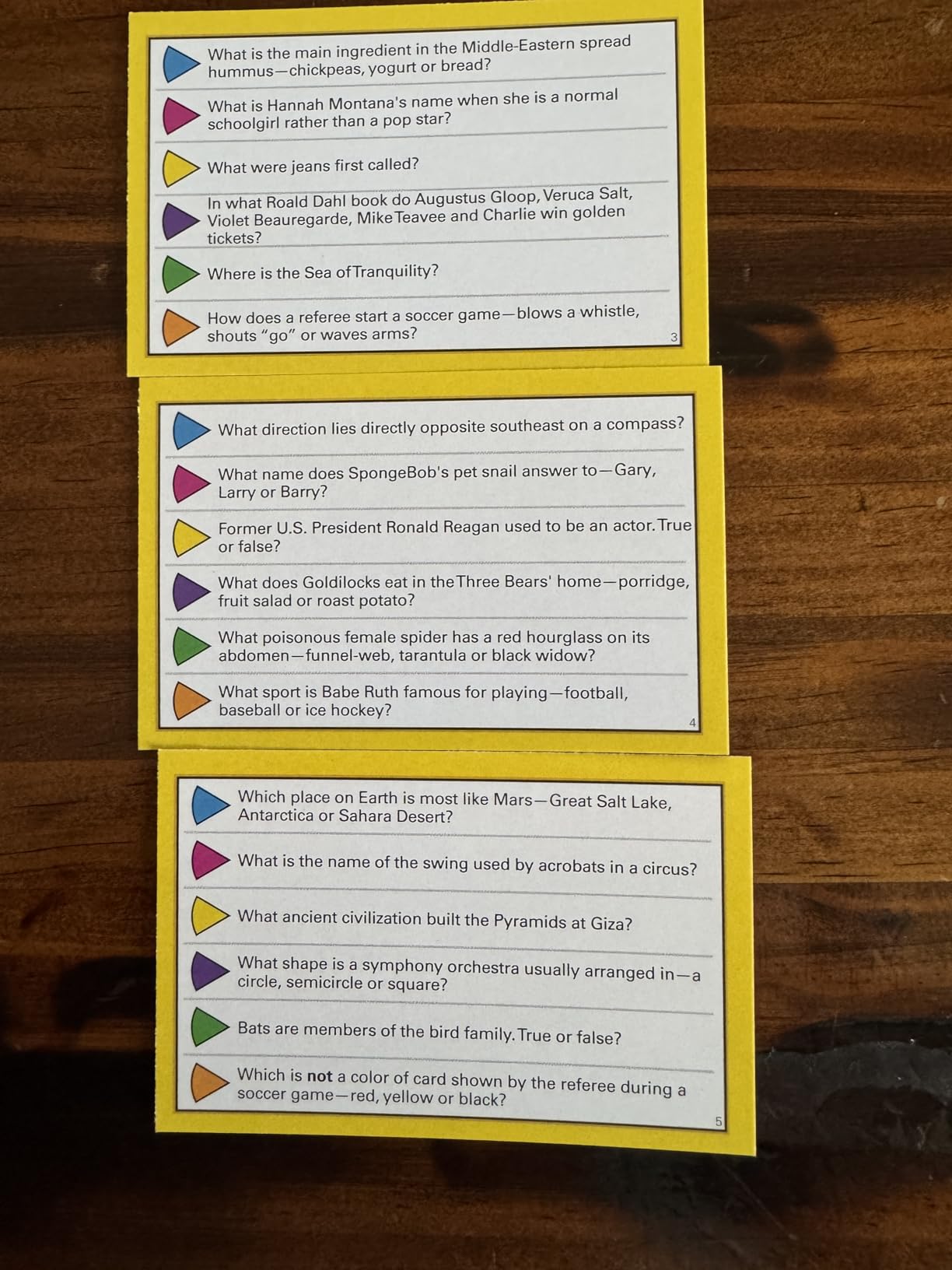
1200 trivia questions in 6 categories
100 blue adult cards and 100 yellow kids cards
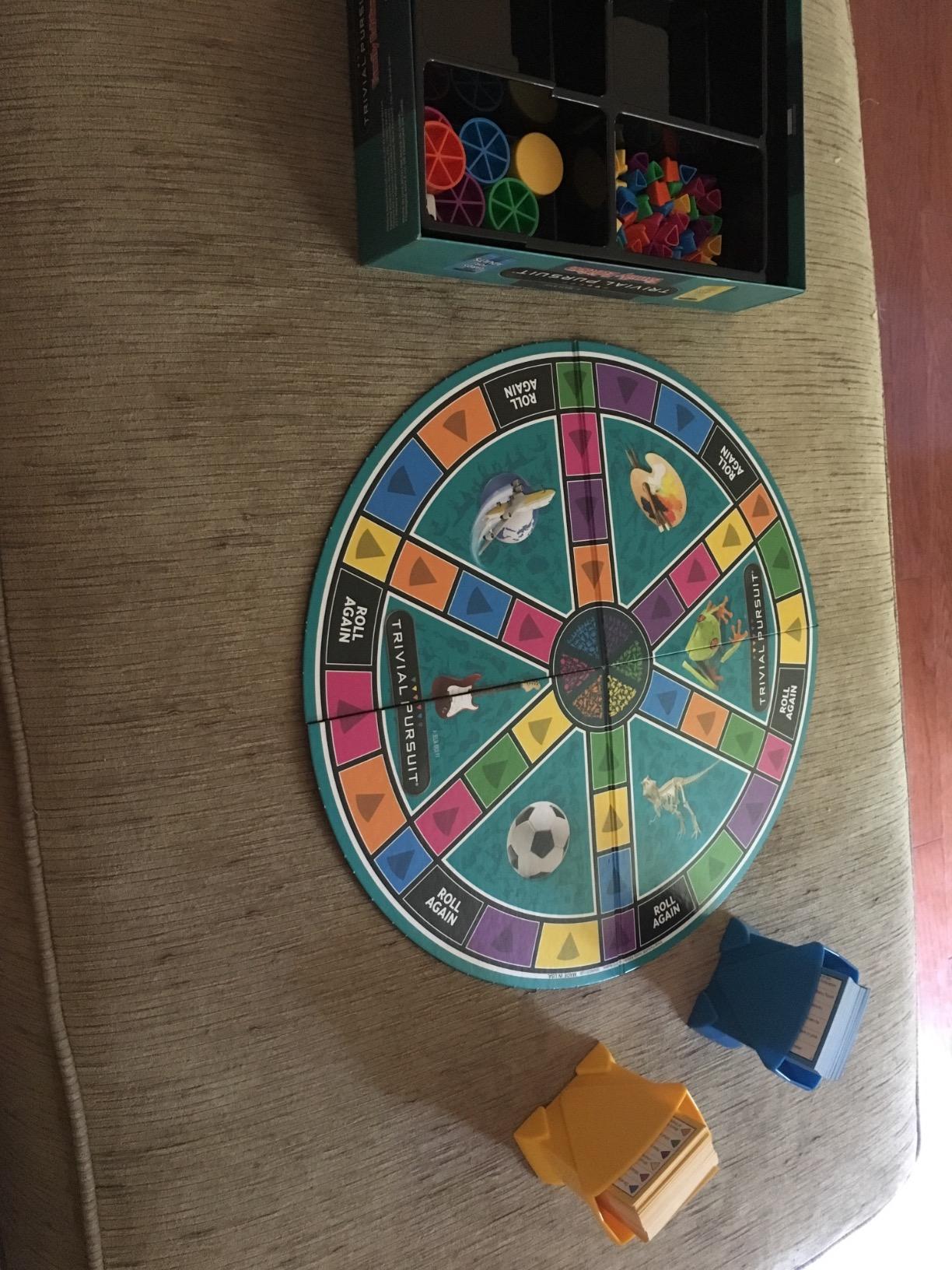
Quick-play board
Ages 8 and up
Pros
- Separate adult and kid decks level the field by age
- Quick-play board shortens sessions
- 1200 questions across six categories
- Familiar format needs no rules explanation
Cons
- Wedge-and-roll structure runs long for some families
- Question bank skews North American and adult-leaning
- Board and pieces need more table space
The reason this edition exists is the two-deck system. Blue cards carry adult-level questions and yellow cards carry kid-level questions, and adults draw from one deck while children draw from the other. That split is the single most effective age-handling feature in this entire roundup.
There are 1200 questions across six categories in total, which is a deep bank. The quick-play board lets you place a wedge on any coloured space, so you are not stuck crawling one square at a time, and a session usually finishes in well under an hour.
You can play individually or in teams, and each player gets a cardholder so two hands can share one deck. That flexibility is what makes it work for a family of three as readily as for a group of eight.
Reviewers rate this the strongest all-round option in the set. The complaints are consistent across the category rather than specific to this edition: the wedge-and-roll structure can drag, and the question bank leans toward North American and adult-leaning trivia that younger players in non-US families may find thin.
Why split decks matter more than question count
Split decks solve a different problem than a big bank does. A 1200-question adult-only deck still loses a nine-year-old by round two. Two 100-card decks matched to age groups keep everyone scoring, which matters far more at a family table than variety does.
That is also why the yellow kid deck matters for grandparents. An older player and a child compete on questions appropriate to each of them, so the score stays believable on both sides.
How long a session really takes
The quick-play board shortens it considerably compared with the classic version, but families who dislike roll-and-move structure still tend to find it long. If you want a 30-minute game, the HISTORY Channel edition below flips cards instead of moving pieces and lands closer to that.
Setup is the price you pay for the board: gameboard, scoring tokens, wedges, die, cardholders and two decks. Plan two minutes before the first question.
6. Lyrically Correct – Best for a Household That Grew Up on 90s and 2000s Hip-Hop
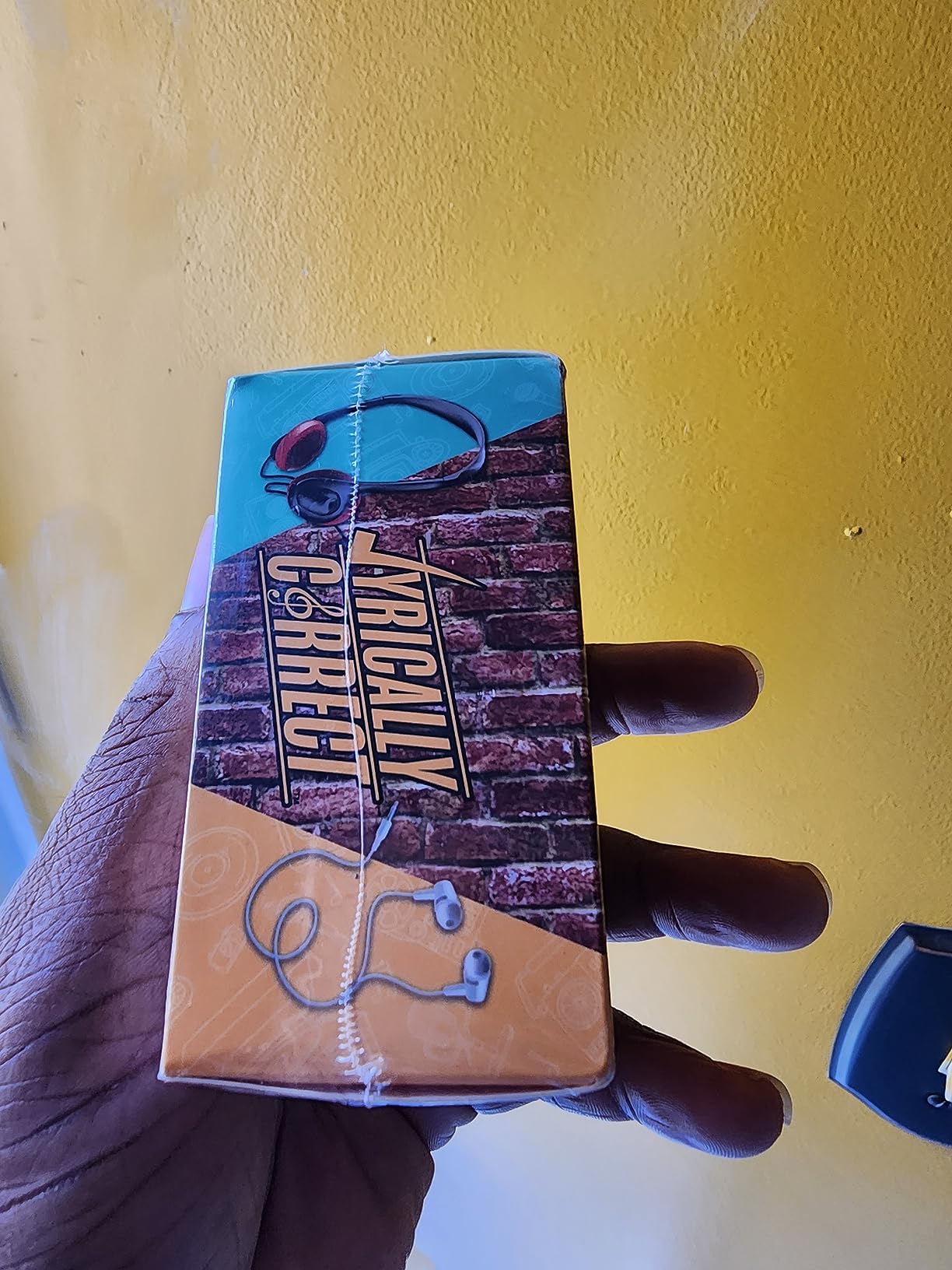
Lyrically Correct ’90s & 2000s Hip-Hop & R&B Music Trivia Card Game
140 trivia cards plus 10 challenge cards
Finish-the-lyrics format
2 or more players
Ages 13 and up
Pros
- Finish-the-lyrics format feels like a game rather than a quiz
- Nostalgic catalog spanning a specific era
- Challenge cards add variety and twists
- Small 3 x 2 inch box travels easily
Cons
- Niche music taste limits who enjoys it
- Adults over 30 hold a heavy advantage
- Far fewer cards than competing decks
The mechanic here is guessing the next line of a song rather than recalling a fact. That single change makes it feel less like a school test, and reviewers repeatedly describe it as a more social alternative to straight trivia.
The catalog covers artists including TLC, Mary J. Blige, Outkast, Usher, Missy Elliott, the Notorious B.I.G. and Wu-Tang Clan. There are 140 trivia cards plus 10 challenge cards, packed into a box measuring roughly 3 by 2 by 3 inches.
Two limitations show up again and again. The first is generational fit. Adults over 30 hold a heavy advantage because they grew up on this catalog, so a mixed table should be paired rather than competitive.
The second is deck size. 140 cards is small next to the 600, 1200 and 2000-question decks in this roundup, so it wears out faster for regular players. It ranks strongly in music trivia categories, but the volume is not there.

Who should actually buy this
Households where the adults have strong 90s and 2000s hip-hop and R&B memories, and where the children are at least 13. In that group, the nostalgia is the appeal, not the trivia. The card pack is small enough to bring on a trip.
If nobody at the table grew up on this music, skip it. There is no partial participation in a music deck when the reference points are missing.
How to make it fairer across ages
Pair adults with a teenager rather than scoring them head to head. You will get far more conversation, which is the point of a music deck, and the younger player gets to be the expert for once instead of the other way round.
You can also mix this with Hitster below, whose catalogue runs from the 1920s to the 2020s and includes a QR code app. Together they cover the whole century rather than one decade.
7. Chronology – The Top-Rated Pick for Learning Without Feeling Like School
Buffalo Games – Chronology – The Game Where You Make History – Historical Timeline Trivia for 2+ Players, Ages 14+
800 unique events across 2000 years
Build a timeline of 10 cards to win
2 to 8 players
Ages 14 and up
Pros
- Place-the-event mechanic replaces question and answer
- 800 events updated through 2024
- Rules take under a minute to learn
- Scales from 2 to 8 players
Cons
- Ages 14 and up guidance limits younger children
- Placement depends heavily on history knowledge
- Narrower theme than general knowledge trivia
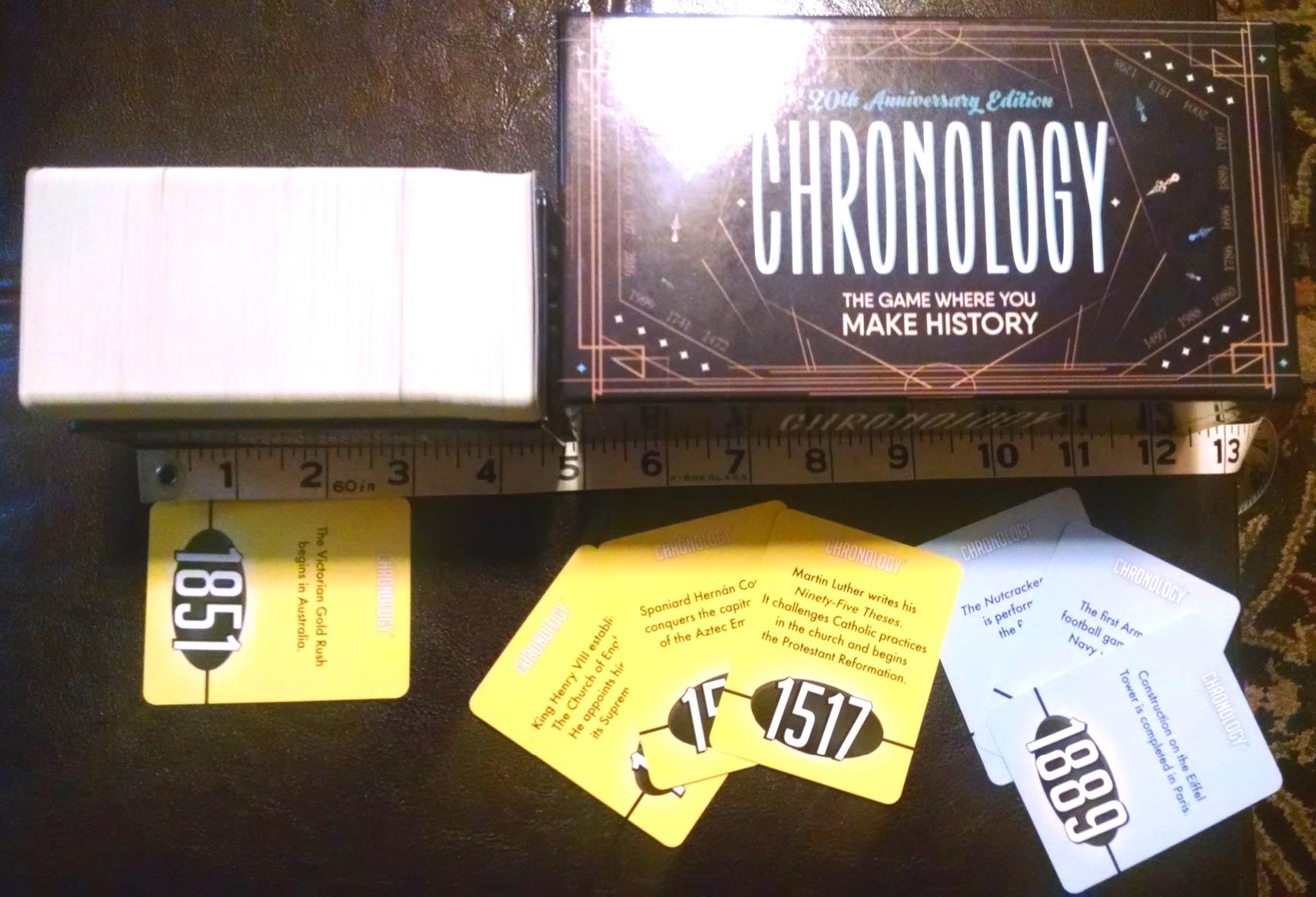
Chronology is not a question game. You draw an event card and place it in the correct spot on a timeline that stretches across the table, and the first player to build a clean line of ten cards wins. Knowledge is used, but no one has to recall a fact on demand.
That design has a useful side effect: it keeps a seven-year-old and a seventy-year-old in the same round without anyone stalling. There are 800 unique events spanning 2000 years, updated to include cards through 2024, so the bank is deep and the content stays current.
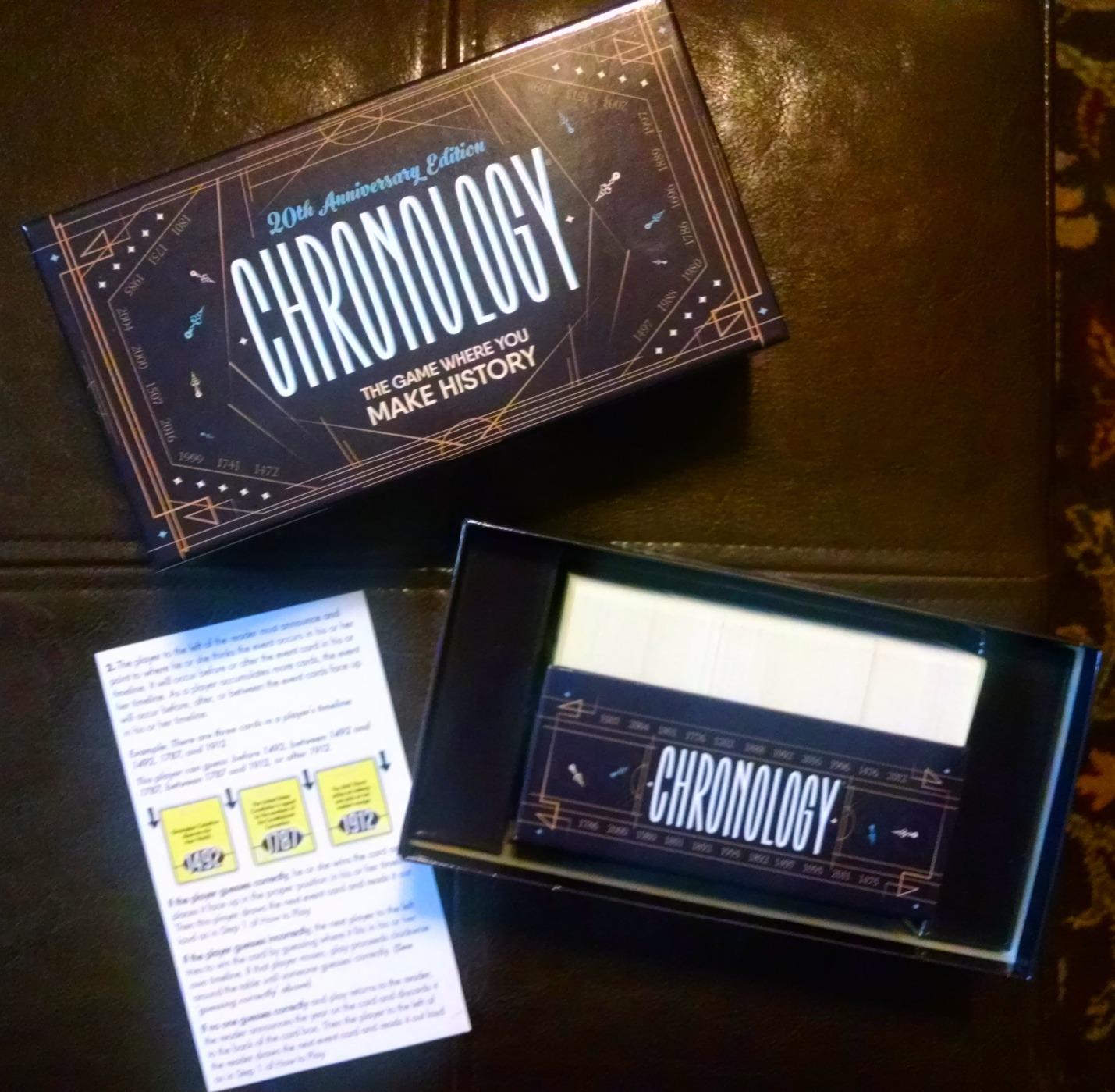
It holds 2 to 8 players and 14 and up is the guidance, which excludes younger children from scoring but not from participating. A parent can place cards on a child’s behalf and still have the child decide the decade.
The 4.8 average rating is among the highest in this group, with a large share of five-star reviews. Buyers describe it as educational without feeling like school, and note that placement feels less repetitive than straight question-and-answer formats.
Why placement beats recall for family play
Recall formats punish a blank moment. Placement formats do not, because placing a card wrongly is informative rather than humiliating, and the line on the table shows everyone what the right answer looked like. That single change removes most of the frustration families report with ordinary trivia.
The catch is a narrow theme. Everyone is playing history, so a household with no interest in the subject gets less from it than from a general-knowledge deck.
Adapting it for younger players
Turn it into a two-age game. Adults compete on exact placement, and children score a point for getting the card within the right century, then a bonus point for the right decade. The same deck then scores at two difficulty levels without extra cards.
Setup is minimal because there is no rulebook to study, and a full session fits comfortably inside a 30-minute window. If you want a calmer night than a shout-out quiz, this is the one to choose.
8. Urban Trivia – The Best Choice for Gatherings of Ten or More
Urban Trivia – Black Card Game for The Culture! New & Improved Fun Trivia on Black TV, Movies, Music, Sports, & Growing Up Black! Great for Adult Game Nights and Family Gatherings.
4 to 20 players
Black TV movies music sports and culture
Ages 13 and up
Small cardstock deck at 2.7 by 1 by 3.6 inches
Pros
- Scales from 4 to 20 players for big gatherings
- Researched specific questions rather than generic facts
- Mixes easy medium and hard questions
- Compact cardstock deck
Cons
- Only lands with players who share the cultural context
- Question bank skews toward players 45 and older
- Limited replay once the deck is exhausted
The player range is the headline. Urban Trivia runs from 4 to 20 players, which makes it the natural pick for holiday gatherings, reunions and any evening where the guest list keeps expanding. Almost nothing else on this list absorbs fifteen people.
Questions cover Black television, movies, music, sports and growing up, and they were researched from the creators’ own man-on-the-street video series rather than assembled from generic databases. Reviewers consistently describe that specificity as what makes the deck funny rather than generic.
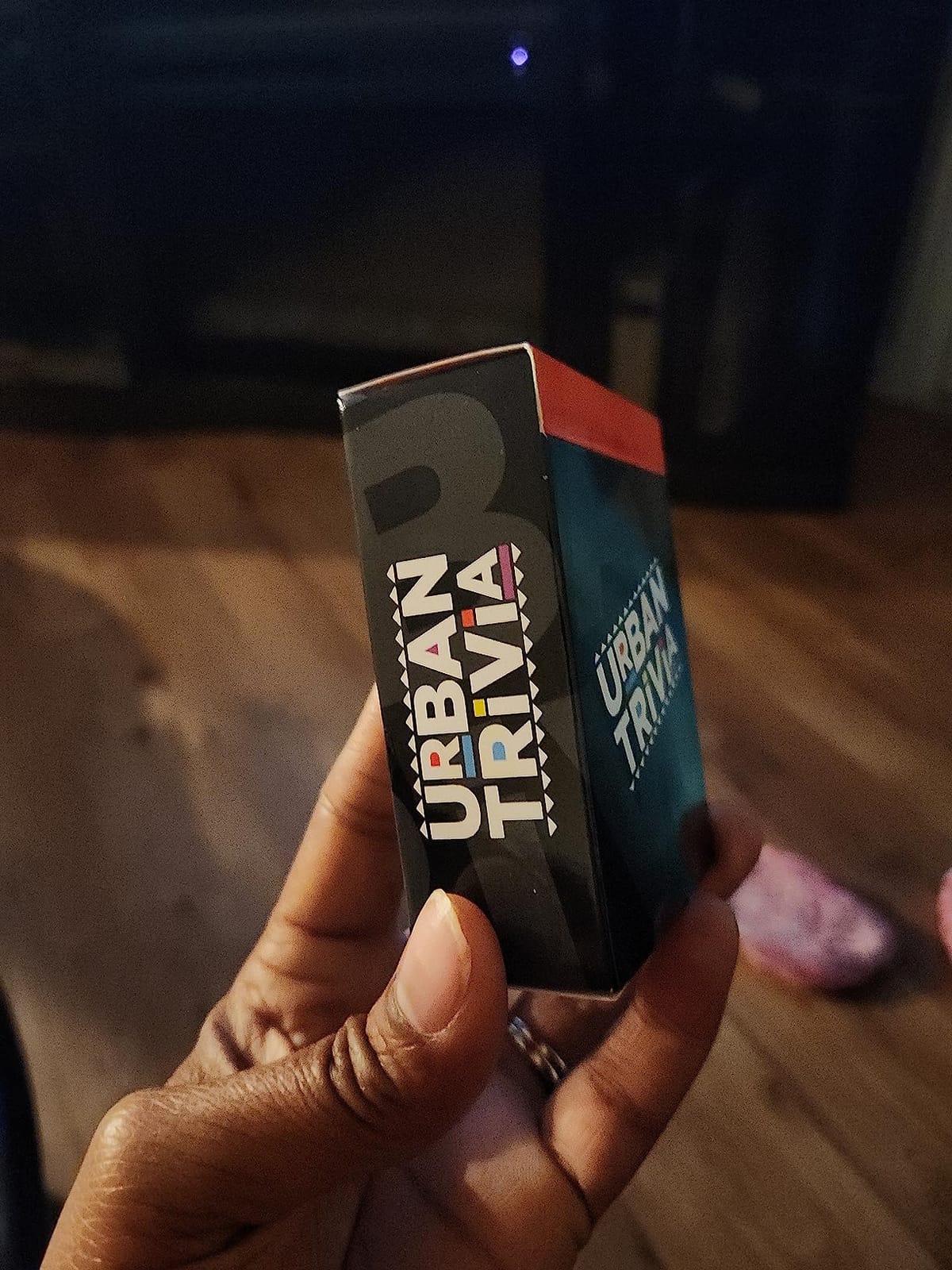
Easy, medium and hard questions are mixed in the same deck, so a strong and a weak player both score something. That balance matters at a family reunion where grandparents, parents and teenagers all have very different knowledge.
The honest limitation is context. The material only works for players who share the cultural references, and reviewers note the question bank skews toward people who grew up with the referenced television, music and sport, which tends to mean older players.

When a themed deck beats a general one
A themed deck is not universally better, but it is dramatically better when the theme runs through your household. Generic trivia splits advantage across all the players evenly; a themed deck concentrates it, and concentrated advantage is far more exciting when the people who know the material are on your team.
The reverse also holds. Sitting a child who does not know the references next to a fluent adult produces dead air, so themed decks work best when the whole group is inside the theme or teams are balanced deliberately.
Planning for a big room
Split into teams of four or five and run it as a relay, where each team nominates the player who answers. That keeps twenty people engaged instead of leaving fifteen of them watching. The deck is small enough to pass hand to hand, with no board to set up.
Check replay expectations first. Reviewers flag that the bank is exhausted once the deck runs through, so for a very large group, budget questions per person carefully.
9. What Do You Meme? All of Us – Four Decks, Four Generations
WHAT DO YOU MEME? All of Us – The Family Trivia Game for All Generations – Family Card Games for Kids and Adults
480 trivia cards plus 8 wild cards
Questions split across four generation decks
60 second timer and scoreboard included
Ages 12 and up
Pros
- Only truly multigenerational design with one deck per generation
- Teams players so grandparents and teens both score
- 480 cards for a full-length evening
- Reliable laughs and conversation
Cons
- Printed scoring and rules are awkward
- 60 second timer is tight for slower players
- Question bank skews heavily American and music focused
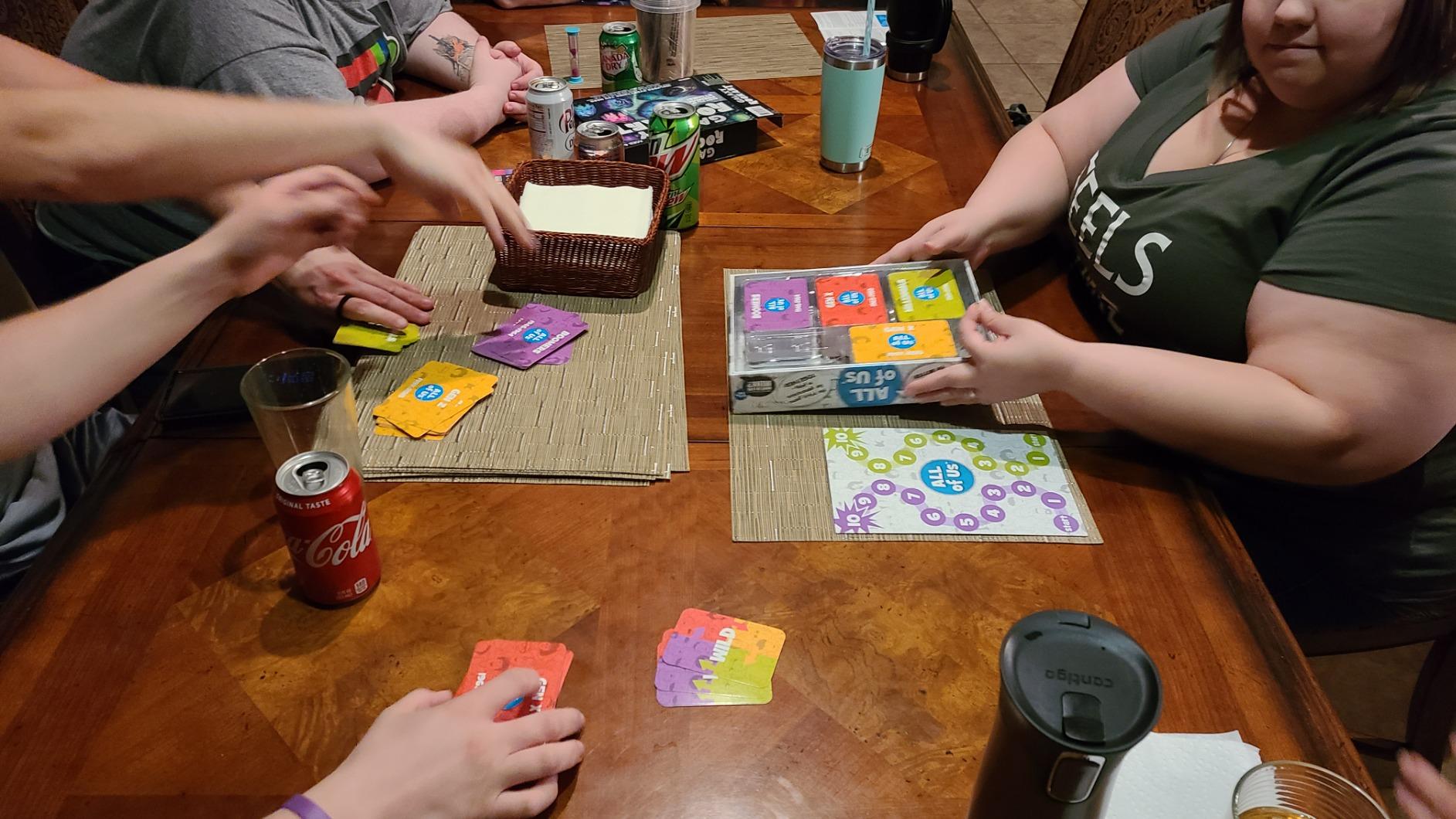
The core idea is worth explaining clearly, because nothing else in this roundup does it. Questions are split across four decks labelled Boomer, Gen X, Millennial and Gen Z. Each player draws from the deck for their own generation, so a teenager knows their own era better than a parent does.
Reviewers confirm it puts three and four generations at one table and that the effect is immediate: each age group becomes the expert in its own round. It scores well with mixed groups because nobody is answering blind all evening.
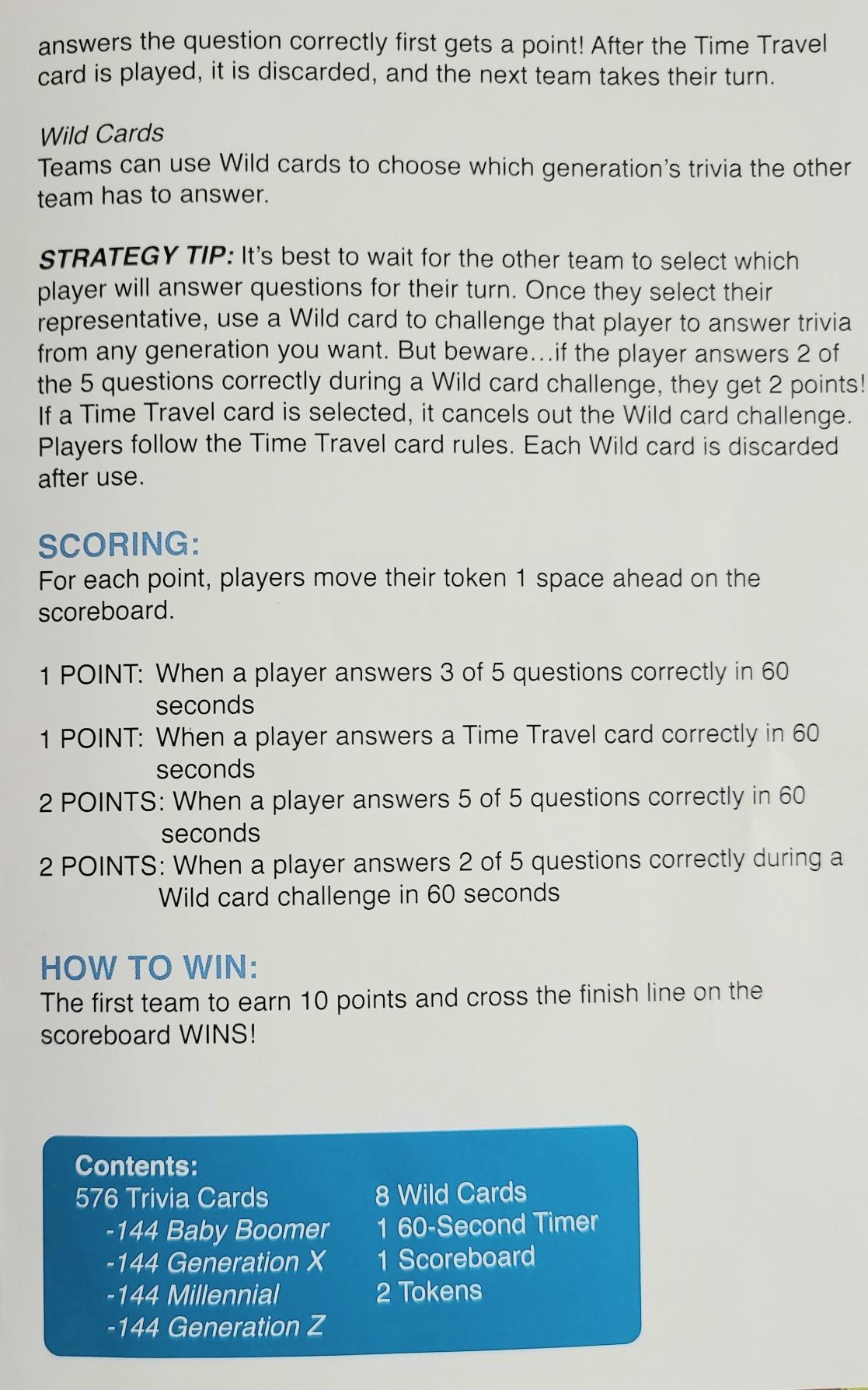
You get 480 trivia cards plus 8 wild cards, along with a 60-second timer, a scoreboard and two tokens. That is a much fuller box than most party card games, and 4 or more players is the intended configuration.
Two issues recur. The printed rules and scoring are awkward enough that reviewers almost universally rewrite their own house rules after the first play. The 60-second timer also runs tight for slower players or anyone still learning the format.
Fixing the rules before you play
Most families end up with a simpler version: one point for a correct answer, no points deducted, and a timer you extend to ninety seconds. Write it on the back of the scoreboard on night one so the second play is clean. Parents repeatedly cite rule adaptation as the fix for over-complicated rulebooks in general.
One more habit helps: let younger players draw the cards when the deck is themed toward an older generation. It shifts the scoring in their favour without changing anything else.
Knowing when it is the wrong choice
Non-US and non-North-American buyers note that the questions are heavily weighted to American music and film, so a family outside that culture will hit dead questions often. It is also rated for 12 and up, which puts it out of reach for primary-age children.
If your household is under 12 across the board, choose Do You Really Know Your Family? instead, which asks about the players rather than about pop culture.
10. Jumbo Hitster – The Easiest Music Quiz to Teach
Jumbo Hitster – The Music Fun Party Quiz Card Game, 2-10 Players – 300 Plus Iconic Music Hits – Great for Adult and Family Game Night
Over 300 music hits from the 1920s to the 2020s
QR code and free companion app
2 to 10 players
Three play modes
Pros
- Rules explain in about three minutes
- 300 plus hits spanning a century
- QR code makes song playback effortless
- Competitive cooperative and solo modes
Cons
- Full song playback needs a supported streaming subscription
- A few cards carry explicit content
- Library leans on mainstream radio
- Recommended 16 and up
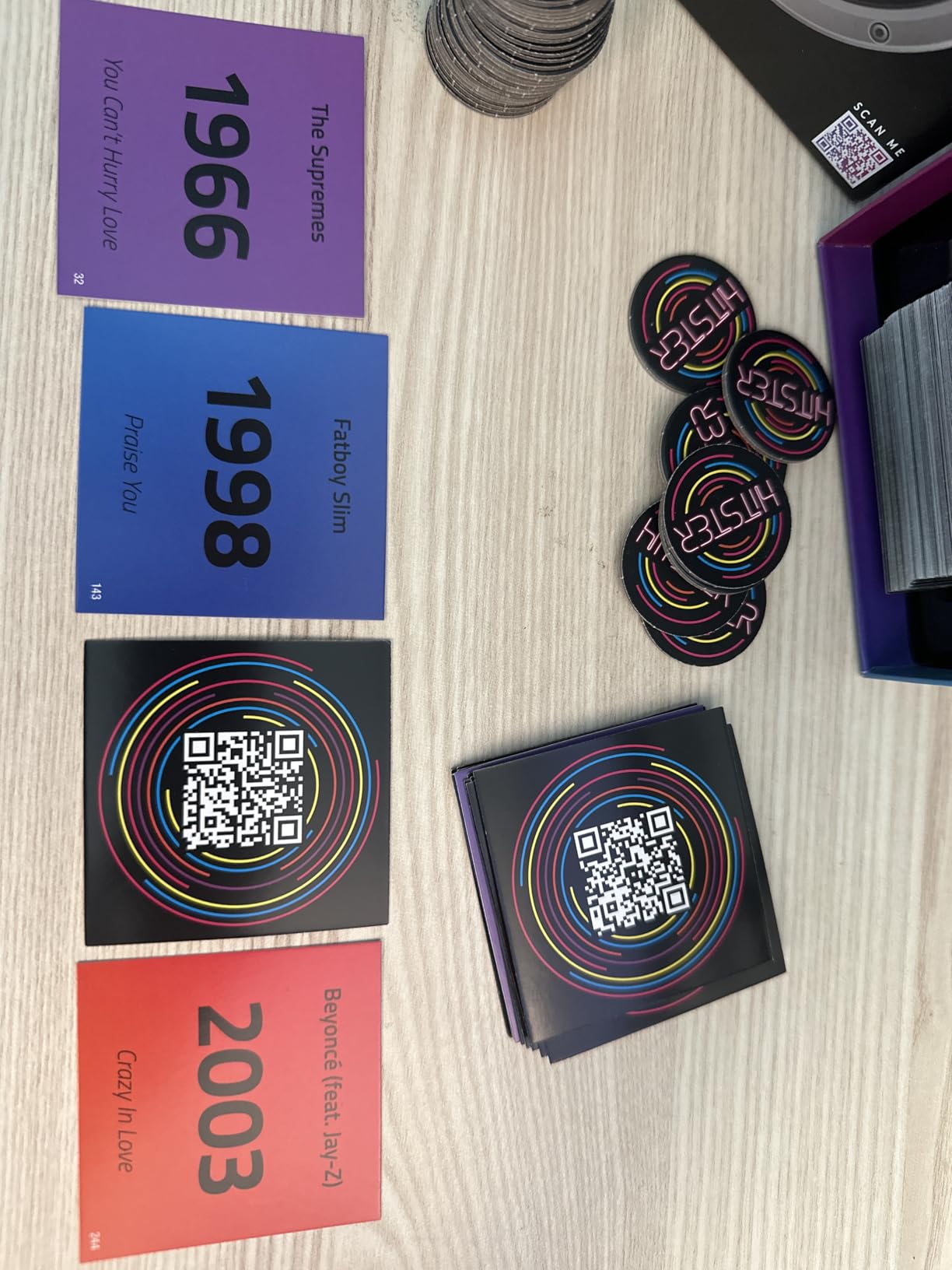
Hitster asks you to identify a song from a fragment of it. Scan the QR code on the card with the free app and it plays, then the table guesses artist, song or year. The rules take about three minutes to explain, which is the fastest teach time of any music game we looked at.
The catalogue is the strength. Over 300 hits span the 1920s through the 2020s, so a table with a grandmother born in the 1950s and a teenager born in 2010 both have material. It is the option here that most reliably bridges generations.
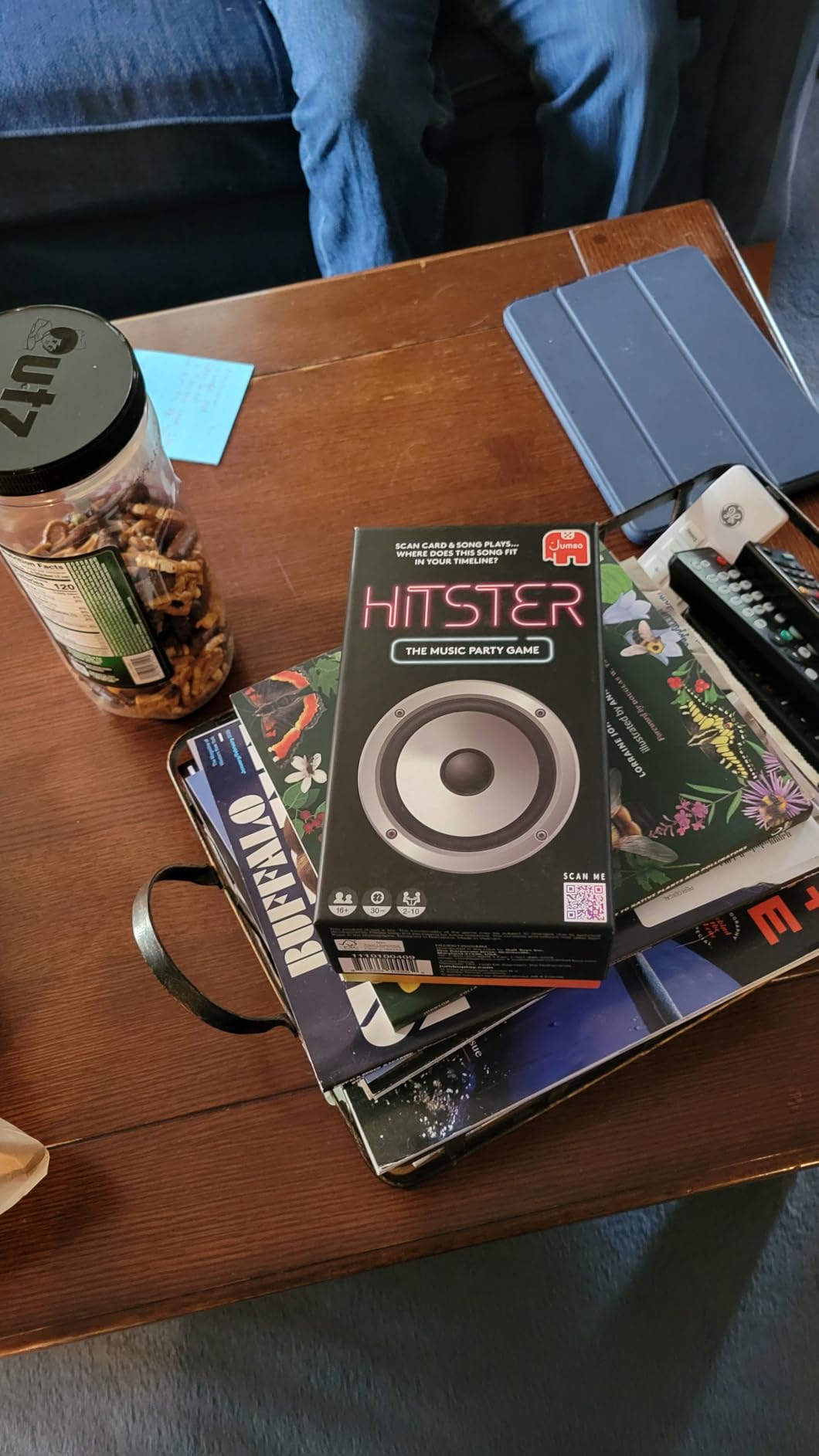
You can play competitively, cooperatively or solo, which handles a wide range of households. It supports 2 to 10 players and the box includes over 300 music cards, 37 chips and instructions.
Two caveats are consistent across reviews. Playback quality depends on having a compatible streaming subscription, so test it before game night rather than during. And a small number of cards carry explicit lyrics; families with younger children pull those out in advance.
Preparing for a mixed-generation music night
Go through the deck before the first play and remove any cards with explicit content. Reviewers who do this report a completely different evening from those who do not. Set the app up on a speaker that everyone can hear rather than a phone on the table.
Pair it with Lyrically Correct from earlier in the list. Hitster covers a century of mainstream hits, while the other deck goes deep on 90s and 2000s hip-hop and R&B, and the two together fill a full evening.
When to skip it
The 16-and-up guidance means young children need adult help for every card. If your family has primary-age children and nobody else plays music quiz regularly, start with Do You Really Know Your Family? and add Hitster once the group ages up.
It is also a screen-adjacent game. If your household wants phones face down, this is not it.
11. Mount Cleverest – The Only Pick a Five-Year-Old Can Win
Mount Cleverest® Original Edition | True or False Trivia Game | Fun Adults & Kids Family Card Game | Stocking Stuffer | Travel Games | Party Games for Birthday | Gift for Boys and Girls
True or false format with 30 betting discs
300-card deck of large triangular cards
2 to 12 players
Ages 6 and up
Pros
- 50:50 format lets the youngest players score equally
- Minimal pressure compared with quiz games
- Compact box at 1.75 by 5.75 by 6.5 inches
- Scales to large groups
Cons
- Deck runs out quickly with big groups
- Some cards lack answers or explanations
- Betting discs add complexity some groups skip
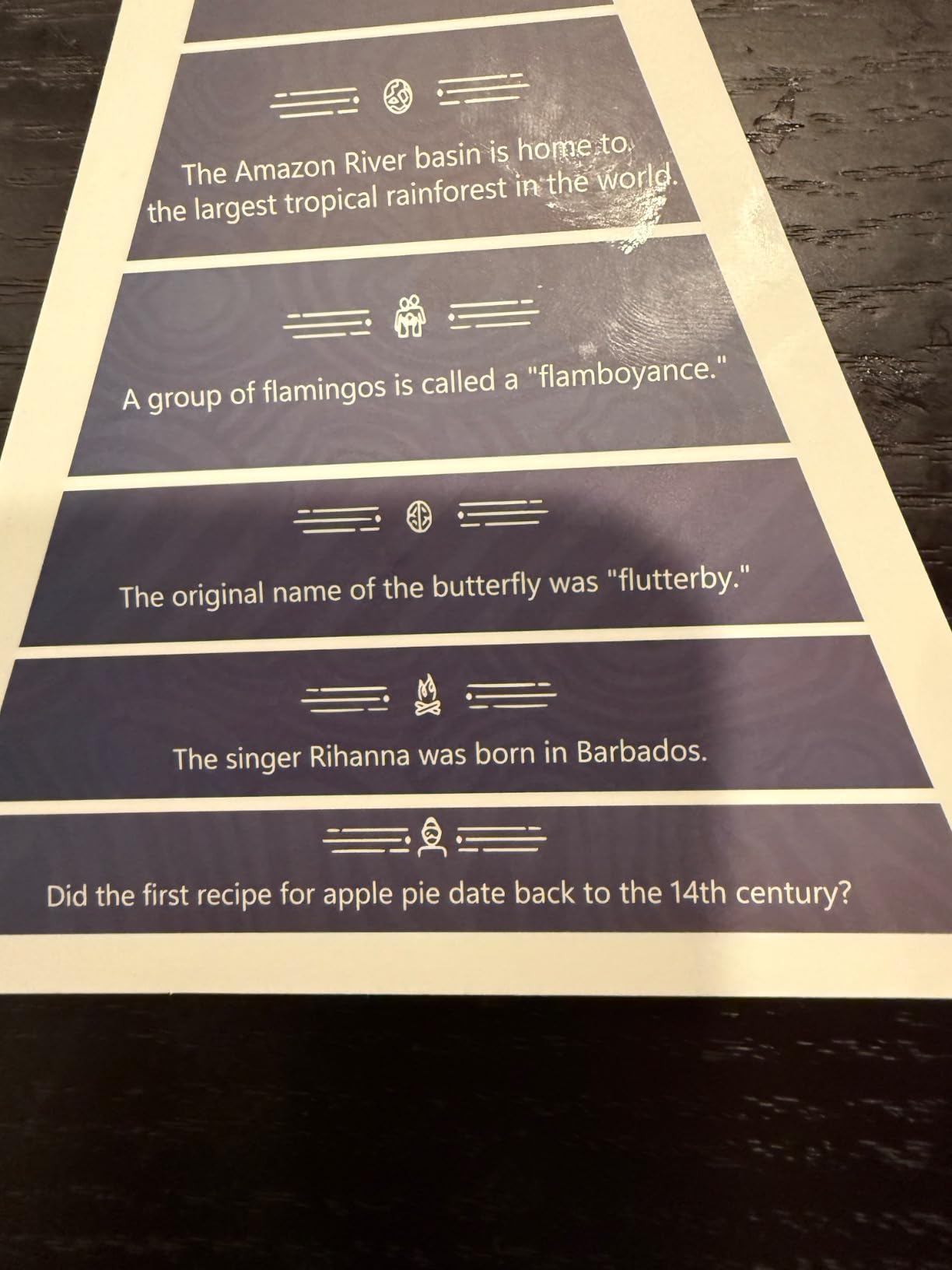
Every card is a statement the player judges true or false, and then bets discs on the answer. That is a coin flip dressed as trivia, which sounds trivial until you consider that it is the only design in this roundup where a six-year-old has the same mathematical chance as a sixty-year-old.
Cards are large and triangular, so they are easy to hold and read from across a table. The box measures 1.75 by 5.75 by 6.5 inches and is designed as much as a stocking filler as a game.
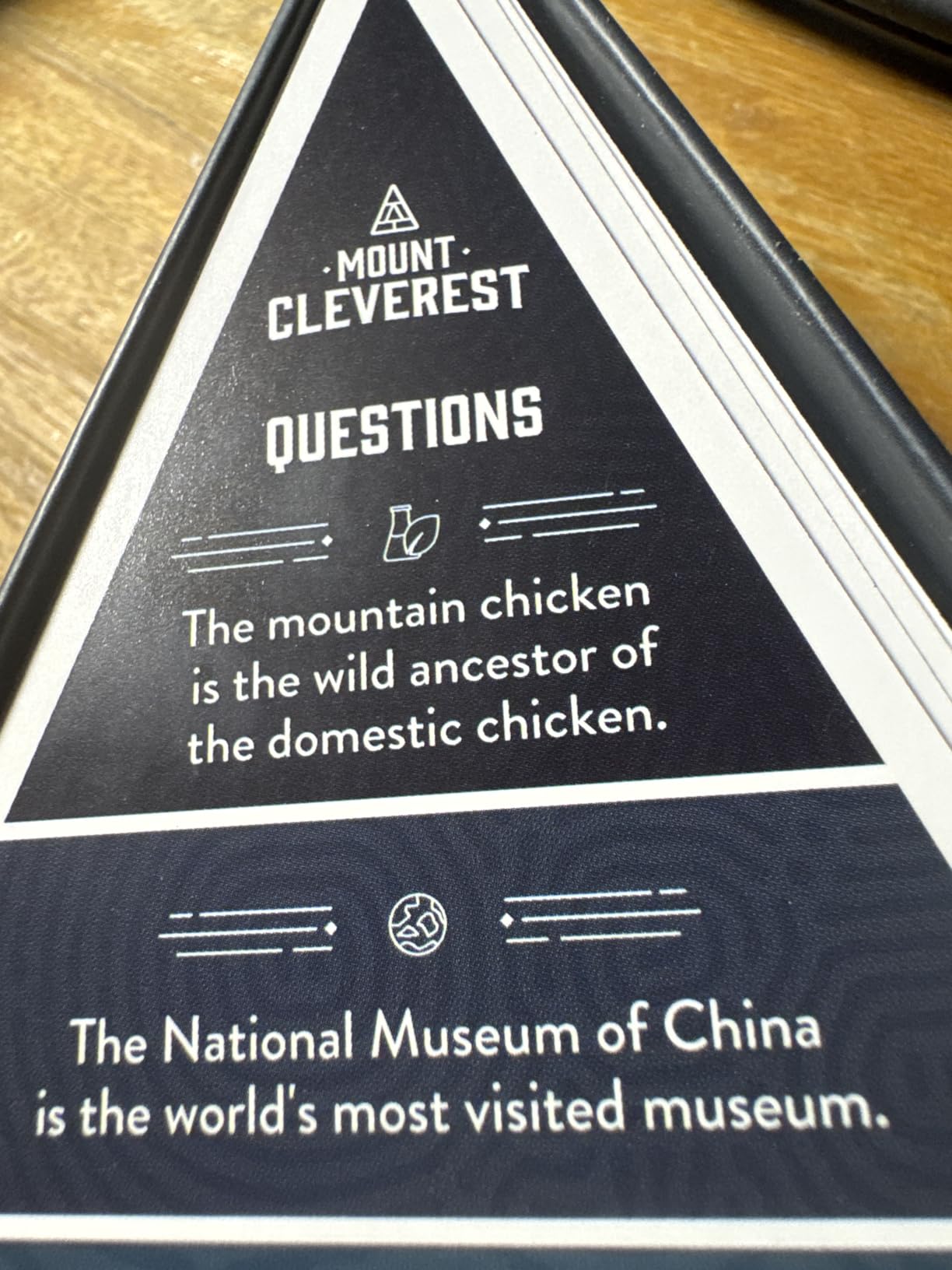
Because there is no right-answer pressure, the atmosphere is noticeably relaxed. Reviewers describe it as low-pressure and almost competitive-free, which makes it a good opener before a more intense game, or a good closer after one.
The limits are length and depth. Reviewers warn that a 300-card deck runs out quickly with large groups or frequent play, and some cards carry no answer explanation, which leaves curious players without a resolution.
Why a 50:50 game solves the youngest-player problem
Frustration with trivia almost always starts with a child who cannot answer anything. In a true-or-false game, that child scores roughly half the time, which is exactly enough to stay interested. Nobody has to be talked down to, and nobody has to sit out.
It also handles player counts unusually well. The manufacturer lists 2 to 12 players and reviewers report groups of up to 30 working, with the discs covering multiple guesses at once.
Two house rules worth adding
Skip the betting discs for the first few rounds. They add complexity that some groups never adopt, and without them the game is still perfectly playable by a five-year-old.
Once the deck starts repeating, treat it as a warm-up rather than a main event. Original, Movies and Geography variants exist, and swapping variants keeps a night fresh without buying anything new.
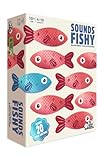
12. Sounds Fishy – The Best Bluffing Game for Non-Trivia Players
Sounds Fishy: Funny Bluffing Trivia Board Game for Families, 4-10 Players
Bluffing mechanic with 4 to 10 players
Around 15 minute rounds
Ages 10 and up
20 bonus question cards included
Pros
- Bluffing makes it about reading people not facts
- Easy to learn and quick rounds
- Suits adults teens and non-gamers
- Players can join pause and rejoin
Cons
- Best suited to confident readers aged 10 and up
- Blue fish cards bend and can be spotted
- Question pool exhausts after one playthrough
- Needs solid English comprehension
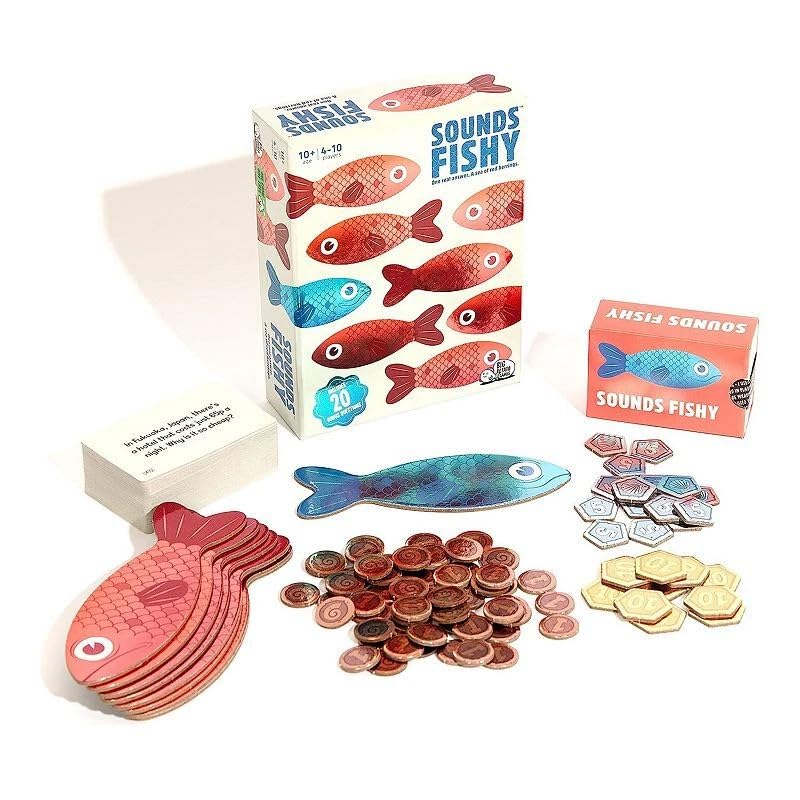
One player is handed the real answer. Everyone else writes down a false one. Then the table votes on which answer is genuine. Knowledge contributes almost nothing, and reading the table does all the work.
That makes it the best answer to the most common complaint on r/boardgames, which is that most trivia requires actually knowing trivia. Families report it including the player who never participates in anything, because a confident bluff is as valid a contribution as a correct answer.
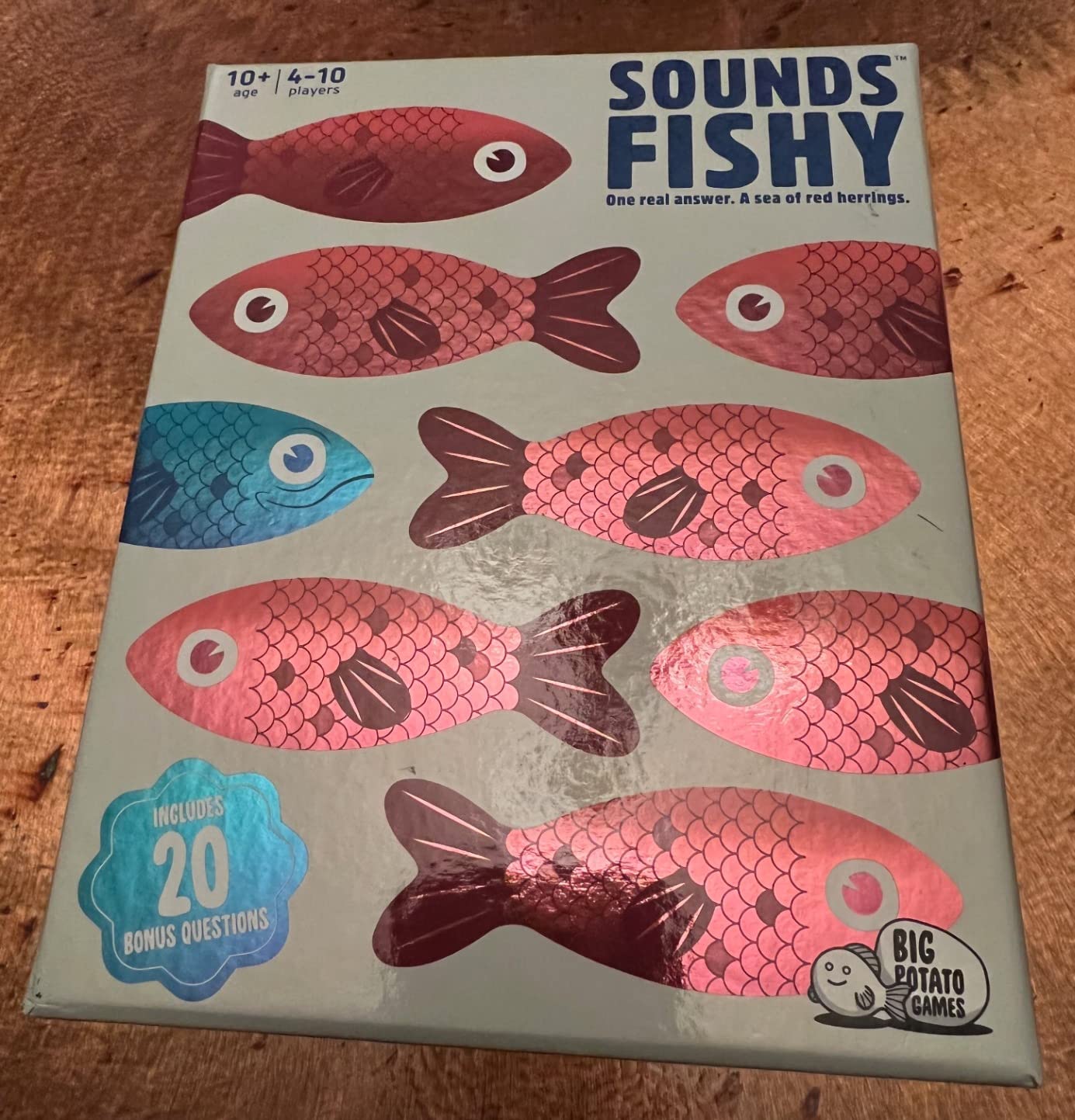
Rounds run about 15 minutes, it scales from 4 to 10 players, and the rules are flexible enough that people can join, pause and rejoin without disrupting the game. That flexibility is unusually useful at a family gathering where attention spans vary wildly.
Reviewers note a few real drawbacks. The thin blue fish can be identified by shape once it bends, which gives away a trick. The question pool runs thin after roughly one full playthrough. And the game needs confident readers with solid English comprehension.
Why no-knowledge games belong on a family list
Trivia is the only common format where a knowledge gap is guaranteed rather than accidental. Games that score on reading people or on plausibility remove that gap entirely, which is why Wits and Wagers and Herd Mentality come up so often as answers to the no-knowledge question, and why Sounds Fishy belongs in the same family.
It also solves the awkward-player problem. Nobody is benched, nobody has to read a card aloud, and the loudest person is not automatically the most knowledgeable.
When it is the wrong choice
Anyone who is a slow or reluctant reader will struggle, so the 10-and-up guidance is a genuine barrier for families with primary-age children. And because the pool exhausts after one playthrough, treat it as a party centrepiece for one evening rather than a permanent resident of the shelf.
Pair it with a knowledge game so the night has both kinds of scoring. Sounds Fishy and Hitster make a good contrast, one played entirely on instinct and the other entirely on recall.
13. Outset Media American Trivia – The Best Five-Category General Deck
Outset Media American Trivia Game (Amazon Exclusive) – 5 Categories to Choose from and 1,000 Questions – for Ages 14 and up
1000 questions in 5 categories
100 double-sided cards plus score pad and pencil
2 or more players
Ages 14 and up
Pros
- Five categories give every player a chance to score
- 1000 questions on double-sided cards
- Very easy to play with clear instructions
- Thick cards that resist damage
Cons
- Ages 14 and up guidance makes questions too hard for kids
- Card count exhausts quickly for regular adult play
- Content limited to one country's history and culture
- Some questions feel dated or obscure
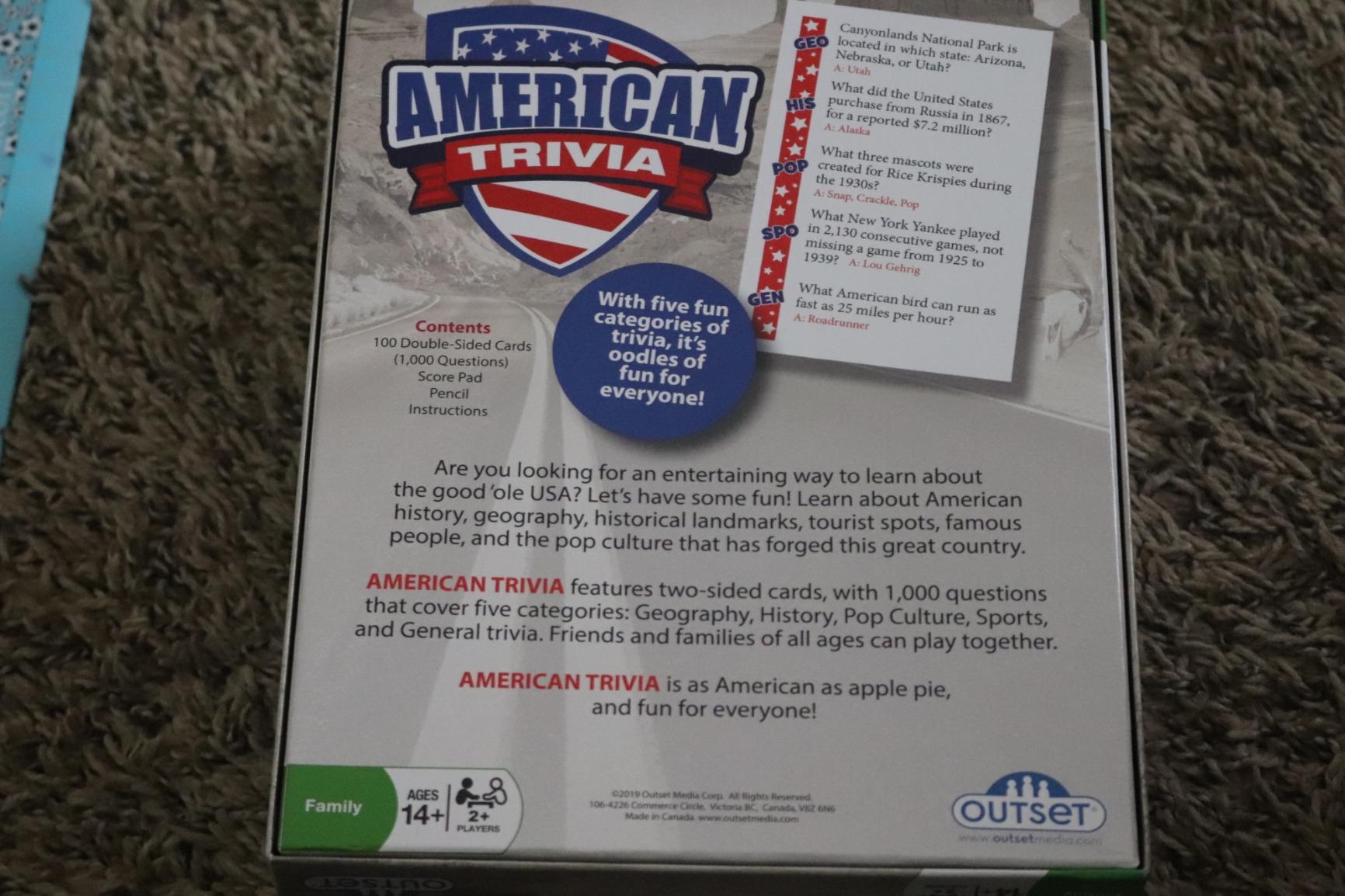
The structure is the feature here. Five categories – Geography, History, Pop Culture, Sports and General Trivia – are dealt randomly from one shuffled deck, so a family with one history lover and one sports fan each get a genuine run at scoring.
The 100 double-sided cards carry 1000 questions in total, and the box includes a score pad, a pencil, an elastic band and instructions. That is everything needed, with no board and no pieces, and setup takes under a minute.
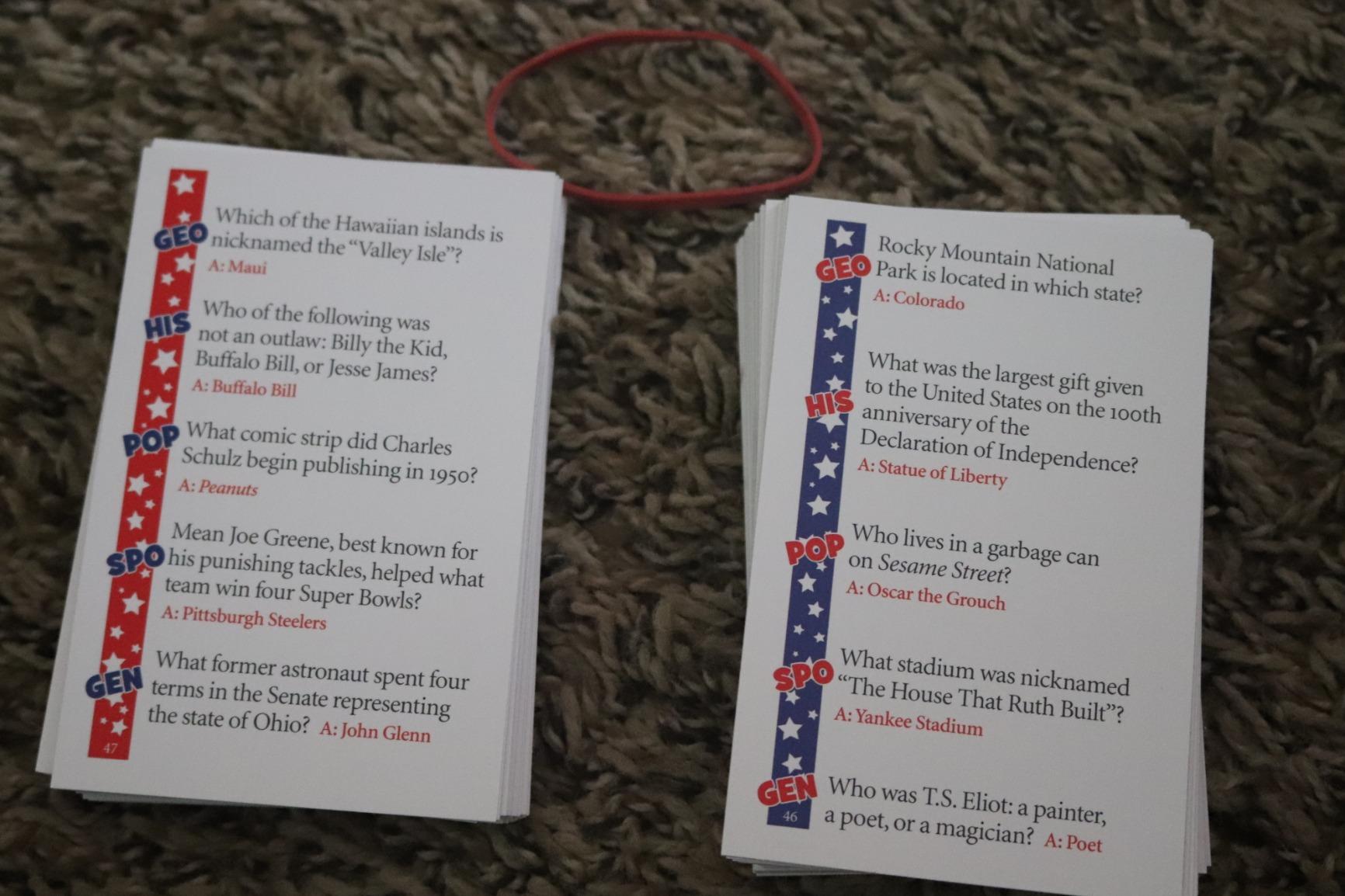
Reviewers like the category deal as a fairness feature and confirm the cards feel substantial. It is an uncomplicated, unfussy game that explains itself, which matters when half the table has never played it.
The 14-and-up guidance is the complaint that comes up most. Several buyers with young children found the questions close to impossible for them. US-centric content and some dated questions are also flagged, and 100 cards runs out quickly for adults who play often.
Making a 14-plus deck playable by younger children
Let younger players deal their own cards and read the question aloud to the group. It slows the pace slightly, which is fine for this format, and it puts them in charge of something. Score generously for a category the child chose.
A second option is to keep adults on the front side of the double-sided card and give children the back. The physical separation makes it obvious whose turn it is.
Where it fits against the alternatives
If you want more questions from the same shape of game, the HISTORY Channel edition below carries over 2000 with the same card-flip simplicity. If you want a deck that works with children out of the box, the Trivial Pursuit Family Edition with split decks is the better buy.
Readers who also like board games with more structure can look at our picks for cooperative family board games, which suit households that prefer playing together to playing against each other.
14. HISTORY Channel Trivia – The Deepest Question Bank in the Roundup
HISTORY Channel Trivia Game – 2000+ General Knowledge Questions | Official HISTORY Channel Trivia Card Game & Party Game for Adults, Families & Board Game Night – Great Gift for Dad & History Buffs
Over 2000 questions in 5 categories
Six questions per card with a flip mechanic
2 or more players
30 to 45 minute sessions
Pros
- Over 2000 questions keep repeat plays fresh
- No meeple board and clear one-minute rules
- Categories span science sports and culture as well as history
- Reported play by ages 25 to 96 together
Cons
- Difficulty runs high and younger children struggle
- Weighted heavily toward US history
- Older players often win by default in mixed groups
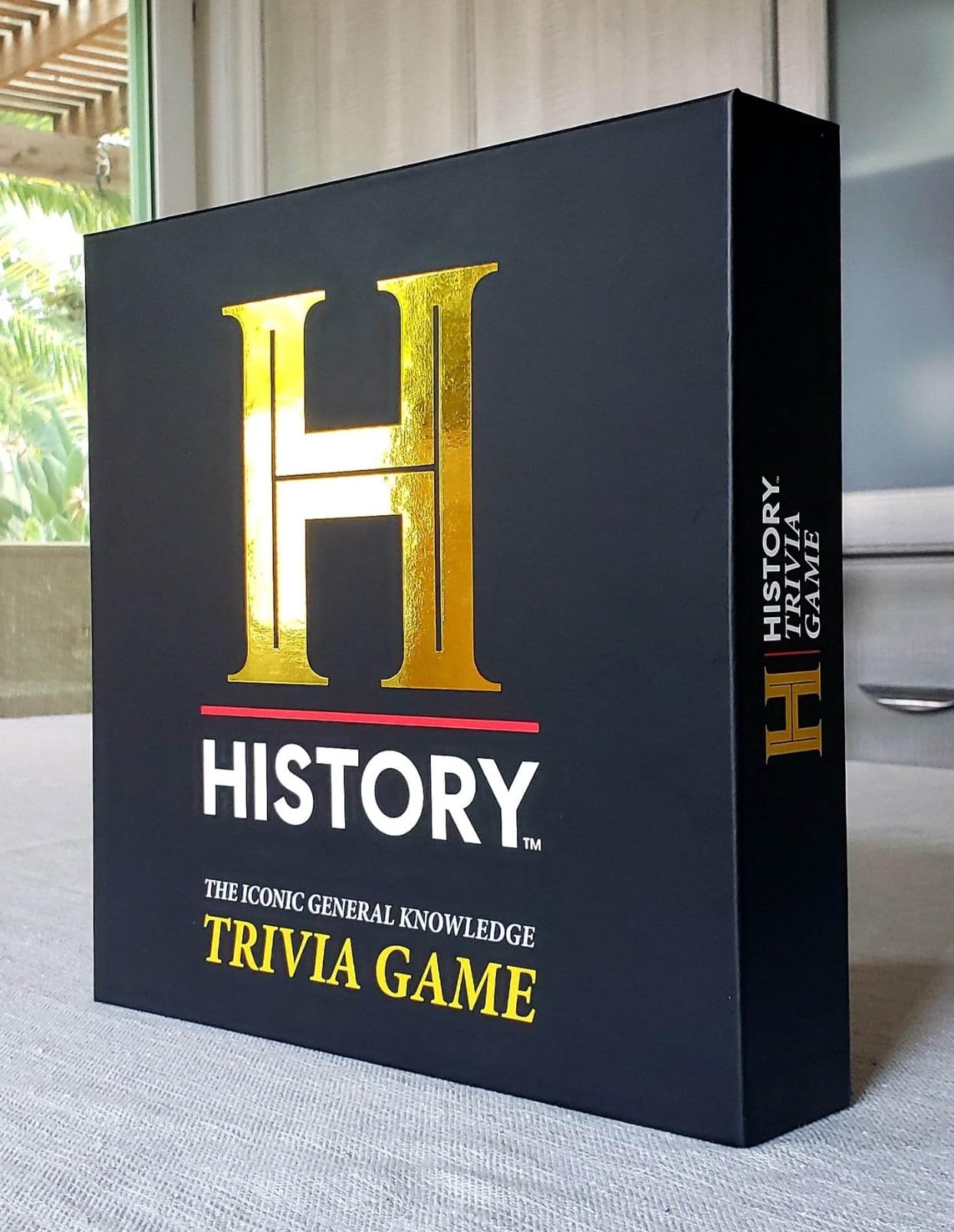
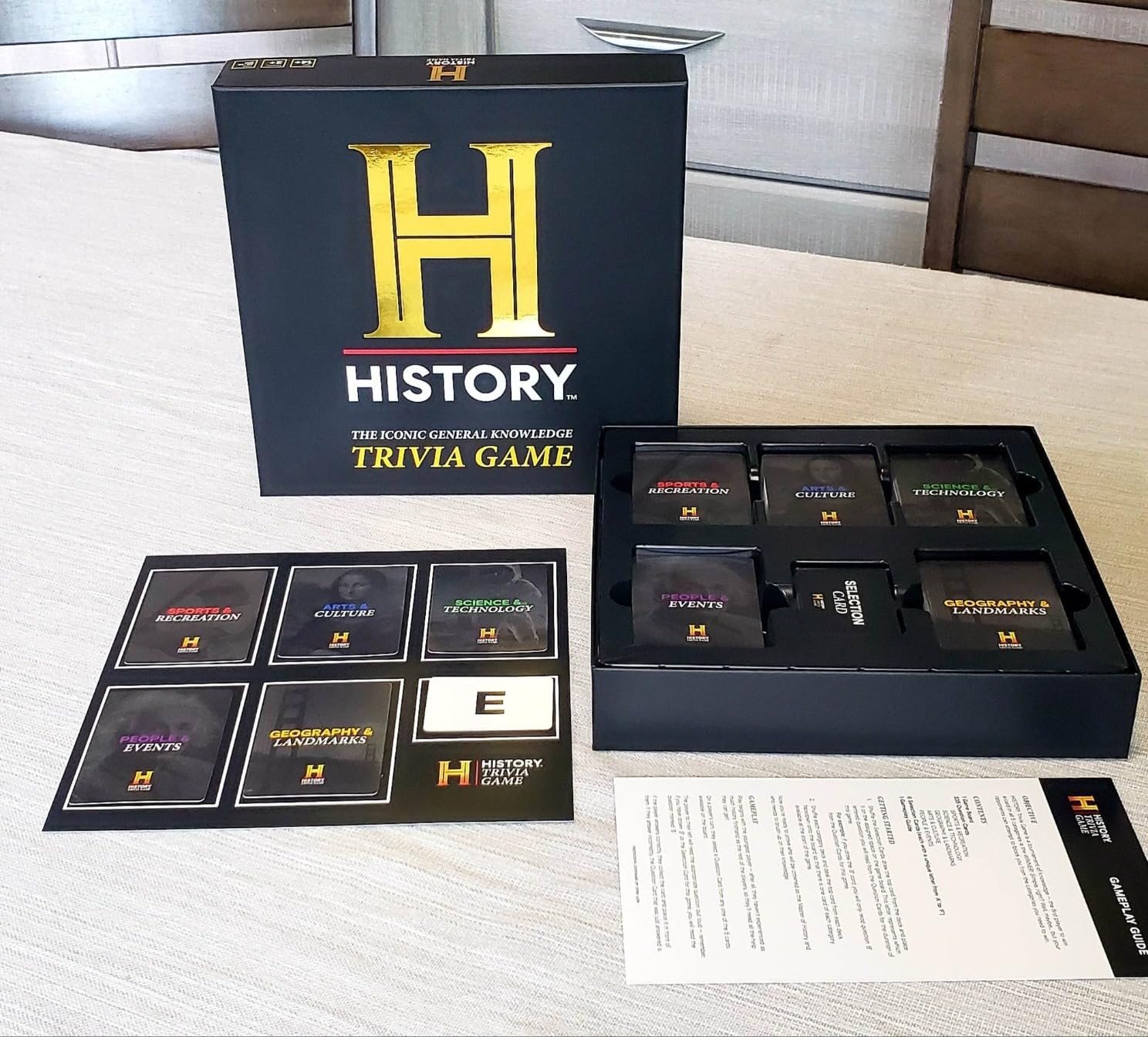
This is the box to buy if your family plays often. Over 2000 questions across five categories – Arts and Culture, Sports and Recreation, Science and Technology, Geography and Landmarks, and People and Events – is the largest bank in this roundup by a wide margin.
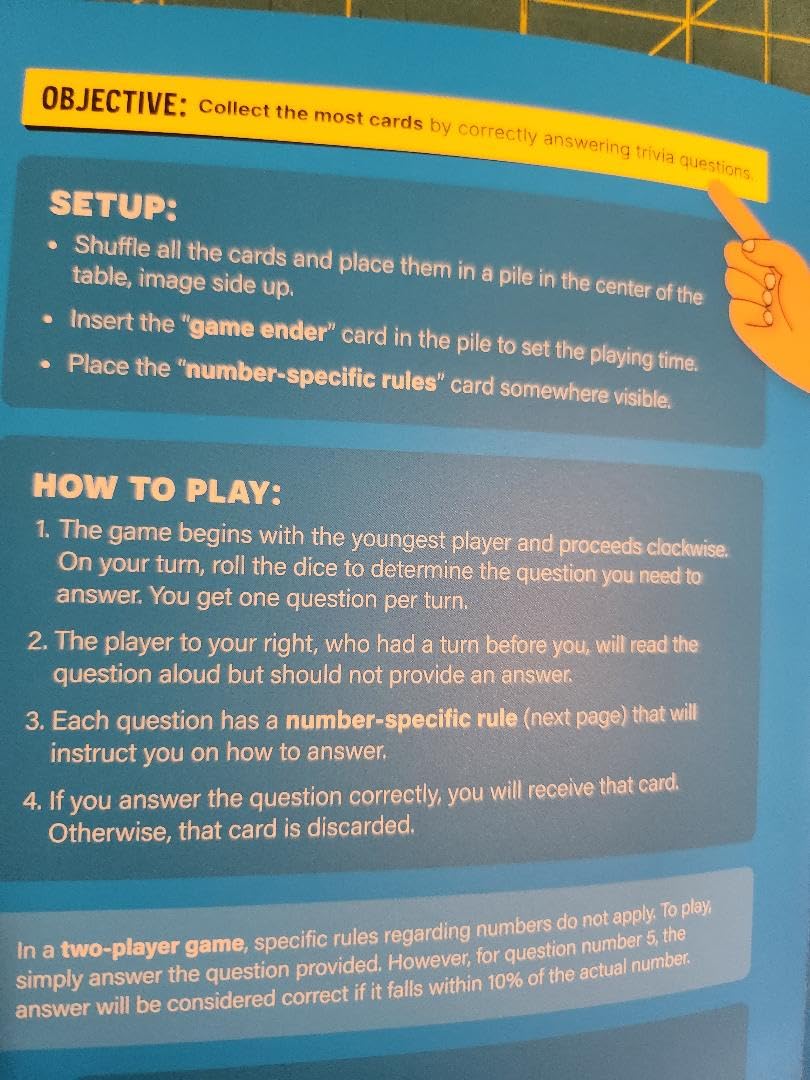
There is no board with pieces. Each card holds six questions, and you flip one to choose which gets asked, which keeps unused questions in play and stretches a single card across several rounds. Sessions land around 30 to 45 minutes.
Reviewers highlight two things repeatedly: the modern card-flip format, which avoids board pieces and cleanup entirely, and the spread of difficulty across easy, medium and hard, which lets you tune a round to the group.
The category-substitution rule is a smart recovery tool. When one category plays badly for your group, you can swap it out rather than pushing through a weak round.
Reading difficulty before you commit
The 14-and-up rating is accurate. Question sets skew difficult and heavily toward American history, and younger or non-US players regularly lose several rounds in a row, which is the fastest way to end a family session early.
One buyer reported ages 25 to 96 playing together successfully, so it is not impossible with wide age ranges. It just needs the right room, usually adults and teens rather than small children.
How to get the most from 2000 questions
Do not deal randomly. Sort cards by difficulty band and use the easy half early, when the table is warming up. If your family plays monthly, this bank holds for well over a year of regular sessions.
For groups who want a shorter, calmer night, pair it with Chronology. One game asks you to recall and the other asks you to place, and together they fill about an hour without either feeling like an exam.
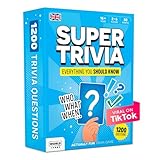
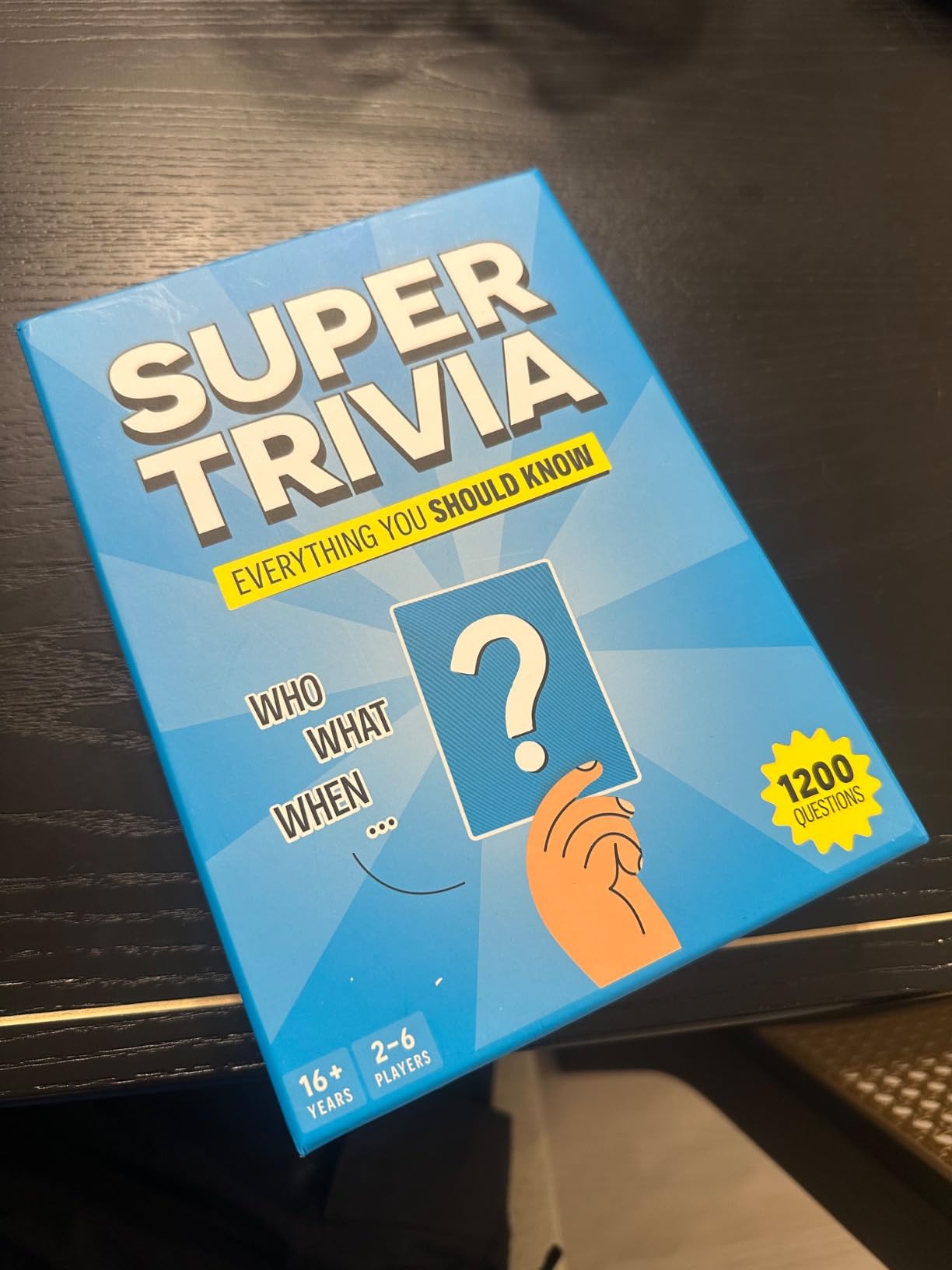
15. Super Trivia 1200 Questions – The Best Pick for Road Trips
Super Trivia Games for Adults & Family – Travel Card Game with Trivia Cards
1200 questions on 202 cards
200 picture-based estimation questions
Travel-friendly flat box
2 to 6 players
Pros
- Picture-based estimation questions add a fresh twist
- Well balanced difficulty
- Flat box suits road trips and travel
- Handles small and large groups equally well
Cons
- Ages 16 and up guidance limits young children
- Some questions need reframing for younger players
- 202 cards run out for frequent players
The distinguishing mechanic is a set of 200 picture-based estimation questions. Instead of naming something, a card shows an image and the table guesses a number, which breaks up the rhythm of a standard quiz in a way that keeps repeat players engaged.
A die roll decides which of the questions on a card gets asked, so no two rounds follow the same path. There are 1200 general knowledge questions across 202 cards covering daily life, culture, history, natural science and geography, and the difficulty is described as well balanced by reviewers.
The box is flat and roughly 7.99 by 5.79 by 1.77 inches, which means it fits in a door pocket or a rucksack without damage. For travel trivia specifically, that packaging decision matters as much as the question bank.
Player range is 2 to 6, so it suits couples through to a group of six. The limitation is the 16-and-up guidance, with reviewers noting that some questions have adult framing that needs skipping for younger players.
Why the picture questions change a travel game
On a long drive, a quiz that only asks named facts gets repetitive by the second hour. Estimation questions change the texture of a round, and the die mechanic means nobody can predict which question is coming next, which keeps a short attention span engaged.
It is also the easiest game here to pause and resume. Two players can stop mid-round at a petrol station and pick it back up after a break, which is rare for board games with movement.
Choosing between the two 1200-question decks
This deck and the Trivial Pursuit Family Edition both carry 1200 questions, but they solve different problems. The Family Edition splits by age so children can compete fairly, while this one offers picture questions, a die mechanic and a flat travel box.
Choose the Family Edition for a mixed-age table at home, and this one for trips and for older children who want variety rather than a level-playing-field split.
How to Choose a Trivia Game for Your Family
The single most useful question is not how many questions are in the box. It is whether a child and a grandparent can both score in the same round. That is what mixed-age playability means, and every pick in this list was filtered on it.
Start with the ages at the table. Under 6 narrows the field to Mount Cleverest. Ages 6 to 8 adds Do You Really Know Your Family? and Hitster. From 12 up you have all fifteen. Reading load matters as much as age guidance, because a deck a child cannot read becomes an adult reading aloud, which doubles the length of every round.
Count your players honestly, including guests. Games rated 2 to 6 players handle an odd count better than they get credit for. Team-based designs absorb a spare player cleanly: with five people, make two pairs and a solo, and nobody sits out. Sounds Fishy and Smart Ass both cope well this way.
Match the question bank to your play frequency. Divide total questions by roughly 20 questions per session. The 400-question deck lasts about 20 sessions, the 1200-question decks last about 60, and the HISTORY Channel edition with over 2000 lasts past a year of monthly nights. Reviewers repeatedly flag deck exhaustion as the top disappointment, and this arithmetic prevents it.
Decide whether you want knowledge or instinct in the mix. Families with a trivia-averse player, a child who freezes up, or a relative who only comes twice a year, do better with games like Sounds Fishy and Do You Really Know Your Family? where recall is optional. Every trivia-averse complaint on r/boardgames points at the same fix.
Check the noise level against your room. Smart Ass is shouting by design. Hitster and the Trivial Pursuit editions are moderate. Chronology and Do You Really Know Your Family? are quiet. Households with sensory-sensitive players should lean toward the last two.
Think about what is culturally shared. Several decks here lean heavily toward North American and US content, which reviewers across multiple products flag. Urban Trivia fixes that problem in one direction by being deeply specific to Black American culture. If your household is outside both contexts, expect dead rounds and cover them by letting younger players draw cards from the pool.
Adapting adult trivia for ages 4 to 8
You do not need a different game. Let the child draw every card and read each question aloud to the adults. Score one point for a correct answer and one point for a close guess, which keeps the child in the round even on questions they cannot possibly know.
Pause the game rather than switching it. Twenty minutes of an adult deck with a child drawing cards finishes better than abandoning a game the child just started.
Free and digital alternatives worth knowing about
If your family wants a no-purchase night, several free and digital options cover the same ground. Sporcle hosts free user-made quizzes on almost any theme, which is the fastest route to a themed round. Jackbox Party Packs work well on a television with a phone in each player’s hand. Quizizz runs in a browser with no install and shows a leaderboard. Trivia Crack is the long-running free app version of a classic deck format.
The most common complaint in forums is that free quiz apps are ruined by adverts and in-app purchases that break the flow of a family evening, so test any app once before planning a whole night around it. Printable card templates exist in quantity online if you want to build a deck on your own family, and that solves the cultural-skew problem completely.
Running the evening without a scorepad
Most of these games need no scorekeeping at all, which removes the single most common source of stall: someone hunting for a lost pencil. Where scores matter, use whatever is on the table, including a phone note.
Settle disputes by taking the first answer and moving on. Nobody enjoys the third recount of a round. If one player dominates, give that player the job of reading the first round of questions, which turns dominance into a hosting role.
Still building a shelf? Our guides to gifts for trivia lovers and to two-player board games for smaller families cover the adjacent cases.
The Trivia Games Everyone Remembers
If you are picturing a specific box from your own childhood, you are probably thinking of one of four. Trivial Pursuit is the franchise that still sells most successfully, and the Family Edition above is its most family-adapted version. Scattergories asks players to invent plausible-sounding words against a letter, which is bluffing rather than trivia and is the ancestor of Sounds Fishy. Cranium combined trivia with drawing and physical challenges. Scene It was the DVD-era version of the music quiz that Hitster now does with a QR code.
Trivial Pursuit is still the answer to the question most people ask at a family gathering. It is just no longer the only one worth taking out of the cupboard.
Frequently Asked Questions
What are some good trivia games for families?
The strongest family trivia games handle mixed ages rather than just listing easy questions. Our top picks are I Should Have Known That! for its 400-plus questions and subtract-a-point scoring, Do You Really Know Your Family? because it asks about the players themselves so no age group is excluded, and Sounds Fishy for families with a player who refuses to play quiz games. Each works with a different player range and age band, which is why there is no single correct answer.
What was that trivia game everyone played?
Most people picture Trivial Pursuit, the wedge-collecting franchise that is still the best-selling trivia game. The other classics people remember are Scattergories, where you invent words against a letter, Cranium, which mixed trivia with drawing and physical challenges, and Scene It, the DVD-era music quiz. Crack the Code and Pictionary were party standards in the same era, and all of them resell well at second-hand shops.
Which trivia games do not require knowing trivia?
Three picks here need no knowledge at all. Sounds Fishy gives one player the real answer and everyone else invents one, so the game is about reading people. Do You Really Know Your Family? asks questions about the people at the table, so being present is enough. Mount Cleverest uses true or false statements, which is a 50:50 guess that even a five-year-old can win. This is the standard fix for trivia-averse players.
How do you make family trivia fun for all ages?
Split the difficulty rather than lowering it for everyone. Decks with separate adult and kid cards, such as the Trivial Pursuit Family Edition, keep a child and a grandparent competing on equal footing. Games with a per-generation split, such as What Do You Meme? All of Us, go further and give each age group its own moment to shine. Pair one knowledge game with one no-knowledge game so the night has both kinds of scoring.
How many players and how long does a family trivia game last?
Player counts across this roundup run from 2 to 20, and most sit between 3 and 8. Play times vary more than the boxes suggest: card games like I Should Have Known That! and Sounds Fishy finish in 15 to 30 minutes, while the HISTORY Channel edition is designed for 30 to 45 minutes. Board games with movement, including Trivial Pursuit Family Edition, take longer. All of them handle odd player counts of 3, 5 or 7 through team play.
What are good free or online family trivia options?
Sporcle hosts free user-made quizzes on almost any theme and needs no account. Jackbox Party Packs turn a television and a set of phones into a quiz show. Quizizz runs in a browser with a leaderboard and no install. Trivia Crack is the free app version of a classic deck format. Forum users report that adverts and in-app purchases are the most common complaint about free quiz apps, so test one before planning an evening around it.
The Verdict: Which Trivia Game Wins for Families
I Should Have Known That! takes the top spot for one reason that no other box on this list matches: it is the only game where the scoring system itself creates family tension. With more than 400 questions on everyday knowledge, a box small enough to travel anywhere, and point subtraction that makes every guess a real decision, it works for adults and teens from the first turn.
Two other picks serve different households just as well. Families with a wide age gap, or a child who freezes at quiz questions, should start with Do You Really Know Your Family?, because questions about the people at the table exclude nobody. Households that include someone who refuses to play trivia games should pick Sounds Fishy, where bluffing counts as much as knowing.
Whichever box you choose in 2026, the deciding factor is not the question count. It is whether everyone at the table can score. Check the age guidance against your youngest player, the player count against your real guest list, and the question bank against how often you plan to play.