
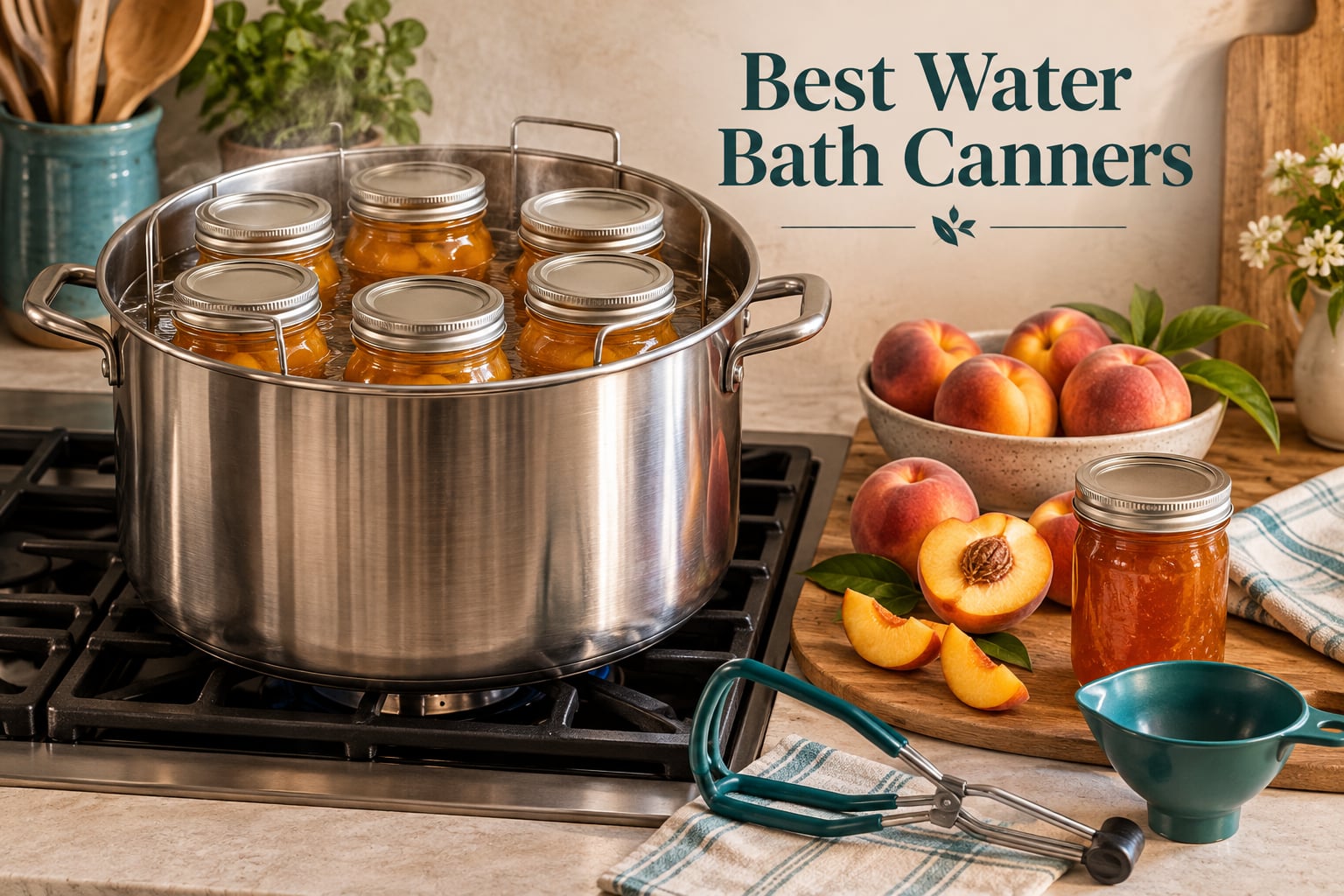
The best water bath canner is the Granite Ware 8-Piece Canning Pot with Rack — 21.5 quarts, a chrome-plated jar rack that holds 7 quart jars, and the five basic tools a first-time canner actually needs, all in one box. It is not the only good option here: below you will find ten picks, including a stainless canner for glass-top kitchens, an induction-ready model, and an electric unit for people who do not want a boiling pot on the stove at all.
A water bath canner is simply a tall, lidded pot with a rack inside that holds mason jars off the bottom so they can sit fully submerged in boiling water. That water reaches a rolling boil, kills spoilage organisms on the food surface, and drives air out of the jar. As the jar cools, the air inside contracts and pulls the flat lid down against the rim, and that is the vacuum seal you hear as a ping.
The method is only safe for high-acid foods with a pH of 4.6 or below: fruit, jams and jellies, pickles, relish, chutney, and tomatoes that have been acidified with bottled lemon juice or citric acid. Vegetables, meat, seafood, soups, and plain unacidified tomatoes need a pressure canner instead. We cover that line in detail further down, because it is the single most important thing to understand before you buy anything.
Our team has spent the last few weeks comparing capacities, rack designs, cooktop claims, and accessory bundles across ten of the most-reviewed pots on the market, and we read what canners actually say about them afterward. The differences that matter turned out to be narrower than the marketing suggests: depth, the bottom, the rack, and whether your stove will accept the weight. If you are still working out the water side of your setup, our guides on ice bath setups and handling hard water at home cover the plumbing side of a home kitchen.
Top 3 Picks for the Best Water Bath Canners in 2026

Granite Ware 21.5-Quart Kit
- 21.5-quart capacity
- 8-piece set with tools
- Chrome-plated jar rack
- Holds 7 quart jars
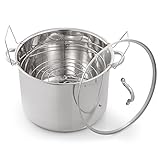
McSunley 21.5-Quart Stainless
- Works on glass cooktops
- Encapsulated flat base
- Tempered glass lid
- Cool-touch riveted handles

Harvest 20-Quart Induction
- Induction and glass cooktop ready
- Water bath or steam canning
- Lid temperature indicator
- 5-year warranty
Our short version: the Granite Ware kit is the best overall because it arrives complete and weighs only 4 pounds, which matters more than most spec sheets admit. The McSunley is the best value and the safest pick if you own a glass or ceramic cooktop. The Harvest is the highest rated of the ten and the only one here that is explicitly built for induction, steam canning, and a five-year warranty.
All 10 Water Bath Canners at a Glance
| Product | Specifications | Action |
|---|---|---|
| Granite Ware 8-Piece Canning Pot with Rack |
|
Check Latest Price |
| McSunley Prep N Cook 21.5-Quart Stainless |
|
Check Latest Price |
| Harvest Stainless 20-Quart Canning Pot |
|
Check Latest Price |
 Ball EasyCanner Electric Water Bath Canner Ball EasyCanner Electric Water Bath Canner |
|
Check Latest Price |
 Supa Ant 24-Quart Water Bath Kit Supa Ant 24-Quart Water Bath Kit |
|
Check Latest Price |
 Vigamimn 20-Quart Canning Starter Kit Vigamimn 20-Quart Canning Starter Kit |
|
Check Latest Price |
 HOMKULA 27.5-Quart Water Bath Pot HOMKULA 27.5-Quart Water Bath Pot |
|
Check Latest Price |
 Ball Enamel Water Bath Canner with Rack Ball Enamel Water Bath Canner with Rack |
|
Check Latest Price |
 Supa Ant 24-Quart Food-Grade Canning Pot Supa Ant 24-Quart Food-Grade Canning Pot |
|
Check Latest Price |
 UONMAY 20-Quart Canning Pot Kit UONMAY 20-Quart Canning Pot Kit |
|
Check Latest Price |
1. Granite Ware 8-Piece Canning Pot with Rack — Best Overall Starter Kit
Granite Ware Canning Pot with Rack – 8 Piece Set Enamelware Water bath canner – Canning Starter Kit
21.5-quart capacity
Enameled steel with lid
Chrome-plated jar rack
4 pounds, 14.17 inch wide
Pros
- Complete 8-piece kit with funnel jar lifter magnetic lid wand and wrench
- Only 4 pounds so it is easy to lift full
- Chrome rack resists rust
- Speckled black vitrified finish
Cons
- Not compatible with glass or induction cooktops
- Enamel can chip if dropped or scraped
- Included tools are basic quality
This is the pot we hand to friends who tell us they want to try canning. It arrives with the pot, lid, rack, and the five hand tools that actually matter on day one: a bubble remover that doubles as a headspace ruler, a jar lifter, a magnetic lid lifter, a jar wrench, and a wide-mouth funnel. Nothing is missing, which is not something we can say for most of the budget kits.
At 4 pounds empty, it is by far the easiest of the ten to lift. A 21.5-quart pot of boiling water weighs well over 30 pounds once filled, so the empty weight is not a vanity number — it is the difference between a one-butterfly lift and a two-person struggle. The speckled black vitrified enamel is smooth enough to wipe clean and does not hold odors the way raw steel can.
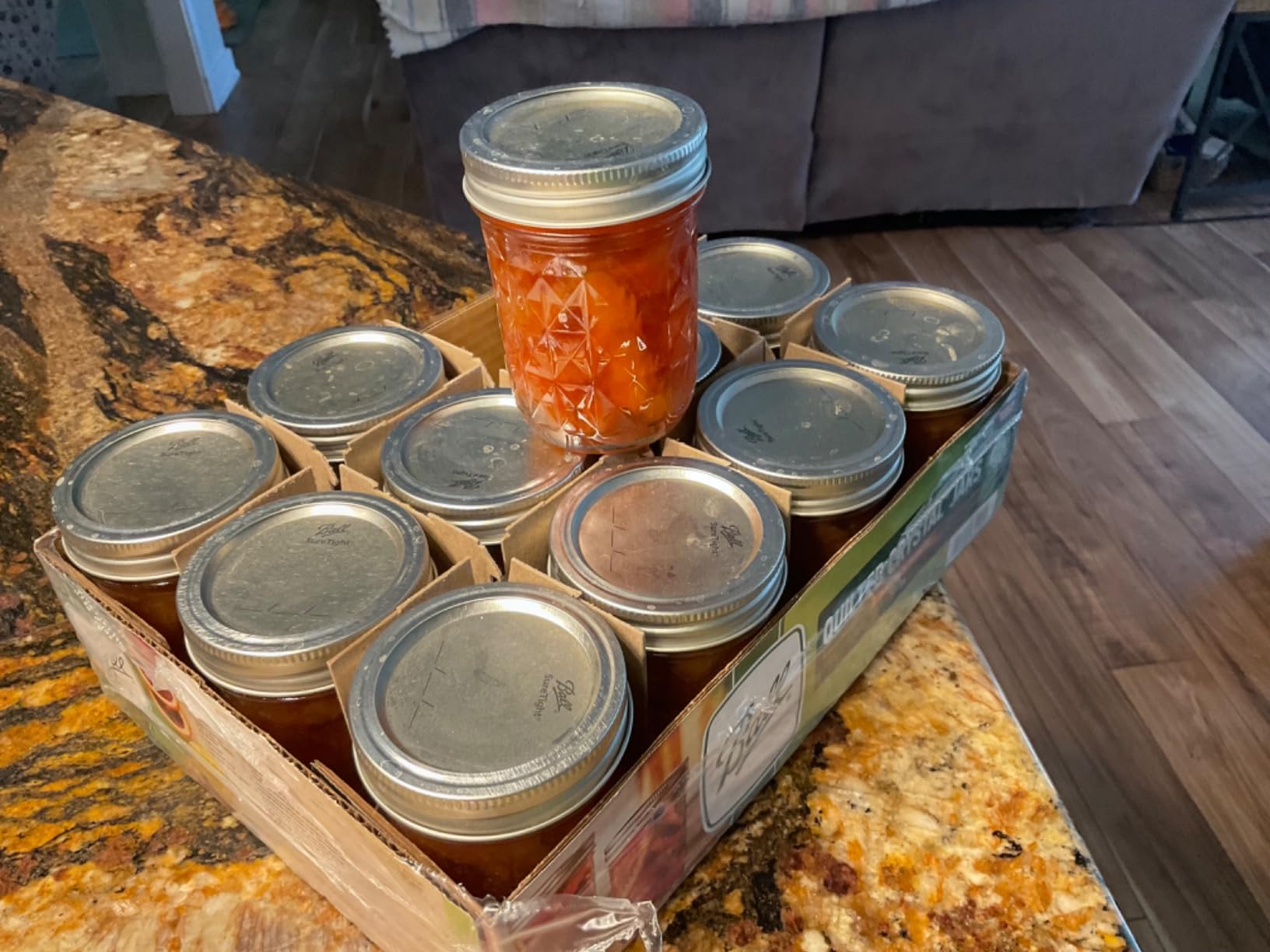
The chrome-plated rack is the part that sets this kit above the wire racks we see on cheaper sets. It holds 7 one-quart jars, 9 pint jars, or 12 half-pint jars, and its wire grid is stiff enough that a full row of hot jars does not flex or tip. The pot measures 14.17 inches across by 10.35 inches tall, which is the depth you want: the water needs to cover the jar lids by 1 to 2 inches and still have room for a rolling boil without spilling over the rim.
The honest limitation is the bottom. Granite Ware is explicit that this pot is not for glass cooktops or induction, and the ridged base is the reason — a ridged bottom sits on three small contact points on smooth-top ceramic, which is both a heating problem and a weight problem. On gas or a coil element, where you can use a cast iron trivet, it works exactly as advertised.
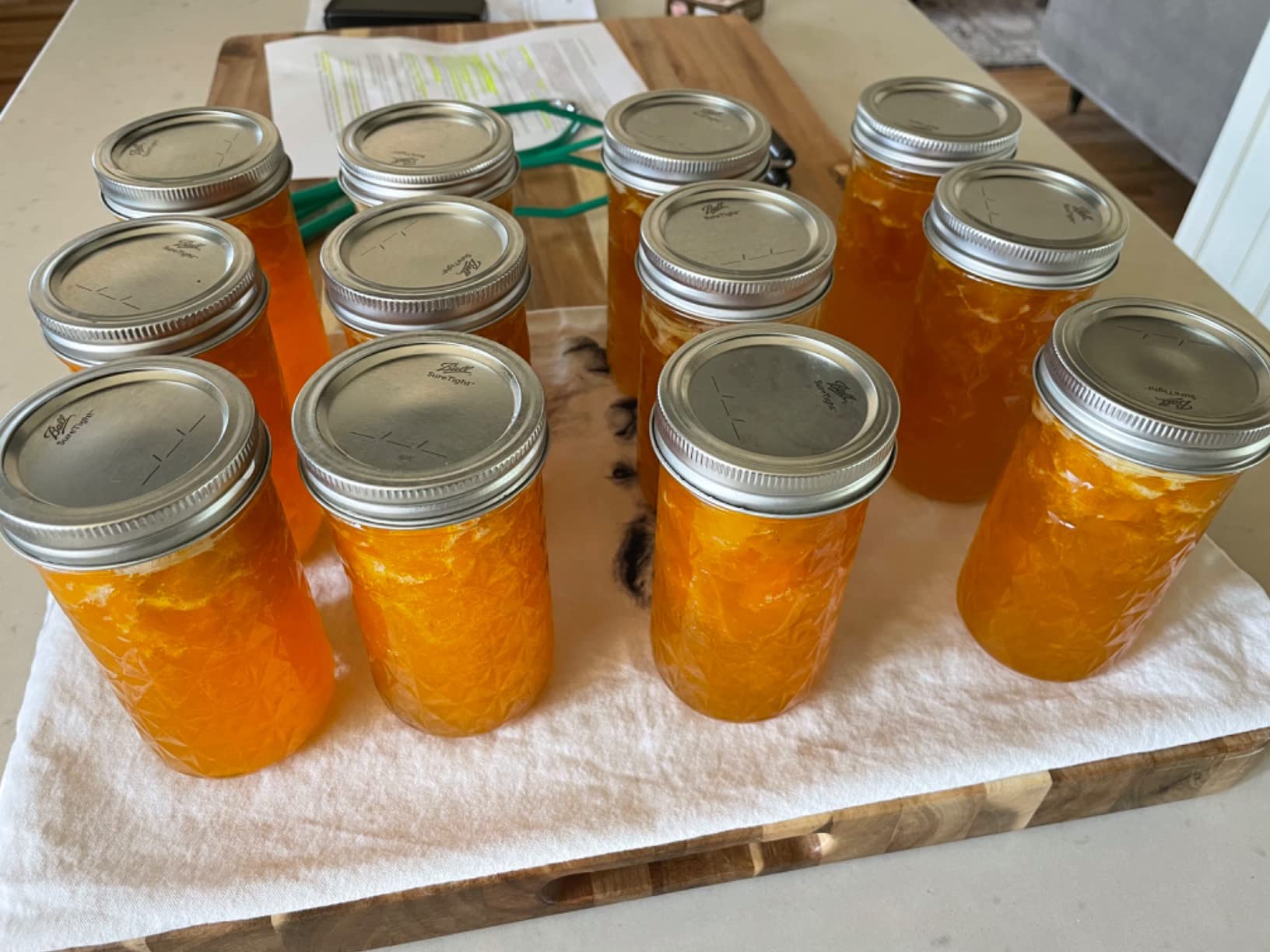
Check your cooktop before you buy this one
If your kitchen has a smooth glass or ceramic surface, this is the wrong pot and no amount of care will fix it. The same applies to any induction burner. Most of the irritation we see in canning groups about smooth-top stoves comes from exactly this mismatch, not from a faulty pot.
If you cook on gas or a coil element, the enamel and the light weight make this the most forgiving canner to own. The model number is F0710-2, and the rack plus tools are the pieces people most often lose, so keep them together when you store the kit.
What you give up by choosing it
Enamel is the weak point. Drop the pot on a concrete floor or let a wire rack drag across the inside, and you get a chip — and a chip is where the steel underneath starts to go. Experienced canners who expect to process three or four batches a week for a decade usually end up in stainless instead, because stainless does not chip.
The five included tools are serviceable and you will use all of them, but they are thin-gauge stamped steel with plastic grips. If you drop the jar lifter into boiling water repeatedly, expect to replace that one tool eventually rather than the pot. Everything else about this kit is genuinely good value for a first season.
2. McSunley Prep N Cook 21.5-Quart Stainless Steel Canner — Budget Pick
Prep•N•Cook by McSunley 21.5Qt Stainless Steel Water Bath Canner
21.5-quart stainless steel
Encapsulated aluminum base
Tempered glass lid
8.5 pounds
Pros
- Works on gas electric and smooth glass cooktops
- Flat encapsulated base spreads heat evenly
- Riveted handles stay cool
- Tempered glass lid lets you watch without lifting
Cons
- No canning tools included
- Rack does not fit every jar configuration
This is the canner we recommend to anyone whose stove has a glass top and who does not want to think about induction at all. The base is a flat, encapsulated aluminum disc bonded to stainless steel, which is the construction that makes glass cooktops work: broad contact, even heat, no wobble. The listing states compatibility with gas, electric, and smooth glass top ranges.
It measures 14 inches deep by 12.5 inches wide and stands 16.5 inches tall, and that height is a genuine asset. Tall is good in a water bath canner because it gives the water room to bubble without surging over the side while the jars are inside. The heavy-duty stainless rack holds the same 7 quart, 9 pint, or 12 half-pint layout as the Granite Ware kit.
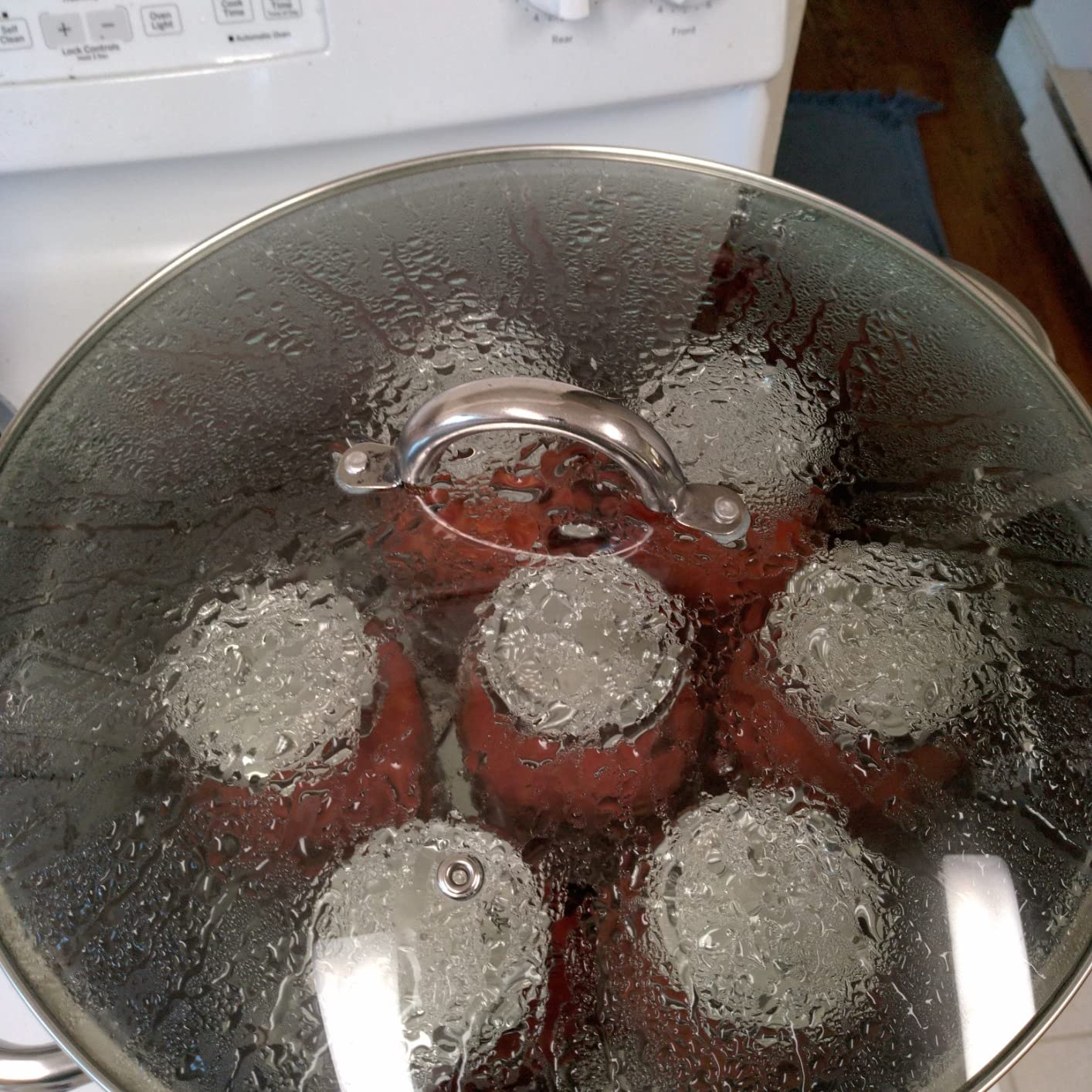
Two details make it easier to live with than most stainless pots. The riveted handles are wide and stay cool enough to grip with a damp towel, and the lid is tempered glass rather than solid steel, so you can check on your jars without lifting the lid and letting the temperature drop. It also doubles as a large soup pot, which is genuinely useful eleven months of the year when you are not canning.
At 8.5 pounds it is more than twice the empty weight of the enamel kit. That is the tradeoff for a bonded base that will not warp, and for a pot that will still be in service long after the enamel one has been replaced.
Plan on buying tools separately
You get the pot, the lid, and the rack. That is it. Budget for a jar lifter, a wide-mouth funnel, a bubble remover with headspace markings, a magnetic lid wand, and a jar wrench, and count on spending the same amount on those five items that the Granite Ware kit charges for the whole package.
For a first-timer on a strict budget, that difference can matter. But if you already own canning tools, or you borrow them, this is the better pot to own long term.
Judge it on depth, not diameter
The 12.5-inch width is narrower than some competitors, and with a 21.5-quart capacity the water takes longer to come to a rolling boil. Once it gets there it holds steady. First-time users sometimes misread a slow initial heat-up as a design flaw when it is simply more water spread across a wider surface.
The rack fit is the one thing worth double-checking for your jar style. If you mostly can half-pints or wide-mouth jars, test the layout on a dry counter before a processing day so you are not rearranging hot jars mid-batch.
3. Harvest Stainless Steel 20-Quart Canning Pot — Top Rated, Induction Ready
Harvest Stainless Steel 20 Qt Canning Pot with Rack | Water Bath or Steam Canning | Works on All Stovetops Including Induction, Glass, Gas (Stainless Steel Canner + Tools) (Stainless Steel Canner)
20-quart stainless steel
Works on all cooktops including induction
Double-sided rack
5-year warranty
Pros
- Highest rated of the ten at 4.8 stars
- Only pick here rated for induction cooktops
- Dual-sided rack for water bath or steam canning
- Temperature indicator built into the lid knob
Cons
- Shallow depth limits water above quart jars
- Lid can flex and pop during cooling
- Handles are smaller than some prefer
This is the most capable pot in the lineup and the one we would buy if we only owned one. It carries the highest rating of the ten with close to 3,000 reviews, and it is the only model in this group that is explicitly rated for induction, glass, and gas cooktops alike. A flat clad bottom gives even heating on every one of them.
The rack is double-sided. One side holds jars above the water for water bath canning, and the other lets you stand jars above the pot for steam canning, which is the process that gets asked about constantly in canning communities. The lid also carries a built-in temperature indicator in the knob, so you can glance at the state of your batch without opening it.
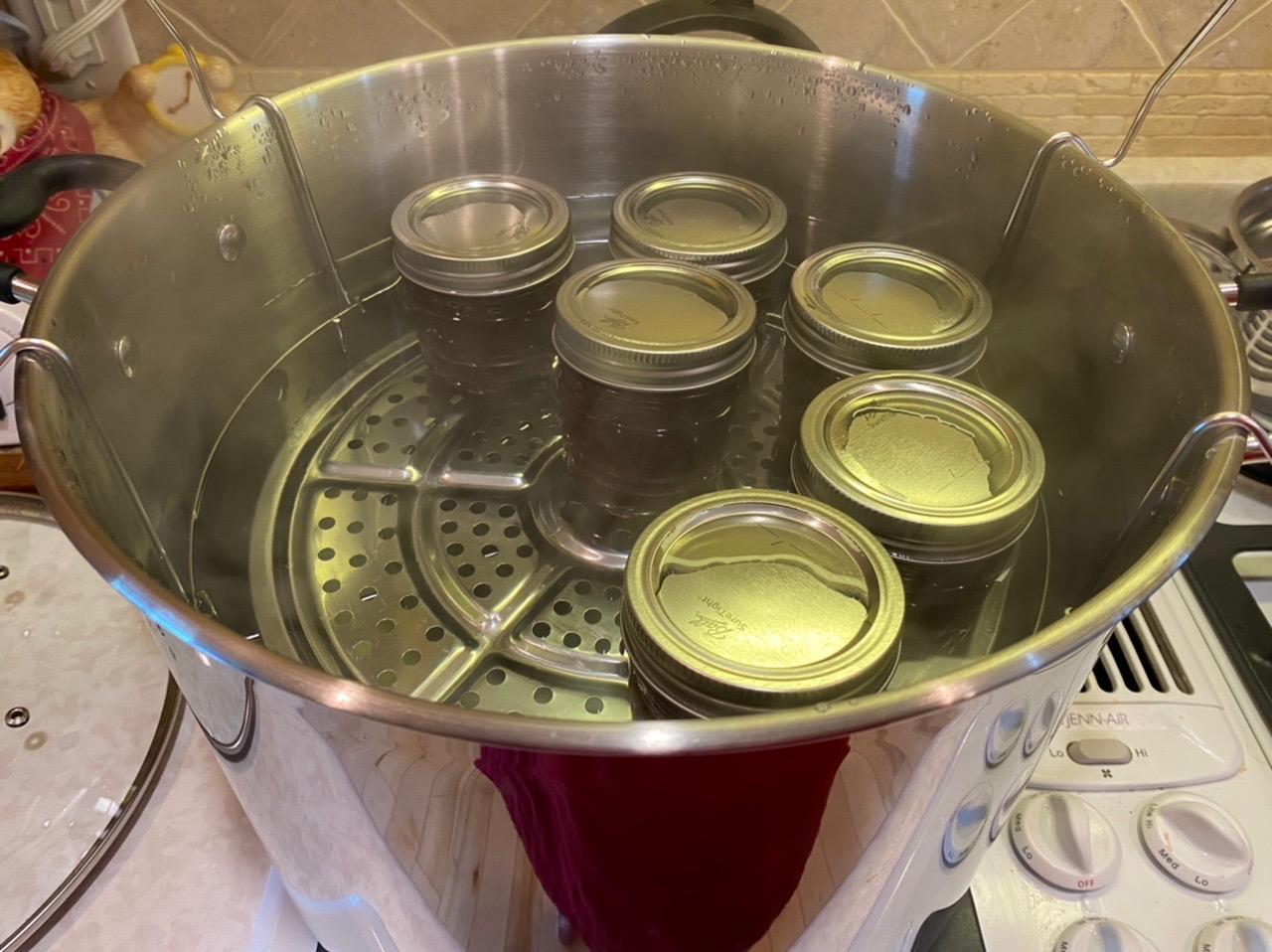
It holds up to 8 pint or 7 quart jars per batch, and the pot measures 14 by 14 inches across with an 11-inch height at 10.1 pounds. The 5-year warranty is the longest explicit coverage in this group and the single best signal of how the manufacturer expects the pot to age. Replacement parts and racks stay available, which matters for a purchase you plan to keep for two decades.
Steam canning deserves a mention for anyone who wants to can low-acid vegetables without buying a pressure canner. A steam canner reaches 212 degrees, which is enough to process vegetables, but it is not the same guarantee as pressure canning and it is not approved by the National Center for Home Food Preservation for every food. Treat it as a useful second method, not a shortcut.
Depth is the thing to think about if you can quart jars
At 11 inches tall this is the shallowest stainless pot here, and reviewers with a lot of experience note the practical consequence: the water level sits closer to the jar lids than it does in a 16-inch pot. The 1 to 2 inches of water above the lids is still achievable with a full rack of pints or a lighter rack of quarts.
If you are a heavy quart-jar canner processing large batches, the taller McSunley pot gives you more margin. If you mostly do jams, jellies, and pickles in pints, the Harvest is more than deep enough and you will appreciate the extra cooktop compatibility.
What users flag over time
The most repeated complaint is the lid. It is tempered glass, and several owners report it flexing or popping as steam vents during cooling. That is a cosmetic annoyance rather than a safety problem, but if you store the pot with the lid seated and clamped for long periods, loosen it between batches.
Handles also come up as small for a 20-quart pot of boiling water. A second pair of dry oven mitts or a folded towel under each side is a reasonable habit. Everything structural here held up well, which is why it carries the highest rating in the group.
4. Ball EasyCanner Electric Water Bath Canner — Best Electric Option
Ball EasyCanner Electric Water Bath Canner
21-quart electric countertop unit
Press and Forget automation
Fits 7 quart or 8 pint jars
20.3 pounds
Pros
- Set it and walk away with automated processing
- Keeps the kitchen cool during summer batches
- Frees the stovetop entirely
- Drain spout removes the heavy lifting
Cons
- Much higher cost than any stovetop pot
- Replacement parts not sold by the manufacturer
- Takes longer to heat than a gas burner
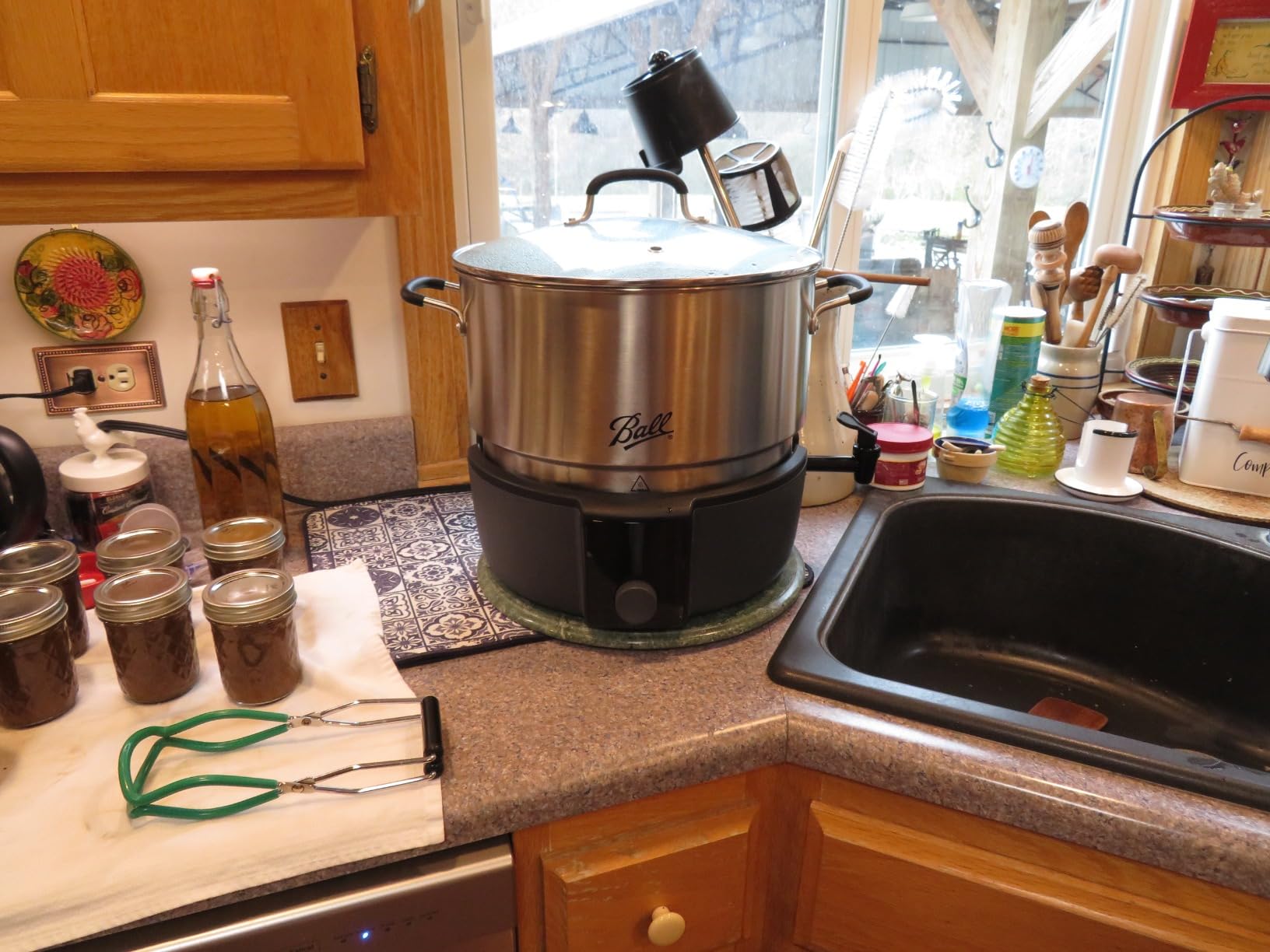
This is the only true plug-in canner in the group and the one that changes how a canning season feels. It is a freestanding 21-quart stainless unit that sits on your counter, and the Press and Forget mode holds the water at the correct temperature for the whole processing time without you watching a burner. Heat sensors handle the boil and the hold.
The batch capacity is 7 quart or 8 pint jars, essentially the same as the stovetop pots, so you are not trading away yield. What you trade away is atmosphere: no steam, no 30-pound pot of boiling water, and no kitchen that hits 95 degrees in July. For someone canning in an apartment, a small kitchen, or a house with a weak exhaust, that is not a minor comfort.
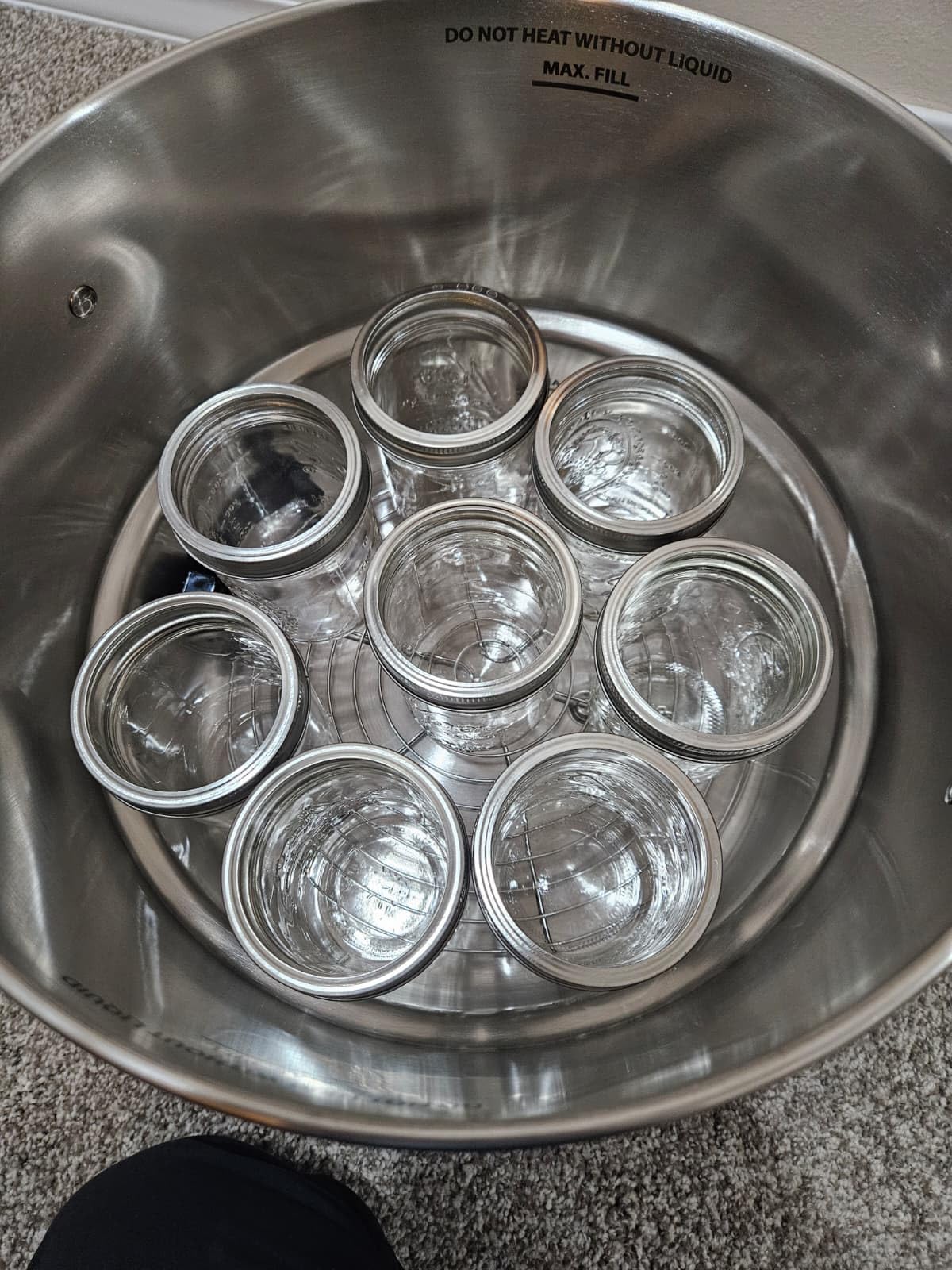
It also works as a multicooker and steamer, so it earns its counter space in February as well as August. The drain spout is the detail that converts this from a novelty into a tool: you empty the water without lifting a full pot, which is the single most injury-prone part of stovetop water bath canning. At 20.3 pounds and 16.9 by 16.85 by 14.88 inches, it is a large object and it needs its own counter run.
Owners with physical limitations consistently call that spout and the hands-off process the deciding factor. If lifting a heavy pot is hard for you or someone you cook for, this solves a real problem rather than an imagined one.
Decide whether you will use it enough
This is the most expensive canner here by a wide margin, and the cost only makes sense if you process several batches a season. If you make four jars of plum jam in a good year, a mid-priced stovetop pot will serve you for a decade. If you put up 200 jars of pickles every August, the electric unit pays for itself in convenience alone.
Two practical warnings. Ball does not sell replacement parts for this appliance, so a failed heating element or a cracked lid ends the relationship with the manufacturer. And the timer increments in 1 minute rather than 5, which some people find fussy even though it gives finer control.
Set expectations on heat-up time
Electric heat is slower to reach a rolling boil than a gas burner with a large pot on it. Plan a longer session the first few times and figure out your own rhythm from there. Once the water is up, the automated hold is steadier than a person watching a dial.
Instructions are the other weak point. The manual covers the canner functions, but the canning process itself still comes from a tested recipe. Follow a current NCHFP or Ball recipe, not a forum post, for processing times.
5. Supa Ant 24-Quart Water Bath Kit — Best Budget All-in-One
Canning Supplies-24 Qt. Water Bath Canning Pot with Rack & Lid -Starter Kits Set for Beginners – Stainless Steel Water Bath Canner Kit & Rack-Rack, XL Ladle, Measuring Cups, Kitchen Funnel by Supa Ant
24-quart stainless steel
10 pounds
Porchain enamel surface over steel core
14 x 14 x 12.4 inches
Pros
- Largest accessory set in the lineup
- 24-quart capacity for larger batches
- Includes measuring cups labels and gloves
- 365-day warranty and US-based support
Cons
- Not for induction or glass cooktops
- Lightweight build can dent
- Tool quality is basic
Where the Granite Ware kit gives you the five tools you need, this one gives you almost everything a new canner could want in a single box: a funnel, jar lifter, bubble popper, magnetic lid lifter, jar wrench, canning tongs, a half-pint scoop, six measuring cups, a kitchen funnel, heat-resistant gloves, and labels. If you are starting from a completely empty kitchen, that is a lot of ground covered in one purchase.
The pot itself is 24 quarts, which is the second-largest capacity here, and at 12.4 inches tall it is deep enough to keep 1 to 2 inches of water above a full rack of quart jars while still boiling. The surface is described as a dishwasher-friendly porcelain enamel over a steel core, which is a different construction from the pure stainless pots in this group.
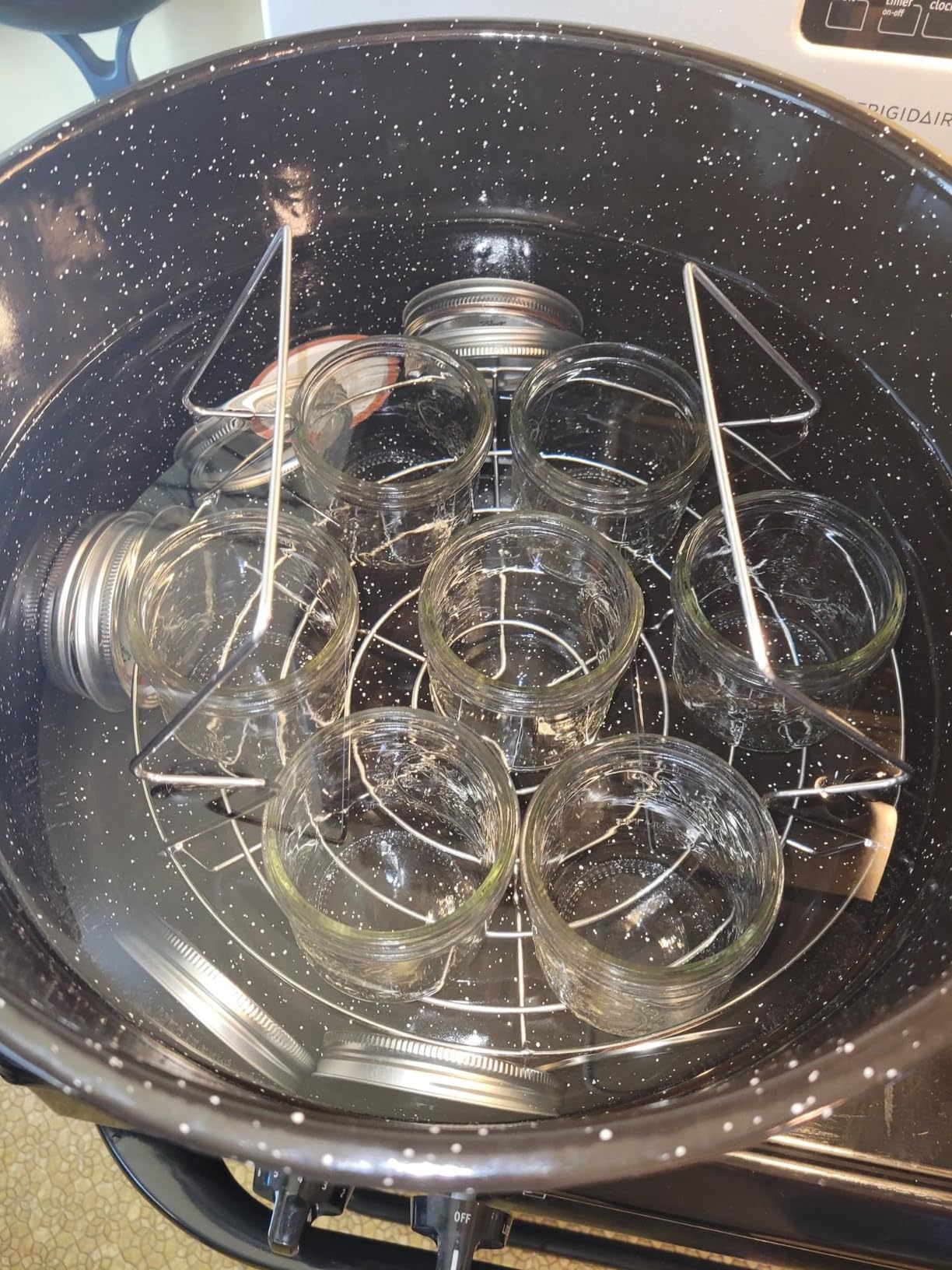
Owners consistently single out the measuring cups and the label sheets as the accessories they did not expect to find included and now use most. The gloves are the other item that earns its place, because handling hot jars with a dry towel is where beginners burn themselves.
The kit is assembled in the USA and comes with a 365-day warranty plus customer support staffed in the US and UK. That is more accountability than most products in this price bracket offer, and for a first purchase it is a meaningful difference.
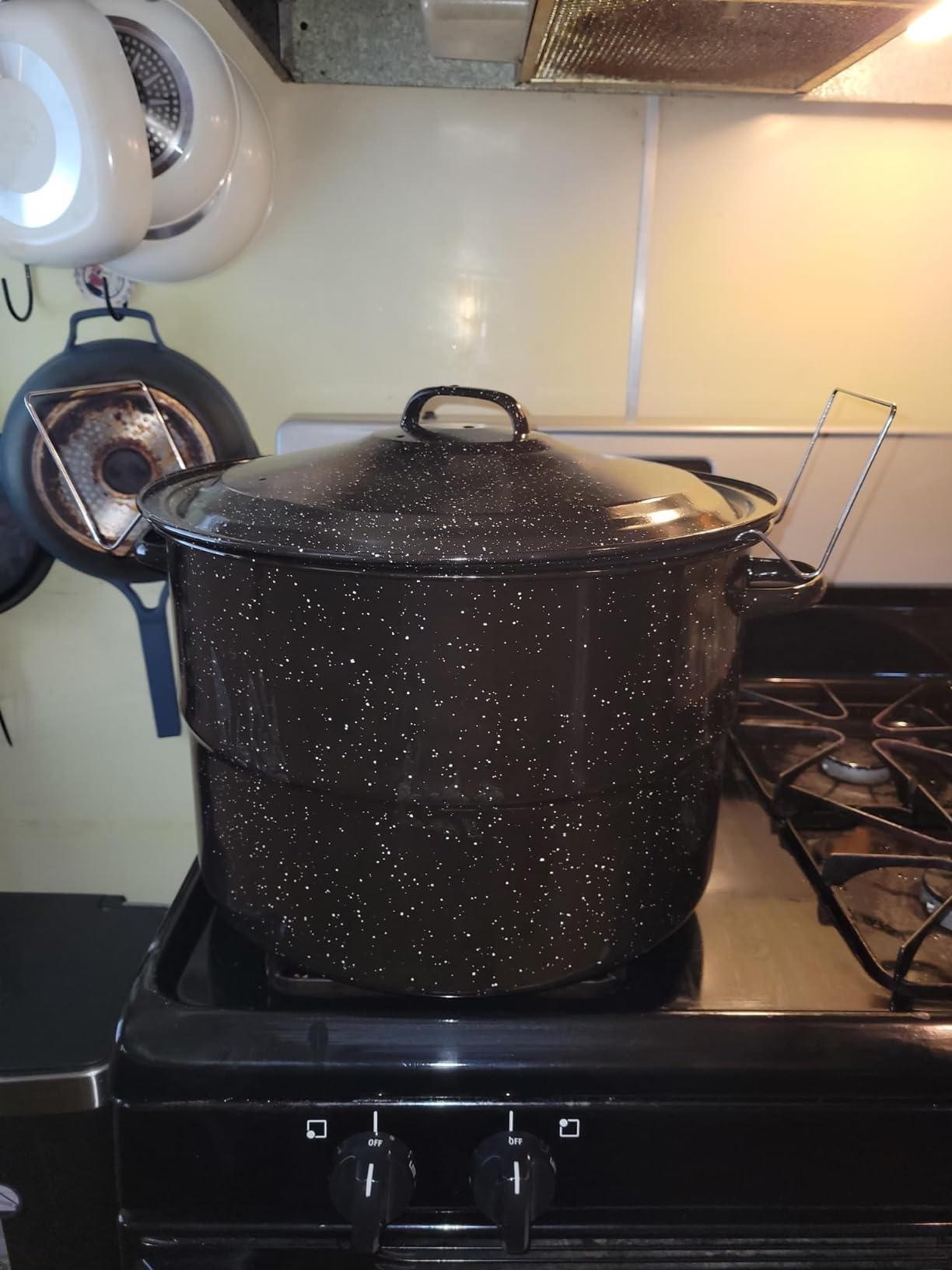
Confirm your cooktop before ordering
The listing is explicit that this pot is not suitable for induction or glass cooktops. It is described as lightweight, and lightweight plus smooth-top is the combination that causes the rocking and point-contact problems we covered earlier. Gas and coil element kitchens are what this pot is built for.
If you have a smooth-top or induction stove, look at the Harvest, McSunley, or Vigamimn instead. Paying for a full accessory bundle you cannot heat evenly on your stove is the one mistake worth avoiding here.
Judge the accessories by what you will replace
The pot will likely outlast several of the gadgets in the box. Plastic-gripped tools and thin stamped pieces take the most abuse because they end up in hot water, on hot jars, and in the dishwasher constantly. Treat the tool set as a starter set and upgrade the pieces you use daily.
The enamel surface can chip the way any enamel can, so the same long-term caution applies as with the Granite Ware kit. If your goal is a pot that survives fifteen years of hard use, stainless is the material to buy and this is not it.
6. Vigamimn 20-Quart Canning Starter Kit — Best Induction Kit With a Lid Timer
Canning Pot-Canning supplies starter kit, Canning Tool Kits Set for Beginners, Stainless Steel Water Bath Canner Kit with rack for canning
20-quart stainless steel
Induction compatible
Timer built into the lid
10.58 pounds
Pros
- Works on induction cooktops
- Timer in the lid removes the need for a separate clock
- Complete tool set with gloves and labels
- Three-layer bottom for even heating
Cons
- Metal gauge is thinner than premium brands
- Plastic lid timer may wear out
- Rack arms may not stay upright
The feature that separates this kit is a mechanical timer set into the lid. Water bath canning is a timing process from the moment the pot reaches a rolling boil, and a timer you can see from across the kitchen removes the most common source of error, which is losing track of when you started. It is a small design decision that makes a real difference on a busy processing day.
It is also induction compatible, which puts it in a small group of kits in this lineup. The pot uses a three-layer bottom for even heat, and it is rated for both water bath and steam canning. The rack collapses flat, which matters more than it sounds: a full-size rigid rack is the first thing you end up storing awkwardly in a cabinet you also need to reach the good pots from.
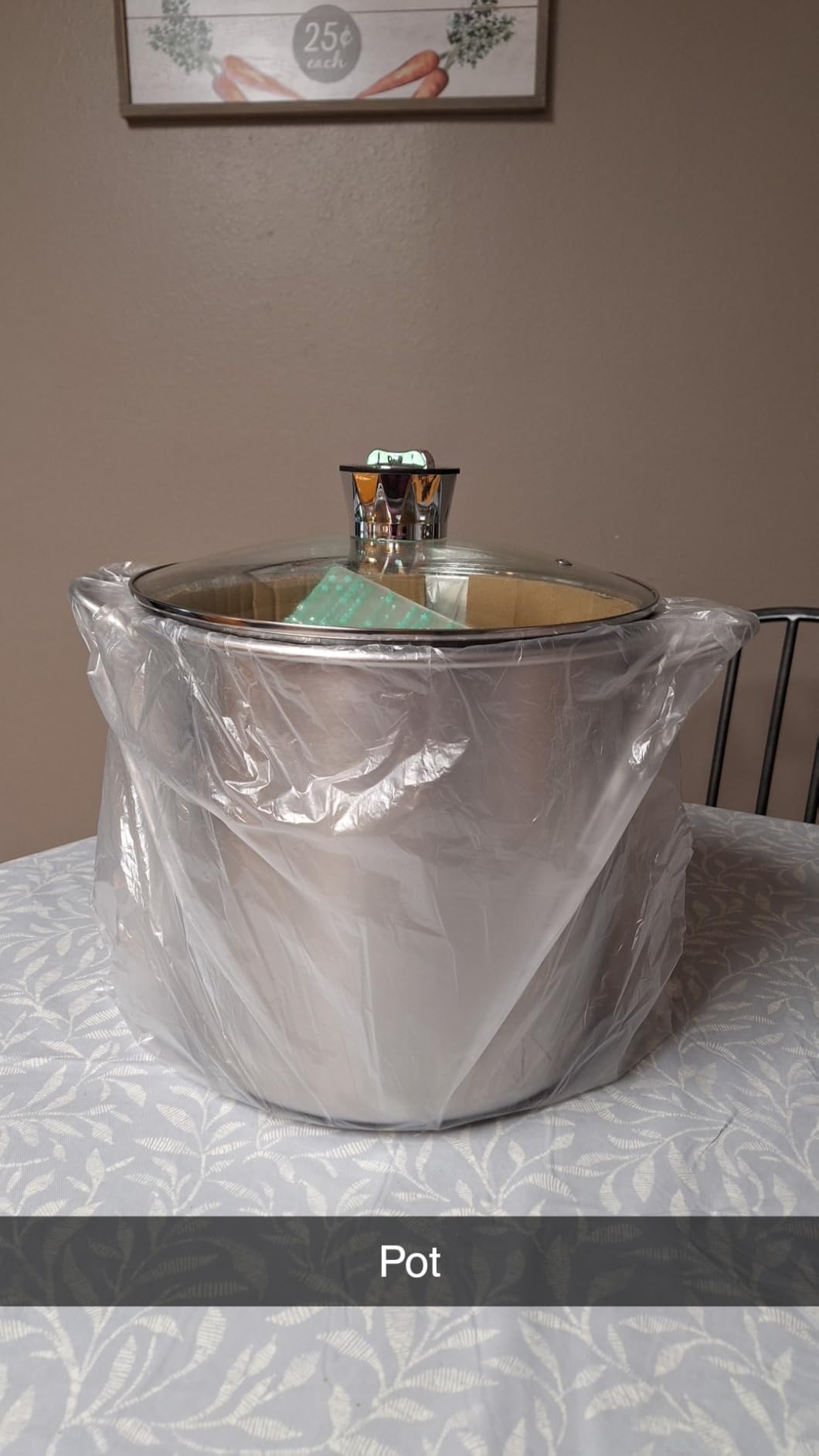
The tool list is complete for a beginner: pot, rack, funnel, tongs, jar lifter, magnetic lid lifter, jar wrench, stirrer, jam ladle, date labeling stickers, and heat-resistant gloves. That is the same practical coverage as the bigger bundles without the measuring-cup extras, and at 10.58 pounds it is built more substantially than the lighter kits here.
Packaging is also better than average for this category, which matters because a canning pot arrives full of loose metal tools and a bent rack is an annoying start. Several owners mention receiving everything intact and assembled.
The rack is the component to inspect first
Reviews mention that the rack arms sometimes do not stay upright, and a rack that cannot hold its shape will tip full hot jars. Check the arms the day the kit arrives and replace the rack before your first processing day if they flex. This is also the moment to decide whether to add a flat canning rack as a spare, which experienced canners commonly do.
A flat rack also solves a problem people rarely predict: narrow-mouth jars on a wire grid rack sit at an angle, and food that touches the jar wall above the headspace is a common cause of a failed seal.
What thinner metal means for you
The most common observation is that the stainless gauge is lighter than the heavier premium pots. In practice that means the pot takes a little longer to heat and loses heat a little faster once the burner drops, so you want a slightly larger flame or a full-power element. It does not affect seal quality, which depends on time at temperature, not on the thickness of the pot.
The plastic timer knob in the lid is the part most likely to wear out. If it is the only thing that fails, a basic kitchen timer substitutes for it perfectly. Treat the kit as very good value with two replaceable weak points rather than a flaw.
7. HOMKULA 27.5-Quart Water Bath Pot — Best for Large Harvests
HOMKULA 27.5 QT Water Bath Canning Pot with Rack and Lid, Canning Supplies 2
27.5-quart stainless steel
Largest capacity in this roundup
Thickened canning rack
Foldable rack
Pros
- Largest capacity here at 27.5 quarts
- Thickened rack built for jar stability
- Unique handle design for safer lifting
- Foldable rack and dishwasher-safe tools
Cons
- Fewer reviews than the other picks
- Weight and dimensions not published
- Cooktop compatibility not clearly stated
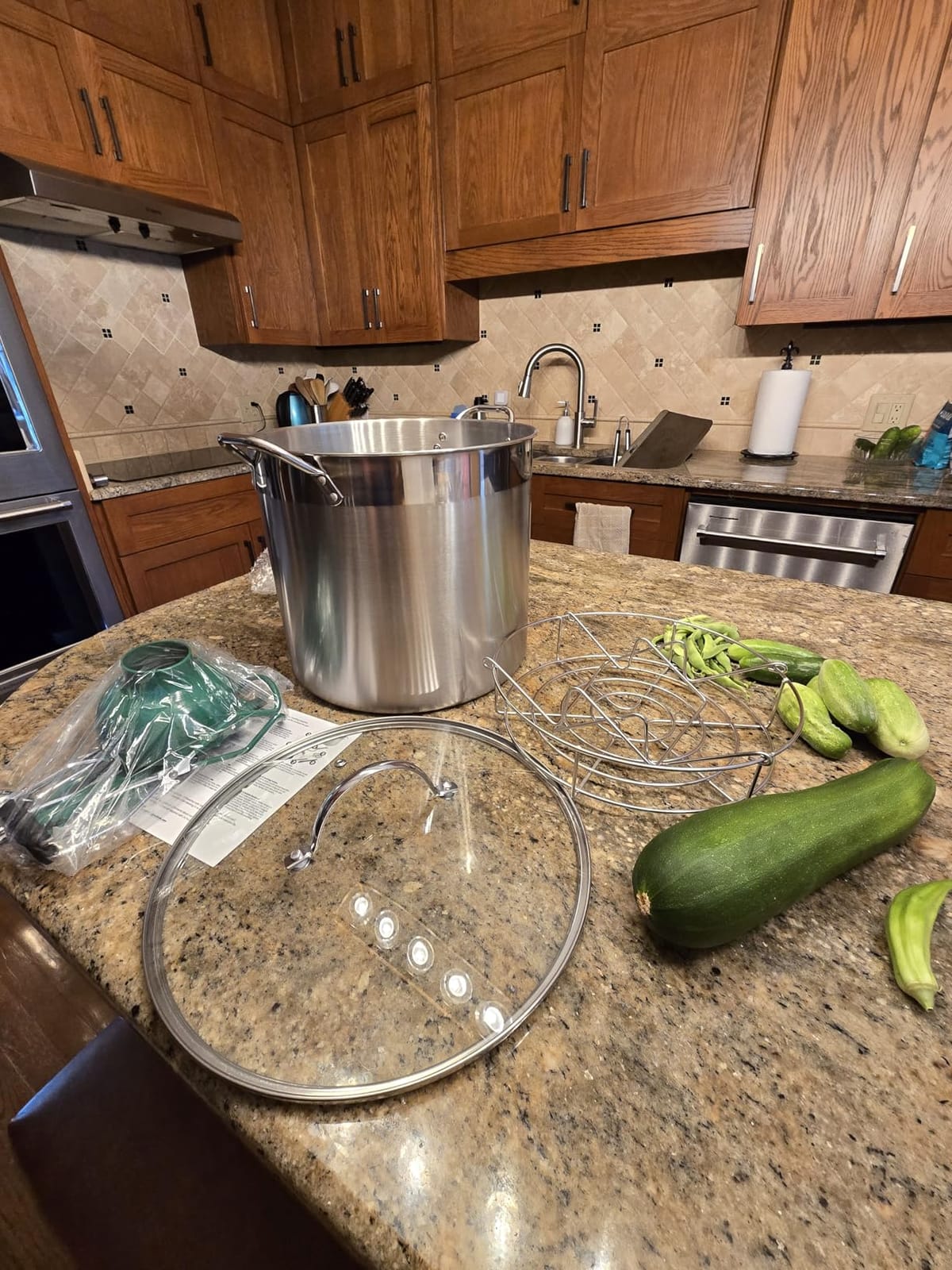
If you bring in a bushel of something and want it done in as few batches as possible, capacity is the whole argument. At 27.5 quarts this pot is the largest in the lineup, and a wider, taller body also means the water reaches a rolling boil more easily and stays above the jar lids through a long processing run. For peach season or a large cucumber harvest, that is hours saved across the weekend.
The rack is described as thickened specifically for jar stability, which is the right thing to look for in a large pot where you are loading more weight onto a wider grid. The handle design is angled to keep your hands away from the steam when you lift a full pot, and the rack folds down for storage rather than needing its own storage space.
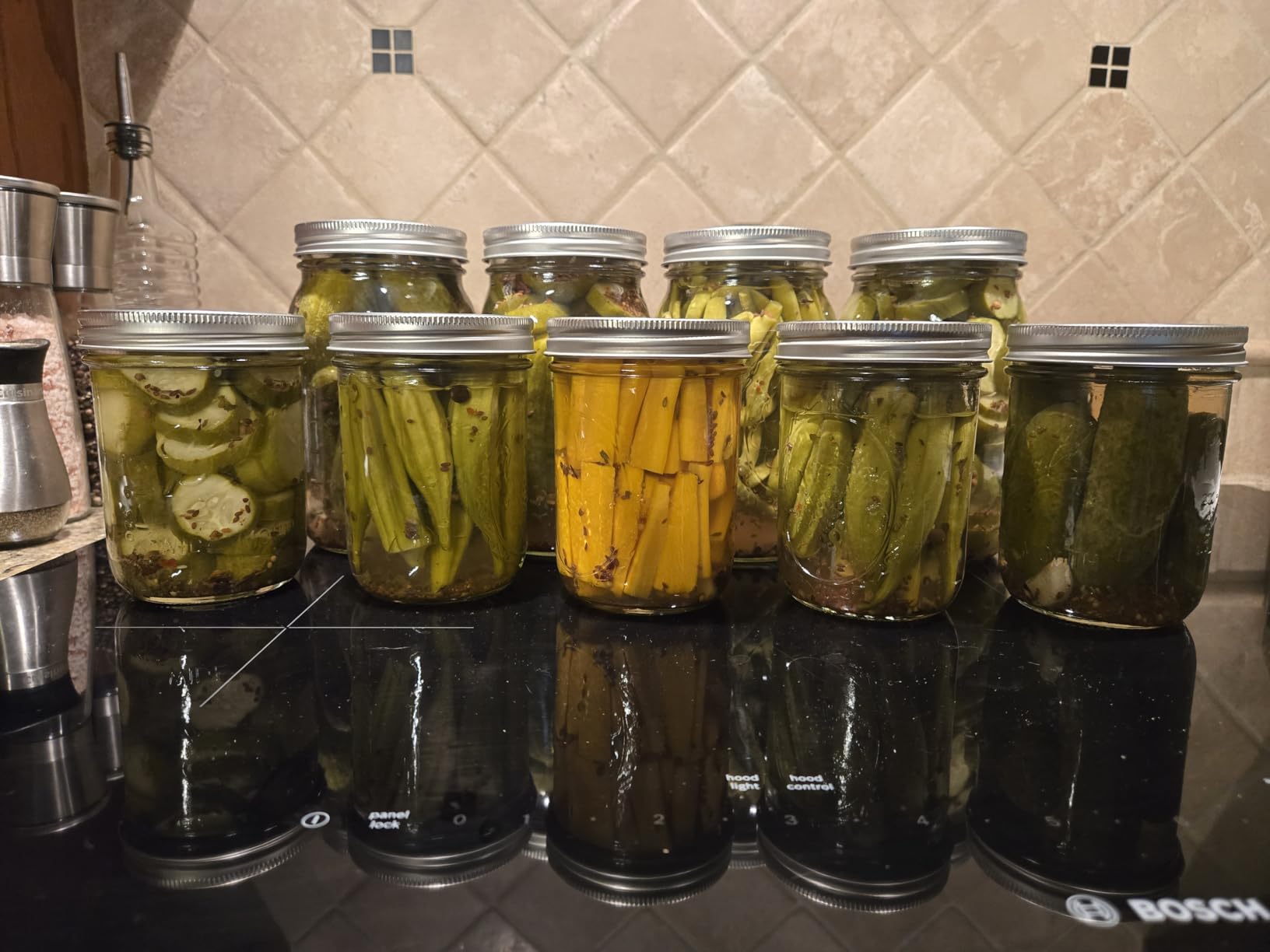
The accessory set is unusually generous for a pot rather than a kit. You get a funnel, jar lifter, magnetic lid lifter, tongs, jar wrench, a bubble remover with a headspace measure, a jam spoon, 100 date label stickers, and heat-resistant gloves. The jam spoon in particular is a small touch aimed at fruit and jelly makers, and the 100 labels cover a serious season of canning in one print.
The blue color is functional more than decorative. When you are juggling hot jars, a tool you can identify at a glance is worth something, and a blue set is not something you will confuse with your regular kitchen tongs.
Big capacity means a heavier lift
A 27.5-quart pot of water is heavy, and this is not a pot for a single person with a weak back. The manufacturers who publish weights for their competitors here list them between 8 and 10.5 pounds empty; a pot this size will be at the top of that range or beyond, and full it is a two-person job unless you have a good jar lifter and a steady grip.
If you are new to canning and not sure you will process a large harvest, a 21.5-quart pot is a more forgiving first purchase. Buy the big pot when you have proven you will use it.
Ask the questions the listing leaves open
Two things are not published for this model: the weight and the dimensions, and the listing does not make a clear statement about induction or glass cooktop compatibility. With a pot this wide, that matters, because a larger footprint puts more stress on a smooth-top surface. If you have an induction or glass cooktop, either confirm with the manufacturer before committing or choose a model that states compatibility plainly.
It also has the smallest review base in this roundup at 371, so treat the long-term durability claims as unproven. The stainless construction is the right starting point, but enamel at four pounds will outlast a thin steel pot only if you treat it carefully, and this pot deserves the same respect.
8. Ball Enamel Water Bath Canner with Rack — Best for Gas and Coil Stovetops
Ball Enamel Water Bath Canner, Including Chrome-Plated Rack and 4-Piece Utensil Set
Enamel coated steel body
Chrome-plated rack
4-piece utensil set
16.4 x 14.2 x 9.4 inches
Pros
- Classic Ball design with a long manufacturing history
- Enamel surface is non-porous and easy to clean
- Includes funnel lifter lid wand and bubble remover
- Chrome-plated rack resists surface rust
Cons
- Enamel chips and peels over time
- Wire rack rusts at the solder joints
- Included tools have weak plastic parts
This is the traditional answer, and for occasional canning on a gas or coil stove it does the job without ceremony. The pot body is enamel-coated steel, which gives you a non-porous surface that wipes clean and does not stain from tomatoes or beets, and it measures 16.4 by 14.2 inches with a 9.4-inch height at a listed capacity of 21.5 quarts.
The bundle includes a matching lid, a chrome-plated rack, and a four-piece utensil set consisting of a funnel, jar lifter, magnetic lid lifter, and bubble remover. That is the core kit, and it is the same category of toolset the Granite Ware kit provides.
The rating is the lowest of the ten, at 4.4, but the reason is well documented and consistent: durability, not function. Enamel chips with use, and once the coating is breached the steel underneath starts to go. The chrome rack is also a wire style that reviewers describe as rusting at the solder points where the wires meet.
None of that makes it a bad canner. For someone putting up 30 jars of pickles a year, an enamel pot that lasts several seasons is entirely reasonable. The mismatch happens when a canner expects a decade of batches and buys the cheapest coated pot available.
Decide based on batches per year, not on reviews
If you are processing two or three batches a season, the tradeoff here is worth taking and the lower rating is mostly about long-term wear. If you are processing weekly through the summer, skip this one and buy stainless. Enamel is a consumable material; stainless is an heirloom material.
To extend enamel life, never plunge a hot pot into cold water, do not use metal scouring pads on the inside, and store the lid ajar so trapped moisture does not sit on the rim. Dry the pot completely before you put it away.
The parts that wear out first are the small parts
Owners flag the jar lifter tongs and the magnet on the lid wand. Plastic grips near boiling water degrade, and a weak magnet stops holding sterilized lids reliably, which matters because a lid that hovers rather than seats does not seal as consistently. Both are inexpensive tools to replace on their own.
Not for induction or glass cooktops, as with the other enamel pots here. If your kitchen has a smooth surface, this rules the pot out before any other consideration.
9. Supa Ant 24-Quart Food-Grade Canning Pot — Best for Jam and Jelly
Food-Grade 24 Qt Stainless Steel Canning Pot with Rack and Lid, Large Water Bath Canner, Full Home Canning Supplies Starter Kit | All-in-One Kitchen Tools & Accessories Set | by Supa Ant
24-quart food-grade stainless steel
Solid stainless steel lid
11-piece accessory kit
14.5 x 14.5 x 11 inches
Pros
- Works on glass cooktops according to owners
- Measuring ladle with markings included
- 90 labels plus measuring cups in the kit
- Corrosion-resistant and easy to clean
Cons
- Slow to reach a rolling boil on gas
- Lid may warp with extended heating
- Thin metal construction
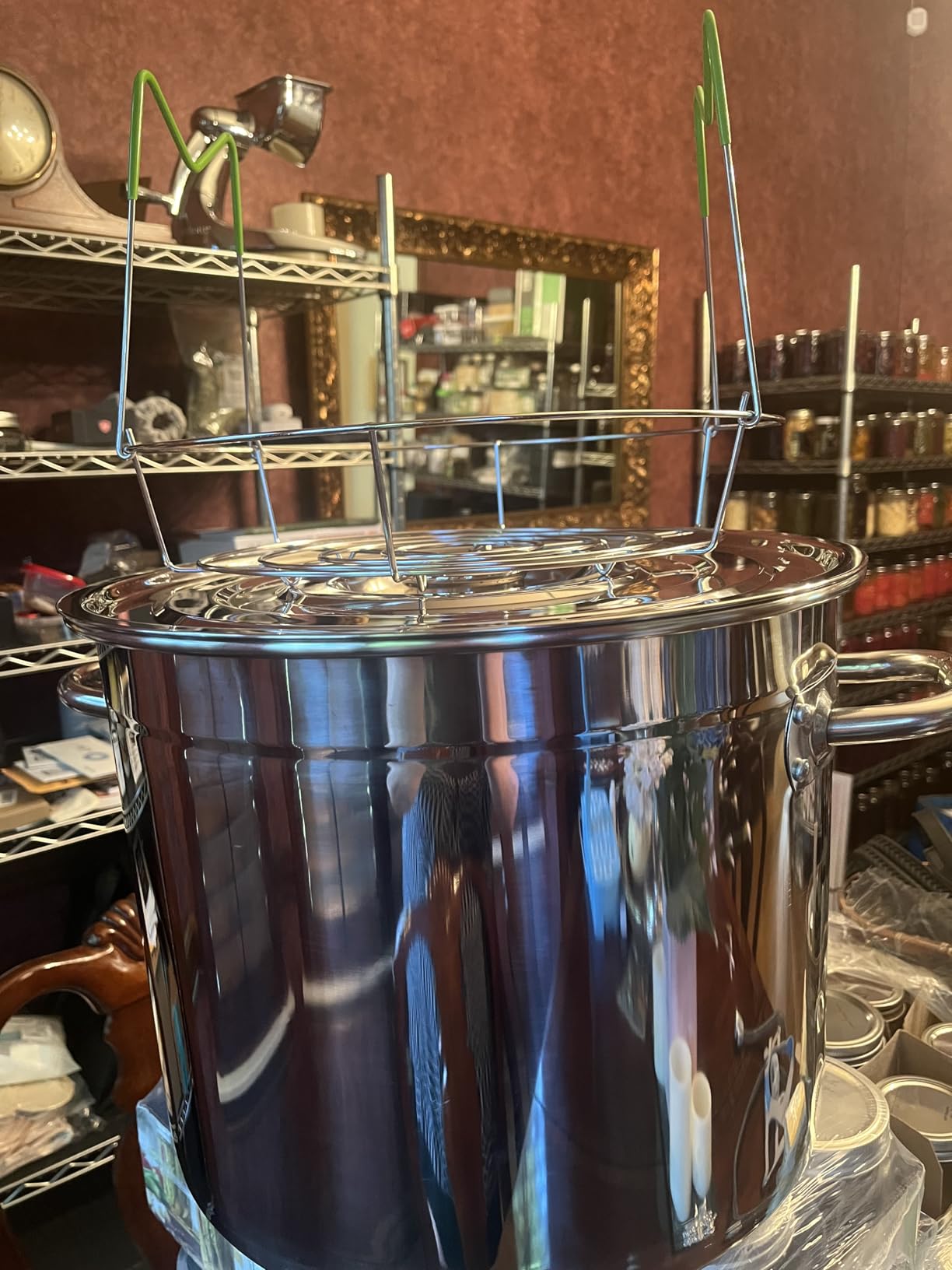
This one earns its place with a specific group: fruit and jam makers who work with smaller jars and want a wide pot. At 24 quarts across 14.5 inches, the opening is wide enough to load a rack of half-pints or jelly jars without angling hot glass past each other, and the accessory set includes a measuring ladle with markings, which is the tool you reach for every time you stir a batch of jam.
Unlike the enamel and porcelain kits in this roundup, the body is uncoated food-grade stainless with a solid stainless steel lid. The rack is a foldable handle design rather than a fixed grid, and the full set adds measuring cups, a funnel, jar lifter, a bubble popper and measurer, a magnetic lid lifter, a jar wrench, canning tongs, and 90 labels.
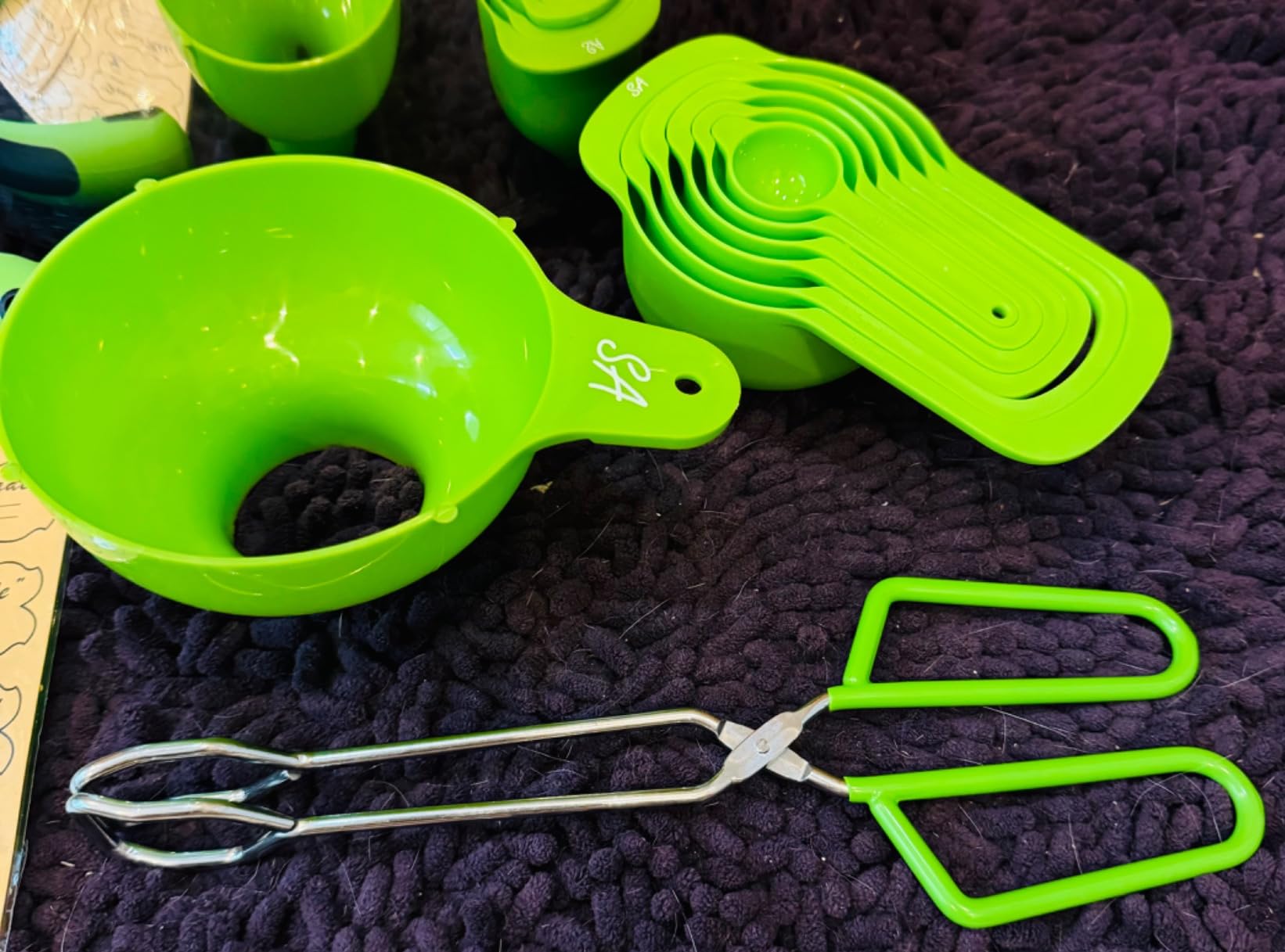
Owners report that it works on glass cooktops in practice, which is not something you can say for most pots at this capacity. The materials are BPA and BPS free, and the whole thing cleans easily and resists corrosion, which for acidic fruit is the right combination.
Jelly and jam are also short processing times measured from a rolling boil, and a wide pot gets to that boil faster than a narrow one of the same volume. That matters when you are doing a dozen small batches in an afternoon rather than one large batch of pickles.
Give it time on the burner
The most common complaint is a slow come to a rolling boil on a gas stove. With 24 quarts of water and a wide surface area, that is physics rather than a defect, but it does extend your session. Set it on the burner and start heating while you fill jars, and the extra minutes disappear.
Several owners also report the lid warping with extended heating, and a thin-gauge pot that can rock slightly on the burner. Keep the flame under the center of the base rather than running it wide, and expect the lid to lose its flat shape over years of heavy service.
A rack design worth checking
There is a specific reported limitation here: the foldable handle rack is difficult to hold in position, and some owners cannot get it to rest jars for a timed pause mid-recipe. If your jam process calls for removing jars partway through, test the rack on a dry counter first. For straight water bath processing, a rack that just holds the jars is all you need.
For anyone focused on small fruit batches, this is a capable pot with the right accessories at the right size. For heavy vegetable or pickle canning, one of the stiffer wire-grid racks elsewhere in this roundup is the safer pick.
10. UONMAY 20-Quart Canning Pot Kit — Best Kit That Includes Jars
Canning Pot Water Bath Canner with Rack and Mason Jars, 20 Quart Stainless Steel Stock Pots, Canning Supplies Starter Kit Beginners Tools Set, Jar Lifter Tongs and Pickling Kit Accessories
20-quart stainless steel
Includes 7 mason jars
Compatible with induction glass and gas
7 pounds
Pros
- Only kit here that includes 7 mason jars
- Induction and glass cooktop compatible
- Complete tool set with measuring cups and spoons
- Lightest stainless pot in the lineup
Cons
- Wire basket arms do not stay upright
- Thin metal dents easily
- Jars may arrive with defects
If you are starting from absolutely nothing, this removes the single most common beginner mistake: filling the pot with jars you already own. The kit includes 7 sixteen-ounce mason jars, so you can run a complete batch, taste the results, and then buy the size and shape of jar you actually prefer instead of being locked into whatever came in the box.
The pot is 20 quarts of food-grade stainless steel, measuring 12 inches wide by 11.2 inches tall, and it is listed as compatible with induction, glass top, and gas stoves. At 7 pounds it is the lightest stainless option here, which makes a full pot more manageable than the 10-pound models.
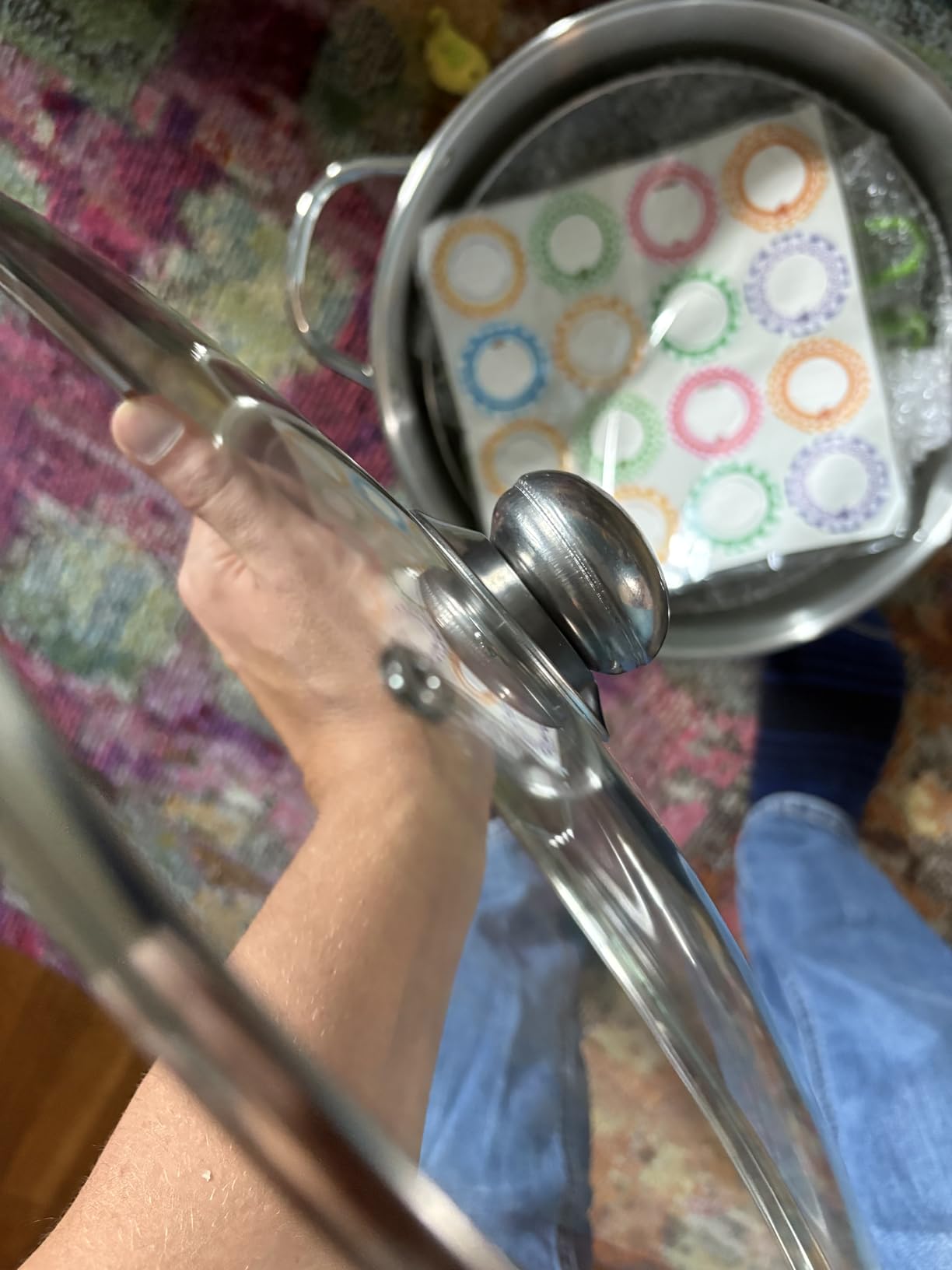
The rest of the set is a standard but complete tool layout: canning tongs, a jar lifter, a wide-mouth funnel, a magnetic lid lifter, canning labels, four measuring cups, and four measuring spoons. Reviewers call out the measuring stick as genuinely useful, and the green tool color is easy to identify in a drawer full of similar implements.
Steel handles, rust resistance, dishwasher safety, and stackability are all listed as product features, and the pot is described as portable, which is relevant if you want to move the whole setup outdoors to a portable burner on a hot weekend.
Check the included jars before your first batch
Jars can arrive with chips, cracks, or seal defects, and a chipped jar is both a safety and a waste problem. Run a finger around every rim of the seven jars on the day the box arrives. Treat any jar with a nick or a visible rim flaw as a cooking jar rather than a canning jar.
Also check that the lid handle is present on the pot. A missing lid handle has shown up in reviews, and you can replace it with any glass lid of similar diameter.
The wire basket is the component to upgrade
The most consistent complaint is that the wire basket arms do not stay upright, which is exactly the failure mode that tips hot jars into boiling water. This is a cheap part to fix: either brace the arms before a batch or buy a flat canning rack and use that instead. Experienced canners recommend the flat rack universally for good stability and better jar contact.
Thin metal that dents in transit is the other theme. Inspect the pot on arrival and use a shipping box with more padding for future returns. Even with that caveat, this is the most complete first purchase in the roundup for someone who owns no canning equipment at all.
Water Bath vs Pressure vs Steam Canning: What Each One Is For
The most common question in every canning forum is whether one pot can do all three jobs. Sometimes it can, and the method you choose has to be dictated by the food, not by the equipment you happen to own.
A water bath canner boils jars submerged in water at 212 degrees Fahrenheit. That is enough for high-acid foods, because fruit and pickles are already acidic enough that the organisms of concern cannot survive the heat. It is not enough for low-acid foods. A water bath canner never processes vegetables, meat, poultry, seafood, soups, sauces, or plain tomatoes without added acid.
A pressure canner reaches 240 to 250 degrees by sealing steam under pressure. That extra heat is the only thing that reliably destroys Clostridium botulinum spores in low-acid foods. A pressure canner can also be used for water bath canning. Fill it with water, leave the vent open, ignore the pressure, and process your jam the same way. What a pressure canner cannot do is be a multi-cooker. Cookers build pressure by design, and the American Society for Testing and Materials has not approved them for canning.
This is where the Instant Pot question comes up, and the answer is firm: no. The same answer applies to electric pressure cookers generally. The canning industry did not certify them because the canning protocols require a controlled environment that a general-purpose appliance does not guarantee. Use a tested weight- or dial-gauge canning canner for low-acid foods, and use nothing else.
A steam canner holds jars above a small amount of water rather than submerging them, and the steam does the work. Two of the pots in this roundup support both methods with a double-sided or reversible rack. Steam canning is approved for vegetables, and it uses far less energy and creates far less steam in your kitchen than a full water bath. It is not a substitute for pressure canning, and it is not approved for every food, so follow a current tested recipe for anything you are not certain about.
How to Choose the Right Water Bath Canner in 2026
Every canner in this roundup does the same job with the same principle. The differences that actually change your experience are the material, the bottom, the depth, and the cooktop you own. Here is how to weigh each one.
Material: stainless, enamel, or electric
Stainless steel is the durability answer. It does not chip, it does not rust if you dry it, and a flat bonded or clad bottom works on induction, glass, gas, and coil. It costs more up front and it is heavier, but owners frequently report pots still in service after fifteen or twenty years. If you plan to can for a long time, stainless is the correct default.
Enamel over steel, sometimes called granite ware or porcelain enamel, is the traditional choice. It heats evenly, it is non-porous and easy to clean, and it resists staining from tomatoes. The weak point is that enamel is a glass coating on a metal pot, and once it chips the steel underneath begins to corrode. Treat it as a pot with a finite life, store it dry, never plunge a hot pot into cold water, and do not use metal scouring pads inside.
Electric is a different proposition entirely. It buys you temperature control and a cool kitchen at a much higher cost and with no replacement parts from most manufacturers. It is the right call if you can large batches every year, or if lifting a heavy hot pot is a genuine problem for you.
On the question of whether stainless or granite ware is better for canning: there is no food safety difference. Both are non-reactive at canning temperatures and neither is going to leach anything into your fruit. The difference is lifespan, weight, and cooktop compatibility, and on those three measures stainless wins.
Depth and capacity: the numbers that matter
Depth matters more than most shoppers expect. You need enough room for the jars to sit on the rack plus 1 to 2 inches of water above the lids, plus headroom so the water can reach a rolling boil without surging over the rim. Most home canners should aim for a pot 10 to 12 inches deep or taller.
For jar counts per batch, the common figures in this class are 7 quart jars, 8 to 9 pint jars, or 12 half-pint jars for a standard 21.5-quart pot. Two models here hold 8 pint or 7 quart jars. Anything claiming far more than that in a pot this size is usually counting jars the water would not cover, and you should treat the number as a maximum rather than a promise.
A larger pot heats more water, which means a longer time to your first rolling boil and a heavier lift at the end. A 27.5-quart pot is a real time saver with a large harvest and an annoyance with a small one. Many experienced canners run two pots, one large for the main season and one small for the rest of the year.
The bottom and the rack
A flat, fully encapsulated bottom is the requirement for smooth-top and induction cooking. A ridged bottom, like the one on the Granite Ware kit, contacts the glass at three points. That produces uneven heat and concentrates the pot’s weight on a small area of glass. It is also why manufacturers print a warning on the box rather than leaving you to discover it on your first batch.
The rack is the second component people underspend on. A stiff wire-grid rack with a chrome finish resists rust and holds jars upright. A thin wire basket with folding arms tips. If a kit’s rack looks flimsy, buy a flat canning rack and use that instead. It costs a fraction of the pot and it is the difference between a clean batch and a broken one.
Amish-made and heirloom stainless canners
Search results often include a question about Amish water bath canners, and the honest answer is that it is a description, not a brand category. Amish and Mennonite workshops in Pennsylvania and Ohio have built stainless water bath and pressure canners for generations, and they are sold through specialty farm supply catalogs rather than mass retail. The appeal is construction: heavy stainless, flat bottoms, replaceable parts, and a lifespan measured in decades. Users on home and homestead forums respect them for exactly that reason, and they are frequently misunderstood as dual-use pressure and water bath canners, which depends on the individual model rather than the maker.
As for the lids Amish canners use, nothing about the canning method changes. Whatever style of canning lid you buy, the requirement is a two-piece lid in good condition with no rust, dents, or bubbling, washed in hot water and dried, then kept warm with a magnetic wand until it goes onto the jar. For commercial or large-batch work, reusable stainless lids are common, and they are not interchangeable with the standard home canning lids you are probably using.
The tools you still need to buy
Most pots include a rack, and some include a partial tool set. The five tools that matter on every batch are a jar lifter, a wide-mouth funnel, a bubble remover with headspace markings, a magnetic lid wand, and a jar wrench. Add a canning recipe from a tested source, a timer you trust, and a towel that is not the one you dry your hands with.
You will also want new mason jars, new two-piece lids for every single jar every single time, and labels. Lids are consumables, not reusable, and reusing a lid is one of the most common causes of a jar that will not seal.
Canning on a Glass or Induction Cooktop: A Three-Step Check
Smooth-top compatibility causes more confusion than any other issue in this category, so it is worth doing before you buy rather than after. Three steps, about ten minutes, and you will never wonder again.
Step one: find the weight limit. Every cooktop manual lists a maximum allowable cookware weight, often somewhere between 30 and 50 pounds. A full 21.5-quart water bath canner with seven jars inside routinely exceeds 40 pounds. If your manual is gone, the model number on the underside of your cooktop gets you the specification from the manufacturer.
Step two: identify your pot’s bottom. A flat, fully clad bottom is what you want. A ridged bottom is a warning that the manufacturer does not want the pot on smooth-top glass, and in most cases the listing will say so outright. If the product page does not mention cooktop compatibility, treat that as a reason to ask rather than a reason to assume.
Step three: check whether your cooktop is induction. Induction requires a magnetic flat base, which means an unencapsulated single layer of stainless steel. Many induction-ready pots use a bonded or clad base with an aluminum or copper core, which is not magnetic. Pots that advertise induction compatibility have been tested for it, so trust the claim on models like the Harvest or the Vigamimn kit.
If your cooktop fails any of the three checks, two options remain. Buy a model that explicitly states compatibility for your surface, or use a heavy cast iron trivet on your gas or coil element, which puts a proper flat surface between the pot and the glass. A trivet also slows heating, so adjust your heat-up time.
Water Bath Canning Safety: High-Acid vs Low-Acid Foods
The single most important thing to understand is that the water bath method is safe only for high-acid foods, defined as a pH of 4.6 or below. Acid is what prevents the botulism spores that live in low-acid foods from surviving. Boiling water reaches 212 degrees, which is sufficient to kill the organisms that threaten acidic foods and not sufficient to kill the spores that threaten non-acidic ones.
You can safely water bath can fruits, jams, jellies, marmalades, pickles, relishes, chutneys, acidified pie fillings, and salsas. You can also can plain tomatoes if you add bottled lemon juice or citric acid to every jar in the batch. Do not improvise that acidity with fresh lemon juice, because its pH varies by fruit and season and the result is not a tested process.
You cannot water bath can green beans, corn, peas, carrots, potatoes, soups, stock, sauces, meat, poultry, fish, or seafood. You also cannot can plain tomatoes without added acid, regardless of the variety. Any low-acid food in a boiling water bath is a botulism risk, and the reason is a spore that survives the process and produces a toxin you cannot see, smell, or taste. That food needs a pressure canner at 240 to 250 degrees.
For altitude, boiling point drops as elevation rises, so processing times extend. The standard adjustments add 5 minutes for 1,001 to 3,000 feet, 10 minutes for 3,001 to 6,000 feet, 15 minutes for 6,001 to 8,000 feet, and 20 minutes for 8,001 to 10,000 feet. If you are above 10,000 feet, a water bath canner is not an appropriate method and pressure canning with a tested adjustment is the recommendation.
One more safety note that is easy to miss: never put a sealed pressure canning lid on a pot of boiling water for water bath canning, and never try to can in an unsealed multicooker. If you are unsure whether a food is high-acid, look it up in a current tested recipe from the National Center for Home Food Preservation or the Ball canning guide rather than guessing. It is also worth knowing how your local water behaves. Hard water leaves mineral scale on jars and stainless surfaces over time, and a guide to hard water treatment options explains what causes the scaling if your tap water is heavily mineralized.
Why Jars Fail to Seal and How to Fix It
Most unsealed jars trace back to one of a short list of causes, and most of them happen before the pot ever heats up. If a jar does not seal, the food in it is not shelf-stable, and it belongs in the fridge or on the counter as a refrigerated preserve, not in your pantry.
The most common causes, in rough order of frequency: not leaving the correct headspace, which for most mason jars is a quarter inch for jelly and half an inch for fruit and pickles; wiping the jar rim with a damp cloth and then letting it air dry; reusing a lid or a jar with a dent or rust spot; pouring food directly into the jar instead of filling it and then adjusting headspace; and starting the timer late because you were still wiping the last jar. Reheating food that has already been filled and processed also breaks seals, because the second processing cycle expels too much air.
A quick way to avoid the last problem is a canning funnel with a bubble remover built into the stem, so air goes up and out while food goes in. Pouring through a funnel after the fact forces you to back out air with a wet knife, which is exactly the step that introduces bubbles.
The most common mistake after the pot is boiling is removing the jars too late or cooling them too fast. Jars need to sit undisturbed for 12 to 24 hours after processing. Moving a hot jar, or running cold water over it, breaks the vacuum while it is still forming. Test a seal by pressing the center of each lid; a proper seal is flat and does not flex or move, and it often makes a high-pitched sound when it first cools.
For any jar that fails, replace the food into a clean pot, bring it back to temperature, use a fresh lid, and reprocess. Never re-process a jar more than once, and if the food was low-acid and the jar failed, do not try to rescue it. Discard it.
One last practical tip for anyone canning in a warm climate. A pot of boiling water on a stove adds a surprising amount of heat to a house, and experienced canners commonly solve it by moving the whole setup outdoors onto a portable burner and running batches outside. If you take that approach, keep the pot level, keep a fire extinguisher within reach, never leave a boiling pot unattended, and watch the wind, because a lid can be lifted clean off by a gust. Several of the pot owners here also keep the pot far enough from combustible surfaces that a tipped handle cannot reach anything it should not.
Frequently Asked Questions
Is a steam canner as good as a water bath canner?
For high-acid foods like fruit, jams, pickles, and acidified tomatoes, a water bath canner is the standard and recommended method. A steam canner is approved for vegetables and is far more efficient, using less water and creating much less steam in the kitchen. It is not a substitute for pressure canning, and it is not approved for every food, so follow a current tested recipe for anything you are unsure about.
Can you can everything in a water bath canner?
No. Water bath canning is only safe for high-acid foods with a pH of 4.6 or below, including fruits, jams, jellies, pickles, relish, chutney, acidified pie filling, and tomatoes with added bottled lemon juice or citric acid. Low-acid foods such as vegetables, meat, poultry, seafood, soups, and plain unacidified tomatoes require a pressure canner that reaches 240 to 250 degrees.
Can I use a regular stockpot instead of a water bath canner?
For small batches, many experienced canners do exactly that. Any pot that is deep enough to cover the jar lids by 1 to 2 inches and wide enough to hold the jars flat on something will process high-acid food safely. A dedicated canner adds a proper rack, a lid, and flat cooktop compatibility, which is why it matters for larger batches, glass cooktops, and repeat use.
Which water bath canner is best?
The Granite Ware 8-Piece Canning Pot is the best overall choice because it includes the pot, lid, rack, and the five essential tools at 4 pounds, which is easy to lift. For a glass cooktop, the McSunley 21.5-Quart stainless canner is the safest fit. For induction, the Harvest 20-Quart canner is the only pick here rated for every cooktop, and it carries a 5-year warranty.
Is stainless steel or granite ware better for canning?
There is no food safety difference between them. The choice is lifespan, weight, and cooktop compatibility. Stainless steel does not chip or rust and a flat clad bottom works on induction, glass, gas, and coil, so it lasts far longer. Granite ware enamel is non-porous and easy to clean but can chip, and the ridged bottoms on many models will not work on glass or induction cooktops.
What are common mistakes in water bath canning?
The most frequent errors are incorrect headspace, not wiping and drying the jar rims, reusing lids or using jars with chips or rust, filling jars before adjusting headspace, starting the processing timer late, and moving or cooling jars too quickly. Jars should sit undisturbed for 12 to 24 hours after processing, and any jar that fails to seal must be refrigerated or reprocessed.
What is an Amish water bath canner?
It is a description rather than a brand category. Amish and Mennonite workshops in Pennsylvania and Ohio have built heavy stainless water bath and pressure canners for generations, sold through farm supply catalogs. They are valued for flat bottoms, replaceable parts, and a lifespan measured in decades. Whether a model handles water bath canning, pressure canning, or both depends on the individual unit.
The Bottom Line on the Best Water Bath Canners in 2026
The Granite Ware 8-Piece Canning Pot with Rack is the best water bath canner overall, because it is the only option here that combines a genuine 21.5-quart capacity, a rust-resistant chrome rack that holds 7 quart jars, a full set of the five tools you need, and a 4-pound empty weight you can lift one-handed when it is full.
If your stove is a smooth glass or ceramic surface, pick the McSunley 21.5-quart stainless canner instead, and if you have an induction burner, the Harvest 20-Quart canner is the pick with the highest rating, the widest cooktop compatibility, and a 5-year warranty behind it. For a large harvest, the HOMKULA 27.5-quart pot holds the most. For a cool kitchen and no stove lifting at all, the Ball EasyCanner does the work on your counter.
Whichever one you choose, buy new two-piece lids for every jar, follow a current tested recipe rather than a forum post, and keep a water bath canner strictly for high-acid foods. That is the whole job, done properly, for a very long time.