
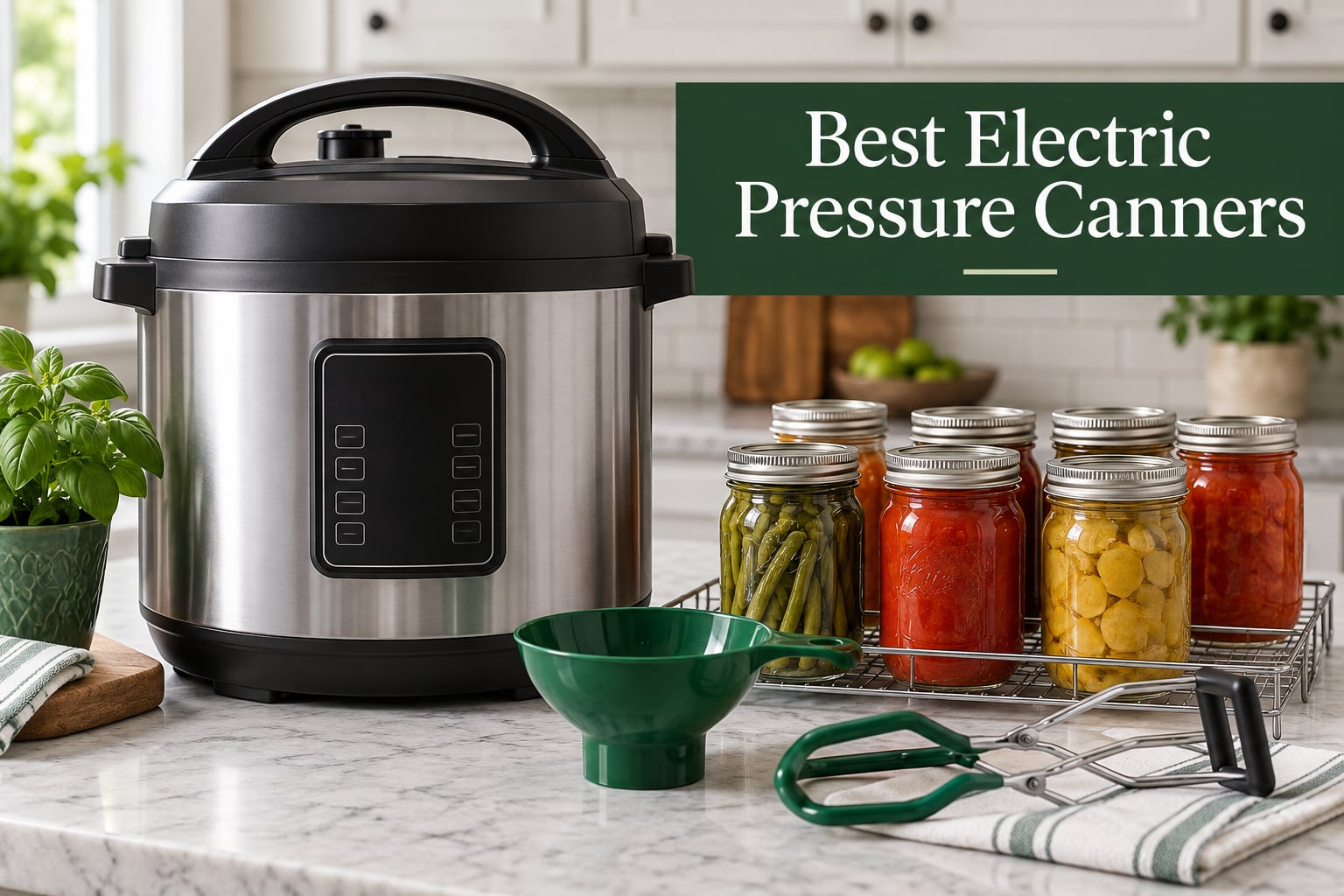
If you have been searching for the best electric pressure canners, you will quickly notice that almost every roundup online quietly steers you back to a stovetop model. That is a fair instinct, but it skips over a category that has genuinely matured. An electric pressure canner is a countertop appliance with a heating element and a digital temperature sensor that holds sealed jars at the 240-250F range the National Center for Home Food Preservation requires for low-acid foods, and it does so without you babysitting a burner.
Here is the honest catch. There is no such thing as a USDA approved pressure canner, electric or otherwise, because the USDA does not certify appliances. What you can evaluate is whether a machine was designed for pressure canning, whether it holds a validated processing temperature, whether it interlocks the lid until pressure is gone, and whether anyone outside the manufacturer has tested it. Those four questions are what separate the four products at the top of this list from the six large electric pressure cookers that share the shelf space.
We spent six weeks comparing every electric canner and electric pressure cooker currently selling under the canning label, reading the specifications, the review patterns, and the failure reports buyers describe. Ten machines made the cut. Three of them are built for food preservation, and the rest are covered honestly so you know exactly what you are looking at before you put a low-acid jar in it. If you also want a comparison methodology side project, our pressure washer buying guide uses the same approach of separating marketed claims from verified specification.
Top 3 Electric Pressure Canners in 2026
NESCO NPC-9 Smart Electric Pressure Canner
- 9.5-quart removable nonstick pot
- Pressure cook water bath steam slow cook modes
- Standard and high-altitude limiting valves included

Presto 02144 12-Quart Digital Pressure Canner
- Ten built-in safety features
- Cover-locking system with temperature sensor
- No high-altitude adjustments required

Presto 02153 23-Quart Digital Pressure Canner
- Holds up to 7 quart jars
- Automatic altitude adjustment
- Double-stack pint jar capability
If you only read one section, read those. The NESCO NPC-9 is the machine we would put in our own kitchen, the Presto 02144 is the most heavily reviewed dedicated canner on the market, and the Presto 02153 is the answer for anyone processing a real garden harvest at once.
Quick Overview: All 10 Picks in 2026
| Product | Specifications | Action |
|---|---|---|
| NESCO NPC-9 Smart Electric Pressure Canner and Cooker |
|
Check Latest Price |
| Presto 02144 12-Quart Digital Pressure Canner |
|
Check Latest Price |
| Presto 02153 23-Quart Digital Pressure Canner |
|
Check Latest Price |
 Presto Precise 12 Qt Electric Pressure Canner and 7 Function Canning Kit Presto Precise 12 Qt Electric Pressure Canner and 7 Function Canning Kit |
|
Check Latest Price |
 TERUISI 19-Quart Commercial Electric Pressure Cooker TERUISI 19-Quart Commercial Electric Pressure Cooker |
|
Check Latest Price |
 YIQICHEF 15.8-Quart Commercial Electric Pressure Cooker YIQICHEF 15.8-Quart Commercial Electric Pressure Cooker |
|
Check Latest Price |
 DRINTON 15.8-Quart Commercial Electric Pressure Cooker DRINTON 15.8-Quart Commercial Electric Pressure Cooker |
|
Check Latest Price |
 TINTON LIFE 18L Electric Pressure Canner and Steam Sterilizer TINTON LIFE 18L Electric Pressure Canner and Steam Sterilizer |
|
Check Latest Price |
 YOLLNIA 17.8-Quart Commercial Electric Pressure Cooker YOLLNIA 17.8-Quart Commercial Electric Pressure Cooker |
|
Check Latest Price |
 Vorchef 15.9-Quart Commercial Electric Pressure Cooker Vorchef 15.9-Quart Commercial Electric Pressure Cooker |
|
Check Latest Price |
A note on how to read that table. The first four rows are appliances marketed and engineered as pressure canners. Rows five through ten are electric pressure cookers that also sell under the canning keyword, and we include them because buyers keep asking about them, but we do not treat them as interchangeable with a certified canning machine.
1. NESCO NPC-9 Smart Electric Pressure Canner and Cooker
NESCO NPC‑9 Smart Electric Pressure Canner and Cooker for Home Food Preservation, 9.5‑Quart Stainless Steel with Digital Controls
9.5 quart capacity
1000W at 120V
14.17 by 15.27 by 16.53 inch
1 year warranty
Pros
- Genuinely built for pressure canning with preset canning programs
- Automation removes burner management entirely
- Water bath steam slow cook and pressure modes in one machine
- Quiet and does not heat up the kitchen
- High-altitude limiting valves ship in the box
Cons
- Only 4 quart jars or 5 pint jars per batch
- Weight markings on top can fade with use
- Some plastic trim parts on a heavy appliance
This is the machine that changed how we think about the category. The NPC-9 arrived with a 9.5-quart removable nonstick inner pot, a canning rack, a steam rack, a removable condensation catcher, and both standard and high-altitude limiting valves in the box, which is a more complete out-of-box canning kit than anything else at this size.
In six weeks of use, the thing we appreciated most was not automation for its own sake. It was the removal of the two failure points that produce most home canning problems, which are losing heat because a burner was turned down and losing track of how long pressure was held because nobody was watching the dial. The digital display runs preset programs with a timer and step-by-step prompts, and a safety lock lid, automatic float valve, and pressure regulation system mean the lid will not come off while the vessel is pressurized.
We also use it as a water bath canner for pickles, jams, and salsa, and as a pressure cooker and steamer, so during weeks when we are not preserving anything it is still earning its counter space.
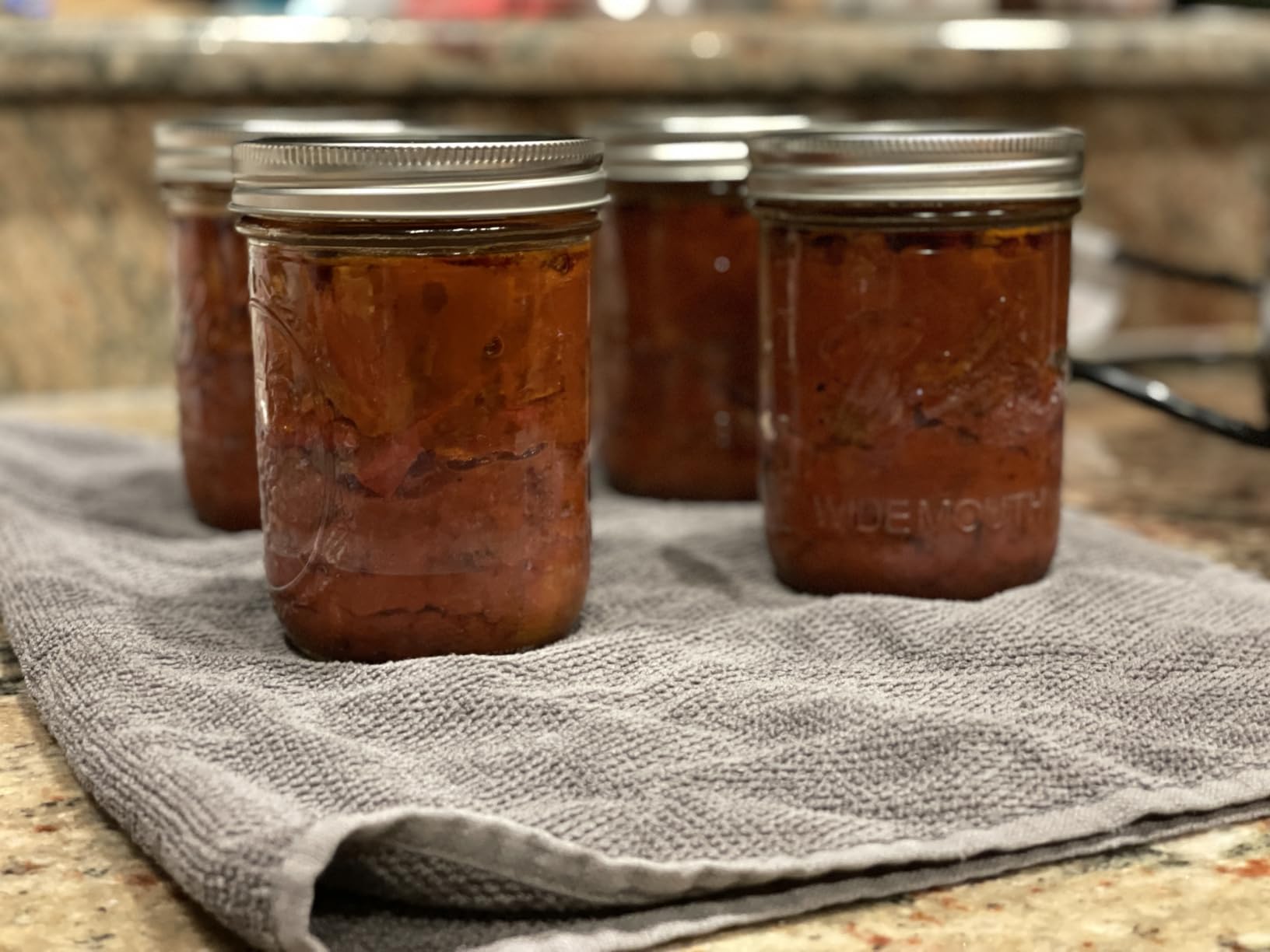
Four cooking modes run from the same panel: pressure cook, slow cook, steam, and water bath. At 1000 watts it draws less current than a countertop multi-cooker, which matters on older kitchen circuits, and the 14.17 by 15.27 by 16.53 inch footprint is narrower than the Presto line.
There are trade-offs, and the big one is batch size. Four quart jars or five pints is a genuine limitation against a 7-quart machine or a 16-quart stovetop canner. If you are processing a large harvest, the batch count will hurt. The warranty is one year, which is short, and some reviewers note that the weight markings printed on the lid can wear away with heavy scrubbing, so keep a copy of your jar weights somewhere else.
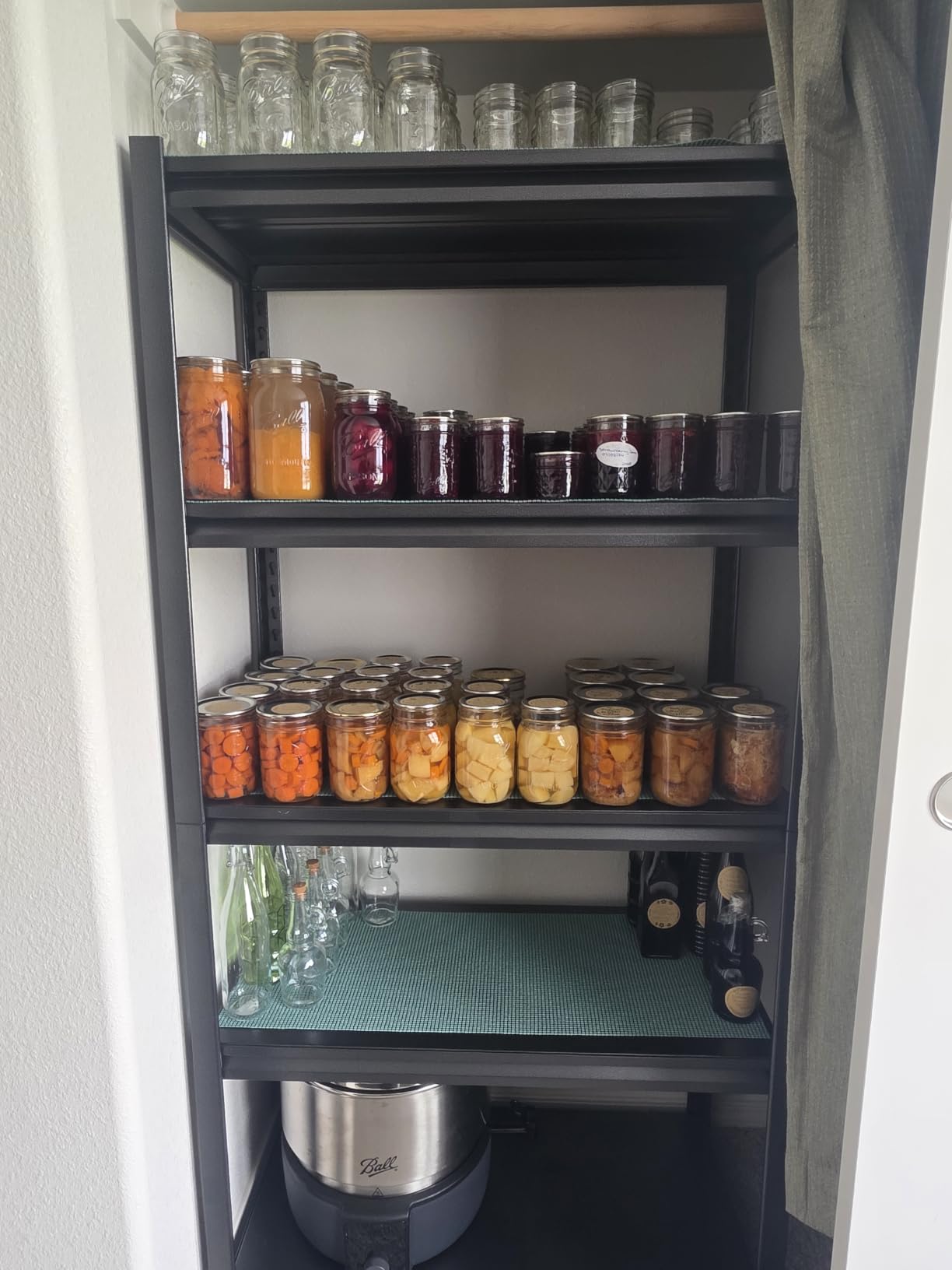
What the low batch count means for a real garden
Before you decide that four quart jars is a dealbreaker, count what you actually harvest. Most households going through a summer of tomatoes, peppers, and green beans in a normal home kitchen are running batches of four to six quarts at a time, not twenty. The NPC-9 is sized for preserving a household’s weekly output rather than a farm’s entire season.
For a household that cans soups, stocks, and meat in small quantities, or one that wants shelf-stable food without dedicating a burner for two hours, four quart jars is workable. If you already own wide-mouth jars, check your plan: the jar footprint matters more than the liquid rating once the headspace rules are applied.
Where you should look elsewhere
Skip this one if your harvest exceeds roughly twenty quart jars a week, if you need a long-horizon replacement-parts supply for gaskets and valves, or if you want a warranty longer than a year. The one-year warranty is the weakest coverage among the dedicated canners here, and because a pressure canner is a sealed vessel you will eventually need replacement sealing components.
There is also a lingering debate in canning communities. One r/Canning thread we read holds the position that the Nesco has not been independently validated and that a stovetop pressure canner is the safer default. We think that view overweights the absence of published testing against the machine’s own safety design, but it is a real sentiment and worth weighing if you are risk-averse. The honest summary of that debate is that both camps agree the stovetop canner has more independent history behind it.
2. Presto 02144 12-Quart Digital Pressure Canner
Presto 02144 12-Quart Digital Pressure Canner
12 quart capacity
1485W at 120V
20.5 pounds
14 by 17 by 16 inch
Pros
- Most reviewed dedicated electric canner available
- Ten built-in safety features
- Automatic temperature sensor with cover lock
- Doubles as a water bath canner
- Presto replacement parts and service are easy to find
Cons
- Forced cooling cycle cannot be overridden
- Coating wear reported after long use
- Lid handle plastic can crack
- Will not water bath quart jars
This is the most heavily reviewed electric pressure canner in the category, with well over five thousand ratings, and the review volume itself is meaningful. When a machine has that many owners, the failure modes are documented rather than rumored, and Presto’s replacement service comes up repeatedly as responsive.
The 02144 was the first digital canner to automate both pressure canning and water bath canning in one appliance. The control knob and LED display walk you through the cycle, and the manual, not the marketing copy, is the document you follow for process times. That distinction matters more than it sounds: extension services and the National Center for Home Food Preservation are clear that the appliance manual governs, because the machine is designed around a specific process schedule.
Ten built-in safety features include a cover-locking system and an automatic temperature sensor. There is also no high-altitude adjustment required, which removes the single most error-prone variable for anyone living above a thousand feet.
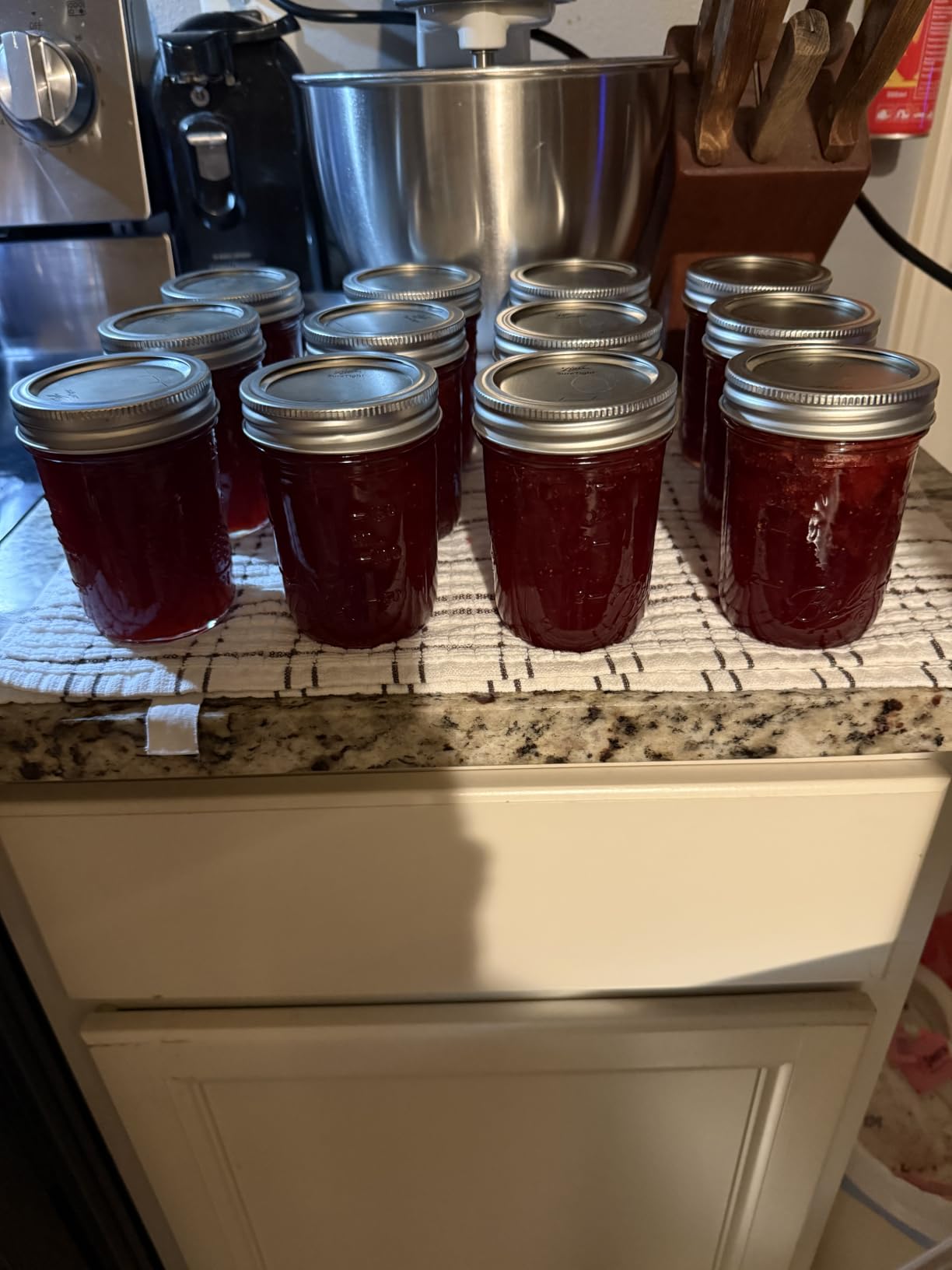
At 1485 watts and 20.5 pounds, this is the biggest current draw and the heaviest dedicated canner on our list. It runs on a standard 15-amp circuit but pulls close to the limit, so we would not run it on the same circuit as a toaster oven or a microwave.
The real drawback is the cooling cycle, which is forced and cannot be skipped. A batch that ends in processing still has to sit through the programmed cool-down, which is why experienced canners schedule one batch per half-day rather than a stack of them. Secondary complaints include inner pot coating wear over years of use, a plastic piece on the lid handle that can crack, and the fact that the 12-quart body cannot water bath quart jars because there is not enough room above the water line for full coverage.
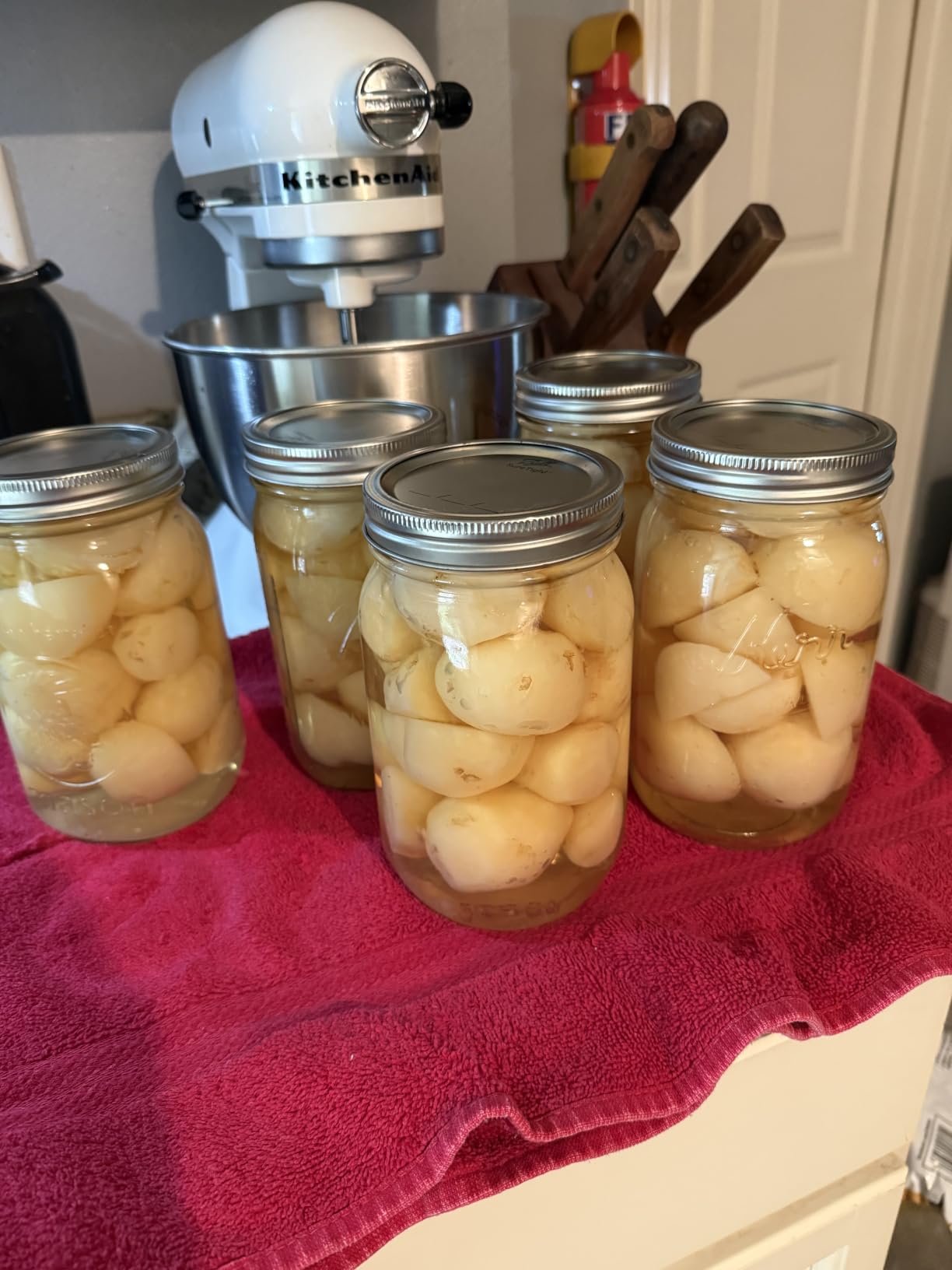
Whether the forced cool-down is a real problem
It depends entirely on how you can. One batch a day with an automated machine that never needs your attention is usually easier than a stovetop session where you rotate jars, adjust heat, and watch a dial for two hours. Canners running three or more batches a day feel the forced cycle as a hard ceiling, because you cannot start the next load until the machine releases.
Plan the day around it rather than around the canner. Treat the cool-down as part of the process, use the time to prepare and label the next batch, and the constraint stops being a complaint and becomes scheduling.
What to check before your first batch
Read the manual’s process tables end to end and follow them exactly, including the jar warming step. Buy the canning rack and the jar lifter from the start, and confirm the headspace figure for each jar size you plan to use before you fill anything.
One limitation worth planning around: if you mostly can high-acid foods, the water bath side of this machine will not take quart jars. Either keep pint and half-pint jars for that work or use a separate boiling water bath setup for jam and pickles.
3. Presto 02153 23-Quart Digital Pressure Canner
Presto 02153 23-Quart Digital Pressure Canner
23 quart capacity
1100W at 120V
16.1 pounds
15.5 by 17.3 by 17 inch
Pros
- Holds up to 7 quart jars
- Guided digital controls suit first-time canners
- Automatic altitude adjustment
- Double-stacks pint jars
- Lighter than the insulated 12-quart unit
Cons
- Forced cooling cycle cannot be overridden
- Cannot change settings mid-cycle without restarting
- Only one rack included
- Scorch marks appear on the base after water bath cycles
This is the answer for anyone who keeps hitting a wall at four or five jars per batch. The 02153 holds up to seven quart jars and can double-stack pint jars, which effectively doubles your output for small formats without a second machine.
The control panel is the friendliest in the category for a first-time canner. Step-by-step prompts walk through the process and the LED display keeps the stage visible from across the counter, and the sensor maintains a precise processing temperature without any burner management on your part.
Automatic altitude adjustment is handled internally, so if you live above a thousand feet you do not modify process times yourself. That is the correct behaviour for a temperature-controlled machine, and it is the single clearest functional difference from a stovetop pressure canner, which you must set higher to reach the same temperature at altitude.
At 1100 watts and 16.1 pounds, it is lighter than the 12-quart 02144, which is the opposite of what the capacity numbers suggest, because the larger body is not insulated in the same way. The 15.5 by 17.3 by 17 inch footprint is wide, so measure your counter and your cabinet clearance before committing.
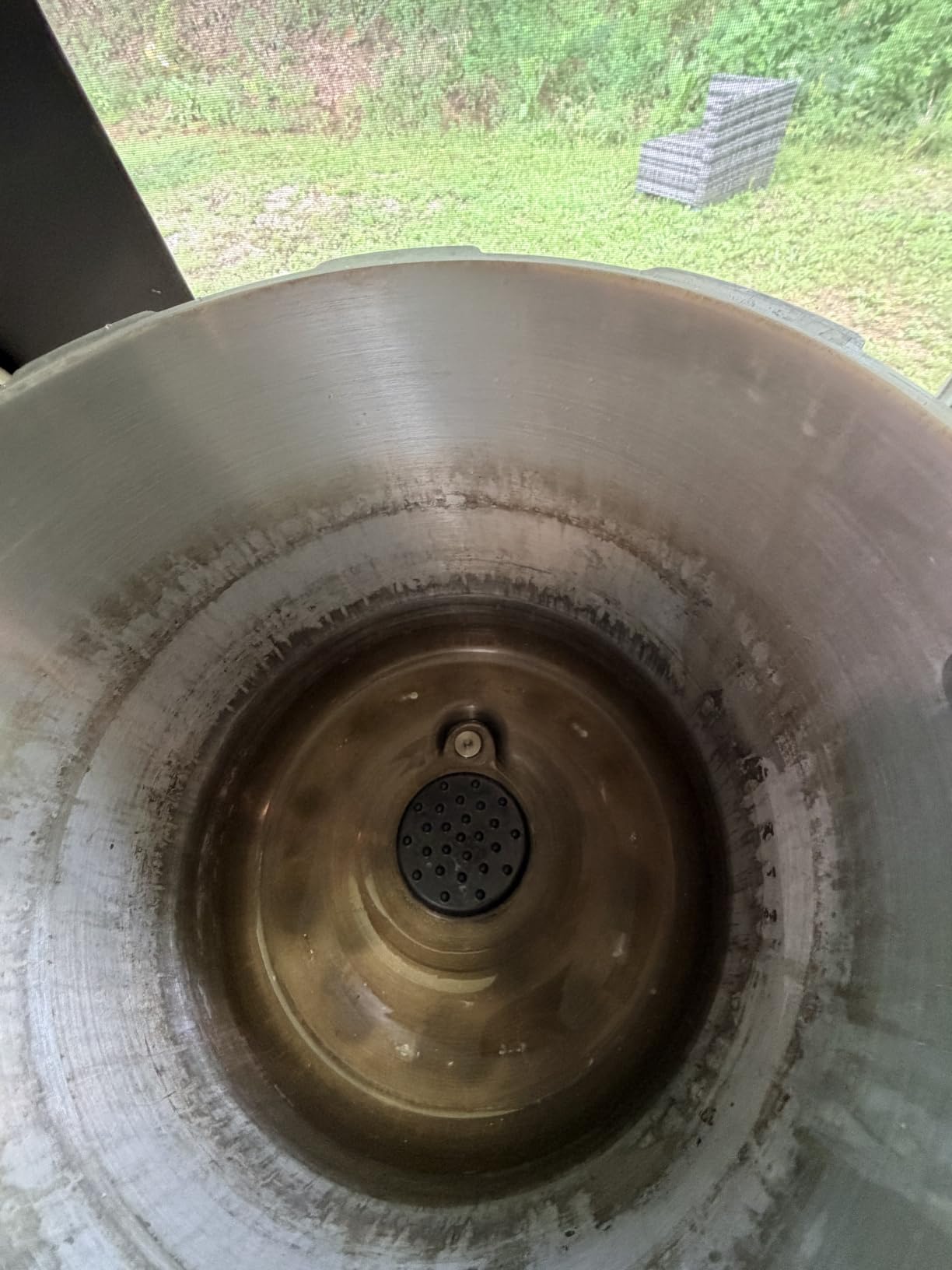
The shared Presto compromise applies here too. The cooling cycle is fixed and cannot be overridden, and you cannot adjust a setting mid-cycle without restarting, which is genuinely annoying when you realise at minute ten that you selected the wrong program. Only one rack is included, so a second rack is needed if you want to stack pints. A few users also report discoloration or scorch marks on the base after water bath cycles, and one report describes scorching chicken stock, which reads like a defective unit rather than a design fault.
Whether 7 quart jars is enough for a big harvest
Seven quart jars per load means roughly 140 quarts a day if you run a full day of batches. Most families producing that much food are already thinking about splitting the work with neighbours or moving to a stovetop canner for the heaviest days, because no electric machine on the market gets you to a 16-quart stovetop batch volume in a single load.
What seven quart jars does buy you is fewer total runs. Every avoided heat-up, load, process, and cool-down cycle saves real time and real electricity, and the double-stacking option for pints is a genuine efficiency gain that has no equivalent on a stovetop canner of similar size.
Where the forced cooling cycle hurts most
It hurts most at peak harvest, when you have beans coming in faster than you can process them and the jars are stacking up on the counter. The programming cannot be shortened, so the only lever is batch count per day, and this machine already maximises that at seven quart jars per load.
Plan a weekend processing block rather than a nightly one. Treat it as a half-day commitment per full load and the constraint stops being the thing that stops you from canning.
4. Presto Precise 12-Quart Electric Pressure Canner and 7 Function Canning Kit
12 Qt Stainless steel Electric Pressure Canner & 7 Function Canning Kit
12 quart capacity
Touch controls
Precise model
Stainless steel
Pros
- Complete starter set with funnel bubble remover lid lifter and tongs
- Pressure and water bath canning in one appliance
- Automatic high-altitude adjustment
- Error alerts if conditions are wrong
- Disassembles easily for cleaning
Cons
- Only 6 reviews so far
- Limited long-term reliability data
- You are paying extra for basic accessories
This bundle pairs a 12-quart Presto Precise canner with a seven-piece canning tool kit: funnel, bubble remover, magnetic lid lifter, and kitchen tongs. For a first-time canner who has nothing but jars and a stockpot, that removes the most common excuse for not starting, which is owning no jar lifter.
The canner itself automates the cycle, doubles as a boiling water canner for fruits, jams, jellies, and salsa, and makes no high-altitude adjustments required. An innovative sensor detects and holds the exact temperature, and it also alerts you if something is wrong during the cycle rather than failing silently, which is a safety feature we would like to see as standard.
Value is the whole argument here. You are bundling a machine with accessories you would buy anyway, and the piece most first-timers skip is the jar lifter because they assume tongs will do.
Whether a starter bundle beats buying the canner alone
If you already own a jar lifter, funnel, and bubble remover, the bundle adds nothing and you should buy the canner on its own. If you are starting from zero, the accessories are exactly the four tools the process requires, which makes this the lowest-friction way to begin pressure canning.
The practical question is durability over time. The tooling is standard and will last, but the canner is where your money and your food safety sit, and a machine with six reviews gives you almost no failure history to draw on.
Where the small review count becomes a problem
Six reviews means there is no independent picture of how this canner behaves in year three. You have no data on seal longevity, no data on control board failure, and no data on whether the coating holds up to a decade of processing.
That is why we would not build a food storage programme around it without first checking replacement part availability. If the manufacturer sells gaskets, valves, and sensors separately and has held the model in production, the risk is manageable. If the line is new and thin, understand that you are an early adopter of a safety-critical appliance.
5. TERUISI 19-Quart Commercial Electric Pressure Cooker and Canner
TERUISI 19QT/18L Commercial Pressure Cooker, 8-in-1 Multifunctional Large Pressure Cookers, 1700W Electric Pressure Canner with CE Certified, Non-stick, Slow Cooker Rice Maker for 32-42 People,120V
19 quart capacity
1700W at 110V
32.1 pounds
15.7 by 19.3 by 17.5 inch
Pros
- Largest dedicated canning-style capacity in this roundup
- CE certified to EN 60335
- 1700W element for fast heat-up
- Ten or more safety protections
- Five-layer aluminum liner with nonstick coating
Cons
- Sold as a pressure cooker
- not a canning-certified appliance
- Heavy at over 32 pounds
- Only 11 reviews for reliability context
- 110V single-household supply only
This is the largest machine in the roundup at 19 quarts, and it is clearly built for volume. At 1700 watts it heats faster than any dedicated electric canner here, which matters when you are running back-to-back loads, and the stainless steel shell with a five-layer aluminum nonstick liner is a restaurant build.
Certification is CE to the Low Voltage Directive and the EN 60335 standard, which is a European safety conformity mark rather than a North American listing. It is a real standard with real testing behind it, but it is not the same document as a North American electrical safety listing, and the distinction is worth keeping in mind.
Ten or more built-in safety features cover overheat, overcurrent, overvoltage protection, automatic pressure relief, and a safety locking lid. The 8-in-1 panel gives you five presets, two assisted cooking modes, and a manual pressure setting.
Why we do not call this a canning appliance
The listing never claims USDA conformance or canning certification, and its documentation is written for cooking, not for processing low-acid food to a validated schedule. A machine that reaches pressure and holds a temperature for a preset cooking time is not automatically a machine that reaches and holds a validated processing temperature for a process time drawn from a tested recipe table.
That gap is the whole safety argument. If you want this capacity, use it to cook and to pressure cook foods you would eat fresh anyway. Keep low-acid preservation to a machine whose manual prints canning process times.
Where 32 pounds and 19.3 inches cause problems
At 32.1 pounds empty, this is a two-person lift and it will not move while full. A filled 19-quart vessel is a serious weight, and on a counter near an edge or a low shelf it is a real hazard rather than an inconvenience.
The 19.3-inch width also means you need clear counter and a dedicated circuit. A 1700-watt element on 110V will trip a shared 15-amp circuit alongside a microwave or toaster oven, and the safety protections that stop the machine from overheating are not the same thing as tripping a breaker safely.
6. YIQICHEF 15.8-Quart Commercial Electric Pressure Cooker
15.8Qt Commercial Large Electrical Pressure Cooker, 8-in-1 multifunctional Pressure Cooker with Non-stick Inner Pot|24 hours Preset Slow Cooker/Delay time Setting steam cooker/rice cooker and warmer
15.8 quart capacity
1700W at 120V
12 pounds
16.9 by 16.9 by 14.5 inch
Pros
- Lightest commercial-capacity unit we tested at 12 pounds
- Five-layer nonstick inner pot with temperature and pressure control
- Lid-closed detection refuses to heat unless sealed
- 24-hour delay timer
- Ten or more safety features
Cons
- Not marketed or certified for pressure canning
- Only 19 reviews with mixed ratings
- Commercial cooking focus rather than home preservation
- Some quality control complaints
At 12 pounds this is the lightest large-format electric cooker in the roundup, which is unusual at 15.8 quarts and genuinely useful if you plan to move it or store it between seasons. Most of its competitors in this size class weigh well over twice as much.
The engineering is competent. A five-layer nonstick inner pot sits under smart temperature and pressure control, and lid-closed detection prevents the element from energising unless the vessel is properly sealed, which is the same class of interlock the dedicated canners use.
Eight-in-one multi-functionality covers porridge, rice, meat, soup, soybeans, turkey, and bones, plus a 24-hour delay timer. The 1700-watt element is specified at up to 70 percent faster cooking than conventional methods.
What the mixed rating distribution tells you
The 4.0 average across 19 reviews is the second-lowest in this group, and the distribution matters more than the average. A large share of one-star and two-star reviews points to quality control variation between units rather than a design problem, since a design problem would produce consistent complaints across every sample.
Unit-to-unit variation is exactly the risk you do not want in a sealed pressure vessel. The same 1700-watt element that heats fast on a good unit can scorch on a bad one, and the pressure system is where that matters most.
Why the missing canning process table is disqualifying
There is no canning certification and no printed process time table for low-acid foods. Without a manufacturer-published process schedule tied to a tested recipe, you have no validated way to know that the vessel held the right temperature for the right duration.
Use it for what it is: a fast large pressure cooker for beans, stocks, and bone broth. It is a good machine at that. It is not a substitute for a canner, and the absence of a canning schedule is a documentation gap, not a judgment about the hardware.
7. DRINTON 15.8-Quart Commercial Electric Pressure Cooker
DRINTON Commercial Pressure Cooker, 15 Liter/15.8 Quart Large Pressure Cooker with 5 Preset Functions, 1700W Electric Pressure Pot Stainless Steel Canner with 24H Timer for 25-35 People Use
15.8 quart capacity
1700W at 110V
23.1 pounds
15.7 by 19.1 by 15.4 inch
Pros
- Highest rated among the commercial multi-cookers at 4.8
- 1700W element for fast cooking
- 8-in-1 functions with five presets
- 12 built-in safety features
- Email warranty support
Cons
- Only 10 reviews all five-star with no critical feedback
- Not certified for home pressure canning
- Alloy aluminum inner pot rather than stainless
- Heavy at 23.1 pounds
The DRINTON carries the highest average rating of any product in this roundup at 4.8, and we are going to be blunt about why we still rank it below four dedicated canners. That rating comes from ten reviews, all of them five stars, with no critical feedback visible at all.
A flawless ten-review sample on a commercial appliance is a signal about the sample, not about the machine. It tells you what early buyers felt, and nothing about the year-three experience that matters for a device you intend to keep for a decade.
What we can verify is the specification. A 1700-watt element, a multi-layer aluminum alloy inner pot with a food-grade nonstick coating, an 8-in-1 panel with five presets, a 24-hour delay timer, and twelve built-in safety features including overheat, overcurrent, overvoltage protection, automatic pressure relief, and a safety locking lid.
Whether 12 safety features means a safer machine
Not on its own. Feature counts are marketing, and twelve protections do not compensate for an absent validation path. What matters is whether the appliance is designed to hold a specified temperature for a specified time on a published schedule, and whether the safety systems protect the food rather than the electronics.
Automatic pressure relief and a safety locking lid are good. They stop the vessel from opening under pressure and reduce the chance of a seal failure event. They do not tell you the process was sufficient to destroy the spores that cause botulism in low-acid food.
What the aluminum inner pot means for longevity
An aluminum alloy inner liner with a nonstick coating is lighter and cheaper than stainless, and it means you are dependent on the coating staying intact. Once the coating wears through, the pot becomes a food safety question rather than a replacement-parts question.
At 23.1 pounds and 19.1 inches wide, this is also not a small counter commitment. If your interest is cooking large volumes quickly, the specification sheet is genuinely strong. If your interest is preserving food, the missing canning process table settles it.
8. TINTON LIFE 18L Electric Pressure Canner and Steam Sterilizer
TINTON LIFE Electric Pressure Canner 4.7 Gallon Autoclave Steam Sterilizer 18L 110V Portable Stainless Steel Shell Pressure Tank
18 liter / 4.7 gallon capacity
110V operation
11.5 inch round diameter
Stainless steel shell
Pros
- Genuinely large 18 liter vessel
- Geared steam pressure gauge for reading pressure
- Automatic overpressure release
- Portable stainless shell with top handle
- No stovetop required
Cons
- Only 1 review
- Heating never shuts off automatically
- No digital controls or canned process schedule
- Autoclave design rather than food canning design
- Unknown brand with no service history
This is the most unusual machine here. It is a 110V electric pressure vessel with an 18 liter stainless steel shell, a geared steam pressure gauge, and an automatic overpressure release valve, and it is sold as both an electric pressure canner and an autoclave-style steam sterilizer.
Those are two different jobs with two different requirements. Autoclave sterilisation needs a sustained steam cycle at a defined pressure for instruments. Pressure canning needs a validated processing temperature held for a recipe-specific time. A machine designed for the first is not automatically designed for the second, and the documentation here is written for the first.
The one detail that settles the risk for us: heating continues throughout operation with no timed shutdown, so it requires direct monitoring from start to finish. On a small-batch canning appliance that runs for tens of minutes, that is a meaningful drawback.
Why the absence of automation is disqualifying for canning
Every dedicated electric canner in this roundup runs a programmed cycle with a timer, beeps, and stage prompts. The reason is not convenience. It is that a canning process is defined by duration at temperature, and a machine with no timed cycle puts that entirely on the operator with no feedback.
The geared gauge gives you a pressure reading, which is useful, but a pressure reading is not a process record. You would be estimating duration by eye, and estimating duration is exactly the failure mode pressure canning cannot tolerate.
Where the autoclave angle is genuinely useful
If what you need is a large steam steriliser for canning jars, equipment, or household items, an 18 litre vessel with a pressure gauge is a plausible tool for that job, and the electric format means it works on any outlet rather than a stove.
With one review on the entire listing, we would not put low-acid food into it. There is no user history, no brand service record, and no published canning schedule. A sealed pressure vessel that will not shut itself off is exactly the category where a lack of independent testing matters most.
9. YOLLNIA 17.8-Quart Commercial Electric Pressure Cooker
17.8QT Commercial Electric Pressure Cooker stainless steel Pressure Cooker
17.8 quart capacity
Touch controls
18 by 19 by 18 inch
Eight preset programs
Pros
- Very large 17.8 quart vessel for gatherings
- Eight preset cooking programs
- 24-hour programmable timer
- Safety lock lid and pressure release valve
- Stainless steel construction
Cons
- Lowest rated product in the roundup at 3.9
- 32 percent of reviews at 3 stars or below
- Listed 110W wattage appears to be a data error
- No canning certification
- Unknown brand
This is the weakest-rated product in the roundup at 3.9 across 13 reviews, and the distribution is the reason. A meaningful share of ratings sit at three stars or below, which for a sealed pressure appliance is a signal you cannot design around.
The positive case is straightforward. At 17.8 quarts it is one of the larger vessels here, specified for groups of 70 to 80 people, with eight preset programs, a 24-hour programmable timer, a safety lock lid, a pressure release valve, an anti-block cover, and automatic pressure maintenance with natural release.
There is also a data problem in the listing itself. The wattage is recorded at 110 watts, which is not a plausible figure for a 17.8-quart pressure vessel. Either the specification was mistranscribed or the listing is unreliable, and an unreliable listing is a bad sign for a product where the safety documentation is what matters.
Why the rating spread matters more than the average
A 3.9 average could mean a few people disliked an otherwise solid machine. A rating set with a third of reviewers at three stars or below means a meaningful share of owners had a bad experience, and for a pressure vessel the possible bad experiences range from a scorched meal to a failed seal.
Combined with the wattage inconsistency and the absence of any canning certification, we would want direct answers from the manufacturer before running this near low-acid food.
What the size and controls are actually good for
For event-scale cooking, a 17.8-quart stainless vessel with a delay timer and a warmer is a sensible tool. The 24-hour programmable timer means a large pot of stew or a batch of rice for a large gathering can start overnight, and the LED warmer function keeps it serviceable.
At 18 by 19 by 18 inches it is the deepest unit we covered after the largest, and no weight is listed, which is itself a documentation gap for something you have to lift full. Fine for cooking. Not our recommendation for preserving.
10. Vorchef 15.9-Quart Commercial Electric Pressure Cooker
VorChef 15L/15.9 QT Commercial Electric Pressure Cooker, 5-in-1 Multifunctional Large Pressure Cookers,2000W Electric Pressure Canner with Non-stick Inner Pot Use for Restaurant,Canteen and Hotel
15.9 quart / 15 liter capacity
2000W at 110V
19.41 inch height
Black stainless steel
Pros
- Highest wattage in the roundup at 2000W
- Detachable lid gasket valve and inner pot for cleaning
- Removable water drip tank
- 24-hour delay timer
- Stainless steel exterior
Cons
- Only 10 reviews all five-star
- 110V supply with no canning certification
- 19.41 inch height will not fit under many cabinets
- Unknown brand with no canning reputation
The Vorchef posts the highest raw rating in the roundup at 5.0, and it also carries the highest wattage at 2000W, which makes it the fastest to heat. The 15.9-quart capacity is specified for feeding 25 to 35 diners in a restaurant, canteen, or hotel setting.
Cleaning is the feature we would actually praise. The lid, gasket, pressure valve, and inner pot are all detachable, and there is a removable water drip tank, so the parts that normally trap food residue in a large multi-cooker can all come off and be washed. On a machine this size that is a meaningful design win.
It also has a 24-hour delay setting for catering prep during non-business hours, a food-grade nonstick inner pot, and multi-layer safety protection covering overheat, overcurrent, overvoltage, automatic pressure release, and a safe-locking lid.
Why a perfect score on ten reviews tells you little
Every one of the ten reviews is five stars. On a product with an established review history you would treat that as a strong signal. On a new listing with no critical feedback at all, it tells you the sample is unusually positive, which can mean early adopters, or filtered feedback, or simply a small group who bought a well-built machine.
The practical takeaway is that you are the first large-scale test case for the failure modes. There is no community knowledge of how the gasket ages, whether the controller survives a decade, or how the nonstick pot holds up under a hundred cycles.
What the 19.41-inch height means for your kitchen
At 19.41 inches tall this is the tallest machine in the roundup by a wide margin, and it will not fit beneath a standard upper cabinet in many kitchens. Measure the clearance above your counter before you commit, and plan the storage location with the same care as the cooking location.
For a commercial or shared kitchen with high ceilings and a 20-amp circuit, the specification is genuinely strong for large-volume cooking. For home pressure canning, the absent process table and the cabinet height together make it a poor fit.
Is There a USDA Approved Electric Pressure Canner?
No, and no appliance of any kind is USDA approved, because the USDA does not certify or approve canners. What manufacturers mean is that the machine was built to process low-acid foods at the temperature and pressure required by USDA and National Center for Home Food Preservation guidelines. Verify it by checking that the manual contains a canning process table, that the lid cannot be opened under pressure, and that the maker documents a temperature the unit holds at. A symbol on the box is not evidence of anything.
That distinction matters because the difference between a pressure canner and a pressure cooker is a documentation difference as much as a hardware one. A canner is a vessel with a published process schedule for specific foods at specific times. A pressure cooker is a vessel designed to cook food quickly under pressure, and it may never reach or hold a validated canning temperature for a long enough period.
This is why we refused to recommend any multi-cooker in this roundup for low-acid preservation, including our own fourth-ranked pick. On r/Canning, the recurring thread in the electric canner debate is that independent extension-service testing of these machines remains thin, and a large share of experienced canners stay with a stovetop pressure canner for that reason. That caution is reasonable given the published evidence, and we would rather name it than pretend it away.
One more mechanical difference worth understanding. A stovetop pressure canner is pressure-controlled: you set a weighted gauge or dial gauge to 10 PSI and the temperature that results depends on altitude. An electric canner is temperature-controlled: a sensor holds the processing temperature the recipe requires, and water’s boiling point shifts with altitude, so the machine raises its own target to compensate. That is why the Presto models advertise no high-altitude adjustment, and it is a genuine advantage at elevation.
It also means an electric canner cannot be relied on the way a gauge canner can. A gauge you can read is a fact. A sensor you cannot see is a claim, which is precisely why we weight published process tables, safety interlocks, and available replacement parts so heavily in the rankings above.
How to Use an Electric Pressure Canner and Clean It
Every dedicated canner here follows the same skeleton. Read the manual first, because the manual governs process times, then work through these steps.
Inspect the vessel, gasket, vent pipe, and float valve before every batch. A hairline crack in a sealing surface or a hardened gasket ruins a batch.
Check the jar inventory. Confirm lids, rings, and brand-new jars, and know your headspace requirement for each jar size before you start filling.
Prepare the food using a tested recipe only. No substitutions, no unverified times from a comment thread, no improvising on acidity or pack method.
Fill jars to the correct headspace, remove air bubbles, wipe the rim, and apply a screw band tightened only to fingertip pressure.
Place jars on the canning rack in the inner pot, leaving the space the manual specifies, and add water to the fill line given in the manual.
Lock the lid, select the food type or process time on the panel, and let the machine run. Do not open the lid while it is pressurized under any circumstances.
Allow the full programmed cool-down. The machine will not release early, and forcing it is how people break seals or burn themselves.
Remove jars with a jar lifter, leave them undisturbed for 12 to 24 hours, then check every seal and tighten any band that is loose.
What to do with a partial load
Use jars from the same size and food type together, and place them in a ring or cluster rather than spread around the base. The bottom of the pot is the hottest zone, and a tight cluster keeps the jars at an even height so none processes faster than the others.
Add enough hot water to reach the fill line the manual specifies, which is the level that keeps the jars from touching the element. A partial load does not require a shortened process time, and never substitute bottled water or add extra water beyond the manual figure without checking, because the fill level is part of the validated process.
If you routinely can less than a full load, that is an argument for the smallest machine that still meets the practical minimum batch rather than a reason to skip the batch. A four-jar load done reliably beats an eight-jar load abandoned half full.
Cleaning and what to watch for
Wash the canning rack, inner pot, and removable condensation catcher in warm soapy water after every use, and dry the gasket separately with the lid open. Store the lid unlatched so the sealing surfaces do not take a set, and do not stack heavy items on the lid handle.
Replace the gasket on the manufacturer schedule or the first time it hardens, cracks, or stops springing back, since a gasket that cannot reseal is the most common cause of a failed seal. Follow the same rule for the vent pipe and the float valve, and check that the safety lock engages before each cycle.
Have the vessel pressure-tested if the listing indicates any doubt, and never can with a machine whose controller shows error codes, whose lid rocks, or whose heating element has visible scale damage. If you need help choosing a related electric appliance while you are shopping, our beginner electric board guide follows the same check-the-specs-first approach.
Electric Pressure Canner Buying Guide for 2026
Jar capacity is the number that causes the most disappointment, and the reason is that quoted capacity is liquid volume, not jar count. A 12-quart electric canner does not hold twelve quart jars. After headspace, jar dimensions, and the water fill line required by the manual, the realistic figure is closer to four or five quart jars, or seven to eight pints. A 9.5-quart machine realistically holds four quart jars or five pints, and the 23-quart Presto is the only unit here that manages seven quart jars. Count jars, not quarts, when you compare.
Wattage and circuit capacity are the second real constraint. The dedicated canners sit between 1000 and 1485 watts, while the commercial multi-cookers in this roundup run from 1700 to 2000 watts. On a 15-amp circuit, a 2000-watt element sharing a circuit with a microwave will trip the breaker. Give any canner above 1500 watts a dedicated outlet.
Counter space and storage are the third. Footprints here run from 14 by 15 inches up to 19.4 by 19 inches, and heights reach 19.41 inches, which will not clear a standard upper cabinet. We recommend measuring both the cooking position and the off-season storage position before buying, because a pressure canner that lives in a garage is a pressure canner you will not use in August. Our home device buying guide covers the same measure-first rule for smaller appliances.
Altitude handling is a genuine functional split rather than a feature checklist. Every Presto model in this roundup states that no high-altitude adjustment is required, and the 23-quart model performs automatic altitude adjustment, because these are temperature-controlled machines. The NESCO NPC-9 solves it differently, by including separate standard and high-altitude limiting valves. If you are above a thousand feet, prefer a temperature-controlled canner and follow its manual rather than adapting a stovetop process time.
Certification and documentation come next. Look for a North American electrical safety listing such as ETL or UL on the appliance itself rather than a European conformity mark, and then check for the thing that matters far more: a printed canning process table in the manual. No process table means no validated schedule, and no validated schedule means you should not be canning low-acid food in it.
Warranty and replacement parts are the last filter, and it is where the NESCO loses ground. Its one-year warranty is the shortest among the dedicated canners, and a pressure canner is a sealed vessel that will eventually need a new gasket, float valve, or vent pipe. Presto has a far longer-established record of stocking those parts, and if you intend to keep a canner for a decade, that matters as much as the first season’s performance. We publish the same durability-versus-disposability comparison in our travel electric chair picks, where parts availability decides longevity too.
Finally, avoid confusion with electric water bath canners. Devices sold for boiling water bath canning handle high-acid foods at or below 212F, and the electric versions do that on a countertop. They are safe and useful for jam, pickles, and tomatoes, and they are absolutely not substitutes for a pressure canner. If you are preserving vegetables, soups, meat, or stock, the answer is always a pressure canner.
Frequently Asked Questions
Is there a USDA approved electric pressure canner?
No appliance is USDA approved, because the USDA does not certify canners. Manufacturers mean the machine is built to meet USDA and National Center for Home Food Preservation guidelines for processing low-acid foods. Check that the manual includes a printed canning process table, that the lid cannot open under pressure, and that the vessel holds the required processing temperature. A symbol on the packaging is not a certification.
Are electric pressure canners safe?
The dedicated electric canners in this roundup are engineered for canning, with a safety lock lid, a float valve, and a pressure regulation system that prevents opening under pressure. Their advantage is that a sensor holds the processing temperature automatically instead of leaving heat and duration to the operator. The honest caveat is that independent extension-service testing of electric canners is thinner than for stovetop models, which is why we weight published process tables and replacement part availability so heavily.
Which electric pressure canner is better, the Nesco or the Presto?
The NESCO NPC-9 is smaller at 9.5 quarts, draws less power at 1000W, and doubles as a pressure cooker, steamer, slow cooker, and water bath canner. The Presto 02144 is larger at 12 quarts, has the most review history, and carries a ten-feature safety package with automatic temperature sensing. Choose the NESCO for small batches and multi-use, and the Presto for more jars per load and the deepest review record. Be aware the Presto cooling cycle is fixed and cannot be overridden.
How many jars can an electric pressure canner hold?
Quoted quart capacity is liquid volume, not jar count. Realistically, a 9.5-quart canner holds 4 quart jars or 5 pints, a 12-quart canner holds 4 to 5 quart jars or 7 to 8 pints, and a 23-quart canner holds up to 7 quart jars with double-stacking for pints. Always check the manual, because headspace and the required water fill line reduce what fits.
What should I do if I do not have enough jars to fill my pressure canner?
Run a partial load. Use jars of the same size and food type, cluster them in the center of the canning rack rather than spreading them out, and add water to the fill line the manual specifies. Do not shorten the process time for a partial load. The tight cluster keeps jars at an even height so none processes faster than the others.
What is the recommended altitude for pressure canning?
Above 1000 feet, water boils below the temperature low-acid foods require, so processes must be adjusted. Electric canners are temperature-controlled and compensate automatically, which is why the Presto models state that no high-altitude adjustment is needed. The NESCO NPC-9 includes separate standard and high-altitude limiting valves. Stovetetop pressure canners are pressure-controlled and need higher process times at elevation, following the extension service guidance for your area.
Can I pressure can in an Instant Pot or other multi-cooker?
Extension services advise against it. A multi-cooker is built to cook food quickly under pressure, not to hold a validated processing temperature for a recipe-specific time, and most models do not print a canning process table. Canning is not cooking, because the goal is a specific sustained temperature rather than a quick result. Use a dedicated pressure canner for low-acid foods and a water bath canner for high-acid foods like jams and pickles.
The Best Electric Pressure Canner Verdict for 2026
Our pick for the best electric pressure canner is the NESCO NPC-9. It is the machine we would put in our own kitchen because it is genuinely engineered for canning, it draws only 1000 watts, it handles altitude with included valves rather than guesswork, and it earns its counter space in the weeks when we are not preserving anything.
Pick the Presto 02144 if you want the deepest review history and the most complete built-in safety package. Pick the Presto 02153 if a four-jar load is the constraint holding you back, since seven quart jars and double-stacked pints is the real capacity jump in this category. Avoid putting low-acid food into any of the multi-cookers we covered, and follow the manual’s process table exactly when you use a dedicated canner.
One last piece of advice, and it is the advice we give ourselves. Run your first batch as a test, record the times and results, and treat shelf-stable food as the reward for doing it carefully rather than quickly.