
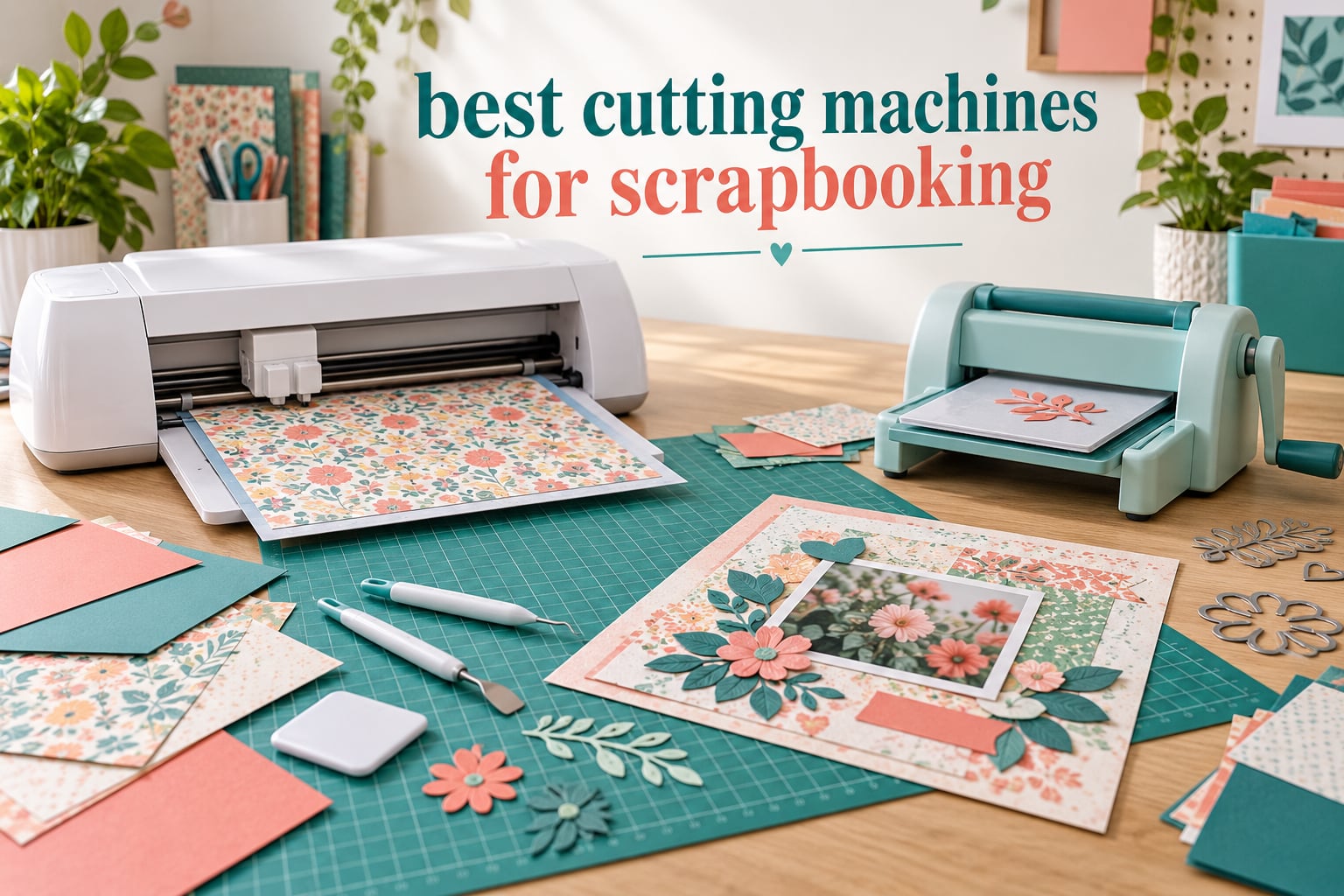
The best cutting machines for scrapbooking fall into two families. For dies, the Sizzix Big Shot is the dependable manual workhorse and the Sizzix Sidekick is the easiest first machine. For drawing, scoring and one-off titles, the Silhouette Cameo 5 Alpha Plus, the Cricut Maker 4 and the Brother SDX125E ScanNCut do the heavy lifting.
Hand-cutting one letterform takes minutes and rarely repeats exactly. A machine cuts the same shape in seconds, identically, every time, which is what lets a scrapbooker build forty identical journaling cards, a full set of layered titles or a run of border punches for a class or a small business. Die-cutting machines skip the design step entirely: you sandwich a metal die between your paper and a cutting plate, then crank or roll the sandwich through, and the machine presses along the die outline with even pressure. Electronic machines do the opposite, guiding a blade along a path you choose on screen.
That is the decision most people get stuck on, so this roundup covers both families side by side: manual die cutters, and electronic machines that cut, write, score, emboss and print-then-cut. We updated everything for 2026 and left prices out entirely, since they move daily; the buttons below show the current figure.
If you are still building a starter kit, our guide to the best scrapbooking kits for beginners covers the paper, adhesive and tool basics that pair well with any machine on this list.
Table of Contents
Top 3 Picks for the Best Cutting Machines for Scrapbooking
Silhouette Cameo 5 Alpha Plus
- Up to 15 inch cutting width
- Cut speeds up to 400mm/s
- AutoBlade and 4-point registration

Sizzix Sidekick Starter Kit
- Manual hand-crank
- 2.5 inch opening
- Starter kit with 8 dies and 2 folders
All 10 Compared Side by Side in 2026
| Product | Specifications | Action |
|---|---|---|
| Silhouette Cameo 5 Alpha Plus |
|
Check Latest Price |
| Sizzix Sidekick Starter Kit |
|
Check Latest Price |
| Brother SDX125E ScanNCut |
|
Check Latest Price |
 Cricut Maker 4 Cricut Maker 4 |
|
Check Latest Price |
 Cricut Explore 5 Essential Bundle Cricut Explore 5 Essential Bundle |
|
Check Latest Price |
 Silhouette Portrait 4 Silhouette Portrait 4 |
|
Check Latest Price |
 Sizzix Big Shot Sizzix Big Shot |
|
Check Latest Price |
 Sizzix Big Shot Plus Starter Kit Sizzix Big Shot Plus Starter Kit |
|
Check Latest Price |
 Cricut Joy Xtra Cricut Joy Xtra |
|
Check Latest Price |
 We R Memory Keepers Revolution We R Memory Keepers Revolution |
|
Check Latest Price |
1. Silhouette Cameo 5 Alpha Plus: the Widest Cutting Area for Full Scrapbook Layouts
Silhouette Cameo 5 Alpha Plus – 15″ Craft & Vinyl Cutter Machine with Automatic Blade, Fast Sketch Mode & 4-Point Registration – Includes Studio Software & 100 Designs, 1-Month Subscription – Black
Up to 15 inch cutting width
Cuts up to 400mm/s
4-point registration
AutoBlade
Electrostatic mat
Pros
- Widest cutting area here at up to 15 inches
- Cut speeds up to 400mm/s with 4-point registration
- AutoBlade sets blade depth automatically
- Electrostatic mat holds thin material flat without curling
- One-touch job repeat and an automatic Power Slide Lid
Cons
- Wide 15 inch body needs a big desk
- Included design subscription runs one month
- Electrostatic mat supports up to 0.5mm thickness
This is the machine I recommend when a project needs to be bigger than a 12×12 mat. The cutting area is listed at 15 inches by a 16 foot roll, and the four-point registration system lines up print-then-cut stickers with far less shifting than a two-point sensor.
In practice the width is what you feel. A full-width title across a scrapbook page comes out in one pass, and a long border strip no longer needs to be butted together from two pieces. The 4.6 rating from 941 owners is the strongest balance of score and review volume in this roundup, with 80 percent of ratings at five stars.
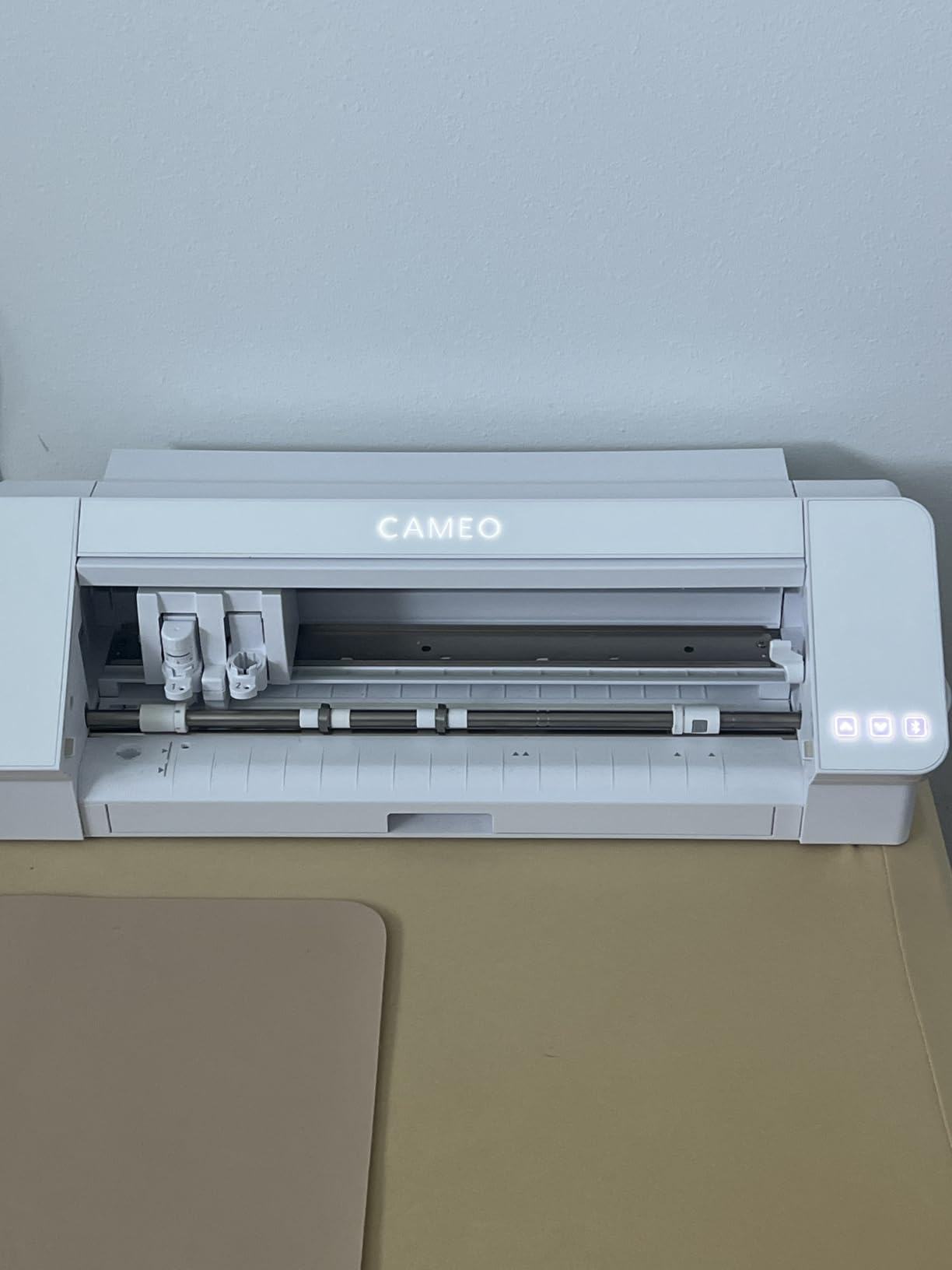
The AutoBlade takes one decision away from you. On earlier machines you told the software what you were cutting and adjusted the dial by hand; here blade depth is set automatically, and Fast Sketch Mode makes a fiddly title simpler by snapping to shapes. The automatic Power Slide Lid and one-touch job repeat matter more than they sound, because a forty-title batch means forty identical passes and you should not have to touch the machine each time.
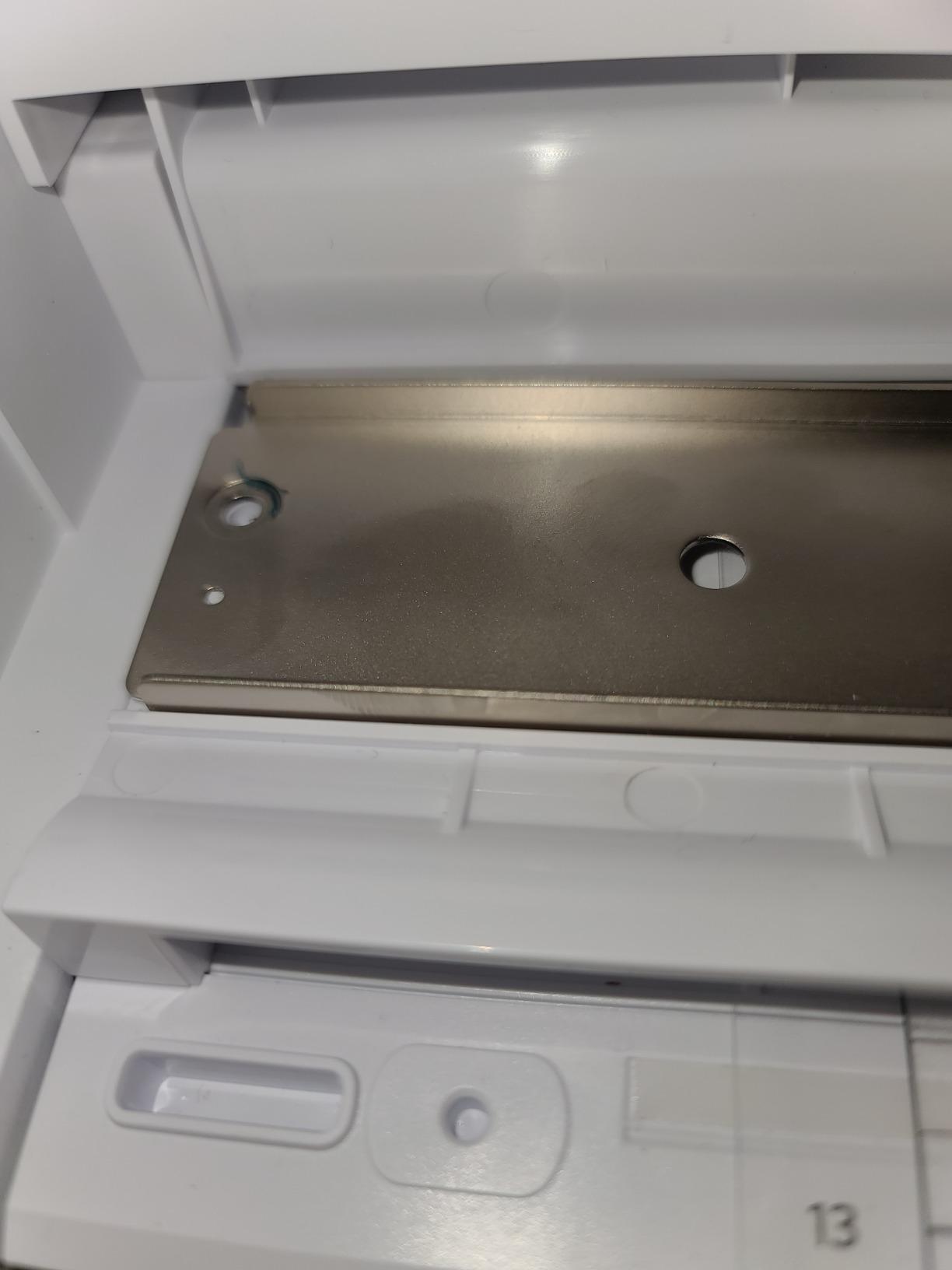
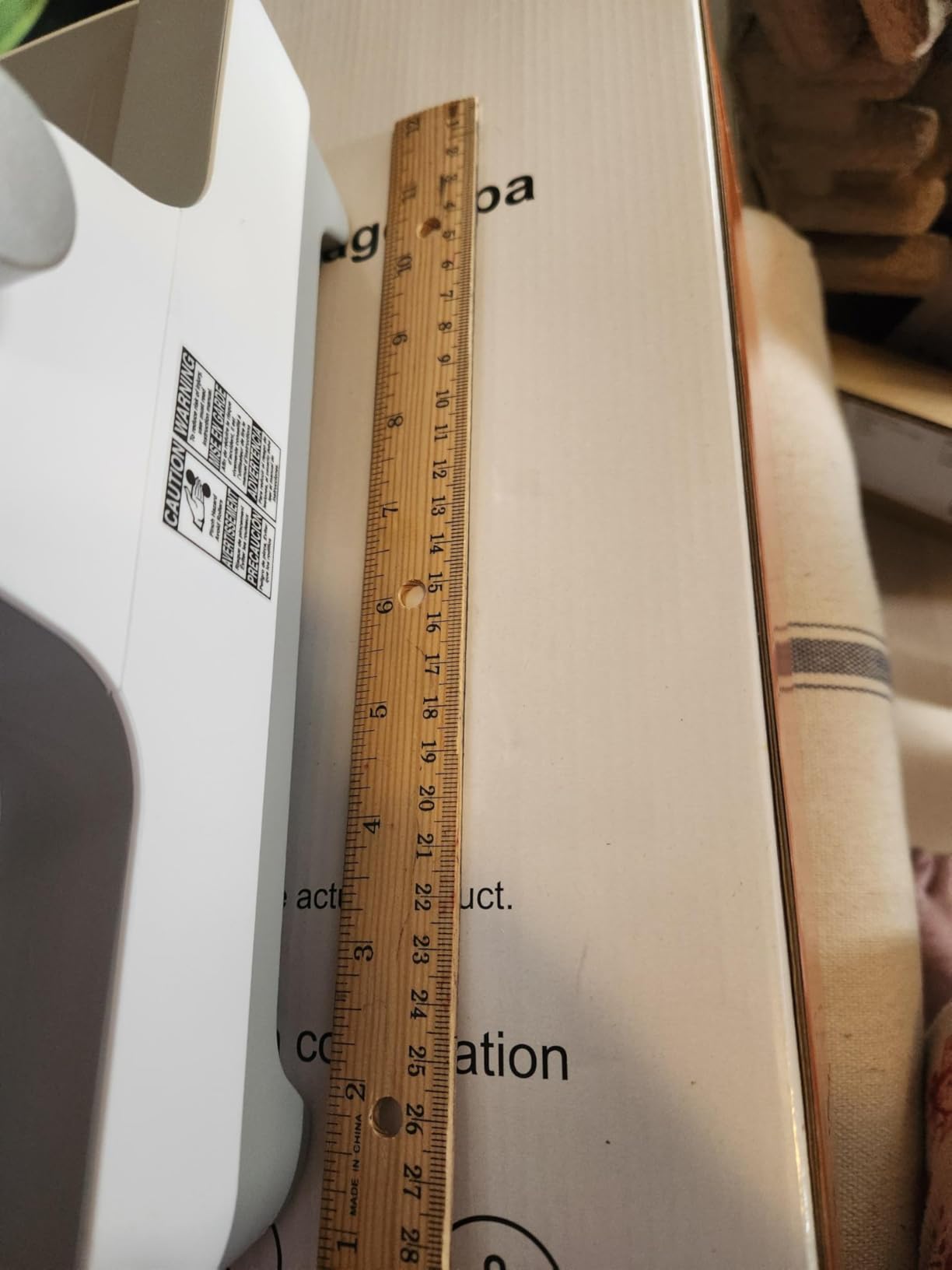
Material handling is handled by an electrostatic mat rated to 0.5mm, which is enough for patterned paper, cardstock and thin vellum. The catch is that 0.5mm ceiling: chipboard, thick foam and several tag stocks need a different mat, and the 25.28 inch body is a real footprint in a small craft room. Owners also note the included Silhouette Design Store subscription covers only one month, so plan your library before it ends.
When the 15 inch width pays for itself
Full-width titles, banner words, long border strips and album covers that span more than one page. If your layouts are 12×12 or larger and you cut the same words repeatedly, the extra width removes the most annoying step in the process.
Where the footprint gets in the way
Small craft desks, shared rooms and anyone who needs to put the machine away between sessions. The body is long and the mat size means you own more mat than you ever use at once.
2. Sizzix Sidekick Starter Kit: the Easiest First Die Cutting Machine
Sizzix Sidekick Starter Kit 661770 Portable Manual Die Cutting & Embossing Machine for Arts & Crafts, Scrapbooking & Cardmaking, 6.35 cm Opening, 2.5″ Opening, White
Manual hand-crank
2.5 inch opening
Vacuum seal base
8 dies, 2 folders, 7 stamps
2 lb body
Pros
- Most reviewed machine here with over 7200 ratings
- Vacuum seal base grips the work surface
- Starter kit includes 8 dies 2 embossing folders and 7 stamps
- Light enough at under a kilogram for classes and travel
- Beginners are cutting within minutes of unboxing
Cons
- 2.5 inch opening limits it to small dies
- Cuts only a single sheet of lightweight cardstock
- Handle and roller durability is a recurring complaint
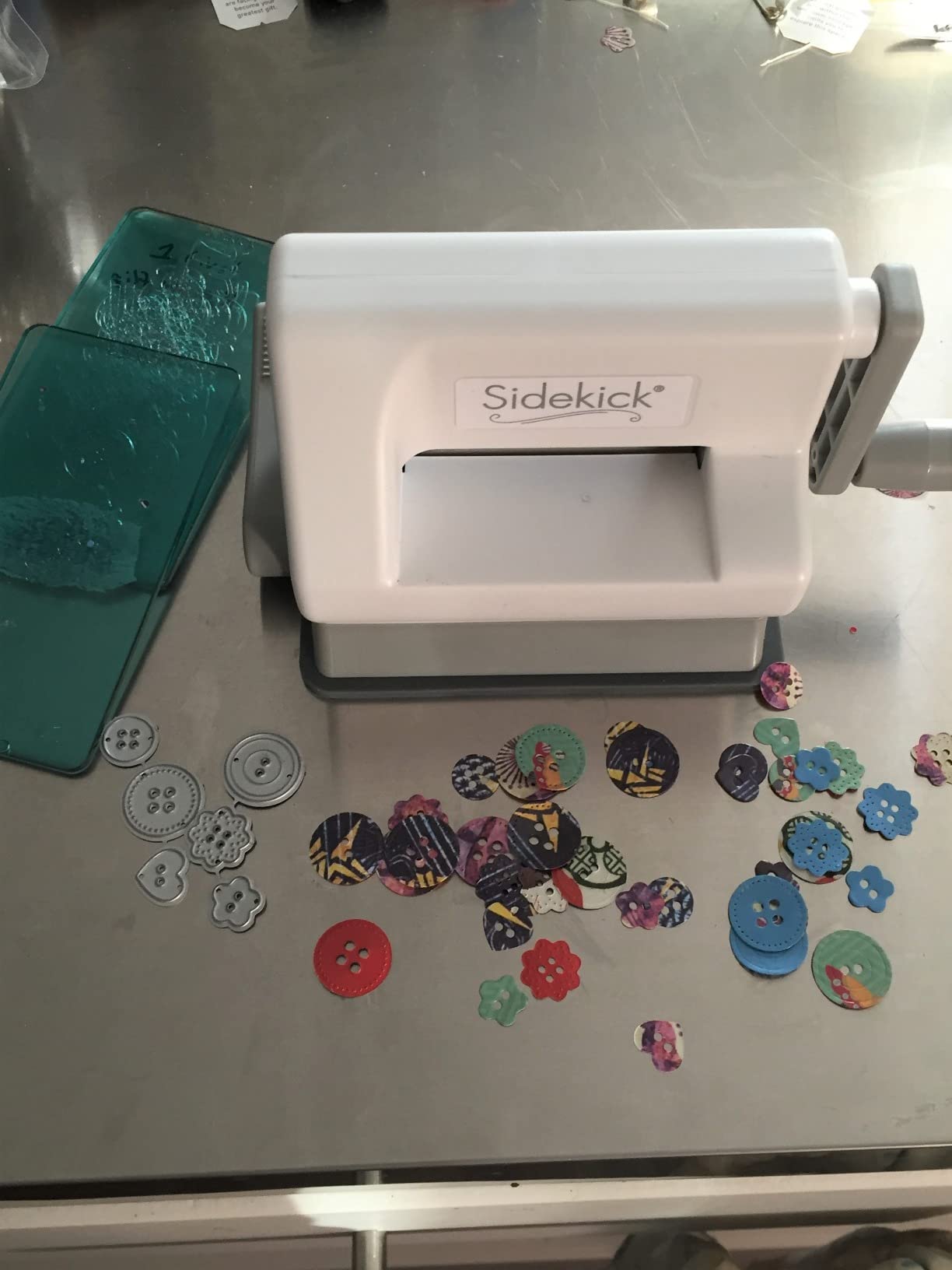
Most die cutters ask you to learn something before the first cut. The Sidekick does not. You lay the die on the cutting plate, add paper, add the clear plate, and turn the handle; the vacuum seal base grips the table so the sandwich does not wander while you crank.
It is also, by a wide margin, the most reviewed machine in this roundup, with 7,258 ratings averaging 4.4 and 73 percent at five stars. That volume of owner feedback is why I am comfortable recommending it to someone who has never used a die: the failure modes are well known and mostly cosmetic rather than dangerous.
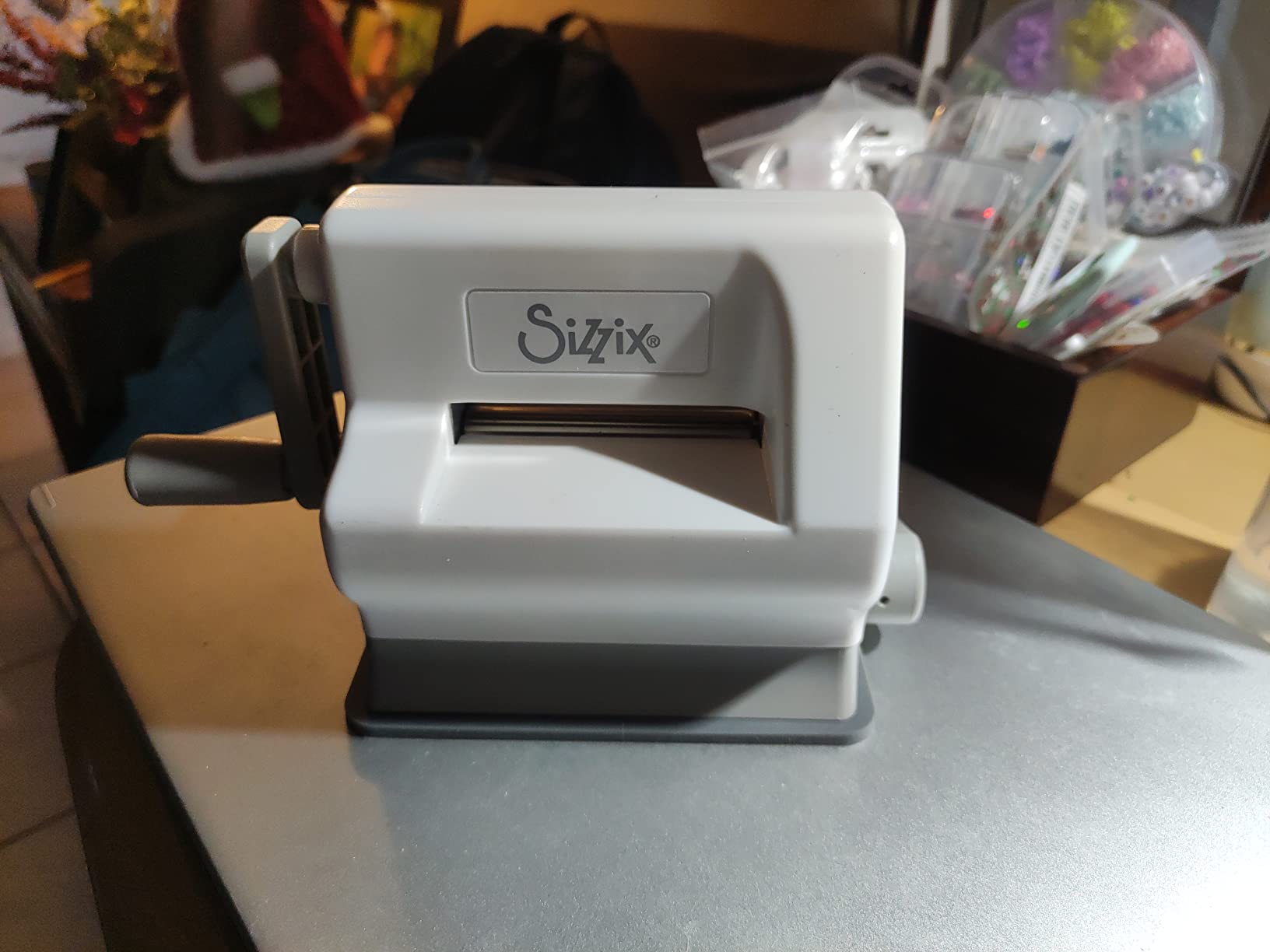
The starter kit is the real story. You get eight dies, two embossing folders and a set of seven stamps, so there is something to cut on day one instead of an empty machine and a wish list. Paper and lightweight cardstock are the intended range, and for scrapbook page elements, journaling cards and gift tags that is enough.
Two limitations decide whether it is your only machine. The 2.5 inch opening means many larger Thinlits and big frame dies will not fit, and it takes a single sheet at a time. Long-term owners also report that the handle and roller bearings wear faster under daily heavy use, so treat it as a portable companion rather than the machine that lives on your desk.
Best for beginners, classes and travel
A first die cutter, a craft class kit, or a machine that lives in a tote bag for a scrap night away from home. Under a kilogram and no power needed, it is the easiest thing here to hand to someone else.
Why you would add a second machine later
Large frame dies, thick cardstock, and any project where you cut a lot at once. Those jobs want the 6 inch or 9 inch openings on the Big Shot models further down this list.
3. Brother SDX125E ScanNCut: the Machine That Cuts Your Own Stamps and Sketches
Brother SDX125E ScanNCut Electronic Cutting Machine Scanner
Built-in scanner
Cuts up to 3mm thick
682 built-in designs
5 inch touchscreen
144 sq in area
Pros
- Built-in scanner turns sketches stamps and printouts into cut files
- Auto blade sensor sets depth with no material selection
- Cuts up to 3mm including chipboard felt foam and balsa wood
- 682 built-in designs with 100 quilting patterns and 9 fonts
- 5 inch touchscreen with USB and wireless
Cons
- 144 sq in area means extra passes on large pages
- US 120 volt design voids the warranty elsewhere
- Brother consumables are harder to find at hobby chains
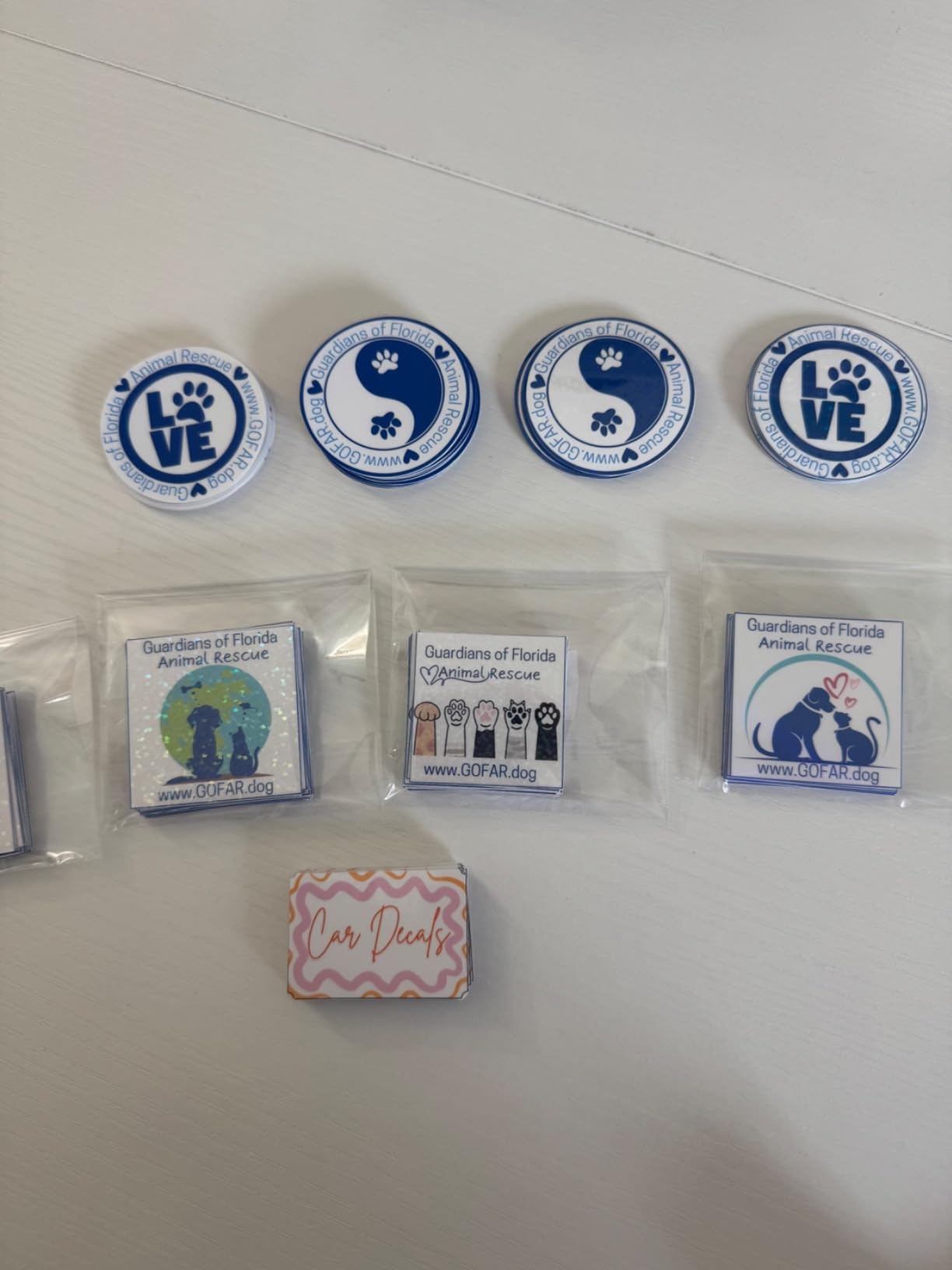
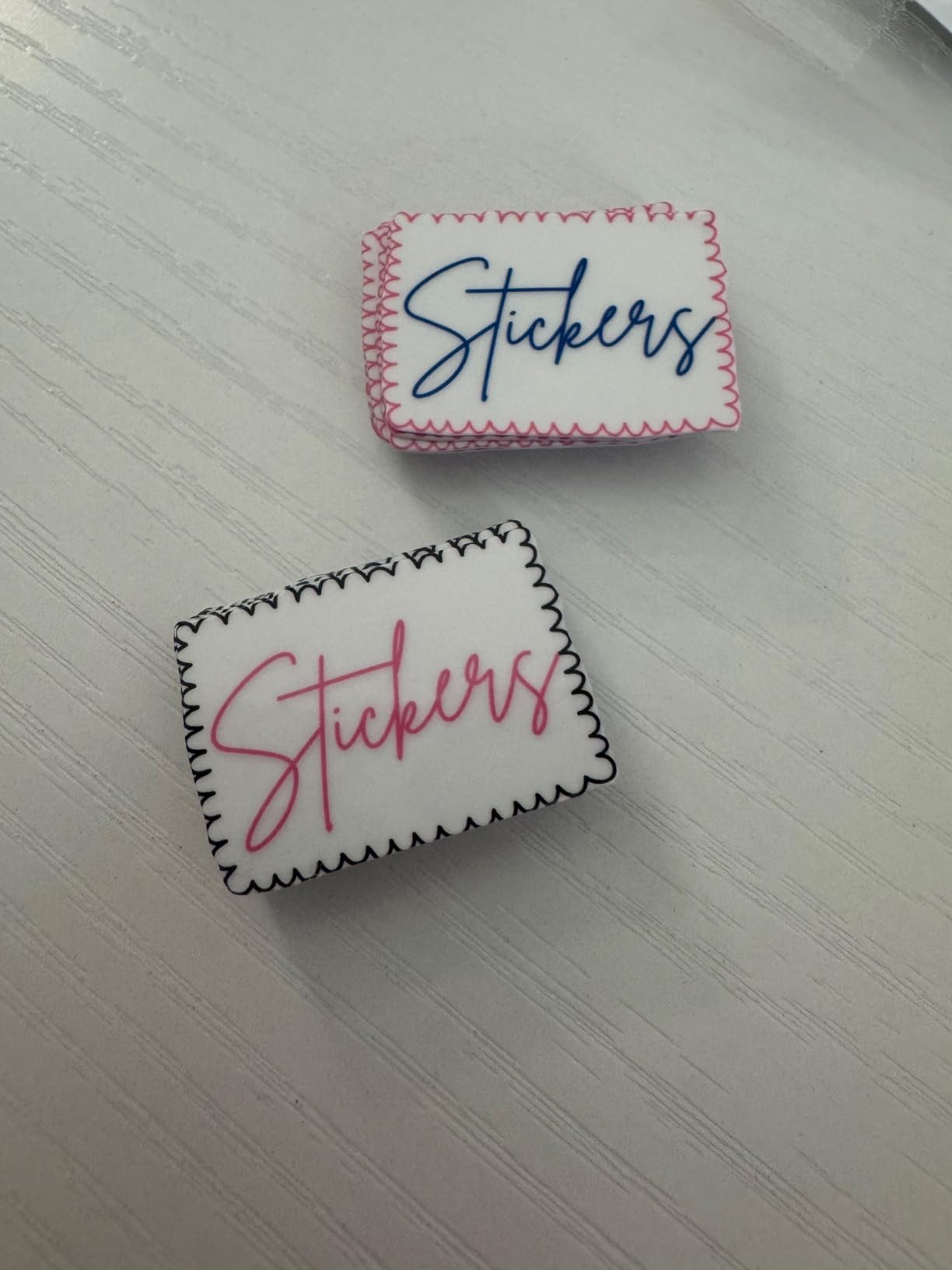
The scanner is the reason this machine earns its place in a scrapbooking roundup. Stamp an image onto cardstock, sketch a title on scrap paper, print a photo, lay it under the lid, and the machine converts it into a cut file. No die to buy, no shape to trace by hand.
Scrapbookers and stampers single out the ScanNCut for exactly this reason: it removes the die shelf from the workflow entirely. With 1,316 ratings and 72 percent at five stars, it is a long-established machine with a deep accessory and pattern library, including 100 quilting patterns.
The second thing you notice is that it stops asking questions. The included ScanNCut DX auto blade senses material thickness, so there is no blade adjustment and no material selection step in the workflow. It cuts up to 3mm, which covers paper, vinyl, fabric, balsa wood, chipboard, foam and felt in one machine, and the 5 inch touchscreen handles the design work without a computer.
The trade-offs are physical and logistical. The 144 square inch cutting area is smaller than a full 12×12 page, so large layouts need multiple passes, and Brother’s specialty mats and blades are not as easy to pick up at hobby chains as Cricut or Sizzix consumables. The 120 volt US design also voids the warranty outside that use.
Best for stampers and die-free scrapbookers
Anyone already stamping, or who wants to cut their own drawings instead of buying metal dies. The scan-to-cut workflow replaces an entire category of spend.
Where fabric and appliqué fit in
The 3mm clearance and 100 quilting patterns make it useful on mixed-media pages and appliqué, though dedicated fabric workflows are covered better in our guide to the best fabric cutting machines for quilters.
4. Cricut Maker 4: the Most Functions in One 12×12 Machine
Cricut Maker 4 – Smart Cutting Machine (Seashell) | Digital Content Bundle
270.25 sq in cutting area
300+ materials
Cut draw foil score engrave deboss
Print-Then-Cut
Pros
- Largest cutting area among the Cricut models here at 270.25 sq in
- 300+ materials including leather and wood
- Scores engraves debosses and perforates as well as cuts
- Print-Then-Cut works with most inkjet printers
- Bundle includes a materials sampler Light Grip mat weeder and pen
Cons
- Heaviest body in the roundup at 9.59 kg
- Highest outlay of the Cricut models here
- Wider material range means more blades and mats to own
If your scrapbooking has moved past cutting into box making, album construction and mixed media, the function list is the argument. The Maker 4 cuts, draws, foils, scores, engraves, debosses and perforates, and it holds 300 or more compatible materials including leather and wood.
The cutting area of 270.25 square inches is the largest of the Cricut models in this roundup and handles a full 12×12 page with room to spare. The 4.5 rating from 655 owners comes with 81 percent at five stars and only 2 percent at two, which is one of the cleanest rating spreads here.
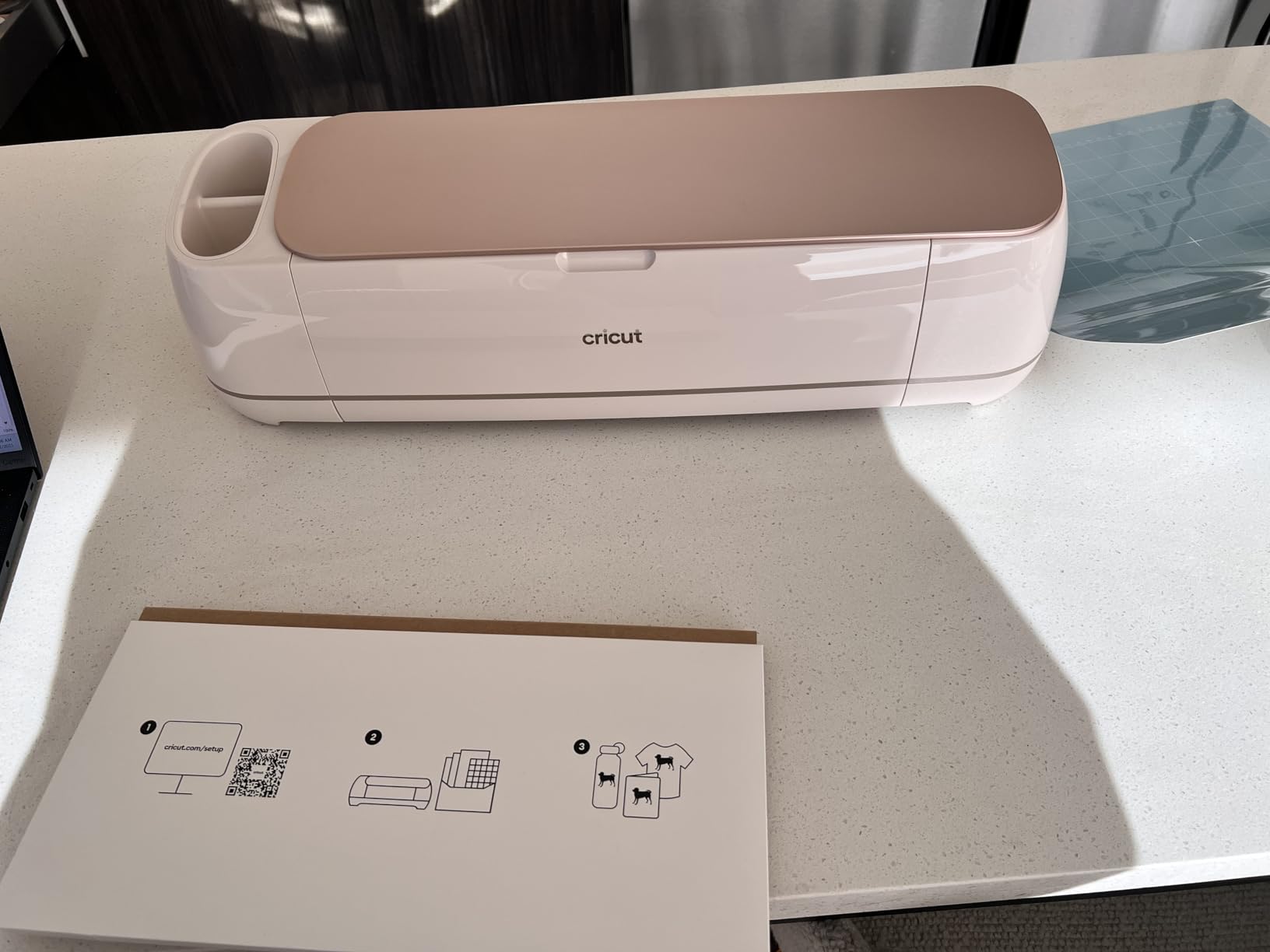
Score lines matter more to scrapbookers than most buyers expect, because a scored line is how you get a straight fold for pockets, waterfall elements and album flaps without a bone folder. Engraving and debossing add texture that a die cutter cannot fake from patterned paper. For 3D projects, our vinyl guide covers how the same tool family handles decals and labels.
Two realities temper that. At 9.59 kg it is the heaviest machine in the roundup, so it belongs on a shelf rather than in a lap, and a 300-plus material range means a growing shelf of mats, blades and housings to maintain. Design Space also expects an internet connection to run, which some owners dislike, and the largest content library sits behind Cricut Access.
When one machine should cover every technique
Pocket albums, waterfall pages, favour boxes, gift boxes and anything that mixes patterned paper with texture. If you would otherwise buy a separate scoring board and heat press, this is where that money goes.
When the Explore 5 makes more sense
If you cut paper and cardstock, make stickers and decals, and do not need engraving or debossing. The Explore class handles those jobs at a lower outlay and with a far lighter body.
5. Cricut Explore 5 Essential Bundle: the Best Starter Package for New Scrapbookers
Cricut Explore® 5 Essential Bundle + Digital Content, Taupe
12 inch cutting width
72 sq in area
100+ materials
Bluetooth to Design Space
Supplies for 65 projects
Pros
- 12 inch width covers a full scrapbook page width in one pass
- 30 percent more compact than earlier Explore models
- Six tool options including a Deep Cutting Tool sold separately
- Bluetooth connects to Design Space from a phone or laptop
- Essential Bundle holds supplies for up to 65 projects
Cons
- Smallest cutting area of the Cricut models here at 72 sq in
- Deep Cutting Tool for thick material is a separate purchase
- Expanded content library needs Cricut Access
Beginners consistently describe the choice as intimidating, and this bundle answers that directly: machine, tools and materials for up to 65 projects in one box. The cutting width is a full 12 inches, so a title can run across an entire scrapbook page without being split in two.
Design Space connects over Bluetooth from a phone, tablet or computer, which removes the cable and the desktop from the first session. With 265 ratings at 4.3 and 73 percent five stars, it sits mid-pack among the Cricut models here, and it also ranks first in its Amazon category.
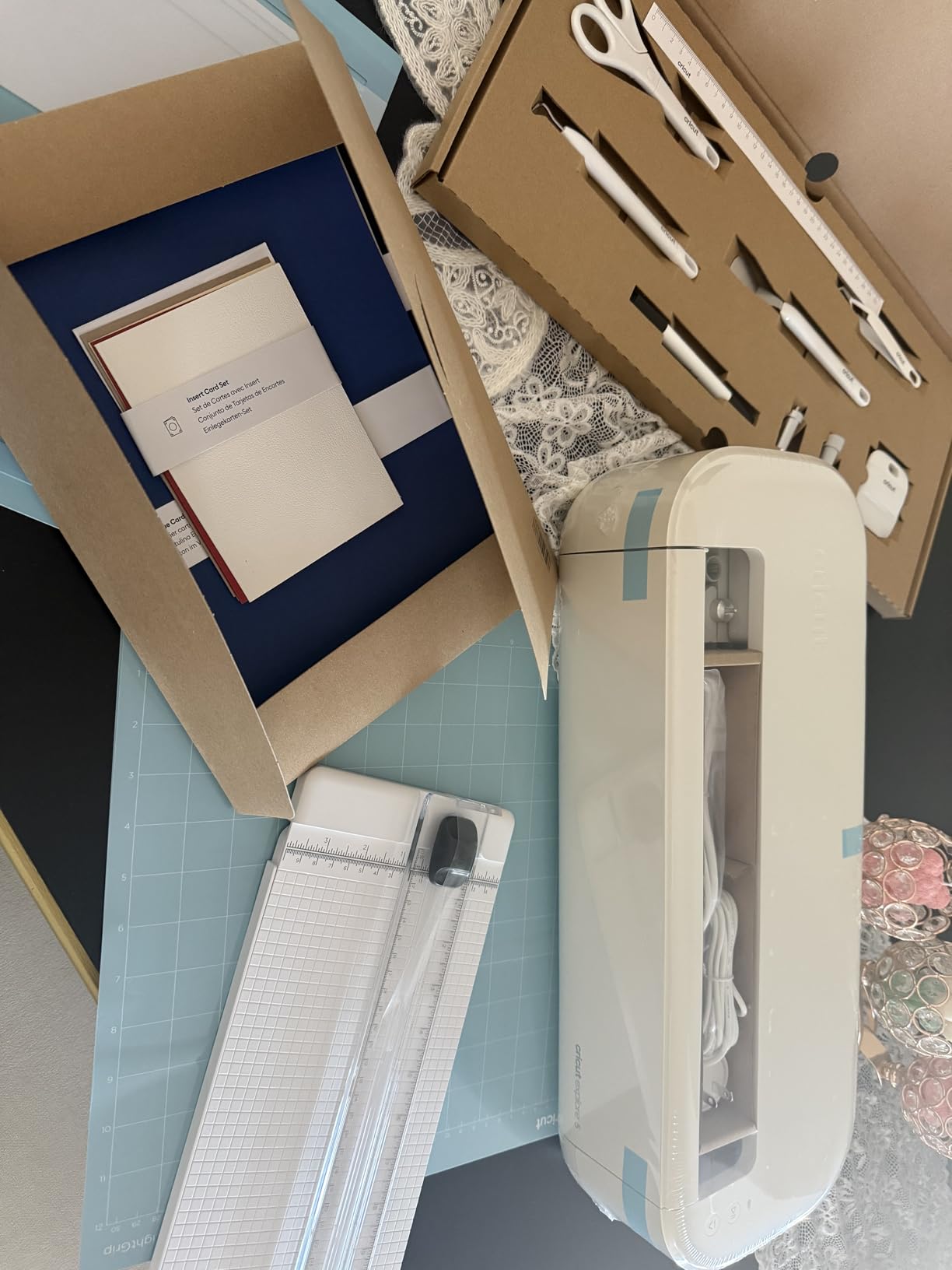
The function set covers the everyday scrapbooking list: it writes, draws, foils and scores as well as cutting, works with six tools, and handles 100 or more materials. Print your design on a home inkjet printer and the machine cuts registration around it for full colour stickers and labels, which is where a lot of new Cricut owners start.
It is 30 percent more compact than earlier Explore models, which matters more than it sounds in a shared craft room. The trade-offs are the smallest cutting area of the three Cricut models here at 72 square inches, a Deep Cutting Tool for thicker material that costs extra, and a content library that opens up further with a Cricut Access subscription.
Best for a first machine with supplies included
New scrapbookers, gifters and anyone who would rather not buy mats, vinyl and cardstock separately before making a single cut. The bundle removes the most common first-week stall.
When to step up to the Maker 4
Once you want engraving, debossing, perforation, thicker materials and a larger working area, or you start cutting fabric and leather alongside paper.
6. Silhouette Portrait 4: the Compact 9 Inch Workhorse for Small Desks
Silhouette Portrait 4-9 inch Vinyl Cutting Machine with Studio Software, PixScan, Electric Tool and ES Mat Compatible, SNA and IPT Enabled, 50 db
9 inch cutting width
81 sq in area
IPT belt-driven chassis
50 dB
Silhouette Studio with PixScan
Pros
- 9 inch body is compact and stores easily
- IPT belt-driven chassis cuts without tension or rounded corners
- Imports your own installed fonts and graphics instead of cartridges
- Print-and-cut works with a standard home inkjet printer
- Electric tool options add sketching to the cut
Cons
- Silhouette Studio has a steeper learning curve
- Blade and thickness settings take trial and error
- 9 inch width means more passes than 12 inch machines
The Portrait 4 is the electronic machine to buy if your craft space is a shelf. At 18 by 9 by 9 inches it stores easily, and the 50 dB operation is quiet enough to cut in a shared room while someone is on a call.
Its 4.4 rating comes from 2,891 owners, making it one of the most reviewed electronic machines here, and the praise is consistent: it cuts precisely, it imports your own files, and it does not need cartridges. The redesigned belt-driven chassis is what Silhouette calls its new architecture, and the IPT system is designed to reduce tearing and rounded corners on sharp angles and multi-layer cuts.
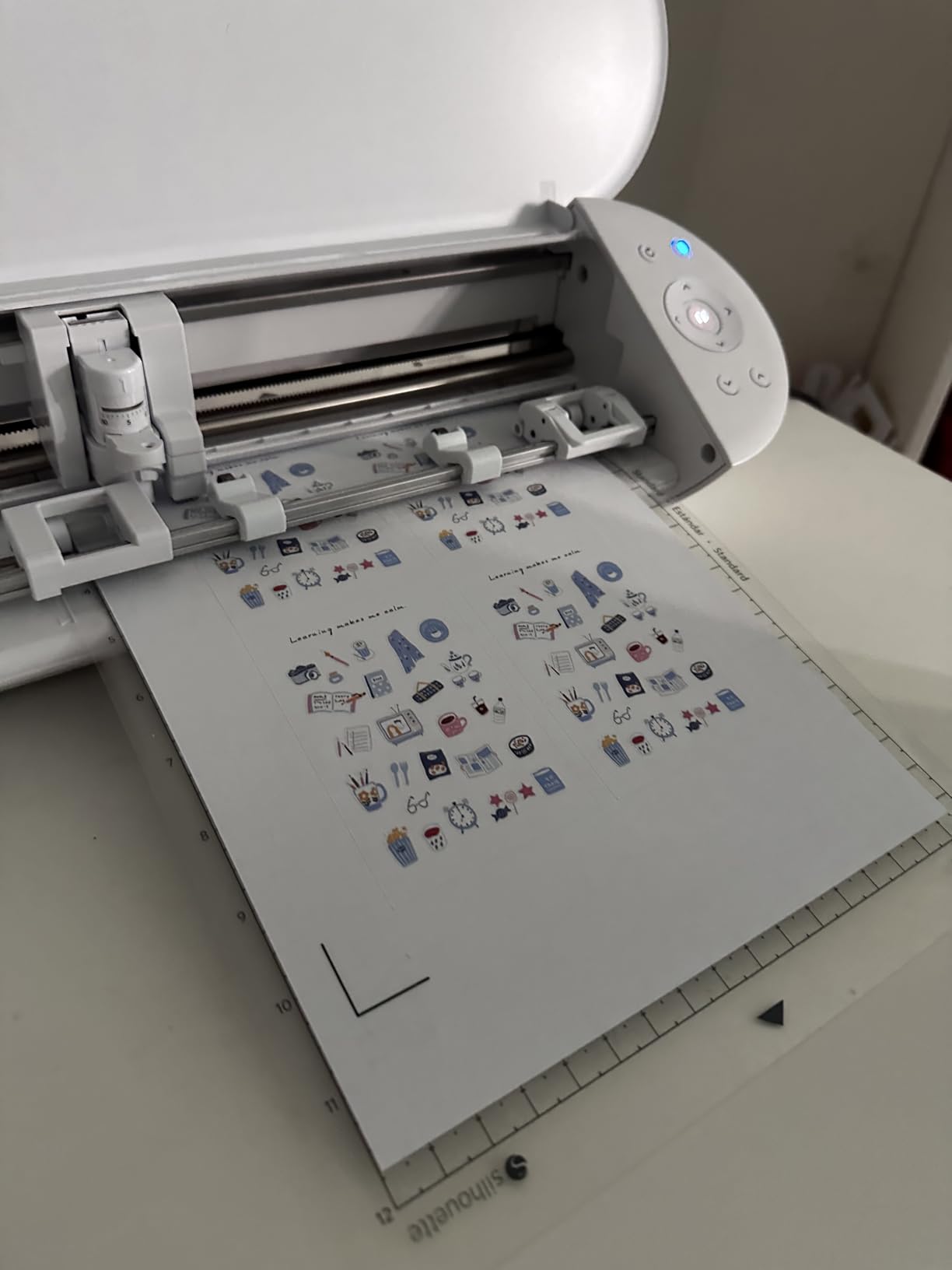
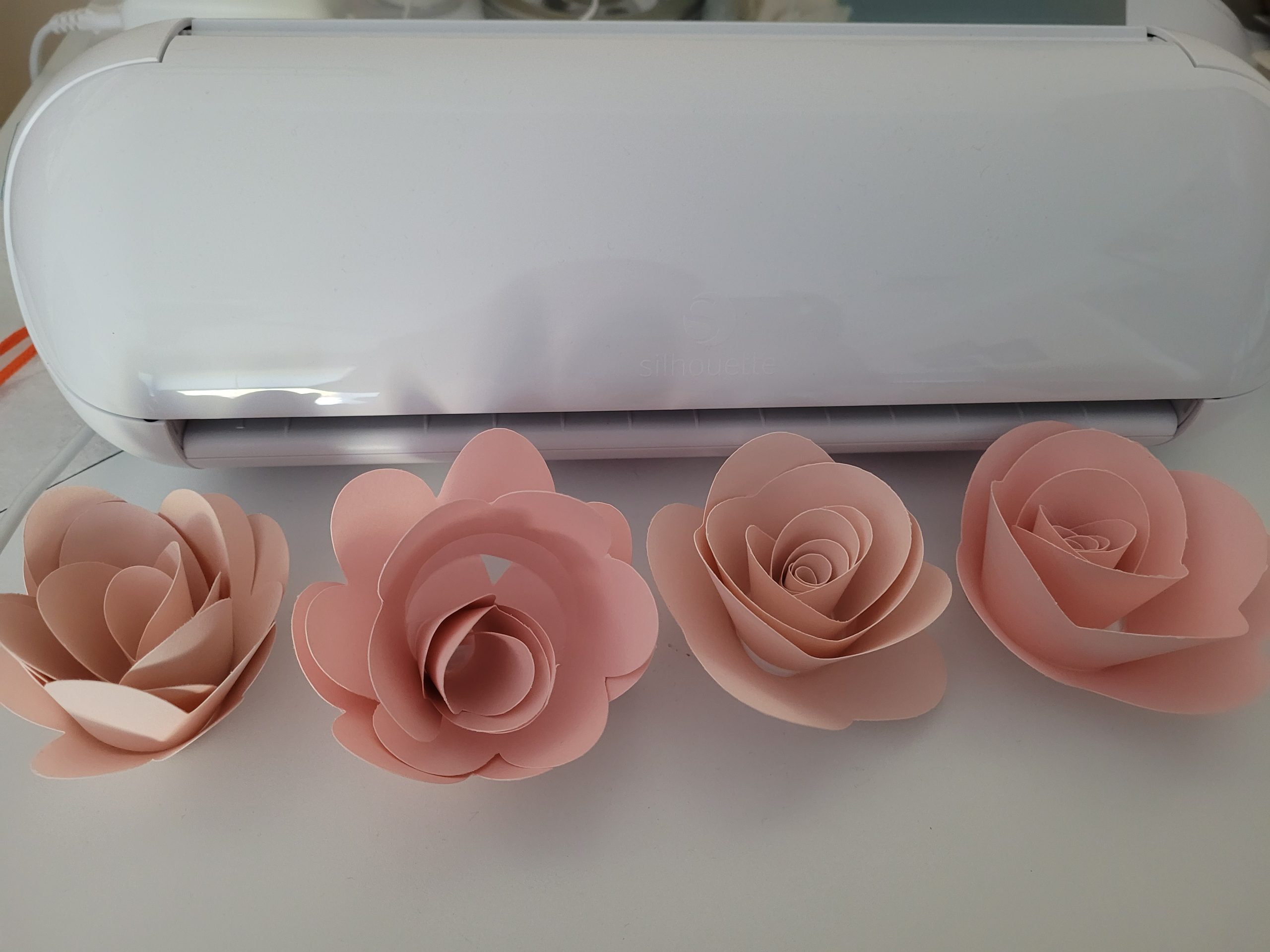
The trace and offset tools in Silhouette Studio are the quiet superpower. Scan or photograph an image, trace it, add a seam allowance offset, and cut a die-free replica or a sticker sized to fit an existing shape. Print-and-cut works with a standard home inkjet, and the electric tool options extend beyond cutting to sketching.
The honest drawback is the software. Silhouette Studio asks more of a beginner than Design Space, blade and material thickness settings need calibrating rather than telling you the answer, and replacement mats are among the pricier consumables in this roundup. A 9 inch width also means a full 12×12 title needs two passes, which is the trade for the small footprint.
Best for small craft rooms and imported designs
Apartment scrapbookers, teachers, and anyone who wants to bring their own SVG files and fonts rather than buy cartridges. Also strong for stickers and label runs via print-and-cut.
When the 9 inch width costs you
Full-width titles, banner words and long border strips. Those want the 15 inch Silhouette or a 12 inch Cricut rather than two butted-together passes.
7. Sizzix Big Shot: the Reliable Manual Die Cutter Veterans Keep
Sizzix Big Shot Machine, 6″ Die-Cutting and Embossing Machine, Machine Only
Manual hand-crank
6 inch opening
Multipurpose Platform and pads included
6 inch cube footprint
Pros
- 86 percent of ratings are five star the most concentrated top-end score here
- 6 inch opening suits mid-size scrapbook and card dies
- Clip-on handle stows underneath the machine to save space
- Multipurpose Platform and cutting pads included
- Handles cardstock fabric and labels
Cons
- Machine only so dies folders and extra plates cost extra
- 6 inch opening is narrower than the 9 inch Big Shot Plus
- No manufacturer warranty is stated
The Big Shot is the reason die cutting became a mainstream scrapbooking hobby, and the veterans on stamping forums still name it first for reliability and die compatibility. This listing is the refreshed version, the first visual update since 2001, with a slimmer body and a handle that clips underneath for storage.
The rating distribution is the standout number in this roundup: 86 percent five star, 3 percent four star and no two-star ratings at all. Owners are not describing a compromise machine; they are describing one that has done the same job reliably for years.
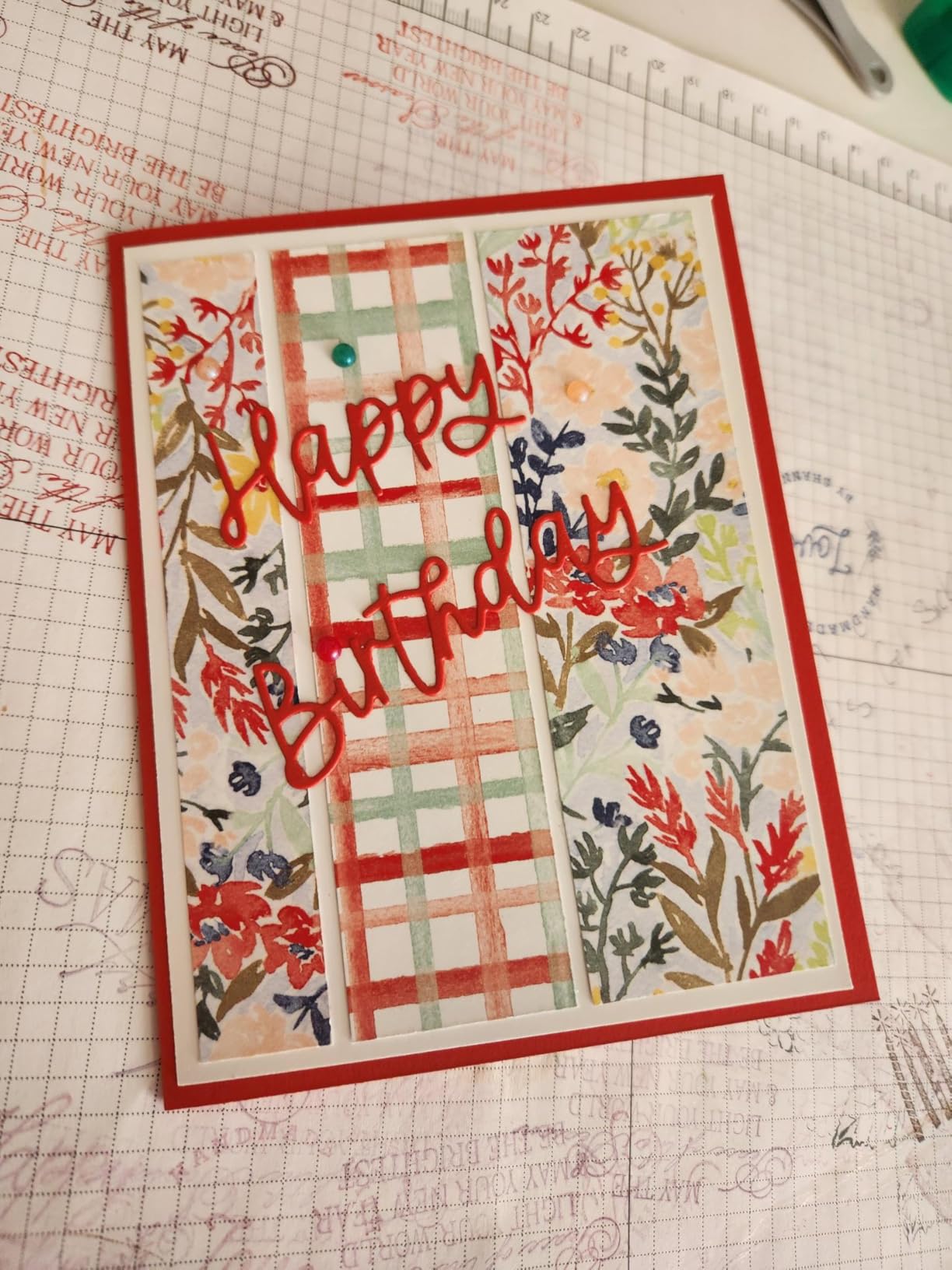
Mechanically it is simple in a way that lasts. You build the sandwich on the Multipurpose Platform, feed it through, and the roller applies even pressure along the die. The 6 inch opening fits the mid-size Thinlits, Framelits and label dies that most scrapbook layouts actually use, and cardstock, fabric and labels are all within reach.
Two things to know before you buy. This is the machine only, so dies, embossing folders and additional cutting plates are all separate purchases, and the 6 inch opening is narrower than the 9 inch Big Shot Plus if your layouts are large. No manufacturer warranty is stated for this configuration, which is worth keeping in mind next to the parts availability for older models.
Best for an existing Sizzix die collection
If your shelves are already full of Thinlits and Framelits dies, this is the machine that will use them. It is the reference point for reliability in manual die cutting.
When you need a bigger opening or more force
A4 layouts, full page dies, felt, cork and balsa wood. Those jobs want the 9 inch Big Shot Plus, or an electric machine if your arm tires before your cutting does.
8. Sizzix Big Shot Plus Starter Kit: 19 Dies and an Embossing Folder in the Box
Sizzix Big Shot Plus Starter Kit (9″), White/Grey
Manual hand-crank
9 inch opening
19 Thinlits dies included
Thin die adapter
Cuts felt cork and balsa wood
Pros
- 9 inch opening takes A4 and full size scrapbook dies in one pass
- Kit includes 19 Thinlits dies an embossing folder and 40 cardstock sheets
- Heavy stable body that does not creep while embossing
- Cuts paper tissue felt cork and balsa wood
- Sizzix replaced a missing handle quickly for one reviewer
Cons
- Cutting pads are not beveled so some plates need coaxing
- 9.05 kg body stays on a shelf
- Larger plates are awkward to guide at first
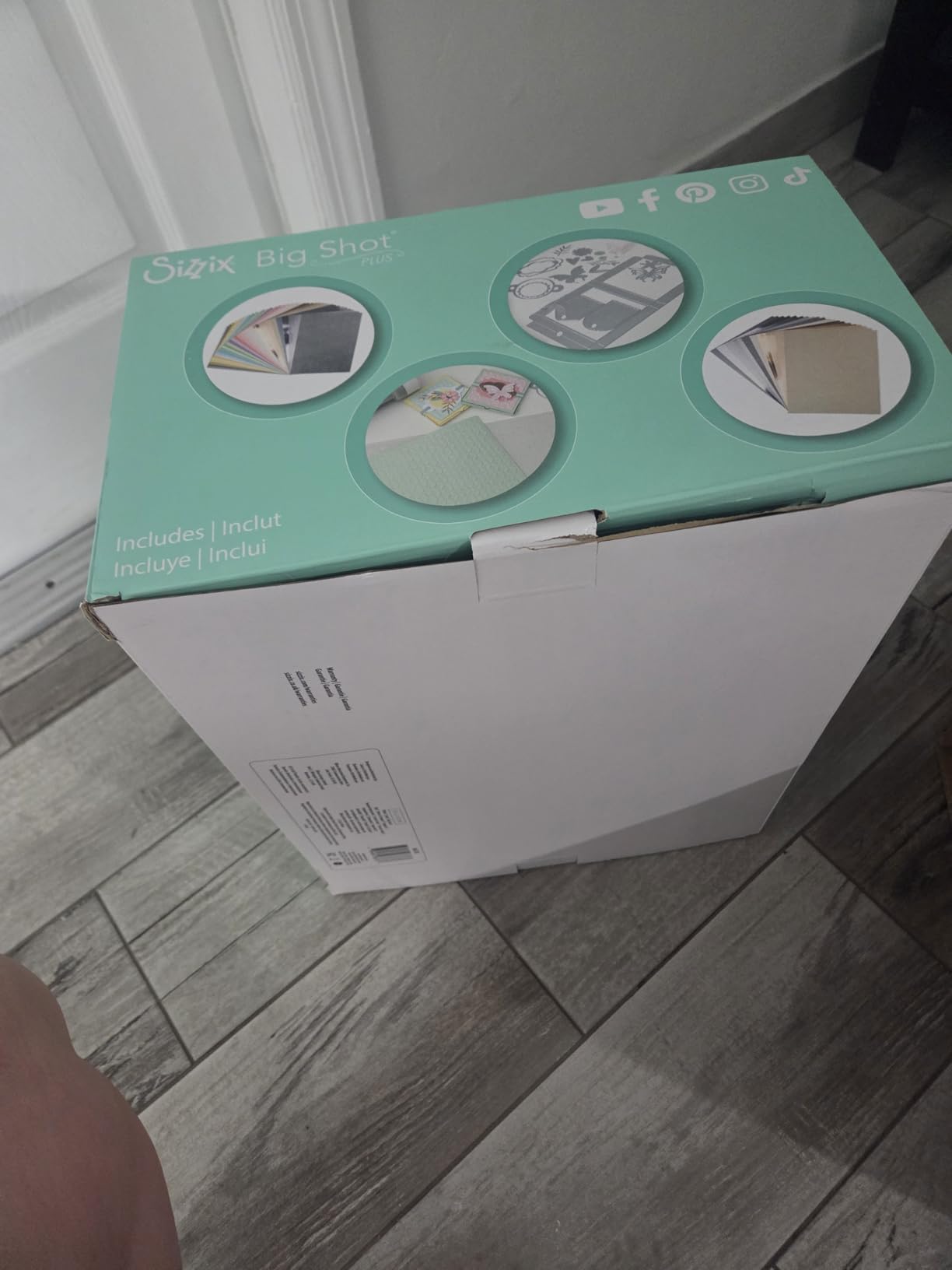
This is the kit version of the Big Shot, and the difference that matters for scrapbooking is the 9 inch opening. That width takes A4 layouts and the large frame dies that a 6 inch machine cannot accept, so a full page element dies in one pass instead of being trimmed down.
The bundle also solves the cold start problem. You get 19 Thinlits dies, an embossing folder, a thin die adapter, cutting pads, a standard platform and 40 sheets of cardstock. The 4.5 rating from 318 owners, with 79 percent at five stars, reflects a package that works the moment it is unboxed.
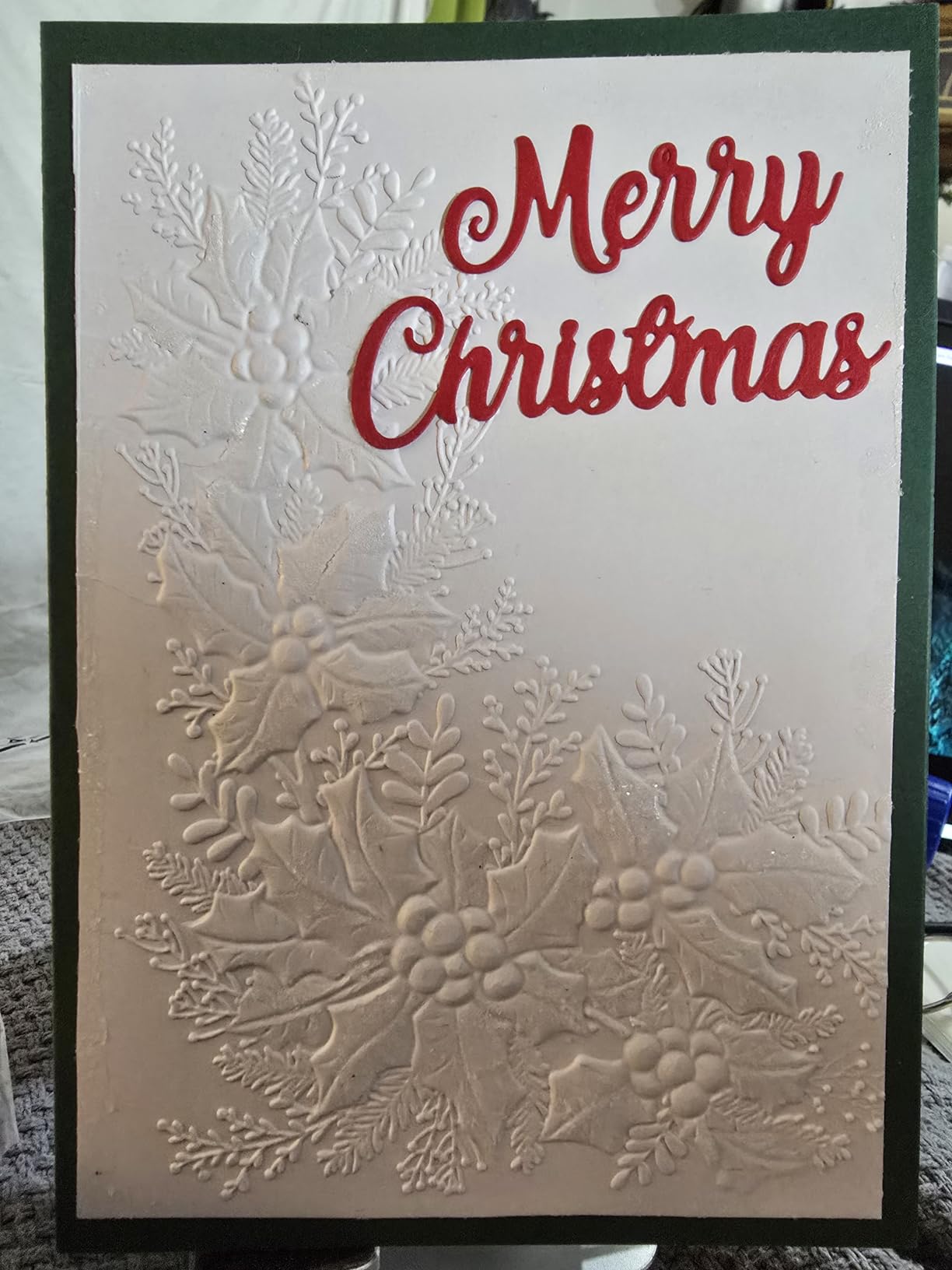
The body is deliberately heavy at 9.05 kg, and for embossing that is an advantage: a machine that stays put while you crank produces an even impression, where a light machine walks across the table. Material range is broad, from paper and tissue to felt, cork and balsa wood, which covers shaker cards, tags and light box projects.
The specific issue owners raise most is the included cutting pads. They are not beveled at the ends, so some plate sandwiches need a little coaxing to feed straight the first time, and larger plates can be awkward to guide through the opening until you get the rhythm. At that weight it also stays on a shelf rather than moving around the house.
Best for die cutters who want large page elements
A4 scrapbook layouts, album covers, shaker windows and frames. If you have ever wanted a die that the smaller machines would not take, this is the fix.
When you would rather have a motor
If cranking a full sandwich of cardstock tires your wrist, the same jobs are easier on an electric die cutter or an electronic machine with a 3mm blade.
9. Cricut Joy Xtra: the Portable Machine for Cards, Stickers and Small Spaces
Cricut Joy Xtra – Smart Cutting Machine | Digital Content Bundle
250 g body
50+ materials
Cut draw and foil
Print-Then-Cut
Design Space app
Pros
- 250 g body stores in a drawer or a craft bag
- Cuts draws and foils across 50 or more materials
- Print-Then-Cut works with most inkjet printers
- Design Space includes 3000+ images and 100+ fonts
- Bundle includes blade pen weeder cable and a practice cut
Cons
- 95.94 sq in area is the smallest Cricut area here
- 50+ materials is a narrow material range
- Full content library needs Cricut Access
At 250 grams this is the machine you take to a scrap night instead of leaving on the shelf. It handles card-sized paper cleanly, which is exactly the paper you need for handmade cards, wedding favours, gift tags and small signage.
The rating is 4.4 across 718 owners with 75 percent at five stars. The consistent praise is not about raw capability but about convenience: it cuts, draws and foils, it pairs with most inkjet printers for full colour stickers, and Design Space is approachable with 3,000 or more free images and 100 or more fonts before any subscription.
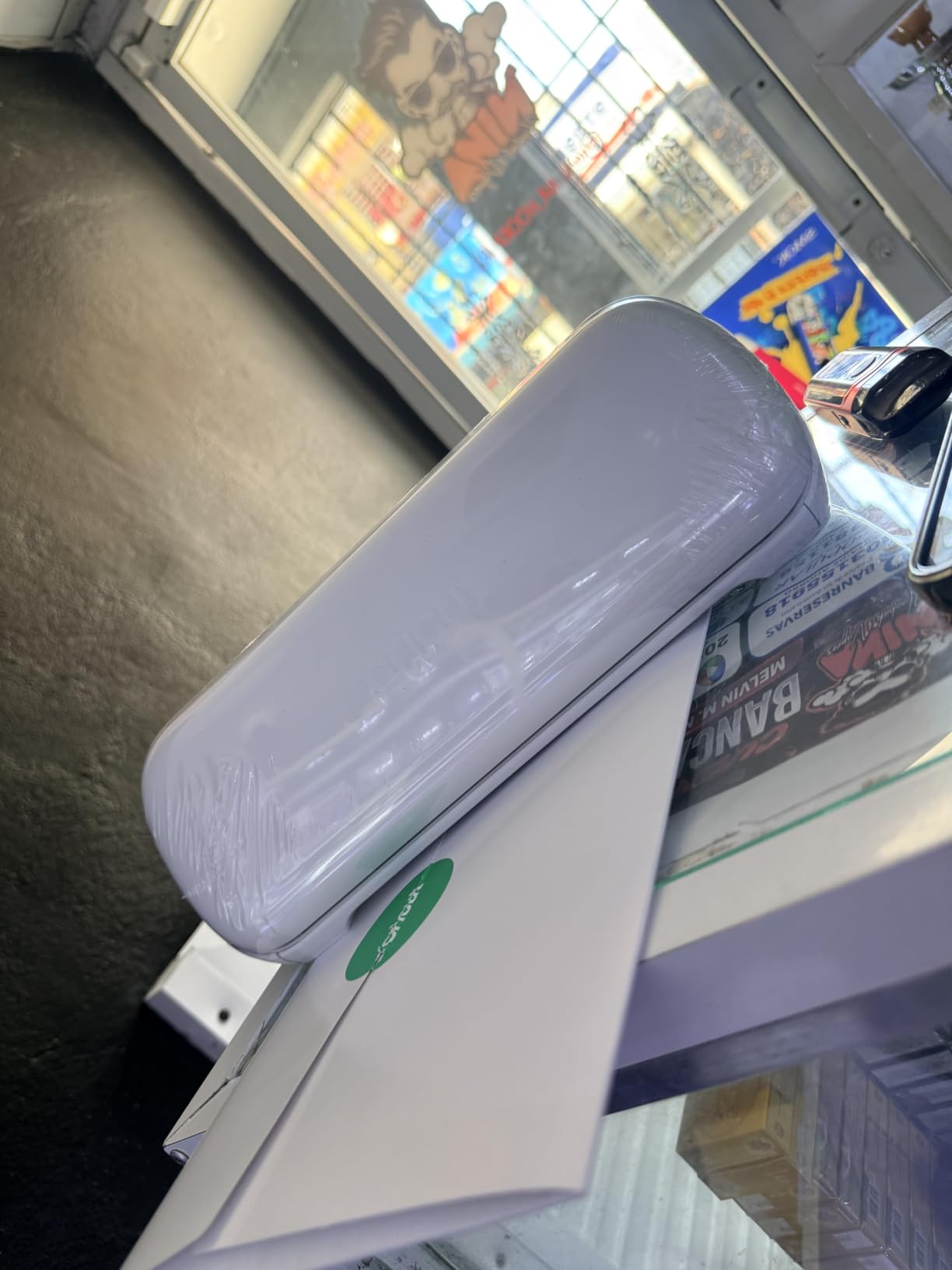
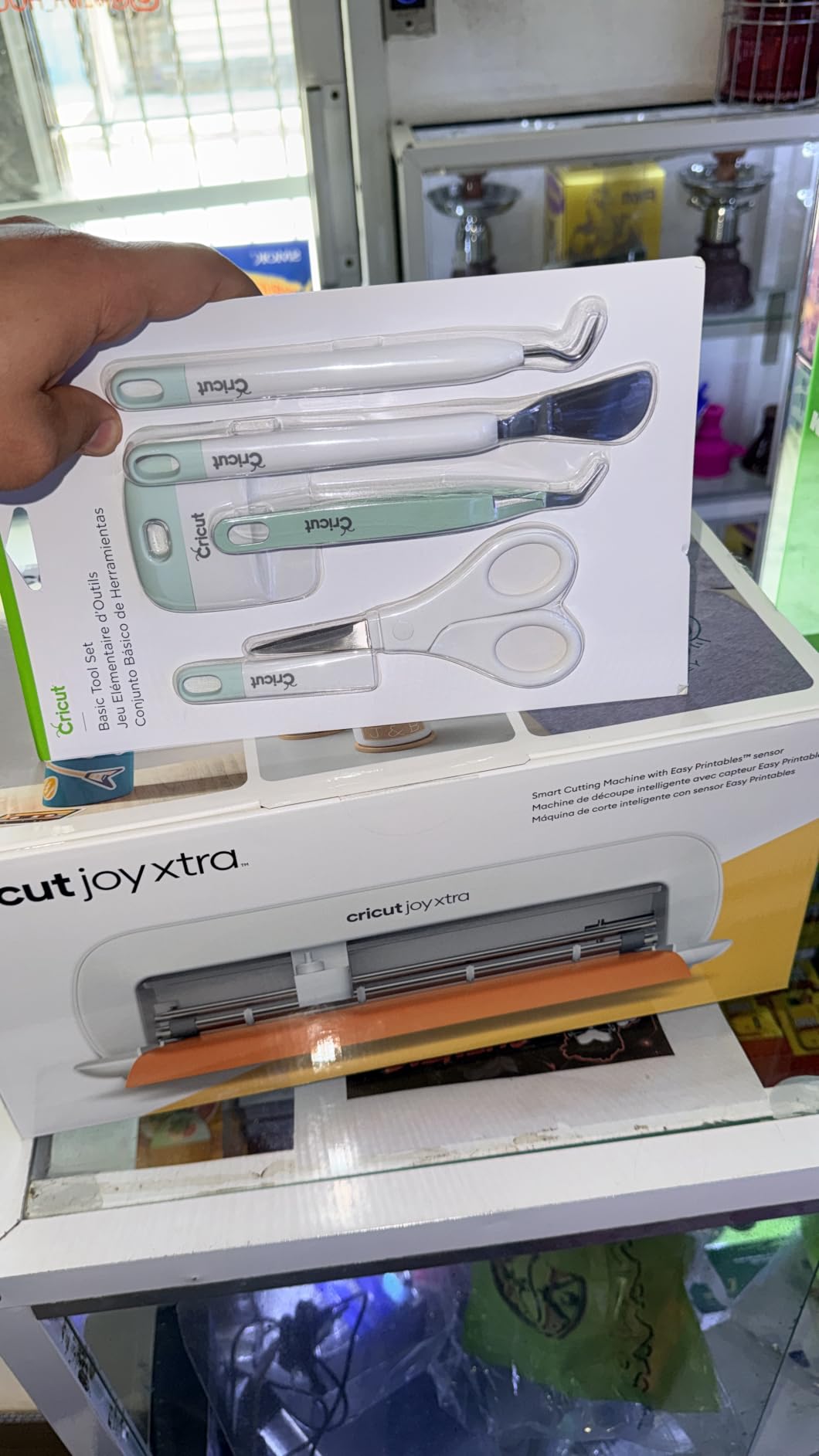
The bundle is unusually complete for a compact machine. A fine-point blade, fine point pen, mini weeder, USB cable, power adapter and materials for a practice cut mean you can run a test sheet the day it arrives instead of ordering a starter pack first.
The limits follow from the size. The 95.94 square inch cutting area is the smallest of the Cricut models here, so full page scrapbook layouts need more passes, and the 50-plus material range will not reach chipboard or leather. The one million-plus image library is available when unlocked with Cricut Access, which is an optional add-on rather than a requirement to cut.
Best for card makers and portable crafting
Handmade cards, gift tags, favours and stickers. The cutting size matches standard card stock, and the machine travels.
When to buy a bigger Cricut instead
As soon as you need a full 12×12 page in one pass, thicker materials, or engraving, debossing and perforation. The Explore 5 and Maker 4 cover those with wider cutting areas.
10. We R Memory Keepers Revolution: the Open-Platform Die Cutter for Mixed Die Brands
We R Memory Keepers Revolution Portable Die Cut, Embossing, Cutting Machine Includes Magnetic Mat, Embossing Plate and Die Cutting Plate, Scrapbooking, Journaling, Card Making
Magnetic platform
Clear cutting plate
9.25 x 6.25 inch area
Works with most leading brands
Includes plates and mat
Pros
- Magnetic platform holds dies in place for repeatable placement
- Clear plate lets you check the cut before lifting the sandwich
- Works with most leading brand dies and embossing folders
- Package includes platform magnetic mat die plate and embossing plate
- Portable body sized for journaling and card making
Cons
- Fewest ratings in the roundup at 94
- Dies and embossing folders are sold separately
- Category ranking trails the Sizzix and Cricut machines
The Revolution exists to solve a problem Sizzix created: die lock-in. Where the Sidekick and Big Shot only accept Sizzix Thinlits, Framelits and Sizzix-brand plates, this machine works with most leading brand dies and embossing folders, so a mixed collection is usable.
Its rating is 4.5 with a 17 percent four-star share and only 3 percent at one star, which is one of the cleanest distributions in the roundup. Owners point to the magnetic platform that holds dies in place for consistent placement, and to the clear cutting plate that lets you confirm the cut before you lift the sandwich.
The included set is complete for starting out: platform, magnetic mat, die-cutting plate and embossing plate, with a 9.25 by 6.25 inch working area that is generous for a portable machine. It is aimed squarely at journaling, scrapbooking and card making rather than large signage work.
The honest limitation is thin evidence. At 94 ratings this is the least reviewed product in the roundup, so there is less long-term owner feedback to lean on, and it ranks far below the Sizzix and Cricut machines in its Amazon category. Dies and folders are separate purchases, so budget for those before the first cut.
Best for scrapbookers with dies from several brands
If you already own Anna Griffin dies, Cuttlebug-compatible sets or generic wafer-thin dies, this is the machine that will read them instead of forcing a brand change.
When you should pick Sizzix or Cricut instead
When you want the largest die library and the deepest long-term owner feedback, or when you want to cut your own drawings and words rather than only run metal dies.
How We Picked
Every machine here was judged on the same three things, and each of them maps to a problem scrapbookers actually hit.
Cut quality on real scrapbooking materials. Patterned paper and cardstock, not just thin printer stock. Does a title release cleanly, or does the cardstock tear on the way off the mat?
Setup and software friction. How long from box to first cut, how much you have to learn before you can import your own files, and whether the machine asks you questions it should answer itself.
Versatility of function. What else the machine does besides cut: score, write, draw, foil, engrave, deboss, perforate, print-then-cut, and how much of that you will realistically use.
Ratings and review volume informed the order but did not decide it alone. A machine with a huge review count tells you what is well known, including what breaks. We also weighted the three categories evenly, because the strongest die cutter and the strongest electronic cutter solve different halves of the same problem.
Buying Guide: Choosing a Cutting Machine for Scrapbooking
Manual, electric or electronic: pick the family first
Cricut or Sizzix? They are not competing products, and the honest answer is that most scrapbookers end up owning one of each. A Cricut cannot use a Sizzix or Anna Griffin die, and a die cutter cannot draw, score or print-then-cut. Choose an electronic machine for words, custom shapes, stickers and anything imported from a file. Choose a die cutter for a shape you already own in metal, and for the even pressure that embossing and thick cardstock need.
Within die cutters, manual versus electric is about your arm and your volume. Manual machines cost less per cut, need no power, and are quiet in a shared room; electric machines apply consistent pressure and get through a stack of dies without a crank stroke per pass.
Cutting area and mat handling for 12×12 layouts
Cutting width is the number that decides how many passes a title takes. A 9 inch machine splits a full page title in two; a 12 inch machine runs it in one pass; the 15 inch Silhouette handles album covers and banners without a workaround. Look at active surface area as well as width, since a 12 inch width with a shallow mat still means repositioning.
Then plan for how cardstock leaves the mat. Four steps fix most release problems: clean the mat with a damp cloth and let it dry fully, replace the blade if cuts have been creeping into the mat, set the correct material thickness in the software rather than guessing, and peel from a corner at a shallow angle with a spatula instead of pulling straight up. If pieces are still tearing, the blade is usually the reason, not the paper.
Die systems and compatibility: what actually fits
Die compatibility is the least documented topic in this category and the most asked about on crafting forums. The direction matters: Sizzix Thinlits and Framelits dies fit Sizzix machines, and they also fit the Cuttlebug and other machines that use standard wafer-thin dies and Sizzix-style plates. The reverse is not true, and Anna Griffin dies are a separate system that generally does not interchange.
That single fact changes buying decisions more than any spec. If your die shelf is already Sizzix, a Sizzix machine is the cheapest path. If your dies came from another brand, check the plate style before buying anything, or consider the We R Memory Keepers Revolution, which is built for mixed brands. Remember that plates wear out, and replacement plates are a normal ongoing cost of manual die cutting.
Software, subscriptions and file import
Ask one question: can I cut a file I made myself? Cricut Design Space lets you upload your own images and SVGs and includes thousands of free images and fonts. Silhouette Studio imports your own installed fonts and graphics, which removes cartridges entirely, but has a steeper learning curve and is slower to pick up than Design Space.
Subscriptions are the other half. The largest content libraries on both platforms sit behind a paid plan, and Cricut’s software also expects an internet connection to run. If you dislike recurring fees, factor in that you can still cut your own files and the free library on either platform, and that the Brother approach avoids the question entirely because scanning is built into the machine.
Everything beyond cutting: score, emboss, foil, write
Scoring is the most underrated function for scrapbookers. A clean score line folds cardstock into a pocket, a box flap or an album edge far more reliably than a bone folder, and only the electronic machines here do it: the Cricut Maker 4, the Cricut Explore 5 and the Cricut Joy Xtra all score, while the Silhouette models handle writing and drawing through their tool options.
Embossing is where die cutters still win outright, since a folder and plate apply an even impression across a whole panel. The Cricut models add foil, engraving, debossing and perforation, and print-then-cut turns an ordinary inkjet printer into a sticker and label printer. Decide which of those you will use in the first year, because buying a function you never touch is the most common way scrapbookers overpay.
Frequently Asked Questions
What is the best cutting craft machine?
For scrapbooking, the best all-round electronic machine is the Silhouette Cameo 5 Alpha Plus for its 15 inch cutting width, and the best multi-function machine is the Cricut Maker 4 for scoring, engraving and debossing. On the die side, the Sizzix Big Shot is the dependable manual choice and the Sizzix Sidekick is the easiest first machine.
What is the best die cutting machine?
It depends on the category. The Sizzix Big Shot is the best manual die cutter, the Sizzix Big Shot Plus Starter Kit is the best kit for large A4 and full page dies, and the Sizzix Sidekick is the most beginner-friendly. The Brother SDX125E ScanNCut is the best scan-and-cut option if you would rather cut your own stamps and sketches than buy dies.
What is better, Cricut or Sizzix?
They are different categories rather than rivals, and most scrapbookers buy one of each. A Cricut cuts words, custom shapes, stickers and imported files, while a Sizzix runs metal dies you already own and embosses evenly. A Cricut cannot use a Sizzix die, and a Sizzix cannot draw, score or print-then-cut.
Do I need a die cut machine if I have a Cricut?
You do not need one, but many scrapbookers add one later. An electronic machine cannot use Sizzix or Anna Griffin dies, so a die cutter gives you access to the shapes and the even embossed impressions that metal dies provide. The two are complementary rather than competing.
Is Cricut a die cutting machine?
No. A Cricut is an electronic cutting machine that follows a blade path from a design in software. A die cutting machine presses a metal die between your paper and a plate, with no design and no screen involved. That is why Cricut machines cannot run dies and die cutters cannot print-then-cut or draw.
Are Cuttlebug and Sizzix compatible?
Sizzix dies work in Sizzix machines and in the Cuttlebug, because both use the standard wafer-thin die and plate format. The reverse is not true, and dies from brands such as Anna Griffin are a separate system that generally does not interchange. Always check the plate style of your existing dies before buying a machine.
How do I use a Sizzix cutting machine?
First, build the sandwich: cutting pad, your die, a thin wafer-thin die on top, then your cardstock, then a second thin die and a clear plate on top for thin materials. Second, run the sandwich through the machine with even pressure rather than one hard pull. Third, turn the crank in the direction indicated, since it often runs opposite to what people expect. Finally, lift the clear plate, pop the cut piece out with a die-cut tool, and remove the tiny bits with a poke tool.
What are the differences between the Cricut Explore and the Cricut Maker?
The Cricut Explore 5 cuts a 12 inch width over a 72 square inch area, works with 100 or more materials and writes, draws, foils and scores. The Cricut Maker 4 offers 270.25 square inches, 300 or more materials including leather and wood, and adds engraving, debossing and perforation to the same cut, write, draw, foil and score functions. The Maker 4 is the machine for techniques beyond paper; the Explore 5 is the lighter, cheaper route into 12 inch cutting.
Which Cutting Machine Should You Buy?
Buy the Silhouette Cameo 5 Alpha Plus if you want the widest cutting area and the strongest rating and review combination in this roundup. Buy the Sizzix Sidekick if you are a beginner who wants a first die cutter that travels and comes with dies in the box, and the Sizzix Big Shot Plus Starter Kit if you want large A4 dies from day one. Buy the Brother SDX125E ScanNCut if you would rather scan your own stamps and sketches than collect metal dies. Buy the Cricut Maker 4 when you need scoring, engraving, debossing and perforation alongside cutting, and the Cricut Explore 5 Essential Bundle when you want 12 inch cutting with starter supplies included. The Silhouette Portrait 4 fits a small desk, the Cricut Joy Xtra fits a craft bag, and the We R Memory Keepers Revolution is the answer if your dies are not Sizzix.
Whichever you choose, test it on patterned paper and cardstock before you commit to a project, and budget for mats, blades and replacement plates. If you want a wider read on the software side, our guide to the best vinyl cutting machines for crafts covers the decal and label side of the same machines in more detail.