
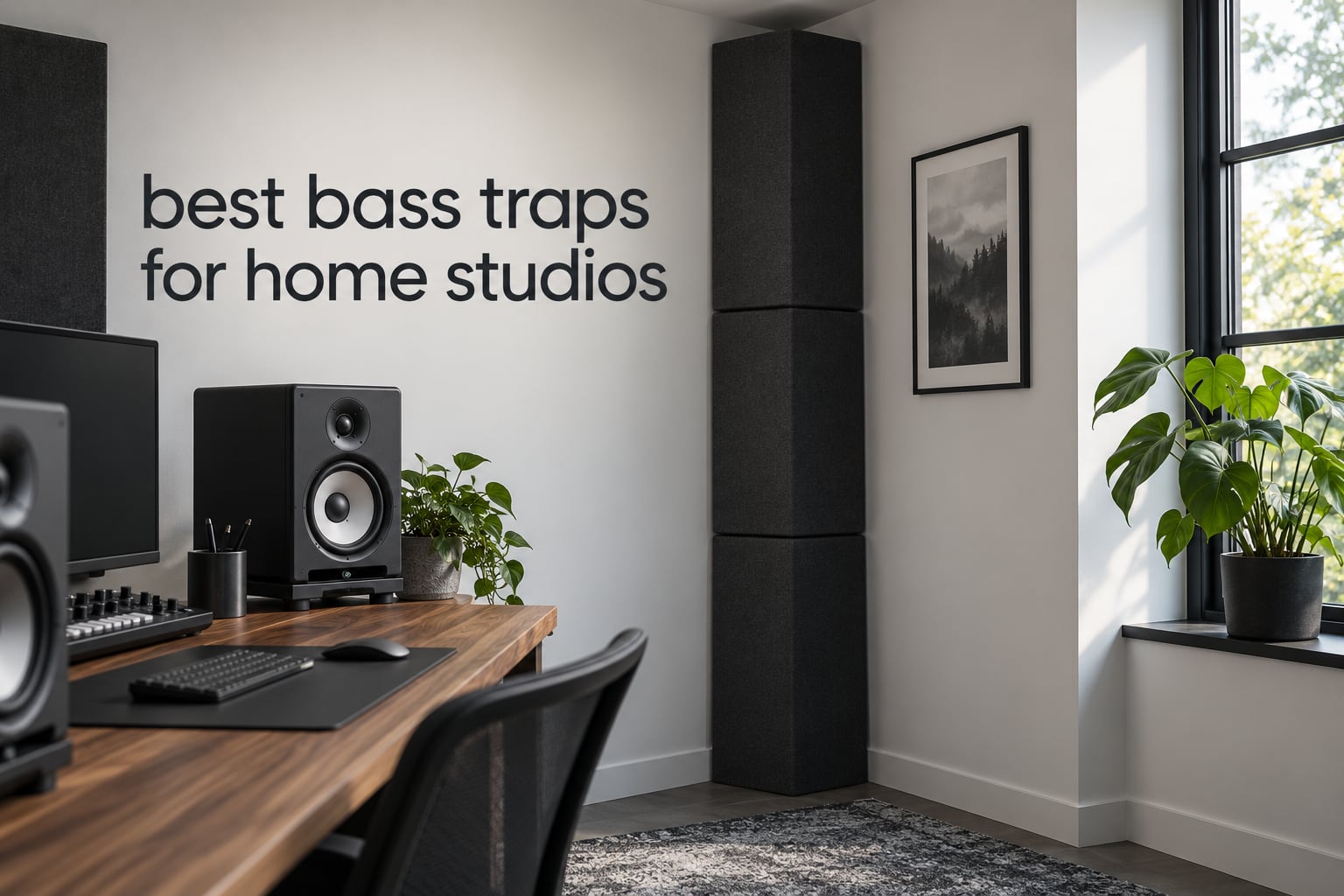
The best bass traps for home studios do one thing that cheap foam panels cannot: they absorb the low end. Low frequencies have wavelengths long enough to wrap around a desk, a bed frame and a curtain, which is why an untreated bedroom studio sounds boomy no matter which monitors you buy. Every trap in this roundup is a tall, dense, porous absorber sized for a room corner, and I compared ten of them on depth, foam density, fire rating and how they actually mount.
Before the picks, the physics. A bass trap works by letting sound energy enter a thick porous core, where friction converts it into a minute amount of heat. A wedge of foam two inches thick does not do that below roughly 150 Hz, which is exactly where the boom in a small room lives. This is the single biggest expectation gap in the category, and it is why almost every forum thread on Gearspace and r/audioengineering repeats the same material advice: dense mineral wool such as Owens Corning 703 or 705, wrapped in breathable fabric. Thin foam is decorative at low frequency.
One more distinction before we start, because people mix it up constantly. Bass traps treat the sound inside your room. They reduce peaks, reduce ringing and raise nulls. They do not soundproof anything, they do not stop bass leaking into the hallway, and no amount of foam will replace isolation. If your problem is neighbour noise or bleed, look at acoustic treatment kits and build a proper isolation plan instead.
Top 3 Bass Trap Picks for Home Studios in 2026

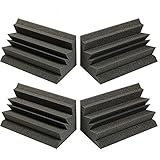
JBER 4-Pack Corner Traps
- 7 inch triangular blocks
- 4 pack
- Corner or wall mounting
- 1.04 lb total

XIN&LOG 4.6in Corner Columns
- 4.6 x 4.6 x 9.4 inch columns
- 8 pack
- Self-expands from vacuum pack
Bass Trap Comparison Table for 2026
All ten traps below are acoustic foam or fabric-wrapped panels sold for corner and wall treatment. Thickness is the number that matters most, and it is the number most listings bury.
| Product | Specifications | Action |
|---|---|---|
| JBER 4-Pack Foam Corner Bass Traps |
|
Check Latest Price |
 Foroomaco Triangular Pyramid Ceiling Traps Foroomaco Triangular Pyramid Ceiling Traps |
|
Check Latest Price |
 SD SODOCT 8-Pack 12 inch Corner Traps SD SODOCT 8-Pack 12 inch Corner Traps |
|
Check Latest Price |
 TroyStudio 12-Pack 4x4x12 Corner Traps TroyStudio 12-Pack 4x4x12 Corner Traps |
|
Check Latest Price |
| XIN&LOG 8-Pack 4.6 inch Corner Columns |
|
Check Latest Price |
| Mybecca 12x6x6 Triangular Corner Traps |
|
Check Latest Price |
 Eerbaier 12-Pack 12x7x7 Corner Traps Eerbaier 12-Pack 12x7x7 Corner Traps |
|
Check Latest Price |
 Eerbaier 16-Pack Slim Corner Sections Eerbaier 16-Pack Slim Corner Sections |
|
Check Latest Price |
 QGU 24×12 Wooden Fabric-Wrapped Traps QGU 24×12 Wooden Fabric-Wrapped Traps |
|
Check Latest Price |
 ua acoustics TRI Pyramid Corner Traps ua acoustics TRI Pyramid Corner Traps |
|
Check Latest Price |
1. JBER 4-Pack Acoustic Foam Corner Bass Traps
JBER 4Pack Acoustic Foam Corner Bass Traps, Studio Foam Corner Block Finish
7 inch triangular corner blocks
4 pack
12 x 7 x 7 inches each
Mounts in corners or horizontally
Pros
- Targets low and mid frequency buildup in room corners
- Lightweight and easy to mount on ceilings or walls
- Sharp square edges give a clean studio look
- Well-reviewed with a large volume of customer feedback
Cons
- Shallow 7-inch face limits deep low-frequency absorption compared with larger traps
- Adhesive and mounting hardware are not included
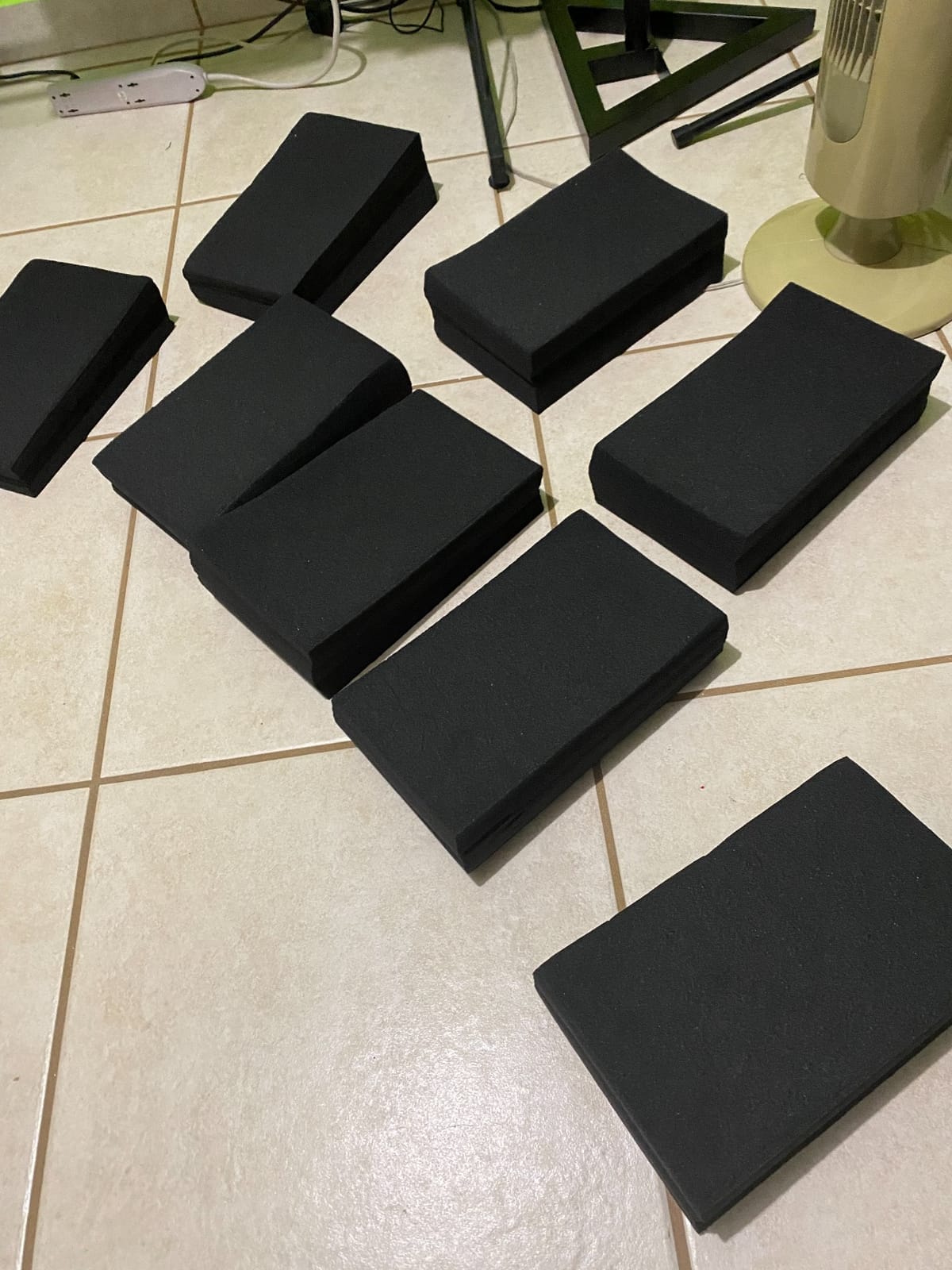
This is the trap most people in home studios end up with, and for good reason. The rating spread is 64% five-star and 16% four-star across a very large review base, and the recurring comment is that reflections visibly tighten for the money spent.
The 7 inch face is the compromise. It is deep enough to help with buildup around 100 Hz and above, but it is not going to move a serious sub-bass problem on its own.
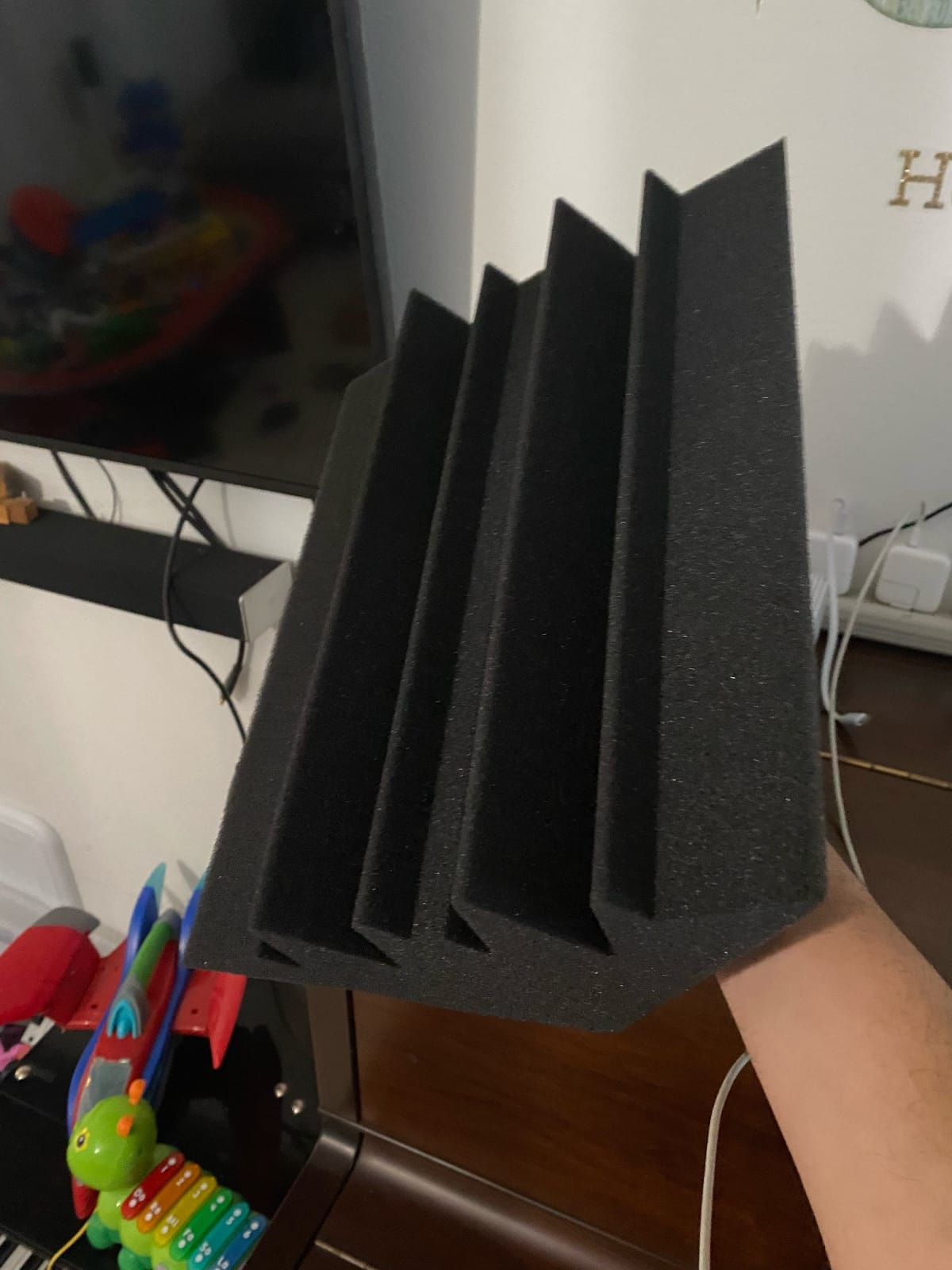
Mounting is glue, double-sided tape or nails, and none of it is in the box. Budget for a can of spray adhesive, because tape on a porous foam face rarely holds over a full year of temperature change.
How it performs in a real bedroom studio
In a small rectangular room this does visible work quickly. It cuts the harsh ring off the front corners and takes the edge off boomy translation, which is why it is the pick I keep coming back to for a first treatment pass.
Where it falls short
It is a foam trap, so treat its low-frequency ceiling as real but limited. Pair it with wall panels rather than expecting one pack to fix a room. Our home studio microphone guide covers the capture side of the same room.
2. Foroomaco Triangular Pyramid Bass Traps
Foroomaco Triangular Pyramid Bass Traps for Ceiling Corners, 4 Pack, Black
16.5 inch face with 12 inch depth
4 pack
Open-cell polyurethane foam
1.19 lb
Pros
- Deep 12-inch foam depth gives more treatment depth than flat wall panels
- Specifically shaped for trihedral ceiling corners
- Reduces boomy corner buildup for cleaner low-end monitoring
- Improves the look of a studio while keeping floor space usable
Cons
- Pyramid foam is delicate and can tear during expansion and mounting
- Included adhesive strips hold poorly at this weight
- Vacuum compression can leave pieces deformed
Depth is the headline here. A 12 inch profile is the thickest foam in this roundup, and it is shaped specifically for the junction where two walls meet the ceiling rather than for a vertical corner.
Owners who install them correctly report smoother bass and a noticeably better-looking room, at 55% five-star and 21% four-star.
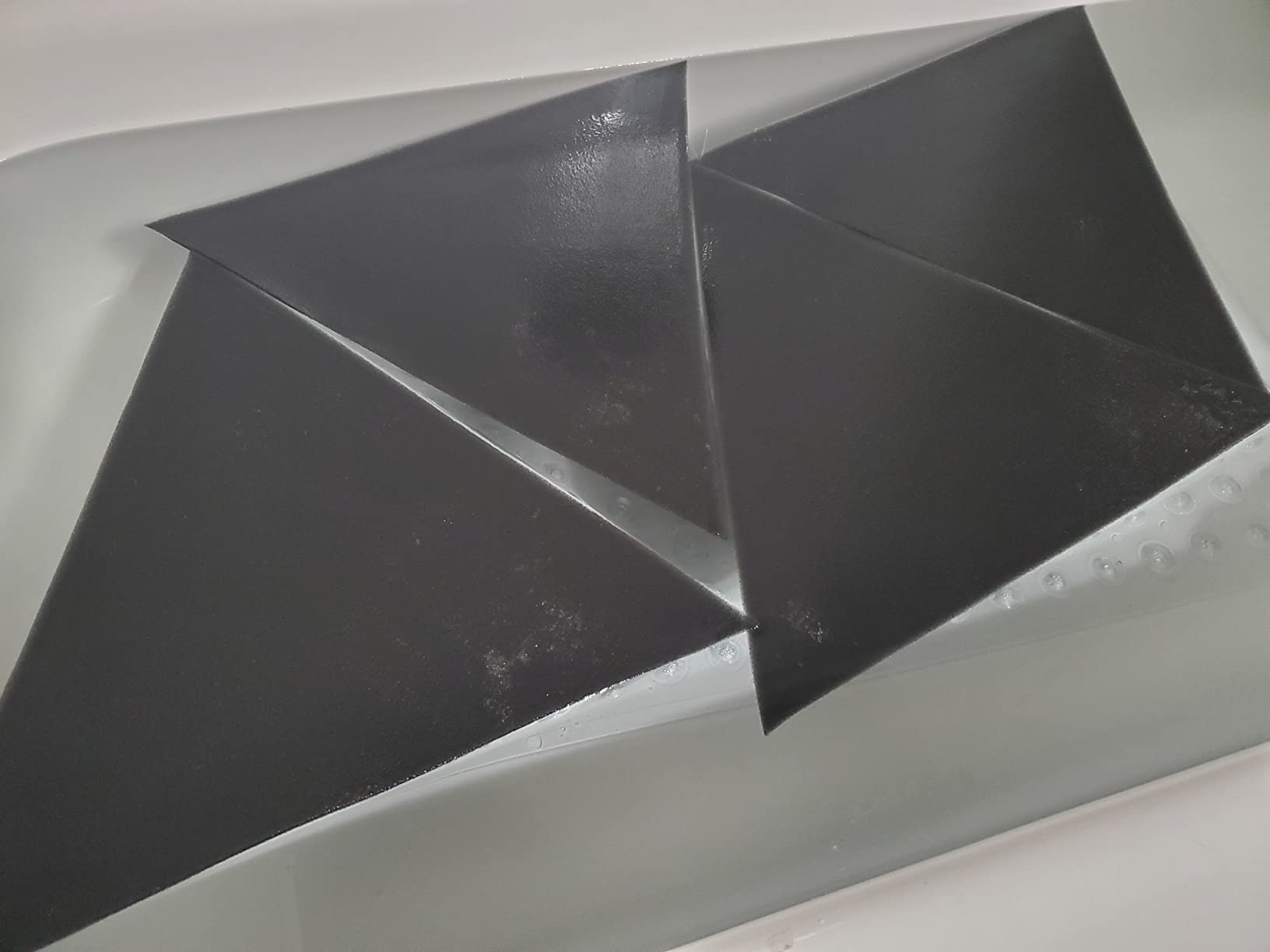
Installation is the recurring pain point. The included adhesive strips are criticised for holding poorly at this weight, and several buyers report pieces that stay deformed after vacuum packaging. Buy reinforced tape or spray glue, and give them time to recover before mounting.
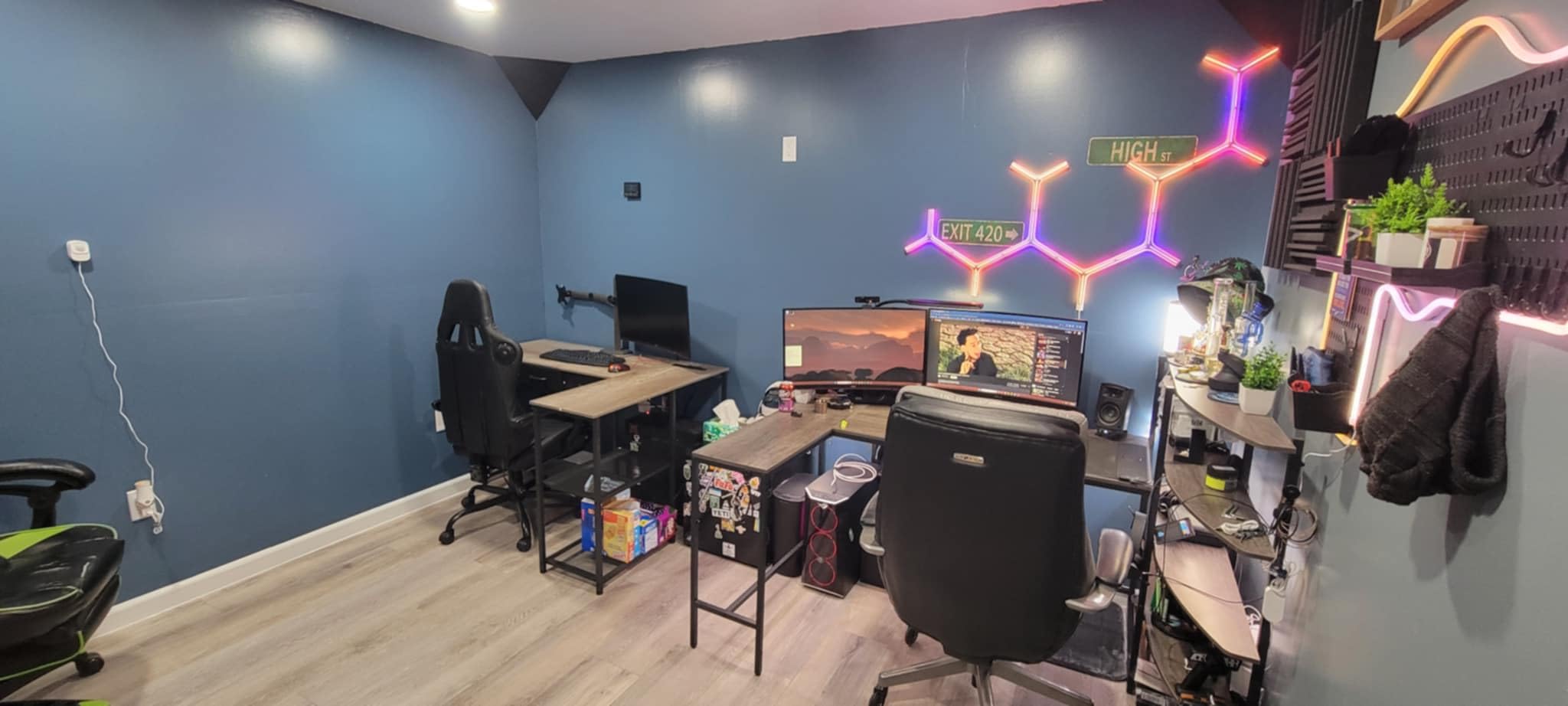
Why the ceiling corner matters most
The trihedral corner concentrates low-frequency energy more than any other surface in a room. A trap sitting there does more per unit volume than the same trap slid along a flat wall.
Where it falls short
The limited face area does nothing for high-frequency flutter echo, so this is a bass tool, not a full-spectrum one. And the pyramid tips tear easily during expansion, so expand them flat and undisturbed.
3. SD SODOCT 8-Pack Corner Bass Traps
8 Pack – Bass Traps Acoustic Foam Corner, 8”x8”x12” Black Bass Traps Corner Studio Foam, High Density and Fire-Proof Acoustic Panels Recording Studio Acoustical Treatments
8 x 8 x 12 inch corner blocks
8 count
CA117 B1 fire-retardant
2.4 lb
Pros
- Strong Amazon category ranking for recording studio acoustical treatments
- High-density foam with a documented B1 fire-retardant rating
- Eight blocks allow full-height or tri-corner stacking in one room
- Widely used in home theatres and vocal booths
Cons
- Vacuum compression requires 24-48 hours of expansion before mounting
- Adhesive is sold separately
This is the one to buy if your space is a rented room, a home theatre or anywhere a fire rating might come up in a conversation. The B1 certification under California Technical Bulletin 117 is documented, which almost no budget foam manages.
At 12 inches deep with an 8 inch face, these are among the deeper blocks in the set, and eight of them is enough to treat the upper corners of a small room properly.
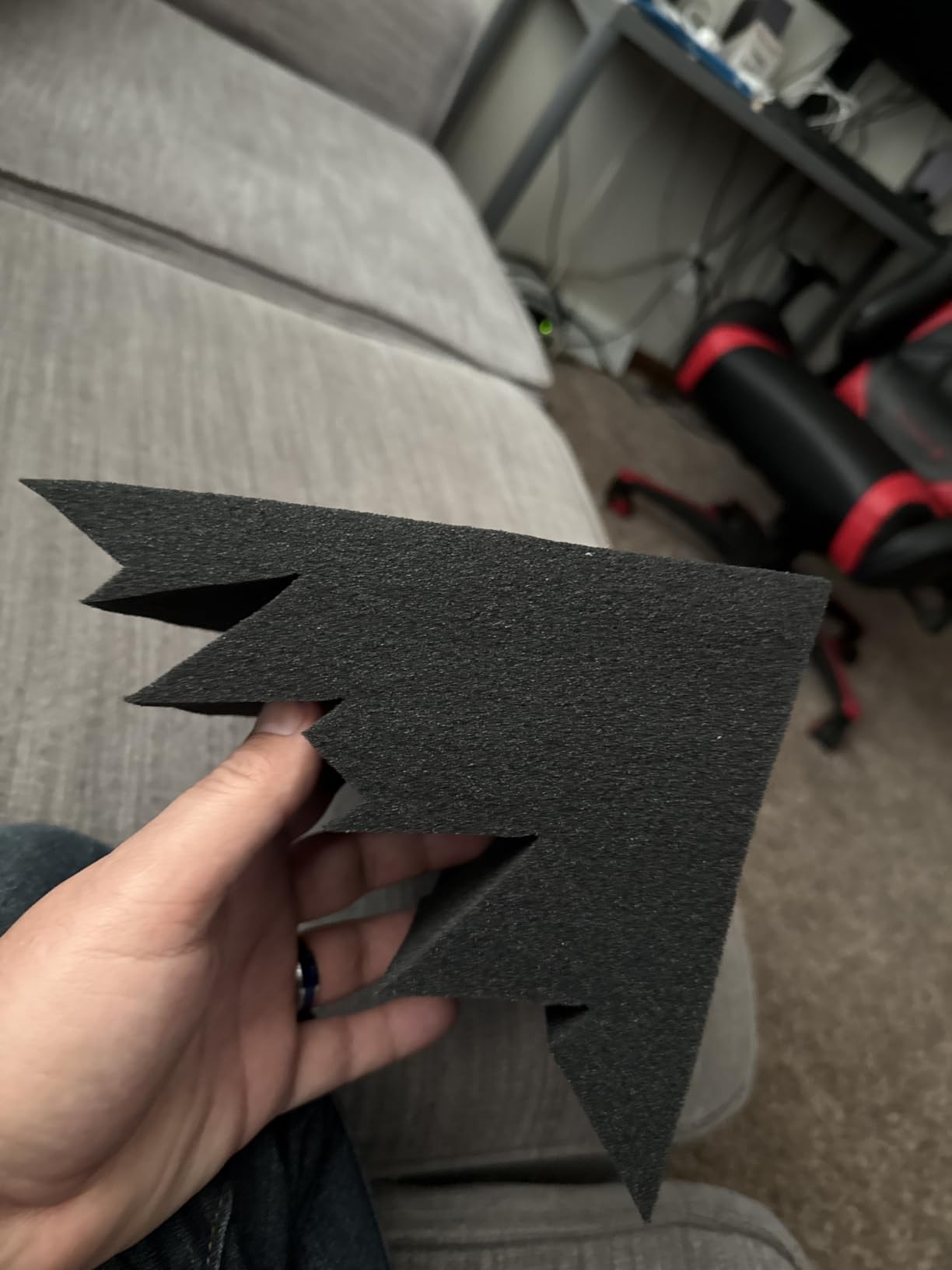
Buyers treat them as solid, budget-friendly corner treatment and point to the fire documentation as the deciding factor. The main caveat is simple: adhesive is not included and pieces need time to decompress after the vacuum pack opens.
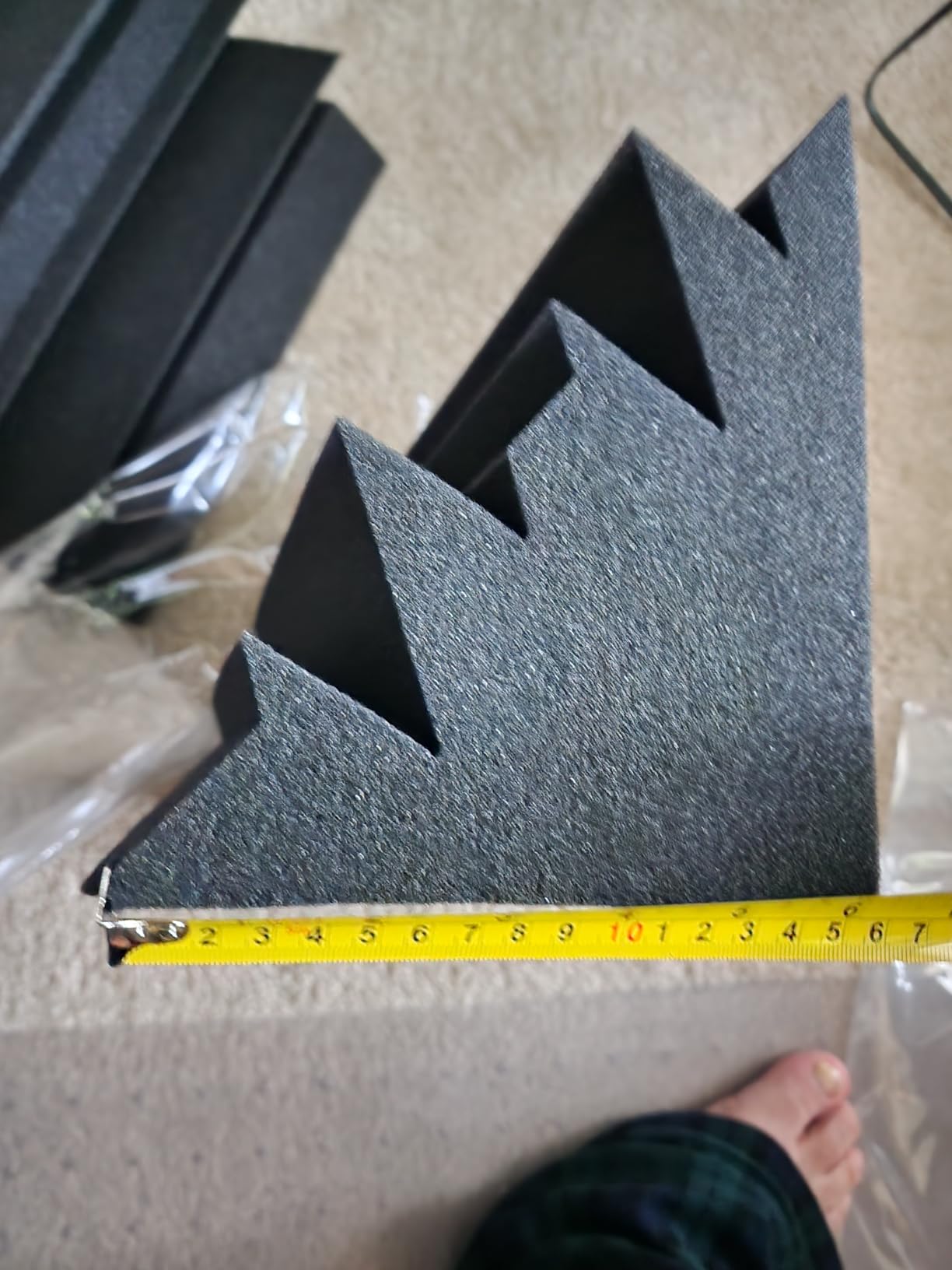
How eight blocks fit a small room
Two blocks per vertical corner fills a typical ceiling-to-desk height. Stack the remaining four along the rear wall behind the listening position, where room modes tend to pile up.
Where it falls short
Still foam, so the deepest bass modes are only partly addressed. The 24 to 48 hour expansion window also means you cannot treat a room the day it arrives.
4. TroyStudio 12-Pack 4x4x12 Corner Bass Traps
TroyStudio Bass Traps – 12 Pcs 4 X 4 X 12 Inches Dense Thick Studio Bass Foam Corner, Acoustic Treatment Panel Absorbing Echo Reverb, Low Frequency Sound Absorber for Music Room Home Recording Studio
4 x 4 x 12 inch panels
12 pack
0.07 lb each
Flame retardant TB 117-2013
Pros
- Periodic textured design reads less like generic pyramid foam
- Very light at 0.07 lb per panel and easy to cut
- Flame-retardant certified and odorless
- Users report an immediate reduction in sharp echo in corners
Cons
- A 4-inch face is too narrow for true corner-wall-ceiling mounting
- Foam density is lighter than advertised
- Some panels fail to fully decompress
- Adhesive sold separately
Twelve slender columns at 4 x 4 x 12 inches, and the reason to buy them is shape rather than depth. They fit narrow gaps between a desk and a wall, inside a closet, or behind a vocal booth frame where a full corner wedge will not go.
Sentiment splits here. Owners happy with corner echo control sit alongside critics who measure the foam as too light and narrow for real bass trapping.
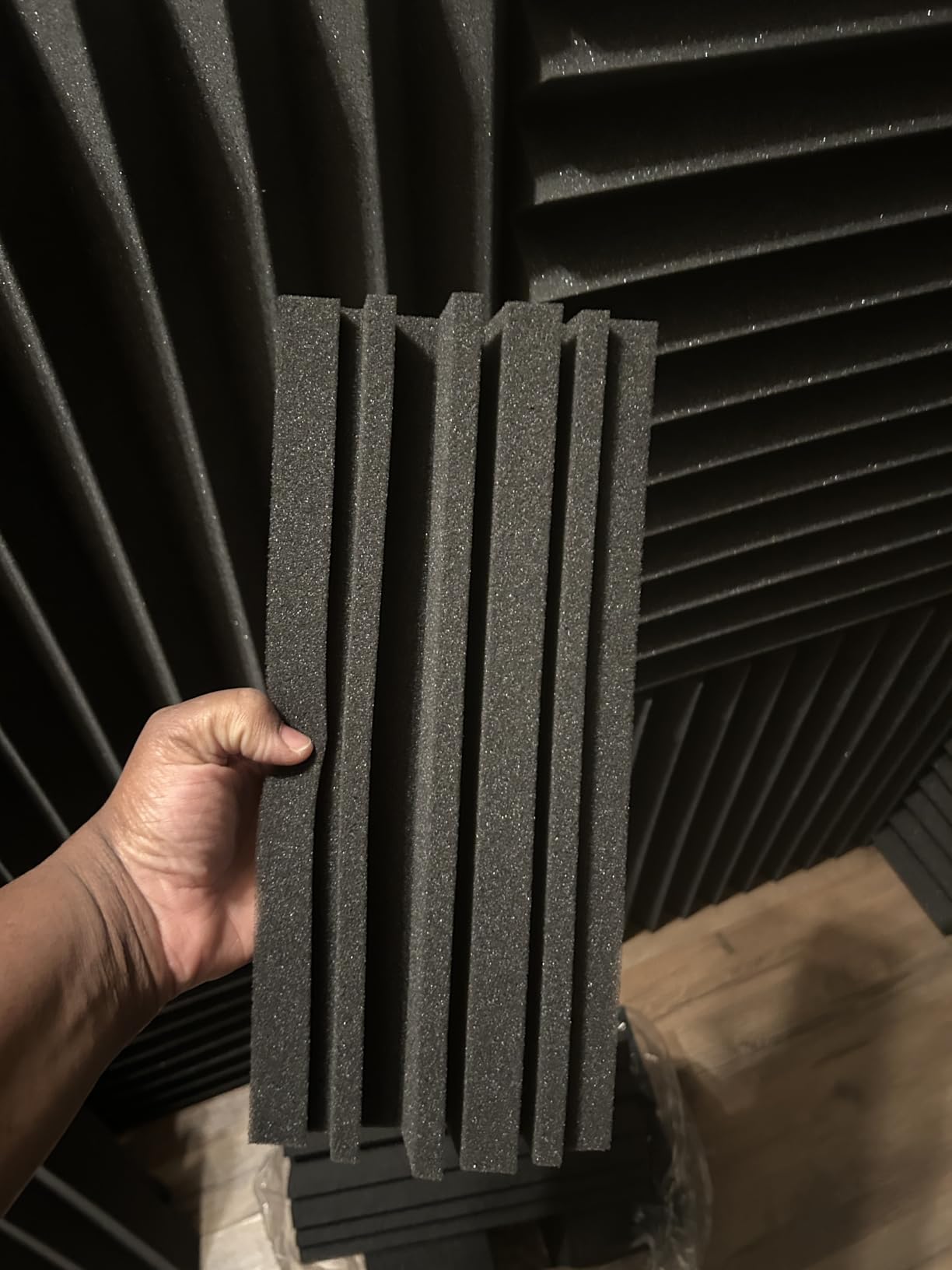
The periodic surface also looks less like budget pyramid foam, which matters if the trap is visible. Expect to trim a few pieces yourself, since the cuts are not perfectly consistent out of the pack.
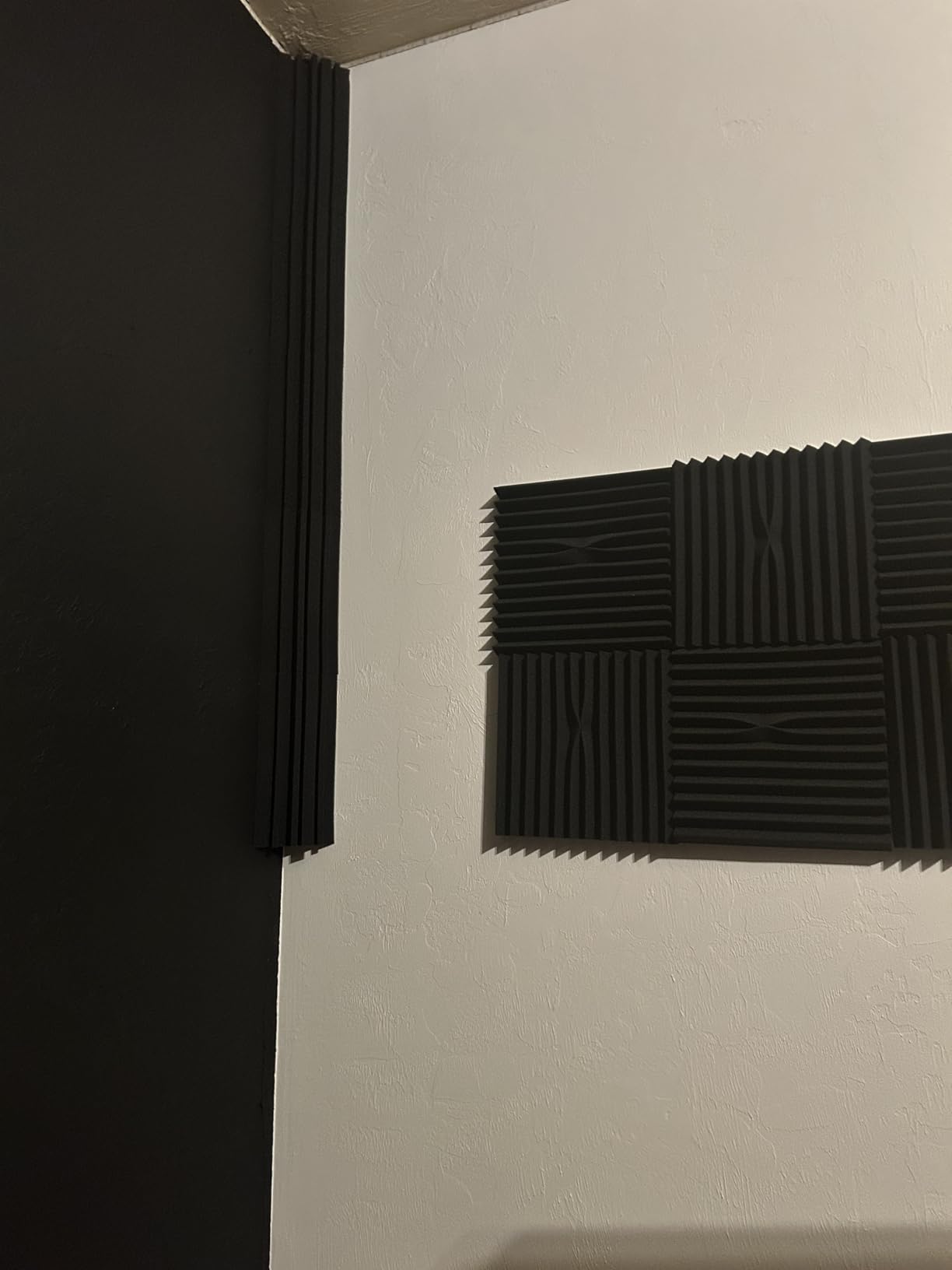
Where these actually earn their place
Think of them as filler for awkward geometry rather than as a bass control system. In a closet converted into a vocal booth they are genuinely useful.
Where it falls short
A 4 inch face is too narrow for trihedral corner mounting, and the foam leans more mid-range than sub-bass. Roughly a fifth of panels in a pack can fail to fully decompress, so open them early.
5. XIN&LOG 8-Pack 4.6 x 4.6 x 9.4 Corner Columns
8 PCS 4.6″x4.6″x9.4″ Sale Acoustic Foam Black Bass trap Soundproof foam
4.6 x 4.6 x 9.4 inch columns
8 count
Vacuum sealed
Self-expands in 24-48 hours
Pros
- Lowest cost per trap in this roundup
- Expands quickly on its own without soaking
- Users notice a real reduction in echo in small live rooms
- Useful for filling corner gaps where larger traps will not fit
Cons
- Small column shape is lighter on absorption than purpose-built traps
- Included tape is ineffective on textured walls
- Vacuum-sealed units sometimes fail to expand fully
- Cuts are uneven
This is the cheapest trap per unit in the group, and the only pack here that includes its own double-sided tape. For a practice room, a rehearsal space or a first attempt at treatment, it does the job of making a live room less echoey.
Buyers consistently frame it as budget treatment rather than serious bass control, with 56% five-star and 22% four-star.
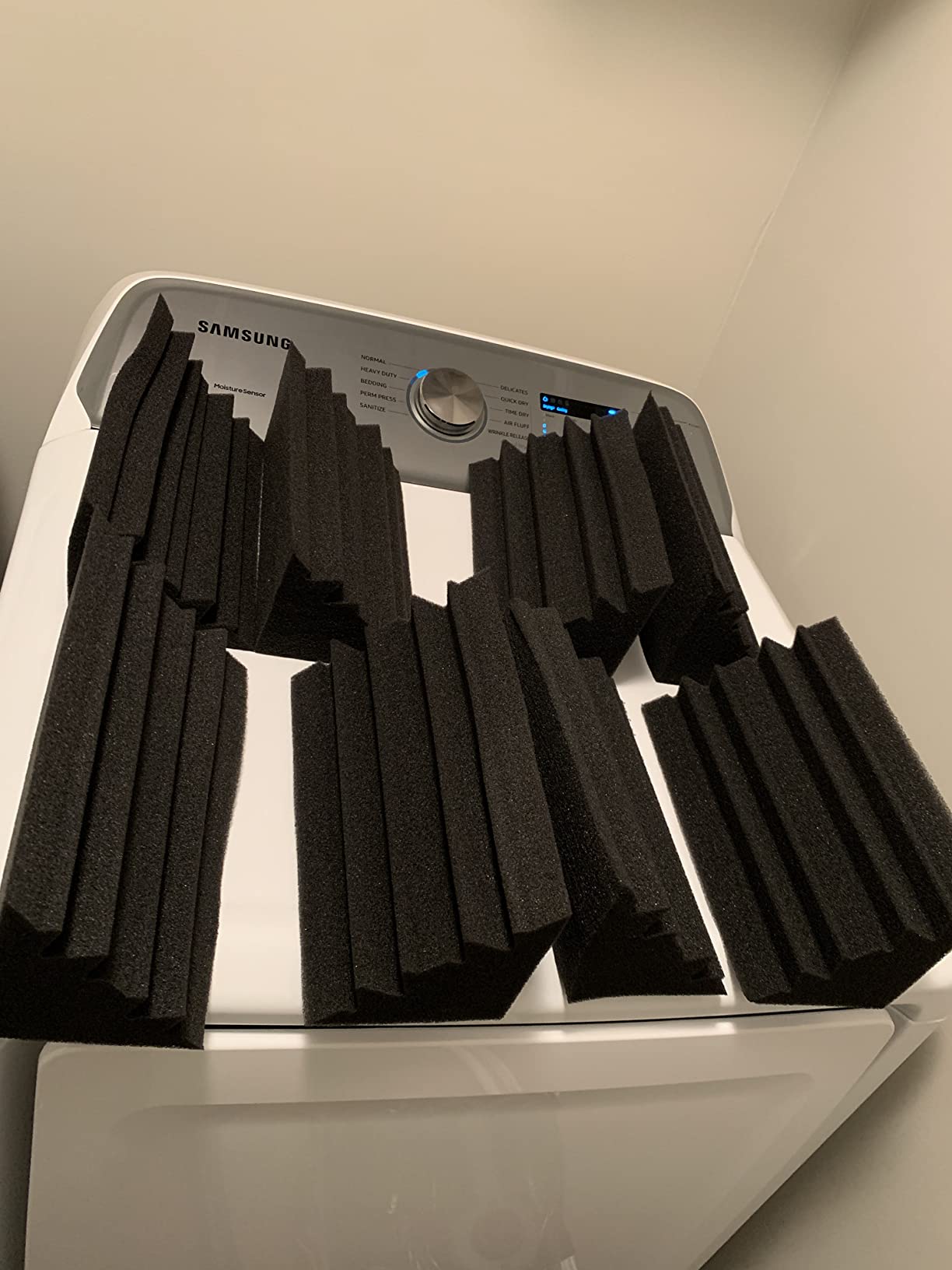
Self-expansion without soaking is genuinely convenient. Put them out for 24 to 48 hours after opening and they mostly come back on their own, which is not true of every compressed foam on the market.
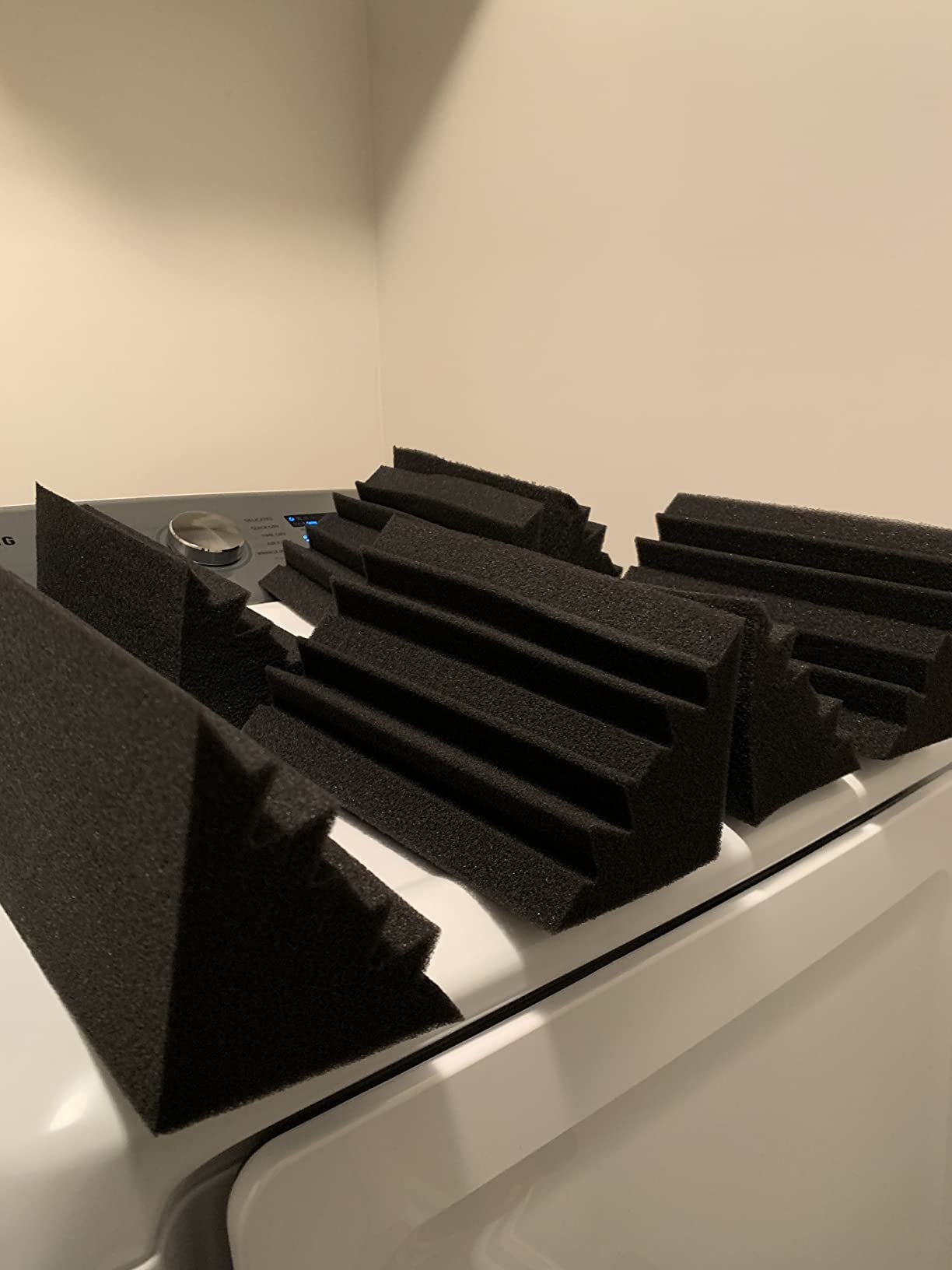
Is cheap foam ever worth it?
At 4.6 inches of depth, you are buying mid-range absorption, not sub-bass control. That is still worth it for a bedroom rehearsal room, and it is why this pack keeps its place.
Where it falls short
The included tape is hard to peel and loses adhesion on textured walls, and some units arrive deformed. If your problem is deep bass, move up the list rather than buying more of these.
6. Mybecca Acoustic Foam Bass Traps 12 x 6 x 6
Acoustic Foam Bass Trap Studio Corner Wall 12″ X 6″ X 6″ (4 PACK) Made in USA – Color: Charcoal
12 x 6 x 6 inch triangular wedges
4 pack
Charcoal foam
Made in USA
Pros
- Highest average rating in this roundup at 4.6 with 73% five-star ratings
- Denser foam than most budget competitors
- Easy to install with construction adhesive
- Users confirm reduction of mid and low-mid reverb
- Made in USA
Cons
- Not large enough for true sub-bass treatment
- Strong chemical odor on opening that takes days of airing
This has the strongest sentiment spread in the set: 73% five-star and only 3% one-star. Owners describe a clear improvement in midrange clarity and echo control, confirmed by clap tests and spectrum analysis rather than by impression alone.
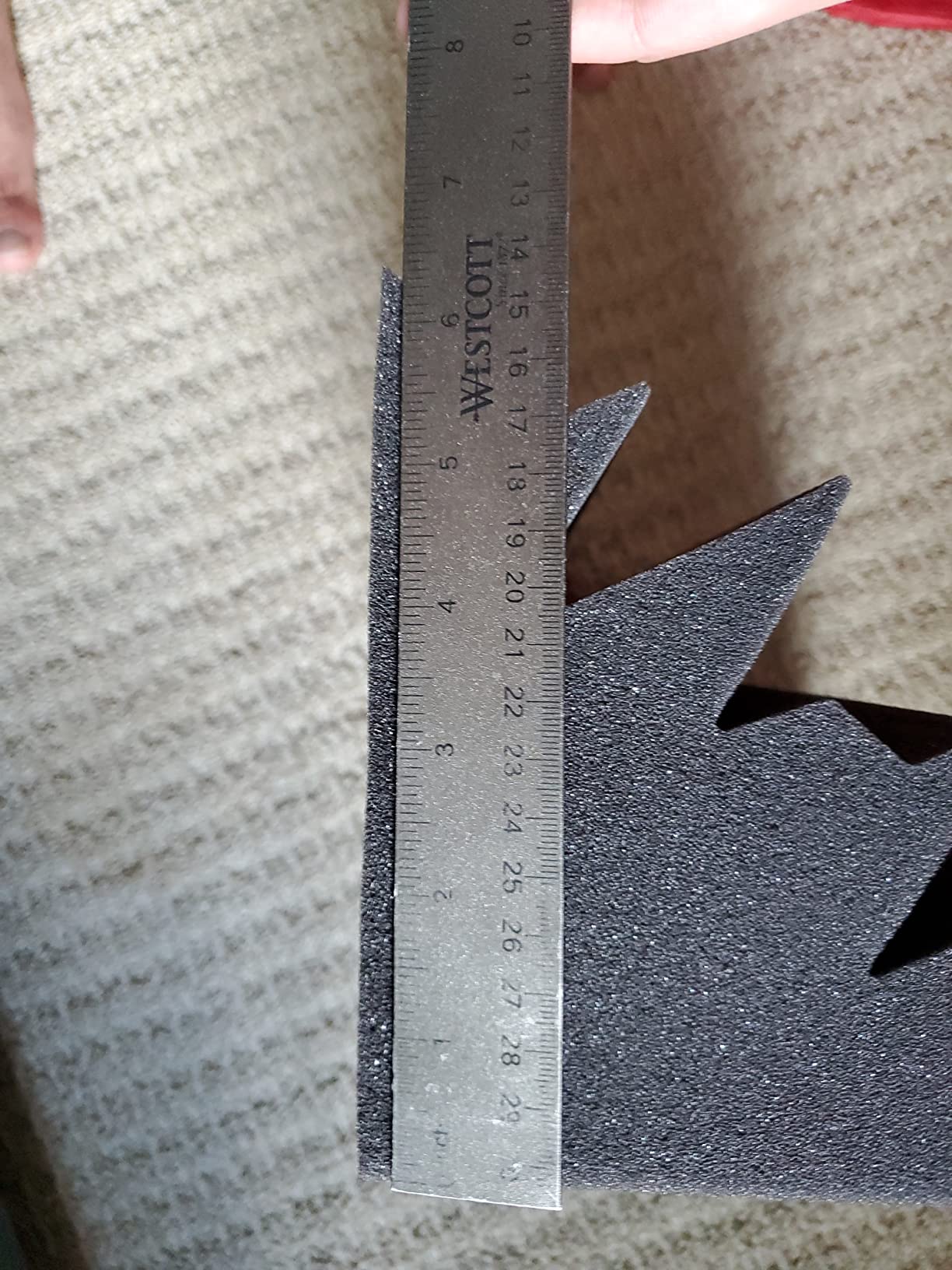
Each wedge is 12 inches tall, 6 inches wide and roughly 8 inches across the face, in charcoal. That is a mid-and-low-mid tool rather than a deep bass tool, and the reviews are honest about the difference.
Being made in the USA also means the foam is denser than most budget competitors at the same size, which is where the extra clarity comes from.
Why the rating leads this list
It is the pick I would put in a room that mixes on monitors and complains about harshness rather than boom. The density-to-size ratio is unusually good.
Where it falls short
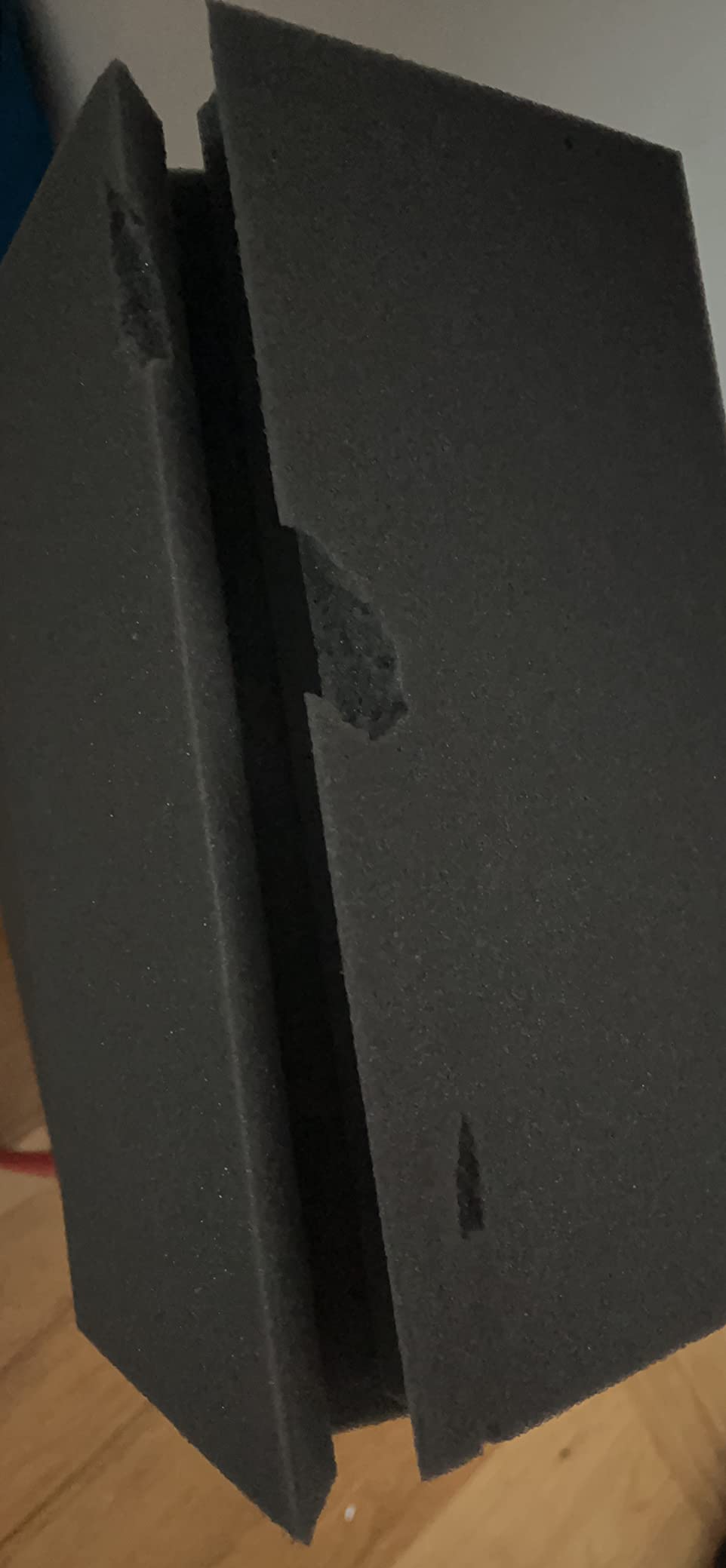
It is not large enough for true sub-bass treatment, and there is a noticeable chemical odor on opening that takes a few days of airing to dissipate. Open them before you install.
7. Eerbaier 12-Pack 12 x 7 x 7 Corner Bass Traps
Acoustic Foam Bass Traps -12 Pack Wall Corner Studio Foam Blocks 12″ X 7″ X 7″ Low-Frequency Sound Absorption Material for Home Studio and Theater etc. (12 Pack, Bass traps)
12 x 7 x 7 inch blocks
12 pack
High-density polyurethane
2.63 lb
Pros
- Twelve blocks give enough coverage to treat several corners of a room
- High-density polyurethane targets the low end where flat panels fail
- Flame-retardant and safe for small rooms
- Clear instructions on decompression
Cons
- Vacuum-packed pieces need about 24 hours to recover full size
- Mounting adhesive is not included
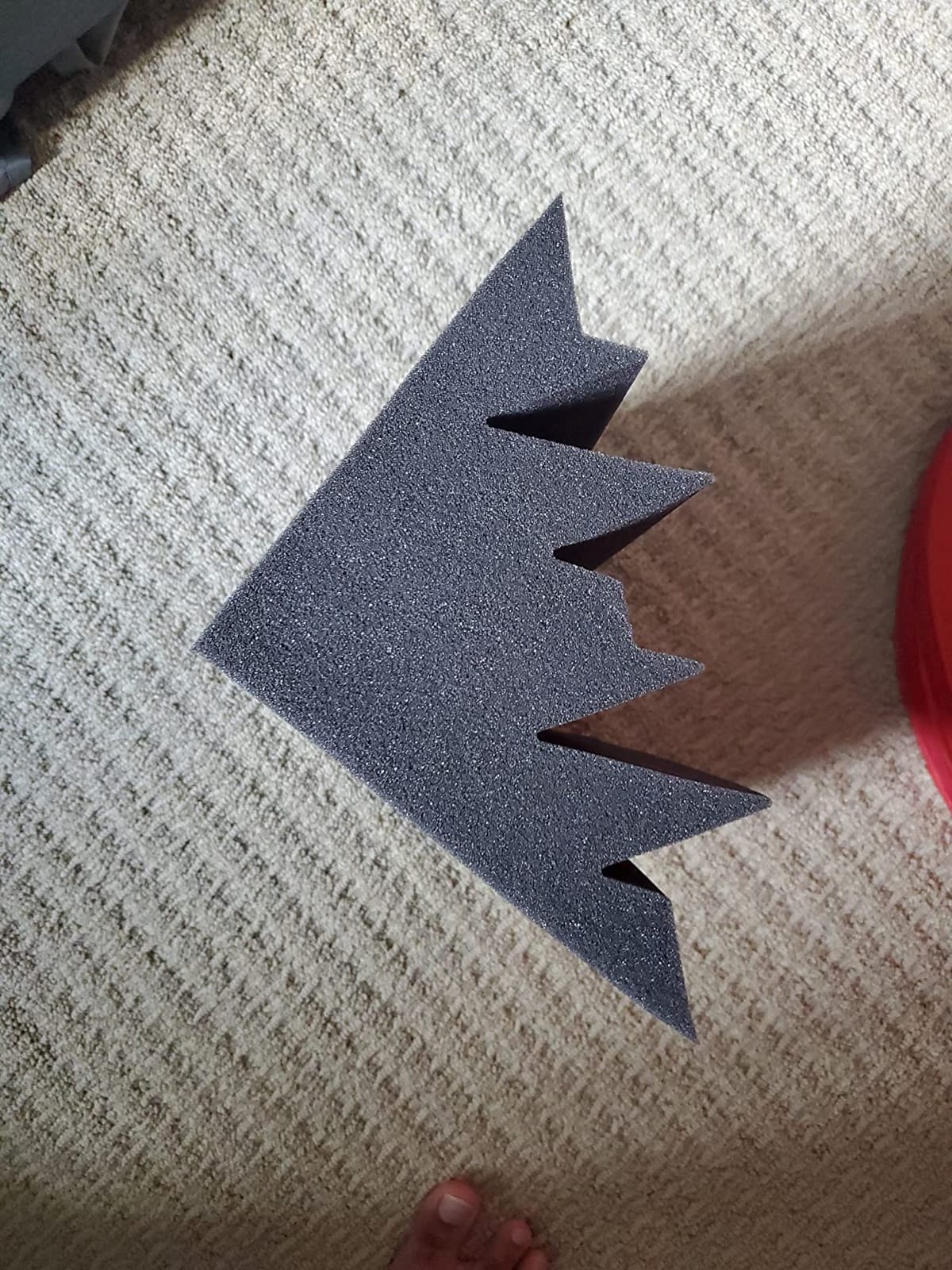
Twelve blocks at 12 x 7 x 7 inches is the most complete coverage you can get from a single inexpensive pack. Two per vertical corner handles the front of the room, and the rest cover rear wall and ceiling positions.
Sentiment centres on value per block and on being correctly positioned for the low end, with 58% five-star and 24% four-star.
The manufacturer includes decompression instructions, plus a water soak and hair dryer method for faster recovery. Useful, though a ventilated room and a day of patience is the simpler route.
How to spread twelve blocks
Front corners first, then the two rear corners, then the rear wall behind the listening position. That distribution catches the axial modes that dominate a rectangular room.
Where it falls short
Same honest limit as the rest of the foam category: it does not reach the deepest modes on its own. Adhesive is not included, so factor that into your setup day.
8. Eerbaier 16-Pack 12 x 3 x 3 Slim Corner Sections
Bass Traps 16 Pack 12″ X 3″ X 3″ Corner Acoustic Foam Panels, Acoustic Bass Trap Corner Block, Sound Absorbing Foam for Studio, Home or Theater
12 x 3 x 3 inch sections
16 pack
Stackable vertically
Fire-retardant foam
Pros
- Sixteen slim sections can be stacked to fill a full-height corner
- Highest rating among the foam corner traps at 4.3
- Fast recovery to shape after unpacking
- Good value for filling multiple corners on a budget
Cons
- Slim 3-inch profile does little against low frequencies on its own
- Foam does not hold tape well
- Piece sizes are inconsistent
- Strong chemical smell on arrival
The design idea here is modularity. Sixteen 12 inch sections at 3 x 3 inches stack vertically, so you can build a floor-to-ceiling column out of the same pack instead of forcing a single rigid wedge into a corner.
Ratings are 72% five-star and 7% four-star, with only 5% one-star, which makes it the best-regarded foam corner pack in the set.
Recovery to shape after unpacking is fast, which cuts the waiting time that frustrates people with vacuum-packed foam, and the modular sections mean you can add height later without buying a second pack.
Stacking versus single wedge
Stacked sections create more surface area in the same corner than one shallow block. That is why this pack outperforms its 3 inch depth suggests, up to a point.
Where it falls short
A 3 inch profile alone is thin, foam does not hold tape well for permanent mounting, and sizes are inconsistent enough that you will trim pieces. The chemical smell also needs hours of airing.
9. QGU 2-Pack 24 x 12 Wooden Fabric-Wrapped Bass Traps
2 Pack Bass Traps,24″ X 12″ Wooden Bass Traps Corner,Large Sound Echo Absorbers,Low Frequency Trap Standing Wave Acoustic Treatment for Home Studio,Listening Room or Theater
24 x 12 inch panels
2 pack
Fiberglass core in solid wood
Fabric wrapped
Pros
- Only rigid
- furniture-grade option in the roundup
- Owners stacking two traps report dramatic clarity gains
- Fixes boomy low-end distortion in small rooms
- 79% five-star rating across the review set
- Fabric and wood finish suits listening rooms
Cons
- No mounting hardware or adhesive included
- Not soundproofing
- Some reports of insufficient mass for very high subwoofer levels
- 20.5 lb per pair makes ceiling placement awkward
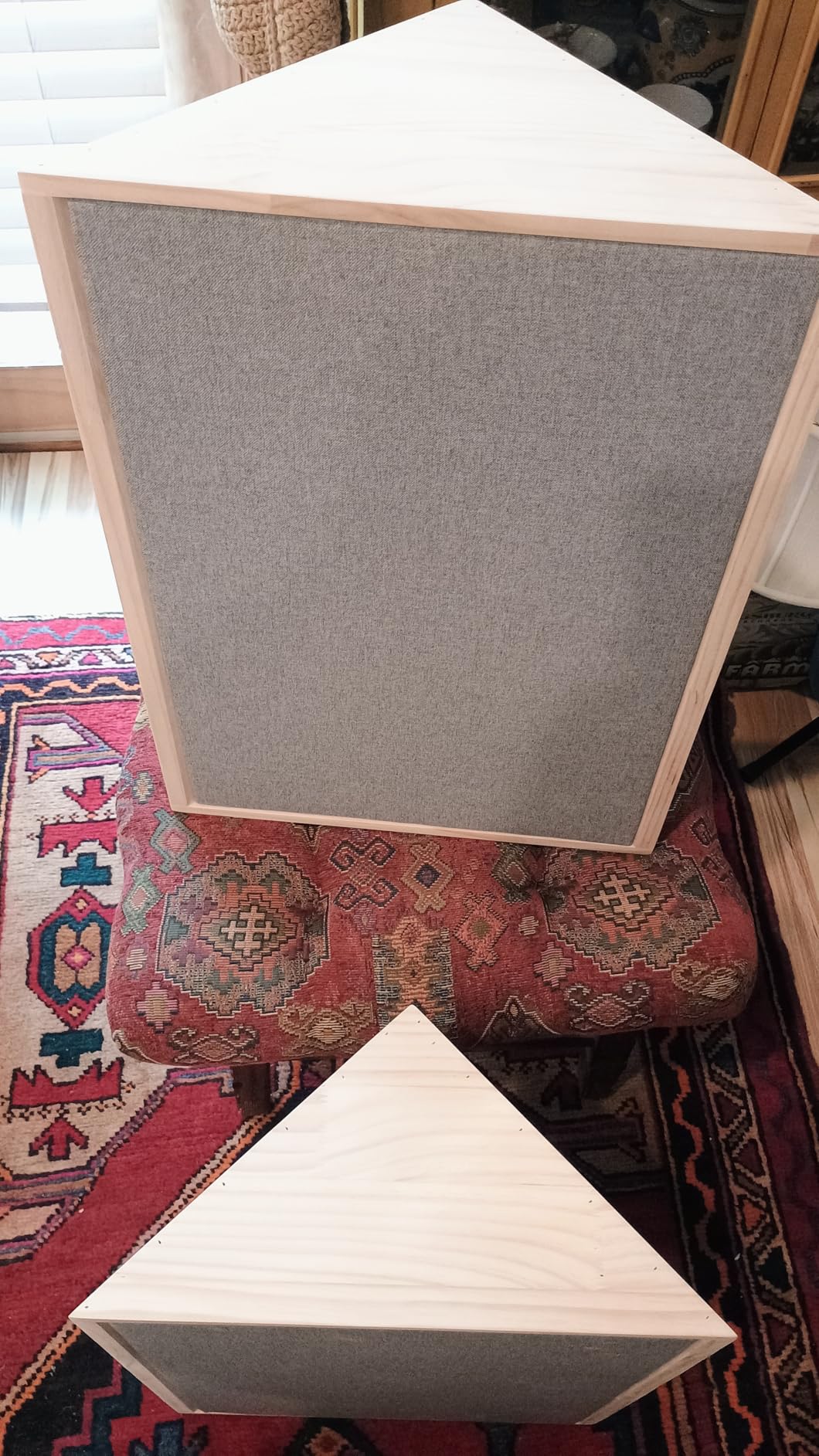
This is the only rigid, furniture-grade option in the roundup, and it behaves differently from foam. A fiberglass core inside a solid wood frame keeps its shape indefinitely, so it can live in a finished room where foam looks temporary.
Owners stacking two traps in a corner report a dramatic improvement in clarity, detail and stereo image, and the review set is 79% five-star.
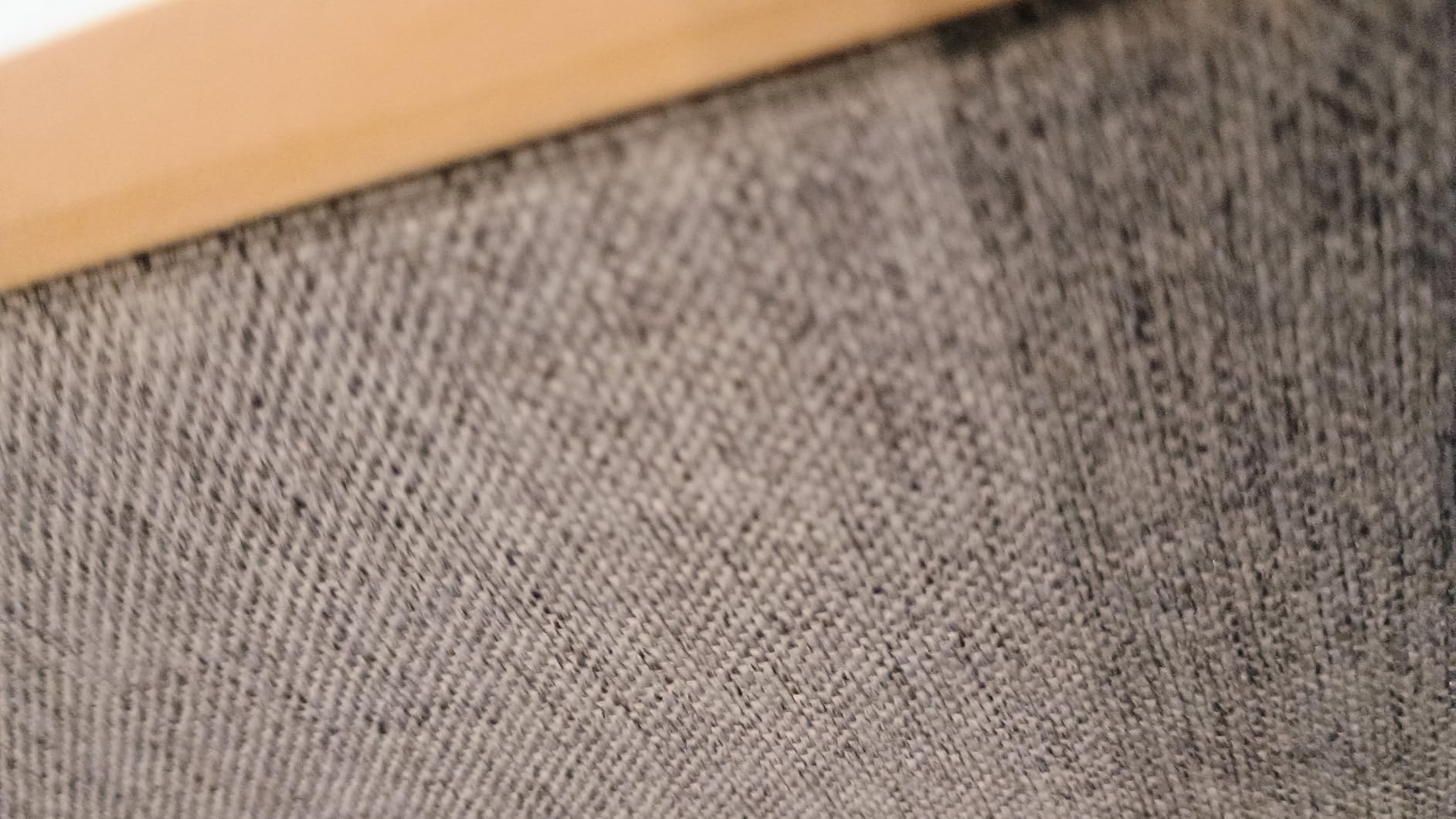
It is also the trap reviewers most often describe as taming genuinely boomy low end in a small room, which is the thing most foam in this list cannot claim.
Where rigid panels beat foam
A wood-framed fiberglass panel has mass and depth that a foam wedge cannot match, and the fabric surface can be replaced rather than the whole trap.
Where it falls short
No mounting hardware or adhesive is supplied, so an insecure fix will rattle. At 20.5 lb per pair, overhead placement is awkward, and it treats reflections rather than containing bass.
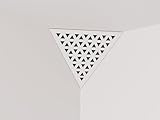
10. ua acoustics Triangle-TRI Pyramid Corner Bass Traps
(2 Pack) — Sound Absorption-Diffuse Ceiling Corner Bass Trap «Triangle-TRI» Acoustic Foam with Perforated Laminated HDF Plate | 42x42x42cm | Triangular Pyramid | Color: (TRI, White)
42 x 42 x 42 cm pyramids
2 pack
Perforated HDF with M1 foam
NRC 0.57
Pros
- Only product here with published acoustic performance data
- Rigid perforated HDF core resists sagging
- Absorption plus diffusion treats slap echo as well as bass buildup
- Wide range of colour and wood veneer finishes
Cons
- Rigid plate makes the trap heavier and harder to mount overhead
- Moderate NRC compared with deep foam traps of the same corner volume
Published numbers are rare in this category, which is why this one stands out. The listing states an overall NRC of 0.57 across a scattering range of 63 Hz to 1000 Hz, and Euroclass E fire class.
Ratings are 62% five-star and 15% four-star, with a 16% three-star cluster reflecting that the effect depends heavily on room size and placement.
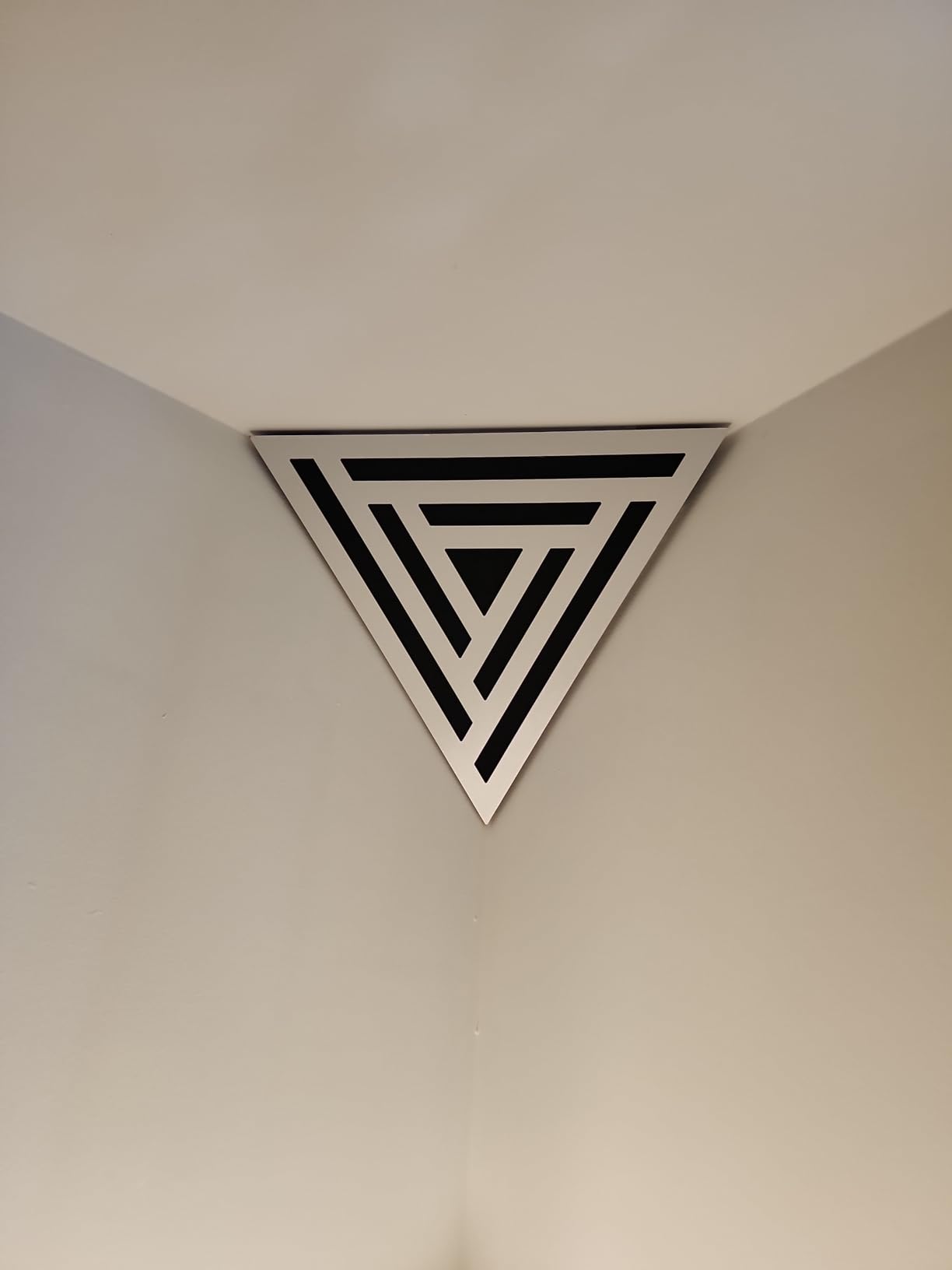
The perforated laminated HDF plate with M1 foam gives it a rigid core that will not sag, plus a scattering component, so it also helps with slap echo between parallel surfaces.
Do published ratings change anything?
They let you compare traps on the same scale, which is more than most listings offer. Read NRC as a broadband average rather than a promise at 40 Hz, because that is what the number measures.
Where it falls short
The rigid plate makes it noticeably heavier and harder to mount overhead than foam, and NRC 0.57 is moderate next to a deep foam trap occupying the same corner volume.
How to Choose a Bass Trap: Thickness, Shape and Material
Thickness is the first filter, and the honest scale is simple. Below 4 inches you are treating mid-range, not bass. Between 4 and 8 inches you are starting to affect the 80 to 125 Hz band where small-room boom usually lives. Above 8 inches, particularly in a corner, you reach the 40 to 80 Hz modes that make a room sound unprofessional on monitors.
Shape decides where a trap can go. Triangular wedges fill a wall-to-wall or wall-to-ceiling corner. Cylindrical and pyramidal traps suit the ceiling junction. Slim stackable sections fill awkward gaps. Rigid rectangular panels work anywhere you can fix a bracket.
Material is where the DIY crowd and the commercial crowd finally agree. Every manufacturer posting in the Gearspace low-end thread recommends Owens Corning 703 or 705, and the standard warning repeats: regular fibreglass will not work because it needs to be dense and thick. Wrapped in breathable fabric and mounted with an air gap behind, that outperforms most foam in this roundup at a comparable cost per trap.
NRC ratings are the number sellers quote most and buyers misunderstand most. It is a broadband average of absorption between roughly 250 Hz and 4 kHz. It tells you nothing about performance at 50 Hz, which is the number you actually care about. Two traps can share an NRC and behave completely differently at the bottom. If you care about bass specifically, judge depth and material first and treat the rating as a tiebreaker.
Where to Place Bass Traps in a Home Studio
Corners first, in a fixed priority order. Front corners behind the monitors, then rear corners behind the listening position, then rear wall panels, then ceiling cloud positions over the listening position and the front wall. Skip the side wall until the corners are done, because side wall energy is a symptom of corner energy bouncing around.
Corner priority order, one trap per corner:
- Front left and front right corners, behind or beside the monitors
- Rear left and rear right corners, behind the listener
- Rear wall, spread across the width behind the listening position
- First reflection points on side walls, once the corners are covered
- Ceiling cloud above the listening position
The 38 rule, which puts monitors about 38 cm from the rear wall, interacts with all of this. If you place monitors tight to the front wall, you cannot put a full trap in the front corner behind them, and the low end will suffer. Moving the monitors back a little creates the space a corner trap needs, which is the cheapest acoustic win available.
When a door or a closet occupies a corner, the standard workaround from the forums is to build the trap as a floor-to-ceiling soffit on castors and roll it back when the door opens. Digital room correction like Dirac Live helps with what is left after treatment, but it does not replace it.
How Many Bass Traps Does Your Room Need?
Use this order rather than a formula, because room shape matters more than volume. First, measure your room in feet and multiply length by width by height to get cubic feet. A room under about 400 cubic feet is small, 400 to 800 is medium, and above 800 you should expect to treat continuously rather than in spots.
- Small room under 400 cubic feet: four corner traps, one per vertical corner, plus two rear wall panels
- Medium room from 400 to 800 cubic feet: four corner traps plus four rear and side wall panels at 6 inch depth or deeper
- Larger room above 800 cubic feet: floor-to-ceiling column traps in all four corners, then a cloud, then wall panels
A useful sanity check is coverage per trap. A 12 x 7 x 7 inch foam block has a face area of about 0.6 square feet, so eight of them cover roughly 5 square feet of corner surface. A 24 x 12 inch rigid panel covers 2 square feet each, which is why two of them change a room faster in low end than eight foam blocks.
Frequently Asked Questions
Do bass traps really work?
Yes, when they are thick enough. A trap converts sound energy into heat inside a porous core, which reduces peaks, reduces ringing and raises nulls. Below about 4 inches of depth you are getting mid-range absorption rather than true low-frequency control, so the cheapest foam traps sold as bass traps do very little below 100 Hz.
What is the ideal thickness for a bass trap?
At least 4 inches to affect the 80 to 125 Hz band, 8 inches or more for a corner trap working down toward 40 Hz, and floor-to-ceiling columns if your room modes sit lower still. Thickness matters more than brand for low-frequency performance.
Should I put bass traps in every corner?
Yes, and in this order: front corners behind the monitors, rear corners behind the listener, then rear wall panels, then first reflection points, then a ceiling cloud. Corners concentrate low-frequency energy more than any other surface, so they pay back the effort first.
Are acoustic panels the same as bass traps?
They differ mainly in thickness and job. Acoustic panels are typically 2 to 4 inches deep and target mid and high frequencies such as flutter echo. Bass traps are 4 to 12 inches deep, sit in corners, and target the low end where panels do almost nothing.
What is the 38 rule for studio monitors?
The 38 rule places studio monitors about 38 cm, or 15 inches, from the front wall. It gives a flatter low end than pushing monitors against the wall, and it frees the corner behind each speaker for a bass trap, which is why the two decisions are usually made together.
Final Verdict: Best Bass Traps for Home Studios in 2026
The JBER 4-pack is the best bass trap for most home studios because 7 inches of depth, a square-edge finish and the largest review base in the category make it the least risky first purchase. If your priority is clarity rather than boom, the Mybecca wedges hold the strongest rating in the set. And if you are willing to build rather than buy, dense Owens Corning 703 or 705 wrapped in breathable fabric is what the forums keep recommending, and they are right.
Measure your room, treat the corners first, and check the result with a sweep in Room EQ Wizard before you spend another penny. If you are still chasing low end after the traps go in, bass fundamentals are the next rabbit hole worth reading.