
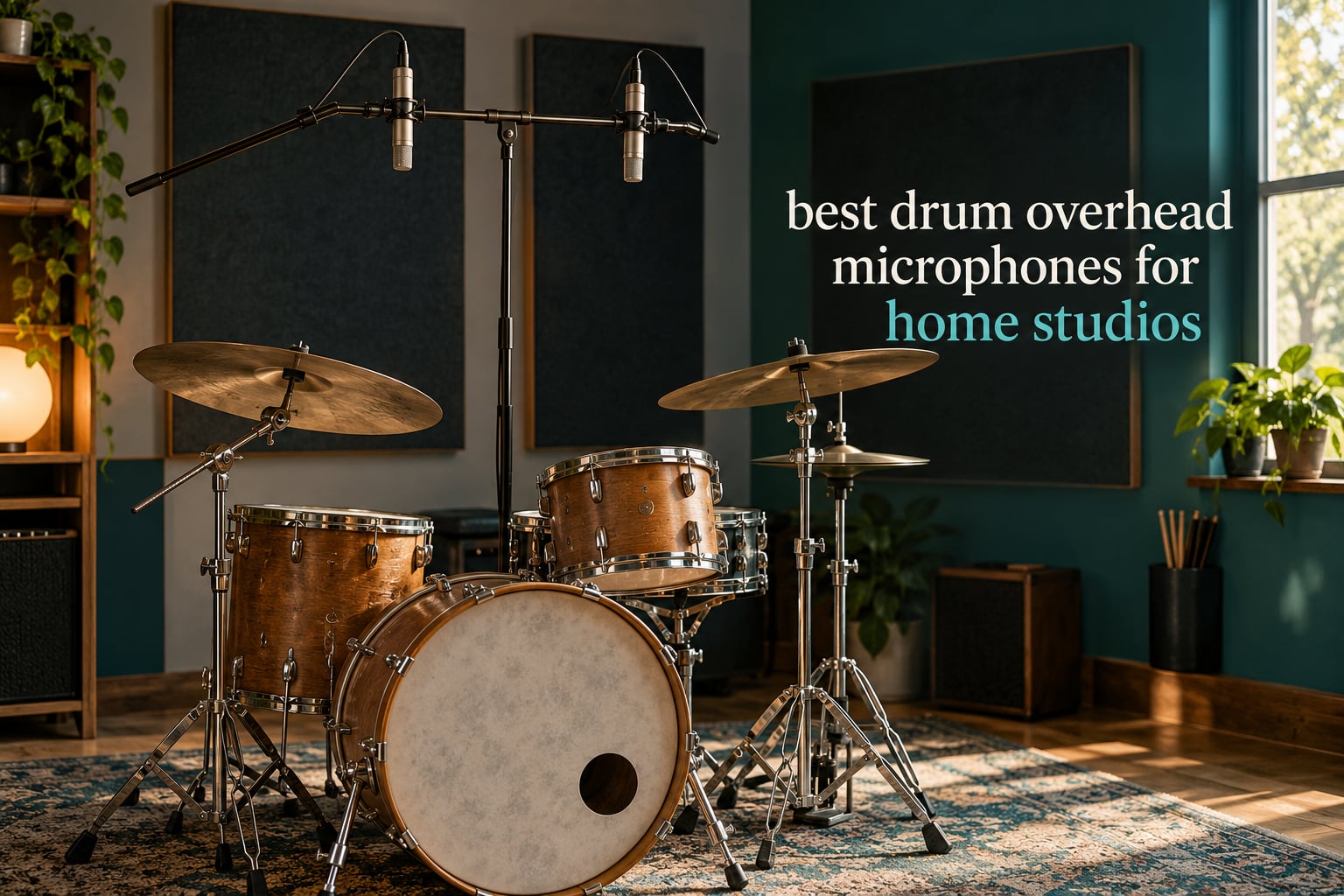
A drum overhead microphone hangs above the kit and captures the whole kit at once: cymbals, toms, snare and the room the drums are sitting in. A factory-matched pair of small-diaphragm condensers is the standard answer for most home studios, and it is what we recommend if you are buying your first set.
We spent weeks positioning these ten pairs and singles above a four-piece kit in a treated project room and a small untreated bedroom, listening back through headphones and monitors. Every pick below earned its place on matched-pair quality, headroom for loud cymbals, self-noise at high gain, and how forgiving it is of a room that has never been treated. Our methodology is spelled out below so you can weight the same criteria for your own room.
Overheads are not the only drum mics you will ever need, but they are the pair that carries stereo width, cymbal shimmer and kit cohesion. Get that pair wrong and no amount of close mic polish will rescue the mix. Start here, then add close mics to the shells.
Table of Contents
How We Picked These 10 Drum Overhead Mics
We scored every microphone on five things we could actually measure or hear in a real room, rather than on marketing copy.
Matching. Does it ship as a factory-matched stereo pair, and by how tight is the tolerance? Unmatched singles are a genuine risk when you hang them side by side.
Maximum SPL and pad. A switchable pad is a real advantage when a 22-inch cymbal is an inch from the capsule. So is a high maximum SPL rating without a pad.
Self-noise. We pushed preamp gain until the noise floor was obvious. Anything above roughly 20 dB equivalent noise starts colouring brush work and ghost notes.
Transient response and top end. Pencil condensers win here, but the flavour of the top varies a lot. Some are politely round, some have air.
Room behaviour. How much untreated room tone and guitar amp bleed does the polar pattern let through?
Weight matters too, and it is the specification buyers skip. A pair of heavy large-diaphragm condensers on a cheap boom stand in a small room will sag, drift and end up at two different heights, which is exactly how a stereo image collapses.
Top 3 Picks for Drum Overheads in 2026
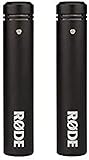
Rode M5 Matched Pair
- Matched small-diaphragm pair within 1dB
- 19 dB self-noise
- 10-year warranty

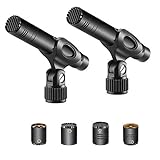
NEEWER 2-Pack Pencil Condensers
- Three interchangeable capsules
- 30Hz-18kHz response
- Includes clip and case
Quick Overview – Drum Overhead Mic Pairs in 2026
All ten options below run on standard 48V phantom power over XLR and sit comfortably on a stereo bar or paired boom stands. Five ship as matched pairs; the AKG P170 and the AKG C1000S are single units you buy two of.
| Product | Specifications | Action |
|---|---|---|
| Rode M5 Matched Pair |
|
Check Latest Price |
| SAMSON C02 Matched Pair |
|
Check Latest Price |
| NEEWER 2-Pack Pencil Condensers |
|
Check Latest Price |
 LyxPro SDPC-2 Stereo Pair LyxPro SDPC-2 Stereo Pair |
|
Check Latest Price |
 AKG Perception P170 AKG Perception P170 |
|
Check Latest Price |
 Rode NT5 Matched Pair Rode NT5 Matched Pair |
|
Check Latest Price |
 AKG C1000S AKG C1000S |
|
Check Latest Price |
 Shure SM81-LC Shure SM81-LC |
|
Check Latest Price |
 sE Electronics sE7 Matched Pair sE Electronics sE7 Matched Pair |
|
Check Latest Price |
 Lewitt LCT 140 AIR Matched Pair Lewitt LCT 140 AIR Matched Pair |
|
Check Latest Price |
1. Rode M5 Matched Pair – Best Overall Drum Overhead Mic
Rode M5 Compact 1/2″ Condenser Microphone Matched Pair, XLR
1/2-inch gold-sputtered capsules
Pair matched within 1dB
19dB self-noise
10-year warranty
Pros
- Factory-matched within 1dB sensitivity
- Low self-noise for a pencil condenser
- Light at 0.16 kg so stands hold position
- Ten-year warranty
- Consistent stereo image
Cons
- No pad switch
- Basic clips and windshields
- Bundled accessories feel thin
The M5 is the pair we keep recommending first, and after living with it above a small room kit it is easy to see why. Two pencils, gold-sputtered half-inch capsules, cardioid, and a manufacturer-matched sensitivity spread of no more than 1 dB. That matching spec is the whole point for overhead work.
In practice the pair sounds like a bigger mic than it is. Cymbals come through with detail rather than fizz, the toms sit inside a stable image, and at 19 dB audible noise the floor stays out of the way until you push gain hard.
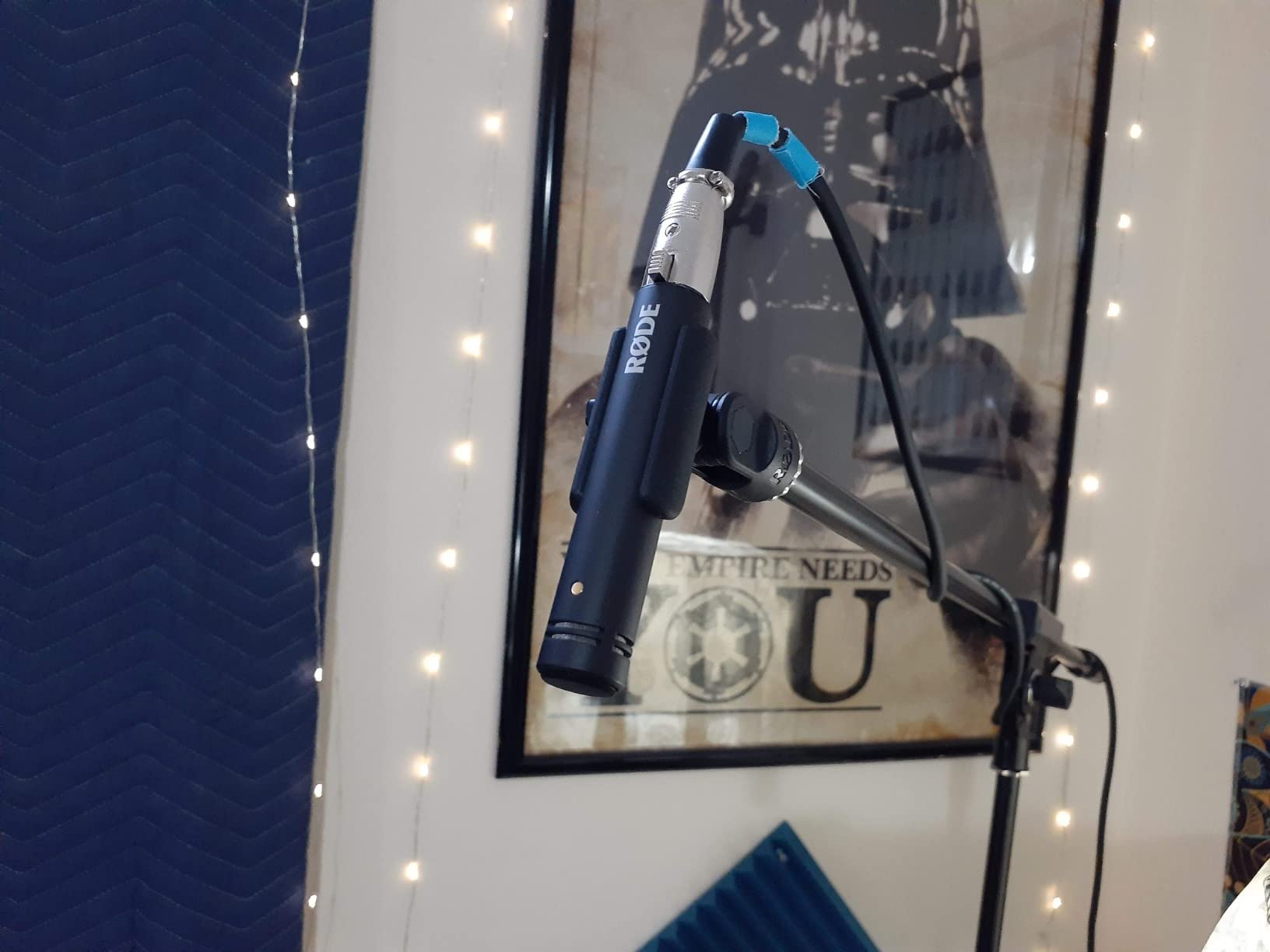
Specs worth knowing: 20 Hz to 20 kHz response, 200 ohm impedance, 75 dB signal-to-noise ratio, brass body, and a weight of 0.16 kg per mic. That low weight matters more than people expect on a long boom arm in a small room.
There is no pad switch, so if you play like a heavy hitter with a huge cymbal right under the capsule, either pull the pair higher or ride on preamp headroom. The included clips and windshields are the most obvious cost saving in the package.
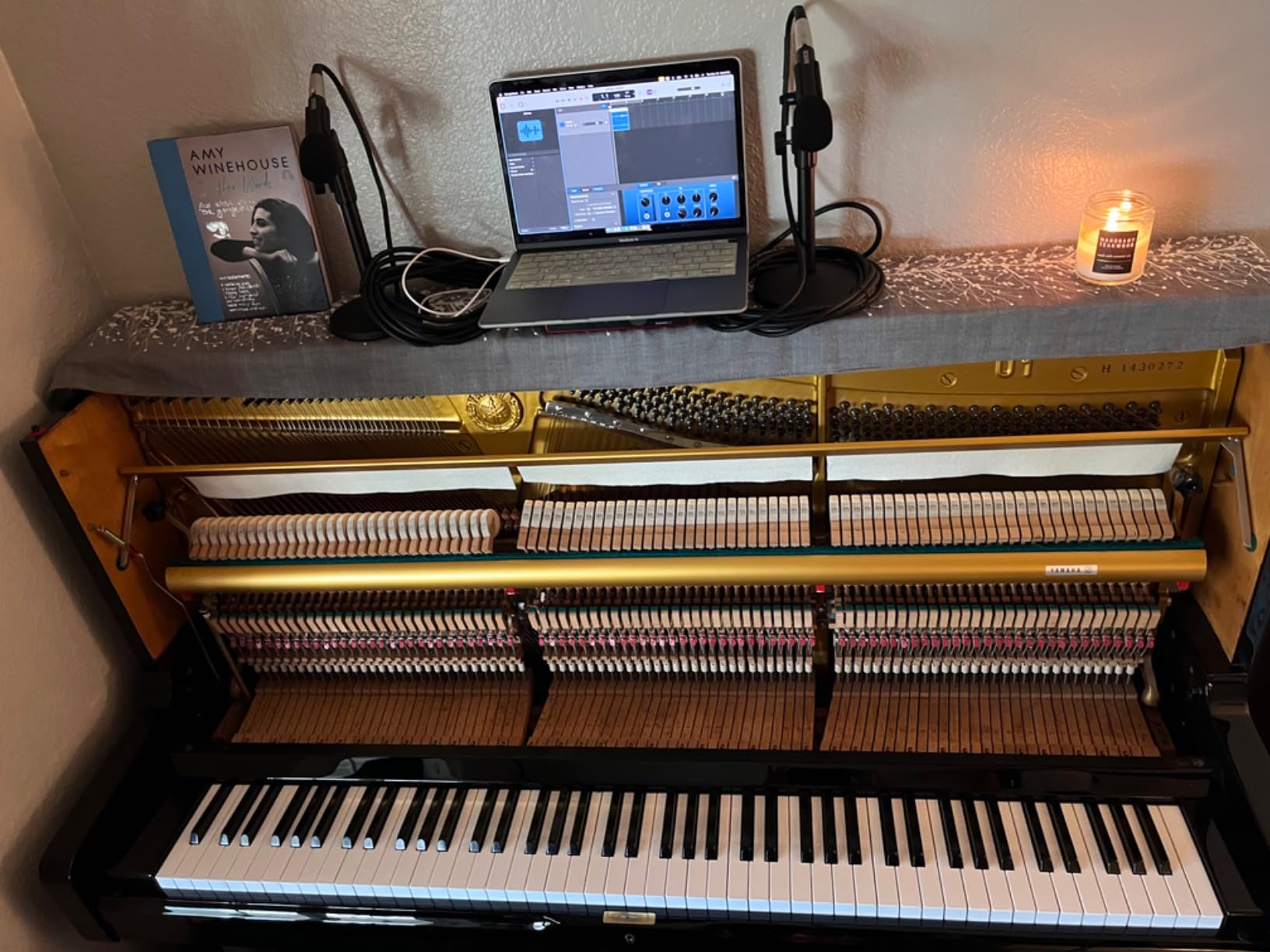
What the matched tolerance buys you
When both mics sit the same distance from the kit and see the same source, a sensitivity mismatch shows up as a level difference across the stereo field, not as an obvious fault. One side of the kit reads louder, and panning corrections on a mix like that pull the kit off centre.
A 1 dB tolerance keeps the error inside the range your ears forgive. Two unmatched singles from the same batch carry no such promise, which is why we would rather see you buy a matched pair than two identical models on the same day.
Where it falls short
The capsules are small, so they need real distance to gather cymbal shimmer. Hung too close, a pencil condenser of this class gives you attack and little air.
There is also no low-cut filter on the body. If your room has a fridge hum or a nearby amp hum, you will be high-passing in the box rather than at the mic.
2. SAMSON C02 Matched Pair – Best Value Overhead Set
SAMSON C02 Pencil Condenser Microphones
Matched within 0.5dB
Cardioid pickup pattern
Up to 134dB SPL
Carry case and clips included
Pros
- Tighter 0.5dB matching than most pairs in this class
- High maximum SPL for a pencil pair
- 80dB signal-to-noise ratio
- Hard carry case and shock-mounted clips included
- Stainless steel body
Cons
- No pad or high-pass switch on the body
- Bundled clips need extra rigging overhead
- Modest output on very quiet sources
The C02 is the value pick, and the reason is a spec most budget pairs leave vague: these two are matched within 0.5 dB of each other. That is tighter than the M5 specification, and it is the number that matters when two mics share a stereo image.
Sound is honest and slightly forward. Cymbals are clear without being sharp, and the 134 dB SPL ceiling means you have real headroom without a pad switch, which the M5 does not give you.
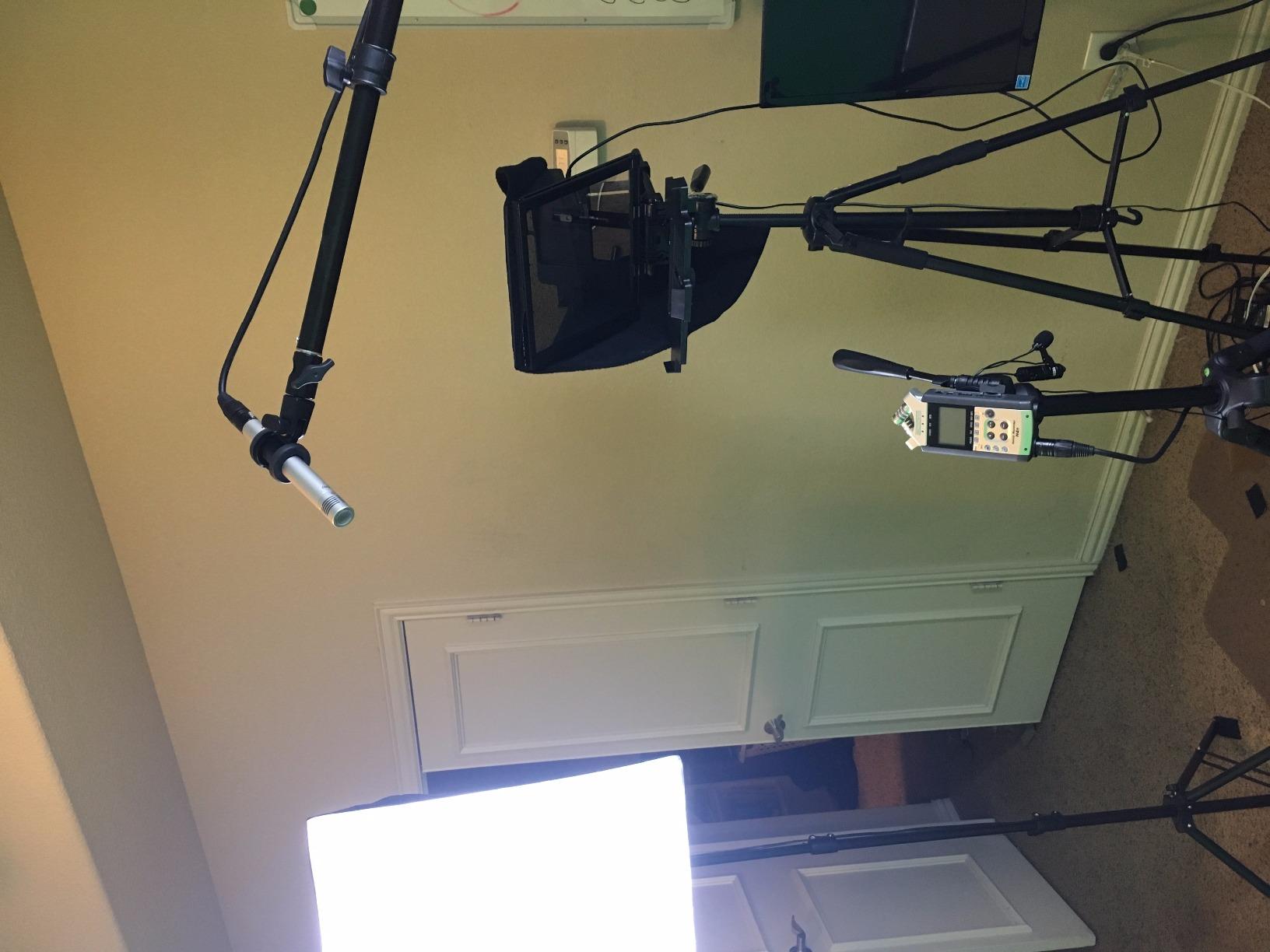
Specifications: cardioid pattern, 20 Hz to 20 kHz, 200 ohm impedance, 80 dB signal-to-noise ratio, stainless steel, 0.17 kg each. The box includes a protective carry case, two shock-mounted mic clips and two windscreens.
Two years of parts and labour cover is shorter than the ten years on the Rode pair, but in practice the build is tough and these things live on stands for years.
Why the 0.5 dB match is the headline
Overhead pairs are asked to do something no single close mic does: reproduce one kit from two positions and let the listener place every drum in space. Even half a dB of mismatch shifts that placement.
For a home studio recording the same kit over and over, a stable image is worth more than a small upgrade in top-end sparkle.
Where it falls short
The included shock-mounted clips are simple, and a pencil hanging from a bare clip high above a kit will pick up stand movement and footfall. Budget for a proper stereo bar or a clip with a real grip.
Pencil format also means modest output on very quiet sources. Brush work at low volume will need more preamp gain than a large-diaphragm condenser, and the noise floor becomes easier to hear.
3. NEEWER 2-Pack Pencil Condensers – Best Budget Overhead Pair
NEEWER 2-Pack Pencil Stick Condenser Mic w Interchangeable Omni Cardioid
Three interchangeable capsules
30Hz-18kHz response
70dB signal-to-noise ratio
Foam padded aluminum case
Pros
- Three capsule patterns in the box
- Good transient detail on cymbals
- Light and easy to position
- Clip and windscreen included
Cons
- Capsules are not matched as a pair
- Thin case foam lets mics shift
- Brass insert in the clip can loosen
This is the pair we would hand someone who wants three polar patterns without buying three microphones. Cardioid, omnidirectional and super-cardioid capsules all ship in the box, and swapping them takes seconds.
That flexibility is genuinely useful in a home studio. A super-cardioid capsule tightens off-axis rejection when a guitar amp is bleeding into the overheads, and an omni capsule gives you more of the room when the room is actually good.
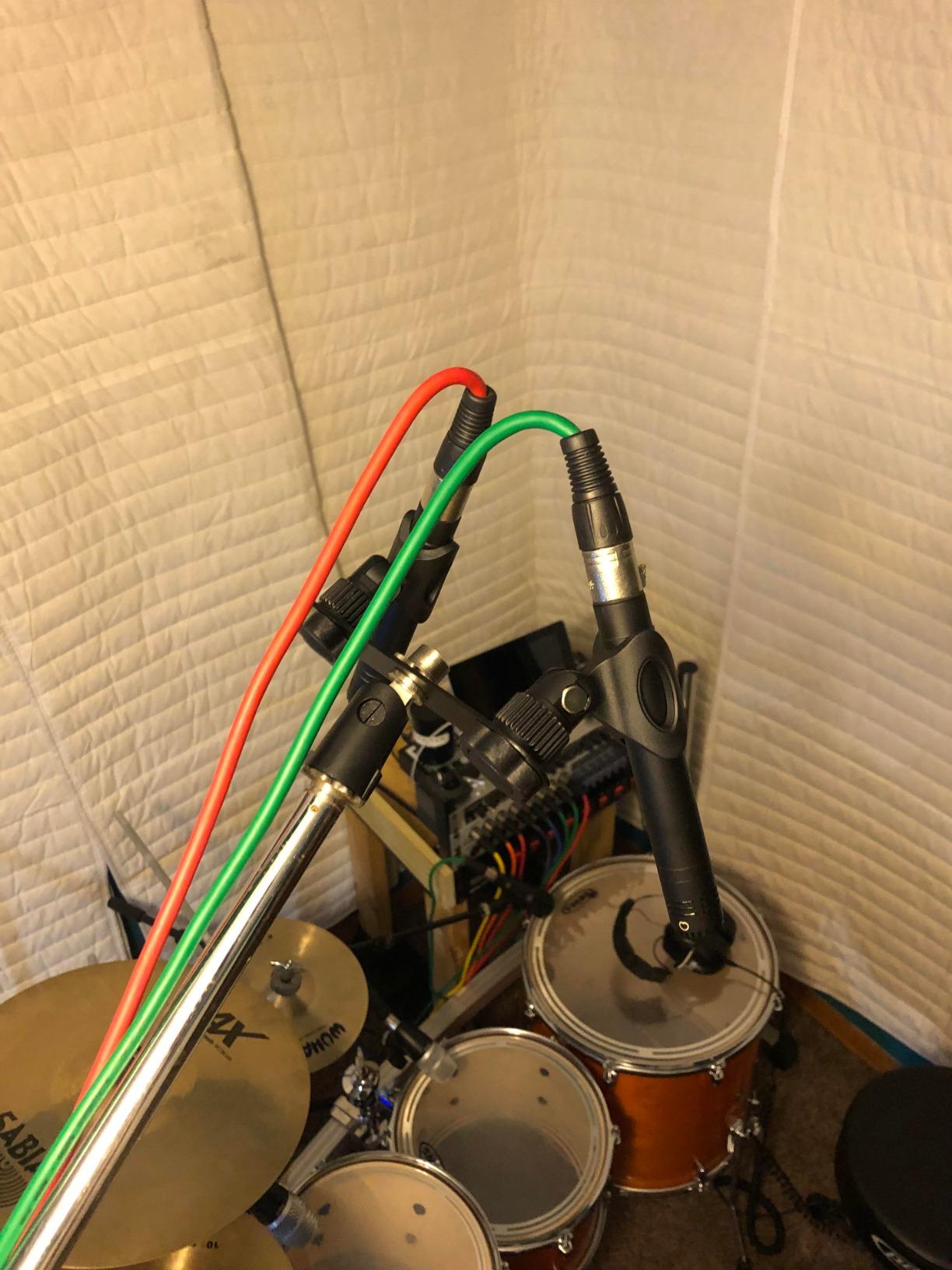
Specs: 0.03 kHz to 18 kHz response, 100 ohm impedance, 70 dB signal-to-noise ratio, XLR connection. You also get a 5/8-inch mic clip, a foam windscreen and a foam-padded aluminum carrying case.
Owners of this pack often report warm, rich tone that surprises them for the money, and engineers do use them on acoustic overheads and hi-hat. The warm character is the opposite of a bright pencil, and some drummers love it on a dark kit.
When swappable capsules earn their keep
Polar pattern is a room control disguised as a tone control. Cardioid rejects the sides, so it hears less of the wall opposite the kit. Omnidirectional hears everything and therefore hears the room more.
In an untreated space that is usually an argument for the tighter pattern. In a treated room, omni is a legitimate creative choice because the room is no longer the enemy.
Where it falls short
The capsules are not matched between the two microphones, so you are running an unmatched pair in a matched job. Expect the stereo image to sit slightly uneven and correct it in the mix if it bothers you.
The signal-to-noise ratio is good rather than exceptional, and the case foam is thin enough that the microphones can move in their slots. Treat the case as transport protection, not storage.
4. LyxPro SDPC-2 Stereo Pair – Best for Swappable Polar Patterns
LyxPro SDPC-2 Stereo Pair XLR Pencil Condenser Microphones, 3 Capsules
Three interchangeable capsules
30Hz-18kHz response
-38dB sensitivity
Requires 48V phantom power
Pros
- Sold specifically for drum overheads and cymbals
- Three capsules for room versus focused capture
- Windscreens tilting clips and case included
- Wide response keeps cymbal shimmer
Cons
- 70dB signal-to-noise is modest
- Only a one-year manufacturer warranty
- Needs healthy preamp gain
Where the NEEWER pack wins on capsule variety in general, the LyxPro SDPC-2 is the pair built and described around the overhead job specifically. The listing calls out drum overheads, cymbals and hi-hat as the intended work, and the packaging reflects that.
You get omni, cardioid and super-cardioid capsules, a 30 Hz to 18 kHz response and sensitivity of -38 dB plus or minus 3 dB. Two foam windscreens, two tilting mic clips and an aluminum case are in the box.
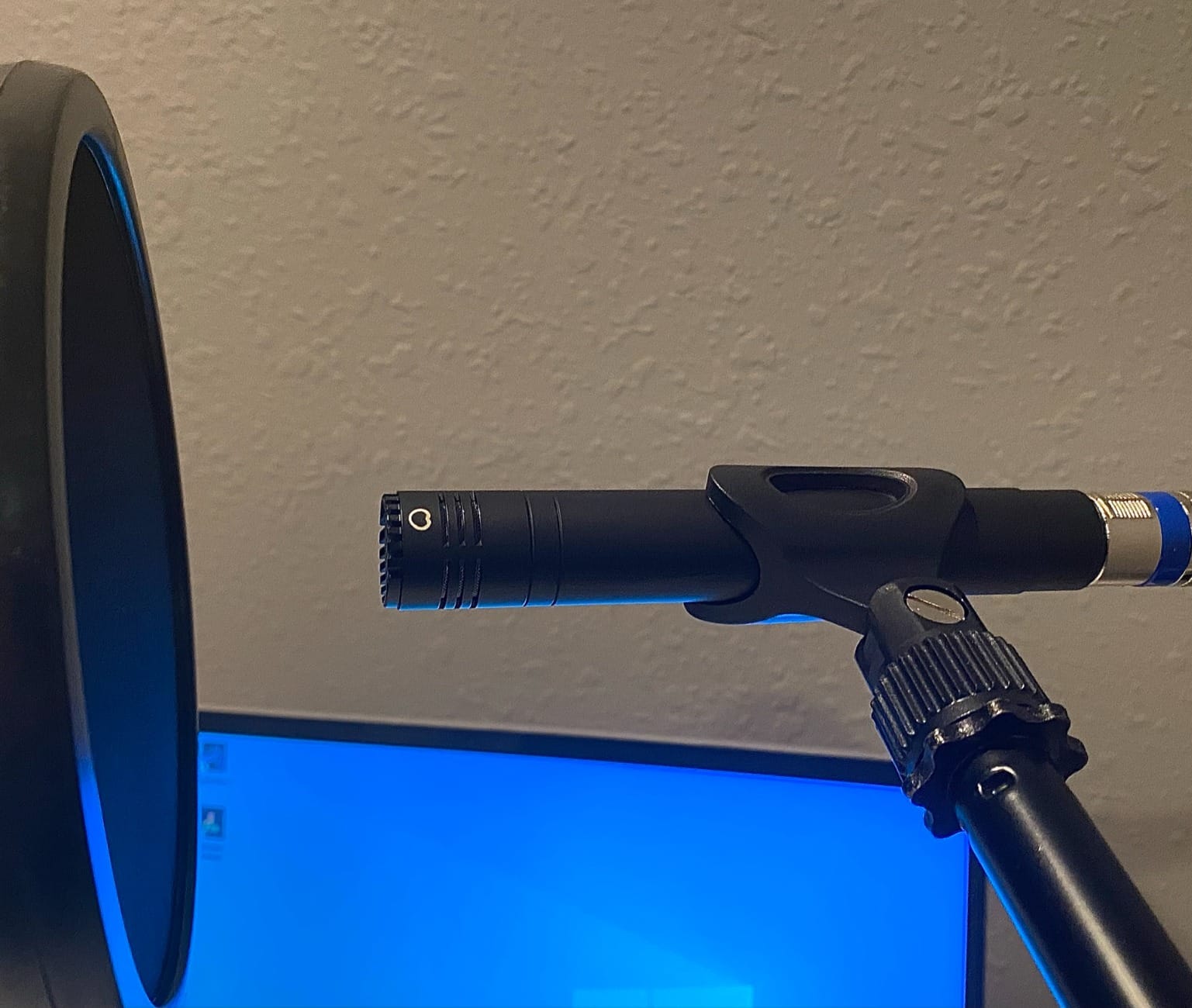
It needs 48V phantom power and a compatible XLR interface or preamp, which is worth checking before you commit if your interface has limited clean gain. The -38 dB sensitivity is modest by condenser standards.
What you get in return is a wide, open response that keeps cymbal shimmer intact and enough transient detail to hear stick articulation on the toms.
Useful when your room is the problem
Having three patterns means you can audition a solution instead of guessing. Start with super-cardioid when a monitor speaker or amp is bleeding in from the side of the room, then move to cardioid.
Try omni only if you have panels or at least a heavy duvet on the walls behind the kit. Without treatment, omni on overheads in a bedroom is a room tone recording with drums mixed in.
Where it falls short
A 70 dB signal-to-noise ratio is on the lower side for a condenser, and with -38 dB sensitivity you will need real gain. On quiet jazz playing that means hearing the noise floor.
The warranty is one year, the shortest in this list. Budget for replacing a failed capsule rather than expecting a decade of service.
5. AKG Perception P170 – Top Rated Single Mic for Building a Pair
AKG Pro Audio AKG Perception 170 Professional Instrumental Microphone
Switchable -10dB pad
Handles up to 155dB SPL
75dB signal-to-noise ratio
Weighs 0.13 kg
Pros
- Highest rated in this roundup
- 10dB pad built in for loud cymbals
- Very low self-noise at high gain
- Lightweight all-metal body fits most mounts
- Flat response with strong transient detail
Cons
- Sold as a single microphone so you buy two
- Not factory matched
- Less headroom on voice than a dynamic
The P170 is a single microphone, not a pair, and we want to be clear about that because it changes how you should buy it. Many home drummers buy two and hang them, which works, but you get no matching guarantee.
What you get is the highest rating in this roundup and one genuinely useful feature that most pencils in this class leave off: a switchable -10 dB pad, taking the maximum SPL rating to 155 dB. Hard hitters can hang this pair close without clipping.
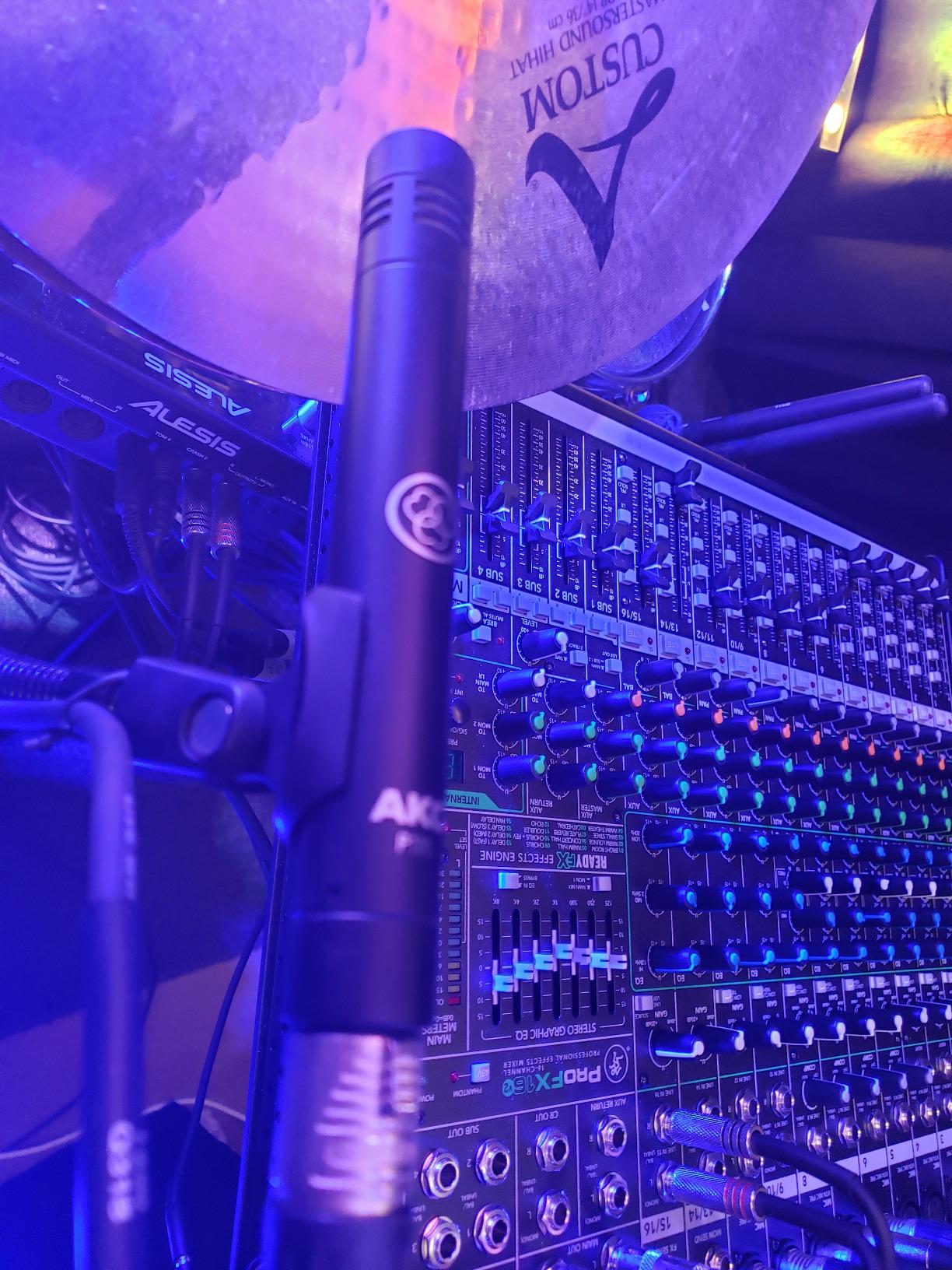
Specs: small-diaphragm condenser, unidirectional, 20 Hz to 20 kHz, 75 dB signal-to-noise ratio, metal body, 0.13 kg, and a lightweight 1/2-inch true condenser diaphragm. It is the easiest pencil here to mount on any standard clip.
On drums the response is clear and flat with strong transient detail, which suits players who want cymbals present rather than smooth.
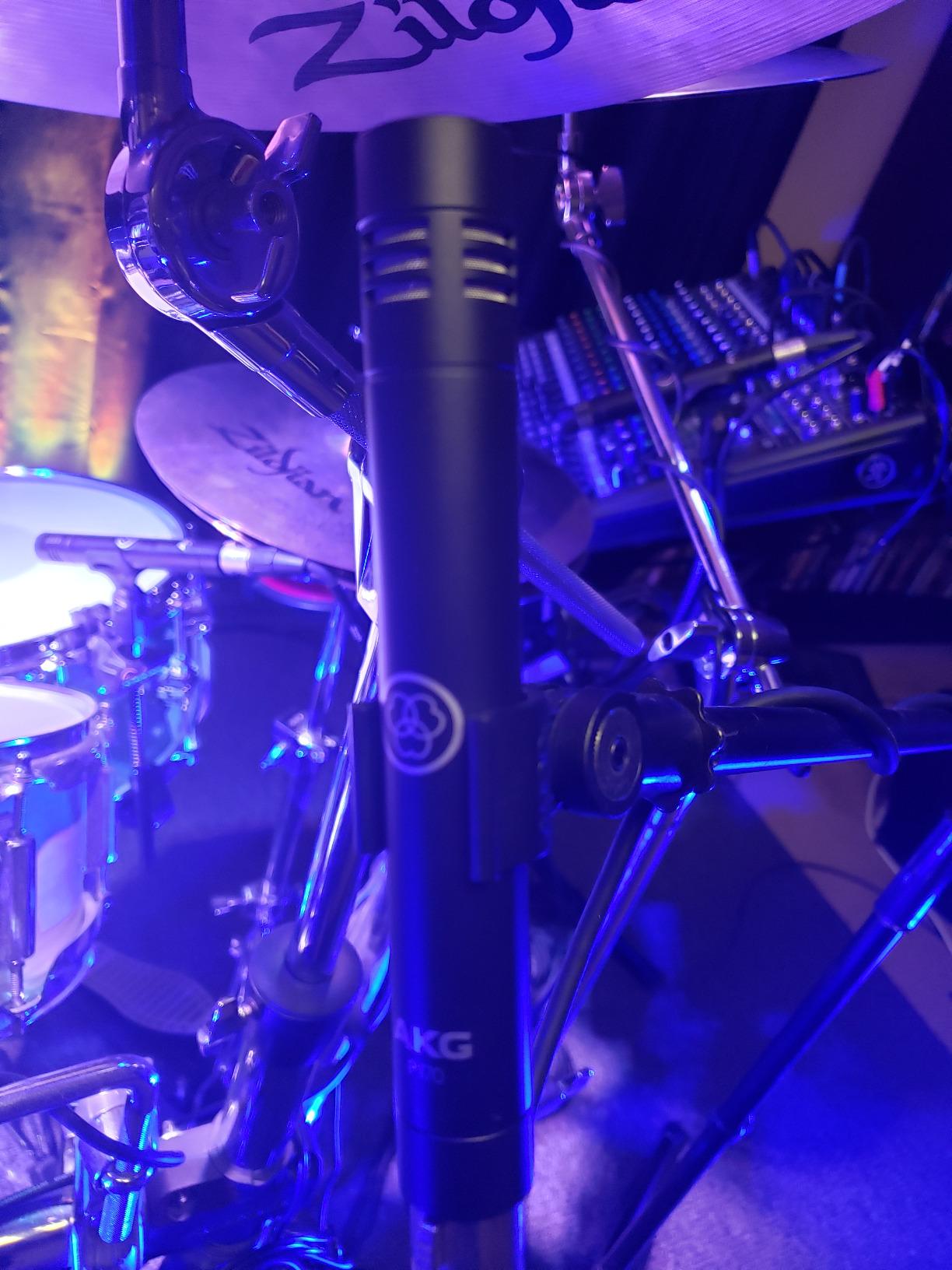
Buying two singles against buying a matched pair
Two P170s will behave like two P170s. Each one is consistent with itself, but nothing guarantees they are equally sensitive to each other, and sensitivity drift between units is exactly what shifts a stereo image.
If you already own one and love it, buying the second is the sensible move. If you are starting fresh and matched specifications matter to you, choose a matched pair from this list instead.
Where it falls short
There is no high-pass filter, so low-frequency room rumble and kit rumble arrive at the preamp intact. A high-pass at around 80 to 100 Hz is standard practice on overheads and will free up room for the kick mic in the mix.
On quiet vocals some owners report less headroom than a dynamic, which is a reminder that this is an instrument microphone first.
6. Rode NT5 Matched Pair – Best for Very Quiet Rooms
Rode NT5 – Matched Pair,Silver
16dB audible noise
Matched premium pair
74dB signal-to-noise ratio
10-year warranty
Pros
- Quietest noise floor of the small-diaphragm pairs here
- Factory matched and reliable for overhead duty
- Slim body is easy to position discreetly
- 20Hz-20kHz response with accurate cardioid
Cons
- No pad or high-pass switch
- Some buyers want more sparkle up top
- Matched pair may arrive in a soft cloth bag
If your room is genuinely quiet and you play quietly, the NT5 pair solves a problem the others do not: self-noise. Listed audible noise of 16 dB and a 74 dB signal-to-noise ratio put it at the quiet end of everything here.
Engineers use this pair on overheads, acoustic guitar and room recording, and long-term owners describe the sound as rich and full rather than bright. If your kit is dark or your cymbals are already splashy, that is a feature.
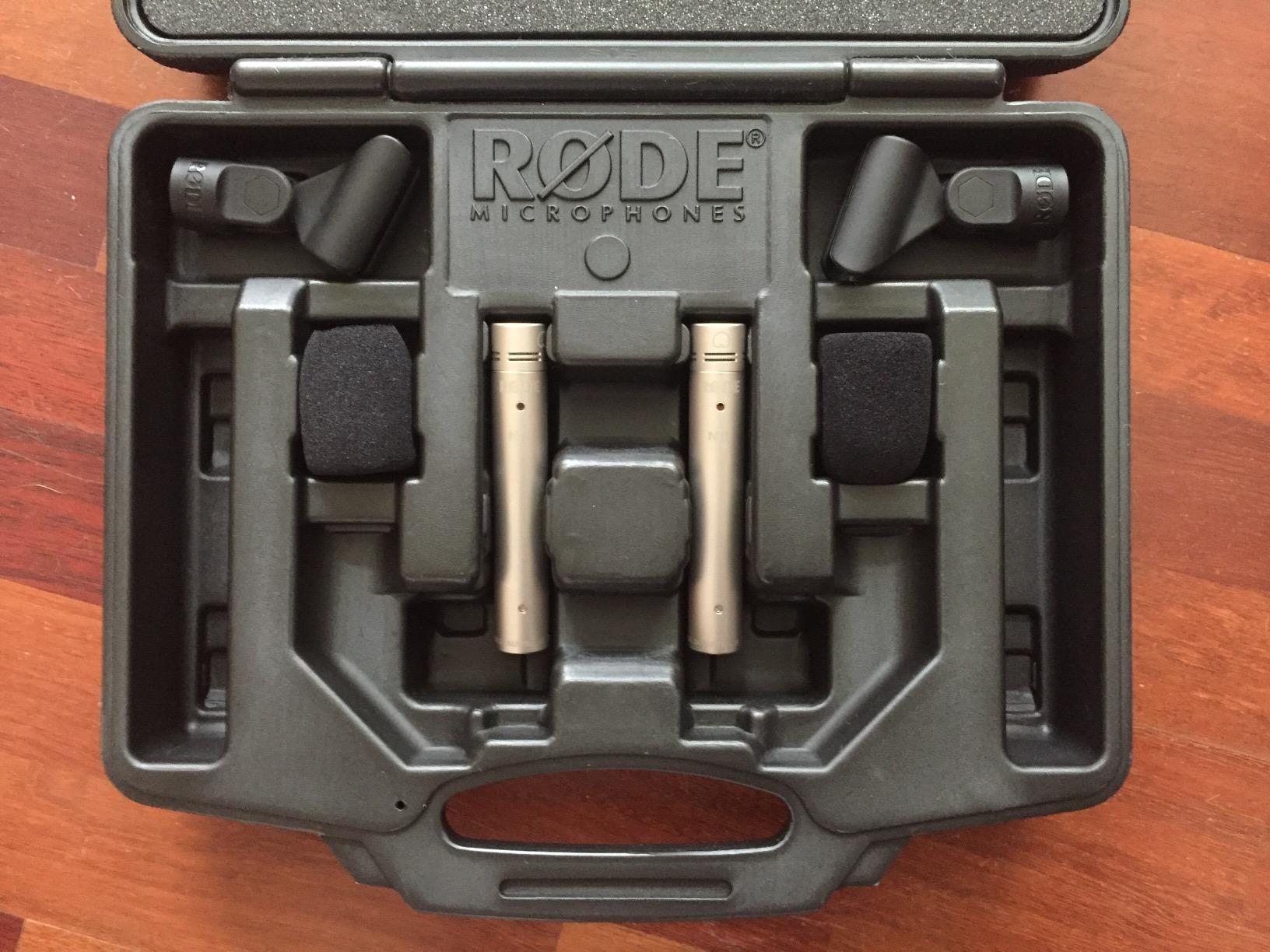
Specifications: matched pair of 1/2-inch gold-sputtered cardioid capsules, 20 Hz to 20 kHz, 100 ohm impedance, 200 g, metal body, and a ten-year warranty with registration.
The slim body also makes positioning easier than a chunkier pencil, and a weight of 200 g per mic is still light enough for a modest boom stand.
Low self-noise is the whole argument
Brush work, ghost notes and soft cymbals sit far down in the level range. Any noise in the signal at that distance is not a background detail, it is audible right under the quietest playing.
The 16 dB figure is what makes this pair a better fit than cheaper pencils for jazz and acoustic-leaning home recordings, where the drummer is not helping by playing louder.
Where it falls short
This pair has the lowest average rating of the ten, and the complaints are consistent: some buyers find the top end less sparkling than comparable pencils. If you want air on cymbals, listen first.
There is no pad switch, and some deliveries arrive in a soft cloth bag rather than the pictured hard case, which is worth knowing before you plan to travel with them.
7. AKG C1000S – Best All-Rounder With Switchable Pad and Bass Cut
AKG Pro Audio C1000S High-Performance Small Diaphragm Condenser Microphone
Switchable pad and bass cut
Presence boost with three settings
Runs on phantom or AA batteries
Pattern converter included
Pros
- Works on drums instruments and voice
- Battery or phantom power operation
- Real tonal flexibility from body switches
- Shock mount and windscreen included
Cons
- On-body power switch is audible
- Switches sit under a removable barrel
- Ships in a lightly padded zip bag
- Needs solid preamp gain
The C1000S is the odd one out in this list because it is a multipattern condenser rather than a fixed cardioid pencil, and it can be powered by phantom power or two AA batteries. That makes it the most flexible microphone here if you also record voice, strings or anything outside the kit.
For drums specifically you get a switchable -10 dB pad, a bass cut filter and a presence boost adapter with three frequency settings, plus a polar pattern converter that moves cardioid to hyper-cardioid. That is more tone shaping than anything else in this roundup.
The gold-sputtered capsule and humidity-resistant XLR pins are sensible for a room that is not climate controlled, and the shock mount, windscreen and pattern converter are included. At 320 g it is the heaviest mic here, which matters on a small stand.
Pattern choice as acoustic treatment
The pattern converter is the interesting part for untreated rooms. Hyper-cardioid narrows the rear pickup lobe, so when the back wall is the problem you can turn down the wall without buying panels.
It is not a substitute for treatment. It reduces the amount of bad reflection you capture, which in practice is often enough to make a workable take in a bedroom.
Where it falls short
The on-body power switch mutes the microphone even when running on phantom power, and reviewers report that it is audible as a click in recordings. Route around it.
Every switch lives under a removable barrel, so changing settings means opening the body on a ladder or a stand. The included zip bag is thin for a microphone that costs this much.
8. Shure SM81-LC – Best for a Dead-Neutral Reference Sound
Shure SM81-LC Cardioid Condenser Instrument Microphone
Flat 20Hz-20kHz response
Lockable 10dB attenuator
Selectable low-frequency rolloff
78dB signal-to-noise ratio
Pros
- Reference overhead tone used for decades
- Off-axis response indistinguishable from on-axis
- Low self-noise with high output
- Lockable pad and switchable high-pass
- Durable steel body
Cons
- Sold as a single microphone so you buy two
- No cable included
- Some shipments arrive without the case
The SM81 has been a reference drum overhead for longer than most home drummers have been recording. Its flat 20 Hz to 20 kHz response means it adds almost no character of its own, which is exactly what you want if your goal is an accurate starting point rather than a sound.
Engineers praise how close the off-axis response is to straight-ahead sound. In practice that means cymbals further from the capsule do not fall off a cliff, so the kit stays balanced across the stereo field.
Controls are unusually good for a single mic: a lockable 0 dB or 10 dB attenuator switch, and a selectable low-frequency response offering flat, 6 dB per octave or 18 dB per octave rolloff. The 18 dB setting is a proper high-pass and solves the room rumble problem at the source.
Signal-to-noise ratio is 78 dB, impedance 150 ohm, weight 8 ounces, and it needs 48V phantom power though it will operate at reduced headroom from 11V. The swivel adapter, attenuator switch lock, windscreen and case are included. No cable is.
Why the rolloff switch matters more than the pad
Most overhead advice says high-pass around 80 to 100 Hz. Doing it in the box works, but a hardware filter avoids feeding low-frequency energy into the preamp where it consumes headroom you need for cymbals.
The selectable rolloff on this mic means you can flatten the bottom without giving up level on the top. That is a real advantage in a room with a lot of low-frequency build-up.
Where it falls short
It is a single microphone, so an overhead position costs two units, and unlike the matched pairs here you have no tolerance figure between them.
Some buyers report deliveries without the pictured case. Check the contents before you throw the packaging out.
9. sE Electronics sE7 Matched Pair – Best for Smooth Top End
SE ELECTRONICS – sE7 Small Diaphragm Cardioid Condenser Microphone with Clip, Factory Matched Pair
Max SPL 136 and 156dB with pad
Pad and low-cut filter built in
87dB signal-to-noise ratio
19mV per Pa sensitivity
Pros
- Smooth natural top end with no harshness
- Factory matched for stereo bar use
- Pad and high-pass at this tier
- Handles drums piano and acoustic guitar well
Cons
- Self-noise audible in very quiet rooms
- Ships in a plain box with no case
- Some wanted the side-address version
The sE7 matched pair has the highest signal-to-noise ratio listed on this page at 87 dB, and reviewers describe the top end as smooth and natural with no harsh or icy coloration. If bright cymbals make you wince, this is the pair to audition.
It also carries a pad and a low-cut filter, which at this tier is uncommon. Maximum SPL is 136 dB normally and 156 dB with the pad engaged, so hard hitters have real headroom.
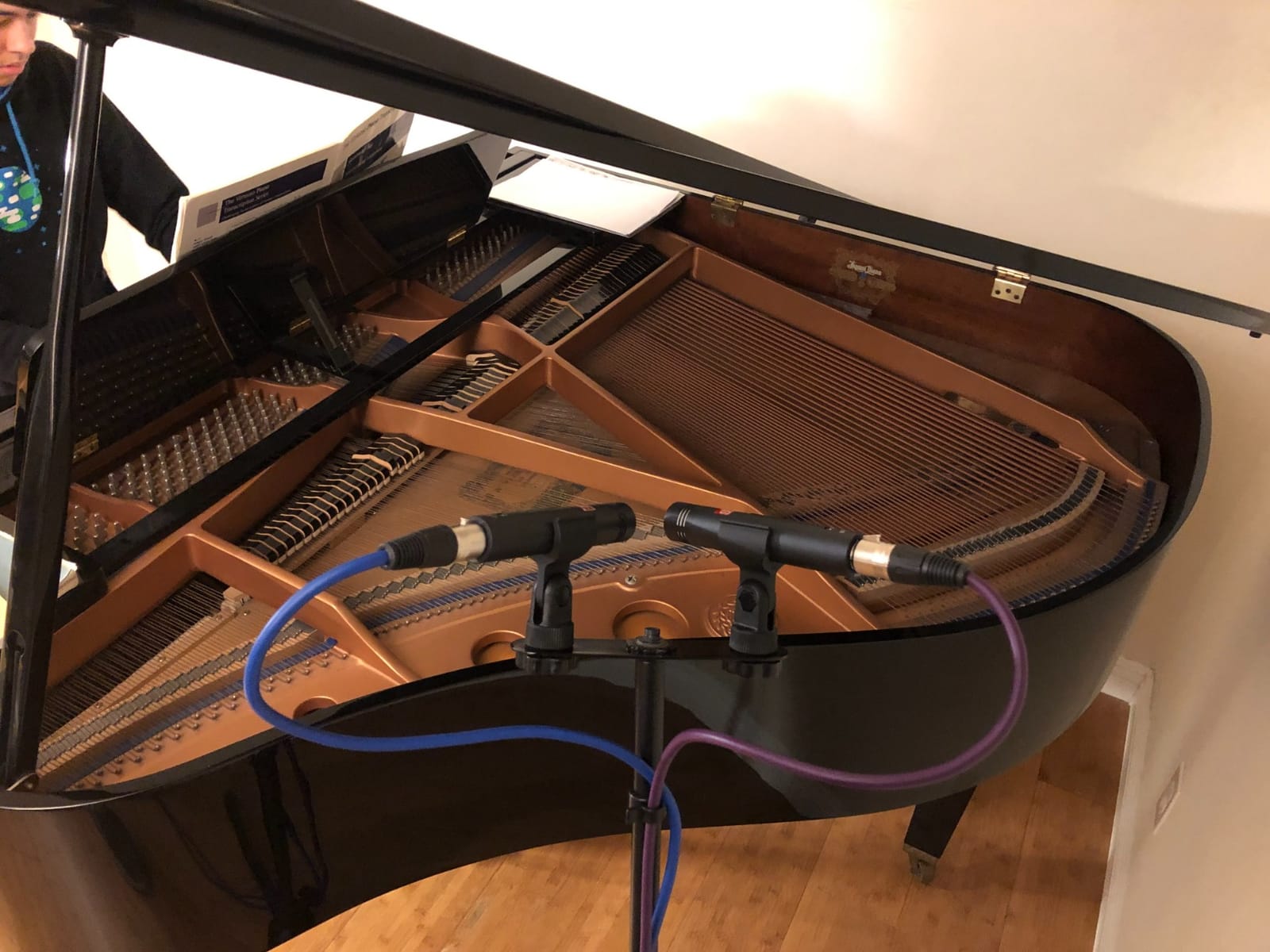
Specs: factory-matched cardioid pair, 20 Hz to 20 kHz, sensitivity 19 mV/Pa, impedance under 200 ohm, 48V phantom power, stainless steel body, 9.12 ounces each, and a two-year warranty that extends to three when registered. A mic clip is included.
Owners consistently describe the build as close to a much more expensive studio pencil in feel, and they use the pair on drums, percussion, piano, harpsichord and acoustic guitar.
When a smooth top beats a detailed one
A pair of detailed overheads will faithfully capture every harsh overtone in your room. In a treated space that is a gift. In a live room with hard surfaces, it can be the thing that ruins the take.
The sE7’s natural rolloff over the top without dulling the attack is a reasonable middle ground between a neutral pencil like the SM81 and a bright one.
Where it falls short
Despite the 87 dB figure, reviewers still hear self-noise in very quiet rooms. Marketing signal-to-noise numbers and audible noise in a still room are not always the same measurement.
Packaging is minimal. There is no protective case, just a cardboard box, so if you plan to move the pair around a lot, budget for a case.
10. Lewitt LCT 140 AIR Matched Pair – Best for Switchable Voicing
Lewitt LCT-140-AIR Stereo Matched Pair XLR Microphone
AIR and FLAT voicing switches
80Hz roll-off
77dB signal-to-noise ratio
CNC aluminium housing
Pros
- Two voicings from one matched pair
- Very light so stands hold position
- Good transient response on drums and guitar
- Matched stereo pair with quiet operation
Cons
- Small review base so less long-term feedback
- No shock mount option
- One reviewer found it limited for solo piano
The LCT 140 AIR is the newest pick here and the least battle-tested, with 38 reviews behind it. What makes it interesting is the pair of switchable sound characteristics: AIR lifts the top, FLAT stays neutral, and you can flip between them in seconds.
That is a fast way to solve a real overhead problem. If cymbals sound dull on one take and harsh on the next, you are changing mics instead of changing your mind, and the switch does not require rewiring.
The 80 Hz roll-off can be switched back in, which is a sensible design because it lets you audition with and without the filter without losing the setting you preferred. Signal-to-noise ratio is listed at 77 dB.
Build is a CNC-machined aluminium housing weighing 580 g for the pair, which is light enough for modest stands. Two snap-in mic clips, a two-pocket transport bag and two windscreens are included, with a limited two-year warranty.
Switchable voicing as a fast mixing tool
Most microphone decisions get locked in at the start of a session and then defended for six months. A voicing switch turns a taste decision into an A and B, and A and B decisions get made much faster.
For overheads specifically, FLAT is the sensible default for a first pass. Move to AIR only when you have decided the kit is dull rather than when you suspect it.
Where it falls short
With 38 reviews, there is very little long-term field feedback on this pair. That is the honest caveat: you are buying a newer design with less history than the M5 or the SM81.
There is no shock mount option, only the included snap-in clips, and one reviewer found the noise and clarity unsuitable for solo piano. As overheads, they have held up better than that.
How to Choose a Drum Overhead Mic
Six criteria decide this purchase, and most people look at them in the wrong order. Here is how we would weigh them for a home studio.
Matched pair vs two singles
A matched pair is factory tested so the two units sit within a stated sensitivity tolerance, typically within 1 dB or tighter. Two singles bought separately carry no such promise.
The audible symptom of an unmatched pair is a stereo image that drifts to one side, or a kit that feels uneven when you pan. It is subtle enough that many drummers blame the room instead.
Maximum SPL and pad switches
Look for the maximum SPL rating, which is the level the mic can handle before distortion. Anything at or above 130 dB covers most acoustic kits. A switchable 10 dB or 20 dB pad lets you close the distance without clipping.
Overhead mics sit close to cymbals, and a hard crash near the capsule produces far more level than a close mic on the same drum.
Self-noise thresholds
Under 20 dB equivalent noise is good. Under 15 dB is excellent and only matters if you play quietly.
Above about 20 dB, the noise floor sits under ghost notes and brush work. For rock and pop at normal playing volume you will never hear it.
Polar pattern
Cardioid is the default because it rejects sound from the sides and rear, which is exactly where your room problems live. Super-cardioid tightens that further. Omnidirectional hears the room completely, which is only wise in a treated space.
Figure-8 ribbons reject strongly from both front and rear, which makes them a real option in loud shared rooms.
Frequency response
A flat response from 20 Hz to 20 kHz records what is there. A presence peak around 8 to 12 kHz adds cymbal air. There is no single correct answer here, only a match to your kit and your taste.
Measure your cymbal selection. Very dark cymbals pair badly with a bright mic, and very trashy cymbals can sound thin through one.
Phantom power, gain and weight
Every mic on this page needs 48V phantom power over XLR. Check that your interface supplies it and that your preamp has enough clean gain, because pencil condensers need more of it than people expect.
Weight decides whether the pair stays where you put it. Mics from 0.13 kg to 0.32 kg each feel very different on a cheap boom arm in a small room, where a sagging stand tilts one mic down and destroys the balance.
If you are still building a home studio signal chain, our guide to condenser microphones for home studios covers the wider territory, and this roundup stays on drum overheads only.
Overhead Placement Techniques for Home Studios
The best drum overhead microphones in the world will sound bad in the wrong spot. Placement does more for the take than any upgrade, and it costs nothing.
What is the 3:1 rule for drum overheads?
The 3:1 rule says that for a second microphone to be heard as a separate sound rather than reinforcing the first, it should sit roughly three times farther from the source. Measured from the kit as a whole, if your overhead pair sits about 3 feet above the cymbals, a close mic on the snare would ideally go around 9 feet away, which is why close mics usually sit much closer and take a pad.
Spaced pair – the default for home studios
Hang both mics the same height above the kit, roughly 2 to 3 feet above the top cymbal and at least 18 inches away from any cymbal edge.
Place them so each mic is the same distance from the snare. Unequal distance is the most common cause of a thin, hollow stereo image.
Angle each one down and slightly in, aiming between the cymbals rather than at one drum.
Use a stereo bar so height and angle stay identical between takes, or mark the positions with tape.
High-pass both channels at 80 to 100 Hz to leave room for the kick mic.
XY, ORTF, Recorderman and Glyn Johns
XY puts the two mics as close together as possible with their capsules crossing at the centre, pointing down at the snare. It gives a tight, focused image with excellent mono compatibility, at the cost of some stereo width.
ORTF uses two omnis spaced about 40 cm with capsules angled outward, giving a wider, more open image than XY at the price of some mono compatibility.
Recorderman places one mic over the snare and one over the floor tom, aimed at their respective drums. It produces a strong, punchy blend that survives dense mixes well.
The Glyn Johns method sets a single microphone close to the snare and a second high above it, using only two points of capture. It is a large-diaphragm approach, and it suits rock kits where you want the overheads to behave like a close pair.
What overheads capture in an untreated room
Overheads hear the whole room, which is the point and the problem. In a bedroom studio you will pick up flutter echo between parallel walls, brightness from bare surfaces, and any guitar amp, monitor or air conditioning running nearby.
Three cheap fixes make a bigger difference than any microphone. Put a heavy duvet or moving blanket behind the drummer and on the wall opposite the kit to cut the strongest first reflection points. Run your guitar amp during the same rehearsal you intend to record in, so you learn what bleeds in before the take.
Record through headphones during the test rather than monitors, because monitoring speakers at volume are the biggest bleed source of all. If you are still fighting the room afterwards, panels are the fix, and our guide to acoustic treatment kits for home studios covers the practical options.
Condenser vs Dynamic vs Ribbon for Drum Overheads
Condenser microphones are the default answer, and for overheads the small-diaphragm version is the standard. It is worth knowing why, and what the alternatives change.
Large vs small diaphragm condensers
Small-diaphragm condensers are the correct shape for this job: a tiny, light capsule that reacts instantly, translates distance to level predictably, and lets you move the pair closer for more cymbal detail. Large-diaphragm condensers have more low-end weight and presence of their own, which can be flattering on a single drum but tends to sit heavy when one mics the entire kit.
Large-diaphragm condensers do work as overheads, and switchable-pattern models like the AKG C1000S let you narrow the pickup as a room control. Expect a thicker, more coloured overhead image than a pencil pair gives you.
Dynamics and ribbons
Dynamic microphones tolerate level without complaint and can sit close, but they lose cymbal detail fast. A ribbon is smooth, warm and rolls off gentle top end, which many drummers love in untreated rooms. Ribbons are also fragile, need more gain, and have no pad.
Forum consensus across drummer communities consistently puts small-diaphragm condensers first for overheads and ribbons a close second when the room is the problem.
Which one for your kit
Rock, metal and loud playing: a matched SDC pair with a pad or high maximum SPL.
Jazz, brushwork and quiet rooms: the lowest self-noise pencil you can get.
Untreated or shared rooms: a tight polar pattern to reject the sides.
Multi-purpose home studio: a matched pair you can also use on acoustic guitar and piano, which all five of our top picks handle well.
The same polar-pattern logic drives vocal and live-room choices too. If you also record singers in the same room, our guide to karaoke microphones for home covers how feedback rejection matters far more there than cymbal shimmer does.
Common Overhead Mistakes in Home Studios
Unequal distance from the snare. If one mic is closer, that side arrives first and louder, and the kit goes thin and hollow. Measure and match.
Mics hanging from a sagging boom. A tilted mic points somewhere different than its twin. A stereo bar fixes this permanently.
Sitting under a cymbal bell. Overheads closer than about 18 inches to cymbal hardware capture harsh wash and no kit balance.
No high-pass filter. Kit and room rumble below 100 Hz takes up preamp headroom you need for cymbals, and leaves no room for the kick mic.
Running monitors during the take. The speakers are in the overheads. Headphones are not optional for overdubs.
Buying first and placing second. Plenty of drummers regret a pair before they understand spacing. Borrow a pair, or borrow stands, and try a position before you commit.
Frequently Asked Questions
What mics are best for drum overheads?
A factory-matched pair of small-diaphragm cardioid condensers is the standard choice for drum overheads in a home studio. The Rode M5 pair is the most dependable all-rounder, the SAMSON C02 pair matches within 0.5 dB, and the Shure SM81-LC is the neutral reference option. All three need 48V phantom power over XLR.
What is the 3:1 rule for drum overheads?
The 3:1 rule states that a second microphone should sit about three times farther from the source than the first to be heard as a separate sound rather than a reinforcement. For overheads, a pair placed roughly 3 feet above the cymbals implies a close snare mic would ideally be around 9 feet away, which is why close mics usually sit closer and use a pad.
How many overhead mics do I need for drums?
Two, hung as a matched stereo pair, is the working setup for most home studios. One microphone gives you a mono overhead image with no width, and three or more starts to blur the stereo field unless one is used as a dedicated room or centre mic.
Can I record drums with only overheads and a kick mic?
You can, and many drummers get usable results that way, but the snare will lack the attack and isolation that a close mic gives it. A matched overhead pair plus a kick mic is the classic three-microphone start, and adding one close snare mic is the single change that improves it fastest.
What are the key differences between large diaphragm and small diaphragm condenser microphones?
Small-diaphragm condensers react faster, weigh less and behave predictably as you change distance, which makes them the standard for drum overheads. Large-diaphragm condensers have more body and presence of their own, tolerate level differently, and can add weight to an overhead image. Switchable-pattern large-diaphragm models can also narrow the pickup as a room control.
Are ribbon mics good for drum overheads?
Ribbons can be excellent on overheads because their smooth top end is forgiving in an untreated room, and figure-8 models reject strongly from front and rear. They are fragile, need more preamp gain, have no pad, and their limited low extension makes the image less defined than small-diaphragm condensers.
How high should I hang overhead mics?
Hang the pair roughly 2 to 3 feet above the top cymbal and at least 18 inches from any cymbal edge, with both mics at identical height and identical distance from the snare. Closer than that and the mics capture harsh wash rather than the whole kit.
Why does my overhead pair sound phased?
It usually is not a phase problem but a placement one. If the two mics are not equally distant from the snare, one signal arrives later and louder, which thins the image and sounds like comb filtering. Re-space the pair so both sit the same distance from the snare and check the polarity on both channels.
Conclusion – Where to Start
For most home studios building a first drum recording chain, the best drum overhead microphones for home studios are the Rode M5 matched pair for dependable all-round performance, the SAMSON C02 pair for tight matching and included hardware, and the Shure SM81-LC when you want a neutral reference sound with real switchable filtering.
Start with one pair, get the spacing right with a stereo bar, and hang it the same distance from the snare on every take. Add close mics to the shells afterwards, and only then consider a third room mic. Whatever you buy in 2026, borrow stands and spend an hour on placement before you spend money on an upgrade.