
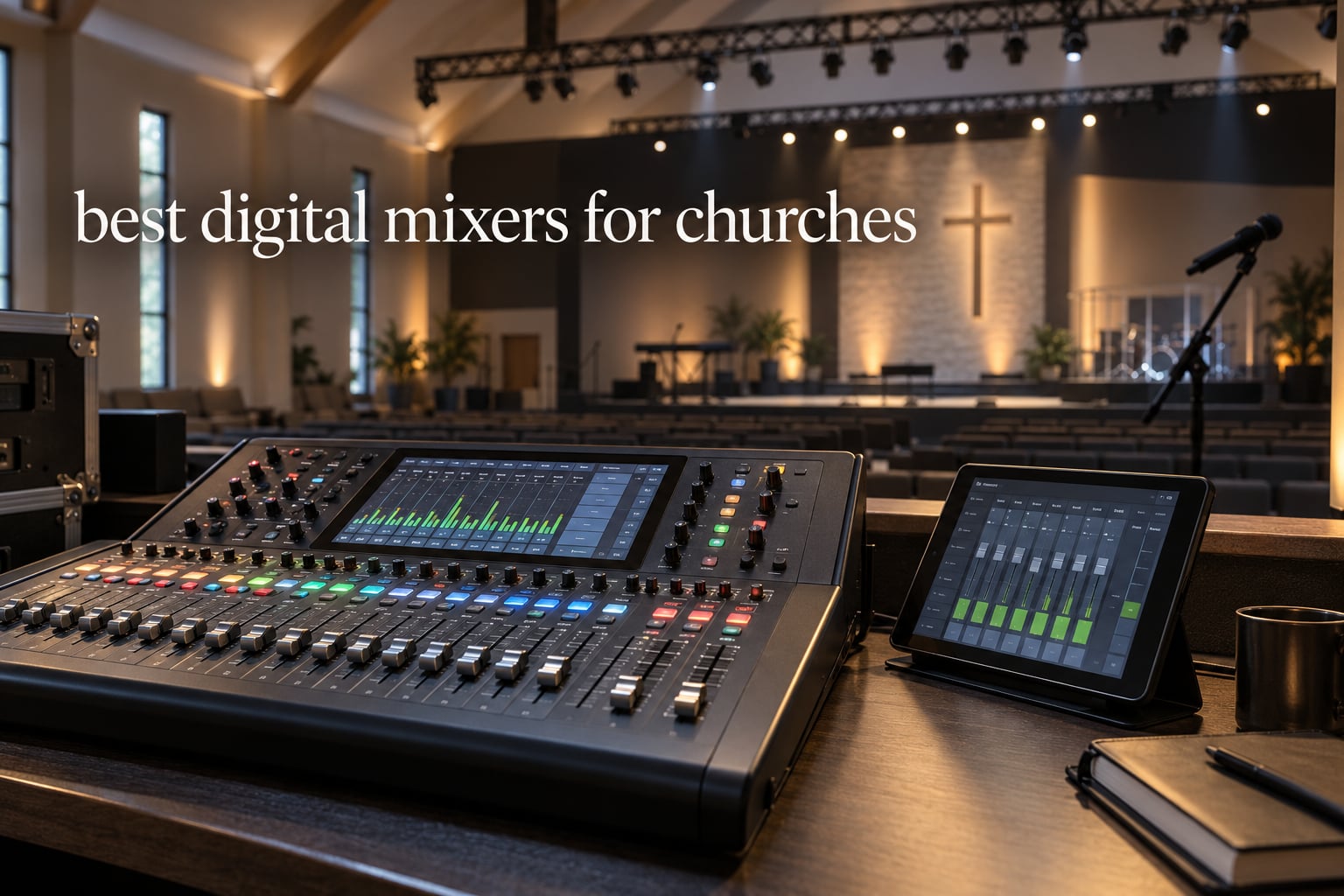
Choosing the best digital mixers for churches is mostly an arithmetic problem, not a taste problem. Count your real sources, add 20 percent headroom, then buy the console with enough onboard preamps to cover them without forcing you to add a stage box on day one.
The short version: a sanctuary of under 200 seats is well served by a 16-input tablet-controlled board, a room of 200 to 800 seats with a full worship band needs a 32 to 40 input console with motorized faders and scene recall, and an 800-plus seat auditorium or multi-campus ministry needs a networked console with 25 or more mix buses and a dedicated broadcast mix.
That is the whole decision. Everything else on this page exists to make sure the console you pick actually fits your room, your input list and the skill level of whoever is standing behind it on Sunday. I spent weeks reading owner reviews across all nine consoles below, comparing channel counts, preamp counts, bus counts and the failure modes owners actually report, so the recommendations rest on what happens in rooms like yours rather than on spec sheets alone.
Two features decide more church purchases than any other: scene recall, so a volunteer can bring back Sunday’s entire mix with one press instead of rebuilding it fader by fader, and a control surface a non-engineer can learn in an hour. Every console here does both to some degree. The difference is how gracefully they do it.
If you are still laying out the rest of the system, our guides to wireless microphone systems for churches and powered PA speakers for churches cover the parts that feed this desk.
Top 3 Picks for Churches in 2026

Behringer XR18
- 18 inputs
- 16 MIDAS preamps
- 12 mix buses
- tablet-controlled with built-in Wi-Fi


Quick Picks: 9 Best Digital Mixers for Churches
- Behringer XR18 – Best for small churches and volunteer teams. Eighteen inputs, 16 MIDAS-designed preamps, 12 mix buses and an 18 x 18 USB recording interface in a 7.1 pound box you carry to the platform.
- Soundcraft Ui16 – Best for a small room on a real budget. Sixteen inputs with 8 combo and 4 XLR mic sockets, 4 balanced XLR aux outputs for monitor mixes, and dbx, DigiTech and Lexicon processing built in.
- Behringer X32 – Best all-round console for a mid-size sanctuary. Forty inputs, 25 mix buses, 32 MIDAS preamps, 25 motorized faders and AES50 expansion, all recallable through scenes and safes.
- Allen & Heath CQ-18T – Best for volunteers who prefer a touchscreen. A 7-inch capacitive display with an assignable rotary, dual-band Wi-Fi, Bluetooth input and 24×22 USB and SD recording in 10.3 pounds.
- PreSonus StudioLive 32SC – Best for recording and streaming a service. Thirty-two recallable channels, 16 FlexMixes and the largest USB interface in the roundup at 128 channels, with multitrack SD recording onboard.
- PreSonus StudioLive 24R – Best for a fixed booth with limited depth. Twenty-four locking combo inputs, 16 FlexMixes, 40×40 USB and 55×55 AVB interfaces, and it can run as an AVB stage box with monitor mixing.
- Behringer X32 Producer – Best rack console for a permanent install. Forty inputs and 25 buses with 17 motorized faders in a shallow 19-inch chassis, driven by iPad or iPhone through the X Control app.
- Yamaha DM3 – Best when booth depth is the constraint. Twenty-two channels including 16 mono inputs, a very large 9-inch touchscreen, 16 Yamaha preamps and 96kHz processing in a slim body.
- Midas M32 LIVE – Best for large rooms that will grow. Forty inputs, 25 phase-coherent buses, AES50 networking to DL32 stage boxes for up to 96 inputs, and 32-channel multitrack recording on dual card slots.
All 9 Consoles Compared in 2026
| Product | Specifications | Action |
|---|---|---|
| Behringer XR18 |
|
Check Latest Price |
| Soundcraft Ui16 |
|
Check Latest Price |
| Behringer X32 |
|
Check Latest Price |
 Allen and Heath CQ-18T Allen and Heath CQ-18T |
|
Check Latest Price |
 PreSonus StudioLive 32SC PreSonus StudioLive 32SC |
|
Check Latest Price |
 PreSonus StudioLive 24R PreSonus StudioLive 24R |
|
Check Latest Price |
 Behringer X32 Producer Behringer X32 Producer |
|
Check Latest Price |
 Yamaha DM3 Yamaha DM3 |
|
Check Latest Price |
 Midas M32 LIVE Midas M32 LIVE |
|
Check Latest Price |
Which Digital Mixer Is Right for Your Church?
Congregation size is a decent proxy, but band size matters more. A 150-seat room with a nine-piece worship band and four speech mics needs more inputs than a 500-seat room with a piano, a lectern and three microphones.
Under 200 seats. Aim for 16 inputs, tablet or touchscreen control and scene recall. The Behringer XR18 and the Allen & Heath CQ-18T both fit here, with the CQ-18T offering the easier surface for a first-time volunteer and the XR18 offering more buses and a real USB recording path.
200 to 800 seats with a worship band. This is the sweet spot that most churches land in, and it is where the Behringer X32 earns its reputation. You want 32 or more onboard preamps so you can keep everything in one box, motorized faders, and enough buses for monitor mixes plus a separate livestream feed.
800-plus seats, multi-campus or orchestra. Channel count stops being the constraint and aux bus count becomes the bottleneck. The PreSonus StudioLive 32SC and the Midas M32 LIVE both give you 16-plus independent recallable mixes and networking paths to stage boxes.
If you are still working out the front end, our line array speakers for small churches guide covers the other half of a small-room system.
1. Behringer XR18 – Tablet-Controlled Console With 12 Mix Buses
Behringer X AIR XR18 18-Channel, 12-Bus Digital Mixer for iPad/Android Tablets with 16 Programmable Midas Preamps, Integrated Wifi Module and Multi-Channel USB Audio Interface
18 inputs
16 MIDAS preamps
12 mix buses
7.1 pounds
Pros
- Exceptionally feature-rich for the price
- 16 programmable MIDAS-designed mic preamps
- 12 mix buses with 6 balanced XLR outputs
- 18 x 18 bidirectional USB interface for multitrack
- Colour-coded channel and bus labelling with DCAs
Cons
- No AES50 stage box networking
- Built-in Wi-Fi router is widely considered weak
- Light plastic feel and open wireless signal
I keep coming back to the XR18 because it is the rare console where the spec sheet and the owner reviews say the same thing. Sixteen fully programmable MIDAS-designed preamps, eighteen inputs, twelve mix buses with six balanced XLR outputs, and a bidirectional USB interface that records eighteen channels in and eighteen channels out to a tablet or laptop.
For a small church this is a complete front of house in a box that weighs 7.1 pounds and racks into 3U with the included ears. The owner reviews describe the move up from an analog board as a step change in flexibility, with several mentioning that the value set is unmatched at this level.
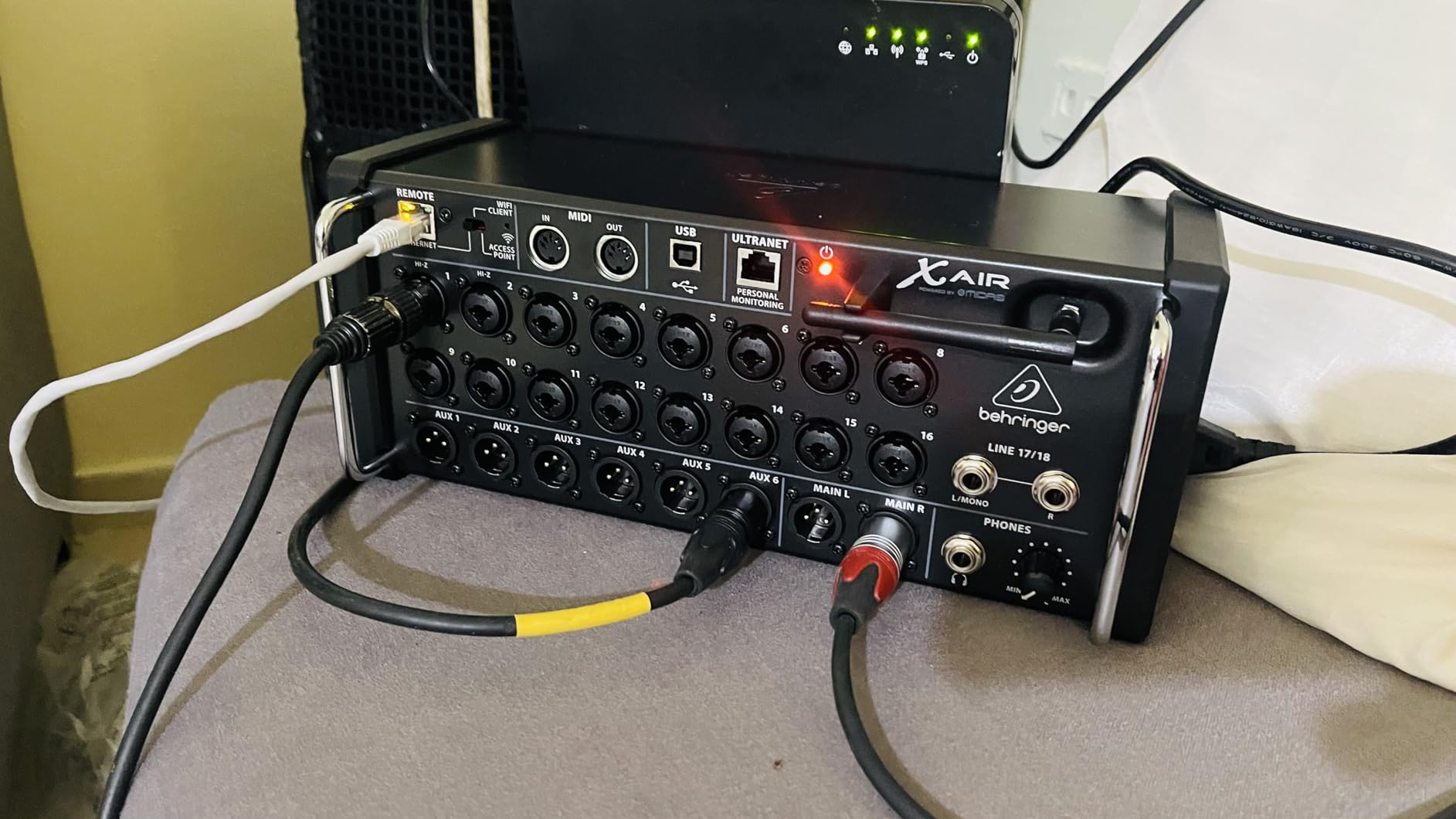
The sound quality gets called out repeatedly as clear, and the deep EQ and dynamics control on each channel is compared favourably with a DAW. Six aux buses give you real in-ear monitor mixes rather than the two or three you get on a small analog board, which matters the moment a worship team asks for mixes.
What I would not do is run the whole room on the built-in wireless. Owners are near-unanimous that the internal router is weak over distance, and many have added an external router or gone to wired Ethernet to fix it. The absence of AES50 networking also means no stage box, so if your channel count grows later you are looking at an expansion rather than a networked snake.
How It Handles a Real Church Input List
Where it holds up well is the smaller room: a six to eight piece band plus three speech mics plus playback tracks and click stays inside 18 channels.
When You Should Skip It
Skip it if your band is large and you are within a year of adding keys, a track library and a broadcast feed. Twelve mix buses sound generous on paper but disappear quickly when each player wants a stereo in-ear mix and you still need a monitor loop and a stream send.
Also weigh the aluminum-and-plastic chassis carefully if the desk will be transported. Reviewers routinely recommend a protective case or rack bag, and the open default wireless signal is worth knowing about before a service.
2. Soundcraft Ui16 – 16 Inputs With Four Balanced XLR Aux Outputs
Soundcraft Ui16 Remote-Controlled 16-Input Digital Mixer
16 inputs with 8 combo
4 XLR aux outputs
dbx and Lexicon FX
7.9 pounds
Pros
- Reviewers single out the sound quality as excellent and quiet
- 8 combo plus 4 XLR mic inputs give real mic connectivity
- 4 balanced XLR aux outputs for in-ear and wedge mixes
- dbx DigiTech and Lexicon processing built in
- Control from up to 10 devices on any operating system
Cons
- Built-in Wi-Fi hotspot drops connections
- RF interference with wireless receivers placed close by
- Analog signal path so it is not a DAW sound card
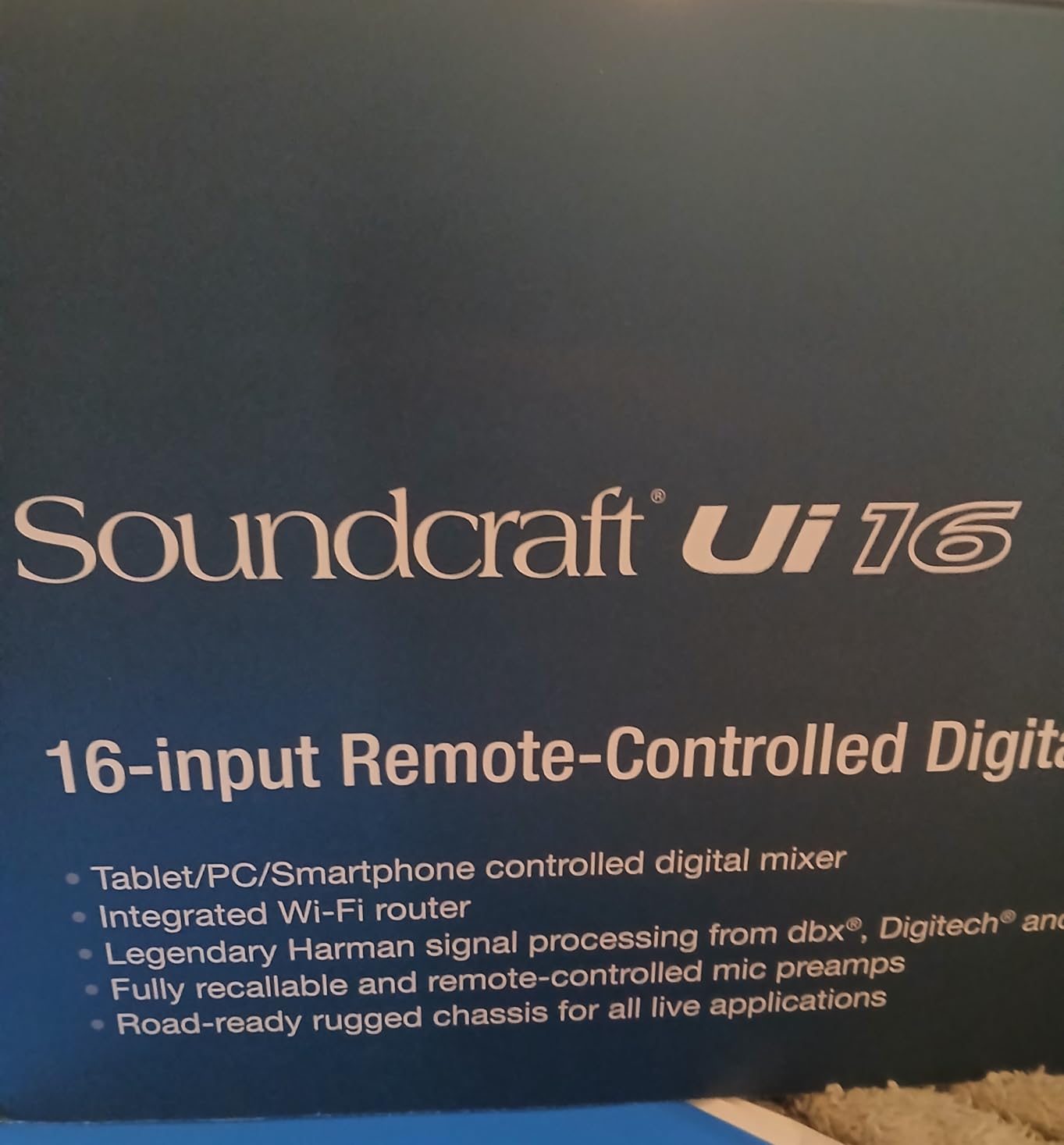
The Ui16 is the value entry point of this roundup, and it is genuinely capable rather than a toy. Eight XLR combo inputs, four XLR mic inputs, two instrument inputs and a stereo RCA line input give you 16 real sockets, which is more usable connectivity than consoles with higher channel counts.
Reviewers repeatedly single out the sound quality as excellent and quieter than comparable analog boards. The dbx AFS2 processing, DigiTech amp modelling and three dedicated Lexicon FX busses replace a shelf of outboard gear in a church that does not have a shelf.
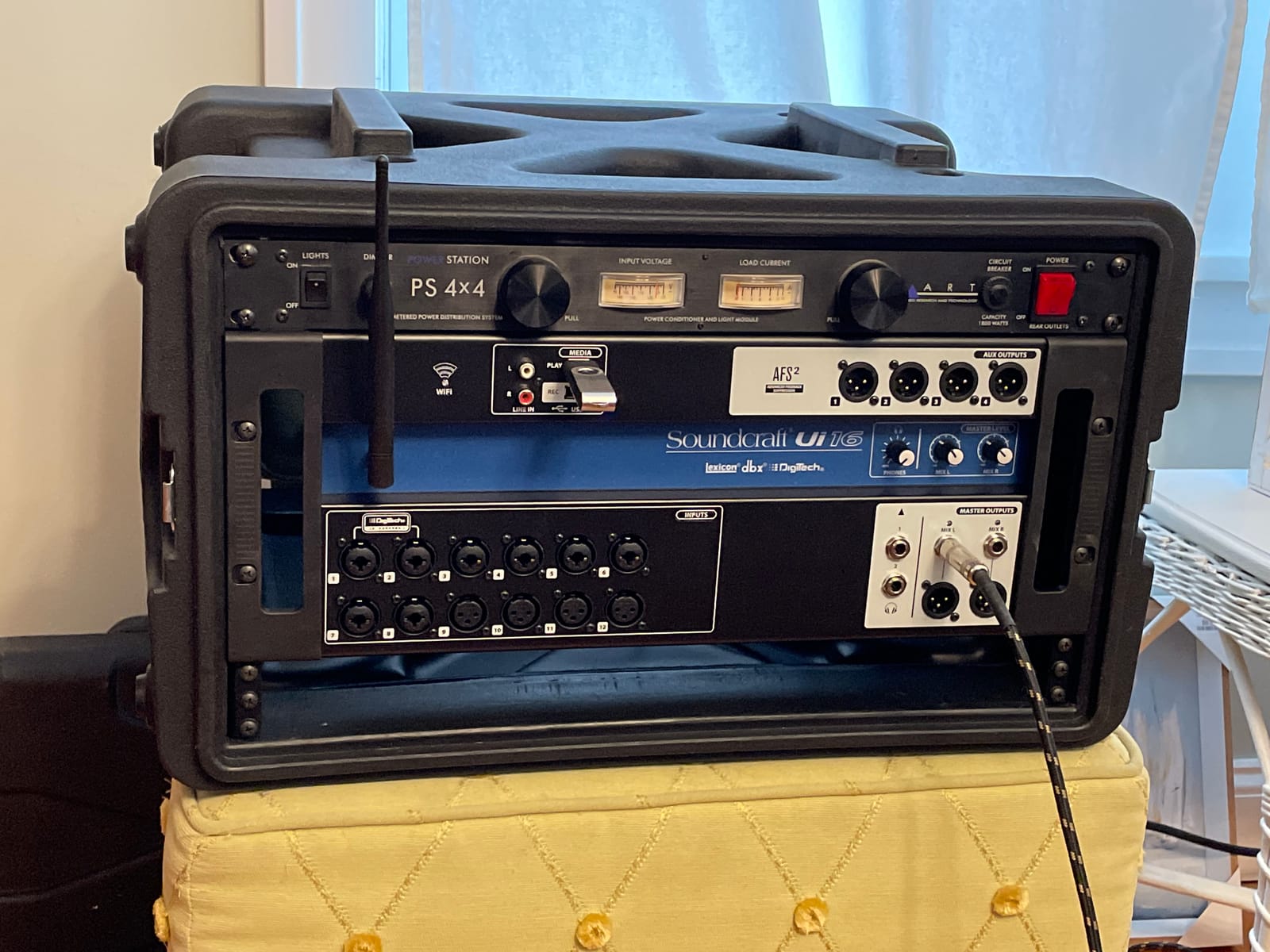
Four balanced XLR aux outputs is the feature that separates it from cheaper tablet boards, and several owners use them for in-ear and wedge monitor mixes. It also records direct to USB memory and plays back two channels from a stick, which covers a backing track and a capture in one box.
The most common thread across the reviews is that the internal hotspot is the weak point. Multiple owners report short range and dropouts, and have fixed it with an external access point or Ethernet after which they describe very stable operation. Others note audible background hiss that makes it less suited to quiet studio work.
What It Means for Sunday Morning
Control runs from up to ten devices across iOS, Android, Windows, Mac and Linux over independent Wi-Fi and Ethernet interfaces, so a volunteer can run the service from a tablet in the aisle. The HTML-5 interface is the best of the tablet boards for anyone who does not want to learn a vendor-specific app.
Where It Falls Short
Be clear about what this is. Owners are candid that it is a digitally controlled analog signal path, not a true digital mixer, and it will not act as a USB sound card for a DAW. If multitrack recording of the service matters to your ministry, this is not the box.
It is also worth separating the unit from wireless receivers. Owners report RF interference when the two sit close together, which is easy to solve by placing the mixer at the desk and the receivers at the stage.
3. Behringer X32 – 40 Inputs, 25 Buses and 25 Motorized Faders
Behringer 32 40-Input 25-Bus Digital Mixing Console, Black (X32)
40 inputs and 25 buses
32 MIDAS preamps
25 motorized faders
45.4 pounds
Pros
- Owners compare it favourably with consoles costing two to three times as much
- 25 motorized faders with 32 channels visible at once
- 32 MIDAS-designed programmable preamps
- Eight DCAs for grouped sources
- 32-channel USB interface and AES50 expansion
Cons
- Routing takes study to understand
- Channel meter LEDs are low resolution
- USB stick recording is WAV stereo only and cannot record and play at once
The X32 is the highest-rated console in this roundup and the one that shows up most often as the default church recommendation, and the owner reviews explain why: 40 inputs, 25 mix buses, 32 MIDAS-designed preamps and 25 motorized faders at a fraction of what comparable consoles cost.
Sixteen XLR outputs, 8 DCAs, 6 assignable mute groups and 12 assignable FX controls give you the structure a worship team actually needs. A whole drum kit or the vocal group can be raised on a DCA while the internal balance stays intact, which is exactly what you want at the top of a service.
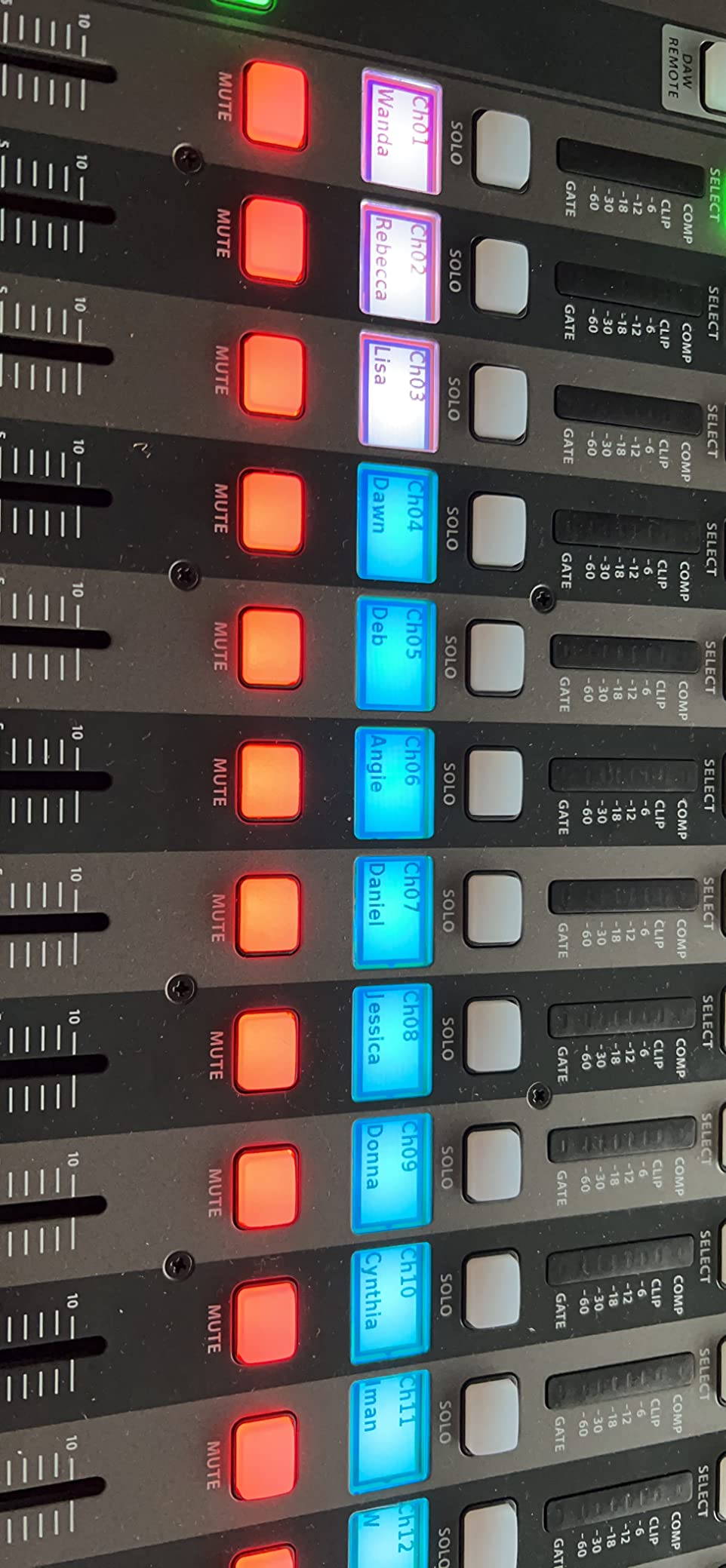
The recall system is the heart of it for a church: scenes, safes, snippets and cues store the whole state and bring it back exactly. Several owners describe years of reliable service in church and theatre use, and firmware updates are widely recommended at setup because they resolve most early issues.
The honest complaints are about the surface, not the sound. Routing takes real study to understand even with good tutorials, the channel meter LEDs are low resolution enough that comparing channel levels by eye is hard, and the onboard USB stick recorder is a WAV stereo capture that cannot record and play back at the same time.
Why It Fits a Mid-Size Sanctuary
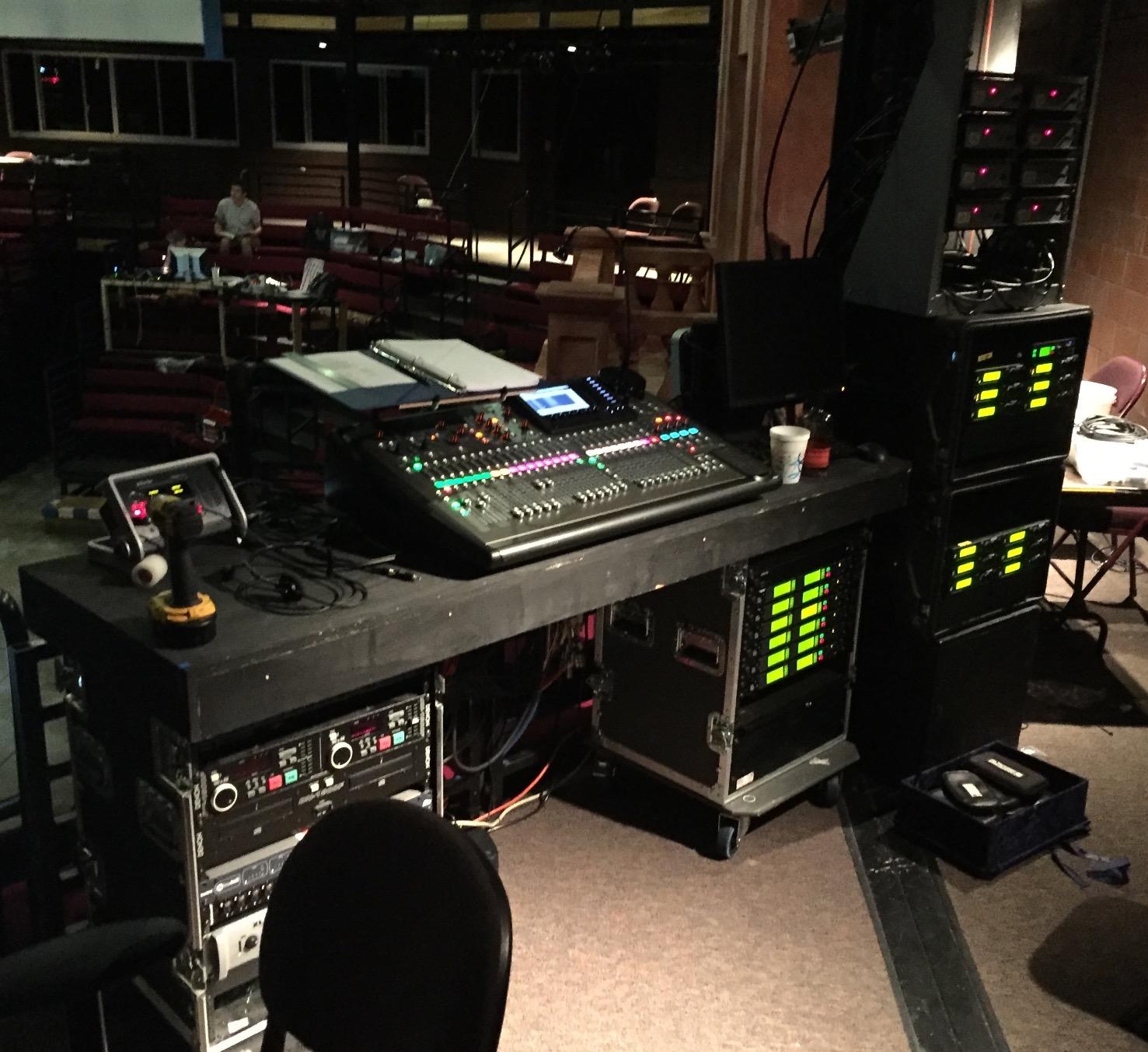
Thirty-two onboard preamps is the number that matters. It covers a full worship band plus speech mics plus playback without an outboard preamp rack or a stage box on day one, which keeps the total project cost predictable for a building committee. Add an S32 or DL32 over AES50 later if the room grows.
The 25 buses give you 16 mix buses plus mains, which is enough for stereo in-ear mixes per player, a couple of effect sends, wedge mixes and a separate broadcast feed without splitting the sanctuary mix and the stream feed.
What a Committee Should Know Before Approving
It weighs 45.4 pounds and is 40.4 inches deep, so the table needs to be substantial and you need a plan for getting it into the booth. Plan for firmware updates on day one and budget a training session, because routing is the skill that separates a smooth Sunday from a stressful one.
For multitrack recording, use the 32-channel USB interface into a DAW rather than the stick recorder.
4. Allen & Heath CQ-18T – 7-Inch Touchscreen With Dual-Band Wi-Fi
Allen & Heath CQ-18T Digital Mixer with 7″ Touchscreen WiFi and Bluetooth Connectivity
16 inputs with 8 combi
7-inch touchscreen
96kHz processing
10.3 pounds
Pros
- Large 7-inch colour touchscreen with an assignable rotary
- Built-in dual-band Wi-Fi with automatic channel selection
- Stereo Bluetooth input for phone playback
- 24x22 USB interface plus 24x22 SD record and playback
- Compact 10.3 pound body for a tight booth
Cons
- No physical faders so gain rides are slower
- 16 inputs is below larger consoles in the same bracket
- Smaller review base limits long-term owner feedback
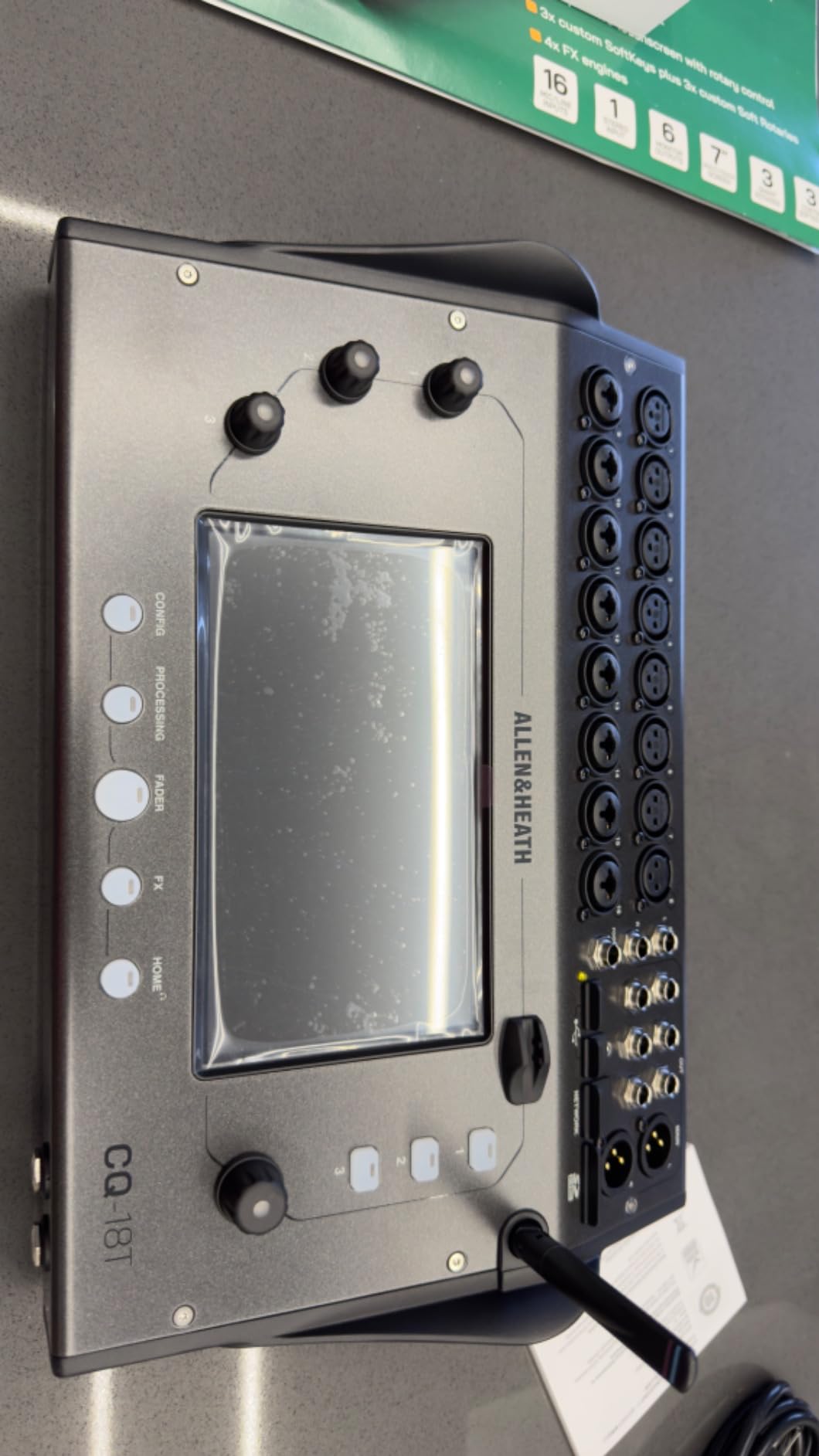
The CQ-18T is the console I would hand to a volunteer who has never touched a mixing desk. Sixteen mic or line inputs, eight of them combi, plus a stereo line input, and every one of those channels is reached through a 7-inch capacitive colour touchscreen with an associated rotary control and three custom SoftKeys.
There are no motorized faders here, and for most church services that is a feature rather than a limitation. Gain changes happen on the touchscreen with a visible numeric value, which removes the guesswork of feeling for a fader cap in a dim room at the start of a service.
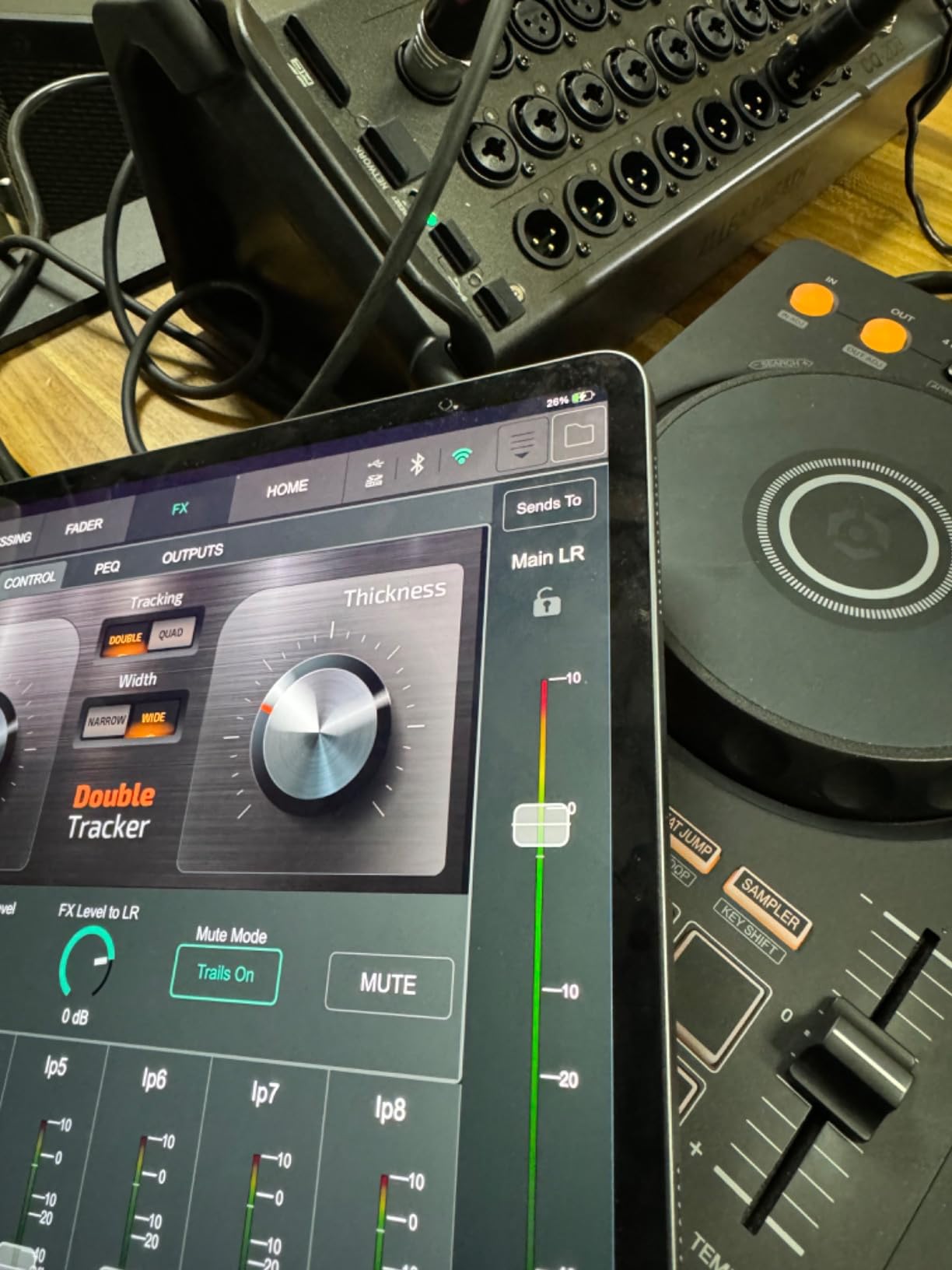
Connectivity is unusually good for this size. Built-in 2.4GHz and 5GHz Wi-Fi with automatic channel selection handles tablet control without hunting for a clean channel, stereo Bluetooth takes playback from a phone without a cable, and there is a 24×22 USB audio interface plus 24×22 SD record and playback built in.
Processing runs at 96kHz with four FX engines and an 88 dB noise level, and at 13.6 by 9.6 by 3.5 inches and 10.3 pounds it fits into booths where a full console will not go. Several churches in our research described the CQ series as the most common recommendation in their sound team threads.
How Much Room You Have to Grow
If you anticipate adding keys, a live drummer and a broadcast feed within two years, budget for an expansion strategy or move up a tier. Being honest about the ceiling is easier than discovering it the week the band brings a synth.
What to Weigh Before Buying
There is no fader bank, so a gain ride during a service takes longer than on a motorized desk. That is a real cost in a room where the engineer is alone and something is drifting.
The review base of 83 ratings is much smaller than the established brands, so long-term owner feedback is thinner. That is not a dealbreaker, but it is a reason to buy from a dealer who will honour a warranty without argument, and to keep the console on firmware updates.
5. PreSonus StudioLive 32SC – 16 FlexMixes and a 128-Channel USB Interface
PreSonus StudioLive Series III 32SC Digital Console Mixer
32 recallable channels
16 FlexMixes
128-channel USB interface
22 pounds
Pros
- Owners call the sound warm and colourable
- 128-channel USB interface for tracking and playback
- Onboard multitrack SD recording with Virtual Soundcheck
- Fully recallable scenes with Scene Safe
- AVB networking for NSB stage boxes and EarMix 16M
Cons
- Steep learning curve for the console and AVB network
- Some units arrive with a motorized fader that does not move
- No integrated Bluetooth
The StudioLive 32SC is the console for a church whose ministries overlap. Thirty-two fully recallable channels and 16 FlexMixes that function as aux mixes, subgroups or matrix mixes means the worship band, the playback track, the guest speaker and the broadcast feed can each hold their own settings, and switching between them is a recall rather than a rebuild.
The recording side is the standout. A 128-channel 64×64 USB interface is the largest in this roundup, and the onboard multitrack SD card recorder with Virtual Soundcheck lets the desk record itself so volunteers can rehearse against the previous service.
Sound quality is described by owners as warm and colourable, with an update over the older preamp generation, and a dual-core FLEX DSP engine powers 286 simultaneous processors. The bundled Studio One Artist DAW and Capture software mean a new volunteer can open a session from a recorded service and start learning on real material.
AVB networking pairs the desk with NSB stage boxes and EarMix 16M personal monitor mixers, and at 22 pounds the chassis is portable enough to move between a sanctuary and a fellowship hall. One owner replaced a FireWire console that had run for twelve years and called the network setup worth the patience.
Where the FlexMix Count Earns Its Keep
Sixteen recallable mixes is the number to look at if your church runs in-ear monitors, streams a service and hosts guest musicians. Each FlexMix can be a stereo player mix, a subgroup or a matrix feed, and each holds its own processing, so the stream feed can be deliberately conservative while the sanctuary mix carries the room.
Built-in AVB means an NSB stage box can put preamps under the musicians, which is the usual answer for a large room or an orchestra.
Where the Reviews Warn You
This carries the lowest average rating in the roundup at 4.2, and the complaints are about hardware and logistics rather than sound. Several reviews mention a motorized fader that arrived dead or stiff, and some owners report difficulty registering a used unit that was already registered to a previous owner, which then complicates support.
The console and its AVB network setup also carry a genuinely steep learning curve. Buy it if you have someone who will own the desk and train the team, not if you are relying on whoever happens to be free that Sunday.
6. PreSonus StudioLive 24R – Rack Format With 24 Locking Combo Inputs
PreSonus StudioLive Series III 24R Digital Rack Mixer with Studio One Pro Software
24 locking combo inputs
16 FlexMixes
40x40 USB and 55x55 AVB
10.8 pounds
Pros
- 24 locking combo inputs with full recall in a compact chassis
- Recallable XMAX Class A preamps with Fat Channel vintage modes
- 40x40 USB and 55x55 AVB recording interfaces
- Runs as an AVB stage box or stage box plus monitor mixer
- Scene Safe protects recallable scenes
Cons
- Only 24 physical inputs with 8 more from the AVB network
- No built-in touchscreen or local control surface
- Small review base of 44 ratings
The 24R is the rack sibling of the 32SC and the better fit for a church with a fixed booth and shallow depth. Twenty-four locking combo mic and line inputs with recallable XMAX Class A preamps sit in a chassis that weighs 10.8 pounds, and eight further channels arrive over the AVB network to make 32.
Sixteen FlexMixes and four dedicated subgroups give you the same recallable mix structure as the 32SC, and Scene Safe protects stored scenes from being overwritten during a service, which is exactly the behaviour you want in an installed system that nobody is watching.
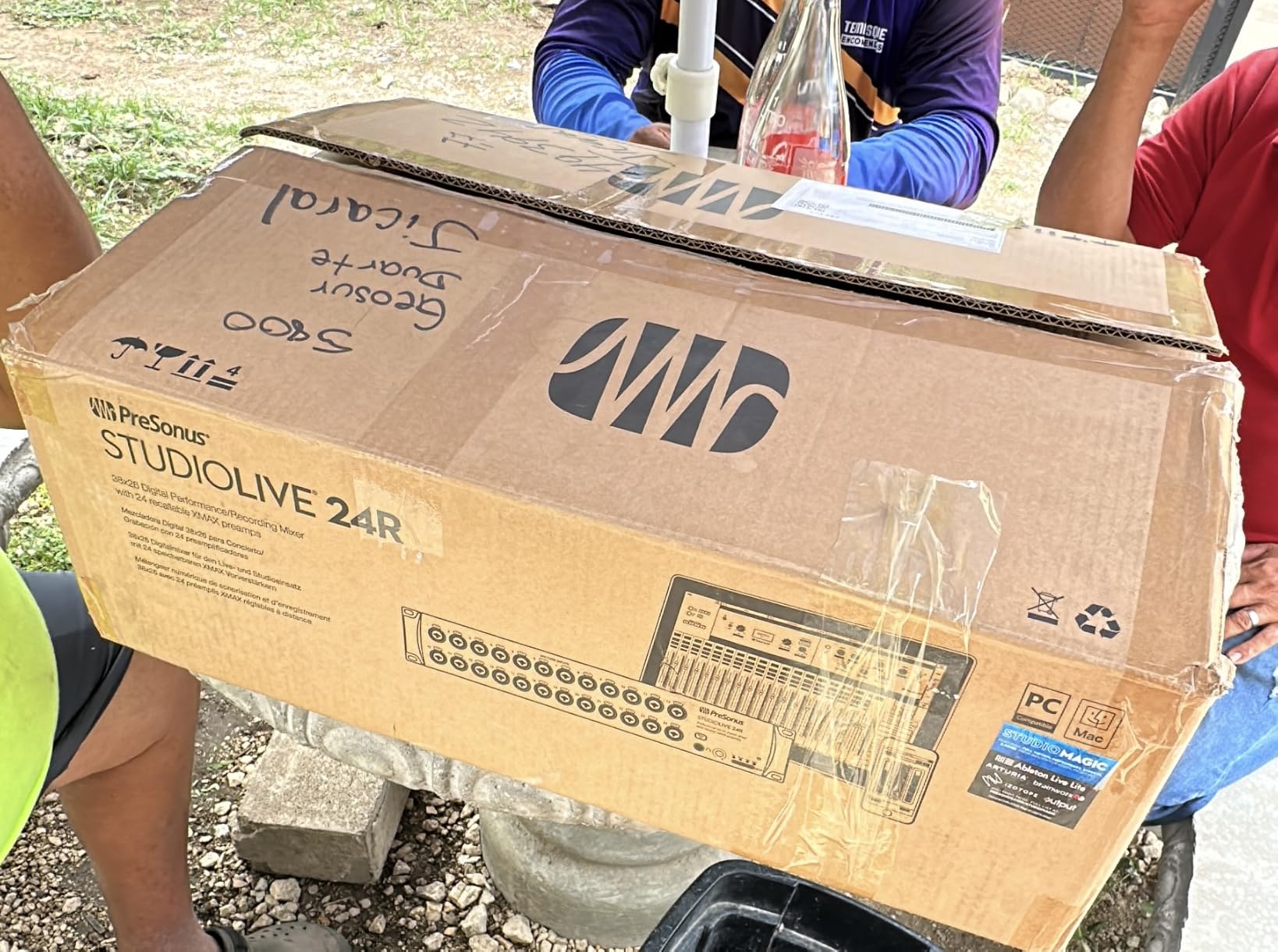
Fat Channel processing includes vintage EQ and compressor modes with A and B compare on every channel, so a volunteer can switch between a modern and a characterful sound and hear the difference instantly. Recording interfaces come in both flavours: 40×40 USB 2.0 for a DAW and 55×55 AVB for networked recording.
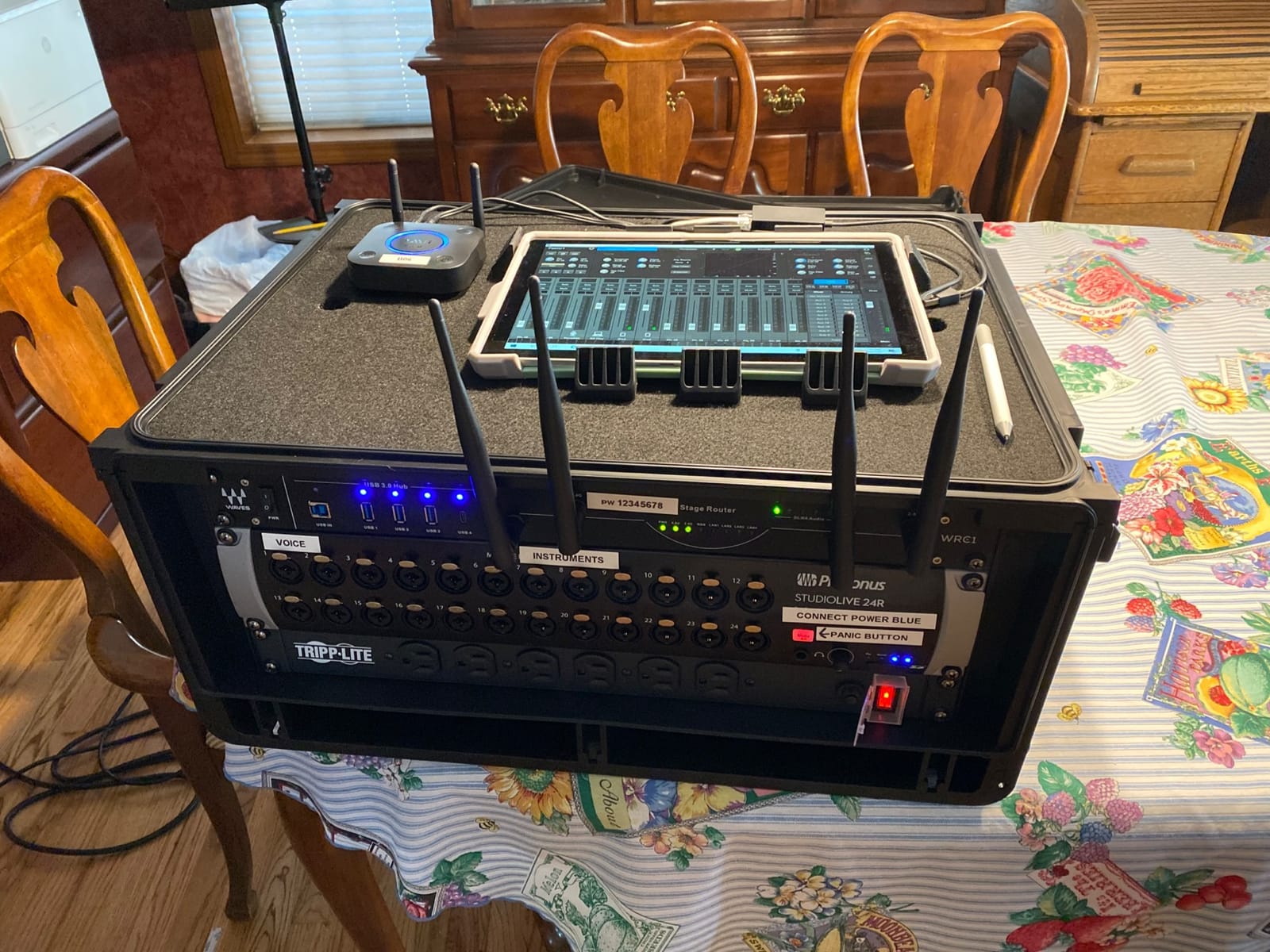
Because it can run in AVB stage box mode or stage box plus monitor mixer mode, one desk can serve a sanctuary floor and also act as the digital snake for a Series III console. UC Surface touch control covers Mac, Windows, iPad and Android, with Capture and Studio One Artist included.
Why Rack Beats Console in a Fixed Booth
A rack unit at 10.8 pounds can sit on a shelf, a rail or a pull-out tray instead of consuming a table sized for a 40-inch console. In older sanctuaries with shallow booths, that space is often the deciding factor, and the 24 locking combo inputs survive a season of cables being plugged and pulled.
Twenty-four physical inputs covers a mid-size band plus speech mics and playback, and the remaining eight network channels let a church that later stages a drum kit expand without replacing the console.
What to Plan Around
There is no local screen or fader bank, so day-to-day control depends on UC Surface on a laptop or tablet. That is fine in a booth with a dedicated screen but a poor experience if you expect to walk up and mix cold.
The 44-rating review base limits long-term owner feedback, and eight channels depend on the network being healthy. Test the AVB path before you commit the whole room to it.
7. Behringer X32 Producer – 40 Inputs and 17 Motorized Faders in a Rack Chassis
Behringer X32 Producer Digital Mixer
40 inputs and 25 buses
16 MIDAS preamps
17 motorized faders
25.1 pounds
Pros
- Rack format gives 40 inputs and 25 buses with 17 motorized faders
- 16 programmable MIDAS-designed preamps
- 32 x 32 USB 2.0 interface with HUI and Mackie Control emulation
- Scene recall and snapshots for repeated services
- Drives P16 personal monitoring and AES50 stage boxes
Cons
- Only 16 onboard preamps so the rest need expansion
- Depends on the X Control app for day-to-day control
- 17 faders means channels are viewed in pages
The X32 Producer is the rack-format member of the X32 family and it answers a specific problem: you want the recall and preamp quality of the X32 in a 19-inch chassis that fits a booth shelf. Forty inputs, 25 mix buses and 17 fully automated motorized 100 mm faders in a body 19.29 by 19.92 by 6.42 inches weighing 25.1 pounds.
The 32 x 32 USB 2.0 interface emulates HUI and Mackie Control, so it sits in front of a DAW without a third-party control layer. Scene recall and snapshot storage do the heavy lifting in a church that runs the same services repeatedly.
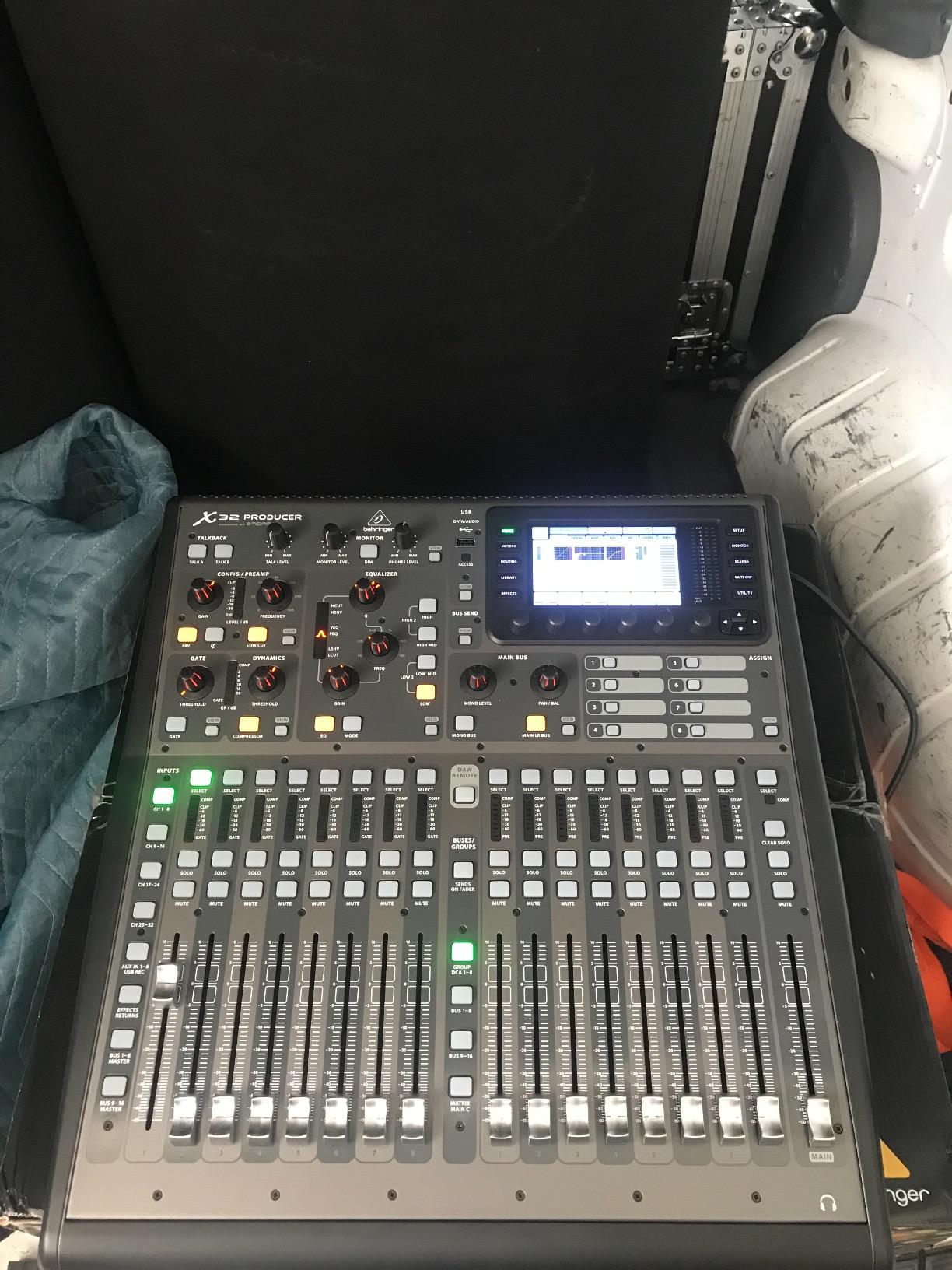
It also drives Behringer P16 personal monitoring systems and AES50 stage boxes, which means the same desk can feed in-ear monitors today and remote preamps later. Churches mixing from a fixed booth are the typical buyer in the reviews, and scene recall is the feature they highlight most.
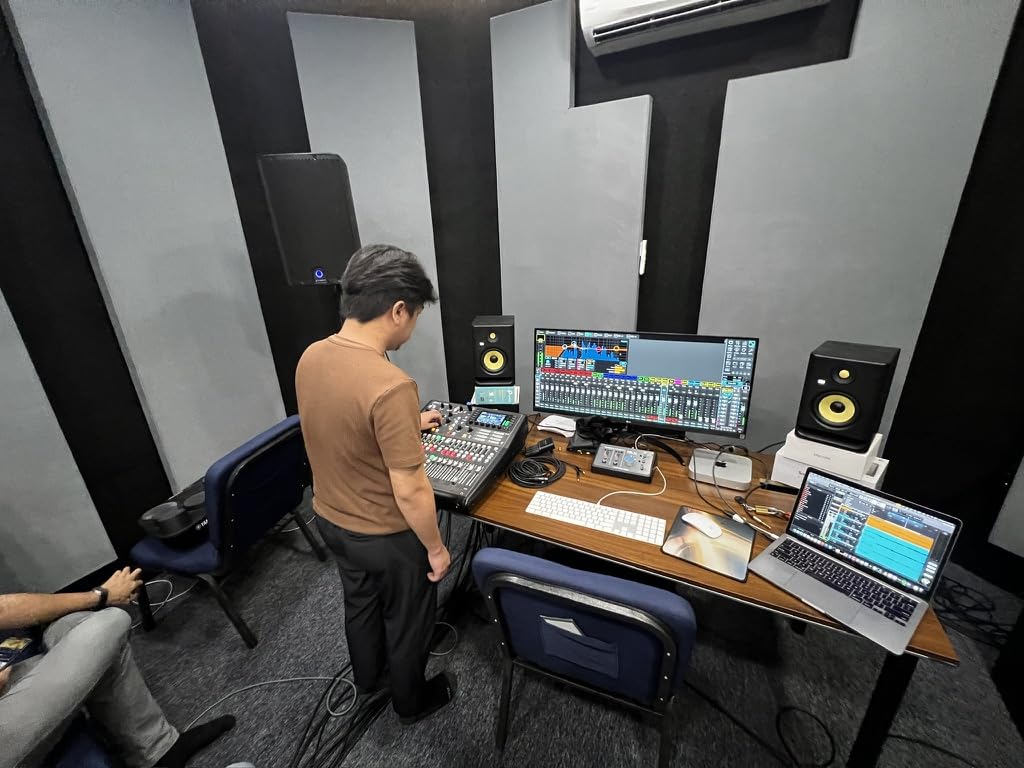
The Preamp Catch Worth Knowing
Sixteen onboard MIDAS-designed preamps is the trade for the rack footprint. The other channels on the 40-input count come from returns, USB sources or an expansion, so a church that needs 24 to 30 physical mic preamps on the floor should plan for an S32 or DL32 rather than assuming 40 sockets at the desk.
That is the single most common budgeting mistake we saw in church forum discussions: buying a full-stereo or network-forward console, then discovering the preamp shortfall after approval.
Pages vs All Channels at Once
Seventeen faders means you do not see all 40 inputs simultaneously, unlike the full X32. For a fixed booth where you set a scene and recall it, that costs little. For a desk where someone mixes live and hunts for a source mid-service, it costs more.
A few owners also report needing attention to firmware and the X Control app after setup. Update both before you let the team near it, and keep the app on the tablet that actually lives in the booth.
8. Yamaha DM3 – 22 Channels With a 9-Inch Touchscreen in a Slim Body
Yamaha DM3 Standard 22 Channel Ultracompact Digital Mixing Console
22 channels including 16 mono
9-inch touchscreen
16 Yamaha preamps
20 pounds
Pros
- Owners single out the crisp smooth sound quality
- Very large 9-inch touchscreen that is easy to navigate
- Ultracompact chassis that fits where a full desk will not
- 96kHz processing with 16 Yamaha preamps
- 18x18 USB interface with VST Rack plugin support
Cons
- Only 16 physical mic inputs and 6 mixes
- One reviewer needed a firmware upgrade before DAW integration worked
- Reviewers would like more onboard dynamics and effects
The DM3 solves a space problem. Twenty-two channels, 16 mono plus a stereo channel and two stereo FX returns, in a chassis 17.9 by 12.6 by 5.5 inches. Yamaha fit a best-in-class 9-inch touchscreen into that footprint, and owners describe navigating it as needing almost no learning time.
Sound quality is the other repeated praise, described as crisp, smooth and powerful for a console this size, running at 96kHz through 16 Yamaha preamps, 12 of them XLR and four combo, with eight analog XLR outputs.
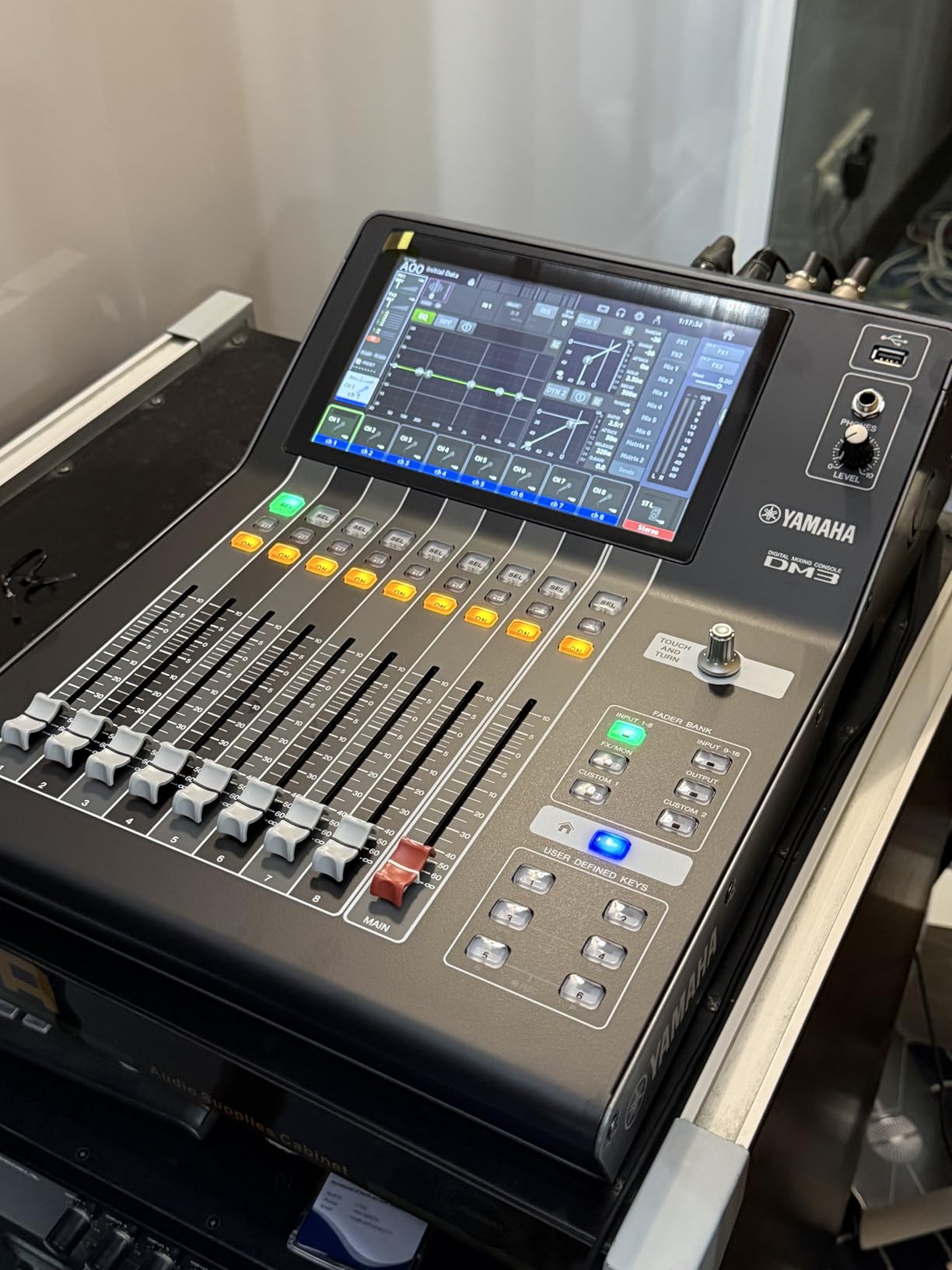
The bus structure is generous for the channel count: 6 mono or 3 stereo mixes, 2 matrixes and a stereo bus. The 18×18 USB interface supports VST Rack plugin inserts on a laptop, so a church that wants extra processing beyond the onboard set can add it without a hardware rack.
One practical note from the reviews: several owners switched to the DM3 after wireless tablet control became unreliable on a Behringer XR18. If your team has been fighting a tablet connection, a console with a large local screen is a real change in working life.
Bus Count for a Small Worship Team
Sixteen physical mic inputs is the limit. A seven-piece kit plus four speech mics plus a bass and two guitars runs out of sockets quickly, so count carefully before you treat this as a band desk.
What Owners Wish Was Different
The most common criticism is that there is not enough onboard dynamics and effects for the price, which pushes you toward the VST Rack path on a laptop and therefore back toward a computer dependency.
One detailed owner report describes DAW integration as nearly unusable until a firmware upgrade, so treat the first afternoon with the DM3 and your recording setup as a commissioning session rather than a Sunday. The review pool also includes a 14 percent one-star group, the largest share of single-star ratings in the roundup.
9. Midas M32 LIVE – AES50 Networking for Rooms That Will Grow
Midas M32 LIVE Digital Console for Live and Studio with 40 Input Channels, 32 Midas PRO Microphone Preamplifiers and 25 Mix Buses and Live Multitrack Recording
40 input channels
16 Midas PRO preamps
25 phase-coherent buses
14.3 kg
Pros
- Midas PRO preamps that longtime users call the best sounding they have used
- AES50 networking to DL32 stage boxes for up to 96 inputs and 96 outputs
- 25 time-aligned phase-coherent mix buses
- Dual-card 32-channel multitrack recording and playback
- Recallable snapshots of the full show state
Cons
- Steep learning curve for anyone coming from analog
- No touchscreen and no 96kHz processing
- Only 16 onboard preamps for 40 input channels
The M32 LIVE is the growth option. Up to 40 simultaneous input channels, 16 Midas PRO preamplifiers and 25 time-aligned, phase-coherent mix buses in a console-format body weighing 14.3 kg. The phase coherence across those 25 buses is the quiet technical advantage: mixes stay stable as channels move between them, which is what you want when a service runs long.
AES50 networking is the headline for large rooms. Connect DL32 stage boxes and the console scales to 96 inputs and 96 outputs, which is how you stage a drum kit and an orchestra under preamps without a wall of cable.
Recording is handled on dual SD or SDHC card slots with 32 bi-directional channels of live recording and playback, and a USB audio interface handles DAW work. Recallable snapshots of the entire show state suit a church running several distinct services each week.
The caution is the evidence base. With 17 ratings averaging 4.1, this is the thinnest and lowest-rated review pool here, and many comments are short and general. Where owners do go into detail, they praise the Midas PRO preamps as the best-sounding they have used.
When the Networking Math Works
Twenty-five buses on a 40-input console is a healthy ratio, and the console format means you get physical faders rather than a screen you have to touch mid-service.
Where the Owners Flag Problems
One owner reports a noise fault and real difficulty locating a service centre, and the learning curve from analog is described as challenging though worth it. There is no touchscreen, and no 96kHz processing compared with several consoles at a similar spend.
If reliability track record matters more to your committee than preamp character, the X32 covers the same class with a far larger owner community to fall back on. If Midas preamps and AES50 scaling are the reason you are shopping, the trade is defensible.
How Many Channels Does a Church Actually Need?
Counting by seat number fails you. Count sources instead, on your most demanding service, and then add 20 percent so the next change is not an emergency.
A contemporary platform with a four-piece vocal group, a seven-piece drum kit, bass, two guitars, two stereo keyboard parts, stereo playback tracks, a stereo click, four speech microphones and two stereo effect returns is a realistic list. That is roughly 25 sources, and each stereo source costs two channels on a console with mono-only inputs, which pushes the effective requirement above 30 channels on the desk.
Now check preamps rather than channels. Those same 30 sources need 26 or so real microphone and instrument preamps, because playback and click usually arrive on a stereo return or a USB playback rather than an input. The Behringer X32 covers that with 32 onboard preamps. The X32 Producer, the Midas M32 LIVE and the PreSonus StudioLive 24R each offer 16, so those rooms need a stage box.
A traditional sanctuary tells a different story. A piano on a stereo pair, a lectern mic, three speaking mics and a playback track is about six sources, and a 12-input console will serve it for years. Buying a 40-channel desk for that room adds surface area and intimidation without adding a single useful feature.
The other half of the arithmetic is buses. Four musicians asking for stereo in-ear mixes consume eight buses, and you still need wedges or a monitor loop, one or two effect sends and a separate broadcast feed. Twelve buses is a workable floor for a band with in-ear monitors, and 16 or more leaves room for a second service format.
How to Choose a Digital Mixer for a Church: 8 Rules
Rule 1: Count your actual input list, then add 20 percent headroom. Use the worksheet above rather than a seat estimate, and make sure the list you count is your busiest service, not your quietest.
Rule 2: Count onboard preamps, not channel names. Channels and preamps are different numbers on most consoles. The Behringer X32 gives you 40 inputs on 32 preamps, the X32 Producer gives you 40 inputs on 16 preamps, and the Midas M32 LIVE gives you 40 channels on 16 preamps. The gap is filled with returns and expansions, not with free microphone sockets.
Rule 3: Budget the stage box at the same time as the console. Consoles that expect a stage box are cheaper on the surface and more expensive in total. A DL32 or S32, cabling, a stage rack and the labour to terminate it can rival the console cost. Churches have learned this the hard way, approving a network-forward console and then discovering the preamp shortfall after the money is spent.
Rule 4: Judge in-ear monitor capability by aux bus count. Input channels decide what you can plug in. Aux buses decide how many people can have their own mix, and a four-piece band asking for stereo in-ear mixes consumes eight buses before anything else is routed.
Rule 5: Make scene recall a hard requirement. If different volunteers run different services, a console without reliable recall means the mix gets rebuilt every Sunday. Look for scenes plus a protection mechanism, safes on the Behringer X32, Scene Safe on the PreSonus StudioLive range, and a way to label channels clearly on scribble strips or a touchscreen.
Rule 6: Count monitors for the operator, not the engineer. A board with a large screen and clear labels, or a tablet app that is straightforward to pick up, beats a denser surface with more features. The plain-language summary of forum experience is simple: people forget where functions live between services when the surface uses multifunction controls and modifier buttons.
Rule 7: Work out how the service gets recorded and streamed. Multitrack recording to tracks is a different feature from a stereo mixdown, and a separate broadcast mix is a bus, not a setting. Consoles with onboard multitrack SD recording include the PreSonus StudioLive 32SC, the PreSonus StudioLive 24R and the Midas M32 LIVE; the Behringer X32 gives you a 32-channel USB interface to a DAW instead.
Rule 8: Budget for feedback control and the room, not just the desk. In a hard-surfaced sanctuary, even consoles with good automatic feedback suppression benefit from an external suppressor, and the honest church forum advice is to fix the speaker and microphone placement first. Some of our guides to drum shields for churches cover the cheapest room fix there is.
Digital vs Analog Mixers for Churches: What Changes for Volunteers
The sound argument between digital and analog is largely settled. Both are 24-bit capable, both are transparent enough for a room service, and the perceived differences on owner reviews are about the preamp and the processing rather than the format. The real argument is the operator.
What digital wins on. Recall, per-channel processing you can see, effects built in, multitrack recording, USB connectivity and a control surface that can sit on the platform. A digital console turns a Sunday-mix decision into a single button press.
What digital costs you. The learning curve, the dependence on one device and one app, firmware updates, and the trap of buying a console whose routing model nobody on your team understands. A volunteer can also mute or recall the wrong scene just as easily as a person can pull the wrong fader.
What analog still does well. Immediate tactile control, no boot time, no network, and no failure mode that stops the service. A simple analog board with 12 inputs can carry a piano, a lectern and three microphones indefinitely.
If you are migrating, do not throw away the old board on installation day. Run a full service on the new console, keep the analog board patched as a fallback, and write a one-page Sunday procedure naming the scene, the buses and the two things that must be checked before the service.
Expect one honest loss in the move. A written mix that lived in an engineer’s head on an analog board has to be rebuilt from memory as scenes on a digital desk, and that takes a rehearsal plus a service or two before you trust the recall. Owners with long analog histories describe the first few digital services as slower before they describe them as safer.
Frequently Asked Questions
What is the best 32-channel mixer for church?
The Behringer X32 is the most common answer for a mid-size sanctuary. It gives you 40 inputs, 25 mix buses, 32 MIDAS-designed preamps and 25 motorized faders, all recallable through scenes and safes, with 8 DCAs for grouped sources and AES50 expansion if the room grows. If you need a rack format instead of a desk, the Behringer X32 Producer carries 40 inputs and 25 buses into a shallow chassis.
What is the best audio mixer for a small church?
For a room under 200 seats, the Behringer XR18 or the Allen and Heath CQ-18T are the strongest fits. The XR18 offers 18 inputs, 16 MIDAS preamps, 12 mix buses and an 18 x 18 USB recording interface in 7.1 pounds. The CQ-18T offers 16 inputs, a 7-inch touchscreen, dual-band Wi-Fi, Bluetooth input and 24×22 USB and SD recording in 10.3 pounds, with no fader bank to learn.
What are the downsides of using a digital mixer?
The main downsides are the learning curve, dependency on one device and one control app, and firmware management. Multifunction controls and modifier buttons mean volunteers forget where functions live between services, and recalls can be just as easy to get wrong as faders. Several consoles also expect a stage box to reach their full channel count, which moves cost to the stage and the cabling.
Do I need a stage box with a digital mixer?
Only if your physical channel count exceeds your onboard preamps. The Behringer X32 covers 32 preamps at the desk, which handles most mid-size rooms without one. The Behringer X32 Producer, the Midas M32 LIVE and the PreSonus StudioLive 24R all have 16 onboard preamps, so a DL32, S32 or NSB box is how you reach 24 to 40 real microphone inputs. Budget the stage box and its cabling at the same time as the console.
How many channels does a church mixer need?
Count your worst-case service, then add 20 percent. A contemporary platform with four vocals, a seven-piece kit, bass, two guitars, two stereo keys, playback, click and four speech mics lands close to 30 sources, and stereo sources cost double on a mono console. A traditional sanctuary with a piano, a lectern and three microphones needs well under 12.
Conclusion
For a room under 200 seats, the Behringer XR18 gives you the most usable mixers per pound and enough buses to run real in-ear mixes, with the Allen & Heath CQ-18T as the easier touchscreen alternative for a first-time volunteer. For 200 to 800 seats with a worship band, the Behringer X32 remains the reference point: 32 onboard preamps, 25 buses, motorized faders and recall that lets any volunteer run the service.
For larger rooms, livestreams and permanent installs, the PreSonus StudioLive 32SC for multitrack recording and FlexMix structure, the PreSonus StudioLive 24R and Behringer X32 Producer for tight booths, the Yamaha DM3 where depth is the problem, and the Midas M32 LIVE where AES50 expansion is the plan.
Whichever you choose, count your inputs, count your preamps honestly, budget the stage box, and write a one-page Sunday procedure before the first service. That preparation does more for the sound of your church than any console on this list.
Disclosure: we earn from qualifying purchases at no additional cost to you. This guide is compiled from published specifications and owner review patterns rather than professional audio advice, so check the current spec sheet and warranty terms with the manufacturer before you commit.