
Search for the best powered PA speakers for small venues and the first thing you hit is a wall of wattage figures. A 2,000-watt speaker here, a 1,300-watt speaker there, and none of them tell you how loud the cabinet actually gets in a room with a hundred people in it. That confusion is the single biggest reason people buy the wrong box, and it comes up constantly in the live sound communities.
A powered PA speaker, also called an active speaker, is a loudspeaker with the amplifier built into the cabinet. You plug a microphone or a mixer into it and it works. That is why it dominates small rooms: no separate amp, no rack of cables, no guesswork about impedance matching. The whole list below is powered speakers we would actually put in a cafe, a bar, a church hall, a rehearsal room or a small club.
We define a small venue as a room holding roughly 50 to 300 people, which covers coffee shop sets, pub gigs, restaurant dining rooms, houses of worship under 200 seats, mobile DJ setups, corporate presentations and acoustic duos. Everything in this guide is judged on how well it handles that room size, plus how manageable it is to carry, load in, and run by one person.
Before the picks, one correction worth reading twice. Manufacturer wattage is a peak number, not a continuous one, and the gap is large. A speaker advertised at 2,000 watts peak is frequently in the neighborhood of 500 to 700 watts of usable continuous amplification. Compare that against the Rockville BPA10 below, which honestly labels itself at 400 watts peak and 100 watts RMS in the same breath. Same category of product, completely different honesty, and the RMS number is the one that predicts whether your mix stays clean at performance volume.
Top 3 Picks for Small Venues in 2026
Two of these carry a battery, which is unusual in a category built around mains power, and every one of them is light enough for a single-person carry. The Bose wins the guide on all-in-one convenience, the ALTO on value per watt, and the Mackie on battery practicality.
Quick Picks and At-a-Glance Specs in 2026
- Bose S1 Pro+ – all-in-one pick for singer-songwriters and events with no power outlet, at 14.4 lbs.
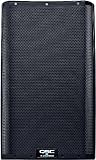
- QSC K12.2 – flagship 12 inch pick for bands that want onboard DSP control and a three-year warranty.
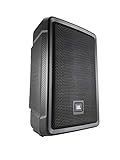
- JBL IRX108BT – 8 inch pick for the lightest carry weight, presenters, and DJ booth monitoring.
- Mackie Thump212 – 12 inch pick for full-band small clubs that need punch without a separate sub.
- Mackie Thump GO – battery pick for outdoor gigs, pop-ups and busking with a long runtime.
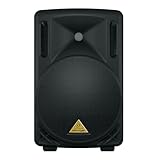
- Behringer B210d – first-PA pick for rehearsals, speech reinforcement and monitor duty.
- ALTO TX410 – entry pick for the most compact full-size 10 inch system on a tight budget.
- ALTO TS410 – value pick for the most onboard mixer and app control in this list.
- JBL EON715 – 15 inch pick for halls and rooms that need real low-mid output.
- Rockville BPA10 – classroom and small-shop pick with the widest media player feature set.
| Product | Specifications | Action |
|---|---|---|
 Bose S1 Pro+ Bose S1 Pro+ |
|
Check Latest Price |
 QSC K12.2 QSC K12.2 |
|
Check Latest Price |
 JBL IRX108BT JBL IRX108BT |
|
Check Latest Price |
 Mackie Thump212 Mackie Thump212 |
|
Check Latest Price |
 Mackie Thump GO Mackie Thump GO |
|
Check Latest Price |
 Behringer B210d Behringer B210d |
|
Check Latest Price |
 ALTO TX410 ALTO TX410 |
|
Check Latest Price |
 ALTO TS410 ALTO TS410 |
|
Check Latest Price |
 JBL EON715 JBL EON715 |
|
Check Latest Price |
 Rockville BPA10 Rockville BPA10 |
|
Check Latest Price |
We chose these ten on output per pound, honest specifications, number of real physical inputs, and how much of the mixing work the cabinet does on its own. Where a review pool exposes a genuine weakness, we say so below rather than burying it. If your room is a sanctuary rather than a club, our powered PA speakers for churches guide goes deeper on speech and worship use, and DJ-only rigs have their own breakdown in our PA speakers for DJs roundup.
1. Bose S1 Pro+ Review – the Best All-in-One Powered PA Speaker
Bose S1 Pro+ All-in-One PA Speaker – Powered, Wireless PA System, Multiple Positioning Options, Ergonomic Carry Handle, Up to 11 Hours of Playtime, Black
150W output
Battery powered
3-channel mixer
14.4 lbs
Up to 11 hours playtime
Pros
- Covers a 50 to 100 person room from one box
- One of the lightest cabinets here at 14.4 lbs
- Auto EQ adapts to four mounting positions
- Bluetooth streaming plus a dedicated music channel
Cons
- Bluetooth pairing is the most common reliability complaint
- Real-world battery life closer to five hours at performance volume
- Onboard app offers limited advanced customization
The Bose S1 Pro+ is the best powered PA speaker for small venues when you cannot count on a power outlet. The rechargeable lithium-ion battery is the headline, and in a room of about a hundred people you get clean vocal reproduction from a cabinet you can carry with one hand.
What sells it is the integrated three-channel mixer. Two channels handle microphones and instruments, one is dedicated to music playback, and optional wireless RF transmitters for mic or instrument drop straight into the built-in receivers. That means a singer-songwriter can carry the speaker, a mic, a cable and a phone and still play a full set.
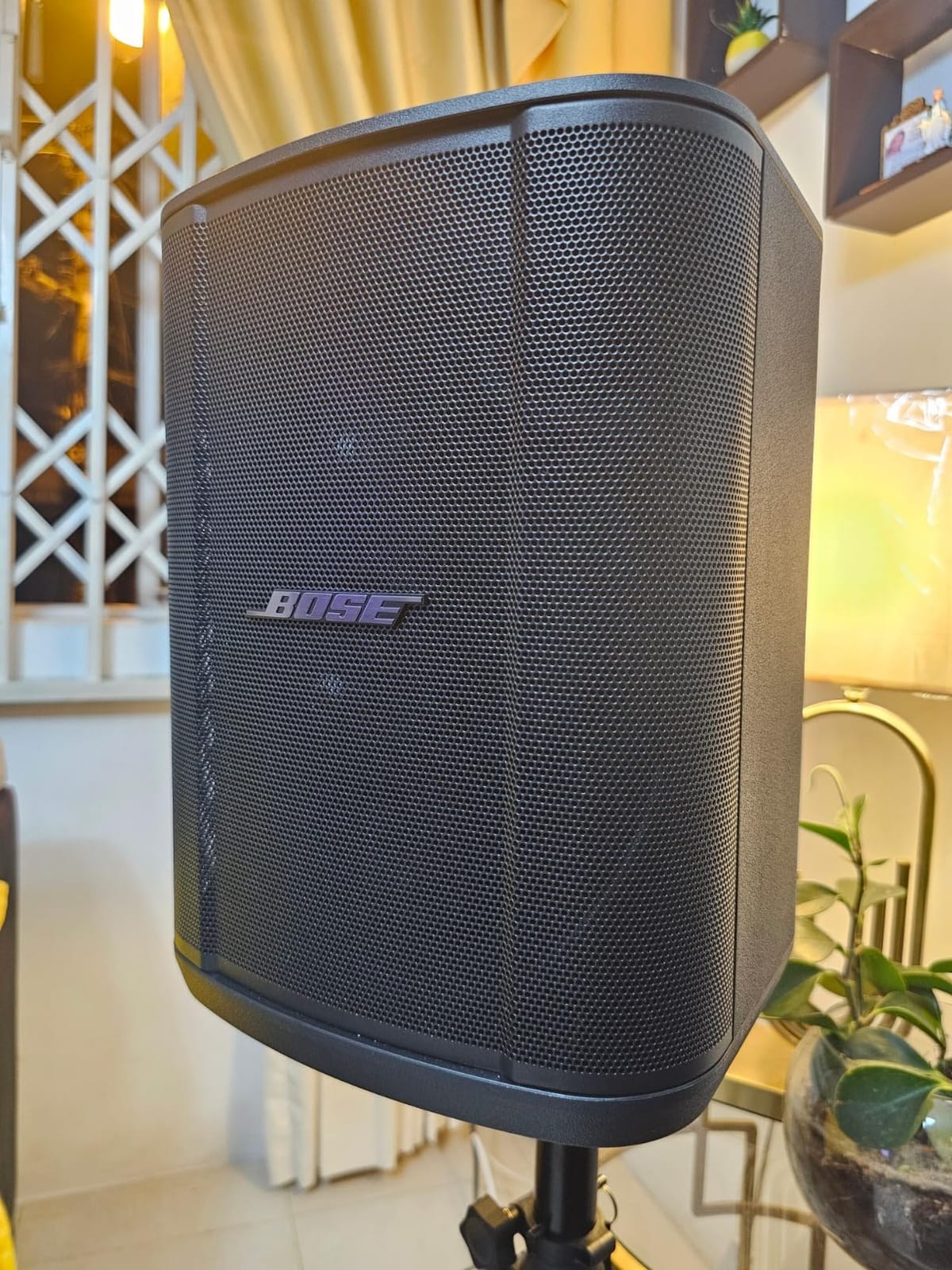
The auto EQ is genuinely useful rather than a marketing line. Set the box vertically on the floor, tilted back on a chair, horizontal on a table or on a 35 mm stand, and it adjusts to the orientation. On a floor wedge position at a coffee shop, where the cabinet points slightly upward at the audience, that correction removes a noticeable amount of harshness.
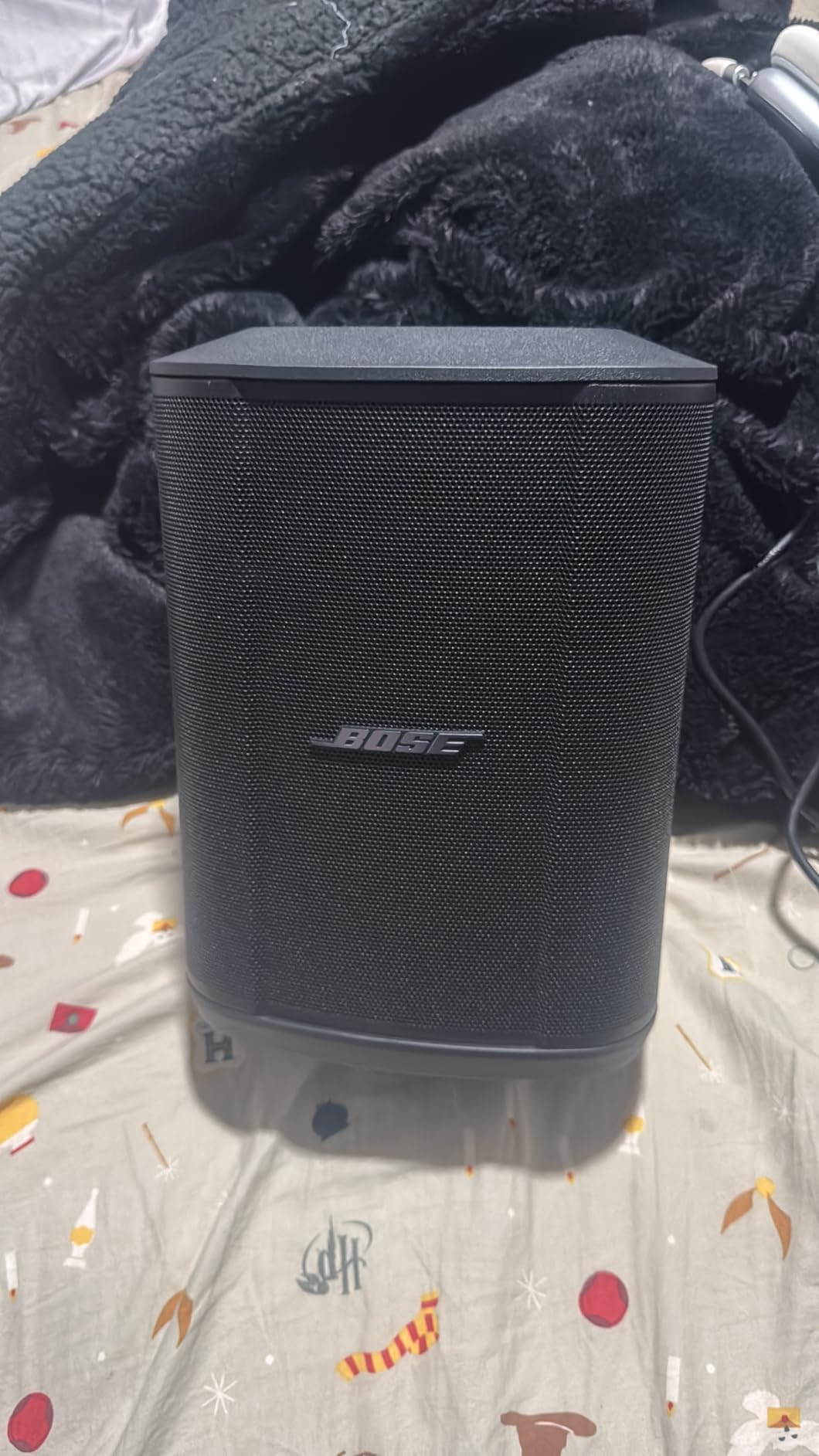
Owners consistently describe the sound as clear and balanced with more bass than a cabinet this size should produce. Reviewers also mention using it in orientations that have nothing to do with PA work, which tells you how much the form factor appeals to people. At 14.4 lbs with an integrated ergonomic carry handle, it is one of the easiest boxes here to move between a rehearsal room, a street corner and a dining room.
Who the S1 Pro+ suits
Solo performers, acoustic duos, pop-up events, street performers and any venue where running cable to a mains outlet is inconvenient or impossible. Owners running wedding ceremonies report clear speech intelligibility at large gatherings, which is exactly what this box is built for.
It also works well as a rehearsal or practice monitor, or as the single speaker covering a 50 to 100 person room with no stand and minimal cabling.
Who should skip the S1 Pro+
Skip it if a full band is playing and you need headroom, because 150 watts of output and a 3-way all-in-one design will not push through a loud drummer in a small club. Bluetooth reliability is the most repeated complaint in the reviews, so do not build a setlist that depends on a wireless phone connection for the entire show. The app also gives you far less tonal control than the QSC or the ALTO models further down.
2. QSC K12.2 Review – the Best Powered PA Speaker for Band Control
QSC K12.2 Active 12″ Powered 2000 Watt Loudspeaker
12 inch woofer
2000W peak
2 audio channels
47.8 lbs
3 year warranty
Pros
- Low-noise Class-D amplifier module with variable-speed fan
- Factory presets plus savable and recallable scenes
- Digital display for control and function selection
- Three-year warranty is the longest in this list
Cons
- Among the heaviest cabinets here at 47.8 lbs
- Corded power only with no battery option
- Wide deep enclosure is bulky in very small rooms
The QSC K12.2 is the pick for a small club running a full band, because it puts DSP control in the cabinet instead of in your head. Factory presets for common applications can be recalled instantly, and you can save your own scenes and pull them back on the next load-in without touching a mixer.
The 12 inch woofer and 1 inch tweeter give you the low-mid weight that a full band needs to hear itself, and the two XLR audio channels let one cabinet take a vocal and a mix feed. The multi-function digital display shows the active loudspeaker function so you know what the box is doing before you raise the fader.
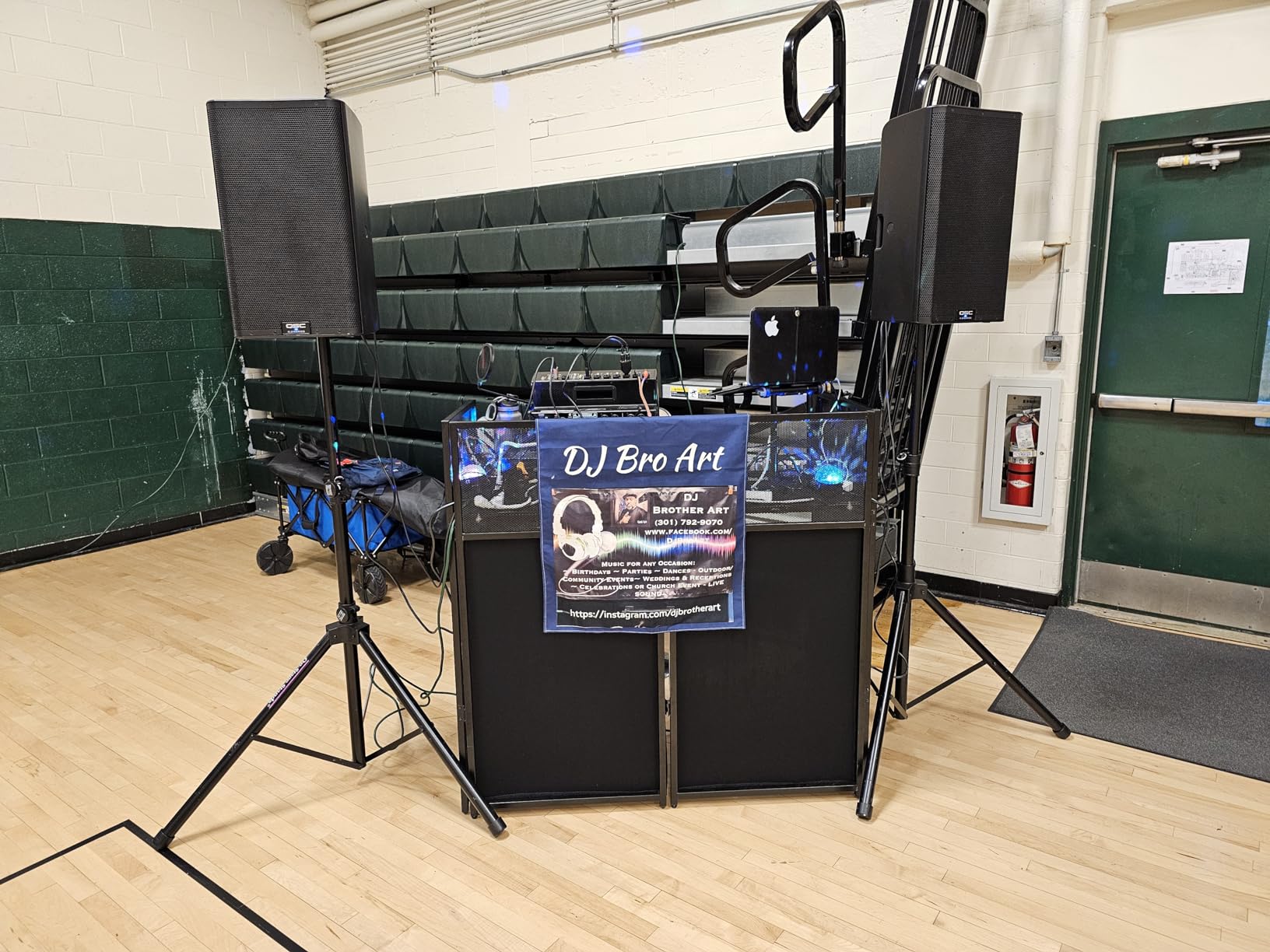
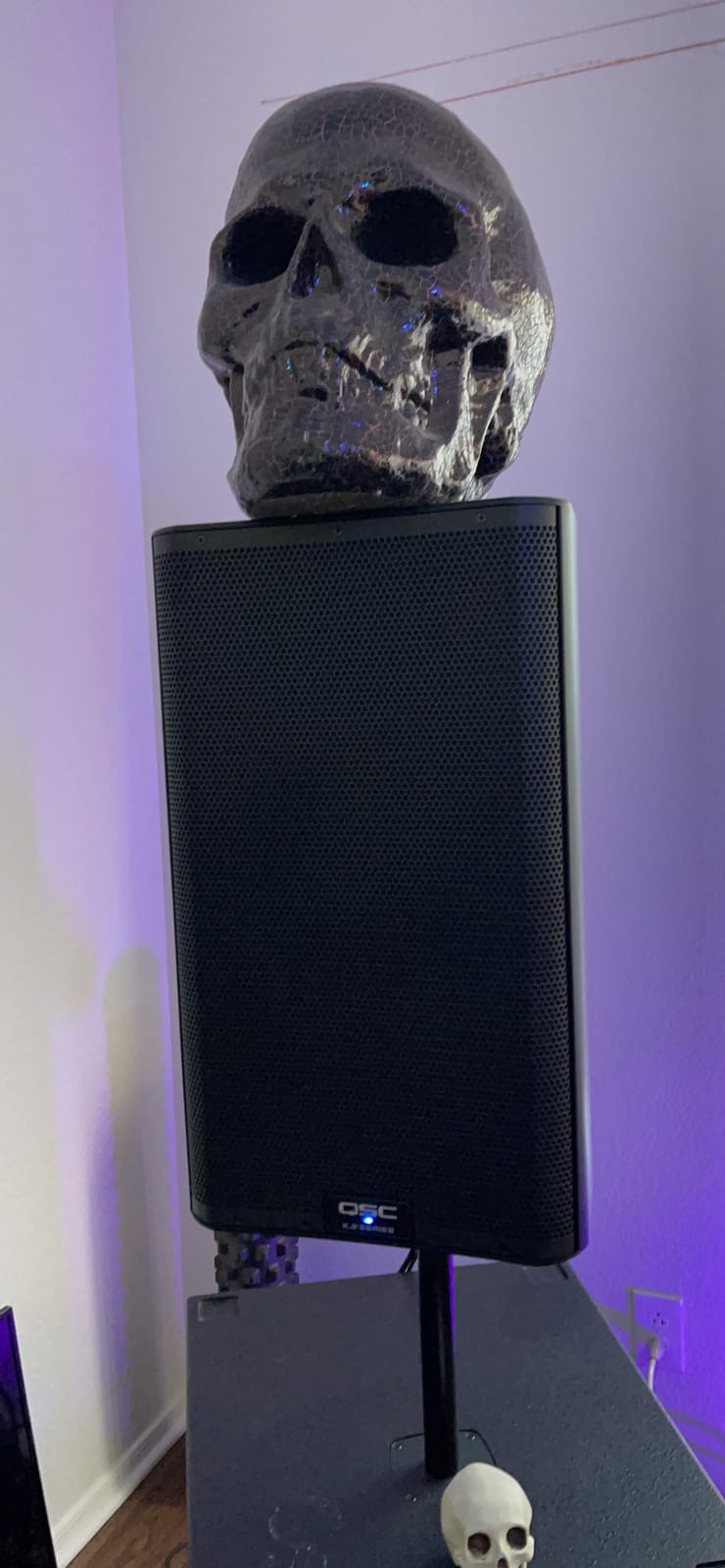
Owners consistently point to clean, low-noise output as the reason this cabinet holds up in professional small-to-mid room work. The variable-speed cooling fan keeps the amplifier quiet between songs, which matters in a room where the audience is thirty feet away and the electronics are right there.
The warranty here is three years. That stands apart from the one-year coverage most competitors in this list carry, and for a working band buying gear that gets loaded into vehicles every weekend, that difference matters more than most buyers expect at the point of purchase.
Who the K12.2 suits
Working bands in 100 to 250 capacity clubs, houses of worship with a live band, and anyone who wants EQ and loudspeaker function control from the front panel rather than from a rack. It also links well into a front of house position where the operator wants repeatable settings.
Who should skip the K12.2
Skip it for a solo performer working alone. At 47.8 lbs and 26 inches deep, this is a two-person load for most people and it is genuinely awkward in a small or low-ceilinged room. There is no battery option, so any gig without a mains outlet rules it out immediately.
3. JBL IRX108BT Review – the Best Lightweight Powered PA Speaker
JBL Professional IRX108BT Powered PA Speaker, Portable Loudspeaker with Bluetooth, 8 Inch Woofer, 1300 Watt, Mobile DJ, Musicians, Small Venues, Ceremonies and Sports Events, Black
8 inch woofer
1300W
2 XLR and TRS combo inputs
Bluetooth
17.4 lbs
Pros
- Only 17.4 lbs with integrated handles for one-person carry
- Bluetooth holds its connection better than cheaper rivals
- Mix-through output for feeding front of house
- Built-in feedback suppressor and one-touch ducking
Cons
- 8 inch woofer cannot produce sub-bass without a separate sub
- DSP limited to a few fixed presets with no manual adjustment
- Stereo pairing does not auto-restore after reconnecting
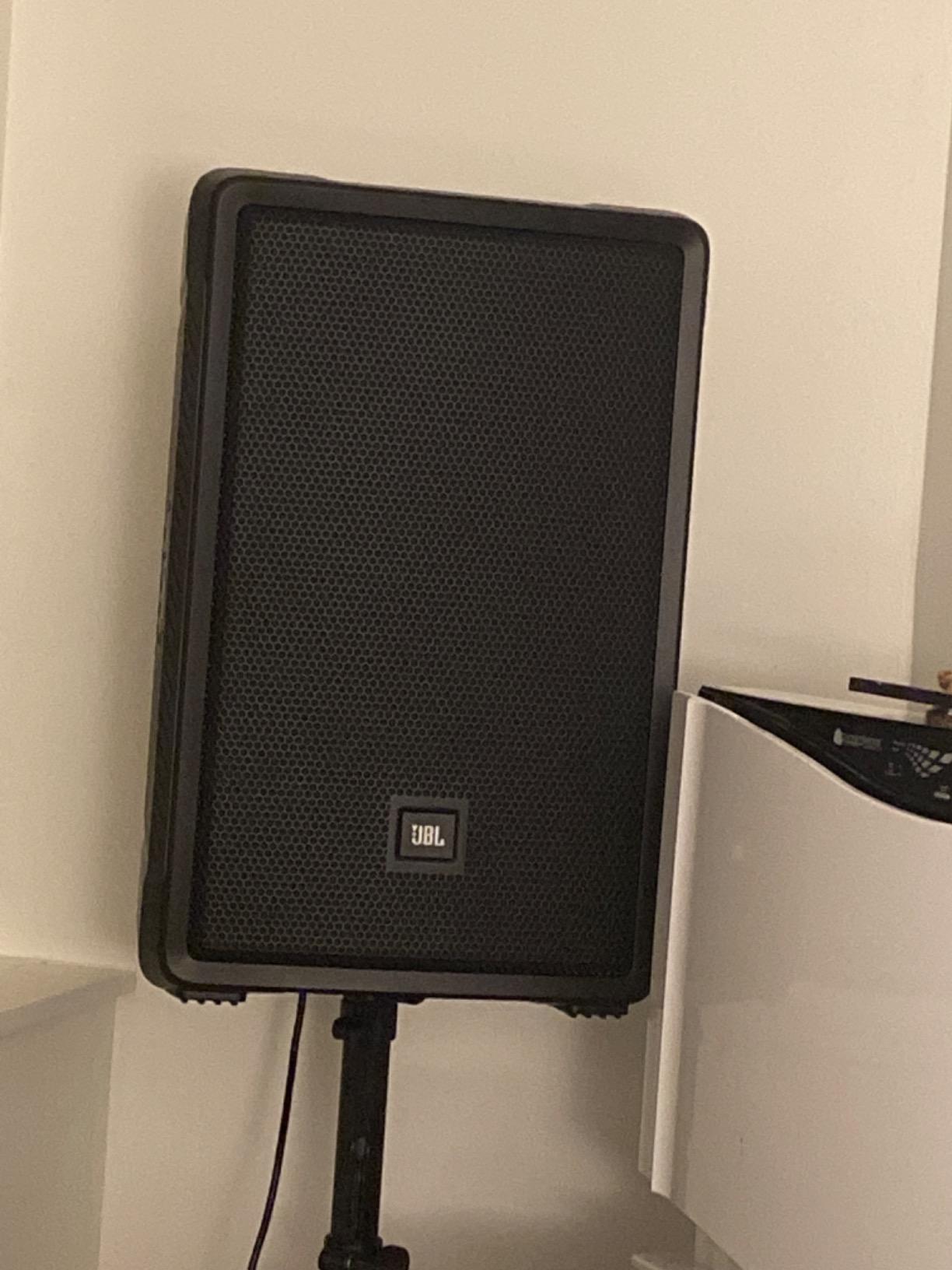
The JBL IRX108BT is the pick when the load-in is stairs, a tight doorway and a car boot. At 17.4 lbs with integrated handles, one person can carry it, and the mounting options cover floor standing, pole mount and tripod mount without any extra hardware.
Two XLR/TRS combo inputs take a vocal and a line feed, and the mix-through output lets you chain the cabinet into a front of house position when the room grows. One-touch ducking drops the music level the moment someone speaks, which is the single most useful feature for a presenter working a room alone.
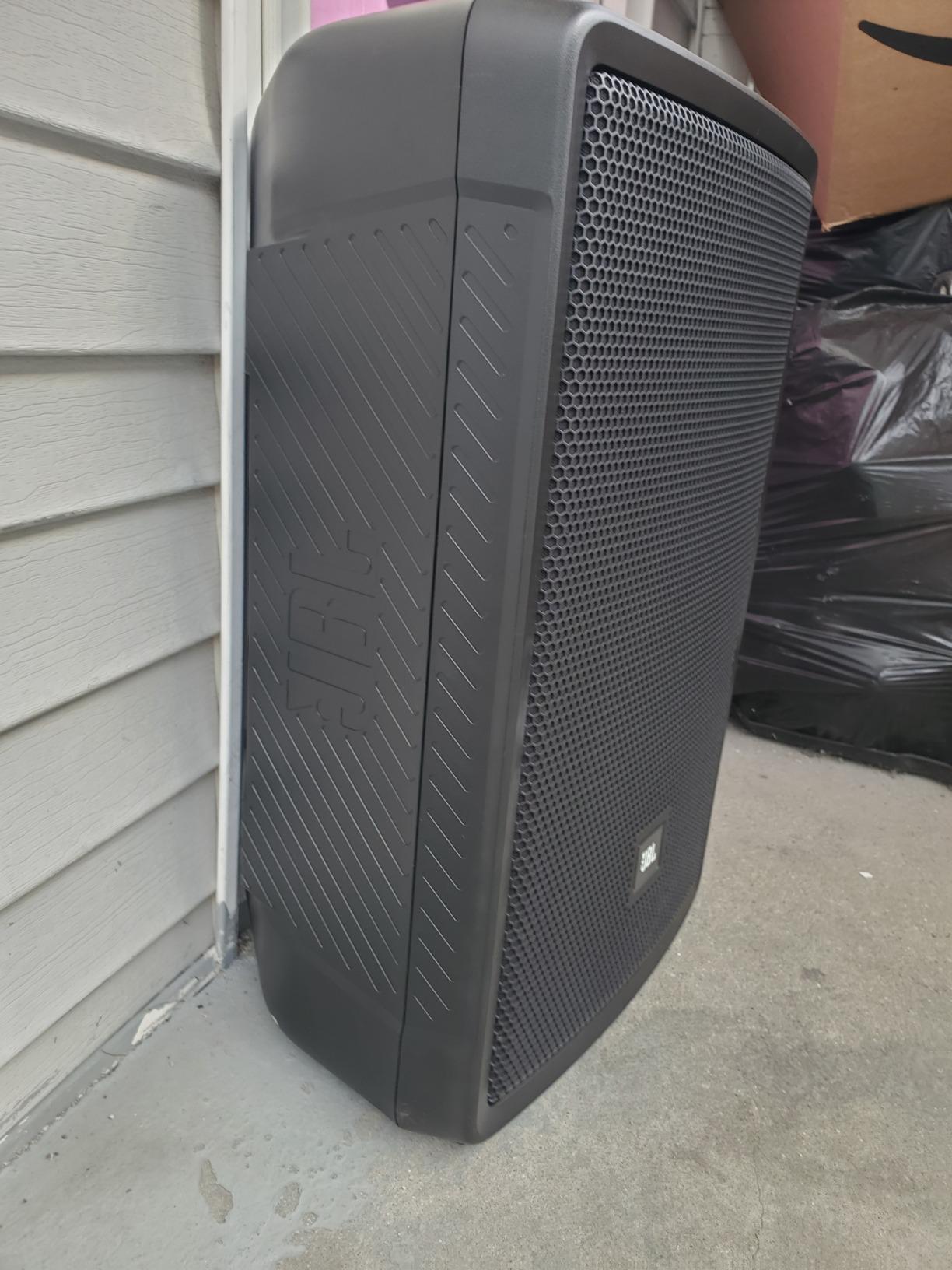
Owners use this speaker as a stage monitor, a DJ booth monitor and a small-venue PA, and repeatedly praise the low weight and clean vocal reproduction. The Bluetooth link is singled out as more stable than what cheaper brands at similar price points deliver, which matters if you are streaming between sets.
Durability stories run through the review pool, including one owner reporting the cabinet surviving submersion and long road use. Feedback suppression is built in, which helps in a small reflective room where a vocal mic close to a wall is the usual trigger for a howl.
Who the IRX108BT suits
Presenters, teachers, mobile DJs doing booth monitoring, fitness instructors, and any performer moving between rooms without a crew. It is also a strong speech reinforcement choice for a small meeting room where intelligibility matters more than music quality.
Who should skip the IRX108BT
Skip it if you are running a full band, because the 8 inch woofer runs out of headroom before the room is actually too big and you will hear clipping rather than a shortage of volume. The fixed EQ presets will also frustrate anyone who wants manual tonal adjustment, and there is no real low end without buying a separate subwoofer.
4. Mackie Thump212 Review – the Best Powered PA Speaker for Full Bands
Mackie Thump212 12″ 1400W Powered Loudspeaker with Heavy-Duty Drivers
12 inch woofer
1400W
128 dB max SPL
47 Hz to 23 kHz
29.1 lbs
Pros
- Bass output owners say rivals larger 15 inch cabinets
- Enough headroom for 150 to 250 person rooms
- Light for a 12 inch at 29.1 lbs with side handles
- Built-in feedback eliminator and music ducking
Cons
- No Bluetooth on this version
- No onboard EQ so a mixer is needed for tonal shaping
- Can sound bass-heavy for acoustic material
The Mackie Thump212 is the value pick for a full band in a small club. Multiple owners report swapping out heavier 15 inch name-brand speakers for these and finding comparable or better performance, and church, school, party and basement-band users all describe it comfortably covering 150 to 250 people.
The 47 Hz to 23 kHz frequency response and 128 dB max SPL give you more low-mid weight than most cabinets this size, so a band can hear itself without a separate subwoofer. At 29.1 lbs with side handles, it is light enough for a two-person carry or a manageable one-person lift onto a stand.
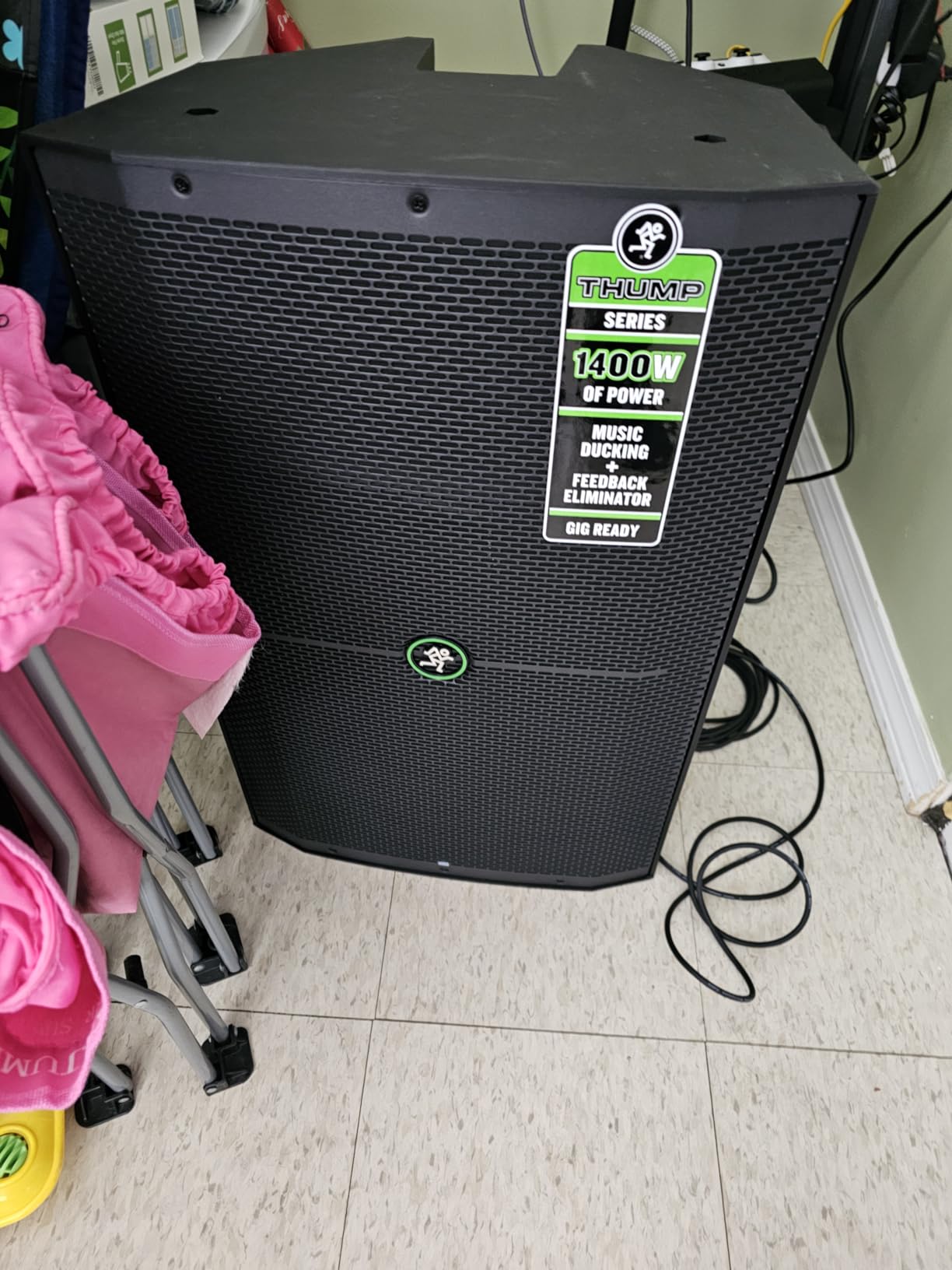
The 1400W ultra-efficient Class-D amplifier is the reason for the output-to-weight ratio. XLR and 1/4 inch inputs let you daisy-chain without a separate mixer for simple two-source setups, which is how most small-venue rigs actually start.
The built-in feedback eliminator and music ducking mode cut down on the gear you need to carry. Feedback elimination is not a substitute for correct gain staging, but in a small reflective room it will save you an afternoon of chasing a howl before soundcheck.
Who the Thump212 suits
Full bands playing 100 to 250 capacity rooms, church and school events where a drum kit and guitar stack are in the mix, and anyone who wants bass weight from a single cabinet. It also works as a stage monitor for a guitar-heavy act that wants more than an 8 inch driver gives.
Who should skip the Thump212
Skip it for solo acoustic work, where the low end can feel overwhelming without EQ trimming on the mixer. This version has no Bluetooth, so playback between songs needs a cable to a mixer or a separate streamer. If deep sub-bass is the goal, you are still adding a subwoofer eventually.
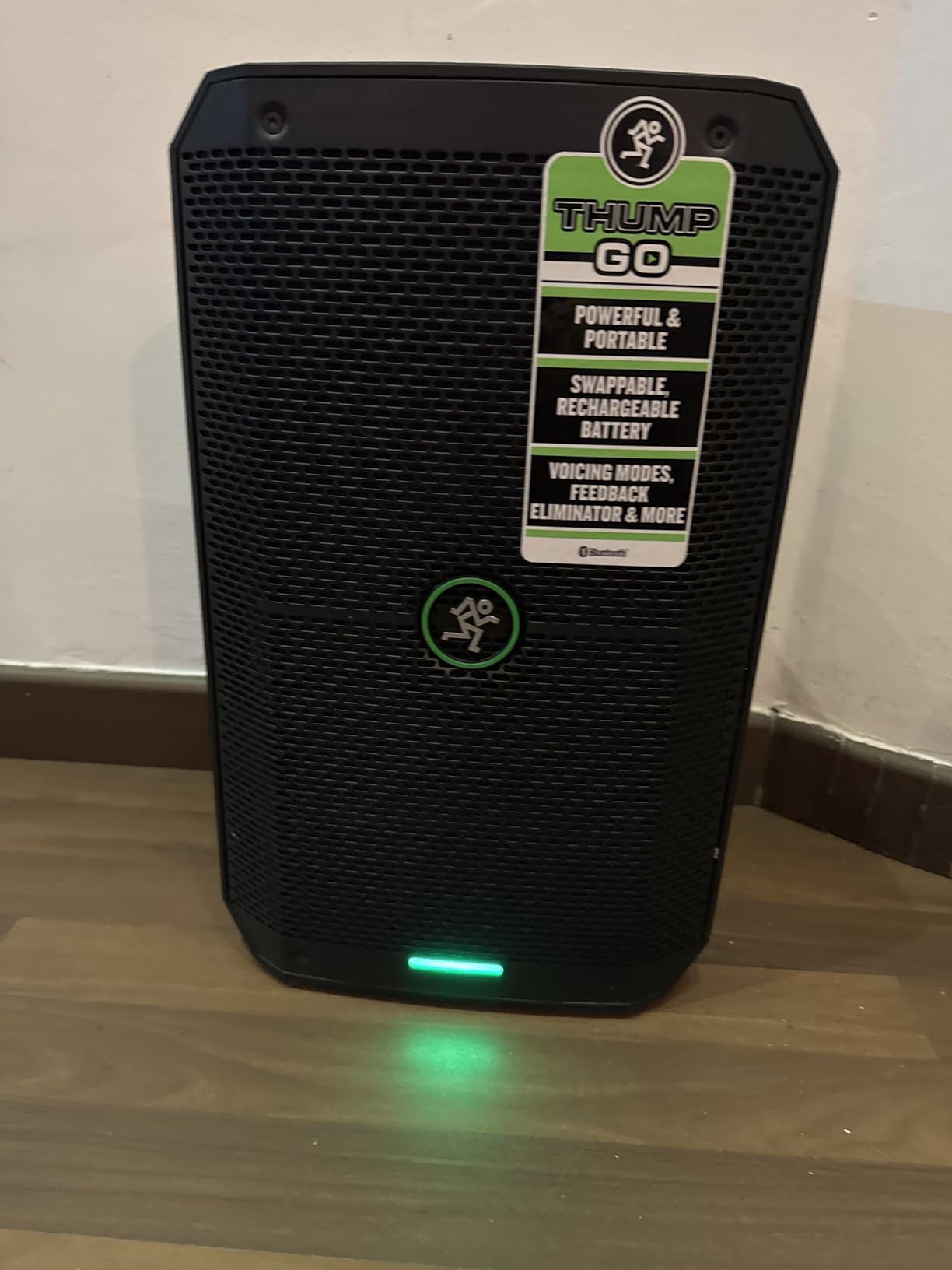
5. Mackie Thump GO Review – the Best Battery Powered PA Speaker for Small Venues
Mackie Thump Series, Thump GO 8-Inch Portable Battery-Powered Loudspeaker
8 inch woofer
200W
5200 mAh removable battery
2-channel mixer
17.6 lbs
Pros
- Removable and swappable lithium-ion battery with battery life indicator
- Owners report 7 to 8 hours at high volume
- Two-channel digital mixer with XLR mix out
- About 40 percent lighter than a comparable 30 lb powered 12
- Bluetooth linking between two cabinets works well
Cons
- App EQ limited to high and low bands with no mid control
- Bluetooth can take a moment to connect
- An 8 inch driver will not deliver sub-bass lows
The Mackie Thump GO is the best battery powered PA speaker here for anyone playing outdoors or moving between rooms without an outlet. The removable 5200 mAh lithium-ion pack charges in about three hours, carries a tri-color battery life indicator, and can be swapped rather than leaving the speaker on the floor during a recharge.
Two channels on the digital mixer take a mic and a playback source, with an XLR mix out and Bluetooth for streaming. Marriage ceremony operators, mobile DJs and singer-songwriters all describe clear speech intelligibility at large gatherings and punchy bass for the size of the cabinet, which is not what most 8 inch speakers deliver.
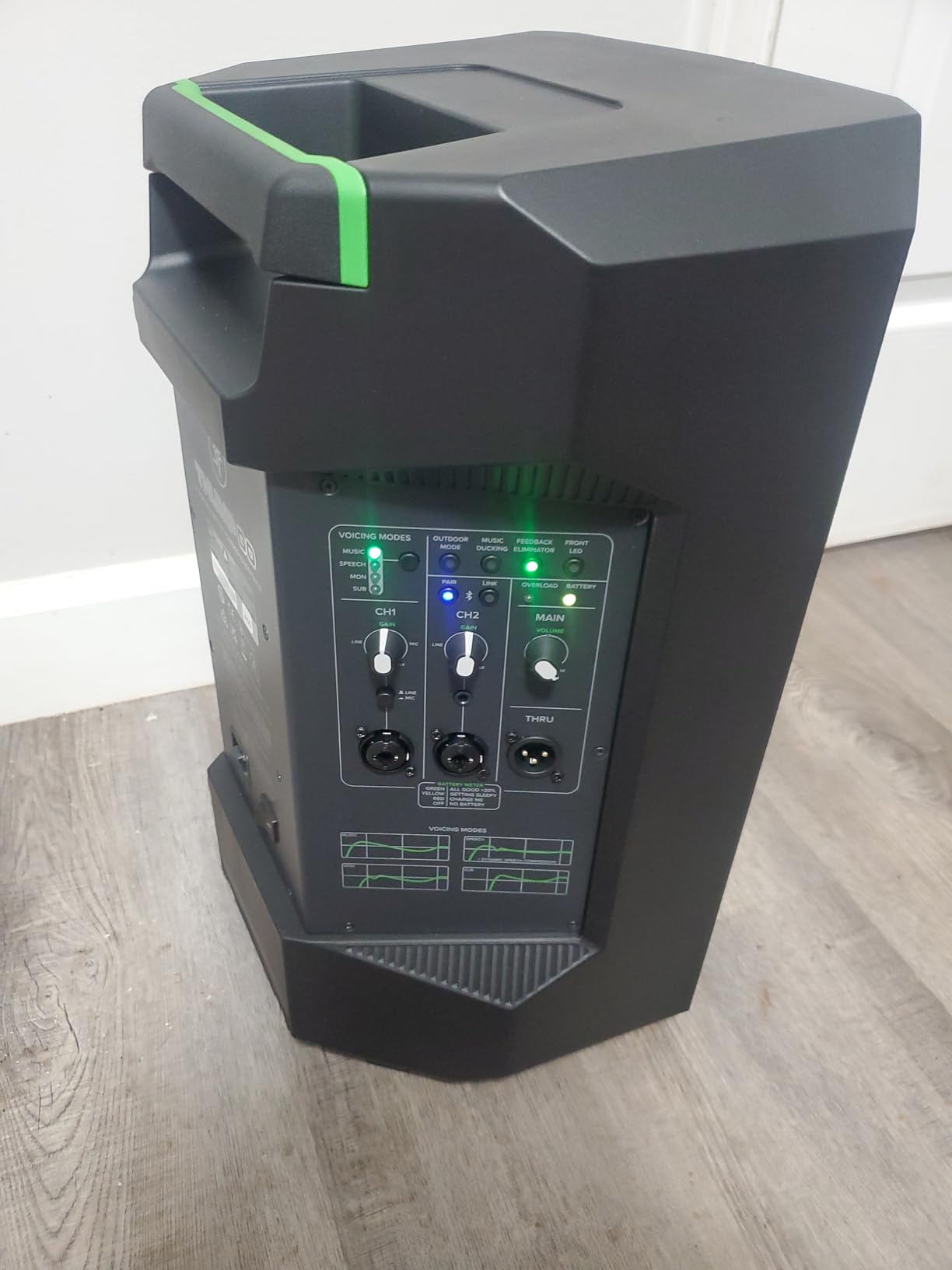
Owners report 7 to 8 hours of playback at high volume, so the rated runtime holds up when the volume is realistic. The listed uses cover busking, small club and band PA work, boardrooms, classrooms and personal practice, which tells you how wide the application range has become since this category launched.
Bluetooth linking between two cabinets works well for filling out a room without running cable between them. At 17.6 lbs this is one of the lightest boxes in the roundup, roughly 40 percent lighter than a comparable 30 lb powered 12, which is the entire point when you are carrying it up onto a plaza stage by yourself.
Who the Thump GO suits
Outdoor sets in a park or plaza, pop-up and street performance, wedding ceremony operators who need speech reinforcement away from a power source, and mobile DJs working venues without reliable outlets. It is also a genuinely usable rehearsal and practice monitor.
Who should skip the Thump GO
Skip it for a band with a loud drum kit, because 200W and an 8 inch driver will not carry that. The app only exposes high and low EQ bands, so anyone wanting midrange control has to reach for a mixer. Linking two cabinets also restricts inter-speaker Bluetooth to Bluetooth inputs rather than full signal routing.
6. Behringer B210d Review – the Best Powered PA Speaker for a First Setup
Behringer B210d Active 220-Watt 2-Way Pa Speaker System With 10″ Woofer And 1.35″ Compression Drivercompression Driver
10 inch woofer
220W
1.35 inch compression driver
XLR and TRS inputs
19.2 lbs
Pros
- Very light at 19.2 lbs for one-person loading
- Integrated pole mount on the cabinet
- Switch-mode power supply with low noise and fast transients
- Built-in HF and LF protection circuits
- Two-year warranty with parts support reported out to seven years
Cons
- Only about 200W so a mixer is needed for real control
- No Bluetooth streaming
- Limited low end for larger rooms
The Behringer B210d is the classic budget 10 inch and the default recommendation for a first PA hire. Owners bought it for rehearsals, small gigs and speech reinforcement and find it dependable, easy to carry and clear enough for the job, which is a short list that matters when you are new to live sound.
At 19.2 lbs with an integrated pole mount on the cabinet itself, one person can set it up in a few seconds. The 1.35 inch compression driver handles voices well, which is why it turns up in churches, classrooms and meeting rooms as often as on stages.
The internal switch-mode power supply gives low noise and good transient response at low power draw, and the built-in HF and LF protection circuits guard the drivers. Two-year warranty coverage with spare part availability reported out to seven years is a real advantage over cheaper imports, and it is why this model has stayed in circulation for years.
The consensus in the reviews is that this is a monitor-first, mixer-dependent tool rather than a standalone system, which is exactly why it is usually paired with a small digital mixer. Treat it as a speaker to grow around rather than a complete rig.
Who the B210d suits
Rehearsal rooms, small club support acts, churches on a tight budget, and anyone who wants a dependable monitor or a pair of mains for a cafe set. It is a sensible first purchase that you can grow out of without wasting money.
Who should skip the B210d
Skip it if you need to run vocals and instruments from the cabinet alone, because 220W of amplification with no onboard mixer means an external mixer is required for real control. There is no Bluetooth, and the low end runs out well before a live band does.
7. ALTO TX410 Review – the Best Entry Powered PA Speaker
ALTO TX410 350W 10″ Powered PA Speaker
10 inch LF driver
350W Class-D
1 inch titanium HF driver
90x60 horn
15 lbs
Pros
- Full 10 inch two-way system with a titanium compression driver
- Compact with ergonomic handles for fast setups
- Bluetooth True Wireless Stereo pairing
- Metal grille and sturdy enclosure
- 90x60 horn gives good coverage
Cons
- Channel 2 is Bluetooth so there is only one physical combo input
- No phantom power for condenser microphones
- Included power cable is only about 6 feet long
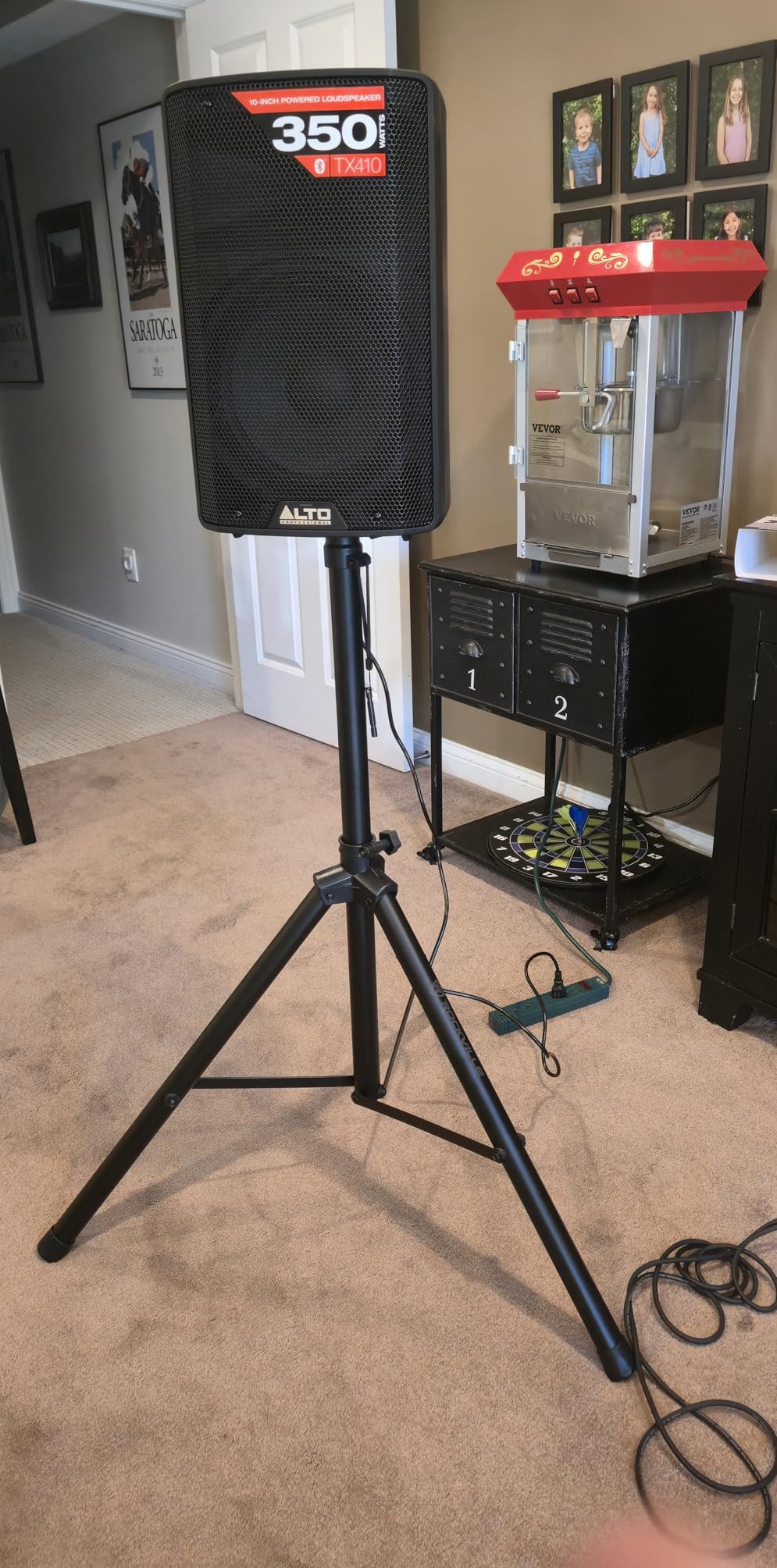
The ALTO TX410 is a compact 10 inch two-way system with a 1 inch titanium compression driver, and the specification sheet backs it up. You get 350W of ultra-efficient Class-D amplification split 250W to the low end and 100W to the high end, plus a 90 by 60 degree wide-dispersion horn.
Buyers are broadly delighted with output relative to price, using it for DJ monitoring, rehearsal, parties and small rooms, and some working musicians run multiple of them. The mounting options cover a standard 36 mm pole socket and wedge monitor position, so the same cabinet covers mains and monitor duty.
The documented complaint worth knowing before you order is a listing mismatch. The product is advertised with a two-channel mixer, but the second channel is Bluetooth, which means there is only one physical XLR and 1/4 inch combo input. If you planned to run a vocal mic and an acoustic guitar at the same time, you need a mixer.
There is also no phantom power, so a condenser microphone is out unless you bring an external supply. Bluetooth True Wireless Stereo pairing does let two cabinets run without cable for playback, which is genuinely useful for a pop-up stand.
Who the TX410 suits
Rehearsal spaces, small meeting rooms, pop-up stands, DJ booth monitoring and any budget setup where mains and monitor duty come from the same cabinet. It works well for spoken word and presentations where intelligibility is the goal.
Who should skip the TX410
Skip it if you are planning a two-source live performance from the cabinet alone, because one combo input rules out running a mic and an instrument simultaneously. The short included power cable also means you will likely be reaching for an extension lead in most rooms.
8. ALTO TS410 Review – the Best Value Powered PA Speaker
ALTO TS410 2000W 10″ Powered PA Speaker
10 inch LF driver
2000W
3 channel mixer
2 combo inputs
Bluetooth linking
Pros
- Genuine three-channel mixer with two physical combo inputs
- 2000W in a 10 inch cabinet with sub and monitor linking
- Bluetooth True Stereo Wireless linking for cable-free pairs
- ALTO app adds remote control of levels and EQ
- Mountable freestanding
- pole
- wedge or flown
Cons
- Mono audio output mode limits true stereo from one cabinet
- Heavier than the smaller ALTO TX model at about 32 lbs
- Deeper EQ work requires the phone app
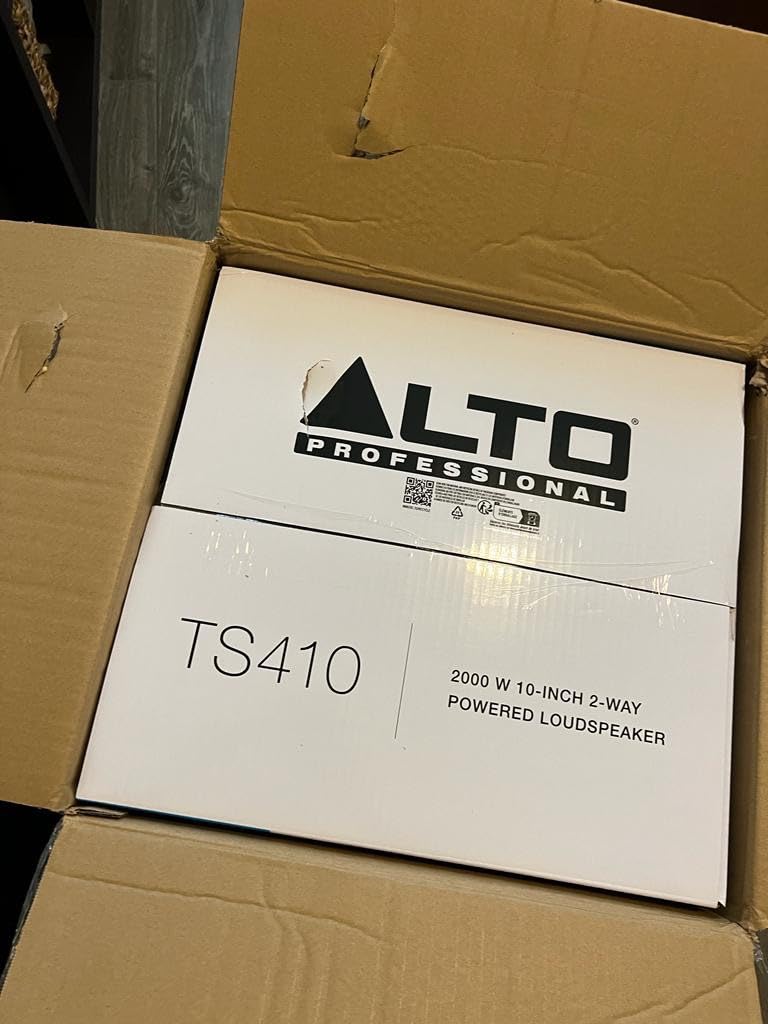
The ALTO TS410 draws one of the broadest user bases in this roundup at close to 900 reviews, spanning mobile DJs, band practice, community and sports events, ceremonies and spoken word. Reviewers consistently single out the real three-channel mixer with two physical combo inputs as the reason it outperforms cheaper single-input boxes.
That second physical input is the whole story. On the TX410 further up the list, channel two is Bluetooth. Here you get two XLR and 1/4 inch combo inputs with mic and line switches and independent level controls, so a singer and an acoustic guitarist can run straight into the cabinet without a mixer between them.
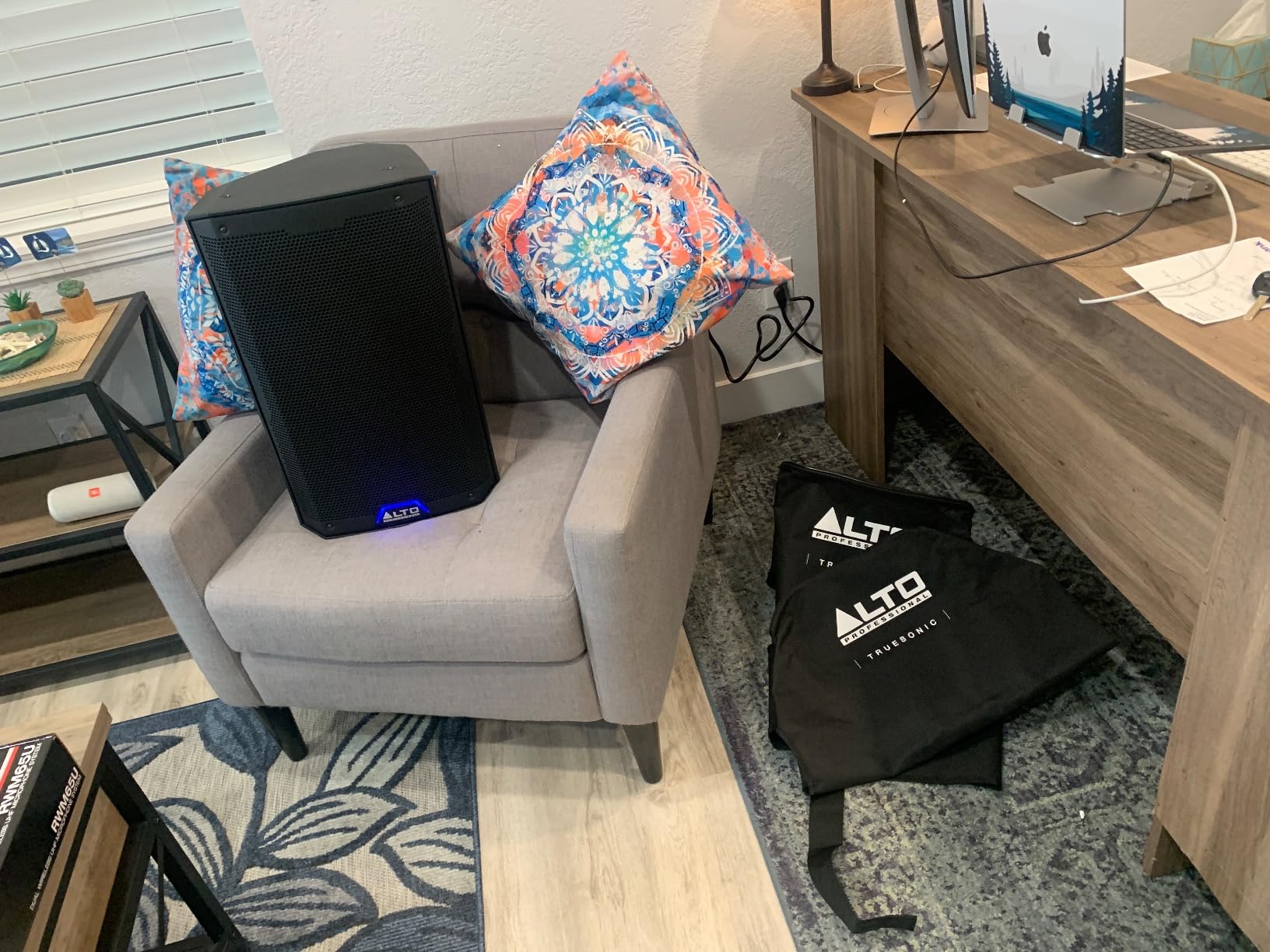
The ALTO app handles Bluetooth levels, speaker use modes, sub size selection and custom EQ for removing unwanted feedback, which puts real tonal shaping in your hands without a rack unit. Bluetooth True Stereo Wireless linking lets two TS410s run as a pair with no cable between them.
Mounting covers freestanding, a standard 36 mm pole socket, wedge monitor position and integral M10 suspension points for flown use. Critique in the reviews centers on weight at about 32 lbs, the mono output mode, and wanting more control than the app currently exposes.
Who the TS410 suits
Mobile DJs at weddings and parties, acoustic duos and singer-songwriters who want to skip the mixer, community and sports events, ceremonies and spoken word work. It is the strongest all-round value pick in this list for small venues because it does more of the mixing work itself.
Who should skip the TS410
Skip it if you need full stereo playback from a single cabinet, because the audio output mode is mono. It is heavier than its smaller ALTO sibling, so a solo performer moving alone should weigh that. Deeper EQ work also means reaching for a phone, which is awkward mid-set.
9. JBL EON715 Review – the Best 15 Inch Powered PA Speaker for Larger Rooms
JBL EON715 1300-watt 15-inch Powered PA Speaker
15 inch woofer
1300W
Waveguide horn
Bluetooth
46.5 lbs
Pros
- Clear articulate sound with bass you feel physically
- Enough volume for small to medium venues and large halls
- Waveguide technology keeps high frequencies even at high SPL
- Bluetooth reconnect is instant after first pairing
- Double side handles for stand mounting
Cons
- TWS pairing has a documented firmware bug that can cause no sound
- Pro Connect app is criticized by owners
- At 46.5 lbs it is a two-person load
- Mono output mode per cabinet
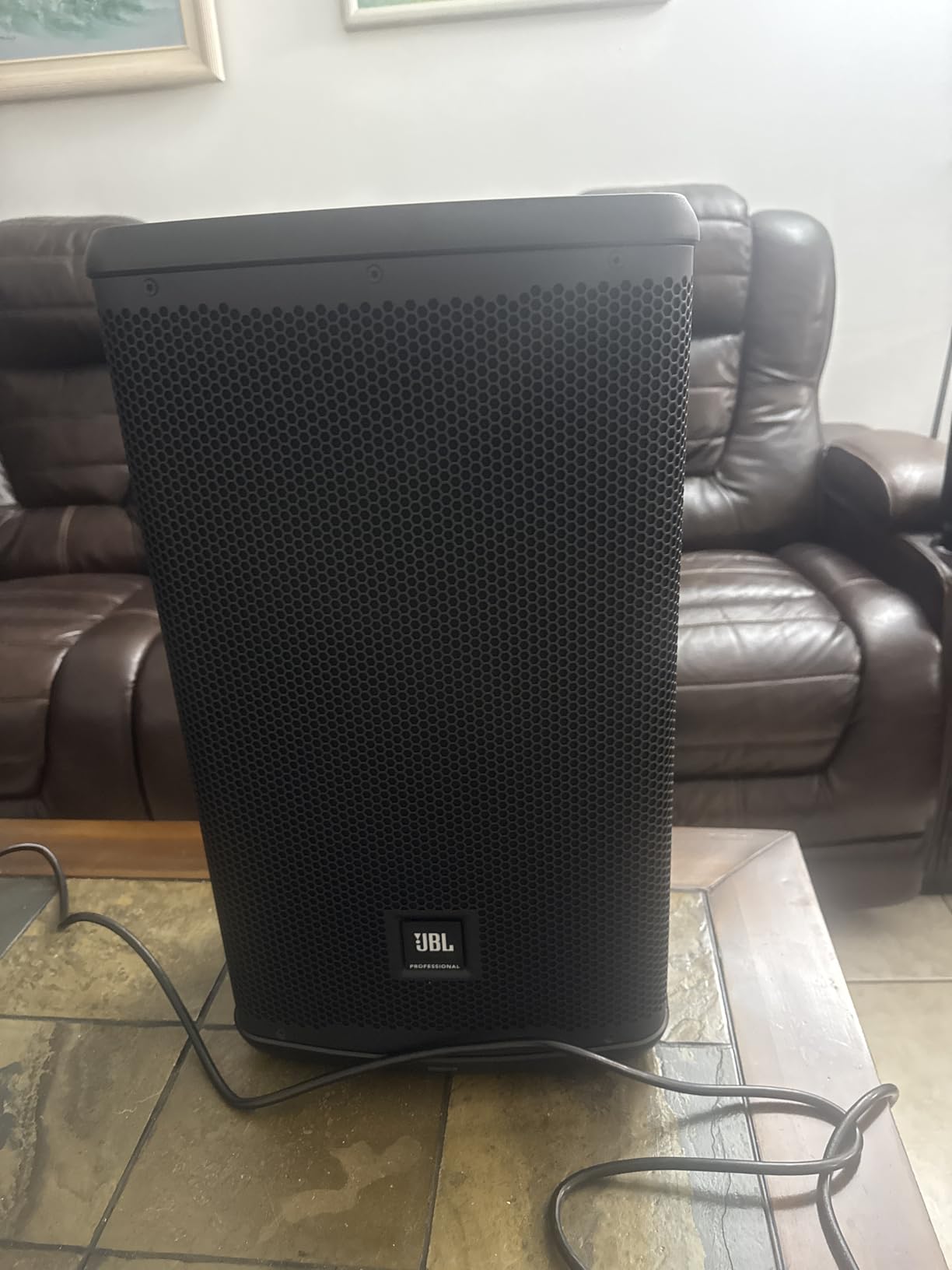
The JBL EON715 is the pick when a small venue turns out to need real low-mid output. Praise for sound quality is close to universal, with users citing crisp vocal intelligibility, chest-felt bass and headroom for larger rooms, plus easy pairing with a second cabinet.
The waveguide technology keeps the high frequencies even as you push SPL, so voices stay present in a room where the low end is dominating. At 1300 watts with a 15 inch driver it covers ground that a 12 inch cabinet of similar price cannot, particularly for a band with a loud source.
The clear negative theme here is software rather than acoustics. Multiple reviewers call out the Pro Connect app and a TWS stereo-pairing firmware bug that left one unit silent until Bluetooth was cycled on and off. If you plan to run a cable-free pair as your main system, test the pairing before the day.
Weight is the other recurring practical drawback at 46.5 lbs. The double side handles make stand mounting far easier than a single-handle cabinet of the same class, but this is firmly a two-person lift above waist height.
Who the EON715 suits
Bands in halls and larger rooms where a 12 inch pair would run out of headroom, community and sports events, and any venue where bass weight matters more than carry weight. It also works as a standalone cabinet for a hall where one box can cover the space.
Who should skip the EON715
Skip it for solo performers and anyone who carries their own gear up stairs, because 46.5 lbs is punishing on a load-in. The TWS pairing firmware bug makes it a poor first choice for a cable-free pair. A performer who wants to buy incrementally should consider a 12 inch platform instead, since matching a second 15 inch of this size is a big commitment.
10. Rockville BPA10 Review – the Best Powered PA Speaker for Classrooms and Shops
Rockville BPA10 10″ Professional Powered DJ PA Speaker with Bluetooth
10 inch woofer
400W peak 100W RMS
1 inch titanium HF driver
XLR TRS RCA aux
Pros
- 10 inch woofer paired with a 1 inch titanium compression driver
- Feature rich with Bluetooth USB SD FM radio and a remote
- XLR 1/4 RCA and 1/8 inch inputs plus an XLR output
- 18.5 lb ABS enclosure with handles
- Flyable and stand-mountable with a 45 degree waveguide horn
Cons
- Only about 100W RMS so real output is modest
- Thermal protection dislikes sustained heavy bass
- Remote has weak line-of-sight range of about 10 feet
- No battery so it needs mains power
The Rockville BPA10 is the entry point here, and the only speaker in this roundup that publishes its RMS figure alongside its peak number. It is rated at 400 watts peak and 100 watts RMS, which tells you exactly how much continuous amplification you are buying before you ever turn it on.
Owners judge it by what it costs rather than by class, calling it several times better than the nearest competing brand at the same money. Small rooms, classrooms, shops, house parties and rehearsal spaces are the sweet spot, with users noting one cabinet covering a large space when paired with a subwoofer.
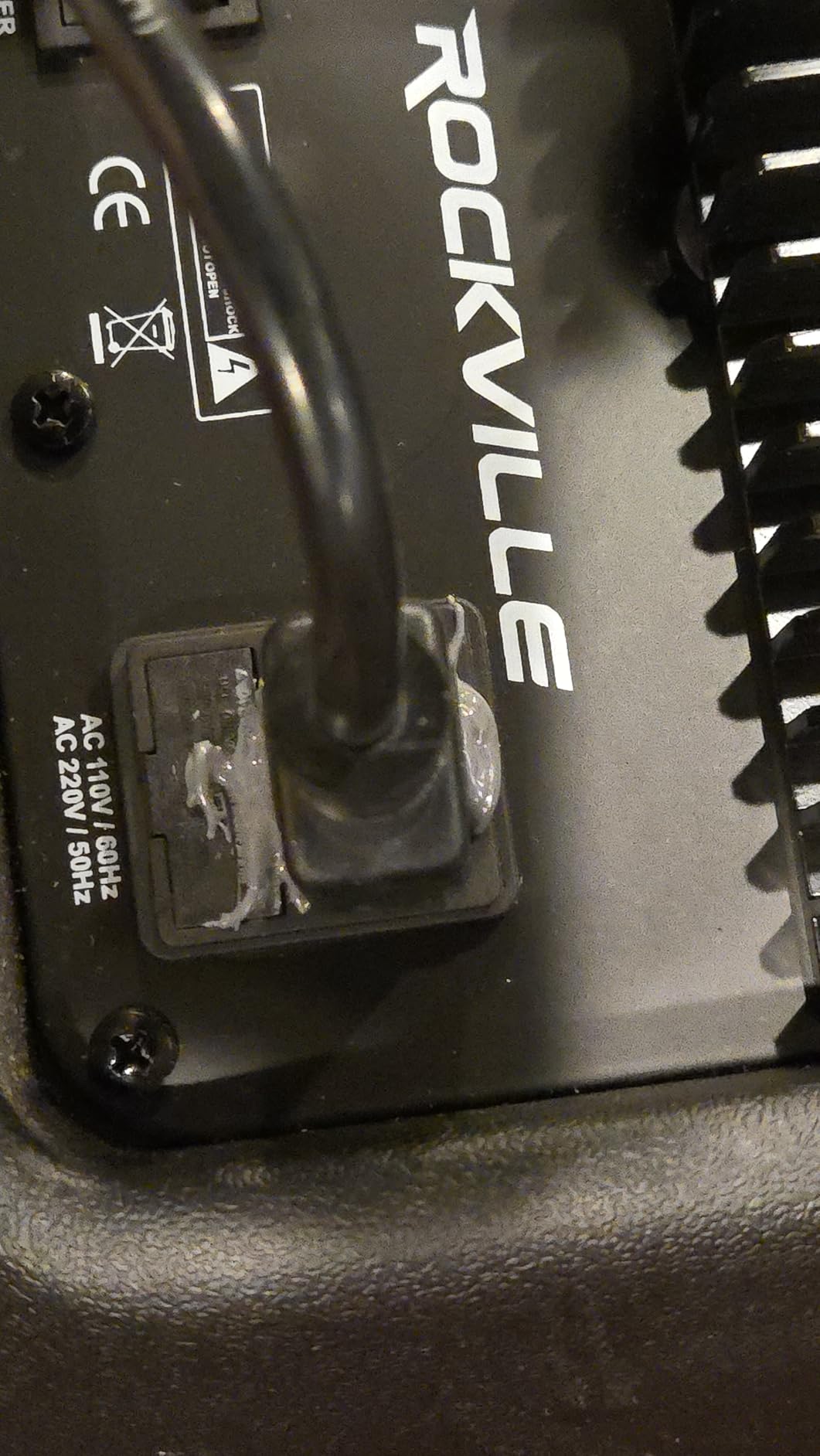
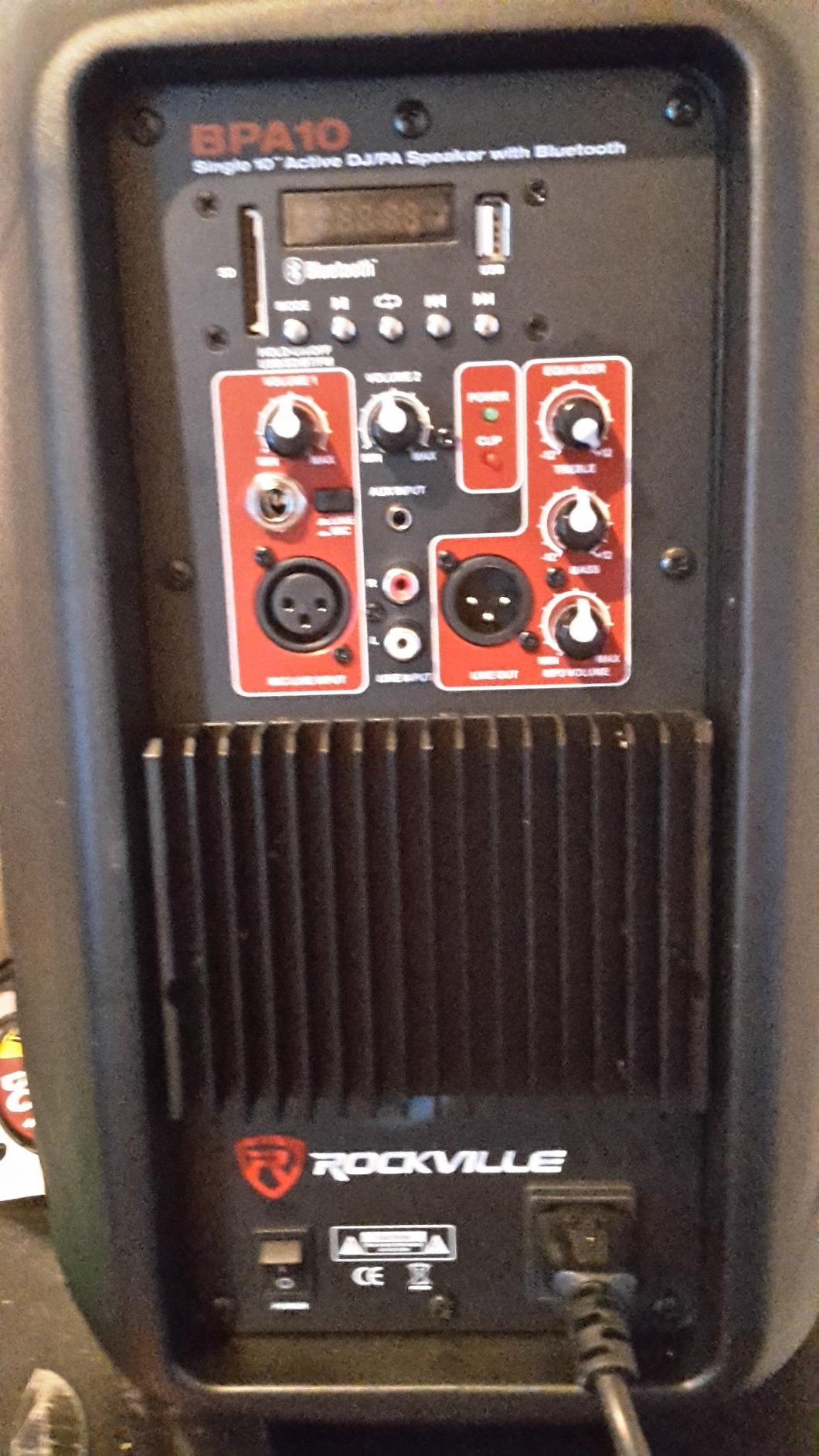
The feature set is unusually complete for the tier: Bluetooth streaming, USB and SD card playback, an FM radio with 10 presets and a wireless remote, plus XLR, 1/4 inch, RCA and 1/8 inch inputs and a two-band EQ. The XLR output connects a second speaker or a subwoofer directly.
At 18.5 lbs in a high-impact ABS enclosure with ergonomic handles, it survives hard handling, and the 45 degree horizontal waveguide horn gives wide dispersion for mounting on stands or hanging overhead. The honest limits are modest amplification, thermal protection that dislikes sustained bass, and a remote with roughly 10 feet of reliable line-of-sight range.
Who the BPA10 suits
Classrooms, small retail shops, community meeting rooms, house parties and rehearsal spaces where speech clarity is the priority and budget is the constraint. It is also a cheap way to add a second cabinet or a subwoofer later through the XLR output.
Who should skip the BPA10
Skip it for a live band, a DJ set in a busy room, or any situation where sustained heavy bass is the point. At 100W RMS it will hit its thermal protection and audibly buzz when pushed, and those are the exact limits owners describe. There is no battery, so an outdoor event needs mains power nearby.
Buying Guide: Matching a Powered PA Speaker to Your Room
How much power you actually need
Match continuous amplification to audience size, not peak marketing numbers. Roughly 500W continuous per cabinet covers a room up to 100 people, 1000W covers 100 to 200, and 1500W or more handles 200 to 300 with a full band. The Rockville BPA10 shows why the labels alone mislead: it is a 400W peak box that delivers 100W RMS, which is honest and entirely appropriate for speech in a classroom but nowhere near enough for a band.
The failure mode to recognize is clipping, not volume. When a 10 inch speaker runs out of headroom, the amplifier clips the signal and you hear harshness before anyone hears a lack of loudness. That is the moment to add a cabinet, not turn up the level. If budget is the deciding factor, our roundup of powered speakers under 500 dollars covers the entry tier in more detail.
One speaker or a pair
Buy a pair. Two cabinets cover the room evenly, give you twice the clean output before either one clips, and let you put one speaker per side so nobody sits in a dead zone. A single box is a temporary or budget solution, and a genuinely sensible one: several working performers buy the better single cabinet first and match it later, because matching cabinets over time beats compromising on both.
Whichever route you take, check for a mix output or link so the two cabinets can be daisy-chained. The JBL IRX108BT and the ALTO TS410 both handle this cleanly.
12 inch versus 15 inch drivers
For a small reflective room, a 12 inch driver is usually the better choice. It has more controlled dispersion, which matters more in a small room than raw bass extension, and it is far easier to carry and to place on a stand. A 15 inch buys you low-mid output and physical bass feel for a band, at the cost of weight, price, and the wide dispersion that muddies a small space.
On the question of whether 15s are better than 12s: no, not in this context. The felt punch of a 15 comes from excursion and low-frequency extension, not cone size alone, and in a room under about 150 people those benefits rarely arrive before clarity suffers.
Coverage pattern and dispersion in reflective rooms
Wide dispersion sounds good in an empty room and bad in a small one. When a horn spreads sound past the audience and onto the back wall and side walls, those reflections arrive out of phase with the direct sound and you get comb filtering, uneven coverage and a hollow, unintelligible result that buyers routinely blame on the speaker.
Aim for something around 90 degrees horizontal or narrower in a small room, and get the cabinets up on stands at roughly ear height, angled inward so they cross coverage at the back of the audience rather than washing the side walls. The ALTO TX410 states its horn coverage openly at 90 by 60 degrees, and that kind of published figure is worth more than a vague claim of wide dispersion.
Inputs, onboard mixers and phantom power
Count your physical inputs, not the advertised channel count. A two-channel mixer where one channel is Bluetooth leaves you with a single combo input, which is the single most common disappointment in this category. Check for phantom power if you plan to use condenser microphones, and check for an XLR mix out if you intend to daisy-chain or feed a subwoofer.
The speakers that genuinely reduce your gear count are the S1 Pro+ with three real channels, the TS410 with dual combo inputs, and the Thump GO with a two-channel digital mixer and XLR mix out. The rest expect a mixer in the chain, and that is a perfectly normal way to run a small venue.
Do you need a subwoofer
Not for speech, not for an acoustic duo, and not for a room under about 100 people. Add one when you are running a full band and the bass guitarist is missing from the mix, or when you are playing music where low end is part of the experience. Even then, check that the speaker has an XLR output designed to feed a sub before you plan around it.
The rest of the system
The speaker is the least expensive component of a working small venue PA. Budget for two stands, a small digital mixer, a vocal microphone, speaker cable, and a subwoofer if the room calls for one. The other half of the system is what the performers hear, and our picks for the best stage monitors for small venues cover that. If your space is a long, narrow sanctuary rather than a club room, column and line array designs change the coverage math entirely, which our line array speakers for small churches guide sets out.
Frequently Asked Questions
How much power do I need for a small venue PA?
About 500W continuous per cabinet for a room of up to 100 people, 1000W for 100 to 200, and 1500W or more for 200 to 300 with a full band. Ignore peak marketing numbers and compare continuous RMS output, because peak ratings run three to four times higher than what the amplifier actually delivers continuously.
Should I get 2 12s or 1 15?
Two 12 inch cabinets. A pair gives you even coverage, twice the clean headroom before clipping, and dispersion tight enough for a reflective small room. One 15 inch has more low-mid output for a band but is heavier, costs more, and spreads sound more widely, which muddies a room under about 150 people.
Are 15 speakers better than 12 for a small room?
No. For rooms under about 150 people, a 12 inch driver has more controlled dispersion and stays easier to place and carry. The extra bass a 15 inch produces arrives with more weight, higher cost and wider dispersion, so it only pays off when a full band needs the low-mid output.
What is the best small portable PA system?
The Bose S1 Pro+ is the most complete portable system, covering a 50 to 100 person room from one 14.4 lb cabinet with a battery, a three-channel mixer and auto EQ. For outdoor work on a tighter budget, the Mackie Thump GO adds a swappable battery and weighs 17.6 lbs.
Do I need one PA speaker or two?
Two, in almost every case. A pair covers the room evenly with no dead zones, doubles your clean output before either cabinet clips, and lets each side sit on its own stand angled inward. Buying one good cabinet now and matching it later is a reasonable approach if budget is tight.
Do powered PA speakers need a separate mixer?
Not always. The Bose S1 Pro+, ALTO TS410 and Mackie Thump GO have enough onboard channels for two sources. Everything else in this roundup, including the Behringer B210d and ALTO TX410, expects an external mixer for real level control and EQ.
Do I need a subwoofer for small venue gigs?
No for speech, an acoustic duo, or a room under 100 people. Add one when a full band is playing and the bass is missing from the mix. Check that your speaker has an XLR output meant for a subwoofer before you plan the connection.
Conclusion: Which Powered PA Speaker Should You Buy
The Bose S1 Pro+ takes the top spot among the best powered PA speakers for small venues because it does the most with the least: one 14.4 lb cabinet, a battery, three real channels and an orientation-aware EQ covers a room of about a hundred people with almost nothing else in the van. For bands on a budget, the Mackie Thump212 is the value pick that carries a full lineup without a subwoofer, and the ALTO TS410 is the best value if you want the most onboard mixer and app control.
Start with the room, count your physical inputs, and read the RMS figure rather than the peak figure. Pick a speaker platform you can grow into, stand it at ear height, angle it inward, and buy the second cabinet when the budget allows.