
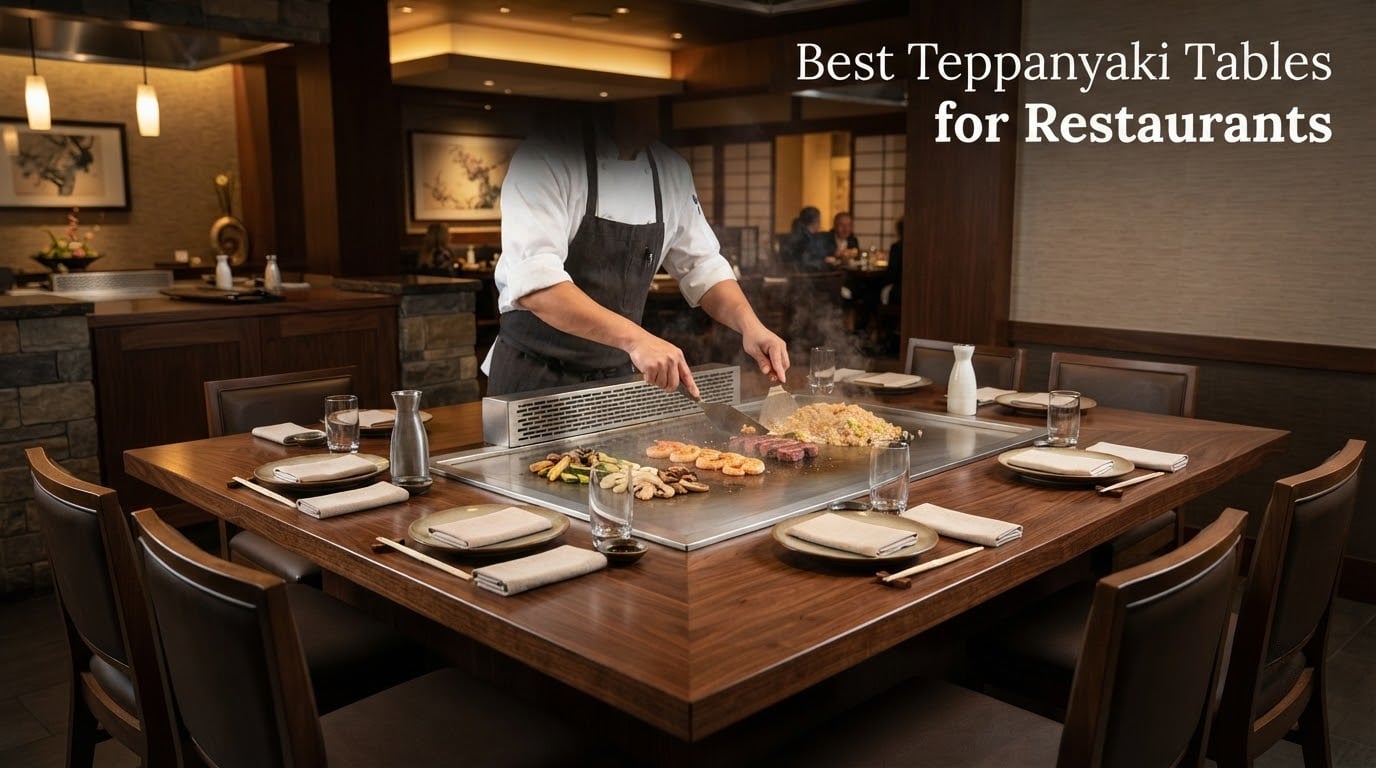
If you are searching for teppanyaki tables for restaurants, this guide is about equipment, not about where to eat. We cover the commercial flat-top plates, the gas and electric countertop griddles that operators mount behind or inside a dining table, and the infrastructure you have to plan before the plate ever gets delivered. No restaurant recommendations here, just the hardware and the specs that decide whether tableside service works at dinner rush.
We spent weeks reading spec sheets, certifications, warranty terms and owner feedback across twelve units, from entry electric plates that plug into a wall outlet to 150000 BTU gas machines that need a gas line and a reinforced base. The gap between the cheapest and the most expensive option is not a quality ladder. It is a different appliance for a different room, and choosing wrong means either a plate that cannot recover heat between guests or a dining room your inspector will not sign off on.
One thing surprised us: how much of the buying decision happens before the appliance. Seating capacity is a function of plate length, ventilation depends on fuel type and room volume, and the electrical or gas work has to be scheduled before the delivery date, not after. The equipment is the easy part. Our commercial refrigerator guide follows the same pattern, because any line of equipment eventually runs into the room it has to live in.
Table of Contents
What Is a Teppanyaki Table?
A teppanyaki table is a restaurant-grade flat-top steel griddle built into the dining table itself, so a chef cooks shrimp, steak and vegetables tableside in front of seated guests. It combines a commercial cooking appliance, the dining surface, and the seating arrangement around it into one piece of equipment. Heat is conducted upward through a thick polished steel plate, usually 3/4 inch, by gas burners or electric elements mounted below it. A grease trough runs under the front edge, splash guards contain the runoff, and the surface is scraped and wiped between parties. That is different from a hibachi grill, which is a small tabletop unit with slotted grates used at home or at a casual counter, and different again from a standard flat-top griddle, which is a kitchen appliance with no seating built around it. A teppanyaki table is a dining experience built on a cooking surface, and the room has to be designed around the show.
The terminology causes real confusion in both the dining world and the trade. A hibachi is a small charcoal or gas grill with grates. A teppanyaki is a flat steel plate, and teppan means iron pan while yaki means grilled or seared. When a commercial operator says they run hibachi tables, they almost always mean teppanyaki tables. Forum threads show diners and operators using the two words interchangeably, so the terms are worth sorting out before you start pricing equipment.
Top 3 Picks for Teppanyaki Tables in 2026
The three units below cover the widest range of real restaurant situations. One is the dependable electric workhorse, one is a certified gas plate with three independent zones, and one is the highest-rated electric unit in the group with the largest surface area on a plug-in footprint.

VEVOR 22 Inch Electric Griddle
- 1600W
- 21 x 12 inch plate
- 0.4 inch carbon steel
- Plugs into 110V

EGGKITPO 36 Inch 90000 BTU Gas
- CSA certified
- 3 x 30000 BTU burners
- 3/4 inch plate
- Removable grease trap

ROVSUN 30 Inch 3000W Griddle
- 28.5 x 16 inch surface
- Dual heating zones
- 122F to 572F
- Dual US plugs
Best Teppanyaki Tables for Restaurants in 2026
Here is the full lineup in one place. Every plate listed below is either gas or electric, and each one carries the output figure and surface size that determine how many covers it can realistically push during service.
| Product | Specifications | Action |
|---|---|---|
| VEVOR 22 Inch Commercial Electric Griddle |
|
Check Latest Price |
| EGGKITPO 36 Inch 90000 BTU Gas Griddle |
|
Check Latest Price |
| ROVSUN 30 Inch 3000W Electric Griddle |
|
Check Latest Price |
 ExGizmo 22 Inch 1600W Electric Griddle ExGizmo 22 Inch 1600W Electric Griddle |
|
Check Latest Price |
 TBVECHI 3000W Stainless Steel Teppanyaki Grill TBVECHI 3000W Stainless Steel Teppanyaki Grill |
|
Check Latest Price |
 Backychu 48 Inch 120000 BTU Gas Griddle Backychu 48 Inch 120000 BTU Gas Griddle |
|
Check Latest Price |
 Elite Kitchen Supply 36 Inch ETL Gas Griddle Elite Kitchen Supply 36 Inch ETL Gas Griddle |
|
Check Latest Price |
 Atosa CookRite ATMG-24 Griddle Atosa CookRite ATMG-24 Griddle |
|
Check Latest Price |
 Atosa ATMG-36 Stainless Griddle Atosa ATMG-36 Stainless Griddle |
|
Check Latest Price |
 Cook Rite ATMG-48 Natural Gas Griddle Cook Rite ATMG-48 Natural Gas Griddle |
|
Check Latest Price |
 Kratos 48 Inch Electric Griddle 29M-154 Kratos 48 Inch Electric Griddle 29M-154 |
|
Check Latest Price |
 CHUMART 60 Inch 150000 BTU Gas Griddle CHUMART 60 Inch 150000 BTU Gas Griddle |
|
Check Latest Price |
1. VEVOR 22 Inch Commercial Electric Griddle: The Most Proven Plate in the Group
VEVOR Commercial Electric Griddle, 22″, Countertop Flat Top Griddle
1600W
21 x 12 inch cooking area
0.4 inch plate
110V plug-in
Pros
- Largest review base here with 819 ratings
- No coating to flake off
- Removable oil box and enlarged drain
- Long heat retention after shutoff
Cons
- Warm-up runs roughly 15 to 30 minutes
- Heavy at 37 pounds
- Factory oil must be cleaned off first
Our starting point was the unit with the deepest owner history in the entire group. The VEVOR 22 inch has 819 ratings averaging 4.2 stars, and that volume matters in a category where most commercial plates have fewer than a dozen reviews. When you are committing a dining room to a piece of equipment, a large body of independent feedback is worth more than a shiny spec sheet.
The plate itself is bare carbon steel rather than coated, and that single decision explains most of the feedback. Owners treat it the way they would treat a cast iron flat top: burn it in, keep it lightly oiled, and it turns into a surface that releases food well and cleans up with a scraper. Coated electric plates are easier to start with, but a coating has a finite life under service abuse, and a bare plate does not.
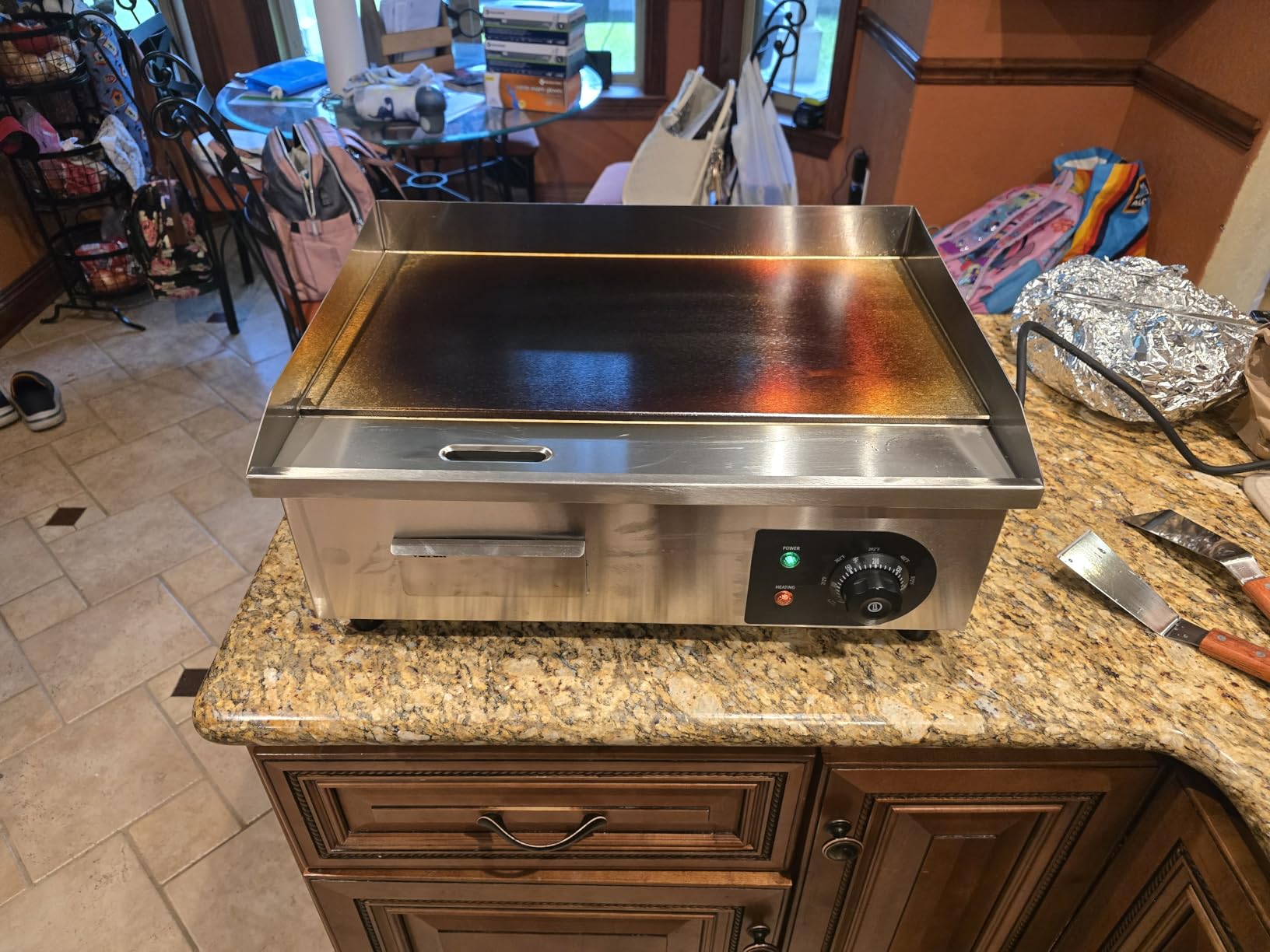
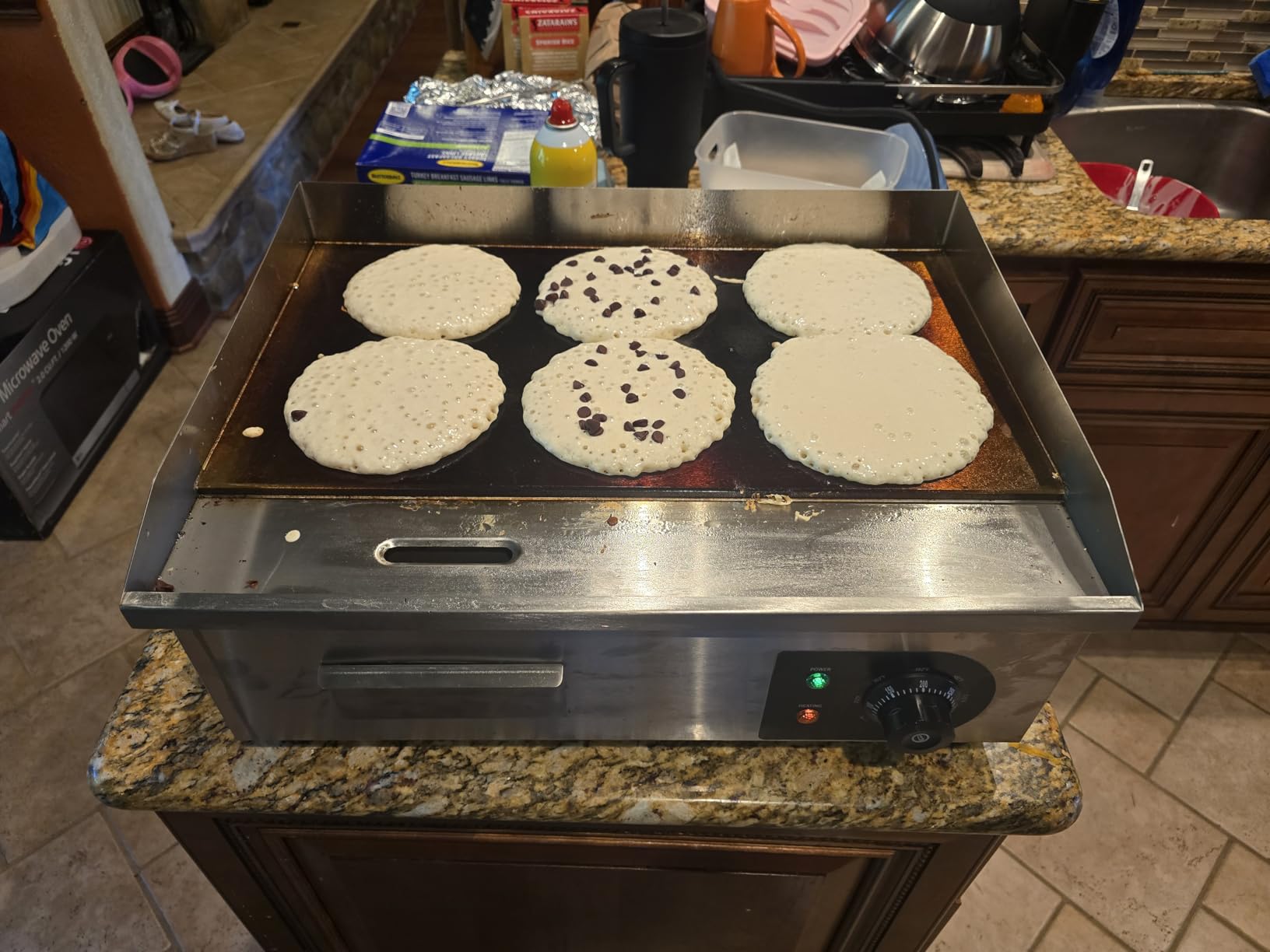
The cooking area measures 21 by 12 inches on a 0.4 inch plate, and it holds heat for a long time once it comes up to temperature. That retention is a genuine advantage in tableside service, where the chef is cooking one protein at a time rather than running a full line of tickets.
Here is the trade-off, and it is not small. Warm-up runs somewhere between 15 and 30 minutes for that thick plate, and recovery is equally unhurried. If your service model depends on flashing a cold batch back to sear temperature in seconds, this plate will frustrate you. Operators running a fixed menu with predictable cooking times tend to be delighted by it instead.
Who This Plate Works For
This is the right pick for a small dining room with a limited menu where a chef cooks to order in front of a handful of guests. It plugs into a standard 110V outlet, so there is no electrician, no gas line and no hood permit in the path. That simplicity is why it converts more concepts than anything else in this list.
It also suits a sushi bar doing hot food service, a hotel breakfast room, or a commissary that plates proteins to order. If you need a surface to sear, finish, and hold, the plate does that well once it is hot.
Where It Falls Short
Do not put it in front of a room that expects recovery speed. Fifteen to thirty minutes to heat and slow recovery between batches make it a poor fit for high-volume dinner service where covers per hour is the only number that matters.
At 37 pounds it needs a deliberate location, and the one-star share runs higher than peers. Some buyers report units that stopped powering on entirely, so the warranty terms matter more here than on a heavier, more serviceable gas plate.
2. EGGKITPO 36 Inch 90000 BTU Gas Griddle: Three Independent Zones on One Plate
EGGKITPO 36 Inch CSA Certified Commercial Propane/Natural Gas Griddle Manual Controls 90,000 BTU Countertop Flat Top Grill Hot Plate with Independeent Knob 3 Burners Teppanyaki Grill for Restaurant
90000 BTU
35.86 x 20.5 inch surface
3/4 inch plate
CSA certified
Pros
- CSA certified with on-site service
- Three independently controlled burners
- Thick 3/4 inch plate resists warping
- Three LPG conversion kits included
Cons
- Ten to 15 minutes to reach temperature
- Cool strip about two inches at the front edge
- Very heavy at 244 pounds
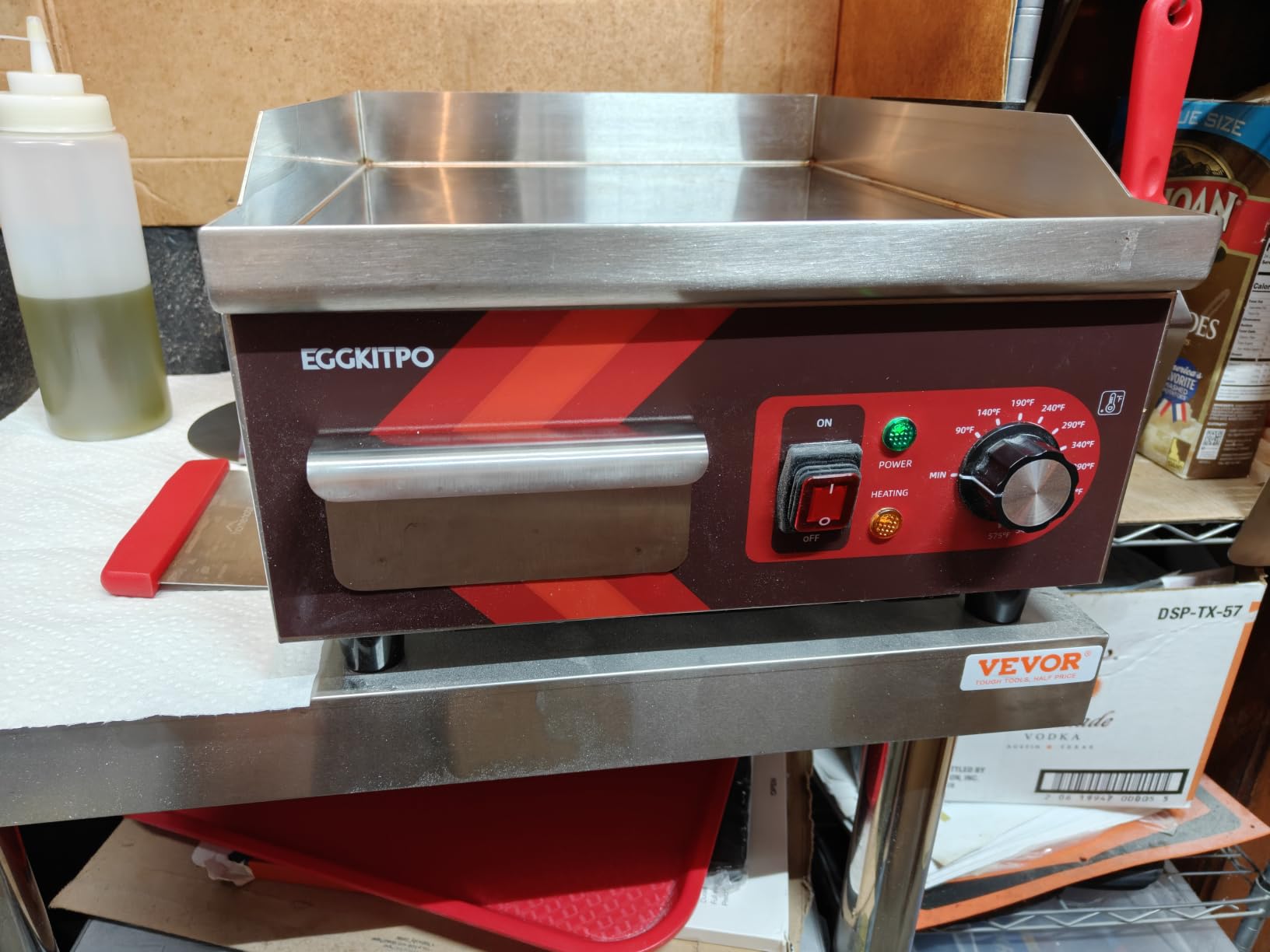
A single plate with three separately controlled burners changes how a tableside menu can be structured. The EGGKITPO 36 inch splits its 90000 BTU into three 30000 BTU burners, and each one has its own knob, so you can hold a finished item at a low setting while searing something else hot. On a single-burner plate you are always choosing between the two.
The plate is 3/4 inch of polished steel across a 35.86 by 20.5 inch cooking surface. That gauge is the commercial standard, and it is the number that decides how well the plate resists warping over years of service. Owners consistently describe straight, easy-to-scrape edges and a surface that releases food well after seasoning.
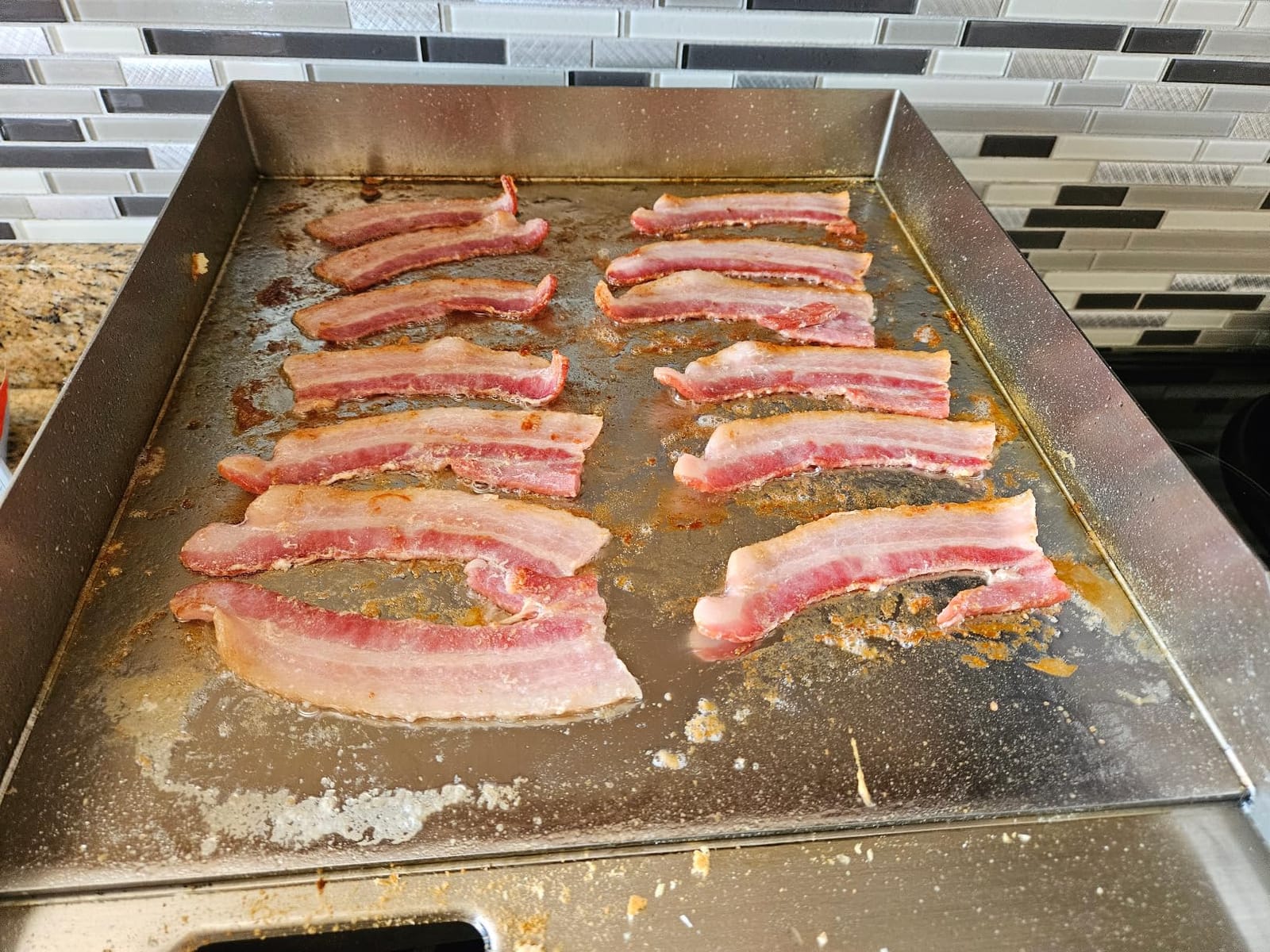
The certification matters more than most buyers expect. This plate is CSA certified for commercial kitchens and carries a 12-month warranty with free on-site service, which is a meaningfully better answer to a burner failure in month fourteen than a parts-only warranty. Customer support responsiveness, including replacing a grease tray, comes up repeatedly in owner feedback.
Three LPG conversion kits ship in the box, so the same unit works on natural gas or propane once your installer sets the regulator correctly. Include that work in your budget, because a conversion kit is not the same thing as a commercial gas connection.
Who This Plate Works For
This is the plate for a room cooking a broad menu tableside, where a steak, a shrimp and a vegetable need different heat at the same moment. Zones also help during a long service, because you can park a low zone for holding finished plates while the hot zone stays at sear temperature.
Operators with a gas line already in the room and a hood sized for the burners will get the most out of it. The certification and on-site service term also suit operators who cannot afford a week of downtime for a part.
Where It Falls Short
It takes ten to 15 minutes to reach cooking temperature, and a cooler strip forms roughly two inches deep along the front edge. Plan your mise en place around that edge, and do not expect thermostat-level precision from the manual knobs.
At 244 pounds, moving it is a two-person job with a hand truck. The temperature setting is also described as not very precise, which is workable for a seasoned chef with a surface thermometer and frustrating for someone new to the station.
3. ROVSUN 30 Inch 3000W Electric Griddle: The Most Surface You Can Plug In
ROVSUN 30″ Electric Countertop Flat Top Griddle, 3000W Electric Griddle, Teppanyaki Grill Stainless Steel with Adjustable Temperature Control 122°F-572°F for Commercial Home Restaurant, Plug
3000W
28.5 x 16 inch surface
Dual zones
122F to 572F
Pros
- Largest electric surface here at 28.5 x 16 inches
- Dual independent heating zones
- Plug-and-play with no installation
- Removable drip tray cleans up fast
Cons
- Both plugs need separate circuits or the breaker trips
- Edge heating is weak
- Around 100 pounds and awkward to move
The ROVSUN 30 inch carries a 4.3 star average across 44 ratings, and it does something no other electric unit here manages: it puts a 28.5 by 16 inch surface on a countertop without a hardwired connection. That surface holds more than twenty patties, which is why it keeps appearing in small high-volume kitchens.
Two independent heating zones are the feature operators notice first. One zone sears while the other holds finished food at a lower temperature, which is the same flexibility a three-burner gas plate provides, achieved with electricity instead of a gas line.
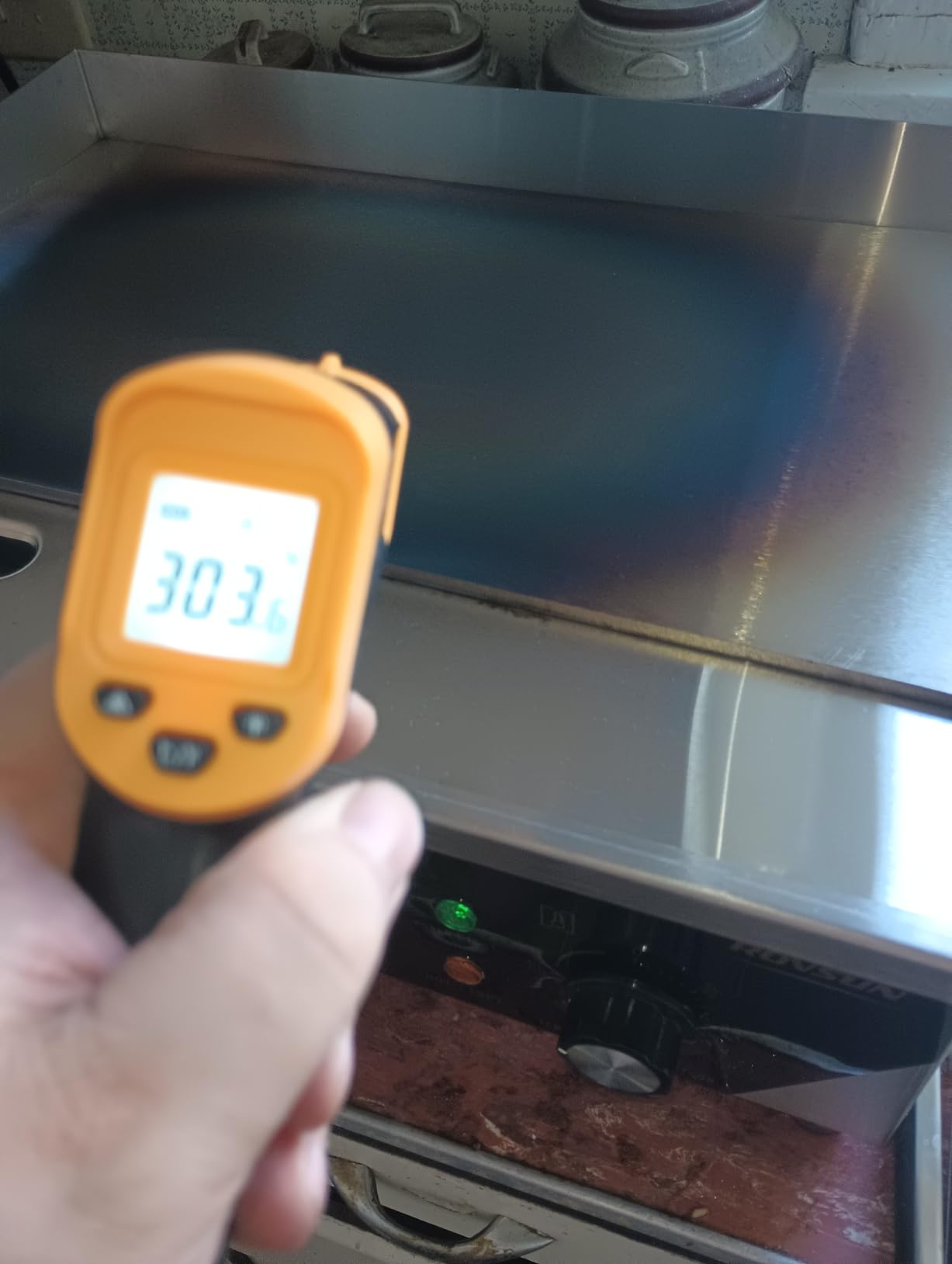
Temperature control runs from 122F to 572F across six settings, with a removable drip tray and three-sided splash guards around a non-stick surface. The dual US plug means no electrician and no permit, which matters enormously if you are opening a small room on a tight timeline.
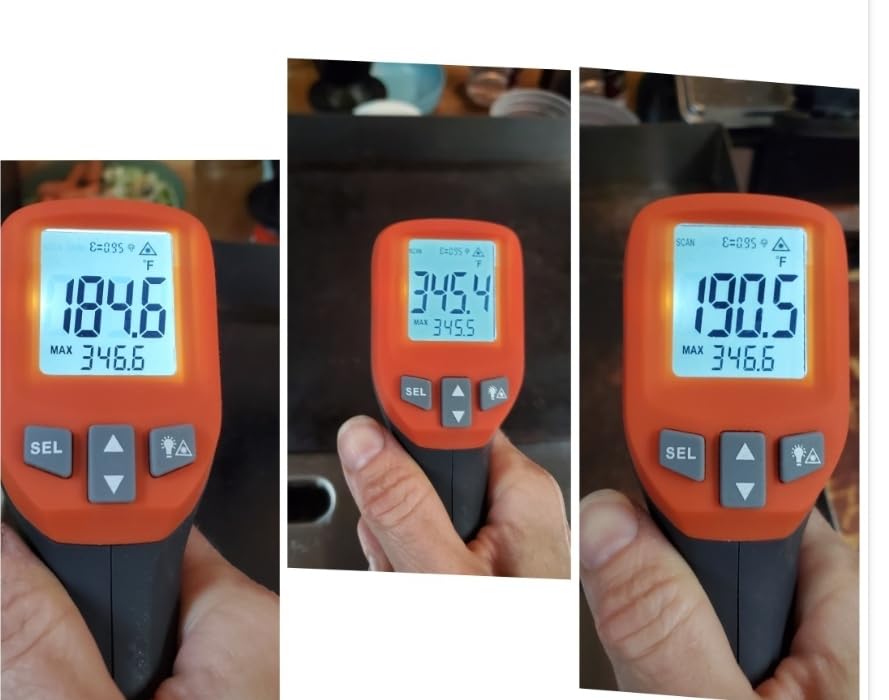
That said, the amperage arrangement creates a real constraint. Both plugs need to sit on separate circuits or the breaker trips, and a reviewer who measured the plate found 180F on the left edge and 190F on the right against 340F in the center. The outer thirds of the plate do very little.
Who This Plate Works For
This suits a small room, a sushi bar, a hotel breakfast counter, or a food hall stall that wants real capacity without a gas connection. If the menu leans toward burgers, eggs, pancakes, and grilled sandwiches rather than hard sears, the surface size alone will carry a short service.
It is also the easiest unit here to relocate, so an operator testing a teppanyaki concept in a smaller room can move the whole setup instead of committing to a fixed location on day one.
Where It Falls Short
Weak edge heating is the deal breaker for anyone promising a hard sear on a ribeye. The center runs hot while the perimeter lags, so a chef cooking protein to order needs to keep plates near the middle.
Some buyers report uneven cooking and surface wear within a few months, and one detailed two-star review documented a heating element degrading and a partial refund from the manufacturer. Treat the plug-in advantage as a tradeoff, not a free upgrade.
4. ExGizmo 22 Inch 1600W Electric Griddle: Fast Heat and a Coated Plate
ExGizmo 22″ Commercial Electric Griddle,Electric Countertop Flat Top Griddle,110V 1600W Electric Flat Top Grill,Non-Stick Restaurant Teppanyaki Stainless Steel Grill,Adjustable Temperature Control
1600W
21.7 x 14.2 inch surface
Cast iron non-stick
110V
Pros
- Plugs into a standard wall outlet
- Heats to 250F in about 14 minutes
- Large surface for its class
- Oil box and drain hole clean up fast
Cons
- Cooler corners create hot and cold spots
- Low rear splash guard
- Coating needs regular oiling
The ExGizmo 22 inch is the fast-heating option among the electric plates. Owners report roughly 14 minutes to reach 250F and about 10 more minutes from there to 500F, which beats the slower bare-carbon plates in this roundup by a wide margin. If you are doing short services and cannot preheat for half an hour, that difference is the whole product.
It carries 242 ratings at 4.2 stars, a solid sample for a plate at this level, and several long-term owners report running it daily in small restaurant kitchens. The 21.7 by 14.2 inch surface sits slightly larger than the VEVOR’s despite a similar overall footprint.
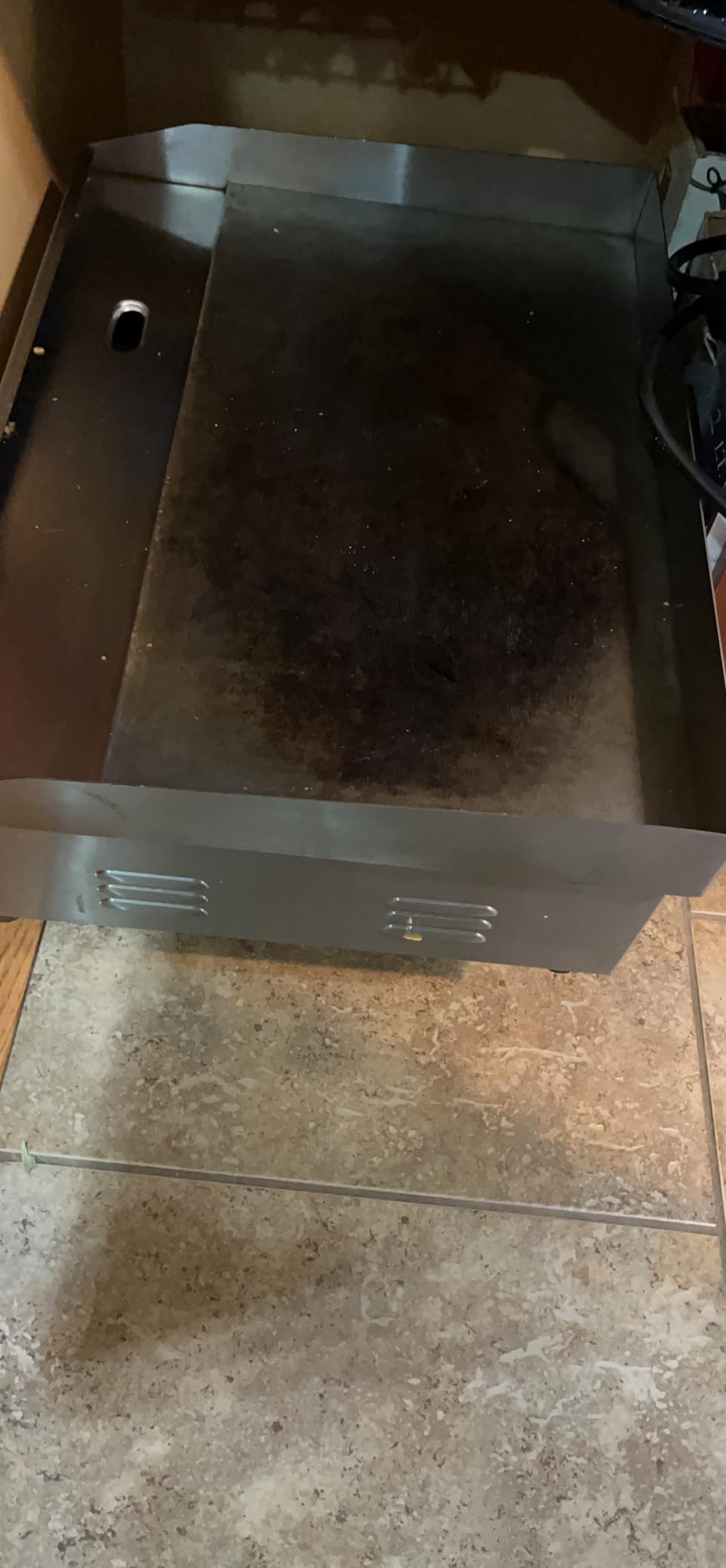
Construction is a stainless steel body with a cast iron plate and a non-stick coating, controlled by a 360-degree rotating knob across six settings from 122F to 572F. A removable oil storage box, an oil drainage hole, and a raised oil baffle make closing tasks quick.
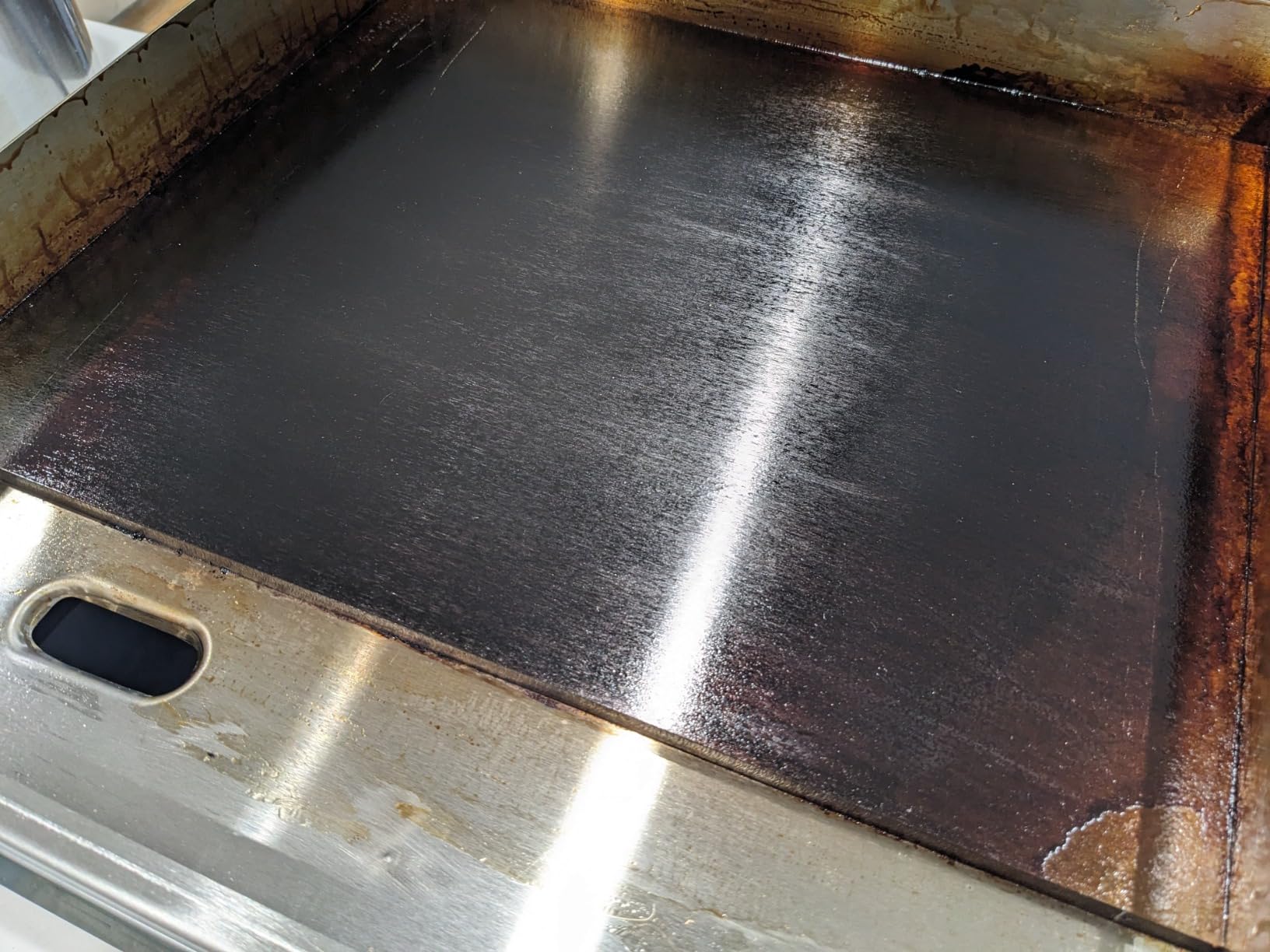
The coating is the trade-off. It is not truly non-stick unless it is oiled or seasoned regularly, and owners consistently say so. A coated plate forgives a new operator; a bare steel plate rewards a careful one.
Who This Plate Works For
Think prep kitchen, sushi bar hot station, or a small room where the chef cooks a short menu and needs the plate hot quickly. It plugs into a standard 110V outlet, and the 365-day warranty is stated plainly on the listing.
It also works as a backup plate behind the dining room, so a busy main unit is being scraped and serviced while the kitchen keeps producing.
Where It Falls Short
Cooler corners and edges create hot and cold spots across the surface, which is the most common complaint in owner feedback. Use a surface thermometer until you have learned the map of the plate.
The rear splash guard is low, and several owners add their own extension to stop grease from reaching the wall behind the unit. That matters more in a dining room than in a stainless steel line.
5. TBVECHI 3000W Stainless Steel Teppanyaki Grill: Power Without a Gas Line
TBVECHI Commercial Electric Griddle, 3000w Stainless Steel Teppanyaki Grill Indoor Outdoor, Countertop Flat Top BBQ Plate with Thermostatic Control
3000W
548 x 350 mm surface
50C to 300C thermostat
Stainless steel
Pros
- Doubles the wattage of typical household flat tops
- Large surface suits stir-fry style cooking
- Simple manual operation
- Anti-slip feet stay stable in service
Cons
- Thermostat control only with no zone control
- Heavy at 40.3 pounds
- Bare surface needs seasoning and oiling
The TBVECHI is the simplest way to get serious output out of a standard outlet. At 3000W it roughly doubles the typical 1600W household flat top, and the 548 by 350 mm cooking surface is large enough for stir-fry style work and tableside proteins without a gas line in the room.
Owners value it for canteens, cafes, and mobile events where the priority is volume per dollar of electrical work. The thermostat runs from 50C to 300C, and a large grease drip tray handles the mess that comes with high-volume flat-top cooking.
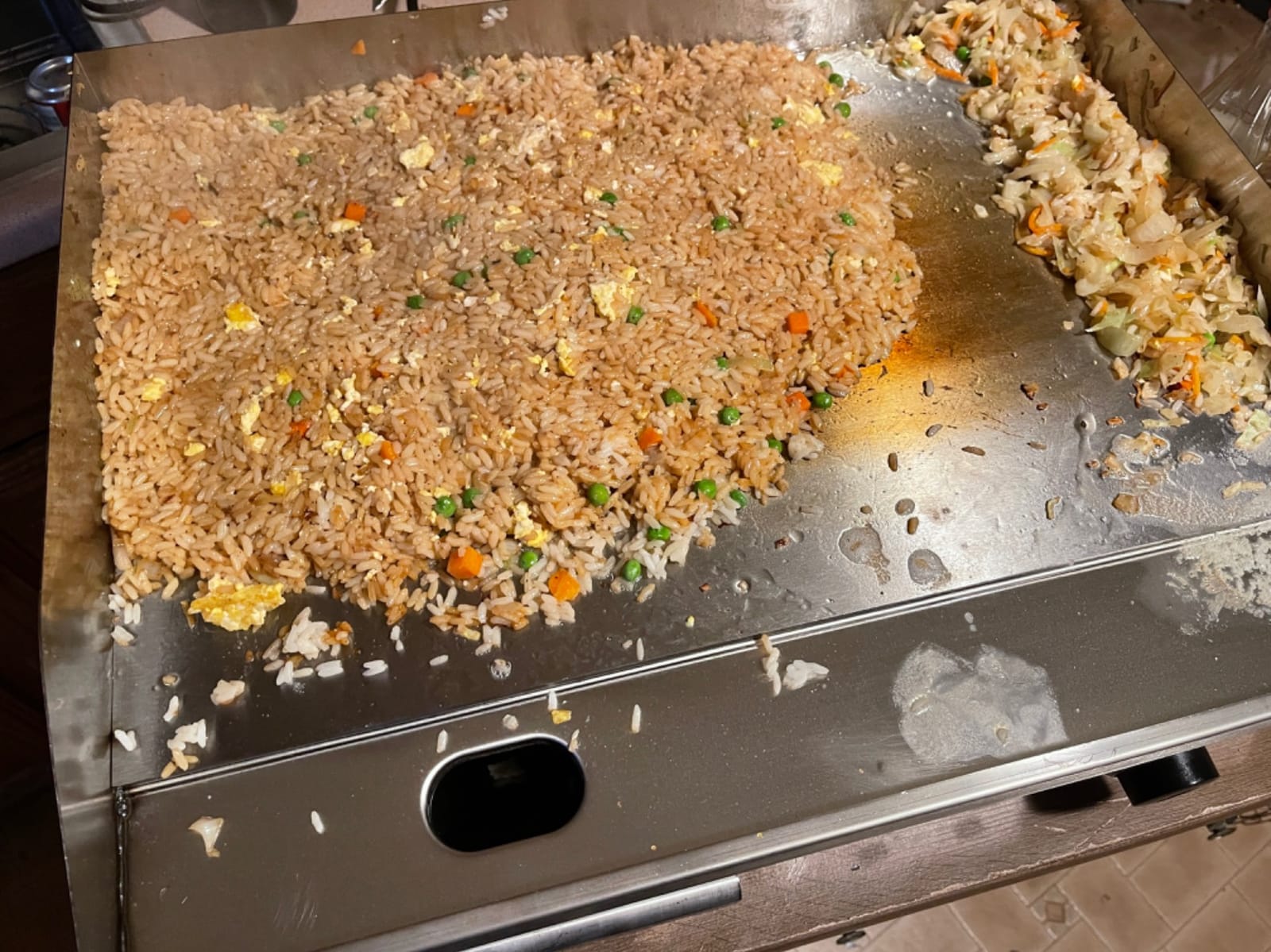
At 40.3 pounds it is heavier than the other electric plates in this group, and the anti-slip feet are housed inside the grease drip tray, which keeps it steady during service. Operation is manual with no learning curve for a new cook.
Feedback also carries a durability note worth taking seriously. The one-star share runs around 12 percent, with complaints about heat consistency and longevity on a bare stainless plate.
Who This Plate Works For
This is a sensible pick for a sushi bar, a small banquette counter, a prep line, or a catering operation without a gas supply. If you can only add a standard circuit, 3000W of output is the ceiling, and this unit reaches it.
Operators cooking largely vegetable and rice dishes alongside a short list of proteins will find the surface forgiving. It handles volume better than it handles precision.
Where It Falls Short
There is no zone control, only a thermostat, so holding a finished dish beside a hot sear is not possible on this plate. Multi-item menus will slow down.
The bare stainless surface needs seasoning and constant oiling to stay release-friendly, and the 40-pound weight makes it a two-person lift. Plan the location before the delivery arrives.
6. Backychu 48 Inch 120000 BTU Gas Griddle: The Widest Certified Gas Surface at This Level
Backychu Commercial Gas Griddle – 48″ Countertop Griddle. 120,000 BTU Flat Top Griddle, Natural Gas (NG) / Propane, CSA Certified Stainless Steel Teppanyaki Grill for Restaurants
120000 BTU
48 x 20.7 inch surface
Zoned controls
CSA certified
Pros
- CSA certified with a built-in pressure regulator
- Largest cooking area for the output
- Zoned control for multiple dishes
- 430 stainless resists staining
- Removable high-capacity grease tray
Cons
- Only six ratings exist so far
- 284 pounds needs planned counter space
- Restricted to commercial power and gas supply
The Backychu 48 inch pairs 120000 BTU with a 48 by 20.7 inch cooking surface, which makes it the widest gas plate in this roundup that still fits a normal countertop footprint. For a banquet room, a hotel dining space, or a room cooking tableside for eight or more at once, the width is the argument.
It ships configured for natural gas with a propane conversion kit and a built-in pressure regulator, so gas flow stays steady without a separate regulator stack. Zoned controls let different dishes hold different temperatures on the same plate during a long service.
Be careful with the six ratings here. All six are five stars, which tells you the early owners were happy but tells you almost nothing about year-three reliability. On a plate this heavy and this new, we would weight the build and the certification far above the star average.
Two practical constraints stand out. At 284 pounds it demands planned counter space, moving equipment, and a floor rated for the load. The 430 stainless body is also a commercial-only configuration rather than a residential appliance, so the electrical and gas side of the room has to be ready before it arrives.
Who This Plate Works For
Choose it when the room is wide and the service is long. A banquet hall, a hotel restaurant with tableside steak service, or a large hibachi-style room all benefit from a surface that wide because a chef can work across it without crossing paths with a guest.
The built-in regulator and the conversion kit also suit operators running more than one fuel type across different rooms, since the same platform covers both.
Where It Falls Short
The honest weakness is evidence. Six reviews cannot tell you how the burners hold up in a sustained nightly service, so plan a service agreement and identify a parts source before you commit.
The weight and the commercial power requirement also make this a poor fit for a small room or an improvised location. Fix the footprint first, then order.
7. Elite Kitchen Supply 36 Inch ETL Gas Griddle: Built for a Room That Has to Pass Inspection
Commercial Countertop Griddle, ETL 36″ Flat Top Grill Natural Gas (NG) / Propane, 3 Burners – 90000 BTU
90000 BTU
35.86 x 20.5 inch surface
ETL listed and NSF compliant
Pros
- ETL listed and NSF compliant
- One-year all-parts warranty plus labor
- Standby pilots on every burner
- Cool-to-the-touch front edge
- Adjustable legs level the unit
Cons
- Only thirteen ratings exist
- Natural gas hose and regulator not included
- Warranty excludes built-in installations
When a health department asks what certification your cooking equipment carries, this is the answer you want to hear. The Elite Kitchen Supply 36 inch is ETL listed for safety and sanitation and NSF compliant, which is the combination many jurisdictions ask for before a plate can be installed in a commercial kitchen.
Underneath the certifications, it is a well-built machine. Three 30000 BTU stainless burners with standby pilots total 90000 BTU across a 3/4 inch polished plate, and independent manual controls every 12 inches give you three working zones on a 36 inch surface.
Two details show that this was engineered for a working kitchen rather than a showroom. The full-length seamless drip pan removes for cleaning, and the front stainless edge runs cool to the touch, which protects guests leaning on the counter during a tableside show.
Buyers report fast cooking during busy service, and the thirteen ratings are all five stars. The specific piece of advice that recurs is to buy a commercial-grade gas hose and regulator separately, because the unit ships with a conversion kit but not the connection hardware.
Who This Plate Works For
This is the safest choice for a dining room opening in a jurisdiction with strict equipment rules, or for an operator who intends to keep the plate for a decade. The one-year all-parts warranty plus a month of labor is the strongest coverage terms described anywhere in this roundup.
Standby pilots also matter in a dining room with gaps in service. A table that goes quiet for twenty minutes between seatings does not need a cold burner waiting for a relight.
Where It Falls Short
The warranty explicitly excludes built-in installations, food truck, trailer, boat, and residential use. If your plan is a permanent built-in table, this coverage does not travel with the unit.
You will need to source the gas hose and regulator yourself, and the thirteen-review sample is still thin. Budget for a technician visit during commissioning.
8. Atosa CookRite ATMG-24: The Best Grounded Pick for Mobile and Small Rooms
Atosa CookRite ATMG-24 24″ Countertop Griddle | Flat Top Grill Hot Plate with Standby Pilots and Grease Drawer for Food Truck | Manual Controlled, Stainless Steel, 1 Burner 60,000 BTU, Liquid Propane
60000 BTU single burner
24 inch footprint
Standby pilots
Grease drawer
Pros
- Highest average rating here at 4.8 stars
- Adjustable legs set working height and level the unit
- Standby pilots keep it ready between orders
- Stainless finish resists corrosion
Cons
- Standby pilots consume gas continuously
- Smallest cooking footprint at 24 inches
- Single burner means no separate zones
The Atosa CookRite ATMG-24 is the only unit in this roundup with a 4.8 star average, and no ratings below four stars. That is a small sample of 14, but it is also a clean one, and the design is clearly aimed at operators who move their equipment rather than bolt it down.
Adjustable steel legs do two jobs here. They set the working height to match a counter or a service line, and they level the unit on an uneven surface, which is the kind of detail that matters in a trailer, a pop-up, or a food truck where the floor is never quite level.
A single 60000 BTU burner sits under a 24 inch plate, and manual controls with standby pilots mean the burner is lit and waiting between orders. A grease drawer beneath the plate catches rendered fat and pulls straight out for draining.
The real operational caveat is the standby pilot itself. It burns gas continuously, even when the unit is idle, so on a mobile unit that sits between services for hours, that is a running cost with no cooking attached. Switch the burner off at the valve when you close.
Who This Plate Works For
This fits a small room, a food truck, a catering operation, or a market stall where the equipment has to be moved and the floor may not be flat. The 24 inch footprint is also the easiest to fit on a cramped counter or pass.
It is a good fit for a single-concept menu with one protein, because there is no zone management to learn and a small surface to master. A new operator can produce well on it quickly.
Where It Falls Short
One burner means no temperature zones, so a broad menu will slow the chef down during a rush. The 24 inch surface is also the smallest here, which limits how many guests you can seat at one table.
The pilot’s constant gas draw is the cost to watch on a mobile unit, and the 160.9 pound weight means moving it takes planning even with adjustable legs.
9. Atosa ATMG-36 Stainless Griddle: A Plate That Skips the Oiling Routine
Atosa USA ATMG-36 Heavy Duty Stainless Steel 36-Inch Manual Griddle – Propane
36 inch stainless hot plate
Manual control
Propane
Heavy duty
Pros
- Stainless plate will not rust
- Durability suited to a small diner
- Heavy duty construction for sustained use
Cons
- Around 281 pounds needs a reinforced counter
- One review reported shipping damage
- Manual controls give no temperature readout
Every bare carbon steel plate in this roundup asks you to manage rust. The Atosa ATMG-36 does not. Its 36 inch hot plate is stainless steel, which means no overnight oiling film, no seasoning schedule, and no monitoring of a bare surface between services. For an operator with a thin staff, that removes a real task from the closing routine.
Ratings sit at 4.6 stars across 11 reviews, with owners specifically calling out the stainless plate as the reason they chose it over carbon steel alternatives. The manual control layout is simple and familiar to anyone who has run a line before.
Propane configuration suits a room without a natural gas line, and the 36 inch width gives you a workable tableside surface for a group of six to eight.
The weight is the constraint to plan around. At roughly 281 pounds, this is not a unit you slide into place on install day, and a counter that is not built for the load is a real risk. One review also reported receiving a unit with shipping damage, so inspect the plate on arrival before you sign for it.
Who This Plate Works For
This suits a small diner, a hibachi room with a propane supply, or a low-staff operation where the closing checklist is already too long. A stainless plate needs a wipe-down, not a seasoning protocol.
It is also a sensible replacement for an aging carbon steel unit that has started to pit and rust. The labor savings alone justify the swap over a few years.
Where It Falls Short
At 281 pounds it requires a reinforced counter and a planned installation, not a same-day placement. Verify the counter load and the floor load before delivery.
Manual controls offer no electronic temperature readout, so a new chef is cooking by experience and a surface thermometer. With 11 reviews, there is not a deep body of feedback to compensate.
10. Cook Rite ATMG-48 Natural Gas Griddle: Full-Size Output for a Hotel Line
Commercial Natural Gas Griddle, Cook Rite Heavy Duty Stainless Steel Flat Top Countertop Restaurant Griddle Grill 48″ – 120,000 BTU
120000 BTU
48 inch flat top
Natural gas
Stainless steel
Pros
- Largest stainless flat top in the lineup
- 120000 BTU supports continuous service
- Owners report satisfaction with product and scheduling
Cons
- Around 281 pounds is hard to reposition
- Natural gas only so propane kitchens need a conversion
- Only eleven reviews with limited detail
The Cook Rite ATMG-48 is the natural gas counterpart to a full-size hotel or banquet line, and at 120000 BTU across a 48 inch stainless flat top it is built for continuous service rather than occasional tableside work. Stainless construction throughout means the same rust-free maintenance case as the smaller Atosa plate.
Natural gas is the deciding detail. If your building has a gas manifold and the boiler room feeds a proper line, this unit plugs into an existing infrastructure and runs at full output. If your kitchen is propane-only, this is the wrong plate, and you should look at a unit that ships with a conversion kit.
The reviews are brief and positive, eleven of them averaging 4.2 stars, and they focus on the physical product and the delivery experience rather than cooking performance. Treat that rating as a small sample rather than a verdict on the plate.
At roughly 281 pounds, plan the counter, the floor, and the gas connection before the unit arrives. A 48 inch plate that has to be moved twice is a mistake you can avoid entirely with a delivery plan.
Who This Plate Works For
This suits a hotel restaurant, a banquet kitchen, or a large dining room with a dedicated natural gas supply. Sustained output at this level is what separates a plate designed for service from one designed for a show.
It also works for a commissary or a central kitchen producing for multiple teppanyaki tables, where one hot plate receives orders from several rooms.
Where It Falls Short
Natural gas only is a genuine limitation. A propane kitchen needs a conversion and a technician, and the added work should be in the budget from the start.
The 281-pound weight makes repositioning impractical after installation, and with only eleven reviews there is limited independent detail on cooking performance under sustained load.
11. Kratos 48 Inch Electric Griddle 29M-154: The Most Precise Electric Plate
Kratos 48″ Wide Commercial Electric Countertop Griddle, Flat Stainless Steel Grill for Restaurants, 208/240V, 10482/1400W (29M-154)
1 inch thick plate
48 x 15.5 inch surface
ETL certified
Hardwired 208/240V
Pros
- ETL certified for commercial foodservice
- 1 inch plate gives balanced heat with no hot spots
- Independent thermostatic dials from 150F to 570F
- 3 inch splash guards
- Removable grease tray
Cons
- Hardwired so a qualified electrician is required
- 450 pounds needs planned space and load
- Reports of rusting and uneven cooking on some sizes
Electric griddles in this roundup are generally plug-in appliances with a thermostat. The Kratos 29M-154 is a different class of machine, and the 1 inch thick stainless plate is the reason. Owners of the smaller sizes report even heat, accurate thermostatic control, and fast recovery, and one professional kitchen technician rated it above the field.
Independent thermostatic dials run from 150F to 570F, so multiple menu items can be held at different temperatures at the same time. That is the electric answer to zone control, and on a 48 inch surface it is the most precise heat management available without gas in the room.
ETL certification for commercial foodservice applications, 3 inch rear and side splash guards, and a removable grease tray put it in the same regulatory class as the certified gas plates. A 48 by 15.5 inch cooking surface covers a full group tableside without gas.
Reviews are split, and you should read them that way. Some owners report units that rust after a few cleanings or that cook unevenly, and the one-star share is the highest in this group at 18 percent. The plate is excellent; the durability record is inconsistent.
Installation is the harder commitment. This unit is hardwired to 208/240V and must be installed by a qualified electrician, and at 450 pounds it needs planned counter space and a floor that can carry the load. It is also offered in 16, 24, 30, and 36 inch widths, and a smaller frame may suit your room better.
Who This Plate Works For
Choose it when a dining room cannot have open flame in the guest space, or when the local fire code makes gas difficult. A hardwired electric plate sidesteps combustion, gas lines, and much of the hood burden in a small room.
It is also the pick for a hotel or banquet operation that wants one heat source for a wide menu, since independent dials let you run a low zone and a high zone on the same surface.
Where It Falls Short
The electrical work is a real installation hurdle and should be scheduled before the unit ships, not after. A plug-in electric plate gets running the same day; this one does not.
At 450 pounds it is the heaviest item here, and reports of surface rusting mean you should be inspecting the plate early in its life. If you want precision without that commitment, the plug-in electric units are steadier choices.
12. CHUMART 60 Inch 150000 BTU Five-Burner Griddle: The Widest Plate in the Roundup
CHUMART 60″ Commercial Countertop Griddle, 5 Burners Gas Griddle, 150000 BTU Output, Stainless Steel Flat Top Grill Hot Plate with Natural Gas and Propane Conversion Kit for Restaurant, Food Truck
150000 BTU
60 inch surface
Five burners
3/4 inch plate
Pros
- Widest cooking surface here at 60 inches
- Five independently controlled burners for even zone heating
- 3/4 inch plate reduces sticky carbonization
- Double-wall insulated sides
- Conversion kit and regulator included
Cons
- 466 pounds needs a reinforced base and lifting equipment
- Only three reviews exist
- Listing wattage figure is a data entry artifact
Sixty inches of flat steel is the largest cooking surface in this roundup, and the CHUMART puts five U-shaped burners underneath it for 150000 BTU of total output. Each burner has its own control, so a chef working a long buffet-style table can hold five different temperatures across one plate.
The 3/4 inch plate is the commercial standard and does more than carry heat. That thickness is what limits carbonization and sticky patches on a plate that is loaded continuously, which matters when the surface stays hot from the first seating to the last.
Double-wall insulated sides extend service life under sustained high-temperature operation, and the removable grease tray plus adjustable non-slip legs make the closing routine predictable. A conversion kit and pressure regulator ship in the box for both natural gas and propane.
Be clear-eyed about the evidence. Three reviews, all five stars, tells you almost nothing about a five-year lifespan. Separately, the listing shows a 1 watt power figure, which is a data entry artifact rather than a real rating. The gas figures and plate dimensions are the trustworthy part of the spec sheet.
At 466 pounds this is the heaviest unit we covered, and it needs a reinforced base, planned gas routing, and lifting equipment to put in place. It is also offered in 12, 36, and 48 inch widths, and one of those will likely fit your room better.
Who This Plate Works For
This suits a large banquet room, a hotel dining hall, or a buffet-style tableside format where a long row of guests is served from a single plate. Five zones also make it effective for a broad menu cooked by one chef in front of a group.
Insulated sides and a thick plate are the right call for an all-night service, and the included regulator and conversion kit simplify a multi-room installation.
Where It Falls Short
At 466 pounds, plan the base and the lifting equipment before the truck arrives. Most installation problems with a plate this size happen in the last hour of the delivery, not the first.
Three reviews cannot support a longevity claim, and the gas connection is a 3/4 inch NPT that has to be present in the floor or wall. Verify it early.
How to Choose a Teppanyaki Table for Your Dining Room
Choose on the room first and the appliance second. The plate that is perfect in a 40 seat hotel dining room is wrong in a six-top sushi counter, and the difference is not a feature list, it is square footage, seating geometry, and what your building can carry.
Size Comes From Seating, Not From Ambition
Plate length dictates how many guests a chef can serve without blocking anyone’s view. A 24 inch plate is workable for four guests. A 36 inch plate handles six comfortably. A 48 inch plate serves eight without the chef reaching across a guest. A 60 inch plate works for ten or more on a long row, though a single chef will be cooking in front of a very wide audience.
Beyond four guests, the constraint stops being plate size and becomes service speed. One chef can only present so many plates per hour, and a wide table with a slow chef is a bad guest experience. Plan the covers-per-hour target before the plate length.
Gas or Electric Depends on the Room You Already Have
Gas delivers more heat, recovers faster, and heats a room. Electric adds no combustion byproducts, needs no gas line, and gives tighter control through thermostatic dials. A hardwired electric plate at 208/240V also sidesteps much of the venting burden a gas plate creates in an enclosed dining room full of guests.
The tradeoff is real. Gas plates here run 60000 to 150000 BTU and reach temperature faster, while the strongest electric plates reach 3000W on a standard circuit. If your building already has a gas manifold, gas is the stronger tool. If it does not, a hardwired electric plate may be your only realistic path to a 48 inch surface.
Countertop, Drop-In, or Built-In
Every unit in this roundup is a countertop format, which is the flexible option. A drop-in unit drops into a counter cut-out with no legs, which gives you a flush work surface and more storage below, but a bad cut-out fit means a leak path around the plate. A built-in dining table integrates the griddle, the dining surface, and the seating, which is the most impressive format in a room and the most expensive and hardest to service.
Portable cart-mounted plates suit rooms that might change. Countertop units suit a fixed bar or pass. If the room is under renovation or your seating plan is still uncertain, start with a countertop plate and a planned path to a built-in table once the concept proves out.
Specs That Actually Decide the Purchase
Plate thickness is the first one. 3/4 inch or more resists warping and tolerates being loaded continuously. BTU or wattage is the second, because it is the recovery rate. Output per square inch of plate is the third, and it is the number most people skip.
Certification comes next: ETL, CSA, and NSF are what a health department and a building inspector will ask about. Then warranty terms, specifically whether parts and labor are both covered and whether the coverage survives a built-in installation. Then plate material, since stainless avoids the seasoning routine that carbon steel requires.
Finally, look at the grease path. A removable drip pan or grease tray, a splash guard height, and a cool-to-the-touch front edge matter more in a guest dining room than in a back kitchen. These details are the same ones we cover in our commercial deep fryer roundup, and they are the ones crews notice when a service goes badly.
Ventilation, Hoods, and Fire Code for Teppanyaki Service
Nobody in this category writes about this, and it is the part of the project that decides whether your dining room opens. A teppanyaki table puts a large hot surface and a combustion source directly into a room full of guests, which is a different extraction problem from a wall-mounted hood over a cookline.
Combustion appliances produce heat and combustion products that have to leave the room. A gas plate at 90000 BTU adds roughly the heat output of a small space heater, permanently, in front of diners. Your make-up air calculation has to account for that, or extraction will fight the room and you will get complaints about drafts, noise, and doors slamming in winter.
Electric changes the picture substantially. A plate with no combustion still produces heat, and it still produces grease-laden airborne particulate that needs capture, but it removes the combustion product and the open flame from the guest space. In a smaller room with no gas line, that is often the deciding argument for going electric.
On fire code, plan for suppression, for the clearance a local code requires around a hot surface, and for a shutoff that a staff member can reach quickly. A built-in dining table is the most complicated case because the appliance is inside a table in the middle of a room, and that is exactly the configuration an inspector will examine first. Get your equipment approved before the room design is finalized, not after.
Our practical advice is to involve your equipment supplier and your local fire marshal before you commit to a plate. The unit you choose determines the hood, the make-up air, the gas or electrical scope, and the clearances, so the appliance decision is really the first design decision. Our guide to training tables for offices covers the same room-first logic in a different context.
Cleaning, Warranty, and Parts Support
Every plate in this roundup is a working surface that takes heat shock, salt, oil, and metal tools daily. The closing routine matters more to plate life than anything a manufacturer does in the factory. Scrape, then wipe, then oil, in that order, and never put a cold pan on a hot plate.
Bare carbon steel needs a light oil film left on it overnight. Stainless plates do not, and that single difference is the strongest argument for stainless if your staff is small. Coated plates need regular oiling to stay release-friendly, and a coated electric plate will eventually need replacing.
On warranty, the range across this group is wide enough to matter. A 12-month term with free on-site service and a separate one-year all-parts plus labor warranty are genuinely useful for a five to ten year asset. A limited warranty that excludes built-in installations is close to useless if you planned a built-in table.
Before you order, find out two things: where replacement burners, elements, thermostats, and grease pans are sourced, and how long that source is expected to exist. In this category a plate can outlive its manufacturer. That is not a reason to avoid a specific brand, but it is a reason to buy a plate you can service, and to skip any unit where the answer is unclear. Vendors and dealer support carry real weight in this market for exactly that reason.
Frequently Asked Questions
What is a teppanyaki table?
A teppanyaki table is a restaurant-grade flat-top steel griddle built into the dining table itself, so a chef cooks shrimp, steak, and vegetables tableside in front of seated guests. It combines a commercial cooking appliance, the dining surface, and the seating around it in one unit, usually with a 3/4 inch polished plate over gas burners or electric elements.
How many people can sit at a teppanyaki table?
A 24 inch plate works for about four guests, a 36 inch plate for six, a 48 inch plate for eight, and a 60 inch plate for ten or more on a long row. Past four guests the limit becomes chef speed rather than plate size, so set a covers-per-hour target before you pick a plate length.
What kind of griddle do hibachi restaurants use?
Hibachi restaurants use a flat-top steel griddle, not a grate grill. In commercial kitchens it is usually a 3/4 inch polished carbon or stainless steel plate heated by gas burners or electric elements, with a grease trough, splash guards, and separate temperature zones for multiple menu items.
What is the difference between a teppanyaki grill and a griddle?
A standard griddle is a kitchen appliance with no seating or dining role. A teppanyaki grill is the same flat-top cooking technology configured for tableside dining, typically with a thicker plate, splash guards, multiple independent zones, and certifications such as ETL, CSA, or NSF for commercial installation.
Should a restaurant teppanyaki table be gas or electric?
Gas gives higher output, faster recovery, and heats the room, which matters for sustained service. Electric needs no gas line, produces no combustion byproducts at the table, and offers tighter thermostatic control, but a large electric plate needs a hardwired 208/240V circuit installed by a qualified electrician.
Final Verdict: Which Teppanyaki Table Fits Your Room
The VEVOR 22 inch is our pick for teppanyaki tables for restaurants in most cases, because 819 ratings at 4.2 stars give you more independent evidence than anything else in this roundup, and it plugs into a standard outlet with no installer. The EGGKITPO 36 inch is the gas answer for a room cooking a broad menu tableside, with three independent zones, CSA certification, and an on-service warranty. The ROVSUN 30 inch leads on electric capacity for a small room that has no gas line and wants the biggest surface it can plug in.
Beyond that, match the format to the constraint. Multi-zone gas plates handle wide menus, a stainless plate removes the seasoning routine on a thin staff, and a hardwired electric plate like the Kratos 29M-154 is the cleanest path in a room where open flame is not permitted. Whatever you choose, size the room, the ventilation, and the utility work before the appliance is ordered, because that is the part of a teppanyaki project that cannot be changed later.