

A dull gouge is the reason a bowl wall goes fuzzy halfway up, and no amount of technique fixes it. Sharpening is the one skill in woodturning where beginners routinely damage their own tools: the wheel is moving, the bevel angle is a guess, and every pass removes steel that cannot be replaced. That is the entire argument for buying a sharpening system instead of freehand grinding on a bench grinder. Our verdict after working through the gear: the Peachtree Pro Grind Sharpening System is the best woodturning sharpening system overall, because it covers gouges, skews, chisels and plane irons with fixtures most competitors sell separately.
A woodturning sharpening system is three things working together: a slow-speed grinder, a quality wheel, and a jig or fixture that holds the tool at a fixed angle. The jig is what makes the grind repeatable, and repeatable is what stops you grinding a bowl gouge down to a stub over a six-month learning curve. Everything else is detail, though the detail decides how much of your afternoon you spend fighting hardware.
Below I cover twelve systems: grinder-based jigs, wet sharpeners, dedicated Tormek fixtures, and a hand-stone option for touch-ups. I lean on published user reviews, forum consensus from the American Association of Woodturners, and the specifications each manufacturer lists, then tell you plainly who should skip each one. Prices move constantly, so use the check-price buttons rather than any number you may remember.
Top 3 Picks for Woodturning Sharpening Systems in 2026

Pro Grind Sharpening System
- Three sharpening methods
- Multi-Grind jig
- Tool rest bar
- Large slotted platform

Oneway Wolverine Grinding Jig
- Two bases and quad setting jig
- 27 inch V-arm
- 3 by 5 inch platform
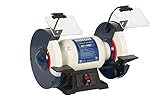
RIKON 8 Inch Slow Speed Bench Grinder
- 1750 RPM motor
- 1 by 8 inch white aluminum oxide wheels
- Anti-vibration feet
The Pro Grind takes the top slot on breadth and evidence. With more than a thousand reviews behind it, it is the best-supported jig system here, and it is the only one in this list that meaningfully covers chisels and plane irons alongside turning tools. The Wolverine grinding jig earns its place as the reference platform that most other jigs are described against, and the RIKON grinder covers the case where you already own a jig and just need a slow, steady wheel under it.
Quick Overview: All 12 Systems Compared
| Product | Specifications | Action |
|---|---|---|
| Pro Grind Sharpening System |
|
Check Latest Price |
| Oneway Wolverine Grinding Jig |
|
Check Latest Price |
| RIKON 8 Inch Slow Speed Bench Grinder |
|
Check Latest Price |
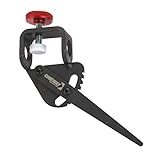 Oneway Wolverine Vari-Grind Attachment Oneway Wolverine Vari-Grind Attachment |
|
Check Latest Price |
 Tormek SVD-186R Gouge Jig Tormek SVD-186R Gouge Jig |
|
Check Latest Price |
 Tormek TTS-100 Turning Tool Setter Tormek TTS-100 Turning Tool Setter |
|
Check Latest Price |
 WEN BG4270T Wet and Dry Sharpening System WEN BG4270T Wet and Dry Sharpening System |
|
Check Latest Price |
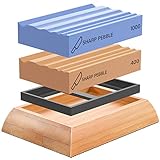 Sharp Pebble Grooved Sharpening Stones Sharp Pebble Grooved Sharpening Stones |
|
Check Latest Price |
 WEN BG4286 8 Inch Slow Speed Bench Grinder WEN BG4286 8 Inch Slow Speed Bench Grinder |
|
Check Latest Price |
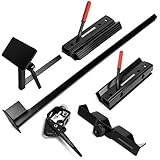 BMWOOD BG-GRIND4 Four Piece Jig Set BMWOOD BG-GRIND4 Four Piece Jig Set |
|
Check Latest Price |
 KFMK Variable Speed Wet Sharpening System KFMK Variable Speed Wet Sharpening System |
|
Check Latest Price |
 Bucktool Variable Speed Wet Sharpening System Bucktool Variable Speed Wet Sharpening System |
|
Check Latest Price |
What Is a Woodturning Sharpening System?
A woodturning sharpening system is a slow-speed grinder, a grinding wheel, and a jig that holds gouges, skews, scrapers and parting tools at a preset angle so the bevel comes out the same every time. The grinder removes steel, then a diamond hone or burnisher removes the burr and refines the edge. Bought as a set, the three parts turn a guess into a repeatable process.
Two things separate a real system from a pile of accessories. The first is wheel speed: a machine running around 1750 RPM gives you time to feel the bevel and keeps heat away from the temper of your steel. The second is whether the jig locks its settings. A jig that drifts a few degrees between sessions is how a gouge ends up with a multi-faceted bevel that cuts badly and forces heavy corrective grinding later.
How We Evaluated These Systems
Every system below was scored on the same five things, using the manufacturer’s stated specifications and the patterns that show up repeatedly in buyer reviews and turning forum discussion.
Grind consistency, judged by whether the fixture holds a repeatable angle and whether the mechanism locks.
Tool coverage, from bowl and spindle gouges through skews, scrapers and parting tools, plus chisels and plane irons.
Wheel behaviour, including speed, diameter, face width, water cooling and dressing demands.
Footprint and mounting, because bench space and grinder compatibility decide whether the thing gets used.
Upgrade path, including whether jigs cross-fit other bases and what the system leaves you holding when you outgrow it.
1. Pro Grind Sharpening System for 8 Inch Benchtop Grinders
Pro Grind Sharpening System for 8 Inch Benchtop Grinders
Three sharpening methods,Multi-Grind jig,Tool rest bar,3 by 5 inch slotted platform
Pros
- Three sharpening methods in one kit
- Multi-Grind jig repeats the same profile
- Large 3 by 5 inch slotted platform for flat tools
- Setup jigs usually sold separately
Cons
- 8 inch version does not fit 6 inch grinders without modification
- Several accessories only apply to specific grind types
This is the kit I keep coming back to. The Pro Grind brings three sharpening methods in one box: a Multi-Grind jig for gouges, a tool rest bar attachment for a precise bevel, and a large slotted platform for flat-edged tools. Buyers consistently call out the bundled setup jigs, including a projection gauge on the Multi-Grind arm and a magnetic micro-bevel block, as the reason the package undercuts buying the same pieces separately.
The Multi-Grind jig is the part that does the real work. It shapes bowl gouges for either a fingernail grind or a swept-back side grind, and it accepts tools up to 1.125 inch in diameter. In practice that covers most production gouges a turner will own, which is a wider net than several dedicated single-purpose jigs manage.
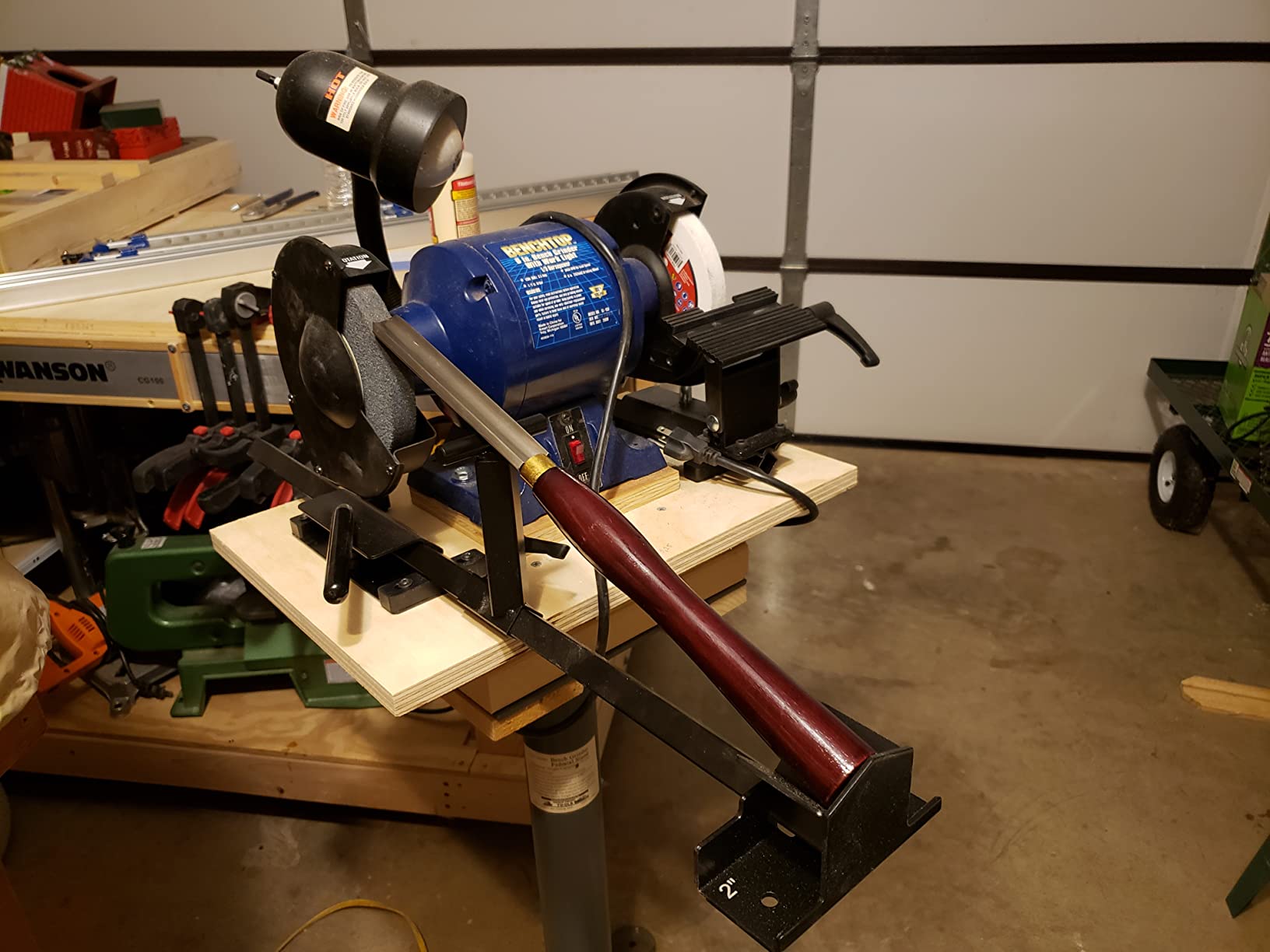
The tool rest bar attachment is the sleeper component. Owners note it produces a precise bevel without removing excess material, which is exactly the failure mode beginners hit when they try to set an angle by eye. The 3 by 5 inch slotted platform then takes skews, chisels and hand plane irons through the included tool holder, so this system is not a turning-only rabbit hole.
Compatibility is the one thing you must check before buying. The system is offered for 6 inch and 8 inch benchtop grinders, and the 8 inch version does not simply drop onto a 6 inch machine. A few accessories in the box also apply only to specific grind types, so plan to set aside the ones you do not use rather than feeling that you paid for clutter.
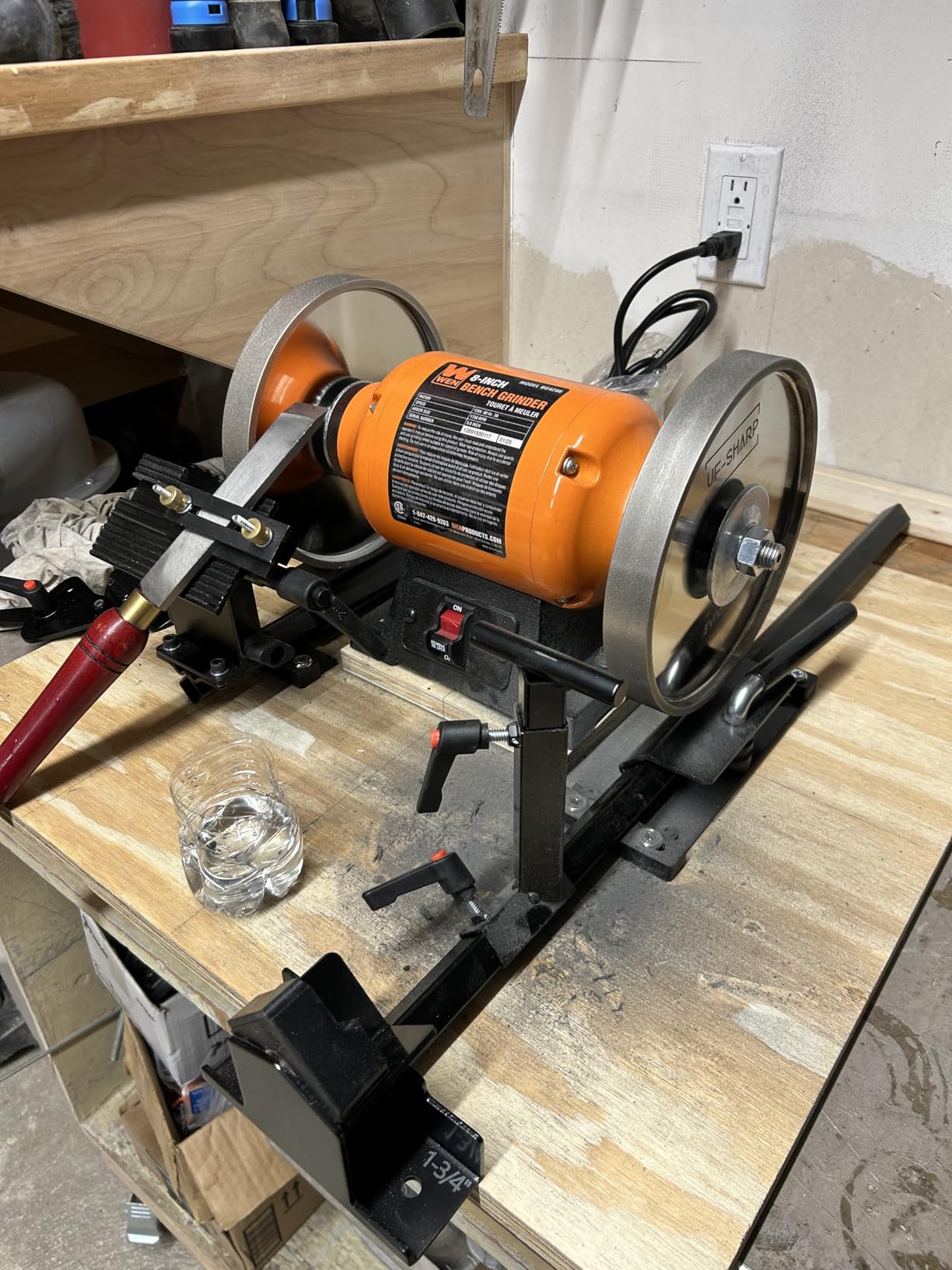
What the Multi-Grind jig actually produces
Reviewers describe the profile it cuts as repeatable enough that the second gouge of a session looks like the first. That is the whole value proposition: not sharper steel, but identical steel removal every pass, which is what keeps a short gouge viable for years.
It is also the most forgiving of the three methods to learn. The tool rest bar gives a flat reference edge, and the projection gauge removes the guesswork from setting the arm before you ever touch steel to wheel.
Who should skip this system
If you already own a full Wolverine-style setup, this is partly redundant. The Pro Grind earns its place in a shop that has no fixture at all, or one that wants chisels and plane irons in the same workflow as turning tools, and that is a fair number of beginners and a lot of carvers who also turn.
2. Oneway Wolverine Grinding Jig
Oneway Wolverine Grinding Jig
Two bases and quad setting jig,27 inch V-arm,3 by 5 inch platform with ratchet handles
Pros
- Cam-locked adjustments hold settings while tightening
- Consistent repeatable grind on gouges and skews
- Heavy build with ratchet handles
- Two bases allow a second grinder setup
Cons
- Base may not fit under grinders that extend past the wheels
- Mounting screws sit beneath the grinding wheels
- Slide has no indexing marks and can drift
The Wolverine grinding jig is the platform the rest of this list is measured against, and the reason is durability rather than cleverness. It comes with two mounting bases and a quad setting jig, a 27 inch V-arm attachment, and a 3 by 5 inch platform that uses quick-release ratchet handles. At 6 pounds and just over 30 inches long, it is a serious piece of hardware, not a folding accessory.
On the AAW forum, several long-tenured members describe the Wolverine as the standard that shows up at nearly every teaching event, with comments about it being nearly impossible to screw up a tool and about getting the same edge every time. That is consistent with what the reviews say: cam-locked adjustments hold their settings while you tighten them, and the grind comes out consistent on gouges, skews and chisels alike.
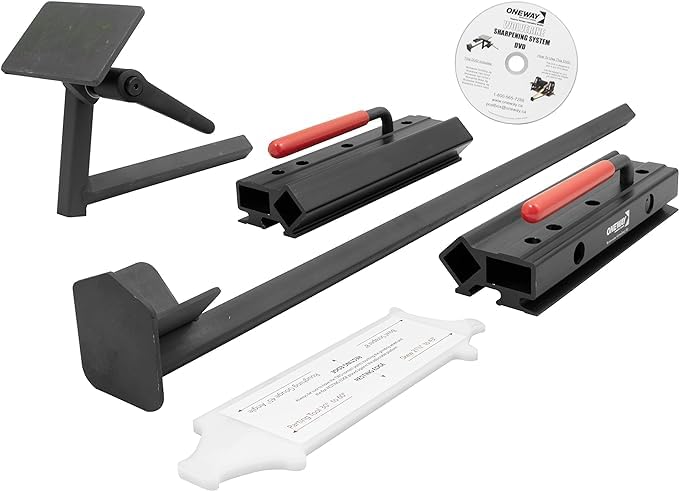
Owners frequently report that the jig paid for itself in saved tool steel, which is the argument that matters most on a good bowl gouge. Two bases also mean you can keep a second grinder configuration in place instead of rebuilding the mount every time you change machines.
The repeated caveat is physical fit. Several buyers had to raise or modify their bench grinder to clear the jig base under the wheel, and the mounting screws sitting beneath the grinding wheels makes installation awkward the first time. Once installed, that complaint largely disappears.
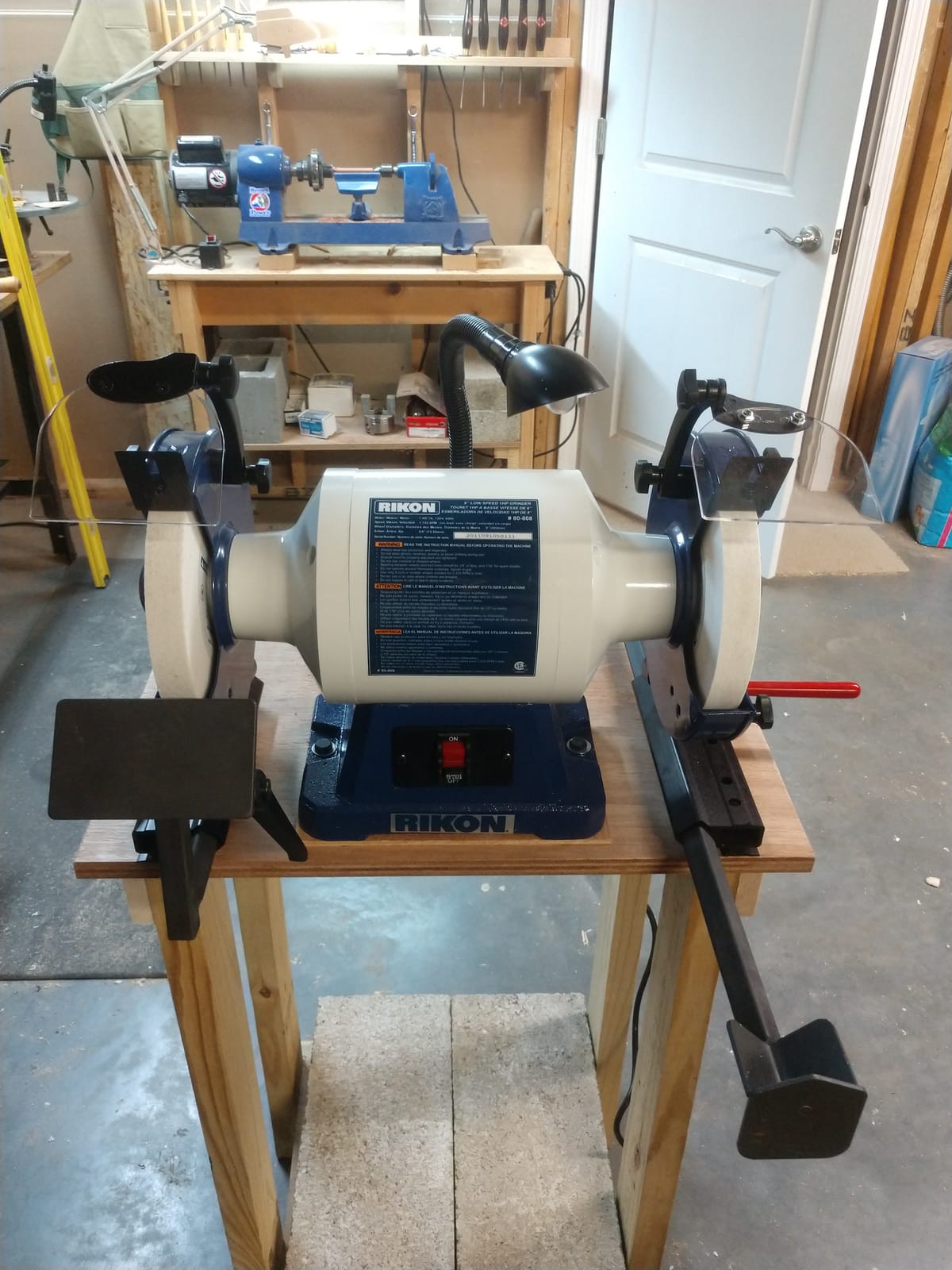
Where the grind quality comes from
The V-arm and the flat platform split the work: gouges and other round tools ride the arm, flat tools sit on the platform. Between them they cover the overwhelming majority of turning work, and forum members repeatedly point out that a basic platform setup is all many experienced turners use day to day.
One honest limitation appears in the reviews: the base jig on its own tends to leave a profile more suited to bowl work, and a side-grind attachment is what gets you a true fingernail edge. That is not a flaw so much as a division of labour, and it is worth knowing before you decide what to add later.
Who should skip this system
If your bench grinder has a base that extends out past the wheels, check the clearance before you commit. The slide also lacks indexing marks and can shift slightly if handled carelessly, so if you need index stops or a locked angle reference, this base alone will not give it to you.
3. RIKON 8 Inch Slow Speed Bench Grinder
RIKON Professional Power Tools, 80-805, 8†Slow Speed Bench Grinder, Powerful Shop Table Tool, Perfect for Sharpening, With Anti-Vibration Rubber Feet
Half horsepower motor at 1750 RPM,1 by 8 inch white aluminum oxide wheels,Anti-vibration feet
Pros
- 1750 RPM runs cool for hand tool work
- Cast iron base with anti-vibration rubber feet
- 60 and 120 grit white aluminum oxide wheels
- 5 year manufacturer warranty
Cons
- Wheels are only 1 inch wide
- Fixed 1750 RPM with no variable speed control
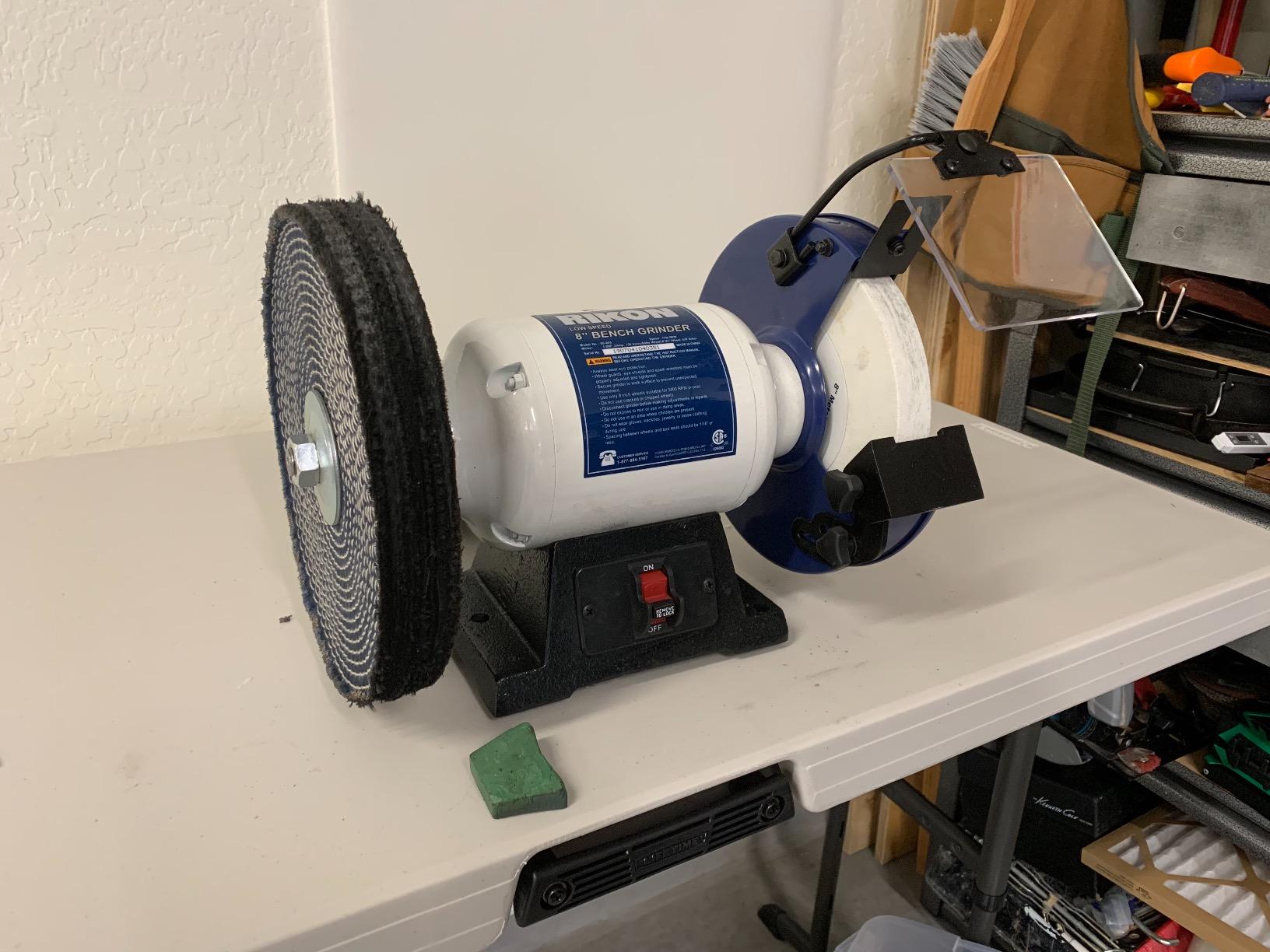
Sometimes the sharpening system question is really a grinder question. If you already own a jig and a set of jigs-specific wheels, the machine underneath is what limits you, and the RIKON 80-805 is the most reviewed slow-speed grinder in this roundup. A half horsepower motor turning 1750 RPM with 1 by 8 inch white aluminum oxide wheels gives you a stable, cool platform for jig work in a small shop.
Slow speed is the headline. At roughly 1750 RPM the wheel gives you time to feel the bevel contact and moves heat away from the tool, which is the difference between a controlled grind and the blue temper colour that ruins an expensive gouge. A cast iron base on anti-vibration rubber feet keeps the jig alignment steady while you work.
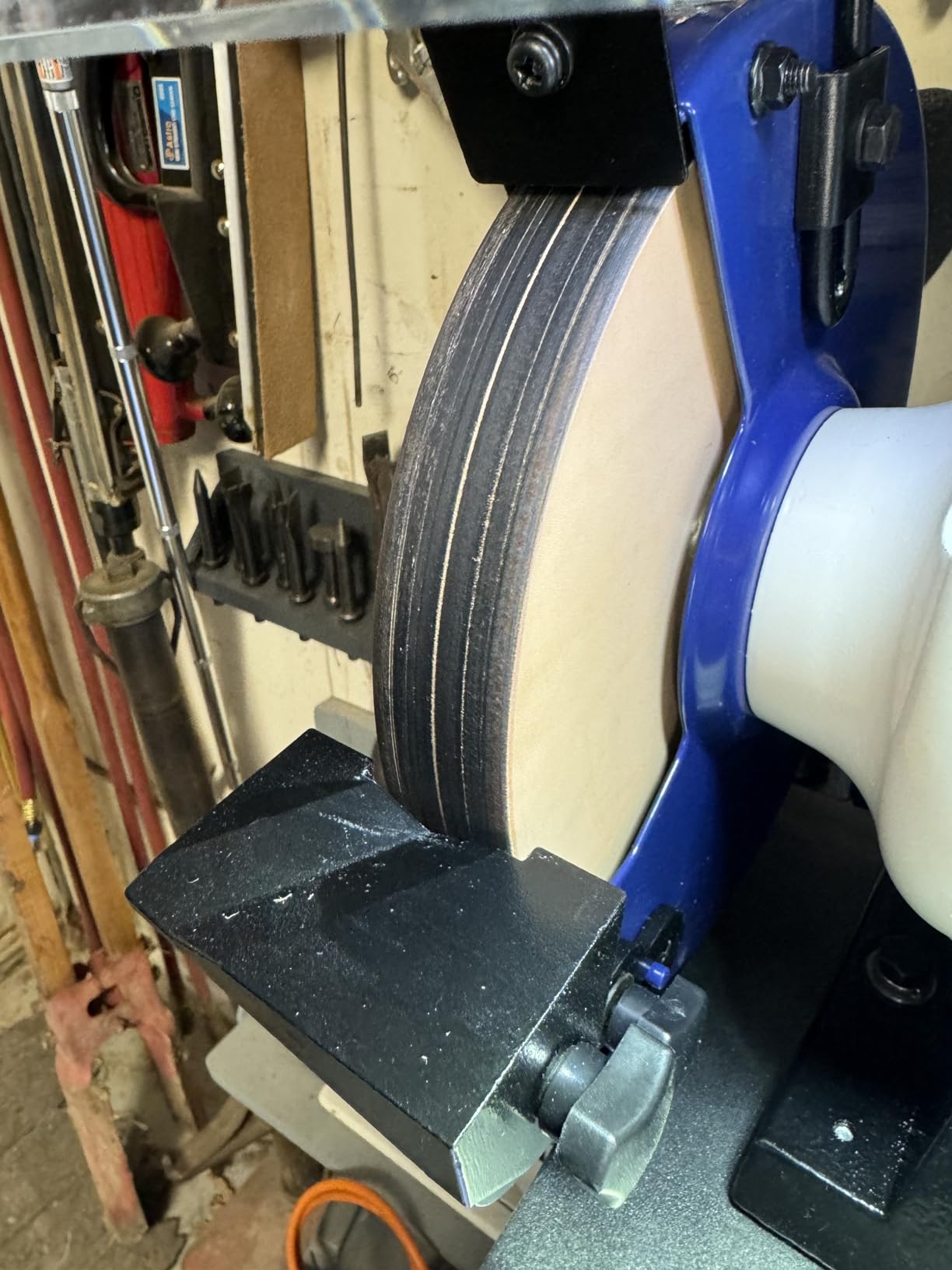
Reddit commenters turning to wet grinders and hand tools repeatedly point to RIKON-style slow-speed 8 inch grinders as a sensible first step, and the reviews echo the same reasoning: the feet damp vibration so the fixture holds its settings. A 5 year manufacturer warranty also stands above most machines at this level.
The specification that gets flagged most often is the 1 inch wheel face. A narrower face gives you less surface to work with when shaping a wide bevel, and experienced turners generally prefer 1.5 inch wide wheels for that reason. The other limitation is that the 1750 RPM is fixed, with no variable speed control to dial back for delicate edges.
What to mount on it
Because the base is a conventional bench grinder footprint, the machine takes the grinder-based jigs in this list, including the Wolverine and the four-piece kit further down. That flexibility is the real reason to buy a standalone grinder rather than a sealed sharpening system.
The included diamond wheel sharpener is a small bonus for drill bits and twist drills, and the adjustable eye shield plus spark resistors cover the safety basics before you start.
Who should skip this grinder
Skip it if your shop is tight on space or if you want to sharpen wide bevels quickly. A cast iron bench grinder with guards is a fixed footprint, and the 1 inch wheel face will have you working in sections on a wide bowl gouge bevel that a wider wheel handles in one pass.
4. Oneway Wolverine Vari-Grind Attachment
ONEWAY Wolverine Vari-Grind Attachment Black
Works with any V-arm jig,Creates fingernail profiles,Combines roll and swing motion
Pros
- Symmetrical fingernail and side grind profiles
- Faster than sharpening by hand
- Steel construction with clear instructions
- Secure hold on the gouge
Cons
- Needs practice before grinds are consistent
- Angle values are not marked on the jig
- Only works as part of a V-arm system
This is the smallest item in the roundup and the highest rated, sitting at 4.8 stars across hundreds of reviews. The Vari-Grind attachment clamps to the Wolverine jig or any other V-arm jig and converts a basic bevel grind into a proper fingernail profile by combining a roll and a swing motion as the gouge meets the wheel.
Owners who already own a Wolverine base consistently call it the missing piece. Before it, the jig gives you a straight bevel; after it, the two swept-back wings come out symmetrical, and sharpening a bowl gouge goes noticeably faster than doing the same shape by hand.
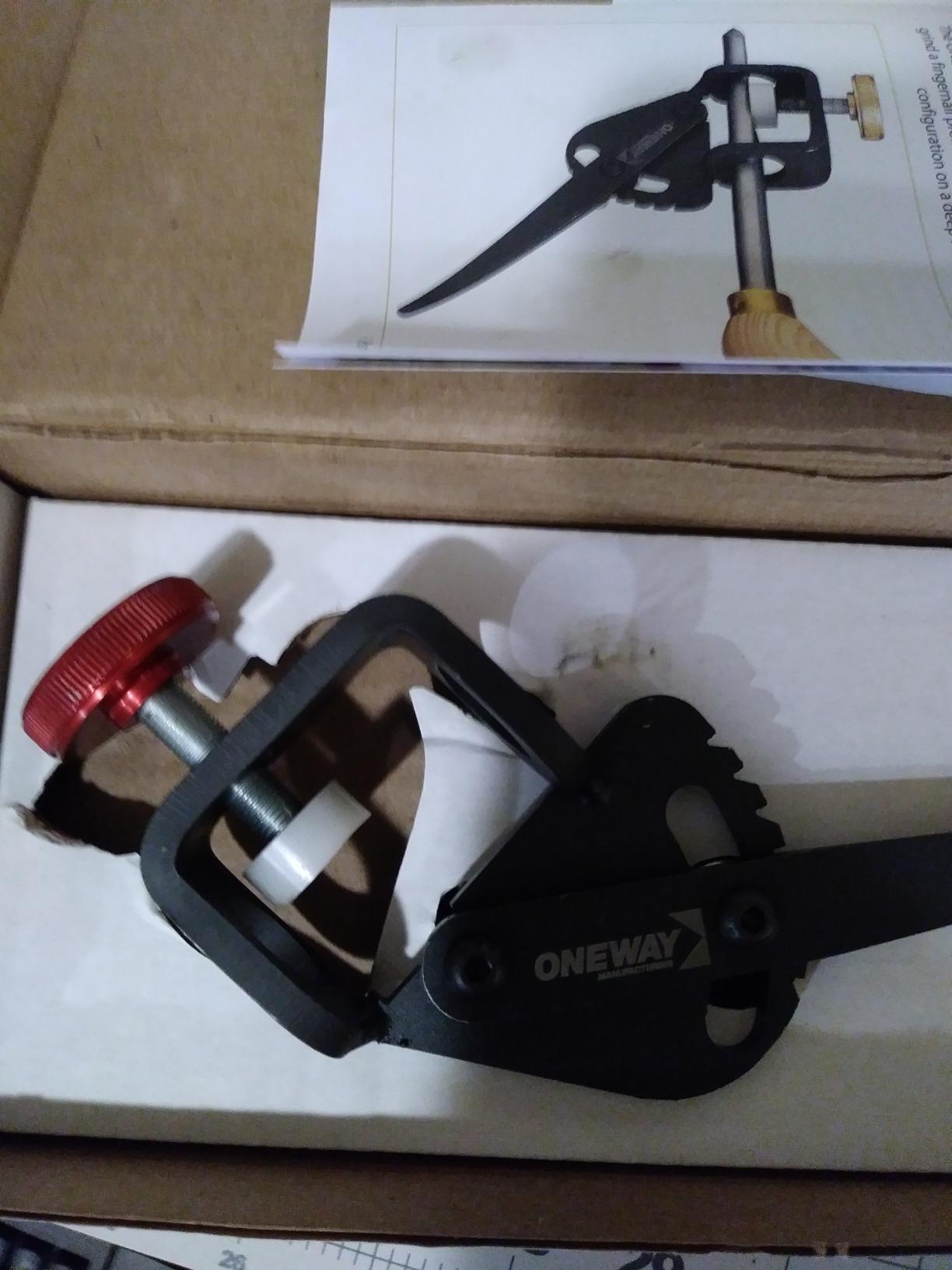
The construction is straightforward steel with clear, concise instructions, and the gouge is easy to secure and hold in position. At 16 ounces and just over 11 inches long, it is a small addition to a station rather than a new machine on the bench.
The learning curve is real but short. The recurring requests in reviews are for practice time before the first grinds come out consistent, and for printed angle references on the jig body so you are not guessing the setting. It is a V-arm component, so on its own it sharpens nothing.

What a fingernail profile changes at the lathe
A fingernail profile curves the bevel away from the edge, so the wings roll into the cut instead of presenting a hard corner to the wood. Reviewers describe the result as an even grind and a noticeably quicker pass, and on a deep fluted bowl gouge the two wings end up matched, which is what stops a wall from wandering.
It also pairs naturally with a side-grind approach on spindle work, where the same arm and swing motion produces the near-flute geometry fine turning depends on.
Who should skip this attachment
Skip it if you do not already own a V-arm system, because there is nothing for it to clamp to. It is also the wrong purchase for someone who wants a single tool to handle gouges, skews and chisels; it does one profile extremely well and nothing else.
5. Tormek SVD-186R Gouge Jig
Tormek SVD-186 R Gouge Jig – for Sharpening Woodturning & Woodworking Tools
Purpose-built for fingernail gouges,Alloy steel body,Handles blades up to 1-3/8 inch
Pros
- Purpose-built for fingernail profile turning gouges
- Holds the tool angle repeatably
- Alloy steel construction
- Also works on carving gouges V-tools and violin knives
Cons
- Blade width is capped at 1-3/8 inch
- Requires a Tormek machine to work as intended
The SVD-186R is a purpose-built answer to one question: how do I hold a turning gouge at a consistent angle on a slow rotating stone. It is made for fingernail-shaped turning gouges and produces a repeatable edge quickly, using different side bevel lengths depending on how far back the bevel runs. At 400 grams and just over 8 inches long, it is compact and easy to store.
The design is deliberately narrow in scope. Maximum blade width is 1-3/8 inch, which covers standard spindle and bowl gouges but will not take an oversize tool. Beyond turning, owners point out it also handles bent carving gouges, V-tools and violin making knives, which widens its usefulness considerably for carvers.
What reviewers like most is that it holds the angle repeatably, which is the same argument as every other jig in this list expressed in a single fixture. On a Tormek-style slow wheel, the low speed and the fixed jig geometry combine to produce a consistent fingernail edge without the swing-and-roll technique a V-arm demands.
The catch is stated plainly in the reviews: this is a dedicated Tormek component, not a universal platform. Forum members note that adapters exist to run Tormek jigs on Wolverine-style arms and bases, which is the practical workaround if you already own a bench grinder and want this fixture without buying a separate machine.
How the grind angle compares
Tormek-style jigs tend to produce a higher wing bevel angle than a Wolverine-style setup. That is a genuine trade-off rather than a defect: some experienced turners prefer the more acute Wolverine wing, while others find the slightly higher Tormek angle easier to control when the wing bevel rubs the work.
On short tools the difference is practical. The Tormek approach needs less of the gouge length to work with, which matters if you own stubby tools you would rather not shorten further.
Who should skip this jig
Skip it if you want one fixture to cover gouges, skews, chisels and plane irons, or if your tools run wider than 1-3/8 inch. It is a specialist answer to a specialist problem, and it is most convincing to a turner already committed to a Tormek-style station.
6. Tormek TTS-100 Turning Tool Setter
Turning Tool Sharpening Setter Tormek TTS-100
Sets gouge and skew geometry,Built-in edge angles,Works on any stone diameter
Pros
- Fast and repeatable gouge bevel setup
- Built-in geometry table for bowl and spindle gouges
- Works on any stone diameter and other grinder brands
- Saves steel by holding a consistent angle
Cons
- On its own it only sets the tool holder position; it does not sharpen
- It is a setup aid rather than a complete sharpening solution
The TTS-100 is a tool setter, not a sharpener, and understanding that is the key to its value. It replicates the edge geometries of turning gouges and skews from a set of built-in reference angles, so instead of adjusting a jig by eye every session you set the tool holder against a known geometry and lock the position. Many owners frame it as the cheapest way to stop wasting tool steel.
It works on any stone diameter, and reviews note it functions with grinders from other brands as well. That portability matters if your setup changes, and it is also why it is a sensible add-on for someone running a Wolverine-style station rather than buying into a single ecosystem.
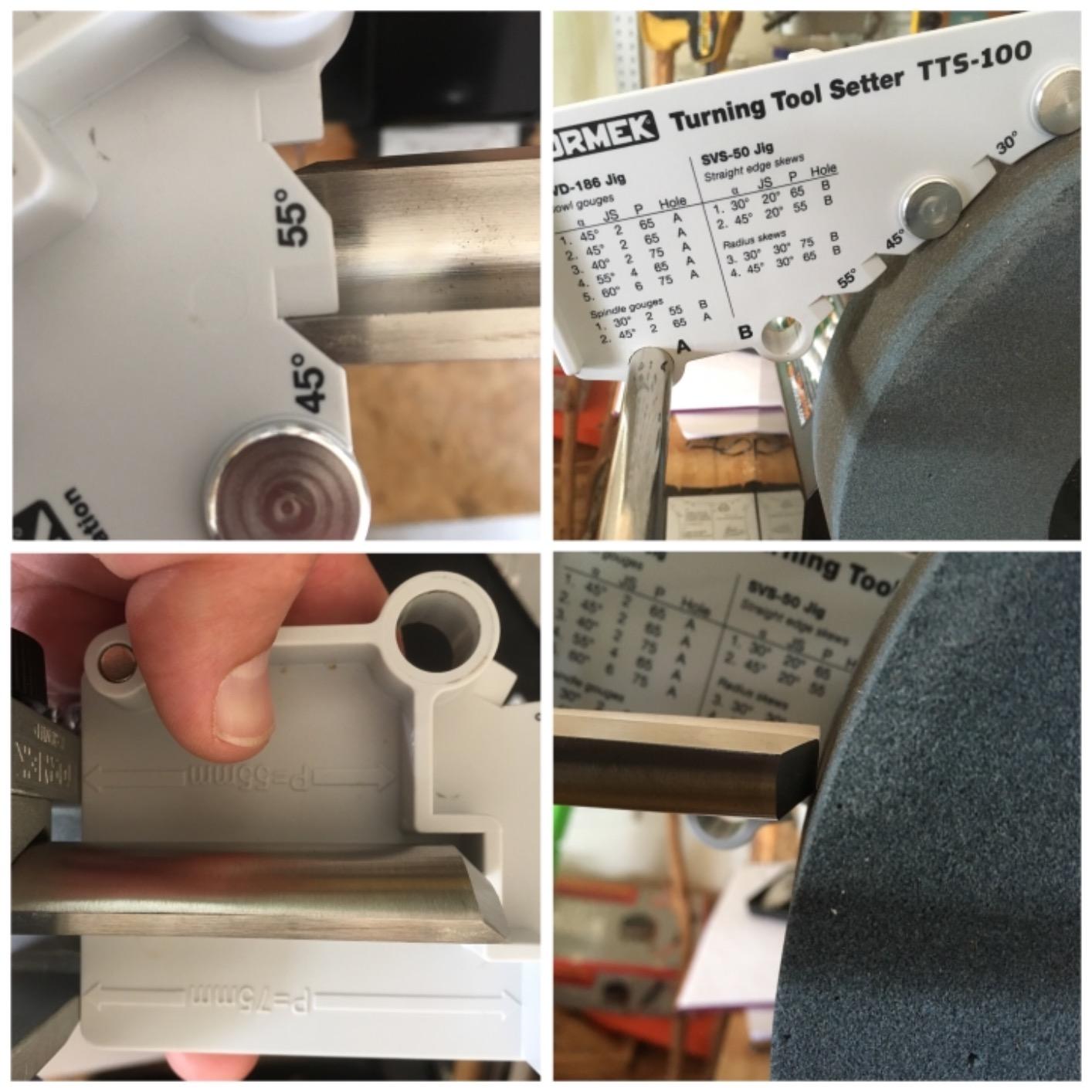
The printed geometry tables cover the common bowl and spindle gouge grinds, with other angles possible through experimentation, and it also works when setting the edge angle on a leather honing wheel. At 4 ounces and under 9 inches long, it lives in a drawer rather than on the bench.
The limitation is obvious once you use it: on its own it only sets the tool holder position and does not sharpen anything. It is an accessory that amplifies the accuracy of a fixture you already own, and treating it as a system is the most common misunderstanding.
How much steel it actually saves
The mechanism is simple. A repeatable setup means you stop shaving the bevel flat while hunting for the angle, and you stop deepening the hollow to correct a wandering grind. On a short bowl gouge, that is the difference between a tool you still own in ten years and a tool you retire early.
Forum members make the same point from a different direction: consistency comes from practice, but practice is far cheaper in steel when the setup is fixed before the wheel spins.
Who should skip this tool
Skip it if you have no grinder or jig at all, because there is nothing to set. It is also a weak purchase for someone who already has a fixture with clearly marked angle settings and a solid lock; in that case the reference angles are redundant with what you already have.
7. WEN BG4270T 10 Inch Wet and Dry Sharpening System
WEN BG4270T 10-Inch Two-Direction Water Cooled Wet/Dry Sharpening System
10 inch 220 grit stone,8 inch leather stropping wheel,115 RPM,Reversible rotation
Pros
- Sharp consistent edges on chisels planes and lathe tools
- 115 RPM and water cooling prevent burning the edge
- Reversible rotation suits either hand
- Universal jig support accepts Tormek jigs with an adapter
Cons
- Accessory mount bar is stamped steel with play and can tighten out of parallel
- Included chisel jig cannot reach a standard 25 to 30 degree angle
- Leaks water onto the bench and the stone needs truing
The wet sharpener route is a different bet from the grinder route. Instead of a fast dry wheel, you get a large water-cooled stone turning at 115 RPM, with an 8 inch leather stropping wheel on the other side to remove the burr. The water does the cooling, so there is no temper damage to worry about and no grinding dust in the air.
Owners pair it with Tormek jigs through the universal jig support, and many report that the jigs they add later work better than the hardware supplied in the box. That is the honest way to read the reviews: the machine is capable, the accessories are the weak point, and the included chisel jig is too short to reach a standard 25 to 30 degree angle.
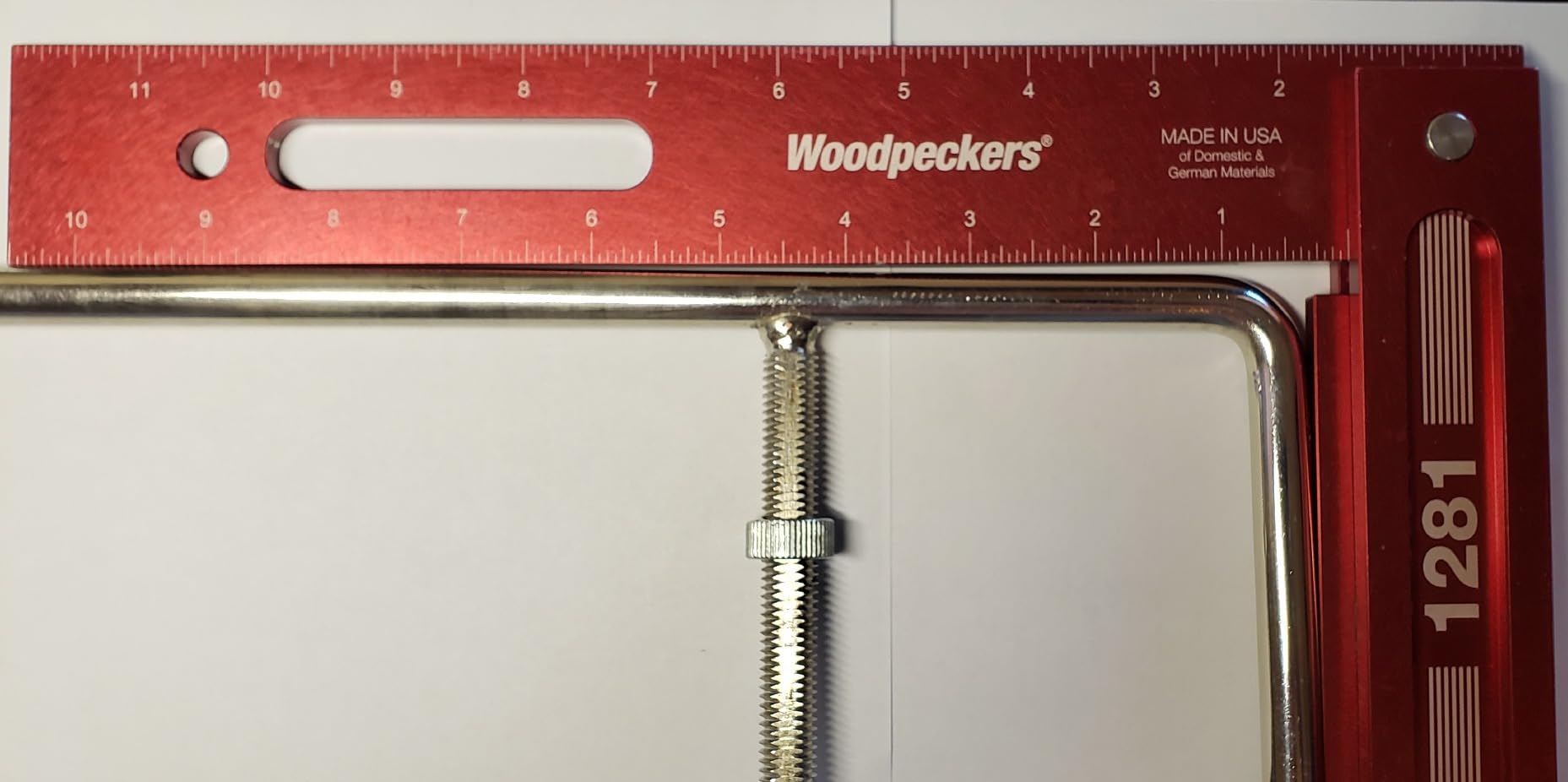
Reversing the rotation direction with a switch is a genuine benefit for anyone who sharpens on the pull cut, and the 115 RPM wheel gives very fine control. For a shop that also does chisels, plane irons, knives and some lathe tools, the same machine covers all of it without a second power tool.
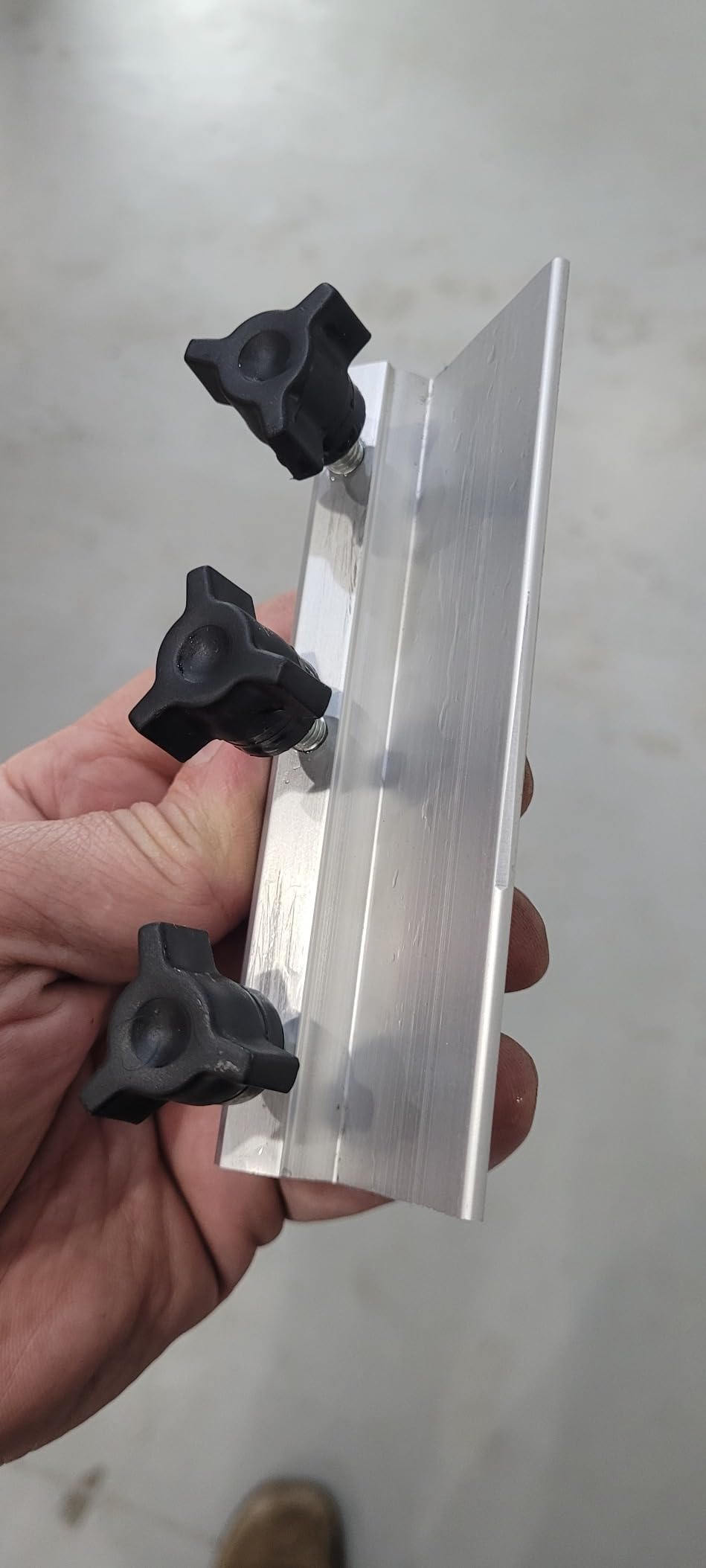
The recurring notes in reviews are practical: the stamped steel accessory mount bar has play and can tighten out of parallel with the wheel, the 10 inch stone has some run-out and needs truing out of the box, and the machine leaks water onto the bench. The angle guide also drifts as the stone wears down, which is normal for a consumable surface but worth knowing.
Where a wet stone beats a dry wheel
On anything hardened, on carbide-adjacent chores, or when you want a very fine controlled edge, a water-cooled stone at 115 RPM is hard to argue with. The leather strop then removes the burr and polishes the edge, which is the step dry grinding leaves you to do by hand.
The trade is throughput. A stone this size is not going to reshape a badly damaged bevel as fast as a dry wheel, so this suits maintenance and regular edge work better than a full regrind of neglected steel.
Who should skip this system
Skip it if your sharpening load is heavy regrind work on damaged tools, or if a leaking water reservoir in your bench corner would be a problem. It is also a poor fit for a beginner who wants a jig to hold a gouge, because the useful jigs are extra purchases rather than included parts.
8. Sharp Pebble Grooved Sharpening Stones
Sharp Pebble Grooved Sharpening Stones for Wood Carving Tools & Gouges
400 grit and 1000 grit grooved waterstones,Waterstone design,Non-slip bamboo base
Pros
- Grooves match gouge and carving tool contours
- Waterstone use means no oil and easy cleanup
- 400 grit corrects damage and 1000 grit polishes
- Non-slip bamboo base
Cons
- Must be kept wet and flattened as they wear
- Hand powered so it suits touch-ups rather than reshaping
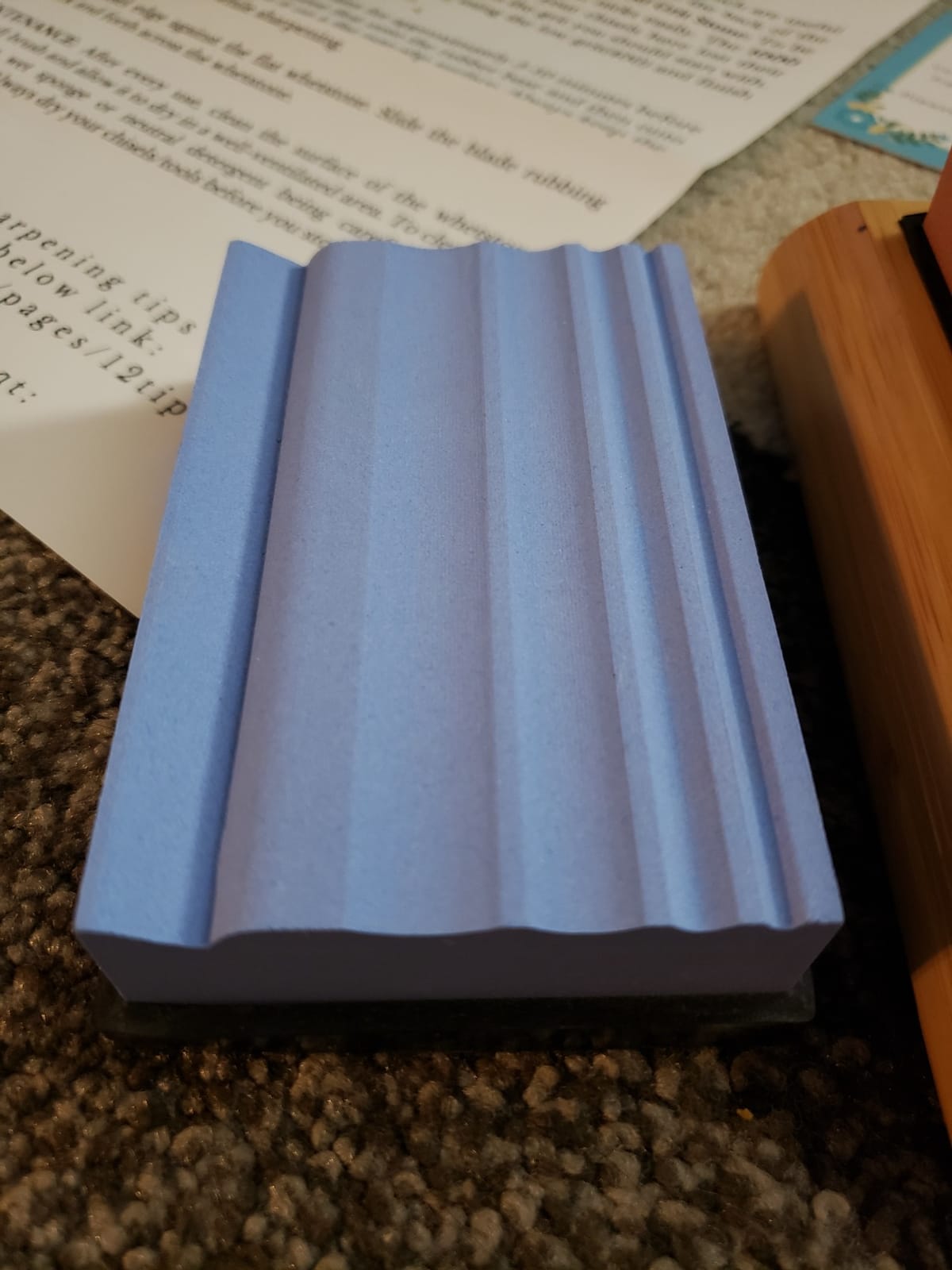
Not every sharpening job needs a machine. With more reviews than anything else in this roundup, these grooved waterstones are the most proven touch-up tool here, and they solve a specific problem: a contoured turning gouge or carving tool does not sit flat on a conventional whetstone, so it rocks and you never get a clean bevel.
Multiple grooves of varying contours solve that by letting you match the stone to the tool profile. The pair covers 400 grit for dull and damaged edges and 1000 grit for routine sharpening and polishing, and the convex portion handles triangular and round chisels that the grooves cannot reach.
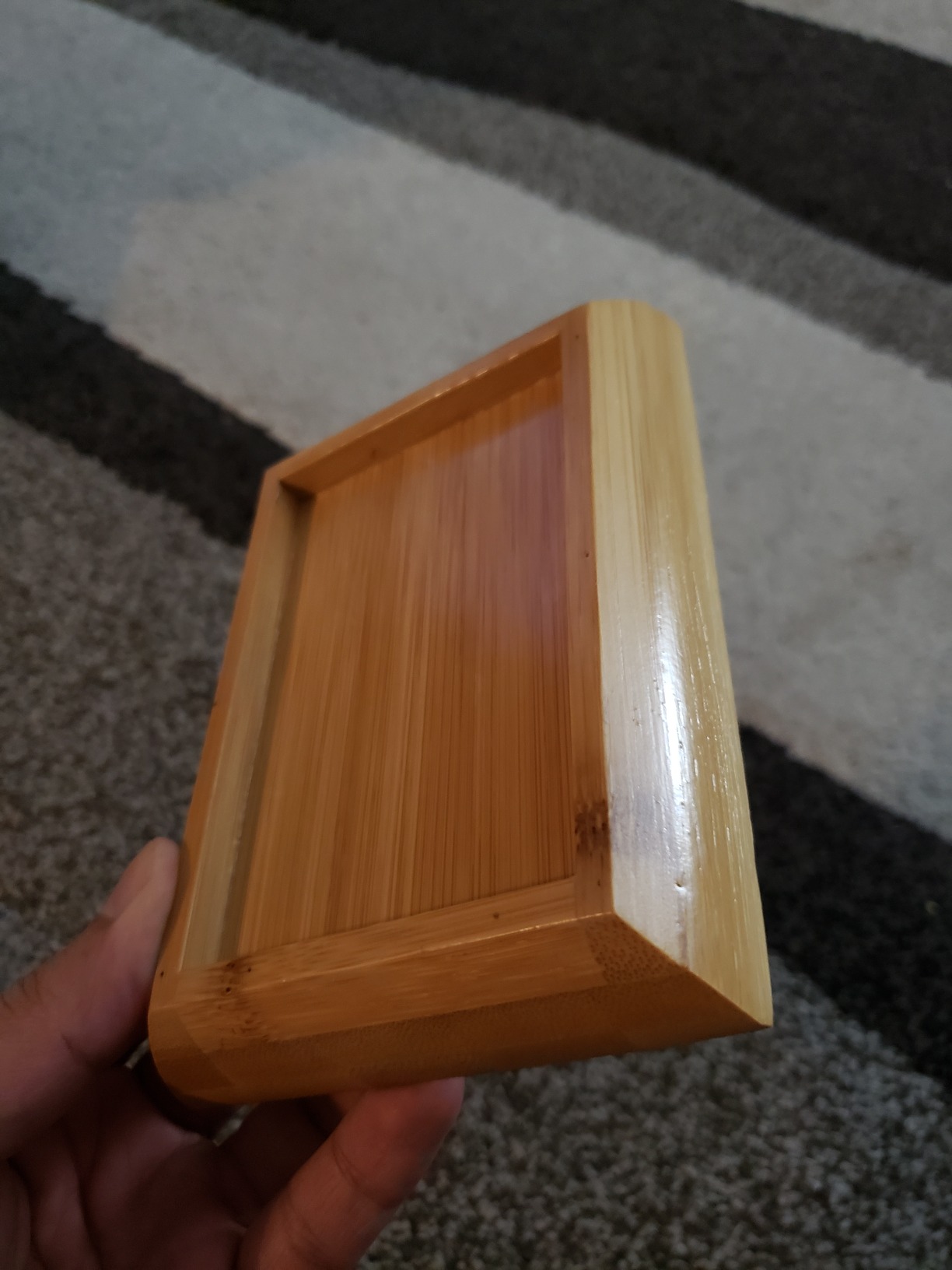
Because they are waterstones, there is no oil, no mess, and cleanup is water. That single design choice is what makes them practical as a lathe-side station: you can hone a bevel between turning operations without pulling out a grinder, and the forum argument about hand honing over frequent grinding has real merit at the touch-up end of the cycle.
Two limits are worth stating plainly. Waterstones must be kept wet and flattened as they wear, which is genuine upkeep if you let them dry out. And they are hand powered, so they suit restoring and maintaining an edge rather than reshaping one that is already gone.
How to fit it into a turning session
The sensible rhythm is a hone every fifteen to twenty minutes and a full grind far less often. Forum members argue the strongest version of this point: a number of hand honings should keep the tool sharp before you resort to grinding, which removes unnecessary steel from your tools over their life.
Keeping a pair of grooved stones at the lathe also changes how you evaluate a jig. A grinder-based system that produces a slightly rough bevel is finished in seconds on a 1000 grit groove, which blunts the argument for buying more fixture hardware than you need.
Who should skip these stones
Skip them as your only sharpening method if you own a lot of carbide-tipped tools, since carbide is not sharpened this way. They are also the wrong tool for a badly chipped or rusted edge, and for anyone who will not keep them wet between uses.
9. WEN BG4286 3 Amp 8 Inch Slow Speed Bench Grinder
WEN BG4286 3-Amp 8-Inch Slow Speed Bench Grinder, Orange,black
Soft start 3 amp motor,8 by 1 inch wheels,1750 RPM,Pre-drilled base
Pros
- 1750 RPM gives control with minimal heat
- Soft start 3 amp motor runs smoothly
- Pre-drilled base accepts sharpening jigs
- Includes 60 grit and 120 grit wheels
Cons
- Fixed speed with no variable control
- 8 inch wheels are narrower than larger grinders
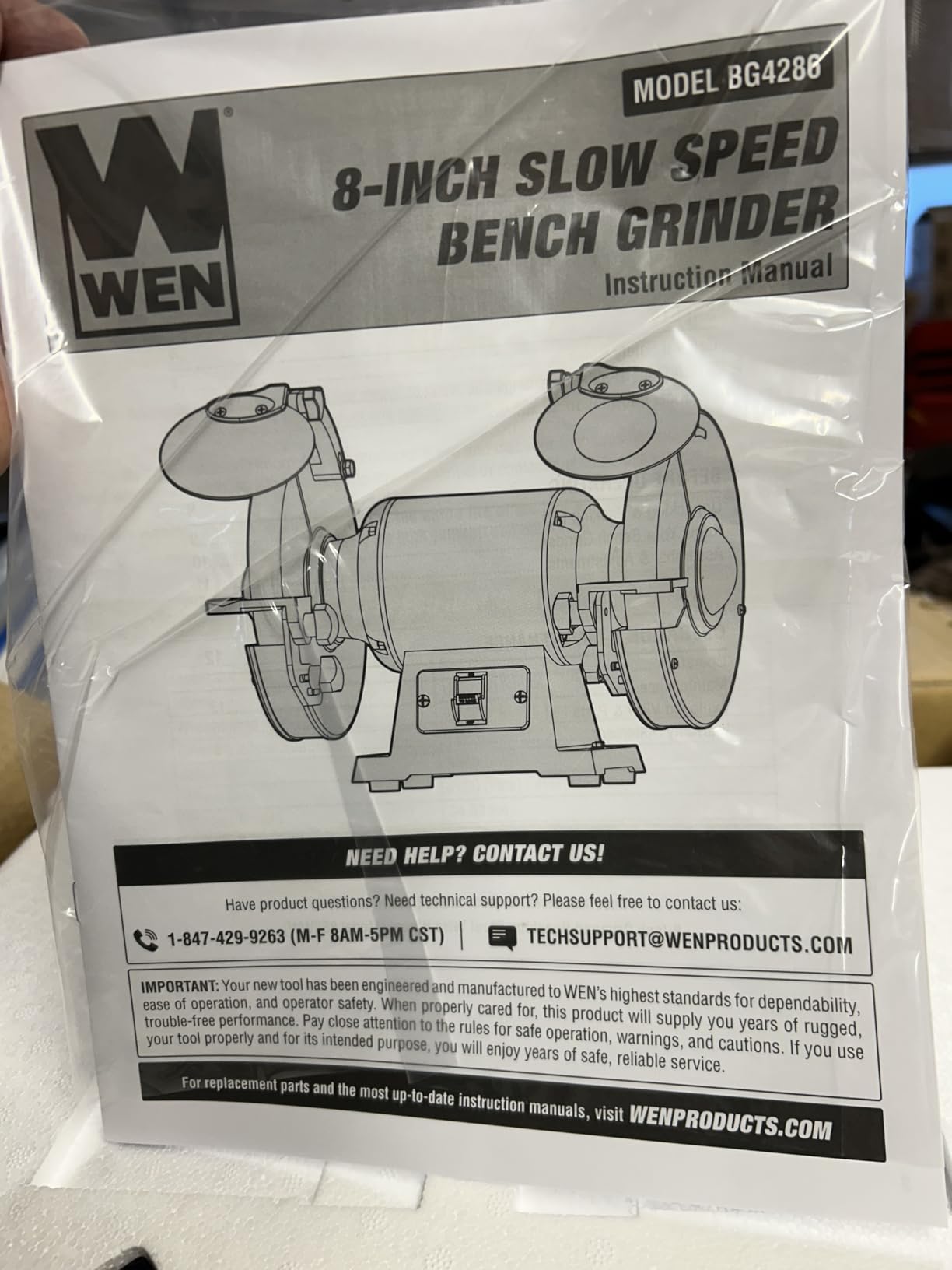
The BG4286 is a cheap, honest slow-speed grinder, and the pre-drilled mounting holes in the base are the feature that matters for this article. A soft start 3 amp motor turns 8 by 1 inch wheels at up to 1750 RPM, which is low enough to give control on a gouge bevel and to keep heat out of your steel.
Reviewers use it as an inexpensive jig platform for woodturning sharpening and point to the low wheel speed for control and the pre-drilled base for easy jig mounting. That combination makes it a natural companion to the Wolverine or the four-piece kit, both of which mount under the wheels.
It ships with a 60 grit wheel for general work and a 120 grit wheel for finishing, plus pivoting tool rests and adjustable eye guards, so it is usable before you buy any fixture at all. The soft start is a nice touch, since it spares both the wheel and your workpiece from a lurch at power-on.
Limitations are straightforward. Speed is fixed with no variable control, and the 8 inch wheels are 1 inch wide, narrower than larger grinders, which gives you less face to work across on a wide bevel. Feedback on this machine is more limited than on the jigs themselves, but the recurring view is that it does the sharpening station job at a modest outlay.
How to pair it with a jig
Measure your clearance before buying, because that is the single most common installation complaint across grinder-based jigs. Grinders whose base extends out past the wheels force you to raise or modify the machine, and the mounting screws often sit directly beneath the wheel.
Plan on replacing the white aluminum oxide wheels before long-term use. They are fine for a first pass, but most experienced turners move to CBN wheels once the jig is set up and their bevel angles are settled.
Who should skip this grinder
Skip it if you want variable speed for different tools, or if wide bevel work is a regular part of your turning. A fixed-speed 8 inch grinder is a solid starter platform, not a station you will want to grow into for heavy shaping work.
10. BMWOOD BG-GRIND4 Four Piece Grinding Jig System
BG-GRIND4 4PCS Set Complete Grinding Jig System for Wood Chisels, Grind Sharpening System to Sharpen Lathe Turning Tools, Chisels, Skews, Bowl Spindle Gouges etc.
Four piece set,Two under-wheel bases,Three-position gouge holder
Pros
- Vari-grind attachment gives fast repeatable gouge results
- Large platform is more rigid than the factory tool rest
- Clear written instructions
- Good value against premium branded jigs
Cons
- Not cross compatible with Wolverine or Peachtree bases
- Skew attachment angle is far steeper than most turners want
- Vari-grind knob threads stripped on early unscrewing
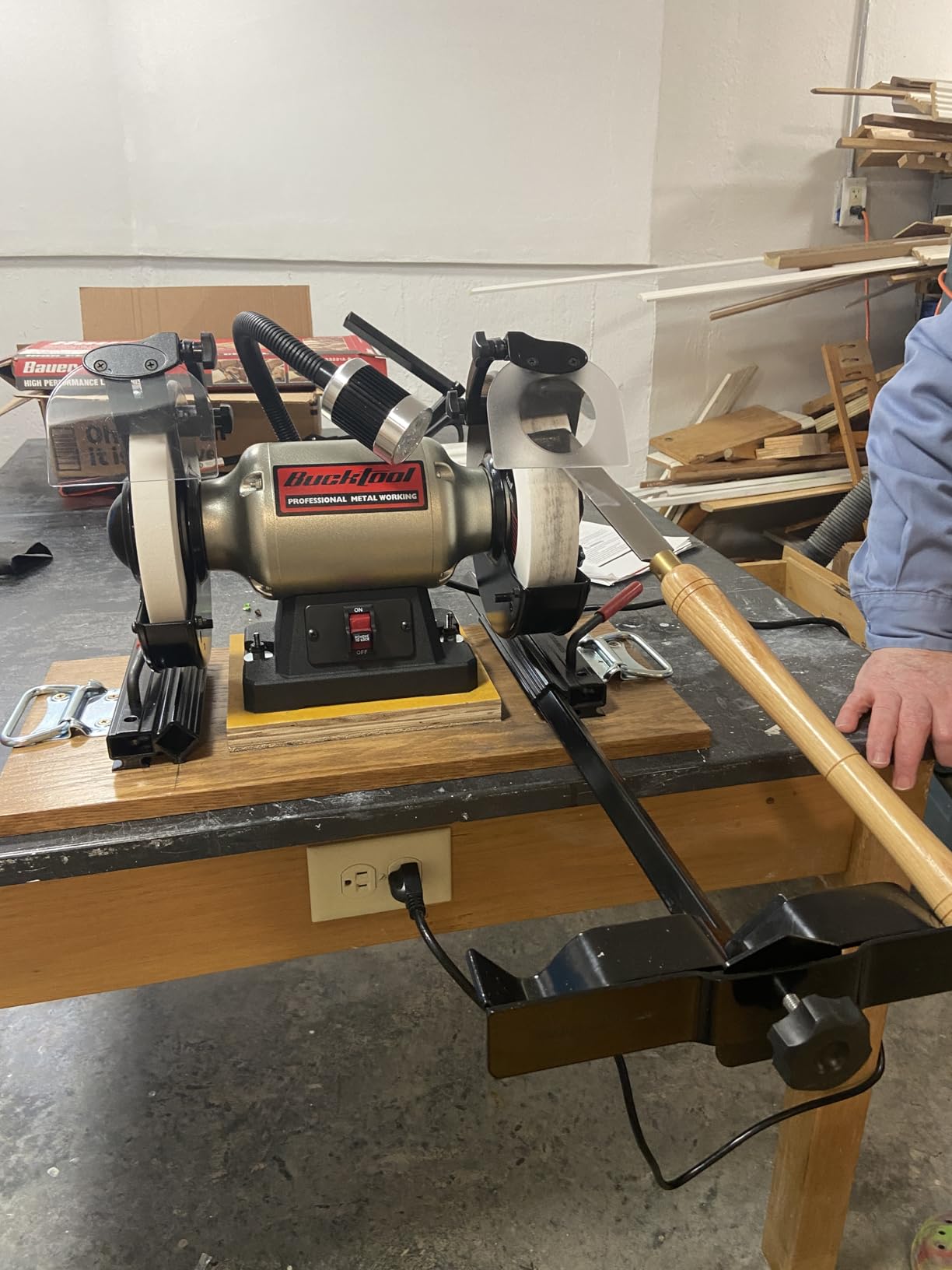
This four-piece set does what the Wolverine does, without the brand premium, and owners largely treat it as a capable alternative rather than a compromise. The two bases mount under each grinding wheel, a locking handle secures the position once the bases are set, and the platform repositions to different angles through an adjustable lock lever.
The upgrade that matters is the gouge holder. Swapping the plain V-arm for the fingernail gouge jig turns the arm into a three-position holder, which gives fast, repeatable bowl gouge results. Reviewers also single out the large platform as noticeably more rigid than the grinder’s own tool rest, and the clear written instructions as making first setup painless.
Two practical warnings come up repeatedly. The skew attachment produces an angle far steeper than most turners want, so the platform is the better route for skews, as the reviews suggest. And the vari-grind knob threads stripped for some owners the first few times it was unscrewed, which is a small part failing on a system meant to last.
The most discussed drawback is compatibility. Buyers who already own Wolverine or Peachtree systems found the base tubes and gouge jig dimensions do not match, despite looking similar. Sizing is also listed only in metric, and the design assumes an 8 inch grinder, so a 6 inch machine needs adjustment.
How it compares to the branded systems
Judged purely on grind results, reviews describe output comparable to the branded jigs: same repeatable bowl gouge profile, same adjustable platform for flat tools. Where it differs is in the ecosystem, and that only matters if you already own another system or plan to mix components later.
It also handles carving gouges and other edge tools rather than concentrating on lathe work alone, and supports either fingernail profiles on shallow spindle gouges or side grinds on deep fluted bowl gouges.
Who should skip this set
Skip it if you already own a Wolverine or Peachtree base, because nothing cross-fits and you would be running two parallel systems on one bench. It is also the wrong choice if you rely on the skew attachment specifically, or if you are still deciding which grinder to buy.
11. KFMK 10 Inch Variable Speed Wet Sharpening System
KFMK 10 Inch Variable Speed Wet Sharpening System, 90-160RPM Wet Bench Grinder, Two Direction Water Cooled Wet/Dry Sharpening System for knife, Chisel, Scissor, Woodworking Tools
90 to 160 RPM variable motor,10 inch water cooled wheel,8 inch leather stropping wheel
Pros
- Variable 90 to 160 RPM controls how much steel comes off
- Water cooled 10 inch wheel prevents overheating
- Two direction rotation serves either hand
- Jig support works in horizontal and vertical positions
Cons
- Leather wheel must be used in one direction or it cuts the leather
- Holding the tool square to the wheel takes practice
Variable speed is the feature that separates this wet sharpener from the fixed-speed versions, and for turning work it is a real advantage. The enclosed motor runs from 90 to 160 RPM, so you can slow down for a delicate edge on a small gouge and speed up for a coarser bevel, all against a 10 inch water-cooled aluminum oxide wheel with a trough underneath.
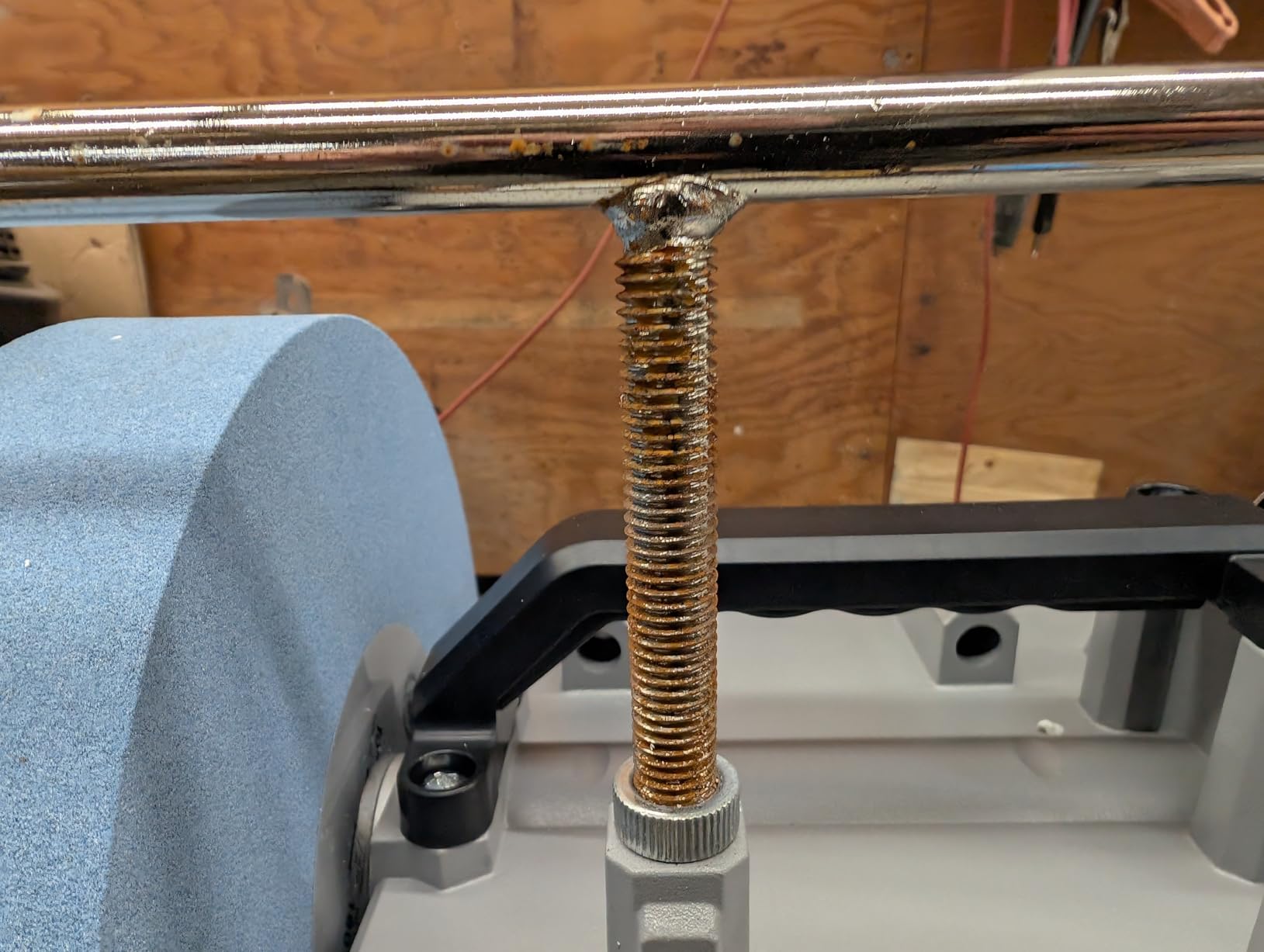
On the other side sits an 8 inch leather stropping wheel for removing burrs, plus an angle guide and a jig support that adjusts to both horizontal and vertical positions. The angle guide is the part beginners lean on, since holding a tool at a consistent angle by hand is the hardest part of any wet-stone setup.
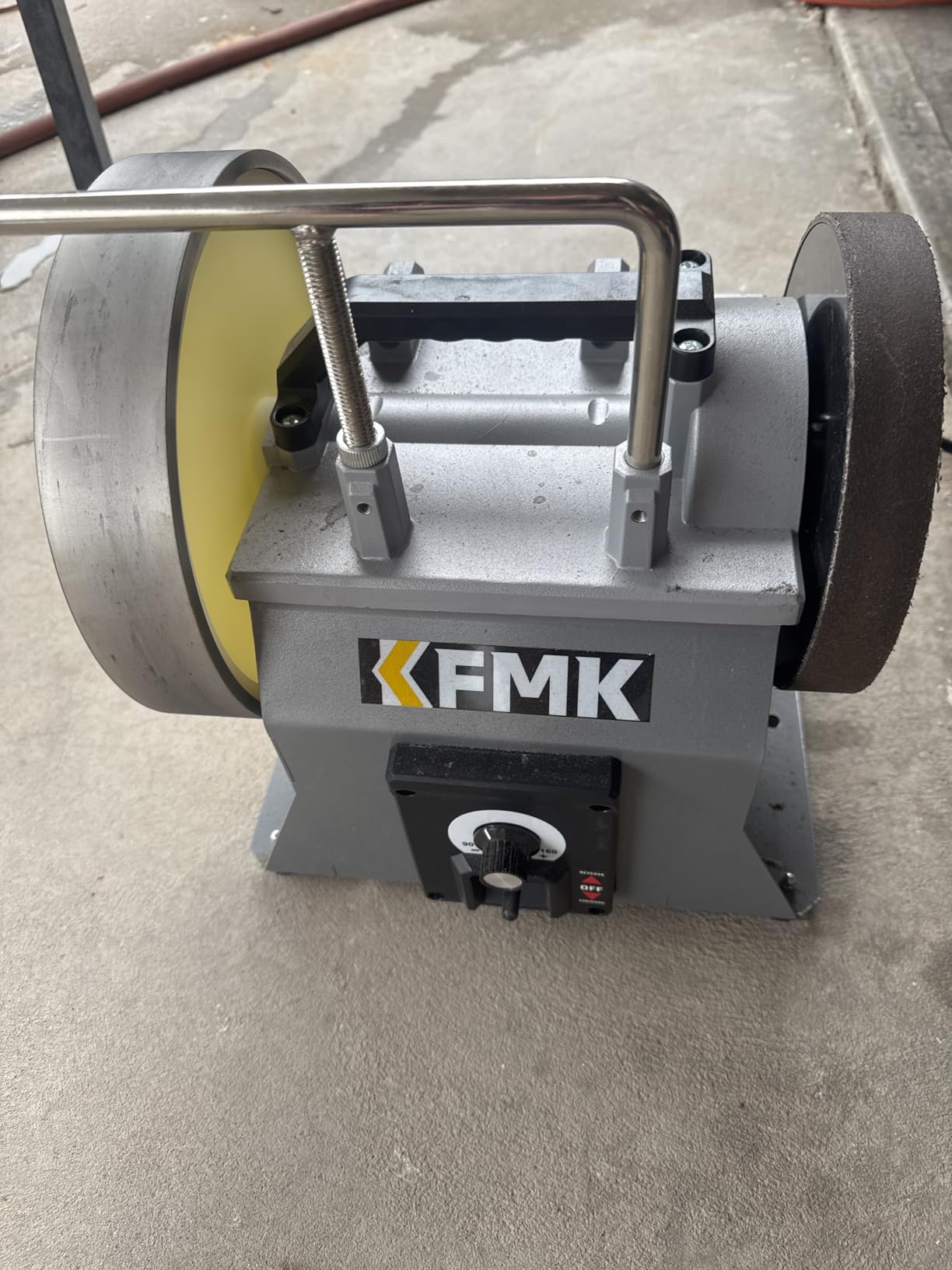
Owners rate it as a capable mid-priced wet sharpener that covers knives, chisels, lathe tools and carving tools, and the variable speed plus water cooling are the features cited most often. Two-direction rotation means it can be set up for whichever cutting direction you prefer at the lathe.
The recurring cautions are practical. The leather wheel must be used in one direction only or it will cut into the leather, and getting the workpiece square to the wheel takes practice in the first sessions. Both are habits rather than defects, but you should know them before the first afternoon.
What variable speed buys you at the lathe
Turning tools span a wider range of work than chisels do. A parting tool wants a fast, coarse removal, while a spindle gouge fingernail edge wants a slow, controlled pass. A fixed-speed stone forces you to change pressure or dwell, and pressure is exactly what gouges you do not want to apply consistently.
With speed under your control, the wheel speed becomes another tool for managing heat, which matters more on hardened HSS than on mild stock.
Who should skip this system
Skip it if you expect it to double as a fixture that holds a gouge for you, because the supplied support is a platform rather than a gouge jig. It is also a poor match for someone who wants a fixture that covers chisels, plane irons and turning tools in a single locked setup.
12. Bucktool 10 Inch Variable Speed Wet Sharpening System
BUCKTOOL 10″ 1.2A Variable Speed Wet Sharpening System,Two Way Rotation
Variable 90 to 160 RPM,1.2 amp motor,10 inch wheel,8 inch leather stropping wheel
Pros
- Variable 90 to 160 RPM plus reverse rotation
- Water tray keeps the wheel cool
- Two position jig support for consistent angles
- Covers chisels gouges scrapers and scissors
Cons
- 1.2 amp motor bogs down on larger harder work
- Supplied jigs and accessories are basic
- Fixed 8 inch leather wheel limits finishing options
The Bucktool covers much the same ground as the machine above it, with a 1/5 horsepower 1.2 amp motor running the 10 inch aluminum oxide stone at 90 to 160 RPM. The water tray keeps the wheel cool and limits residue buildup, and a two-position jig support helps you hold a consistent grinding angle horizontally or vertically.
What it does well is rotation. Pushing the power switch up or down reverses the direction, which is the practical benefit for anyone who sharpens on the pull cut or works both-handed. Buyers also like the tool coverage, from chisels and gouges through scrapers, cutters, scissors and cleavers.
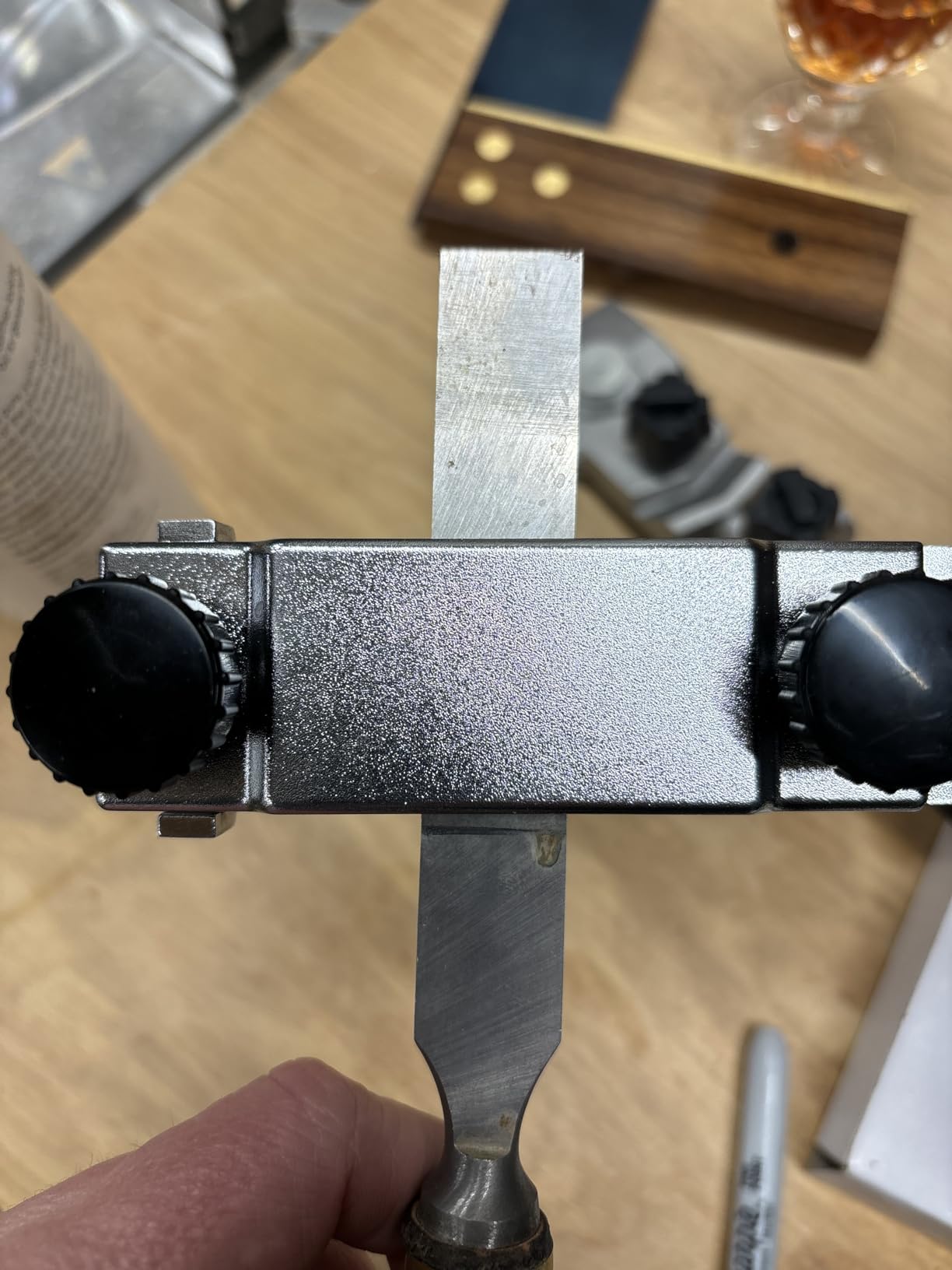
It carries the lowest average rating among the wet sharpeners in this roundup, and the reviews show why: the machine’s specifications are more impressive than the parts that come with it. Reviewers point to the modest 1.2 amp motor bogging down on larger, harder work and to supplied jigs that are less refined than the machine itself.
A fixed 8 inch leather stropping wheel also limits your finishing options compared with a system that lets you vary the strop surface, and you will need to keep an eye on wheel dressing and alignment as the stone wears.
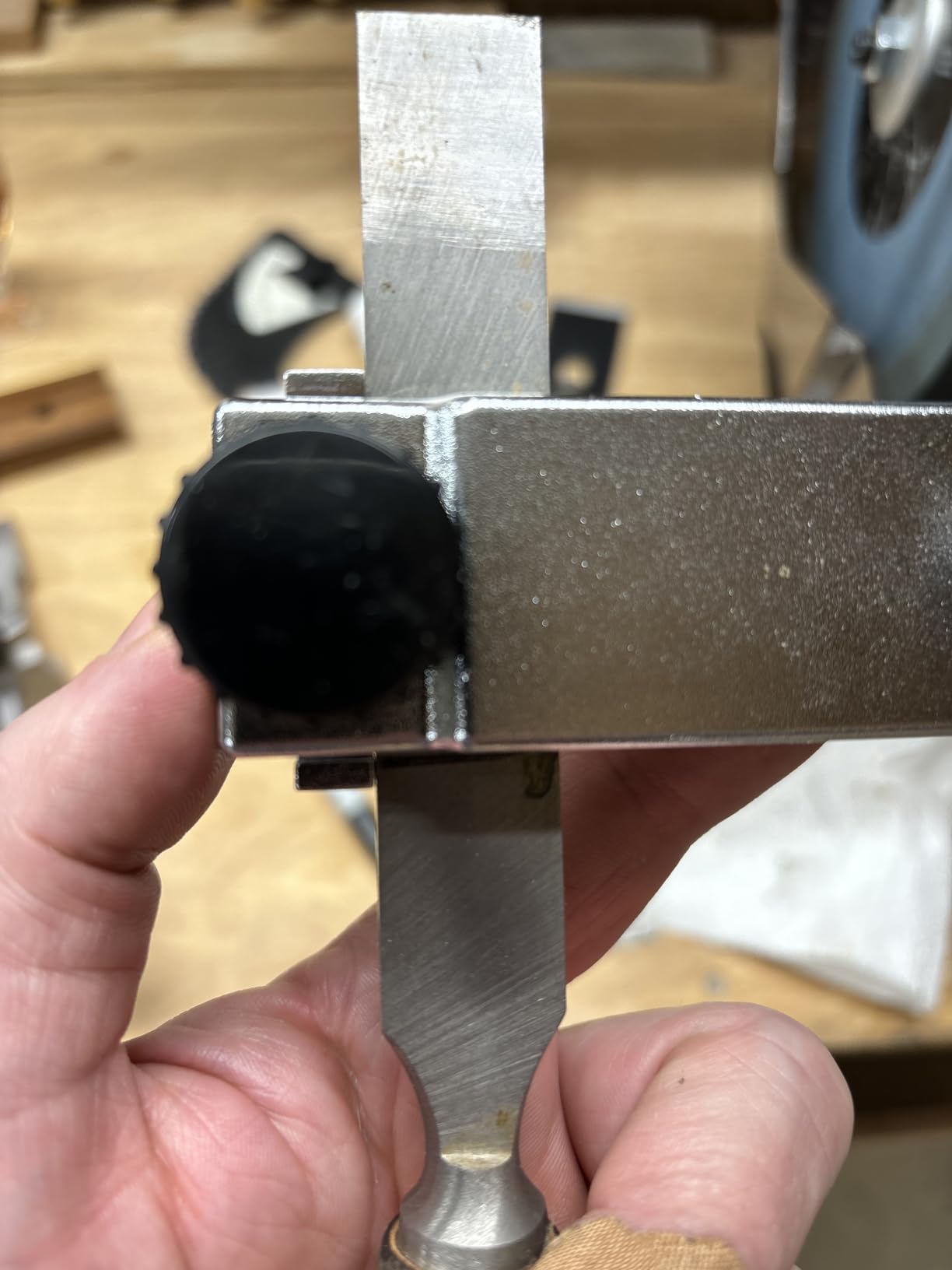
Where the motor rating shows up
A 1.2 amp motor handles a bowl gouge bevel or a chisel without complaint. It struggles when you ask it to take a heavy cut across a wide tool, where the stone loads up and the wheel speed drops. For touch-up and routine edge work that is a non-issue; for repeated heavy shaping it is the bottleneck.
That is the practical dividing line: if your sharpening is mostly maintenance, the extras like the angle guide, honing compound and chisel jig cover you. If you regularly reshape blunt steel, buy more motor than you think you need.
Who should skip this system
Skip it if your work involves large cleavers, axes or heavy stock removal, because the motor will not keep up. It is also the weaker pick of the two variable-speed wet machines here for anyone willing to spend a little more for a stronger motor.
Buying Guide: How to Choose a Woodturning Sharpening System
The single most useful decision is not which brand you buy, it is whether your fixture locks. A cam-locked or lever-locked jig that holds its setting is worth more than an expensive jig that drifts a few degrees between sessions, because drift is what produces multi-faceted bevels and heavy corrective grinding later.
Judge the grinder first. Around 1750 RPM is the working range for hand tool grinding. Above that you work faster and burn steel faster; below it, a wet stone becomes the sensible alternative. Our broader picks for the machine side are in the bench grinder roundup.
Check wheel diameter and face width before you buy anything else. An 8 inch wheel beats a 6 inch one because a smaller wheel leaves concave curves across a wide bevel, and a 1.5 inch face beats a 1 inch face for the same reason.
Decide whether you also sharpen chisels and plane irons. A turning-only fixture is cheaper and simpler, but adding stone-based sharpening later costs more than buying a system with a platform from the start.
Measure your bench. Grinder-based systems occupy a fixed footprint and need clearance under the wheels for their bases. Wet sharpeners need a place where water is acceptable, and a wall of pegboard or shelving keeps spare jigs, stones and dressers within arm’s reach of the lathe rather than buried in a drawer. Our wall organization picks cover the storage side of a small shop.
Plan consumables. Belts and wheels are replaced items, and a spare coarse wheel or a diamond dresser is worth ordering with the system rather than after your first dull-grind session.
Buy the angle references, not just the hardware. A tool setter or a printed geometry table costs little and is the cheapest way to stop removing steel you did not need to remove.
Grinder speed is the decision most beginners get wrong
A standard bench grinder running around 3400 RPM will take the temper out of a good gouge faster than most people expect, and the blue discolouration is the warning sign. A slow-speed machine around 1750 RPM lets you feel the bevel, keeps the wheel cool, and gives a jig time to do its job. This is the clearest technical divide between the products in this roundup.
What actually costs money after the purchase
Beyond the system itself, the running costs are replacement wheels or belts, a diamond dresser for aluminium oxide wheels, and any extra jigs your tool mix demands. Diamond and CBN wheels need far less dressing than white aluminium oxide, which wears unevenly and contributes to chatter, and that difference shows up in how often you touch the system each year.
Carbide cutters are a separate line item. Carbide cannot be returned to a factory edge and does not respond to CBN, stone or oxide wheels, so those tips get rotated or replaced rather than sharpened. Plan your carbide tool count accordingly rather than expecting the same system to cover them.
Do you actually need a jig for every tool?
No, and this is the most useful money-saving fact in the article. Jigs are strictly needed for bowl and spindle gouges, whose concave flutes will not sit flat against a tool rest. Skews, scrapers, parting tools and bedans are flat-edged and can be sharpened on a simple adjustable-angle platform, which several experienced forum members treat as the sensible default.
That reframes a buying decision. A new turner can start with a slow-speed grinder, one gouge jig, a platform and a set of grooved stones for honing, and add specialty fixtures only when a specific grind demands it. Where the kit lives matters just as much: keeping blanks, turning tools and sharpening gear in dedicated, reachable storage means a session with a dull edge never ends in a trip across the shop, and our wood storage system guide covers the shelving side of that.
How often should you sharpen?
Short answer: as often as needed, with a hone far more often than a grind. Working practice is a hone every fifteen to twenty minutes and a full grind only when the bevel is genuinely dull or damaged, because every grind removes steel and every hone removes almost none.
If your cuts are drifting, glazing or burning, fix the edge before you change technique. A surprising share of what looks like a skill problem on the lathe is a dull tool being forced.
Frequently Asked Questions
What is the best sharpening system for woodturning tools?
For most turners the best sharpening system bundles a slow-speed grinder around 1750 RPM with a locking jig. The Peachtree Pro Grind is our top pick because it covers bowl and spindle gouges, skews, chisels and plane irons in one kit, backed by more than a thousand reviews. A basic setup of grinder, gouge jig, platform and grooved stones is enough for most shops.
What is the best sharpening tool for lathe tools?
It depends on the tool. A gouge jig is genuinely necessary for bowl and spindle gouges because their concave flutes will not sit flat on a tool rest. Flat tools such as skews, scrapers, parting tools and bedans need only an adjustable-angle platform. For touch-ups, grooved waterstones that match the tool contour handle contoured edges that a flat stone cannot.
What is the best grinder for sharpening lathe tools?
A slow-speed bench grinder running about 1750 RPM is the practical answer, because the low speed gives you time to feel the bevel and keeps heat away from the temper of your steel. Look for an 8 inch wheel rather than 6 inch, since smaller wheels leave concave curves on a wide bevel, and prefer a wider face. Cast iron bases with anti-vibration feet keep jig alignment steady.
Can one woodturning sharpening system also sharpen chisels and plane irons?
Yes, but only if you choose a system with a large slotted platform and a tool holder. The Pro Grind and the four-piece kit both cover chisels and hand plane irons alongside turning tools, and wet sharpeners handle chisels and plane irons well. A turning-only fixture setup will not, so buying for both jobs now costs less than adding stone-based sharpening later.
Do I need a sharpening jig for woodturning?
For gouges, yes. Bowl and spindle gouges have concave flutes that cannot be held against a flat tool rest, so a jig is the practical way to get a repeatable bevel angle without destroying the tool. For flat tools it is optional, because skews, scrapers, parting tools and bedans sharpen fine on an adjustable-angle platform.
How often should I sharpen woodturning tools?
Hone frequently and grind rarely. A hone every fifteen to twenty minutes of turning keeps a good edge and removes almost no steel, while a full grind should happen only when the bevel is genuinely dull or damaged. Every grinding pass removes material permanently, so regular honing is what keeps a short bowl gouge in service for years.
Conclusion: The Sharpening System Decision in 2026
Best woodturning sharpening systems all solve the same problem, which is not sharpness but repeatability. The Pro Grind Sharpening System is our pick for 2026 because it covers the widest set of tools, includes the setup jigs other systems sell separately, and carries the largest body of user reviews among the jig systems here. If you already own a bench grinder, the Wolverine grinding jig is the reference platform other jigs are measured against, and the RIKON grinder is the slow-speed machine most owners pair with a fixture.
Start with the narrowest kit that solves your actual problem: a slow-speed grinder, a gouge jig, a platform, and a set of grooved stones at the lathe for honing. Add specialty fixtures when a specific grind demands one, not before. If your shop also handles chisels and plane irons, choose a system with a full platform now, because adding stone-based sharpening later costs more than buying it once.
And practise more than you buy. Forum consensus is blunt about this: most disappointing results come from skill, not from the system, and once you own a complete setup it is repetitive sharpening that builds the technique. Use the buttons above to check current pricing, then set up your station somewhere you can reach it from the lathe.