
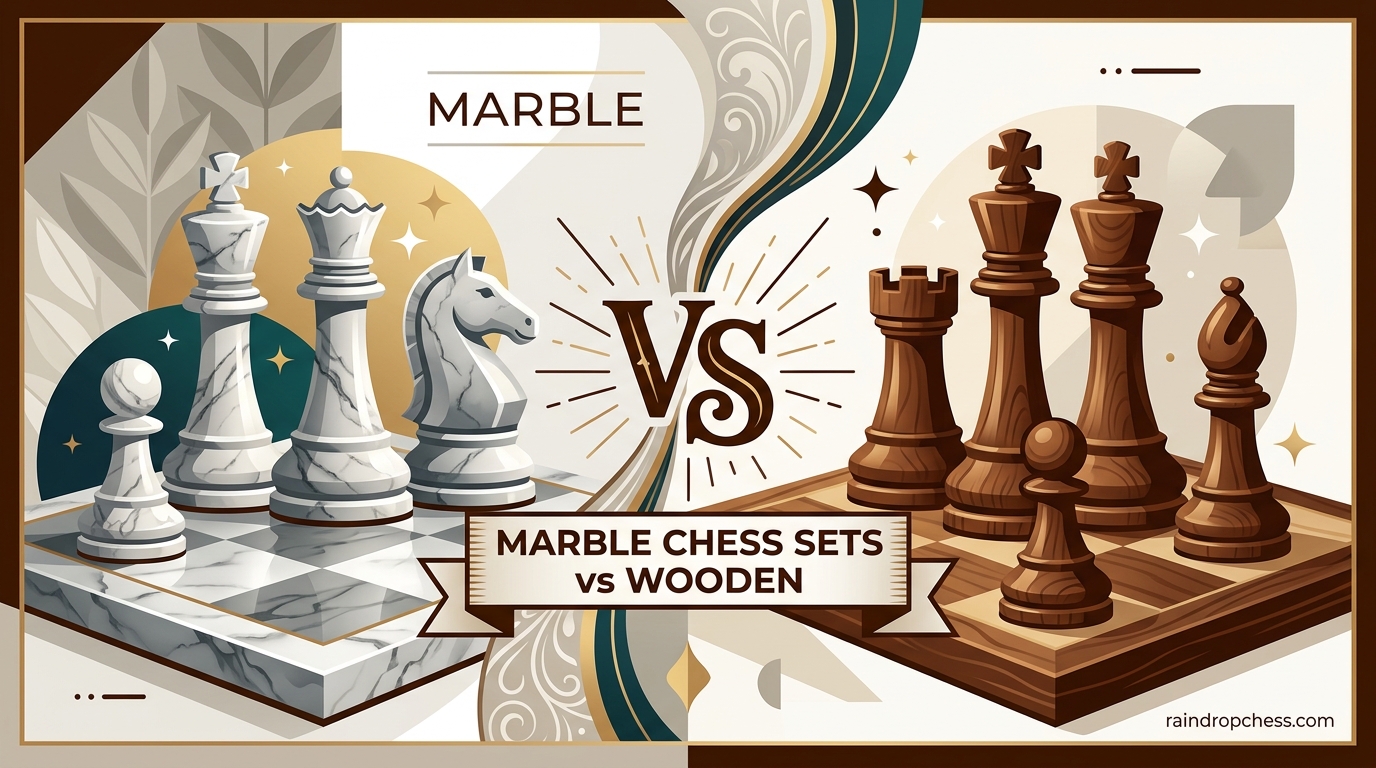
A practical comparison of two premium chess set materials for real gameplay
When you are investing in a quality chess set, the material matters far more than most buyers realize. Two dominant choices compete for your attention: marble and wood. Both materials have passionate advocates, and both have been used for centuries to craft chess sets that range from functional to extraordinary. But if you are like most buyers, your primary question is simple: which one is actually playable?
The honest answer is that wooden chess sets win on playability, while marble chess sets win on display aesthetics. This does not mean marble sets are worthless or that wood is the only sensible choice. Rather, it means each material serves different priorities well. Understanding those priorities will help you choose a set that matches how you actually use your chess board.
This guide compares marble and wooden chess sets across the factors that matter most for actual gameplay: weight and handling, durability and maintenance, visual appeal, price considerations, and tournament compatibility. By the end, you will have a clear picture of which material belongs in your home.
Table of Contents
Marble vs Wood Chess Sets: Quick Comparison
| Factor | Marble Sets | Wooden Sets |
|---|---|---|
| Weight | Heavy (3-6+ lbs per piece) | Light to medium (1-3 lbs per piece) |
| Durability | Brittle; chips and cracks when dropped | Flexible; handles impacts better, repairable |
| Maintenance | Requires careful cleaning; no acidic products | Simple periodic oiling; tolerates standard cleaners |
| Price Range | $150 to $2000+ | $50 to $2000+ |
| Aesthetics | Luxurious, unique veining, light reflection | Warm, classic, natural grain patterns |
| Best For | Display, occasional play, luxury gifting | Regular play, tournaments, daily use |
| Climate Sensitivity | High; can crack with temperature changes | Moderate; adapts to indoor environments |
| Repairability | Difficult; visible scars remain | Easy; refinishing hides most damage |
Material Properties: Weight, Feel, and Handling
Weight and Stability
Marble chess pieces are noticeably heavier than their wooden counterparts. A single marble king can weigh 4 to 6 ounces or more, while a wooden king typically stays under 3 ounces. This weight creates a grounded, deliberate feel when you move pieces. Some players appreciate this stability because it prevents pieces from being accidentally knocked during intense moments. Others find the weight makes rapid play cumbersome and causes hand fatigue during long games.
Wooden pieces glide more naturally across the board. The lighter weight enables quicker piece movement, which matters during blitz games or when you are playing competitive tournaments that stretch for hours. The difference sounds subtle but becomes apparent the moment you play more than a few games with each material.
— Reddit user, r/chess community
Surface Texture and Grip
Polished marble has a smooth, sometimes slick surface that feels luxurious under your fingers but can be less grip-friendly during fast play. Quality marble sets often include felt bottoms on pieces to help them glide smoothly while reducing scratching against the board. Still, the smooth surface takes getting used to if you are switching from wood.
Wooden pieces, especially those with oiled or unfinished surfaces, offer better grip. Your fingers catch the wood more naturally, which aids in piece placement during rapid sequences. Many competitive players specifically prefer wood for this handling characteristic alone.
The Staunton Design Factor
Standard tournament regulations require Staunton-style pieces regardless of material. This classic design ensures consistent piece proportions and weighted bases that meet competitive standards. Both marble and wood sets commonly feature Staunton designs, but the weight distribution differs noticeably between materials. A marble Staunton piece feels fundamentally different from a wooden Staunton piece, even if they share the same visual proportions.
Durability and Maintenance: Which Material Lasts Longer?
Marble: Beauty with Fragility
Marble is a natural stone that offers stunning aesthetics but comes with genuine fragility concerns. When marble pieces are dropped on hard surfaces, they can chip, crack, or shatter in ways that wooden pieces simply do not experience. The material is calcite-based, which makes it susceptible to impact damage. A piece that chips on its edge or corner is difficult to repair without visible scarring.
Forum discussions consistently surface the same complaint: marble pieces are too brittle for regular play. Multiple Reddit users have described their marble sets as “too brittle to actually play with” after experiencing chipping during normal use. This is not universal, but it is common enough that serious players take note.
— Reddit user, r/chess community
Wood: Proven Resilience
Quality wooden chess sets, especially those crafted from maple, walnut, or sheesham, handle accidental drops with grace that marble simply cannot match. Wood is flexible enough to absorb impacts without cracking. When wooden pieces do get dings or scratches, they can be sanded down and refinished to look new again. This repairability extends the life of wooden sets considerably.
Wooden pieces also handle the rigors of tournament play better. They stack more easily in travel cases, fit more comfortably in bags, and generally survive the logistics of being moved around more gracefully than marble sets.
Maintenance Requirements
Marble requires careful maintenance to preserve its appearance. Harsh chemicals and acidic cleaners can etch the polished surface, leaving dull spots that ruin the visual appeal. You need pH-neutral cleaners specifically designed for stone surfaces. Spills should be addressed quickly to prevent staining, especially on lighter marble varieties.
Wood maintenance is simpler by comparison. Periodic oiling or waxing keeps wooden pieces in excellent condition. Standard wood care products are generally safe to use. Minor scratches can be addressed with simple refinishing techniques that most owners can manage at home.
Climate and Environmental Considerations
Marble is more sensitive to environmental conditions than wood. Temperature swings and humidity changes can cause hairline cracks to develop in marble pieces over time, particularly in colder climates or when sets are stored in unheated spaces. This sensitivity means marble sets require more stable environmental conditions to remain in good condition.
Wood expands and contracts with humidity changes but adapts better to typical indoor environments. Quality wooden chess sets tolerate the normal temperature and humidity fluctuations found in most homes without developing cracks or structural issues. This resilience makes wood more forgiving for long-term ownership.
Visual and Aesthetic Differences
The Luxury Appeal of Marble
Marble chess sets deliver visual impact that few other materials can match. Each piece features natural veining patterns that make your set genuinely unique. The polished surface reflects light in ways that create visual drama in any room. Carrara marble, the premium variety used in high-end chess sets, offers a white background with elegant grey veining that has decorated aristocratic homes for centuries.
When you place a marble chess set on a coffee table or in a display cabinet, it commands attention. The weight of the pieces communicates permanence and prestige. Marble sets serve as statement furniture that elevates the aesthetic of any space they occupy. For buyers who want their chess set to function primarily as an art object, marble delivers on that promise.
The Classic Warmth of Wood
Wooden chess sets offer warm, natural tones that age gracefully over time. Different wood types provide beautiful contrast: light maple pieces against walnut boards, or sheesham with inlaid contrasting squares. Hand-carved wooden pieces showcase fine craftsmanship that reveals itself upon close inspection.
Wood does not demand the spotlight in the same way marble does. Instead, wooden sets offer subtle elegance that works well in more understated spaces. A quality wooden set can live in a living room without announcing itself as a conversation piece, yet it remains beautiful and functional. This versatility makes wood more practical for many home environments.
Display vs Play: The Aesthetic Trade-off
Marble sets dominate as decorative statement pieces. They look stunning on coffee tables and in display cabinets, creating visual focal points that guests notice immediately. The display-only reputation of marble is well-earned; serious chess players often warn newcomers that marble sets are not designed for regular gameplay.
Wooden sets serve double duty as functional game sets and tasteful room accents. They do not require the same level of ceremonial handling that marble demands. You can pull out a wooden set for a casual game without worrying about chipping a piece or scratching the surface. This practical flexibility makes wood the more versatile choice for most buyers.
Price Range Considerations
Marble Set Pricing
Marble chess sets typically range from $150 to $2000 or more, depending on the quality of stone, craftsmanship, and size. Premium Carrara marble sets command the highest prices due to the material’s prestige and the skilled carving required to shape stone into detailed chess pieces. Smaller decorative marble sets fall at the lower end of the price spectrum, while large, museum-quality sets reach into luxury pricing territory.
The material cost drives much of the pricing. Sourcing quality marble, cutting it precisely, and finishing it to a polish requires specialized equipment and expertise. This investment is reflected in final retail prices.
Wooden Set Pricing
Quality wooden sets range from $50 to $2000+, offering a wider entry point for buyers at different budget levels. Inexpensive wooden sets at the $50 to $100 level often provide excellent playability for beginners. The craftsmanship in this price range has improved dramatically over the past two decades, meaning you do not need to spend heavily to get a functional, attractive set.
At the higher end, master-crafted wooden sets rival marble in price and craftsmanship. Premium woods like ebony and rosewood, combined with hand-carved details and tournament-grade specifications, produce sets that serious collectors prize. The upper end of wooden sets is not cheaper than marble; it is simply differently priced, reflecting craftsmanship and rare materials rather than stone extraction.
Value Proposition: What Are You Paying For?
Marble costs reflect display prestige and material uniqueness. You are paying for the visual impact, the conversation-starting quality, and the prestige of owning a stone chess set. If these factors are your primary motivation, marble delivers.
Wood costs reflect craftsmanship, playability focus, and long-term durability. A quality wooden set pays dividends through years of regular play without the anxiety of potential chipping that marble invites. For pure play value, wood typically delivers more return per dollar spent, because the practical benefits align with how most people actually use chess sets.
— Reddit user, r/chess community
Tournament Play and Competitive Considerations
Tournament Regulations and Standards
Official tournament chess requires Staunton-style pieces meeting specific size and weight guidelines. These regulations exist to ensure consistency across competitive play. Both marble and wood sets can meet these standards, meaning neither material is disqualified from tournament use by regulation alone.
Interestingly, marble’s weight can actually provide stability advantages during competitive play. Heavy pieces are less likely to be accidentally displaced during intense moments. If you play carefully and deliberately, marble’s stability could appeal to your style.
Practical Gameplay Experience
Long tournament games lasting three or more hours reveal significant differences between materials. Marble’s weight can cause hand fatigue during extended play, as your fingers work harder to pick up and place heavier pieces. The smooth surface also requires more deliberate placement to avoid scratches, adding mental load to an already demanding activity.
Wood’s lighter feel accommodates rapid move-making more naturally. Competitive players who participate in tournaments regularly often prefer wood for this practical reason. The less taxing handling during long games translates to better focus when it matters most.
Transport and Portability
Marble sets are significantly heavier and more awkward to transport. A full marble set with a matching board can weigh 30 pounds or more, making it a burden to carry to club meetings or tournament venues. The brittleness also raises concerns about damage during transport, even with careful packing.
Wooden sets travel more easily. Most quality wooden sets weigh under 15 pounds total, and the pieces handle the jostling of travel better than marble. If you attend tournaments or club meetings regularly, this portability advantage matters considerably. Many competitive players own dedicated travel sets that would never be confused with their display-quality home boards.
The Playability Verdict: When to Choose Each Material
Choose Marble If:
- You prioritize aesthetics and display quality above all else
- You play chess only occasionally and treat the set as a showpiece
- You want a prestige gift or statement furniture item
- You appreciate the ritual of deliberate, slow play
- You have a climate-controlled environment that protects stone
Choose Wood If:
- You play chess regularly, whether casually or competitively
- You want a set that will last decades with regular use
- You prefer lighter pieces that enable faster play
- You need a set that is practical to transport and maintain
- You value repairability and long-term durability
The Bottom Line
For actual playability, wooden chess sets are the practical winner. They are lighter, more durable, easier to maintain, and more affordable at every level. Marble sets excel as luxury display pieces but fall short for regular gameplay. If you want one set that does it all, choose wood. If display is your primary goal and you accept the trade-offs, marble remains a legitimate luxury choice that rewards careful handling.
Frequently Asked Questions
Is marble or wood better for chess boards?
Wood is generally better for actual gameplay while marble wins for display purposes. Wooden pieces are lighter, more durable, and easier to handle during long games. Marble offers superior aesthetics but chips more easily and can cause hand fatigue during extended play. The right choice depends on how you plan to use your set most often.
What is the best material for a chess set?
For regular play, quality wood such as maple, walnut, or sheesham is the best material. It is durable, repairable, and offers excellent handling characteristics that support both casual and competitive chess. For display-only or luxury purposes, marble is the premium choice. The best material ultimately depends on your priorities and how frequently you play.
Do marble chess pieces break easily?
Marble pieces are more brittle than wood and can chip or crack if dropped on hard surfaces. While polished marble looks resilient, it lacks wood’s natural flexibility. Once damaged, marble is difficult to repair invisibly, and the scars remain visible. Wood handles impacts better and can be refinished if damage occurs, extending the set’s usable life considerably.
Does the queen start on her own color?
Yes, in standard chess rules, the queen always starts on her own color. The white queen begins on a white square, and the black queen starts on a black square. The queen’s position is the center of the back rank, with the king and queen facing each other. This rule applies regardless of what material your chess board is made from.
Are marble chess sets worth the money?
Marble chess sets are worth the investment if you prioritize display aesthetics, unique natural patterns, and luxury appeal. However, for pure playability value, wood delivers better return on your investment. Consider how you will use the set most often before deciding. If you primarily want an impressive decorative piece, marble delivers. If you want a working chess set that will see regular use, wood is the more sensible choice.