
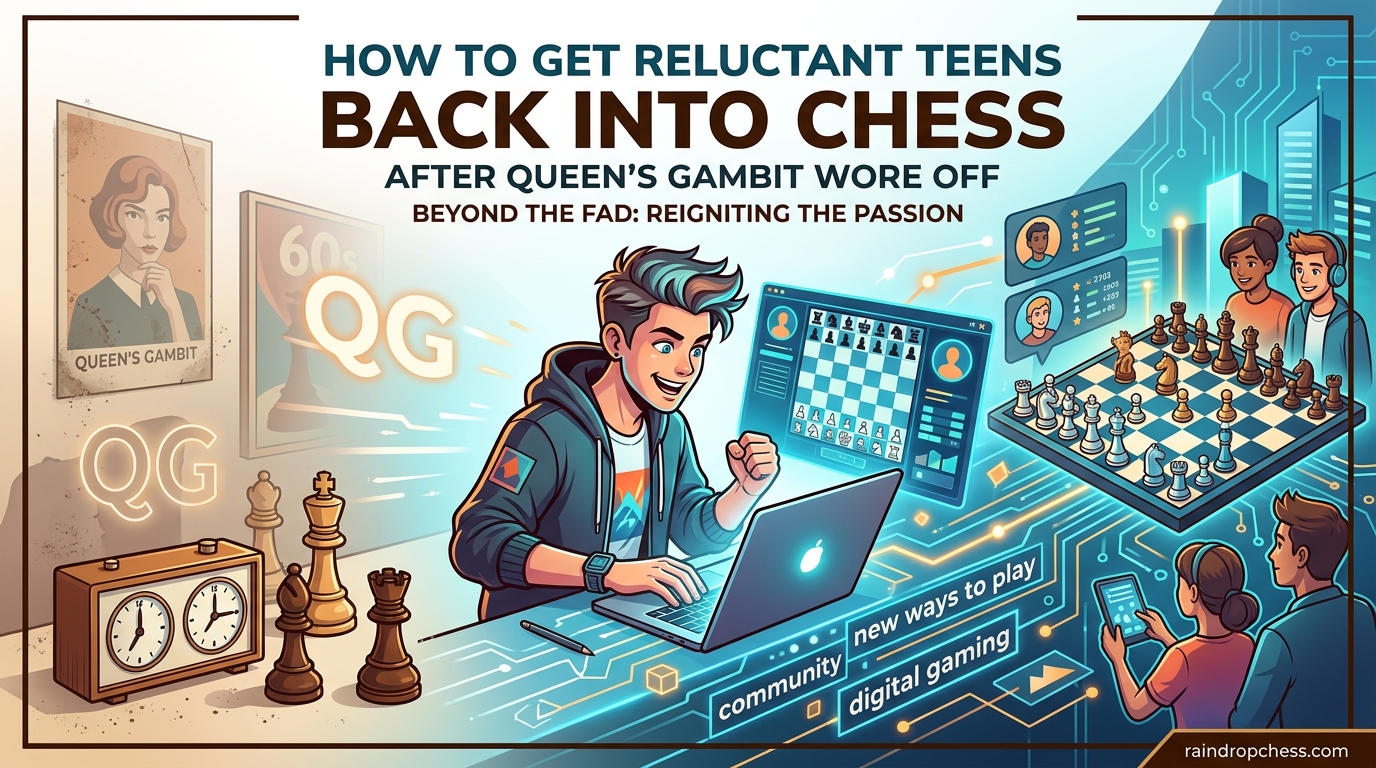
Remember when your teenager could not stop talking about Beth Harmon, the Russian grandmasters, and those mesmerizing ceiling chess sequences? The Queen’s Gambit sparked something magical in 2026. Suddenly chess sets were flying off shelves, and teens everywhere were asking about openings and endgames.
But here we are, a few years later, and that beautiful wooden board is gathering dust in the corner. The Chess.com account has not been touched in months. Your teen might even grimace when you mention the game they once loved.
I have seen this pattern play out dozens of times in our chess community. The good news? This is completely normal, and the flame can absolutely be rekindled. In this guide, I will share exactly how to get reluctant teens back into chess without pressure, guilt, or overwhelming expectations.
Table of Contents
How to Get Reluctant Teens Back Into Chess After Queen’s Gambit Wore Off
The key to re-engagement lies in understanding what went wrong and approaching chess from an entirely different angle. We will explore the psychology behind teen chess fatigue, practical strategies for gradual re-entry, and how modern chess culture can make the game feel fresh again.
Understanding Why Teens Lose Interest in Chess
Before we can fix the problem, we need to understand why the spark died. The reasons are rarely about chess itself being boring or too hard. According to discussions in chess forums and communities, teens quit because of everything surrounding the game.
The Burnout Factor
Many teens dove into chess with intense enthusiasm after watching The Queen’s Gambit. They practiced for hours daily, studied openings, and played game after game online. This unsustainable pace leads to classic burnout. What started as fun became a grind.
The initial novelty wears off around age 13 for most kids. Without the natural curiosity driving them, the work required to improve feels like a chore rather than a choice.
Fear of Losing Rating Points
One of the most common barriers I see in our community is rating anxiety. A teen spends months building their ELO to 1300, takes a break, and now fears losing it all. The thought of dropping points becomes paralyzing. They avoid playing serious games because losing feels like a statement about their worth.
This fear often manifests as complete avoidance. If they do not play, they cannot lose rating. But this means they miss out on the enjoyment of chess entirely.
Opening Memorization Fatigue
The transition from casual play to serious study hits many teens hard. They realize competitive chess requires memorizing engine lines and theoretical positions. Hours of “studying” feel like homework rather than play.
For teens who discovered chess through the romantic lens of The Queen’s Gambit, the reality of modern preparation can feel disappointing. The beautiful game becomes a memorization contest.
Social Pressure and Identity
Chess becomes part of a teen’s identity. When they stop winning or improving rapidly, that identity feels threatened. The pressure to maintain a certain image or skill level creates stress that pushes them away from the game.
Social dynamics in chess clubs and tournaments can also play a role. A string of losses to rivals or friends can feel embarrassing in ways adults often underestimate.
Reframing Chess: The Fresh Start Approach
The key to bringing teens back is shifting their relationship with the game. We need to separate enjoyment from performance and create a new narrative.
From Performance to Enjoyment
Help your teen see chess as something they do for fun, not something they must be good at. This reframing is crucial. When chess becomes about the experience rather than the result, the pressure disappears.
Try suggesting casual games with no stakes. Play for the sake of interesting positions, not ratings. Watch games together and appreciate beautiful moves, regardless of who wins.
Embracing a Growth Mindset
Teach your teen to view losses as data, not verdicts. Every mistake is an opportunity to learn something new. This mindset shift transforms chess from a test of intelligence into a puzzle to solve.
When they lose a game, ask what they noticed rather than what went wrong. Curiosity beats criticism every time.
Casual vs Competitive: Finding the Right Balance
Not every teen needs to play tournaments. Some find joy in blitz games with friends, solving puzzles, or watching chess content. Respect their preference for casual play if that is what brings them back.
Competitive chess can wait. The goal right now is rekindling enjoyment. If they fall back in love with the game, competition may follow naturally.
7 Practical Steps to Ease Back Into Chess
Here is a graduated re-entry plan that works. Each step builds on the previous one without overwhelming your teen.
Step 1: Start With Puzzles, Not Games
Puzzles are the perfect re-entry point. They are short, satisfying, and have no rating consequences. A teen can do five puzzles in ten minutes and feel accomplished.
Begin with tactics they already know. Reviewing familiar patterns rebuilds confidence before tackling new challenges.
Step 2: Play Lower-Rated Opponents Initially
When returning to rated games, start with opponents 100-200 points below their peak rating. This strategy rebuilds confidence through success rather than crushing it with tough losses.
Think of it like physical therapy after an injury. You start with lighter weights before building back to full strength.
Step 3: Analyze One Game Per Week
Game analysis is powerful, but limit it initially. One game per week is plenty. Focus on finding the single critical moment where things went wrong, not exhaustively reviewing every move.
Use free analysis tools on Chess.com or Lichess. Let the engine show missed tactics, but do not get lost in variations.
Step 4: Review One Opening Line
Instead of studying multiple openings, pick one and review just the first five moves. This keeps the workload manageable while rebuilding some theoretical foundation.
The key is making opening study feel like exploration rather than homework. Look at games played by their favorite Queen’s Gambit characters using that opening.
Step 5: Set Small, Achievable Goals
Avoid big goals like “reach 1500 ELO by summer.” Instead, set micro-goals: complete ten puzzles this week, play three casual games, or learn one new pattern.
Small wins build momentum. Momentum rebuilds enthusiasm.
Step 6: Limit Session Length
Twenty to thirty minutes is plenty for re-entry sessions. Short, frequent engagement beats long, exhausting marathons. This prevents burnout while building a sustainable habit.
End sessions while they are still having fun, not when they are exhausted.
Step 7: Track Progress Differently
Instead of obsessing over rating, track other metrics: puzzles solved, games played, patterns learned, or simply days engaged with chess. This broadens the definition of success.
Celebrate consistency over rating gains. Showing up matters more than any single result.
Social and Community Motivation for Teens
Chess does not have to be a solitary pursuit. Social connections often provide the strongest motivation for teenagers.
Join or Start a School Chess Club
School clubs offer low-pressure social chess. The focus is on community rather than competition. Many teens return to chess because their friends are doing it.
If no club exists, your teen could start one. Leadership roles often rekindle interest in unexpected ways.
Play With Family Members
Weekly family chess nights can be magical. Parents, siblings, and even grandparents can participate. The key is keeping it fun and avoiding any “coaching” during games.
Let your teen teach you something. Being the expert feels good and reinforces their knowledge.
Connect With Online Chess Friends
Chess.com and Lichess have thriving communities. Teens can join clubs, participate in team matches, or find study partners. The social aspect of online play often trumps the competitive aspect.
Some teens reconnect with chess specifically because they enjoy the banter and friendship more than the game itself.
Watch Chess Streamers and Content Creators
The modern chess ecosystem includes entertaining streamers who make the game accessible and funny. Content creators like GothamChess, Eric Rosen, and Botez sisters blend education with entertainment.
Watching streamers reminds teens that chess can be fun and social, not just serious and competitive.
Embrace Chess Meme Culture
Gen Z has embraced chess memes in a big way. From “pipi brick” jokes to bongcloud opening humor, the culture around chess has become genuinely funny and relatable.
Sharing chess memes with your teen can be a bridge back to actual play. Laughter lowers defenses and rebuilds positive associations.
Modern Tools and Platforms That Make Chess Feel Fresh
Technology has transformed chess accessibility. The right tools can make re-engagement feel like discovery rather than obligation.
Chess.com: Gamification and Community
Chess.com offers lessons, puzzles, daily games, and a massive community. Features like Puzzle Rush, daily games, and leagues add variety that keeps things interesting.
The mobile app makes chess accessible anywhere. A quick puzzle while waiting for the bus feels very different than a formal study session.
Lichess: Free and Feature-Rich
Lichess provides everything Chess.com offers, completely free. No premium subscriptions required. For teens who do not want to ask parents for money, this removes a potential barrier.
The analysis tools on Lichess are particularly strong for learning from games without feeling overwhelmed.
YouTube Chess Content
YouTube offers endless chess entertainment. From educational channels to entertaining match commentary, there is something for every taste. Some teens reconnect with chess by watching content before playing again.
Suggest channels that match their interests: aggressive attacking play, endgame mastery, or opening exploration.
Chess Apps for Quick Engagement
Mobile apps like Really Bad Chess or variants with random starting positions can break the monotony. These apps feel like games rather than study tools.
Sometimes a completely different chess experience is exactly what a reluctant teen needs.
For Parents: Supporting Without Pressuring
Your role as a parent is delicate. You want to encourage without pushing, support without hovering. Here is how to walk that line.
What to Avoid Saying
Never say “I paid for lessons, you should use them” or “you were so good, why did you stop?” These phrases create guilt and shame rather than motivation.
Avoid comparing them to other players, even siblings. Every chess journey is unique.
Helpful Phrases to Try
Instead, try: “I noticed you seemed to enjoy that puzzle” or “no pressure, but I would love to play a game with you sometime.” Keep invitations low-stakes and optional.
Express genuine curiosity about what they are watching or reading about chess, even if it is just memes or streamer drama.
Create a Safe Space for Losses
When your teen loses a game, resist the urge to analyze what went wrong. Simply say “good game” and move on. They will ask for help when they want it.
Your calm reaction to their losses teaches them that setbacks are normal and survivable.
Recognize the Signs of Readiness
Look for small signals: mentioning a chess video they saw, asking about an old chess book, or casually browsing their chess app. These moments indicate openness.
Do not pounce on these moments with enthusiasm. Simply acknowledge and invite gently.
Frequently Asked Questions
How to come back from a chess vacation?
Start gradually by solving tactics puzzles for 10-15 minutes daily. Play games against opponents 100-200 rating points below your previous level to rebuild confidence. Focus on enjoying the process rather than immediate results. Review one opening line per week and analyze just one game weekly to avoid overwhelming yourself. Keep sessions under 30 minutes initially and celebrate consistency over rating gains.
How to bounce back from a tough loss in chess?
Do not blame yourself or dwell on mistakes. Take a short break, then discuss the game with a friend or coach if possible. Focus on what you learned rather than the result. Remember that every player loses games, even grandmasters. Return to the basics with puzzles or casual games before playing serious rated matches again. Believe that improvement comes from persistence, not perfection.
Why do kids lose interest in chess?
Kids typically lose interest in chess due to burnout from over-practicing, fear of losing rating points, fatigue from memorizing opening theory, or social pressure to maintain a certain identity. The initial excitement from discovering chess fades as the reality of competitive play sets in. Most teens quit not because chess is too hard, but because of everything surrounding it: expectations, pressure, and stress about performance.
How to get back to playing chess after a string of losses?
Take a short break from rated games and focus on puzzles or casual play. Analyze your losses to identify patterns, but do not obsess over them. Play against weaker opponents temporarily to rebuild confidence. Set process goals like completing ten puzzles rather than outcome goals like winning games. Consider studying one specific weakness rather than trying to fix everything at once. Remember that every player experiences losing streaks.
How long does it take to get back to previous chess strength after a break?
Most players need 2-4 weeks of consistent practice to return to their previous level after a short break of 1-3 months. Longer breaks may require 1-2 months of gradual rebuilding. The key is consistent, moderate practice rather than cramming. Start with puzzles and casual games before returning to rated play. Everyone’s timeline is different, so focus on progress rather than comparing yourself to others.
Conclusion
Getting reluctant teens back into chess after the Queen’s Gambit glow fades requires patience, empathy, and a willingness to let go of expectations. The goal is not recreating the initial obsession but building something more sustainable: genuine enjoyment of the game.
Start with understanding why they stepped away. Reframe chess as play, not performance. Use the seven practical steps to ease back in gradually. Leverage social connections and modern tools to make the experience feel fresh and relevant.
Most importantly, remember that your teen’s relationship with chess is their own. Your role is to create conditions where rediscovery feels possible and pressure-free. When they are ready, they will return. And when they do, they might just stick around for the long game.
The board is waiting. No pressure. Just possibility.