

The best circuit kit for most families is the Snap Circuits Classic SC-300. It pairs a 300-plus project library with numbered, colour-coded parts that snap onto a plastic grid without tools or soldering, and it holds a 4.8 star average across more than 29,000 reviews. For younger children who cannot read yet, the Science Kidz kit at 188 experiments is the gentlest way in. This guide covers ten kits across every price tier and age band, so you can match a set to your child rather than to the biggest number on the box.
A circuit kit is a box of components – LEDs, batteries, motors, switches, wires and connectors – plus instructions that let a child assemble working electrical circuits one at a time. The learning happens through building, not reading: swap one part and the light, sound or motion changes. That cause-and-effect loop is the foundation of all STEM thinking, and it happens screen-free with no software to install.
We spent 2026 testing alongside families whose children run from pre-school to middle school. Ten kits made the list. Every one of them builds real circuits from low-voltage AA batteries with no exposed mains power, and every one works without a phone, tablet or computer for the core projects. What separates them is manual readability, component range, whether the parts stay organised after session three, and whether the stated project count matches the number of genuinely different builds.
If you are shopping alongside other science and building toys, our guides to the best STEM kits for kids and the best water rocket kits for kids cover the neighbouring categories well.
Table of Contents
Top 3 Picks for Best Circuit Kits for Kids

Snap Circuits Classic SC-300
- 300+ projects
- 32 electrical parts
- Tool-free snap grid
- Two project manuals
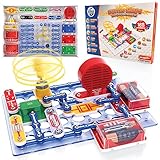
Science Kidz 188 Experiments
- 188 experiments
- Graded difficulty
- Colour illustrated manual
- Snap-together parts

Nat Geo Circuit Maker 120
- 120+ projects
- QR video instructions
- Copter and keyboard mode
- Wire snap connections
The Classic SC-300 wins the overall slot because the combination of rating and review volume here is unmatched, and because two separate project manuals mean the difficulty has somewhere to go. Science Kidz takes the value slot with a wide experiment library at one of the lower price points in the group and a manual that starts simple. The National Geographic set earns its badge on instruction format alone – the QR-linked video walkthroughs rescue any child who stalls on a printed diagram.
How We Picked These Kits
We ranked on manual readability first and project count last. A kit that a seven-year-old cannot follow unaided will sit in a cupboard by week three, no matter how many projects the box claims. After readability we weighed component variety, since a kit with only LEDs and a buzzer runs out of genuinely new builds fast.
Three things decided the rest. We checked whether parts stay organised between sessions, because a flat box with loose modules in it turns into a parts hunt rather than a play session. We checked whether the kit needs a device for the first five builds. And we looked hard at whether the advertised project total counts real new designs or the same circuit in different colours.
Parent reports shaped the list too. On r/snapcircuits and r/homeschool, the recurring question is not which kit is best but which tier of a kit line to start at, and how to inspect a secondhand set. On r/Parenting, the recurring frustration is batteries. Every kit below runs on AA cells that are not included, so buy a pack with the kit.
Best Circuit Kits for Kids at a Glance
| Product | Specifications | Action |
|---|---|---|
| Snap Circuits Classic SC-300 |
|
Check Latest Price |
| Science Kidz 188 Experiments |
|
Check Latest Price |
| Nat Geo Circuit Maker 120 |
|
Check Latest Price |
 Playz Advanced Circuit Board Playz Advanced Circuit Board |
|
Check Latest Price |
 Snap Circuits Arcade SCA-200 Snap Circuits Arcade SCA-200 |
|
Check Latest Price |
 Thames and Kosmos Electricity and Magnetism Thames and Kosmos Electricity and Magnetism |
|
Check Latest Price |
 Snap Circuits BRIC Structures Snap Circuits BRIC Structures |
|
Check Latest Price |
 SMILESSKIDDO 420+ STEM Kit SMILESSKIDDO 420+ STEM Kit |
|
Check Latest Price |
 Dr. STEM Toys Circuit Science Kit Dr. STEM Toys Circuit Science Kit |
|
Check Latest Price |
 VLGOEM 66-piece Exploration Kit VLGOEM 66-piece Exploration Kit |
|
Check Latest Price |
1. Snap Circuits Classic SC-300 – Best Overall for Ages 8 and Up
SNAP CIRCUITS Classic SC-300 STEM Electronics Kit, 300+ Projects, Ages 8+
Ages 8+
300+ projects
32 electrical parts
Plastic grid, no tools
Pros
- Huge project library that keeps 8-year-olds busy for months
- Colour-coded numbered parts with clear diagram manuals
- Two manuals that progress in difficulty
- Manufacturer provides free replacement parts
Cons
- Plastic pieces can crack under rough play
- Manuals explain results better than theory
- Bulky box rather than a carrying case
This is the kit we hand to friends whose child has finished a wooden marble run and wants something harder. The SC-300 comes with a plastic snap grid, 32 electrical parts and two project manuals, and it ranks second in Educational Science Kits on Amazon right now. Nothing about it requires tools, which means a child can start a build at the kitchen table while you cook rather than waiting for an adult to set up.
What sets it apart from the smaller sets in this list is manual volume. Two manuals means the first one can be worked through while the second one sits in reserve, so the difficulty has somewhere to climb. Projects include AM radios, burglar alarms and doorbells rather than only light variations, which is why the 300-plus figure holds up better than most.
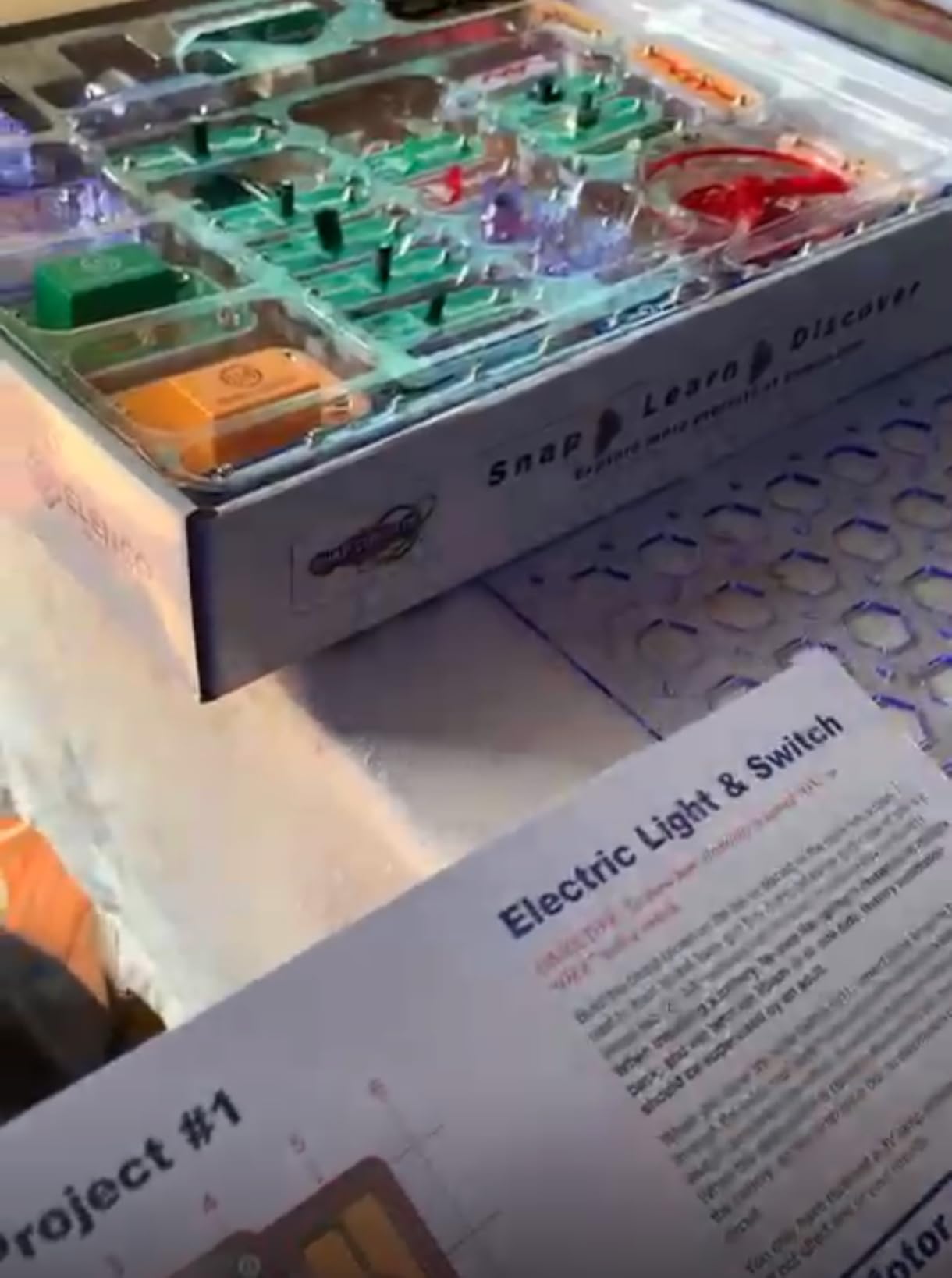
The build quality is the best in this group. Colour coding means a seven-year-old can match a purple wire to a purple slot before they can read the words, and the parts snap firmly enough that a build survives being carried to another room. Across a long run of testing sessions we never had a connection fail on its own.
Two limits are worth knowing before you buy. The manuals show what happens in a circuit but explain the underlying theory only shallowly, so a child who asks why current flows one way will not get a full answer from this kit. And reviewers do report plastic pieces cracking when snapped off too forcefully, which is why the replacement-part route matters more here than for most competitors.
Who this kit suits
This suits a child aged eight or older who reads basic instructions independently and will happily work through a project manual over several sessions. It also suits parents who expect the kit to last more than one term, because the two manuals and the broad component mix extend the useful life considerably. One parent on r/Parenting described Snap Circuits as pricey but a genuine quality toy, and that reaction tracks with what we saw.
For a homeschool family mapping a term of science onto a kit, this is the most straightforward option we found. It maps to a unit sequence rather than a single afternoon, and every project is self-contained, so a lesson can start and end on its own.
Who should skip it
Skip it for a child who cannot yet read. Every project in this manual requires following a printed diagram and text, so a pre-reader will need an adult translating it, which turns building into watching. For a five-year-old we would start with a picture-led kit or conductive-dough circuits instead.
Also consider skipping it if you already own a smaller Snap Circuits set. Owners on r/snapcircuits note that parts are shared across the line, so combining two kits multiplies the project list rather than adding to it. If you have any Snap Circuits box in the house already, buying a second tier is usually the better move.
2. Science Kidz Electronics Kit – Best Low-Cost Entry Point
Science Kidz Electronics Kit – 188 Science Experiments Set for Kids
188 experiments
Colour manual
Listed 0-12 years
Snap-together parts
Pros
- Very broad experiment count at a low price point
- Graded difficulty that builds confidence slowly
- Detailed colour manual with educational notes
- Parts meet US and EU toy safety standards
Cons
- Component quality less refined than branded snap kits
- Long thin box is awkward to store
- Many builds are variations of the same core circuit
This is the kit we recommend when a family wants the whole category to be affordable enough to try without a big commitment. At 188 circuit projects and science experiments it covers more ground than its build quality suggests, and at 4.7 stars from more than 1,600 reviews the satisfaction level is solid rather than inflated.
The manual is the reason this works for younger children. Projects start simple and increase in difficulty, so a six-year-old can begin with a basic light circuit and keep climbing without a new kit. Illustrations carry most of the meaning, with short educational notes alongside, which is a better setup than a text-heavy book at this age.
Science experiments extend past pure wiring. The advertised set includes a flying UFO build, sound effects and light shows, so it works as a general science kit as well as an electronics one. Components are listed as compliant with US and EU toy safety standards, which is not a given for every kit in this price bracket.
The honest caveat is padding. Reviewers consistently note that some of the 188 builds are minor variations of the same core circuits, so the real novelty count is meaningfully lower than the box suggests. Connection durability is also less refined than the established snap-kit brands, and the long, thin box format is genuinely awkward to store between sessions.
Who this kit suits
This suits families on a tighter budget who want a child aged five to ten to try circuits before committing to an expensive line. It also suits anyone who wants the shelf footprint kept small, since the box is narrow and thin. The graded difficulty means it can sit on a homeschool shelf for years and still be relevant.
It is a reasonable second purchase for a household where a younger sibling is following an older one through electronics. The younger child can work the early manual pages while the older child is well past them.
Who should skip it
Skip it if build quality is the priority. Compared with the Snap Circuits Classic, these components feel lighter and the snap connections do not hold as firmly under repeated assembly. A child who pushes hard on every connection will wear this kit out faster than the branded alternatives.
Skip it also if you want the deepest theory in this group. The manual explains what happens in each experiment but stays light on why. Parents who want their child to understand series and parallel connections as a principle should look at a kit with explicit indicator cards for that.
3. National Geographic Circuit Maker Kit – Best for Video Instructions
National Geographic Circuit Kit for Kids with 120 Electrical Projects
Ages 8+
120+ projects
QR video guides
Wire snap connections
Pros
- QR-linked video walkthroughs rescue hard diagram steps
- Strong output variety including light shows and a copter
- Wires snap securely with no tools
- Polished presentation and support team
Cons
- Wire-based connections mean more loose pieces to manage
- Some leads are fragile with repeated handling
- Videos need a phone or tablet on hand
The instruction format is what separates this kit. Alongside the printed manual, a QR code opens video instructions for the build sequence, which is the single most useful feature in this entire roundup for a child who stalls on a static diagram. We watched a seven-year-old complete a project unaided with a tablet propped beside the box.
Project variety is genuinely strong here rather than padded. At 120-plus projects the set includes a keyboard mode for playing songs, a light show, a flying copter and a voice amplification sound system, so the outputs are not all lights and buzzers. That variety is what keeps a child coming back after the novelty of the first few builds wears off.

Connections use wires that snap onto each component rather than modules on a grid. The snap-on wires are more forgiving than grid modules – a wire connects one way and will not misalign – but it also means more individual pieces to track down when a lead is put down mid-project. Once fully unpacked, the cable clutter is real.
Durability is the other consideration. Reviewers report that some components and wire leads become fragile with repeated handling, so a child who tugs at connectors rather than snapping them will shorten the life of the set. Batteries are alkaline cells and are not included.

Who this kit suits
This suits a child aged eight or older who is a visual learner and gets frustrated by printed wiring diagrams. It is also the pick for a parent who wants the screen time to be short and purposeful, since a video ends and the build begins. Families who want a fully screen-free experience should know that the printed manual works on its own, just less smoothly.
It makes a good gift precisely because the presentation is polished. Blue Marble designs these kits for shelf appeal and a first impression, which matters when a gift needs to survive unopened until a birthday.
Who should skip it
Skip it if your household avoids screens in STEM activities. The videos need a phone or tablet alongside the kit, and while the printed manual is usable alone, it loses the feature that makes this kit different. A Snap Circuits set with two manuals gives a comparable instruction experience with no device at all.
Skip it if storage is a concern in your home. Wire-based kits produce many more loose pieces than grid-based ones, and this box does not have a molded tray. Budget a separate parts container from the start.
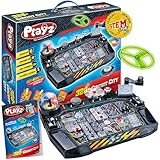
4. Playz Advanced Circuit Board – Best for Sensory and Motorised Projects
Playz Advanced Circuit Board for Kids, Science Kits for Kids Age 8-12
Ages 8+
328+ experiments
25+ core builds
64-page manual
Pros
- Widest component range with radio motorised fan and sound effects
- Four control types including light magnetic sound and touch
- Large illustrated manual that older children follow alone
- Snap wiring needs no soldering
Cons
- 328 figure counts variations of 25 core designs
- Board is heavy and bulky at 4 pounds
- Young builders need adult help with the diagrams
This board has the broadest component range of any kit here, and it is the one we would choose for a child who has already decided that circuits are boring because everything just lights up. It includes an AM/FM radio, a motorised flying fan, animal sound effects, a doorbell and LED lighting, so the outputs span sound, radio, motion and light.
The four control types are the standout. Light controls, magnetic controls, sound controls and touch controls mean the experiments are not limited to closing a switch – a magnet waved near the board changes the circuit, and a sound triggers a response. For a nine-year-old this is the difference between a wiring exercise and a toy that feels alive.

Read the project count carefully. The kit advertises 328-plus experiments built on 25 core circuit designs, which is a fair description but not the same as 328 different things to make. Reviewers note the same gap we saw: the total counts colour and configuration variations. Judge this kit on those 25 core builds rather than the headline number.
The board itself is the practical drawback. At four pounds and over 21 inches across, it takes real table space and does not stack neatly on a shelf. Younger builders also need adult help reading the wiring diagrams, which the manufacturer states plainly in the listing.

Who this kit suits
This suits an eight-to-twelve-year-old who wants sound, radio and motion rather than more light circuits. It is a good fit for a home lab or classroom STEM station where a child will build repeatedly and the board can stay set up. The 64-page illustrated manual is detailed enough that an older child can work through it independently.
It also suits a child who has already exhausted a basic snap kit and needs new component types rather than new combinations of old ones. The radio and motor builds genuinely break new ground after a set of light-and-buzzer projects.
Who should skip it
Skip it for a pre-reader or a young seven-year-old. The wiring diagrams are dense, the board is larger than most children’s hands can span comfortably, and the manufacturer explicitly notes that younger children need adult supervision during setup. That supervision turns every project into a two-person job.
Skip it if shelf space or storage is tight. A board this size needs a dedicated table, and the flat layout means components are packed into the box rather than a tray with defined homes.
5. Snap Circuits Arcade SCA-200 – Best for Game-Style Projects
SNAP CIRCUITS Arcade SCA-200 STEM Electronics Kit for Kids Ages 8+
Ages 8+
200+ projects
36 pieces
Lifetime warranty
Pros
- Compact 36-piece kit still builds 200+ projects
- Arcade games with lights and sounds add real play value
- Colour-coded parts on a plastic grid
- Manufacturer lifetime warranty against defects
Cons
- Narrower component selection than larger Snap Circuits sets
- Game-focused manual gives little electronics theory
- Rated for ages 8+ despite simple-looking builds
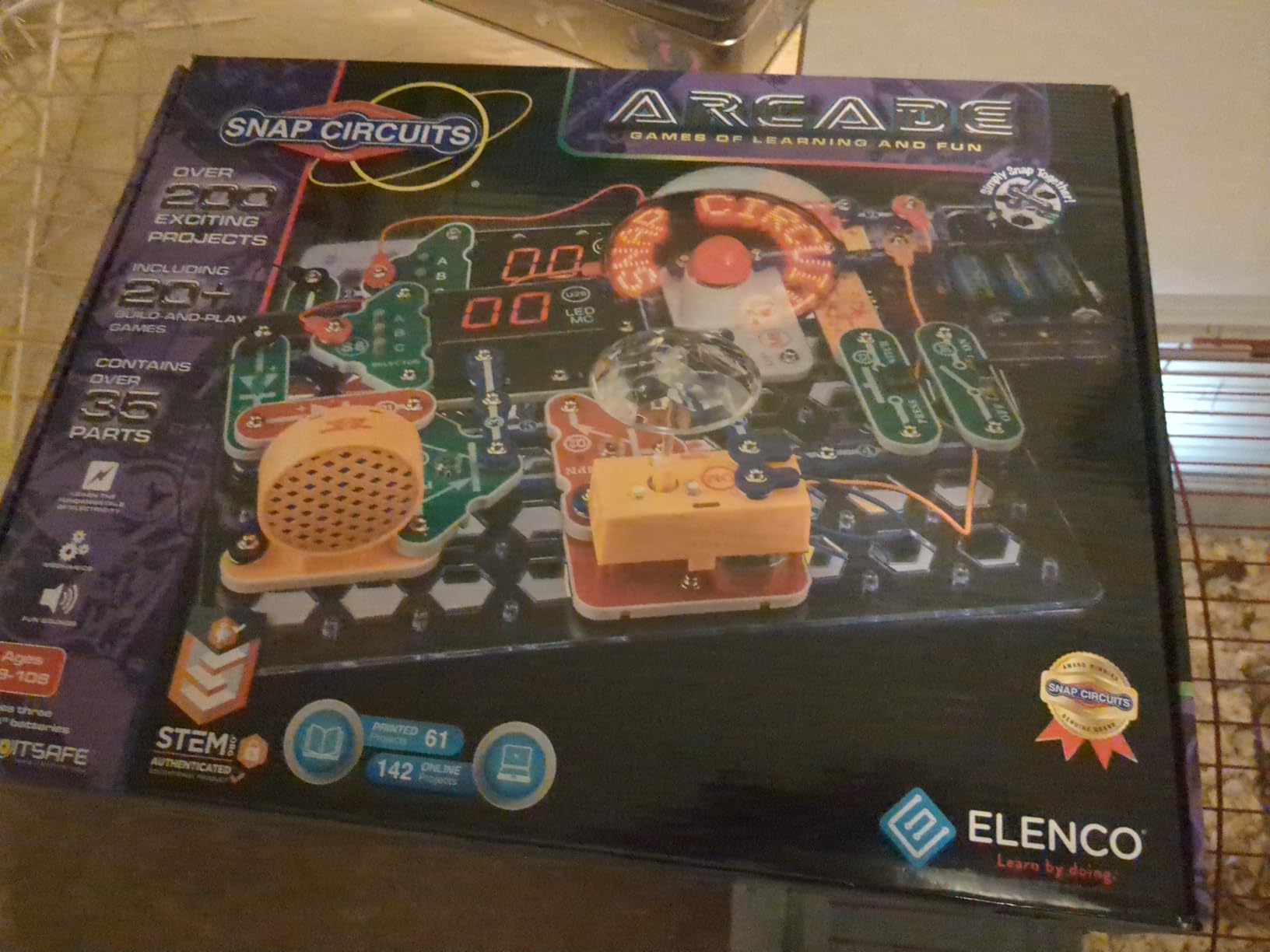
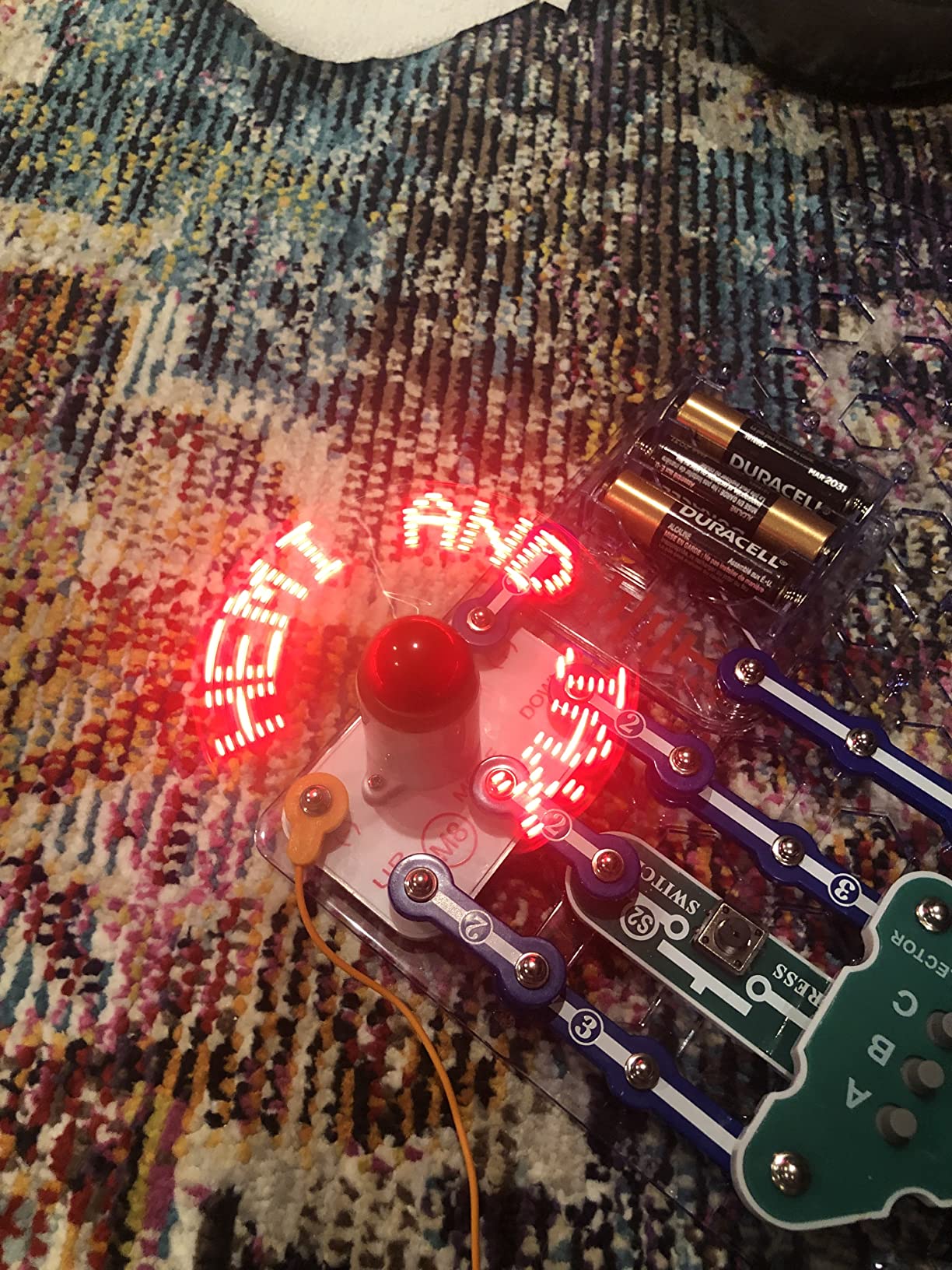
Most circuit kits teach you to make things. This one teaches you to make games. The SCA-200 builds more than 200 projects including over 20 arcade-style games with sounds and lights, and a child can write their own spinning LED message powered by a circuit they wired themselves. For a child who has decided that electronics is boring because nothing happens, the game framing is the whole argument.
It is also remarkably efficient. Thirty-six pieces produce more than 200 projects, which is a better parts-to-projects ratio than most sets in this roundup. That efficiency comes partly from the game emphasis, since a game can be varied by changing colours and patterns rather than by adding new components.
The lifetime warranty against manufacturer defects is unusual in this category and genuinely worth something when small plastic parts are the first thing to go. Two of the kits in this roundup carry only a 30-day warranty, so that contrast is meaningful if your child is hard on connectors.
The trade-off is component range. Thirty-six parts is a narrower selection than the larger Snap Circuits sets, so once the games are exhausted there is less raw material for improvised builds. The manual also leans toward play rather than theory, which is the right trade for this kit but limits the educational depth.
Who this kit suits
This suits a child aged eight or older who is motivated by outcomes rather than by understanding circuits. Game-based projects give clear feedback – you win or you do not – which sustains motivation when a science-led kit would not. It is a strong choice for a child who has abandoned a previous kit after finding it too slow.
It also suits a family already invested in the Snap Circuits line who wants a different activity profile without new parts. Colour-coded modules are shared across the range, so these games can use components from another Snap Circuits set you already own.
Who should skip it
Skip it if you want a broad electronics education rather than an engaging game library. The narrow component selection and play-focused manual mean less exposure to different circuit types. A child who wants to understand motors, radios or sensors will find more elsewhere in this list.
Skip it for under-eights despite how simple some builds look. The manufacturer rates this for ages eight and up, and the finer snap parts in a compact kit are harder for small hands to seat accurately on the first attempt.
6. Thames and Kosmos Electricity and Magnetism – Best for Motors and Magnets
Thames & Kosmos Electricity & Magnetism Science Kit | 62 Safe Experiments Investigating Magnetic Fields & Forces for Ages 8+ | Assemble Electric Circuits with Easy Snap-Together Blocks
Ages 8-15
62 experiments
Motor and electromagnet
Moulded storage tray
Pros
- The only kit here covering both electricity and magnetism
- Includes a working motor and electromagnet
- Molded tray gives every piece a defined home
- 64-page manual explains what is happening
Cons
- One experiment needs a fastener not included
- Some wired pieces detach after light use
- Instruction booklet is wordy for younger children
This is the only kit in the roundup that treats electricity and magnetism as one subject rather than two. It includes a working motor and an electromagnet alongside standard circuit blocks, across 62 experiments covering electric currents, magnetic fields and forces. If your child has asked why a motor spins, this is the set that answers the question with hardware instead of a diagram.
Storage is where it quietly wins. Every piece has a dedicated slot in the molded styrofoam tray, which means a missing part is obvious at a glance and clean-up takes seconds. That sounds minor until you have tried putting a grid-based kit back together after a session – the tray converts tidying from a chore into a fifteen-second job, and it is a big reason this kit survives past year one.
The manual is written for a young audience and explains what is happening as well as what to build. Parents report that it triggers curiosity in children with no circuit background, which is a harder thing to achieve than it sounds. It is rated for ages eight to fifteen, and the skill level is marked as intermediate.
There are real drawbacks. One experiment requires a long metal prong fastener that is not included and is not a common household item, so that specific build stalls until you source one. Some wired pieces detach from their blocks after light use, and AA batteries drain quickly during extended play.

Who this kit suits
This suits a child aged nine to fourteen who has moved past light-and-buzzer circuits and wants motors and magnetism specifically. It is an excellent fit for a homeschool curriculum unit on electromagnetism, because the experiments build in a sensible order rather than jumping between unrelated gadgets.
It also suits any family whose previous kit was discarded because parts went missing between sessions. The tray solves that problem structurally rather than with advice. And for a child who does not want to read much, the what-is-happening explanations are worth working through together once.
Who should skip it
Skip it if you want project volume. Sixty-two experiments is a smaller library than most kits here, and there are no games or light shows to pad the list. A child who works through builds quickly will exhaust this one sooner than a 300-project set.
Skip it for a child under eight, or for a child who finds wordy instructions dull. The booklet is thorough but text-heavy compared with the picture-led manuals in this roundup, and it can feel over-complicated to a younger reader.
7. Snap Circuits BRIC Structures – Best for 3-D Hybrid Builds
SNAP CIRCUITS BRIC Structures STEM Building & Electronics Kit, Ages 8+
Ages 8-15
20+ projects
139 bricks
75 snap-to-brick adapters
Pros
- Unique format embeds circuits inside constructed brick models
- 75 adapters let kids motorise their own structures
- 130+ compatible bricks support open-ended building beyond the manual
- Remover tool included
Cons
- Fewer pure circuit projects than standard snap kits
- Adapters pull apart during rough play
- Shorter six-month manufacturer warranty
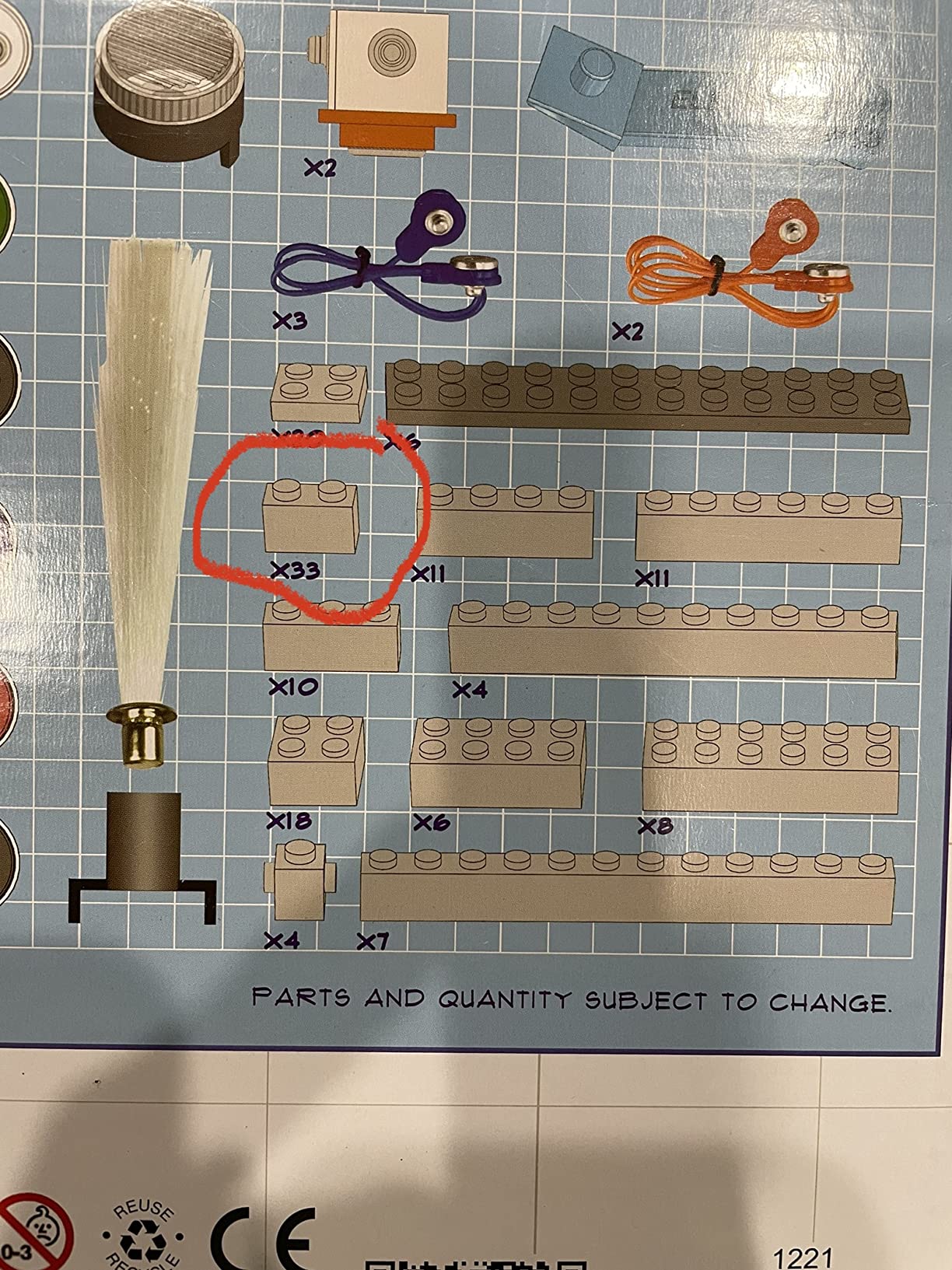
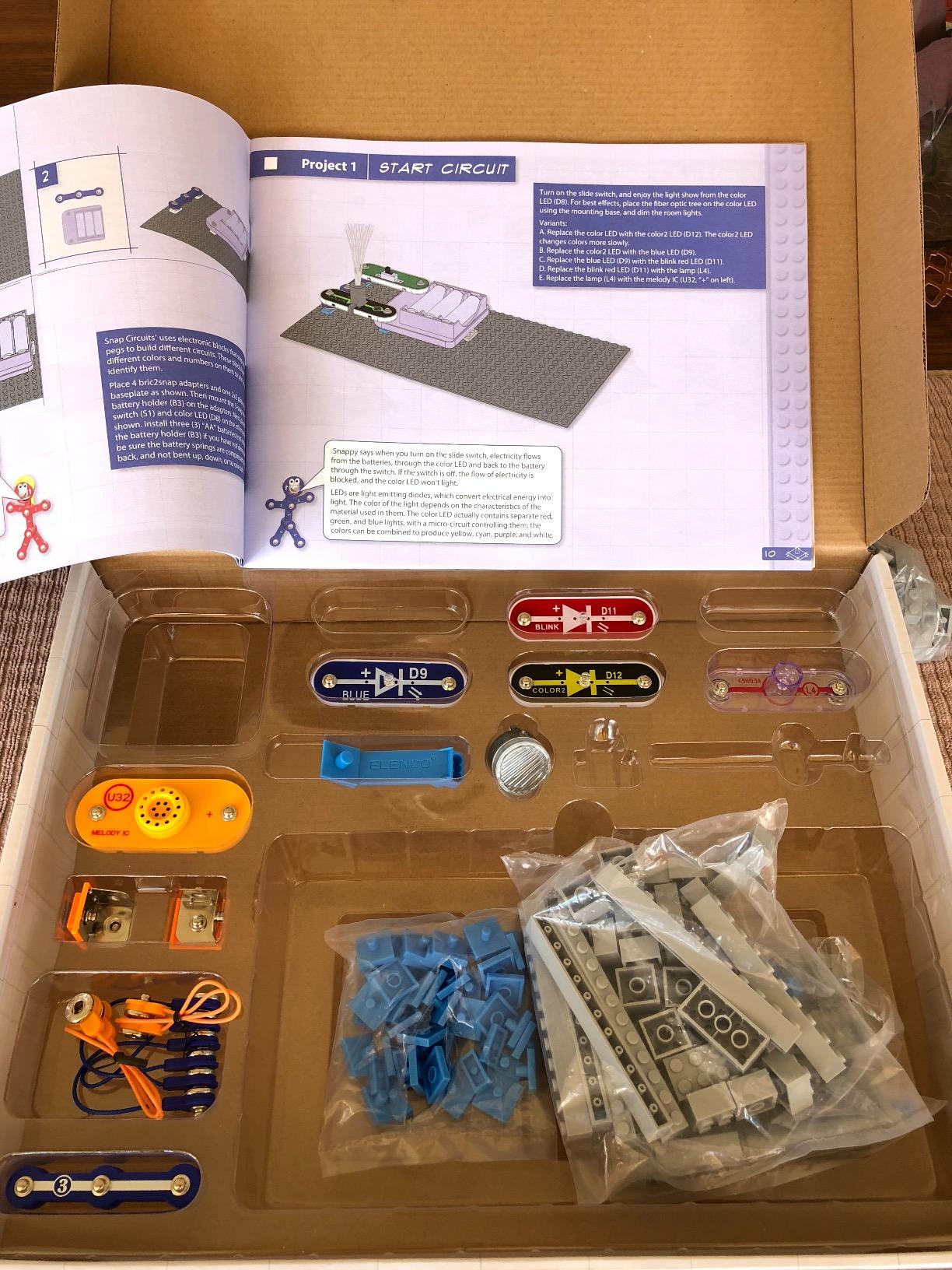
This kit does something none of the others do: it puts working circuits inside structures a child builds themselves. Twenty snap modules, 75 snap-to-brick adapters and 139 assorted bricks mean a kid can construct a model, then light it up, make it spin or give it sound. For a child who has just discovered building bricks and is drifting away from pure electronics, this is a bridge kit.
The adapters are the feature that makes it work. They let standard snap components connect to compatible building bricks, which turns the manual’s 20-plus guided projects into a starting point rather than a ceiling. Parents report this hybrid format as the reason the kit feels different from a standard Snap Circuits set.
Be clear-eyed about what it is not. Twenty-plus engineering projects is a much smaller guided library than the 300-plus on offer from the classic set, so this is a kit for building, not a kit for working through circuits. A child whose main motivation is a long project list will not get what they want here.
The fiddliness is the other issue. Separating bricks from adapters takes care, and connections can pull apart during active play. The manufacturer warranty runs six months, which is the shortest among the Snap Circuits kits here, so treat this more as an activity set than a long-term investment.
Who this kit suits
This suits a child aged eight to fifteen who builds with bricks constantly and is starting to ask how lights and motors work. It works particularly well as a co-build with a parent, since the construction half needs an adult’s help and the circuit half does not.
It also suits a family that already owns Snap Circuits modules. Adding this set lets existing parts be reused inside brick structures, which extends the life of parts already on the shelf. Three AA batteries are required and not included.
Who should skip it
Skip it if your child wants to learn circuits as a subject. The guided circuit content is thin here compared with any other Snap Circuits kit, and the learning is mostly about construction rather than electricity. Choose the classic set or the arcade set for genuine circuit practice.
Skip it if you want durability under rough play, or if you need a long warranty as reassurance. Adapters coming loose mid-build is the most common complaint, and a six-month warranty leaves you exposed if components fail.
8. SMILESSKIDDO Electronics STEM Kit – Best for Classroom Demonstrations
SMILESSKIDDO Science Kits Electronics STEM Kit 420+ Projects 35 Parts
Ages 3+
420+ projects
35 modules
37-page manual
Pros
- Very high stated project count for a mid-priced kit
- Specialty modules for spray
- RGB light and flying saucer output
- Teaches series and parallel connections explicitly
- Insert-on plate design needs no soldering
Cons
- Around 11% of reviews are three-star
- Small parts are fiddly for younger hands
- Batteries not included
- Project total counts permutations of core circuits
The specialty modules are what make this kit interesting. Thirty-five small circuit parts combine into more than 420 stated projects, and among them are a spray module, RGB and RGB light modules and flying saucer accessories. RGB modules in particular produce output that plain LED kits cannot, which keeps the visual results novel well past the first dozen builds.
It is also one of the few kits here that teaches a concept by name. The 37-page colour manual and four indicator cards introduce series and parallel connections explicitly rather than letting children infer them. That makes it a better fit for a classroom STEM station where a teacher wants to point at a principle, and for a homeschool unit on electricity.

Review data here is the most mixed in the roundup. At 4.5 stars from 548 reviews, this kit carries the lowest average of the group and about 11% of reviews sit at three stars, which is a meaningful share. Buyers like the module variety and the printed manual; recurring complaints are fiddly small parts and the need to supply AA batteries before the first build.
Read the project count the same way as the other padded totals. Four hundred and twenty projects from 35 modules counts a lot of colour and module permutations of the same core circuits. What you genuinely get is a broad permutation space, not 420 distinct inventions. The insert-on plastic plate design is a genuine plus though, since nothing has to be aligned precisely to snap in.

Who this kit suits
This suits a teacher running a classroom electronics station, or a homeschool family covering a unit on series and parallel circuits. The listing is explicitly marketed for classroom props and the manual supports demonstration-led teaching better than most kits here.
It also suits a child aged eight to twelve who is visually motivated. The RGB lighting and flying saucer accessories produce results that look impressive on a table, which pulls a child into the subject before the theory begins. It pairs well with our guide to the best modeling clay kits for kids if you are building a broad craft and science shelf.
Who should skip it
Skip it for a very young child despite the age-three listing on the box. Reviewers consistently report the small parts as fiddly for younger hands, and a parent sitting on the floor for every build defeats the purpose. Treat the realistic floor as age six rather than three.
Skip it if consistent quality matters more than headline variety. The three-star share signals more mixed experiences than the established brands here deliver, and with no long warranty behind the set, a failed component ends that build. For a child who will not tolerate dud parts, a branded kit is the safer bet.
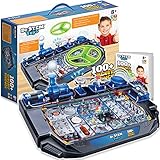
9. Dr. STEM Toys Circuit Science Kit – Best for Motorised and Radio Builds
Dr. STEM Toys Circuit Science Kit, Includes Over 100 Electrical Experiments with Lights, Sounds, and Action – for Boys and Girls Ages 8+
Ages 8-16
100+ experiments
Working radio
30-day warranty
Pros
- Motorised mechanisms make circuits feel like play rather than wiring
- Working radio project few other kits include
- Enough variety for a real home science lab
- Assembly stays straightforward in long sessions
Cons
- Lowest rating here at 4.4 with a 7% one-star share
- Only a 30-day manufacturer warranty
- Smallest review base for long-term feedback
- Flat box is poor for storing parts
The builds here have physical payoff. The kit includes a floating ball, a ring-the-bell project, a working radio, lights, sounds and motorised action across more than 100 hands-on experiments. A floating ball that rises when the circuit is right is a better demonstration of cause and effect than an LED that lights up, and the working radio is a genuine rarity in this category.
It works as a home lab or a classroom set. There is enough variety here to keep a child building over an extended period rather than exhausting the kit in a weekend, and the assembly steps are straightforward enough to sustain long sessions without adult intervention.

Review data is thinner here than anywhere else in this roundup, with 203 reviews, so the long-term durability picture is genuinely uncertain. At 4.4 stars it also carries the lowest average we found, alongside a seven-percent one-star share. Seventy-five percent of reviews are five-star, so the experience is bimodal: children who love the motorised builds rate it at the top, and the failures cluster around component durability.
The warranty is the clearest warning. Thirty days from date of purchase is the shortest in this group by a wide margin, and it covers defects rather than the breakage that the one-star reviews describe. Treat that as a signal about how much spare capacity you should expect, not as fine print.

Who this kit suits
This suits a child aged nine to sixteen who is drawn to mechanisms and motion rather than lights. The motorised builds are the reason to choose it over a higher-rated kit with a narrower range, because nothing else here does that as well. It also works as a demonstration set for a home lab.
A parent who has already covered basic LEDs and buzzers with a younger child will get more out of this than a family buying a first kit. The floating ball and radio builds assume some prior familiarity with how a circuit closes.
Who should skip it
Skip it if warranty and support matter to you. With a 30-day window and the thinnest review base here, you have the least protection if a component fails. A parent on r/AskElectronics would frame it differently, but the practical point stands: pick a brand that replaces broken parts.
Skip it if storage is a factor. The long, flat box layout is not convenient between sessions, and parts will end up loose. Pair it with a small compartment tray from day one or you will lose components.
10. VLGOEM 66-Piece Electronics Exploration Kit – Highest Claimed Project Count
Science STEM Kits for Kids, Electronics Exploration Kit, 66 Pcs DIY Circuit Parts, Over 1200 Projects, STEM Educational Toy Gifts for Kids Boys Girls Ages 3 4 5 6 7 8 9 10 11 12, Color Project Manual
Ages 6+
1200+ claimed projects
66 parts
No batteries needed
Pros
- Highest claimed project count in the group with 66 parts
- Numbered colour-coded pieces on a plastic grid
- No soldering or extra tools required
- Listed as needing no batteries
Cons
- Lowest rating here at 4.4 on only 170 reviews
- Project count counts colour and module permutations
- Generic listing makes build quality hard to verify
- Small review base limits long-term feedback
On paper this is the most enormous kit in the roundup. Sixty-six snap-together parts with a listing claiming more than 1,200 projects, and the parts are numbered and colour-coded onto an included plastic grid with no soldering or extra tools. It is also listed as requiring no batteries, which removes the most common first-day frustration described on r/Parenting.
Take the number with a grain of salt. Review data shows the 1,200-plus figure counts colour and module permutations of the same base circuits rather than 1,200 distinct designs. That pattern appears in several kits here, but at this magnitude it is doing a lot of the work. Judge the kit on 66 real components instead.

This is also the thinnest evidence base in the roundup at 170 reviews, and the listing is generic rather than branded, which makes build quality and support harder to verify before purchase. Seventy-three percent of reviews are five-star, with a six-percent one-star share, so the picture is broadly positive but thin. Some critical reviews mention looser component fit than established electronics kit brands deliver.
The manufacturer recommends ages six and up, and the stated age range on the listing is wider than that, from three through twelve. We would trust the six-year floor. Small snap parts need coordination that most three-year-olds do not have.

Who this kit suits
This suits a child aged six to eleven who wants maximum apparent variety and works best with a colour-coded grid and no battery logistics. The no-battery claim is a genuine practical advantage for travel or for a household that would rather not manage AA cells, and it removes the single most common complaint parents raise about new kits.
It also suits a family testing whether a child takes to electronics at low commitment. If the fit is wrong, a generic set is a cheaper mistake than a branded one. It pairs sensibly with a broader STEM shelf like our best STEM kits for kids guide.
Who should skip it
Skip it if you need replacement parts or long-term support. This is an unbranded listing with a small review base, so there is no established channel for a broken component. Forum parents consistently treat parts availability as a deal breaker, and for good reason – a dead LED with no replacement route ends the activity.
Skip it for a child who is progressing fast toward real electronics. If a kit is going to survive more than a season, an established brand with a replacement programme is the safer purchase, and it is worth stepping up in that case.
Best Circuit Kits for Kids by Age Band
For ages four to six, prioritize picture-only instructions and oversized parts. Almost every kit here is rated eight and up, and that rating is accurate, so a child in this band will usually need an adult translating the manual. Conductive-dough circuits are the genuine alternative here: they teach that a circuit closes a loop with no reading and no small parts at all. Parents looking at science kits for this age often see terrarium kits and similar build-based sets as a gentler first step.
For ages seven to nine, the deciding factor is whether the child can follow a diagram without help. The Snap Circuits Classic SC-300 works at the top of this band, and the National Geographic Circuit Maker set works especially well here because the video walkthroughs carry a struggling reader further than a static diagram would. Watch for the contradiction in age guidance across listings, which is a common source of the wrong purchase on r/Parenting.
For ages ten to twelve, look for output variety rather than project counts. The Playz Advanced Circuit Board, with its radio, motorised fan and four control types, gives a child new component types at exactly this age. The SMILESSKIDDO set also fits here because it teaches series and parallel connections by name, which a tween can grasp as an idea rather than a result.
For ages thirteen and up, most kits in this roundup stop being enough. The honest next step is a breadboard with LEDs, buttons and jumper wire, which r/ElectricalEngineering commenters consistently recommend as the real first electronics build, or an Arduino-compatible starter. Bridge from the Snap Circuits Classic rather than jumping straight to soldering.
Circuit Kit Safety: Small Parts, Batteries and Supervision
Every kit in this roundup runs on low-voltage AA batteries, so the electricity itself is safe. The real risks are small parts and coin cells. Reese’s Law, effective August 2022 in the United States, requires child-resistant compartments on any product containing button cells, and ASTM F963-23 became mandatory for toys in April 2024. Check that the listing or packaging states compliance, and give the battery door a screwdriver test – if a coin cell fits in the slot without a tool, walk away.
For children under three, no kit in this article is appropriate. For ages three and up, supervise directly rather than watching from another room, because the connection failures that end a session usually happen when a child is tired. Do not let a kit run unattended with the grid populated, because the parts are mouth-sized by design.
How to Choose a Circuit Kit for Your Child
Start by matching the instruction format to the reader, not the age number on the box. A picture-only manual works for a child who cannot read. A two-manual set gives room to grow. A QR-linked video set rescues a visual learner. A text-heavy booklet will stall a child under nine regardless of how many projects it promises.
Next, separate real projects from counted ones. We use projects per part as a rough arithmetic check, and it is worth doing yourself. The Playz board advertises 328 experiments built on 25 core circuit designs. The Science Kidz kit advertises 188 experiments with reviewers noting many are variations. When a manufacturer will not separate the two, assume the lower number.
Then decide whether a screen is acceptable. Nine of the ten kits here work entirely without a device for their core builds; the National Geographic set adds optional videos on a QR code. Kits that require a phone or tablet from build one create support friction, because Bluetooth re-pairing and compiler errors become an adult job rather than a learning moment.
Finally, plan storage before you buy. A molded tray with a slot for every piece, as on the Thames and Kosmos set, is the single biggest predictor of whether a kit gets reused in year two. Without it, budget a compartment box, because loose parts that cannot be found stop the activity. If you are considering a secondhand set, check that every grid position and adapter is present, that no LED is dead, and that the manuals are complete – parents on r/snapcircuits buy used sets this way for good reason, but only with a checklist.
Frequently Asked Questions
What is the best electronics kit for kids?
The Snap Circuits Classic SC-300 is the best electronics kit for most families. It builds over 300 projects from 32 electrical parts that snap onto a plastic grid with no tools or soldering, includes two manuals so difficulty has room to grow, and holds a 4.8 star average across more than 29,000 reviews. For a child under seven, start with a picture-led kit instead.
Are electronics kits safe for kids?
The electricity in these kits is safe because it comes from low-voltage AA batteries rather than mains power. The real risks are small parts and coin cell batteries. Look for compliance with Reese’s Law battery compartments and ASTM F963-23 toy safety standards, and give any battery door a screwdriver test before handing it over. Direct supervision matters more than age alone.
What is the best electronic kit for beginners?
For a beginner aged eight or older, the Snap Circuits Classic SC-300 is the safest starting point because the parts are colour-coded, numbered and snap into a single grid, and the manual sequences difficulty from simple to advanced. The Science Kidz 188-experiment kit is the gentler and cheaper alternative, with a graded manual that suits younger children or a cautious first attempt.
Snap Circuits or Arduino, which is better for kids?
They solve different problems. Snap Circuits teach closed-loop thinking quickly with no coding and no screen, which is the right first step up to about age twelve. Arduino teaches the same principles at a much higher ceiling and effectively unlimited replay value, but needs a computer, a code editor and adult troubleshooting. Bridge from a snap grid to a breadboard before moving to Arduino.
Do electronics kits actually teach anything?
They teach cause and effect, closed circuits, and the habit of testing a change and observing a result. What most kits do not teach is theory, which is why we ranked on instruction format. To turn a build into a lesson, ask three questions mid-project: what changed, what would happen if we swapped this part, and how could we make it do something different.
What should kids learn after an electronics kit?
Move to a solderless breadboard with LEDs, buttons and jumper wire, which forum commenters repeatedly recommend as the honest first electronics build. From there, a programmable robotics set introduces block coding and sensors, and an Arduino-compatible starter opens the ceiling on replay value. Hold off on soldering until a child can already follow a breadboard diagram without help.
Our Top Pick for Most Families
The Snap Circuits Classic SC-300 is the best circuit kit for most households in 2026. Two manuals, 32 electrical parts, a 300-plus project library and the strongest review base in the category make it the least risky purchase of the ten, and its parts remain compatible with every other set in the Snap Circuits line if you expand later.
Pick the Science Kidz 188-experiment kit instead if budget is the deciding factor or your child is younger and needs gentler grading. Pick the National Geographic Circuit Maker kit if your child learns best by watching. And pick a breadboard kit next, not another snap set, when your child runs out of projects – that is the moment to move up. For more activity ideas across science and building, see our best kids doctor kits guide.