

Rockwool cubes fail for one reason far more often than any other: the cubes were used before they were prepared. Growers open a pack, drop a seed into a dry hole, and wonder why nothing comes up. Meanwhile the same seeds in a properly soaked, pH-adjusted cube germinate without complaint. That is why picking among the best rockwool cubes for seed starting matters less than picking one that suits your seeds and your system, and that you treat properly on day one.
I spend a lot of time with propagation media, and rock wool has earned its place in my kit for a simple reason. The spun basalt fibers form a porous skeleton that holds water inside the fiber pores while leaving air channels between them. That air-to-water ratio is the whole game. A new root wants moisture and oxygen in the same square centimeter of medium, and rock wool delivers both when the cube is the right density and the pH is where it should be.
Rockwool, sometimes written rock wool or stone wool, is mineral wool made by melting basalt rock and spinning the molten material into fibers. Those fibers are compressed into small starter plugs, larger blocks, or flat sheets that you cut apart. It is inert and sterile, so it brings no soil-borne pathogens with it, and it contains no nutrients of its own, which is both an advantage and the single most common source of beginner frustration.
This guide covers eight cubes and blocks that are genuinely useful right now, from one-inch budget sheets to four-inch growing blocks, plus the prep protocol that makes the difference between a tray of healthy seedlings and a tray of stalled cubes. If you have not built a propagation setup yet, start with our guide to seed starting trays with humidity domes and our seed starting kits with heat mats, then come back here for the medium.
Table of Contents
Are Rockwool Cubes Good for Starting Seeds?
Yes. Rockwool is an inert, sterile propagation medium with a high air-to-water ratio, so seeds and cuttings get moisture and oxygen at the same time, and it carries no soil-borne pathogens. Germination inside a correctly prepared cube matches or beats soil. The medium is rarely the failure point. Preparation is, because cubes arrive alkaline and need a pH soak before sowing.
Rockwool is not only for seeds. It works equally well for cuttings and clones, which is why so much of it is sold in propagation formats. The seedling simply lives in the cube until it is time to transplant, and the same protocol covers both uses.
Top 3 Picks for Seed Starting Right Now
These three cover the widest range of real situations: a general-purpose starter sheet with the largest review base, a larger plug for countertop hydroponic systems, and the highest-count option for sowing hundreds of small seeds at once.
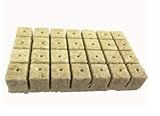
NREOY 1.5 Inch Starter Sheet, 28 Cubes
- 20% air space when saturated
- Predrilled planting holes
- Fits standard flat propagation trays

2 Inch Starter Plugs, Sheet of 25
- Sheet of 25 plus five stakes
- Pre-drilled center hole
- Strong oxygen retention

Halatool 1 Inch Cubes, 200 Plugs
- 200 one-inch plugs across 4 sheets
- Soft even basalt fiber
- Targets pH around 5.5
Rockwool Cubes for Seed Starting in 2026
All eight products below appear in the reviews that follow, in the same order, with the problem each one is built to solve.
| Product | Specifications | Action |
|---|---|---|
| NREOY 1.5 Inch Starter Sheet, 28 Cubes |
|
Check Latest Price |
| 2 Inch Starter Plugs, Sheet of 25 |
|
Check Latest Price |
| Halatool 1 Inch Cubes, 200 Plugs |
|
Check Latest Price |
 Legigo 1 Inch Starter Plugs, 100 Plugs Legigo 1 Inch Starter Plugs, 100 Plugs |
|
Check Latest Price |
 Grodan 1.5 Inch Mini Blocks, 15 Pack Grodan 1.5 Inch Mini Blocks, 15 Pack |
|
Check Latest Price |
 Grodan A-OK Plugs, Sheet of 98 Grodan A-OK Plugs, Sheet of 98 |
|
Check Latest Price |
 VIVOSUN 1.6 Inch Cubes, 28 Plugs VIVOSUN 1.6 Inch Cubes, 28 Plugs |
|
Check Latest Price |
 Grodan Delta GRO Blocks, 4 Inch, 6 Pack Grodan Delta GRO Blocks, 4 Inch, 6 Pack |
|
Check Latest Price |
How to Prepare Rockwool Cubes for Seed Starting
Cubes arrive from the factory alkaline, with a pH above 7. Correcting that is the step that separates a good tray from a failed one, and it is the step most often skipped.
- Soak 12 to 24 hours in pH-adjusted water. Bring water to pH 5.5 with citric acid or a properly mixed nutrient solution, then fully submerge the cubes. Ten seconds is not enough for a dry pack; the fiber needs time to saturate.
- Never squeeze or wring the cubes. This is the most repeated warning in grower forums and the easiest mistake to make with a wet cube in your hand. Compressing the fiber destroys the air channels you paid for, and the seed will sit in a dense anaerobic pocket.
- Shake off the excess. The cube should be damp, not dripping. Set it in a net cup or a tray cell and let gravity finish the job.
- Dibble a shallow hole and sow. One grower on r/Hydroponics put it well: do not dig a cavern, because the roots behave the way they do in soil. A hole roughly twice the seed depth is plenty.
- Bottom-water and cover. Add a shallow layer of nutrient solution to the tray so the cube bases wick from below without being submerged, then close the humidity dome until emergence. Good domes are covered in our humidity dome tray roundup.
After emergence, remove the dome and switch to a bottom-watering routine every day or two. A heat mat under the tray keeps the cube surface at a temperature seeds will actually move in; we cover those in our heat mat kit guide.
1. NREOY 1.5 Inch Rockwool Starter Sheet, 28 Cubes – Best All-Around Starter Sheet
1.5 inch Rockwool/Stonewool Grow Cubes Starter Sheets for Cuttings, Cloning, Plant Propagation, Seed Starting Hydroponic Grow Media Growing Medium for Vigorous Plant Growth (28, 1.5)
1.5 x 1.5 x 1.5 inch cubes
28 count
20% air space when saturated
Predrilled holes
Pros
- Largest review base in the roundup at 4674 ratings
- Documented 20% air space when saturated
- Predrilled holes remove the need for an awl
- 1.5 inch size fits a standard flat propagation tray
Cons
- Firm density can slow root penetration in some setups
- Plugs can tear apart when separated from the sheet
- Carries no nutrients so solution feeding is required
This is the sheet I keep reaching for when I want one cube type to cover a mixed tray. At 1.5 inches square, it handles lettuce, brassicas, herbs, and most pepper and tomato starts without the crowding that one-inch plugs force on you. The published 20% air space when saturated is a real spec rather than a marketing phrase, and it is why seedlings in these cubes usually need less intervention than seedlings in dense media.
The fit is the quiet advantage. A 1.5-inch cube drops into a standard flat growing tray without trimming, and the predrilled planting hole means no awl, no guesswork, and no over-deep holes. That last point matters more than it sounds. A hole dug too deep in a firm cube puts the seed at the bottom of a damp pocket with poor gas exchange, which is one of the recurring causes of failed germination I see in troubleshooting threads.

With 4674 ratings behind it, this listing has more real-world history than anything else in this roundup, and the pattern in those reviews is consistent: germination works, and the two recurring complaints are density and nutrient starvation. Roughly 65% of ratings are five star, and the small share of one-star reviews clusters around exactly those two points. The 3.38 cubic inch capacity and the brown color are unremarkable, which is fine, because this is a propagation cube and its job is air and water.
The firmness is a genuine tradeoff. Reviewers who move seedlings out at the right moment rarely notice it, because a firm cube is easier to handle wet. Reviewers who leave seedlings in too long do notice it, because the root is still inside a cube that resists penetration. Pair that with the fact that it holds no nutrients of its own, and the instruction is simple: soak in nutrient solution rather than plain water, and transplant when roots hit 0.5 to 1 inch.

Will these 1.5 inch cubes fit my tray and system?
Yes on trays. The 1.5 inch footprint matches standard flat propagation trays, which makes this one of the easiest sheets to slot into an existing setup. In a hydroponic system, confirm your net cup or channel opening sits close to 1.5 inches, because a snug fit matters more for wicking than most buyers expect. If your system uses larger cups, this sheet will feel undersized and the cubes may tip.
Should I choose this sheet for large seeds?
Only for medium seeds. Beans, squash, and melons want more root volume than 1.5 inches offers, and a top-heavy seedling in a firm small cube is a common way to end up with a broken stem. For those crops, start here and plan to transplant early into a larger block, or go straight to a four-inch block instead. For lettuce, herbs, and peppers, the size is comfortable from seed to transplant.
2. 2 Inch Rockwool Starter Plugs, Sheet of 25 Plus Stakes – Best for Countertop Systems
2″ Rockwool Starter Plugs, 1 Sheet of 25 Plugs + THCity Stakes
2 inch plug size
Sheet of 25 plugs
Bundled with five stakes
Pre-drilled center hole
Pros
- Highest rated product here at 4.6 across 3382 ratings
- Pre-drilled center hole means no awl needed
- Tear-apart sheet makes single-cube use easy
- Fits Gardyn Studio pods and similar countertop cups
- Reported strong germination for lettuce and cucumber
Cons
- Some plugs are soft and can fall apart
- Needs nutrient supplementation for best results
- Plastic wrap packaging is single-use
Two inches is the size where rock wool stops being a starter plug and starts behaving like a small growing block. That extra volume is what lets a seedling stay in the medium past the first true leaves, which matters for anyone running a countertop or tower unit with fixed cup positions you would rather not transplant out of too early.
The bundled stakes are a small detail that earns its place. In any vertical or tower arrangement, plugs shift as they swell with water, and a plug that has tipped loses contact with the reservoir. Five stakes per sheet is not many, but it is enough to stabilize a column or a row.

At 4.6 stars across 3382 ratings, this is the best-rated item in the roundup, with 76% of ratings at five stars. Reviewers repeatedly single out the tear-apart sheet as the feature they did not expect to like. You pull the plugs apart cleanly instead of fighting a bonded grid, which means you can use three cubes instead of wasting a whole sheet of twenty-five.
The soft texture that some reviewers complain about is the same trait that makes these easy to separate and gentle on emerging roots. The more common complaint is nutritional: rock wool plus plain water underperforms soil, because there is nothing in the medium to feed the seed once the cotyledons open. Soak in a weak nutrient solution rather than clear water.

Will two inch plugs fit my cups and pods?
They fit most two-inch net cups, and reviewers specifically confirm compatibility with Gardyn Studio pods and similar countertop units. The fit is close rather than tight, so a small dab of silicone or a foam collar helps in vertical towers. If your system uses one-inch net cups, these will not drop in, and the one-inch options further down the list will suit you better.
How long can seedlings stay in these plugs?
Longer than with one-inch cubes, because the root volume is roughly four times larger. Most growers here transplant at 0.5 to 1 inch of root, which for herbs and lettuce lands around 7 to 14 days. If you are running a countertop system with no transplant step, these are the plugs to buy, because they hold a seedling through true leaves without root binding.
3. Halatool 1 Inch Rockwool Cubes, 200 Plugs – Best Value for Sowing Hundreds of Seeds
Halatool 1 Inch Rockwool Cubes for Hydroponics, 200 Pcs Seed Starter Plugs
1 inch cubes
200 plugs across 4 sheets
Basalt fiber spun at high temperature
Transplant at 0.5 to 1 inch of root
Pros
- Largest plug count in the set at 200 per pack
- Soft even fiber texture that roots penetrate cleanly
- Cuts easily to size with a knife
- Cubes stay intact after soaking
Cons
- Smallest cube size here so limited root volume
- Requires cutting and pH adjustment before use
- Average rating trails the premium options
When you are sowing lettuce, basil, or a full tray of brassicas and you want the lowest cost per seed in the room, plug count is the whole argument. Two hundred plugs across four sheets means you can run a serious propagation batch without ordering twice, and the sheets cut apart along their grid with a knife before soaking.
The material is standard basalt fiber, melted at high temperature and centrifuged into fibers, which gives the soft even texture reviewers describe. That softness is the reason roots push in without tearing the cube apart, and it is why this one-inch format transplants cleanly into net pots. Manufacturer guidance is a brief soak in nutrient solution and a target pH near 5.5, which matches what the rest of the hobby does.

The rating sits at 4.1 across 1737 ratings, with 63% at five stars and a noticeable 10% share of one-star reviews. That spread is mostly about expectations rather than defects. A one-inch cube is a propagation cube, and anyone hoping to grow a full plant in it will be disappointed. Read as a starter plug rather than a growing block, the reviews are much warmer.
One grower posting about lettuce on a hydroponics forum reported healthy germination but no visible root penetration into the cube. That is a common and mostly harmless observation at the one-inch size. Roots will reach the outer fiber and the base wicking zone first, and forcing the issue by leaving the seedling in too long just adds risk. Move it at 0.5 to 1 inch of root.

Are one inch cubes too small for my seeds?
Too small only for large seeds. Beans, squash, melons, and cucumbers want more than one inch of cube, and growers repeatedly report toppling seedlings from jamming oversized seeds into small plugs. For herbs, lettuce, brassicas, and microgreens, one inch is the correct size, and the soft fiber is gentle enough for the smallest seeds.
How much setup do these cubes need before sowing?
A few minutes. Cut the sheets to size with a knife, soak briefly in nutrient solution adjusted toward pH 5.5, then seed and bottom-water. Because the cubes are dry-packed, the soak matters more here than it does with pre-formed blocks. Skipping it is the fastest route to a dry tray that germinates at maybe half the rate it should.
4. Legigo 1 Inch Rockwool Starter Plugs, 100 Plugs – Best Budget Pick for Towers and Microgreens
Legigo 1 Inch Rockwool Cubes Seed Starter Plugs for Hydroponics, 100 Plugs
1 inch plugs
100 plugs across 2 sheets
Lightweight at 0.32 kg
Low thermal conductivity
Pros
- Lowest per-plug cost among one-inch options
- Lightweight cubes that roots penetrate without damage
- Holds shape in net pots and tower systems
- Works for lettuce
- cucumber
- tomato
- bean and strawberry starts
Cons
- One inch size limits root volume before transplant
- Requires pH adjustment and nutrient solution
This is the plug format aimed at vertical towers, aeroponic collars, and microgreens, where you are filling a lot of small cups quickly and you do not want the tray getting heavy. At 0.32 kg for a hundred plugs, it is the lightest sheet here, and lightness matters when a tower column has to stay balanced.
Two sheets give you a hundred plugs, which is a sensible middle ground between a casual ten-seed tray and a two-hundred-plug wholesale sheet. Buyers report steady germination across common vegetables and microgreens, and the low thermal conductivity of basalt fiber buffers root-zone temperature swings a little during a hot grow room.

At 4.2 stars from 1227 ratings, 68% are five star and 8% are one star. The rating pattern is healthy for an entry-level product, and the deductions cluster on the same two points as the other one-inch sheets: the size, and the pH adjustment step that the instructions describe but many buyers skim.
The manufacturer suggests cutting the sheet with a knife, then soaking briefly in diluted nutrient solution or adjusting the pH to approximately 5.5 with citric acid. That is the correct starting point. The cubes are light enough to need a firm surface while you cut them, so do the cutting over a flat tray rather than in your hand.

Are these plugs the right size for tower and aeroponic systems?
They are the right size for one-inch collars and most vertical tower pockets, and the low weight keeps columns balanced. They are not right for two-inch net cups, where the plug will sit loose and the wicking contact with the reservoir breaks. Measure your cup opening before ordering, because this is the most common mismatch in this category.
Can I use these plugs for microgreens?
Yes, and this is the format microgreen growers use most. Cut the sheet into the grid your tray expects, soak as directed, sow densely, and keep the dome on until the first true leaves color. Because microgreens are harvested before transplant, the limited root volume of a one-inch cube never becomes a problem.
5. Grodan 1.5 Inch Mini Blocks, 15 Pack – Best for Moisture Retention
Twin Canaries Liquid Volume Conversion Chart Grodan 1.5″ Rockwool Mini Blocks – 15 Pack Rockwool Cubes for Hydroponics, Seed Starter & Cloning + THCity Stakes
1.5 inch mini blocks
15 individually wrapped cubes
Hold moisture for several days
4.66 oz pack weight
Pros
- Best rating profile among small packs at 4.6 and 79% five star
- Excellent moisture retention for steady root development
- Blocks hold together when soaked with no crumbling
- Individually wrapped so unused cubes stay clean
Cons
- 1.5 inch is small for large propagation cuttings
- Smaller blocks dry faster than two inch options
- Branded plastic wrapper is awkward to remove at transplant
These are the cubes I suggest when your grow room runs hot and dry and seedlings keep drying out between waterings. Reviewers describe them as holding moisture for several days after a soak, which is the single most useful property when a cube sits under a strong light with a small reservoir underneath.
The 15-pack format is not a bulk format. It is a sample size, and it works well for the first run on a new system or for a small mixed tray where you want a handful of each crop. Each block is individually wrapped, so unused cubes stay clean in a humid room rather than absorbing moisture from the shelf.

At 4.6 stars across 1142 ratings with 79% five star, this is the strongest rating profile among the small packs in this roundup. The consistent theme across reviews is that the blocks hold their shape when soaked, which sounds like a small thing until you have handled crumbly plugs that shed fiber into your tray water.
The dominant caveat is size. One and a half inches is snug for larger cuttings, and growers using Gardyn-style pods report trimming them to fit. Reviewers also note that smaller blocks dry out faster than the two-inch options once they leave the propagation stage, so pair them with a system that keeps the base in contact with a reservoir.

Will these mini blocks fit my seed tray?
They fit standard seedling starter trays directly, with no trimming in a normal 1.5-inch cell layout. They do not drop into larger pod systems without trimming, and that trimming is the step reviewers most often describe as awkward. If your system is designed around one-and-a-half-inch cells, this is a clean fit.
Do these blocks work for cuttings as well as seeds?
They work, and moisture retention is exactly what a fresh cutting needs while it establishes. Keep the cutting in the block until you see new growth and a root that resists a gentle tug, rather than waiting on a fixed day count. Avoid one-and-a-half-inch blocks for the largest woody cuttings, which need more root volume than this size provides.
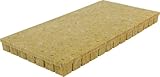
6. Grodan A-OK 1.5 Inch Plugs, Sheet of 98 – Best for Bulk Propagation
Grodan A-OK 36/40 1.5 Inch Starter Plugs, Sheet of 98
Sheet of 98 plugs
1.5 inch plugs
20 by 9.8 by 1.5 inch sheet
12 oz sheet weight
Pros
- Grodan's original A-OK propagation plug and a commercial standard
- V-shape interior discourages root tangling
- Full 98 plug sheet is efficient for large batches
- Transplants cleanly into soil or larger blocks
Cons
- Largest sheet footprint so it needs more tray space
- Plugs must be separated from the sheet before use
The A-OK is the design other rockwool plugs are measured against, and the reason is the internal V-shape. Roots that hit a flat wall tend to run along it. Roots that meet the angled profile are guided downward and outward, so you get a root mass that holds together and slides out at transplant instead of a spiral wrapped around the cube.
This is a propagation plug by intent. It is meant to start a seed or cutting, then be blocked on into a larger cube once roots reach 0.5 to 1 inch. That makes it a natural partner to the four-inch blocks further down this list, and a poor fit for anyone who wants to skip the second stage entirely.

At 4.6 stars from 605 ratings, with 76% five star, the rating is excellent and the review base is the smallest among the Grodan options here. Buyers consistently point to the plug profile and to consistent propagation results, and the 98-plug sheet is efficient when you are running a batch rather than a hobby tray.
The two practical frictions are size and handling. The sheet measures 20 inches long by 9.8 inches wide, so plan your tray space before you commit. And the plugs have to be separated from the sheet before use, which takes a few extra minutes per sheet and is worth doing while the sheet is dry.

Is the A-OK sheet worth choosing over a cheaper sheet?
If you are propagating a serious number of seeds or cuttings, yes. The V-shape reduces the root deformation you get from flat-walled plugs, and a cleaner root mass means a better survival rate when you transplant. For a single tray of ten lettuce seeds, the difference will not be visible to you.
How do I separate the plugs without breaking them?
Separate them dry, before soaking. Tear along the grid lines with your fingers working from the corners inward rather than pulling two plugs apart in the middle of the sheet. Once the sheet is soaked the fibers are soft and the plugs tear rather than release, which is the moment most of the crumbling complaints come from.
7. VIVOSUN 1.6 Inch Rockwool Cubes, 28 Plugs – Best for Tower Gardens and Sterile Starts
VIVOSUN 1.6″ Rockwool Cubes, 28 Plugs Stonewool Starter Grow Cubes
1.6 inch cubes, sheet of 28
95% porosity
60% basalt, 20% coke, 20% limestone
150 g pack weight
Pros
- 95% porosity gives strong oxygen delivery
- Inorganic and sterile so it will not harbor fungi
- Fits 2 inch cups and Tower Garden pockets
- Light fluffy fiber that is easy to cut and shape
Cons
- 1.6 inch size does not fit segmented Grodan trays
- Firmer and less airy than some brands
- Plastic wrap with no outer box so cubes can break on opening
This sheet publishes its composition, which is unusual and useful: 60% basalt, 20% coke, 20% limestone, and a trace of iron slag. More usefully, it states 95% porosity. That is the number that matters, because porosity is the air-to-water ratio, and a higher figure means more oxygen reaching a developing root.
Sterility is the other selling point. The medium is inorganic, so it does not harbor fungi the way a reused or soil-based medium can. For a grower starting a clean batch after a damping-off loss, that is worth more than most of the spec sheet.

At 4.3 stars from 454 ratings with 67% five star, this sits in the middle of the pack on rating and near the bottom on review count. Buyers like the fluffy, easy-to-cut fiber and report close to complete success across both seeds and clones. The most common fit complaint is tray compatibility rather than performance.
At 1.6 inches, these cubes land between the 1.5-inch sheets and the 2-inch plugs. That makes them a good match for two-inch net cups and Tower Garden style pockets, and a poor fit for segmented trays cut for one-and-a-half-inch cells, where they will sit loose and wick unevenly.

Will 1.6 inch cubes fit a Tower Garden or net cup setup?
They fit two-inch net cups and Tower Garden style pockets, which is where most buyers use them. They will not seat properly in segmented trays cut for 1.5-inch cells, and a loose cube wicks badly because its base is not flush with the reservoir. Measure the opening before ordering.
Is a sterile medium worth paying extra for?
It is worth it if you have had a failed tray and you do not know why. An inorganic, sterile medium gives you a clean start with no fungal carryover, which removes one variable when you are diagnosing a repeat failure. If your previous trays were healthy, you are buying insurance rather than solving a current problem.
8. Grodan Delta GRO Blocks, 4 Inch, Pack of 6 – Best for Growing a Plant to Full Size
Grodan Rockwool Delta GRO Blocks | 4″ Cube – Pack of 6 | + THCity Stakes
4 x 4 x 4 inch blocks, pack of 6
Hole sized for 1.5 inch plugs
Grooved base
Includes five stakes
Pros
- Plants can grow to full size without a second transplant
- Hole diameter matches standard 1.5 inch plugs and macroplugs
- Grooved base improves drainage and avoids wet feet
- Highest five-star share in the roundup at 81%
Cons
- Not a propagation cube so it needs a starter plug in the hole
- Takes far more space than a starter sheet
- Heavier per unit for mobile tower systems
This is the one product here that is not a seed-starting cube. The Delta block is a growing block with a hole in the top sized to accept a 1.5-inch starter plug or a macroplug. You start your seed in a small cube, drop the seedling plug into the hole, and the plant stays in the block until it is ready for a system, a larger container, or a grow space.
The grooved base is the detail that makes it worth the space. Most rockwool failure at the seedling stage comes from a saturated base, and grooves move water away from the root zone instead of letting it sit. That single feature is why these blocks rate at 4.6 stars from 459 ratings with 81% five star, the highest five-star share in this roundup.

If you are starting from seed and have nothing else on the shelf, buy the starter sheet first and the blocks second. A block with an empty hole is inert volume. The pairing works because the hole diameter matches the 1.5-inch plugs, so the seedling plug seats flush instead of tipping, and you skip the transplant shock that comes from pulling a root mass out of a small cube.
The tradeoffs are space and weight. A four-inch cube uses far more shelf or tower volume than a one-and-a-half-inch plug, and it is heavy when wet. For a mobile tower, that weight is a real constraint. For a fixed reservoir or a floor system, the drainage benefit usually outweighs both.

Do I need a separate starter plug to use these blocks?
You do. The block has a hole and nothing else, so it needs a 1.5-inch starter plug or a macroplug seated in the top. Pair them with one of the 1.5-inch sheets above and you get a clean two-stage path: propagate in the small cube, then block on into the larger one.
Is the grooved base worth the extra space?
Yes, if your seedlings have a history of sitting in wet media. The grooves drain water away from the bottom of the block, which is exactly where anaerobic conditions and root problems start. It is also why a plant can stay in this block to full size instead of needing another transplant into soil or a larger medium.
Why Your Seeds Are Not Germinating in Rockwool
When a tray fails, the medium is rarely the culprit. These five causes account for nearly every failed rockwool tray, and they appear over and over in grower threads.
- The cubes were never pH-adjusted. Rockwool arrives from the factory at a pH above 7, and most seeds want something closer to 5.5. A twelve-hour soak in water brought down to pH 5.5 fixes this. This is the single most common cause.
- Standing water in the tray. Keeping cube bases submerged so they wick is the standard trick, and it goes wrong when the tray holds water the cube cannot draw. The seed sits in a saturated zone with no oxygen.
- The cubes were squeezed. Wringing wet rockwool to remove water collapses the fiber structure. The seed ends up in a dense pocket that holds too much water and too little air.
- The cube or hole did not suit the seed. A large seed forced into a small plug, or a hole dug far deeper than the seed, both put the seed somewhere it will not move.
- The cube surface was too cold. Rockwool wicks heat away from the seed. Without a heat mat, the seed sits in a cooler microclimate than the air around it and takes far longer to break.
A sixth, quieter problem is the cube itself. Forum discussions of marketplace rockwool note that good cubes feel solid and hold their shape, while cheap ones crumble, shed dust, and invite algae. If your tray failed and the protocol was right, look at the medium next.
How to Choose Rockwool Cubes for Seed Starting
Match the cube to the seed. One-inch cubes handle herbs, lettuce, brassicas, and microgreens. One-and-a-half-inch cubes cover peppers, tomatoes, and most cuttings comfortably. Two-inch plugs and four-inch blocks exist for larger crops, transplants, and anyone who wants to skip a transplant step. Seeds the size of a lentil do not belong in a two-inch cube.
Match the cube to the system. Measure your net cup or tray cell before you order, because this is where most mismatches happen. Tower and countertop systems with two-inch cups want plugs around one-and-a-half to two inches. Segmented trays cut for a specific cell size need an exact match, and a loose cube wicks unevenly no matter how good the fiber is. If you are still choosing hardware, our seed starting systems with grow lights roundup and multi-tier seed starting racks cover the formats these cubes drop into.
Read the fiber structure, not the marketing. Density determines air-to-water ratio. A cube that holds too much water invites pythium damping-off. A cube that is too porous can dry out under a grow light in hours. Published porosity figures are useful when a brand offers them, since air delivery is the property you cannot see from a photo.
Do the plug count math. Two hundred plugs and fifteen plugs are both reasonable buys, for completely different jobs. Multiply your expected germination rate by your seed count, add a margin, and buy at that number. Per-plug cost flattens out dramatically at higher counts, which is the whole reason bulk sheets exist for anyone running repeated batches.
Know how to spot a weak cube. Squeeze one gently before you soak it. A good cube springs back and feels solid without crumbling. A weak cube sheds dust, breaks at the edges, and leaves loose fiber in your hand. Uneven density across a sheet is the clearest sign you are about to spend an afternoon troubleshooting something you could have rejected at the box.
Know when not to use rockwool. If you are starting a handful of seeds in a soil tray and have no hydroponic system, soil blocks or an ordinary seed tray will do the same job with less fuss and no pH step. Rockwool earns its place when you want sterile propagation, uniform germination across hundreds of seeds, or a clean root plug that transplants without shock. Paying for air-to-water control you will never use is the most common way people overbuy in this category.
Rockwool is single-use. Do not try to reuse a cube for a second crop; the fiber structure and the salt balance both carry over, and the old root mass stays in the way. Plant the whole cube or slide the seedling out with its root plug intact, then dispose of the medium rather than composting it.
Frequently Asked Questions
How long do seedlings stay in rockwool cubes?
Seedlings stay in rockwool cubes until roots reach 0.5 to 1 inch and the first true leaves appear, which is typically 7 to 14 days for herbs and lettuce and 10 to 21 days for peppers and tomatoes. Start feeding lightly with a weak nutrient solution around the 2 to 4 week mark if the leaves begin to pale.
Do I need to soak rockwool cubes before seeding?
Yes. Soak cubes for 12 to 24 hours in water adjusted down to pH 5.5, because rockwool arrives from the factory alkaline at a pH above 7. Never squeeze or wring the fiber to remove water, since that destroys the air channels. Shake off the excess instead and bottom-water the tray.
Can you put rockwool cubes in soil for plants?
Yes. Plant the whole cube into soil, or slide the seedling out with the root plug intact. Rockwool is a single-use medium, so there is no need to remove it from the root ball, and it should be disposed of rather than replanted or composted.
Do rockwool cubes need fertilizer?
They do. Rockwool is inert and contains no nutrients of its own, which is why seedlings in rockwool grown with plain water often underperform soil. Soak the cubes in a weak nutrient solution before seeding and keep feeding lightly once the first true leaves open.
Why are my rockwool seedlings turning yellow?
Yellowing two to four weeks after sprouting usually points to a nitrogen shortfall rather than a disease. Rockwool holds no nutrients, so the seed’s stored supply runs out on schedule. Begin a weak nutrient feed and check that the root zone is draining properly, since a saturated base makes uptake worse.
Conclusion
The best rockwool cubes for seed starting are the ones whose size matches your seeds, whose fiber density matches your room, and whose plug count matches your tray. For most growers starting a mixed home tray, the NREOY 1.5-inch sheet is the pick I recommend: it fits standard flat trays, arrives with predrilled holes, publishes its air space figure, and carries the largest review base in this category at 4674 ratings.
Whichever cube you choose, the pH soak at 5.5 for twelve to twenty-four hours, the no-squeezing rule, and the bottom-watering routine will do more for your germination rate than any brand difference. Prep it properly, transplant at 0.5 to 1 inch of root, and start feeding lightly around the two to four week mark.