
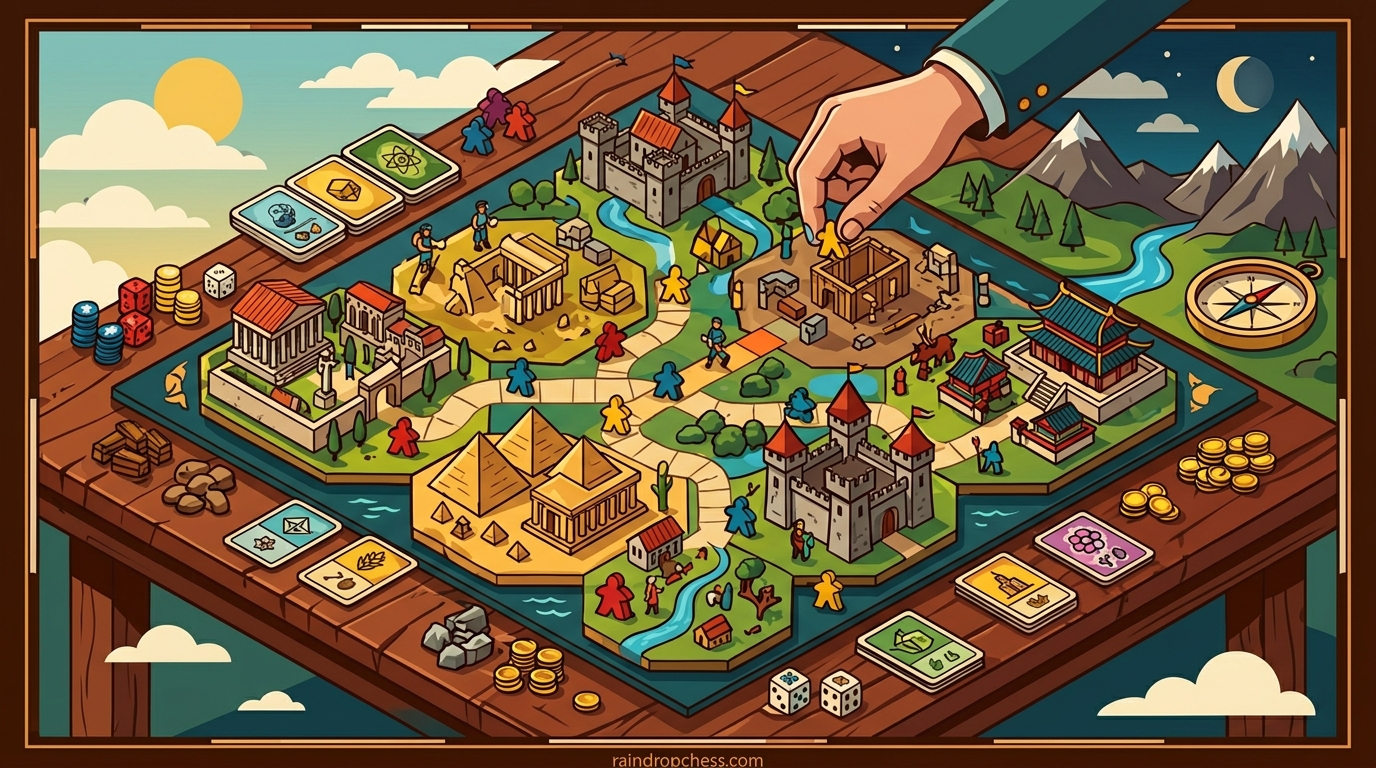
I have spent the last three years building empires on my dining table. From ancient Mesopotamia to the surface of Mars, civilization building board games have become my favorite genre in all of tabletop gaming. There is something deeply satisfying about watching a small settlement grow into a sprawling empire across a handful of hours.
If you are searching for the best civilization building board games in 2026, you are in the right place. Our team tested ten of the most acclaimed titles in the genre, ranging from quick 30-minute card games to sprawling 4X epics that fill an entire afternoon. We evaluated each game on strategic depth, replayability, component quality, and how well it captures that signature feeling of guiding a people from nothing to greatness.
Whether you want a two-player duel or a full group experience, there is a civilization game on this list for your table. Some of these titles are quick enough for a weeknight. Others demand a dedicated game day with snacks and a cleared schedule. Let us look at which ones earned their spot and which one deserves a home on your shelf.
Table of Contents
Top 3 Picks for Best Civilization Building Board Games

Tapestry
- 16 unique civilizations
- 4 advancement tracks
- Solo Automa mode
- Pre-painted miniatures


Best Civilization Building Board Games in 2026
| Product | Specifications | Action |
|---|---|---|
| Tapestry |
|
Check Latest Price |
| 7 Wonders Duel |
|
Check Latest Price |
| 7 Wonders New Edition |
|
Check Latest Price |
 Through the Ages Through the Ages |
|
Check Latest Price |
 Civilization: A New Dawn Civilization: A New Dawn |
|
Check Latest Price |
 Clash of Cultures Monumental Clash of Cultures Monumental |
|
Check Latest Price |
 Terraforming Mars Terraforming Mars |
|
Check Latest Price |
 CATAN 6th Edition CATAN 6th Edition |
|
Check Latest Price |
 Mosaic: Story of Civilization Mosaic: Story of Civilization |
|
Check Latest Price |
 Stone Age Stone Age |
|
Check Latest Price |
1. Tapestry – The Most Beautiful Civilization Game on the Market
Stonemaier Games: Tapestry – A Strategy Board Game by Jamey Stegmaier
1-5 players
120 min
16 civilizations
Solo Automa mode
Pre-painted miniatures
Pros
- 16 unique asymmetric civilizations
- Solo play with Automa opponent
- Beautiful pre-painted landmark miniatures
- Easy to learn but hard to master
- 4 advancement tracks offer variety
Cons
- Rulebook could be more descriptive
- Some civilizations stronger than others
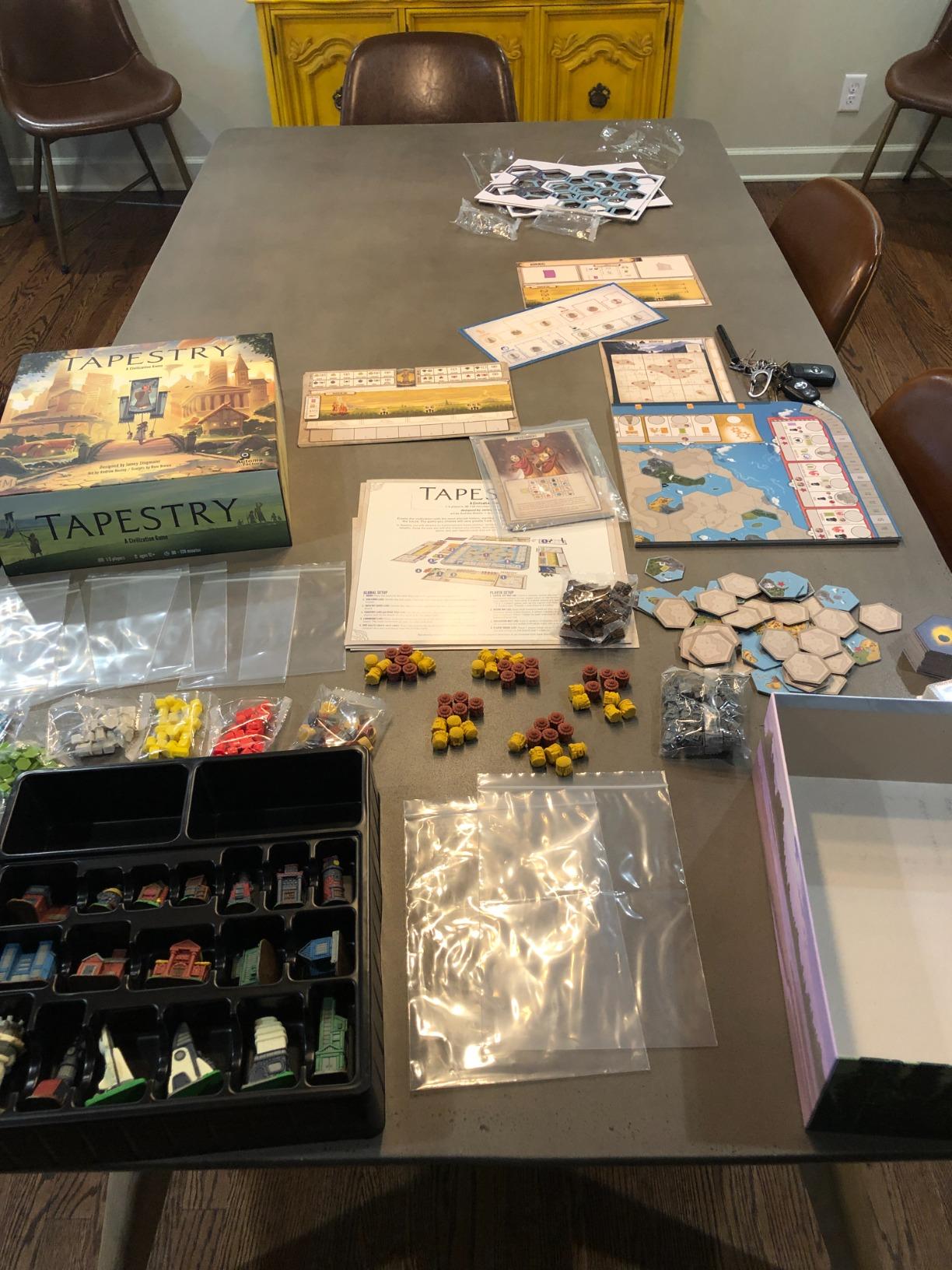
- Storage organization is challenging
Tapestry was the game that made me fall in love with the civilization genre all over again. I brought it to my game group expecting a medium-weight experience and walked away knowing I had just played something special. The production quality alone is worth talking about. Those pre-painted landmark miniatures look incredible on the table.
The core loop is straightforward. You choose one of 16 unique civilizations, each with its own asymmetric abilities, and advance along four tracks: science, technology, exploration, and military. Every turn feels meaningful because you are making a real decision about where your civilization is heading. The game does not punish you for picking a path and sticking with it.
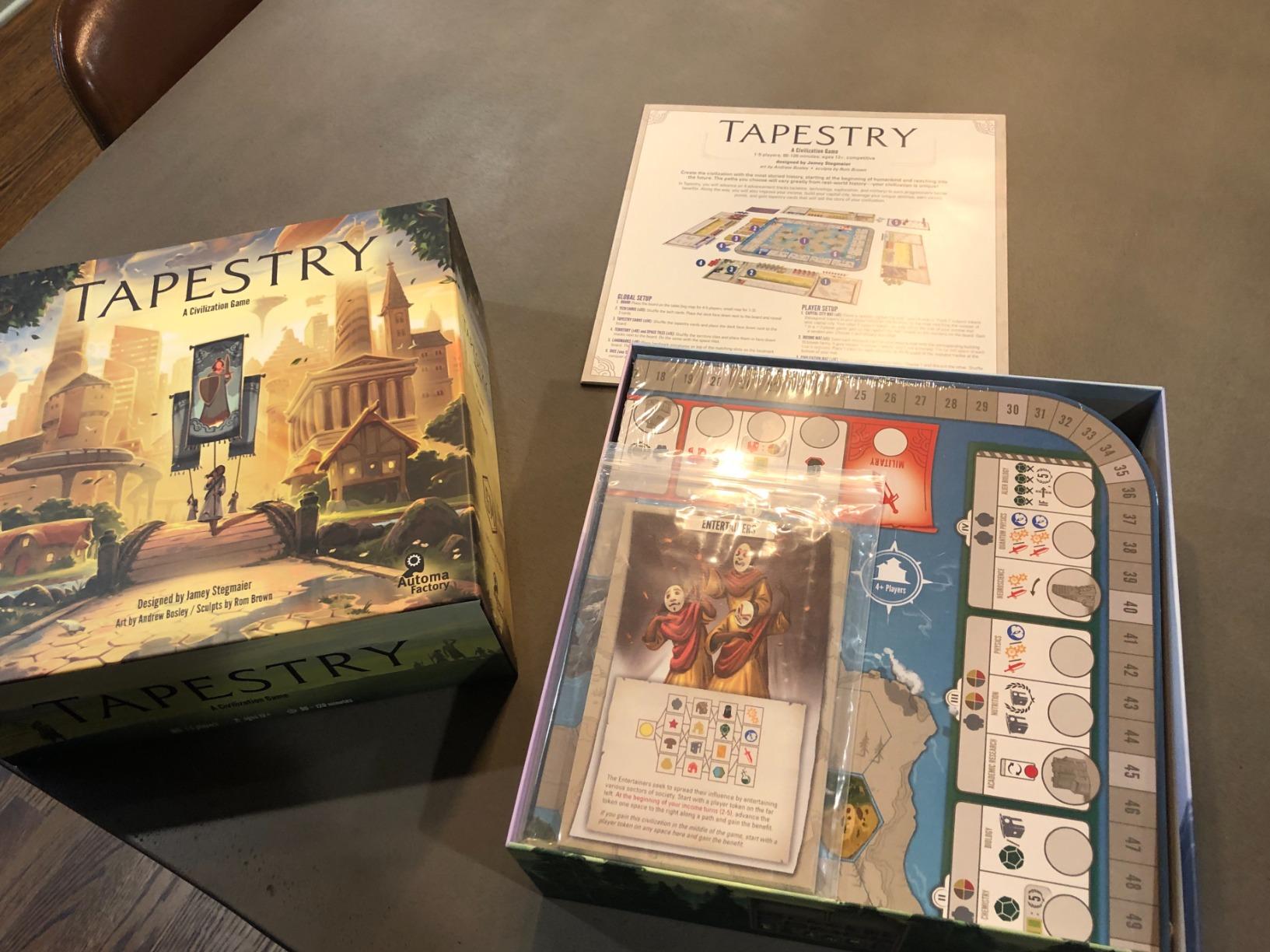
What impressed me most during our testing sessions was the solo mode. The Automa opponent is genuinely challenging without feeling unfair. I spent an entire Saturday playing three solo games back to back, and each one told a completely different story depending on which civilization I selected.
The downsides are worth noting. The rulebook leaves some edge cases unanswered, and you will probably need to look up clarifications online after your first couple of games. Some civilizations are noticeably stronger than others, though Stonemaier offers downloadable handicap rules to address this.
Who Should Play Tapestry
Tapestry is perfect for players who want the civilization experience without committing to an eight-hour marathon. It plays in about two hours once your group knows the rules, and the five-minute setup is refreshingly quick for a game of this depth.
It is also an excellent choice for families with teens who are ready to move beyond gateway games. The asymmetric civilizations keep things fresh across dozens of plays.
Replayability and Long-Term Value
With 16 civilizations and four advancement tracks, no two games of Tapestry feel the same. The Tapestry cards that tell the story of your civilization add narrative flavor that changes every session. Our group has logged over 30 plays and still discovers new strategy combinations.
2. 7 Wonders Duel – The Best Two-Player Civilization Game
Asmodee 7 Wonders Duel Board Game BASE GAME – Intense Two-Player Battles in the Ancient World, Strategy Game for Kids and Adults, Ages 10+, 2 Players, 30 Minute Playtime
2 players
30 min
3 win conditions
Card pyramid
Compact box
Pros
- Best 2-player board game available
- Three unique win conditions
- Fast 30-minute gameplay
- Beautiful card art
- Exceptional replay value
Cons
- Rules confusing initially
- Math-heavy scoring
- Resource system takes practice
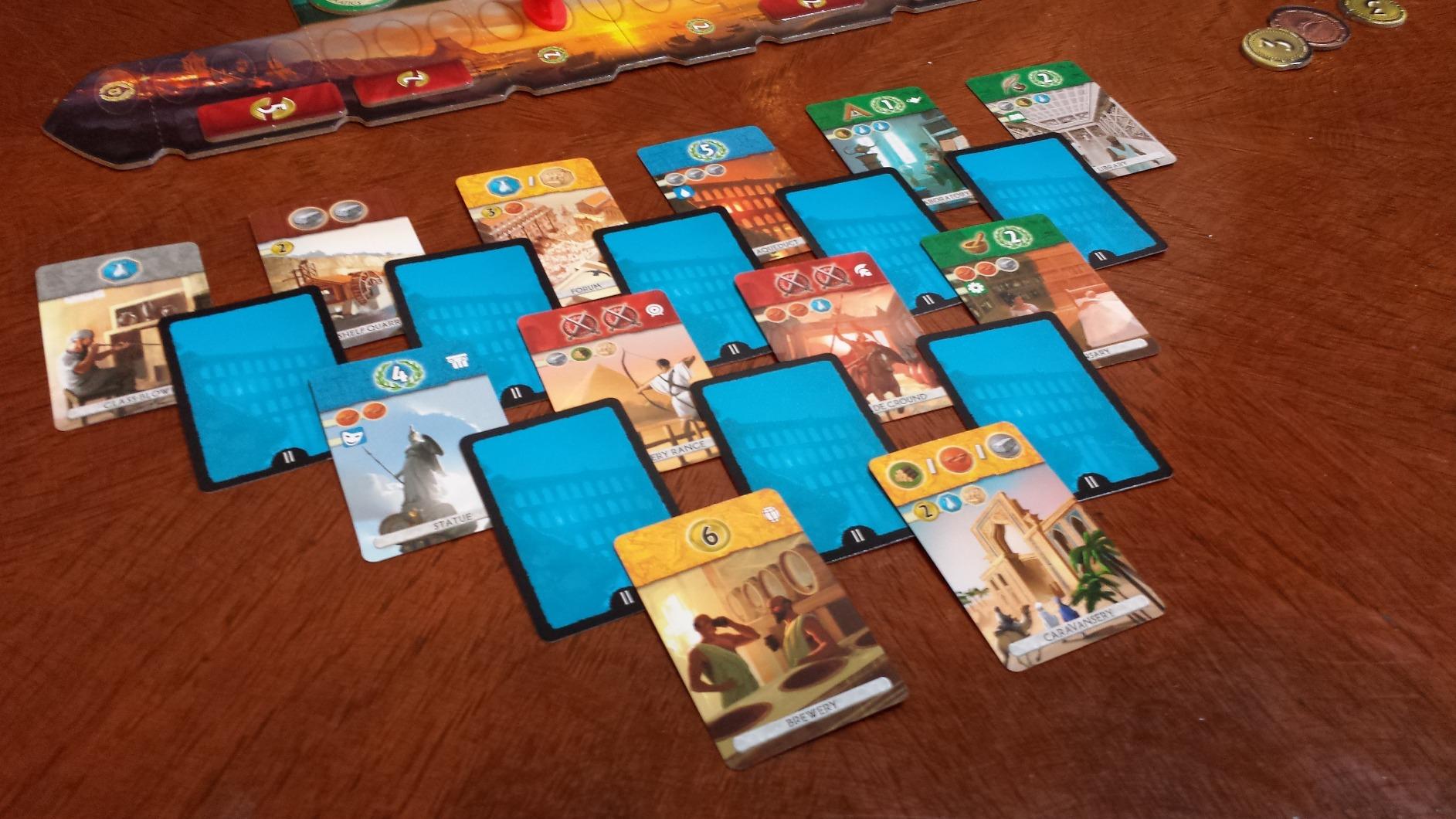
If you want the single best civilization building board game for two players, 7 Wonders Duel is the answer. I have played this game over a hundred times with my partner, and it still surprises me. The card pyramid mechanism is one of the most elegant design choices I have ever seen in a tabletop game.
The genius of Duel is that it offers three completely different paths to victory. You can win through military conquest by pushing the conflict token to your opponent’s capital. You can win through scientific monopoly by collecting six unique scientific symbols. Or you can win on victory points after the final age. This means you can never focus on just your own board. You have to watch what your opponent is building.
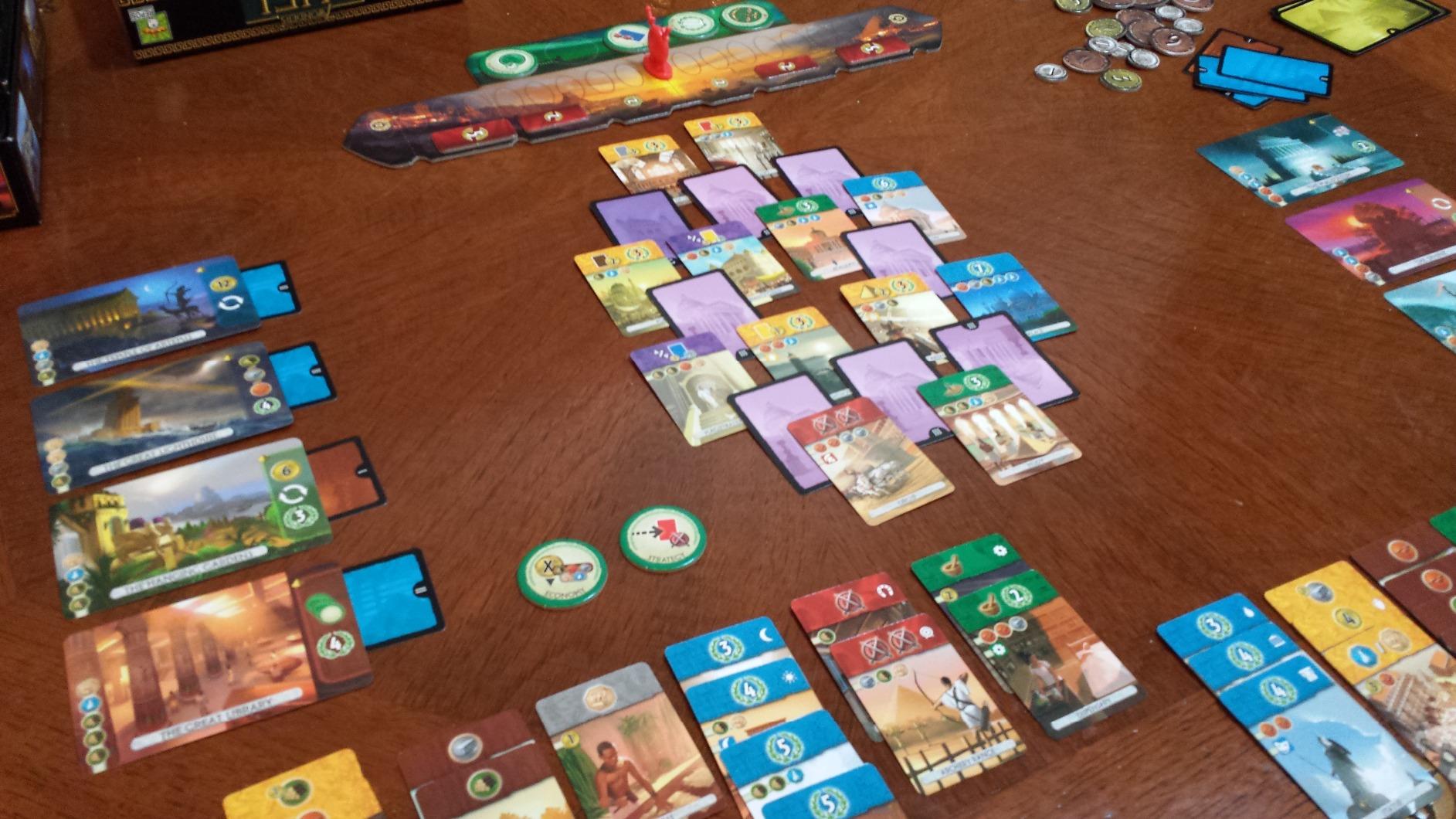
The game plays in 30 minutes, which means you can easily fit in two or three rounds in an evening. The compact box makes it easy to bring to a cafe or on a trip. I have played this on airplanes, in hotel rooms, and at lunch tables.
The main criticism I have is the learning curve for the scoring system. The first time you play, calculating victory points takes a few minutes. Once your group internalizes the iconography, the game flies by.
Why Duel Beats the Original for Pairs
The original 7 Wonders requires at least three players, which leaves couples out of luck. Duel was designed from the ground up for exactly two players, and every mechanic reflects that focus. The card pyramid, the conflict track, and the progress tokens all create constant tension between both players.
If you want to explore other versions of this system, check out our guide to the best 7 Wonders editions to find the right fit for your group.
Expansion Worth Getting
The Pantheon expansion adds ancient gods that shake up the strategy in the best way possible. After 50 plays of the base game, Pantheon breathed new life into our sessions. I highly recommend picking it up once you feel comfortable with the core rules.
3. 7 Wonders (New Edition) – Best Civilization Game for Groups
Asmodee 7 Wonders Board Game (New Edition) – Lead Your Civilization to Prosperity, Strategy Game for Kids and Adults, Ages 10+, 3-7 Players, 30 Minute Playtime
3-7 players
30 min
Card drafting
Simultaneous play
7 ancient cities
Pros
- Plays up to 7 players in 30 minutes
- Simultaneous play keeps everyone engaged
- Easy to learn after first game
- High replay value
- Luck levels the playing field
Cons
- Rulebook misses resource details
- Scoring system slightly complex
- Needs 3+ players
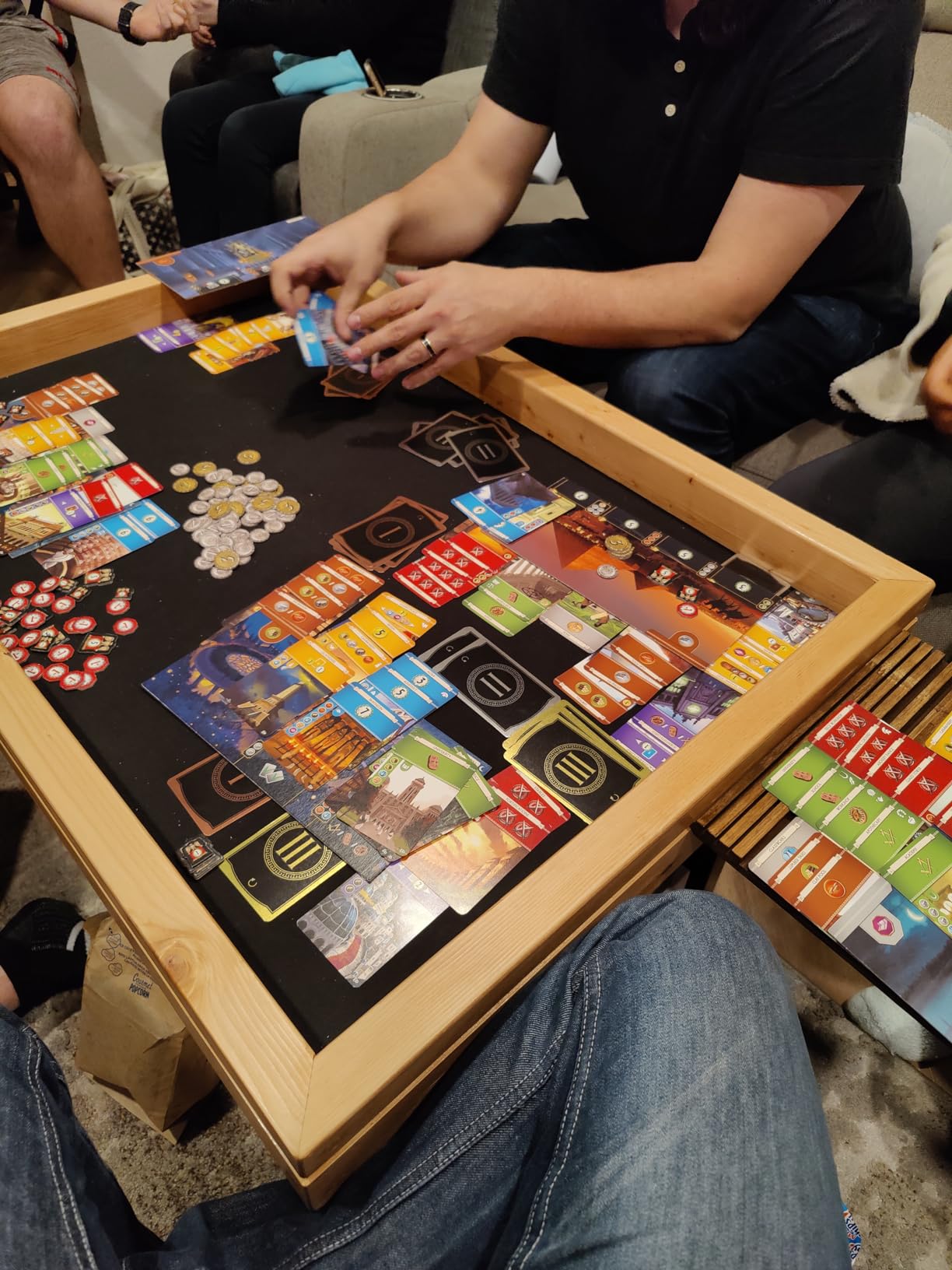
7 Wonders is the civilization game I bring to every game night where we have more than four players. The card drafting system means everyone plays simultaneously, so there is virtually zero downtime. With nearly 4,000 reviews and an 89 percent five-star rating, this game has earned its reputation.
Each player leads one of seven ancient cities through three ages. You draft cards to gather resources, build commercial routes, develop your military, and construct scientific structures. The beauty is in the drafting itself. You pick a card, pass the rest, and the decision of what to keep versus what to deny your neighbors creates constant tension.
I have introduced 7 Wonders to at least twenty different people over the years, and the pattern is always the same. The first game feels a little confusing as people learn the iconography. By the second game, everyone is hooked. By the third, people are asking when we can play again.
The military conflict system is where the game creates its most memorable moments. At the end of each age, you compare military strength with your two neighboring cities. Losing a conflict costs you victory points, which creates a fun push and pull between investing in military versus civilian development.
Best Game Night Pick for Large Groups
Very few strategy games scale well to seven players in 30 minutes. 7 Wonders does this effortlessly because of the simultaneous card drafting. Nobody sits around waiting for their turn. If your game group has five or more regular attendees, this should be a shelf staple.
How It Compares to the Duel Version
Both games share the same DNA, but they serve different purposes. The original is for groups of three to seven, while Duel is strictly for two. I own both and would not give up either one. If you can only pick one, choose based on your typical player count.
4. Through the Ages – The Deepest Strategy Experience Available
Czech Games Through the Ages,168 months to 1188 months, Multi-colored
1-4 players
120 min
Tech tree
Card-driven
No map
Pros
- Incredible strategic depth
- Balanced mechanics
- Great replay value
- Excellent quality components
- 5 paths to victory
Cons
- Very complex to learn
- Games take 2+ hours
- No map or geography
Through the Ages is the civilization game that hardcore strategy gamers point to as the gold standard. I will warn you upfront: this is not a light game. It took me three full playthroughs before I felt like I understood the strategy, and I am still discovering new approaches after twenty games.
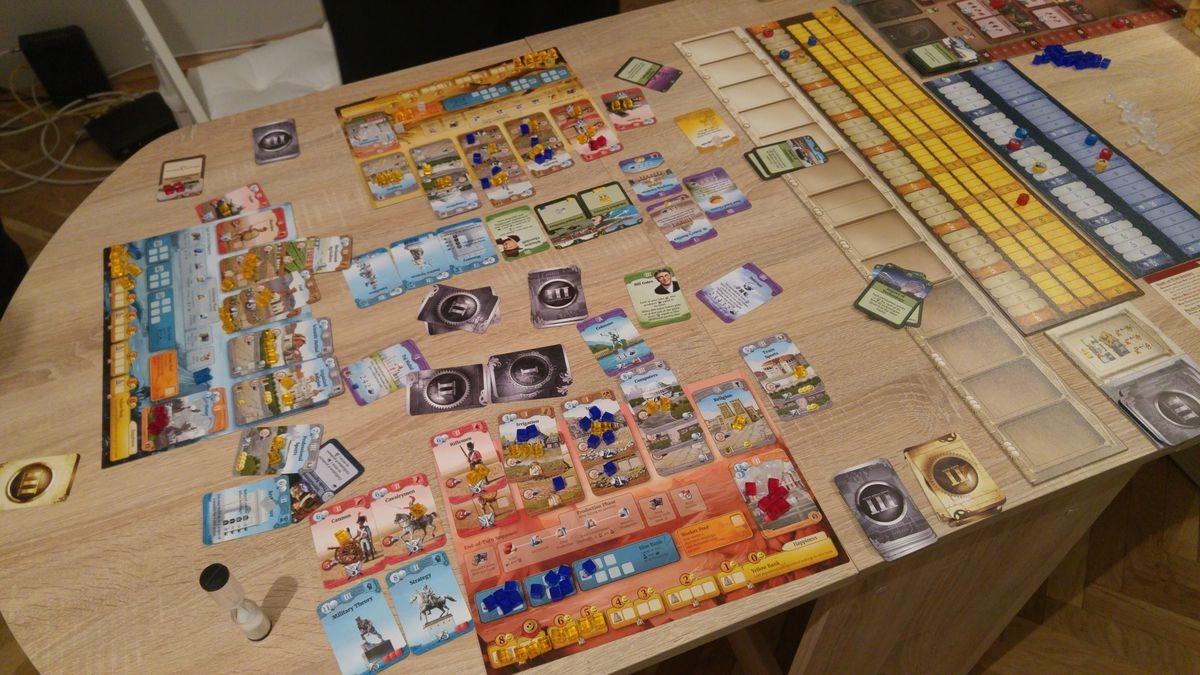
The game uses cards instead of a map, which is unusual for a civilization game. You expand farms and mines to gain resources, choose wise leaders to guide your people, strengthen your army, and shape history through political decisions. There are five paths to victory through economy, technology, culture, government, and military. The civilization with the most influential culture wins.
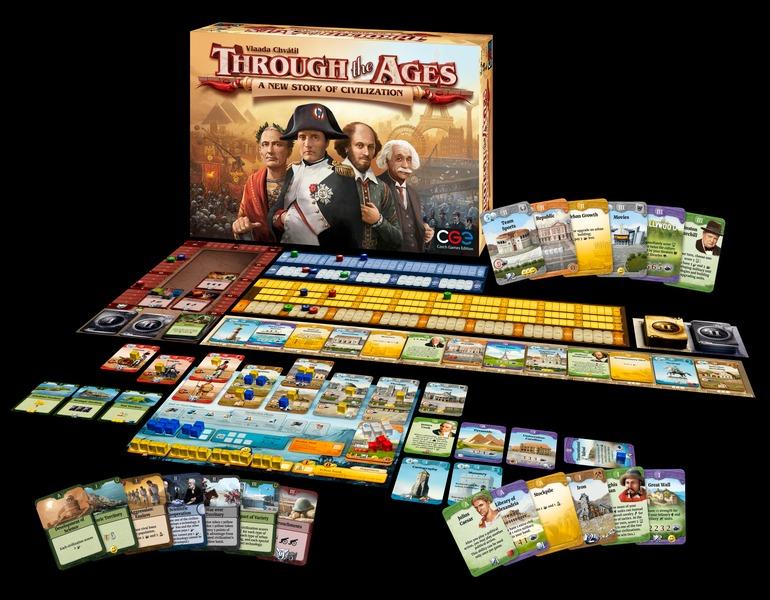
What makes Through the Ages so compelling is that every decision feels heavy with consequence. The leader you choose in the first age shapes your entire strategy for the rest of the game. The technologies you research open up new possibilities while closing others. It is a game about trade-offs and long-term planning.
The downside is obvious. This game demands a significant time investment, both in learning and playing. If your group prefers lighter fare, you might want to start with something more accessible. But if you love deep strategic experiences where every card choice matters, nothing in the genre compares.
Learning Curve and First Game Expectations
Plan on dedicating at least three hours to your first game. The rulebook is dense, and you will reference it frequently. I recommend watching a video tutorial before your first session. Once the rules click, subsequent games move much faster.
The solo mode is well-designed and gives you a genuine opponent to test strategies against. I used solo play extensively to learn the game before bringing it to my group.
How It Compares to the Video Game Civilization
Through the Ages captures the feeling of the Civilization video game series better than any board game with an actual map. The tech tree progression, the agonizing choices about where to invest resources, the cold war tension between competing civilizations: it is all here, translated brilliantly into cardboard.
5. Sid Meier’s Civilization: A New Dawn – The Official Civ Adaptation
Asmodee Sid Meier’s Civilization: A New Dawn Board Game – Rewrite History Your Way! Strategy Game for Kids & Adults , Ages 14+, 2-4 Players, 1-2 Hour Playtime
2-4 players
1-2 hours
Modular map
6 civilizations
Tech tree
Pros
- Captures Civilization video game feel
- Multiple victory paths
- Modular board for replay value
- Great component quality
- Fun for newcomers and veterans
Cons
- Many pieces with no storage solution
- Setup takes 15+ minutes
- Rulebook has gaps
- Some civs feel overpowered
Civilization: A New Dawn is the most faithful board game adaptation of the video game series I have played. As someone who has sunk hundreds of hours into Civ V and Civ VI, I was skeptical that a board game could capture that feeling in under two hours. It does, impressively.
The game features six unique civilizations with special bonuses, a modular map that changes every game, tech tree progression, wonders, and city-states. The victory condition cards create objective-based gameplay that keeps everyone focused. You are not just accumulating points randomly. You are working toward specific goals.
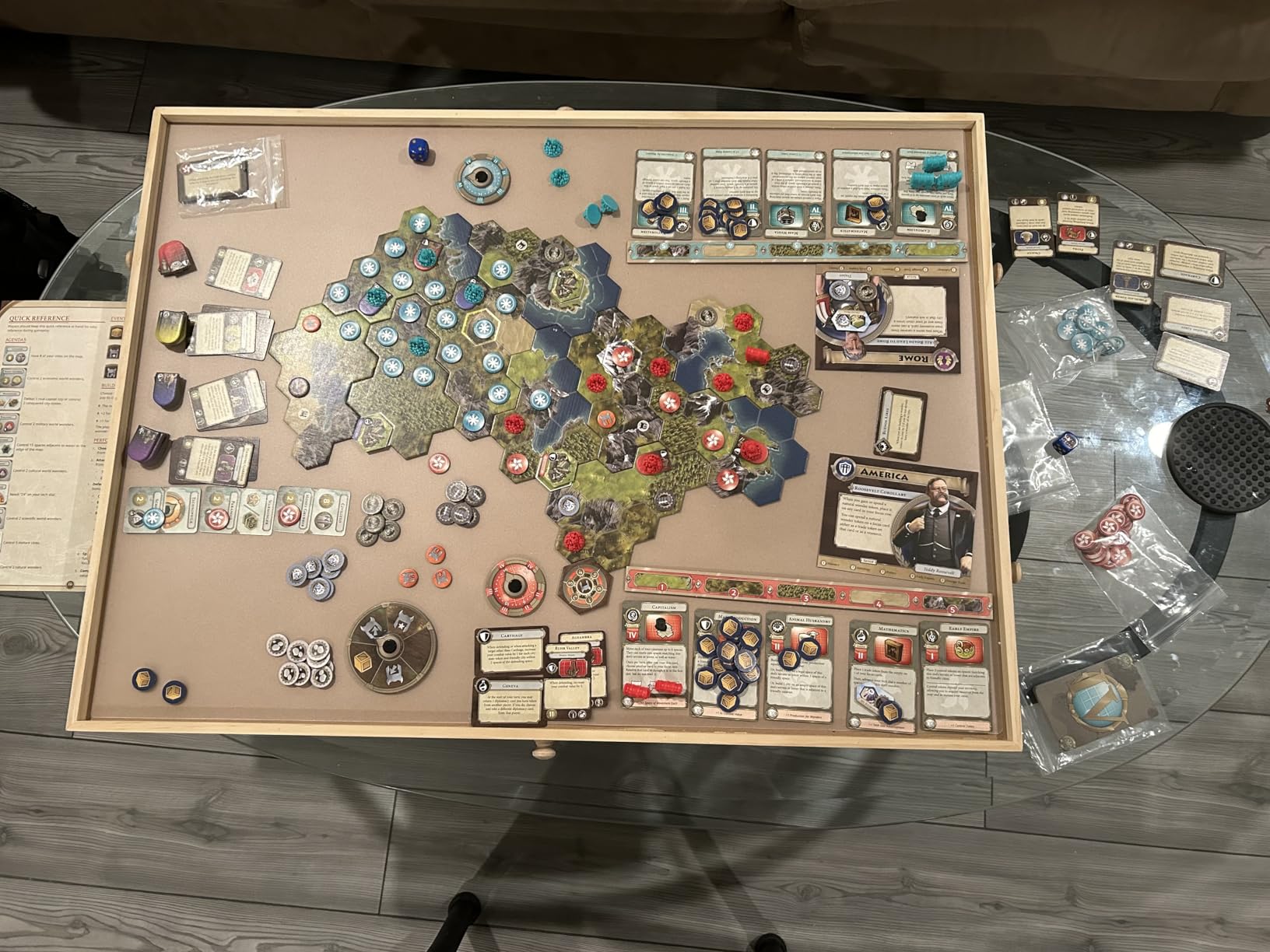
I particularly enjoy the action selection system. You place focus cards on different action tracks, and the position of each card determines how powerful that action will be. It creates a wonderful puzzle of prioritization. Do you put your strongest focus on exploring the map, building cities, or researching technology?
The main frustration is component storage. The game comes with hundreds of pieces, markers, and cards with no organized storage solution. I ended up buying aftermarket plastic organizers just to make setup bearable. Plan on spending 15 minutes setting up before your first few games.
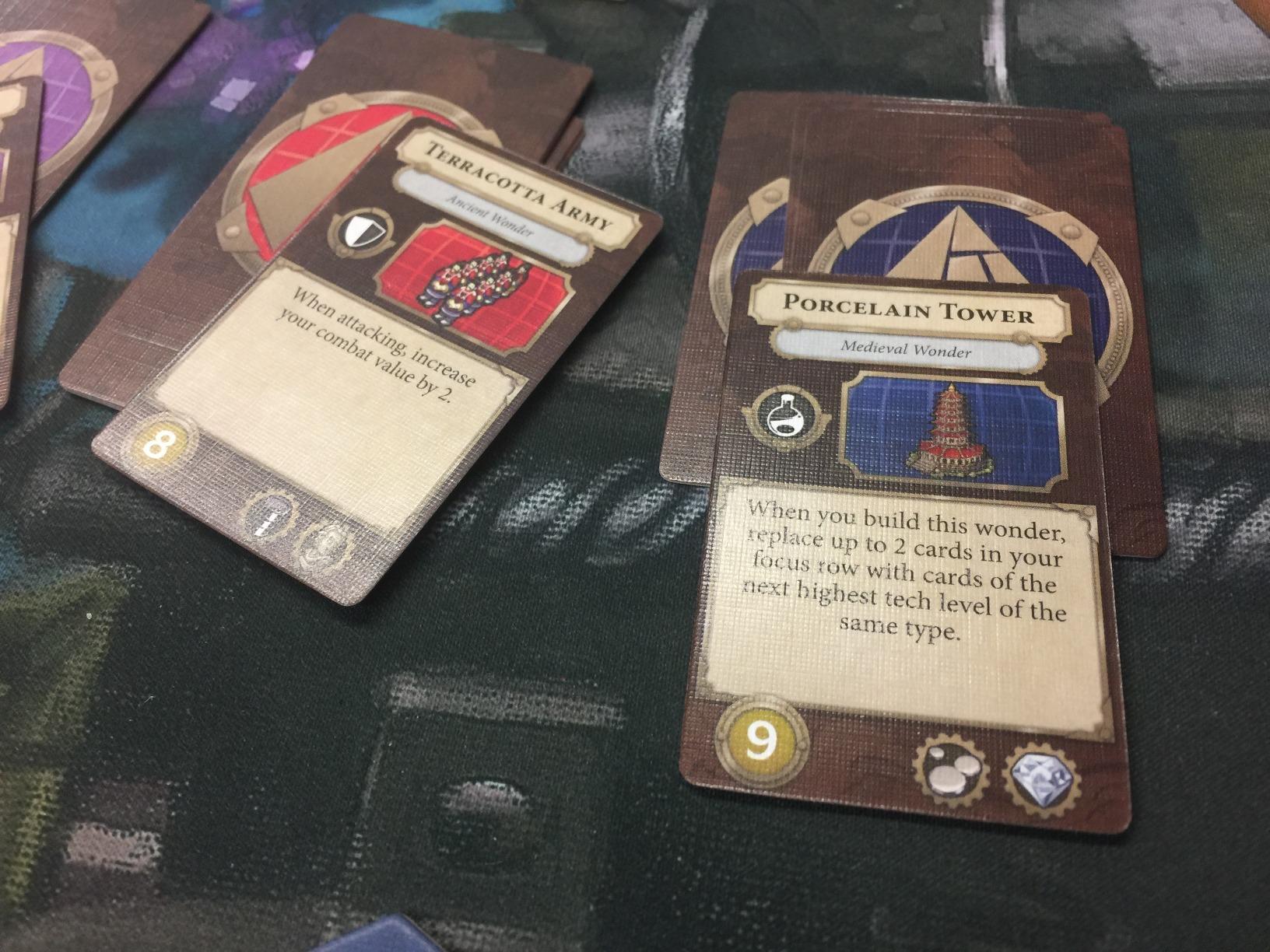
The Terra Incognita Expansion Factor
If you pick up A New Dawn, I strongly recommend the Terra Incognita expansion. It adds exploration tiles, new civilizations, and fixes several balance issues with the base game. The expansion transforms the experience from good to great.
Without the expansion, some civilizations feel noticeably stronger than others. The expansion smooths out these rough edges and adds enough variety to keep the game fresh over dozens of plays.
Accessibility for Video Game Civ Fans
Players coming from the video game Civilization series will feel at home quickly. The concepts of tech trees, wonders, barbarians, and city development translate directly from screen to table. This is the most approachable entry point for gamers who want that Civ experience without learning Through the Ages.
6. Clash of Cultures: Monumental Edition – The Premium 4X Experience
Clash of Cultures: Monumental Edition | Board Game WizKids – New Edition
2-4 players
180 min
300+ miniatures
4X gameplay
Dice combat
Pros
- Critically acclaimed 4X gameplay
- 300+ miniature figures
- Awarded Dice Tower Seal of Excellence
- Clear instructions for its depth
- High replay value with many civilizations
Cons
- Heavy and large game
- Packaging could be better
- Slow initial development
- Long playtime
Clash of Cultures: Monumental Edition is what you buy when you want the full 4X experience. Explore, expand, exploit, and exterminate are all here in their most literal form. I dedicated an entire Saturday to my first playthrough, and it was one of the most memorable gaming experiences I have had.
The component count is staggering. Over 300 miniature figures for buildings, units, and ships. Seven uniquely sculpted Wonder miniatures. Over 150 cards. This is a game that makes a visual impact the moment you open the box and spread it across the table.
The gameplay rewards players who enjoy both military strategy and cultural development. You grow your civilization, advance technology, spread culture, and engage in combat when necessary. The dice combat system adds tension without being overly random. It strikes a balance between accessibility and depth that few 4X games achieve.
What the Monumental Edition Adds
This edition brings back the classic game with updated rules, improved components, and the previously separate expansion content included in the box. The leaders, civilizations, and scenarios from the expansion add tremendous replay value. You get dozens of civilization and leader combinations to explore.
The Dice Tower Seal of Excellence in 2023 was well deserved. This is a game that respects the history of the civilization genre while modernizing the presentation.
Is the Investment Worth It
Clash of Cultures Monumental Edition sits at the premium end of the price spectrum, and for good reason. The component quality alone justifies the cost. If you are a dedicated board gamer who already loves 4X experiences, this is one of the best investments you can make for your collection.
For casual players, the three-hour playtime and massive setup might be intimidating. This is a game for people who want to commit to a full game day experience.
7. Terraforming Mars – The Sci-Fi Civilization Masterpiece
Terraforming Mars by Stronghold Games, Strategy Board Game
1-5 players
120 min
Engine building
Solo mode
Multiple expansions
Pros
- Amazing strategic depth
- Excellent solo variant
- Engine building at its best
- Unique terraforming theme
- Multiple paths to victory
Cons
- Thin player mats and cards
- Resource cubes slide easily
- Steep learning curve
- Dense rulebook
Terraforming Mars is not a traditional civilization game, but it scratches the same itch in a completely different setting. Instead of guiding an ancient civilization, you are controlling a corporation competing to transform Mars into a habitable planet. The engine-building mechanics are some of the best in tabletop gaming.
Each round you play project cards that increase your terraforming rating, generate resources, or build your engine. The satisfaction of a well-tuned engine producing oceans, raising temperature, and increasing oxygen levels is unmatched. I have played this game over 50 times and still find new card combinations that surprise me.
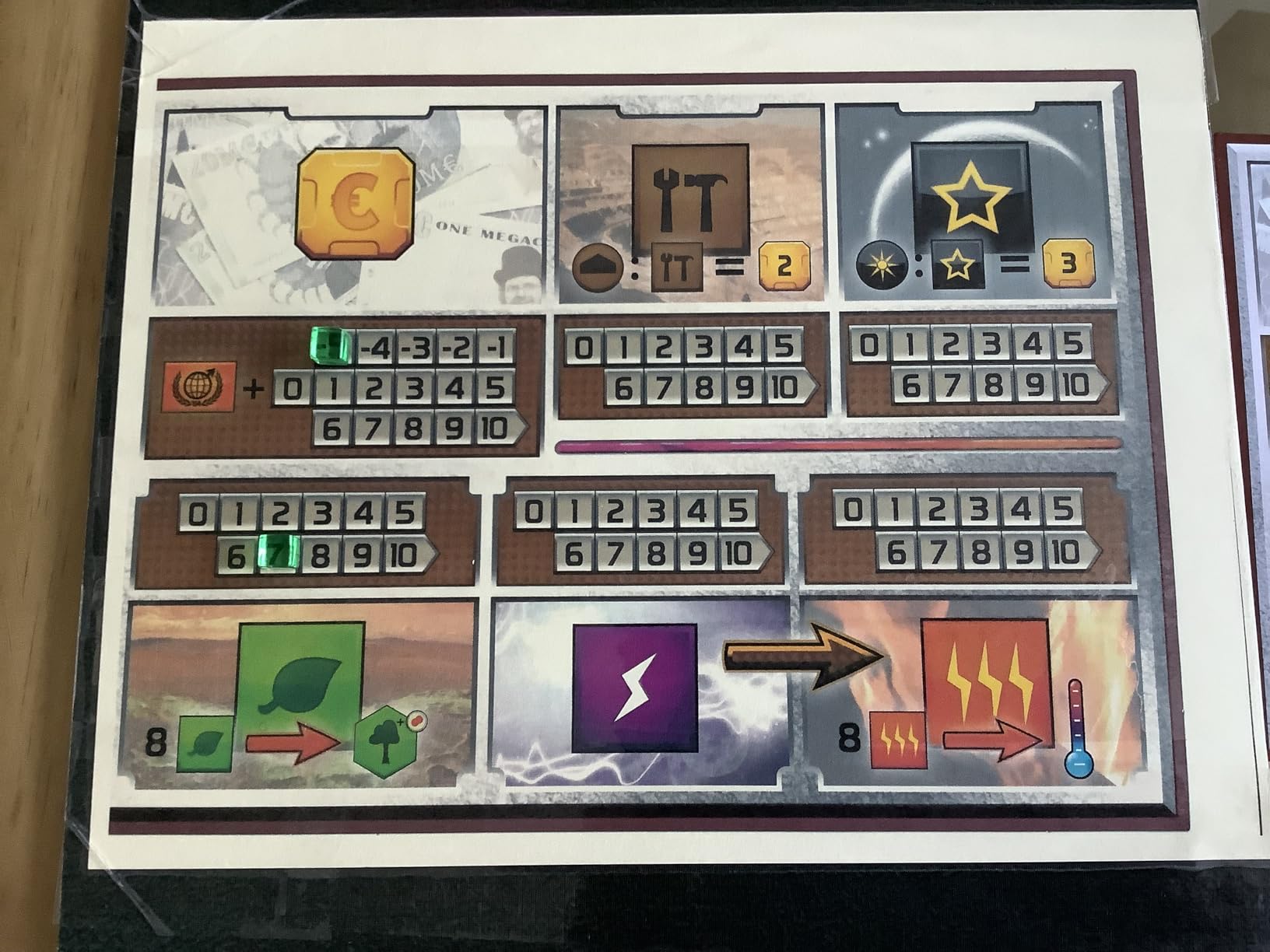
The solo mode is excellent and widely regarded as one of the best solo board game experiences available. I spent two months playing solo Terraforming Mars almost every evening, trying different corporation strategies and pushing for higher scores. The expansions, including Prelude and Hellas and Elysium, add enormous value.
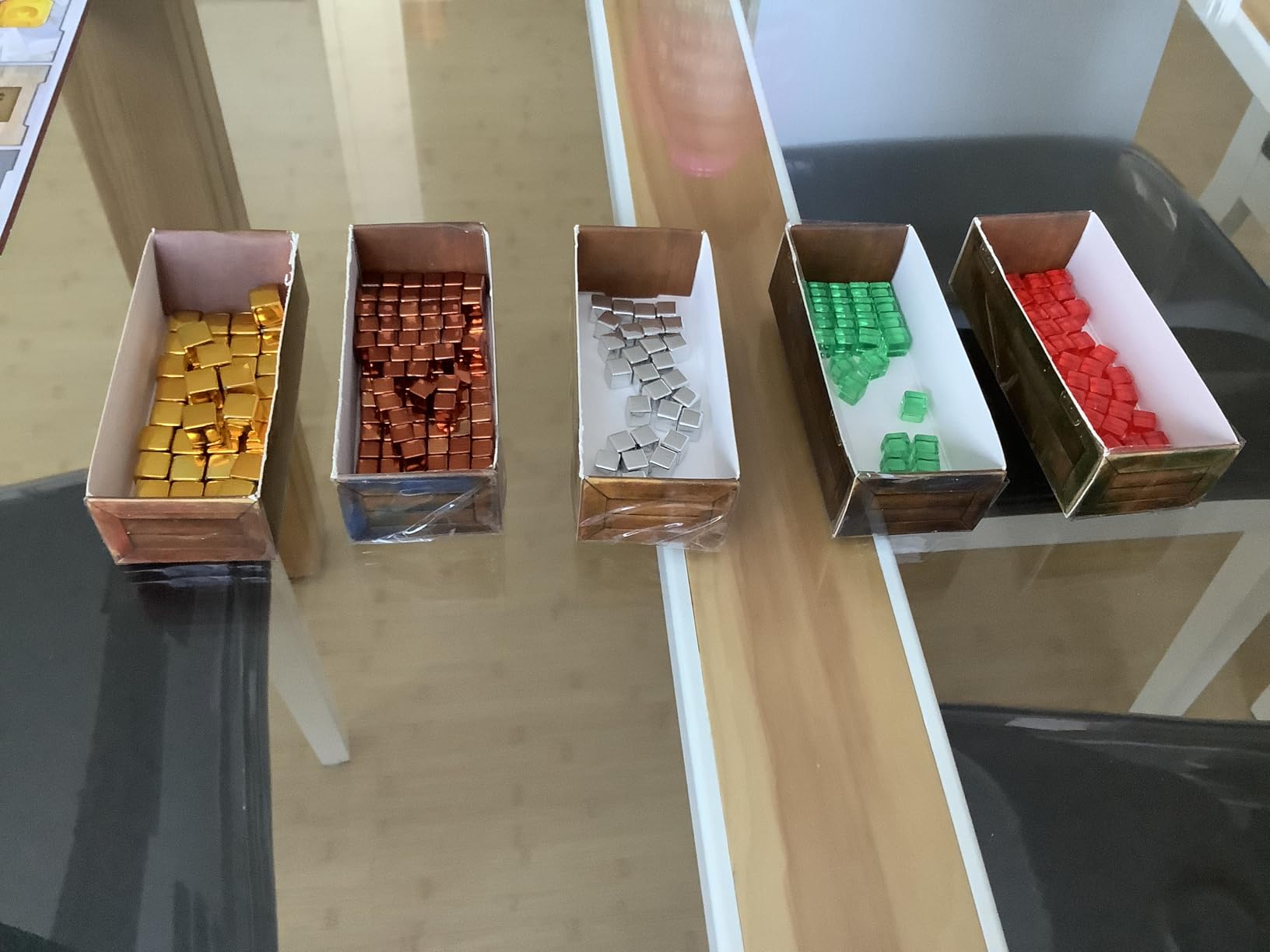
The biggest complaint is the component quality of the player mats. They are thin, and the resource cubes slide around with the slightest bump to the table. I eventually upgraded to aftermarket acrylic player boards, which solved the problem entirely. The cards are also thin for a game that gets shuffled this frequently.
Why It Belongs on a Civilization Games List
Terraforming Mars shares the core appeal of every great civilization game. You start small, make meaningful choices about where to invest, and watch your engine grow more powerful over time. The tech tree progression and resource management will feel familiar to anyone who loves the genre.
The theme also sets it apart. Instead of retreading ancient history, you are building humanity’s future. That freshness earned it a spot on this list alongside the historical titles.
Expansions to Prioritize
Start with Prelude. It speeds up the early game by giving each player a Prelude card that jumpstarts their engine. Then pick up Hellas and Elysium for two new maps. Turmoil and Venus Next are good but less essential. I would skip them unless you are deeply committed to the game.
8. CATAN (6th Edition) – The Gateway Game That Started It All
CATAN Board Game (6th Edition) Trade, Build & Settle in the Classic Strategy Game for Family, Kids & Adults, Ages 10+, 3-4 Players, 60-90 Min Playtime
3-4 players
60-90 min
Modular hex board
Trading
Family friendly
Pros
- Easy to learn for all ages
- Modular board offers endless replayability
- Engaging trading mechanics
- Great component quality in 6th Edition
- Nearly 40k reviews
Cons
- Only supports 4 players without expansion
- Delivery packaging issues reported
- Dice luck can frustrate
CATAN is the game that introduced millions of people to modern board gaming, and the 6th Edition is the best version yet. With nearly 40,000 reviews and an 89 percent five-star rating, it remains one of the highest-rated strategy games on the market. I still remember my first game of CATAN, and that was over a decade ago.
The concept is simple. You settle the island of Catan by gathering resources, building roads, settlements, and cities. The modular hexagonal board changes every game, so no two sessions are identical. Trading with other players creates some of the most lively and memorable moments in all of tabletop gaming.

The 6th Edition improves on previous versions with better card trays and chunkier components. The card trays alone solve one of the biggest complaints about older editions, where cards would slide everywhere during play. The overall component quality feels premium for the price point.
CATAN fits this list because it represents the beginning of the civilization building journey. You are building settlements, managing resources, and competing for space on the map. It is the lightest game on this list, but it captures the core appeal of the genre in an accessible package.

Best Entry Point for New Gamers
If you have never played a strategy board game before, CATAN is where you start. The rules take about 15 minutes to teach, and the game plays in under 90 minutes. It is the perfect gateway to the heavier civilization games on this list. Learn the basics here, then graduate to Tapestry or Through the Ages.
For groups of four players, CATAN remains one of the best choices available. The trading mechanics create natural table talk and social interaction that many heavier strategy games lack.
The Expansion Question
The base game supports three to four players. If your group is larger, you will need the 5-6 Player Extension. The Seafarers expansion adds ship building and new scenarios, while Cities and Knights deepens the civilization elements with city improvements and knights. I recommend Seafarers first, then Cities and Knights for groups who want more complexity.
9. Mosaic: A Story of Civilization – The Underrated Gem
Mosaic: A Story of Civilization – Strategy Board Game for Adults and Family | Fast, Fun, Action-Selection and Area Control Game | 1-6 Players | Ages 14 and Up | 120 Minutes | by Forbidden Games
1-6 players
120 min
Action selection
Area control
7 regions
Pros
- Fun civilization chain actions
- Highly strategic variety
- Easy compared to other civ games
- Beautiful components
- Supports up to 6 players
Cons
- Clunky and time intensive
- Rules have ambiguities
- Solo mode not included in box
Mosaic: A Story of Civilization is the hidden gem of this list. It does not have the name recognition of Through the Ages or Tapestry, but it deserves attention from any civilization game enthusiast. The action-selection system gives you eight distinct actions to choose from each turn, creating a rich decision space.
You build cities, wonders, and infrastructure across seven ancient Mediterranean regions. The game includes unique leaders with special abilities, historic achievements, golden ages, and a technology research system. The chain action mechanic lets you string together combinations that feel incredibly satisfying when they pay off.
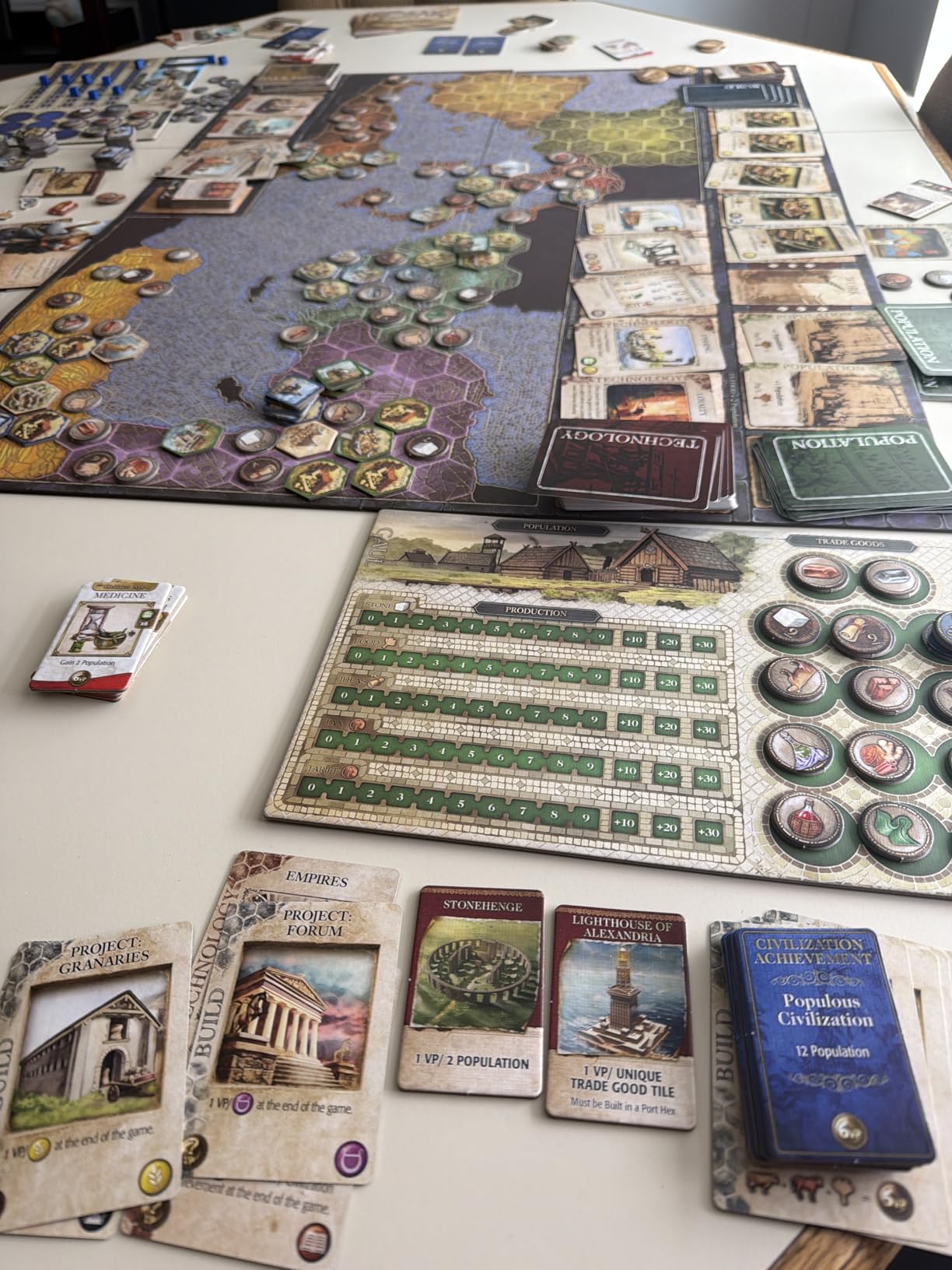
What I appreciate about Mosaic is that it supports up to six players. Most civilization games cap at four or five. If you have a larger game group that wants a civilization experience without splitting into two tables, this is one of your few options.
The downsides are real, though. Some rule situations are ambiguous, and the rulebook does not always clarify them. The solo mode requires a separate purchase rather than being included in the box. The game can feel clunky in the early turns before your engine gets rolling.
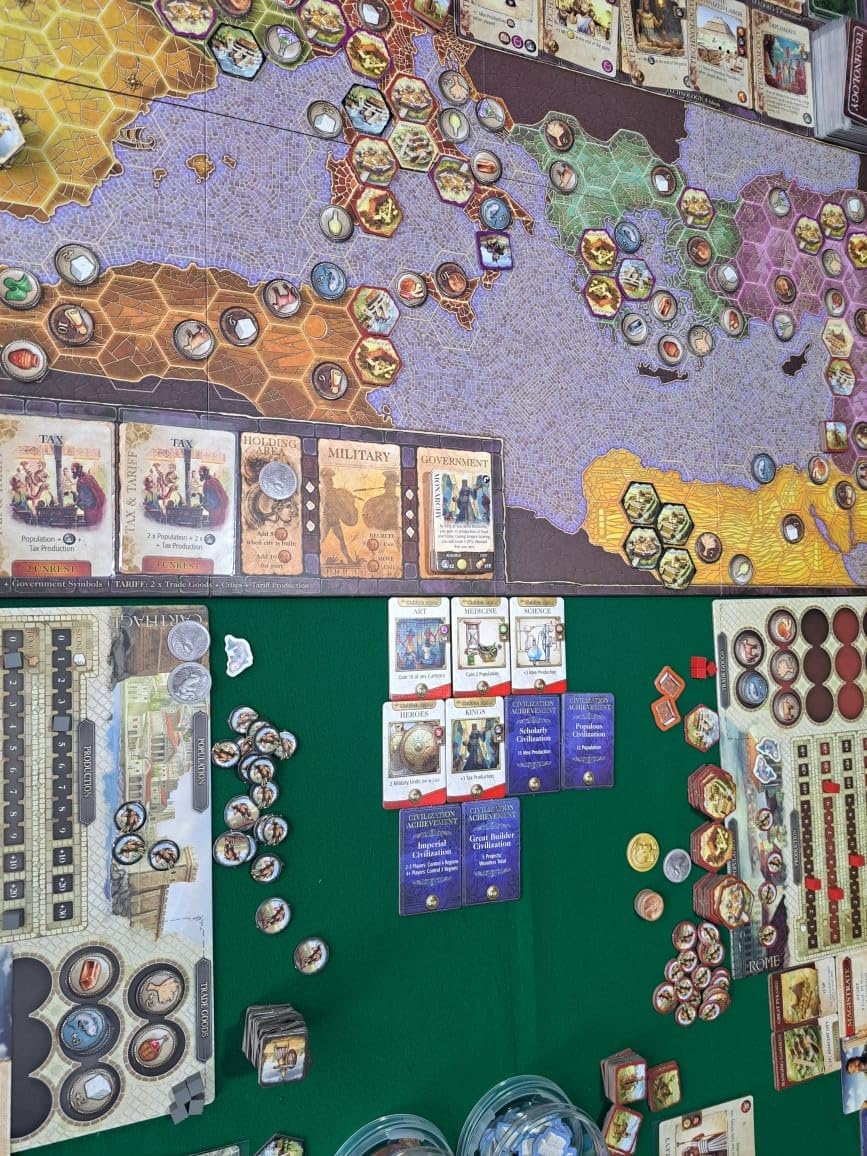
How It Compares to More Popular Titles
Mosaic sits between Tapestry and Through the Ages in terms of complexity. It has more strategic depth than Tapestry but is more accessible than Through the Ages. The area control mechanics add a spatial element that neither of those games fully offers.
If you have played the popular civilization games and are looking for something new, Mosaic rewards the investment. It will not replace Tapestry or Through the Ages, but it carves out its own niche.
Best Played With the Right Group
Mosaic shines with players who enjoy longer, thinkier games. The chain action system rewards planning several turns ahead. If your group enjoys engine building and tableau building with a historical theme, this game delivers both in a satisfying package.
For groups that prefer fast-paced interaction, the slower pace of Mosaic’s early game might test patience. Give it a full playthrough before passing judgment.
10. Stone Age – The Classic Worker Placement Gateway
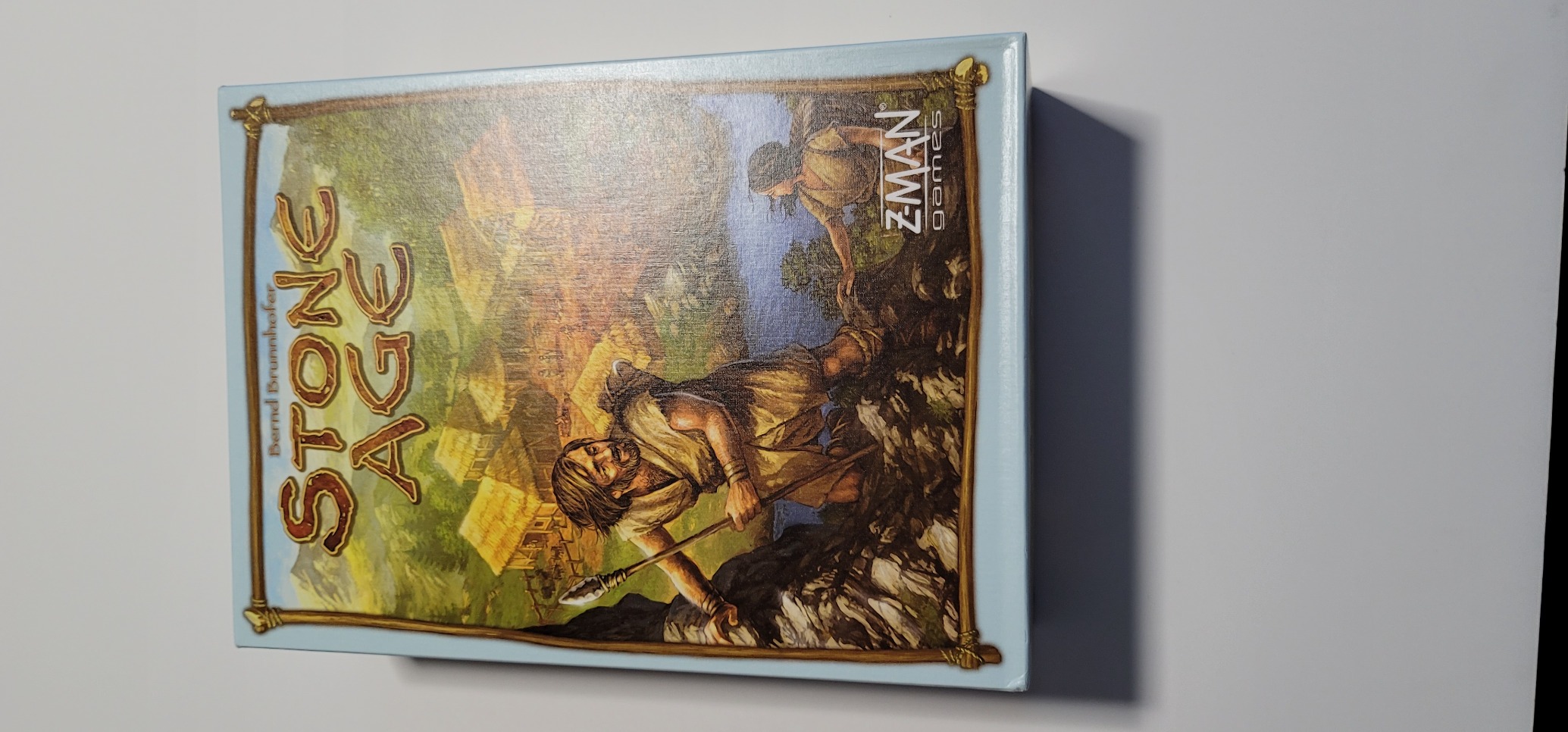
Stone Age Board Game – Engaging Worker Placement Strategy for Civilization Building! Fun Family Game for Kids and Adults, Ages 10+, 2-4 Players, 60-90 Minute Playtime, Made by Z-Man Games
2-4 players
60-90 min
Worker placement
Dice rolling
Gateway game
Pros
- Simple to learn for all ages
- Classic worker placement design
- Quality wooden components including leather dice cup
- Excellent gateway to heavier games
- Great replay value
Cons
- Some reviews report long playtimes
- A few rule ambiguities
- Dice luck can frustrate
Stone Age is the game I recommend to anyone who has never played a worker placement game before. It teaches the core concepts of resource management, strategic planning, and risk versus reward in a package that is genuinely fun for all ages. With a 4.8 rating across 725 reviews, the community consensus backs up my experience.
You send your tribe members to gather wood, brick, stone, gold, and food. You roll dice to determine how much of each resource you collect, which adds a layer of push-your-luck excitement. You use those resources to build structures and advance your tribe’s culture. The player who develops their civilization most effectively wins.
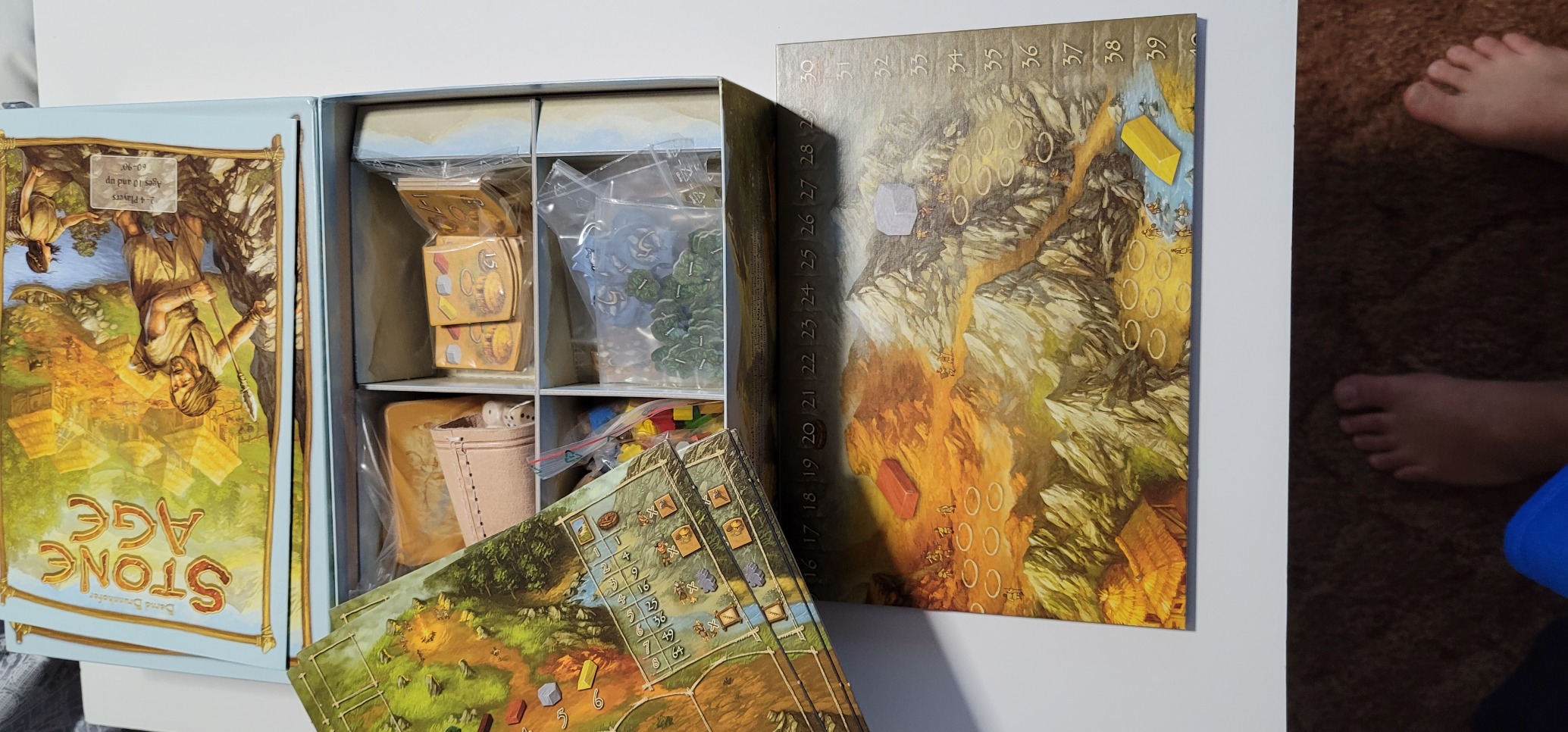
The component quality is a standout. The wooden resources feel great in your hand. The leather dice cup adds a premium touch that you do not expect at this price point. The game board and player boards are sturdy and well-designed. This is a game that will last years of regular play.
Stone Age earns its place on a civilization building board games list because it represents the earliest era of civilization development. You are literally in the Stone Age, gathering resources and building the first structures of human society. It is the perfect thematic starting point for anyone curious about the genre.
The Best Teaching Tool for New Gamers
I have taught Stone Age to children as young as eight and adults in their sixties. The rules click within the first few turns. The dice rolling keeps things exciting and accessible, while the placement decisions provide genuine strategic depth. It is the game I bring when I want to introduce someone to strategy board gaming.
If you plan to eventually play Through the Ages or Clash of Cultures with someone, start them on Stone Age. The worker placement foundation will make those heavier games much easier to grasp.
Long-Term Enjoyment Factor
Stone Age has staying power. I have played it regularly for over five years, and the decisions still feel meaningful. The buildings you can construct change every game, and the civilization cards create scoring variety that keeps each session fresh.
The only consistent complaint is that dice luck can sometimes override careful planning. I view this as a feature rather than a bug. The dice keep the game accessible and create dramatic moments that pure strategy games sometimes lack.
Buying Guide: How to Choose a Civilization Building Board Game
Choosing the right civilization building board game depends on several factors. Our team has broken down the key considerations to help you make the best decision for your gaming group.
Complexity Level
Civilization games range from light gateway games to heavy strategic epics. If you are new to the genre, start with Stone Age, CATAN, or 7 Wonders. These games teach fundamental mechanics without overwhelming new players. Tapestry and Civilization: A New Dawn sit in the medium-weight category and are the natural next step. Through the Ages and Clash of Cultures are heavy games that reward experienced players.
Most forum discussions about civilization games center on complexity concerns. Players consistently ask which games are approachable and which require serious commitment. Use the weight ratings in our comparison table to find your sweet spot.
Player Count
Your typical group size determines which games work best. For two players, 7 Wonders Duel is the clear winner. For groups of three to four, Tapestry, Through the Ages, and Civilization: A New Dawn all shine. For larger groups of five to seven, 7 Wonders and Mosaic are your best options. CATAN requires an expansion for more than four players.
Solo play is another consideration. Tapestry, Terraforming Mars, and Through the Ages all include excellent solo modes. If you game alone frequently, prioritize these titles.
Play Time
Civilization games vary dramatically in session length. 7 Wonders and 7 Wonders Duel play in 30 minutes. CATAN and Stone Age take 60 to 90 minutes. Tapestry, Through the Ages, and Terraforming Mars demand about two hours. Clash of Cultures Monumental Edition needs a full three hours. Match the play time to your available gaming windows.
If you only have weeknight evenings, stick to games under 90 minutes. Reserve the longer epics for weekends or dedicated game days.
Theme and Setting
Most civilization games use historical settings, but there is variety within that category. Stone Age covers prehistory. Through the Ages spans all of human history. Tapestry moves from ancient times to the future. Terraforming Mars is pure science fiction. Pick a theme that excites you and your group.
Solo Play Viability
Solo board gaming has grown enormously, and several games on this list cater specifically to solo players. Terraforming Mars is widely considered one of the best solo board games ever made. Tapestry includes an Automa system that provides a genuine AI opponent. Through the Ages offers a satisfying solo mode for practice and strategy testing.
If solo play is a priority, Terraforming Mars and Tapestry should be at the top of your list.
FAQ
What is the best civilization board game?
Through the Ages: A New Story of Civilization is widely considered the best civilization board game for pure strategic depth. For accessibility and group play, Tapestry and 7 Wonders are top recommendations. The best choice depends on your experience level and group size.
What is the highest rated civilization game?
7 Wonders Duel holds the highest Amazon rating at 4.8 stars with over 9,600 reviews. Tapestry and 7 Wonders also carry 4.8-star ratings. On BoardGameGeek, Through the Ages consistently ranks in the top civilization games of all time.
Which civilization building board game is best for beginners?
Stone Age and CATAN are the best civilization building board games for beginners. Both teach core mechanics like resource management and strategic planning in under 90 minutes. 7 Wonders is another excellent entry point that plays in just 30 minutes.
What civilization game is best for 2 players?
7 Wonders Duel is the best civilization building board game for two players. It was designed specifically for pairs and features three unique win conditions in a fast 30-minute format. Through the Ages also supports solo and two-player games well.
Are civilization board games worth the investment?
Civilization building board games offer exceptional replay value. Games like Tapestry with 16 unique civilizations and Terraforming Mars with hundreds of project cards deliver dozens of unique playthroughs. Most titles on this list retain their value and provide years of entertainment per dollar spent.
Final Thoughts on the Best Civilization Building Board Games
Civilization building board games offer something no other genre can match: the satisfaction of watching a small settlement grow into a mighty empire through your own decisions. Our top pick is Tapestry for its stunning components, approachable rules, and 16 unique civilizations. For two-player sessions, 7 Wonders Duel remains unbeaten. And for groups of five or more, 7 Wonders delivers simultaneous play that keeps everyone engaged.
The best civilization building board games in 2026 span a wide range of complexity, play times, and themes. Whether you are building ancient wonders, terraforming Mars, or settling the island of Catan, each game on this list earned its place through rigorous testing and real group play. Pick the one that matches your group size and experience level, and start building your empire.