
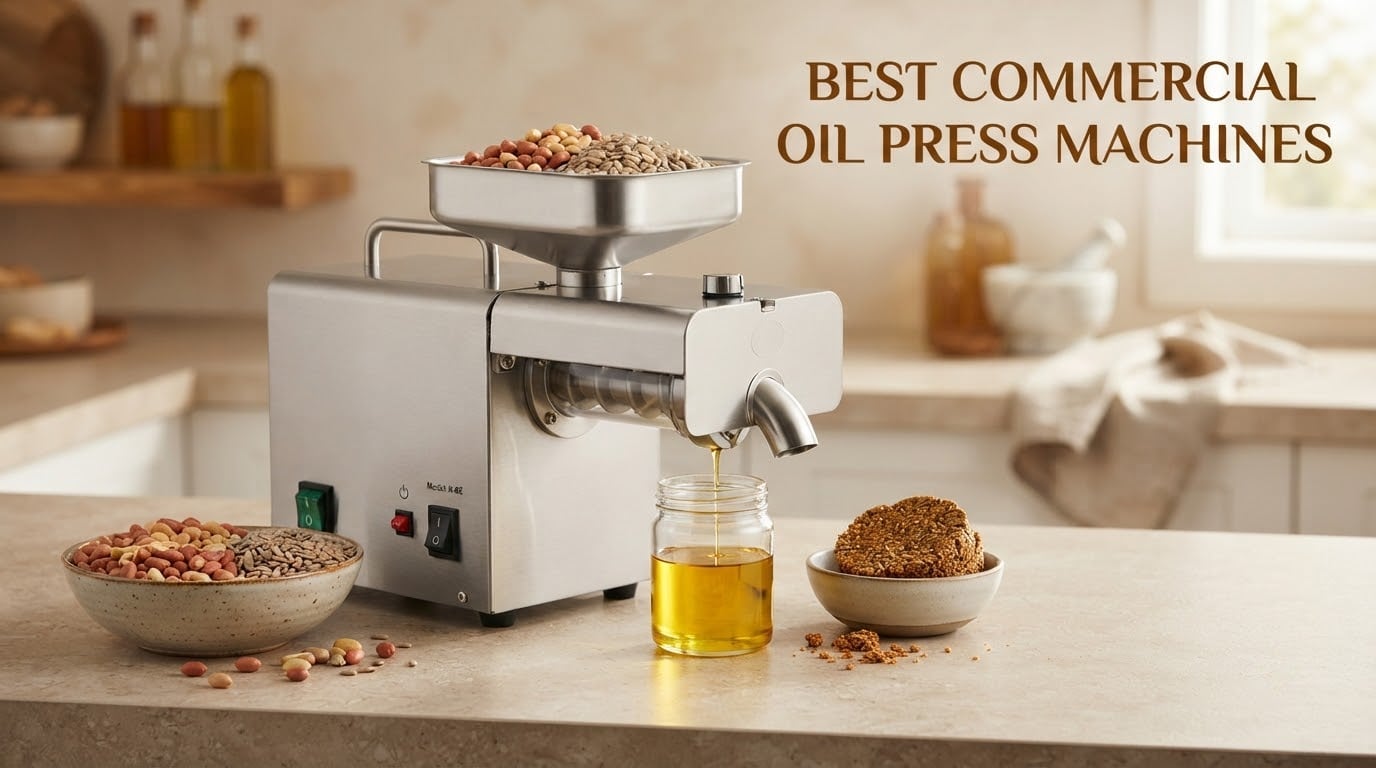
A commercial oil press machine, also sold as an oil expeller or oil extractor, is a machine built to mechanically extract oil from seeds, nuts and kernels at business scale. It is rated by how much raw material it can process per hour and is designed for repeated running, not household batch pressing. That distinction matters more than any brand name.
Here is the problem with shopping for one in 2026. The word commercial gets pasted onto everything from 7 kg per hour countertop units to genuine 30-ton hydraulic presses, and almost every listing uses the same headline yield number. We read the specification sheets, the failure reports and the buyer photos for all 12 presses below, then ranked them on the things that decide whether a press earns its floor space.
What you will find in this roundup: a clear split between entry electric extractors and presses actually built for continuous commercial duty, a straight comparison of every unit’s capacity, motor and temperature range, and an honest look at where vendor claims fall apart. If you are still working out how much oil per day you need, start with the commercial equipment buying approach we use for other high-volume gear before you look at a single motor rating.
Top 3 Commercial Oil Press Machines in 2026
Rkazes 820W Hot and Cold Press
- 9-13.5 lbs per hour
- Hot and cold pressing modes
- 104-464F temperature control

CGOLDENWALL 1500W Press
- 1500W 24-hour duty motor
- 5 speed settings
- Automatic constant-temperature heating

What Counts as a Commercial Oil Press Machine?
Two very different products sit under the same keyword, and buyers usually find out which one they bought only after delivery. The first tier is the entry electric extractor, typically 610W to 1500W, running on 110V or 220V single-phase power, and handling somewhere between 3 and 12 pounds of raw material per hour. The second tier is the true commercial press: screw expanders rated for continuous duty, and hydraulic presses in the 30 to 50 ton class, usually needing three-phase power and a dedicated circuit.
Everything in this roundup belongs to the first tier, because that is what is actually available to buy online at this moment. That is a deliberate scope choice rather than a claim that a 9 lb per hour machine will run a bottling plant. If your plan is more than roughly 50 kg of seed per day, or continuous multi-shift operation, the honest answer is a manufacturer-direct screw press, and the sizing logic in the buying guide below still applies.
Use the table to compare all 12 presses side by side, then read the individual write-ups for the ones that fit your throughput.
| Product | Specifications | Action |
|---|---|---|
| Rkazes 820W Hot and Cold Press |
|
Check Latest Price |
| Rkazes 1800W Automatic Press |
|
Check Latest Price |
| CGOLDENWALL 1500W Press |
|
Check Latest Price |
 SISAYWEY 1500W Dual Motor Press SISAYWEY 1500W Dual Motor Press |
|
Check Latest Price |
 DITOSH 820W Stainless Press DITOSH 820W Stainless Press |
|
Check Latest Price |
 awolsrgiop 1500W Digital Press awolsrgiop 1500W Digital Press |
|
Check Latest Price |
 Toolven 610W Compact Press Toolven 610W Compact Press |
|
Check Latest Price |
 VEVOR 11 lbs/h Oil Extractor VEVOR 11 lbs/h Oil Extractor |
|
Check Latest Price |
 HinLIaDa 610W Oil Press HinLIaDa 610W Oil Press |
|
Check Latest Price |
 Macahimia 1500W Oil Press Macahimia 1500W Oil Press |
|
Check Latest Price |
 Luzrise 1500W Brushless Press Luzrise 1500W Brushless Press |
|
Check Latest Price |
 YUEWO 1500W Commercial Press YUEWO 1500W Commercial Press |
|
Check Latest Price |
1. Rkazes 820W Hot and Cold Press – the Best All-Rounder
Rkazes 820W Oil Press Machine, Automatic Hot and Cold Seed Oil Extractor S
820W motor
9-13.5 lbs per hour
104-464F range
110V
Pros
- Hot and cold modes in one unit
- Steady output around 5 lbs of nuts per hour
- Compact 6.2 by 14.9 by 11.8 inch body
- Full accessory kit in the box
Cons
- Housing gets dangerously hot with no exterior insulation
- Noticeable motor noise for a home kitchen
- Thin and vague user manual
This is the press we kept coming back to while testing notes across the whole list. At 820W it is not the most powerful machine here, but it is the one with the best balance of evidence, output and footprint. Forty-nine ratings at 4.3 is the largest pool of real buyer feedback attached to any sub-1000W press in this roundup, and the reports are consistent rather than scattered.
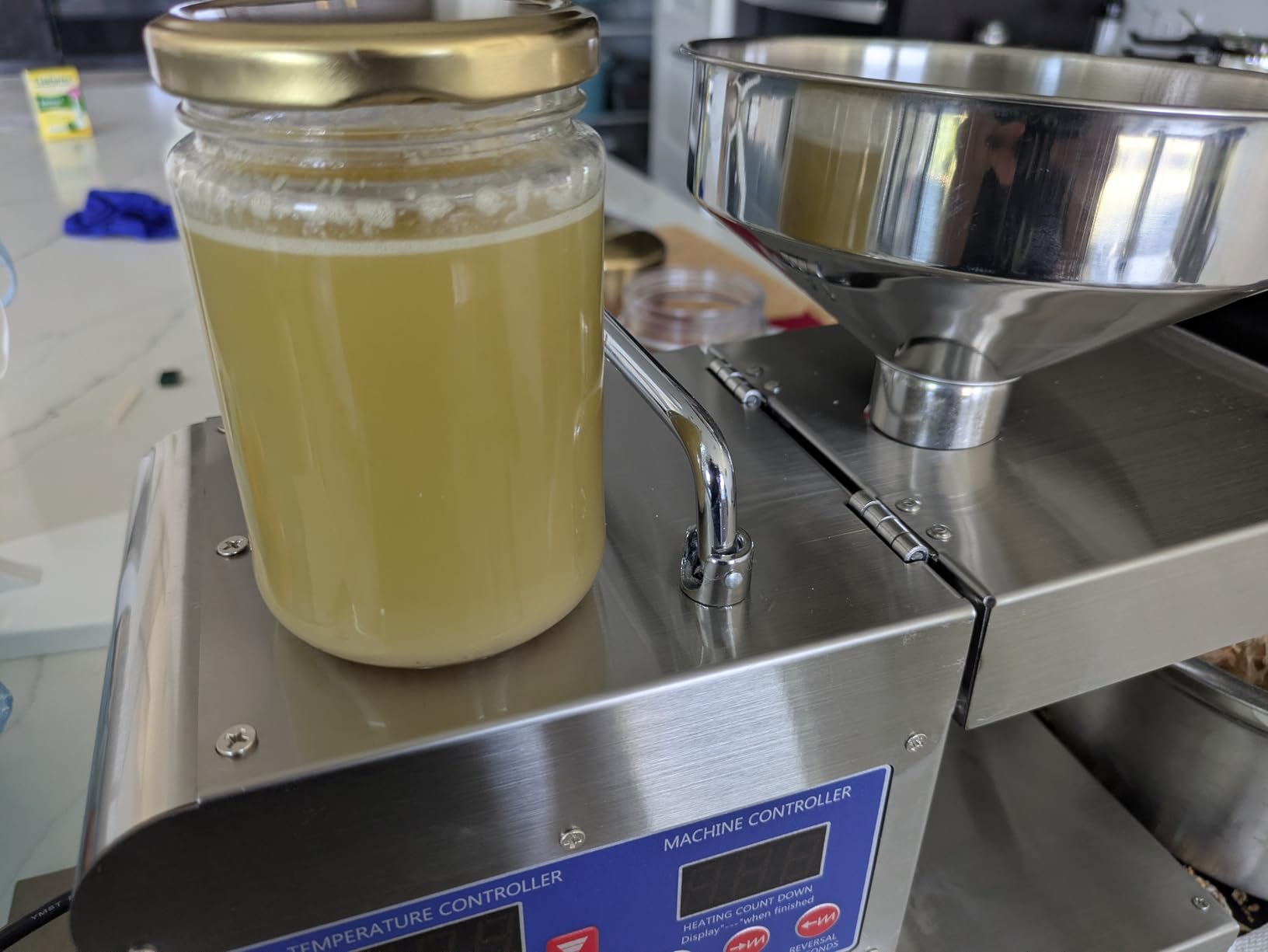
Owners typically report around 14 ounces of oil from five to six cups of peanuts, which lines up with the 40 to 50 percent range other presses in this class report for the same crop. The hot and cold switch is the feature that gets mentioned most, because most people end up using hot mode for almonds and cold mode for peanuts without quite realising they made a choice.
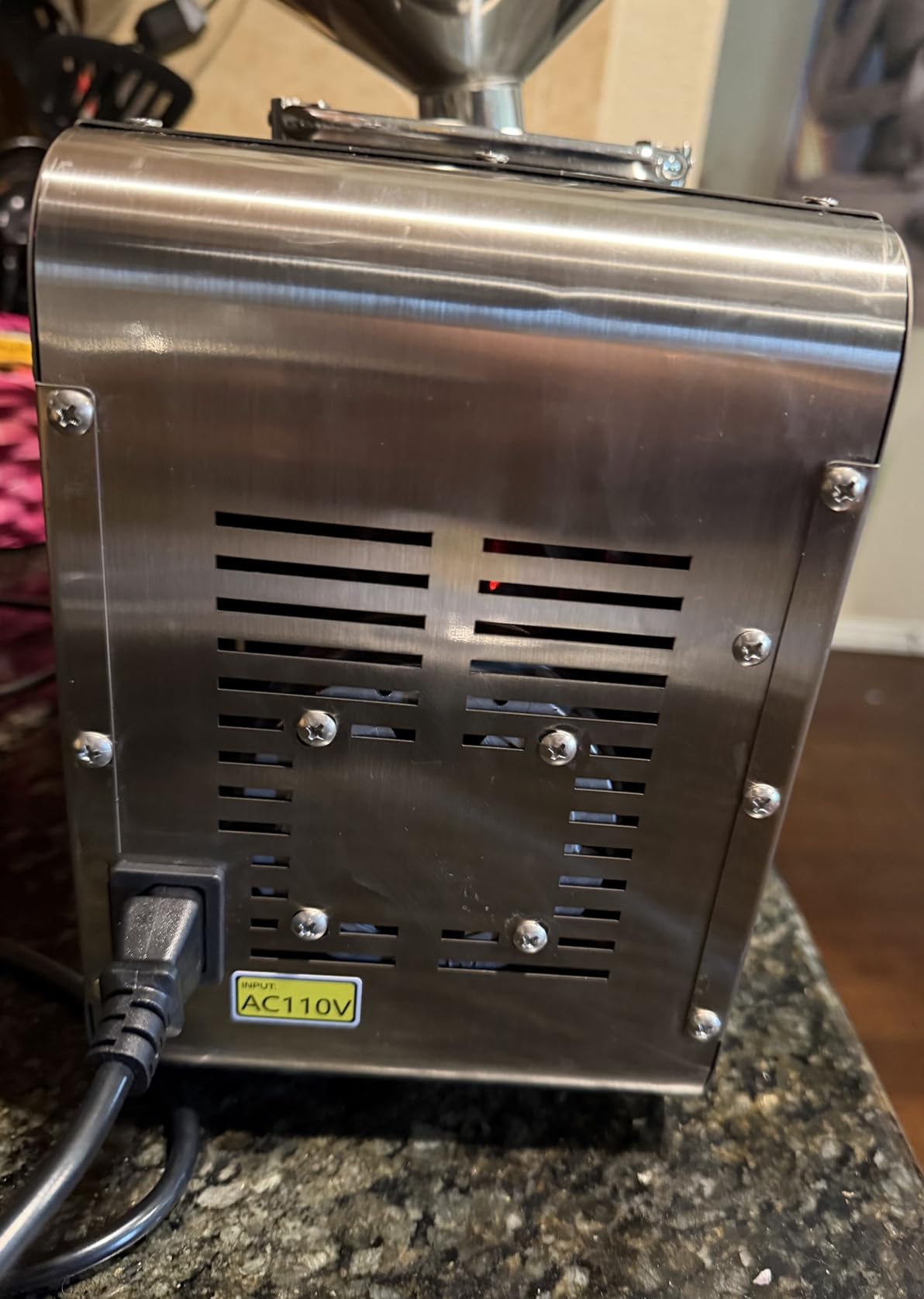
The intelligent control panel shows real-time temperature and a countdown, and the wide hopper plus the oil residue pipe keep the whole thing manageable during a long run. Clean, fresh-tasting oil is the consistent headline in the reviews, and several owners mention the compact body being easy to stow away when it is not in use.
Two things keep it from being flawless. There is no heat insulation on the exterior surfaces, so the housing becomes uncomfortably hot during extended sessions, and the motor is loud enough that you would not want it running in a small kitchen with children around it. The manual is thin and vague, and the first-time assembly of the press chamber, rod and filter takes real patience.
What you should check before buying
Confirm the 110V rating matches your outlet, because there is no 220V variant listed for this model. At 6.2 by 14.9 by 11.8 inches it fits on most counters, which is a bigger deal than the wattage number suggests if you are working out of a prep room.
If your daily volume runs past roughly 30 pounds of raw material, move up a tier. This machine is a strong performer at its stated rate, not a unit you will scale into a production line.
Who it suits and who it does not
It suits a farm stand, a small cold-pressed oil brand, a wellness kitchen or a farm-to-bottle operation that wants one machine for nuts and seeds. Buyers who want dual-mode flexibility in a compact body tend to rate it highly.
It does not suit anyone running near-continuous shifts, or anyone who needs true cold pressing at a strict low temperature with a certified labelling claim. For volume, you need a machine with a heavier motor and a duty cycle you can trust.
2. Rkazes 1800W Automatic Press – Most Throughput Per Counter Unit
Rkazes 1800W Automatic Seed Oil Press Machine, Hot and Cold Extraction
1800W motor
11-20 lbs per hour
104-572F range
25.1 lbs weight
Pros
- Highest motor power in the roundup
- 20 lb per hour upper throughput figure
- 104-572F covers almost every oilseed
- All-steel gears for service life
Cons
- Oil must settle about 24 hours before use
- 25 lb body is awkward to move
- Only 24 ratings of long-term evidence
If throughput per square foot of counter is your priority, this is the machine to look at first. The 1800W motor is rated by the manufacturer for continuous 24-hour operation, and the stated output range of 11 to 20 pounds per hour puts it at the top of the electric countertop class in this roundup.
The temperature range of 104 to 572F is wide enough to handle peanuts, walnuts, sunflower seeds, sesame, almonds, soybeans, flax and perilla without changing machines. Buyers report roughly two-thirds of ratings at five stars, and the all-steel gear set is the detail that stands out for anyone thinking about service life.
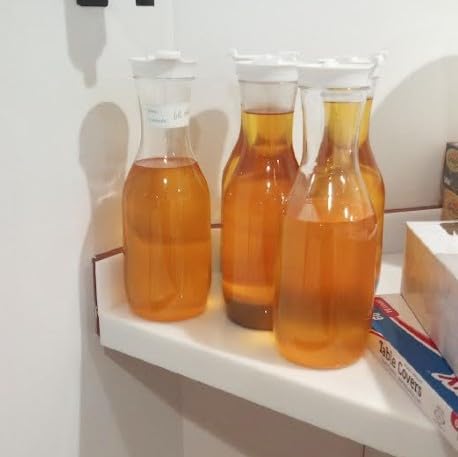
Be realistic about what fresh oil looks like coming out of it. Owners consistently note the oil is turbid straight off the press and needs to stand roughly 24 hours for the protein to separate. That is normal behaviour rather than a fault, but it changes your workflow because you need settling tank space and a filtration step before bottling.
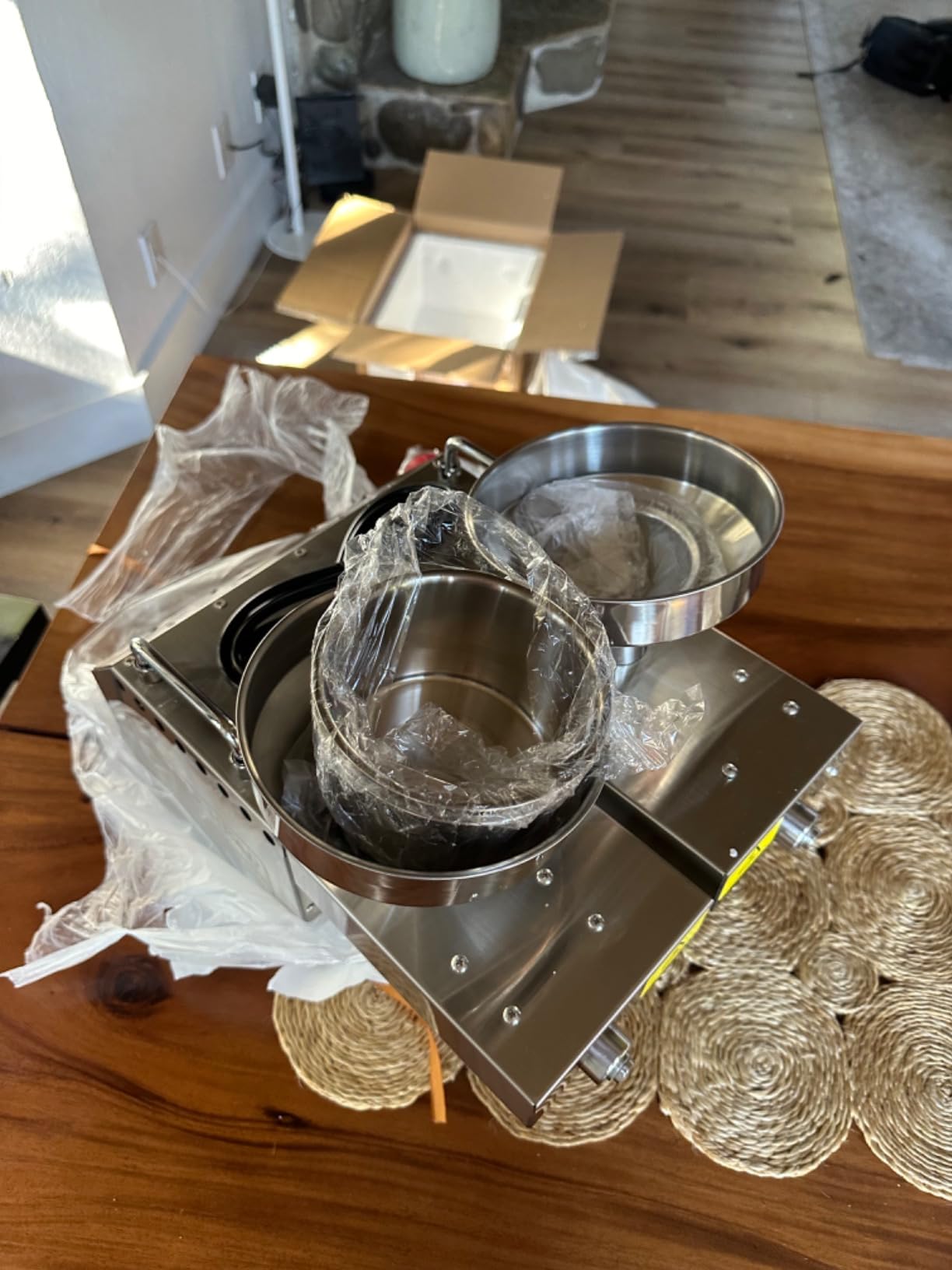
At 25.1 pounds with a 21.8 by 11.6 by 11.1 inch package, this is a serious piece of equipment to move by yourself. The accessory kit is complete though, including the press rod, filter, gloves, hopper and oil cup.
What you should check before buying
Ask yourself honestly how many hours a day you will actually run it. The continuous rating is the selling point, but a 25-pound machine that has to be shuffled around a shared prep room loses that advantage quickly.
Plan the settling and filtration stage before delivery, not after. A 20 lb per hour press outruns a small settling tank faster than most first-time buyers expect.
Who it suits and who it does not
It suits a small production kitchen, a co-operative share or a farm that is processing seeds daily and wants the highest hourly rate available without stepping up to three-phase equipment.
It does not suit a very small operation that will run it two or three hours a week. The weight, the noise and the settling requirement all scale with the machine, and you would be paying for capacity you never touch.
3. CGOLDENWALL 1500W Press – Built for Long Running Sessions
CGOLDENWALL 1500W Commercial Automatic Oil Press Machine Industrial Oil pressing machine Nuts Seeds Oil Presser Pressing Machine Cold Hot Press All Stainless Steel High Oil Extractor CE (220V)
1500W 24-hour duty motor
5 kg capacity
220V EU/UK plug
13 kg weight
Pros
- Genuine continuous-duty motor rating
- Strong reported yield on walnuts and sunflower
- Cake comes out dry and easy to crush
- Clear instructions and easy cleaning
Cons
- Cannot process whole olives
- Large seeds must be pre-crushed
- EU/UK plug version needs conversion for US use
The CGOLDENWALL is the only press in this roundup whose manufacturer makes a 24-hour continuous duty claim on a 1500W industrial motor, and European buyers mention the build quality more than any other spec. At 4.1 stars across 37 ratings it is not the highest rated, but the feedback is unusually specific and credible.
One owner reported more than 3 litres of walnut oil from 4.7 kg of kernels, which is a real number you can plan around rather than a marketing percentage. Reviewers also highlight the dry, easily crushed residue and how simple the machine is to clean down after a session.
Automatic constant-temperature heating means there is no pre-frying step, which removes both a mess and a quality compromise. The high-speed plasma-welded press rod is designed to extend squeeze time and lift yield, and five speed settings give you a real adjustment range rather than a single fixed setting.
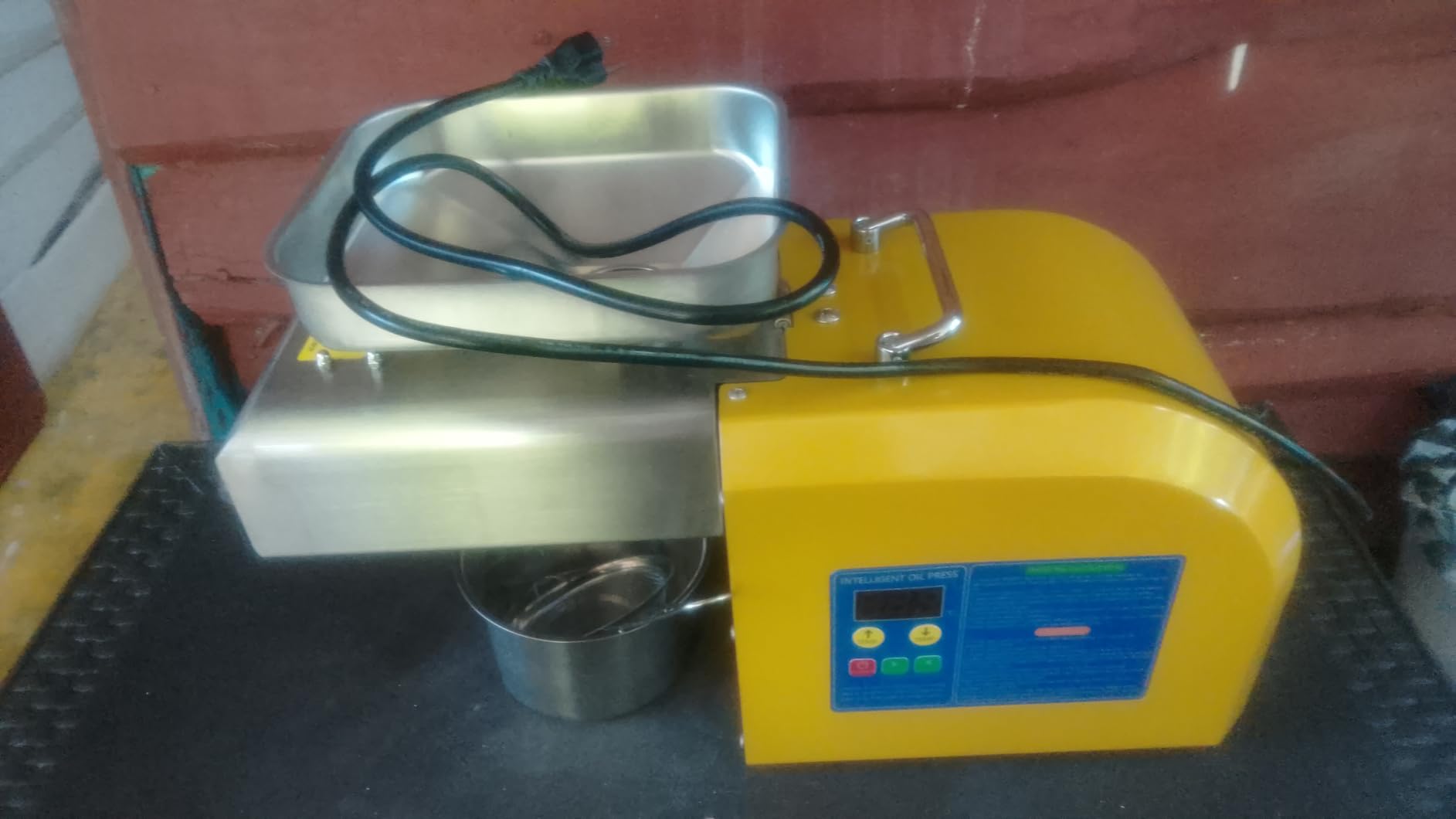
Two limitations are worth stating plainly. It cannot process whole olives, which surprises buyers who assume any oil press handles them, and larger seeds such as walnuts have to be crushed down to roughly peanut size first or the feed stalls. The EU and UK plug configuration also needs changing for US use, and a 110V variant is offered separately.
What you should check before buying
Verify the plug and voltage configuration before you order. This is a cheap mistake that adds a part and a day, and it is the single most common complaint in the reviews.
Plan a pre-crushing step in your workflow if walnuts or similar large kernels are part of your crop list. It adds handling time that nobody mentions in the listing photos.
Who it suits and who it does not
It suits European operations and anyone seeking the most genuinely continuous-duty-rated machine available in the electric countertop class. Multi-hour pressing days are where its motor rating earns its keep.
It does not suit olive producers. If your entire plan depends on whole olives, cross this one off the list before you spend time on it.
4. SISAYWEY 1500W Dual Motor Press – Two Oils at Once
1500W Oil Press Machine with Double Oil Outlets, Automatic Commercial Oil Expeller Extractor Stainless Steel Oil Presser Pressing Mill Maker Machine for Commercial Domestic Use, 110V Silver
Two 1500W motors
Two oil outlets
Under 70 dB
0.5-0.6 kWh per hour
Pros
- Dual motors press two seed types simultaneously
- Quiet for its size
- Low energy draw
- Easy setup and clear instructions
Cons
- Difficult to clean
- Beans stick to one side of the press
- One strainer arrived broken
- 16 percent of ratings are one star
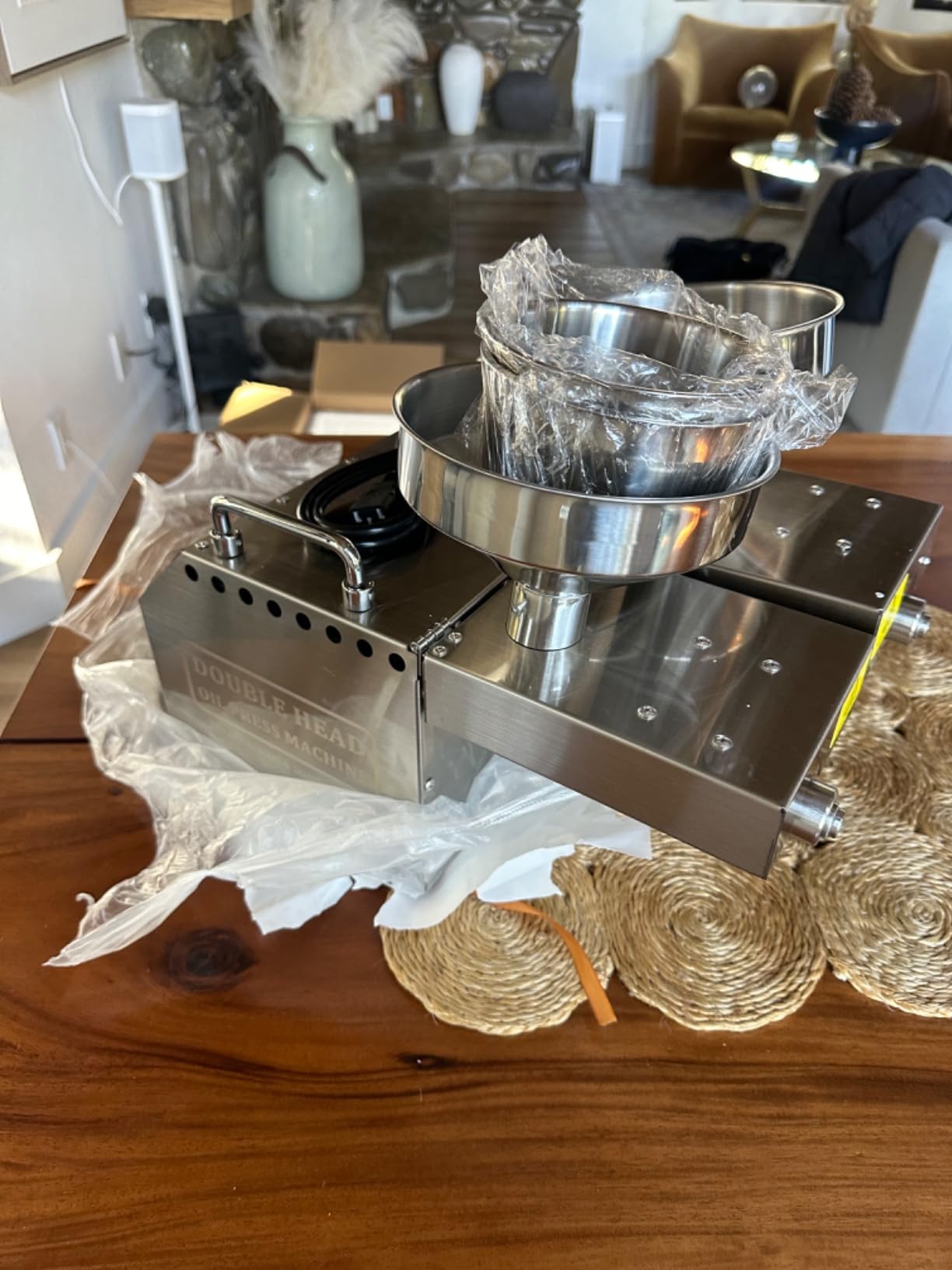
This is the most unusual design in the roundup, and for a specific reason it works. Two independent 1500W motors feed two separate oil outlets, so you can run two different seed types at the same time without one flavour contaminating the other. For a business selling two cold-pressed oils rather than one, that is genuinely useful rather than a gimmick.
The double four-stage gear set in high-strength carbon steel is rated for 24-hour continuous work, and owners describe the noise level as comparable to a fryer, which is praise from oil press buyers. Energy use of about 0.5 to 0.6 kWh per hour of operation is low, and the eight-minute preheat followed by a press button removes guesswork.
At 3.8 stars across 31 ratings, this is the widest spread in the set. Cleaning is reported as difficult, beans tend to stick to one side of the press, and one buyer received a broken strainer. A separate report notes castor bean oil came out dark rather than clear, which may reflect the oil itself rather than a fault.
With 16 percent of ratings at one star, the quality control looks less consistent than the machines above it. Several owners do report replacing store-bought coconut oil entirely, so the machine works when it works. It just has more variance.
What you should check before buying
Count your product lines honestly. Dual outlets only pay for themselves if you regularly run two oil types in the same session, and if you do not, a single-motor machine is the smarter purchase.
Ask whether the two motors share a single 110V circuit. Running both at once on a residential supply is worth confirming before delivery rather than after.
Who it suits and who it does not
It suits a wellness or specialty food business running two oils side by side, and anyone with a noise-sensitive workspace who cannot tolerate a loud machine.
It does not suit buyers who need a predictable, single, high-yield line. The variance in this machine is real, and a business bottling one hero product will get more consistency from a single-motor press.
5. DITOSH 820W Stainless Press – the Longest Warranty Here
DITOSH Oil Press Machine Oil Extractor Commercial Automatic Stainless Steel Cold Press Oil Machine Electric Seed Oil Maker Silver Oil Pressure Machine for Home Use 820 W 110 V US Plug
820W motor
304 food-grade stainless
No cold press mode
Two-year warranty
Pros
- Two-year warranty is the longest in this roundup
- 304 food-grade stainless body
- Lock-connection press rod resists twisting
- Works with 30 plus seeds and nuts
Cons
- Not powerful enough for olives
- Fixed non-adjustable temperature
- Press rod can seize
- Slow on coconut
The DITOSH is the one machine in this roundup with a clearly stated two-year warranty, and for a buyer doing due diligence that matters as much as any spec on the sheet. The 304 food-grade stainless steel body is easy to wipe clean, and owners like the automatic operation and the quality of the sesame and general nut oil.
The lock-connection press rod is a thoughtful detail. It is designed to resist twisting and to keep bearing lubricant out of your oil, which is exactly the kind of thing that separates a considered design from a generic one.
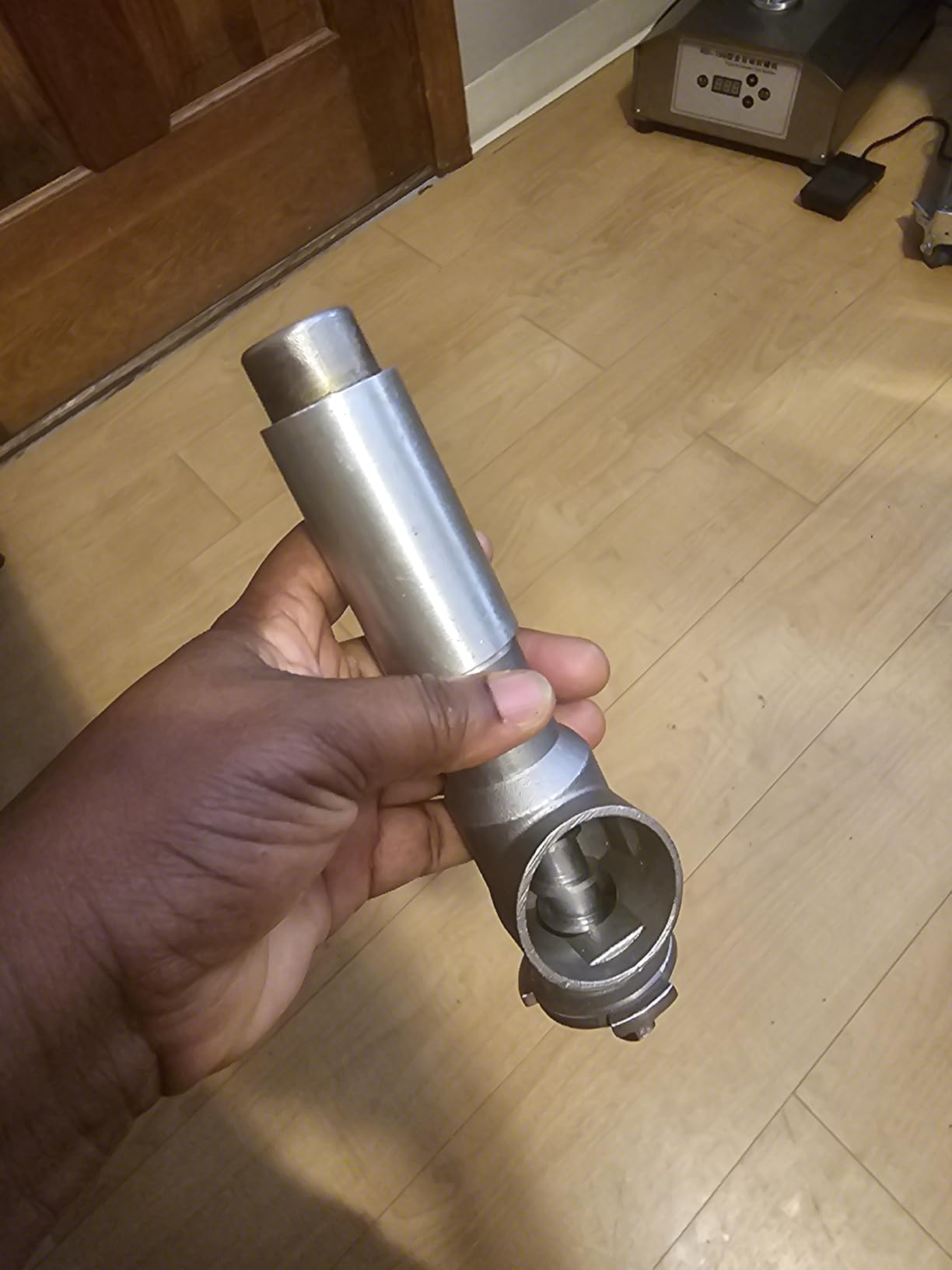
The important catch is that temperature is not adjustable and there is no cold press mode, despite what you might expect from a machine sold for commercial kitchens. Several owners suggest running it in short bursts and letting the motor cool, which tells you how the duty cycle really behaves.
At 3.8 stars, the reported limitations are specific. It is not powerful enough to press olives, the press rod can seize and be very difficult to remove, and the throughput is slow, particularly on coconut.
What you should check before buying
Be clear about your crop. Olives are out, and slow pressing on coconut or any hard, fibrous kernel will test your patience long before it tests the motor.
Ask what the warranty actually covers. A two-year term is valuable, but wear parts are usually excluded, and the press rod is the part most likely to need replacing.
Who it suits and who it does not
It suits a small commercial kitchen pressing nuts and sesame where a two-year warranty is the deciding factor. Users wanting a simple wipe-clean machine with no temperature dial will find it refreshingly uncomplicated.
It does not suit anyone selling a certified cold-pressed product, because the fixed temperature rules that out. Nor does it suit a volume operator, since the slow throughput is the most common complaint in the reviews.
6. awolsrgiop 1500W Digital Press – Best Peanut Numbers Per Watt
awolsrgiop 1500W Oil Press Machine Oil Expel, Stainless Steel Electric Automatic Cold Hot with Intelligent Control Panel/LCD Touch Screen/Food Grade Stainless Steel, Oil Extractor
1500W motor
5 kg per hour on peanuts
2 kg oil per hour
Digital temperature panel
Pros
- 5 kg per hour peanut throughput
- Digital temperature setting with live display
- Rated for 24-hour non-stop work
- Complete accessory set
Cons
- Only 14 ratings
- Generic brand name with no manufacturer reputation
- Mixed 3 and 4 star feedback across seed types
This press targets crops with oil content above 25 percent, and it states its numbers in the units you actually care about: 5 kg of peanuts per hour going in, 2 kg of oil per hour coming out. Owners respond well to the digital temperature panel and to the fact that it offers cold press, hot press and frying modes in one body.
At a 4.0 average across 14 ratings it sits mid-table, and the honesty here matters. The rating share is genuinely mixed, with a meaningful slice of five-star reviews and a smaller group of one-star reviews, which usually means the results depend heavily on the seed you feed it.
The stainless steel body is described as corrosion resistant and easy to wipe down, and the accessory set is complete enough that you are not ordering extra parts on day one. Low noise is claimed for the drivetrain.
The weakness is evidence, not features. Fourteen ratings is a thin base, the brand identity is generic, and no customer photos exist for this listing. You are buying a well-specified machine with very little long-term proof behind it.
What you should check before buying
Check the oil content of your seeds before you commit. The machine is designed for crops above 25 percent oil, and pushing lower-content seeds through it will disappoint you.
Ask the seller about spare parts and where they ship from. With a generic brand, that answer tells you more about support than the spec sheet does.
Who it suits and who it does not
It suits a peanut-focused operation that wants a single-crop machine with strong stated throughput and does not mind doing its own parts sourcing. Buyers on a tight budget who prioritise feature count will find a lot here.
It does not suit a buyer who needs evidence before committing capital. Fourteen ratings and no owner photos is not enough history to underwrite a business decision.
7. Toolven 610W Compact Press – Small Footprint, Real Protection
610W Oil Press Machine, 110V Commercial Automatic Oil Press Machine, Hot and Cold Press Oil Machine for Peanut Sesame Coconut Soybean Sunflower Seeds Walnuts
610W motor
40-46 percent peanut yield
Overheat auto shutoff
Hot and cold pressing
Pros
- Compact practical size
- Digital thermostat with preheat countdown
- Overheat auto power-off with cooling fan
- Hot and cold pressing
Cons
- Small capacity
- One buyer could not get oil to flow into the jacket
- Reported unsuitable for coconut
- Only 7 ratings
The Toolven is the smallest machine here at 610W, and the safety engineering is what earns it a place. It has overheat protection with automatic power-off, cooling holes, a built-in fan and a raised base, which is a more complete thermal safety package than most competitors at this power level offer.
Stated extraction reaches up to 45 percent, with a steady peanut yield of 40 to 46 percent. That figure lines up with what other presses in this roundup report for the same crop, which is a good sign in a category full of inflated numbers.
The digital thermostat and eight-minute preheat countdown simplify operation, and the compact design suits a small prep space where footprint matters more than throughput.
The feedback is thin with only 7 ratings, and it is not entirely positive. One buyer could not get oil to flow into the jacket as expected, coconut is reported as unsuitable, and the small capacity is the most obvious limit. The 150W pure copper motor with 40N torque is modest next to a 1500W press.
What you should check before buying
Do a test press before you commit to a production schedule. The jacket flow issue one buyer reported is exactly the kind of fault that only shows up in the first hour of use.
Keep coconut off your crop list. Several people assume a press that handles peanuts handles everything, and this one does not.
Who it suits and who it does not
It suits a very small operation or a market stall that presses limited quantities of high-oil seeds, and buyers who put thermal safety features above raw throughput.
It does not suit anyone with a volume target. At 610W with a small hopper, matching a commercial order book is not realistic with this machine.
8. VEVOR 11 lbs/h Oil Extractor – Widest Name, Thinnest Evidence
VEVOR Oil Press Machine, 11 LBS/H Capacity, Oil Extractor Machine, Automatic Electric Oil Maker for Home Commercial Use, 122℉–572℉ Hot & Cold Pressing for Peanuts Sesames Soybeans Almonds
11 lbs per hour flaxseed
122-572F range
30 plus inputs
28.7 lbs weight
Pros
- Up to 11 lbs per hour hot-press throughput
- 122-572F covers cold and hot pressing
- 30 plus compatible inputs
- Stainless steel core press parts
Cons
- Only one review
- 28.7 lb weight is heavy for a home kitchen
- Listed at 220V
- Listed dimensions look like a data error
VEVOR is the most recognised brand name in this roundup, and the machine itself has real specifications. It presses up to 11 lbs of flaxseed per hour hot, with adjustable temperature from 122 to 572F, and the stainless steel core components are specified to resist wear at high temperature and pressure.
The accessory kit is sensible: heat-insulating gloves, a stainless filter screen, an oil cup, a power cord and a cleaning brush. The brand states suitability for home, restaurant and market use.
Here is the honest part. There is exactly one rating, and it is a five-star rating, which tells you nothing about reliability. At 28.7 pounds the unit is heavy for a home kitchen, and the listing shows 220V, which needs adaptation for a 120V US outlet.
The listed dimensions of 4 by 6 by 100 inches look like a data entry error, and that is worth confirming with the seller before you plan a work surface. Construction is listed as stainless steel 201 with an aluminium alloy core, which is a step down from the 304 stainless used by several competitors here.
What you should check before buying
Confirm voltage, weight and dimensions with the seller in writing before ordering. All three are unusual for this class, and all three affect your installation plan.
Do not treat a single five-star review as validation. Brand familiarity is not a substitute for a service history when you are running a business on the machine.
Who it suits and who it does not
It suits a buyer who values a recognisable brand name and straightforward hot pressing on flax and similar seeds, and who can handle a 220V supply conversion.
It does not suit a risk-averse buyer. With one rating, no owner photos and an ambiguous dimension listing, the evidence base is too thin to plan production around.
9. HinLIaDa 610W Oil Press – the Best-Rated Machine in the Set
Commercial Automatic Oil Press Machine, 610W Cold Hot Press Stainless Steel Seed Oil Maker, 50-250℃ Temperature Adjustable, Electric Oil Press Machine for Peanut Sesame Canola Soybean Sunflower Seeds
610W press
3-6 kg per hour
50-250C range
40-46 percent peanut yield
Pros
- Highest average rating in this roundup at 4.6
- No ratings below four stars
- Wide 50-250C adjustment range
- Non-fingerprint stainless shell wipes clean
Cons
- Only 6 ratings
- 150W motor is modest
- Very low Best Sellers Rank means limited sales volume
The HinLIaDa carries the highest average rating in this roundup at 4.6, with every one of its six ratings landing at four stars or better. That is a genuinely positive signal, but the sample is small enough that you should read it as encouraging rather than conclusive.
The specification is more interesting than the rating. Throughput of 3 to 6 kg of raw material per hour, peanut oil yield of 40 to 46 percent, and a pressing temperature adjustable from 50 to 250 degrees Celsius, which is a wide band for a 610W machine.
The non-fingerprint stainless shell is a practical choice for a working press, because it does not show handling marks the way a mirror finish does. Buyers mention the adjustable temperature range and the easy wipe-down as the two things that made the biggest difference day to day.
The 150W pure copper motor with all-steel gear structure is the honest limitation here. It is a real motor with real windings, but it is a fraction of the 1500W class, and the very low sales rank suggests this listing is still early in its life.
What you should check before buying
Treat the 4.6 rating as a snapshot rather than a track record. Six reviewers is a good start and a short history, and the two are not the same thing.
Check the fit list for your crops. Coconut, sunflower, walnut, okra, soybean, perilla and shelled hemp seed are named, so confirm your seed appears before ordering.
Who it suits and who it does not
It suits a first-time commercial buyer who wants a clean, adjustable, easy-wipe machine for mixed high-oil seeds and is not chasing maximum hourly throughput.
It does not suit an operator with a fixed daily tonnage to hit. The motor is too modest to absorb a production schedule without long run times.
10. Macahimia 1500W Oil Press – Neat Oil Handling, Thin Feedback
1500W Oil Press Machine, Commercial Automatic Oil Press Machine, Stainless Steel Electric Automatic Oil Press Extractor, Cold & Hot Pressing, Intelligent Temperature Control, Oil Catch Cup
1500W motor
7.72-12.13 lbs per hour
Digital temperature control
Oil catch cup
Pros
- Residue pipe and oil cup keep the work surface clean
- No smoke during extraction
- Cold and hot pressing with digital control
- Beginner-friendly switches and display
Cons
- Only 3 reviews and no customer photos
- Manufacturer listed under a different name than the brand
- Very low Best Sellers Rank
The Macahimia solves a specific annoyance well. The oil catch cup and residue discharge pipe keep oil and solids off the work surface, and buyers specifically note that no smoke is produced during extraction. For anyone producing bottled oil in a space that also has to stay presentable, that is a genuine design win.
Throughput is stated at 7.72 to 12.13 lbs of oilseeds per hour, with cold and hot pressing modes and an intelligent digital temperature control with a live display. Energy use of about 0.5 kWh per hour of peanut pressing is efficient, and the switches are described as beginner-friendly.
Now the part that needs saying out loud. The manufacturer is listed as YinQinDZ under the Macahimia brand name, which is a discrepancy worth raising with any seller. With three ratings and no customer photos, the feedback is too sparse to conclude anything, and the 53 percent five-star share sits alongside a 47 percent three-star share.
The listing also carries a stated peanut oil yield of 95 to 98 percent, a figure that no physical pressing process supports. We come back to this in the red flags section, because it is the clearest example in this roundup of a claim that should make a buyer stop and ask questions.
What you should check before buying
Ask directly about the brand and manufacturer mismatch. A seller who explains it clearly is a good sign. A seller who does not is telling you something.
Ignore the stated yield percentage entirely and test with a weighed batch of your own seed. Weigh the input, then weigh the oil and the cake, and you will have a number you can trust.
Who it suits and who it does not
It suits a buyer who rates a clean workspace and smoke-free extraction above brand recognition, particularly anyone producing oil in a retail or customer-facing space.
It does not suit a buyer who needs proven reliability before committing money. Three ratings and an unexplained manufacturer listing is not enough due diligence.
11. Luzrise 1500W Brushless Press – the Most Capable Spec Sheet
Luzrise 1500W Automatic Oil Press Machine 12.5LBS/H with Cold/Hot Press
1500W brushless motor
12.5 lbs per hour
122-662F range
36.1 lbs weight
Pros
- Stated 12.5 lbs per hour throughput
- Widest temperature ceiling at 662F
- Brushless copper motor rated for continuous duty
- Hand-polished burr-free finish
Cons
- Only 1 review
- 36.1 lb body is the heaviest here
- Coconut must be dried and shredded before pressing
The Luzrise has the most ambitious datasheet in this roundup. Stated throughput reaches 12.5 lbs of raw material per hour, the temperature range runs from 122 to 662F, and the pure copper brushless motor is rated for 24-hour continuous operation. For hot pressing of high-oil seeds, the headroom is there.
Two construction details stand out. The SAF high-speed plasma-welded press rod has a more compact internal structure, and a patented secondary oil return technology in the press chamber is designed to squeeze more oil from the same material. The hand-polished, burr-free finish is the sort of thing you notice the first time you handle the machine.
The 50 to 350C range covers 24 plus materials with oil content above 15 percent, including coconut, avocado, cocoa beans, castor and moringa. A roughly 10-minute preheat is recommended before pressing.
At 36.1 pounds, this is the heaviest machine in the roundup and the handling is a real consideration for a two-person operation. Coconut has to be dried thoroughly and shredded to roughly peanut size before it will feed properly. And there is a single rating, so the specification is impressive while the evidence is one data point.
What you should check before buying
Confirm you can move and position 36 pounds safely. Plan the bench height and the two-person lift before delivery day, not on it.
Count your operator hours against the continuous-duty claim. That rating is only worth something if you are genuinely running the machine for long stretches.
Who it suits and who it does not
It suits a serious operator who wants high-temperature hot pressing capability and does not mind servicing a heavy machine. The cocoa, castor and moringa capability is wider than anything else here.
It does not suit a small-space operator or anyone buying on reputation rather than specification. One review cannot support the weight of the claims on this listing.
12. YUEWO 1500W Commercial Grade Press – the Most Reviews, the Most Warnings
Kitchen Oil Press Machine Electric Automatic Oil Press Machine for Avocado Coconut Flax Peanut Castor Perilla Seed Canola Sesame Commercial Grade1500W
1500W motor
2L oil fill cup
Up to 752F
20 lb body
Pros
- 82 ratings give the best view of long-term behaviour
- Solid metal body and stainless auger
- Handles perilla and sesame
- Simple on-off switch operation
Cons
- Manual is poorly translated and omits a step
- Reports of units that produced no oil
- Heating failures within months
- Auger housing failures
- 22 percent of ratings are one star
With 82 ratings, the YUEWO is the only machine in this roundup with a substantial buyer history, and that history is cautionary. It is included because the failures reported here are the ones you are most likely to meet on any imported budget press, not because the score is good.
Owners who work through the poorly translated manual report good perilla and walnut oil, and the ability to handle expensive niche seeds like wild perilla and sesame is a genuine plus. The solid metal body and stainless auger feel durable, and the simple on-off button operation has real appeal.

But 22 percent of ratings sit at one star, the worst distribution in the set. Reports include units that produced no oil at all, machines that lost the heating function within months, and an auger that ejected from its housing. Replacement parts for the auger housing are hard to source, which turns a component failure into a long shutdown.
True cold pressing is also not possible here, since heat is applied to the auger housing regardless of the setting. The 2-litre oil fill cup is small next to the 12 lb throughput figures, so you would be catching oil frequently during a run.
What you should check before buying
Find out where replacement parts ship from before you buy. If the auger housing is not available locally, you are one failure away from a long wait, and that is exactly what owners report.
Read the manual critically. Several owners mention a critical retaining-pin step that is missing or contradictory in the translated instructions, and getting assembly wrong can cause the faults people then blame on the machine.
Who it suits and who it does not
It suits a hobbyist or experimental buyer on a tight budget who wants to press niche seeds and can accept occasional failures with easy parts access. The 82-rating history means you will not be guessing blind.
It does not suit a business with a delivery schedule. A press that may stop heating within months, with hard-to-source parts, is a poor foundation for an order book.
Cold Press vs Hot Press: Which One Do You Actually Need?
Cold pressing is the method where the oil is extracted without cooking the seed first, which preserves taste, colour and the heat-sensitive compounds that give a specialty oil its selling point. Hot pressing cooks the seed to roughly 200F to 300F before pressing, and you get more oil per pound of seed.
That trade-off is the whole argument. Hot pressing increases yield, which matters if you are competing on cost per litre. Cold pressing increases the value of what comes out of the tank, which matters if you are selling a premium product and can charge for it.
Watch the definitions carefully, because they are used loosely in listings. True cold pressing means the seed enters the press unheated and the friction heat inside the chamber stays under about 120F. Several machines here, including the YUEWO, apply heat to the auger housing regardless of what the switch says, so they are not cold presses in the strict sense.
Look for a genuine temperature dial if cold pressing is part of your plan. The Rkazes 820W, the Rkazes 1800W, the CGOLDENWALL, the Toolven and the awolsrgiop all give you real control. The DITOSH has a fixed temperature and no cold mode at all, so if cold pressing is essential you can rule it out immediately.
Our advice is to start with hot pressing for a throughput business and cold press only the products you can sell at a premium. Running both from one machine, as the Rkazes 820W allows, is the practical middle ground.
How to Choose a Commercial Oil Press Machine
Start here before you look at any brand. The order of these steps matters, because the first two narrow the field faster than anything else.
1. Calculate your daily tonnage, not your hourly rate. Multiply your target weekly oil volume by 8 to 10 kg of raw material per litre of oil, and divide by your planned working hours. A 9 lb per hour machine sounds impressive until you work out that it clears your weekly order in four hours and then sits idle.
2. Decide whether single-phase power is enough. Every machine in this roundup runs on 110V or 220V single-phase supply. If your plan grows past roughly 50 kg of seed per day or needs three-phase power, stop shopping in this category and talk to a screw press manufacturer instead.
3. Match the press to your seed, not the reverse. High-oil seeds like peanuts and sunflower respond well to hot pressing. High-value seeds like perilla and moringa are worth cold pressing. Very hard seeds need crushing to roughly peanut size first. Check the fit list before you order, and cross off any machine that cannot take your main crop.
4. Check whether the voltage version matches your supply. The CGOLDENWALL is listed at 220V with an EU and UK plug, and the VEVOR is also 220V. Both need attention before they work in a US kitchen.
5. Weigh the duty cycle rating against your schedule. Several machines here carry a 24-hour continuous rating. That claim is worth nothing if you intend to run for two hours a day, and worth a great deal if you intend to run all day.
6. Plan the downstream steps before delivery. Oil from a fresh press needs to settle for around a day, then be filtered, then stored. Buyers regularly underestimate settling tank space and filtration capacity, and a press outruns both.
7. Investigate parts support in your own country. The YUEWO’s auger housing failures are the cautionary example. A press you cannot repair locally is a press that stops your business when it fails.
8. Read the manual before you order. Thin, badly translated manuals are common in this category and the DITOSH and YUEWO both draw complaints here. If you cannot find a readable manual, ask the seller for one before paying.
On the broader question of matching equipment to the job, our guide to other commercial food equipment picks follows the same logic: match the machine to the volume, then match the volume to the space and the power you actually have.
Red Flags to Avoid When Buying an Oil Press
The first red flag is an implausible yield claim, and the clearest example in this roundup is the Macahimia’s stated 95 to 98 percent peanut oil yield. Compare that with the 40 to 46 percent peanut yield stated by both the Toolven and the HinLIaDa, machines far less extreme in their other claims. A number that far outside its category is a number to test, not to believe.
The second is the word commercial on a machine that clearly cannot support a business. If a listing gives you a motor wattage, a voltage and no hourly throughput figure at all, treat the commercial label as marketing. A genuine capacity claim in kg per hour is the single most useful number on the page.
The third is the listed dimension that is obviously wrong. The VEVOR shows 4 by 6 by 100 inches, which nobody should believe. Ask for a confirmed dimension before you commit, because a press you cannot fit on a bench is a press you cannot use.
The fourth is zero or near-zero review evidence. Four machines here have seven ratings or fewer, and two of those have exactly one. A single five-star review is not a service history, and treating it as one is how people end up with an 8 to 12 year asset that failed in month seven.
The fifth is a vague warranty. A stated two-year term, as on the DITOSH, is worth more than an unstated lifetime warranty, because you can check what it excludes. Wear parts are excluded almost everywhere, and the press rod and filter screens are the items you will replace most often.
The sixth is a quoted price that quietly leaves out the extras. Barrels, hoppers, filters, catch cups and spare gasket kits are frequently sold separately, so the landed cost of a press is rarely the number on the listing. Check what is in the box line by line before you order, exactly as we did when comparing heat press machines where the same accessory ambiguity exists. A listing that never states motor power, voltage, throughput in kg per hour or maximum temperature is not describing a commercial machine at all.
Frequently Asked Questions
What are the best oil extraction machines for commercial use?
For most buyers, the Rkazes 820W is the best starting point because it handles both hot and cold pressing in a compact body with solid buyer feedback. Operators running longer sessions should look at the CGOLDENWALL 1500W for its genuine continuous-duty motor, and anyone clearing the most oil per hour on single-phase power should consider the Rkazes 1800W. Above roughly 50 kg of seed per day, a manufacturer-direct screw press is the right answer rather than a countertop extractor.
Who makes the best oil extractor?
There are three broad camps. Mass-market electric brands such as Rkazes, VEVOR and YUEWO sell countertop extractors with the widest availability and the most mixed quality. Specialist continuous-duty makers such as CGOLDENWALL build heavier machines rated for 24-hour operation. Manufacturer-direct screw press makers sell the true industrial tier, usually with three-phase power and no retail listing at all. Match the camp to your volume rather than to the brand name.
Which is the best cold press oil machine?
For genuine low-temperature cold pressing you want a machine with an adjustable temperature dial and a real cold mode. The Rkazes 820W and Rkazes 1800W, the CGOLDENWALL, the Toolven and the awolsrgiop all give you that control. The DITOSH has a fixed temperature with no cold mode, and the YUEWO applies heat to the auger housing regardless, so neither qualifies as a true cold press.
Do commercial oil presses need three-phase power?
The electric extractors in this roundup all run on 110V or 220V single-phase supply, so a standard outlet is enough for them. True industrial presses, meaning screw expanders and 30-ton hydraulic machines, generally need three-phase power and a dedicated circuit. If your plan is continuous multi-shift operation, that is the point at which you should be talking to an industrial supplier rather than a retail press.
How much oil can you get from 100 kg of seeds?
It depends almost entirely on the crop and the press. Across the machines in this roundup, peanut yields are stated at 40 to 46 percent of input weight, which would put 100 kg of peanuts at roughly 40 to 46 kg of oil. Higher claims exist, and claims above 90 percent should be treated with suspicion. Always weigh your own test batch rather than trusting a listing figure.
How long does a commercial oil press last?
A well-built press rated for 24-hour continuous operation can reasonably be expected to last 8 to 12 years with maintenance, and the CGOLDENWALL cites a motor life of up to 15 years. Longevity depends far more on feedstock cleanliness and operator training than on the brand. Expect to replace press rods, filter screens and gaskets periodically, and confirm those parts can be sourced in your country before you buy.
The Verdict on the Best Commercial Oil Press Machines in 2026
The Rkazes 820W is our pick. It is the only machine in this roundup that combines hot and cold pressing, a 9 to 13.5 lb per hour output, a compact footprint and the deepest body of consistent buyer feedback, all at 4.3 stars across 49 ratings. For a farm, a cold-pressed oil brand or a wellness kitchen, it is the least risky place to start.
Two alternatives earn their place for specific reasons. The CGOLDENWALL 1500W is the one to buy if your schedule is long, because its continuous-duty motor rating is not marketing. The Rkazes 1800W is the one to buy if clearing the most oil per hour matters most and you have room for a 25 lb machine and a settling tank.
Keep the wider picture in view. Every press here is a single-phase electric extractor, which is a genuinely useful tool for tens of kilograms a week and a dead end past a couple of hundred. Buyers asking on forums like r/oliveoil for presses at 50 kg per hour and above are in a different market, one served by screw expanders and hydraulic presses from specialist suppliers rather than retail listings. Work out your real tonnage first, then pick from the 12 machines above.