
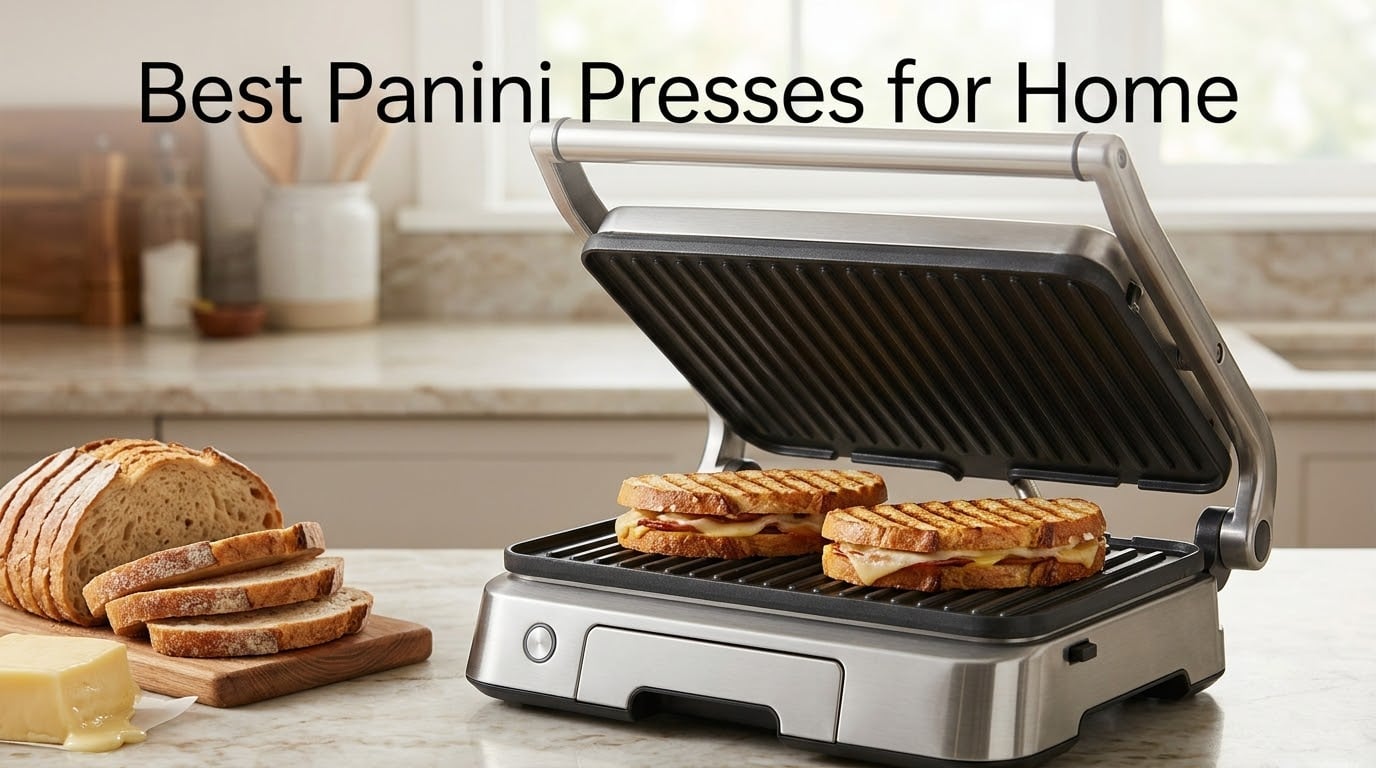
Straight to the point: the George Foreman 4-Serving Indoor Grill with Removable Plates is the best panini press for home in 2026. It heats fast, cooks both sides at once, drains fat into a removable tray, and its dishwasher-safe plates are the easiest to clean in the category. The Hamilton Beach Electric Panini Press Grill is the best value pick, and the Cuisinart 5-in-1 Griddler is the one to buy if you want a contact grill and a griddle in the same machine.
A panini press is a countertop electric appliance with hinged, heated plates on the top and bottom that cooks and presses a sandwich from both sides at once, usually under a floating hinge that squashes the filling flat. The plates may be smooth like a griddle, ribbed for grill marks, or reversible with both options, and many models open flat 180 degrees to double as an indoor grill.
That two-sided pressure is the whole point. A frying pan can brown one face at a time, and a toaster cannot flatten a filling at all. A press cooks the bread and melts the cheese simultaneously, which is why the result is the edge-sealed, evenly toasted sandwich you cannot get any other way without flipping and weighing it down.
For this guide I worked through eight presses across a wide range of wattage and plate layouts, cooking the same test sandwiches in each one and reading long-term owner reports afterward. The unit you see on the counter most decides whether you like the category, so durability and cleaning counted for as much as toast quality. If you are still weighing whether the appliance is worth it at all, we cover that in the comparison section further down.
Table of Contents
Top 3 Panini Presses for Home Right Now
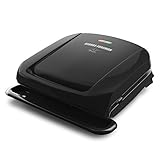
George Foreman 4-Serving Indoor Grill
- 60 sq in cooking surface
- Removable dishwasher-safe plates
- 1800 watts
- Sloped plates drain fat to tray
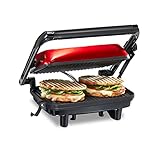
Hamilton Beach Panini Press Grill
- Floating lid fits any thickness
- Locking lid stores upright
- 8 by 10 inch grids
- 1400 watts

IMUSA Stainless Steel Panini Press
- Adjustable temperature knob
- Cast aluminum flat plates
- Compact and light
- Two heat settings
All 8 Panini Presses at a Glance in 2026
Every press below cooks a sandwich from both sides under pressure. The differences that actually change your daily results are temperature control, whether the plates detach for cleaning, how tall a sandwich the hinge will accept, and how much counter space the machine claims forever.
| Product | Specifications | Action |
|---|---|---|
| George Foreman 4-Serving Indoor Grill |
|
Check Latest Price |
| Hamilton Beach Panini Press Grill |
|
Check Latest Price |
| IMUSA Stainless Steel Panini Press |
|
Check Latest Price |
 Breville Panini Duo Sandwich Maker Breville Panini Duo Sandwich Maker |
|
Check Latest Price |
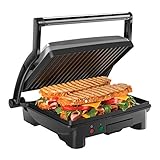 Chefman 4-Slice Panini Press Grill Chefman 4-Slice Panini Press Grill |
|
Check Latest Price |
 Proctor Silex Panini Press and Indoor Grill Proctor Silex Panini Press and Indoor Grill |
|
Check Latest Price |
 Cuisinart 5-in-1 Griddler Panini Press Cuisinart 5-in-1 Griddler Panini Press |
|
Check Latest Price |
 George Foreman Family Grill and Panini Press George Foreman Family Grill and Panini Press |
|
Check Latest Price |
1. George Foreman 4-Serving Indoor Grill with Removable Plates – Best Overall
George Foreman 4-Serving Indoor Grill with Removable Plates
1800 watts
60 sq in cooking surface
Removable dishwasher-safe plates
3-year limited warranty
Pros
- Heats fast and cooks burgers chicken salmon and vegetables evenly
- Removable dishwasher-safe plates and drip tray make cleanup effortless
- Sloped plates drain fat and grease into the tray
- Compact enough for small counters
Cons
- Only fits about 2 patties despite the 4-serving label
- No temperature control - single fixed heat
- No lid lock so storage is awkward
This is the press I keep reaching for, and it is the one I recommend to anyone who does not want to think about their appliance. The plates detach and go in the dishwasher, which sounds unglamorous until you have owned a fixed-plate press and watched cheese carbonise into the ridges with no way to rinse it away.
Preheat is genuinely quick, and the element change on this generation shows. It runs at 1800 watts across a 60-square-inch surface, which is the highest wattage in this group and explains why it recovers temperature fast after a cold sandwich hits the plates.
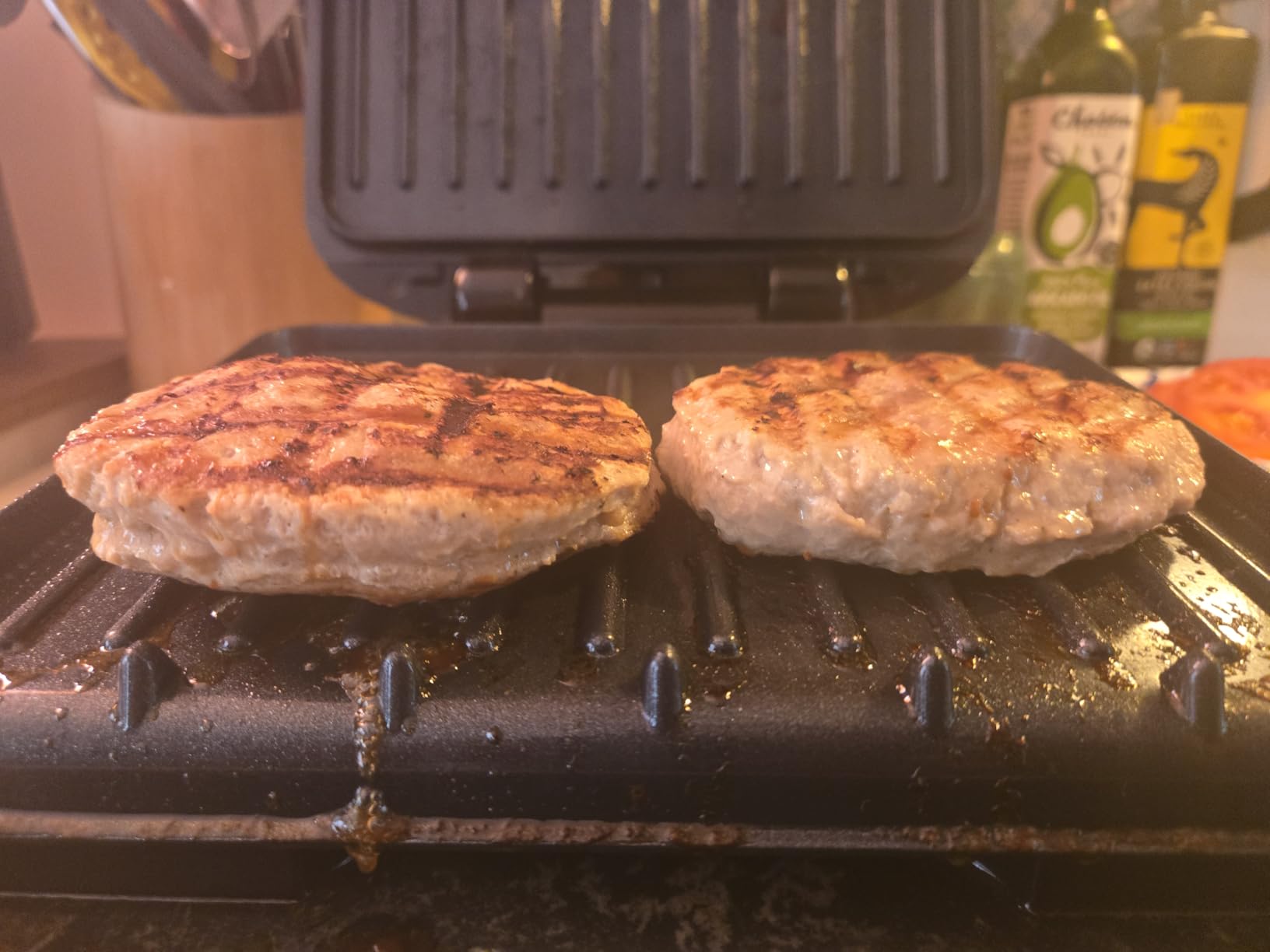
The design detail I did not expect to care about is the slope. The plates angle down toward the drip tray so rendered fat runs off the food instead of pooling under it. On a flat plate, the grease stays where it landed, and the bottom of the sandwich fries in its own fat. The tilt on this model is the reason the output is consistent rather than hit or miss.
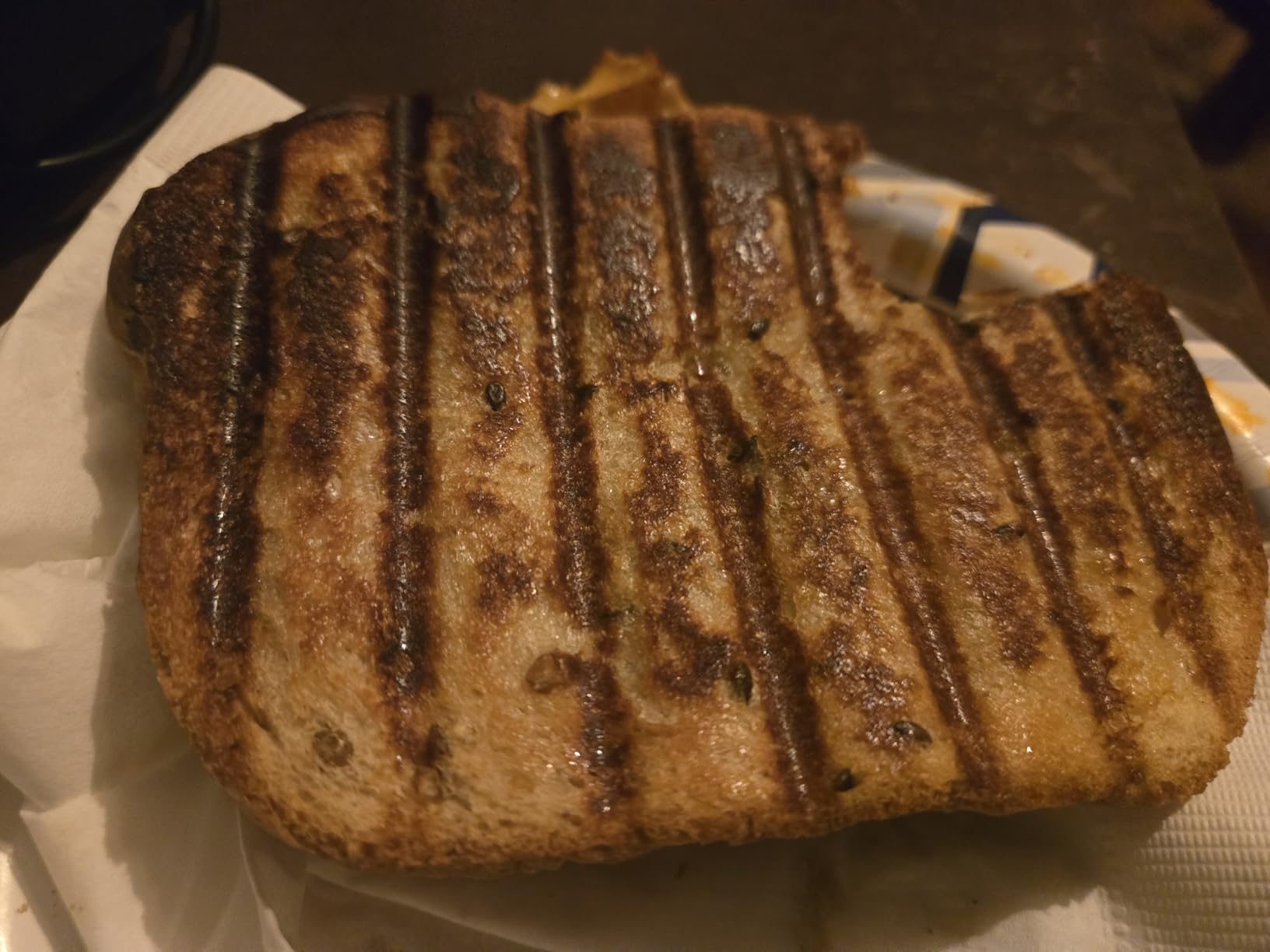
Grill marks land cleanly on meat and vegetables, and the same plates handle a pair of salmon fillets without crowding. Because the plates are removable, I also run it open for bacon and eggs on a weekend, which is the multitask use that quietly justifies the counter space.
What works about it in daily use
The plates come out in seconds. Lift two tabs, pull the plates free, and the dishwasher handles the rest. With a drip tray that also removes, there is no wiping greasy residue off a fixed electrical housing, and that is the single biggest quality-of-life difference in this category.
Owner reports describe it as the most-used countertop appliance they own, and burgers, chicken, salmon and vegetables come up constantly in reviews, not just sandwiches. The finish stays intact over time, which matters because a degrading coating is what turns a press into a sticky mess.
Where it falls short
The 4-serving label oversells the real capacity. Most owners get two burger patties or two sandwiches per batch, so dinner for four is two rounds rather than one. Plan for it as a two-at-a-time appliance that is fast, not as a single-load family cooker.
There is no temperature dial. Heat is fixed at a single high setting, so a thick rustic loaf will brown before the cheese in the middle melts through. If you press mostly white sandwich bread and cheddar, you will never miss the dial. If you cook artisan bread and aged cheese, you will. Some newer units also feel more plastic than earlier ones and leave a greasy film on the plate backs.
2. Hamilton Beach Electric Panini Press Grill – Best Value
Hamilton Beach Electric Panini Press Grill with Locking Lid, Opens 180 Degrees for Any Sandwich Thickness, Nonstick 8″ X 10″ Grids, Red (25462Z)
1400 watts
8 by 10 inch nonstick grids
Floating lid
Upright storage with locking lid
Pros
- Heats quickly and evenly with crisp even toast
- Nonstick grids wipe clean with a damp paper towel
- Locking lid stores it upright in a cabinet
- Fits two full sandwiches at once
Cons
- No temperature control
- No on/off switch so it runs whenever plugged in
- Exterior and lid get very hot during use
This is the press I recommend to a first-time buyer. The cafe-style floating lid sits at whatever height your sandwich needs, so a thin quesadilla and a double-decker are both pressed evenly without any fiddling.
It runs at 1400 watts and signals ready with a light after roughly six minutes of preheat. The 8 by 10 inch grids take two full sandwiches in one go, and the result is crisp, evenly toasted bread that surprises people who expect this tier to be an afterthought.
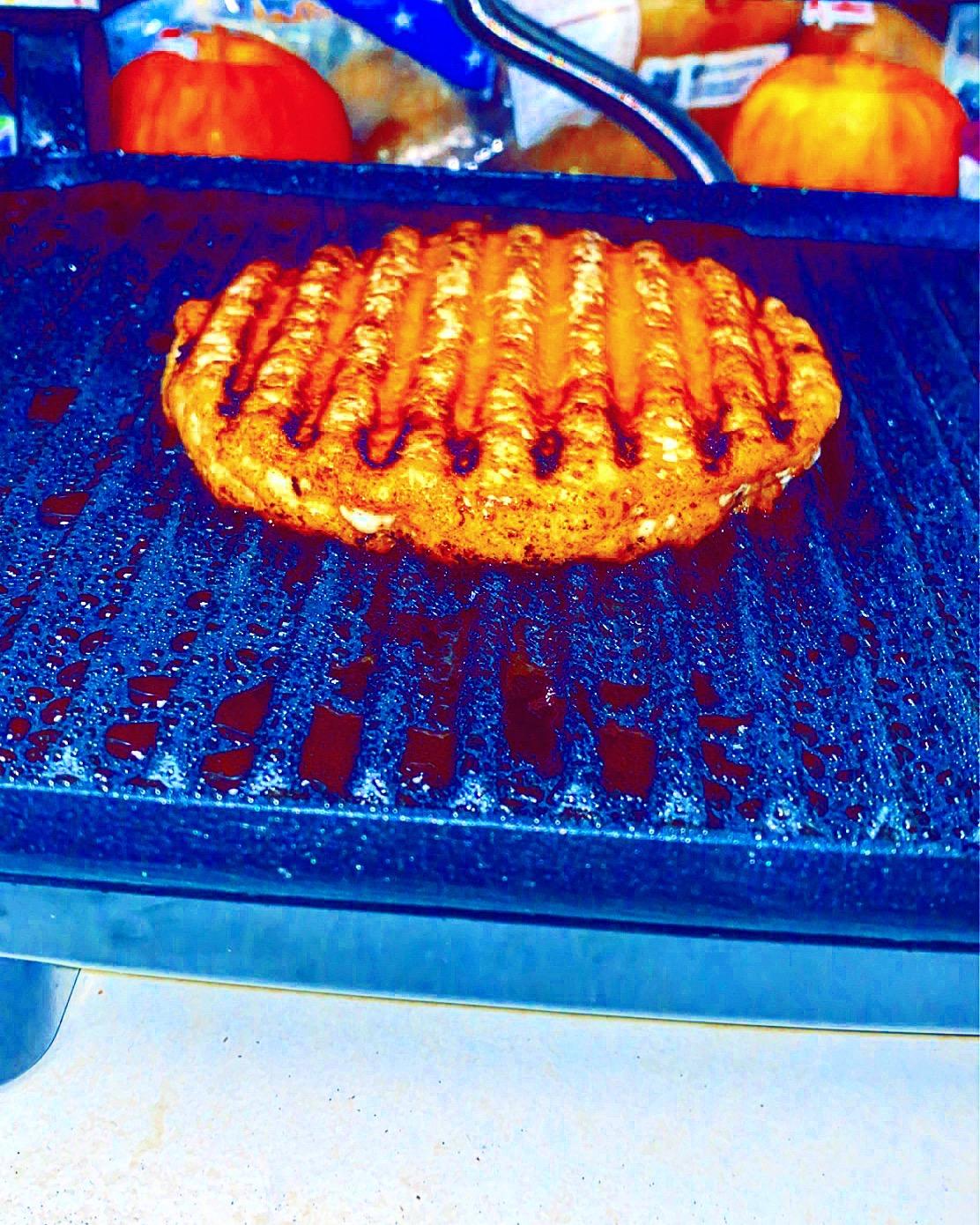
Cleanup is the best I have seen in this group. The nonstick top and bottom grids wipe down with a damp paper towel even after a cheese-heavy grilled cheese, and because there is no removable plate to lose, there is nothing to track separately in the cupboard.
Long-term owner reports are the most reassuring thing here. People describe getting close to seven years of service before a failure, and that is unusual longevity for a small appliance in this price bracket. The locking top is genuinely useful too: it holds the lid shut so the whole unit stands upright in a cabinet or on a pantry shelf.
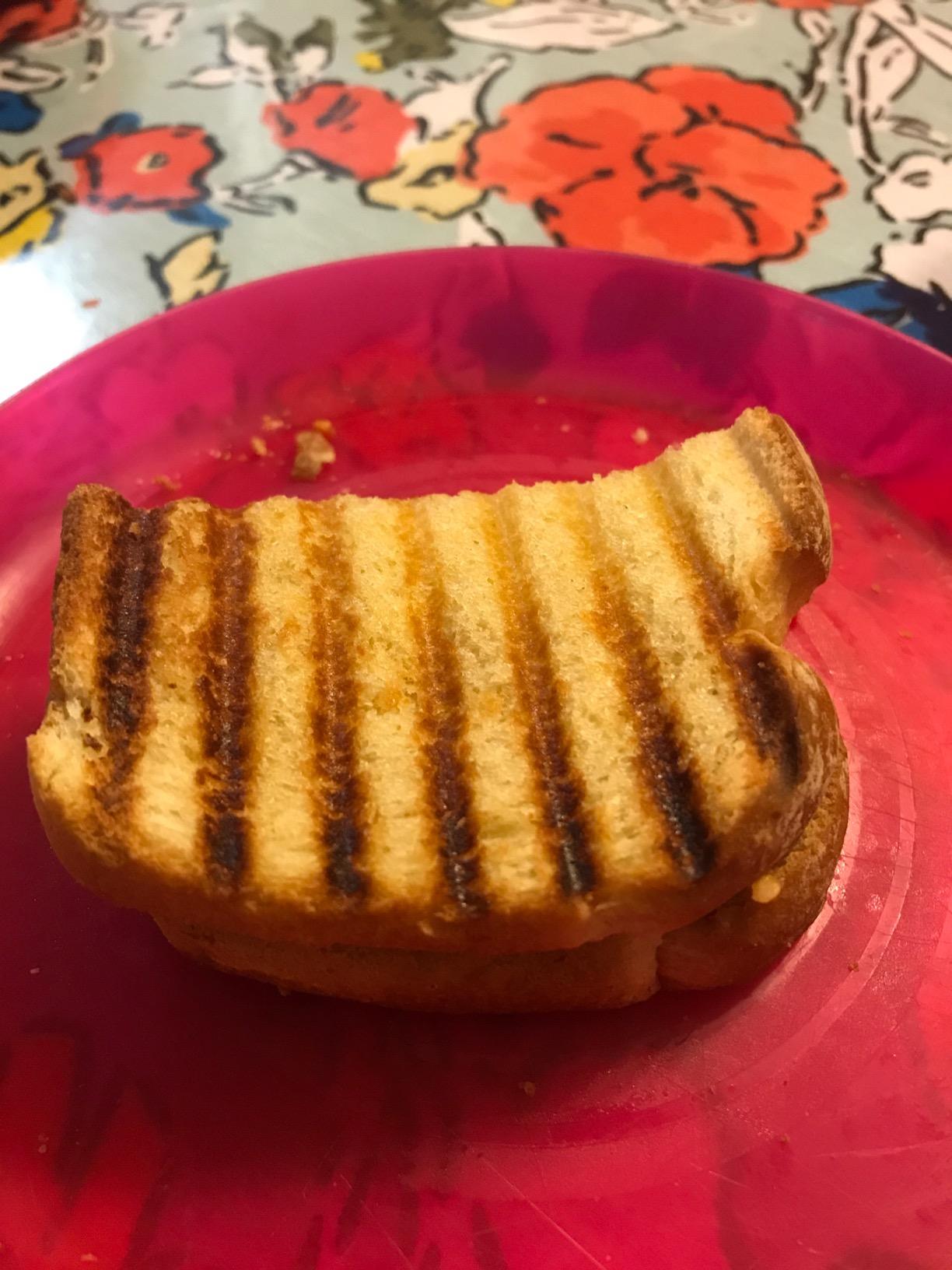
Why it holds up over years
The build is deliberately simple, and simplicity is why it survives. There is no display, no sensor board, no software, just a heating element, a thermostat and a float. The parts that usually fail in small appliances are the parts this one does not have.
It is also the most flexible of the compact presses. The locking lid holds the top plate up for bruschetta and open-face melts, so the same machine handles a sandwich and a flatbread without a second appliance. The listed materials are lead free, PFAS free and PFOA free, and the unit carries a one-year limited warranty.
Where it frustrates people
There is no on/off switch. Plug it in and it heats, unplug it and it stops, which means you cannot sit down to eat without switching off at the wall. It also has no audible timer or beeper, so you have to stand there and watch. The ready light confuses people too, because red and green can appear lit at the same time.
Heat is fixed with no adjustment at all, and the exterior and lid get hot enough that you want to move your hand off the handle after a long cook. None of that matters for a grilled cheese, but it does mean this is not the press to buy for thick artisan bread and slow-melting cheese.
3. IMUSA Stainless Steel Panini Press – Best for Temperature Control
IMUSA Stainless Steel Panini Press Electric with Adjustable Temperature Settings and Nonstick Plates, 1200W
1200 watts
Adjustable temperature knob
Cast aluminum flat plates
10.2 by 13 inch body
Pros
- Adjustable temperature is rare at this size and allows browning then gentle finishing
- Compact and light so it stores easily
- Flat nonstick plates brown bread evenly top and bottom
- Doubles as a grill for fish shrimp steaks and chicken
Cons
- Lid does not open wide enough for tall sandwiches
- Flat plates leave no grill marks
- No drip channel so rendered fat pools
- Small capacity suits one or two people
The reason to choose this press over a cheaper fixed-heat model is the temperature knob. It is genuinely uncommon in a machine this size, and it changes how you cook rather than just how it looks. You can sear hard, drop down, and let a thick cheese melt through without burning the face of the bread.
The cast aluminum plates distribute heat evenly, and owners specifically call out that the top and bottom run at matching temperatures. That single fact is what stops the common complaint where one side of a sandwich browns and the other stays pale.
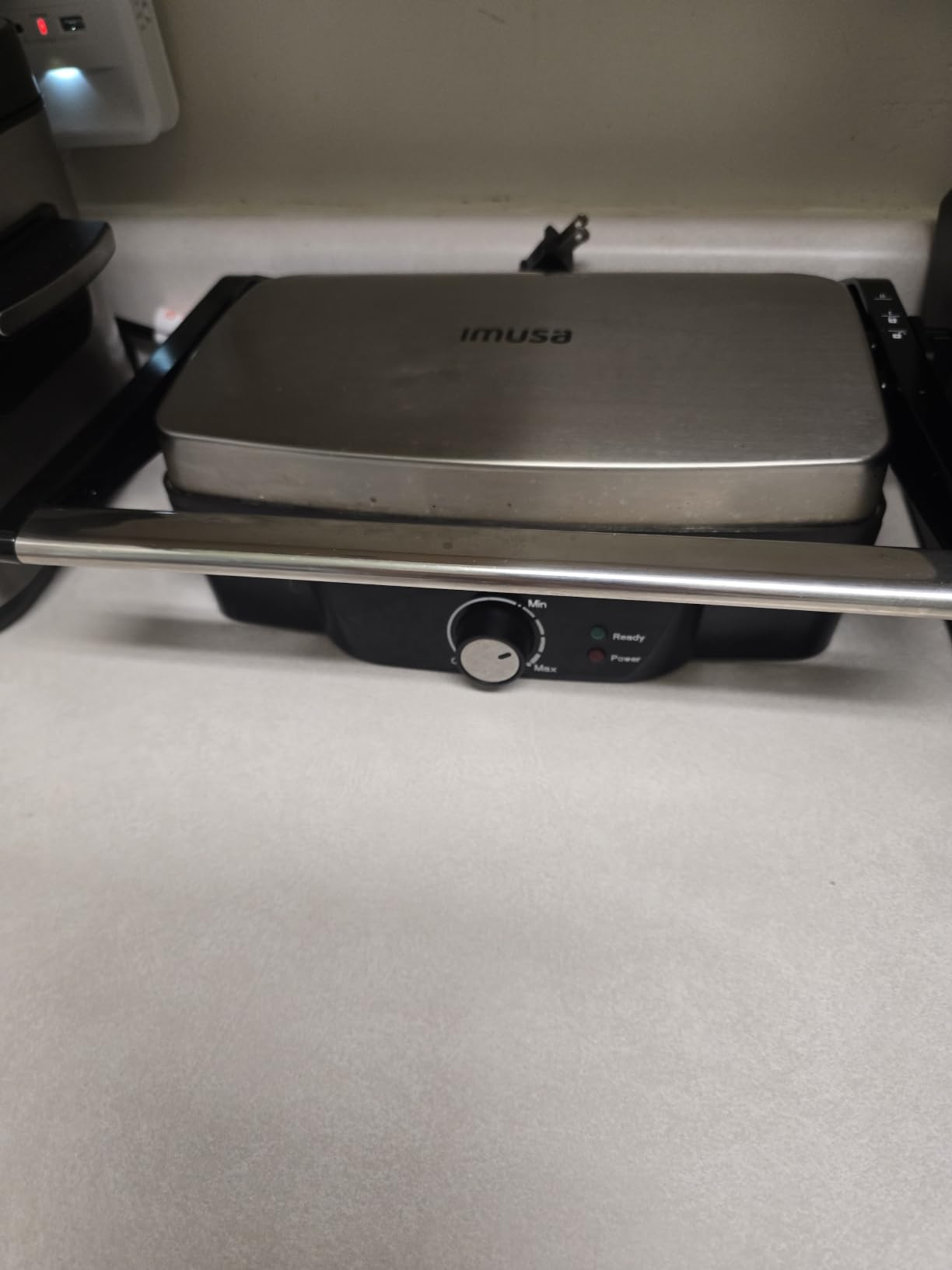
It is also the lightest and smallest machine here by a wide margin. At 3.7 pounds with a 10.2 by 13 inch body, it moves with one hand and stores anywhere. If counter space is the deciding factor, this is the press I would put in a small kitchen or a dorm room.
Reviewers use it far beyond sandwiches. Fish, shrimp, steaks, chicken and garlic bread all come up, because the flat plates behave like a small griddle. The polished stainless exterior looks more expensive than the machine is.
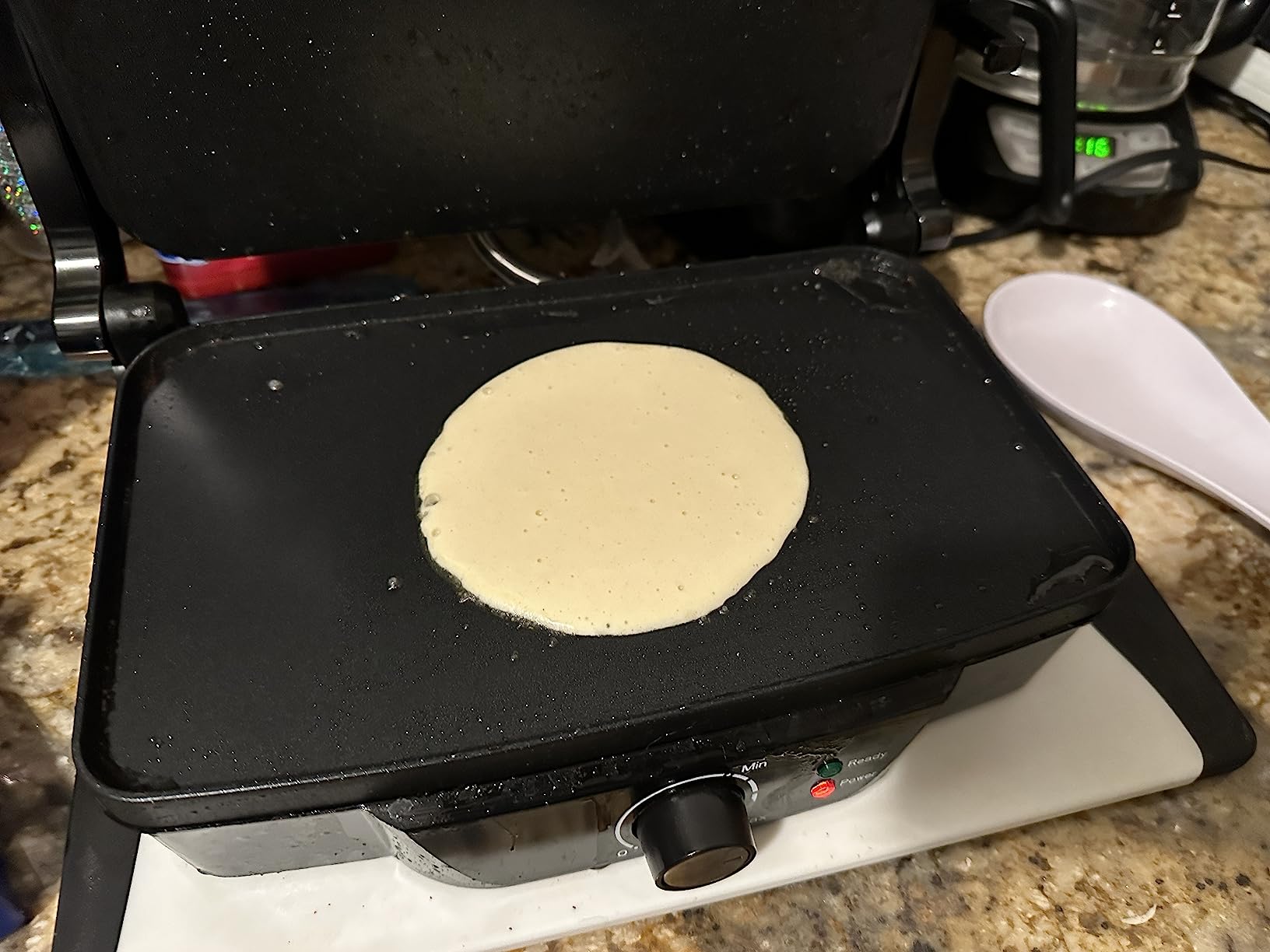
Who gets the most out of it
Cooks who press bread heavier than a standard sliced loaf. When you are dealing with sourdough or a dense country roll, the problem is never heat, it is control, and this is the only press in the group with a real dial to turn.
Anyone cooking for one or two people also wins. The capacity is small but the machine is fast and it stores without ceremony. Adjustable height settings and a locking storage clip mean you can compress the lid for a thin sandwich and lock it shut when you put it away.
Where it falls short
The lid does not open wide enough for tall sandwiches. A Cubano or a Reuben will be squashed at an angle, which is exactly the problem a floating hinge is supposed to solve. The height adjustment helps with thin items more than with tall ones.
Flat plates also mean no grill marks. If the visual sear matters to you, a different variant with ridged plates is the one you want, not this one. And there is no drip channel, so rendered fat pools on the plate and needs soaking up while you cook. PFOA free, a one-year limited warranty, and a rubber-footed base that does not slide are the quieter wins.
4. Breville Panini Duo Sandwich Maker – Best for Thick Sandwiches
Breville BSG520XL Panini Duo Sandwich Maker, Brushed Stainless Steel
1500 watts
Adjustable height control
Floating hinge
Brushed stainless body
Pros
- Adjustable height control and floating hinge handle thick artisanal bread
- Faster and more even cooking than ribbed contact grills
- Premium brushed stainless build
- Locking clip and rear foot allow upright storage
Cons
- Flat plates produce no grill marks
- Heavier and bulkier than most 2-slice presses
- Carries one of the higher price tags in the category
The Breville Panini Duo is built around a single idea: the lid should fit whatever you put under it. An adjustable height control moves the top plate through a range of positions while a floating hinge keeps even pressure across all of it, so an ingredient-heavy sandwich presses uniformly instead of only at the centre.
It runs at 1500 watts and the flat nonstick plates cook faster and more evenly than ribbed contact grills. A thinner, crisper result in less time is the practical payoff of the smooth surface, and reviewers mention it often as the reason they stopped using a grill-style press.
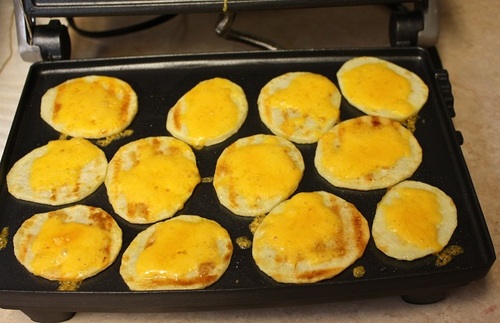
The build feels like a proper piece of equipment. Brushed stainless steel, a 14.09 by 12.6 inch footprint, and a storage clip that locks the plates together with a rear foot so the machine stands on its edge. There is even an integrated cord wrap in the base, a small detail that tells you someone thought about a real cupboard.
For storage, this is the best-designed press in the group. Two-slice presses are usually a jumble of separate plates in a cabinet drawer, and this one closes into a single flat object with the cord contained.
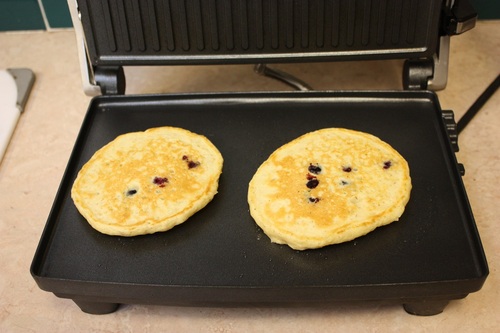
Why the hinge matters more than the wattage
A tall sandwich is the failure case for most presses. When the lid closes on an angle, the far half toasts while the near half stays pale, and you end up cutting the sandwich in half to get one good piece and one bad one.
The Duo handles this because the floating hinge lets the top plate ride down and find its own level while the height control stops it short of crushing. That is why it takes a thick artisanal sandwich and a thin quesadilla in the same machine without any change beyond the latch. It is also why the same design language is worth understanding before you buy anything else in this category, whether you are shopping for a contact grill or comparing our guide to clamshell heat presses for other pressed tasks.
Where it falls short
Flat plates mean no grill marks, same as the IMUSA, and anyone chasing that sear pattern will be disappointed. At 8 pounds it is the second-heaviest press here, so the upright storage is not optional, it is necessary.
It also carries one of the higher price tags in the group, and you are paying partly for the stainless body. The warranty is one-year replacement, which is shorter than the three-year cover on the George Foreman and Cuisinart units here. If your priority is build feel and thick-sandwich handling rather than the lowest cost, it earns its place.
5. Chefman 4-Slice Panini Press Grill – Most Compact
Chefman Panini Press Grill and Gourmet Sandwich Maker Non-Stick Coated Plates, Opens 180 Degrees to Fit Any Type or Size of Food, Stainless Steel Surface and Removable Drip Tray, 4 Slice, Black
1000 watts
Opens flat 180 degrees
Fits four sandwiches
Removable drip tray
Pros
- Genuinely nonstick plates wipe clean with one paper towel
- Heats fast and cooks four sandwiches in under three minutes
- Opens flat to grill burgers
- sausages and vegetables
- Floating hinge keeps tall fillings in
- Compact footprint stores easily
Cons
- No temperature control
- No on/off switch so plugging in starts it
- Top adjustment flange must be set on a cool unit
Four sandwiches in under three minutes is the headline number here, and it holds up. The closed cooking surface fits four sandwiches or two large paninis, which makes this the fastest way I have found to feed a family in one batch without a second appliance.
It opens flat to 180 degrees and doubles as a contact grill for burgers, steaks and vegetables on the same plates. The ribbed nonstick surfaces leave real grill marks on bread and meat, which is the opposite trade-off to the flat-plate presses and may be the reason you want this one.

The coating is the real story. Reviewers consistently say these plates wipe clean with a single paper towel even after heavy cheese, where cheaper grills trap melted cheese in the ribs permanently. At 1000 watts it is the least powerful press here, but it preheats quickly enough that the wattage gap disappears on normal sandwiches.
Tilt-up skid-resistant feet angle the plate so grease runs to the rear drain, and the drip tray lifts out to wash. That rear routing matters more than it sounds, because a front tray is what leaves oil running down into a hinge and keeps the machine permanently greasy.
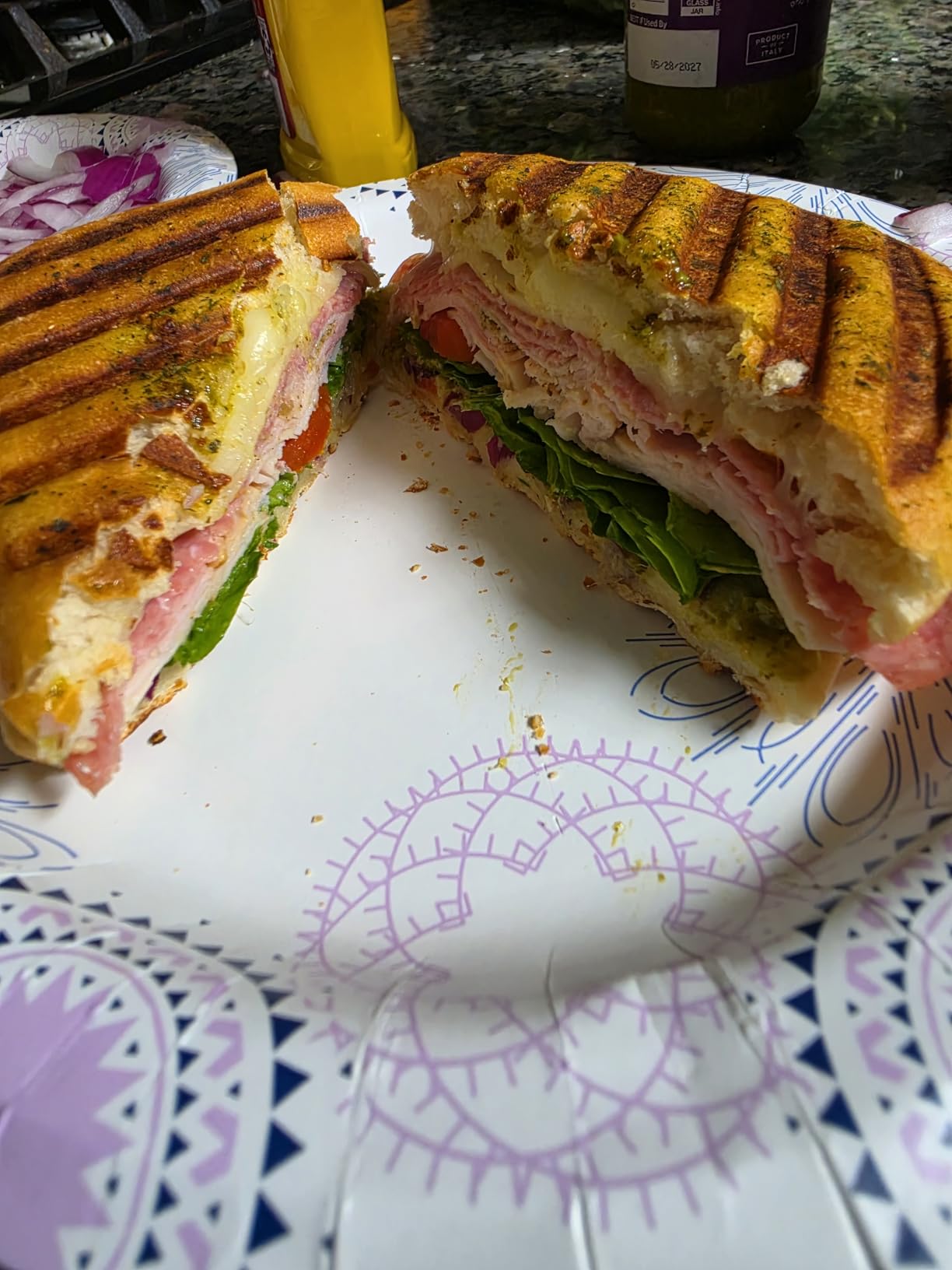
Where it beats pricier models
On throughput and on coating quality. It makes more sandwiches per minute than anything else in this group, and the nonstick surface holds up better against cheese than presses costing more. The floating hinge also keeps tall fillings from being squeezed out, which is not guaranteed at this price.
Owners like that it stores without drama at 3.4 pounds and a 12 by 13.5 inch footprint. UL approved, with a one-year Chefman assurance and lead free, PFAS free and PFOA free materials.
Where it falls short
No temperature control, like most of this tier, so a thick dense loaf will scorch before the centre melts. There is also no on/off switch, so it runs whenever it is plugged in, and a minority of buyers report the nonstick wearing down sooner than expected.
One setup step catches people out. The top adjustment flange has to be set while the unit is cool, otherwise the lid sits at an angle and your sandwiches cook unevenly. Read the manual before the first cook rather than after the third.
6. Proctor Silex Panini Press and Indoor Grill – Best for Small Kitchens
Proctor Silex Panini Press Sandwich Maker Grill & Electric Indoor Grill
1000 watts
70 sq in surface
PFAS-free ceramic nonstick
Upright storage with lid latch
Pros
- Heats up in about a minute and cooks grilled cheese without burning
- Ceramic nonstick needs little or no oil and wipes clean
- Floating lid cooks both sides at once
- Lid latch allows upright storage taking almost no counter space
Cons
- Instructions are tiny compressed print with no cooking guidance
- Cooking surface fits only two thick sandwiches or one long one
The one-minute heat-up is the number that makes this press different. Almost nobody waits a full preheat cycle for a grilled cheese, and on this unit you barely have to. It is a parent and small-household press, and that is exactly what the owner reviews describe.
The ceramic nonstick plates need little or no oil and wipe clean with a damp cloth once cooled. The material is listed as PFAS free, which is the coating detail most people asking about safer nonstick actually care about.
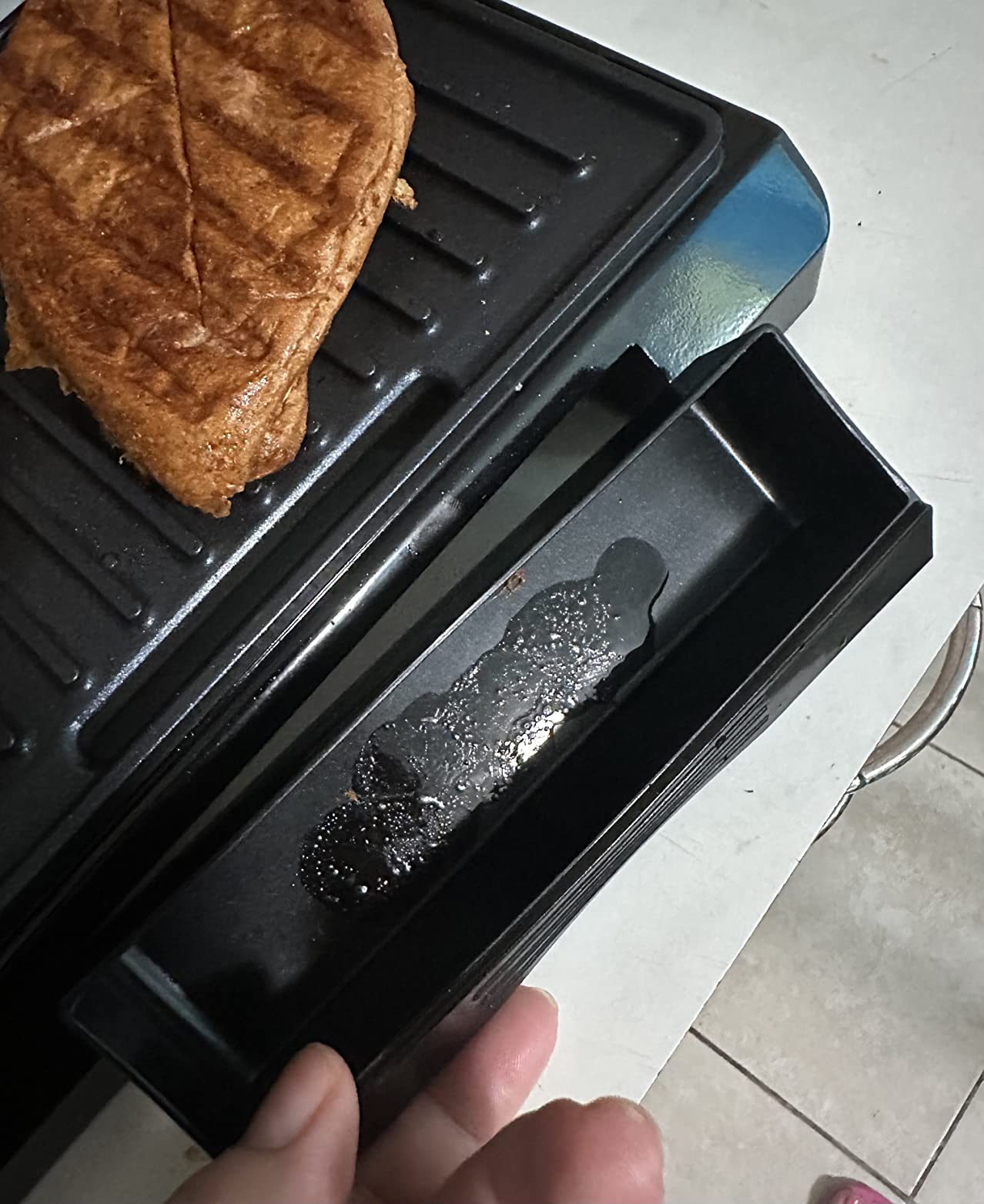
The floating lid cooks both sides at once, which is where the time saving comes from, and the 70-square-inch surface holds two thick sandwiches or one long sandwich. For reheating a slice of pizza or browning a quesadilla it is fast and even, and the 1000 watts is enough for two frozen burger patties in about six to seven minutes.
Storage is the standout. The lid latch lets the press stand upright, so it takes almost no counter space once you are done with it. At 4 pounds and 10.2 by 11.7 inches it is one of the easiest to move out of the way, and the drip tray slides out and goes in the dishwasher.
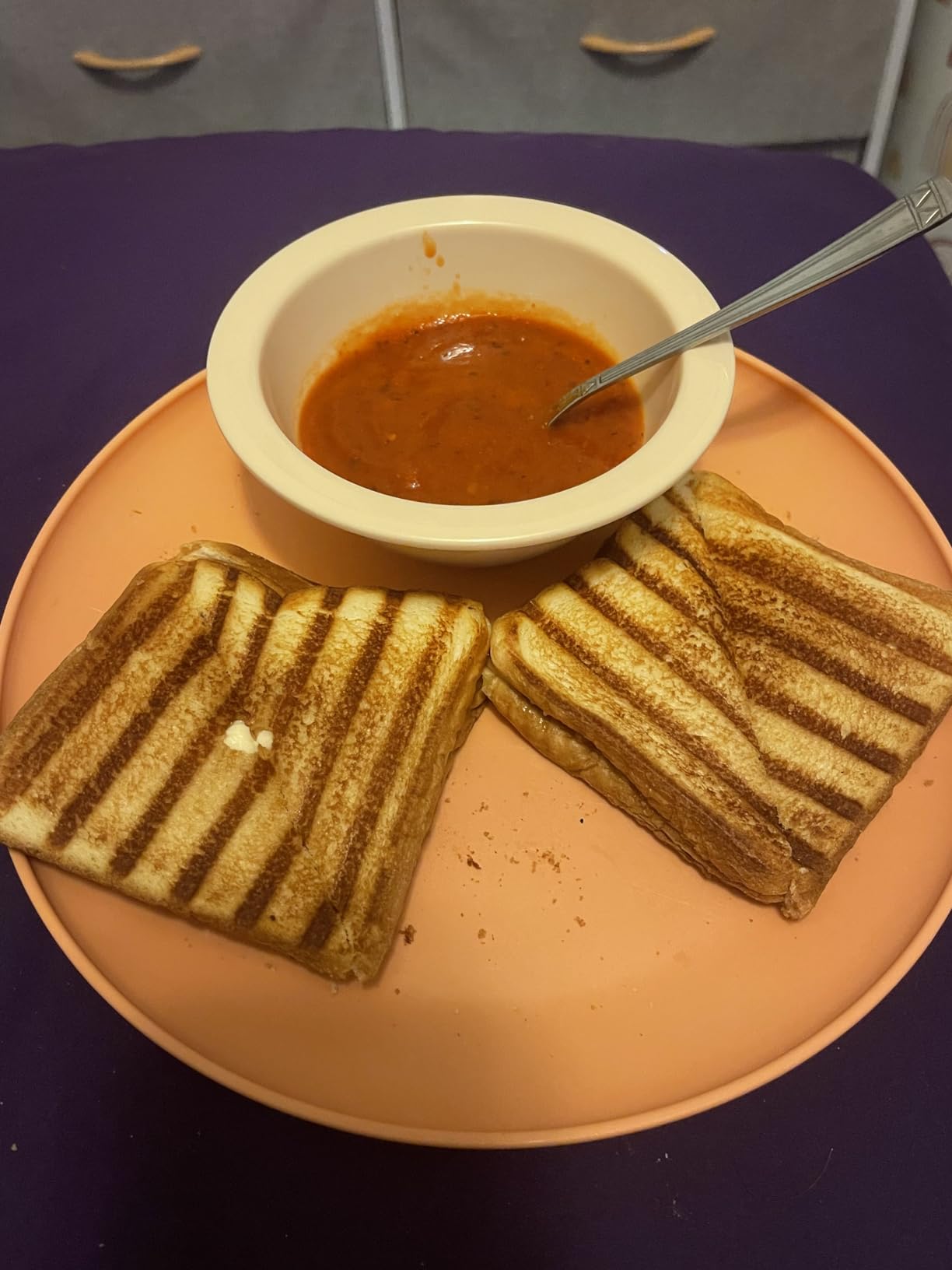
Why it suits small households
Everything about it is sized for two. The surface, the body, the weight, the heat-up time. Nothing is wasted on capacity you would not use, and nothing fights you for counter space in a kitchen that has very little of it.
It carries a three-year limited warranty, which is the longest cover in this group alongside the two George Foreman presses and the Cuisinart. For a budget appliance, that is a meaningful reliability signal.
Where it falls short
The instruction booklet is the most common complaint in the reviews. It is tiny compressed print with no cooking guidance and no time chart, so you are effectively guessing for the first few cooks until the ready light teaches you the rhythm.
Capacity is the hard limit. Two thick sandwiches is the maximum, and there is no temperature control, so anything dense or long needs a different appliance. If you press oversized bread regularly, this is not the machine.
7. Cuisinart 5-in-1 Griddler Panini Press and Grill – Most Versatile
Cuisinart Panini Press and Grill, 1500W 5-in-1 Griddler, Dishwasher-Safe
1500 watts
Five cooking modes
Dual independent temperature controls
Reversible grill and griddle plates
Pros
- Genuine 5-in-1 covering contact grill panini press full grill griddle and half-and-half
- Dual independent temperature controls give finer control than single knobs
- Dishwasher-safe reversible plates plus drip tray and cleaning tool
- Brushed stainless build with a 3-year limited warranty
Cons
- Bulky and heavy at 11.5 pounds so it needs real counter space
- Highest one-star share of this group with some early unit failures
This is the only machine here that genuinely earns the word versatile. It runs five cooking modes: contact grill, panini press, full grill, full griddle, and half grill plus half griddle. Reversible nonstick plates let you switch between a ridged grill surface and a smooth griddle surface without buying a second appliance.
The temperature control is the real upgrade. In grill and panini mode the controls run independently from warm to sear, and in griddle mode they adjust from 200 to 425 degrees. Independent top and bottom control is the feature owners point to when they explain why this one is worth the extra money.
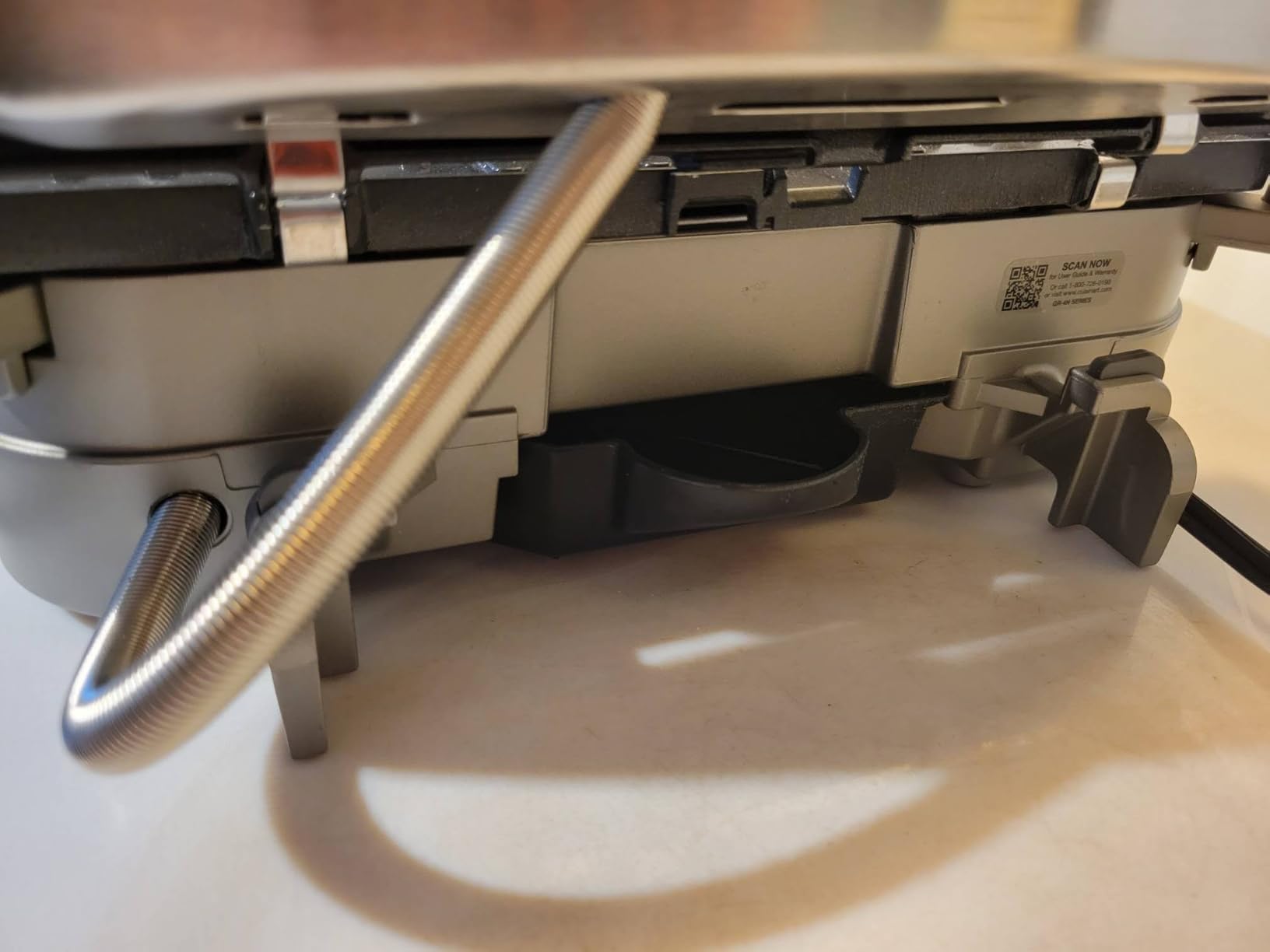
At 1500 watts with a brushed stainless body it has the presence of a small countertop range, and the controls feel closer to a proper appliance than to a sandwich maker. The removable drip tray, dishwasher-safe plates, and included cleaning and scraping tool make cleanup the least glamorous but most complete setup in this group.
It is also PFAS free and carries a three-year limited warranty. On paper and in the reviews, the temperature control and plate flexibility are what people keep mentioning as the reason to step up.
When five modes is genuinely worth it
If you already own a decent skillet and a countertop grill, the value case collapses. You are paying for a griddle surface, temperature control and a drip tray in one body, and the half grill plus half griddle mode is the configuration that quietly saves the most time at breakfast with a family.
Cooks who want one appliance to handle weeknight proteins and a full plate of vegetables at once get the most out of it. The wide 13.5 by 11.5 inch body means you are not cooking in two rounds, and the reversible plates are the only ones here that change function rather than just change pattern.
Where it falls short
It weighs 11.5 pounds, the heaviest press in this group, and the body stands 7.12 inches tall. That is permanent counter real estate unless you have a spot with a plug under it. If you live in a small kitchen, this is the machine that ends up in a cupboard you never open.
Ratings are also more spread out here. The average is 4.4 with the highest one-star share in the group at 7%, and some owners report early unit failures. For a machine with the highest review count below ten thousand in this lineup, that is a fair thing to weigh against the versatility.
8. George Foreman Family Grill and Panini Press – Best for Families
George Foreman Family Grill & Panini Press, Ceramic Nonstick
1500 watts
1-inch hinge
PFAS-free ceramic nonstick
Serves 5 or more
Pros
- PFAS-free ceramic nonstick rated for far greater durability than standard coatings
- Tilts to drain fat or lays flat for paninis
- Large family-size surface serves five or more
- Dishwasher-safe drip tray plus vertical storage
Cons
- Largest and heaviest footprint in this group
- Heavier ceramic and plastic build than the slimmer stainless presses
This press does two jobs in a way that changes how you cook. It tilts to an angle so fat drains away from the food for grilling, then lays flat to press paninis. One appliance, two cooking attitudes, and the 1-inch hinge is what lets it accept thick cuts of meat, fish, burgers and an overstuffed sandwich without angling.
The coating is the headline. An advanced George Tough ceramic nonstick that is PFAS free and rated for eight times the durability of a standard coating. That durability claim is the one to care about, because a nonstick that flakes and then sticks is the most common reason owners retire a press early.
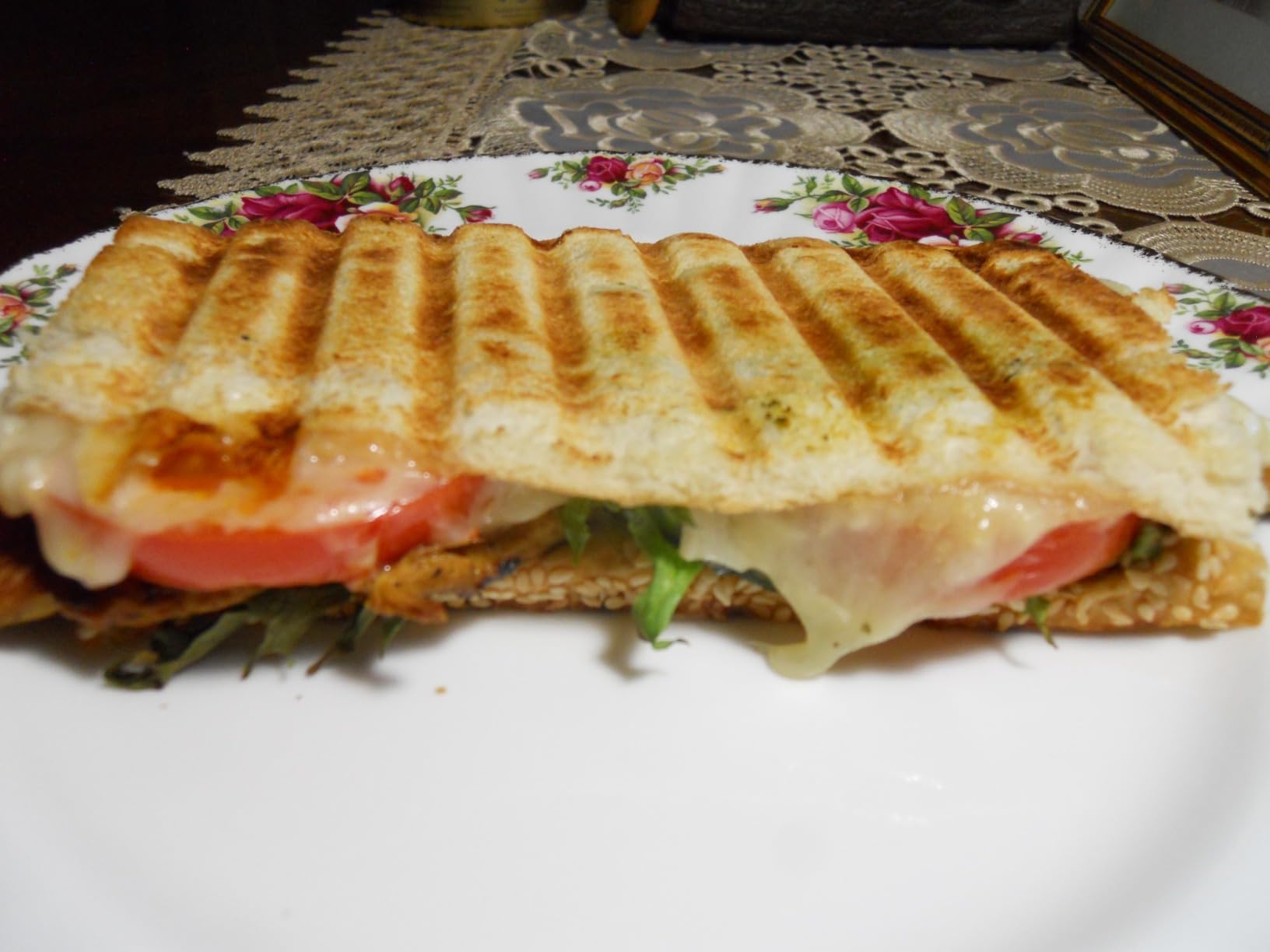
It is rated for serving five or more, and the adjustable grilling angle is claimed to give 50 percent better searing. In practice the tilt is the part you notice: burgers and chicken come off noticeably less greasy than from a flat press because the rendered fat runs down and away instead of sitting under the food.
Vertical storage with cord management and a dishwasher-safe removable drip tray handle the cleanup and footprint problems that family-size appliances usually create. At 1500 watts it is a serious machine with a three-year limited warranty behind it.
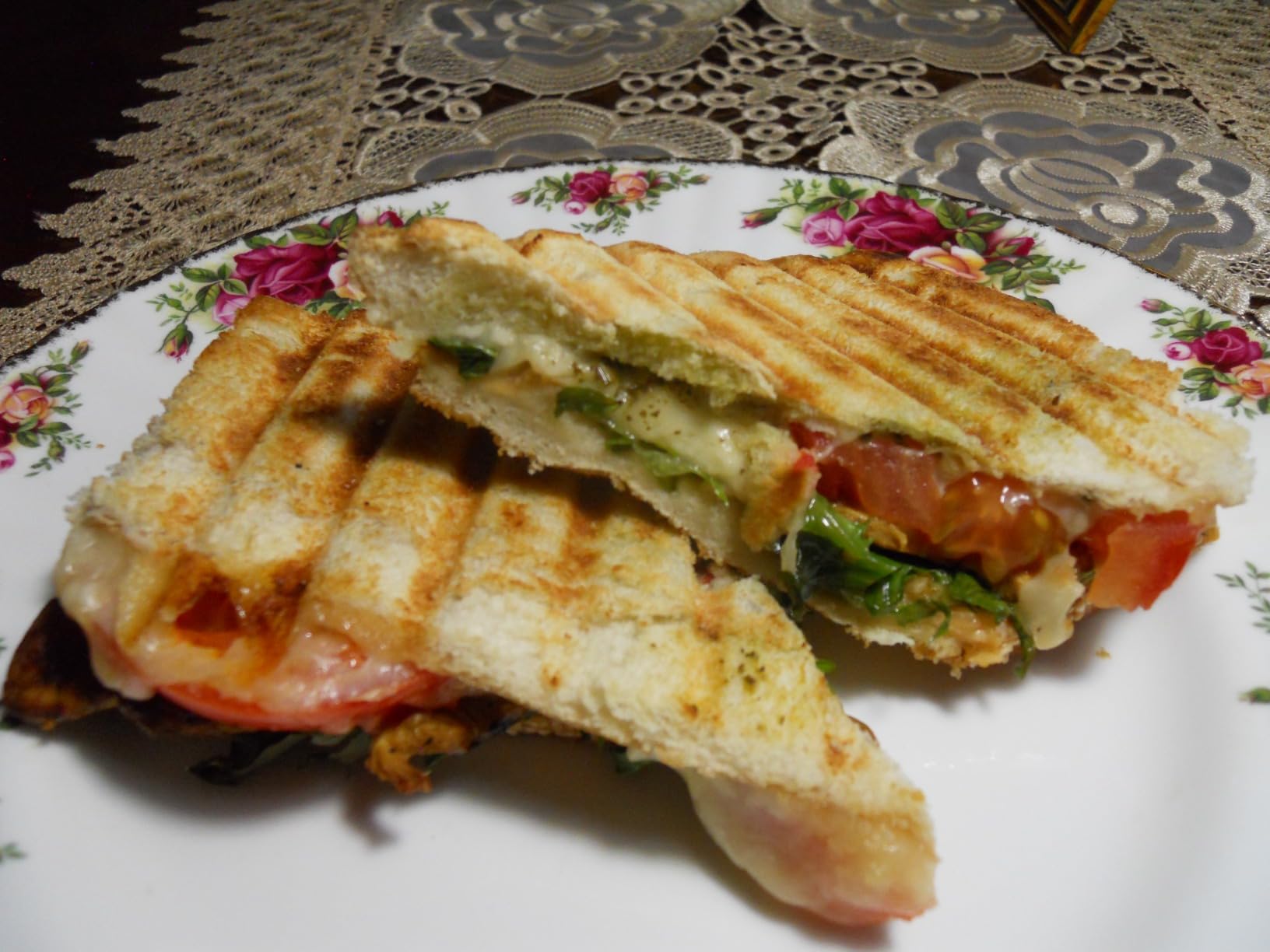
Why families keep this one
Because it replaces two appliances. A family that grills burgers and chicken through the week and makes paninis on a weekend can run a single machine instead of a grill and a press, and the space saving is real on a crowded counter.
With more than 9500 reviews on record, this is one of the most heavily reviewed family-size options, and the PFAS-free ceramic coating, the tilt-to-lay-flat mechanism, and the vertical storage are the three things buyers name most.
Where it falls short
It is the largest and heaviest footprint in the group at 14.33 by 4.09 by 12.32 inches, and the ceramic and plastic build feels heavier than the slimmer stainless presses. Vertical storage helps, but you still need a tall clear space rather than a low drawer.
Its 4.4 average is the lowest of the group, with a larger share of three-star feedback than the machines above it. Buyers who want a family surface on a smaller footprint should look at the Cuisinart, and buyers who want a smaller machine should step back up the list. If tilt-to-grill is not a feature you will use, the bulk is not worth carrying.
How We Picked and Tested These Panini Presses
We cooked the same things in every machine instead of reading the boxes. Eight presses went through the same sequence, and anything that failed one step was not going to be recommended no matter how good the other steps were.
1. Grilled cheese test. Identical bread, identical cheese, identical butter on the outside. This is the baseline because it is the one sandwich everybody makes, and it exposes whether the plates heat evenly and whether the coating releases.
2. Thick sandwich test. A double-decker with cheese, ham and tomato, cut to a size the manufacturer claims fits. This is where floating hinges earn their place, and where presses without enough lid opening show their angle immediately.
3. Grill and griddle test. Burgers, salmon fillets, chicken cutlets and vegetables, on the same plates you make sandwiches on. A press that only handles bread is a niche appliance, and a press that handles protein earns its counter space.
4. Grease routing check. We watched where fat goes when the lid lifts. This is the most common owner complaint in forum threads about contact grills, and it separates machines that route grease to a removable rear tray from machines that leave you mopping the counter behind the press.
5. Cleaning test. Cheese, oil and sugar, then the dishwasher if the plates detach. Fixed plates can only be wiped, and the electrical housing has to stay dry, so cleaning is the fastest way to predict the appliance you will still enjoy in two years.
6. Long-term owner reports. We read what buyers say after a year, not after a week. The failure modes people actually hit are the unit stops heating, and the nonstick degrades and starts sticking. Warranty length mattered to us for the same reason: it is a rough proxy for how the manufacturer expects the product to age.
What to Look for in a Panini Press
Adjustable temperature is the single most useful feature. A single fixed setting burns the bread before a thick cheese melts through. Two settings are already better than none, and independent top-and-bottom control is better still, because it is the only way to correct for a sandwich that browns unevenly. The IMUSA and the Cuisinart are the two presses here with real adjustment.
Detachable, dishwasher-safe plates. Fixed plates are the most common cleaning complaint in the category, because burnt-on grease can only be wiped and never rinsed. Removable plates also stop grease reaching the hinge and the electrical housing, which is what keeps a machine permanently greasy. The George Foreman 4-Serving, Hamilton Beach, Cuisinart and Proctor Silex all detach.
Floating hinge and lid opening height. A floating hinge lets the top plate find its own level so tall sandwiches press evenly. A fixed hinge closes at an angle, and the far half toasts while the near half stays pale. Also check how far the lid actually opens, because a hinge is useless if the machine cannot accept the sandwich in the first place.
Reversible plates and lay-flat configuration. Ridged plates give grill marks, smooth plates cook faster and more evenly, and reversible plates give you both. Models that open flat to 180 degrees turn into a contact grill, which is the cheapest way to add a second cooking appliance without a second appliance.
Cooking area and capacity, in real terms. Ignore the serving label. A 4-serving George Foreman grill gives most owners two patties. Cook by the number of sandwiches that physically fit on the plate, and note the stated surface area, which ranges from 60 to 70 square inches across this group. Anyone comparing a press to a benchtop press for a home workshop should apply the same rule: judge the working surface, not the marketing number.
Counter footprint, weight and storage. This is the criterion most roundups skip and the one you live with every day. The presses here run from 3.4 pounds to 11.5 pounds, and a unit that will not store upright or on its edge is a permanent claim on your counter. Check for a locking lid, a storage clip, or vertical storage before you buy, not after.
Coating type and safety. If you press food several times a week, the coating question is worth asking. Ceramic nonstick that is PFAS free is the option most people are looking for when they ask about non-toxic presses, and three units here are listed as PFAS free. No coating is indestructible, so the durability rating and the no-cooking-spray rule matter more than the label.
Warranty length as a durability signal. Three years on the George Foreman 4-Serving, George Foreman Family, Cuisinart and Proctor Silex. One year on the Hamilton Beach, IMUSA, Breville and Chefman. Longer is not proof, but in a category where the common failures are a dead element or a degraded coating, it is a reasonable tiebreaker.
Panini Press vs Grill Press vs Cast Iron Skillet
Before you spend anything, it is worth asking whether you need an appliance at all. A grill press is a heavy cast iron weight with a handle. You heat a skillet, assemble the sandwich, lay the weight on top, and flip the whole thing once. That is the entire mechanism, and it produces a genuinely good panini for a fraction of the cost and with no counter space or storage problem at all.
The trade is supervision. A grill press needs a preheated pan, a lower heat setting, and your attention for four or five minutes, because there is no thermostat telling you the surface is ready and nothing stopping you from burning the bread. An electric press preheats to a set point, holds it, and applies consistent pressure without you flipping anything.
A cast iron skillet alone gets you browning but not pressure. You can press with a second pan or a weight on top, which is the same trick as the grill press, and a skillet is the cheapest and most flexible tool for quesadillas, vegetables and fish. What it cannot do is cook both sides at once.
So the honest ranking is this. If you make a panini once a month, a grill press and a skillet you already own will match an entry-level electric press and cost a fraction of it. If you press sandwiches most days, want one-handed operation, or need the machine to grill burgers and vegetables in the same session, an electric press with detachable plates earns its counter space. If your press work is a hobby alongside something like a reloading press setup, dedicated equipment beats an improvised general-purpose machine every time.
How to Clean a Panini Press
Cleaning is where a press is won or lost, and it takes less effort than most people expect if you follow the rules.
1. Unplug and let it cool completely. The plates and the housing stay hot long after the light goes off. Ten minutes on a trivet is not optional, and a wet cloth on a warm plate damages the coating.
2. Never use cooking spray. This is the single rule that shortens plate life. Aerosolised oil leaves a lecithin residue on nonstick that bakes on, and the plate then behaves like bare metal. Use a little butter or a high-smoke-point oil brushed on the bread instead.
3. Cool plates, warm water, soft cloth. Warm water and a soft cloth or sponge clears melted cheese, which is the usual mess. A plastic or wooden scraper lifts stubborn bits without scratching. Never soak an electrical housing and never put a fixed plate under a tap.
4. Detach and dishwasher-wash what is designed for it. If the plates and drip tray are labelled dishwasher safe, take them off and wash them properly. That is the entire maintenance advantage of a removable-plate design, and it is why we weight it so heavily above.
5. Check the hinge and wipe the back. Grease that reaches the hinge stays there. A wipe along the hinge and the rear channel every few cooks is what stops the permanent stickiness owners complain about, and it also stops fat from running down the back of the machine onto your counter the next time you lift the lid.
6. For stubborn grease, use baking soda. A paste of baking soda and a little water, left for a few minutes and gently wiped, lifts burnt-on grease without stripping the coating. Avoid metal scouring pads and oven cleaners entirely.
Frequently Asked Questions
What is the best panini press for home use?
The George Foreman 4-Serving Indoor Grill with Removable Plates is the best panini press for home use. It heats fast at 1800 watts, has 60 square inches of cooking surface, and its plates detach and go in the dishwasher. Sloped plates drain fat into a removable tray, which keeps the counter clean. The Hamilton Beach is the best value pick, and the Cuisinart 5-in-1 Griddler wins if you want a contact grill and griddle as well.
Are panini presses worth buying?
They are worth buying if you eat sandwiches several times a week and want one appliance that also handles burgers, chicken, vegetables, quesadillas and breakfast foods. They are not worth buying for the occasional grilled cheese, because a cast iron grill press used on a skillet you already own produces a very similar result. The deciding factors are detachable plates for cleaning and how tall a sandwich the hinge accepts.
What is the best non-toxic panini press?
Among the presses here, the best non-toxic option is one with a PFAS-free ceramic nonstick coating. The George Foreman Family Grill and Panini Press and the Proctor Silex are both listed as PFAS free, and the Cuisinart is PFAS free with a three-year warranty. Coating safety is only half the picture, though: durability matters more, because a coating that degrades and starts sticking is a worse everyday problem than the label on the box.
Is a George Foreman grill just a panini press?
Functionally, yes. A George Foreman contact grill is a hinged, heated-plate appliance that cooks and presses food from both sides at once, which is the same mechanism as a panini press. The difference is emphasis. The grill versions are designed around protein and sloped plates that drain fat, with a larger surface and more wattage, while dedicated sandwich presses tend to have narrower grids and a focus on bread. In our testing the George Foreman 4-Serving handled sandwiches and burgers equally well.
What is a panini press?
A panini press, also called a sandwich maker, sandwich press or contact grill, is a countertop electric appliance with hinged, heated plates on the top and bottom. You assemble a sandwich, place it on the bottom plate, close the lid so a floating hinge applies even pressure, and wait roughly three to eight minutes depending on the bread and the temperature setting. The plates may be smooth, ridged for grill marks, or reversible with both.
How do you clean a panini press?
Unplug it and let it cool fully, then wipe warm plates with a soft cloth and a little warm water. Never use cooking spray, because the lecithin residue it leaves bakes onto nonstick and strips it over time. If the plates and drip tray are labelled dishwasher safe, detach and wash them, which is the main advantage of a removable-plate design. For burnt-on grease, use a baking soda paste and avoid metal scouring pads.
The Best Panini Press for Home in 2026
After working through all eight, the George Foreman 4-Serving Indoor Grill with Removable Plates is the best panini press for most homes. It combines fast preheat, the highest wattage here, sloped plates that route fat into a tray you can pull out, and dishwasher-safe plates that keep the machine easy to live with for years.
Choose the Hamilton Beach if you want the simplest reliable press with a locking lid and near-decade owner reports, the IMUSA if adjustable temperature matters more than grill marks, the Breville if you press thick artisanal bread, the Chefman if you want four sandwiches in one batch, the Proctor Silex if counter space is tight, the Cuisinart if you want a full griddle as well, and the George Foreman Family Grill if you are cooking for five or more.
Whichever you pick, buy the one with detachable plates. It is the decision you will thank yourself for every time you clean it.