

Hydroponic plants have no soil buffer to protect them. Whatever pH sits in your reservoir is the pH your roots live in, week after week, until harvest. Getting that number wrong does not produce a warning light. It produces stunted growth, curling leaves and stalled yields that you usually notice far too late.
That is why the best pH meters for hydroponic growers matter more than their small size suggests. A meter that reads a full 0.2 pH off sends you chasing the wrong dose of pH down or pH up, and you adjust a reservoir that was already fine. We spent weeks putting twelve of the most popular meters through the same routine: calibrate in fresh buffer, read tap water, read a mixed nutrient solution, then read the same solution again an hour later.
This guide covers standalone pH pens, handheld meters and four-in-one pH and EC testers, plus what each one is actually good for. If you are still picking a system first, our picks for hydroponic systems for leafy greens and tower gardens for vegetables will help you match the meter to the setup.
Every meter below was measured against known buffer solutions rather than trusted on its label, because advertised accuracy and delivered accuracy are often two different things in this category. Updated for 2026.
Top 3 Picks for Hydroponic Growers in 2026
The Apera AI311 comes first because it is the only meter in this group that pairs 0.01 pH accuracy with a replaceable glass probe and ready-to-use storage solution in the box. Bluelab is the pick for probe longevity, and the Apera AI209 wins on value per unit of accuracy.
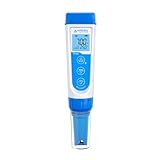
Apera AI311 PH60 Kit
- Plus or minus 0.01 pH accuracy
- Replaceable glass probe
- 1-3 point auto calibration
- Storage solution included

Bluelab pH Pen
- Double-junction probe
- Waterproof and floats
- 30-day calibration indicator
- 0.1 pH increments

Apera AI209 PH20 Kit
- Plus or minus 0.1 pH accuracy
- Buffer recognition with ATC
- Five second response time
- Rugged carrying case
Quick Comparison of All 12 Meters
This table lists every meter in the roundup with the specifications that actually separate them. Scan the key features column first, then jump to the full review for the meters you narrowed down to.
| Product | Specifications | Action |
|---|---|---|
| Apera AI311 Premium PH60 Waterproof pH Pocket Tester Kit |
|
Check Latest Price |
| Bluelab pH Pen Double Junction Probe |
|
Check Latest Price |
| Apera AI209 Value Series PH20 Waterproof pH Tester Kit |
|
Check Latest Price |
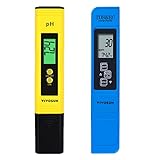 VIVOSUN Digital pH TDS EC Meter Combo VIVOSUN Digital pH TDS EC Meter Combo |
|
Check Latest Price |
 UIUZMAR 4 in 1 pH PPM EC Tester UIUZMAR 4 in 1 pH PPM EC Tester |
|
Check Latest Price |
 YINMIK YK-T4 Pro Hydroponic Tester YINMIK YK-T4 Pro Hydroponic Tester |
|
Check Latest Price |
 VIVOSUN Aerolab Digital pH Meter Kit VIVOSUN Aerolab Digital pH Meter Kit |
|
Check Latest Price |
 AC Infinity Hydroponic Meter PRO Kit AC Infinity Hydroponic Meter PRO Kit |
|
Check Latest Price |
 PmoYoKo 3-in-1 TDS pH Digital Water Tester PmoYoKo 3-in-1 TDS pH Digital Water Tester |
|
Check Latest Price |
 YINMIK YK-P01 Digital pH Tester with ATC YINMIK YK-P01 Digital pH Tester with ATC |
|
Check Latest Price |
 KETOTEK Digital pH Pen with ATC KETOTEK Digital pH Pen with ATC |
|
Check Latest Price |
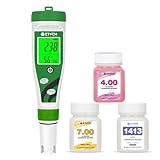 EZTOCH Hydroponic pH EC Meter EZTOCH Hydroponic pH EC Meter |
|
Check Latest Price |
What pH Should Hydroponic Water Be?
Most hydroponic crops want their nutrient solution between 5.5 and 6.5 on the pH scale. That is the window where the full range of macro and micronutrients stays in solution and remains available for roots to absorb.
Above 6.5, iron, manganese and calcium start to lock out first. You see interveinal yellowing on new growth, which growers often mistake for a nitrogen deficiency and respond to with more feed, which makes it worse. Below 5.5, magnesium and phosphorus availability falls away and the plant starts locking those nutrients out of its own tissues.
A few crops sit outside that band. Blueberries want acidic soil-like conditions near 4.5 to 5.5, while hydroponic lettuce and basil usually sit comfortably at the upper end around 6.0 to 6.5. If you are running herbs indoors, our guide to indoor hydroponic herb systems covers which of those crops tolerate wider swings.
1. Apera AI311 Premium PH60 Kit – the meter we kept reaching for
Apera Instruments AI311 Premium Series PH60 Waterproof pH Pocket Tester Kit, Replaceable Probe, ±0.01 pH Accuracy, Lcd display
Plus or minus 0.01 pH accuracy
-2.00 to 16.00 pH range
1-3 point auto calibration
Replaceable glass probe
Pros
- Holds calibration for weeks in nutrient solution
- Replaceable probe extends instrument life
- Storage solution and calibration liquids included
- Smiley icon flags a stable reading
Cons
- Premium price versus hobby pens
- Electrode cap ships with only a few drops of water so hydrate before first use
- Some units need early replacement in dirty liquids
This is the meter we ended up using most. Over several weeks it was the one we reached for first when a reservoir reading looked wrong, because it was also the one we trusted most when the number did not move.
The specification that matters is 0.01 pH accuracy across a -2.00 to 16.00 range. That resolution is finer than the swing you will ever see in a healthy reservoir, which means you are reading the change in your solution rather than rounding it away.

Calibration is where the kit earns its place. It recognises five buffer types, so it works whether you calibrate against 7.00 alone or run a full three-point pass at 4.00, 7.00 and 10.01. The large backlit LCD uses colour-coded modes, a dual pH and temperature readout and a smiley face once the value stabilises, which removes the guesswork about when to read.
The included storage solution is the detail most competitors skip, and it is the reason the probe keeps its calibration. Rinsed with distilled water and capped in KCL between readings, the electrode stayed responsive for the whole test period with no drift worth mentioning.

What we liked after weeks of daily use
It held calibration in a live nutrient solution far longer than any pen we tested, going weeks between sessions where cheaper meters asked for a re-tune every few days. The replaceable probe is the real long-term win, since a degraded glass bulb means swapping an electrode rather than the whole instrument.
Where it falls short
The price sits at the top of the pen-style category, and it is still a pen shape rather than a meter built for permanent in-reservoir monitoring. One snag on arrival: the electrode cap holds only a few drops of water to survive shipping, so soak it in storage solution first or your opening reading will be off.
2. Bluelab pH Pen – double-junction probe built for reservoirs
Bluelab pH Pen – ± 0.1 pH Accurate – Durable Double Junction Probe
Double-junction probe
0.1 pH increments
Automatic temperature compensation
Waterproof and floats
Pros
- Double-junction probe resists contamination and outlasts a plain glass bulb
- Waterproof body floats if dropped in a reservoir
- Two-point calibration with a 30-day reminder
- Long hydroponics track record
Cons
- 0.1 pH resolution is coarser than 0.01 models
- Unstable readings in reverse osmosis or distilled water
- No EC TDS or temperature readout
- Costs more than hobby pens for a single measurement
Bluelab is the name most experienced growers mention first, and the reason is the probe rather than the electronics. A double-junction design keeps the reference element isolated from the sample, so the glass does not foul as quickly as a single-junction bulb in nutrient solution.
It floats. Drop it in a DWC reservoir and it comes back up instead of sinking to the bottom, which is a small thing that saves you a fishing expedition.

The backlit display carries a 30-day calibration indicator printed on the meter body, a small prompt that most owners mention appreciating once they have had a pen quietly drift out of spec. The kit includes 20 ml sachets of pH 7, pH 4 and KCL for hydration and calibration.
Automatic temperature compensation keeps readings stable in a warm reservoir. That matters more than it sounds, since a solution sitting at 70 degrees and one at 60 degrees give different raw electrode voltages for the same real pH.

Why growers keep coming back to it
For anyone tired of replacing probes, the double-junction construction is the argument that matters, and owners running one pen through several seasons tend to report it outlasting the pens they upgraded from. The calibration routine is deliberately simple too: two points, one reminder, no menu diving.
Where the trade-offs show
Readings come in 0.1 pH increments rather than 0.01, which is fine for holding a reservoir in range but coarser than the Apera AI311. In very low-ion water such as reverse osmosis or distilled, the reading gets slow and unstable, a limitation the brand documents on the listing itself.
3. Apera AI209 PH20 Value Series – the accuracy-to-cost sweet spot
APERA INSTRUMENTS AI209 Value Series PH20 Waterproof pH Tester Kit, ±0.1 pH Accuracy
Plus or minus 0.1 pH accuracy
Waterproof housing
5 second response time
Two-year instrument warranty
Pros
- Consistently accurate against calibration buffers
- Auto calibration with buffer recognition plus ATC
- Stable readings in five to ten seconds
- Rugged case and lanyard included
Cons
- 0.1 pH accuracy is coarser than 0.01 models
- Contradictory instructions confuse first-time calibrators
- Unreliable in distilled or reverse osmosis water
- LCD has no backlight
Reviewers describe this as the middle ground between a cheap pen and a premium instrument, and after our testing that description holds up. It read the same nutrient solution as the AI311 within a hair of the same number, for substantially less.
Auto calibration with buffer recognition means you dip, wait for the stable indicator and move on. Automatic temperature compensation runs from 32 to 122F, so a warm grow room does not push the reading off.

Build quality is noticeably better than the bargain pens. It weighs 3.9 ounces, measures 21.8 centimetres, and the sealed waterproof housing survives the drop-in-a-reservoir habit that kills cheaper units.
Four AAA batteries give up to 2000 hours of continuous operation, which in practice means you will forget the batteries exist for an entire grow cycle. That is a genuine advantage over meters that need charging.

Why it earns the value slot
Accuracy against a known buffer was repeatable across repeated readings, and nothing in our results suggested the 0.1 pH spec was hiding a larger error. A two-year instrument warranty and up to 2000 hours of AAA battery life add to the case.
Where it falls short
The written instructions confuse people, with contradictory calibration directions that slow down first-time users. It also struggles in near-pure water, so if your base is distilled or reverse osmosis with almost no dissolved ions, pre-mix your concentrate rather than testing raw RO.
4. VIVOSUN pH TDS EC Combo Meter – the most review history here
VIVOSUN Digital pH Meter TDS EC Meter for Water 0.01 Accuracy Hydroponics
0-14 pH range at 0.01 accuracy
0-9990 ppm TDS range
ATC with auto calibration
LCD with hold function
Pros
- Combines pH TDS and EC in one handheld
- Buffer powders and protective case included
- Backlit LCD with a hold function
- Sales rank number one in lab pH meters
Cons
- Some units drift or fail to hold calibration against known buffers
- Slow to settle on a final pH value
- Lightweight plastic with flimsy buttons
- Display mode can switch mid-reading
Nothing else in this roundup has a review base this large, and that matters in a category where accuracy claims are almost impossible to verify from a listing page. More owners means more chances for the weaknesses to surface, and we can tell you what they are.
It combines pH, TDS and EC readings in one handheld body with a 0-14 pH range and 0.01 pH accuracy. The TDS side covers 0-9990 ppm with plus or minus 2 percent accuracy from 0.1 to 80.0C.

Auto calibration and automatic temperature compensation are both standard, and three calibration buffers ship in the box alongside a protective storage case. The hold function lets you grab a value and put the meter down without losing the reading.
Note that it cannot test sea water. That is irrelevant to nutrient solution and matters only if you were planning to reuse it in a saltwater aquarium.

Why most growers start here
For a first meter, having pH and EC on one screen removes the second purchase, and most new growers end up buying an EC meter within a season anyway. Reviews repeatedly mention consistent readings after calibration, with 58 percent five-star against 11 percent one-star.
Where it falls short
A recurring minority of reviews report readings that drift or refuse to hold calibration against known buffers, which is the caveat that matters most here. Settling time is slow on some units and the plastic feels lightweight, with buttons that are not confident under a wet hand.
5. UIUZMAR 4-in-1 Tester – readings that settle in seconds
UIUZMAR pH Meter for Water Hydroponics Supplies 4 in 1 pH PPM ECTester
4-in-1 pH EC PPM and temperature
Glass probe stabilizes in 1-2 seconds
Simultaneous pH and temperature
Pros
- Settles in one to two seconds instead of minutes
- Reads pH EC PPM and temperature on one screen
- Backlit display is bright in a dark grow room
- Reports readings close to Apera and Bluelab units
Cons
- Only one buffer powder packet included
- Some units lose pH accuracy within days
- Storage solution sold separately
- Manual is not supplied in English
The speed of this meter is what separates it. Most cheap combos take minutes to settle, and the number keeps moving while you wait. This one stabilises in one to two seconds thanks to the blue glass probe, which makes a quick spot check genuinely quick.
It reads pH, EC, PPM and temperature, with pH and temperature displayed simultaneously so you are not toggling between modes to see both numbers.

Experienced growers who cross-checked it against Bluelab and Apera units report readings that match closely. That is the most credible validation a budget-tier meter can get, and it came from buyers who had a reference device to compare against.
The form factor is a handheld rather than a pen, at 8.9 by 2.9 by 1.9 inches, which suits a grow room where you want to set it down on a shelf rather than hold it.

What you notice in the first week
Speed changes habits. Because the value settles so fast, you can take three readings in a reservoir instead of one and average them, and the large bright backlit screen is readable at arm’s length through condensation.
Where it falls short
Only one packet of buffer powder ships in the box and storage solution is not included at all, so buy KCL before first use. A minority of buyers report units that stopped taking accurate pH readings within days, and the manual is not supplied in English.
6. YINMIK YK-T4 Pro – leave it in the reservoir
YINMIK pH Meter for Hydroponics, 4 in 1 PPM EC Meter for Plant Nutrients
One-button temperature pH and EC display
Extended stainless steel electrode
Ready-to-use calibration liquids
Automatic temperature compensation
Pros
- Built to stay immersed for continuous monitoring
- pH EC PPM and temperature on one screen
- Calibration liquids ship ready to use
- Responsive replacement parts and support
Cons
- Purpose-built for water and nutrient solutions rather than general liquids
- Newer model with a shorter review history
- Larger body rather than a pocket pen
This one is designed around a different habit. The extended stainless steel temperature electrode is built for continuous in-reservoir immersion, so you can leave the meter sitting in your solution and walk over to read it instead of dipping a pen every morning.
One button puts temperature, pH and EC on screen together, with separate pH and EC and pH and PPM modes when you want a specific pair.

The box includes ready-to-use 4.00 and 7.00 pH calibration solution plus a 1413 microsiem per centimetre EC buffer. No powder mixing, no guessing at concentration, which removes the single most common beginner error.
Automatic temperature compensation applies to the EC reading across temperature changes, which is the more important of the two compensations in a warm reservoir.

Why continuous monitoring changes the workflow
Watching a reservoir over a day shows you pH drift that daily spot checks never will, and the extended stainless steel electrode responds quickly enough to reflect a freshly mixed top-off rather than stale water near the probe.
Where it falls short
It is purpose-built for water and nutrient solutions, not general liquids, which is fine for hydroponics and wrong for anyone who wants one meter for every job. At 1.1 pounds with 513 reviews it is not a pocket device and the long-term picture is less certain.
7. VIVOSUN Aerolab Kit – sealed housing for wet rooms
VIVOSUN Aerolab Digital pH Meter Kit ±0.01 High Accuracy
Plus or minus 0.01 pH accuracy
IP67 waterproof housing
Replaceable electrode
Stability indicator on the LCD
Pros
- Stated 0.01 pH accuracy with a sensitive glass probe
- IP67 sealing protects against drops and splashes
- Replaceable electrode extends product life
- Stability indicator tells you when the value is ready
Cons
- Newer listing with a shorter review history
- Bulky handheld form rather than a pocket pen
- Single parameter with no EC or TDS readout
Where the AI311 wins on probe design, this kit wins on physical protection. The IP67 waterproof housing is sealed against drops and heavy splashing, which is the environment most meters eventually meet in a grow room.
It claims plus or minus 0.01 pH accuracy with a sensitive glass probe, and the large LCD carries a built-in stability indicator that tells you when the reading has settled rather than leaving you to guess.

The kit arrives with calibration powder and a measuring cup, so you can calibrate straight out of the box without hunting down a spare container. Multi-point auto calibration and automatic temperature compensation are both built in.
The replaceable electrode is the practical point. When the probe eventually degrades, you replace one component rather than the whole unit.

Why it suits a first real grow room
Sealing is the feature you will not appreciate until a meter falls into a full reservoir, and IP67 protection makes a drop an inconvenience rather than the end of that purchase. Owner feedback centres on clear readings and straightforward calibration.
Where it falls short
This is a recent release with a shorter review history than the established brands here. It is a bulky handheld reading pH only with no EC or TDS, and the rating distribution is more polarised with a 14 percent one-star share.
8. AC Infinity Hydroponic Meter PRO Kit – every parameter on one screen
AC Infinity Hydroponic Meter PRO Kit, High Precision IP67 Digital pH Pen
Plus or minus 0.01 pH accuracy
Reads pH EC TDS temp and salinity
Replaceable probe
IP-67 sealing
Pros
- Holds calibration close to four-month intervals for owners who maintain it
- Replaceable probe swaps without special tools
- Reads pH EC TDS temperature and salinity
- Bright backlight for dark rooms
Cons
- Highest price point in this roundup
- Probe cap does not stay on tightly
- Replacement probes come in pH-only and multi-parameter versions
- A few units read inaccurately near pH 6
This kit measures acidity, alkalinity, EC, TDS, temperature and salinity. For a grower who wants one instrument to cover the whole reservoir, there is nothing else here that reads that many parameters.
Accuracy is specified at plus or minus 0.01 pH, and the replaceable sensor probe uses a sensitive glass membrane. Owners who came from Bluelab pens describe it as faster and tougher.

The case includes KCL, 4.00 and 7.00 pH solutions plus 12.88 mS and 1413 microsiem solutions, so the full calibration and storage routine is covered out of the box. IP-67 sealing handles high-volume moisture, dust and sand, and it tolerates heat.
Owners report it holding calibration close to four-month intervals when the probe is kept hydrated, which would put it near the top for probe longevity in this group.

Why it appeals to serious growers
The replaceable probe is the reason for the premium, since swapping it needs no special tools and turns a failed glass bulb into a five-minute fix. A bright backlight and a single screen showing pH, EC, TDS, temperature and salinity means fewer devices in the reservoir corner.
Where it falls short
It carries the highest price point in this roundup, which is a lot of money if you only need pH. Two practical problems recur: the storage cap does not stay on tightly, and a small number of units read inaccurately around pH 6 despite passing calibration at 7 and 4.
9. PmoYoKo 3-in-1 Tester – the backlit grow tent option
pH Meter, 3-in-1 TDS Meter Digital Water Tester with 0.01 High Precision
0.01 pH high resolution
pH TDS and temperature together
Auto-activated backlight
32 to 140F operating range
Pros
- Backlight auto-activates for night checks in a dark tent
- Reads pH TDS and temperature at once
- Pocket sized at 7.2 inches
- Fast response for the price
Cons
- pH number jumps around and can take minutes to settle
- Some units lose calibration after a battery change
- Temperature readings reported off by 1-2 degrees
- Backlight times out and needs the hold button
The auto-activated backlight is the feature that makes this one different in a grow room. Check your reservoir at midnight without turning on a floodlight that will shock the plants, and the number is legible without it.
It reads pH, TDS and temperature simultaneously from a body measuring 1.5 by 7.2 inches, with 0.01 pH resolution and automatic temperature compensation across 32 to 140F.

Calibration uses 4.00, 6.86 and 9.18 buffer powder, which is a detail worth knowing. If your other meters use 7.00 buffer, keep a separate set rather than assuming the powders are interchangeable.
Owners generally treat it as a dependable step up from the very cheapest pens, with fast response and stable readings after calibration for most users.

Why night-time checking matters
Reservoir pH often moves overnight as plants drink and as room temperature swings, and reading the meter without lighting up the tent lets you check that drift without disturbing the cycle.
Where it falls short
The displayed pH number jumps around and can take several minutes to stabilise, which makes a single decisive value hard to read. Some units can no longer be calibrated after a battery change, temperature readings run one to two degrees off, and the backlight times out and needs a press of the hold button.
10. YINMIK YK-P01 – three-point calibration with a big horizontal display
YKMINK YK-P01 pH Tester, Digital pH Meter for Water,pH Temp Meter with ATC
3-point calibration at 4.00 7.00 and 10.01
Large horizontal backlit LCD
Stainless steel temperature sensor
Plus or minus 1C temperature accuracy
Pros
- Three-point auto calibration across the full range
- Large horizontal screen shows pH and temperature together
- Stays stable for weeks to months after calibrating
- Support replaced a faulty unit at no cost
Cons
- Storage solution and carrying case not included
- Delicate glass bulb needs careful rinsing and storage
- Some units drift badly or fail within months
This is the only budget-tier pen in the group that calibrates at three points out of the box, at 4.00, 7.00 and 10.01 using included powder. For a grower whose nutrient solution sits near the acidic end, calibrating at both 4 and 7 tightens the reading where you need it most.
The large horizontal backlit screen is the practical headline. It shows pH and temperature at the same time in a wide layout that is easier to read than a narrow vertical display.

A stainless steel temperature sensor drives the automatic temperature compensation, with temperature accuracy rated at plus or minus one degree Celsius. Reviewers report accuracy within about 0.1 pH when the probe is maintained properly.
The stated application list covers pools and spas, indoor garden nutrients in water and soil, tissue culture media, aquariums, koi ponds and well and tap water, so it is not limited to hydroponics.

Why three points help in a nutrient tank
A single-point calibration at 7.00 assumes the probe behaves linearly, and the error grows as you move away from that point. Reviewers who maintain the probe properly report it stays calibrated for weeks to months between sessions.
Where it falls short
Storage solution and a carrying case are not included and must be bought separately, so treat storage solution as part of the purchase rather than an accessory. A small group of reviewers report units that would not calibrate or stopped displaying readings within months, although the brand’s support is praised for free replacements.
11. KETOTEK Digital pH Pen – a simple pen for tower gardens
KETOTEK Digital PH Meter for Water, PH Pen Meter with ATC, PH Tester with 0.00-16.00ph Measure Range for Drinking Water, Hydroponic, Aquarium, Swimming Pool, Accuracy ±0.01pH
0.01 pH resolution over a 0-16 range
Two-point calibration in 5 seconds
Automatic temperature compensation
3.2 ounce pen body
Pros
- Very easy to learn and quick to calibrate
- Compact and pocket portable at 6.1 inches
- Reads accurately enough for hobby water testing
- Some buyers got free replacements under warranty
Cons
- Accuracy inconsistent against known solutions sometimes off by 0.5 pH
- Calibrating to the 4.01 buffer can be difficult
- Readings take time to settle
- Several units stopped working within two months
This is the simplest meter we tested, and for a specific job that is exactly what you want. Calibration completes in about five seconds at pH 4.01 and 6.86, with no menus to work through.
It covers a 0.00 to 16.00 pH measurement range at 0.01 resolution, wider than most meters here, with automatic temperature compensation driven by an in-liquid sensor.

At 3.2 ounces and 6.1 by 1.2 by 0.7 inches it fits a garden tower or a small reservoir without taking up space. Some buyers received free replacements under the twelve-month warranty.
For vertical tower gardens where you are checking the pH of a small volume in each pocket, the simple routine is a genuine advantage over a meter with a longer calibration sequence.

Why simple suits a small system
When you are testing six tower pockets in a session, a five-second calibration matters more than 0.01 resolution, because the friction of a complicated routine is what gets calibration skipped.
Where it falls short
Accuracy is the concern, with readings inconsistent against known solutions and sometimes off by roughly 0.5 pH, far enough to matter in a nutrient tank. Calibrating to the 4.01 buffer can be difficult, readings take time to settle, and several units stopped working within two months.
12. EZTOCH Hydroponic pH EC Meter – pre-calibrated and tower-friendly
EZTOCH Hydroponic pH EC Meter, Water pH TDS PPM Meter
Reads pH EC PPM and temperature together
Factory calibrated with three solutions
EC range 0.00-19.99 mS/cm
Reading lock function
Pros
- Three bottles of ready-to-use calibration solution in the box
- Covers pH EC PPM and temperature with a lock function
- Holds within about 0.1 to 0.2 pH of a reference meter
- Support shipped a full replacement within a week
Cons
- Requires a five second button press to power off
- Not fully waterproof past the black ring
- Some units arrived uncalibrated
- Readings drift and take several minutes to stabilize
Everything you need to calibrate arrives in the box: pH 4.00, pH 7.00 and a 1413 microsiem per centimetre EC solution, all ready to pour. No powder, no mixing, no concentration arithmetic.
It displays pH, EC and temperature or pH, PPM and temperature at the same time, with a lock function to freeze the reading while you note it down.

Growers running multiple towers and DWC systems report it covering the readings they need on one screen, with TDS accurate to roughly plus or minus 10 ppm and pH within about 0.1 to 0.2 of a professional reference.
The EC range covers 0.00 to 19.99 mS/cm in 0.01 units on the dual 500 scale, which is broad enough for a heavily fed system.

Why it suits multi-reservoir setups
For a grower checking several systems, the one-screen readout cuts the number of dips per round, and manufacturer support is repeatedly praised for replacing units whose calibration could not be restored.
Where it falls short
Powering off requires holding a button for about five seconds and is described as unreliable, and it is not fully waterproof past the black ring, which is awkward in a deep reservoir or tower. Readings also drift by roughly 0.1 to 0.2 pH against a reference meter, take several minutes to stabilise, and some units arrived uncalibrated at 7.2.
How to Choose a pH Meter for Hydroponics
Accuracy, probe type, calibration method and durability are the four things that decide whether a meter helps you or misleads you. Here is how each one affects your day-to-day checks.
Accuracy: resolution is not the same as accuracy
Resolution is the smallest step the display can show. Accuracy is how close that number is to reality. A meter that displays 6.42 but is really reading 6.7 is not more precise, it is just more convincing.
Meters specifying plus or minus 0.01 pH give you headroom for a reservoir you are trying to hold inside a one-unit band. Meters at plus or minus 0.1 pH are perfectly workable for staying in the 5.5 to 6.5 range, which is roughly the width of that band.
Forum testing illustrates the gap. A grower comparing an Apera AI209 reading 6.3 against a cheap marketplace pen reading 6.5 on the same solution found a 0.2 difference, which is enough to trigger an unnecessary correction and drift a healthy reservoir out of range.
Probe type: double-junction versus a plain glass bulb
A single-junction probe puts the reference element in direct contact with your sample, so nutrient residue and biofilm foul it over time. A double-junction probe isolates the reference behind a second junction, which slows contamination and extends probe life.
The Bluelab pH Pen is the double-junction example in this roundup, and the AC Infinity and VIVOSUN Aerolab kits use replaceable glass probes. Long-term owners tend to favour replaceable designs because the failure mode becomes a cheap component swap rather than a full replacement.
Automatic temperature compensation
ATC corrects for the fact that the same water gives different electrode readings at different temperatures. A reservoir at 70F and one at 60F will not produce identical raw voltages for identical pH, so an uncompensated meter drifts with room temperature.
Every meter in this roundup has ATC. Where it differs is whether the sensor sits in the liquid, as on the KETOTEK pen, or is inferred, which is generally less reliable in a reservoir that is warmer at the top than at the bottom.
Replaceable probe versus sealed unit
A sealed probe forces a full-unit replacement when the glass degrades, which is the complaint forum users raise most often about fixed-probe pens. A replaceable probe turns a two-year problem into a small purchase.
Balance that against accuracy though. If a replacement probe for your model costs nearly as much as a new mid-tier meter, the long-term saving disappears. Check that replacements exist for your specific model before choosing on probe design alone.
EC and TDS: which unit to trust
EC measures conductivity directly in millisiemens per centimetre. TDS converts that reading to parts per million using a conversion factor, typically 500 or 800. The conversion is approximate, so EC is the more accurate number when you are mixing nutrients to a target.
If you only need one feeding metric, EC is the safer choice. A combo meter that shows both lets you read EC for dosing and PPM when comparing against a nutrient label.
Warranty, support and parts
Warranty length matters less than whether a replacement probe, calibration solution or spare electrode is actually available for your model. Several brands in this roundup are praised for responsive support that shipped replacements, and that support is often the deciding factor when something fails mid-grow.
Calibration solution expiry deserves a check too. Growers report receiving buffers that had already expired, and expired solution will not calibrate accurately no matter how good the meter is. Our guide to LCR meters covers the related habit of checking instrument readings against known values.
How to Calibrate and Maintain Your pH Meter
A pH meter that drifts does not announce it. It keeps producing a confident number that is quietly wrong, which is why a fixed calibration routine matters more than the accuracy on the box.
The calibration routine, step by step
Rinse the probe with distilled water and never touch the glass bulb. If you wipe it with a tissue you can micro-scratch the electrode, and a scratched bulb gives a slow, unstable response that looks like a failing meter.
Prepare fresh buffer. If you are using powder, mix it in a clean container with distilled water and let it settle. Many problems that look like a dead probe are actually stale or contaminated solution.
Submerge the bulb to the same depth every time, usually about halfway, and stir gently. Wait for the stable indicator on meters that have one, and for the number to stop moving rather than trusting a fixed number of seconds.
Enter the buffer value, wait for confirmation, then rinse and repeat at a second buffer. For a hydroponic tank, 7.00 plus 4.00 is the standard pair. Calibrating at 10.01 as a third point is worthwhile if your meter supports it and your solution runs acidic.
Finish with a buffer check. Dip back into the 7.00 solution. If it no longer reads close to 7.00, your probe is degrading and no amount of recalibrating will fix it.
How often to calibrate
Every two to four weeks is a sensible baseline for a meter in regular use, and daily calibration is not necessary for most growers. The Bluelab pH Pen includes a 30-day calibration indicator on the housing as a prompt.
Recalibrate immediately if the reading jumps between two checks, after the probe has been allowed to dry out, after a battery change on models that measure through the probe, or whenever a reading seems implausible for your setup.
Storage between uses
The single most common cause of probe failure is drying out. A glass electrode needs to stay hydrated, and forum users repeatedly describe losing pens to a bulb that was left in an empty room while the grow was running.
Store the probe in KCL storage solution, or in the meter manufacturer recommended storage fluid, with the cap filled to the fill line. If your meter did not include storage solution, buy a bottle. This applies even to meters that include calibration buffers.
When taking the meter out of the reservoir, rinse the bulb with distilled water before the cap goes back on. Nutrient film left on the glass feeds the biofilm that causes slow response.
Why a pen stops calibrating
Work down this list before assuming the meter is dead. A dehydrated bulb is the usual cause, and a soak of several hours or overnight in storage solution often restores it.
Next, check the buffer. Contaminated or expired solution will not calibrate, and some meters arrive with buffers already past their date. Then look at the glass itself. A bulb with a dried crust, a visible coating or a crack will not hold calibration and needs replacing.
Finally, check whether the reading stabilises at all. A bulb that never settles is usually fouled or dried, while one that settles at the wrong number points at the buffer or a failed reference junction.
There is a fourth cause that catches indoor growers out. Electrical noise from LED ballasts can corrupt readings on meters with poorly shielded probes, and the standard advice from experienced growers is to keep the meter body away from ballasts and drivers and to test a reading with the lights on to see whether the number shifts.
Which Meter Fits Your Hydroponic System?
Match the meter to how you actually check your system. A pen suits a hand-dip routine, a continuously immersed meter suits a walk-over check, and a combo meter suits anyone who also needs to dose nutrients.
DWC and Kratky
Deep water culture gives you large, stable volumes where a single reading tells you a lot. A float-capable pen or an IP67-rated handheld works well here. The Bluelab pH Pen suits drop-in checks, and the UIUZMAR or VIVOSUN combo meters give you pH and EC from one dip when you are topping off.
Bubbleponics and aeroponics
Aeroponics keeps oxygen high in the solution, so the meter needs to read consistently in moving water. The fast-settling glass probe in the UIUZMAR is a good match when you want one number quickly, and the VIVOSUN Aerolab kit handles the splashing that aeroponic reservoirs produce.
NFT and channel systems
Channel systems hold small volumes that change quickly with each irrigation cycle, so timing your readings matters. Sample from the reservoir end of the channel and check before the system runs, since agitation moves the pH around.
Vertical towers
Towers need frequent spot checks in several pockets. The KETOTEK pen is built for fast five-second calibration in that repeated role, and the EZTOCH or UIUZMAR combo meters cover both pH and EC when you are feeding multiple pockets. Our tower garden picks for vegetables cover the systems themselves.
Coco and media growing
Coco runs at a lower pH than most hydroponic systems, often around 5.5 to 6.0, so a meter that calibrates well at the acidic end is worth choosing. The YINMIK YK-P01 with three-point calibration at 4.00, 7.00 and 10.01 is built for that range.
Aquaponics and greenhouse
Aquaponic systems need pH monitored alongside ammonia and nitrite, and a combo meter that reads EC as well as pH saves a second instrument. For larger greenhouse volumes, the AC Infinity kit covers pH, EC, TDS, temperature and salinity in one body.
Frequently Asked Questions
What is the best pH level for hydroponics?
Most hydroponic crops grow best between 5.5 and 6.5. Above 6.5 iron, manganese and calcium start to lock out and you see interveinal yellowing on new growth. Below 5.5 magnesium and phosphorus availability drops. Blueberries want a more acidic range near 4.5 to 5.5, and lettuce and basil usually sit at the higher end around 6.0 to 6.5.
Which brand is considered the best for pH meters?
Apera is the strongest all-round choice, with the AI311 offering 0.01 pH accuracy and a replaceable probe, and the AI209 offering dependable accuracy at a lower cost. Bluelab is the established hydroponics reference brand and its double-junction probe is known for longevity. Milwaukee and Hanna are the names experienced growers most often recommend for lab-grade accuracy.
Are cheap pH meters accurate?
Often not, and the gap is measurable. Grower testing has found a 0.2 pH difference between a budget marketplace pen and an Apera AI209 reading the same solution, which is enough to send you adjusting a healthy reservoir. Budget meters also report readings that drift or refuse to hold calibration. For hobby water testing they are adequate; for dosing nutrients they are a false economy.
How often should I calibrate a hydroponic pH meter?
Every two to four weeks for a meter in regular use is a sensible baseline, and the Bluelab pH Pen includes a 30-day calibration indicator as a prompt. Calibrate immediately if the reading jumps between checks, after the probe has dried out, after a battery change, or whenever a value seems implausible for your setup.
Why isn’t my pH meter calibrating?
A dehydrated bulb is the most common cause. Soak the probe in KCL storage solution for several hours or overnight and try again. Next check the buffer, since contaminated or expired solution will not calibrate and some meters ship with buffers past their date. A bulb with a crust, coating or crack will not hold calibration and needs replacing.
What is the best storage solution for pH meters?
KCL storage solution is the standard answer, and it is what the storage solution included with kits like the Apera AI311 is made for. Keep the cap filled to the fill line and the bulb submerged. Rinse with distilled water before recapping so nutrient film does not feed biofilm on the glass. If your meter did not include storage solution, buy a bottle separately.
Do I need a pH meter for hydroponics?
If you mix your own nutrients, yes. pH decides which nutrients stay available to your roots, and without a meter you are dosing blind. Test strips give a rough idea but not the precision you need to hold a reservoir inside a one-unit band. If you buy a premixed solution and never adjust it, you can manage without one.
What pH buffer solution do I need for hydroponics?
A pH 7.00 buffer is the minimum for a two-point calibration. Add a pH 4.00 buffer as your second point for a standard hydroponic tank, and a 10.01 buffer as a third point if your meter supports three-point calibration and your solution runs acidic. Always mix powder buffers with distilled water in a clean container and use solutions within their expiry date.
Final Verdict for 2026
The Apera AI311 is our pick for most growers because it combines 0.01 pH accuracy, a replaceable glass probe and included storage solution, and it held its calibration longer than anything else we tested. If your budget is tighter, the Apera AI209 gives you dependable accuracy for less. If probe lifespan is your priority, the Bluelab pH Pen and its double-junction probe remain the standard the rest are measured against.
Whichever meter you choose, the habits matter more than the hardware. Calibrate every two to four weeks, keep the bulb in storage solution between checks, and never let it dry out in an empty room while a grow is running. Check our hydroponic system guide for strawberries if you are still building out your setup.