

The hardest part of game night with young kids is not teaching the rules. It is the moment a child flips a card, realizes they lost, and the evening is over. A cooperative board game removes that moment entirely, because everybody at the table plays as one team and the game itself is the opponent.
That single design choice is why the best cooperative board games for kids have become the default recommendation in family board game circles, and why they are the format we reach for first whenever we want screen-free time with a four year old, a nine year old, and an adult who does not want to be stuck explaining a rulebook. No losers, no tantrums, and the same practice in turn-taking, communication, and joint problem-solving that competitive games are supposed to teach.
We played all eight games in this roundup repeatedly, with kids aged four through ten, in two-player and four-player configurations, and we tracked three things that roundup after roundup tends to skip: whether a game needs reading, whether it works with only two people, and whether an adult actually wants to play it a tenth time. The last point is the one parents mention most often. A cooperative game the children love but the adults find repetitive ends up back in the cupboard after a month.
If you want the wider shelf, our picks for board games for kids in general cover competitive and party titles too. Everything below is team-play only.
Top 3 Cooperative Board Games for Kids in 2026
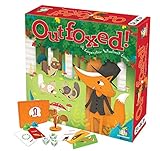
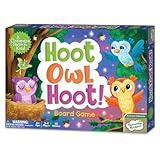
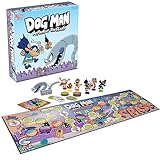
Dog Man Attack of the Fleas
- 2-6 players
- Three dimensional pieces
- 30 minute rounds ages 6 and up
Outfoxed! takes the top slot because it is the only game here that is genuinely fun for a competent adult, a six year old, and a ten year old at the same table, in a 20 minute round. Hoot Owl Hoot! earns the pre-reader badge for the simplest possible on-ramp. Dog Man Attack of the Fleas covers the widest table, from two to six players, which solves the cousin-and-grandparent problem.
Best Cooperative Board Games for Kids at a Glance in 2026
| Product | Specifications | Action |
|---|---|---|
| Outfoxed! |
|
Check Latest Price |
| Hoot Owl Hoot! |
|
Check Latest Price |
| Dog Man Attack of the Fleas |
|
Check Latest Price |
 Race to the Treasure! Race to the Treasure! |
|
Check Latest Price |
 Dinosaur Escape Dinosaur Escape |
|
Check Latest Price |
 Minecraft Heroes of the Village Minecraft Heroes of the Village |
|
Check Latest Price |
 Wildcraft! Wildcraft! |
|
Check Latest Price |
 My First Castle Panic My First Castle Panic |
|
Check Latest Price |
Two flags above are worth reading carefully, because they are the ones most lists skip. Reading: Dinosaur Escape, Hoot Owl Hoot!, Race to the Treasure!, Wildcraft! and My First Castle Panic can be played by a child who cannot yet decode text. Outfoxed! and Minecraft Heroes of the Village both require reading.
Two-player viability: Dinosaur Escape, Hoot Owl Hoot!, Race to the Treasure!, Outfoxed! and Minecraft Heroes of the Village all hold up with a pair. My First Castle Panic and Wildcraft! are noticeably better with three or four, and Dog Man Attack of the Fleas is the only one designed to absorb six players without slowing down.
1. Outfoxed! Is the Best Cooperative Board Game for Most Families
OUTFOXED, A CLASSIC WHO DUNNIT GAME FOR PRESCHOOLERS, 4 players
Ages 5 and up
4 players
20 minutes
Deduction
Pros
- Short 20 minute rounds fit short attention spans
- No losers so no post-game sulking
- Teaches deduction and visual discrimination
- Rules learned in a couple of minutes
Cons
- Clue cards need a reader
- Repetitive once the suspect deck is memorized
- Adults get bored before the kids do
The premise is a fox has stolen an egg from a forest full of animals, and the table has to work out which suspect did it. Everyone rolls, everyone moves the same fox token, and everyone helps turn clues into a location. Because the token is shared, there is no such thing as a turn you wasted, which quietly removes a lot of table friction.
What surprised us most is how well it scales. A five year old handles the rolling and the movement and contributes real observations about the color of the trees on a clue card. A ten year old starts leading the deduction. Our own adults kept playing it after the kids went to bed, which almost never happens with a preschool game.
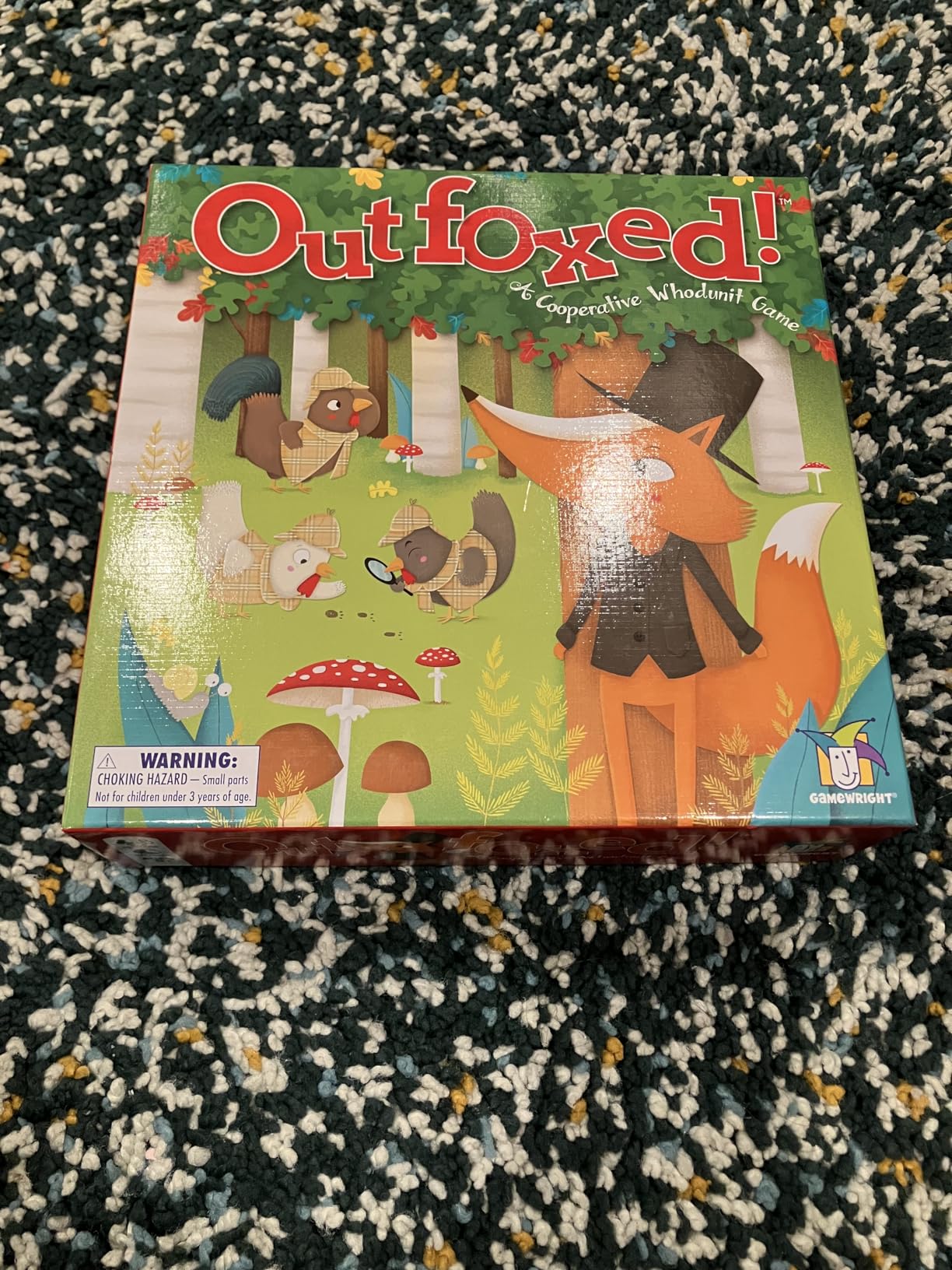
At 4.8 stars across more than 7000 reviews, this is the most proven pick on the list, and the consensus among buyers matches our own experience: short play time, a screen-free cooperative format, and rules simple enough for a preschooler.
Parents on r/boardgames and r/tabletop name it repeatedly as a reliable kids co-op, though the same threads note it becomes repetitive for adults once the clue system clicks. That is a fair warning and worth taking seriously if you are an adult who prefers heavier games. Our workaround was to hand the decoder ring to a different player each round.
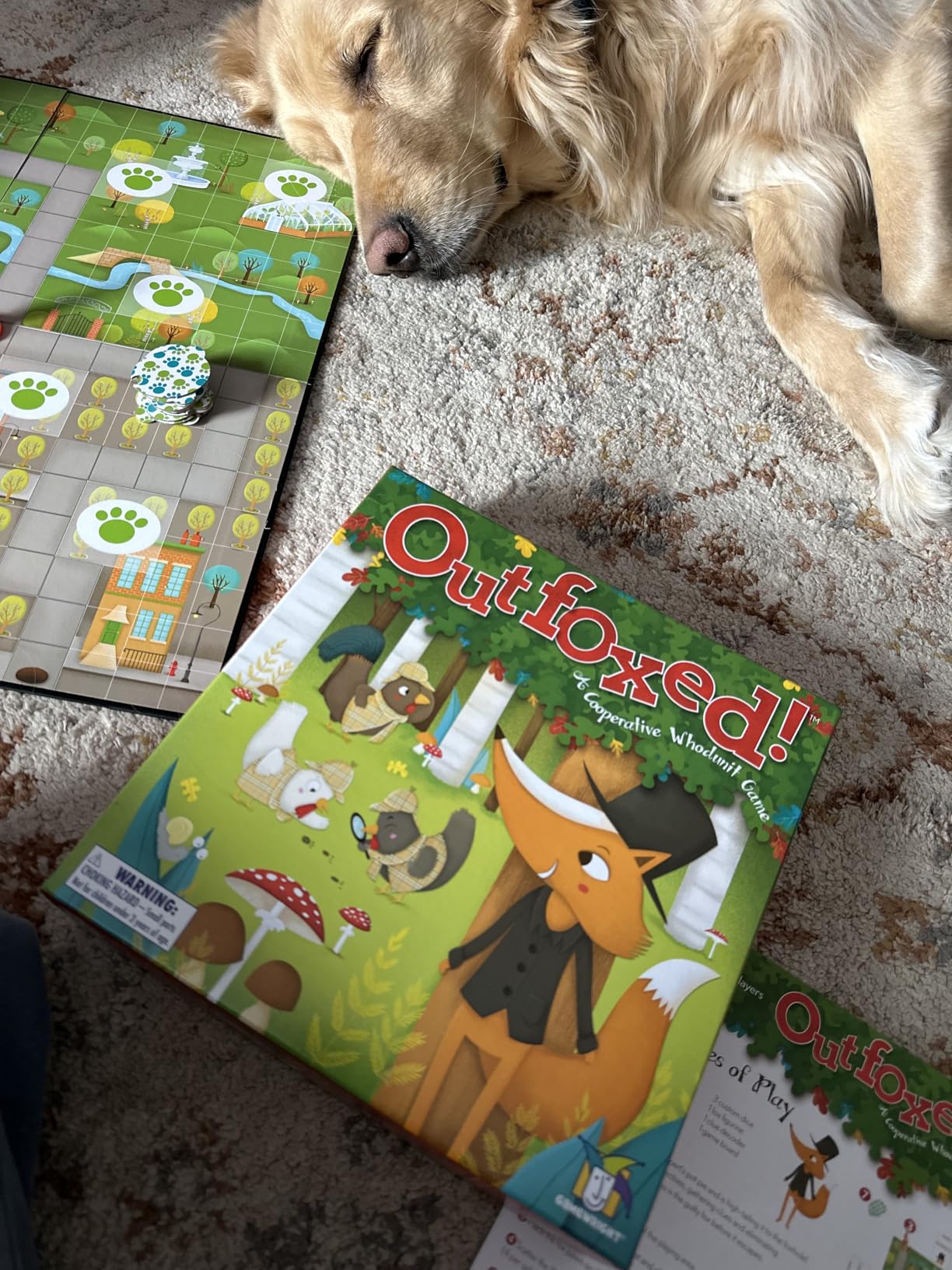
How to fit Outfoxed! to your table
Two players works well. One child rolls and moves while the other reads clues aloud, then swap. Nobody is bored and nobody is benched, which is unusual for a four player box.
With mixed reading levels, pair a strong reader with a non-reader deliberately. The non-reader handles the board, the reader handles the cards, and both are essential. If you are building a reading habit, this is one of the games where a child will ask to read the clues because reading is the only way to help.
When Outfoxed! is the wrong pick
If you have a pre-reader in the group and no adult willing to read every card, this is not the game. The clue cards are the whole game, so removing the reader removes the play.
It is also a mid-weight game with low long-term depth. Expect a strong first twenty plays and a slow fade. Families who want a game that survives a full year on the shelf should pair it with something structurally different, like Race to the Treasure! or Minecraft Heroes of the Village.
2. Hoot Owl Hoot! Is the Easiest First Co-op Game for Pre-Readers
Peaceable Kingdom Hoot Owl Hoot – Cooperative Matching Game For Kids
Ages 4 and up
2-4 players
15 minutes
Wordless
Pros
- Truly no reading required
- Very short 15 minute rounds
- Teaches planning ahead and turn taking
- Friendly animal artwork draws kids in
Cons
- Predictable after many plays
- Very little strategic depth for older children
- Sunrise token adds luck some kids dislike
Three owls sit in a nest, a sun rises one step at a time, and the table has to get the birds home before the light arrives. Every player can move any owl, so nobody is ever stuck watching. The mechanics are color and pattern matching, which is roughly the cognitive ceiling of a four year old, and that is exactly the point.
Our youngest tester learned the whole game in one sitting with no adult help beyond the first round. The planning-ahead element is subtle: you can rush a single owl to safety early, or spread the moves and cover more ground if the sun accelerates. Kids who discover that choice on their own tend to keep playing for months.
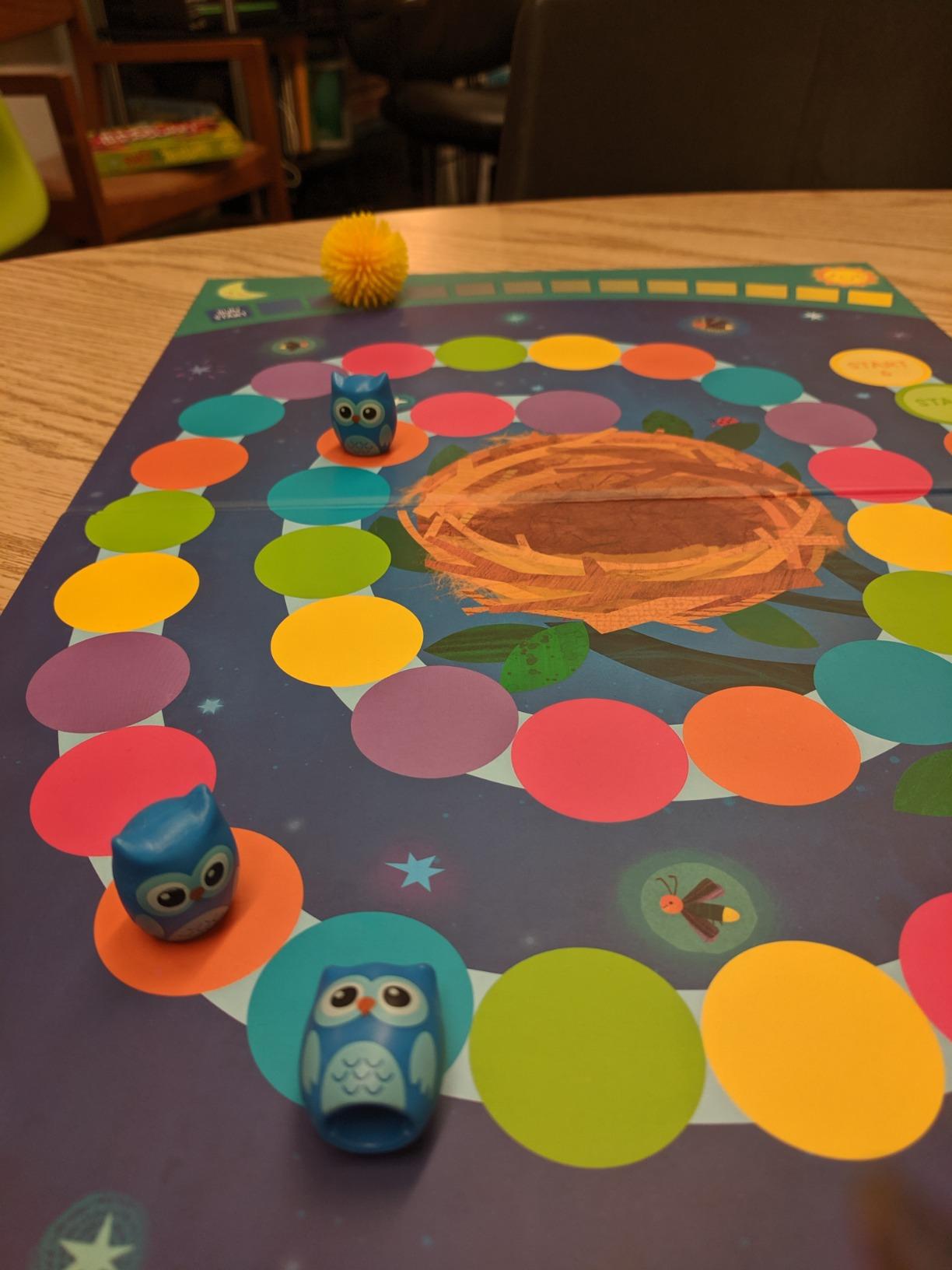
The list data is unambiguous. Buyers describe it as an easy first cooperative game that teaches matching, teamwork and planning for ages four and up, and the rating holds at 4.8 stars across more than 4000 reviews. Parents looking for a birthday gift for a four or five year old find this one repeatedly recommended.
Two players is the sweet spot here, even though the box allows four. With a pair, each child controls one owl and every move is a decision. With four, older children can start doing the matching for younger ones, which turns the game into a teaching session unless you insist everyone speaks.
Why this works for mixed-age tables
The instructions are entirely icon-based, so a pre-reader and a fluent reader can sit at the same table without anyone feeling behind. There is no penalty for asking a sibling what a symbol means, because nobody else knows either.
It is also the safest first cooperative game to teach. Setup takes under a minute, the round is 15 minutes, and if the sun reaches the top you simply reset and play again. Losing is essentially impossible, which is exactly the trait you want for a child who is still learning to handle disappointment.
When Hoot Owl Hoot! is the wrong pick
Any child aged eight or older will find this thin within a few sessions. The decisions are matching decisions, and once your older child has seen the color set twice, there is nothing left to work out. It also rewards memory of the layout more than analysis.
Buy it as an entry point, not as your main table game. If your youngest is five and your oldest is nine, this will keep the five year old happy and lose the nine year old in a week. Dinosaur Escape or Minecraft Heroes of the Village fills that older slot better.
3. Dog Man Attack of the Fleas Covers the Biggest Table in the Room
Dog Man Attack of the Fleas Cooperative Board Game, Ages 6+, 2-6 Players
Ages 6 and up
2-6 players
30 minutes
Spider spin
Pros
- Works for up to six players
- Theme pulls kids in before the rules
- Physical 3D pieces and a spinner
- Creative self-directed strategies replay well
Cons
- Rules need an adult walkthrough first
- Average cardboard component quality
- Repetitive loop for younger players
The Dav Pilkey licensing does real work here. Our six year old picked this over everything else on the shelf purely because of the characters, which is often the fastest route to a kid actually wanting to play. Mechanically, the team is trying to clear fleas off a dog before the Robo-Brontosaurus piece is knocked over.
What sets it apart from the rest of this list is the player count. Two to six is the widest range in the roundup, and it scales because the spinner distributes turns rather than the players. A six player game does not take twice as long, it just adds more spinner spins. For cousins, grandparents, and a full sibling set, that is the deciding factor.
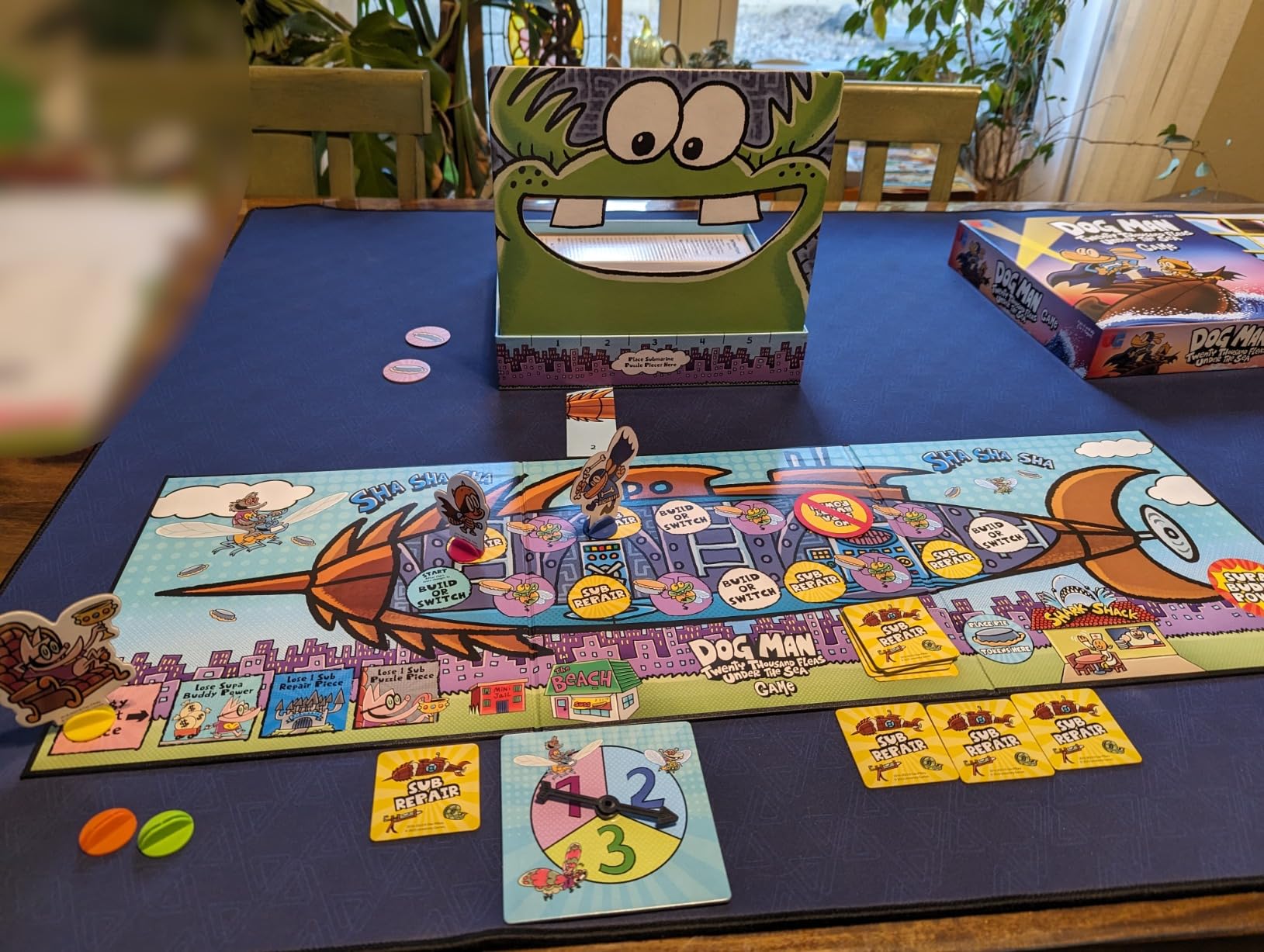
The 30 minute play length is longer than most of the games here, which suits an after-school slot rather than a bedtime one. The component list is substantial for a kids title: a board, six character pieces, the Robo-Brontosaurus and base, 20 tool tokens, and a spinner, all in a compact box.
Buyers rate it 4.6 stars across more than 3300 reviews, and the pattern in the reviews matches our sessions. Franchise appeal and a low-stress cooperative format come up constantly, while the brief adult-assisted learning curve and average build quality come up just as often. Nobody loves it more than they expected, and almost nobody regrets it.
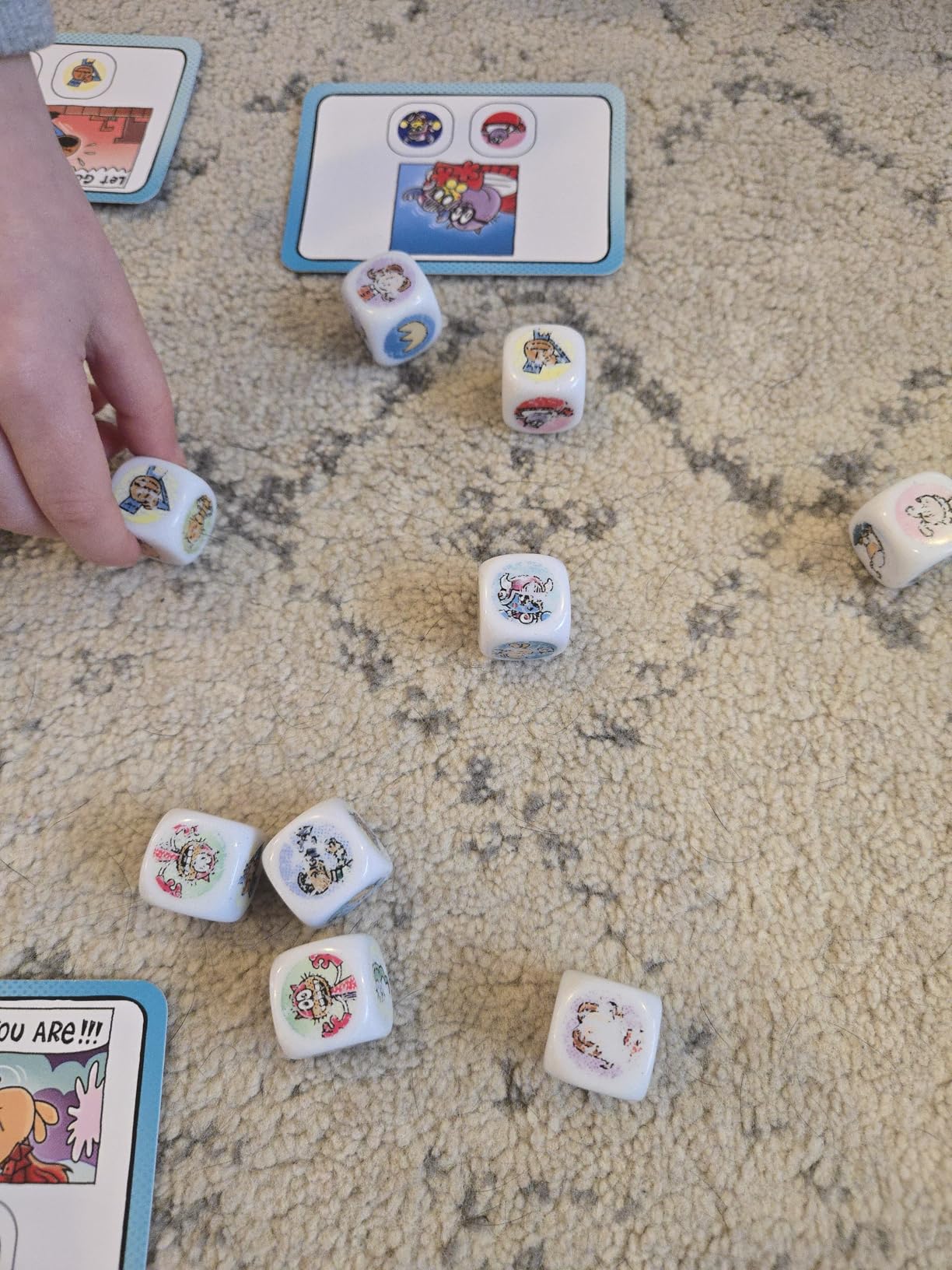
What a group of five or six actually looks like
With five or six players, the spinner means nobody sits out. That is the entire reason this box exists at that player count. The trade-off is social: more people means more talking, and a table of excited children can lose a turn in discussion rather than play.
Two players is workable but wasteful. The game still functions, though the tension is thin. If you have a big group, this is the right shape. If you have one child and one adult, choose something with a stronger two-player identity.
When Dog Man Attack of the Fleas is the wrong pick
Expect to teach this one yourself, twice. The rule set takes an adult walkthrough before children can run it independently, and in our sessions the first game was noticeably more adult-led than any other on this list.
It is also the least strategic entry here. Younger players tend to repeat the same clearing order and then describe the pattern as boring, which is a fair criticism of a game with a limited decision space. Children who enjoy planning under pressure get more out of it than children who enjoy chaos.
4. Race to the Treasure! Is the Best Value Pick for Ages 5 and Up
Peaceable Kingdom Race to the Treasure! Cooperative Path Building Game for 2 to 4 Kids Ages 5+
Ages 5 and up
2-4 players
20 minutes
No reading
Pros
- No reading required at all
- Award winning cooperative design
- Teaches strategy without competitive pressure
- Compact portable box for travel
Cons
- Map knowledge erodes replay value
- Less tactile than games with sculpted pieces
- Luck of the ogre roll can feel unfair
Everyone builds a path on the same map, tile by tile, trying to reach the treasure before the ogre reaches them. The ogre is a spinner, so the pressure is constant and the path is shared. This is the clearest teaching example of a cooperative game in the roundup: the strategy is in the tiles you choose, and the choice only matters if everyone agrees on it.
The design does something the other games here do not. Turns are genuinely collective. You cannot quietly advance your own cause, because the path belongs to the table. That makes it one of the most reliable picks for a child who tends to take over, and for a group that includes a strong reader and a pre-reader playing as equals.
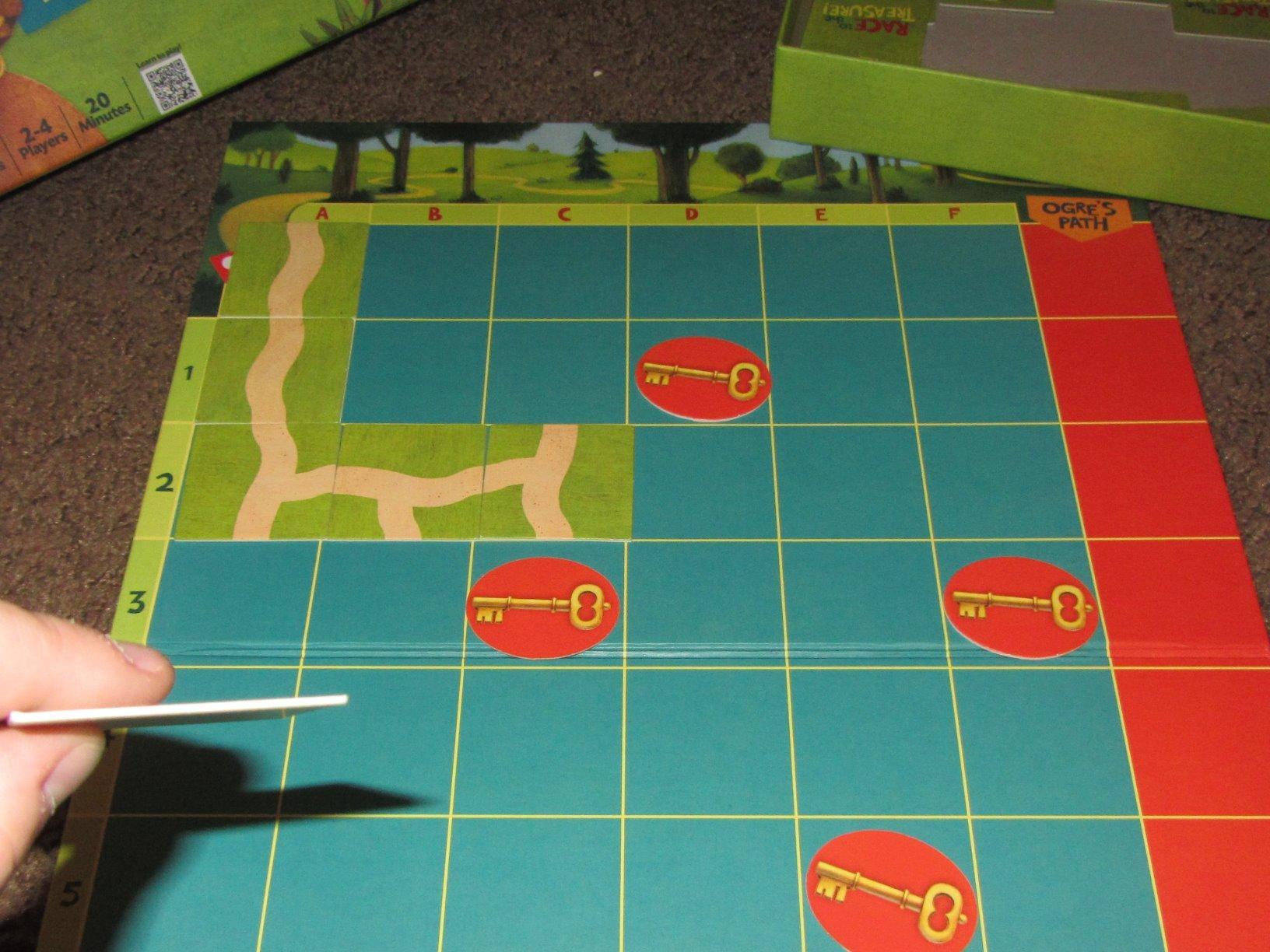
It has won four awards, including the Oppenheim Toy Portfolio Platinum Award and a PAL Seal of Approval, and that is not marketing decoration. The component quality holds up to the price point, and the box is genuinely portable at under a foot and a half wide, which makes it a good car and waiting room game.
Buyers put it at 4.8 stars across more than 3100 reviews, and the three things they name most are the frustration-free format, the fact that no reading is required, and the quality. It is also the game most often recommended on parent forums as a solid middle step between a preschool matching game and something with real strategy.
How to keep the path building interesting
The weakness is that the map is a known quantity. Once your child has seen every tile, the decisions collapse into a routine. Two habits keep it alive longer. First, let the player who rolled the ogre choose which tile the group places, so the table is solving a new problem each turn.
Second, use the game’s tolerance for house rules to add pressure, not to remove it. Our kids preferred a version where each player may only move the path two tiles from where the last player stopped, which scattered the group across the board instead of clustering on the obvious route.
When Race to the Treasure! is the wrong pick
A child who dislikes luck will struggle with it. The ogre’s movement is spinner-driven, so the team can play perfectly and still lose, and sensitive players sometimes read that as a mistake by the group rather than by the spinner.
It is also a touch-and-handle-light game. There are no sculpted pieces to pass around, so it does not have the tactile draw that holds some children at the table. If your kid is drawn to chunky components and 3D objects, Dog Man Attack of the Fleas or My First Castle Panic will hold attention better.
5. Dinosaur Escape Is Built for Ten Minute Attention Spans
Peaceable Kingdom Dinosaur Escape Cooperative Memory Game of Logic and Luck for 2 to 4 Kids Ages 4+
Ages 4 and up
2-4 players
10 minutes
Memory
Pros
- Only 10 minutes from setup to finish
- No reading required
- Memory and logic in a gentle story arc
- Volcano finale gives a clear endpoint
Cons
- Low replay value once tokens are memorized
- Memory element can frustrate younger players
- Small pieces need supervision with toddlers
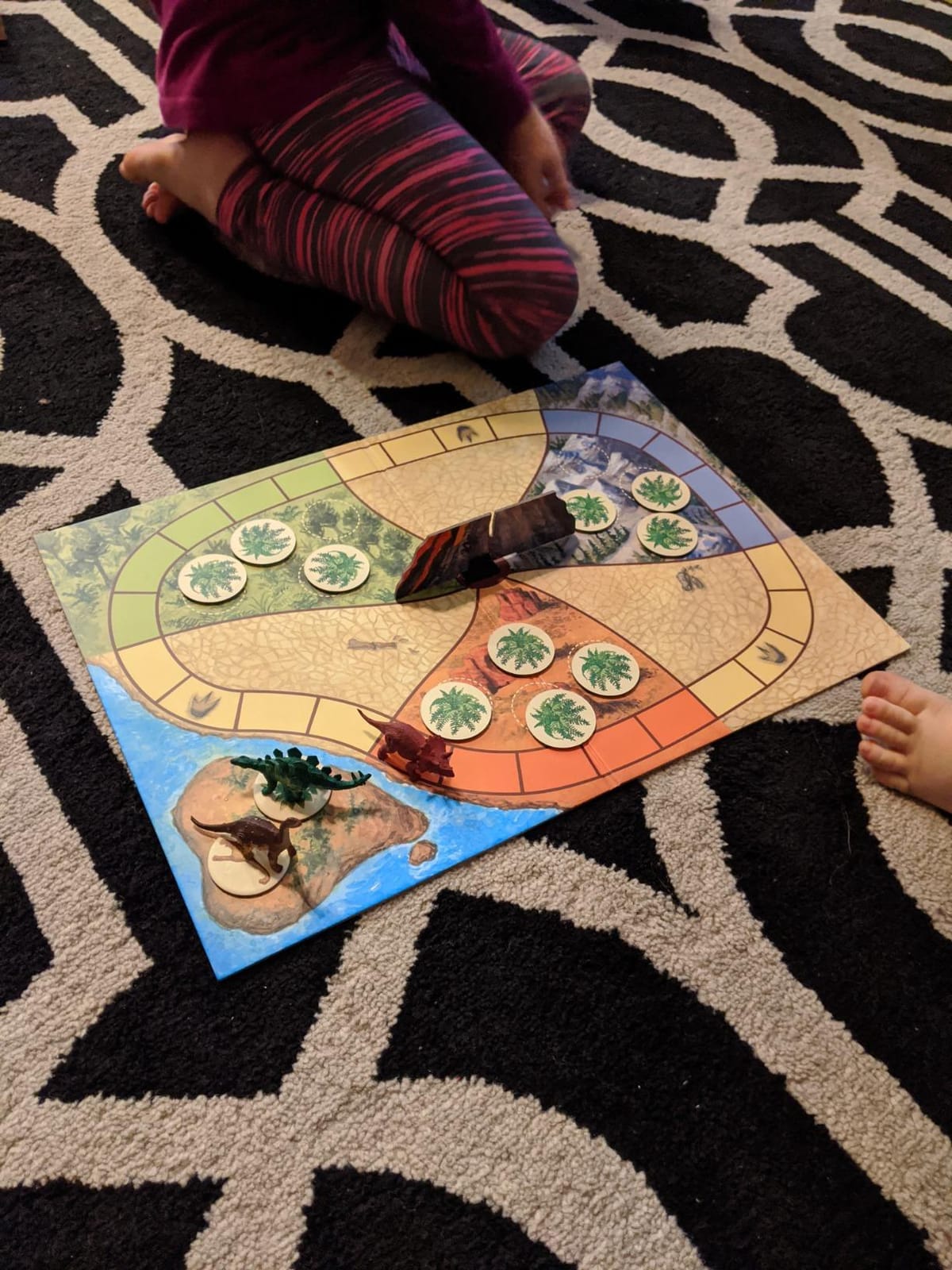
Three dinosaurs have to get out of the valley before the volcano finishes assembling. The board is a memory puzzle: players flip or shift reversible fern tokens to move the dinosaurs toward the exit while the volcano builds itself piece by piece. When the last volcano piece lands, the game ends, and it usually ends in a rush.
Ten minutes is the headline number and it is real. There is no setup beyond laying out the board, so it works as the after-school decompression game, the game you pull out while dinner finishes, or the game for a child who will not sit for half an hour. Our four year old could start, finish, and ask for a rematch in less time than it took to clear the table.
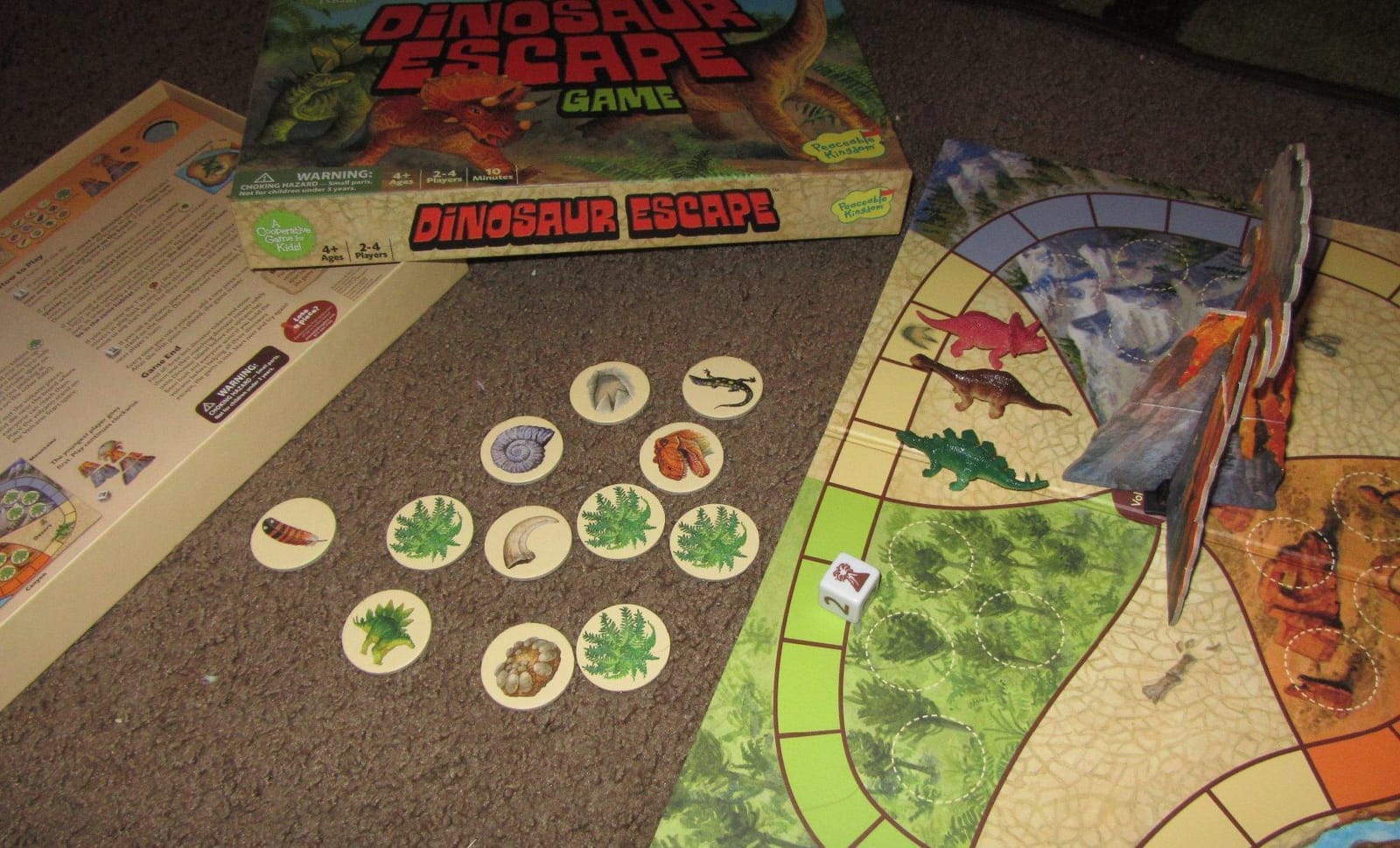
It plays 2-4 players and suits ages four and up, and it needs no reading. The included components are straightforward: one game board, three plastic dinosaur movers, a die, twelve reversible fern tokens, five volcano pieces, a stand, and instructions. Nothing here breaks or gets lost in a pocket.
Reviewers consistently describe it as a fast, gentle first cooperative game that mixes memory practice with a non-stressful escape narrative, holding 4.7 stars across more than 2200 reviews. The theme does a lot of that work. Dinosaurs and an erupting volcano are motivating in a way that abstract tokens are not.
Where this one fits in a mixed household
Because the memory component is the game rather than a side mechanic, a pair of children of similar age is the best fit. An older sibling paired with a much younger one tends to end up doing the memory work for both of them, which is fine as practice and frustrating as a competition.
It also works well with an adult who does not want a second brain session after work. Nothing about Dinosaur Escape requires sustained concentration, and a lost round costs nothing. That is why it is our go-to when we want a cooperative game that is genuinely low effort.
When Dinosaur Escape is the wrong pick
Replay value drops off quickly. The token layout is the puzzle, and once your child has it mapped, the game is a memory test they have already passed. Expect a strong run of perhaps a dozen plays, then a decline.
Younger children can also find the memory element genuinely hard, and being the weakest memory at a cooperative game can sting in a way being the weakest at a competitive game does not. If your child is three or shy about mistakes, Hoot Owl Hoot! is gentler.
6. Minecraft Heroes of the Village Has the Most Replay Value Here
Ravensburger Minecraft Heroes of The Village | Cooperative Board Game | Exciting & Unpredictable | Perfect for Families and Minecraft Enthusiasts | Suitable for Kids & Adults
Ages 7 and up
2-4 players
25 minutes
Strategy
Pros
- Map changes every playthrough
- Large component count with wooden blocks and tokens
- Bridges kids and adult Minecraft players
- Real strategic depth for ages 7 and up
Cons
- Requires reading so pre-readers are out
- Setup is heavy for a 25 minute game
- Lowest rating of the group at 4.5 stars
This is the pick for a household where the older child has already moved past matching games. The team works together against waves of Minecraft mobs, and the strategic layer comes from the map, which is assembled differently every playthrough. That single design decision is what separates it from everything else in this roundup after roughly a dozen plays.
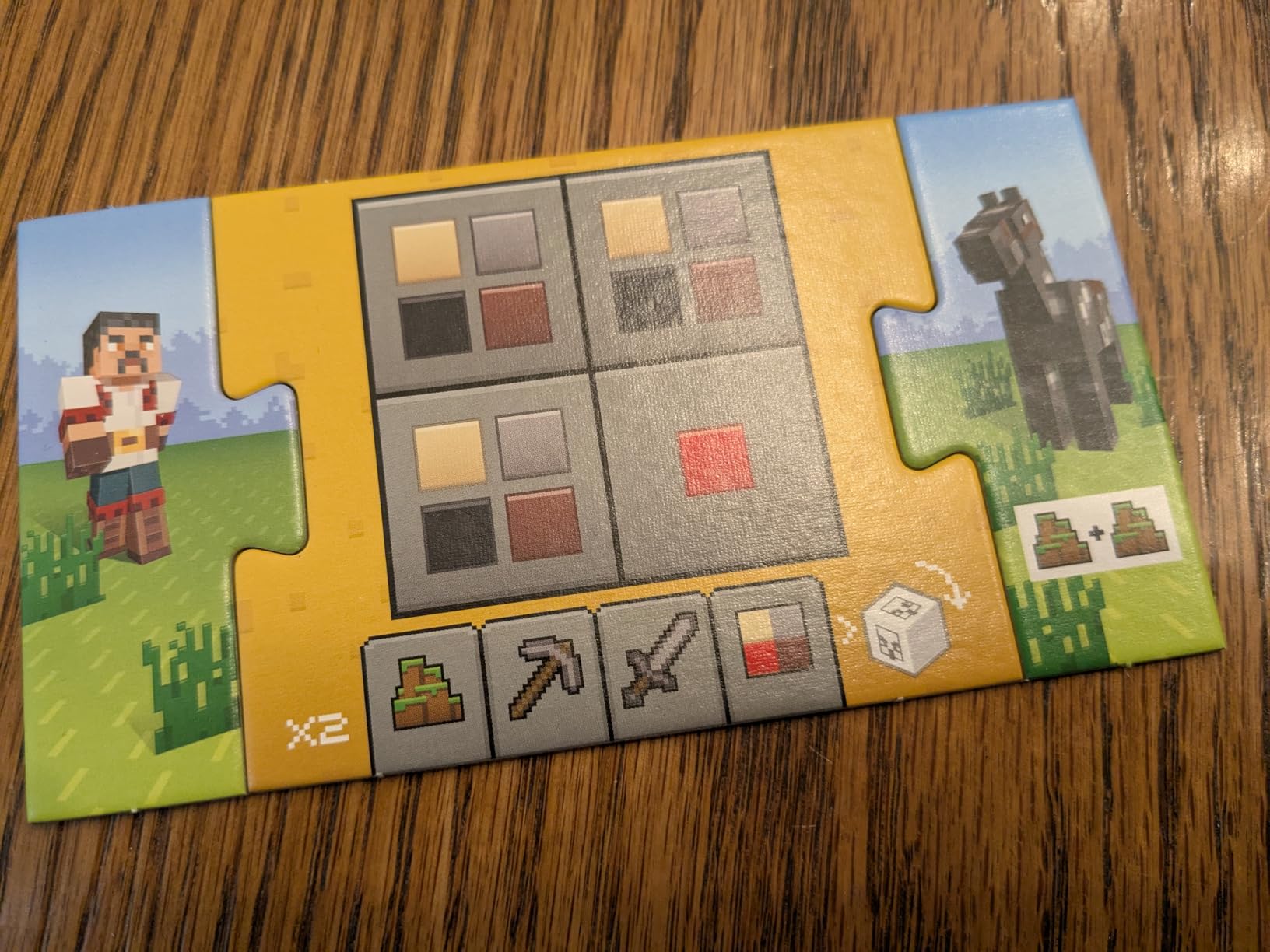
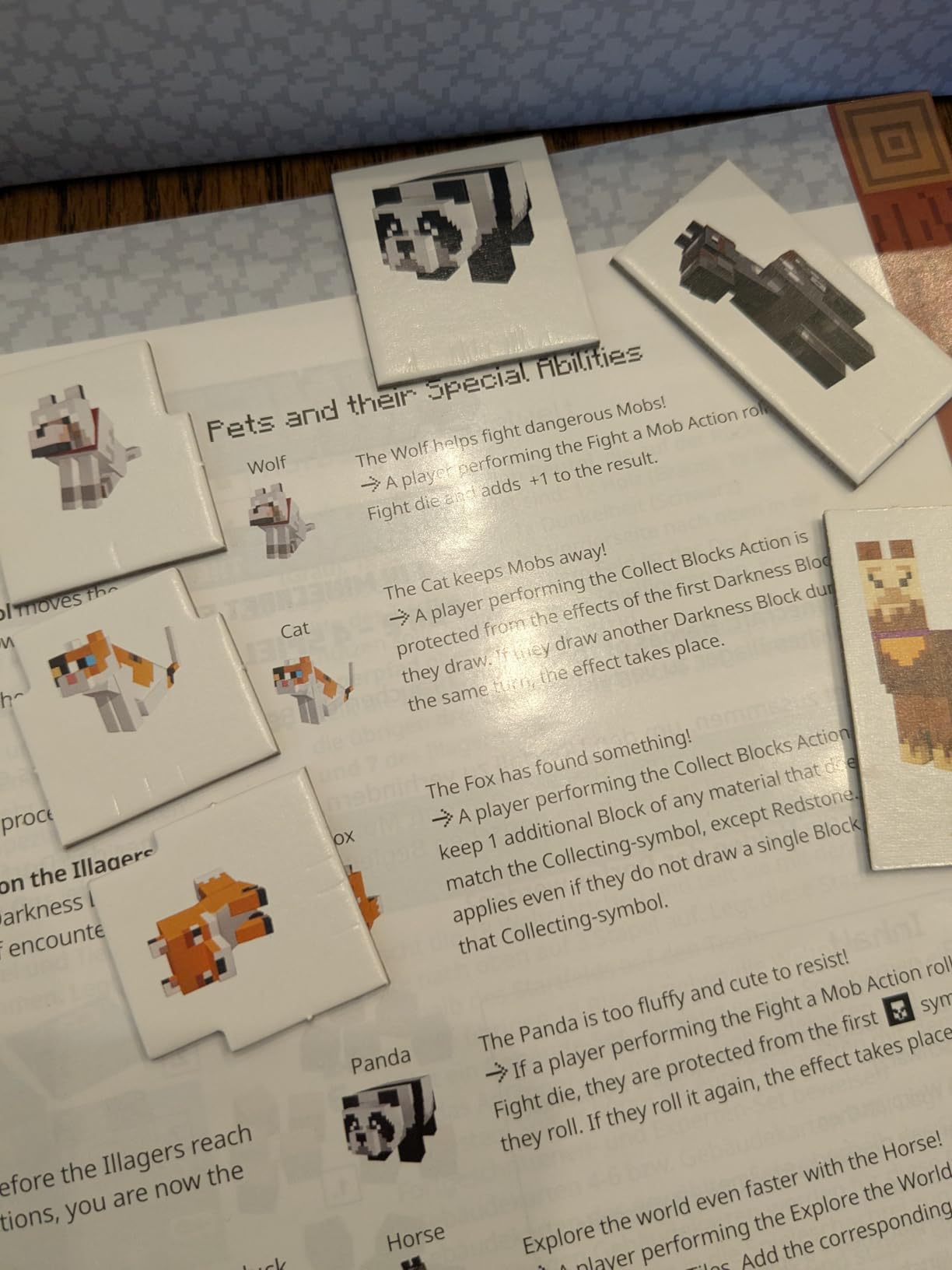
It is also the only game here that genuinely needs reading, which pushes the floor to age seven in practice regardless of what a younger sibling might attempt. The component count is high for a family game: 25 blocks, 18 world tiles, inventory cards, pet tiles, buildings and bases, mob tokens, a starting tile, and two dice.
Rounds run about 25 minutes, which is short enough for a school night but long enough that the setup matters. Budget a few extra minutes to get everything organized, and the game itself rewards that care. Adults who play Minecraft at the table tend to give the most enthusiastic reviews, because the theme is doing the onboarding for you.
Buyers rate it 4.5 stars across more than 1600 reviews, the lowest average in this group, and the reviews explain why. Franchise fans and families praise the changing map and the component quality, while a steady stream of comments notes that the reading requirement and the difficulty level limit it to older children.
How to handle the difficulty honestly
This game loses. Reviewers report frequent defeats, and our own experience matched that. For a sensitive child, that turns a cooperative game into the exact scenario co-op was supposed to remove, so set expectations before you start rather than after the first loss.
Two habits made it better for us. Play a few practice rounds where the stated goal is simply to learn the systems, and count those as successes. And keep the first real attempt at two or three players, since the mob pressure scales with a crowded board more than with skill.
When Minecraft Heroes of the Village is the wrong pick
Any pre-reader in the group rules it out, and there is no way to strip the reading out of the components. It is also the wrong first cooperative game. Parents on gaming and board game forums regularly warn adults away from starting a five year old with heavier titles marketed to kids, and that caution applies here even though the box says seven and up.
If your family does not already play Minecraft, the theme is doing less work for you and the component count is doing more. Race to the Treasure! gives a similar level of shared planning with a fraction of the setup and no reading at all.
7. Wildcraft! Is the One That Teaches Something Outside the Window
Wildcraft! Cooperative Games for Kids 4+, Learn 25 Herbs, Family Game
Ages 4 and up
1-4 players
Cooperative
Education
Pros
- Kids learn 25 herb names and their uses
- Icon helper cards work for non-readers
- Players can join or drop in mid-game
- Many house rule variants
Cons
- Printable extras have to be printed yourself
- Full game runs near 40 minutes
- No printed information cards in the box
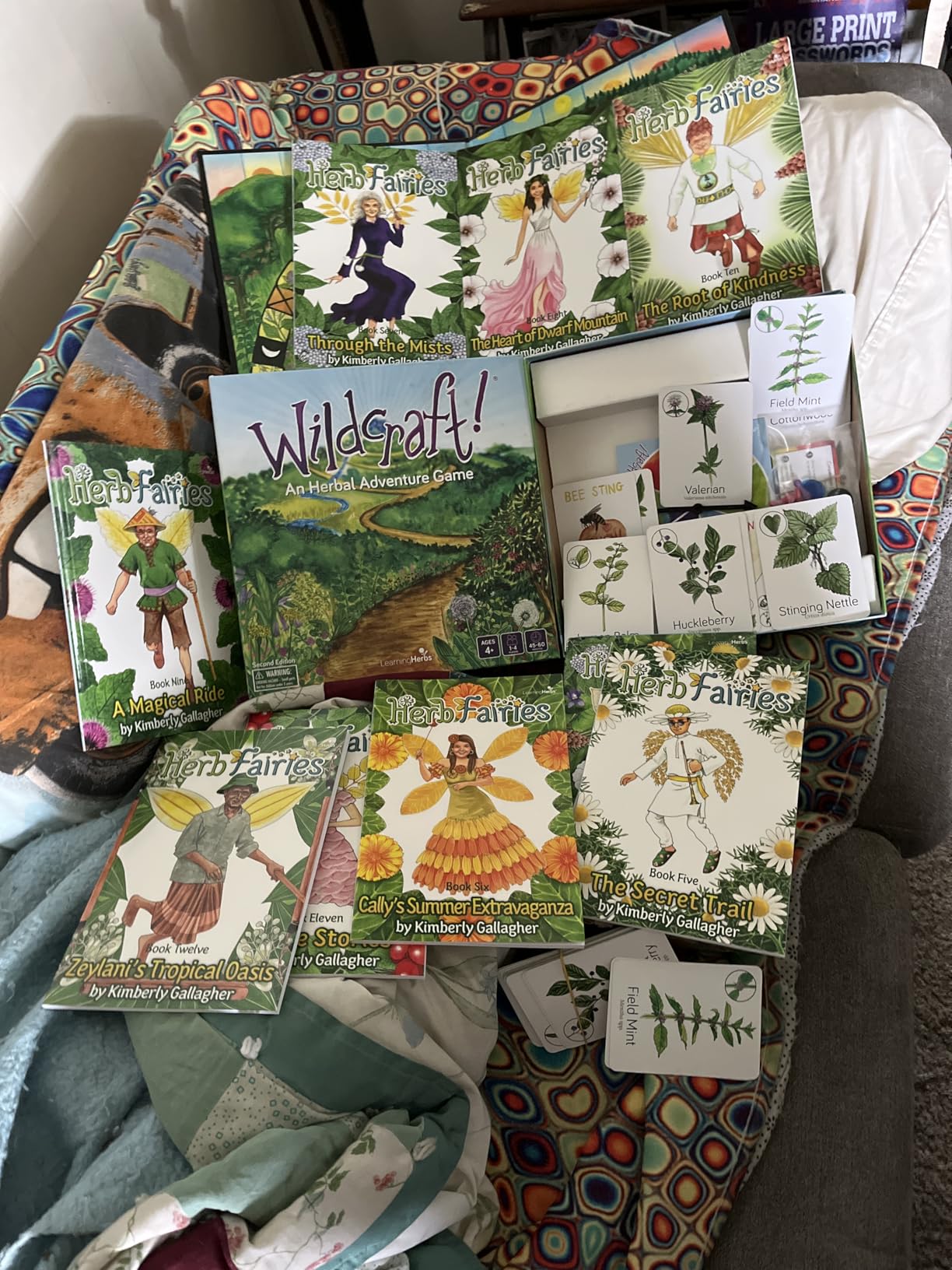
Most cooperative games teach thinking skills without meaning to. Wildcraft! is the one on this list with a curriculum attached: families report children learning the names and uses of 25 herbs, and the theme turns the learning into a foraging adventure through forests, trails and waterfalls.
The cooperative structure is the unusual part. Because it works as a drop-in game, a child can arrive halfway through, be handed a role, and be fully useful immediately. For a family with staggered bedtimes or a busy household, that flexibility is worth more than most of the mechanical differences between this and the other picks.
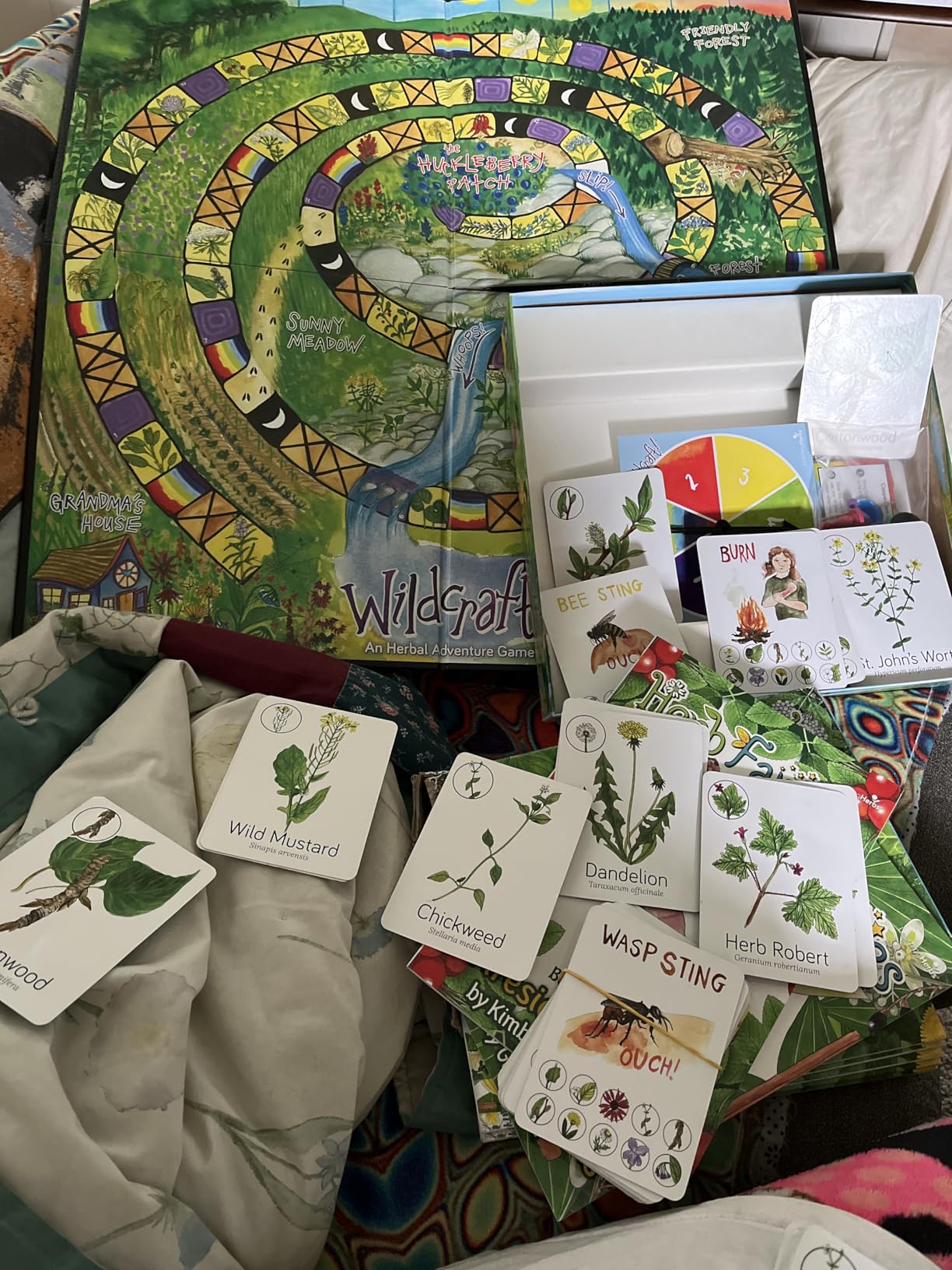
The main practical issue is what is not in the box. The board game is there, and three printable extras are downloadable: herb notes flashcards, a botanical coloring book, and a pocket guide to herbs, along with the Wildcraft! story. Nothing is printed. You need a printer and twenty minutes before the game is at full value.
It rates 4.7 stars across more than 1500 reviews, and the single most common caveat in those reviews is exactly the digital extras. Buyers also note that a full traditional game runs close to 40 minutes, which is long for the youngest players it is designed for.
What to do about the printables
Print them before you need them, not during. The flashcards are the piece that changes the game most, because they let you quiz the table between rounds or play a short review session instead of a full game. Laminating the herb cards also survives small hands, which paper cards do not.
If you would rather not print anything, the game still works from the board alone. The icon-based helper cards are readable without text, so a pre-reader can play, and the learning happens through the pictures. You simply lose the reference material that makes the herb knowledge stick.
When Wildcraft! is the wrong pick
Two cautions. First, 40 minutes is too long for most four year olds, so plan on either shortening the game with the house rules players already use or accepting that the youngest will leave mid-round. Second, it has the least strategic depth of anything here, so an eight year old who enjoys planning will find it thin.
It is also the largest and heaviest box in the group, which makes it a poor travel or classroom game despite the friendly theme. Buy it as a home game for a child who enjoys nature and collecting, and pair it with something more competitive-free and brainy for the older siblings.
8. My First Castle Panic Is the Sturdiest Gateway Game for Ages 4 and 5
Fireside Games My First Castle Panic Fantasy Board Game
Ages 4 and up
4 players
20 minutes
Icon cards
Pros
- Icon cards mean no reading required
- Sturdy standing castle sized for small hands
- About 20 minute rounds with a clear end trigger
- Fun dungeon interior in the box
Cons
- Card quality is thin so sleeve them
- Effectively a 5+ game despite the 4+ label
- Losing is common early
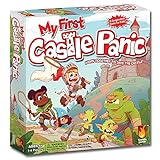
This is the simplified entry point to the Castle Panic formula, and the simplification is aimed squarely at small hands. The castle stands up in three dimensional pieces, the monster tokens are oversized, and the cards use icons instead of words. Four players, about 20 minutes, one shared wall between everyone.
It is the game we recommend when a family wants a cooperative game that feels like a real fortress battle rather than a matching exercise. A four year old can grasp the entire premise in one sentence, which means you are not spending half the play time teaching rules. That is the single biggest practical advantage it has over the other games aimed at this age.
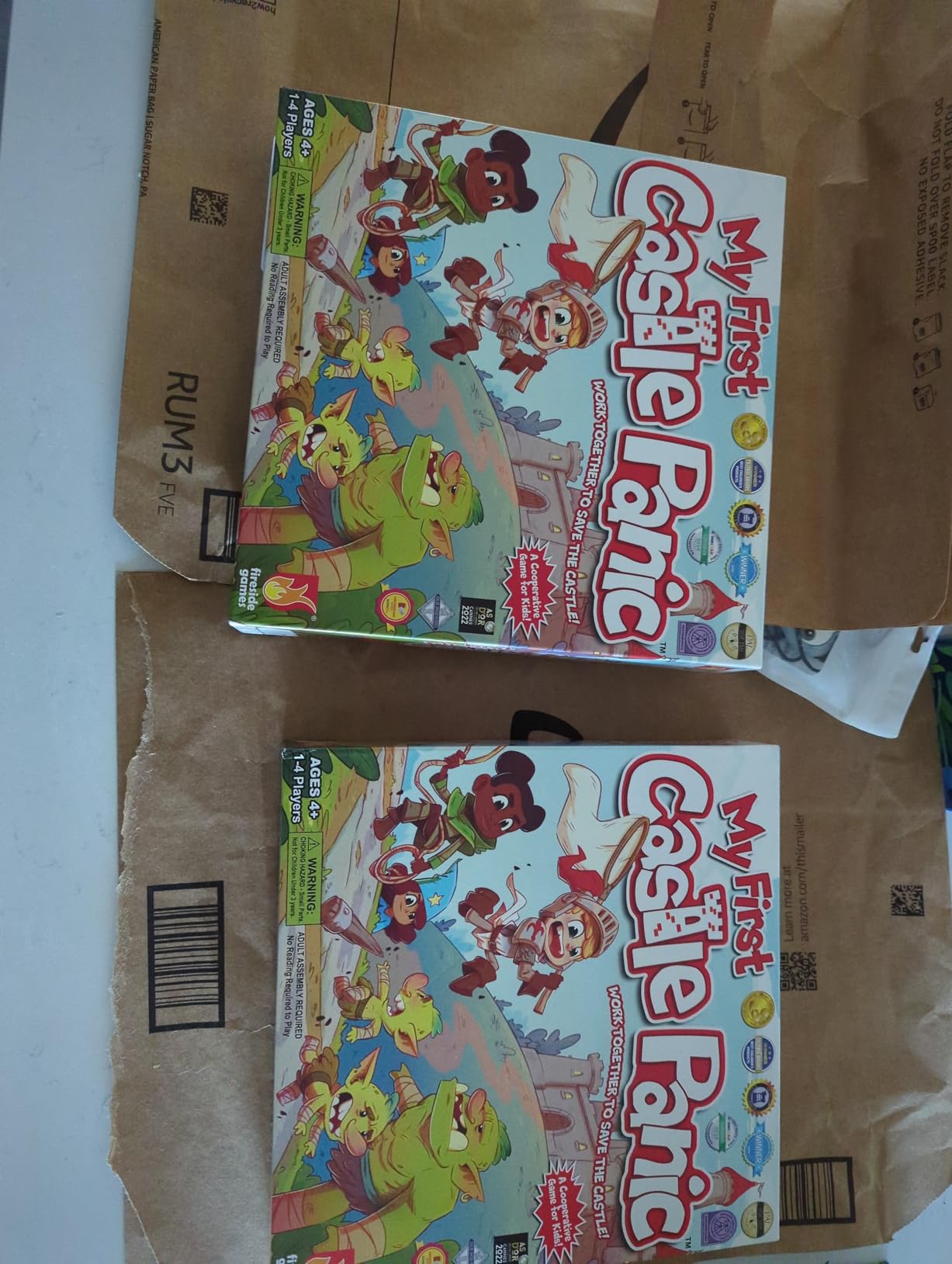
The components are built for the audience. Thick wall pieces and large monster tokens sized for small hands make it the most physically robust option in this roundup, and defeated monsters go into a dungeon interior in the box, which reliably buys another two rounds.
Buyers rate it 4.8 stars across more than 1400 reviews and frequently describe it as the best gateway cooperative game for preschoolers and early elementary children. The main criticisms in those reviews are card durability and limited long-term depth, and both are fair. Add a pack of card sleeves before the first game.
How to handle an early loss
Losing is common in the first few sessions, because the monster deck plus a spinner is a real threat and four year olds are still learning to plan several turns ahead. Frame the first loss as the end of round one, not as a result, and immediately reset.
The end trigger helps here. When the monster supply runs out, the game is over by rule rather than by defeat, so you can point at the deck instead of at the team’s decisions. Our experience was that kids who lost three times in a row stopped enjoying the game until we changed that framing.
When My First Castle Panic is the wrong pick
The 4+ label is generous. In practice it behaves like a five and up game, and a child who is genuinely ready for preschooler-level play may find the spinner and the deck pressure confusing. Hoot Owl Hoot! or Dinosaur Escape is a better first step if your child is at the very bottom of the range.
It is also a four player design. With two children it is noticeably weaker, and with two adults and a toddler it is worse. Buy it for a full table, and pair it with a two-player game if your household is small.
How to Choose a Cooperative Board Game Your Family Will Actually Finish
Most buying advice for cooperative games starts with age, and that is the wrong first question. Age tells you whether a child can operate the components. It does not tell you whether the game gets finished by a child who has been handed the box, or whether you will still want to play it. If you want the wider picture on the format, our guide to the best cooperative board games for families covers the adult side in more detail.
Start here instead, in this order.
1. Check the reading requirement first
This is the filter most lists ignore, and it is the one that causes the most returns. Outfoxed! and Minecraft Heroes of the Village both need text. Hoot Owl Hoot!, Dinosaur Escape, Race to the Treasure!, My First Castle Panic and Wildcraft! can all be played by a child who cannot decode words, using icons and symbols instead.
Reading level matters most when you have siblings of different ages or a child who is an English language learner. A wordless game lets them sit at the same table and contribute equally, which is the entire point of a cooperative game. If you want games that actively build reading instead, our picks for reading board games for kids cover that category properly.
2. Count the players you actually have
Cooperative games scale worse than competitive ones, because every extra player adds coordination overhead rather than adding a fresh opponent. A four player design played by two is usually a thinner game, and a two player design played by five is often a traffic jam.
Our ranking for two-player viability: Outfoxed! and Race to the Treasure! are the best pair games here, followed by Hoot Owl Hoot! and Dinosaur Escape. Wildcraft! and My First Castle Panic want a full table. Dog Man Attack of the Fleas is the only pick that genuinely handles five or six players without slowing down.
3. Budget for teach time, not just play time
The printed play time is only part of the cost. A 20 minute game that takes 20 minutes to explain is a 40 minute commitment, and that is how game nights die. Our setup and teach times, roughly: under two minutes for Hoot Owl Hoot! and Dinosaur Escape, about five for Outfoxed! and Race to the Treasure!, roughly ten for My First Castle Panic and Dog Man Attack of the Fleas, and the longest for Minecraft Heroes of the Village and Wildcraft!.
If your child has a 20 minute attention span, the honest combination is a game with a 10 minute length and a 5 minute teach. Dinosaur Escape is the only pick that clears that bar comfortably.
4. Decide between open hands and hidden information
Open-hand games, where everything is visible and the table can coach, work far better with mixed ages. Hoot Owl Hoot!, Race to the Treasure!, Dinosaur Escape, My First Castle Panic and Wildcraft! are all open. Outfoxed! is close, since the clues face up.
Open hands also solve a problem parents raise constantly: the child who takes over. If every decision is visible and the whole team is deciding, a confident child cannot quietly hijack the game. If you want to see that dynamic in a different genre, our picks for spelling board games show how much hidden information changes the dynamic.
5. Judge replayability by structure, not by rating
Ratings tell you how much people liked the first experience. They do not tell you how the twentieth one goes. The structural differences are clearer: Outfoxed! has a fixed suspect deck, Hoot Owl Hoot! has a fixed set of matching problems, and Race to the Treasure! has a fixed map. All three get easier with familiarity rather than changing.
Two picks change between plays. Minecraft Heroes of the Village assembles a new map every time, and Wildcraft! supports many rule variants. If you are buying one game that will still be interesting in six months, those are the two to consider.
6. Be honest about whether adults will play it
This is the question that decides whether the game stays in rotation, and it is the one competitors dodge. Outfoxed! and Minecraft Heroes of the Village hold up with competent adults. Race to the Treasure! and My First Castle Panic are fine for an hour. Hoot Owl Hoot! and Dinosaur Escape will be put away once the youngest outgrows them.
None of that makes them bad games. It makes them starter games. Buy a couple for the youngest, then add one that the adults will actually request. If you want heavier cooperative experiences for grown-up tables, our adult-focused cooperative roundup covers that side.
What to avoid, and how to tame the alpha gamer
Avoid buying an eight-plus rating for a five year old on the strength of the box. Forum discussion on parents and tabletop boards is consistent on this point. Age ratings describe the components, not the reading, the patience, or the ability to hold a losing plan for forty minutes.
For the child who takes over: give the loudest strategist a job that is not deciding. Make them the rules referee, the component handler, or the reader. In a cooperative game the table loses when one person outvotes everyone, so removing the decision from the loudest voice is usually more effective than asking them to be less bossy.
Frequently Asked Questions
What are some good co-op games for kids?
Outfoxed! is the best all-round pick, with short deduction rounds that work for ages 5 and up. Hoot Owl Hoot! and Dinosaur Escape are the easiest first games for ages 4 and up, and Race to the Treasure! is the best value option for a family that wants a no-reading strategy game.
What are the top cooperative board games for kids?
Our eight picks, ordered from the strongest all-round game down, are Outfoxed!, Hoot Owl Hoot!, Dog Man Attack of the Fleas, Race to the Treasure!, Dinosaur Escape, Minecraft Heroes of the Village, Wildcraft! and My First Castle Panic.
What are some good two-player board games for kids?
Outfoxed! and Race to the Treasure! are the strongest two-player cooperative games here, followed by Hoot Owl Hoot! and Dinosaur Escape. My First Castle Panic and Wildcraft! are designed for a full table of three or four and lose depth with only two players.
Which cooperative board games do not require reading?
Hoot Owl Hoot!, Dinosaur Escape, Race to the Treasure!, My First Castle Panic and Wildcraft! can all be played by a pre-reader because the components use icons rather than text. Outfoxed! and Minecraft Heroes of the Village both require reading.
How long do cooperative board games take to play?
Dinosaur Escape is the shortest at about 10 minutes, Hoot Owl Hoot! runs 15 minutes, and Outfoxed!, Race to the Treasure! and My First Castle Panic each run about 20 minutes. Dog Man Attack of the Fleas takes 30 minutes, Minecraft Heroes of the Village about 25 minutes, and a full Wildcraft! game close to 40 minutes.
Do cooperative games get boring after playing a lot?
Some do. Games built on a fixed map, a fixed suspect deck, or a fixed matching set become easier to solve as children memorise them, which is the most common complaint in buyer reviews. Minecraft Heroes of the Village assembles a new map each playthrough and Wildcraft! supports many rule variants, so both hold up over more plays.
The Verdict on the Best Cooperative Board Games for Kids
Outfoxed! is the best cooperative board game for most families in 2026. It runs 20 minutes, needs no losers, works for two players or four, and holds up with adults as well as with a five year old. If a pre-reader is at the table, Hoot Owl Hoot! and Race to the Treasure! are the stronger choices, and Dinosaur Escape is the only pick here that fits a ten minute window.
Buy two games from different tiers rather than one from the middle. A wordless gateway game plus a strategic pick covers everything from a four year old to a ten year old, and keeps the adults at the table. Start with the reading level and the number of players you actually have, and the right choice tends to make itself.