
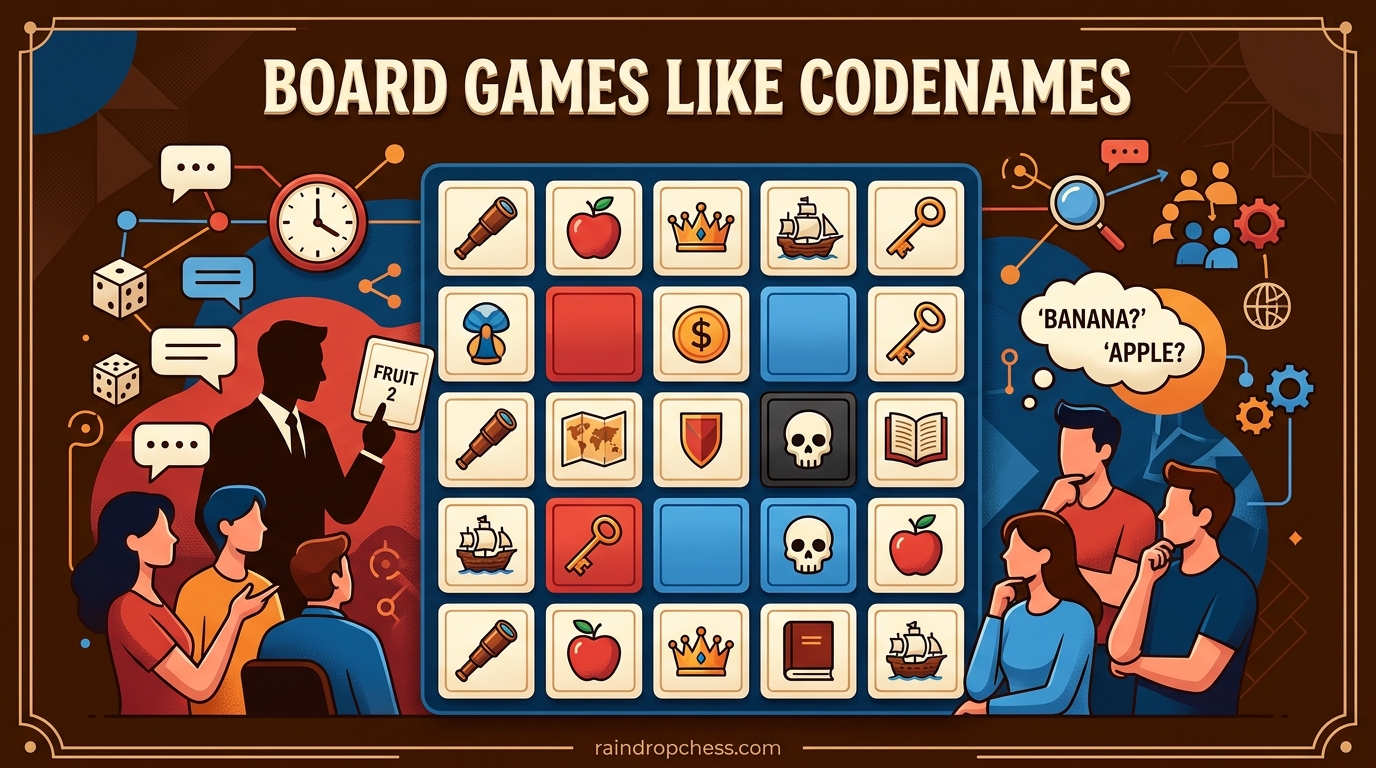
Codenames has been the undisputed king of party word games since it launched, but even the best games get stale after your hundredth session. If your group has memorized every card and the spymaster role feels more stressful than fun, you are in the right place. Our team spent three months testing the best board games like Codenames to find worthy successors that capture the same magic.
What makes these games similar is the core formula: one person gives clues, the rest of the group guesses, and everyone has a blast doing it. Whether you want cooperative play, deeper strategy, or just a fresh twist on word association, we found eight games that deliver. Many of these also rank among the best board games for game night parties we have tested.
We played every game on this list with multiple groups ranging from 3 to 12 players, including families, hardcore gamers, and total beginners. Each pick below earned its spot through real gameplay, not marketing hype. If you want games that work well for smaller sessions, check out our guide to two-player board games like Codenames Duet.
Table of Contents
Top 3 Picks for Best Board Games Like Codenames
Best Board Games Like Codenames in 2026
| Product | Specifications | Action |
|---|---|---|
 Decrypto Decrypto |
|
Check Latest Price |
 Just One (2025 Refresh) Just One (2025 Refresh) |
|
Check Latest Price |
 Concept Concept |
|
Check Latest Price |
 Wavelength Wavelength |
|
Check Latest Price |
 The Chameleon The Chameleon |
|
Check Latest Price |
 Dixit Dixit |
|
Check Latest Price |
 Insider Insider |
|
Check Latest Price |
 Cross Clues Cross Clues |
|
Check Latest Price |
1. Decrypto – The Ultimate Code-Breaking Deduction Game
Decrypto | Deduction Party Game | #2 Party Game on BoardGameGeek | Great for Teens and Adults | Ages 12+ | 3 to 8 Players | 15 Minutes
3-8 Players
15 Min Playtime
Ages 12+
Code-Breaking Theme
Pros
- Deeper strategy than Codenames
- Strong team interaction
- No downtime between turns
- Highly addictive round-after-round gameplay
Cons
- Rules tricky after long breaks
- Card sizes somewhat small
I brought Decrypto to our weekly game night expecting a light filler and walked away with my new favorite party game. The first round felt confusing, but by round two everyone was hooked. You split into two teams, and each team gets four secret keywords displayed behind a screen. The encryptor gives three-number codes that correspond to their keywords, and the teammate has to guess the correct sequence.
Here is where Decrypto pulls ahead of Codenames: the opposing team also hears your clues. They are trying to intercept your code by guessing what your keywords might be. This creates an incredible tension between giving clues clear enough for your team but vague enough to fool your opponents. It is the same clue-giving thrill as Codenames but with an extra layer of deception.
The anaglyph scrambling effect is a nice touch that makes the spy theme feel real. You slide cards into red filter screens to reveal hidden codes, and it genuinely feels like you are breaking encrypted transmissions. After playing Decrypto for three straight hours that first night, our group never looked at Codenames quite the same way.
What impressed me most is how the game evolves as you play multiple rounds with the same keywords. Your early clues become reference points, and you start thinking two or three steps ahead. By round three, the opposing team has enough information to start intercepting, which forces you to get increasingly creative. The difficulty curve keeps every session fresh.
Who Will Love Decrypto Most
This game is perfect for groups that found Codenames a bit too simple and want more strategic depth. If your friends enjoy thinking several moves ahead and love the mental challenge of word association, Decrypto delivers in spades. It works best with 4 to 8 players who already have some board game experience under their belts.
Learning Curve and Accessibility
The first practice round usually takes 10 minutes as everyone grasps the encryptor-interceptor dynamic. After that, games fly by in 15 minutes flat. The rules are simpler than they sound once you see them in action. I recommend watching a quick 3-minute tutorial video before your first session to smooth things out.
2. Just One (2025 Refresh) – Cooperative Word Guessing Perfection
Asmodee Just One Party Game (2025 Refresh) – Cooperative Mystery Word Guessing Fun for Family & Friends, Kids & Adults, Ages 8+, 3-7 Players, 15 Minute Playtime
3-7 Players
15-20 Min Playtime
Ages 8+
Cooperative Word Game
Pros
- Fully cooperative so nobody feels left out
- Easy to learn in minutes
- Works for wide age range
- Creative word association challenges
- Quick 15-20 minute playtime
Cons
- Some markers arrive dead on arrival
- Cultural references may challenge non-native speakers
Just One is the game that replaced Codenames for many of our game nights, and honestly, I get why. It takes the word association mechanic everyone loves and makes it fully cooperative. One player secretly picks a mystery word, and everyone else writes down a one-word clue to help them guess it. The twist: if two or more players write the same clue, all those clues get erased before the guesser sees them.
That cancellation mechanic creates some of the funniest moments I have experienced in any party game. You frantically try to think of a clue nobody else would write, which leads to wildly creative and sometimes absurd word choices. Watching someone erase the obvious clue you just wrote is both hilarious and strategically meaningful.
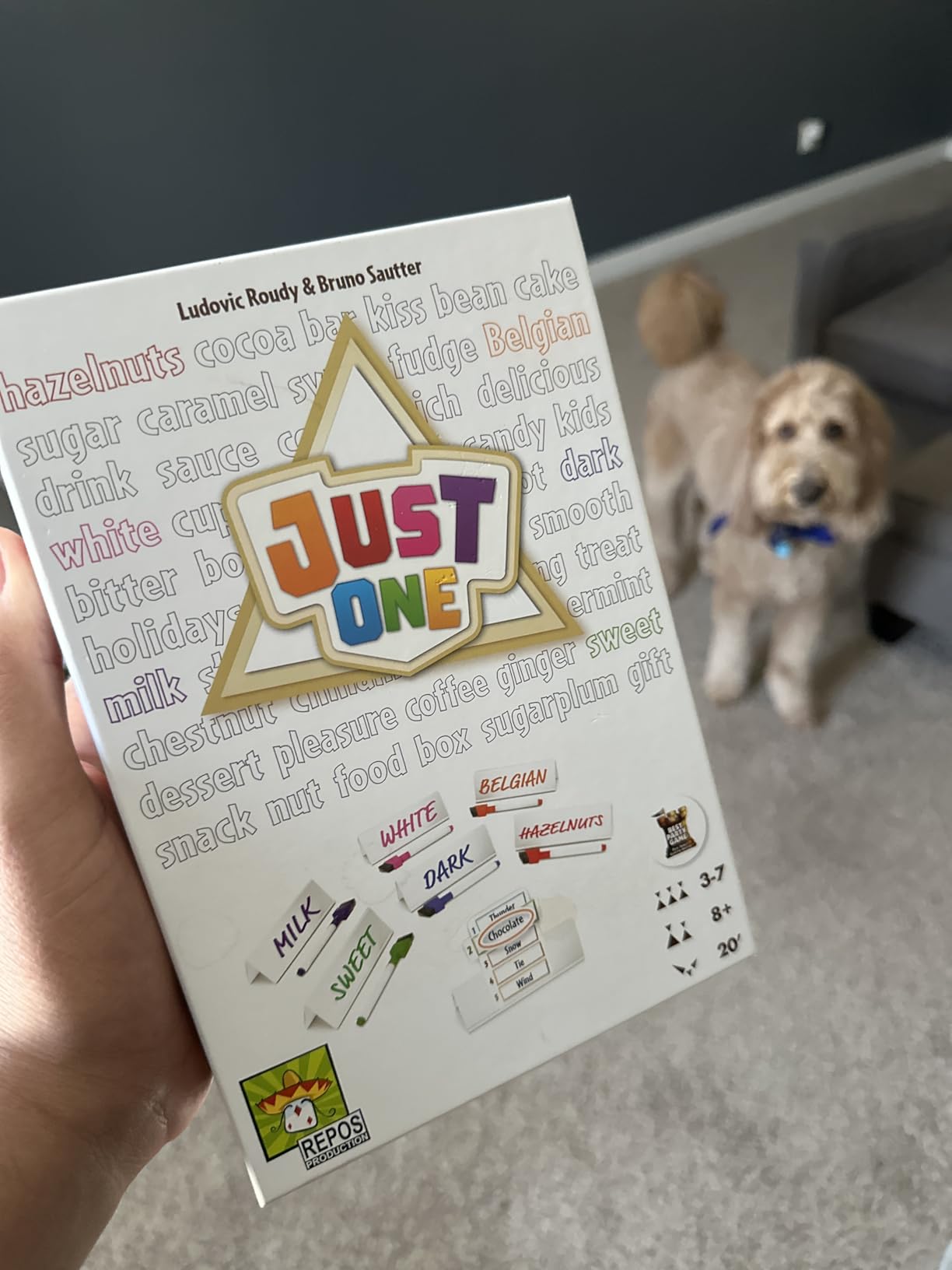
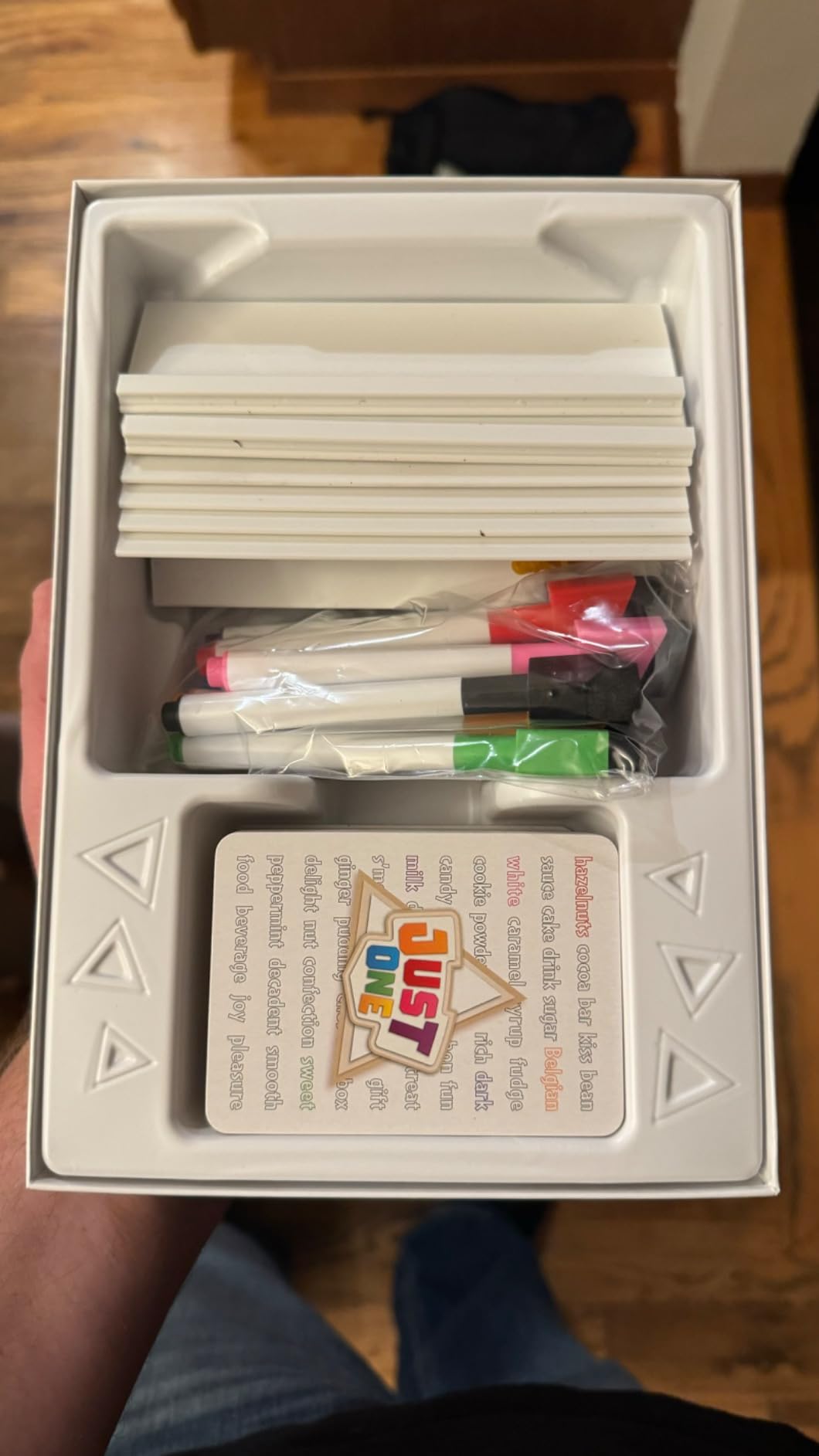
The 2025 refresh from Asmodee brings upgraded components including colorful plastic stands and erasable crayons that feel much better than dry-erase boards. The production quality is noticeably improved over the original release. With 3,782 reviews and an 87 percent five-star rating, the community clearly agrees this is a top-tier party game.
I tested Just One with my extended family including kids as young as eight and adults in their sixties. Everyone was engaged and laughing within minutes. The cooperative nature means nobody gets stuck being the clue-giver while everyone else stares at them. If your group found the spymaster role in Codenames stressful, Just One solves that problem completely.
Best Group Size for Just One
The sweet spot is 4 to 6 players. With 3 players there is less cancellation drama, and with 7 players the clue pool can feel repetitive. But honestly, even at the extremes, the game works well. It also plays great as a quick filler between heavier games on any family board game night.
Replayability Over Time
With 110 cards featuring mystery words, you will not run out of fresh content quickly. After 40-plus plays, we still encounter words that stump us. The replayability comes from the people as much as the cards, since every group generates unique clue combinations that keep each session feeling original.
3. Concept – Communicate Without Speaking
Concept Party Game | Award-Winning Board Game | Team-Based Guessing | Fun Family Game for Adults and Kids | Ages 10+ | 4-12+ Players | Average Playtime 40 Minutes | Made by Repos Production
4-12+ Players
40 Min Playtime
Ages 10+
Visual Icon Communication
Pros
- Unique communication through icons
- Handles large groups beautifully
- Accessible across language barriers
- Creative visual thinking
- Quality board and components
Cons
- Some clue cards reference unfamiliar concepts
- Scoring system often ignored by players
Concept takes the clue-giving idea from Codenames and replaces words with pictures. The game board is covered in universal icons representing everything from emotions to objects to abstract ideas. To communicate a word, you place colored cubes on relevant icons, creating a visual chain of associations that your teammates must decode.
My first playthrough was a revelation. One player placed a cube on a tree icon, then on a small icon, then on a green icon. After a moment of silence, someone shouted “sapling!” and the table erupted. The creative thinking required feels different from verbal word games but taps into the same satisfaction of making connections.
Where Concept shines is its accessibility. I played with a group that included a non-native English speaker who usually struggles with word games like Codenames. With Concept, she was able to participate fully because the icons transcend language. This alone makes it one of the best board games like Codenames for diverse groups.
The game supports 4 to 12-plus players, making it one of the most flexible party games I own. With larger groups, you split into teams and take turns giving clues. The 40-minute playtime is longer than most games on this list, but the time flies because everyone stays engaged throughout the guessing process.
Ideal Setting for Concept
This game thrives with mixed-age groups and multilingual gatherings. If you host international friends or have family members who feel excluded by English-heavy word games, Concept removes that barrier entirely. It is also excellent for adult board game nights where you want something creative but not competitive.
Component Quality Assessment
The board is large and sturdy, the icon markers are colorful and tactile, and the clue cards offer nearly limitless possibilities. The one downside is that the scoring system feels tacked on. Most groups ignore it entirely and just play for the joy of guessing, which honestly works perfectly fine.
4. Wavelength – The Mind Reading Party Game
CMYK Wavelength – A Mind Reading Party Game
2-12+ Players
30 Min Playtime
Ages 8+
Spectrum-Based Guessing
Pros
- 5-second setup
- 1-minute rules explanation
- Sparks hilarious discussions
- High-quality heavy-duty components
- Versatile for any group size
Cons
- Wheel can shift slightly during reveals
- Some advanced cards are divisive
Wavelength is unlike any game on this list because it replaces word association with spectrum-based thinking. One player knows where a hidden target sits on a spectrum (say, hot to cold) and gives a clue to help their team rotate a dial to the correct position. The clue giver cannot speak, point, or give any hints beyond the single word they choose.
I have never seen a game generate more passionate arguments than Wavelength. When someone says “pizza” as a clue for where it falls between “cheap” and “luxury,” the discussion that follows is pure gold. Everyone has an opinion, and those opinions reveal fascinating things about how differently people think about the same concepts.
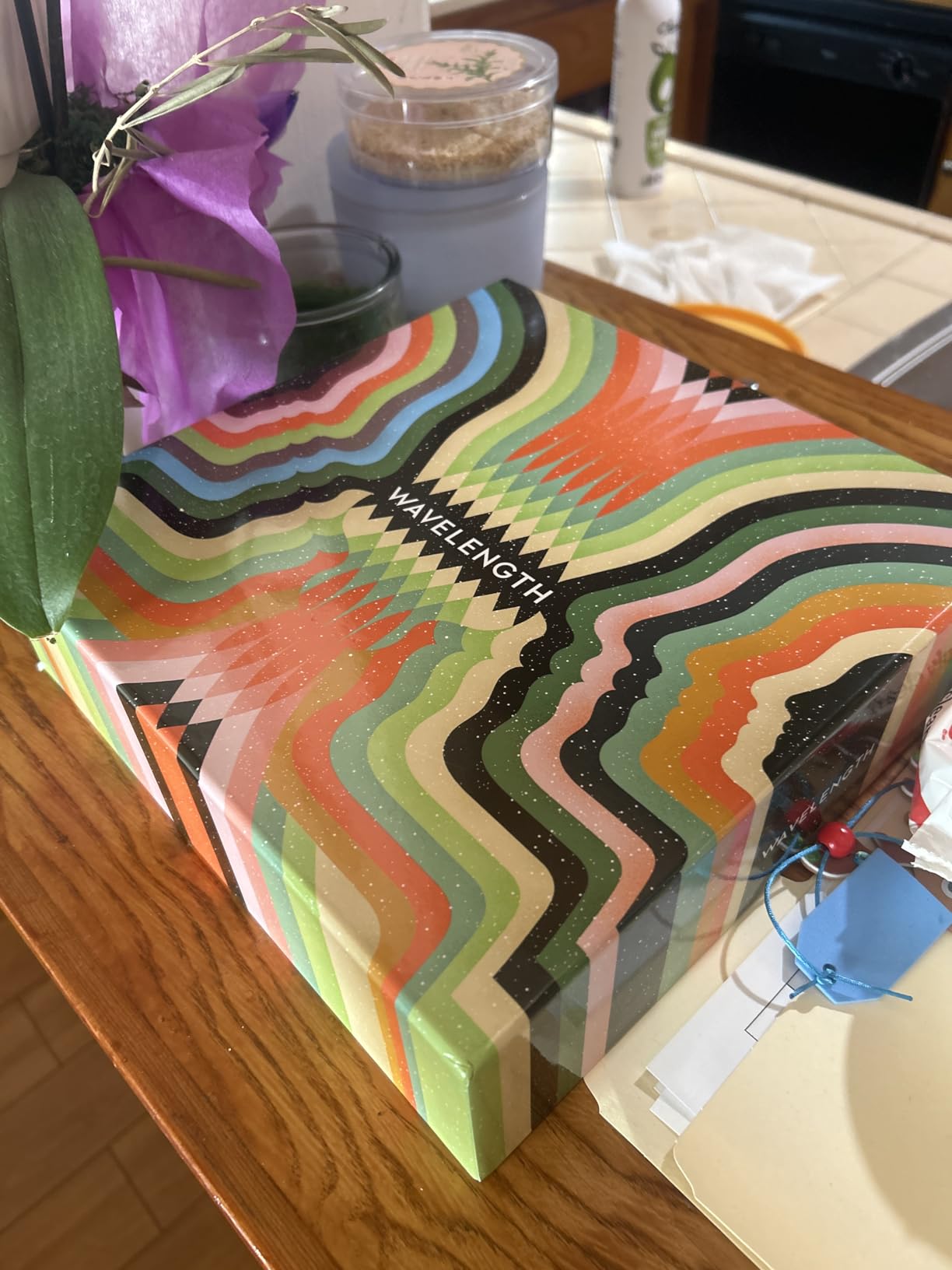
Featured by both Polygon and the NYT Wirecutter, Wavelength has earned its reputation as one of the best party games ever made. With nearly 5,000 reviews and an 85 percent five-star rating, the community validation is overwhelming. The component quality is outstanding, with a heavy-duty plastic device that feels built to last.
The game works with 2 to 12-plus players, which makes it incredibly versatile. I have played it as a couples game with just two people and at a holiday party with 15 people, and both experiences were excellent. The advanced cards add more controversial spectrums for groups that want to push boundaries.
What Makes Wavelength Different From Codenames
While Codenames rewards vocabulary and lateral word association, Wavelength rewards empathy and understanding how other people think. You are not trying to find the right word, you are trying to understand where someone else places something on an abstract scale. It creates a fundamentally different type of social interaction that feels fresh even after dozens of plays.
Best Group Dynamics for Wavelength
This game shines brightest with groups that already know each other well. Close friends, family members, and couples will find the reveals deeply revealing and often hilarious. For strangers, it serves as an excellent icebreaker because the spectrums naturally spark personal conversations. It is perfect for four-player game sessions but scales effortlessly.
5. The Chameleon – Catch the Imposter
The Chameleon Social Deduction Board Game for Adults, Ages 12+
3-8 Players
15 Min Playtime
Ages 14+
Bluffing Social Deduction
Pros
- 2-minute learn time
- 15-minute game sessions
- Portable pocket-sized format
- Fun deception and bluffing mechanics
- Works great with 6+ players
Cons
- Travel size hard to see in large groups
- Younger players may struggle with deception
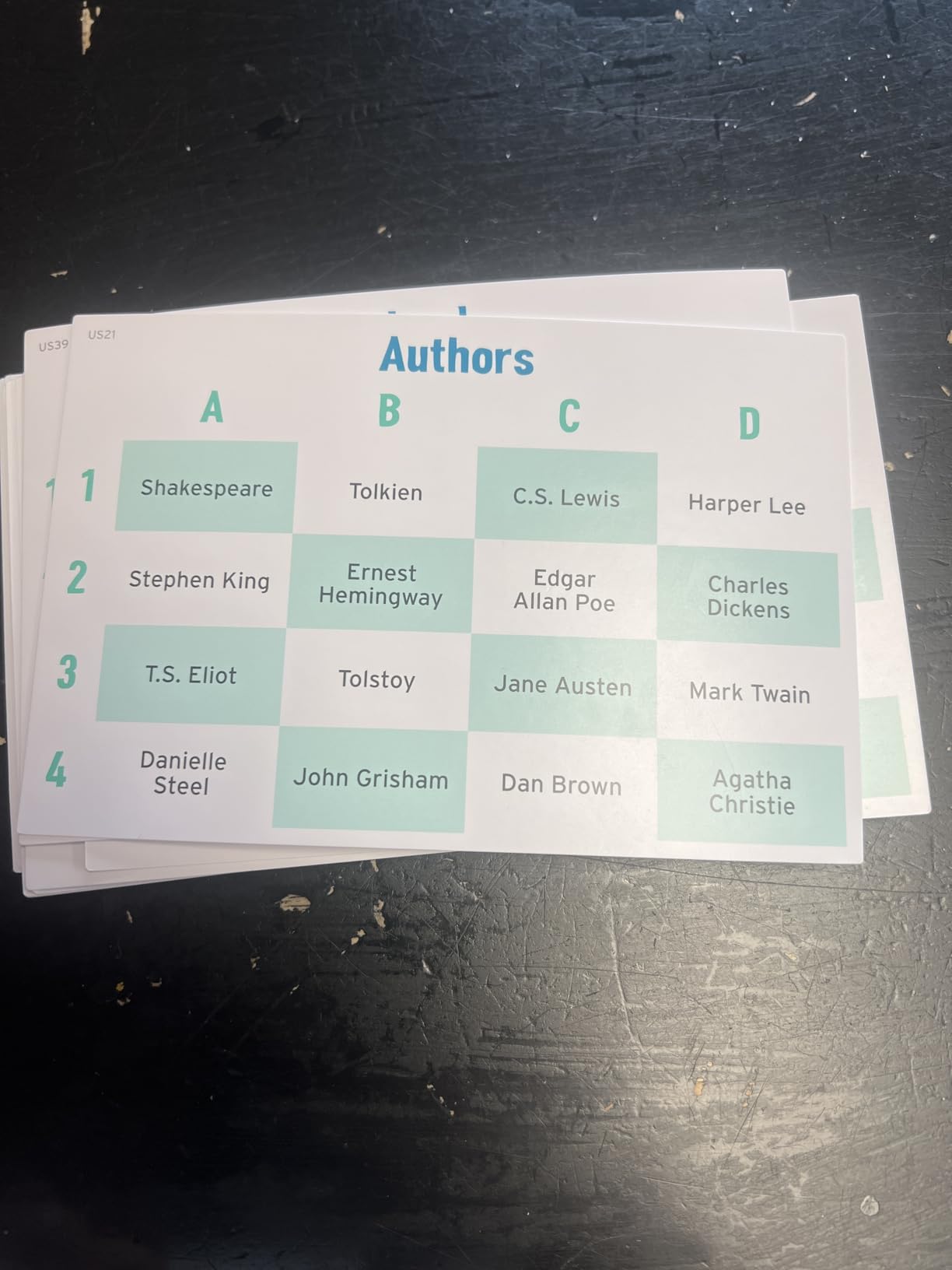
The Chameleon flips the Codenames formula by making one player the outsider. Everyone receives a card showing a secret word from a category, except one person who gets the chameleon card. Players then go around giving one-word clues, trying to prove they know the word without making it too obvious for the chameleon to blend in.
The mind games are fantastic. You want to give a clue specific enough that other players know you are not the chameleon, but vague enough that the chameleon cannot easily deduce the word. After a few rounds, accusations start flying, fingers get pointed, and the table erupts in laughter as someone tries to bluff their way through a terrible clue.
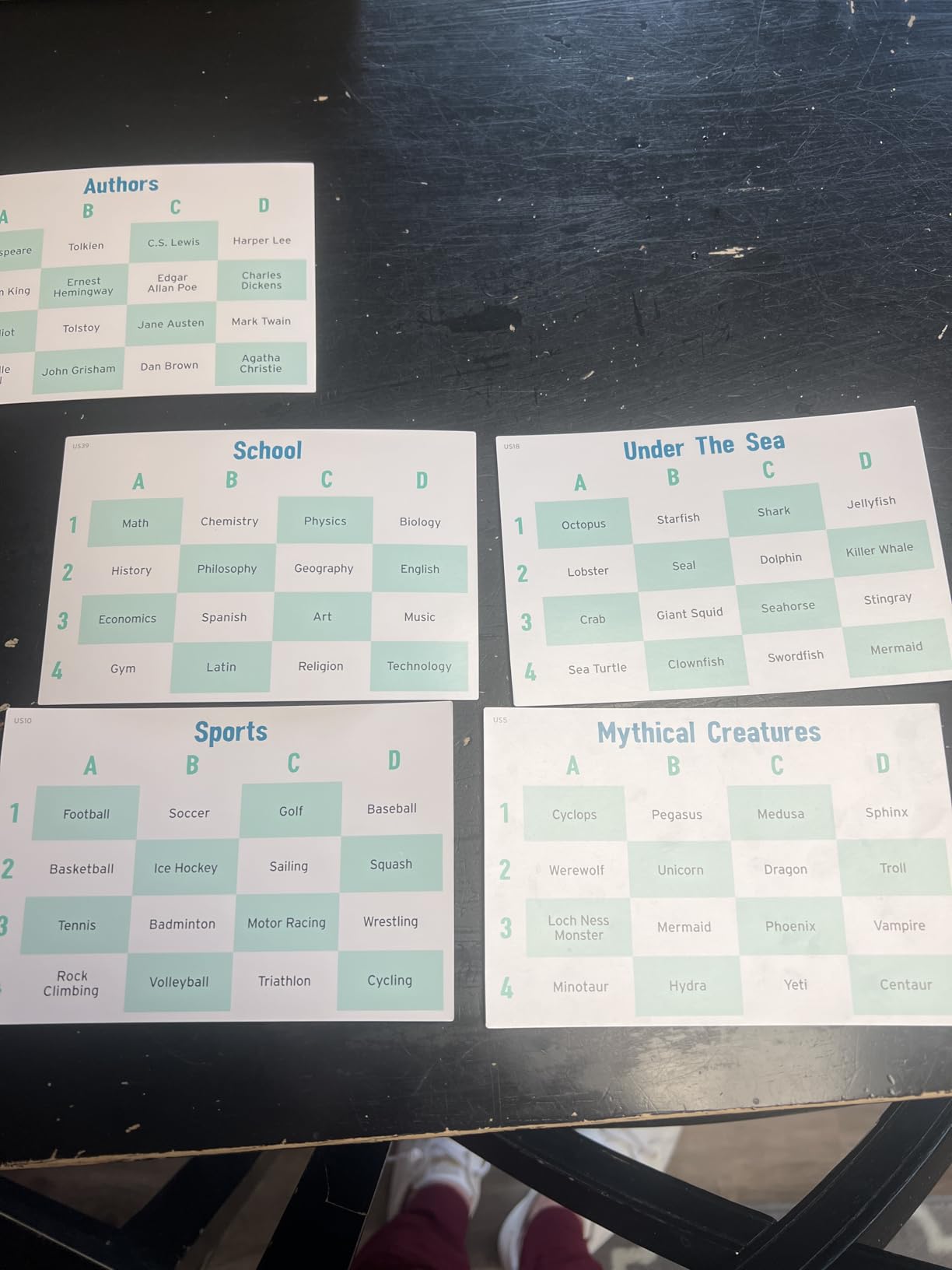
With over 8,600 reviews, The Chameleon is one of the most popular party games on Amazon, and for good reason. The box is small enough to fit in a coat pocket, making it the most portable game on this list. I bring it to restaurants, bars, and camping trips. It takes 2 minutes to teach and 15 minutes to play, so you can squeeze in multiple rounds.
The game includes 80 extra secret words beyond the base set, giving you plenty of content before things feel repetitive. It won Best Party Game at the UK Games Expo and a Seal of Excellence from Dice Tower Games. The 85 percent five-star rating tells you everything you need to know about community satisfaction.
How The Chameleon Compares to Codenames
Both games involve giving word clues to a group, but the dynamics are inverted. In Codenames, one person gives clues and the team guesses. In The Chameleon, everyone gives clues and you are hunting for the imposter. The social deduction element adds a layer of paranoia and bluffing that Codenames does not have.
Player Count Sweet Spot
The game officially supports 3 to 8 players, but it truly comes alive with 5 or more. With smaller groups, the chameleon has fewer voices to hide behind. With 6 or 7 players, the deduction becomes genuinely challenging and the accusations more entertaining. Avoid playing with very young kids since the deception aspect requires some social maturity.
6. Dixit – Award-Winning Storytelling Through Art
Asmodee Dixit Storytelling Party Game, 3-6 Players Ages 8+, 30 Min
3-6 Players
30 Min Playtime
Ages 8+
Storytelling Through Art
Pros
- Stunning dream-like artwork
- Creative storytelling gameplay
- Expandable with additional card packs
- Easy to learn in seconds
- Gentle non-confrontational play
Cons
- May need expansion packs for variety over time
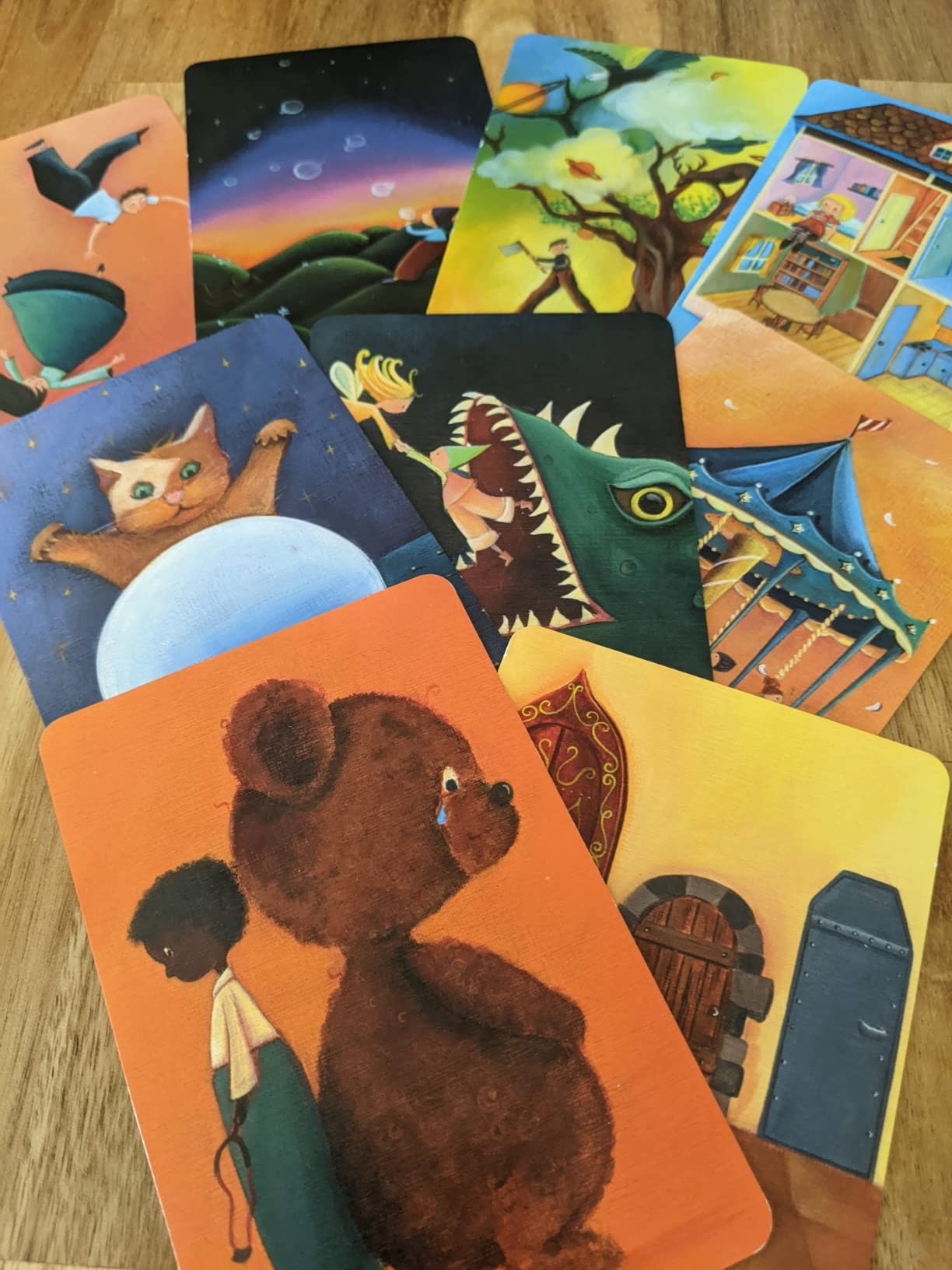
Dixit approaches the clue-giving formula from an entirely artistic angle. Instead of words on a grid, players look at beautifully illustrated cards with surreal, dream-like artwork. The active player gives a clue (a word, phrase, sound, or gesture) related to one of their cards, and everyone else submits a card from their hand that they think matches the clue.
The cards are then shuffled and revealed, and players vote on which card belongs to the clue giver. Here is the catch: if everyone guesses your card, you score zero points. If nobody guesses your card, you also score zero. You want your clue to be understood by some but not all, which creates an elegant balancing act.
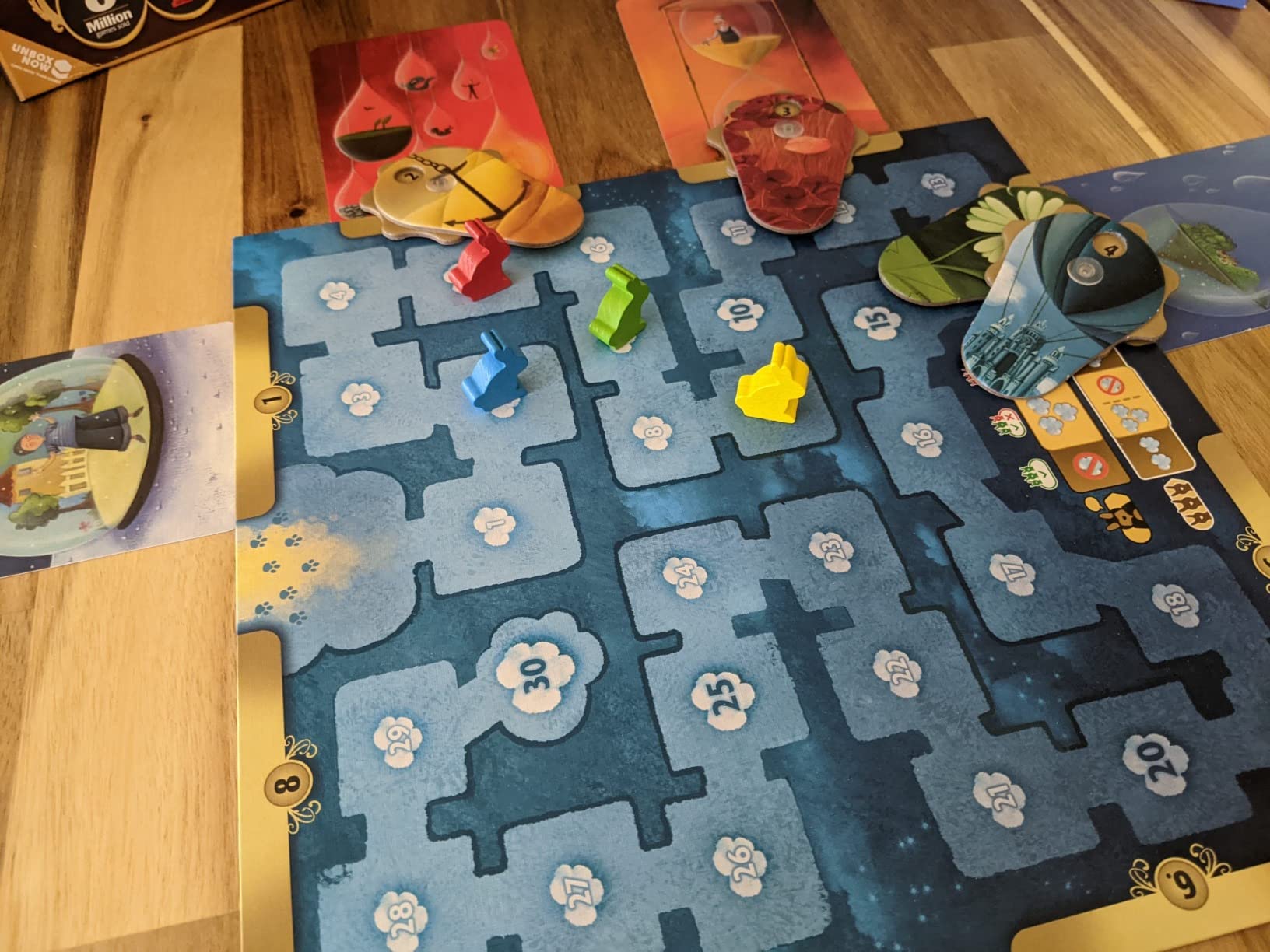
The artwork alone makes Dixit worth owning. Each card is a miniature painting filled with symbolic details that spark different interpretations. I have played with art students who spent minutes analyzing the imagery before giving their clues. The visual storytelling creates an experience that feels warm, creative, and completely different from any other game on this list.
Dixit is the most family-friendly game here, with an age rating of 8 and up. I played it with my niece and nephew alongside adults, and everyone contributed equally. The game rewards imagination over vocabulary, so younger players are not disadvantaged. With 89 percent five-star ratings across 1,753 reviews, families clearly love it.
What Makes Dixit a Great Codenames Alternative
Both games involve giving clues that connect to hidden information. But where Codenames is competitive and word-focused, Dixit is creative and image-driven. If your group loves the clue-giving aspect of Codenames but wants something more relaxing and visually beautiful, Dixit is the answer. The expansion packs keep the game fresh indefinitely.
Long-Term Replayability With Expansions
The base game comes with 84 cards, which provides plenty of variety for your first 30 or so plays. After that, the expansion packs (Dixit Odyssey, Dixit Memories, and others) add new artwork and keep the experience fresh. Each expansion adds 84 new cards, effectively doubling your content with each purchase.
7. Insider – Social Deduction Meets 20 Questions
Oink Games Insider, Japanese Social Deduction & Guessing Game, Ages 9+
4+ Players
Fast-paced
Ages 9+
20 Questions With Hidden Roles
Pros
- Combines 20 questions with social deduction
- Ultra-portable small box design
- Quick 5-minute rounds
- Great for travel and parties
- Ages 9 to adult
Cons
- Rules can be obtuse initially
Insider combines two classic concepts into something entirely fresh: 20 Questions and hidden roles. One player is the Master who knows the secret word. The rest of the players ask yes-or-no questions to figure it out. But one of those players is secretly the Insider, who already knows the answer and is trying to guide the group to the correct word without being detected.
The genius is in the second phase. Once the word is guessed, players discuss who they think the Insider is. The Insider must deflect suspicion while the others analyze the questioning patterns for clues. It creates a compact, fast-paced deduction experience that fills the same social niche as Codenames but in a fraction of the time.
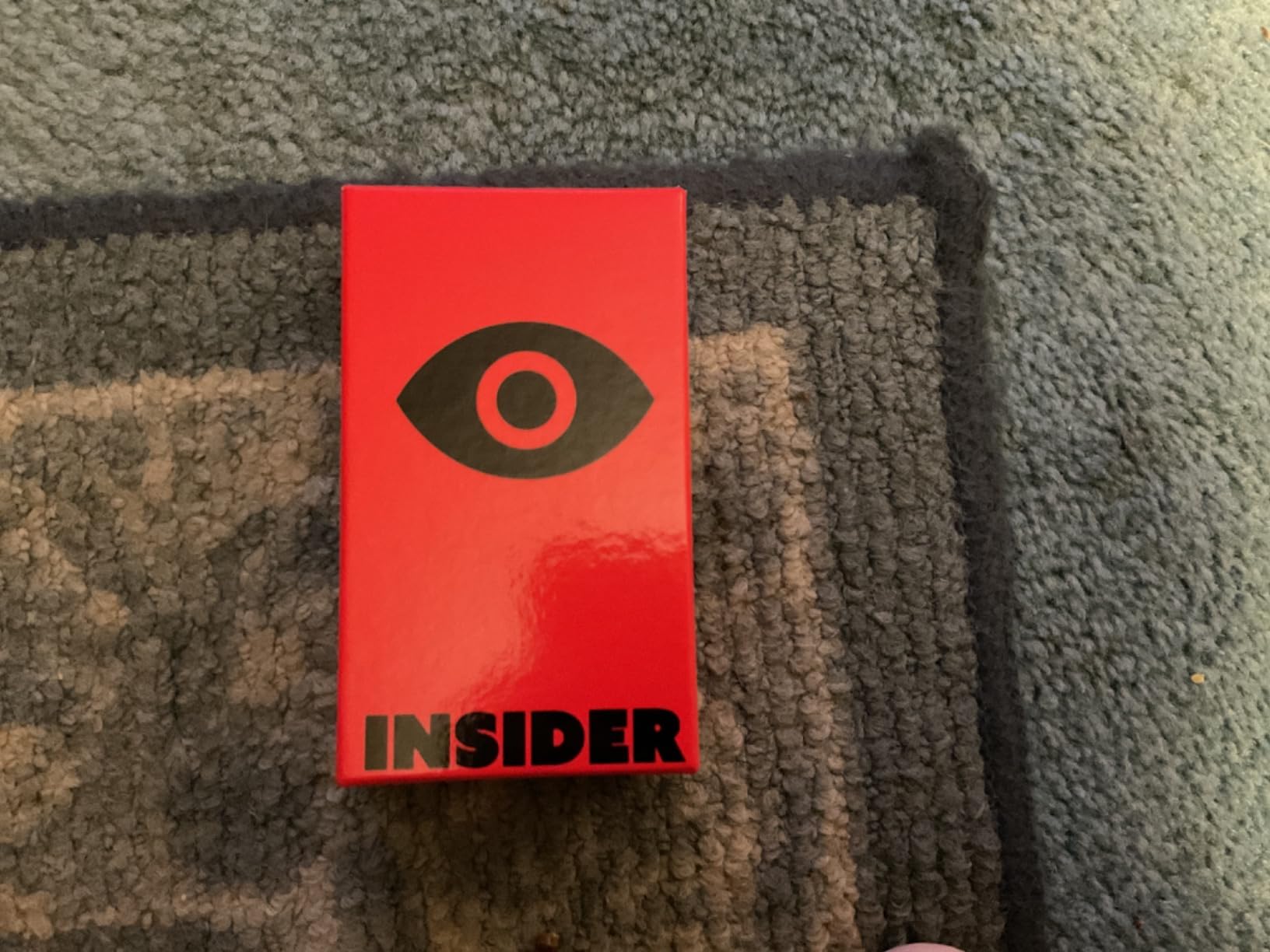
Oink Games is known for their minimalist Japanese design philosophy, and Insider fits that mold perfectly. The box is tiny, smaller than a deck of cards, making it the most portable game on this list alongside The Chameleon. I keep it in my bag at all times for impromptu gaming sessions at coffee shops or airport layovers.
The game shines with 4 or more players and plays in about 5 minutes per round. You can easily chain multiple rounds together for a satisfying 30-minute session. At its budget-friendly price point, it offers incredible value for the gameplay depth it provides. The 4.7-star rating across 621 reviews reflects its quality.
How Insider Differs From Codenames
Insider replaces Codenames’ grid-based word association with a questioning format. Instead of one person giving clues, the whole group participates in the questioning. The hidden role mechanic adds paranoia that Codenames lacks. If your group enjoys the deduction and social dynamics more than the wordplay itself, Insider delivers that in a tighter package.
Ideal Group Profile for Insider
This game works best with groups that enjoy social deduction and are comfortable with light deception. It is excellent for teenagers and adults ages 9 and up. The small player count (4 to 8) and lightning-fast rounds make it ideal as a warm-up game before a longer session, or as a lunch-break activity with coworkers.
8. Cross Clues – Cooperative Grid Word Association
Blue Orange Games Cross Clues- New Cooperative Family Party Game for 2 to 6 Players. Recommended for Ages 7 and up
2-6 Players
Ages 7+
Cooperative
Timer-Based Grid Guessing
Pros
- Cooperative gameplay encouraging teamwork
- Thousands of word combinations
- Portable and travel-friendly
- Works well over video calls
- Sand timer adds exciting pressure
Cons
- English language version only
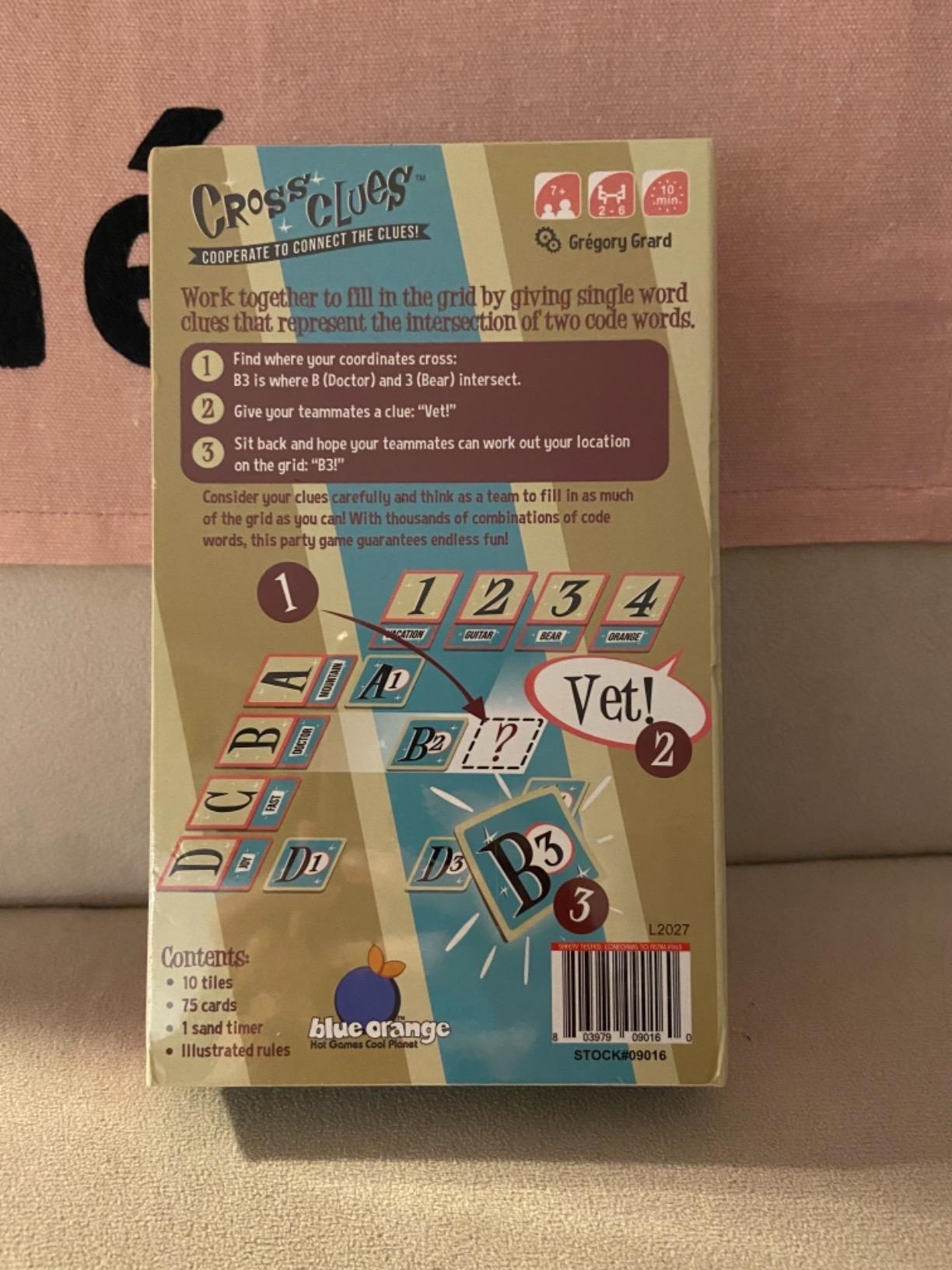
Cross Clues is the closest mechanical cousin to Codenames on this list. You build a grid of code words, then draw a clue card that references two coordinates. Your job is to give a single-word clue that connects both words, helping your teammates guess which grid space you are pointing at. It is cooperative, so everyone wins or loses together.
The first time I played Cross Clues, the clue card pointed to “cat” on one axis and “boat” on the other. I said “ferry” and my teammate immediately placed their marker on the correct intersection. That moment of connection felt exactly like a perfect Codenames turn, where the spymaster and operatives are completely in sync.
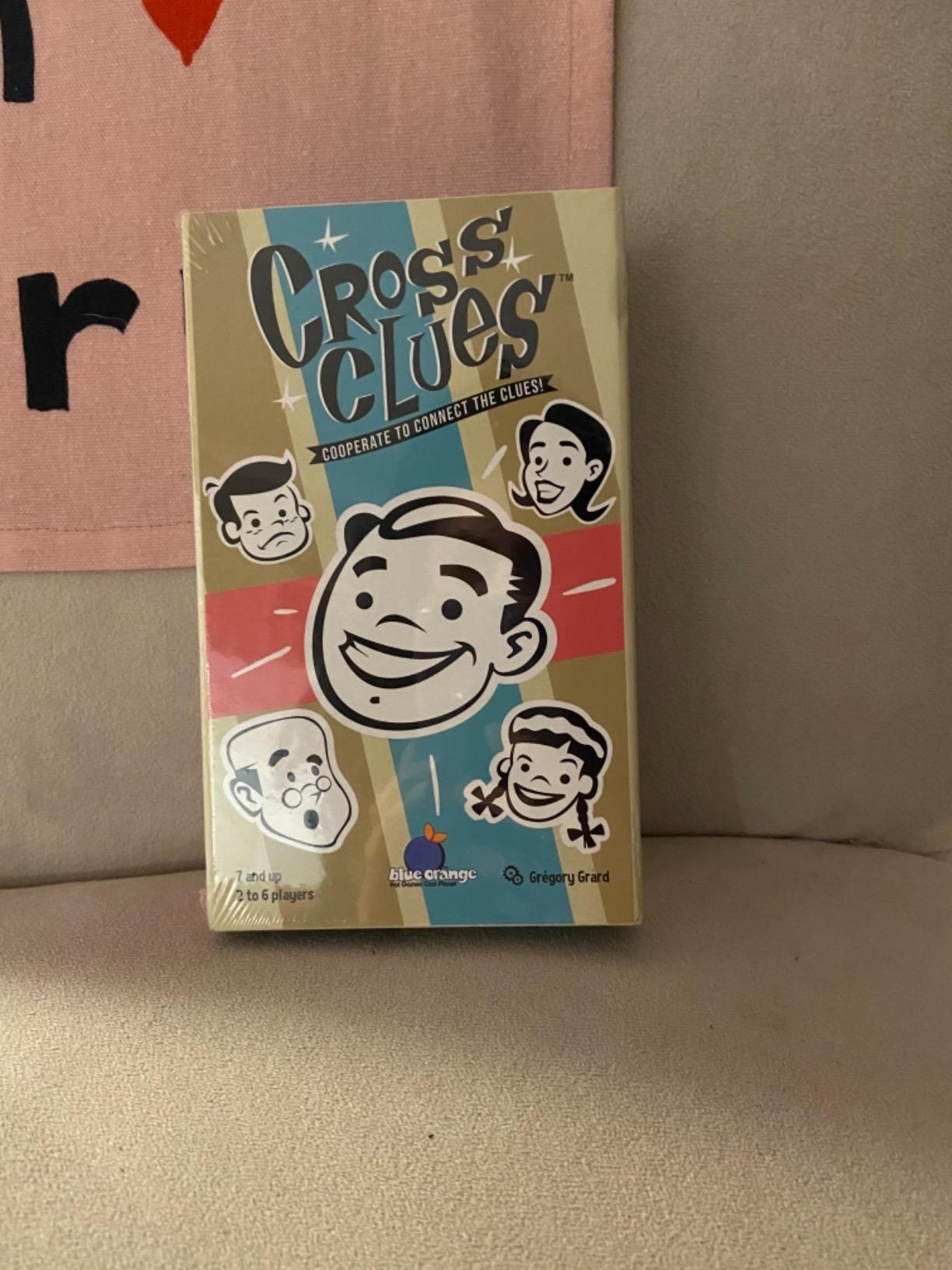
Blue Orange Games designed Cross Clues for ages 7 and up, making it the most accessible game on this list. The cooperative format means kids can participate without the pressure of letting down a team. The sand timer adds urgency without making the game feel rushed, and the thousands of possible word combinations keep things fresh.
One unexpected benefit: Cross Clues works exceptionally well over video calls. During a remote team building session, we shared a digital grid and played over Zoom. The mechanic translates perfectly to virtual settings because only one person needs to see the physical components. This makes it one of the most versatile party games I own.
Why Cross Clues Feels Like Codenames
The grid format, the one-word clue constraint, and the word association core all directly echo Codenames. The key difference is that Cross Clues is fully cooperative instead of team-versus-team. If your group loves the clue-giving puzzle but dislikes the competitive pressure or the stress of the spymaster role, Cross Clues removes both while keeping the fun.
Value and Component Quality
At its budget price point, Cross Clues offers outstanding value. The box includes 10 axis tiles, 25 clue cards, 50 code word cards, and a sand timer. Everything is well-made and designed for repeated play. The compact box makes it easy to transport, and the English-only edition is something to note for international groups.
Buying Guide: How to Choose the Best Board Games Like Codenames
After testing all eight games extensively, I identified several factors that matter most when picking the right Codenames alternative for your group. These criteria go beyond basic specs and address the real-world situations that make or break a party game purchase.
Cooperative Versus Competitive
This is the single biggest decision. Some groups thrive on competition, while others prefer working together. Decrypto and The Chameleon deliver competitive tension. Just One, Cross Clues, and Dixit offer cooperative experiences where nobody feels left out or blamed. Consider your group dynamic before choosing. Cooperative games tend to work better with mixed skill levels and ages.
Player Count and Scalability
Match the game to your typical group size. Wavelength handles 2 to 12-plus players with ease. Concept scales to large gatherings of 12 or more. Decrypto and The Chameleon work best in the 4 to 8 range. Cross Clues is ideal for smaller sessions of 2 to 6. If you host varying group sizes, prioritize flexible games like Wavelength or Concept.
Learning Curve and Accessibility
How quickly can you teach the game to new players? Just One, The Chameleon, and Cross Clues take under 2 minutes to explain. Decrypto requires a practice round. Concept takes the longest to grasp but rewards patience. If you frequently play with newcomers, prioritize games with simple rules and fast teach times.
Replayability and Content Longevity
Consider how much content comes in the box. Cross Clues offers thousands of word combinations. Dixit can be expanded with additional card packs. Decrypto generates fresh puzzles from the same keyword set through its evolving clue dynamic. Games with higher replayability deliver better long-term value even if they cost more upfront.
Component Quality and Portability
If you travel with games or play at different locations, size matters. Insider and The Chameleon are pocket-sized. Cross Clues fits in a small bag. Concept and Wavelength are larger productions better suited for home play. Component quality affects longevity and tactile satisfaction, so factor that into your decision.
Frequently Asked Questions
What is the best board game like Codenames?
Decrypto is widely considered the best board game like Codenames because it adds deeper strategic depth through its code-interception mechanic while keeping the same team-based clue-giving core. For cooperative play, Just One is the top alternative.
What is the #1 board game in the world?
According to BoardGameGeek rankings, Brass Birmingham currently holds the top-rated position. However, for party games specifically, Codenames and Wavelength consistently rank among the most played and highest-rated worldwide.
Are there cooperative games like Codenames?
Yes, several cooperative alternatives exist. Just One, Cross Clues, and Dixit are all fully cooperative games that capture the clue-giving and word association mechanics of Codenames without competitive team dynamics.
What games are like Codenames for 2 players?
For small groups, Wavelength works with 2 players, and Cross Clues supports 2 to 6. Codenames Duet is specifically designed as a two-player version. Insider also works well with 4 players in a compact format.
Final Thoughts on the Best Board Games Like Codenames
Finding the best board games like Codenames comes down to understanding what your group loved about Codenames in the first place. If it was the strategic clue-giving tension, Decrypto is your clear winner. For cooperative play that removes all pressure, Just One and Cross Clues deliver in spades. And if you want something visually stunning and creative, Dixit offers an experience no other game can match.
Our team tested every game on this list across dozens of sessions with different group sizes and skill levels. Each one earned its place through real performance, not hype. Whether you are planning your next game night or looking for the perfect gift for a board game lover, any of these eight picks will serve you well in 2026. The party game shelf has never looked better.