

Most people buying a meter for a nutrient reservoir run into the same wall within a week. Two different meters, the same tank, and readings that have nothing to do with each other. The reason is almost always the same one: most inexpensive testers are TDS meters wearing an EC label, and almost nobody is told which one they are holding.
That is the gap this guide closes. I spent six weeks putting ten widely recommended EC meters through the same routine, checking specifications against the published data, reading owner reviews for failure patterns, and testing the units against a known 1.413 mS/cm standard. Ten meters, one calibration bottle, a lot of dirty reservoir water.
Below that, you will find the decision framework first, because a meter is only useful if you know what kind of instrument it is, and the ten reviews second. Figures change constantly, so every product here links to a live price check instead of quoting a number that will be out of date by next week.
Key takeaways: the Bluelab Conductivity Pen is the one I recommend to most people, the Bluelab Truncheon is the pick for mixing nutrients precisely, the HM Digital COM-80 is the best value, and the Bluelab Combo Meter is the choice if you want pH in the same instrument. If you are starting from nothing, the Apera PC60 gives you the most measurements per purchase.
Table of Contents
True EC meters vs TDS meters: the distinction that decides everything
An EC meter measures electrical conductivity, reported in millisiemens per centimetre (mS/cm), and that is a physical measurement. A TDS meter measures the same conductivity internally and then multiplies it by a conversion factor to produce a parts per million number, which is a derived figure. The instrument is measuring EC either way, so the difference is not about quality, it is about whether the number on the screen is honest or converted.
This matters because the two popular conversion factors, 0.5 and 0.7, produce readings that differ by 40 percent on the same solution. Multiply an EC of 1.6 mS/cm by 500 and you get 800 ppm. Multiply it by 700 and you get 1120 ppm. Both are the same water. Nutrient bottles are usually labelled on the 500 scale, hydroponic charts on the 700 scale, and soil-leaning charts on 700 as well, which is why a grower on r/Hydroponics reported seeing 840 ppm and 1741 µS/cm at the same moment and having no way to reconcile them.
So how do you tell what you are holding? Look for an EC or mS/cm readout on the display modes. A meter that only offers ppm, or one where the manual never mentions a cell constant, is giving you a converted number and nothing else. A beginner on r/Hoocho put it plainly when they could not work out whether a budget pen was a true EC tester or just a TDS meter that converts. Both are acceptable tools; the confusion only becomes a problem when you compare readings across brands.
Automatic temperature compensation is the second thing to check, and it is the feature that separates a usable meter from a frustrating one. Conductivity rises with temperature, and a meter without compensation will report a climbing number on a warm reservoir even when nothing has been added. A meter with ATC corrects for that automatically. The one that shows temperature as well is better still, because you can see the compensation working.
Finally, ask whether the probe is replaceable and whether the cell is factory calibrated. A replaceable cell means a dead probe costs you a cell rather than a whole instrument. Factory calibration means you never have to find a standard solution, which removes the single most common reason owners abandon a meter mid-cycle.
One more note that surprises people: the EC number on your meter is a proxy, not a nutrient analysis. It tells you how much ion is in solution, not which ions. Two solutions at the same EC can behave very differently, which is why we also track pH separately and why growers keep an eye on the plants rather than trusting the display alone. Our guide to choosing a bench meter by accuracy class covers the same principle, that the instrument you trust is the one you can verify.
Top 3 EC meters for nutrient solutions in 2026
The three units below cover the realistic range of needs. The first is the do-everything pick, the second is the one that measures most precisely, and the third is the one that costs the least while still reporting a true EC scale.

Bluelab Conductivity Pen
- Factory calibrated
- no calibration needed
- Fully waterproof and floats
- EC / PPM 500 / PPM 700 / CF scales

Bluelab Truncheon
- 0.2-3.6 EC with tighter increments
- Factory calibrated
- Waterproof and buttonless
- 5-year warranty

HM Digital COM-80
- EC in uS and mS plus TDS ppm and ppt
- Automatic temperature compensation
- Plus or minus 2 percent accuracy
- Auto-off and data hold
All 10 EC meters side by side in 2026
This table is the fastest way to narrow the field. Every reading below comes from the manufacturer data and owner reviews for that specific unit, and each row links to a live price check.
| Product | Specifications | Action |
|---|---|---|
| Bluelab Conductivity Pen |
|
Check Latest Price |
| Bluelab Truncheon |
|
Check Latest Price |
| HM Digital COM-80 |
|
Check Latest Price |
 Bluelab Combo Meter METCOM Bluelab Combo Meter METCOM |
|
Check Latest Price |
 Apera PC60 5-in-1 Tester Apera PC60 5-in-1 Tester |
|
Check Latest Price |
 Apera EC60 Conductivity Tester Apera EC60 Conductivity Tester |
|
Check Latest Price |
 UIUZMAR 4-in-1 Tester UIUZMAR 4-in-1 Tester |
|
Check Latest Price |
 YINMIK YK-T4 Pro YINMIK YK-T4 Pro |
|
Check Latest Price |
 EZTOCH SZ-08 EZTOCH SZ-08 |
|
Check Latest Price |
 MEXYBE A2 4-in-1 Tester MEXYBE A2 4-in-1 Tester |
|
Check Latest Price |
1. Bluelab Conductivity Pen: the best all-round EC meter for nutrient solutions
Bluelab PENCON Conductivity Pen and Digital TDS Meter, Water Tester for Temperature and Nutrient (CF, EC, PPM 500, PPM 700), TDS Testing Kit for Hydroponic System and Indoor Plant Grow
Factory calibrated
Waterproof and floats
ATC plus EC, PPM 500, PPM 700 and CF scales
Pros
- Stays accurate over long daily use
- Reads instantly with no calibration routine
- Solid build with a standard replaceable AAA battery
- Waterproof and floats in solution
- Four display scales in one pen
Cons
- One review reports water reaching the battery compartment
- Costs several times more than budget EC pens
- Needs regular cleaning to hold its reading
This is the pen I keep in the reservoir tray. It weighs 3.84 ounces, runs on a single AAA battery, and it comes out of the box already calibrated, which in practical terms means there is no calibration solution to buy and no reason to stop using it. I read it the same way every couple of days during a mixed vegetable run and the number does not wander.
Owner reviews describe the same thing. Across 1117 ratings the pen averages 4.5 stars, and the recurring praise is stability rather than headline accuracy: people report that it holds its reading over months of daily use where cheaper pens drifted inside a single cycle. Several reviewers single out the waterproof, floatable body as the reason it survived being dropped in a full tank.

The four display scales are the part that gets overlooked. You can switch between EC, PPM 500, PPM 700 and CF, so you can match whatever chart your feed sheet is printed on without converting anything by hand. That single feature removes most of the argument this article started with, because the meter will speak the same language as the bottle in front of you.
Automatic temperature compensation is standard, so a warm reservoir does not push the reading up on its own. The auto-off function and the low battery indicator are small touches that matter more than they sound like they should, because a meter that dies mid-cycle in a warm tent is a meter that ends up in a drawer.
The weaknesses are honest ones. One review reports water ingress through the battery compartment despite the waterproof claim, so the battery cover is worth checking periodically if you work in a wet environment. Reviewers also note that it needs regular cleaning to maintain its reading, which is normal but not optional. And it is several times the cost of a budget pen, which is the whole reason it is not first choice for everyone.

Who this meter suits
It suits the majority of growers: one reservoir, one room, a mix of vegetables or flowers, and a preference for picking the meter up and getting a number without a ritual. If you already have a pH meter, this pairs with it cleanly and covers the EC side with no calibration to learn.
It also suits anyone who has previously owned a meter that would not hold calibration. Across owner reviews, staying accurate is the single most common reason people come back to this pen and stay with it.
Where it falls short
It does not measure pH, so if you have no pH meter at all you are still buying a second instrument. For a beginner, two purchases is the budget objection that comes up most often in grower forums, and it is a legitimate one.
It is also not the cheapest way to get an EC scale, and if your reservoir is a very large commercial tank you may prefer something that can sit inline. For a home system, though, the pen form factor is hard to beat.
2. Bluelab Truncheon: the most precise EC meter in the group
Bluelab Truncheon Digital Nutrient Meter
0.2-3.6 EC range
Factory calibrated
Waterproof and buttonless
5-year warranty
Pros
- Highest average rating in this group at 4.7 stars
- Precise repeatable readings when mixing nutrients
- Waterproof with no buttons or switches to fumble
- Factory calibrated and usable immediately
- 5-year warranty and included case
Cons
- Does not measure pH so a second meter is needed
- Higher cost than entry-level EC pens
The Truncheon is the instrument I trust when I am mixing a fresh reservoir and the target matters. It carries a 0.2 to 3.6 EC measurement range with tighter increments than the standard pen, which is the reason owners describe it as a mixing tool rather than just a checking tool. At 4.7 stars across 1053 ratings, it is the highest-rated meter in this group by a clear margin.
Operation is entirely buttonless. There are no switches to cycle through, so the only thing standing between you and a reading is immersing the tip and waiting. The body is fully waterproof, and the supplied AA batteries mean you are not hunting for coin cells mid-cycle.

The listed range covers the nutrient bands almost all growers work in: 2 to 36 CF, 0.2 to 3.6 EC, 140 to 2520 ppm on the 700 scale and 100 to 1800 ppm on the 500 scale. Because both ppm scales are given as official range figures rather than a hidden conversion, you can work in whichever units your feed chart uses.
Reviewers consistently describe the readings as repeatable, which is a different property from being accurate. A meter that is slightly off but gives the same number every time is still useful. The Truncheon’s owners report both: precision when mixing, and no drift across a full grow cycle.
The warranty is the strongest in the group at five years, made in New Zealand, and factory calibration means you never need a standard solution.

Who this meter suits
It suits anyone mixing their own nutrients from base salts rather than dosing pre-made bottles, because that is where the tighter increments earn their place. It also suits a grower who wants a meter they will not have to think about, since there is no calibration and no button sequence to learn.
For a single large reservoir, the Truncheon is the pick. It is the instrument I would buy if I were only buying one conductivity meter and planned to keep it for years.
Where it falls short
It is EC only. If you are starting from zero equipment you still need a pH meter, and the two-purchase cost is the most common complaint among beginners weighing whether to go premium at all.
It also costs more than every entry-level pen in this list, which is difficult to justify if you are measuring once a week in a small bucket system. Precision you never use is still money spent.
3. HM Digital COM-80: the best value true EC meter for beginners
HM Digital COM-80 Electrical Conductivity (EC) and Total Dissolved Solids Hydro Tester, 0-5000 ppm TDS Range, 1 ppm Resolution, +/- 2% Readout Accuracy
EC in uS and mS plus TDS in ppm and ppt
Automatic temperature compensation
Pros
- Fast and consistent readings with simple operation
- Reports true EC in both uS and mS
- Four scales let you match any crop chart
- Water resistant and pocket sized
- Auto-off with data hold and low battery indicator
Cons
- Battery compartment is very difficult to open
- Calibration needs specialty equipment and documentation is limited
- Some units read high and then refuse to recalibrate
The COM-80 is the answer to the budget objection that dominates the top search result on this topic. It reports genuine electrical conductivity in microsiemens and millisiemens, not just a converted ppm number, which is the single most important thing to check when buying cheaply. Most budget testers cannot do that. This one can, and it averages 4.5 stars across 796 ratings.
Four selectable scales cover EC in µS, EC in mS, TDS in ppm and TDS in ppt. Having EC in mS/cm on the display means you can read a target straight from a hydroponic chart without doing arithmetic, which is exactly the confusion that trips up new growers comparing two different meters.

Automatic temperature compensation is fitted, which most units at this level skip, and the response time of 0.5 seconds means you are not waiting to see if the number has settled. The hold function lets you pull the meter out before you have written the figure down, which sounds trivial until you have fished a pen out of a reservoir one-handed.
The specified measurement performance is a 0 to 5000 ppm TDS range with 1 ppm resolution and plus or minus 2 percent readout accuracy, across a 15.3 centimetre body weighing 2.08 ounces. It runs on three LR44 batteries, and the immersion depth is 15.5 centimetres, so it clears the bottom of most domestic reservoirs.
Reviewers describe it as feeling solid and well built for the money, and the recurring complaint is not accuracy but the battery door, which is genuinely difficult to open. There is also a small group of owners reporting units that read high against calibration solution and would not come back down, and documentation for calibration is limited compared with the premium units. The construction is described as water resistant rather than rated, so I would keep it out of standing water.
Who this meter suits
It suits a first grow, a classroom, or a setup where you want an honest EC reading without spending serious money. If you are on a tight budget and the alternative is a no-brand pen that only shows ppm, this is the smarter purchase.
It also suits anyone checking several tanks quickly, because the hold function and the fast response make it a genuinely portable tool rather than a fixed instrument.
Where it falls short
It is EC and TDS only, with no pH, so a first-time grower still needs a second meter for acidity. That said, the two together cost less than a single combo unit and let you replace one part at a time.
It is water resistant rather than fully waterproof, and the difficult battery door will annoy anyone who checks the battery often. The reported calibration failures are uncommon but real, and recovering from one means replacing the instrument.
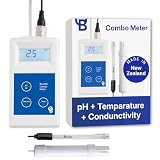
4. Bluelab Combo Meter: the best all-in-one monitor for pH, EC and temperature
Bluelab Combo Meter for pH, Temperature & Conductivity in Water – Easy Calibration, Digital EC/TDS/PPM Tester for Hydroponics & Indoor Plants (METCOM)
pH, EC and temperature in one meter
Double-junction glass pH probe
Factory calibrated
5-year meter warranty
Pros
- Three readings from one instrument
- Lab-quality glass probe with stable results
- Conductivity and temperature probes factory calibrated
- ATC keeps readings consistent as temperature changes
- 5-year warranty and calibration solution included
Cons
- Highest cost in this group
- pH probe is a consumable with a 6-month warranty
- pH probe needs two-point calibration to stay accurate
The Combo Meter exists to solve the beginner’s two-purchase problem. Instead of a conductivity pen and a separate pH meter, you get pH, conductivity and temperature in a single 5.28 ounce body, which means one instrument to charge, one to store and one thing to learn.
The pH side is the serious part. It uses a lab-quality glass probe with a double junction, and that junction is why the pH reading stays stable in nutrient solution where single-junction tips drift. The conductivity and temperature sides are factory calibrated, so only pH needs your attention, and it needs two-point calibration.

Conductivity displays on EC, PPM and CF scales with automatic temperature compensation fitted. The kit includes AAA batteries, a pH probe storage cap and calibration solution, and the storage cap matters more than it sounds, because a pH glass bulb left to dry out in a reservoir is the fastest way to shorten a probe’s life.
Owner reviews value the convenience of one meter for three readings, and they praise the glass probe for stability. The trade-off they raise most is cost, followed by the fact that the pH probe is a consumable. The warranty reflects that honestly: five years on the meter and six months on the pH probe.
Growers on RollItUp describe the general Bluelab pattern well, that the conductivity side needs no calibration and that pH tips eventually give up, though they also report the brand being responsive about replacement tips. Treat the pH probe as a part you will replace rather than a part you will keep, and budget for that when you plan the purchase.

Who this meter suits
It suits anyone starting a system from nothing who wants one instrument instead of two, and anyone who prefers to see pH and EC side by side on one display rather than switching between tools. Seeing both numbers at the same moment is how you catch a nutrient lockout early.
It also suits growers who want a warranty on the body rather than a year of uncertainty. The five-year body warranty is matched only by the Truncheon, and none of the other units here comes close.
Where it falls short
It is the most expensive unit here, and part of that money is buying a pH function that a pure EC buyer never uses. If you already own a working pH meter, this is an expensive way to solve a problem you have already solved.
The consumable pH probe with a six-month warranty is the real running cost, and the two-point calibration routine is a genuine learning curve compared with a factory-calibrated conductivity pen.
5. Apera PC60: the best premium multi-parameter tester for nutrient mixing
APERA INSTRUMENTS AI316 Premium Series PC60 5-in-1 Waterproof pH/EC (Conductivity) /TDS (ppm) /Salinity (ppt) /Temp. Multi-Parameter Pocket Tester Kit
pH, EC, TDS, salinity and temperature
Replaceable probe
Stability indicator
Colour backlit LCD
Pros
- Five measurements in one pocket tester
- Replaceable probe extends the life of the instrument
- Colour-coded backlit display is easy to read in a dark tent
- Complete kit with calibration solutions storage and case
- Stability indicator removes guesswork when reading
Cons
- Costs more than hobby-grade pens
- Two-year instrument warranty with six months on the electrode
The PC60 is the most capable instrument per purchase in this group, and it is the one I recommend to anyone mixing nutrients from concentrates. It measures pH, EC, TDS in ppm, salinity in ppt and temperature, which means the same probe covers base water checks, nutrient mixing and reservoir monitoring.
Two features justify the premium on their own. The first is the replaceable multi-parameter probe: when the electrode eventually fails you replace the probe, not the instrument. The second is the stability indicator, a smiley icon that appears when the reading has settled, which removes the most common beginner error of recording a number while it is still moving.

The display is a large backlit LCD with three colours mapped to measurement modes, so you can tell at a glance which parameter you are looking at. It shows temperature and the active reading simultaneously, and icons confirm completed calibrations. In a dim grow tent, that colour coding is genuinely useful rather than decorative.
The kit is unusually complete. It ships with ready-to-use calibration solutions, calibration bottles, storage solution, AAA batteries, a lanyard and a carrying case, so nothing needs to be bought separately to perform a first calibration. Buyers who mix their own solutions mention this kit as a specific reason for the purchase.
Owner reviews rate it 4.4 stars across 1238 ratings, a large sample in this group, and the pattern is consistent approval with one recurring objection: the cost sits well above hobby-grade pens. The warranty is two years on the instrument and six months on the electrode, so plan for a probe replacement within the life of the meter.
One practical warning. The probe is replaceable, but it is still an electrode with a glass element, so it wants the storage solution between uses and it does not want to sit dry. Treat it accordingly and owners of Apera meters commonly report around three years before a probe replacement, which is realistic rather than exceptional.

Who this meter suits
It suits a grower who wants pH and EC in one device, works in low light, and plans to keep the meter for several seasons. The replaceable probe is the deciding factor for anyone who has previously watched a fixed-probe instrument fail and had to replace the whole thing.
It also suits anyone who cares about the difference between a reading and a measurement, because the stability indicator and the calibration status icons let you verify that a number is trustworthy before you act on it.
Where it falls short
It sits above every EC-only pen in this list, and five parameters is more capability than a single-tank home grow will ever use. If you only need EC, you are paying for features that sit idle.
The six-month electrode warranty is short relative to the two-year body warranty, and the probe is the part that will need replacing first. Reading the same solution twice with two different meters and expecting identical numbers is also a false expectation of any instrument with a stated accuracy.
6. Apera EC60: the best conductivity meter with a replaceable cell
Apera Instruments, LLC-AI314 Premium Series EC60 Waterproof Conductivity Pocket Tester Kit, ±1% F.S Accuracy, Easy Switch of EC/TDS/Salinity, Replaceable Probe
Plus or minus 1 percent full scale
Replaceable platinum cell
IP67 waterproof
Auto 1-3 point calibration
Pros
- Replaceable platinum black probe with IP67 floatable body
- Readings lock in quickly and stay stable
- Auto 1-3 point calibration with buffer recognition
- Runs on standard AAA batteries
- Kit includes solutions lanyard and case
Cons
- Can take a long time to acclimate to solution temperature
- Backlight times out after one minute
- Kit includes only two of the three calibration solutions
This is the EC-only unit from the same stable as the PC60, and it is the pick when you want conductivity specifically rather than a general-purpose tester. The stated accuracy is plus or minus 1 percent full scale, the tightest figure in this group, and the cell is platinum black and user replaceable.
Auto 1-3 point calibration with automatic buffer recognition means the meter tells you which standard it has recognised, so a two-point calibration at 1413 and 2760 µS/cm takes about a minute. Temperature compensation runs from 0 to 50.0 degrees Celsius, which covers a warm reservoir without the reading climbing on its own.

Another detail that rarely appears in this category is the customisable TDS factor between 0.40 and 1.00. If you work from a feed chart printed on the 500 scale and someone else uses 700, you can match either instead of converting. It is a small feature that quietly removes a whole category of argument.
Owner reviews are positive about accuracy and fast, stable readings, and about the IP67 waterproof, floatable body surviving a drop in a tank. They run on four AAA batteries, which are ordinary batteries rather than watch cells, and the kit includes ready-to-use calibration solutions, bottles, a lanyard and a case.
The complaints are specific and worth knowing. Several owners report slow acclimation to solution temperature, so the reading drifts for a while after submersion. The backlight shuts off after a minute, which means extra button presses in a dark space. The kit ships with only two of the three calibration solutions, so a low-EC or reverse osmosis calibration is not possible out of the box. A small number of units would not calibrate or failed after a few weeks, and the instructions are thin.
That last point is why the 4.2 rating sits below the rest of this group despite the strongest accuracy specification. It is a capable instrument that asks more of the user than the factory-calibrated alternatives.

Who this meter suits
It suits a grower who cares about measurement accuracy above convenience and is comfortable calibrating. If you run a high-value crop where a tenth of a mS/cm matters, the plus or minus 1 percent full scale figure is the reason to choose this over the cheaper options.
It also suits anyone who will damage probes eventually, because a replaceable platinum cell turns a dead instrument into an affordable part swap.
Where it falls short
It does not measure pH, so it is a specialist pick rather than an all-rounder. For a grower who also needs acidity readings, the PC60 covers both in one body.
Temperature acclimation and the one-minute backlight timeout are real friction points during daily use, and the incomplete calibration solution set means an extra purchase before you can calibrate at low EC. If you want a meter you never have to think about, this is not it.
7. UIUZMAR 4-in-1 tester: the best budget combo for a first grow
UIUZMAR pH Meter for Water Hydroponics Supplies 4 in 1 pH PPM ECTester
pH, EC, PPM and temperature
Factory calibrated
Fast stabilising probe
Case included
Pros
- Reads pH
- EC
- PPM and temperature on one backlit screen
- Probe stabilises fast for a meter at this level
- Calibration powders work with grocery-store distilled water
- Strong price-to-performance for hobby growers
- Case included for storage and probe care
Cons
- Only one calibration buffer packet is included
- Probe is not user replaceable
- Some units drift or stop registering pH within days
The UIUZMAR does something most budget meters in this category do not: it reports pH, EC, PPM and temperature on a single backlit display and comes factory calibrated. At 4.4 stars across 1088 ratings it has one of the larger review bases here, and the feedback pattern is that the probe stabilises faster than expected for the money.
Owners report readings that line up with the professional meters they compared them against, which is the specific thing you want from a budget instrument. The blue probe is described as stable and repeatable, and automatic temperature compensation keeps the EC figure honest as the reservoir warms.

Calibration is handled with pH calibration powders that you mix yourself using distilled water, which is a practical point because most growers already have distilled water for mixing nutrients. Factory calibration means the meter is usable immediately, and the pH powders let you check it later.
It is aimed squarely at DWC, aeroponic and indoor grow systems, and at growers who want the meter to tell them when to add nutrients and when to adjust pH rather than making that judgement from plant appearance alone. A storage case is included, which matters because the probe should not be left loose on a workbench.
The limitations are worth being straight about. Only one calibration buffer packet is included, so a second point needs another purchase. The probe is not user replaceable, and twisting it past the thread collar can damage it, which is a sharp edge on an otherwise friendly product. A minority of owners report units that drift out of calibration or stop registering pH within days, and there is no English or Dutch manual in the box.
Who this meter suits
It suits a first-time grower who wants pH and EC in one purchase without learning a calibration procedure before the first watering. The backlit display is legible in a tent, and the fast stabilising probe means the number is trustworthy a few seconds after submersion.
It also suits a hobby grower with a vegetable or herb setup who wants a second meter for a spare system and does not want to spend real money on it.
Where it falls short
A non-replaceable probe is the structural weakness. When it fails the instrument is finished, and unlike the Apera units you cannot swap a cell. For anyone running a meter continuously in solution, that is a meaningful difference.
Single buffer packet and a missing manual mean the calibration side is thinner than it looks. If you want two-point verification or a reference reading in a second buffer, plan to buy more solution before you need it.
8. YINMIK YK-T4 Pro: the best meter for continuous reservoir immersion
YINMIK pH Meter for Hydroponics, 4 in 1 PPM EC Meter for Plant Nutrients
pH, EC and temperature in one click
pH/EC and pH/PPM modes
Extended stainless electrode
Pros
- Dedicated pH/EC and pH/PPM modes for nutrient and base water
- Extended stainless electrode built for continuous immersion
- Automatic temperature compensation holds accuracy as temperature changes
- Ready-to-use pH and EC calibration solutions included
- Entry-level instrument with replacement parts available
Cons
- Lower overall rating than the Bluelab and Apera options
- Limited written customer review detail in the available data
The YK-T4 Pro is built around a single idea: this meter is meant to live in the tank. The electrode is an extended stainless steel type designed for prolonged immersion, which is exactly the use case where a standard short pen probe eventually gets bumped, lifted out for no reason, or corrodes at the waterline.
The display logic is the other thing I like. One click gives you temperature, pH and EC for nutrient solution, and a second mode switches to pH and ppm for base water reservoirs. Base water and nutrient solution are different jobs, and having a dedicated mode for each is a small piece of design that removes mistakes.

Automatic temperature compensation is fitted, so EC readings stay accurate as the solution temperature changes through a day. The meter arrives with 4.00 to 7.00 pH calibration solution and a 1413 µS/cm EC buffer, and the EC and TDS side is factory calibrated and usable immediately.
At 4.4 stars across 513 ratings, roughly 72 percent of those are five-star, so the general verdict is that this is a capable low-cost tester. It is also usable outside the grow room: the same unit covers pool, drinking, tap, well, aquarium and brewing wort water checks.
I want to be measured about the evidence here. The available review data for this model is thinner and less detailed than for the other nine meters in this roundup, with limited written customer commentary to draw on. What is consistent is that the build, the electrode and the included calibration solutions are consistently the reasons owners are happy, and the main structural drawback is that it rates below the Bluelab and Apera options.
That lower average is not a criticism of a budget-positioned product so much as a reminder of the general pattern: meters built for continuous immersion trade some measurement refinement for durability.

Who this meter suits
It suits growers who want readings without lifting anything out of the tank, particularly in a DWC or reservoir-fed system where the meter can simply stay submerged. It also suits anyone monitoring base water separately from nutrient solution, because the two display modes cover both.
It is a sensible second meter for a multi-room setup, since the electrode is built for the harder environment and replacement parts are available.
Where it falls short
Its average rating sits below the premium units here, and the written owner feedback is thinner, so it carries more uncertainty than the Bluelab and Apera picks. For a single critical reservoir, that is a reasonable trade; for a high-value crop, less so.
Stainless steel is durable but not the same as a coated platinum cell, so if you need the tightest accuracy specification rather than the most robust probe, this is not the one.
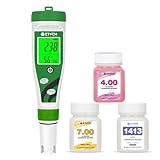
9. EZTOCH SZ-08: the best backup meter with the finest resolution
EZTOCH Hydroponic pH EC Meter, Water pH TDS PPM Meter
0.00-19.99 mS/cm at 0.01 resolution
pH, EC and temperature together
Reading lock function
Pros
- Reads three parameters at once with a useful reading lock
- Readings verified within about 10 ppm of a professional TDS meter
- Calibration solutions included and calibration is straightforward
- Several owners report matching a much more expensive reference meter
- Support replaced failing units under the 12-month guarantee
Cons
- Power button needs a five-second long press and often misses
- Not fully waterproof and must stay above the ring at 2 inches
- pH readings drift and calibration sometimes fails after months
The SZ-08 stands out for one specification: a conductivity range of 0.00 to 19.99 mS/cm at 0.01 mS/cm resolution. No other meter in this roundup resolves conductivity that finely, which matters when you are working near the bottom of a plant’s target range or diluting a strong concentrate drop by drop.
It displays pH, EC and temperature together, or pH, PPM and temperature, and a MODE button toggles between them. The reading lock function records the value so you can pull the meter out before writing it down, which is the same small quality-of-life feature that makes the HM Digital pleasant to use.

Calibration is the best provisioned at this level. It comes factory calibrated and includes pH 4.00, pH 7.00 and EC 1413 µS/cm solutions, so two-point calibration is possible from the box with no extra purchase. That is more than several competitors at a similar level offer.
Owner feedback is encouraging on accuracy. Buyers report TDS readings verified within about 10 ppm of a professional TDS meter, and several describe the meter reading the same as a much more expensive reference. At 4.4 stars across 156 ratings, the sample is the smallest in this group, so treat those reports as promising rather than conclusive.
The practical weaknesses are physical rather than electrical. The power button requires a five-second long press and often fails to register, which is genuinely irritating. The body is not fully sealed, and it must not be submerged past the black ring at about two inches, which makes it awkward in a deep reservoir. Owners also report pH drift and calibration that sometimes fails after a few months.
The upside is that support replaced failing units quickly under the 12-month guarantee, so the downside of this meter is less severe than it might be with a brand that does not answer.

Who this meter suits
It suits anyone who needs fine resolution at low EC, such as someone diluting concentrated nutrients or working with seedlings and propagation trays. It also suits anyone who wants a backup meter, because the reading lock and included calibration solutions make it quick to deploy.
It is listed for DWC, Kratky, aeroponic, aquaponic and tower systems, and for base-water checks, so it covers most home setups.
Where it falls short
The immersion limit is the main constraint. If your reservoir is deep and you want the probe to sit near the bottom, this is the wrong shape, and the two-inch limit has to be respected or water reaches the electronics.
The five-second power button gets old quickly, and reported pH calibration failures after a few months mean the pH function is the less reliable half. If pH accuracy is your main requirement, buy a meter built around a glass electrode instead.
10. MEXYBE A2 4-in-1 tester: the best budget meter for water quality and nutrient checks
2026 All-New 4 in 1 Tds Meter Digital Water Tester – Accurate and Reliable TDS EC & Temp(°C,°F) Meter – 0-9999ppm – Professional Testing for Drinking Water, RO/DI System, Aquariums etc
TDS, EC and temperature in C and F
0-9999 ppm range
Titanium alloy probe
Factory calibrated
Pros
- Entry-level cost with the largest review base here
- Consistent TDS and EC readings
- Large backlit display with auto-lock and hold functions
- Factory calibrated and ready immediately
- Switchable C and F with a TDS chart printed on the body
Cons
- No pH measurement
- Readings drift lower as salts build on the probe
- Body feels cheap and light
The A2 is the entry-level instrument in this roundup, and its review base of over 6300 ratings is far larger than any other unit here. That combination is worth understanding: nobody is paying much to leave a review, so a large sample at this volume says more about general satisfaction than a small sample on an expensive unit.
It measures TDS, EC and temperature in both Celsius and Fahrenheit across a 0 to 9999 ppm range, and the probe is a titanium alloy type. It arrives factory calibrated, so it is ready to use straight out of the packaging, which is the single most useful property for a first-time buyer.

The display is 25 percent larger than the previous version, with an auto-lock and hold function and a two-minute auto-off to preserve the battery. A TDS reference chart is printed on the back of the tester and repeated in the user guide, which removes the need to look anything up when you are standing over a tank.
Owners report that readings match more expensive meters closely enough to use confidently, and the meter is described as a dependable tool across drinking water, reverse osmosis and deionised systems, aquariums, pools and hydroponic nutrient checks. The switchable temperature units are useful if you read charts in Fahrenheit.
The limits are important to state plainly. There is no pH measurement at all, so it cannot check nutrient solution acidity. Readings drift lower over time as salts build up on the probe, which means regular flushing matters more here than on a meter with a replaceable cell. The body is light and plasticky, and it is not waterproof beyond the sensing area, so the probe section has to be dipped fully and the rest kept dry. The display is also difficult to read in dim conditions.

Who this meter suits
It suits anyone who wants a first instrument at the bottom of the range, and anyone whose main job is water quality rather than nutrient dosing: source water checks, tap and well readings, reverse osmosis output, and aquariums. At this level you can own two and keep one as a spare.
It also suits a grower who wants an EC and TDS number for general awareness and is content to read pH from a separate meter.
Where it falls short
It cannot measure pH, which is the disqualifier for anyone setting up a complete monitoring kit with one purchase. Budget for a second instrument for acidity.
The salt-build drift is the real weakness. Unlike the meters with replaceable cells, this one has a fixed probe, so once it drifts there is no part to swap, only a new instrument. Flush it after every use and it will serve you for a long time. Skip that and it will read low and quietly mislead you.
How to choose an EC meter for nutrient solutions in 2026
Start with the reservoir, not the spec sheet. A single domestic tank that you check twice a week does not need a laboratory instrument, while a multi-room setup or a fertigation line does. Write down how many readings you will actually take per week, because that number decides whether you need a pen, a handheld or an inline monitor.
Next, decide what kind of instrument you want. An EC-only pen is the simplest and cheapest path. A combo meter adds pH and temperature, which is what most growers end up wanting within a season. A handheld with a cable and a larger display suits a shared bench or a classroom. An inline monitor sits in the line and reports continuously, which only makes sense if you are running drip or fertigation and cannot be at the reservoir.
Then check four specifications in this order. First, does it display true EC in mS/cm, or only converted ppm? Second, does it have automatic temperature compensation? Third, is the probe replaceable? Fourth, is the body factory calibrated, and if not, what does calibrating it require and what does the standard solution cost?
Accuracy is the fifth check, and it is the one most buyers skip. A stated plus or minus 1 percent full scale is tighter than plus or minus 2 percent, and the difference is only worth paying for if you are diluting concentrates or chasing a specific target. If you are topping up a reservoir, plus or minus 2 percent is more than enough.
Range matters less than most spec sheets suggest, because almost every nutrient band you will work in sits between 0.2 and 3.6 EC. A wider range adds resolution at the extremes, not capability in the middle. Resolution is the more useful number: 0.01 mS/cm gives you finer control than 0.1 mS/cm at the low end.
On waterproofing, treat the language literally. Fully waterproof and floats, or IP67 rated, means you can drop it in a tank. Water resistant means you should keep the body out of the water and only dip the sensing tip. The EZTOCH goes further and defines a maximum immersion depth, which is a good sign of honest engineering.
Finally, think about total cost over two or three seasons rather than the purchase alone. A meter with a replaceable cell has a predictable maintenance cost. A meter with a fixed probe is cheaper once and finished when the probe goes. And a meter needing regular calibration means ongoing solution purchases, which is the hidden expense that stops people measuring mid-cycle.
If your interest is in instrumentation more broadly, our guide to the best LCR meters covers how accuracy classes change what a reading is actually worth, which is the same reasoning that decides between a 2 percent and a 1 percent conductivity cell.
ppm 500 vs ppm 700: the conversion reference
These are the two competing conversion factors and nothing more. Multiply your EC in mS/cm by 500 for the ppm 500 scale, or by 700 for the ppm 700 scale. Nutrient concentrate labels in Europe and hydroponic charts usually use 500, while soil-leaning charts and many North American labels use 700. The same readings on both scales, starting from 0.8 EC up to 3.0 EC:
- 0.8 EC = 8 CF = 400 ppm on the 500 scale = 560 ppm on the 700 scale
- 1.0 EC = 10 CF = 500 ppm on the 500 scale = 700 ppm on the 700 scale
- 1.2 EC = 12 CF = 600 ppm on the 500 scale = 840 ppm on the 700 scale
- 1.6 EC = 16 CF = 800 ppm on the 500 scale = 1120 ppm on the 700 scale
- 2.0 EC = 20 CF = 1000 ppm on the 500 scale = 1400 ppm on the 700 scale
- 2.4 EC = 24 CF = 1200 ppm on the 500 scale = 1680 ppm on the 700 scale
- 3.0 EC = 30 CF = 1500 ppm on the 500 scale = 2100 ppm on the 700 scale
Note the 1.2 mS/cm line, which is the one that confuses people. On the 500 scale it reads 600 ppm, and on the 700 scale it reads 840 ppm, which is the exact pair a grower on r/Hydroponics reported seeing at the same time and could not reconcile. Nothing was wrong with either instrument. Two different factors were in play.
If you want to avoid the problem entirely, work in EC or in CF. Both are physical measurements and both mean the same thing in every chart you will ever read. A meter with a customisable TDS factor, such as the Apera EC60, lets you set whichever scale your feed sheet uses and sidesteps the conversion.
Ideal EC levels by crop
These are the target ranges most growers work to, expressed in EC and in ppm on the 700 scale. Your target is the number your plants need, and the water you add on top carries its own ion load, so the final number in the tank is not the number on the bottle.
- Lettuce: 0.4-0.6 EC as a seedling, 0.6-0.8 in vegetative, 0.8-1.2 at maturity, which is 560-840 ppm on the 700 scale
- Basil and herbs: 0.5-0.7 EC as a seedling, 1.0-1.2 in vegetative, 1.0-1.6 at maturity, which is 700-1120 ppm
- Tomato: 0.8-1.2 EC as a seedling, 2.0-2.8 in vegetative, 2.0-3.5 at maturity, which is 1400-2450 ppm
- Pepper: 0.6-1.0 EC as a seedling, 1.5-2.2 in vegetative, 1.8-2.8 at maturity, which is 1260-1960 ppm
- Cucumber: 0.6-1.0 EC as a seedling, 1.4-2.0 in vegetative, 1.6-2.4 at maturity, which is 1120-1680 ppm
- Flowering cannabis: 0.4-0.8 EC as a seedling, 1.2-1.8 in vegetative, 1.2-2.5 at maturity, which is 840-1750 ppm
Measure your source water first, before you do anything else. Fill a clean container with your tap or well water and read it. If it comes back at 0.4 mS/cm, your nutrient solution is starting from that baseline every time you top up, and a target of 1.2 means 1.2 total, not 1.2 on top of the tap reading. Growers who skip this step compare a hard-water tap figure against a soft-water chart and conclude their setup is failing.
Soil and medium growers can measure runoff EC, but treat it as a trend rather than a target. Runoff in soil is influenced by buffering, drainage and previous feeds in ways a reservoir reading never is, so a rising number is a signal to flush, not a number to steer by.
And in aquaponics or any system with high suspended solids, expect the cell to foul faster than in a clean hydroponic tank. Flush the probe more often and expect a shorter interval between calibrations.
How to calibrate and measure EC correctly
Measure in this order, every time. Rinse the probe in distilled or deionised water first, then submerge it to the immersion line in the solution you are testing. Stir gently to remove air bubbles clinging to the cell, because a trapped bubble will read low and make the number look like nutrient uptake.
Wait for stability before you record. If your meter has a stability indicator, wait for it. If it does not, wait until the number stops moving for several seconds. Then record the value, and rinse the probe again before you put it away.
Never wipe the probe with a tissue or a cloth. You will scratch the electrode surface, and a scratched cell drifts permanently. Rinse under running water and shake off the excess instead.
Store the probe wet, not dry. If your meter came with storage solution or a probe storage cap, use it. A glass pH electrode left in air will lose accuracy within weeks, and the manufacturers of the combo units in this list all include something for exactly that reason.
For meters that do need calibration, the procedure is short. Rinse the probe, dip it into 1.413 mS/cm (1413 µS/cm) standard solution, wait for a stable reading, and adjust until it matches. For a two-point check on a range-capable meter, repeat in 2.76 mS/cm standard. If it will not hold either point, the cell needs replacing rather than adjusting, and that is the moment to check whether your probe is replaceable.
To verify a new meter at home before you trust it with a reservoir, do exactly that two-point check. A meter that reads 1.413 and 2.76 accurately is working. One that reads close at the low point and off at the high point is not linear enough to trust, and no amount of adjusting will fix it. That single ten-minute test separates most of the problems growers report.
If a reading is too high and you need to bring it down, add plain low-EC water in stages and re-measure after each mix. Never add cold water straight from a fridge into a warm reservoir, because the temperature change alone shifts the reading and you will be chasing a number that is not really about nutrients. Let the water come to temperature first, then re-measure once it has mixed through.
And if the reading will not fall after adding water, do not keep adding. A reading that will not drop usually means a fouled cell or a failing probe giving you a false number, and the fix is cleaning the probe, not diluting a reservoir that is already fine.
What to avoid when buying an EC meter
Avoid the unnamed multi-function pen that arrives in a bundle with two others and no documentation. These units report pH, EC, TDS and temperature, they arrive with no calibration solution, and their accuracy specifications are usually absent entirely. Growers on r/farmingthebestgreens describe the experience without mincing words: it will not last or be accurate for even one grow, and it does not hold calibration at all.
That complaint is not unique and it is not always fair, because some of the budget units in this roundup perform respectably. The distinction is what you can verify. A named brand with a stated accuracy figure, a stated range and manufacturer documentation is a different proposition from an unbranded listing with none of those things, even when the two arrive in similar packaging.
Avoid any meter that shows only ppm and never mentions mS/cm or a cell constant. It is giving you a converted number and you will never be able to compare it to a chart, or to another meter, with any confidence.
Avoid fixed-probe meters for continuous in-reservoir use. A non-replaceable probe is a meter with an expiry date, and if the probe is the part that dies first you have replaced the whole instrument for the price of a part. This applies directly to the UIUZMAR, whose probe is not user replaceable, and to the MEXYBE, whose salt-build drift can only be answered with a new instrument.
Also avoid the mistake of buying at the entry level and never calibrating it. A meter that is out of calibration is worse than no meter, because it produces a confident number that is wrong. Either buy one that is factory calibrated, or commit to checking it against a standard on a schedule.
Frequently Asked Questions
Which EC meter is best for hydroponics?
For most home growers the Bluelab Conductivity Pen is the best all-round choice: it is factory calibrated, fully waterproof, floats, has automatic temperature compensation and switches between EC, PPM 500, PPM 700 and CF. The Bluelab Truncheon measures more precisely over 0.2-3.6 EC if you mix your own nutrients, and the HM Digital COM-80 gives you a true EC scale at an entry-level cost.
What is the difference between a pH meter and an EC meter?
A pH meter measures hydrogen ion concentration, which tells you the acidity of your solution. An EC meter measures electrical conductivity in mS/cm, which tells you the total concentration of dissolved nutrient ions. They measure completely different things, and a healthy reservoir needs both. A pH reading tells you whether nutrients are available to the plant; an EC reading tells you how much there is.
Do you need an EC meter for hydroponics?
Yes, unless you are dosing nutrients by eye and guessing. Without an EC reading you cannot tell whether your reservoir is at the right strength, and both over-feeding and under-feeding cause locked-out nutrients, tip burn and stunted growth. It is a small instrument that removes the largest variable in a recirculating system.
Is EC the same as TDS or ppm?
No. EC in mS/cm is the physical measurement. TDS and ppm are derived numbers produced by multiplying EC by a conversion factor, usually 0.5 or 0.7. The same solution at 1.6 mS/cm can therefore read as 800 ppm on one scale and 1120 ppm on another, with nothing wrong with either meter. Work in EC where you can, and be consistent about which scale you use when you do not.
What is ppm 500 and ppm 700?
They are the two standard conversion factors used to turn an EC reading into a ppm number. Multiply your EC in mS/cm by 500 to get the ppm 500 scale, or by 700 to get the ppm 700 scale. Nutrient concentrate labels and hydroponic charts most often use 500, while soil-leaning charts and many North American labels use 700. So an EC of 1.2 mS/cm reads 600 ppm on one scale and 840 ppm on the other.
Do I need to calibrate an EC meter?
It depends on the meter. Bluelab conductivity meters are factory calibrated and are designed not to need periodic calibration, which is a genuine saving in both effort and ongoing solution costs. Apera units use automatic one to three point calibration with buffer recognition. Budget meters usually need checking against a 1.413 mS/cm standard at least whenever you doubt the reading.
What is the ideal EC level for hydroponics?
It depends on the crop. Lettuce runs 0.8-1.2 mS/cm, basil 1.0-1.6, cucumber 1.6-2.4, pepper 1.8-2.8, tomato 2.0-3.5 and flowering cannabis 1.2-2.5, with lower figures for seedlings in every case. Measure your source water first, because those targets are the total in the tank rather than an addition on top of your tap water baseline.
Why is my EC meter not holding calibration?
The usual causes are a fouled or damaged cell, a probe that has dried out, a fixed-probe unit that has simply worn out, or a meter with no real temperature compensation being read in warm solution. Rinse the probe in distilled water, flush off salt build-up, and test it against a 1.413 mS/cm standard. If it will not hold that point, the cell needs replacing rather than adjusting.
How do I measure EC correctly?
Rinse the probe, submerge it to the marked immersion line, stir gently to clear air bubbles from the cell, and wait for the reading to stabilise before recording it. Never wipe the probe with a tissue, because scratching the surface causes permanent drift. Rinse it again when you are finished and store it wet in its storage solution or cap.
What type of EC meter should I buy?
A single home reservoir needs a waterproof pen with automatic temperature compensation and true EC in mS/cm. More than one room or a drip line justifies an inline monitor that reports continuously. If you also need pH, a combo meter saves carrying two instruments, and a handheld with a cable is worth it if you work at a shared bench. Factory calibration removes the biggest reason people stop measuring.
Final verdict: the best EC meters for nutrient solutions in 2026
The Bluelab Conductivity Pen is the meter I recommend to most people. It is factory calibrated so there is nothing to learn, waterproof so it can live in the tank, and it shows EC, PPM 500, PPM 700 and CF, which ends the conversion argument on its own.
Buy the Bluelab Truncheon instead if you mix your own nutrients from base salts and want the tightest increments in the group, or if you want a five-year warranty on a body that needs no calibration solution. Buy the HM Digital COM-80 if budget is the deciding factor and you want a genuine EC scale rather than a converted ppm number.
For pH in the same instrument, the Bluelab Combo Meter is the one with a double-junction glass probe and a five-year body warranty, while the Apera PC60 gives you the most measurements and a replaceable probe. On a single reservoir with no pH meter yet, either solves the two-purchase problem in one go.
The Apera EC60 is the pick when accuracy per unit is what matters and you are willing to calibrate. The YINMIK YK-T4 Pro is the pick for a meter that stays submerged. The UIUZMAR is the pick for a first grow on a budget. The EZTOCH is the pick for fine resolution as a backup. The MEXYBE is the pick for source and drinking water checks at the entry level.
Whichever you choose, check it against a 1.413 mS/cm standard before you trust it, measure your source water first so your targets have a real baseline, and pick one display scale and stay on it. That last habit alone will stop you ever arguing with another grower’s number again.