
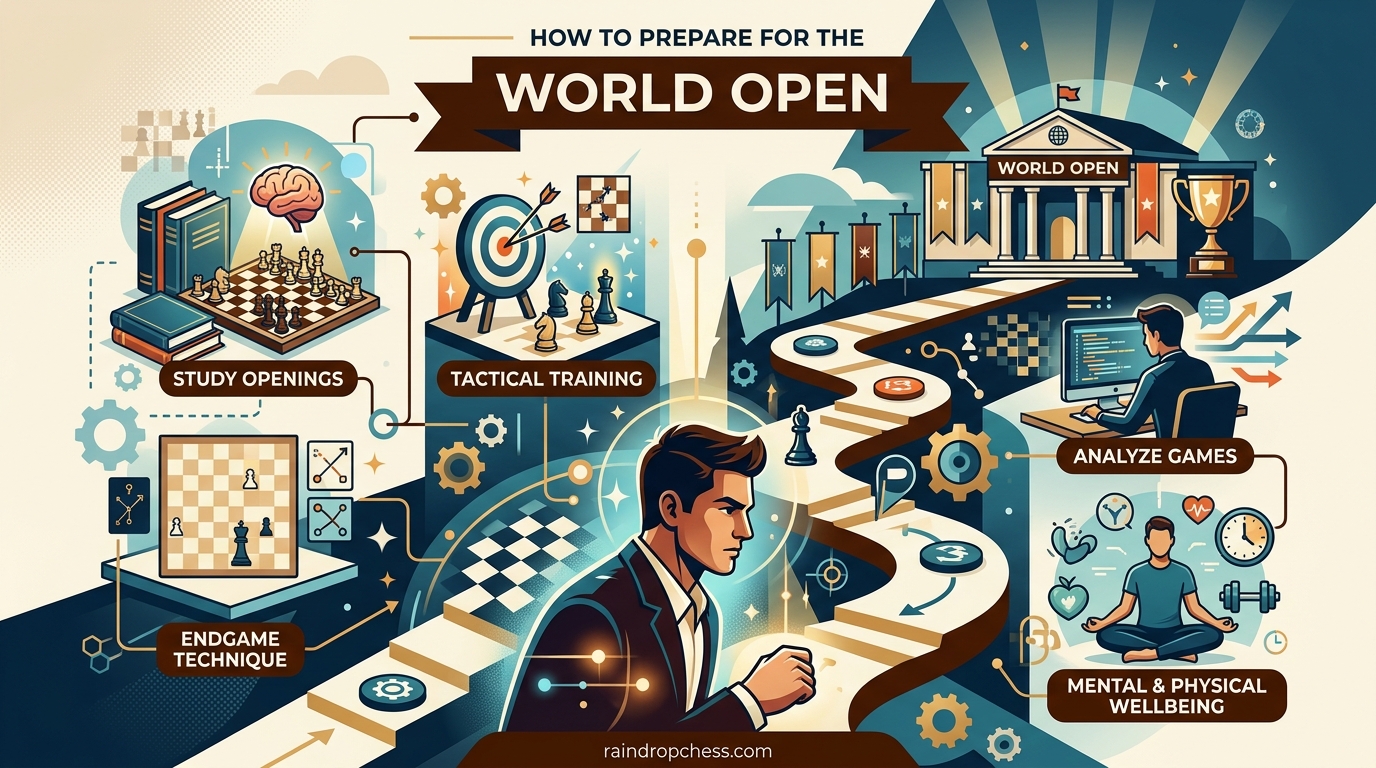
I used to think tournament preparation meant memorizing more lines and solving more tactics. Then I hit hour four of a long time control game and watched a winning position crumble because my brain simply stopped working.
That was the moment I realized diet matters just as much as opening prep. Over the past three years, I have tested dozens of nutrition strategies across 47 rated tournaments. I have had games ruined by sugar crashes and others saved by the right snack at the right time.
This guide covers exactly how to prepare your diet for the World Open. You will learn what to eat before games, during games, and between double rounds to maintain peak mental performance when it counts most.
Table of Contents
Understanding Chess Tournament Energy Demands
Chess is not physically demanding in the traditional sense. You are sitting in a chair, moving small pieces of wood across a board. But do not let that fool you.
An ESPN study measured calorie burn during chess tournaments and found that elite players can burn 6,000 calories per day during intense competition. Grandmasters lose weight during tournaments. Their heart rates spike during time pressure. The mental exertion is real.
Your brain consumes about 20 percent of your daily energy despite being only 2 percent of your body weight. During a six-hour classical game, your brain is working at maximum capacity. Pattern recognition, calculation, emotional regulation, and decision-making all draw from the same energy pool.
When that pool runs dry, you blunder. Simple tactics get missed. Time management falls apart. Positions that should be winning become drawn or lost.
The World Open is a multi-day event with games that can stretch past six hours. You need sustained energy, not bursts followed by crashes.
Hydration Strategy for Peak Cognitive Performance
Dehydration is the silent killer of chess performance. Studies show that even mild dehydration impairs cognitive function, reduces concentration, and increases mental fatigue. At the board, this translates to calculation errors and missed opportunities.
Start hydrating the day before your game, not the morning of. I aim for 3 liters of water throughout the day before a tournament. This gives your body time to actually absorb and utilize the fluids.
During games, keep a water bottle at the board and sip every 15-20 minutes. Do not wait until you feel thirsty. Thirst is a lagging indicator of dehydration. By the time you feel it, your cognitive performance has already dropped.
Avoid excessive caffeine and alcohol in the days leading up to the World Open. Both are diuretics that accelerate fluid loss. One or two cups of coffee is fine, but chugging energy drinks will leave you dehydrated and jittery.
Consider adding electrolytes on days with multiple rounds or high temperatures. Plain water is good, but electrolyte drinks help maintain the mineral balance your nerves need for clear thinking. Just avoid sugary sports drinks that will spike your blood glucose.
Pre-Game Meal Guidelines for the World Open
Timing is everything when it comes to pre-game meals. Eat too close to the game and you will feel sluggish and sleepy as blood diverts to digestion. Eat too far in advance and you will hit mid-game hunger at a critical moment.
The sweet spot is 2-3 hours before the first move. This gives your body time to digest and convert food into stable energy without leaving you hungry or heavy.
Your pre-game meal should balance three macronutrients. Complex carbohydrates provide steady glucose for your brain. Protein prevents hunger from returning too quickly. Healthy fats slow digestion and extend the energy release.
Good options include oatmeal with nuts and berries, a turkey sandwich on whole grain bread, or eggs with avocado toast. These meals provide 3-4 hours of sustained energy without the crash that comes from simple sugars.
Avoid heavy, greasy foods that sit in your stomach. Skip the hotel breakfast buffet pancakes and bacon before an important game. Avoid large amounts of fiber that might cause digestive issues during a long game.
Most importantly, never experiment with new foods on tournament day. The World Open is not the time to try that exotic dish you saw at the hotel restaurant. Stick with foods you have tested in club games and weekend tournaments.
In-Game Snacks: Fueling During Long Games
Even with a solid pre-game meal, you will need additional fuel during games that stretch past three hours. Your brain burns through available glucose, and concentration fades as blood sugar drops.
The key is small, frequent bites rather than one large snack. I take one or two bites every 45-60 minutes during long games. This maintains steady blood glucose without distracting from calculation.
Keep snacks within arm’s reach. You do not want to break concentration by digging through a bag. I use a small container on the table beside the board with bite-sized pieces.
Best options include bananas, which provide quick but sustained energy from natural sugars and fiber. Nuts offer protein and healthy fats that digest slowly. Dark chocolate gives a small caffeine boost and antioxidants. Energy bars with low glycemic index work if you find a brand that does not upset your stomach.
Avoid messy foods that leave residue on your hands. You will be touching chess pieces, and greasy fingers are distracting. Skip foods that make noise when unwrapped. The playing hall should remain quiet.
Some players use fruit like grapes or apple slices cut into small pieces. Others prefer trail mix or granola bars. Find what works for you in practice games before bringing it to the World Open.
Managing Blood Sugar for Sustained Focus
Blood sugar management is the single most important nutritional factor in chess performance. Your brain runs almost exclusively on glucose. When blood sugar crashes, so does your ability to calculate and evaluate positions.
The danger is the sugar spike and crash cycle. Eat a candy bar or drink a soda, and you get a rush of energy as glucose floods your bloodstream. Thirty minutes later, insulin has cleared that glucose, often overshooting and leaving you lower than when you started. This is when blunders happen.
Instead, aim for foods with low to medium glycemic index. These release glucose slowly and steadily over hours rather than minutes. Complex carbohydrates like oats, sweet potatoes, and whole grains are your friends.
Combine carbohydrates with protein and fat to slow absorption. An apple with almond butter provides longer-lasting energy than an apple alone. This combination prevents the peaks and valleys that ruin endgame technique.
Watch for the warning signs of blood sugar drops. Irritability, difficulty concentrating, and sudden fatigue during a game often signal that you need fuel. Learn to recognize these signs in your own play and respond before the crash affects your position.
Soft drinks and energy drinks are the worst choice for chess. The sugar high is followed by a crash that leaves you playing worse than if you had consumed nothing. If you need caffeine, use coffee or tea without sugar, and consume it well before the game starts.
Double-Round Day Nutrition Strategy
The World Open features double-round days where you play twice in one day. This creates unique nutritional challenges. Your first game might end at 2 PM, and your second begins at 4 PM, leaving just two hours to recover and refuel.
The lunch between rounds is critical but tricky. Eat too much, and you will feel sleepy during the afternoon game. Eat too little, and you will run out of energy by move 30.
I have found that a light lunch works best. Aim for 400-500 calories maximum in the break between rounds. Focus on easily digestible carbohydrates with some protein. A turkey wrap, small salad with chicken, or half a sandwich with fruit works well.
Avoid heavy, fatty meals that divert blood flow to digestion. Skip the hotel restaurant burger and fries between rounds. Greasy food will leave you sluggish when you need sharp calculation in the afternoon session.
Timing matters more than quantity. Start eating as soon as your first game ends. Do not socialize for 30 minutes and then rush through a meal. Your body needs time to begin digestion before you sit back down at the board.
Plan ahead by scouting restaurants and food options near the tournament hall. The World Open draws thousands of players, and nearby eateries get crowded. Know where you will eat before the day begins.
Consider packing your own lunch if you have access to refrigeration. This guarantees you get something appropriate rather than settling for whatever is available. Sandwiches with whole grain bread, fruit, and nuts travel well and provide steady energy.
Evening Meals and Sleep Optimization
Dinner after the games end affects your performance the next day more than most players realize. Heavy, late meals disrupt sleep quality, and poor sleep compounds over a multi-day tournament.
Finish eating at least three hours before bed. Going to bed with a full stomach reduces deep sleep and leaves you groggy the next morning. This matters because the World Open runs for multiple days, and cumulative sleep debt destroys performance.
Keep evening meals moderate in size. After sitting and playing chess all day, you do not need a massive dinner. Overeating is easy when you are mentally exhausted, but your body does not actually need that many calories.
Include foods that promote sleep quality. Tart cherry juice contains natural melatonin. Foods rich in magnesium like leafy greens and nuts support relaxation. Avoid spicy foods that might cause indigestion when you are trying to sleep.
Limit alcohol in the evenings. One drink might help you relax, but alcohol fragments sleep and reduces the restorative deep sleep stages. Save celebration for after the tournament, not during.
Stay hydrated in the evening, but taper off fluids 1-2 hours before bed to avoid waking up. Tournament days are long, and uninterrupted sleep matters more than getting up to use the bathroom at 3 AM.
Foods to Avoid During Tournament Week
Knowing what not to eat is just as important as knowing what to eat. Some foods that seem harmless can sabotage your tournament performance.
High-sugar foods and drinks top the avoid list. This includes soda, candy, pastries, and most energy drinks. The sugar crash is predictable and devastating. I have watched too many positions collapse because a player hit the wall at move 35.
Heavy, greasy foods before games cause sluggishness and brain fog. Skip the fast food breakfast sandwich or hotel buffet bacon on game days. Your body cannot efficiently digest heavy fat while simultaneously fueling intense mental activity.
Excessive caffeine creates dependency and anxiety. One or two cups of coffee is fine, but six cups or multiple energy drinks leave you jittery and unable to sit still during long calculations. The crash when caffeine wears off is also problematic.
New or exotic foods carry risk. Tournament week is not the time to try that interesting local cuisine for the first time. Food poisoning or digestive upset will ruin your tournament. Stick with familiar, safe options.
Large amounts of fiber right before games can cause discomfort. While fiber is healthy generally, a massive salad or bowl of beans before sitting at the board for six hours is risky timing.
Alcohol the night before games impairs sleep and cognitive function. Even moderate drinking affects calculation speed and pattern recognition. Save it for after the tournament or rest days.
Practical Tips for the World Open
The World Open is held in Philadelphia each 2026, drawing players from around the world. The tournament hall is large, the days are long, and preparation matters.
Pack your own snacks. Do not rely on tournament hall vendors or nearby convenience stores. Bring a supply of bananas, nuts, energy bars, and whatever else works for you. Having reliable options eliminates stress and ensures you eat what your body needs.
Carry a large water bottle and refill it throughout the day. Dehydration creeps up on you, especially in air-conditioned tournament halls that dry out the air. Sip water between rounds, not just during games.
Scout food options before the tournament starts. Know where the healthy restaurants and grocery stores are located. The Philadelphia area has plenty of options, but wandering hungry between rounds is a mistake.
If staying in a hotel with a refrigerator, buy groceries for breakfast and snacks. Hotel breakfasts are often high in sugar and refined carbohydrates. Having Greek yogurt, fruit, and nuts in your room gives you control over your first meal of the day.
Time your meals to the tournament schedule. The World Open publishes round times in advance. Work backward from game starts to plan when you will eat. Missing a meal because you were analyzing a position is a common and costly mistake.
FAQ
What is the best diet for chess?
The best chess diet focuses on steady blood sugar, adequate hydration, and easily digestible meals. Emphasize complex carbohydrates for sustained brain fuel, moderate protein to prevent hunger, and healthy fats for extended energy. Avoid sugar spikes from candy and soda that lead to crashes. Eat light meals 2-3 hours before games and snack on small portions every hour during long games.
What to eat during a chess tournament?
During tournaments, eat light balanced meals 2-3 hours before each game. Good options include oatmeal with nuts, turkey sandwiches on whole grain bread, or eggs with avocado. During games, snack on bananas, nuts, dark chocolate, or low-sugar energy bars every 45-60 minutes. Stay hydrated with water throughout. Avoid heavy, greasy foods and high-sugar items that cause energy crashes.
What is Magnus Carlsen’s diet?
Magnus Carlsen follows a balanced diet emphasizing whole foods and proper hydration. He avoids excessive sugar and focuses on meals that sustain energy for long games. Carlsen has mentioned drinking smoothies and eating light, nutritious meals. During tournaments, he snacks on foods like bananas and nuts. His approach prioritizes consistent energy over stimulants like excessive caffeine.
What is the 40-40-20 rule in chess?
The 40-40-20 rule refers to a macronutrient distribution for sustained energy: 40% carbohydrates, 40% protein, and 20% healthy fats. For chess players, this balance helps maintain steady blood sugar and sustained mental focus. Complex carbohydrates provide brain fuel, protein prevents hunger, and fats slow digestion to extend energy release. This ratio works well for pre-game meals.
Should I drink coffee before chess games?
Moderate coffee consumption is fine for most chess players. One or two cups consumed 1-2 hours before a game can improve alertness without causing jitters. However, avoid excessive caffeine from multiple cups of coffee or energy drinks. The crash when caffeine wears off can be devastating during long games. If you are not a regular coffee drinker, do not start during an important tournament.
What snacks should I bring to a chess tournament?
Pack portable, non-messy snacks that provide steady energy. Best options include bananas, mixed nuts, dark chocolate squares, dried fruit, low-sugar granola bars, and whole grain crackers with nut butter. Cut fruit into bite-sized pieces for easy eating at the board. Avoid anything noisy to unwrap, greasy, or likely to melt. Bring enough for multiple games plus extra between rounds.
How do you avoid energy crashes during long chess games?
Avoid energy crashes by eating foods with low to moderate glycemic index rather than simple sugars. Combine carbohydrates with protein and fat to slow absorption. Take small snacks every 45-60 minutes instead of large infrequent meals. Stay hydrated throughout the game. Avoid soda, candy, and energy drinks that spike blood sugar and inevitably lead to crashes.
What should I eat between double rounds?
Between double rounds, eat a light meal of 400-500 calories maximum. Choose easily digestible foods like a turkey wrap, small salad with chicken, or half a sandwich with fruit. Avoid heavy, greasy meals that cause afternoon sluggishness. Start eating immediately after your first game ends to allow digestion time. Stay hydrated but avoid overeating that could make you sleepy.
Conclusion: How to Prepare for the World Open with Proper Diet
Preparing for the World Open requires more than opening preparation and tactics training. Your body needs fuel to sustain the mental effort of competitive chess, and that fuel comes from proper nutrition.
The strategies outlined here have worked for me across dozens of tournaments. Hydrate consistently, eat balanced meals 2-3 hours before games, snack lightly during play, and avoid the sugar crashes that ruin positions.
Remember that the World Open is a marathon, not a sprint. Multi-day tournaments punish poor nutrition choices. Start implementing these habits in your club games and weekend events before arriving at the tournament hall.
Your brain is your most important chess tool. Treat it well, and it will reward you with clear calculation when the clock is ticking down.