
Choosing the right chess board material can make or break your club experience. After visiting dozens of tournaments and talking with club players across the country, I have learned that board selection is more important than most beginners realize.
The three main options for club play are vinyl rollup boards, mousepad-style boards, and traditional wooden boards. Each material has distinct advantages that matter depending on how you play. Vinyl boards dominate tournament circuits for their portability. Mousepad boards offer superior playing feel but sacrifice some convenience. Wood looks beautiful but creates practical challenges for regular club use.
In this guide, I will break down the real differences between these materials based on actual player experiences. You will learn which board works best for tournament travel, which holds up to daily club abuse, and how to avoid common mistakes that ruin boards prematurely.
Table of Contents
Quick Summary: Which Board Is Best?
For most club players, vinyl boards win for tournament travel and club storage. They roll up compactly, cost under $30, and meet all tournament regulations. Mousepad boards deliver the best playing experience with their flat surface and consistent piece slide, making them ideal for dedicated club spaces. Wood boards look impressive but their weight and fragility make them impractical for regular transport.
If you want one recommendation: buy a quality cloth-backed vinyl board for tournaments and travel, consider a mousepad board for your home or permanent club setup, and save wood boards for display or special occasions.
Vinyl vs Wood vs Mousepad Chess Boards
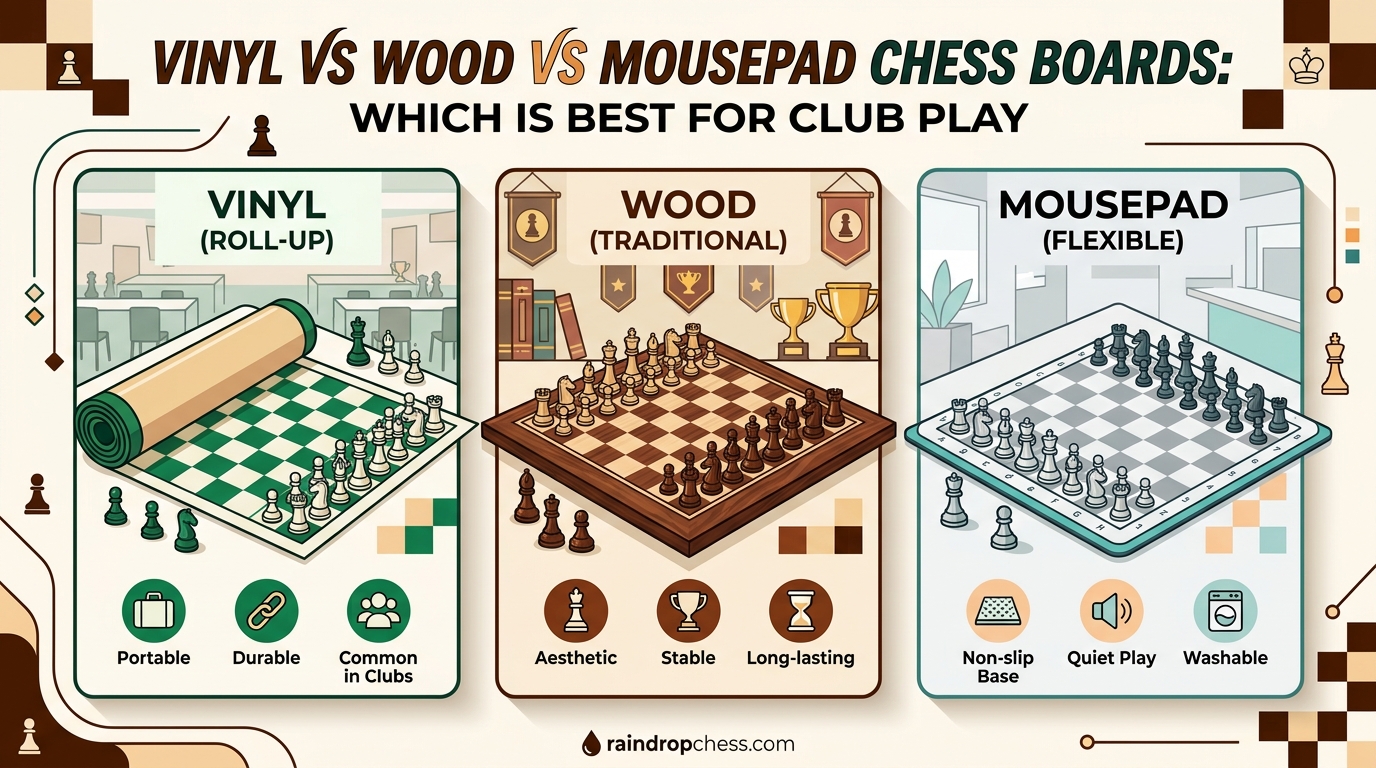
When comparing vinyl vs wood vs mousepad chess boards, the differences come down to portability, durability, and playing feel. Vinyl offers the best combination of portability and price for active club players. Mousepad provides the most consistent playing surface but requires more storage space. Wood delivers prestige and aesthetics but sacrifices practicality for regular club use.
Vinyl Chess Boards: The Tournament Standard
Vinyl boards have been the tournament standard for decades, and there is a good reason why. These boards feature a thin vinyl playing surface bonded to a cloth or felt backing. The result is a lightweight, rollable board that stores easily in a tube.
The best vinyl boards use a cloth-backed construction rather than all-vinyl material. Cloth-backed boards resist creasing better and always lay flat when unrolled. All-vinyl boards tend to develop permanent creases that create bumps during play.
Advantages of Vinyl Boards
Vinyl boards offer unmatched portability. A standard tournament board rolls up to about 3 inches in diameter and fits in any backpack or chess bag. At under $20 for basic models and under $40 for premium cloth-backed versions, they are also the most affordable option for club players.
Regulation vinyl boards meet all US Chess Federation and FIDE tournament requirements. The standard 2.25-inch squares accommodate triple-weighted pieces with king bases up to 1.5 inches in diameter. This compatibility means you can use your vinyl board at any official event.
Cleaning vinyl boards is simple. A damp cloth removes dust and spills without damaging the surface. Unlike cloth mousepad boards, vinyl does not absorb moisture or stain easily.
Disadvantages of Vinyl Boards
The main complaint with vinyl boards is creasing. If rolled incorrectly or stored improperly, vinyl boards develop permanent creases that create raised lines across the playing surface. These creases can affect piece movement and become visually distracting.
Vinyl surfaces also create more friction than mousepad materials. Pieces do not slide as smoothly, which some players notice during fast games. While experienced players adapt quickly, beginners may find the slight stickiness affects their blitz performance.
Cheaper vinyl boards can emit a strong plastic odor when new. This smell dissipates over time, but sensitive players may find it unpleasant during the first few weeks of use.
Pro Tips for Vinyl Board Care
Always roll your vinyl board with the squares facing outward. This rolling direction prevents the board from curling up at the edges when unrolled. Store boards in a rigid tube rather than folding or cramming them into tight spaces.
If your vinyl board develops creases, lay it flat under heavy books for 24-48 hours. The weight helps flatten minor creases without damaging the surface.
Mousepad Chess Boards: Premium Feel for Serious Play
Mousepad boards, also called flex pads or neoprene boards, consist of a rubber backing topped with a cloth playing surface. The result is a board that stays completely flat and provides consistent piece movement across every square.
These boards gained popularity in the last decade as players discovered their superior playing characteristics. The cloth surface creates ideal friction for piece sliding, neither too sticky like cheap vinyl nor too slippery like polished wood.
Advantages of Mousepad Boards
Mousepad boards lay perfectly flat immediately after unrolling. No curling edges, no creases, no waiting for the board to settle. This flatness creates a professional playing experience that serious club players appreciate.
The rubber backing provides excellent grip on any surface. Whether you play on a slick cafeteria table or uneven outdoor surface, the board stays put. This stability matters during blitz games where board movement could disturb piece positions.
Piece movement on mousepad boards feels natural and consistent. Pieces slide smoothly without gliding too far. Many players report improved accuracy in their games after switching from vinyl to mousepad.
Disadvantages of Mousepad Boards
The main drawback is bulk. Mousepad boards roll to about 5-6 inches in diameter, nearly double the size of vinyl boards. This extra bulk makes them harder to fit in standard chess bags and requires larger storage tubes.
Some players report that pieces stick slightly on mousepad surfaces during fast games. The cloth creates more friction than vinyl, which can affect pawn pushes and quick captures under time pressure. One Reddit user noted that after switching to silicone, mousepad felt like air hockey in comparison.
Mousepad boards are harder to clean than vinyl. The cloth surface absorbs spills and can stain if not treated quickly. Coffee or soda spills may leave permanent marks on light-colored squares.
Best Use Cases for Mousepad Boards
Mousepad boards excel in permanent club settings where boards stay unrolled between meetings. School chess clubs, dedicated chess rooms, and home setups benefit from the superior playing experience without dealing with storage challenges.
These boards also work well for outdoor play and informal settings. The rubber backing grips picnic tables, park benches, and other uneven surfaces that would cause vinyl boards to slide around.
Wooden Chess Boards: Beautiful but Impractical for Clubs
Wooden chess boards represent the traditional choice for serious players. Available in walnut, maple, wenge, and other hardwoods, these boards offer unmatched aesthetics and a satisfying piece feel.
However, wood boards present significant challenges for club play that make them unsuitable for most tournament and travel situations.
Why Wood Struggles in Club Settings
Weight is the primary issue. A standard tournament-size wood board weighs 5-8 pounds, compared to virtually nothing for rolled vinyl or mousepad boards. Carrying multiple wood boards to club meetings becomes impractical quickly.
Wood boards are fragile. Drop a wood board, and you risk cracking the veneer or splintering the edges. The finish can scratch from rough piece bases or aggressive sliding. These boards require careful handling that club environments rarely provide.
Storage becomes problematic. Wood boards cannot roll up, requiring flat storage that takes up significant space. Most club supply closets cannot accommodate dozens of flat wood boards.
When Wood Makes Sense
Wood boards excel in home settings where they remain on display. A beautiful walnut board on a dedicated chess table creates an inviting atmosphere for serious games. Tournament halls also use wood boards for featured matches and championship games where presentation matters.
If you primarily play at home and occasionally visit clubs, a wood board offers the best experience. Just do not expect to bring it to weekly club meetings or weekend tournaments.
Silicone and FlexPad: The Hybrid Alternatives
Beyond the three main categories, two hybrid options deserve mention: silicone boards and FlexPad boards.
Silicone Chess Boards
Silicone boards combine the portability of vinyl with improved durability and flatness. These boards roll up tightly like vinyl but resist creasing and always lay flat. The rubber-like material provides excellent grip and moderate piece slide.
Silicone boards cost more than vinyl, typically $40-60, but last significantly longer. They clean easily with soap and water and resist staining. The main downside is a slight rubbery texture that some players find unusual.
FlexPad Boards
Chess House FlexPad boards represent a cloth-backed vinyl hybrid. These boards use thicker vinyl bonded to a cloth backing, creating a more substantial feel than standard vinyl while maintaining rollup portability.
FlexPad boards cost around $35-50 and offer a middle ground between standard vinyl and mousepad options. They roll smaller than mousepad boards but provide better flatness than basic vinyl. Many club players consider FlexPad the best value for regular tournament play.
Side-by-Side Comparison
| Feature | Vinyl | Mousepad | Wood | Silicone |
|---|---|---|---|---|
| Portability | Excellent | Good | Poor | Excellent |
| Durability | Good | Very Good | Fragile | Excellent |
| Flatness | Requires care | Perfect | Perfect | Perfect |
| Piece Slide | Moderate | Excellent | Good | Good |
| Price Range | $15-40 | $30-60 | $80-300 | $40-70 |
| Best For | Tournament travel | Club meetings | Home display | All-around use |
Piece Compatibility: King Base vs Square Size
Regardless of material, your board must accommodate your chess pieces properly. The relationship between king base diameter and square size affects both aesthetics and practical play.
Tournament Standard Sizes
FIDE regulations specify a king base diameter between 1.9 and 2.2 inches for standard tournament sets. The board squares should measure 2.0 to 2.5 inches, with the ideal square size being 1.25 to 1.3 times the king base diameter.
For most club sets with triple-weighted plastic pieces, a board with 2.25-inch squares works perfectly. This size accommodates king bases up to 1.75 inches while leaving enough space for comfortable piece movement.
Common Sizing Mistakes
The most common error is pairing oversized pieces with small squares. When pieces cover too much of the square, crowded positions become confusing and knights may not fit properly between pawns. Always check your piece measurements before buying a board.
Undersized pieces on large boards look awkward but play fine. If you have small travel pieces, consider a smaller board or accept the extra space between pieces.
Our Recommendations for Club Play
Based on my experience and feedback from club players nationwide, here are my specific recommendations by use case.
Best for Tournament Travel: Cloth-Backed Vinyl
If you play weekend tournaments regularly, invest in a quality cloth-backed vinyl board. The TCS vinyl boards from Chess Store have excellent weight and always lay flat according to experienced players. Pair it with a rigid storage tube to prevent creasing during travel.
Best for School Clubs: Mousepad or FlexPad
School chess clubs benefit from mousepad or FlexPad boards that stay flat in storage closets between meetings. The durability withstands rough handling by younger players. Choose darker colors to hide stains from inevitable spills.
Best for Casual Club Nights: Silicone
For weekly club meetings where convenience matters, silicone boards offer the best balance. They transport easily, lay flat immediately, and clean up quickly. The slight premium over vinyl pays off in longevity.
Storage and Care Tips
Always roll boards with the playing surface facing outward. This prevents curling and creasing. Store rolled boards vertically in tubes rather than stacking them horizontally. Keep boards away from direct sunlight and heat sources that can warp materials.
Clean vinyl and silicone boards with a damp cloth. Vacuum mousepad boards gently to remove dust and debris. Never fold any rollable board, as this creates permanent creases.
Frequently Asked Questions
What material is best for chess boards?
For most club players, vinyl offers the best combination of portability, price, and tournament approval. Mousepad boards provide superior playing feel for dedicated club spaces. Wood looks beautiful but lacks practicality for regular transport.
What is the best material for a roll up chess board?
Cloth-backed vinyl is the best rollup material for tournament players. It combines the compact storage of vinyl with improved flatness and durability. Silicone boards also roll up well and resist creasing better than standard vinyl.
Are wooden chess boards better?
Wood boards offer superior aesthetics and a satisfying piece feel, but they are not better for club play. Their weight, fragility, and storage requirements make them impractical for tournament travel. Reserve wood boards for home use or display.
Which type of chess board is best?
The best chess board depends on your primary use. Choose vinyl for tournament travel, mousepad for permanent club setups, and wood for home display. Silicone boards work well for players who want durability and portability.
Which chess boards are used in tournaments?
US Chess Federation and FIDE tournaments accept vinyl, mousepad, and silicone boards that meet size regulations. Vinyl remains the most common choice due to portability. Championship games may use wood boards for presentation.
Which is better, a chess board or a chess mat?
Chess boards (vinyl, mousepad, or silicone) are generally better than thin chess mats for serious play. Boards provide consistent flatness and proper piece movement. Mats work for casual play but lack the durability and stability of proper boards.
Conclusion: Making Your Choice
Vinyl vs wood vs mousepad chess boards each serve different purposes for club players. For tournament travel and active club participation, vinyl boards remain the practical choice. Mousepad boards reward players who prioritize playing experience over portability. Wood boards belong in homes and display cases, not backpacks.
Consider your primary use case. If you attend weekend tournaments regularly, buy a quality cloth-backed vinyl board and learn to roll it properly. If you run a school club or have dedicated playing space, mousepad boards will delight your members. And if you want one board that does everything reasonably well, try a silicone board as a middle ground.
The best chess board is the one that gets you playing more often. Choose based on your actual needs, not aesthetics alone, and you will enjoy better games for years to come.