
Most couples who buy a strategy game together hit the same wall within a month: the box was built for four people, and with two of you at the table the whole thing drags. The best two player strategy games for couples solve that by design. If you want the short answer, start with 7 Wonders Duel for sharp 30-minute engine building, Othello for a two-minute rules lesson that lasts years, and Jaipur for a compact trading card game you can carry anywhere.
My partner and I have played every game on this list at least ten times, and we tested them the way couples actually play: after work, on the sofa, in forty-minute windows, sometimes tired, sometimes one of us mid-bad-morning. That changes the criteria completely. A game that needs 45 minutes of rules explanation before move one is not a bad game. It is a bad Tuesday-night game.
That is why every pick below is filtered through four tests before we look at anything else. Does the game weight match both players? Is there player elimination or long downtime that ends the night early? Does it finish in one sitting? And is the competition relationship-safe, meaning a loss stings your ego but not the evening? We explain the full method further down, then rank all twelve.
One more note before we start. Every game here is built for exactly two players as the primary configuration, not a four-player game trimmed down. That single fact removes most of the bad evenings. Last updated for 2026, and we will keep re-testing as new two-player editions land.
Table of Contents
Our Top 3 Two Player Strategy Games for Couples

Those three cover the widest range of evenings we play. One is a thirty-minute engine builder with three different ways to win. One is a two-hundred-year-old abstract with no hidden information at all. One is a 231 gram card box you can toss in a coat pocket. If you only buy one thing from this guide, it is the first one.
The Best Two Player Strategy Games for Couples at a Glance
| Product | Specifications | Action |
|---|---|---|
| 7 Wonders Duel |
|
Check Latest Price |
 Othello Othello |
|
Check Latest Price |
 Jaipur Jaipur |
|
Check Latest Price |
 Onitama Onitama |
|
Check Latest Price |
 Splendor Duel Splendor Duel |
|
Check Latest Price |
 Mandala Mandala |
|
Check Latest Price |
 Caper Europe Caper Europe |
|
Check Latest Price |
 Watergate Watergate |
|
Check Latest Price |
 CATAN Rivals CATAN Rivals |
|
Check Latest Price |
 Quarto Mini Quarto Mini |
|
Check Latest Price |
 Yinsh Yinsh |
|
Check Latest Price |
 Everdell Duo Everdell Duo |
|
Check Latest Price |
How We Picked: Four Tests That Matter for Two Players
Game weight is the term tabletop players use for complexity, usually scored on the BoardGameGeek scale from 1 to 5. A 1 means the rules fit on a napkin. A 4 means you will read the rulebook twice and still ask a question on turn three. Weight matters everywhere, but it matters more with two players than with six, and the reason is simple: there is no table full of other people to absorb the confusion.
So our first test is weight match. The most common complaint in two-player forums is not that a game is too heavy. It is that one partner steamrolls and the other quietly stops suggesting the game. We rate every pick here on whether the gap between a beginner and an experienced player stays survivable.
The second test is elimination and downtime. Player elimination means one player is knocked out and watches the rest. Downtime means one player waits while the other takes a long turn. Both are tolerable in a six-player game and both are corrosive in a two-player game, because there is literally nobody else to talk to. Every game on this list is non-eliminating.
Third is one sitting. A couple playing at 9pm on a weeknight has somewhere between 30 and 60 minutes before one of them starts checking a phone. Games longer than that are not disqualified. They belong to a weekend afternoon, and we say so where it applies.
Fourth is relationship-safe competition. Some games attack, bluff or steal directly. Those are fine, but they land harder on a partner you eat dinner with. We flag the direct-conflict titles so you can pick the mood deliberately instead of discovering it on turn one.
1. 7 Wonders Duel – The Best Two Player Strategy Game for Couples Overall
Asmodee 7 Wonders Duel Board Game BASE GAME – Intense Two-Player Battles in the Ancient World, Strategy Game for Kids and Adults, Ages 10+, 2 Players, 30 Minute Playtime
2 players
Ages 10 and up
30 minute playtime
2 x 8 x 8 inches
Pros
- Three separate win conditions keep both players alive to the last turn
- Engine building punishes less than direct attack
- Randomized pyramid and wonder selection drive replayability
- Fast setup and breakdown
Cons
- Rules book is dense with many card exceptions
- Resource pricing demands constant mental math
- Cards are smaller than the standard 7 Wonders size
- Wonder cards warp over time
This is the game we hand to friends who argue about board game recommendations. Three ways to win, and the box measures 2 by 8 by 8 inches, which means it fits the coffee table you actually have. Seven of the eight wonders appear each game, so the map is different every single time.
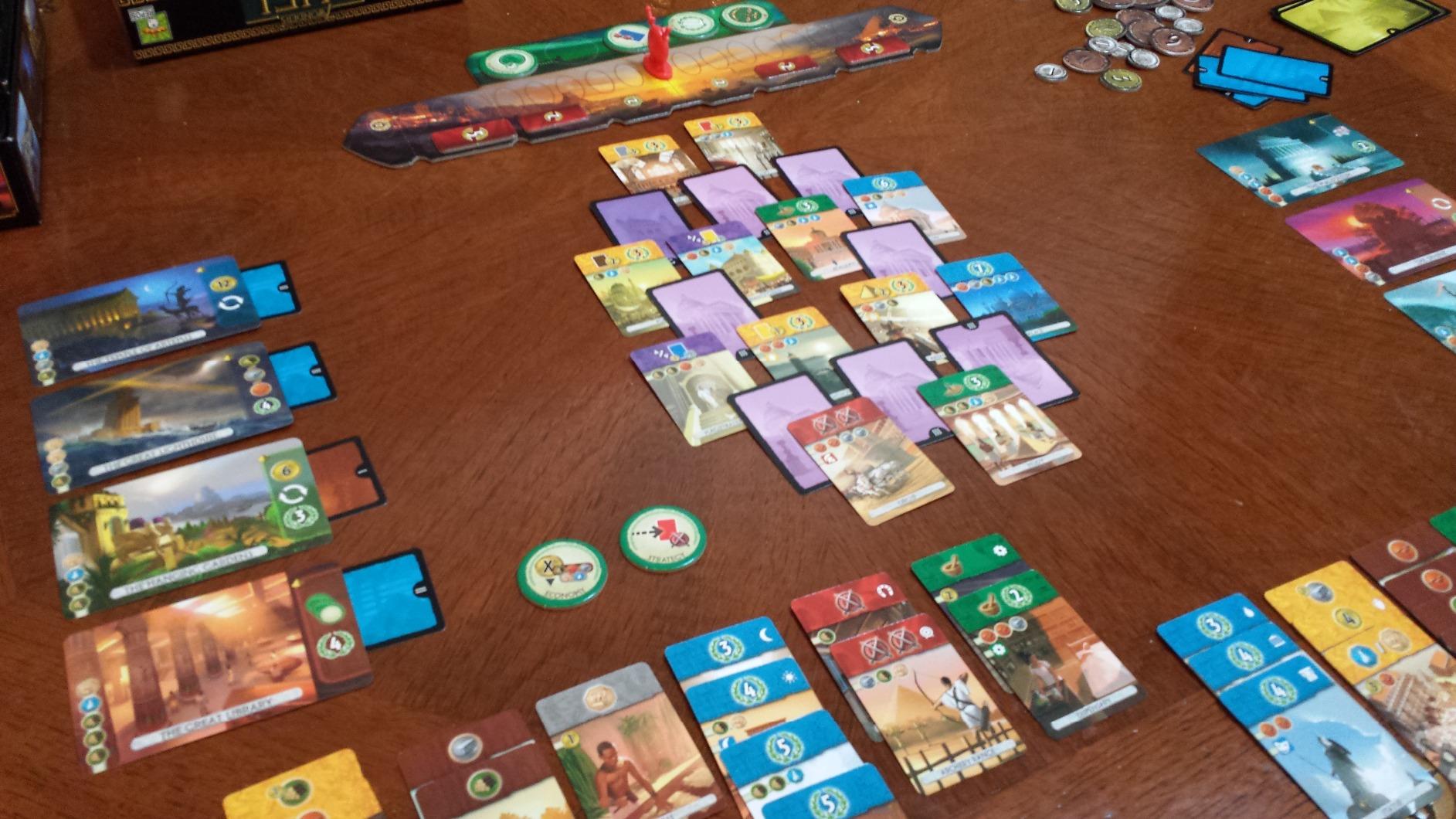
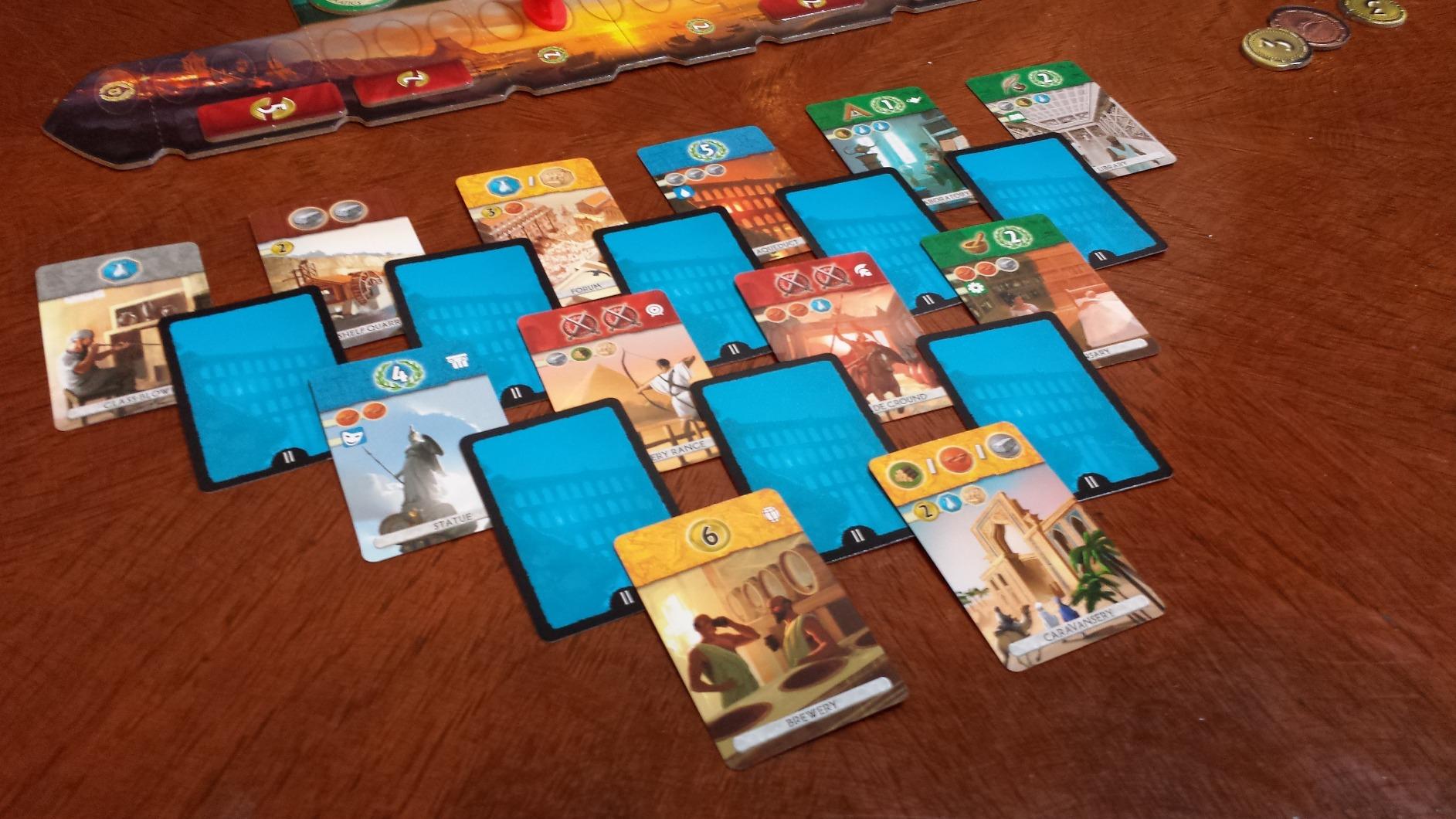
The engine-building core is what keeps a couple playing past the first five games. You are laying structures, drawing symbols and pricing resources against whatever your partner has already stockpiled. Most couples get through the rules in one read-through and start making real decisions by game two.
What surprised us most is how rarely it produces a runaway score. The military path punishes over-building, so ignoring your opponent’s army is rarely correct. That balance is why it appears on so many couples lists, and why the Reddit crowd keeps calling it the most consistent gateway recommendation for a mixed-skill pair.
When 7 Wonders Duel is the right pick
Choose it when you both like decisions that compound, and when you can afford 20 minutes of rules on the first evening. It rewards memory of the opponent’s board, so the second and third games are noticeably sharper than the first.
It also holds up as a travel game in a way its size suggests. Board is tiny, cards are small, and the whole thing collapses back into the box in under a minute.
When 7 Wonders Duel is the wrong pick
Skip it if one of you is genuinely new to modern board games. The card exception list is the sticking point, and playing while guessing rules is a bad date. Teach it with a video or a demo game first.
Also skip it if direct conflict is what makes a night exciting for you. This game lets you build an army you never use. That restraint frustrates some players and delights others.
2. Othello – The Best Two Player Strategy Game for Couples Who Want Zero Friction
Ravensburger Othello – Classic Strategy Board Game for 2 Players – Easy to Learn, Hard to Master – Fast-Paced Family Fun – Ages 8+
2 players
Ages 8 and up
20 minute playtime
2 x 11.5 x 14.38 inches
Pros
- Learns in about two minutes
- Quick 20 minute matches
- Reversible felt board reads clearly
- Slide-out drawers keep pieces organized
Cons
- Instructions are not available in Spanish
- Some buyers rate component quality as mid-tier
- Newer version takes re-mastering versus older flat boards
Othello is the most useful game on this list for a couple with a huge skill gap. Everyone can play it by turn one, but the strategic ceiling is famously high, which means a strong player is never bored. You can learn the rules in a car park.
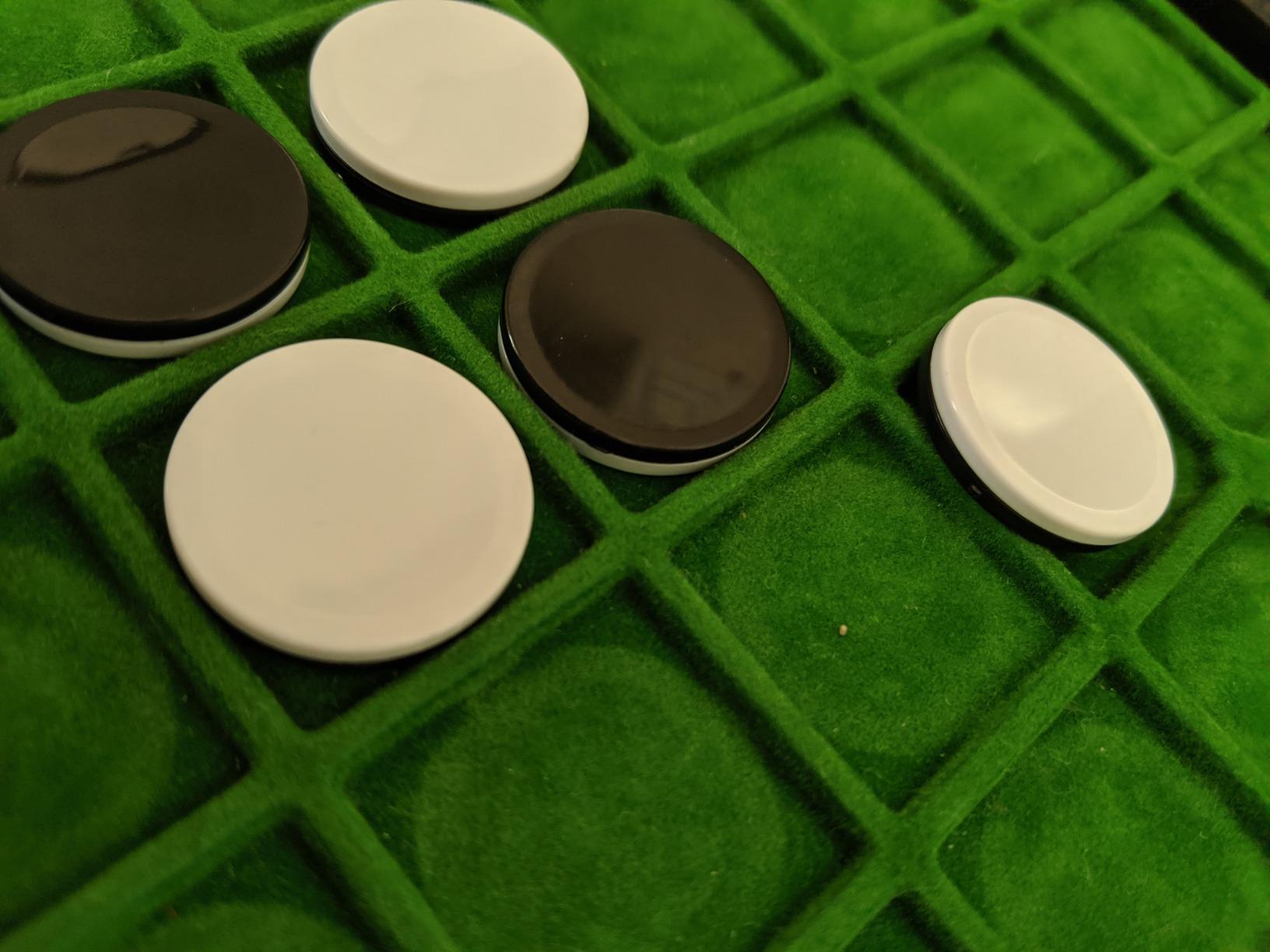
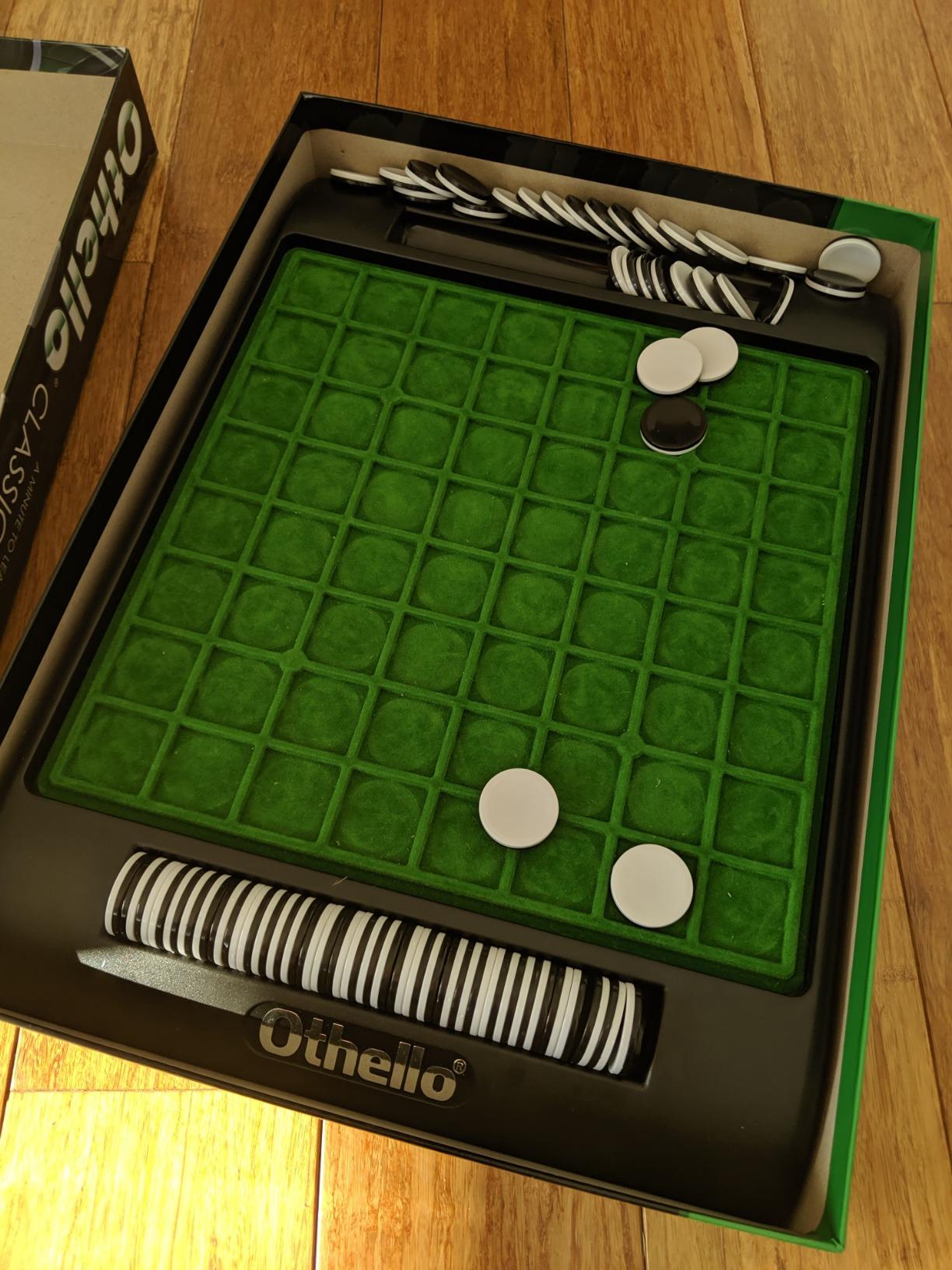
This edition runs on a reversible board with a felt playing surface, which matters more than it sounds. Dark green and black discs stay visible in a dim restaurant, and the felt stops the pieces sliding across a cheap folding table. The slide-out storage drawers mean you are not re-sorting 64 disks at the end of every game.
Play time sits around 20 minutes. Two games in an evening is a realistic and very satisfying plan for a couple who wants depth without a commitment.
When Othello is the right pick
Choose it for a mixed-skill pair, a first strategy game, or any evening where nobody wants to read rules. Perfect information and a board you both understand remove almost all friction.
It is also the easiest recommendation here to gift, since it suits adults and older children equally and needs no expansion.
When Othello is the wrong pick
Skip it if you want a different game every week. The position space is enormous but the decision space is narrow, and some players exhaust the interesting openings in a month.
Skip it too if direct attacks feel personal. Discs flip constantly, and a partner who hates losing pieces may not enjoy watching a board change colour against them.
3. Jaipur – The Best Two Player Strategy Game for Couples Who Travel
Asmodee Jaipur 2-Player Trading Card Strategy Game, Ages 10+
2 players
Ages 10 and up
30 minute playtime
231 g, 7.1 x 5.1 x 1.6 inches
Pros
- Very easy to learn but keeps a tactical decision every turn
- Compact and easy to travel with
- Constant interaction with no long downtime
- Works across a wide age range
Cons
- Strictly a two-player design
- Written directions take effort to parse on first read
- Setup is slightly slower than the fastest card games
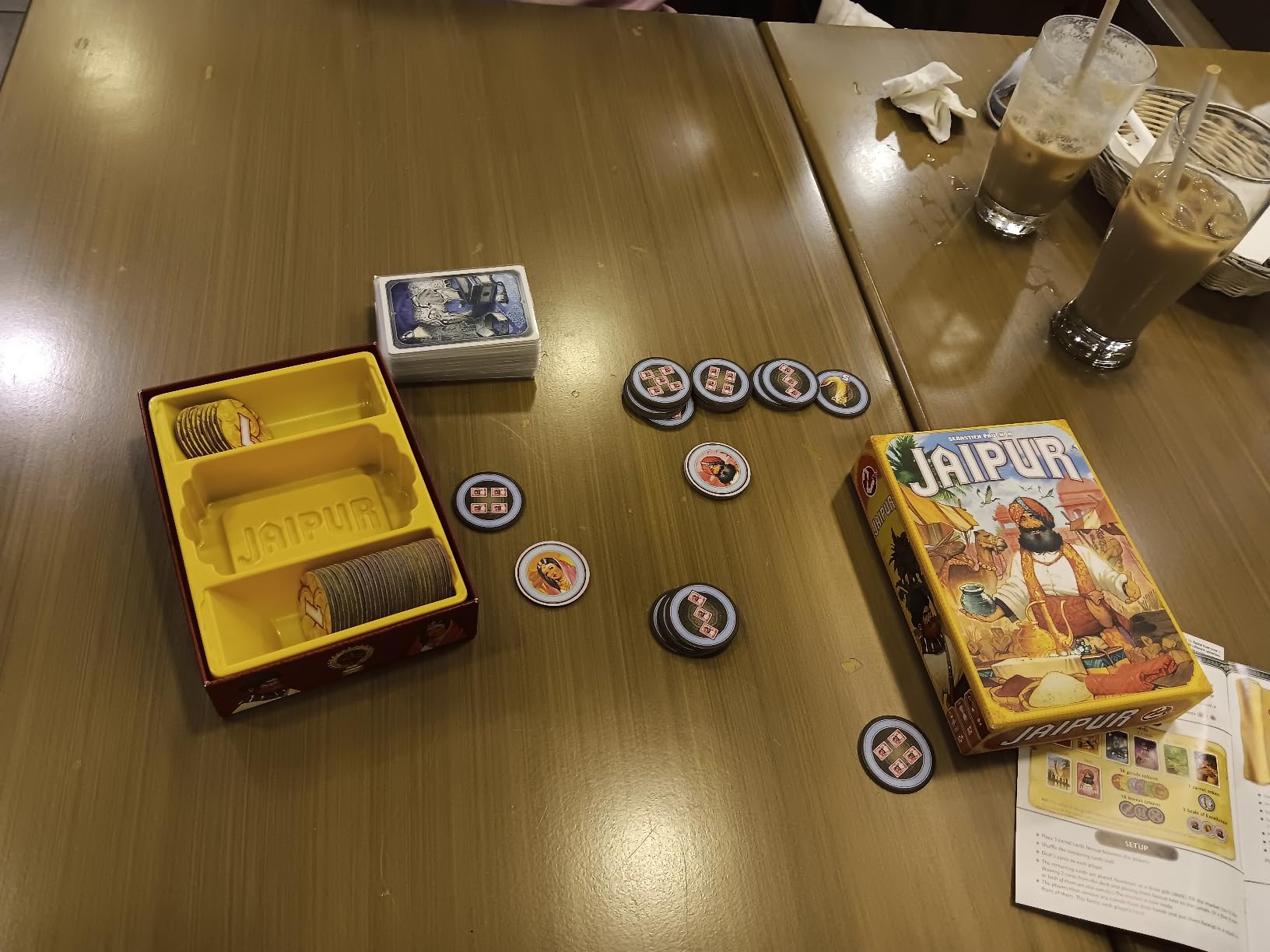
Jaipur is the one we pack for restaurants, trains and hotel rooms. It weighs 231 grams, it is 7.1 by 5.1 inches, and it plays in 30 minutes. That combination is rare among strategy games and it is the reason this title keeps appearing on every date-night roundup we have read.
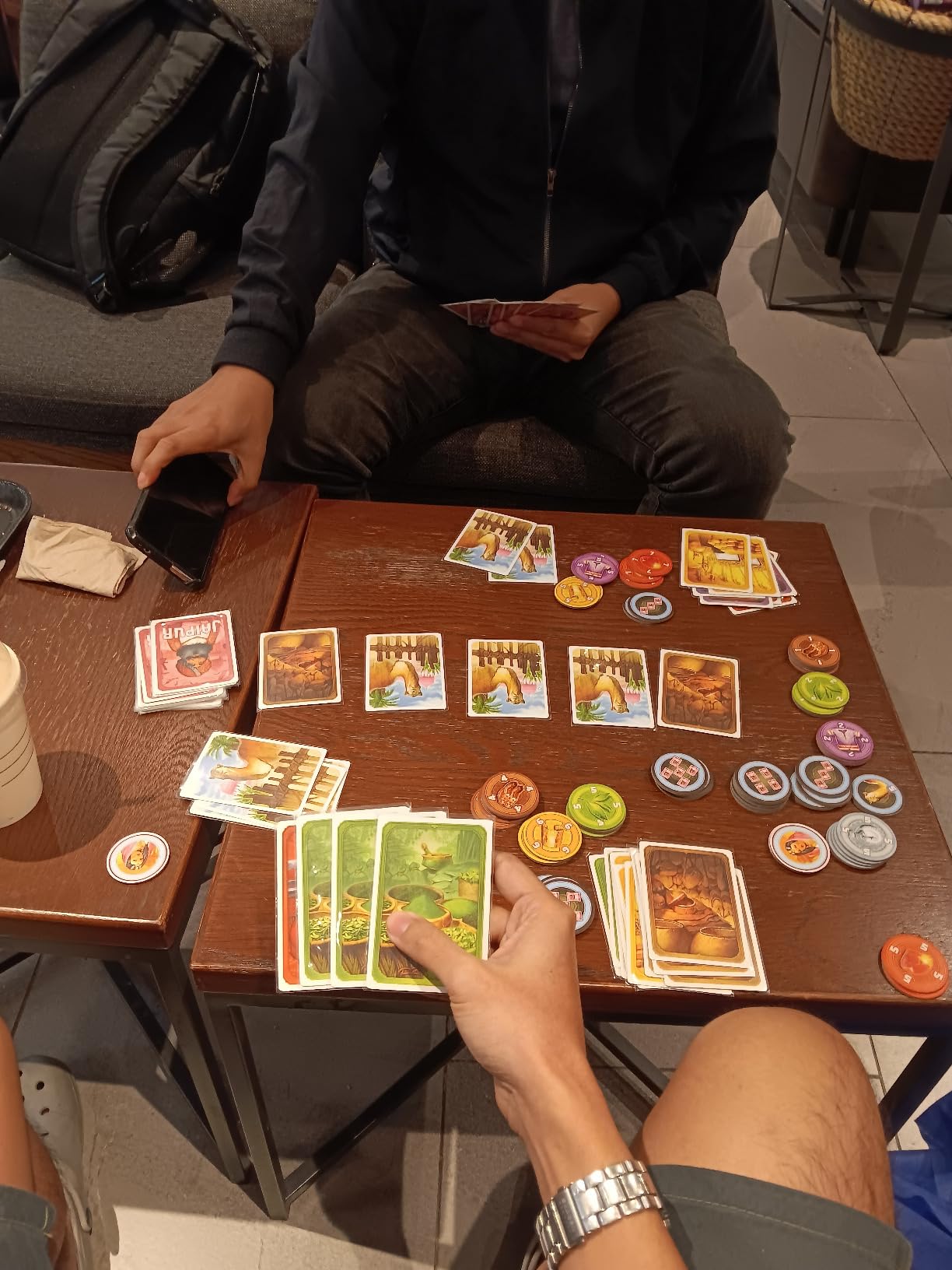
You are rival merchants buying and trading leather, spices, cloth, silver, gold and gems, and the set-collection layer means you are constantly pricing what your partner is holding. It is the fastest teach on this list that still produces real tactical decisions on turn five.
Both players stay engaged the entire game, which is the specific complaint we hear most about card games in general. There is no phase where one person watches.
When Jaipur is the right pick
Choose it when portability matters, when the venue has no table to speak of, or when you want a game one of you can teach in under five minutes. It is a very good anniversary gift precisely because it looks far nicer than its size suggests.
It also works well as a bridge game for a couple who plays mostly party titles and wants to start thinking tactically.
When Jaipur is the wrong pick
Skip it if your household regularly hosts four or more players, since it is strictly a two-player design and you will be storing it for a narrow audience.
Also be honest about replay exhaustion. Once both of you know the card timing patterns, the marginal value drops. We usually get 25 to 30 good games out of it before we want something new.
4. Onitama – The Best Two Player Strategy Game for Couples Who Want Chess Without Chess
Arcane Wonders Onitama, 2-Player Abstract Duel with Modular Movement Cards
2 players
Ages 8 and up
10 to 20 minute playtime
3.8 x 3.7 x 10.6 inches
Pros
- Learns almost immediately
- Two distinct ways to win
- Movement cards reshape options every turn
- Travel-friendly format with a slim box
Cons
- Turn flow pauses briefly during the card swap
- Random opening moves can produce uneven starts
- Limited component variety across play sessions
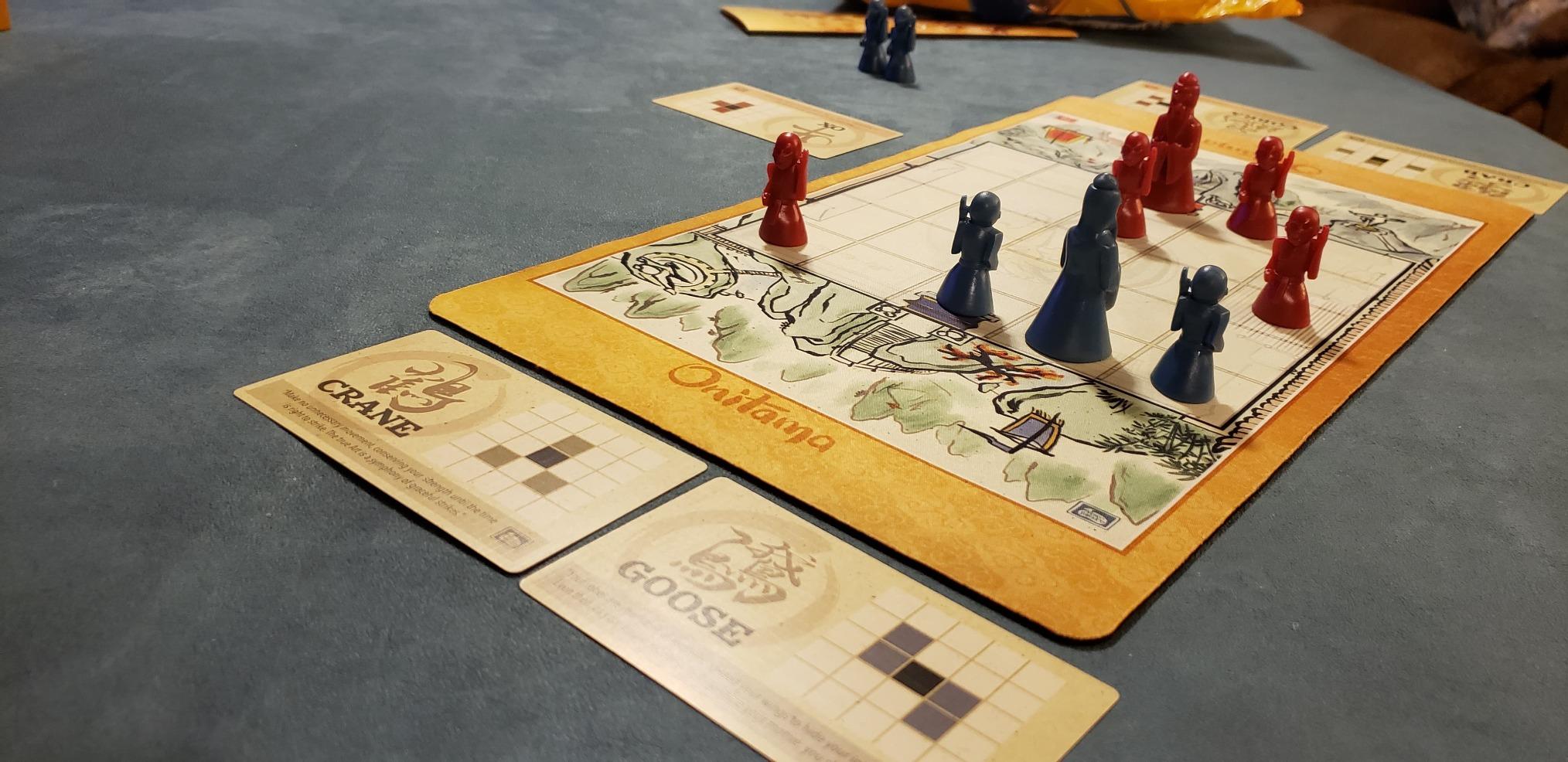
Onitama is a 5×5 abstract with master and student pawns and a five-card movement system. It feels like chess in the way that matters, position and pressure, without the fifty-move-rule arguments that end some couples’ evenings badly.
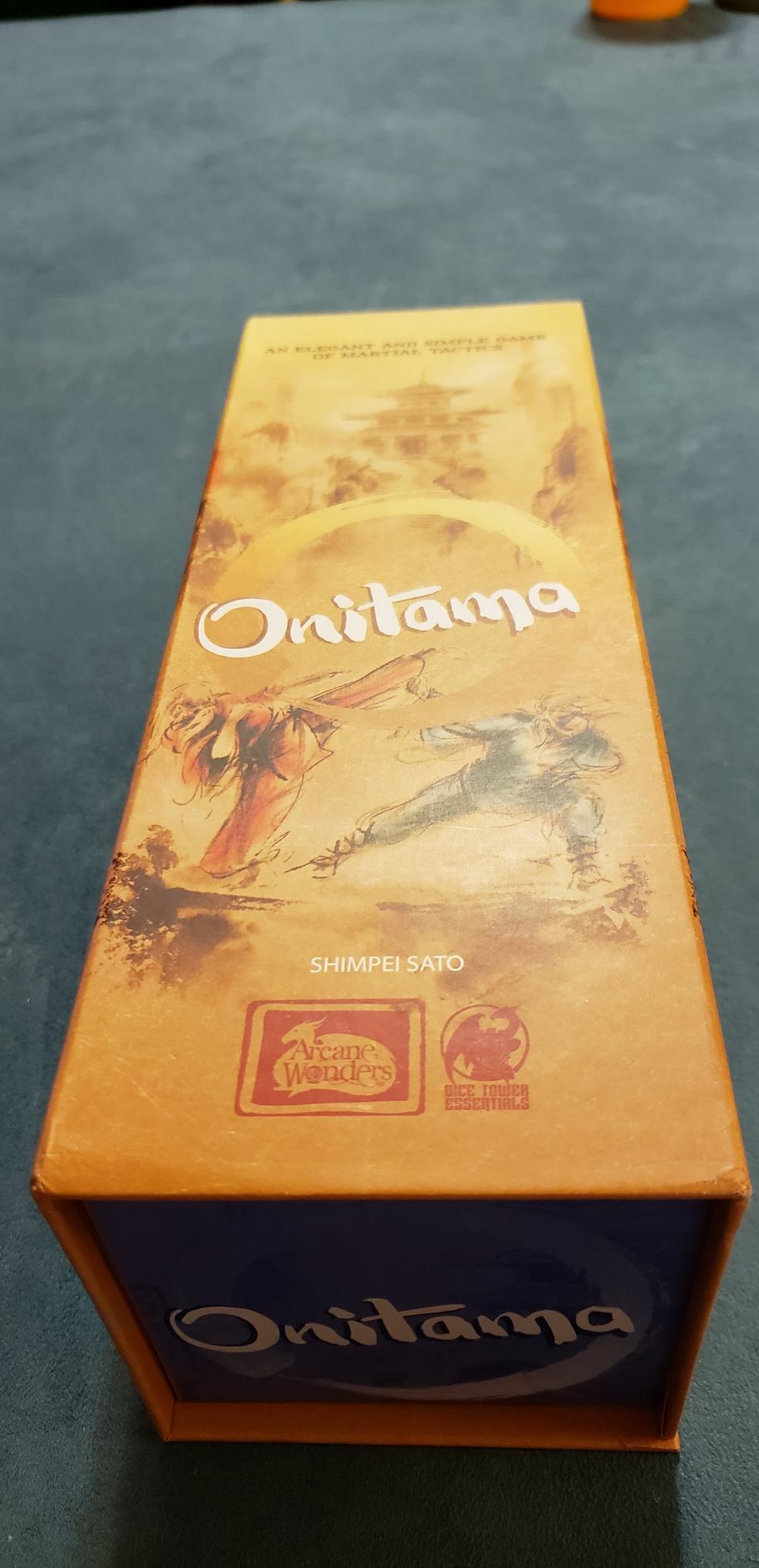
The board is genuinely tiny at 3.8 by 3.7 inches and the whole game fits in a narrow box, which makes it one of the most travel-friendly abstract strategy games you can own. Setup takes under a minute.
Two win conditions, capturing the opponent’s master or reaching your temple arch, keep the last three turns genuinely tense. You cannot predict which one is happening until close to the end.
When Onitama is the right pick
Choose it for a couple who find chess intimidating, or who want a 15-minute strategy fix between other plans. It pairs naturally with our chess resources on the best two-player board games for chess-loving families.
It is also a strong first abstract because a lost game is usually readable in hindsight rather than feeling arbitrary.
When Onitama is the wrong pick
Skip it if you want long sessions. At 10 to 20 minutes, this is a filler game rather than an evening, and a couple who prefers one deep game per week may find it too thin.
Be aware that the card swap creates a few seconds of dead time each turn. That is invisible with two players but would be noticeable in a group.
5. Splendor Duel – The Best Two Player Strategy Game for Couples Who Collect Games
Splendor Duel Board Game – Two-Player Strategy Game for Intense Gem Collecting Battles – Fun Family Game for Kids and Adults, Ages 10+, 2 Players, 30 Minute Playtime, Made by Space Cowboys
2 players
Ages 10 and up
30 minute playtime
5.11 x 7 x 1.88 inches
Pros
- Trims the original playtime to about half an hour
- Very easy to learn
- Compact box with custom storage trays
- Privilege scrolls create real head-to-head tension
Cons
- Cards are small and hard to read for some players
- Only two pearl gems exist which some feel skews balance
- Less variety than the full size original
Splendor Duel is the two-player cut of Splendor, and the cut matters. The original runs long with two people because neither player is racing the table. This version resolves in 30 minutes and adds attacks that the bigger game does not need.
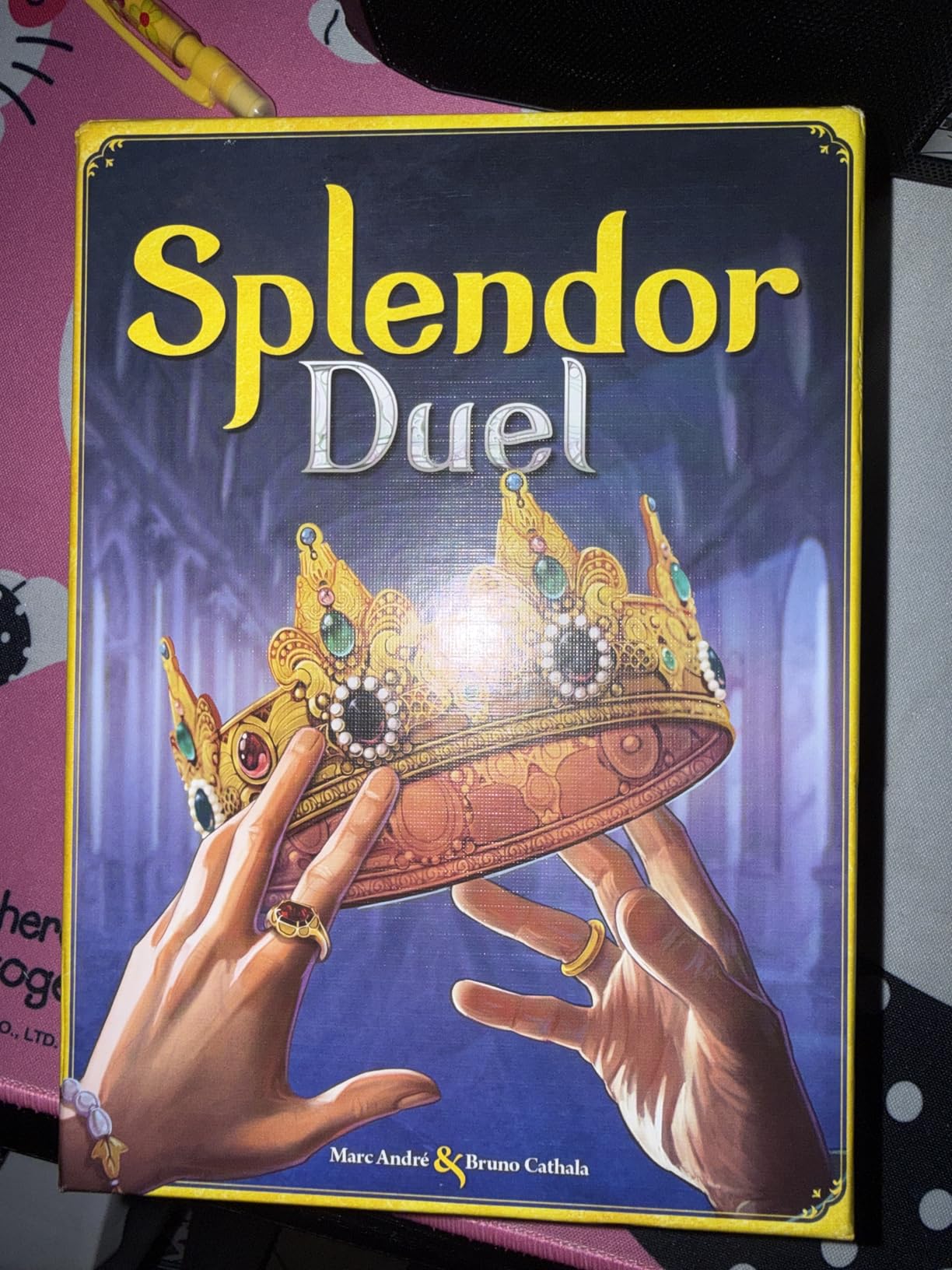
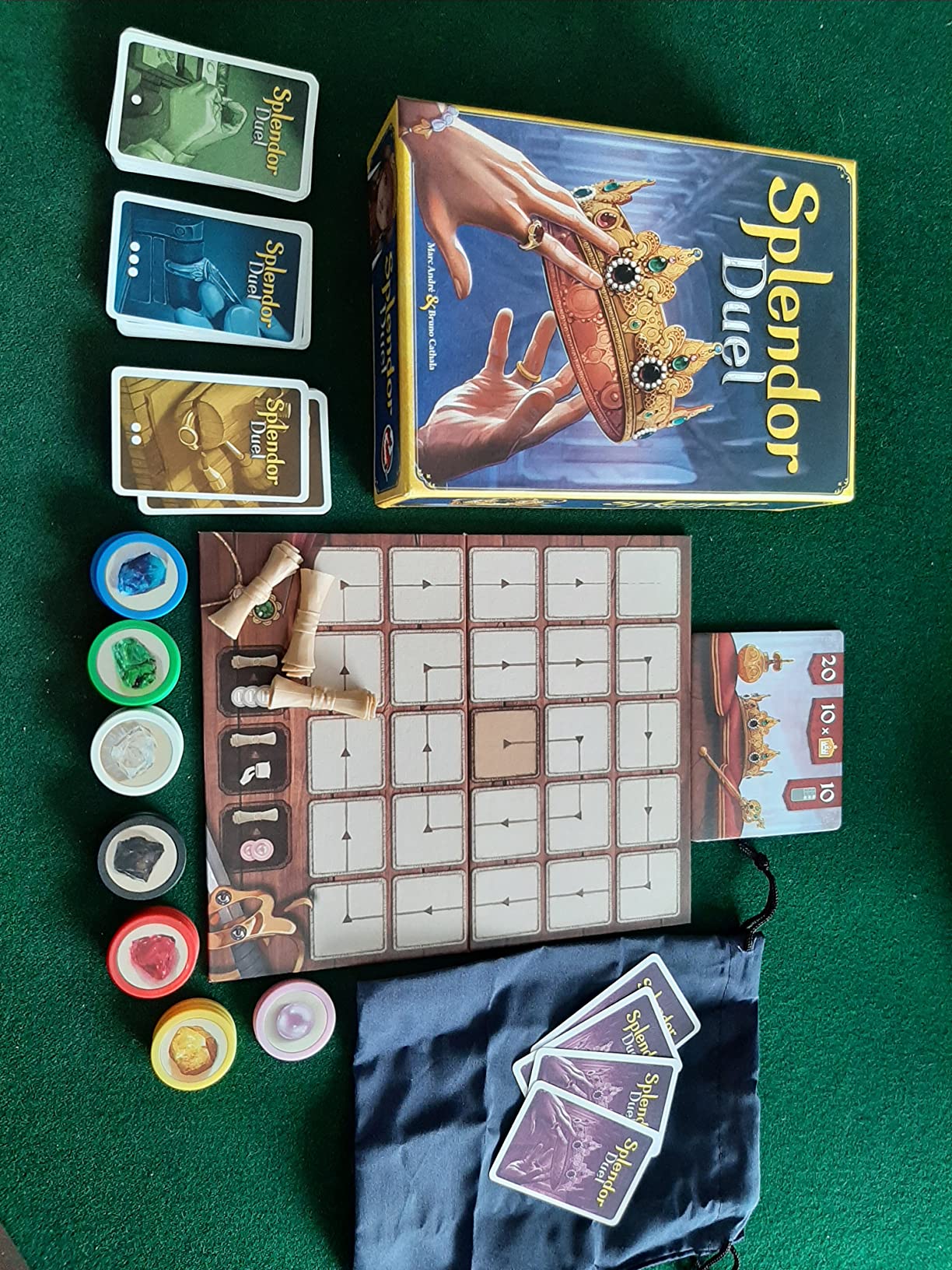
You collect gemstones, buy development cards and score prestige points, with privilege scrolls letting you interfere directly with your opponent’s plan. That last element is what separates this from a sleepy engine builder, and it is the direct-conflict moment couples should know about before the first game.
The box is 5.11 by 7 by 1.88 inches with a proper tray, so nothing rattles in a bag. The artwork is the sort people notice when the game is on the coffee table.
When Splendor Duel is the right pick
Choose it if one of you loves the full Splendor and the other found it slow. It preserves the gem-set engine and removes the dead time. It also works well as a gateway into set-collection games.
Couples who want some bite in a friendly game tend to rate this higher than the gentle abstracts on this list.
When Splendor Duel is the wrong pick
Skip it if small print is a problem. Several buyers specifically call out card readability, and the balance concern about the two pearl gems comes up repeatedly.
It is also a lower-review-count pick here, so if you want a battle-tested community, read a few reviews before committing.
6. Mandala – The Best Two Player Strategy Game for Couples Who Love Bluffing
Mandala Board Game | Challenging Two-Player Game with Beautiful Abstract Art | Strategy Board Game for Adults and Kids | Ages 10+ | 2 Players | Average Playtime 30 Minutes | Made by Lookout Games
2 players
Ages 10 and up
Average 30 minute playtime
7.87 x 7.87 x 1.77 inches
Pros
- Open information means every turn feels live
- Deep tactical and bluffing layers under easy rules
- Fabric play mat speeds up setup
- Scoring values shift to allow come-from-behind wins
Cons
- Square cards are hard to shuffle normally
- Competitive and cutthroat rather than gentle
- Only playable by two players
Mandala is the pure abstract on this list. Two players build and destroy rival mandalas at the same time, and everything is visible, which means every turn is a negotiation about what the other person might do next.
The fabric play mat doubles as the setup guide and makes reset fast, so you can play three games in an evening. Colour values change as you score them into your river and cup, which creates the comeback paths that make an abstract feel generous rather than clinical.
Rules are short, but reviewers consistently compare the payoff to Hanamikoji. That is a high bar, and it is the reason this one belongs on the list despite a smaller review pool.
When Mandala is the right pick
Choose it for a couple who enjoy reading each other across a table. Open information and bluffing are the entire game, so it rewards the kind of partner who enjoys a stare-down.
It also suits players who have grown bored of engine builders and want something that looks like an object rather than a spreadsheet.
When Mandala is the wrong pick
Skip it if your relationship prefers gentle competition. Reviewers describe it as cutthroat, and it is not the game to introduce during a difficult week.
Also note the square cards need a wash-style shuffle, which is a small friction that some households dislike more than they expected.
7. Caper Europe – The Best Two Player Strategy Game for Couples Who Value Production
Caper Europe | Strategic Two-Player Board Game for Ages 10+ | Fast-Paced Card Drafting Heist Across Europe | Travel-Friendly Box with Stunning Art | Perfect for Couples and Family Game Night
2 players
Ages 10 and up
30 minute playtime
1.73 x 8.5 x 8.5 inches
Pros
- Genuinely striking 1950s-inspired art and wooden components
- Four city decks deliver strong replayability
- Tight play where every step feels meaningful
- Compact travel box with custom trays
Cons
- Player aids do not fully explain the card symbols
- Rules take a while to work out on the first play
- Too much detail for children under 12
Caper Europe is a heist card game about drafting thieves, equipping gear and claiming key locations across four European cities. Owners tend to talk about the production as much as the mechanics, and that is fair: the 1950s-inspired art and wooden pieces are the best-looking components in this roundup.
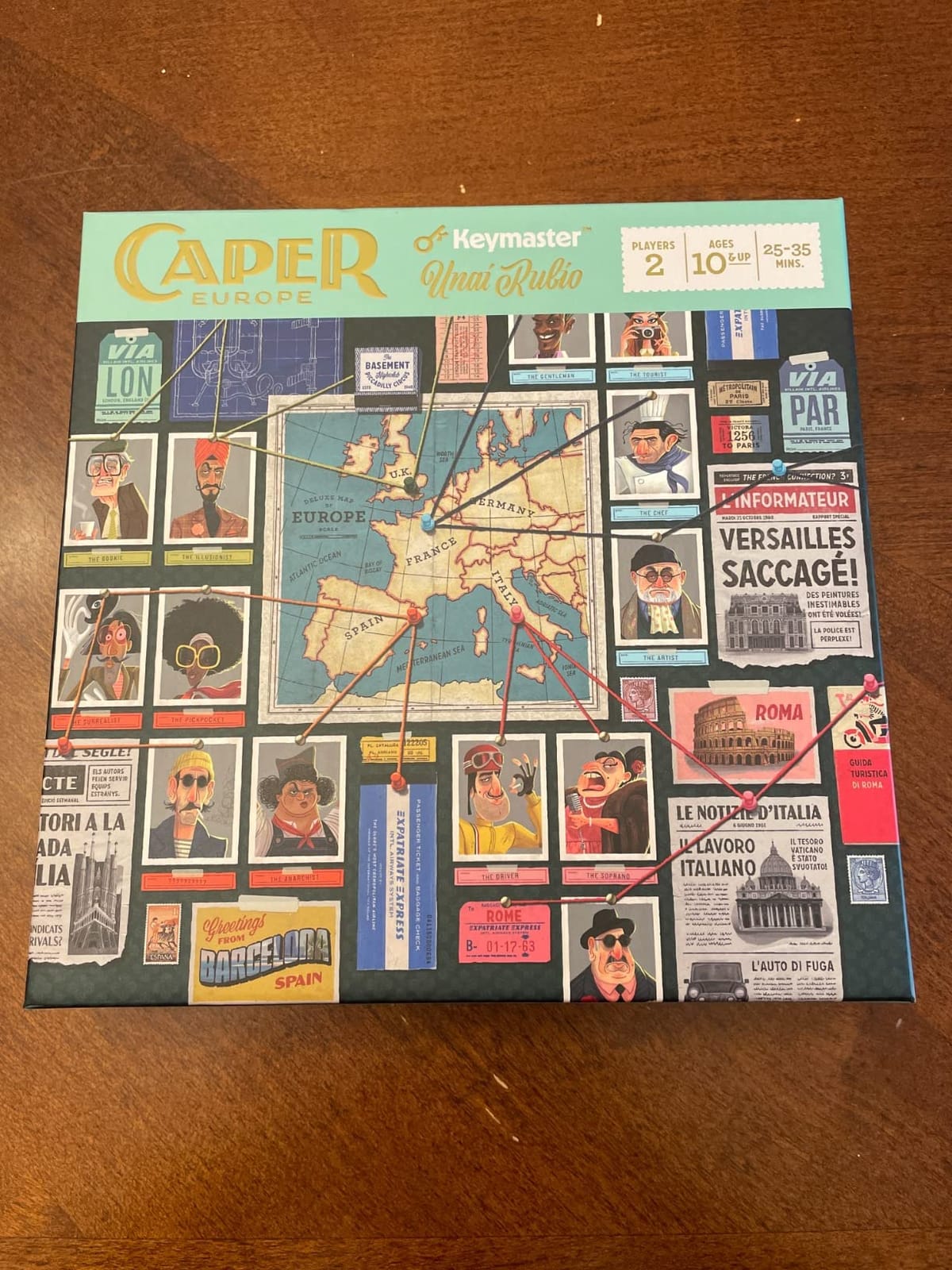
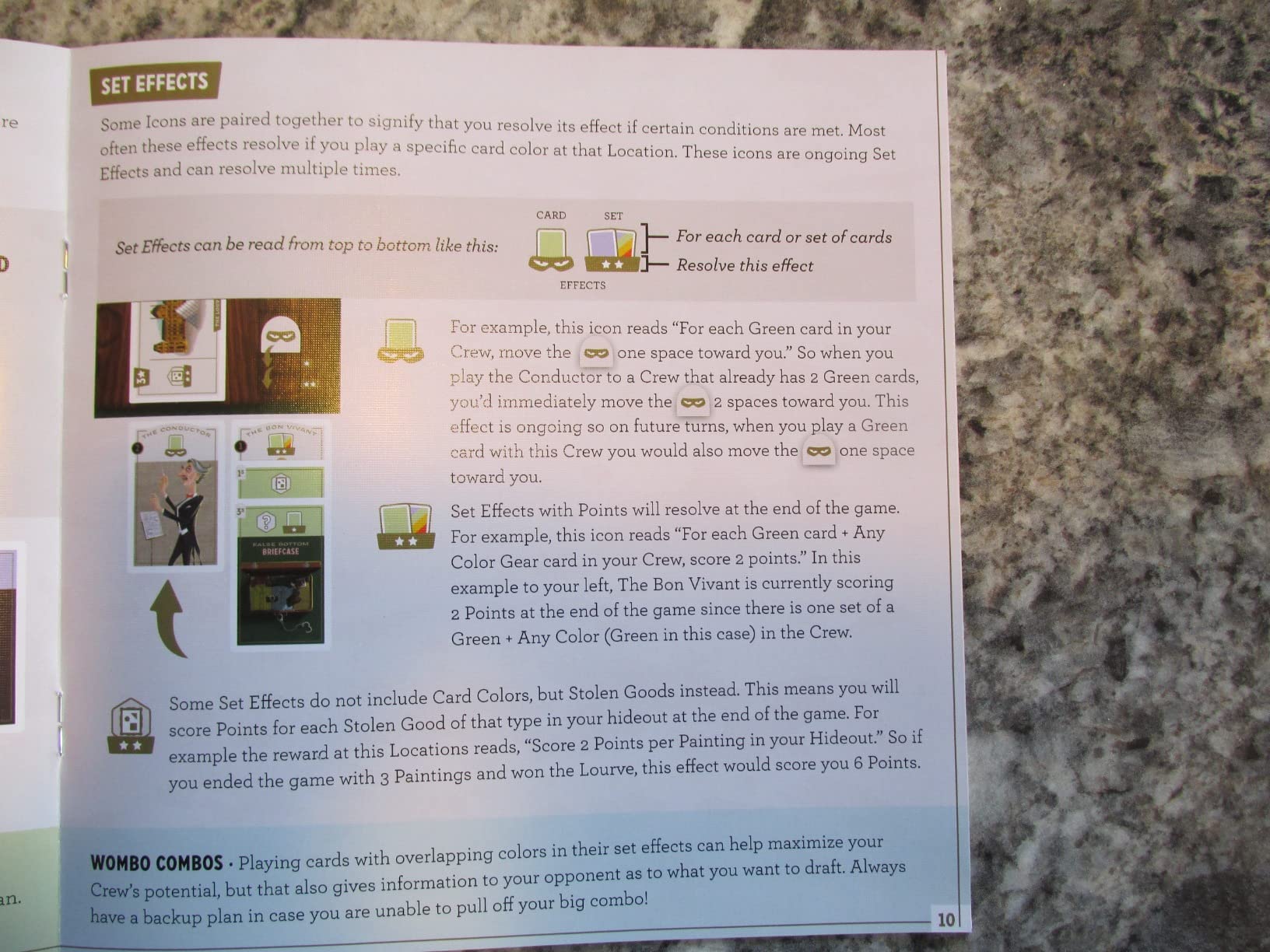
Four city decks means the same box plays differently depending on which location you draft, and that is where the replayability comes from. Play time sits at 30 minutes and the box is thin, which suits a restaurant table.
The theme matters for couples specifically. It is a crime caper, not a war, so it clears one of the vibe filters that knocks grim abstract war games off a date night.
When Caper Europe is the right pick
Choose it if your household judges games on how they look on the shelf. It is the most giftable pick here and a strong anniversary choice.
It also works well for a couple who prefers something themed and readable over something abstract and austere.
When Caper Europe is the wrong pick
Skip it if you are impatient with rulebooks. The recurring complaint is clarity, not design, so expect a slower first game.
It is also a younger household purchase. Several buyers flag that younger children cannot track the detail involved.
8. Watergate – The Best Two Player Strategy Game for Couples Who Want Tension
Capstone Games Watergate – 2 Player Strategy Board Game for Adults, Historical Tabletop Game, 30–60 Min Playtime, Ages 12+, Competitive and Tactical Gameplay for Couples & Family Fun
2 players
Ages 12 and up
30 to 60 minute playtime
7.9 x 7.9 x 2 inches
Pros
- Every card offers two options so no turn is wasted
- The two sides are well balanced and worth swapping
- Dice are not used so no prior history knowledge is needed
- Evidence chain uses string and thumbtacks for real tension
Cons
- Steep learning curve that can drag a first session
- Cards arrive warped and tokens wear at the edges
- Ages 12 and up makes it a grown-up purchase
Watergate is a dedicated two-player card game built around an asymmetric goal: the journalist is trying to assemble an evidence chain while the administration is trying to bury it. Every card gives you a choice of two plays, which is the reason this game rarely stalls.
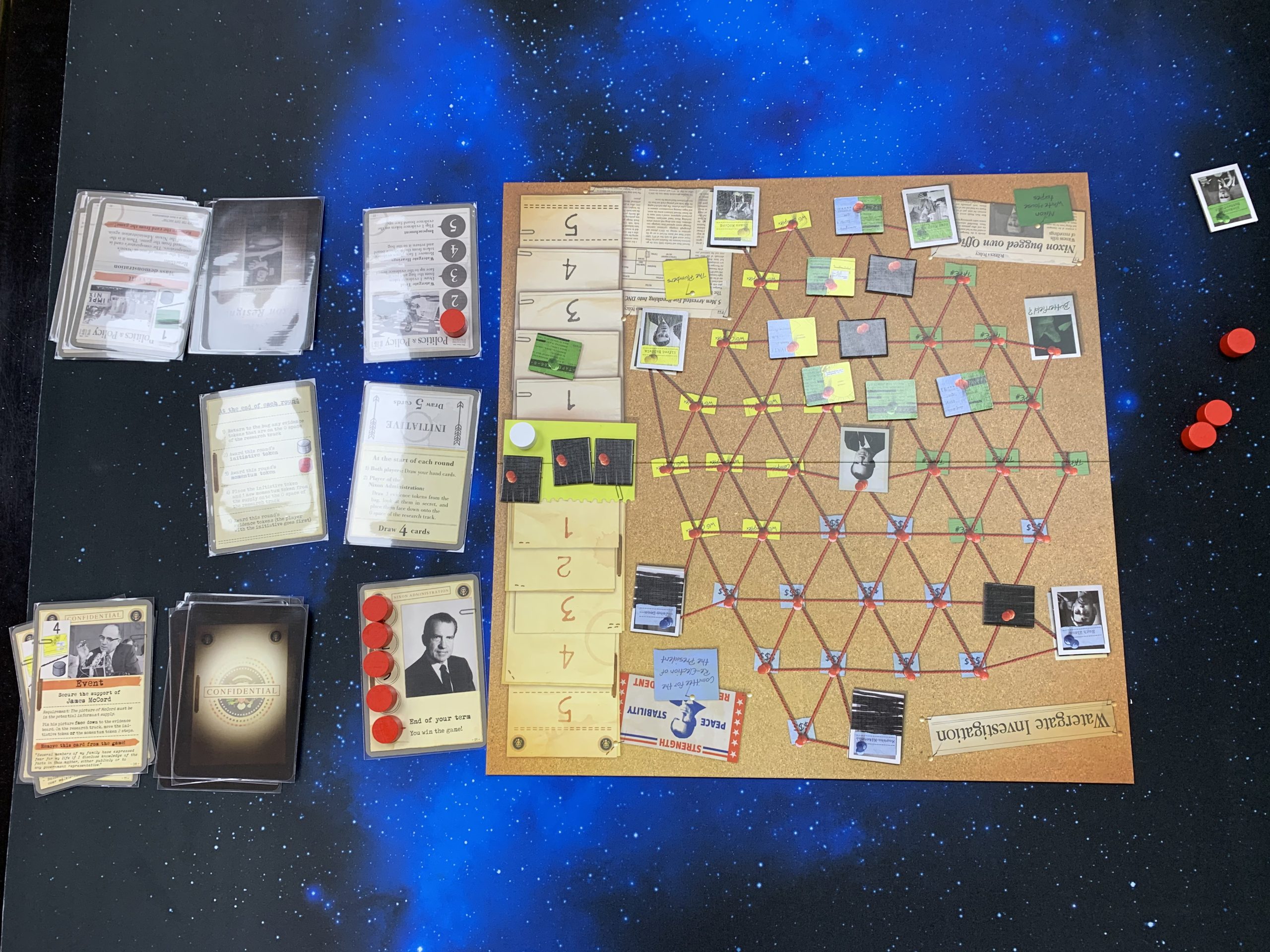
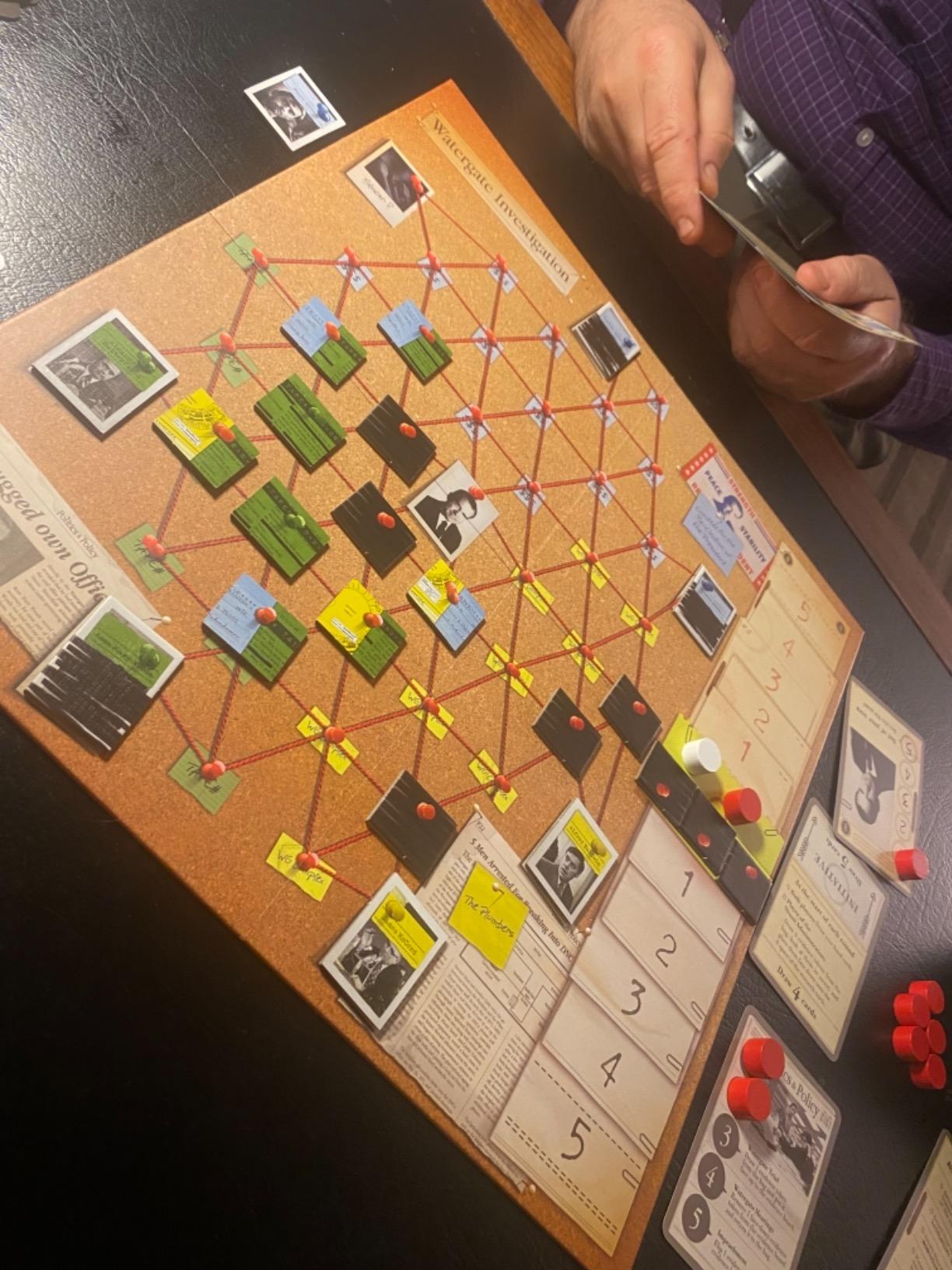
The board uses string and thumbtacks, and that physical chain is doing more work than it appears. You can literally see how close the case is to being made, and watching your opponent pull it apart is the whole experience.
No dice are involved, so no prior knowledge of the Watergate scandal is required to play competitively. That surprises people who assume history is a prerequisite.
When Watergate is the right pick
Choose it for a couple who enjoys a knife-edge game with real narrative stakes. It is the most dramatic pick here without being grim, which makes it unusually date-night friendly.
It also suits experienced strategy players who find lighter abstracts too thin, since the two sides use genuinely different approaches.
When Watergate is the wrong pick
Skip it if either partner is new to hobby board games. The learning curve is the single most common complaint, and a long first session can sour an evening.
Also skip it if you are expecting pristine components. Warped cards and worn cardboard tokens are reported often enough to expect some ageing.
9. CATAN Rivals – The Best Two Player Strategy Game for Couples Who Know Catan
CATAN Rivals for CATAN Card Game – Build, Trade and Conquer! Strategy Game, Family Fun for Kids and Adults, Ages 10+, 2 Players, 45-60 Minute Playtime
2 players
Ages 10 and up
45 to 60 minute playtime
8.38 x 6.25 x 1.75 inches
Pros
- Captures resources building and victory points without a board
- Three theme sets add strong replayability
- Dice rarely create runaway wins
- Compact and portable
Cons
- Trading with your opponent was largely removed
- Square cards are tough to shuffle
- Cards are thin and the box has no card storage
- Overwhelming for players new to Catan
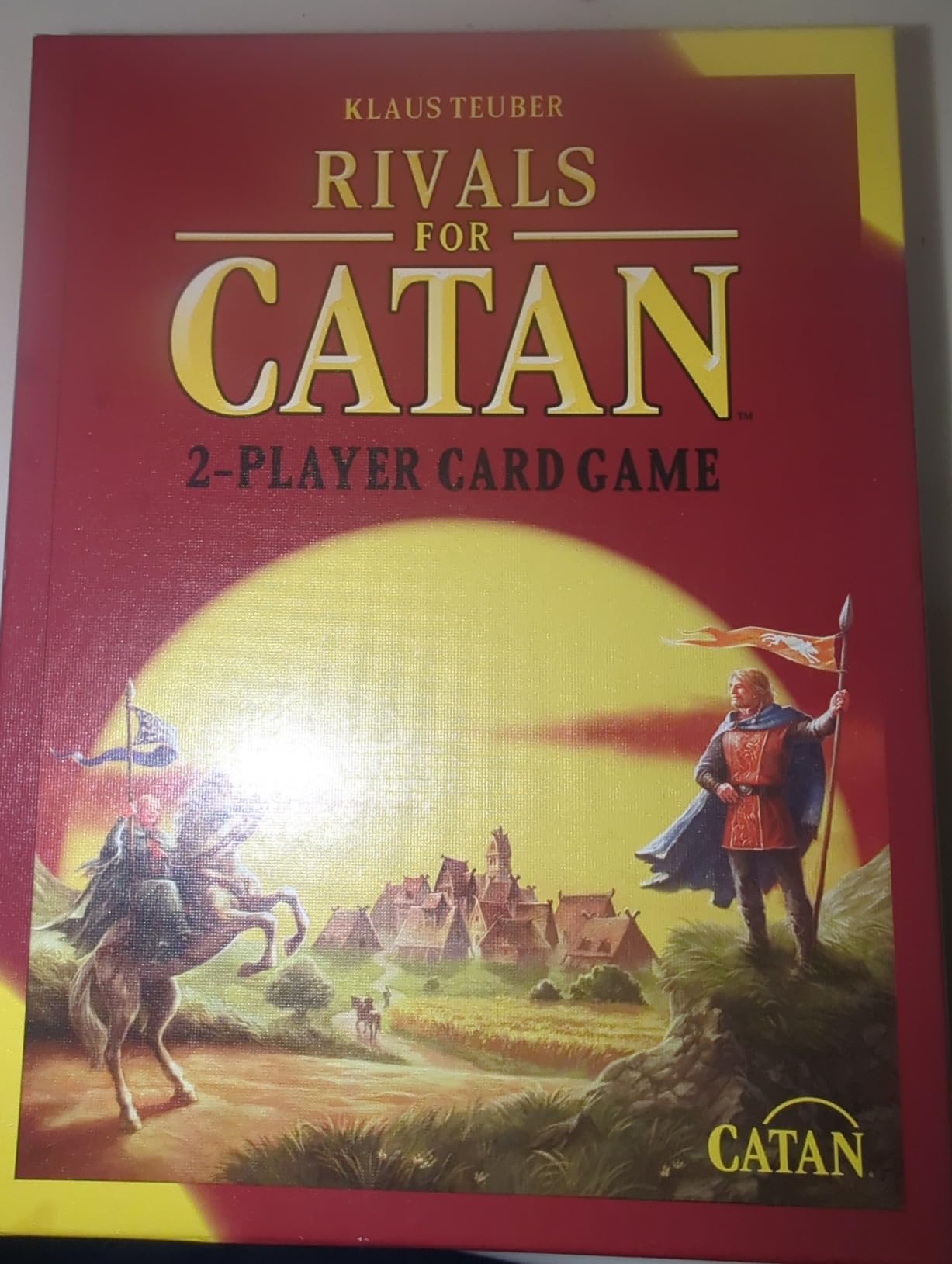
CATAN Rivals compresses the island experience into a two-player card game. You take one of two factions, acquire resources through card play and dice, build, and score victory points. It is the pick here for a couple who already loves the original and wants a version that fits one sitting.
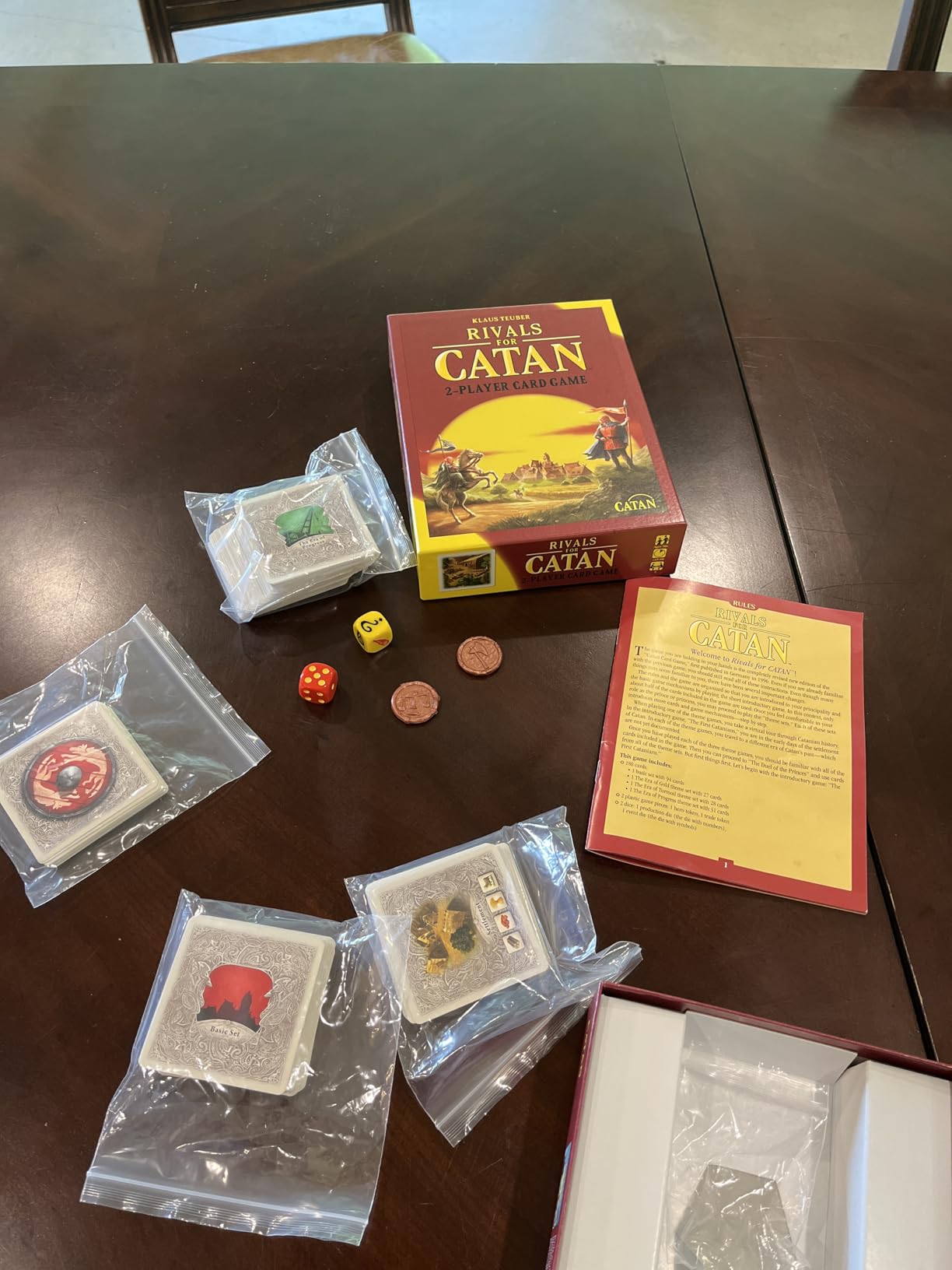
Three theme sets ship in the box, The Age of Gold, The Age of Turmoil and The Era of Progress, which is what keeps a familiar system interesting. Reviewers also note that dice swings rarely produce runaway wins, so games stay close.
At 45 to 60 minutes it is one of the longer picks here, which makes it better for a weekend evening than a midweek one.
When CATAN Rivals is the right pick
Choose it if Catan is already a shared reference point in your household. You will both know what a wheat field is, which removes the entire teach.
It is also a good choice for a couple who wants luck mixed into a competitive game rather than pure skill.
When CATAN Rivals is the wrong pick
Skip it if neither of you knows Catan. Newcomers routinely find the rulebook disorganized, and you will spend the first game decoding rather than deciding.
Note the main mechanical change too: direct trading with your opponent was largely removed, so players who miss that interaction tend to feel the difference immediately.
10. Quarto Mini – The Best Travel Two Player Strategy Game for Couples
Quarto Mini | Mensa Select Winner | Travel-Friendly Version of The, Wooden Abstract Strategy Game for Kids & Adults | Family Game Night Favorite | Ages 8+ | 2 Players | 15 Min
2 players
Ages 8 and up
15 to 20 minute playtime
168 g, 7.13 x 1.5 x 7.09 inches
Pros
- Compact travel edition at 70 percent of the original size
- Rules fit in about two minutes
- Opponent chooses your piece which adds real tactics
- Solid wooden pieces with a decorative finish
Cons
- Losing positions can feel like long alternating turns
- Deceptively simple surface hides a steep mastery curve
- Small travel pieces are easier to misplace
Quarto Mini is the smallest game in this roundup at 168 grams and it was built for exactly this. It is the travel edition of the Mensa Select winner, cut to 70 percent of the original size with the gameplay intact, which is a rare thing for a mini edition to preserve.
The hook is that your opponent chooses which piece you place. Four in a row sharing one characteristic wins, and every move is decided by someone else. That single rule turns a family tile game into a genuine tactical contest.
Play time is 15 to 20 minutes, which makes it the right filler for a restaurant table where a 30-minute game would outlast the meal.

When Quarto Mini is the right pick
Choose it when you are travelling, when you need a game that fits in a handbag, or when you want a strategy option in fifteen minutes. It suits adults and children equally.
It is also a very safe anniversary gift because it is charming, inexpensive to replace and impossible to break.
When Quarto Mini is the wrong pick
Skip it if you want a long, layered game. The decision space is small, so it delivers less depth per session than the abstracts here.
Alternating turns with a decided opponent placing your pieces can drag once one player is losing, which is worth knowing if that bothers you.
11. Yinsh – The Best Two Player Strategy Game for Couples Who Want Pure Skill
Rio Grande Games Yinsh – 2 Player Abstract Strategy Board Game
2 players
Ages 14 and up
30 minute playtime
918 g, 12 x 1.38 x 9.38 inches
Pros
- Extremely simple rules with a chess-level payoff
- Excellent catch-up mechanic built into the design
- No luck element so outcomes are decided by skill
- Setup takes under five seconds
Cons
- Mastery takes hundreds of games
- Asymmetric feel can make first matches confusing
- Wood rings and cardstock are easy to knock askew
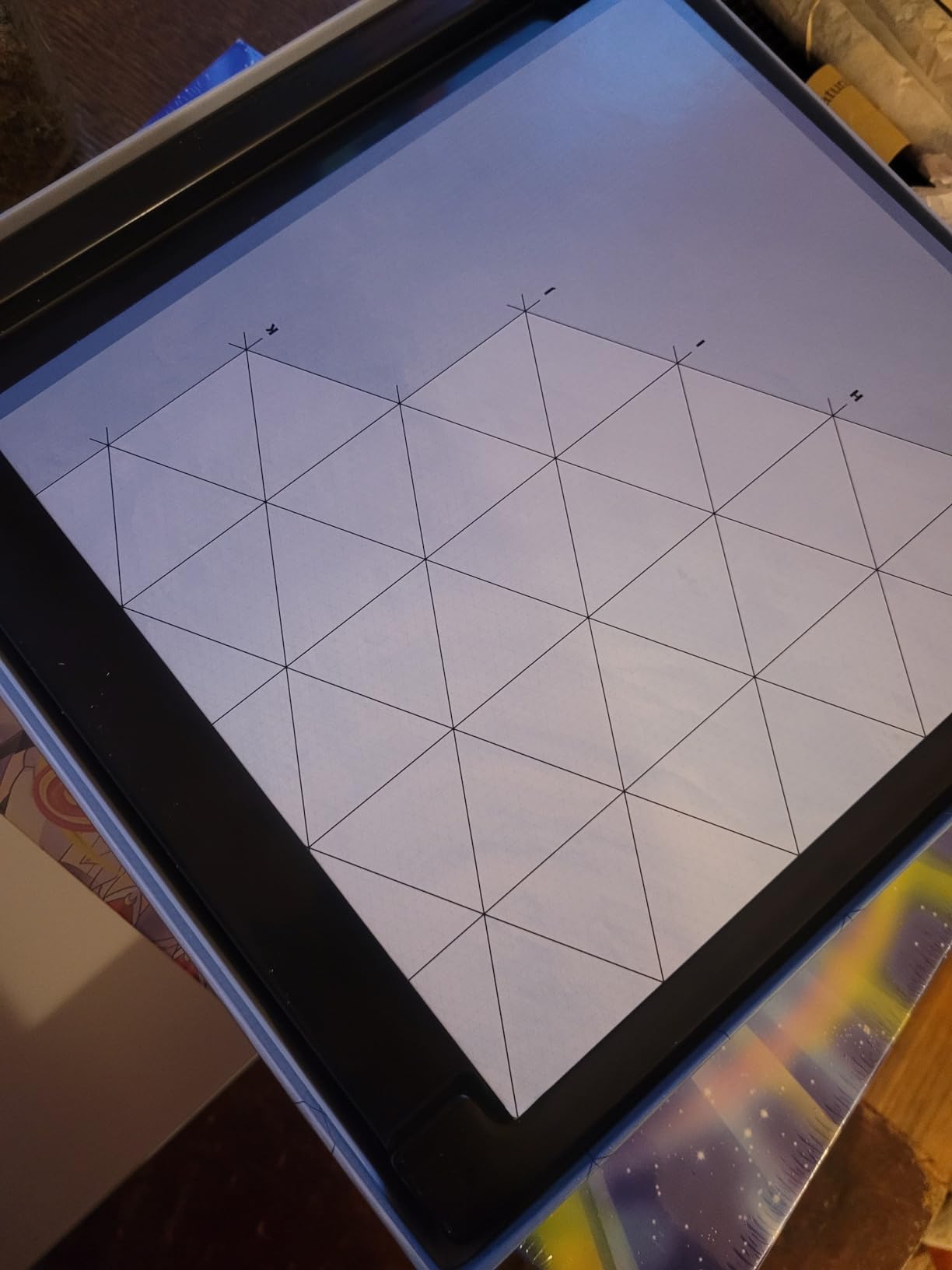
Yinsh has the highest rating of anything on this list at 4.9, and the reason is that it removes luck from the equation entirely. Everything that happens is a decision someone made, which is exactly what competitive couples tend to want.
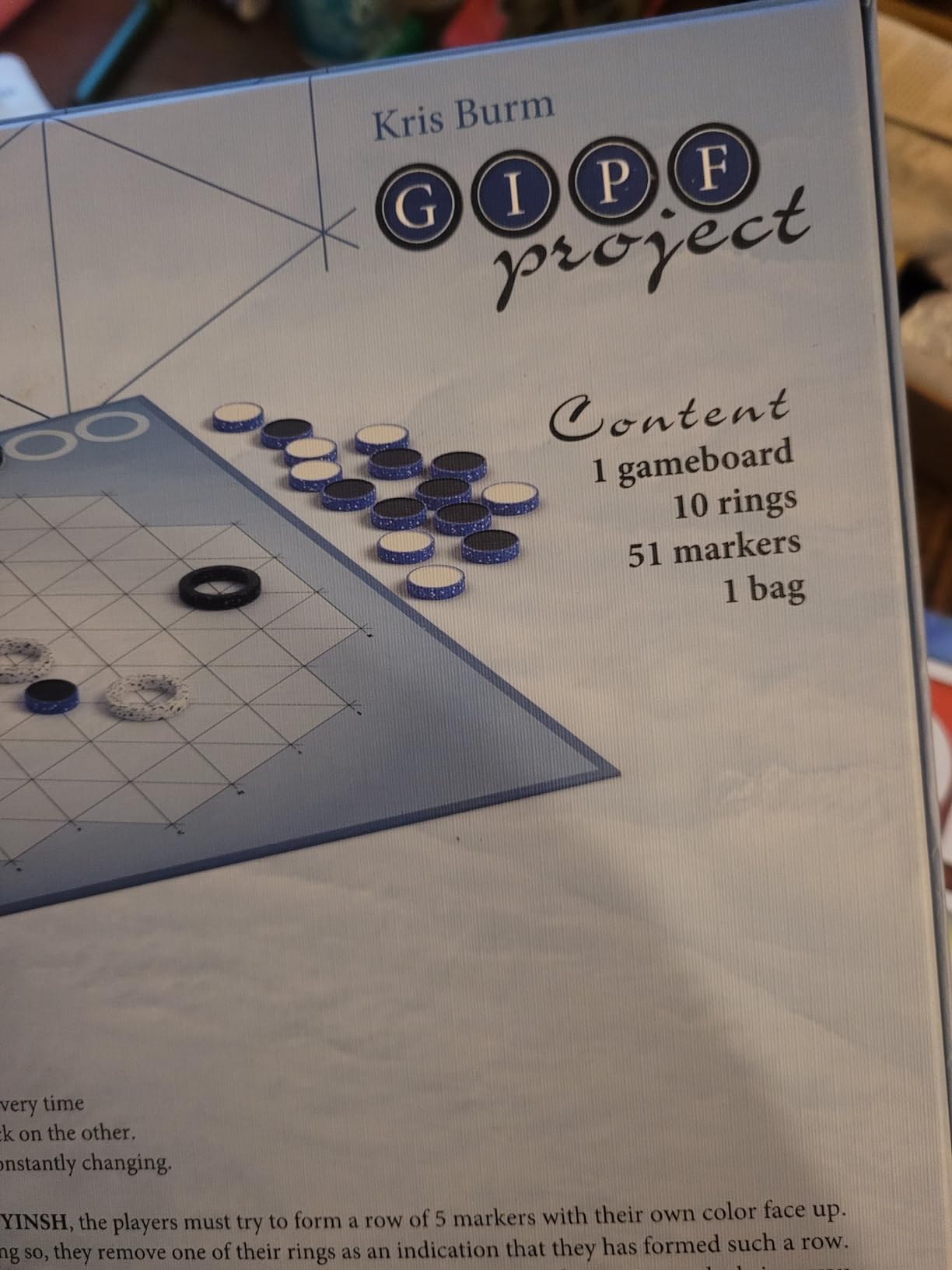
The catch-up mechanic is the design centrepiece. Rings removed from the board weaken your own position as well as your opponent’s, so the game pulls trailing players back into it. Come-from-behind wins are normal here rather than lucky.
It belongs to the Gipf Project series and is designed to combine with other titles in that line, which is worth considering if you plan to collect the project.
When Yinsh is the right pick
Choose it if losing to luck genuinely annoys one of you. Every loss here is legible, and by game ten you can name the mistake that cost you.
It suits a couple who likes clean, quiet competition with no theme, no dice and no negotiation beyond the board.
When Yinsh is the wrong pick
Skip it if either partner wants visible progress. The rating is high but the review pool is small, so you are committing on reputation rather than on volume of owner feedback.
It is also the least approachable on this list. Ages 14 and up is accurate, and the first few matches can leave both players uncertain what they are doing.
12. Everdell Duo – The Best Two Player Strategy Game for Couples Who Want Both Modes
Everdell Duo Standalone Board Game for 2 Players, Competitive & Co-Op
2 players
About 30 minute playtime
10 x 10 x 0.04 inches
Pros
- Playable competitively cooperatively or as a solo puzzle
- Engine building that is strategic but approachable
- Premium tactile components
- Includes a 15 chapter campaign for longer play
Cons
- Campaign mode stretches beyond a single evening
- Less portable than the card games on this list
- Theme appeals strongly to some couples and not others
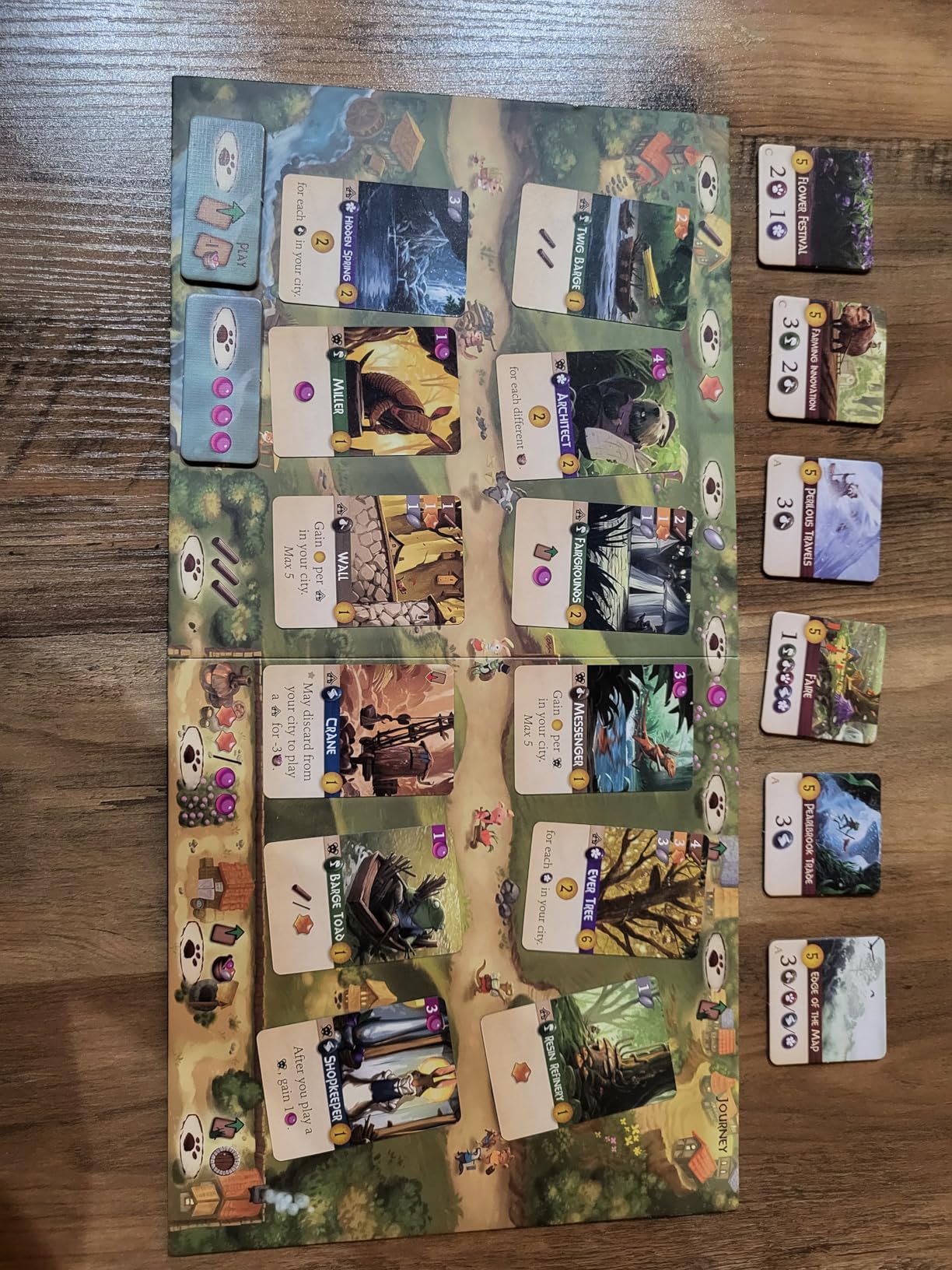
Everdell Duo is the mode-switch pick on this list, and for a couple that matters more than the numbers suggest. You can play it head-to-head, side by side as co-operatives against the game, or alone as a puzzle, which means the same box covers an argument and a quiet evening.
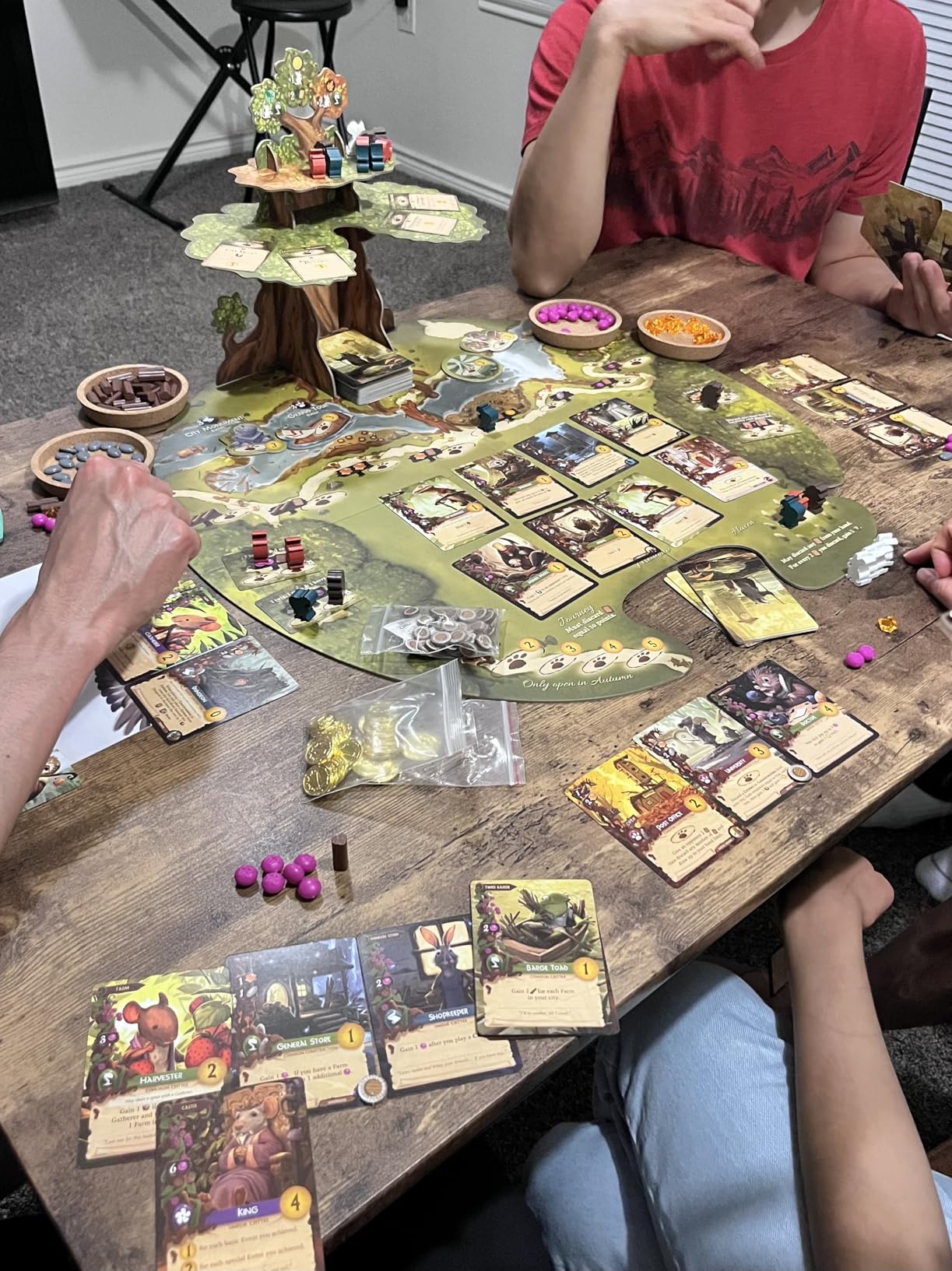
The engine-building underneath is approachable, which is the key quality when one partner is an experienced tabletop player and the other is not. Nobody is outclassed by rules volume. Sessions run about 30 minutes with quick setup.
The 15 chapter campaign adds the replay depth that the competitive mode alone would lack, so a household will not exhaust it quickly.
When Everdell Duo is the right pick
Choose it for a mixed-skill couple who cannot agree on whether tonight is a competition or a team effort. It is the only pick here with a genuine co-op mode built in.
It is also the right choice if the woodland theme matters, since the art and tactile pieces are a large part of the appeal.
When Everdell Duo is the wrong pick
Skip it if you need something portable. At 10 by 10 inches with wooden components, it is a home table game rather than a travel game.
Be aware this is the newest and least-tested pick in the set, with the smallest review count of any game here. The components are strong, but the long-run owner picture is still forming.
How to Choose a Two Player Strategy Game You Will Both Finish
Start with weight, because it is the only variable that predicts whether you will play again. If your partner has never opened a modern board game, begin at the 1 to 2 end of the scale and work upward. Othello, Jaipur and Onitama are all safe first steps. A weight 4 game like Watergate is a fifth game, not a first one.
Second, pick your play time honestly. Thirty minutes is a weeknight. Sixty minutes is a relaxed evening. Ninety minutes or more needs a weekend commitment, and if you reach for that on a Tuesday you will blame the game rather than the calendar.
Third, match the venue to the footprint. Most two-player strategy games are small, but the differences matter in a restaurant. Jaipur at 231 grams, Quarto Mini at 168 grams and Onitama in a slim box go anywhere. Caper Europe is thin but wide. Everdell Duo wants a real table.
Fourth, decide the mood before you open the box. Direct-conflict games here, meaning Splendor Duel, Mandala, Watergate and Caper Europe, create real interference between players. Relationship-safe games here, meaning Onitama, Yinsh, Quarto Mini and CATAN Rivals, keep the pressure inside the systems. Neither is better; they just suit different evenings. If you are curious about the broader range of abstract designs, our ranking of 12 abstract strategy board games is a useful next read.
Fifth, think about the skill gap honestly. If one of you is much stronger, prefer games with built-in catch-up or asymmetric systems. Jaipur rewards good timing more than deep planning, Yinsh has an explicit catch-up mechanic, and Everdell Duo levels the field by design. Games where a stronger player can lock a win early are the ones couples tend to abandon.
Sixth, if you are playing long distance, look at digital versions before buying. Board Game Arena hosts a large share of the two-player strategy catalogue, Tabletopia covers a smaller set, and the heavier titles often have PC versions. Our broader strategy picks are collected in the best tabletop strategy games if you want to compare weight tiers across player counts.
Seventh, and finally, buy for the venue you actually use. Couples who game in a shared flat tend to need very different games from couples who game in a quiet house. More on footprint and lighting in our strategy alternative roundup, which covers table size constraints in more detail.
Games We Skipped and Why
If your partner is genuinely new to strategy games, avoid starting with a hidden-information wargame. Titles built around fog of war rely on bluffing information you do not have, and a beginner loses without understanding why. Slow economic engines in four-player shapes also disappoint here, because the interesting decisions only open up once a third player is bidding against you both.
We also left out big cooperative campaigns. A twelve-scenario co-op box needs an evening every time, and with two players there is no third person to carry the pacing when a scenario drags. Everdell Duo’s 15 chapter campaign is about the limit of what we would put on the table midweek.
And we left out anything with elimination or heavy downtime. With six players those are nuisances. With two, they end the evening and make the game a bad suggestion.
Frequently Asked Questions
What are some good 2-player co-op games for couples?
Everdell Duo is the strongest fit on this list because it plays competitively, cooperatively or as a solo puzzle from the same box, in roughly 30 minute sessions. Its engine building is approachable enough that a beginner and an experienced player can share it without a rules wall. For lighter cooperative options, look to games with limited communication, since talking through every decision removes the tension couples usually want.
What are some good strategy games for 2 players?
The dependable shortlist starts with 7 Wonders Duel for a 30 minute engine build with three win conditions, Othello for a 20 minute abstract with no luck, and Jaipur for a compact 30 minute trading card game. Onitama adds a chess-like feel at 10 to 20 minutes, while Yinsh and Mandala serve couples who want pure skill and open-information bluffing respectively. All are built for exactly two players.
What are good 2 player split screen games?
Screen-based options are worth a separate look if you prefer digital play. Platformers and local co-op adventure games dominate the split-screen category, while true turn-based strategy tends to be online-only rather than couch-based. For couples who want real competitive strategy, the digital board game platforms are a better route than console split-screen, since two-player strategy ports are rare and rarely updated. Confirm a specific title works on your device before planning around it.
What are some good 2-person board games for couples?
Match the game’s complexity to the least experienced player, and pick something that finishes in 30 to 60 minutes with no player elimination. Jaipur, Othello and Onitama are the easiest entry points because all three teach in minutes. 7 Wonders Duel is the strongest all-round pick at 30 minutes. If one partner is new to hobby games, avoid starting with anything above a medium complexity rating, since the rules gap ends the evening faster than the strategy does.
What is the best two player strategy board game for beginners?
Othello is the clearest answer because the entire ruleset takes about two minutes and the board is completely visible, so both players understand every position from turn one. Onitama is the best second choice for couples who want more depth with the same low barrier. The key is avoiding a first game with a long rulebook or hidden information, since a beginner who cannot see why they lost usually does not ask to play again.
The Bottom Line
The best two player strategy games for couples share three traits that the big group-game lists never mention: they teach quickly, they finish in one sitting, and nobody gets knocked out halfway through. If you want one game, take 7 Wonders Duel. It carries the highest rating across the largest number of owners in this roundup, and its three win conditions keep both of you in the game to the last card.
Start lighter if your partner is cautious. Othello and Jaipur teach in minutes and travel anywhere. Move up to Watergate or CATAN Rivals once you both want more tension, and finish with Yinsh if you would rather lose to skill than luck. Every pick on this list is designed for exactly two, so none of them will waste an evening.
We update this guide for 2026 whenever a new dedicated two-player edition appears or a listing changes hands. If you want the wider field covered, our multiplayer alliance strategy guide and our chess-family two-player roundup both go deeper on specific formats.